
Tags
Bach, Bachfest Leipzig, benedikt-kristjansson, chorale-cantatas, johann-sebastian-bach, lydia-vroegindeweij, Michael Maul
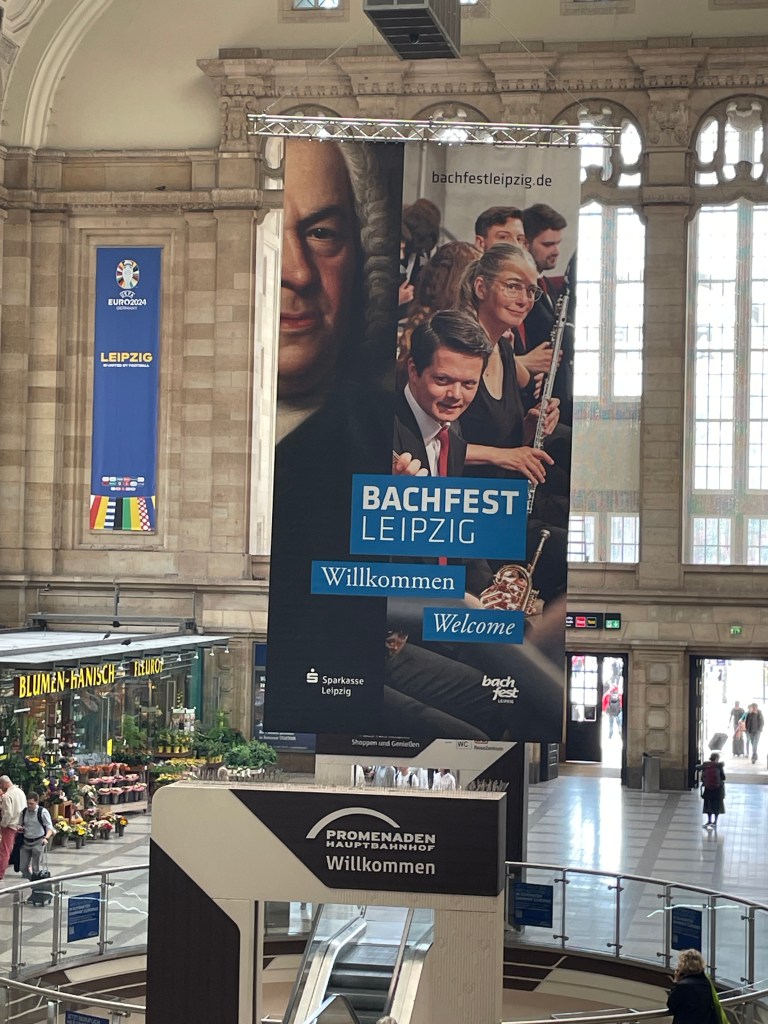

This is the first post in a longer series about my experience at the Bachfest Leipzig 2024. I was there for only four days, and wished I could have stayed longer and could have traveled more in the region, but it was enough to get a taste of the wonderful atmosphere, the camaraderie, and to hear some fabulous concerts in Leipzig and Freiberg. Find the program for Bachfest Leipzig 2025 here.
I’m really here!
On Friday, June 7, I took a crazy early train from Amsterdam and arrived at the Leipzig main station (Hauptbahnhof) in the early afternoon. Both at the station and on the short walk to my apartment I saw enormous Bachfest posters, see the pictures above (left photo at the station, right photo at the Evangelisch Reformierte Kirche, which is one of the concert venues). No doubt about it: I was really here!
Participating in a Flash Mob

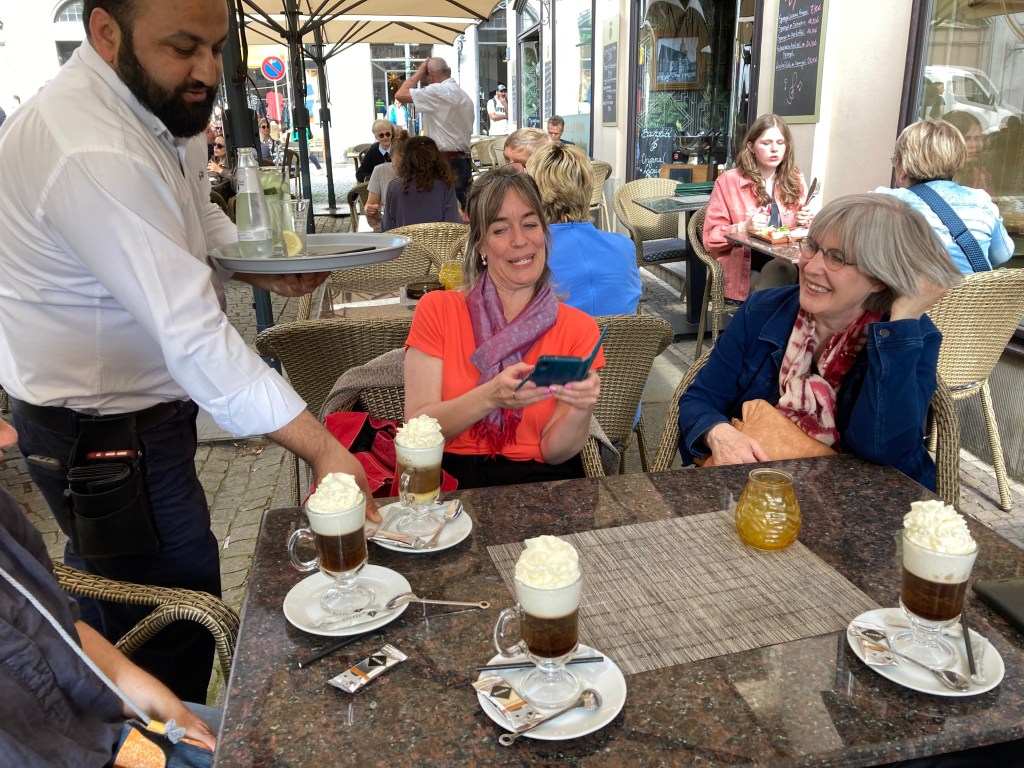
At 3:15 pm I made my way to a pretty rehearsal room around the corner of the St. Thomas church (Thomaskirche), to rehearse for the not-so-secret-anymore Flash Mob. The festival’s artistic director Michael Maul had announced the Flash Mob on Facebook and picked a good time and place for it: right before the festival’s official opening concert, on St. Thomas Square. To give you an idea of how busy it was: the cafe we sat down at afterwards asked us to move or wait 10 minutes, because they had run out of glasses.
We sang the two chorales from Cantata 147 Herz und Mund und Tat und Leben: “Wohl mir, dass ich Jesum habe” and the famous “Jesus bleibet meine Freude.” To get an idea of what that sounded like, watch this video by the Bachfest on Facebook, with many thanks to David Chin for filming and creating the video.
I had met up with my friend Lydia Vroegindeweij. Thanks to her groundbreaking research into chorale cantatas and her and Ellen van der Sar’s all-encompassing Luther300-Bach500 project, Michael Maul now calls her “Die Choralkantatenexpertin” (the chorale cantata expert) when he introduces her to a fellow Bach scholar, and rightfully so. We had fun participating in the Flash Mob, and met three lovely women from a local a capella choir. Afterwards (while the opening concert was taking place in the church) the others enjoyed a “Bach Kaffee” (yes that is a German thing, to drink coffee late in the afternoon), while I ate an early dinner.

Singing along with chorales
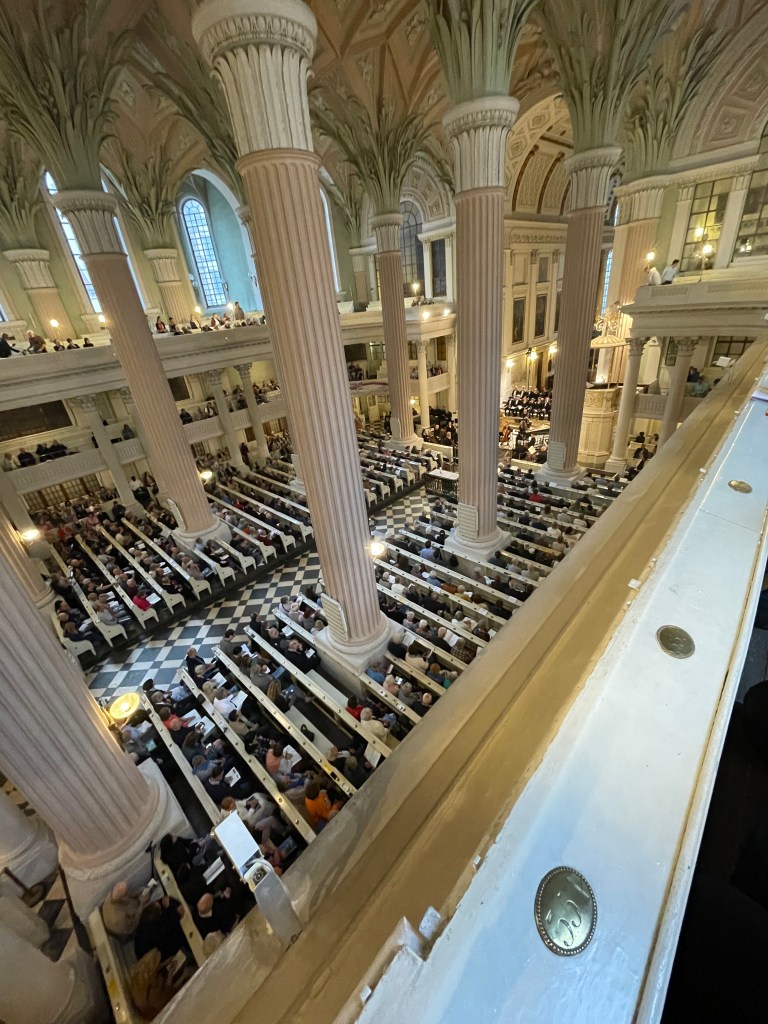
The theme of this year’s Bachfest is Chorale Cantatas, and in 16 concerts over the course of one week, all of Bach’s chorale cantatas* will get performed during this festival. I only attended the first one of these, on the evening of Friday, June 7, in the beautiful St. Nicholas church (Nikolaikirche), which has great acoustics.

To make the audience fully aware of the chorale on which Bach based his cantata, the festival came up with a formula for each of these cantata concerts. For each cantata on the program, the formula is as follows:
- The church’s organist plays an organ prelude (by Bach if he wrote one) on the chorale melody
- The audience sings the first two stanzas of the chorale. To aid with this, the festival and Carus Verlag created a free edition of all the chorales (you can download it too, just click on the link!)
- After the closing chorale of each cantata (sung by the ensemble performing the concert), the audience also gets to sing that closing chorale.
I very much appreciated this for this first concert, and I happened to sit next to a friend who is also an avid choral singer, so we enjoyed it. However it made for an extremely long concert, and I felt a bit for the people who had bought tickets to *all* chorale cantata concerts, as I couldn’t really see myself doing this seven days in a row, sometimes three times a day.
Benedikt Kristjánsson

The tenor soloist you see and hear singing first in the Flash Mob video is Benedikt Kristjánsson, whom Bach fans still know best for singing an entire St. John Passion by himself during the pandemic.
Kristjánsson was my hero of this first festival day, yes a bit because of the Flash Mob, but mainly thanks to his singing in this first chorale cantata concert.
For me, his aria “Des Vaters Stimme ließ sich hören” from Cantata 7 Christ unser Herr zum Jordan kam, which also features two gorgeous flute parts, was the absolute highlight of that concert.

After this concert it was time for bed for me, because I would have to get up at 6:30 the next morning. More about that in the next episode.
Thank you for reading! Please feel free to share with anyone you think might like to read this too.
Wieneke Gorter, June 11, 2024, updated November 29, 2024.
*Bach’s chorale cantatas = the cantatas he wrote during his second year in Leipzig, from June 1724 to March 1725. For nine and a half months, including the entire Christmas season, Bach would write every cantata according to this same template: the opening movement is a chorale fantasia on the first stanza of an existing Lutheran hymn or chorale, with the tune appearing as a cantus firmus. The last movement has the last stanza of the same hymn as text, in a four-part harmonization of the tune. The text of those choral, outer movements was used verbatim, while the text of the solo, inner movements was paraphrased, but still based on the inner stanzas of the same hymn.
Discover more from Weekly Cantata
Subscribe to get the latest posts sent to your email.
 Weekly Cantata