
Tags
Alex Potter, Bachvereniging, BWV 110, Charles Daniels, Christmas 1, Christmas Day, Grote Kerk Naarden, Jos van Veldhoven, Maria Keohane, Matthias Winckhler, Netherlands Bach Society
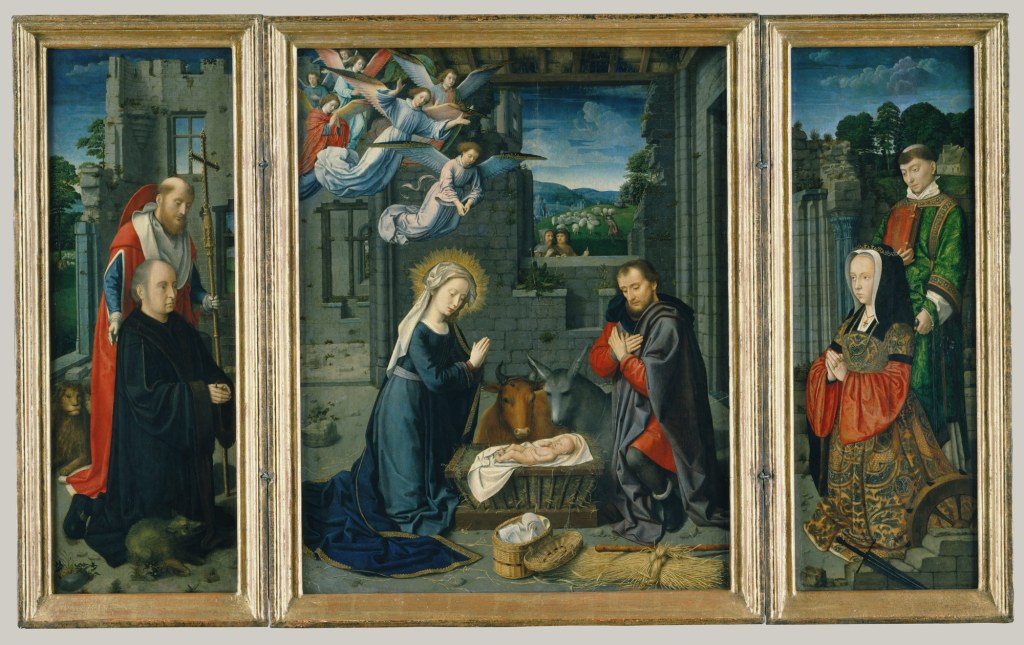
On this blog I have shared only two of Bach’s compositions for Christmas Day so far: Cantata 91 from 1724 here, and of course the first cantata from the Christmas Oratorio (our family’s “wake-up call” on Christmas morning) from 1734 here. But Bach wrote at least three more cantatas for this day, as well as his Magnificat.
Today I’d love to share Cantata 110 Unser Mund sei voll Lachens (May our mouth be full of laughter) from 1725. Find The Netherlands Bach Society’s live recording of this cantata here on YouTube.
Find the text with English translations here, and the score here.
This live video registration has an abundance of Christmas presents for me: the festive setting of the Grote Kerk in Naarden; soprano Maria Keohane in a Scandinavian Christmas dress and truly enjoying herself; tenor Charles Daniels, always a delight; a promising new young bass, Matthias Winckhler, who can actually sing every note of the enormously challenging bass aria in this cantata; and the best gift of all: Alex Potter singing the alto aria, which to me is the most moving part of this cantata, and also the core message Bach wanted to communicate to his fellow believers on this Christmas Day in 1725.
For the joyous opening of this cantata, Bach re-uses his Orchestral Suite no. 4 in D major (BWV 1069) to grandly illustrate the “arrival” of Jesus. In the center of the cantata, after the festivities of the opening chorus, but before the very pretty Christmas-y “Glory to God in the highest” soprano-tenor duet, and an impressive bass aria with trumpet, the music goes into a minor key, and also turns inward, in the alto aria. The text of that alto aria is as follows:
Ach Herr, was ist ein Menschenkind,
Ah, Lord, what is a child of man
Dass du sein Heil so schmerzlich suchest?
that you should seek his salvation with so much pain?
Ein Wurm, den du verfluchest,
A worm whom you curse
Wenn Höll und Satan um ihn sind;
when hell and Satan are around him;
Doch auch dein Sohn, den Seel und Geist
but also your son, whom soul and spirit
Aus Liebe seinen Erben heißt.
Through love call their inheritance.
Of course this text refers to the believers in general, that on the one hand they are worms, and on the other hand will be saved by Jesus. but I feel the choice of the word “Menschenkind” is not a coincidence. It definitely also refers to the the fact that Jesus can’t just stay in the godly realm, but in order to be a true savior, he has to come to earth, become man, and go through all the rotten reality that might imply. This theme appears more or less prominently in all Bach’s cantatas for Christmas Day, and in this cantata 110 it is already announced in the tenor aria:
Er wird Mensch, und dies allein,
He has become man, and this only
Dass wir Himmels Kinder sein.
so that we may become children of heaven.
Nine years later, in the first cantata of his Christmas Oratorio, Bach also stresses this “coming to earth” and “becoming man” of Jesus on this first Christmas Day, in what is also the most moving and inward-looking part of that particular cantata: the soprano-bass duet. The text Bach gives to the bass in that duet is as follows. Note the last line.
Wer will die Liebe recht erhöhn,
Who will rightly extol the love
Die unser Heiland vor uns hegt?
that our Saviour cherishes for us?
Ja, wer vermag es einzusehen,
Indeed, who is able to realise
Wie ihn der Menschen Leid bewegt?
how he is moved by human suffering?
Des Höchsten Sohn kömmt in die Welt,
The highest’s son came into the world
Weil ihm ihr Heil so wohl gefällt,
because its salvation pleases him so well
So will er selbst als Mensch geboren werden.
that he himself is willing to be born as a man.
Merry Christmas!
Wieneke Gorter, December 24, 2019
 Weekly Cantata