Weekly Cantata

Weekly Cantata

Tag Archives: Jos van Veldhoven

Maria Keohane brings Peace

20 Sunday Sep 2020

Posted by cantatasonmymind in Cantatas, Leipzig, Trinity

≈ 2 Comments

Tags

BWV 110, BWV 151, BWV 51, Dresden, Emma Kirkby, European Union Baroque Orchestra, John Eliot Gardiner, Jos van Veldhoven, Lars Ulrik Mortensen, Maria Keohane, Robert Vanryne, Sebastian Philpott, Trinity 15, Weissenfels

One of the three cantatas Bach wrote for this 15th Sunday after Trinity is Cantata 51 Jauchzet Gott in allen Landen!, the famous solo-cantata for soprano and trumpet. In a world that values athletes above artists, attending or discussing a performance of this cantata can sometimes feel as if we’re all judging a tennis match instead of a work of art: will the soprano hit that high C? and how virtuoso is that trumpet player? I have always been a bit frustrated by this.

What a breath of fresh air it was then to discover Maria Keohane’s interpretation of this cantata. There are two live registrations of her singing this on YouTube, one with the European Union Baroque Orchestra, under the direction of Lars Ulrik Mortensen, with Sebastian Philpott on trumpet. Then there is a newer one, from 2015, with the Netherlands Bach Society under the direction of Jos van Veldhoven, with Robert Vanryne on trumpet. That one is my favorite, and you can find it here.

Find the German texts with English translations here (click on “Text”), and the score here.

I noticed how Maria Keohane masters every aspect of this composition, not because she’s the most virtuoso soprano on earth, but because she completely understands the music. She radiates joy, but also brings a great Calm over everything and everyone. In this wonderful interview (with English subtitles here, with Dutch subtitles here) she explains how this cantata has been with her all her music-making life, how she sees her interaction with the trumpet as a symbiosis instead of a competition, and how she believes that “in allen Landen” (in all lands) means that we share the same joy of being together on this earth.

I realize she was in Christmas mode when she gave this interview (the cantata was performed in the same concert as Cantata 110 for Christmas Day and Cantata 151 for the Third Christmas Day), but I absolutely feel the “Peace on Earth” she talks about when I listen to her performance.

Some more information about this cantata:

While almost all soprano solos in Bach’s church cantatas were intended for a boy soprano (no female musicians allowed in the churches of Leipzig), it remains a big question whether this one was ever sung by a boy. Under the “Story” tab on this website, the Netherlands Bach Society explains that Bach composed this cantata around 1730 for either the Weissenfels court (where his wife Anna Magdalena, an accomplished singer who had family there, might have performed it) or for one of the Italian opera singers who settled in Dresden that year. Even Gustav Leonhardt chose an adult female soprano (Marianne Kweksilber) for his recording of this cantata.

If you’d like to hear the perfect “boy soprano voice” sing this cantata, I invite you to listen to Emma Kirkby on the Gardiner recording from 2000, here on Spotify, or here on YouTube. While she doesn’t move me the way Maria Keohane does, her voice is an unbelievably amazing instrument.

Other cantatas for this 15th Sunday after Trinity I’ve discussed in past years: Cantata 138 from 1723, and Cantata 99 from 1724.

Wieneke Gorter, September 19, 2020.

Sweet soprano consolation for Third Christmas Day 1725, or “the one with the dirty baby”

26 Thursday Dec 2019

Posted by cantatasonmymind in Cantatas, Christmas, Leipzig

≈ Leave a comment

Tags

Alex Potter, BWV 151, Charles Daniels, Christmas 3, flute, Frank Theuns, Jos van Veldhoven, Maria Keohane, Matthias Winckhler, soprano

The Nativity of Christ, by Federico Barocci, ca. 1590. Museo del Prado, Madrid, Spain.

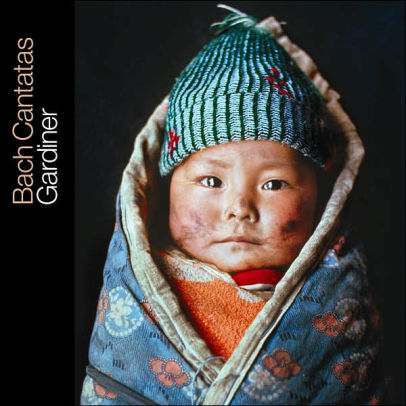
Sometime in the first decade of this century, after I had already moved to the USA, my mother acquired Gardiner’s Christmas Cantatas CD from 2000 (Volume 15 of the Cantata Pilgrimage CD series). I remember that every time a Bach lover came to visit they were urged to listen to the soprano aria from this CD. Among my mother, her sisters, and my grandma, this CD became known as “the one with the dirty baby.” (or as they said in Dutch “die met het vieze kindje”). At some point my mother allegedly said to them that this particular recording should be played at her funeral. Listen a bit to that Gardiner recording of Cantata 151 Süsser Trost, mein Jesus kömmt with Gillian Keith, soprano, and Rachel Beckett, flute, here on YouTube. Just listen for a little bit, because a much better recording of this cantata is coming up in this post! When the time came (much sooner than anyone in the early 2000s could have thought) to plan my mother’s funeral, we were blessed with a live performance, not a recording, I personally didn’t remember the “dirty baby” story that vividly, and we opted for another aria instead (read more about that here).

I don’t remember ever hearing anything more from the CD with the dirty baby than this one aria, and I never ever realized it was from a cantata for the Third Day of Christmas. (Read here why I didn’t know any other cantatas for the Third Day of Christmas than the third cantata from the Christmas Oratorio.)

Swedish soprano Maria Keohane

Fast forward to last week, when I was researching new live video recordings for Cantata 110 for Christmas Day, and discovered that the Christmas concert by the Netherlands Bach Society from 2015 also featured this Cantata 151, and that Maria Keohane does an absolutely beautiful job singing that opening movement. I also enjoy all the other soloists. Watch this live recording here on YouTube. Soloists are Frank Theuns, flute; Maria Keohane, soprano; Alex Potter, alto; Charles Daniels, tenor; and Matthias Winckhler, bass. Interestingly, Maria Keohane has recorded this cantata on video with two other ensembles: Concerto Copenhagen and Ricercar Consort. Those other performances are good too, but I very much prefer the performance and the camera work on this one with the Netherlands Bach Society.

Find the text of Cantata 151 Süsser Trost, mein Jesus kömmt here, and the score here.

Wieneke Gorter, December 26, 2019.

Bach and the Christmas Day message

24 Tuesday Dec 2019

Posted by cantatasonmymind in Bach's life, Cantatas, Christmas, Leipzig

≈ 2 Comments

Tags

Alex Potter, Bachvereniging, BWV 110, Charles Daniels, Christmas 1, Christmas Day, Grote Kerk Naarden, Jos van Veldhoven, Maria Keohane, Matthias Winckhler, Netherlands Bach Society

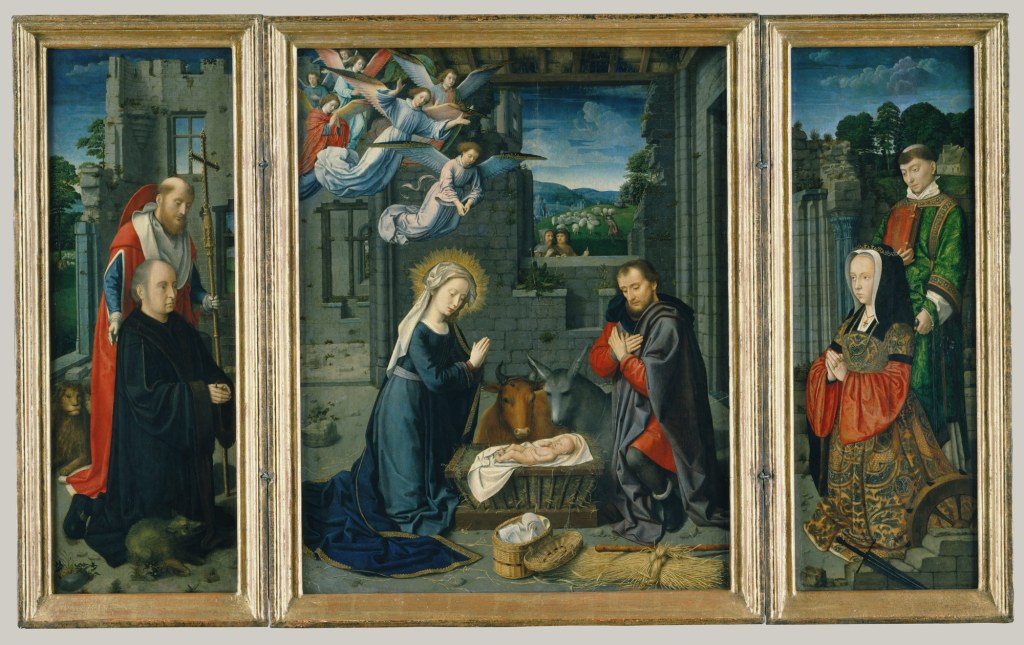
The Nativity with Donors and Saints Jerome and Leonard, by Gerard David, ca. 1510-15. Metropolitan Museum of Art, New York. More information about this painting can be found here.

On this blog I have shared only two of Bach’s compositions for Christmas Day so far: Cantata 91 from 1724 here, and of course the first cantata from the Christmas Oratorio (our family’s “wake-up call” on Christmas morning) from 1734 here. But Bach wrote at least three more cantatas for this day, as well as his Magnificat.

Today I’d love to share Cantata 110 Unser Mund sei voll Lachens (May our mouth be full of laughter) from 1725. Find The Netherlands Bach Society’s live recording of this cantata here on YouTube.

Find the text with English translations here, and the score here.

This live video registration has an abundance of Christmas presents for me: the festive setting of the Grote Kerk in Naarden; soprano Maria Keohane in a Scandinavian Christmas dress and truly enjoying herself; tenor Charles Daniels, always a delight; a promising new young bass, Matthias Winckhler, who can actually sing every note of the enormously challenging bass aria in this cantata; and the best gift of all: Alex Potter singing the alto aria, which to me is the most moving part of this cantata, and also the core message Bach wanted to communicate to his fellow believers on this Christmas Day in 1725.

Alex Potter. Photo by Annelies van der Vegt.

For the joyous opening of this cantata, Bach re-uses his Orchestral Suite no. 4 in D major (BWV 1069) to grandly illustrate the “arrival” of Jesus. In the center of the cantata, after the festivities of the opening chorus, but before the very pretty Christmas-y “Glory to God in the highest” soprano-tenor duet, and an impressive bass aria with trumpet, the music goes into a minor key, and also turns inward, in the alto aria. The text of that alto aria is as follows:

Ach Herr, was ist ein Menschenkind,
Ah, Lord, what is a child of man
Dass du sein Heil so schmerzlich suchest?
that you should seek his salvation with so much pain?
Ein Wurm, den du verfluchest,
A worm whom you curse
Wenn Höll und Satan um ihn sind;
when hell and Satan are around him;
Doch auch dein Sohn, den Seel und Geist
but also your son, whom soul and spirit
Aus Liebe seinen Erben heißt.
Through love call their inheritance.

Of course this text refers to the believers in general, that on the one hand they are worms, and on the other hand will be saved by Jesus. but I feel the choice of the word “Menschenkind” is not a coincidence. It definitely also refers to the the fact that Jesus can’t just stay in the godly realm, but in order to be a true savior, he has to come to earth, become man, and go through all the rotten reality that might imply. This theme appears more or less prominently in all Bach’s cantatas for Christmas Day, and in this cantata 110 it is already announced in the tenor aria:

Er wird Mensch, und dies allein,
He has become man, and this only
Dass wir Himmels Kinder sein.
so that we may become children of heaven.

Nine years later, in the first cantata of his Christmas Oratorio, Bach also stresses this “coming to earth” and “becoming man” of Jesus on this first Christmas Day, in what is also the most moving and inward-looking part of that particular cantata: the soprano-bass duet. The text Bach gives to the bass in that duet is as follows. Note the last line.

Wer will die Liebe recht erhöhn,
Who will rightly extol the love
Die unser Heiland vor uns hegt?
that our Saviour cherishes for us?
Ja, wer vermag es einzusehen,
Indeed, who is able to realise
Wie ihn der Menschen Leid bewegt?
how he is moved by human suffering?
Des Höchsten Sohn kömmt in die Welt,
The highest’s son came into the world
Weil ihm ihr Heil so wohl gefällt,
because its salvation pleases him so well
So will er selbst als Mensch geboren werden.
that he himself is willing to be born as a man.

Merry Christmas!

Wieneke Gorter, December 24, 2019

First Sunday after Easter 1724

23 Sunday Apr 2017

Posted by cantatasonmymind in After Easter, Bach's life, Cantatas, Leipzig

≈ Leave a comment

Tags

Alex Potter, Bach, cantatas, corno da tirarsi, Jos van Veldhoven, Peter Kooy, Thomas Hobbs, tromba da tirarsi

caravaggio_-_the_incredulity_of_saint_thomas

The Incredulity of Saint Thomas by Caravaggio, 1601-1602, Sanssouci Palace, Potsdam, Germany

In the past two weeks I ran out of time to work on this blog because of being sick, performing concerts with California Bach Society, and being on a trial jury for the first time since becoming a United States citizen in 2011. So this post for the First Sunday after Easter in 1724 is post-dated, and short, but contains lots of information to learn more about this beautiful cantata.

Previously in 1724: Bach “premiered” his Passion according to St. John on Good Friday, April 7, 1724. Then he ran out of time and energy and, without too much care for detail and text illustration, created cantatas out of existing music for Easter Monday and Easter Tuesday of that year.

This means that the first new composition he wrote after the St. John Passion was this cantata 67 Halt im Gedächtnis Jesum Christ (keep thinking of Jesus Christ), based on the Gospel text of Jesus appearing to his disciples. A famous cantata, already known and admired in the early 19th century, especially because of the dramatic fourth movement for choir and bass, which Bach would later transform into the Gloria of his Missa Brevis in A (BWV 234).

For the background of this cantata I will refer you to the experts, in this 15-minute video by the Netherlands Bach Society, published within their AllofBach series. The video is in Dutch, with English subtitles. It talks about Bach including a flute (not a recorder!) for the first time in a cantata, the meaning behind the text, and the use of the slide-trumpet “corno da tirarsi.”

Listen to and watch their performance here, find the text here, and find the score here. The Netherlands Bach Society, conducted by Jos van Veldhoven, with countertenor Alex Potter, tenor Thomas Hobbs, and bass Peter Kooij.

Wieneke Gorter, April 30, 2017.

Recent Posts

  • “Missa Miniatura” by CONTINUUM/Elina Albach Even More Moving in 2025
  • Bachfest Leipzig 2025
  • Bach Cantatas for Christmas – 1724 and 1734 editions
  • Fourth Sunday of Advent – more insight into Cantata 62 helped me better understand Bach’s Christmas Oratorio
  • Saint Ambrose and Luther in Milan – Second Sunday of Advent

Archives

  • August 2025
  • July 2025
  • December 2024
  • November 2024
  • June 2024
  • January 2024
  • December 2023
  • October 2023
  • September 2023
  • August 2023
  • April 2022
  • February 2022
  • January 2022
  • December 2021
  • November 2021
  • June 2021
  • May 2021
  • April 2021
  • February 2021
  • January 2021
  • December 2020
  • November 2020
  • October 2020
  • September 2020
  • August 2020
  • July 2020
  • May 2020
  • April 2020
  • March 2020
  • February 2020
  • January 2020
  • December 2019
  • November 2019
  • May 2018
  • April 2018
  • March 2018
  • February 2018
  • January 2018
  • December 2017
  • November 2017
  • October 2017
  • September 2017
  • August 2017
  • July 2017
  • June 2017
  • May 2017
  • April 2017
  • March 2017
  • February 2017
  • January 2017
  • December 2016
  • November 2016
  • October 2016
  • September 2016
  • August 2016
  • July 2016
  • June 2016
  • May 2016
  • April 2016
  • March 2016
  • February 2016
  • January 2016

Enter your email address to follow this blog and receive notifications of new posts by email.

Join 338 other subscribers

Categories

  • 1723 Trinity season special series
  • Advent
  • After Easter
  • Ascension
  • Bach's life
  • Cantatas
  • Chorale cantatas 1724/1725
  • Christmas
  • Easter
  • Epiphany
  • Following Bach in 1725
  • Köthen
  • Leipzig
  • Septuagesima
  • Travel
  • Trinity
  • Weimar

Meta

  • Create account
  • Log in
  • Entries feed
  • Comments feed
  • WordPress.com

Website Built with WordPress.com.

  • Subscribe Subscribed
    • Weekly Cantata
    • Join 158 other subscribers
    • Already have a WordPress.com account? Log in now.
    • Weekly Cantata
    • Subscribe Subscribed
    • Sign up
    • Log in
    • Report this content
    • View site in Reader
    • Manage subscriptions
    • Collapse this bar
 

Loading Comments...