Weekly Cantata

Weekly Cantata

Tag Archives: Robert Vanryne

Remember Those Covid-Era Concerts Without Audiences? – Cantatas 98 and 109 for Trinity 21

24 Saturday Oct 2026

Posted by cantatasonmymind in 1723 Trinity season special series, Cantatas, Chorale cantatas 1724/1725, Leipzig, Leipzig 1726/1727

≈ 2 Comments

Tags

Agnes Glassner, Alex Potter, Armin Bereuter, Bettina Messerschmidt, Bettina Simon, BWV 109, BWV 188, BWV 38, BWV 98, Collegium Vocale Gent, Cosimo Stawiarski, Daniel Johannsen, Guro Hjemli, J.S. Bach Foundation, Jan Börner, Johannes Frisch, Johannes Hämmerle, Johannes Kaleschke, Kantaten in Vorarlberg, Katharina Verhaar, Lea Elisabeth Müller, Manuel Walser, Miriam Feuersinger, Netherlands Bach Society, Philippe Herreweghe, Regula Keller, Robert Vanryne, Rodrigo Lopez-Paz, Rudolf Lutz, Shunske Sato, Trinity 21, Wolf Matthias Friedrich
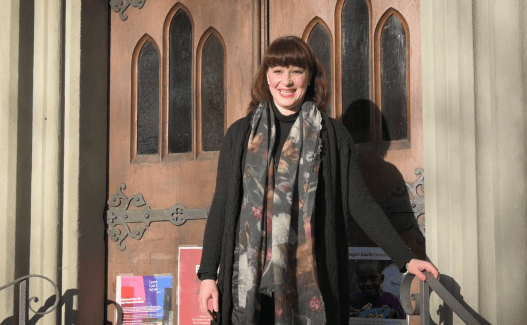
Soprano Miriam Feuersinger introducing the “Bachkantaten in Vorarlberg” concert on November 15, 2020 in Bregenz, Austria.

For this 21st Sunday after Trinity, I would like to share two wonderful videos that were recorded during the Covid pandemic. I have so much respect for all the musicians involved in these concerts. While I can clearly see that it was a joy for them to sing and play Bach, and to make music with their colleagues again, let’s not forget that it must have been incredibly demanding, to perform for an empty church. They all had to pull it from somewhere else, that extra energy that performing for an audience normally gives you.

Cantata 98 Was Gott tut, das ist wohlgetan [I] by Miriam Feuersinger and Friends

The first video features Cantata 98 Was Gott tut, das ist wohlgetan [I] from 1726, performed in Bregenz, Austria, on November 15, 2020, by Miriam Feuersinger, soprano; Lea Elisabeth Müller, alto; Daniel Johannsen, tenor; Wolf Matthias Friedrich, bass; Bettina Simon and Agnes Glaßner, oboe; Regula Keller and Cosimo Stawiarski, violin; Johannes Frisch, viola; Bettina Messerschmidt, violoncello; Armin Bereuter, violone; and Johannes Hämmerle, organ. Watch the video here.

This recording is part of Miriam Feuersinger’s own Bach cantata series in her home state of Vorarlberg, Austria.

Find the German texts with English translations for Cantata 98 here, and the score here.

Cantata 109 Ich glaube, lieber Herr, hilf meinem Unglauben! by the Netherlands Bach Society

Next up: Cantata 109 Ich glaube, lieber Herr, hilf meinem Unglauben! From 1723, performed in Amsterdam, The Netherlands, on May 28, 2021, by the Netherlands Bach Society under the direction of Shunske Sato, with beautiful singing by countertenor Alex Potter and tenor Daniel Johannsen, and fabulous playing by Rodrigo Lopez Paz and Katharina Verhaar on oboe and Robert Vanryne on slide trumpet. Watch the video here.

Alex Potter and Daniel Johannsen both communicate the text in such an extraordinary and moving way, it’s the best kind of storytelling.

Find the German texts with English translations for Cantata 109 here, the score here, and my article from 2016 about this cantata here.
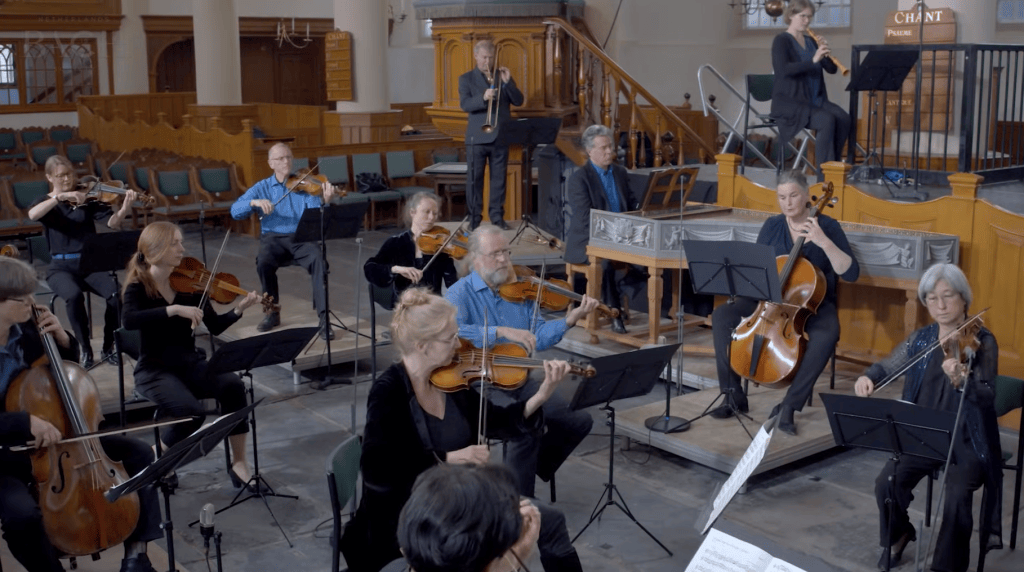
The Netherlands Bach Society in an empty Walloon Church in Amsterdam, May 2021

Other cantatas for this Sunday

Bach wrote Cantata 38 Aus tiefer Not schrei ich zu dir in 1724, as part of his 1724-1725 Chorale Cantata cycle. In my post from 2017 I recommend the Herreweghe/Collegium Vocale Gent recording, in my post from 2020 the Lutz/J.S. Bach Foundation recording. Those articles also include updated links for the score and texts.

For Cantata 188 Ich habe meine Zuversicht from 1728, there’s a lovely video recording by the J.S. Bach Foundation under the direction of Rudolf Lutz, with soprano Guro Hjemli, countertenor Jan Börner, tenor Johannes Kaleschke, and bass Manuel Walser. Find it here. Find the score here, and the German texts with English translations here.

I would love it if you would share this article with a friend!

Not an email subscriber yet? You can sign up below. I won’t use your email address for anything else.

© Wieneke Gorter, October 24, 2026.
The Recording that Knocked My Socks off – Cantata 162 for Trinity 20

17 Saturday Oct 2026

Posted by cantatasonmymind in 1723 Trinity season special series, Cantatas, Leipzig, Weimar

≈ Leave a comment

Tags

Alain de Rudder, Andreas Helm, Anneke Scott, Annina Stahlberger, Bach Akademie Stuttgart, Bach Collegium Japan, Catalina Bertucci, corno da tirarsi, Gaechinger Cantorey, Gerlinde Sämann, Gottfried Reiche, Hans-Christoph Rademann, J.S. Bach Foundation, Marie Henriette Reinhold, Masaaki Suzuki, Olivier Picon, Parable of the Unworthy Wedding Guest, Patrick Grahl, Rijksmuseum, Robert Vanryne, Rudolf Lutz, Simon Kick, Tobias Berndt, Toshio Shimada, Trinity 20, Vision Bach, Yoshimichi Hamada, Yumiko Kuriso

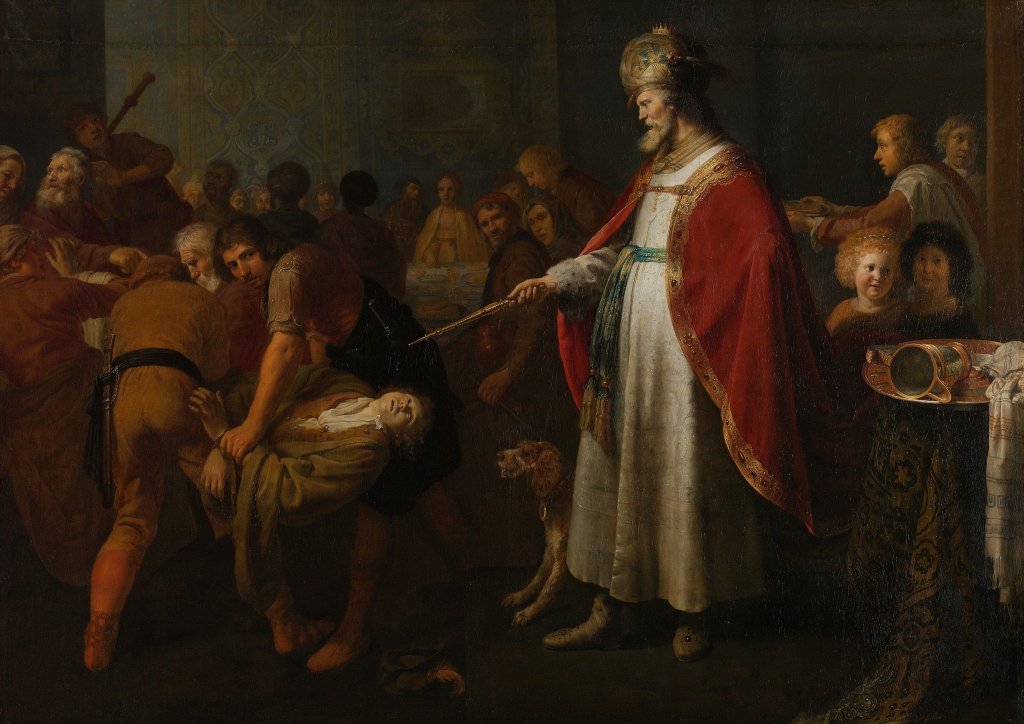
The Parable of the Unworthy Wedding Guest attributed to Simon Kick, circa 1644. Oil on Canvas. Rijksmuseum, Amsterdam, the Netherlands.

Every now and then, a cantata recording knocks my socks off. It happened this week. And since I need to keep this post short, I’ll leave the other five articles I had brewing in my mind on the shelf for the future, and I’ll just tell you about that one recording.

Tobias Berndt

It’s the Leipzig version of Cantata 162 Ach! ich sehe, itzt, da ich zur Hochzeit gehe by Bach Akademie Stuttgart under the direction of Hans-Christoph Rademann, from their Vision Bach series, Volume 4. The opening movement gives me the good kind of stomach ache, thanks to gorgeous singing by Tobias Berndt, unparalleled corno da tirarsi playing by Anneke Scott, and this fantastic orchestra. Another highlight is the duet by alto Marie Henriette Reinhold and tenor Patrick Grahl, accompanied by a terrific continuo group.

Find this recording on YouTube or on Spotify in playlists created by me. To learn more about Bach Akademie Stuttgart’s Vision Bach series and how to purchase the CDs, read my post about their recording of Cantatas 105 and 46. Find the German texts with English translations here, and the score here.

Cantata 162 – A Short History

Bach wrote this cantata originally for the 20th Sunday after Trinity in 1716 in Weimar, setting texts by his favorite librettist there, court librarian Salomon Franck. Franck transforms the question “Am I dressed properly?” from the The Parable of the Unworthy Wedding Guest (Matthew 22:1-14, the Gospel for this Sunday) into “Have I made the right choices?”

Since Bach had limited performance space in the Duke’s chapel in Weimar, he composed this original piece for a small instrumental ensemble: strings, bassoon, and continuo, plus likely a solo wind instrument for the soprano aria (movement 3).*

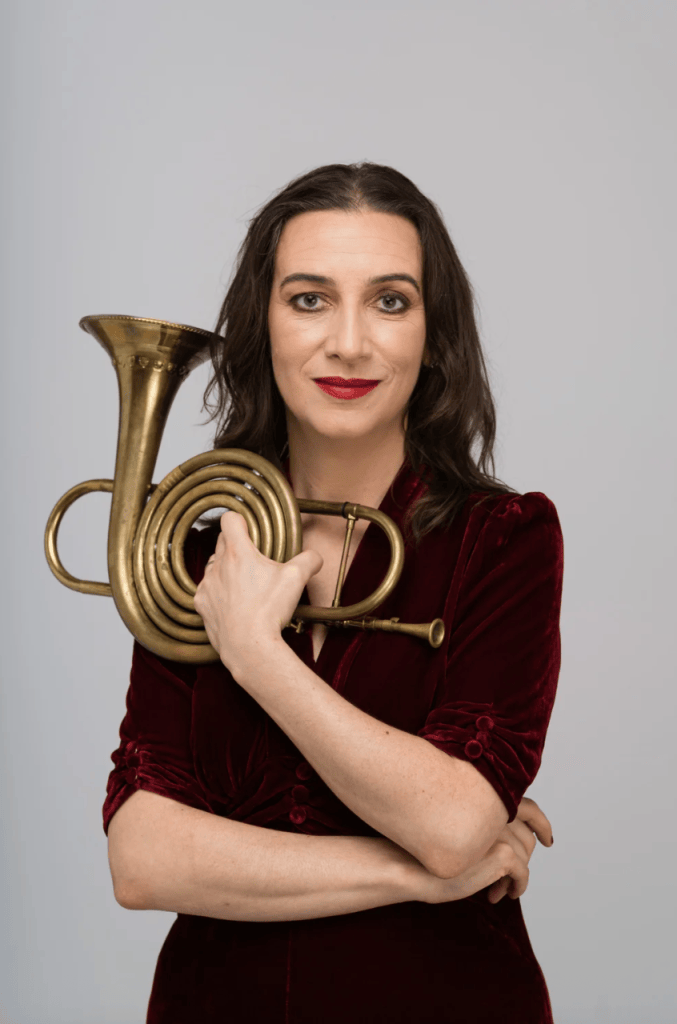
Anneke Scott – The Queen of the Corno da Tirarsi

For the 1723 performance in Leipzig, Bach added a corno da tirarsi in the first and last movements. In his time, most probably the only person who could play the corno da tirarsi was Gottfried Reiche, because Bach stopped writing for this instrument after Reiche’s death in 1732.

Anneke Scott with corno da tirarsi. Photo by Nick Gilbert.

Today, we are lucky to have more than one musician who can handle this instrument. I’m thinking of Alain de Rudder (Herreweghe), Toshio Shimada (Suzuki), and last but not least, Olivier Picon (J.S. Bach Foundation), who did important research on the instrument and initiated Egger’s reconstruction of the original. But for me, the Queen of the corno da tirarsi is Anneke Scott. I already talked about her fabulous performance in Cantatas 46 and 105 on Volume 3 of Rademann’s Vision Bach several weeks ago, and in this Cantata 162 she does it again! Her playing is simply stunning, I have never heard the corno da tirarsi played with such beautiful phrasing and sound quality as she does on these Vision Bach recordings.

To everyone who recently started following me here on WordPress or on Instagram @weeklycantata, welcome and thank you for being part of my Bach family! Please feel free to share this article with a friend.

Not an email subscriber yet? Sign up below! I won’t use your email address for anything else.

© Wieneke Gorter, October 17, 2026.

*For his recording in 1996 (Yumiko Kurisu, soprano; Yoshimichi Hamada, recorder) Masaaki Suzuki created a part for solo recorder, which has subsequently also been used by Lutz/J.S. Bach Foundation (Gerlinde Sämann, soprano; Annina Stahlberger, recorder) and for the performance discussed here by Rademann/Bach Akademie Stuttgart (Catalina Bertucci, soprano; Andreas Helm, recorder).

Maria Keohane brings Peace

20 Sunday Sep 2020

Posted by cantatasonmymind in Cantatas, Leipzig, Trinity

≈ 2 Comments

Tags

BWV 110, BWV 151, BWV 51, Dresden, Emma Kirkby, European Union Baroque Orchestra, John Eliot Gardiner, Jos van Veldhoven, Lars Ulrik Mortensen, Maria Keohane, Robert Vanryne, Sebastian Philpott, Trinity 15, Weissenfels

One of the three cantatas Bach wrote for this 15th Sunday after Trinity is Cantata 51 Jauchzet Gott in allen Landen!, the famous solo-cantata for soprano and trumpet. In a world that values athletes above artists, attending or discussing a performance of this cantata can sometimes feel as if we’re all judging a tennis match instead of a work of art: will the soprano hit that high C? and how virtuoso is that trumpet player? I have always been a bit frustrated by this.

What a breath of fresh air it was then to discover Maria Keohane’s interpretation of this cantata. There are two live registrations of her singing this on YouTube, one with the European Union Baroque Orchestra, under the direction of Lars Ulrik Mortensen, with Sebastian Philpott on trumpet. Then there is a newer one, from 2015, with the Netherlands Bach Society under the direction of Jos van Veldhoven, with Robert Vanryne on trumpet. That one is my favorite, and you can find it here.

Find the German texts with English translations here (click on “Text”), and the score here.

I noticed how Maria Keohane masters every aspect of this composition, not because she’s the most virtuoso soprano on earth, but because she completely understands the music. She radiates joy, but also brings a great Calm over everything and everyone. In this wonderful interview (with English subtitles here, with Dutch subtitles here) she explains how this cantata has been with her all her music-making life, how she sees her interaction with the trumpet as a symbiosis instead of a competition, and how she believes that “in allen Landen” (in all lands) means that we share the same joy of being together on this earth.

I realize she was in Christmas mode when she gave this interview (the cantata was performed in the same concert as Cantata 110 for Christmas Day and Cantata 151 for the Third Christmas Day), but I absolutely feel the “Peace on Earth” she talks about when I listen to her performance.

Some more information about this cantata:

While almost all soprano solos in Bach’s church cantatas were intended for a boy soprano (no female musicians allowed in the churches of Leipzig), it remains a big question whether this one was ever sung by a boy. Under the “Story” tab on this website, the Netherlands Bach Society explains that Bach composed this cantata around 1730 for either the Weissenfels court (where his wife Anna Magdalena, an accomplished singer who had family there, might have performed it) or for one of the Italian opera singers who settled in Dresden that year. Even Gustav Leonhardt chose an adult female soprano (Marianne Kweksilber) for his recording of this cantata.

If you’d like to hear the perfect “boy soprano voice” sing this cantata, I invite you to listen to Emma Kirkby on the Gardiner recording from 2000, here on Spotify, or here on YouTube. While she doesn’t move me the way Maria Keohane does, her voice is an unbelievably amazing instrument.

Other cantatas for this 15th Sunday after Trinity I’ve discussed in past years: Cantata 138 from 1723, and Cantata 99 from 1724.

Wieneke Gorter, September 19, 2020.

Recent Posts

  • Three Listening Guides – First Sunday of Advent
  • The End of Times and Christmas Combined – Cantata 116 for Trinity 25
  • From the Archives, with a New Recording – Cantatas 60 and 26 for Trinity 24
  • A Controversy and a Coin Collection – Cantata 163 for Trinity 23
  • Giving the Choir a Breather? – Cantata 89 for Trinity 22

Archives

  • November 2026
  • October 2026
  • September 2026
  • August 2026
  • August 2025
  • July 2025
  • December 2024
  • November 2024
  • June 2024
  • January 2024
  • December 2023
  • October 2023
  • September 2023
  • August 2023
  • April 2022
  • February 2022
  • January 2022
  • December 2021
  • November 2021
  • June 2021
  • May 2021
  • April 2021
  • February 2021
  • January 2021
  • December 2020
  • November 2020
  • October 2020
  • September 2020
  • August 2020
  • July 2020
  • May 2020
  • April 2020
  • March 2020
  • February 2020
  • January 2020
  • December 2019
  • November 2019
  • May 2018
  • April 2018
  • March 2018
  • February 2018
  • January 2018
  • December 2017
  • November 2017
  • October 2017
  • September 2017
  • August 2017
  • July 2017
  • June 2017
  • May 2017
  • April 2017
  • March 2017
  • February 2017
  • January 2017
  • December 2016
  • November 2016
  • October 2016
  • September 2016
  • August 2016
  • July 2016
  • June 2016
  • May 2016
  • April 2016
  • March 2016
  • February 2016
  • January 2016

Enter your email address to follow this blog and receive notifications of new posts by email.

Join 338 other subscribers

Categories

  • 1723 Trinity season special series
  • Advent
  • After Easter
  • Ascension
  • Bach's life
  • Cantatas
  • Chorale cantatas 1724/1725
  • Christmas
  • Easter
  • Epiphany
  • Following Bach in 1725
  • Köthen
  • Leipzig
  • Leipzig 1726/1727
  • Septuagesima
  • Travel
  • Trinity
  • Weimar

Meta

  • Create account
  • Log in
  • Entries feed
  • Comments feed
  • WordPress.com

Website Built with WordPress.com.

  • Subscribe Subscribed
    Weekly Cantata
    Join 158 other subscribers

    Have a WordPress.com account? Log in now.

  • Weekly Cantata
    View site in Reader
    Manage subscriptionsSign upLog in
    Report this content
    Collapse this bar
Loading Comments...