
Tags
Alex Potter, Bach, Bach Akademie Stuttgart, Benedikt Kristjánsson, Bernhard Schrammek, Brandenburg concertos, BWV 139, BWV 163, BWV 52, cantatas, Daniel R. Melamed, Der Bach Kanal, Felix Zimmermann, Hans-Christoph Rademann, J.S. Bach Foundation, Johannes Kaleschke, Magistertaler, Matthew 22, Michael Marissen, Michael Maul, Miriam Feuersinger, Renate Steinmann, Rudolf Lutz, Salomo Franck, Thomas Pitt, Tobias Berndt, Trinity 23, Vision Bach
A romantic soprano-alto duet, a radiant bass aria, and a heavenly tenor aria, Cantata 163 Nur jedem das Seine! (Just to each what is his) has it all. Still, it is very seldomly performed, and usually appears on recordings only as part of a comprehensive collection of cantatas. This most probably has to do with the atrocious reality of the Nazis misusing the motto “Jedem das Seine” during the Second World War. I first learned of this controversy through the J.S. Bach Foundation’s toughtful pre-concert lecture about this cantata. When doing further research, I found a good explanation by American Bach experts Daniel R. Melamed and Michael Marissen in their English translation of this cantata’s text:
Some present-day listeners are concerned that the title of this cantata, “Nur jedem das Seine,” resonates with anti-Jewish and other contempt, as its language might be taken to pre-echo the motto moulded on to the gate at the Buchenwald concentration camp, JEDEM DAS SEINE—literally, “to each his own,” but which the Nazis understood as “one gets what he deserves.” Cantata 163’s “Nur jedem das Seine,” however, is employed in the context of the biblical obligation to pay taxes to secular authorities [“Give to Caesar what is Caesar’s, and to God what is God’s,” from Matthew 22:15-22]. In the cantata’s biblical-liturgical context, the more specific sense of “Nur jedem das Seine” would be “Only to each his due,” and so we have rendered the phrase not as “Only to each his own,” […] but rather as “Just to each what is his.”
My favorite Recording: Bach Akademie Stuttgart under the direction of Hans-Christoph Rademann
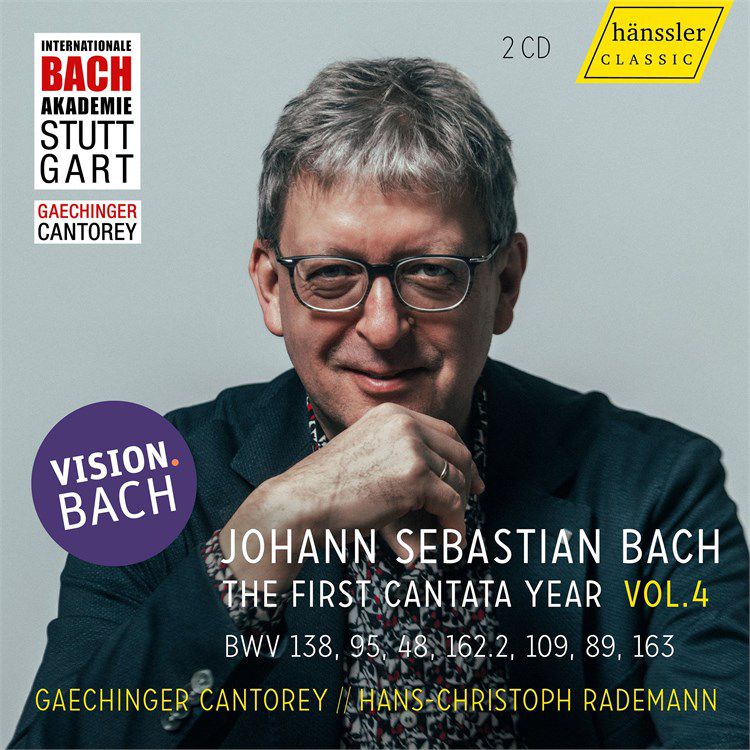
Bach performed Cantata 163 Nur jedem das Seine! in Weimar in 1715, and most probably again in Leipzig in 1723. Because of this Leipzig performance, Bach Akademie Stuttgart / Hans-Christoph Rademann included it in their Vision Bach – The First Cantata Year series. It’s the very last cantata on Volume 4 of this series, and it makes this double-CD go out with a bang, with an all-star cast of soloists (Miriam Feuersinger, soprano; Alex Potter, countertenor; Benedikt Kristjánsson, tenor; Tobias Berndt, bass) and the always fabulous orchestra. Except for a teeny tiny part of the tenor aria (see below), this is my absolute favorite recording of this cantata. This Volume 4 also includes Cantata 162 for Trinity 20 and Cantata 89 for Trinity 22. Purchase it on Amazon.com or on jpc.de.
Please find the playlists I created for this specific cantata here on Spotify, and here on YouTube. Please find the text of Cantata 163 Nur jedem das Seine! here, and the score here.
The tenor aria – Weimar versus Leipzig
Bach’s librettist in Weimar lets the tenor paraphrase the Gospel reading for this 23rd Sunday after Trinity, the story in which the Pharisees ask Jesus a trick question: Does loyalty to God actually permit paying taxes to the Emperor? To which Jesus, pointing to the Emperor’s image on a coin, cleverly replies, “Give to Caesar what is Caesar’s, and to God what is God’s.” Bach illustrates the words “Doch bleibet das Herze dem Höchsten alleine” (But the heart remains to the Most High alone) very lovingly with a tender question-and-answer between the tenor and the violin. With the larger, Leipzig style orchestra Rademann uses for the recording I recommended above, that tenderness gets lost a bit, because the original duet between one violin and one tenor (the way it must have been performed on the small organ loft in Weimar), is now a duet between an entire violin section and one tenor. While I really truly love Benedikt Kristjánsson’s singing on the Rademann recording (I love his voice and my qualm about this bit has nothing to do with him, just with the number of violins!), for this specific part I prefer the J.S. Bach Foundation recording with tenor Johannes Kaleschke and first violinist Renate Steinmann.
A bass aria with *two* solo cellists!
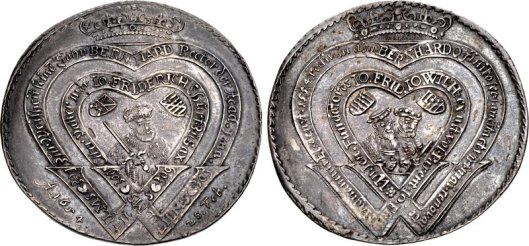
Similar to last week, this week I learned the most intriguing information about a cantata by listening to Michael Maul’s and Bernhard Schrammek’s podast.** In their episode about Cantata 163, Michael Maul explains that the Duke of Weimar’s favorite hobby was collecting coins, and that Bach’s librettist in Weimar, Salomo Franck (1659-1725), was also the administrator of the Duke’s extensive coin collection. When I looked this up, I realized that this coin collection had been in the Duke’s family for generations (see picture at the top of this post). What Franck and Bach thus do to please their employer results in a unique bass aria. Franck writes this text:
Lass mein Herz die Münze sein,
Die ich dir, mein Jesu, steure!
Ist sie gleich nicht allzu rein,
Ach! so komm doch und erneure,
Herr, den schönen Glanz bei ihr!
Komm! arbeite, schmelz und präge,
Dass dein Ebenbild bei mir
Ganz erneuert glänzen möge!
Let my heart be the coin
That I render [pay as tax] unto you, my Jesus.
If it [the coin] is not altogether pristine,
Ah, do come then and renew,
Lord, the beautiful radiance to it.
Come; work, melt, and emboss [it],
So that your very image
May radiate in me [who is] entirely renewed.
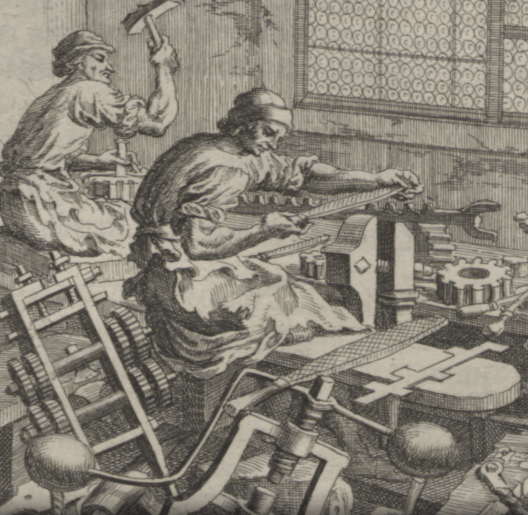
And then Bach does something he’s never done before: he decides to evoke the mechanical character of a minter’s work with a trio of low voices, all operating in the same range: a bass singer, accompanied by two solo cellos. The cellists don’t play continuo, but true solo parts. Never before or again do we see two solo cellos in a Bach aria. And there’s another reason he picks cellos, not bassoons, for example, because this way he can still illustrate the coin’s “schönen Glanz” (beautiful radiance). Never have I heard this done so beautifully as by Felix Zimmermann and Thomas Pitt, the cellists on the Rademann recording.
Miriam Feuersinger and Alex Potter – I can listen to them for days
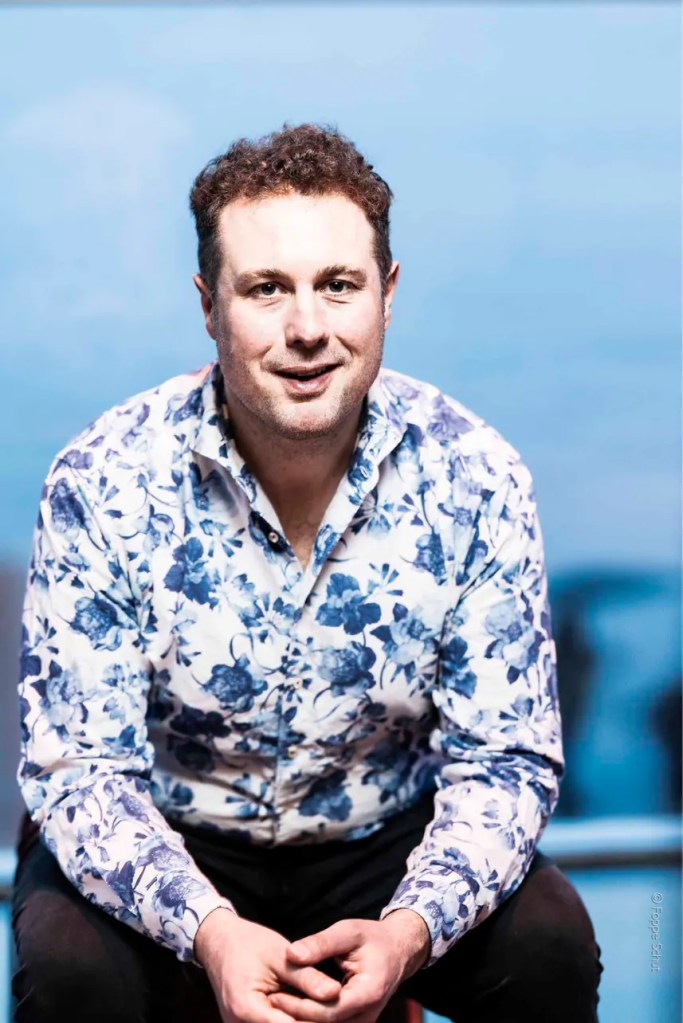

Along with the above mentioned controversy, the main reason why I had never written about this cantata before is that I hadn’t found a completely satisfying rendition of this cantata’s gorgeous soprano-alto duet. But fortunately that has now all changed with this Bach Akademie Stuttgart / Rademann recording. I can listen for days to Miriam Feuersinger and countertenor Alex Potter singing together, it gives me peace and comfort.
Other cantatas for this Sunday
I wrote about Cantata 139 Wohl dem, der sich auf seinen Gott from 1724 twice already on this blog. My favorite recording of this cantata is still the one by the J.S. Bach Foundation under the direction of Rudolf Lutz. Find all the links in my post from 2017. In 1726 Bach wrote Cantata 52 Falsche Welt, dir trau ich nicht!, a cantata for solo soprano, with the music of the opening Sinfonia copied from his First Brandenburg Concerto. For this one I also recommend the J.S. Bach Foundation’s recording, with soprano Miriam Feuersinger. Find that recording here.
I would love it if you would share this article with a friend! Thank you! Not an email subscriber yet? You can sign up below. I won’t use your email address for anything else.
© Wieneke Gorter, November 7, 2026.
*The Magistertaler was minted to commemorate the election of Prince Bernhard, son of Duke Wilhelm of Saxony-Weimar (1640–1672), as Rector Magnificissimus and the anniversary of the University of Jena in 1654. All magisters received the taler during the festivities marking this anniversary. The coin subsequently came to be known as the Magistertaler. Duke Wilhelm, founder of the main line of Saxony-Weimar, had the commemorative taler minted in Weimar.
**Who’s who: Prof. Dr. Michael Maul is a leading Bach researcher and the intendant of Bachfest Leipzig. Bernhard Schrammek is a musicologist and radio host. During the Covid pandemic, they started a podcast about Bach cantatas. Even though they have by now discussed all of Bach’s cantatas, they haven’t stopped the podcast. The podcasts name has since changed from “Die Bachkantate” to “Der Bach Kanal” but is still going strong. They even recorded live episodes with audience during this year’s Bachfest Leipzig. For a photo of both of them, see my post from last week.

