Tags
Adolf Theill, Bach, Bach-Archiv Leipzig, BWV 56, cantatas, Christine Blanken, Christoph Birkmann, Collegium Vocale Gent, Daniel R. Melamed, Il Gardellino, Kreuzstab, Marcel Ponseele, Michael Marissen, Peter Kooij, Philippe Herreweghe, Trinity 19
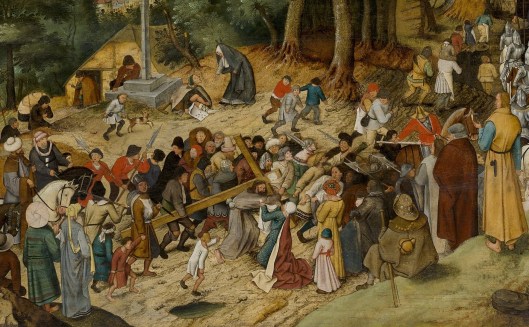
What do you think of when you hear the text of the solo cantata for bass “Ich will den Kreuzstab gerne tragen”? My mental image was similar to the painting above, but this week, that got turned on its head when I read research published in 2015. However, my favorite recording is still the same! My love for this particular performance is older than my marriage!
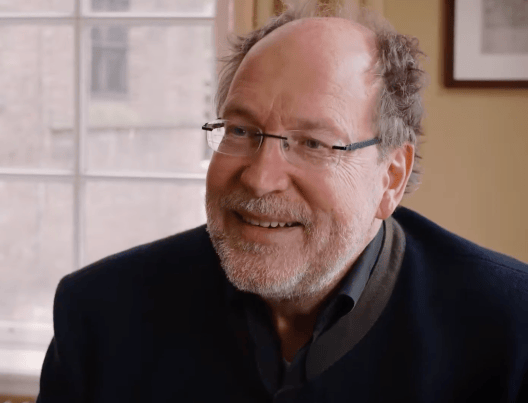
That favorite recording of Cantata 56 Ich will den Kreuzstab gerne tragen is the one by Herreweghe with Peter Kooij and Marcel Ponseele, from 1991. Not this same piece by Peter Kooij with other conductors or orchestras, only Herreweghe. Because for me, it’s the combination that makes the magic. Peter Kooij’s musicality, voice, and text-awareness is always there, but under Herreweghe’s direction the music flows and every musical line takes you to a point far beyond the note that’s currently in your ears.
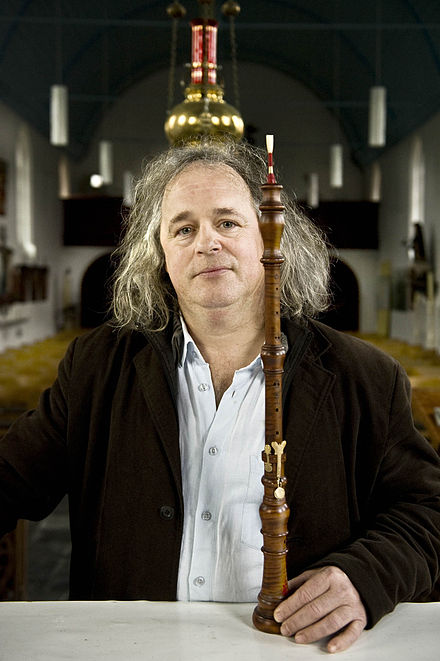
And then there’s Marcel Ponseele’s oboe playing. I know no other recording where the oboe and the voice dance so beautifully together in the third movement “Endlich, endlich wird mein Joch” (Finally, finally will my yoke). Kooij and Ponseele were both with Herreweghe for decades, but Kooij, 72, has retired from touring, and Ponseele, 69, has recently left Herreweghe’s ensembles to focus more on his own projects. (see my previous post for an example of the fabulous productions he creates with his ensemble Il Gardellino).
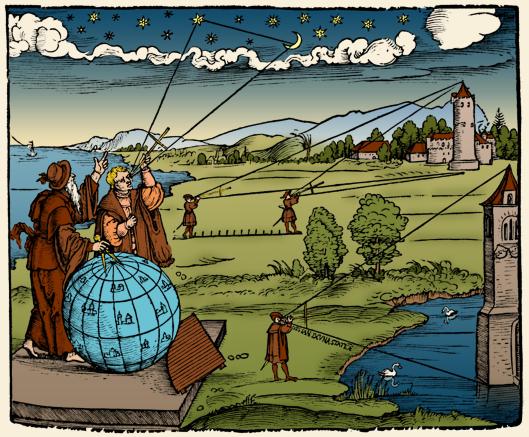
The score of Cantata 56 Ich will den Kreuzstab gerne tragen can be found here. The German text with a thorough and thoughtful English translation by Michael Marissen & Daniel R. Melamed can be found here. In their translation, Kreuzstab is correctly translated as cross staff, such as a Bishop’s staff, or even a medieval navigation device as pictured at the very bottom of this post (more about that later!). But in about half of the English translations out there, it is translated as cross beam.
Wy did I also have that image of the cross beam in my head, instead of a cross staff? For me, that has to do with the word “Joch” (yoke) in the third movement, but also with Bach’s St. Matthew Passion. As a Dutch choral singer, I know the St. Matthew Passion libretto from memory, and thus, for me, that text always comes to mind first. Concert programs also sometimes feature the “Komm, süsses Kreuz” (Come, sweet cross) bass aria from the St. Matthew Passion together with this Kreuzstab cantata.
In the St. Matthew Passion, leading up to that “Kom, süsses Kreuz” aria, the Evangelist sings the Gospel text from Matthew:
Und da sie ihn verspottet hatten, zogen sie ihm den Mantel aus und zogen ihm seine Kleider an und führeten ihn hin, dass sie ihn kreuzigten. Und indem sie hinausgingen, funden sie einen Menschen von Kyrene mit Namen Simon; den zwungen sie, dass er ihm sein Kreuz trug.
And when they [the Roman soldiers] had ridiculed him, they took the cloak off him and put his own clothing on him, and led him forth, so that they might crucify him. And as they were going out, they found a man from Cyrene named Simon; they forced him to carry Jesus’ cross for him.
Thus, that image of literally carrying Jesus’ wooden cross is a vivid one. Then, in the “Komm, süsses Kreuz” aria, Bach’s librettist, in his 18th-century reflection on the Gospel text, makes the connection to suffering, metaphorically bearing a cross.
Komm, süsses Kreuz, so will ich sagen,
Mein Jesu, gib es immer her!
Wird mir mein Leiden einst zu schwer,
So hilfst du mir es wieder tragen.
Come, sweet cross, so I will say,
My Jesus, ever give it here [for me to bear]!
If someday my suffering becomes too heavy for me,
Then you will help me bear it [the cross] again.
But this Kreuzstab Cantata 156 is only partly about that. Foremost, the text talks about finding a way through one’s life, letting God lead the way, and finding a safe harbor, using a wealth of metaphors from marine navigation. See for example the analogy in the second movement “Mein Wandel auf der Welt ist einer Schiffahrt gleich: Betrübnis, Kreuz und Not sind Wellen, welche mich bedecken und auf den Tod mich täglich schrecken” (My course of life in the world is like a ship voyage: distress, cross-bearing, and hardship are waves that cover me and daily scare me) and these words in the closing chorale: “Löse meines Schiffleins Ruder, bringe mich an sichern Port!” (Free the rudder of my little ship, bring me to safe harbor). So in that sense, the image of a cross staff is more appropriate than that of “the” wooden Cross.
I didn’t come up with this myself of course. Already in 1985, Gustav Adolf Theill explained that the cross-staff was a nautical device used to determine distances and positional coordinates. It would take until the 1730s for this to be replaced by the sextant. Theill linked the description of a cross-staff with Bach’s succession of notes in the bass motif (Ich – will – den – Kreuz – stab) of the first movement.
Thirty years later, in 2015, Dr. Christine Blanken of Bach-Archiv Leipzig presented more evidence. She had discovered that Bach’s student Christoph Birkmann was most likely the librettist of this and other solo cantatas from the fall and winter of 1726. In addition, she showed that only two months before Bach’s performance of this cantata, Birkmann, also a mathematician and physicist, had given an academic presentation about trigonometrical calculations requiring the use of cross staffs such as pictured at the bottom of this post.
So, while Bach might have had both Jesus’ wooden cross and a cross staff in mind, his librettist was definitely thinking of the latter.
Read more about all of this in Dr. Christine Blanken’s article from 2015.
To everyone who recently started following me here on WordPress or on Instagram @weeklycantata , welcome and thank you for being part of my Bach family! Please feel free to share this article with a friend.
Not an email subscriber yet? Sign up below! I won’t use your email address for anything else.
© Wieneke Gorter, October 10, 2026.