Weekly Cantata

Weekly Cantata

Tag Archives: Vision Bach

A Controversy and a Coin Collection – Cantata 163 for Trinity 23

07 Saturday Nov 2026

Posted by cantatasonmymind in 1723 Trinity season special series, Cantatas, Chorale cantatas 1724/1725, Leipzig, Trinity, Weimar

≈ 3 Comments

Tags

Alex Potter, Bach, Bach Akademie Stuttgart, Benedikt Kristjánsson, Bernhard Schrammek, Brandenburg concertos, BWV 139, BWV 163, BWV 52, cantatas, Daniel R. Melamed, Der Bach Kanal, Felix Zimmermann, Hans-Christoph Rademann, J.S. Bach Foundation, Johannes Kaleschke, Magistertaler, Matthew 22, Michael Marissen, Michael Maul, Miriam Feuersinger, Renate Steinmann, Rudolf Lutz, Salomo Franck, Thomas Pitt, Tobias Berndt, Trinity 23, Vision Bach
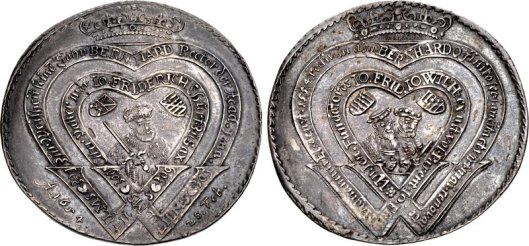
Magistertaler* which Duke Wilhelm of Saxe-Weimar had minted in Weimar in 1654. Duke Wilhelm was the grandfather of Duke Wilhelm Ernst who reigned during Bach’s time in Weimar.

A romantic soprano-alto duet, a radiant bass aria, and a heavenly tenor aria, Cantata 163 Nur jedem das Seine! (Just to each what is his) has it all. Still, it is very seldomly performed, and usually appears on recordings only as part of a comprehensive collection of cantatas. This most probably has to do with the atrocious reality of the Nazis misusing the motto “Jedem das Seine” during the Second World War. I first learned of this controversy through the J.S. Bach Foundation’s toughtful pre-concert lecture about this cantata. When doing further research, I found a good explanation by American Bach experts Daniel R. Melamed and Michael Marissen in their English translation of this cantata’s text:

Some present-day listeners are concerned that the title of this cantata, “Nur jedem das Seine,” resonates with anti-Jewish and other contempt, as its language might be taken to pre-echo the motto moulded on to the gate at the Buchenwald concentration camp, JEDEM DAS SEINE—literally, “to each his own,” but which the Nazis understood as “one gets what he deserves.” Cantata 163’s “Nur jedem das Seine,” however, is employed in the context of the biblical obligation to pay taxes to secular authorities [“Give to Caesar what is Caesar’s, and to God what is God’s,” from Matthew 22:15-22]. In the cantata’s biblical-liturgical context, the more specific sense of “Nur jedem das Seine” would be “Only to each his due,” and so we have rendered the phrase not as “Only to each his own,” […] but rather as “Just to each what is his.”

My favorite Recording: Bach Akademie Stuttgart under the direction of Hans-Christoph Rademann
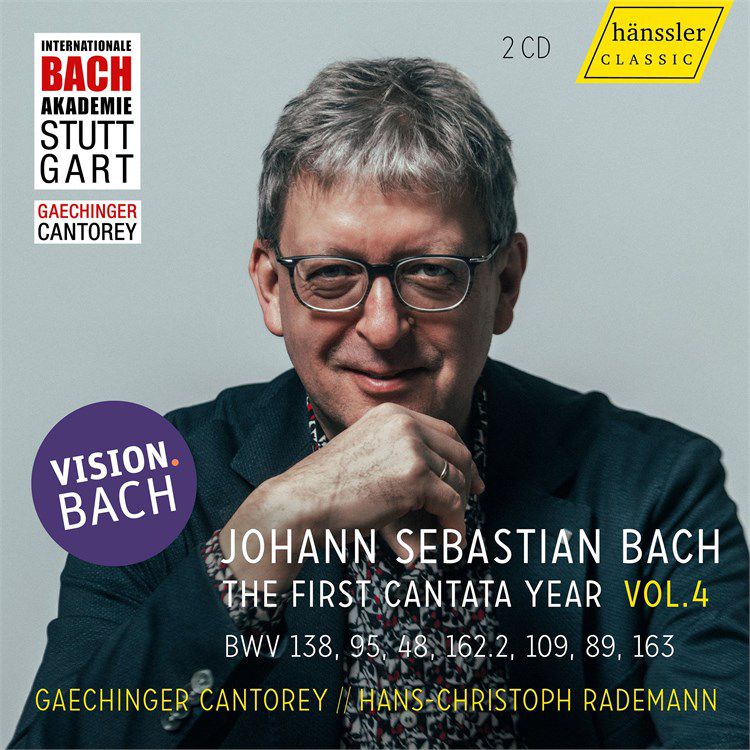
Bach performed Cantata 163 Nur jedem das Seine! in Weimar in 1715, and most probably again in Leipzig in 1723. Because of this Leipzig performance, Bach Akademie Stuttgart / Hans-Christoph Rademann included it in their Vision Bach – The First Cantata Year series. It’s the very last cantata on Volume 4 of this series, and it makes this double-CD go out with a bang, with an all-star cast of soloists (Miriam Feuersinger, soprano; Alex Potter, countertenor; Benedikt Kristjánsson, tenor; Tobias Berndt, bass) and the always fabulous orchestra. Except for a teeny tiny part of the tenor aria (see below), this is my absolute favorite recording of this cantata. This Volume 4 also includes Cantata 162 for Trinity 20 and Cantata 89 for Trinity 22. Purchase it on Amazon.com or on jpc.de.

Please find the playlists I created for this specific cantata here on Spotify, and here on YouTube. Please find the text of Cantata 163 Nur jedem das Seine! here, and the score here.

The tenor aria – Weimar versus Leipzig
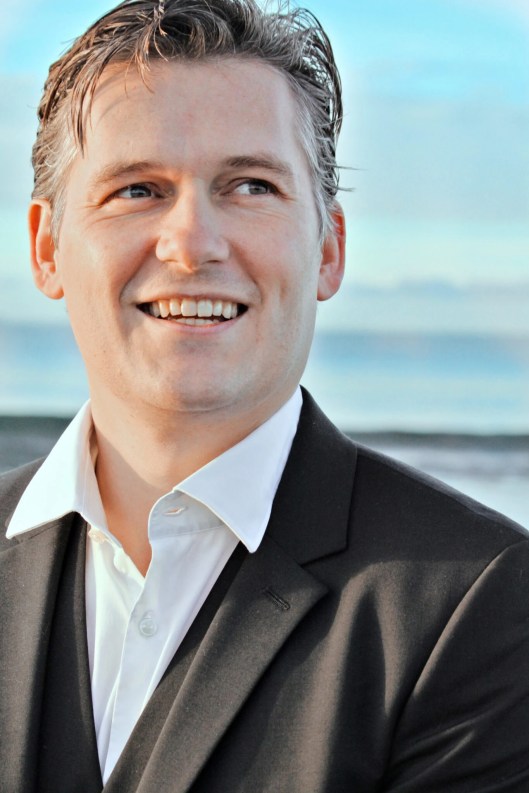
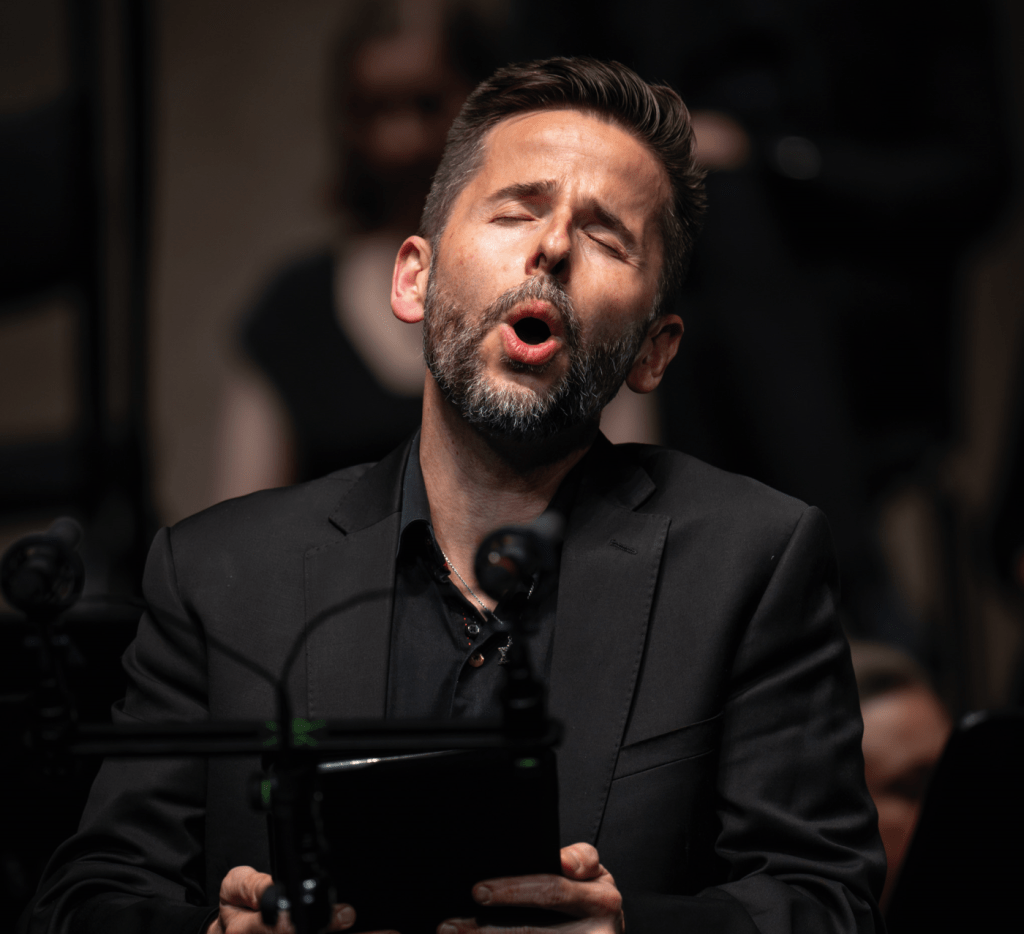
Benedikt Kristjánsson

Bach’s librettist in Weimar lets the tenor paraphrase the Gospel reading for this 23rd Sunday after Trinity, the story in which the Pharisees ask Jesus a trick question: Does loyalty to God actually permit paying taxes to the Emperor? To which Jesus, pointing to the Emperor’s image on a coin, cleverly replies, “Give to Caesar what is Caesar’s, and to God what is God’s.” Bach illustrates the words “Doch bleibet das Herze dem Höchsten alleine” (But the heart remains to the Most High alone) very lovingly with a tender question-and-answer between the tenor and the violin. With the larger, Leipzig style orchestra Rademann uses for the recording I recommended above, that tenderness gets lost a bit, because the original duet between one violin and one tenor (the way it must have been performed on the small organ loft in Weimar), is now a duet between an entire violin section and one tenor. While I really truly love Benedikt Kristjánsson’s singing on the Rademann recording (I love his voice and my qualm about this bit has nothing to do with him, just with the number of violins!), for this specific part I prefer the J.S. Bach Foundation recording with tenor Johannes Kaleschke and first violinist Renate Steinmann.

A bass aria with *two* solo cellists!

Similar to last week, this week I learned the most intriguing information about a cantata by listening to Michael Maul’s and Bernhard Schrammek’s podast.** In their episode about Cantata 163, Michael Maul explains that the Duke of Weimar’s favorite hobby was collecting coins, and that Bach’s librettist in Weimar, Salomo Franck (1659-1725), was also the administrator of the Duke’s extensive coin collection. When I looked this up, I realized that this coin collection had been in the Duke’s family for generations (see picture at the top of this post). What Franck and Bach thus do to please their employer results in a unique bass aria. Franck writes this text:

Lass mein Herz die Münze sein,
Die ich dir, mein Jesu, steure!
Ist sie gleich nicht allzu rein,
Ach! so komm doch und erneure,
Herr, den schönen Glanz bei ihr!
Komm! arbeite, schmelz und präge,
Dass dein Ebenbild bei mir
Ganz erneuert glänzen möge!

Let my heart be the coin
That I render [pay as tax] unto you, my Jesus.
If it [the coin] is not altogether pristine,
Ah, do come then and renew,
Lord, the beautiful radiance to it.
Come; work, melt, and emboss [it],
So that your very image
May radiate in me [who is] entirely renewed.
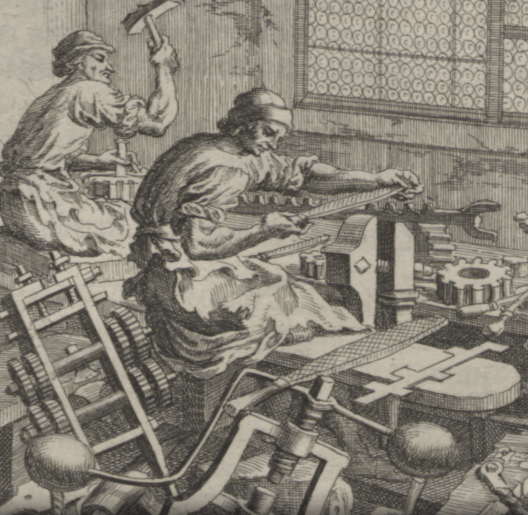
A minter’s workshop, late 17th century.

And then Bach does something he’s never done before: he decides to evoke the mechanical character of a minter’s work with a trio of low voices, all operating in the same range: a bass singer, accompanied by two solo cellos. The cellists don’t play continuo, but true solo parts. Never before or again do we see two solo cellos in a Bach aria. And there’s another reason he picks cellos, not bassoons, for example, because this way he can still illustrate the coin’s “schönen Glanz” (beautiful radiance). Never have I heard this done so beautifully as by Felix Zimmermann and Thomas Pitt, the cellists on the Rademann recording.

Miriam Feuersinger and Alex Potter – I can listen to them for days
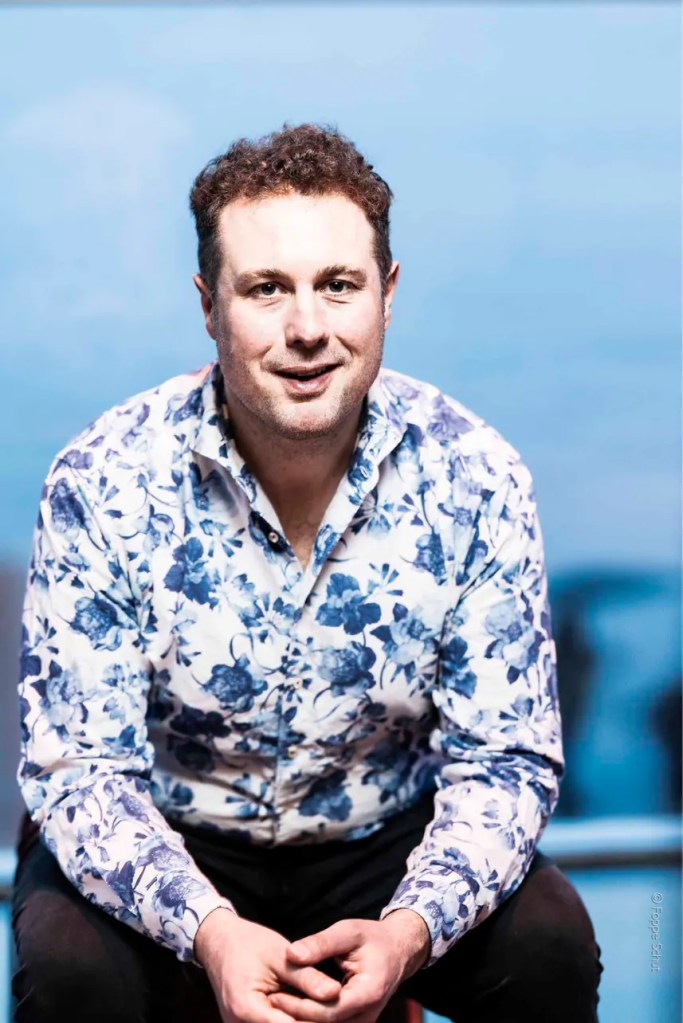
Alex Potter
Miriam Feuersinger

Along with the above mentioned controversy, the main reason why I had never written about this cantata before is that I hadn’t found a completely satisfying rendition of this cantata’s gorgeous soprano-alto duet. But fortunately that has now all changed with this Bach Akademie Stuttgart / Rademann recording. I can listen for days to Miriam Feuersinger and countertenor Alex Potter singing together, it gives me peace and comfort.

Other cantatas for this Sunday

I wrote about Cantata 139 Wohl dem, der sich auf seinen Gott from 1724 twice already on this blog. My favorite recording of this cantata is still the one by the J.S. Bach Foundation under the direction of Rudolf Lutz. Find all the links in my post from 2017. In 1726 Bach wrote Cantata 52 Falsche Welt, dir trau ich nicht!, a cantata for solo soprano, with the music of the opening Sinfonia copied from his First Brandenburg Concerto. For this one I also recommend the J.S. Bach Foundation’s recording, with soprano Miriam Feuersinger. Find that recording here.

I would love it if you would share this article with a friend! Thank you! Not an email subscriber yet? You can sign up below. I won’t use your email address for anything else.

© Wieneke Gorter, November 7, 2026.

*The Magistertaler was minted to commemorate the election of Prince Bernhard, son of Duke Wilhelm of Saxony-Weimar (1640–1672), as Rector Magnificissimus and the anniversary of the University of Jena in 1654. All magisters received the taler during the festivities marking this anniversary. The coin subsequently came to be known as the Magistertaler. Duke Wilhelm, founder of the main line of Saxony-Weimar, had the commemorative taler minted in Weimar.

**Who’s who: Prof. Dr. Michael Maul is a leading Bach researcher and the intendant of Bachfest Leipzig. Bernhard Schrammek is a musicologist and radio host. During the Covid pandemic, they started a podcast about Bach cantatas. Even though they have by now discussed all of Bach’s cantatas, they haven’t stopped the podcast. The podcasts name has since changed from “Die Bachkantate” to “Der Bach Kanal” but is still going strong. They even recorded live episodes with audience during this year’s Bachfest Leipzig. For a photo of both of them, see my post from last week.
The Recording that Knocked My Socks off – Cantata 162 for Trinity 20

17 Saturday Oct 2026

Posted by cantatasonmymind in 1723 Trinity season special series, Cantatas, Leipzig, Weimar

≈ Leave a comment

Tags

Alain de Rudder, Andreas Helm, Anneke Scott, Annina Stahlberger, Bach Akademie Stuttgart, Bach Collegium Japan, Catalina Bertucci, corno da tirarsi, Gaechinger Cantorey, Gerlinde Sämann, Gottfried Reiche, Hans-Christoph Rademann, J.S. Bach Foundation, Marie Henriette Reinhold, Masaaki Suzuki, Olivier Picon, Parable of the Unworthy Wedding Guest, Patrick Grahl, Rijksmuseum, Robert Vanryne, Rudolf Lutz, Simon Kick, Tobias Berndt, Toshio Shimada, Trinity 20, Vision Bach, Yoshimichi Hamada, Yumiko Kuriso

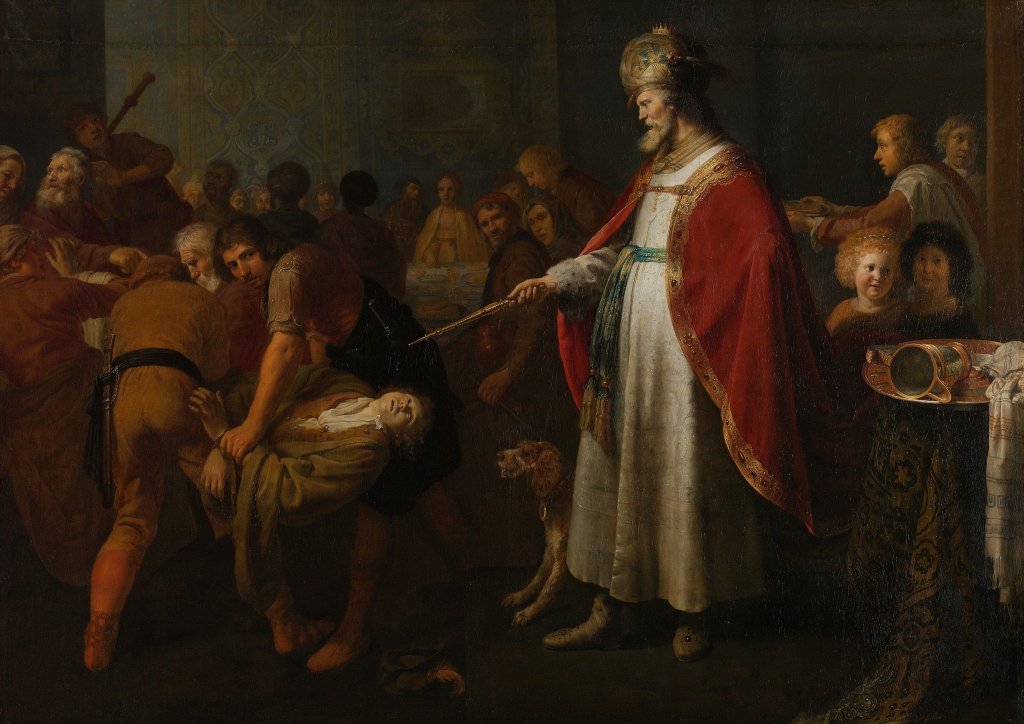
The Parable of the Unworthy Wedding Guest attributed to Simon Kick, circa 1644. Oil on Canvas. Rijksmuseum, Amsterdam, the Netherlands.

Every now and then, a cantata recording knocks my socks off. It happened this week. And since I need to keep this post short, I’ll leave the other five articles I had brewing in my mind on the shelf for the future, and I’ll just tell you about that one recording.

Tobias Berndt

It’s the Leipzig version of Cantata 162 Ach! ich sehe, itzt, da ich zur Hochzeit gehe by Bach Akademie Stuttgart under the direction of Hans-Christoph Rademann, from their Vision Bach series, Volume 4. The opening movement gives me the good kind of stomach ache, thanks to gorgeous singing by Tobias Berndt, unparalleled corno da tirarsi playing by Anneke Scott, and this fantastic orchestra. Another highlight is the duet by alto Marie Henriette Reinhold and tenor Patrick Grahl, accompanied by a terrific continuo group.

Find this recording on YouTube or on Spotify in playlists created by me. To learn more about Bach Akademie Stuttgart’s Vision Bach series and how to purchase the CDs, read my post about their recording of Cantatas 105 and 46. Find the German texts with English translations here, and the score here.

Cantata 162 – A Short History

Bach wrote this cantata originally for the 20th Sunday after Trinity in 1716 in Weimar, setting texts by his favorite librettist there, court librarian Salomon Franck. Franck transforms the question “Am I dressed properly?” from the The Parable of the Unworthy Wedding Guest (Matthew 22:1-14, the Gospel for this Sunday) into “Have I made the right choices?”

Since Bach had limited performance space in the Duke’s chapel in Weimar, he composed this original piece for a small instrumental ensemble: strings, bassoon, and continuo, plus likely a solo wind instrument for the soprano aria (movement 3).*

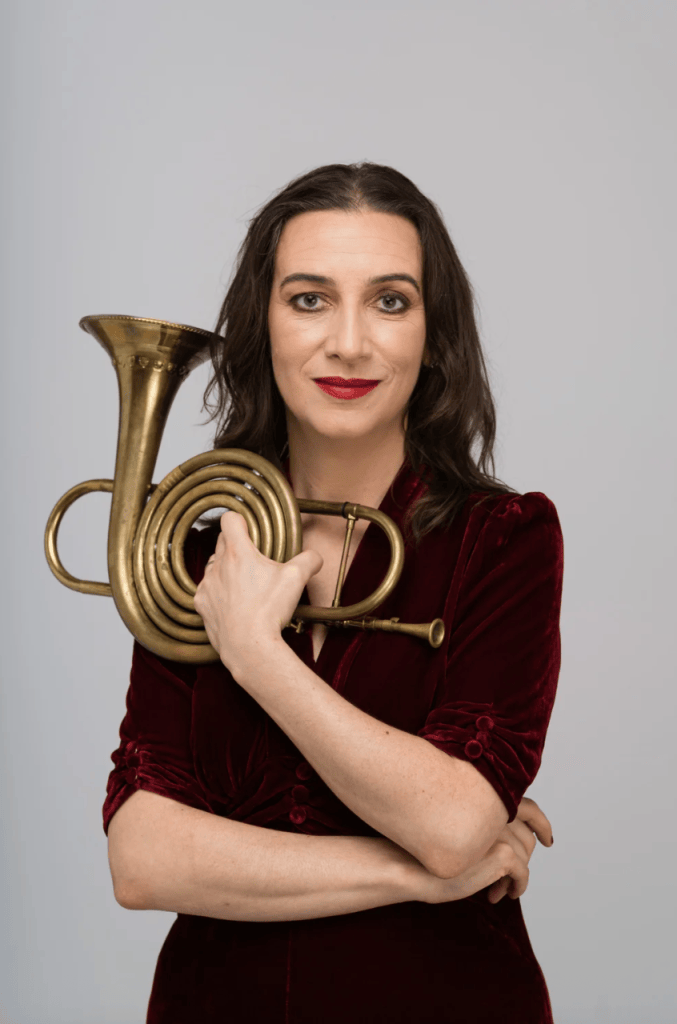
Anneke Scott – The Queen of the Corno da Tirarsi

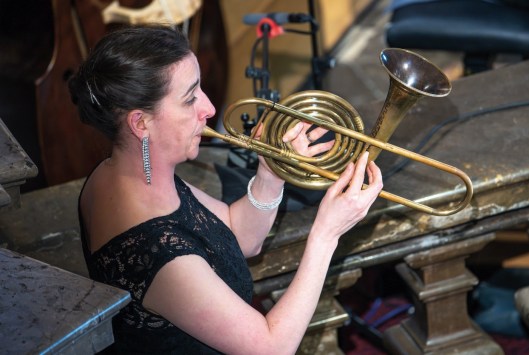
For the 1723 performance in Leipzig, Bach added a corno da tirarsi in the first and last movements. In his time, most probably the only person who could play the corno da tirarsi was Gottfried Reiche, because Bach stopped writing for this instrument after Reiche’s death in 1732.

Anneke Scott with corno da tirarsi. Photo by Nick Gilbert.

Today, we are lucky to have more than one musician who can handle this instrument. I’m thinking of Alain de Rudder (Herreweghe), Toshio Shimada (Suzuki), and last but not least, Olivier Picon (J.S. Bach Foundation), who did important research on the instrument and initiated Egger’s reconstruction of the original. But for me, the Queen of the corno da tirarsi is Anneke Scott. I already talked about her fabulous performance in Cantatas 46 and 105 on Volume 3 of Rademann’s Vision Bach several weeks ago, and in this Cantata 162 she does it again! Her playing is simply stunning, I have never heard the corno da tirarsi played with such beautiful phrasing and sound quality as she does on these Vision Bach recordings.

To everyone who recently started following me here on WordPress or on Instagram @weeklycantata, welcome and thank you for being part of my Bach family! Please feel free to share this article with a friend.

Not an email subscriber yet? Sign up below! I won’t use your email address for anything else.

© Wieneke Gorter, October 17, 2026.

*For his recording in 1996 (Yumiko Kurisu, soprano; Yoshimichi Hamada, recorder) Masaaki Suzuki created a part for solo recorder, which has subsequently also been used by Lutz/J.S. Bach Foundation (Gerlinde Sämann, soprano; Annina Stahlberger, recorder) and for the performance discussed here by Rademann/Bach Akademie Stuttgart (Catalina Bertucci, soprano; Andreas Helm, recorder).

Family stories and more “Vision Bach” – BWV 179 and 199 for Trinity 11

19 Wednesday Aug 2026

Posted by cantatasonmymind in 1723 Trinity season special series, Cantatas, Leipzig, Trinity

≈ Leave a comment

Tags

Bach Akademie Stuttgart, BWV 179, BWV 199, cantatas, Daniel Johannsen, Gaechinger Cantorey, Hans-Christoph Rademann, J.S. Bach Foundation, Miriam Feuersinger, Rudolf Lutz, Trinity 11, Vision Bach

Daniel Johannsen during a Vision Bach concert in 2024, © Bach Akademie Stuttgart/Holger Schneider

For this past Sunday, the 11th after Trinity, I would love to share Bach Akademie Stuttgart’s recording of Cantata 179 Siehe zu, daß deine Gottesfurcht nicht Heuchelei sei and Cantata 199 Mein Herze schwimmt im Blut. 303 years ago, these two cantatas were performed during the same church service in Leipzig, Cantata 179 before the sermon, and Cantata 199 after the sermon. The absolute highlight of this recording for me is tenor Daniel Johannsen’s fabulous singing throughout Cantata 179, not just in his two solo movements, but also in the choruses. In addition, soprano Miriam Feuersinger’s moving rendition of solo cantata 199 on this recording is not to be missed. Keep reading to find out why this cantata is Feuersinger’s personal favorite.

Read more about the Vision Bach project and this Volume 3 album in last week’s post. You can purchase this album on Amazon or Arkiv Music if you are in the USA, or on jpc if you are in Europe. Please consider purchasing to support the artists! Also available on Spotify and YouTube.

Spotlight on tenor Daniel Johannsen

For Cantata 179 Siehe zu, daß deine Gottesfurcht nicht Heuchelei sei, find the score here, and the German text with English translations here.

In my previous posts about this cantata, I mostly wrote about the stunning fugue in the opening chorus. Learn all about it in my posts from 2016 and 2023. But today’s spotlight is on tenor Daniel Johannsen, who illustrates the text in the tenor recitative and aria like no other.

Johannsen’s father was a Protestant pastor and his mother was a religion teacher, so from a very young age, he was familiar with the power of telling a story. He has degrees in both vocal performance and church music, and I believe this all contributes to his exceptional communication of the texts in Bach’s sacred music.

My aunt and Daniel Johannsen outside the Thomaskirche

Over the past fifteen years or so, Johannsen has recorded a great number of Bach’s hymns, cantatas, and oratorios with The Netherlands Bach Society , the J.S. Bach Foundation, and Bach Akademie Stuttgart. The Bach cantata YouTube boom came too late for my mother, who passed away in 2010, but my mother’s oldest sister, also a great Bach fan, as well as a theologian and retired minister, is an avid viewer of those performances. This past June I had the great fortune to visit Bachfest Leipzig together with her. We got to hear Daniel Johannsen sing three times in the Thomaskirche. After the first concert, with the J.S. Bach Foundation under the direction of Rudolf Lutz, my aunt said: “it doesn’t matter that we sit with our back to the performers here, because I know his voice so well from all the videos, I see him in my mind when I hear him sing.” Lutz’s concerts moved her to tears, especially because of the soloists’ communication of the texts. How lucky we were that Daniel took the time after his last Bachfest concert to pose for a photo with my aunt.

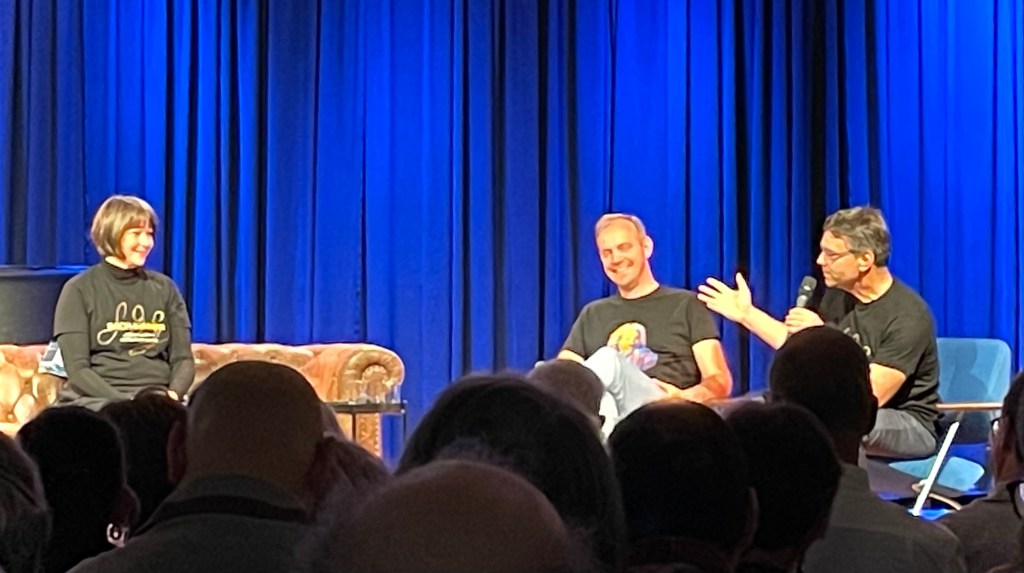
Rademann and Feuersinger on the couch with Maul and Schrammek

Miriam Feuersinger, Michael Maul, Bernhard Schrammek
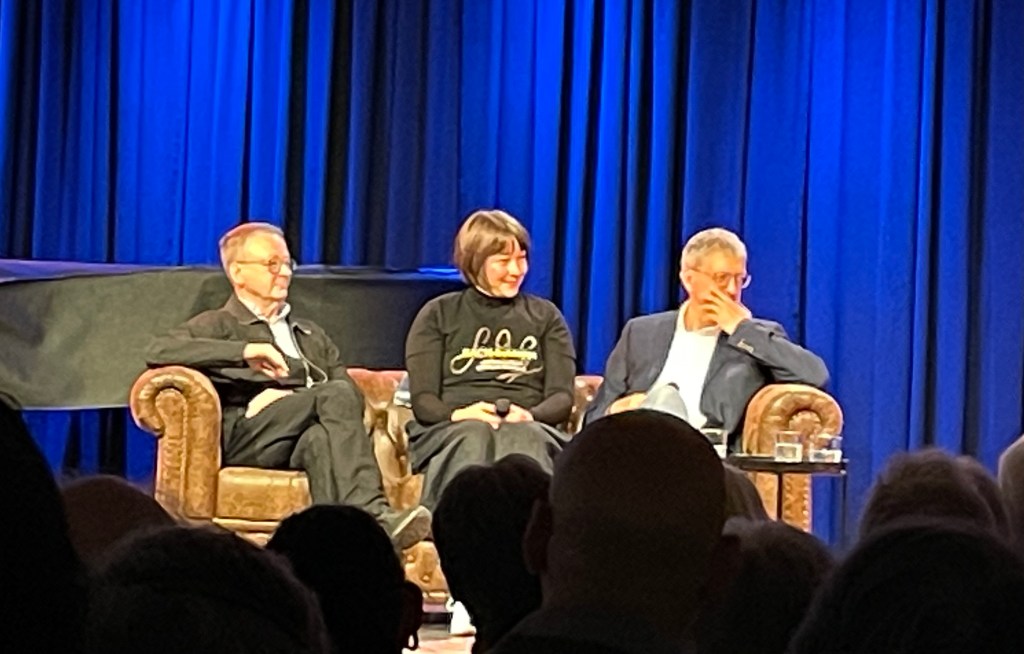
Rudolf Lutz, Miriam Feuersinger, Hans-Christoph Rademann

Another reason why these two cantatas are special to me this summer is because of the Maul und Schrammek talk show I attended during Bachfest Leipzig. Miriam Feuersinger was the first guest on Michael Maul’s and Berhnard Schrammek’s couch, and when they asked her what her favorite Bach cantata is, she didn’t have to think twice: it’s Cantata 199 Mein Herze schwimmt im Blut. She explained that this cantata has been a great help to her during a difficult time in her life, and she loves the composition’s “theologische Aussagekraft” (theological expressiveness, theological meaning). 

For Cantata 199 Mein Herze schwimmt im Blut, find the score here, and the German text with English translations here.

Ach, Hans-Christoph, mach wie immer: mach was Schönes!


Later, during that same talk show, when Lutz and Rademann had joined Feuersinger on the couch, Rademann told a story that made me laugh. He recounted a time he felt somewhat stuck: he no longer knew how to direct the opening chorus of Cantata 179, because of the negation in the first line of the text. He telephoned Jos van Veldhoven (artistic director of the Netherlands Bach Society from 1983 to 2018) to ask him for advice. Jos van Veldhoven’s responded with a simple solution: “Ach, Hans-Christoph, mach wie immer: mach was Schönes!” (“Oh, Hans-Christoph, just do what you always do: make it beautiful!”).

© Wieneke Gorter, August 19, 2026.

Almost Unbearable, It’s that Good: Hannes Rux-Brachtendorf and Matthias Winckhler in BWV 46 on Rademann’s Vision Bach, Volume 3.

08 Saturday Aug 2026

Posted by cantatasonmymind in 1723 Trinity season special series, Cantatas, Leipzig, Trinity

≈ Leave a comment

Tags

Anneke Scott, Bach Akademie Stuttgart, Benedikt Kristjánsson, BWV 105, BWV 46, Carlo Carlone, corno da tirarsi, Elvira Bill, Gaechinger Cantorey, Hannes Rux-Brachtendorf, Hans-Christoph Rademann, Ludwigsburg, Matthias Winckhler, Miriam Feuersinger, Schlosskirche, Trinity 10, Trinity 9, Vision Bach

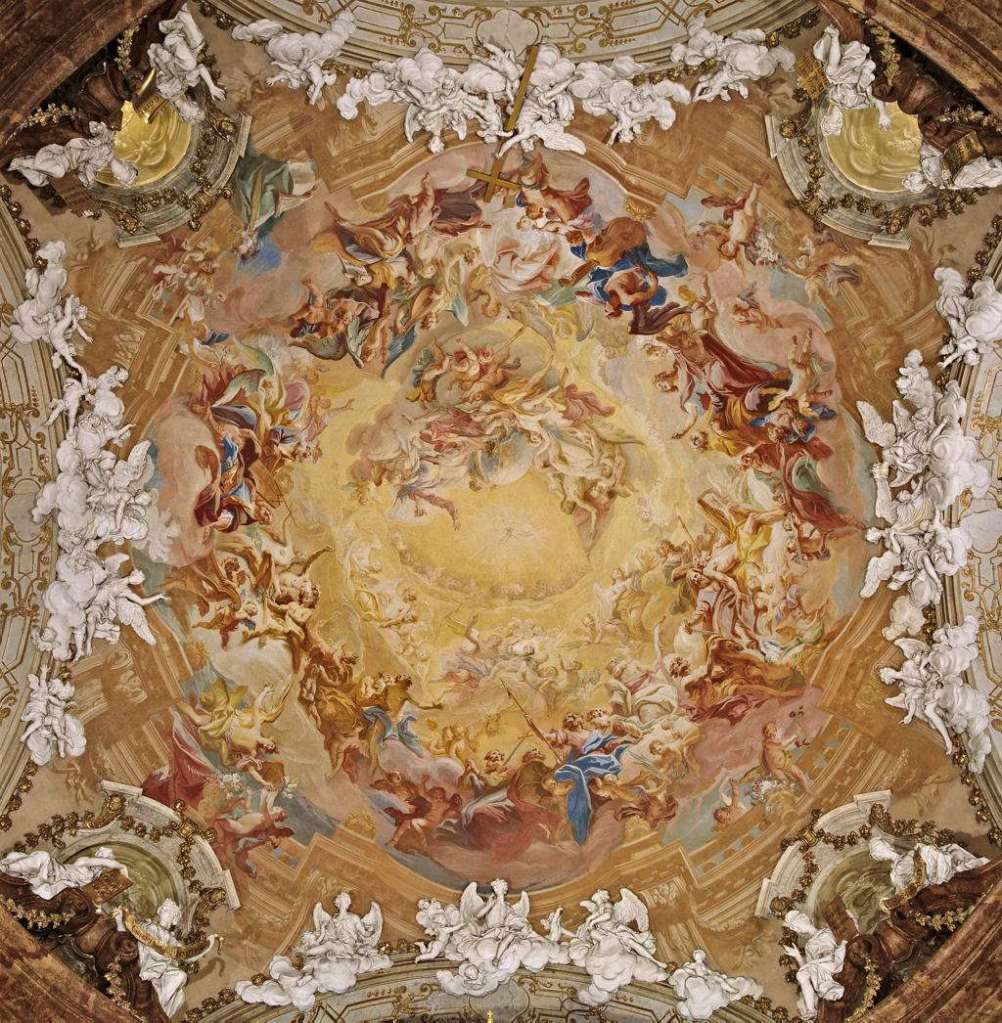
Oh, how I wish I could have been there in person, in July 2023! At the Schlosskirche (Palace Church) of the Ludwigsburg Palace in Germany, looking up at this ceiling painting by Carlo Carlone, and hearing Bach’s incredible cantatas 105 and 46 performed by the Gaechinger Cantorey under the direction of Hans-Christoph Rademann.

Alas, that summer I had other things on my mind, and was pretty late catching on to Rademann’s Vision Bach, a project to record all Bach’s cantatas from his first year in Leipzig (1723/1724), in the order in which Bach wrote them. So I missed most of those live concerts, but I managed to attend one in February 2024, went to this ensemble’s St. Matthew Passion in Hamburg in March 2025, and became a fan. This June, I had the great fortune to hear two of their performances at Bachfest Leipzig. There, everyone’s energy, but especially the quality of the orchestra blew me away. I was not alone in this, festival director Michael Maul complimented the orchestra too the next day during the talkshow he co-hosted.

Hans-Christoph Rademann, photo by Marco Borggreve

Rademann took over the Bach Akademie Stuttgart and the Gaechinger Cantorey from Helmut Rilling in 2013, and immediately replaced the orchestra with a period instrument ensemble. During the first three years, this happened through collaborations with Freiburger Barockorchester and Akademie Alte Musik Berlin. In 2016 Rademann founded the Bach Akademie Stuttgart’s own orchestra, also under the name Gaechinger Cantorey. And I feel you can tell that this orchestra is only 10 years young.

All 10 Volumes of Vision Bach are out now. Please scroll down on this website by Bachakademie Stuttgart to order directly from the publisher if you are in the European Union. Or visit this website, with links to order from Amazon if you are in the USA, and links for YouTube. I hope to discuss more of these Vision Bach recordings over the coming weeks and months.

For this Sunday, the 10th after Trinity, Bach wrote Cantata 46, Schauet doch und sehet, ob irgendein Schmerz sei in 1723. It appears on Vision Bach, Volume 3. You can purchase this on Amazon or Arkiv Music if you are in the USA, or on jpc if you are in Europe. Please consider purchasing, to support the artists! Also available on Spotify and YouTube.

Find the score here, and the German text with English translations here.

The recording of Cantata 46 features gorgeous singing by alto Elvira Bill and tenor Benedikt Kristjánsson, and the beautiful sound of Anneke Scott’s corno da tirarsi* in the opening chorus and closing chorale. But the absolute best is the bass aria.

Hannes Rux-Brachtendorf
Matthias Winckhler

We all know Bach’s illustration of thunder and lightning from his St. Matthew Passion, but he does it very well too in this apocalyptic bass aria. And this performance by Baroque trumpet player Hannes Rux-Brachtendorf and bass Matthias Winckhler (yes, that’s really five consonants in a row in the middle of his last name) is unrivaled. Especially how together they illustrate the word “unerträglich” (unbearable) in the third line of the text, it is indeed almost unbearable, it is that good! I have never heard those harmonic crunches so well done on any other recording.

Dein Wetter zog sich auf von weiten,
Doch dessen Strahl bricht endlich ein
Und muss dir unerträglich sein,
Da überhäufte Sünden
Der Rache Blitz entzünden
Und dir den Untergang bereiten.

Your tempest brewed from afar,
Yet at long last its flash breaks forth
And must be unbearable to you,
As heaped-up sins
Set aflame the lightning of vengeance
And bring about your downfall.
**

Hannes Rux-Brachtendorf plays with fabulous technique and gorgeous phrasing. His playing was impressive too during Bachfest Leipzig in Cantata 51 Jauchzet Gott in allen Landen. And Matthias Winckhler — ahhhhh, he has it all, the beautiful voice, the colors, the core in the sound. And he can do it all, sing all the notes, do the colloraturas, tell the story, AND move me. I’ll enjoy it while it lasts, because I observe a growing number of Lied and opera engagements on his calendar, so we might hear him less often in Bach cantatas.

Anneke Scott with corno da tirarasi* in the Palace church in Ludwigsburg – photo by Holger Schneider.

When listening to this Volume 3 of Vision Bach, don’t miss the cantata this album opens with: Cantata 105 Herr, gehe nicht ins Gericht mit deinem Knecht for the ninth Sunday after Trinity (last week). Find the text for that cantata here. The recording features gorgeous singing by the one and only Miriam Feuersinger in the soprano aria “Wie zittern und wanken;” a five star performance by horn player Anneke Scott (again on corno da tirarsi*) and tenor Benedikt Kristjánsson in “Kann ich nur Jesum mir zum Freunde machen;” and last but not least, Matthias Winckhler in the arioso “Wohl aber dem, der seinen Bürgen weiss.” This movement always makes me think of the “Am abend da es kühle war” arioso from Bach’s St. Matthew Passion, and it moves me to tears.

Wieneke Gorter, © 2026.

*For more information on Anneke Scott and the corno da tirarsi, please read my blog post from 2023 here.

**English translation by Michael Marissen & Daniel R. Melamed, from https://bachcantatatexts.org/

Recent Posts

  • A Controversy and a Coin Collection – Cantata 163 for Trinity 23
  • Giving the Choir a Breather? – Cantata 89 for Trinity 22
  • Remember Those Covid-Era Concerts Without Audiences? – Cantatas 98 and 109 for Trinity 21
  • The Recording that Knocked My Socks off – Cantata 162 for Trinity 20
  • It’s Not What You Think – The Kreuzstab Cantata for Trinity 19

Archives

  • November 2026
  • October 2026
  • September 2026
  • August 2026
  • August 2025
  • July 2025
  • December 2024
  • November 2024
  • June 2024
  • January 2024
  • December 2023
  • October 2023
  • September 2023
  • August 2023
  • April 2022
  • February 2022
  • January 2022
  • December 2021
  • November 2021
  • June 2021
  • May 2021
  • April 2021
  • February 2021
  • January 2021
  • December 2020
  • November 2020
  • October 2020
  • September 2020
  • August 2020
  • July 2020
  • May 2020
  • April 2020
  • March 2020
  • February 2020
  • January 2020
  • December 2019
  • November 2019
  • May 2018
  • April 2018
  • March 2018
  • February 2018
  • January 2018
  • December 2017
  • November 2017
  • October 2017
  • September 2017
  • August 2017
  • July 2017
  • June 2017
  • May 2017
  • April 2017
  • March 2017
  • February 2017
  • January 2017
  • December 2016
  • November 2016
  • October 2016
  • September 2016
  • August 2016
  • July 2016
  • June 2016
  • May 2016
  • April 2016
  • March 2016
  • February 2016
  • January 2016

Enter your email address to follow this blog and receive notifications of new posts by email.

Join 336 other subscribers

Categories

  • 1723 Trinity season special series
  • Advent
  • After Easter
  • Ascension
  • Bach's life
  • Cantatas
  • Chorale cantatas 1724/1725
  • Christmas
  • Easter
  • Epiphany
  • Following Bach in 1725
  • Köthen
  • Leipzig
  • Leipzig 1726/1727
  • Septuagesima
  • Travel
  • Trinity
  • Weimar

Meta

  • Create account
  • Log in
  • Entries feed
  • Comments feed
  • WordPress.com

Website Built with WordPress.com.

  • Subscribe Subscribed
    Weekly Cantata
    Join 156 other subscribers

    Have a WordPress.com account? Log in now.

  • Weekly Cantata
    View site in Reader
    Manage subscriptionsSign upLog in
    Report this content
    Collapse this bar
Loading Comments...