Weekly Cantata

Weekly Cantata

Tag Archives: BWV 199

Family stories and more “Vision Bach” – BWV 179 and 199 for Trinity 11

19 Wednesday Aug 2026

Posted by cantatasonmymind in 1723 Trinity season special series, Cantatas, Leipzig, Trinity

≈ Leave a comment

Tags

Bach Akademie Stuttgart, BWV 179, BWV 199, cantatas, Daniel Johannsen, Gaechinger Cantorey, Hans-Christoph Rademann, J.S. Bach Foundation, Miriam Feuersinger, Rudolf Lutz, Trinity 11, Vision Bach
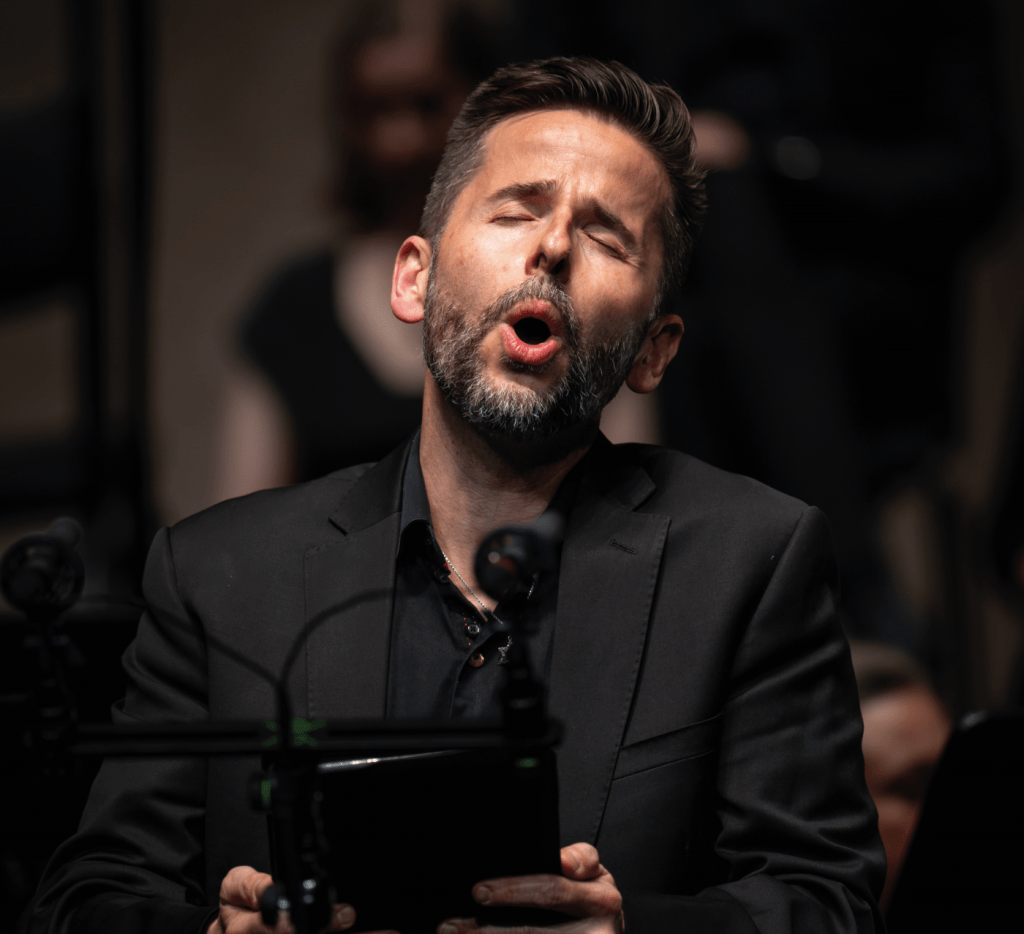
Daniel Johannsen during a Vision Bach concert in 2024, © Bach Akademie Stuttgart/Holger Schneider

For this past Sunday, the 11th after Trinity, I would love to share Bach Akademie Stuttgart’s recording of Cantata 179 Siehe zu, daß deine Gottesfurcht nicht Heuchelei sei and Cantata 199 Mein Herze schwimmt im Blut. 303 years ago, these two cantatas were performed during the same church service in Leipzig, Cantata 179 before the sermon, and Cantata 199 after the sermon. The absolute highlight of this recording for me is tenor Daniel Johannsen’s fabulous singing throughout Cantata 179, not just in his two solo movements, but also in the choruses. In addition, soprano Miriam Feuersinger’s moving rendition of solo cantata 199 on this recording is not to be missed. Keep reading to find out why this cantata is Feuersinger’s personal favorite.

Read more about the Vision Bach project and this Volume 3 album in last week’s post. You can purchase this album on Amazon or Arkiv Music if you are in the USA, or on jpc if you are in Europe. Please consider purchasing to support the artists! Also available on Spotify and YouTube.

Spotlight on tenor Daniel Johannsen

For Cantata 179 Siehe zu, daß deine Gottesfurcht nicht Heuchelei sei, find the score here, and the German text with English translations here.

In my previous posts about this cantata, I mostly wrote about the stunning fugue in the opening chorus. Learn all about it in my posts from 2016 and 2023. But today’s spotlight is on tenor Daniel Johannsen, who illustrates the text in the tenor recitative and aria like no other.

Johannsen’s father was a Protestant pastor and his mother was a religion teacher, so from a very young age, he was familiar with the power of telling a story. He has degrees in both vocal performance and church music, and I believe this all contributes to his exceptional communication of the texts in Bach’s sacred music.
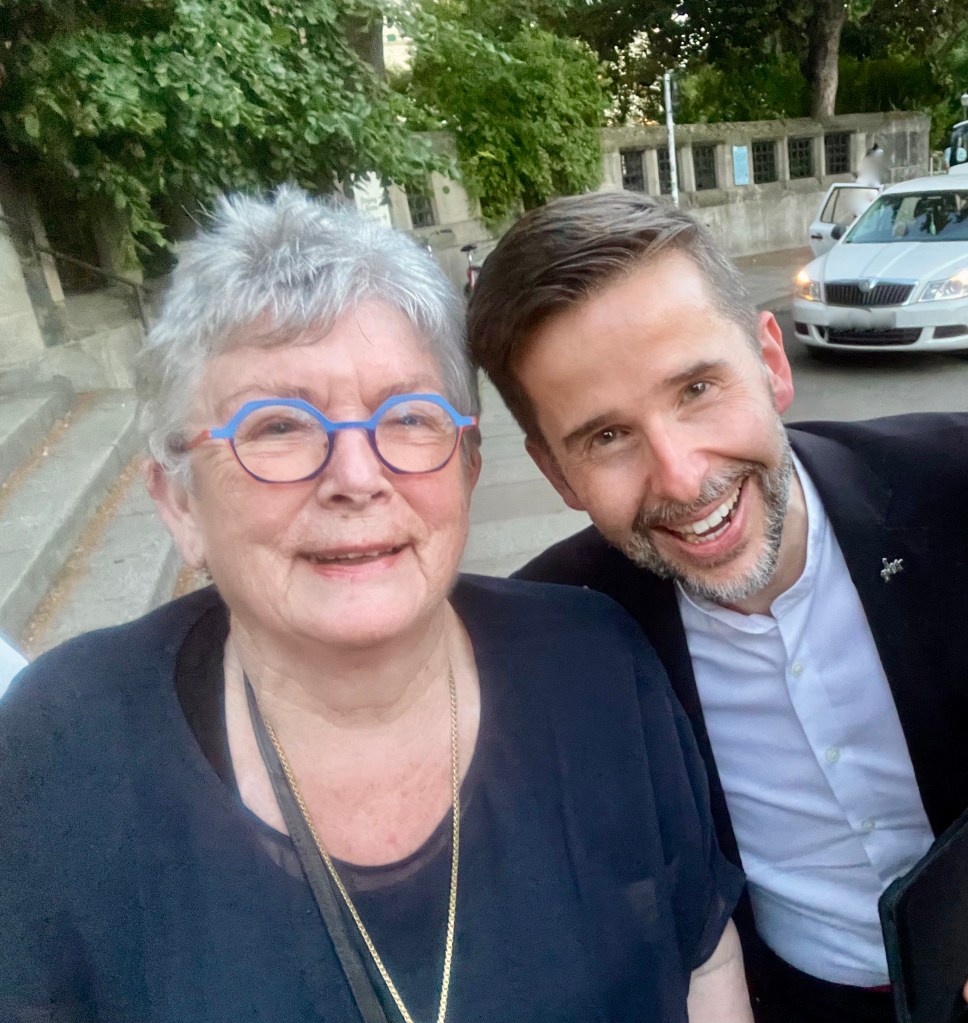
My aunt and Daniel Johannsen outside the Thomaskirche

Over the past fifteen years or so, Johannsen has recorded a great number of Bach’s hymns, cantatas, and oratorios with The Netherlands Bach Society , the J.S. Bach Foundation, and Bach Akademie Stuttgart. The Bach cantata YouTube boom came too late for my mother, who passed away in 2010, but my mother’s oldest sister, also a great Bach fan, as well as a theologian and retired minister, is an avid viewer of those performances. This past June I had the great fortune to visit Bachfest Leipzig together with her. We got to hear Daniel Johannsen sing three times in the Thomaskirche. After the first concert, with the J.S. Bach Foundation under the direction of Rudolf Lutz, my aunt said: “it doesn’t matter that we sit with our back to the performers here, because I know his voice so well from all the videos, I see him in my mind when I hear him sing.” Lutz’s concerts moved her to tears, especially because of the soloists’ communication of the texts. How lucky we were that Daniel took the time after his last Bachfest concert to pose for a photo with my aunt.

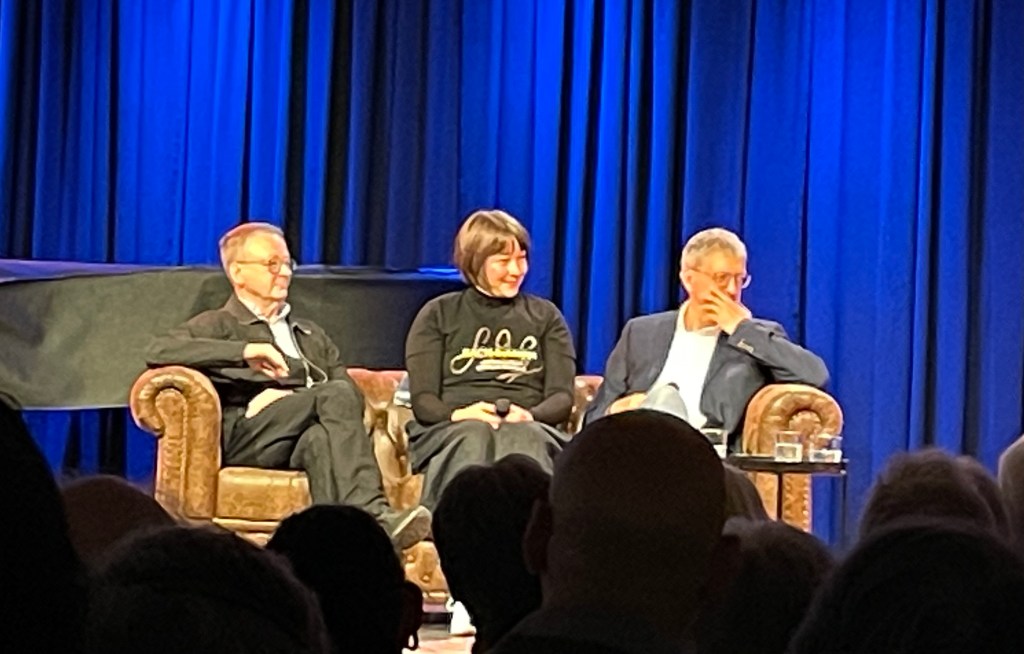
Rademann and Feuersinger on the couch with Maul and Schrammek
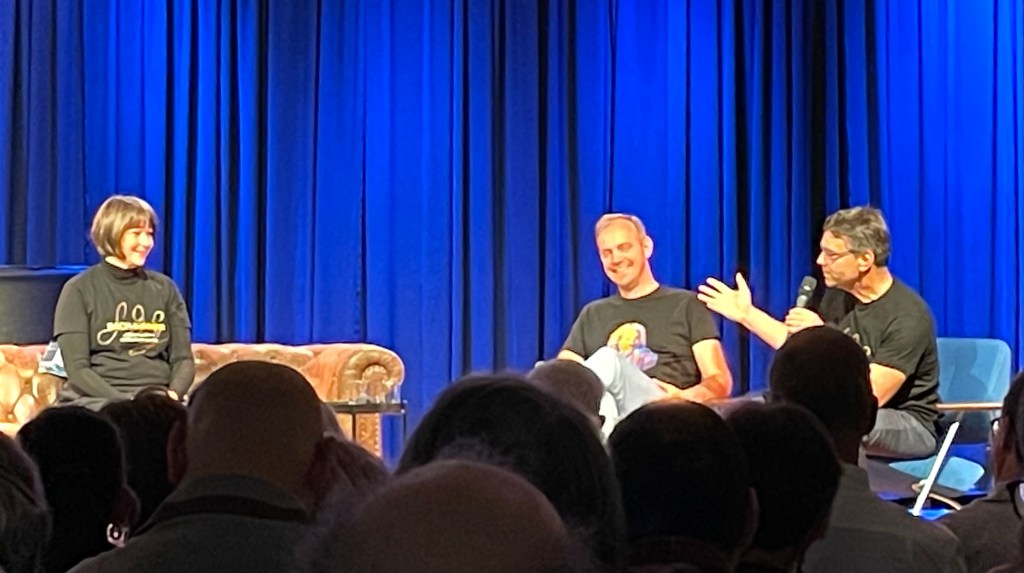
Miriam Feuersinger, Michael Maul, Bernhard Schrammek
Rudolf Lutz, Miriam Feuersinger, Hans-Christoph Rademann

Another reason why these two cantatas are special to me this summer is because of the Maul und Schrammek talk show I attended during Bachfest Leipzig. Miriam Feuersinger was the first guest on Michael Maul’s and Berhnard Schrammek’s couch, and when they asked her what her favorite Bach cantata is, she didn’t have to think twice: it’s Cantata 199 Mein Herze schwimmt im Blut. She explained that this cantata has been a great help to her during a difficult time in her life, and she loves the composition’s “theologische Aussagekraft” (theological expressiveness, theological meaning). 

For Cantata 199 Mein Herze schwimmt im Blut, find the score here, and the German text with English translations here.

Ach, Hans-Christoph, mach wie immer: mach was Schönes!


Later, during that same talk show, when Lutz and Rademann had joined Feuersinger on the couch, Rademann told a story that made me laugh. He recounted a time he felt somewhat stuck: he no longer knew how to direct the opening chorus of Cantata 179, because of the negation in the first line of the text. He telephoned Jos van Veldhoven (artistic director of the Netherlands Bach Society from 1983 to 2018) to ask him for advice. Jos van Veldhoven’s responded with a simple solution: “Ach, Hans-Christoph, mach wie immer: mach was Schönes!” (“Oh, Hans-Christoph, just do what you always do: make it beautiful!”).

© Wieneke Gorter, August 19, 2026.

J.S. Bach Foundation with Nuria Rial review and live video

18 Thursday Nov 2021

Posted by cantatasonmymind in Cantatas, Köthen, Leipzig, Weimar

≈ Leave a comment

Tags

Amy Power, Bach, Bachstiftung, BWV 199, bwv 202, BWV 82, cantatas, Daniel Rosin, Eva Borhi, J.S. Bach Foundation, J.S. Bach Stiftung, Manuel Walser, Nuria Rial, Rudolf Lutz, Sonoko Asabuki

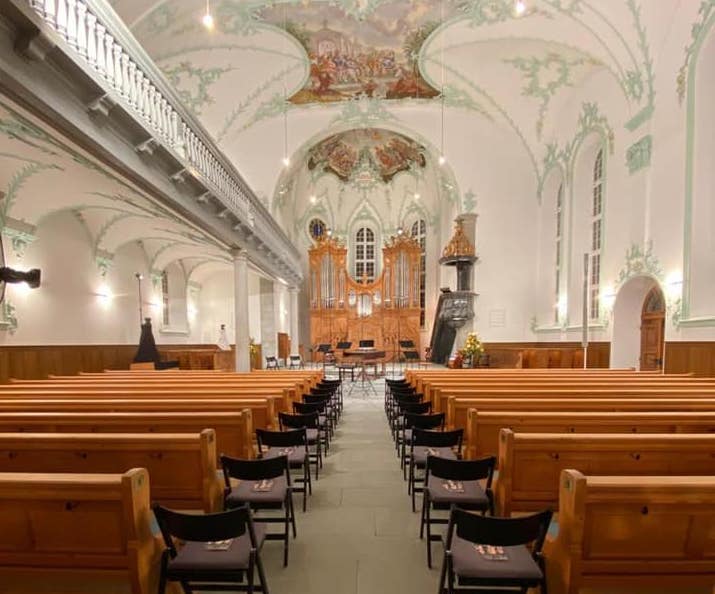
The church in Trogen, Switzerland, where the 15th anniversary concert of the J.S. Bach Foundation was recorded on November 17, 2021. Find it here on YouTube.

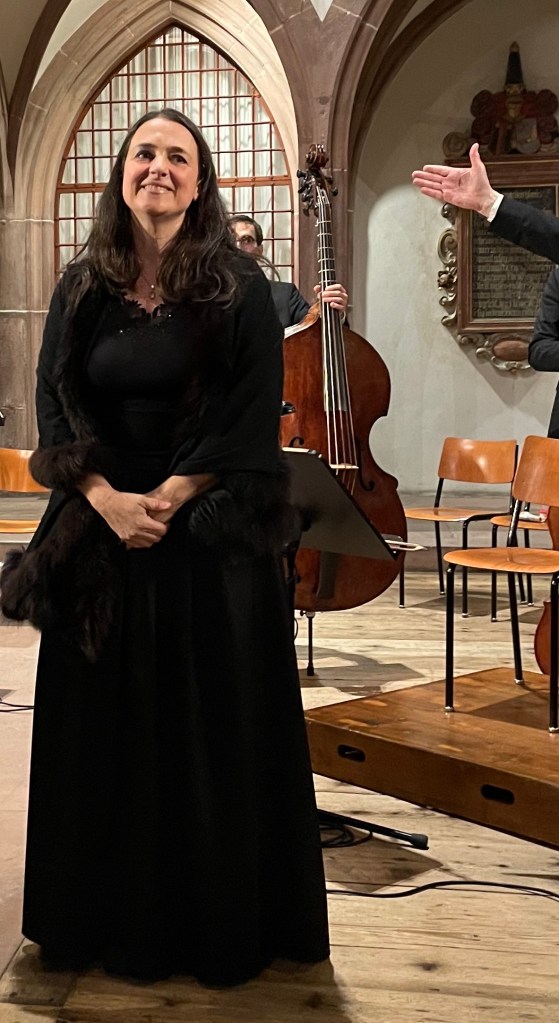
Nuria Rial in Basel

This week, the J.S. Bach Foundation celebrated 15 years of recording Bach cantatas with a special anniversary program in three cities in Switzerland: Basel, Trogen, and Zürich. I am still pinching myself that I got to attend the concert in Basel on Tuesday November 16, sitting only 6 feet (2 meters) from the amazing soprano Nuria Rial, who sang Cantata 199 Mein Herze schwimmt im Blut and Cantata 202 Weichet nur, betrübte Schatten.

Her performance was everything I had been hoping for and more. Her voice pulls you in from the start, and the energy and joy she exudes are just extraordinary. And then there’s her playfulness. I will never forget how special it was to experience that from up-close. I also realized what a true ensemble member she is, always in contact with the instrumentalists.

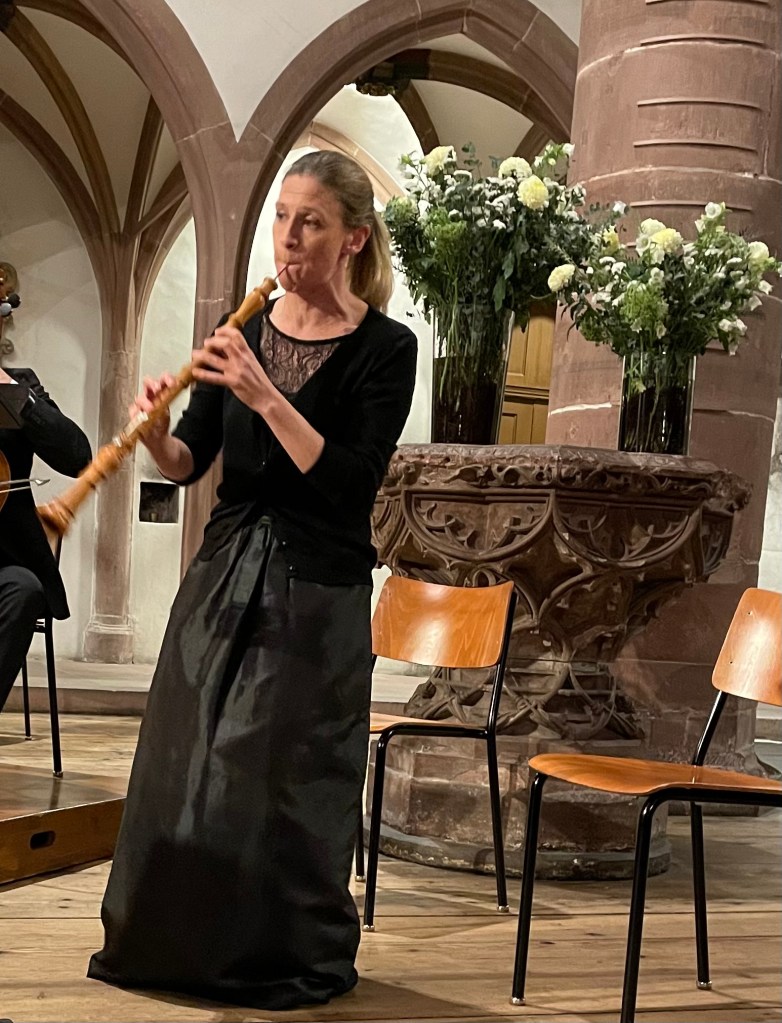
Amy Power in Basel

And those instrumentalists really need to be mentioned! Oboist Amy Power’s playing was lyrical throughout, with beautiful ornamentations in the “da capo” parts of the arias. I especially enjoyed the call-and response between her and Nuria Rial in the first movement of Weichet nur, betrübte Schatten. Her accomplishments were even more impressive knowing that she had been summoned from Graz less than 8 days before the concert, when the J.S. Bach Foundation heard that oboist Andreas Helm had to isolate at home because of contracting Covid-19.

First violinist Eva Borhi’s sensitive playing was especially gorgeous in the “Tief gebückt” aria from Canatata 199 and “Schlummert ein” aria from Cantata 82 with Manuel Walser. But my favorite was her interaction with Nuria Rial in the “Wenn die Frühlingslufte streichen” aria from Cantata 202.

Violist Sonoko Asabuki had an exquisite solo in the Chorale “Ich, dein betrübtes Kind” from Cantata 199, and cellist Daniel Rosin did a great illustration of Phoebus’ speeding horses in the third movement of Cantata 202, which earned a “Bravo” cheer from the audience, as if we were at the opera. (Always better than the audience member who fell asleep during “Schlummert ein,” snoring and all, a few rows behind me).

Last but not least, Rudolf Lutz, who directed the others from the harpsichord, improvised tasteful and effective mini-preludes leading up to the recitatives in Cantata 199, and very sensitively employed the lute register in the da capo of “Schlummert ein,” which formed a beautiful accompaniment to the pianissimo playing strings. He was also his usual witty self, making audience and performers laugh with his short speeches. My sister mentioned that even though we were here together at the concert because of our mother, she was actually strongly reminded of our grandfather. Also a man who always appeared very proper and Calvinist, but would then surprise you with his terrific sense of humor.

Watch this same performance, recorded live in Trogen, a day later than the one I attended in Basel here on YouTube.

Wieneke Gorter, November 19, 2021.

Sinful pride versus humility

22 Saturday Aug 2020

Posted by cantatasonmymind in 1723 Trinity season special series, Bach's life, Cantatas, Chorale cantatas 1724/1725, Leipzig, Trinity, Weimar

≈ Leave a comment

Tags

Bach Collegium Japan, BWV 102, BWV 113, BWV 179, BWV 199, BWV 46, Miah Persson, Peter Kooij, Robin Blaze, Trinity 11

Church interior with the parable of the Pharisee and the Publican by Dutch painters Dirck van Delen (church interior) and Cornelis van Poelenburch (figures), 1653. Oil on panel. The Clark Art Institute, Williamstown, MA, USA, currently not on view.

The reading for this Sunday, the 11th after Trinity, is the parable of the Pharisee and the Publican (or Tax Collector) from the Gospel of Luke. In the parable, these two men come into the temple to pray around the same time, but talk to God in very different ways. While the Pharisee puts on a fake show about how good he is, the tax collector is very humble, “wouldn’t even lift up his eyes to heaven” and asks for forgiveness.

“There’s something with this Sunday,” I wrote three years ago, and I still feel that way when I listen to the cantatas Bach wrote for this Sunday in 1723 and 1724.

In 1723, his first year in Leipzig, Bach performed two cantatas on this Sunday: Cantata 179 Siehe zu, daß deine Gottesfurcht kein Heuchelei sei (See that your fear of God is not hypocrisy) before the sermon, and his solo cantata for soprano Cantata 199 Mein Herze schwimmt in Blut (from his early years in Weimar) afterwards. Cantata 199 is only loosely related to the Gospel story, and was probably never written with this story in mind. Because of its multi-layered history and the many different recordings, I will discuss that composition some other time.

Cantata 179 focuses on the hypocrisy of the Pharisee, and just like cantatas 46 and 102 I discussed last week, it must have been one of Bach’s own favorites, because he re-used three movements in later works. Read all about it in my post from 2016, which I have updated with better images and new video links.

In 1724, Bach wrote cantata 113 Herr Jesu Christ, du höchstes Gut, which, surprise, surprise, focuses on the Publican asking for mercy. The only recording that does this cantata justice and gives me the good kind of stomachache is the one by Bach Collegium Japan. Peter Kooij’s and Robin Blaze’s singing is outstanding, and Yukari Nonoshita and Robin Blaze make the duet into a lovely piece of music, which is–judging from a lot of other recordings–not an easy thing to do. I updated my blog post from 2017 with all the correct links to stream or purchase this recording. Please find it here.

Wieneke Gorter, August 22, 2020.

Recent Posts

  • Family stories and more “Vision Bach” – BWV 179 and 199 for Trinity 11
  • Almost Unbearable, It’s that Good: Hannes Rux-Brachtendorf and Matthias Winckhler in BWV 46 on Rademann’s Vision Bach, Volume 3.
  • “Missa Miniatura” by CONTINUUM/Elina Albach Even More Moving in 2025
  • Bachfest Leipzig 2025
  • Bach Cantatas for Christmas – 1724 and 1734 editions

Archives

  • August 2026
  • August 2025
  • July 2025
  • December 2024
  • November 2024
  • June 2024
  • January 2024
  • December 2023
  • October 2023
  • September 2023
  • August 2023
  • April 2022
  • February 2022
  • January 2022
  • December 2021
  • November 2021
  • June 2021
  • May 2021
  • April 2021
  • February 2021
  • January 2021
  • December 2020
  • November 2020
  • October 2020
  • September 2020
  • August 2020
  • July 2020
  • May 2020
  • April 2020
  • March 2020
  • February 2020
  • January 2020
  • December 2019
  • November 2019
  • May 2018
  • April 2018
  • March 2018
  • February 2018
  • January 2018
  • December 2017
  • November 2017
  • October 2017
  • September 2017
  • August 2017
  • July 2017
  • June 2017
  • May 2017
  • April 2017
  • March 2017
  • February 2017
  • January 2017
  • December 2016
  • November 2016
  • October 2016
  • September 2016
  • August 2016
  • July 2016
  • June 2016
  • May 2016
  • April 2016
  • March 2016
  • February 2016
  • January 2016

Enter your email address to follow this blog and receive notifications of new posts by email.

Join 338 other subscribers

Categories

  • 1723 Trinity season special series
  • Advent
  • After Easter
  • Ascension
  • Bach's life
  • Cantatas
  • Chorale cantatas 1724/1725
  • Christmas
  • Easter
  • Epiphany
  • Following Bach in 1725
  • Köthen
  • Leipzig
  • Septuagesima
  • Travel
  • Trinity
  • Weimar

Meta

  • Create account
  • Log in
  • Entries feed
  • Comments feed
  • WordPress.com

Website Built with WordPress.com.

  • Subscribe Subscribed
    • Weekly Cantata
    • Join 158 other subscribers
    • Already have a WordPress.com account? Log in now.
    • Weekly Cantata
    • Subscribe Subscribed
    • Sign up
    • Log in
    • Report this content
    • View site in Reader
    • Manage subscriptions
    • Collapse this bar
Loading Comments...