Weekly Cantata

Weekly Cantata

Tag Archives: Gaechinger Cantorey

Family stories and more “Vision Bach” – BWV 179 and 199 for Trinity 11

19 Wednesday Aug 2026

Posted by cantatasonmymind in 1723 Trinity season special series, Cantatas, Leipzig, Trinity

≈ Leave a comment

Tags

Bach Akademie Stuttgart, BWV 179, BWV 199, cantatas, Daniel Johannsen, Gaechinger Cantorey, Hans-Christoph Rademann, J.S. Bach Foundation, Miriam Feuersinger, Rudolf Lutz, Trinity 11, Vision Bach
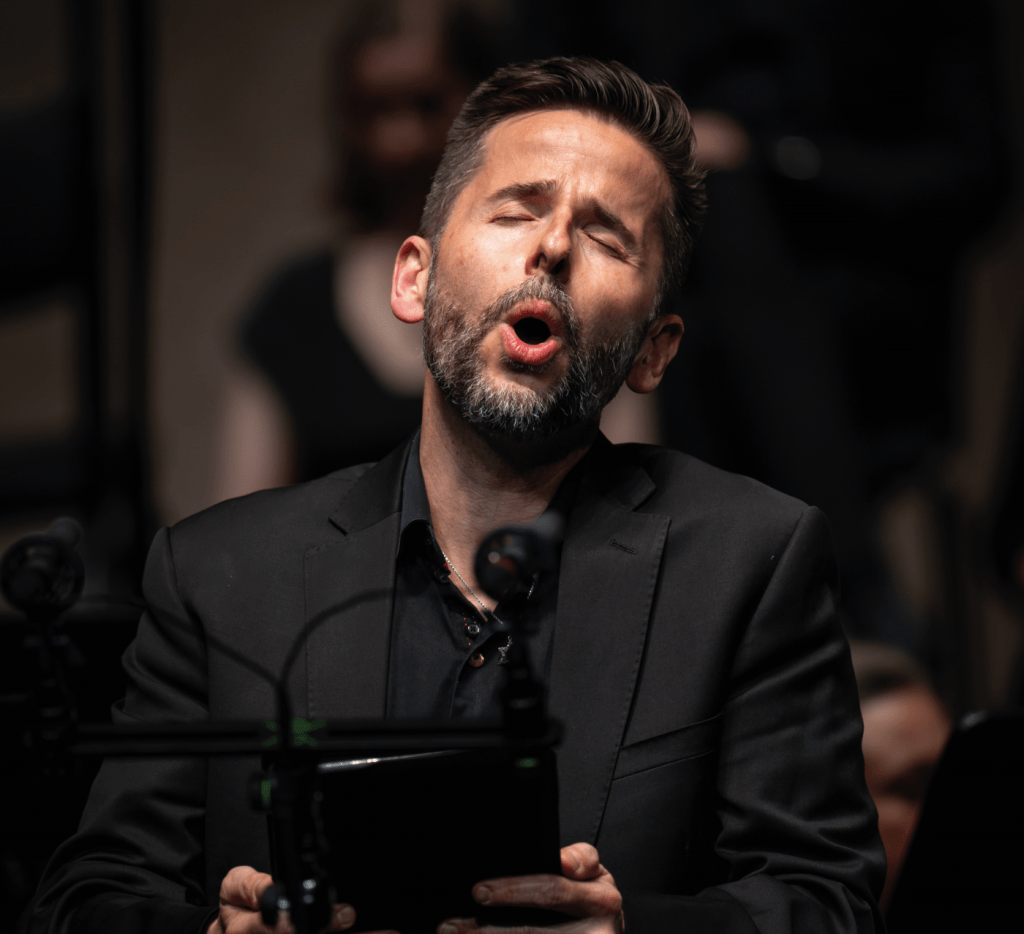
Daniel Johannsen during a Vision Bach concert in 2024, © Bach Akademie Stuttgart/Holger Schneider

For this past Sunday, the 11th after Trinity, I would love to share Bach Akademie Stuttgart’s recording of Cantata 179 Siehe zu, daß deine Gottesfurcht nicht Heuchelei sei and Cantata 199 Mein Herze schwimmt im Blut. 303 years ago, these two cantatas were performed during the same church service in Leipzig, Cantata 179 before the sermon, and Cantata 199 after the sermon. The absolute highlight of this recording for me is tenor Daniel Johannsen’s fabulous singing throughout Cantata 179, not just in his two solo movements, but also in the choruses. In addition, soprano Miriam Feuersinger’s moving rendition of solo cantata 199 on this recording is not to be missed. Keep reading to find out why this cantata is Feuersinger’s personal favorite.

Read more about the Vision Bach project and this Volume 3 album in last week’s post. You can purchase this album on Amazon or Arkiv Music if you are in the USA, or on jpc if you are in Europe. Please consider purchasing to support the artists! Also available on Spotify and YouTube.

Spotlight on tenor Daniel Johannsen

For Cantata 179 Siehe zu, daß deine Gottesfurcht nicht Heuchelei sei, find the score here, and the German text with English translations here.

In my previous posts about this cantata, I mostly wrote about the stunning fugue in the opening chorus. Learn all about it in my posts from 2016 and 2023. But today’s spotlight is on tenor Daniel Johannsen, who illustrates the text in the tenor recitative and aria like no other.

Johannsen’s father was a Protestant pastor and his mother was a religion teacher, so from a very young age, he was familiar with the power of telling a story. He has degrees in both vocal performance and church music, and I believe this all contributes to his exceptional communication of the texts in Bach’s sacred music.

My aunt and Daniel Johannsen outside the Thomaskirche

Over the past fifteen years or so, Johannsen has recorded a great number of Bach’s hymns, cantatas, and oratorios with The Netherlands Bach Society , the J.S. Bach Foundation, and Bach Akademie Stuttgart. The Bach cantata YouTube boom came too late for my mother, who passed away in 2010, but my mother’s oldest sister, also a great Bach fan, as well as a theologian and retired minister, is an avid viewer of those performances. This past June I had the great fortune to visit Bachfest Leipzig together with her. We got to hear Daniel Johannsen sing three times in the Thomaskirche. After the first concert, with the J.S. Bach Foundation under the direction of Rudolf Lutz, my aunt said: “it doesn’t matter that we sit with our back to the performers here, because I know his voice so well from all the videos, I see him in my mind when I hear him sing.” Lutz’s concerts moved her to tears, especially because of the soloists’ communication of the texts. How lucky we were that Daniel took the time after his last Bachfest concert to pose for a photo with my aunt.

Rademann and Feuersinger on the couch with Maul and Schrammek
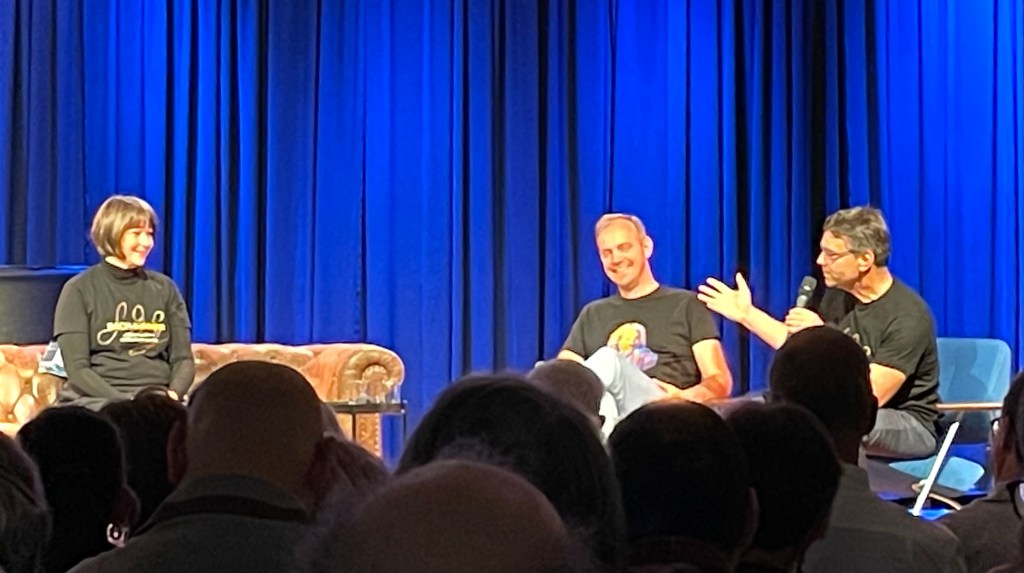
Miriam Feuersinger, Michael Maul, Bernhard Schrammek
Rudolf Lutz, Miriam Feuersinger, Hans-Christoph Rademann

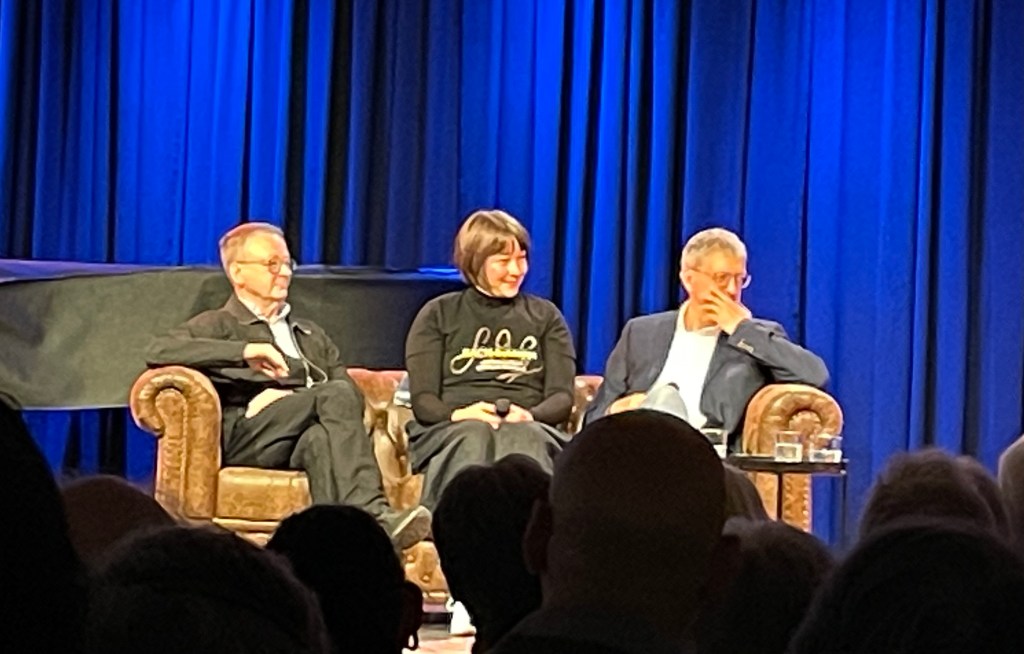
Another reason why these two cantatas are special to me this summer is because of the Maul und Schrammek talk show I attended during Bachfest Leipzig. Miriam Feuersinger was the first guest on Michael Maul’s and Berhnard Schrammek’s couch, and when they asked her what her favorite Bach cantata is, she didn’t have to think twice: it’s Cantata 199 Mein Herze schwimmt im Blut. She explained that this cantata has been a great help to her during a difficult time in her life, and she loves the composition’s “theologische Aussagekraft” (theological expressiveness, theological meaning). 

For Cantata 199 Mein Herze schwimmt im Blut, find the score here, and the German text with English translations here.

Ach, Hans-Christoph, mach wie immer: mach was Schönes!


Later, during that same talk show, when Lutz and Rademann had joined Feuersinger on the couch, Rademann told a story that made me laugh. He recounted a time he felt somewhat stuck: he no longer knew how to direct the opening chorus of Cantata 179, because of the negation in the first line of the text. He telephoned Jos van Veldhoven (artistic director of the Netherlands Bach Society from 1983 to 2018) to ask him for advice. Jos van Veldhoven’s responded with a simple solution: “Ach, Hans-Christoph, mach wie immer: mach was Schönes!” (“Oh, Hans-Christoph, just do what you always do: make it beautiful!”).

© Wieneke Gorter, August 19, 2026.
Almost Unbearable, It’s that Good: Hannes Rux-Brachtendorf and Matthias Winckhler in BWV 46 on Rademann’s Vision Bach, Volume 3.

08 Saturday Aug 2026

Posted by cantatasonmymind in 1723 Trinity season special series, Cantatas, Leipzig, Trinity

≈ Leave a comment

Tags

Anneke Scott, Bach Akademie Stuttgart, Benedikt Kristjánsson, BWV 105, BWV 46, Carlo Carlone, corno da tirarsi, Elvira Bill, Gaechinger Cantorey, Hannes Rux-Brachtendorf, Hans-Christoph Rademann, Ludwigsburg, Matthias Winckhler, Miriam Feuersinger, Schlosskirche, Trinity 10, Trinity 9, Vision Bach

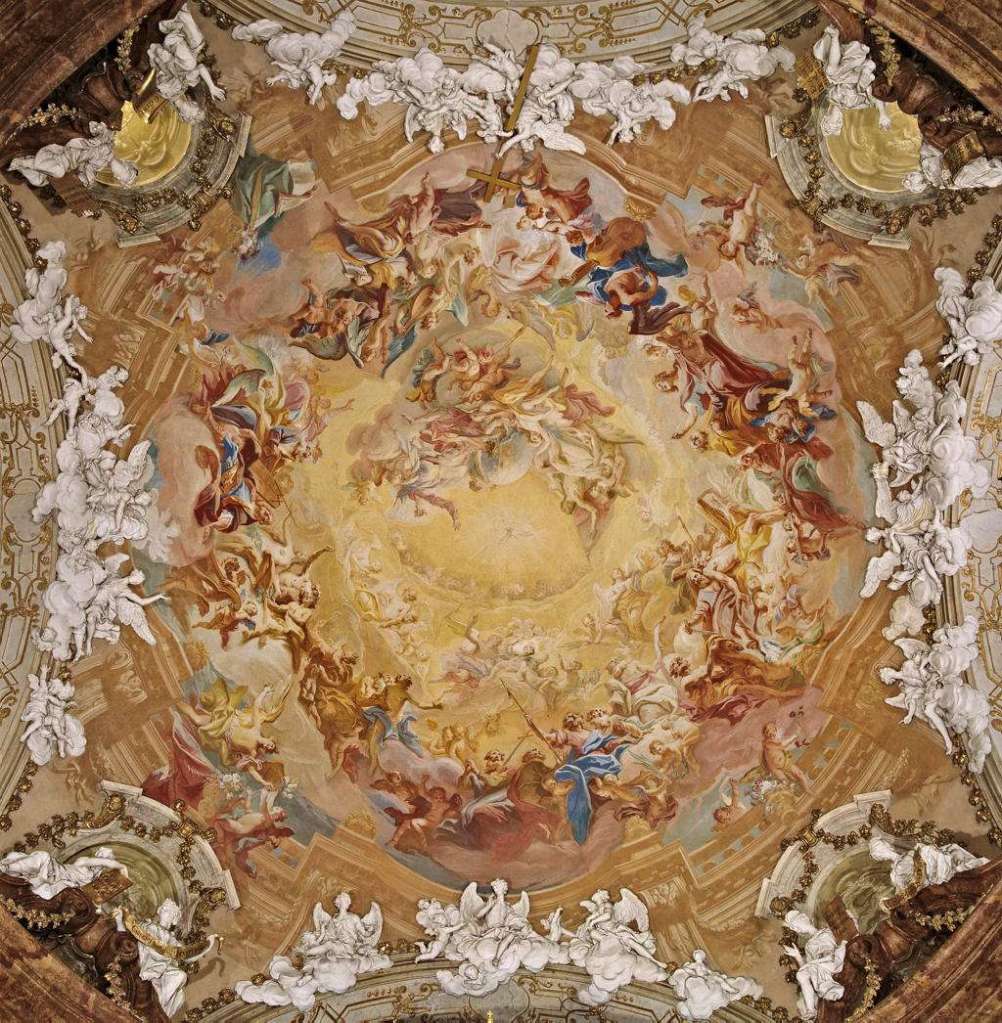
Oh, how I wish I could have been there in person, in July 2023! At the Schlosskirche (Palace Church) of the Ludwigsburg Palace in Germany, looking up at this ceiling painting by Carlo Carlone, and hearing Bach’s incredible cantatas 105 and 46 performed by the Gaechinger Cantorey under the direction of Hans-Christoph Rademann.

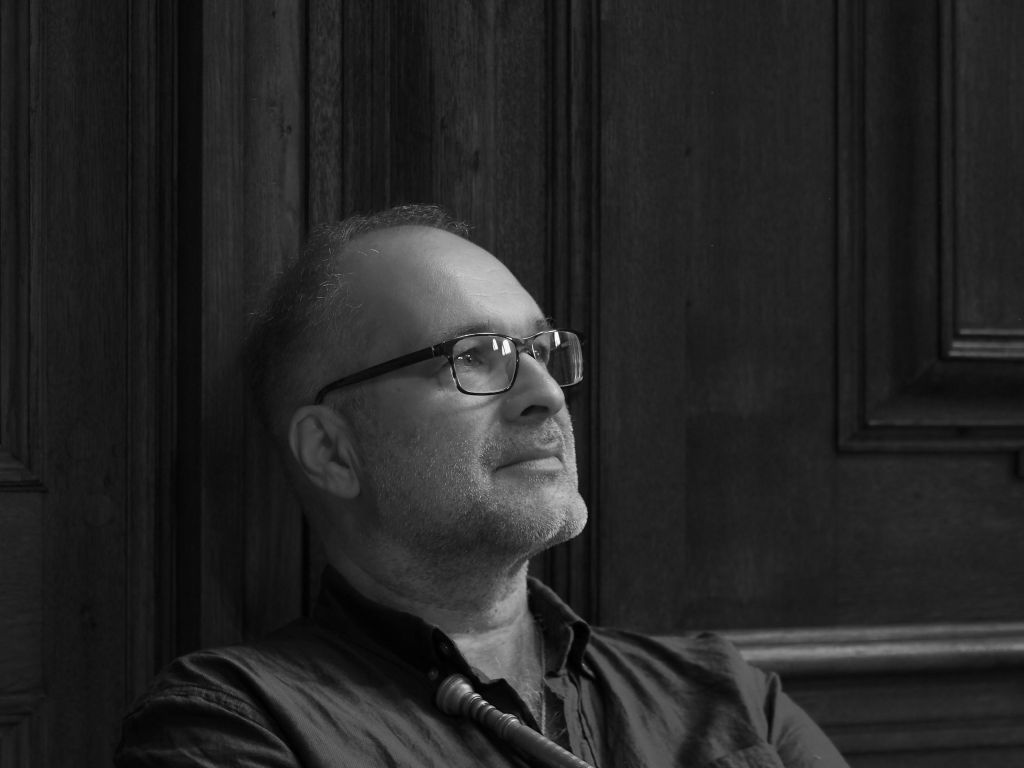
Alas, that summer I had other things on my mind, and was pretty late catching on to Rademann’s Vision Bach, a project to record all Bach’s cantatas from his first year in Leipzig (1723/1724), in the order in which Bach wrote them. So I missed most of those live concerts, but I managed to attend one in February 2024, went to this ensemble’s St. Matthew Passion in Hamburg in March 2025, and became a fan. This June, I had the great fortune to hear two of their performances at Bachfest Leipzig. There, everyone’s energy, but especially the quality of the orchestra blew me away. I was not alone in this, festival director Michael Maul complimented the orchestra too the next day during the talkshow he co-hosted.

Hans-Christoph Rademann, photo by Marco Borggreve

Rademann took over the Bach Akademie Stuttgart and the Gaechinger Cantorey from Helmut Rilling in 2013, and immediately replaced the orchestra with a period instrument ensemble. During the first three years, this happened through collaborations with Freiburger Barockorchester and Akademie Alte Musik Berlin. In 2016 Rademann founded the Bach Akademie Stuttgart’s own orchestra, also under the name Gaechinger Cantorey. And I feel you can tell that this orchestra is only 10 years young.

All 10 Volumes of Vision Bach are out now. Please scroll down on this website by Bachakademie Stuttgart to order directly from the publisher if you are in the European Union. Or visit this website, with links to order from Amazon if you are in the USA, and links for YouTube. I hope to discuss more of these Vision Bach recordings over the coming weeks and months.

For this Sunday, the 10th after Trinity, Bach wrote Cantata 46, Schauet doch und sehet, ob irgendein Schmerz sei in 1723. It appears on Vision Bach, Volume 3. You can purchase this on Amazon or Arkiv Music if you are in the USA, or on jpc if you are in Europe. Please consider purchasing, to support the artists! Also available on Spotify and YouTube.

Find the score here, and the German text with English translations here.

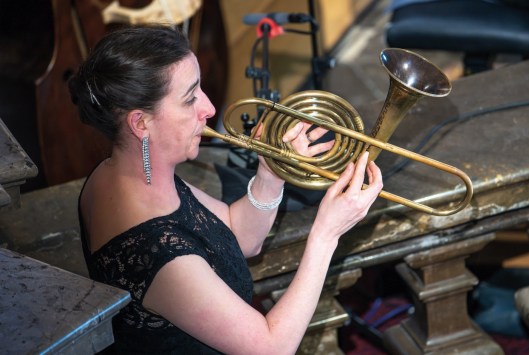
The recording of Cantata 46 features gorgeous singing by alto Elvira Bill and tenor Benedikt Kristjánsson, and the beautiful sound of Anneke Scott’s corno da tirarsi* in the opening chorus and closing chorale. But the absolute best is the bass aria.

Hannes Rux-Brachtendorf
Matthias Winckhler

We all know Bach’s illustration of thunder and lightning from his St. Matthew Passion, but he does it very well too in this apocalyptic bass aria. And this performance by Baroque trumpet player Hannes Rux-Brachtendorf and bass Matthias Winckhler (yes, that’s really five consonants in a row in the middle of his last name) is unrivaled. Especially how together they illustrate the word “unerträglich” (unbearable) in the third line of the text, it is indeed almost unbearable, it is that good! I have never heard those harmonic crunches so well done on any other recording.

Dein Wetter zog sich auf von weiten,
Doch dessen Strahl bricht endlich ein
Und muss dir unerträglich sein,
Da überhäufte Sünden
Der Rache Blitz entzünden
Und dir den Untergang bereiten.

Your tempest brewed from afar,
Yet at long last its flash breaks forth
And must be unbearable to you,
As heaped-up sins
Set aflame the lightning of vengeance
And bring about your downfall.
**

Hannes Rux-Brachtendorf plays with fabulous technique and gorgeous phrasing. His playing was impressive too during Bachfest Leipzig in Cantata 51 Jauchzet Gott in allen Landen. And Matthias Winckhler — ahhhhh, he has it all, the beautiful voice, the colors, the core in the sound. And he can do it all, sing all the notes, do the colloraturas, tell the story, AND move me. I’ll enjoy it while it lasts, because I observe a growing number of Lied and opera engagements on his calendar, so we might hear him less often in Bach cantatas.

Anneke Scott with corno da tirarasi* in the Palace church in Ludwigsburg – photo by Holger Schneider.

When listening to this Volume 3 of Vision Bach, don’t miss the cantata this album opens with: Cantata 105 Herr, gehe nicht ins Gericht mit deinem Knecht for the ninth Sunday after Trinity (last week). Find the text for that cantata here. The recording features gorgeous singing by the one and only Miriam Feuersinger in the soprano aria “Wie zittern und wanken;” a five star performance by horn player Anneke Scott (again on corno da tirarsi*) and tenor Benedikt Kristjánsson in “Kann ich nur Jesum mir zum Freunde machen;” and last but not least, Matthias Winckhler in the arioso “Wohl aber dem, der seinen Bürgen weiss.” This movement always makes me think of the “Am abend da es kühle war” arioso from Bach’s St. Matthew Passion, and it moves me to tears.

Wieneke Gorter, © 2026.

*For more information on Anneke Scott and the corno da tirarsi, please read my blog post from 2023 here.

**English translation by Michael Marissen & Daniel R. Melamed, from https://bachcantatatexts.org/

Dorothee Mields in the spotlight – Third Sunday after Trinity

20 Sunday Jun 2021

Posted by cantatasonmymind in 1723 Trinity season special series, Cantatas, Chorale cantatas 1724/1725, Köthen, Leipzig, Trinity, Weimar

≈ Leave a comment

Tags

Alex Potter, Bach Akademie Stuttgart, Bachstiftung, BWV 135, BWV 172, BWV 21, Dorothee Mields, Gaechinger Cantorey, Hans-Christoph Rademann, J.S. Bach Foundation, J.S. Bach Stiftung, Peter Kooij, Rudolf Lutz, Trinity 3

As far as we know, Bach wrote two cantatas for this Sunday, the third after Trinity: Cantata 21 Ich hatte viel Bekümmernis and Cantata 135 Ach Herr, mich armen Sünder.

Read my post from 2017 about Cantata 135 here. Since I wrote that post, a beautiful live video recording by the J.S. Bach Foundation has been released on YouTube. Find it here.

But now about Cantata 21. It is one of Bach’s most well-known cantatas and it gets programmed often because it features several exciting choruses. The version most of us know is with three soloists: a soprano, a tenor, and a bass. Bach first wrote it like that in Weimar and later performed a similar version in Leipzig in 1723, as part of his first year there. However, in 1720, he created a different version, which he performed in Köthen as well as in Hamburg. It is likely that this version was created for a special soprano soloist (possibly Anna Magdalena?), because in this version, Bach assigns all three tenor solos to the soprano as well, thus featuring the soprano in every solo movement. The bass joins her for two duets.

Dorothee Mields

It turns out that the J.S. Bach Foundation decided to perform this 1720 version for their live video series, with soprano Dorothee Mields and bass Peter Kooij. If I had been at that concert in person, I would have joined the whooping and clapping at the end, because it is an outstanding performance by both soloists but also by the chorus. I only discovered this video recording by accident tonight. I had completely missed it when it was released earlier this month. I meant to write a very short blog post today, quickly giving you some links to previous posts and then go to sleep, but I was completely mesmerized by Dorothee Mields’ singing and was unable to close my computer.

In my post from 2016 about Cantata 21, I show how similar the duet from this cantata is to the duet from Cantata 172 (also written in Weimar). When I watched the J.S. Bach Foundation video of Cantata 21 and witnessed Mields’ art of being in sync with her duet partner, I remembered there’s another wonderful video I have wanted to share. It is Dorothee Mields and Alex Potter singing the duet from Cantata 172 in this video by the Bach Akademie Stuttgart that came out at the end of May. I enjoy very much how sensitive Mields and Potter both are to the music and the text, and how beautifully and naturally their voices move together.

Wieneke Gorter, June 19, 2021.

Recent Posts

  • Family stories and more “Vision Bach” – BWV 179 and 199 for Trinity 11
  • Almost Unbearable, It’s that Good: Hannes Rux-Brachtendorf and Matthias Winckhler in BWV 46 on Rademann’s Vision Bach, Volume 3.
  • “Missa Miniatura” by CONTINUUM/Elina Albach Even More Moving in 2025
  • Bachfest Leipzig 2025
  • Bach Cantatas for Christmas – 1724 and 1734 editions

Archives

  • August 2026
  • August 2025
  • July 2025
  • December 2024
  • November 2024
  • June 2024
  • January 2024
  • December 2023
  • October 2023
  • September 2023
  • August 2023
  • April 2022
  • February 2022
  • January 2022
  • December 2021
  • November 2021
  • June 2021
  • May 2021
  • April 2021
  • February 2021
  • January 2021
  • December 2020
  • November 2020
  • October 2020
  • September 2020
  • August 2020
  • July 2020
  • May 2020
  • April 2020
  • March 2020
  • February 2020
  • January 2020
  • December 2019
  • November 2019
  • May 2018
  • April 2018
  • March 2018
  • February 2018
  • January 2018
  • December 2017
  • November 2017
  • October 2017
  • September 2017
  • August 2017
  • July 2017
  • June 2017
  • May 2017
  • April 2017
  • March 2017
  • February 2017
  • January 2017
  • December 2016
  • November 2016
  • October 2016
  • September 2016
  • August 2016
  • July 2016
  • June 2016
  • May 2016
  • April 2016
  • March 2016
  • February 2016
  • January 2016

Enter your email address to follow this blog and receive notifications of new posts by email.

Join 338 other subscribers

Categories

  • 1723 Trinity season special series
  • Advent
  • After Easter
  • Ascension
  • Bach's life
  • Cantatas
  • Chorale cantatas 1724/1725
  • Christmas
  • Easter
  • Epiphany
  • Following Bach in 1725
  • Köthen
  • Leipzig
  • Septuagesima
  • Travel
  • Trinity
  • Weimar

Meta

  • Create account
  • Log in
  • Entries feed
  • Comments feed
  • WordPress.com

Website Built with WordPress.com.

  • Subscribe Subscribed
    • Weekly Cantata
    • Join 158 other subscribers
    • Already have a WordPress.com account? Log in now.
    • Weekly Cantata
    • Subscribe Subscribed
    • Sign up
    • Log in
    • Report this content
    • View site in Reader
    • Manage subscriptions
    • Collapse this bar
Loading Comments...