Weekly Cantata

Weekly Cantata

Tag Archives: Patrick Grahl

The End of Times and Christmas Combined – Cantata 116 for Trinity 25

21 Saturday Nov 2026

Posted by cantatasonmymind in Advent, Bach's life, Cantatas, Chorale cantatas 1724/1725, Christmas, Leipzig, Trinity

≈ Leave a comment

Tags

Advent, Bach Collegium Japan, Bachakademie Stuttgart, BWV 116, BWV 70, BWV 90, Christmas, evangelischer-lieder-commentarius, Gaechinger Cantorey, Hannes Rux-Brachtendorf, Hans-Christoph Rademann, Jacob Peeters, Jakob Ebert, Johann Martin Schamel, l500b300, Lydia Vroegindeweij, Makoto Sakurada, Marie Henriette Reinhold, Masaaki Suzuki, Masamitsu San'nomiya, Nicolaes Visscher II, Ottoman siege of Vienna 1683, Patrick Grahl, Peter Kooij, Peter Schenk, Robin Blaze, Romeyn de Hooghe, Theatrum Europaeum, Tobias Berndt, Trinity 25, Trinity 26, Yukari Nonoshita
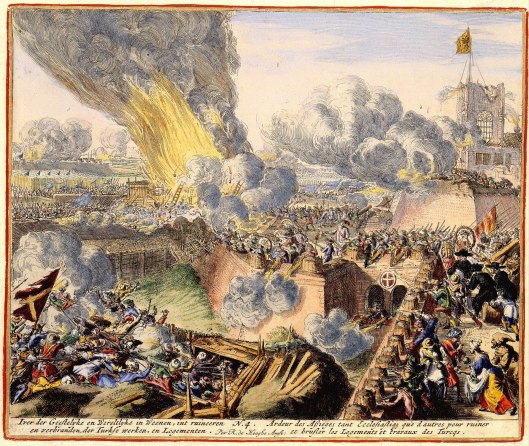
Iver der Geestelyke en Wereltlyke in Weenen, int ruineeren en verbranden der Turkse werken, en Logementen (The clergy’s and laity’s zeal in Vienna in the demolishing and burning of the Turkish fortifications and quarters), copper engraving by Romeyn de Hooghe (1645-1708), 1683. This particular print, from the Atlas Dirk van der Hagen, is hand painted. However, at the time, most prints of this same engraving by De Hooghe would have appeared in black and white, in Dutch and German newspapers as well as in books such as Merian’s Theatrum Europaeum.*

I believe that in 1723 and 1724, writing the last cantata before Advent was of special significance to Bach. At those times, he would consciously combine the horrors of Judgment Day with the hope or even sparkle of Advent and Christmas.

In my humble opinion, this is why Cantata 116 Du Friedefürst, Herr Jesu Christ from 1724 is much less grim than Cantata 90 Es reißet euch ein schrecklich Ende for this same Sunday in 1723. Because, in 1724, the 25th Sunday after Trinity was indeed the last Sunday before Advent, while in 1723, there was one more Sunday to go. And for that next Sunday in 1723, the 26th Sunday after Trinity, Bach adapted a Weimar cantata into cantata 70, Wachet! betet! betet! wachet! which does have that element of hope that Cantata 116 also has but Cantata 90 mostly lacks. In my post from 2016, I wrote about Cantata 70 “there is much more sparkle in the music and hope in the text than last week [i.e. in Cantata 90], because of the link with Advent.”

My favorite recording of Cantata 116 Du Friedefürst, Herr Jesu Christ is the one by Bach Collegium Japan under the direction of Masaaki Suzuki. Because of oboist Masamitsu San’nomiya’s fluid playing in the alto aria, and the very best rendition of the terzetto (movement 4) by Yukari Nonoshita, soprano; Makoto Sakurada, tenor; and Peter Kooij, bass. Robin Blaze also does a beautiful job singing the alto solos on this recording. Find this recording here on Spotify, and here on YouTube.

Find the German texts with English translations of Cantata 116 here, and the score here.

How does Bach combine the End of Times with the Christmas message in Cantata 116 Du Friedefürst, Herr Jesu Christ?

Since this cantata will be part of his 1724/1725 cycle of chorale cantatas, he has to select an appropriate chorale. He picks Du Friedefürst, Herr Jesu Christ from 1601, by Jakob Ebert (1549–1614). According to Dr. Lydia Vroegindeweij’s L500B300 website, Johann Martin Schamel’s Evangelischer Lieder-Commentarius lists this hymn as written during wartime. Schamel also says that it was “actively sung” by the Lutherans in Saxony during the two-month-long Ottoman siege of Vienna in 1683. And thanks to Dr. Lydia Vroegindeweij’s findings, we know that Bach most likely consulted Schamel’s annotations for his entire cycle of chorale cantatas.

1683 was not that long ago in 1724, and Bach’s older relatives must have been telling him about the war with the Ottomans. The liberation of Vienna in 1683 was most likely seen as a proud moment for the citizens of Leipzig, since the father of their ruler Augustus the Strong had personally commanded the Saxon troops during the battle. Black and white versions of the picture above and other illustrations of the war circulated in Leipzig, thanks to newspapers, books such as Merian’s Theatrum Europaeum, and the efforts of Peter Schenk and others.* Thus, the reference to the unspeakable distress (alto aria) and asking for foregiveness (soprano-tenor-bass terzetto) would not have been lost to the Leipzig congregations hearing this cantata on Sunday, November 26, 1724.

But, again thanks to Dr. Lydia Vroegindeweij who mentions this in the sixth episode of her podcast (in Dutch), by choosing this particular chorale, Bach also makes a reference to the Christmas message that Jesus is man and God (read more about this concept in my post from 2019). Because the first lines of this chorale are:

Du Friedefürst, Herr Jesu Christ,
Wahr’ Mensch und wahrer Gott

You prince of peace, Lord Jesus Christ,
true man and true God

My favorite part of this cantata is the soprano-tenor-bass terzetto (movement 4). It is beautiful music, truly heartbreaking on the text “Es brach ja dein erbarmend Herz” (your compassionate heart was broken). The text again refers to that Christmas message of Jesus’ “coming to earth” and “becoming man:”

Ach, wir bekennen unsre Schuld
Und bitten nichts als um Geduld
Und um dein unermesslich Lieben.
Es brach ja dein erbarmend Herz,
Als der Gefallnen Schmerz
Dich zu uns in die Welt getrieben.

Ah, we acknowledge our guilt,
and ask for nothing other than your patience
and your immeasurable love.
Your compassionate heart was broken
when the sorrow of those who had fallen
drove you to us in this world.

Since I last wrote about the other cantata for this Sunday, Cantata 90 Es reißet euch ein schrecklich Ende, in 2016, an even better version of the bass aria with trumpet has come out. It appears on Rademann’s Vision Bach, Volume 5. Soloists are Marie Henriette Reinhold, alto; Patrick Grahl, tenor; Tobias Berndt, bass; and Hannes Rux-Brachtendorf, trumpet. Rux-Brachtendorf is fabulous as always, and the combination with Tobias Berndt makes for a terrific aria. The other singers are great too. Find that recording here on Spotify, and here on YouTube. Texts are here, and the score is here.

I would love it if you would share this article with a friend, with the choir you sing in, or with anyone you think who might appreciate it. Not an email subscriber yet? You can sign up below, and you will receive an email each time I publish a new article. I won’t use your email address for anything else.

© Wieneke Gorter, November 21, 2026.

* In 1683, in Amsterdam, Nicolaes Visscher II (1649-1702) published a series of ten prints about the Ottoman siege of the city of Vienna with the most important pictures of the war. The prints were engraved by Romeyn de Hooghe after eye-witness drawings by the Antwerp artist Jacob Peeters. The picture at the top of this post is the fourth in that series of ten. Visscher sold many of his engraved plates to Peter Schenk, who also reprinted them. Schenk traveled regularly between Amsterdam and Leipzig, sold prints at the Leipzig trade fairs, and had a store in Leipzig.

The Recording that Knocked My Socks off – Cantata 162 for Trinity 20

17 Saturday Oct 2026

Posted by cantatasonmymind in 1723 Trinity season special series, Cantatas, Leipzig, Weimar

≈ Leave a comment

Tags

Alain de Rudder, Andreas Helm, Anneke Scott, Annina Stahlberger, Bach Akademie Stuttgart, Bach Collegium Japan, Catalina Bertucci, corno da tirarsi, Gaechinger Cantorey, Gerlinde Sämann, Gottfried Reiche, Hans-Christoph Rademann, J.S. Bach Foundation, Marie Henriette Reinhold, Masaaki Suzuki, Olivier Picon, Parable of the Unworthy Wedding Guest, Patrick Grahl, Rijksmuseum, Robert Vanryne, Rudolf Lutz, Simon Kick, Tobias Berndt, Toshio Shimada, Trinity 20, Vision Bach, Yoshimichi Hamada, Yumiko Kuriso

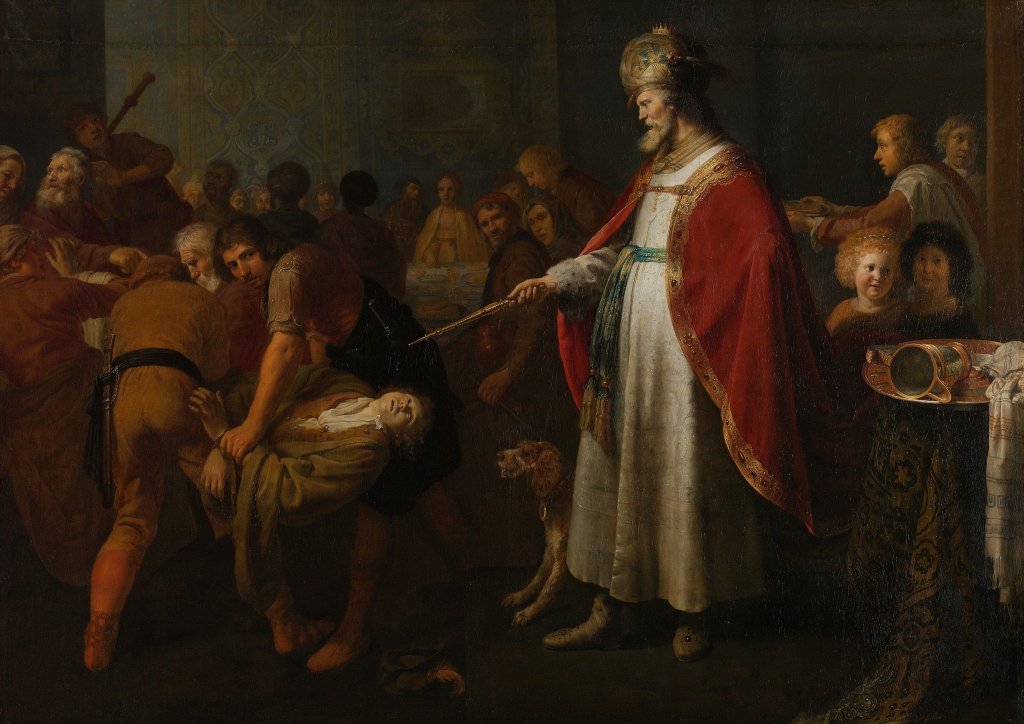
The Parable of the Unworthy Wedding Guest attributed to Simon Kick, circa 1644. Oil on Canvas. Rijksmuseum, Amsterdam, the Netherlands.

Every now and then, a cantata recording knocks my socks off. It happened this week. And since I need to keep this post short, I’ll leave the other five articles I had brewing in my mind on the shelf for the future, and I’ll just tell you about that one recording.

Tobias Berndt

It’s the Leipzig version of Cantata 162 Ach! ich sehe, itzt, da ich zur Hochzeit gehe by Bach Akademie Stuttgart under the direction of Hans-Christoph Rademann, from their Vision Bach series, Volume 4. The opening movement gives me the good kind of stomach ache, thanks to gorgeous singing by Tobias Berndt, unparalleled corno da tirarsi playing by Anneke Scott, and this fantastic orchestra. Another highlight is the duet by alto Marie Henriette Reinhold and tenor Patrick Grahl, accompanied by a terrific continuo group.

Find this recording on YouTube or on Spotify in playlists created by me. To learn more about Bach Akademie Stuttgart’s Vision Bach series and how to purchase the CDs, read my post about their recording of Cantatas 105 and 46. Find the German texts with English translations here, and the score here.

Cantata 162 – A Short History

Bach wrote this cantata originally for the 20th Sunday after Trinity in 1716 in Weimar, setting texts by his favorite librettist there, court librarian Salomon Franck. Franck transforms the question “Am I dressed properly?” from the The Parable of the Unworthy Wedding Guest (Matthew 22:1-14, the Gospel for this Sunday) into “Have I made the right choices?”

Since Bach had limited performance space in the Duke’s chapel in Weimar, he composed this original piece for a small instrumental ensemble: strings, bassoon, and continuo, plus likely a solo wind instrument for the soprano aria (movement 3).*

Anneke Scott – The Queen of the Corno da Tirarsi

For the 1723 performance in Leipzig, Bach added a corno da tirarsi in the first and last movements. In his time, most probably the only person who could play the corno da tirarsi was Gottfried Reiche, because Bach stopped writing for this instrument after Reiche’s death in 1732.

Anneke Scott with corno da tirarsi. Photo by Nick Gilbert.

Today, we are lucky to have more than one musician who can handle this instrument. I’m thinking of Alain de Rudder (Herreweghe), Toshio Shimada (Suzuki), and last but not least, Olivier Picon (J.S. Bach Foundation), who did important research on the instrument and initiated Egger’s reconstruction of the original. But for me, the Queen of the corno da tirarsi is Anneke Scott. I already talked about her fabulous performance in Cantatas 46 and 105 on Volume 3 of Rademann’s Vision Bach several weeks ago, and in this Cantata 162 she does it again! Her playing is simply stunning, I have never heard the corno da tirarsi played with such beautiful phrasing and sound quality as she does on these Vision Bach recordings.

To everyone who recently started following me here on WordPress or on Instagram @weeklycantata, welcome and thank you for being part of my Bach family! Please feel free to share this article with a friend.

Not an email subscriber yet? Sign up below! I won’t use your email address for anything else.

© Wieneke Gorter, October 17, 2026.

*For his recording in 1996 (Yumiko Kurisu, soprano; Yoshimichi Hamada, recorder) Masaaki Suzuki created a part for solo recorder, which has subsequently also been used by Lutz/J.S. Bach Foundation (Gerlinde Sämann, soprano; Annina Stahlberger, recorder) and for the performance discussed here by Rademann/Bach Akademie Stuttgart (Catalina Bertucci, soprano; Andreas Helm, recorder).

Bachfest Leipzig 2025

09 Wednesday Jul 2025

Posted by cantatasonmymind in Cantatas, Leipzig, Travel

≈ Leave a comment

Tags

Adina Apartment Hotel Leipzig, Alex Potter, Anna-Sylvia Goldammer, Apartmenthotel Quartier M., Bach, Bach Akademie Stuttgart, Bach-Archiv Leipzig, Bachakademie Stuttgart, Bachfest 2025, Bachfest 2026, Bachfest Leipzig, Bachfest Leipzig 2025, Bachfest Leipzig 2026, Bachfest Malaysia, Bachstiftung, BWV 198, BWV 20, BWV 233, BWV 79, Christiane Mariana von Ziegler, Christiane Mariane von Ziegler, Collegium Vocale Gent, Continuum Berlin, David Chin, David de Winter, Elina Albach, Gardiner, Hans-Christoph Rademann, Heinrich Schütz, Innside Leipzig, J.S. Bach Foundation, J.S. Bach Stiftung, Johann Hermann Schein, johann-sebastian-bach, Koopman, linden trees, Maria Küstner, Merseburg, Merseburger Dom, Michael Maul, Miriam Feuersinger, Motel One Leipzig, Nikolaikirche, Patrick Grahl, Philippe Herreweghe, Rick Fulkner, Romanus-Haus, Rudolf Lutz, Schütz, Schein, Solomon's Knot, Thomaskirche, Tobias Berndt, Tomáš Král, Wir glauben all an einen Gott

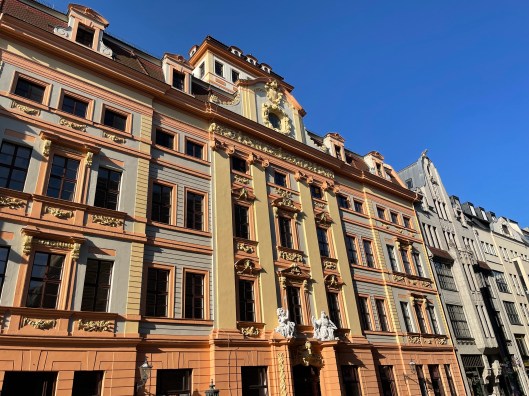
Romanus-Haus in Leipzig, the house where poet Christiane Mariane von Ziegler held salons in the 1720s and 1730s.

I visited Bachfest Leipzig again this year, from Tuesday evening, June 17, through Sunday, June 22, attending eight concerts in six days. Read my highlights below, and please subscribe to this blog so you don’t miss future posts. I joined a festival trip to Merseburg, took walks, caught up with friends from all over the world, and met some new fellow Bach lovers. For me, the camaraderie has almost become a more important reason to return each year than the concerts.

That said, next year’s cantata programming is not to be missed, with Herreweghe AND Lutz AND Rademann, so if you would like to attend you should probably get organized – my tips for that at the end of this post.

Summer in Leipzig

June is the perfect time of year in this city. People are out on café terraces everywhere, and walking in the streets. Then there’s the summer green: entire rose bushes for sale on the street in the middle of the center, and linden trees in bloom wherever you go. The scent of linden delights me, and I learned something new about them this year, thanks to our Bachfest tour guide Anna-Sylvia Goldammer on the organ trip to Merseburg: Leipzig has apparently always been full of linden trees! The latin word for Leipzig, Lipsi, was derived from the Slavic word for linden tree, lipa. Most of downtown, inside the ring, is car-free, with only taxis and necessary vehicles allowed in. This makes it feel safe and, dare I say it, more walkable than Amsterdam.

The free performances can be the most meaningful

Inspired by a seatmate on the trip to Köthen last year, I attended more of the free or almost-free performances this year. You can still fully enjoy the camaraderie with other Bach fans and hear beautiful music without spending a fortune. There are no assigned seats for the church services, so as long as you line up early, you can enjoy the best view for free.

This year I had missed the free performances on the market square, but on Saturday morning, June 21, I was so lucky to attend an unforgettable, absolutely exquisite rendition of the duet from Cantata 79 Gott der Herr ist Sonn und Schild by soprano Miriam Feuersinger and baritone Tobias Berndt during the “Mette” (morning service) in the Nikolaikirche. The Sunday morning service in the Thomaskirche was special too. The service was a reconstruction of what a church service in Bach’s time would have been like (I could write an entire blog post about that!), I got to hear Johannes Lang play the organ, Tomáš Král sing the bass arias in Cantata 20 O Ewigkeit, du Donnerwort, and tenor Patrick Grahl sing not only the tenor aria in that cantata but also the cantor-bits in the service as well as the reading from the New Testament (yes this was sung, beautiful!). But I also happened to sit and sing (in the congregational singing) next to the 80-year-old father of choir director Maria Küstner. With great determination he had climbed all the stairs to the balcony, even though he was walking with a cane. When after the service I thanked him for his clear and confident singing, he told me that decades ago, on frequent car trips between Leipzig and Berlin, he would sing Luther’s “Wir glauben all an einen Gott” (one of the Lutheran chorales we had just sung in the service) to keep himself and the family awake. I forgot to ask him if this was still during GDR time, but it might very well have been.

Catching up with David Chin

This year I also finally had the opportunity to have lunch with David Chin, director of Bachfest Malaysia and creator of the excellent documentary Encountering Bach which I have referenced already a few times on this blog. We started conversations on Facebook during the Covid pandemic after David published his first episodes of the documentary, then met in person at the Thüringer Bachwochen in 2022, but only managed to say a few quick hellos at last year’s Bachfest. So grateful it worked out to talk this year!

Concert highlights: Alex Potter and David de Winter

Alex Potter in the Nikolaikirche on June 17. Photo courtesy of Sascha Wolff.

I had only just arrived to Leipzig on Tuesday June 17. I had not even unpacked yet, but I had a chance to hear “Missa Miniatura,” Elina Albach’s adaptation of Bach’s Mass in B Minor again, and I am a big fan of that production. So I ate a quick dinner and made it to the Nikolaikirche just in time. Alex Potter’s stunning rendition of the Agnus Dei at this concert was definitely a highlight of this Bachfest for me. In order to have a bit more acoustic, he had climbed up a few steps so he stood directly under an arch in the Nikolaikirche. Thanks to Sascha Wolff for capturing that moment on photo. After this aria I felt “we can now all die happily.” The other aria that transported me to a similar state of bliss was David de Winter’s “Der Ewigkeit saphirnes Haus” from Cantata 198 Laß, Fürstin, laß noch einen Strahl with Solomon’s Knot on Friday, June 20, in the Evangelisch-Reformierte Kirche. I had never heard this aria sung so beautifully.

Bach’s “50 best cantatas” by Lutz, Herrewege, and Rademann, Vox Luminis, Koopman, and Gardiner in 2026 – how to get organized

Disclaimer: I’m not getting paid to write this. Below is a reflection of my personal opinion and personal interpretation of the information that is available at the time of writing this blog post. I do not accept responsibility if your experience is different. I just thought it might be helpful to curate the information from various websites for you.

Anyone reading this who has visited Bachfest in the last few years: please feel free to add your own advice in the comments. Thank you!

Next year’s cantata programming at the festival is going to be a hit parade of the “50 best cantatas” (chosen by the audience, read more about the how and why in this interview with festival director Michael Maul by blogger Rick Fulkner) with two concerts each by Herreweghe, Lutz, Koopman, Gardiner, Rademann, and Vox Luminis. Here are my tips to get organized:

If you already know you want to attend all 12 cantata concerts (= two concerts per day, six days in a row, of two to three cantatas each, each cantata preceded by a motet by Schütz or Schein), you can purchase your “packet” here. You’ll go through two seat selection screens, one to select your seat for the Thomaskirche (the screen doesn’t specify this, but it is the seatmap that has the stage at the bottom, and “Südempore” on the right), and, once you have clicked the checkout button, another one for the Nikolaikirche (not specified either, but this is the map that has the stage at the top and 1. Empore and 2. Empore).

Please note for Thomaskirche:

  • For concerts with choir and orchestra, the performers are located on the organ loft of the Sauer-organ (the bottom of the seating map).
  • The majority of the pews downstairs, where the sound is likely best, have their backs to the performers. Many people don’t mind this, but it surprised me. Thus, if it is important for you to see the performers, choose a premium seat (yellow on the map) on one of the balconies, where the sound is wonderful too.
  • Some seats on the Empore (balconies) have partially blocked views of the performers due to large pillars, even the premium seats are not all equal, so don’t get your hopes up too much.

Please note for Nikolaikirche:

The sound is good everywhere in the church, but most seats on the balconies have limited leg space, so keep that in mind if you are tall, since these cantata concerts will be pretty long. The Bach Museum shop sells cute portable cushions for making your church pew seat more comfortable, see picture on the left, pillow folded in half. I also saw people who traveled with inflatable pillows.

If you want to pick and choose, only want to go to one concert per day, or don’t want to commit to spending a thousand euros just yet, mark your calendar:

  • November 11, 2025: Advance sales start for Patrons of the Bachfest/Bach-Archiv Leipzig and for members of the Neue Bachgesellschaft.
    • Become a patron of the Bachfest here (access to VIP seating for three concerts or more, depending on level of giving).
    • Become a member of the Neue Bachgesellschaft here (no special seating, just the earlier access to ticket sales).
  • November 25, 2025: Regular ticket sales start.

Where to stay: People I met had good experiences at Innside (hotel directly across the ring from the Thomaskirche, in a nice neighborhood), Motel One (close to the Nikolaikirche), and Adina Apartment Hotel (apartments close to the Nikolaikirche, 24-hour reception, pool, restaurant, bar). I myself stayed in Apartmenthotel Quartier M. which I loved because of the excellent organic supermarket on the ground floor of the same building, the good price, and the short walking distance to the Thomaskirche.

Copyright Wieneke Gorter, July 9, 2025.

Recent Posts

  • Three Listening Guides – First Sunday of Advent
  • The End of Times and Christmas Combined – Cantata 116 for Trinity 25
  • From the Archives, with a New Recording – Cantatas 60 and 26 for Trinity 24
  • A Controversy and a Coin Collection – Cantata 163 for Trinity 23
  • Giving the Choir a Breather? – Cantata 89 for Trinity 22

Archives

  • November 2026
  • October 2026
  • September 2026
  • August 2026
  • August 2025
  • July 2025
  • December 2024
  • November 2024
  • June 2024
  • January 2024
  • December 2023
  • October 2023
  • September 2023
  • August 2023
  • April 2022
  • February 2022
  • January 2022
  • December 2021
  • November 2021
  • June 2021
  • May 2021
  • April 2021
  • February 2021
  • January 2021
  • December 2020
  • November 2020
  • October 2020
  • September 2020
  • August 2020
  • July 2020
  • May 2020
  • April 2020
  • March 2020
  • February 2020
  • January 2020
  • December 2019
  • November 2019
  • May 2018
  • April 2018
  • March 2018
  • February 2018
  • January 2018
  • December 2017
  • November 2017
  • October 2017
  • September 2017
  • August 2017
  • July 2017
  • June 2017
  • May 2017
  • April 2017
  • March 2017
  • February 2017
  • January 2017
  • December 2016
  • November 2016
  • October 2016
  • September 2016
  • August 2016
  • July 2016
  • June 2016
  • May 2016
  • April 2016
  • March 2016
  • February 2016
  • January 2016

Enter your email address to follow this blog and receive notifications of new posts by email.

Join 338 other subscribers

Categories

  • 1723 Trinity season special series
  • Advent
  • After Easter
  • Ascension
  • Bach's life
  • Cantatas
  • Chorale cantatas 1724/1725
  • Christmas
  • Easter
  • Epiphany
  • Following Bach in 1725
  • Köthen
  • Leipzig
  • Leipzig 1726/1727
  • Septuagesima
  • Travel
  • Trinity
  • Weimar

Meta

  • Create account
  • Log in
  • Entries feed
  • Comments feed
  • WordPress.com

Website Built with WordPress.com.

  • Subscribe Subscribed
    Weekly Cantata
    Join 158 other subscribers

    Have a WordPress.com account? Log in now.

  • Weekly Cantata
    View site in Reader
    Manage subscriptionsSign upLog in
    Report this content
    Collapse this bar
Loading Comments...