Weekly Cantata

Weekly Cantata

Tag Archives: BWV 70

The End of Times and Christmas Combined – Cantata 116 for Trinity 25

21 Saturday Nov 2026

Posted by cantatasonmymind in Advent, Bach's life, Cantatas, Chorale cantatas 1724/1725, Christmas, Leipzig, Trinity

≈ Leave a comment

Tags

Advent, Bach Collegium Japan, Bachakademie Stuttgart, BWV 116, BWV 70, BWV 90, Christmas, evangelischer-lieder-commentarius, Gaechinger Cantorey, Hannes Rux-Brachtendorf, Hans-Christoph Rademann, Jacob Peeters, Jakob Ebert, Johann Martin Schamel, l500b300, Lydia Vroegindeweij, Makoto Sakurada, Marie Henriette Reinhold, Masaaki Suzuki, Masamitsu San'nomiya, Nicolaes Visscher II, Ottoman siege of Vienna 1683, Patrick Grahl, Peter Kooij, Peter Schenk, Robin Blaze, Romeyn de Hooghe, Theatrum Europaeum, Tobias Berndt, Trinity 25, Trinity 26, Yukari Nonoshita
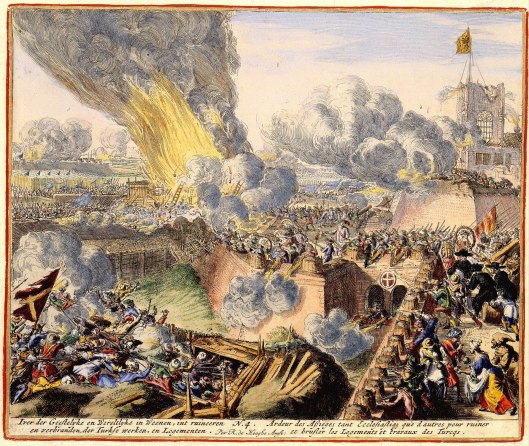
Iver der Geestelyke en Wereltlyke in Weenen, int ruineeren en verbranden der Turkse werken, en Logementen (The clergy’s and laity’s zeal in Vienna in the demolishing and burning of the Turkish fortifications and quarters), copper engraving by Romeyn de Hooghe (1645-1708), 1683. This particular print, from the Atlas Dirk van der Hagen, is hand painted. However, at the time, most prints of this same engraving by De Hooghe would have appeared in black and white, in Dutch and German newspapers as well as in books such as Merian’s Theatrum Europaeum.*

I believe that in 1723 and 1724, writing the last cantata before Advent was of special significance to Bach. At those times, he would consciously combine the horrors of Judgment Day with the hope or even sparkle of Advent and Christmas.

In my humble opinion, this is why Cantata 116 Du Friedefürst, Herr Jesu Christ from 1724 is much less grim than Cantata 90 Es reißet euch ein schrecklich Ende for this same Sunday in 1723. Because, in 1724, the 25th Sunday after Trinity was indeed the last Sunday before Advent, while in 1723, there was one more Sunday to go. And for that next Sunday in 1723, the 26th Sunday after Trinity, Bach adapted a Weimar cantata into cantata 70, Wachet! betet! betet! wachet! which does have that element of hope that Cantata 116 also has but Cantata 90 mostly lacks. In my post from 2016, I wrote about Cantata 70 “there is much more sparkle in the music and hope in the text than last week [i.e. in Cantata 90], because of the link with Advent.”

My favorite recording of Cantata 116 Du Friedefürst, Herr Jesu Christ is the one by Bach Collegium Japan under the direction of Masaaki Suzuki. Because of oboist Masamitsu San’nomiya’s fluid playing in the alto aria, and the very best rendition of the terzetto (movement 4) by Yukari Nonoshita, soprano; Makoto Sakurada, tenor; and Peter Kooij, bass. Robin Blaze also does a beautiful job singing the alto solos on this recording. Find this recording here on Spotify, and here on YouTube.

Find the German texts with English translations of Cantata 116 here, and the score here.

How does Bach combine the End of Times with the Christmas message in Cantata 116 Du Friedefürst, Herr Jesu Christ?

Since this cantata will be part of his 1724/1725 cycle of chorale cantatas, he has to select an appropriate chorale. He picks Du Friedefürst, Herr Jesu Christ from 1601, by Jakob Ebert (1549–1614). According to Dr. Lydia Vroegindeweij’s L500B300 website, Johann Martin Schamel’s Evangelischer Lieder-Commentarius lists this hymn as written during wartime. Schamel also says that it was “actively sung” by the Lutherans in Saxony during the two-month-long Ottoman siege of Vienna in 1683. And thanks to Dr. Lydia Vroegindeweij’s findings, we know that Bach most likely consulted Schamel’s annotations for his entire cycle of chorale cantatas.

1683 was not that long ago in 1724, and Bach’s older relatives must have been telling him about the war with the Ottomans. The liberation of Vienna in 1683 was most likely seen as a proud moment for the citizens of Leipzig, since the father of their ruler Augustus the Strong had personally commanded the Saxon troops during the battle. Black and white versions of the picture above and other illustrations of the war circulated in Leipzig, thanks to newspapers, books such as Merian’s Theatrum Europaeum, and the efforts of Peter Schenk and others.* Thus, the reference to the unspeakable distress (alto aria) and asking for foregiveness (soprano-tenor-bass terzetto) would not have been lost to the Leipzig congregations hearing this cantata on Sunday, November 26, 1724.

But, again thanks to Dr. Lydia Vroegindeweij who mentions this in the sixth episode of her podcast (in Dutch), by choosing this particular chorale, Bach also makes a reference to the Christmas message that Jesus is man and God (read more about this concept in my post from 2019). Because the first lines of this chorale are:

Du Friedefürst, Herr Jesu Christ,
Wahr’ Mensch und wahrer Gott

You prince of peace, Lord Jesus Christ,
true man and true God

My favorite part of this cantata is the soprano-tenor-bass terzetto (movement 4). It is beautiful music, truly heartbreaking on the text “Es brach ja dein erbarmend Herz” (your compassionate heart was broken). The text again refers to that Christmas message of Jesus’ “coming to earth” and “becoming man:”

Ach, wir bekennen unsre Schuld
Und bitten nichts als um Geduld
Und um dein unermesslich Lieben.
Es brach ja dein erbarmend Herz,
Als der Gefallnen Schmerz
Dich zu uns in die Welt getrieben.

Ah, we acknowledge our guilt,
and ask for nothing other than your patience
and your immeasurable love.
Your compassionate heart was broken
when the sorrow of those who had fallen
drove you to us in this world.

Since I last wrote about the other cantata for this Sunday, Cantata 90 Es reißet euch ein schrecklich Ende, in 2016, an even better version of the bass aria with trumpet has come out. It appears on Rademann’s Vision Bach, Volume 5. Soloists are Marie Henriette Reinhold, alto; Patrick Grahl, tenor; Tobias Berndt, bass; and Hannes Rux-Brachtendorf, trumpet. Rux-Brachtendorf is fabulous as always, and the combination with Tobias Berndt makes for a terrific aria. The other singers are great too. Find that recording here on Spotify, and here on YouTube. Texts are here, and the score is here.

I would love it if you would share this article with a friend, with the choir you sing in, or with anyone you think who might appreciate it. Not an email subscriber yet? You can sign up below, and you will receive an email each time I publish a new article. I won’t use your email address for anything else.

© Wieneke Gorter, November 21, 2026.

* In 1683, in Amsterdam, Nicolaes Visscher II (1649-1702) published a series of ten prints about the Ottoman siege of the city of Vienna with the most important pictures of the war. The prints were engraved by Romeyn de Hooghe after eye-witness drawings by the Antwerp artist Jacob Peeters. The picture at the top of this post is the fourth in that series of ten. Visscher sold many of his engraved plates to Peter Schenk, who also reprinted them. Schenk traveled regularly between Amsterdam and Leipzig, sold prints at the Leipzig trade fairs, and had a store in Leipzig.
Giving the Choir a Breather? – Cantata 89 for Trinity 22

31 Saturday Oct 2026

Posted by cantatasonmymind in 1723 Trinity season special series, Bach's life, Cantatas, Christmas, Leipzig, Weimar

≈ Leave a comment

Tags

Ana Inés Feola, Andreas Helm, Anneke Scott, Bach Akademie Stuttgart, Bernhard Schrammek, BWV 109, BWV 162, BWV 190, BWV 40, BWV 48, BWV 60, BWV 63, BWV 64, BWV 70, BWV 88, BWV 89, BWV 90, Gaechinger Cantorey, Giuseppe Ciraso-Cali, Györgyi Farkas, Hans-Christoph Rademann, J.S. Bach Foundation, J.S. Bach Stiftung, Joseph Crouch, Julia Raasch, Kerstin Kemp, Marie Henriette Reinhold, Michael Maul, Nuria Rial, St. Thomas Choir, Thomaner, Tobias Berndt, Trinity 22

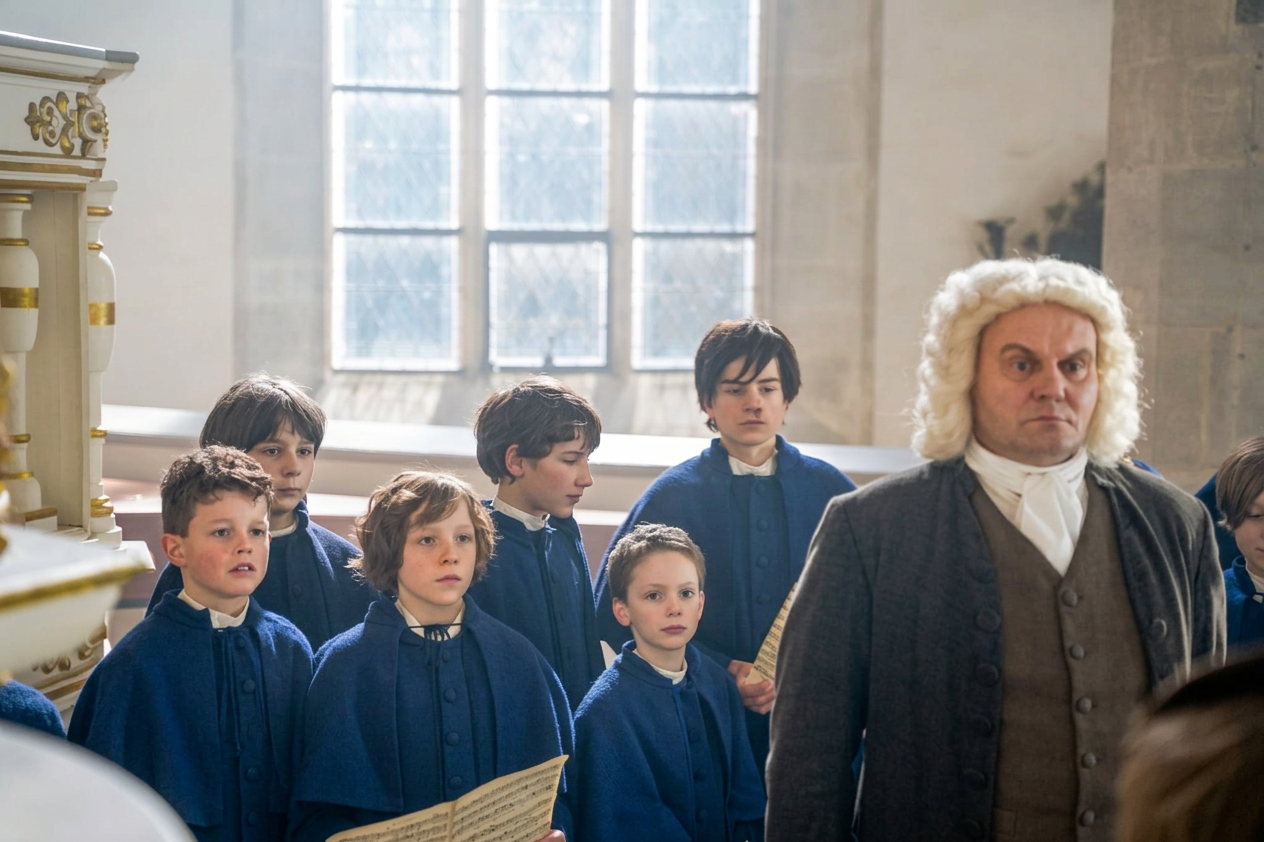
Boys of St. Thomas Choir with actor Devid Striesow as J.S. Bach during the filming of “Bach – Ein Weihnachtswinder” (Bach – A Christmas Miracle), a movie that came out in Germany in December 2024*. The tall boy in the back has a smudge under his nose because in the previous scene he got into a fight with the St. Nicholas choir boys. Photo from St. Thomas Choir’s website.

Ten years ago I published the ultimate NON-post about Cantata 89 Was soll ich aus dir machen, Ephraim? because I had little time that week. So I feel today is a good occasion to travel back to October 24, 1723 (Trinity 22) in Leipzig, and go into movie script mode again.

My favorite recording overall of Cantata 89 Was soll ich aus dir machen, Ephraim? is the one by Bach Akademie Stuttgart under the direction of Hans-Christoph Rademann from their Vision Bach series, volume 4. Find it here on Youtube, or here on Spotify. Find the German texts with English translations here, and the score here.

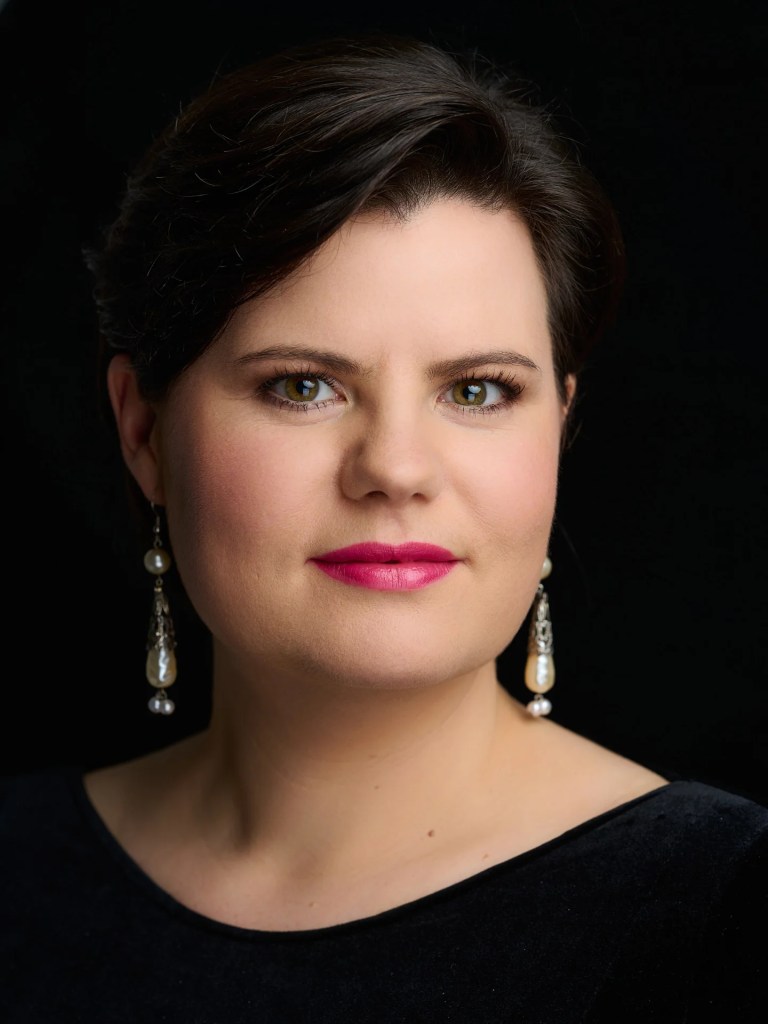
Marie Henriette Reinhold. Photo by Christian Palm.

Just as two weeks ago in Cantata 162, it’s the opening movement that touches me the most, thanks to the same personnel as two weeks ago. Tobias Berndt’s singing is fabulous, and Anneke Scott’s corno da tirarsi cuts through the rest of the orchestra sound so much better than the “regular” natural horn most ensembles use for this cantata. And let’s not forget oboists Andreas Helm and Ana Inés Feola, who play all the “sighs” in this opening movement so beautifully. The alto solos by Marie Henriette Reinhold are also fantastic, especially with this unparalleled continuo group accompanying her: Györgyi Farkas, basssoon; Joseph Crouch, cello; Giuseppe Ciraso-Cali, double bass; and Julia Raasch, organ. They do a terrific job illustrating the grim tone of the alto aria’s text.

All this being said, I would like to add that for the soprano aria, I still love the J.S. Bach Foundation recording the best, with soprano Nuria Rial and oboist Kerstin Kramp almost dancing out of the church, so gloriously do they perform that movement.

God’s Voice in the opening movement – only one other cantata has this too.

Cantata 89 is an unusual cantata, because it starts with a Bible quote where God himself is speaking. Within Bach’s oeuvre, there are several cantatas that start with a solo bass singing literal words from the Bible as spoken by Jesus, but, as far as I know, there is only one other cantata (Cantata 88, written for July 21, 1726**) that starts with a solo bass singing God’s words.

So, now the question is: is there no choir singing in the opening movement of this cantata because Bach thought it inappropriate to give God’s words to more than one voice? Or did Bach instruct his librettist that he needed text for a solo singer, because, similar to two weeks ago for Cantata 162, he wanted to give the choir a break? Keep reading to learn why I think it’s the latter.

Michael Maul: “Perhaps Bach simply wanted to give the choir a little breather”

Michael Maul and Bernhard Schrammek

This past week, when doing research for this cantata, I became intrigued by something Michael Maul says in his and Bernhard Schrammek’s podcast from November 5, 2023. He explains that in Bach’s first four months in Leipzig, in 1723, he hadn’t spared any singers or instrumentalists. Opening choruses had been extensive and demanding, and solo instrumentalists had been given virtuoso parts to play in arias. Maul remarks that this changed suddenly in October of that year, when Bach started to alternate elaborate cantatas (the norm from June through September, 1723) with compositions for a smaller orchestra with only a few solo voices. For those smaller cantatas, he needed the choir only in the closing chorale.

I thought it would be helpful to see an overview of this. So, as far as we know now, here is what Bach’s performance schedule looked like for the months of October and November, 1723. The three cantatas with opening chorus in bold, the remaining five are smaller scale. Cantata 70 was an extra-long cantata including a demanding opening chorus and two chorales. Bach had already written the opening chorus, the arias, and one of the chorales of that cantata in Weimar.

October 3 (19th Sunday after Trinity): Cantata 48 Ich elender Mensch, wer wird mich erlösen
October 10 (20th Sunday after Trinity): Cantata 162 Ach! ich sehe, itzt, da ich zur Hochzeit gehe
October 17 (21st Sunday after Trinity): Cantata 109 Ich glaube, lieber Herr, hilf meinem Unglauben!
October 24 (22nd Sunday after Trinity): Cantata 89 Was soll ich aus dir machen, Ephraim?
October 31 (23rd Sunday after Trinity): most probably Cantata 163 Nur jedem das seine (from Weimar)
November 7 (24th Sunday after Trinity): Cantata 60 O Ewigkeit, du Donnerwort!
November 14 (25th Sunday after Trinity): Cantata 90 Es reißet euch ein schrecklich Ende
November 21 (26th Sunday after Trinity): Cantata 70 Wachet! betet! betet! wachet! (partly from Weimar)

In his German-spoken podcast, Maul says:

“I can’t give a specific reason—maybe there was some other event happening at the same time that put a strain on St. Thomas’ singers. Maybe there was also a high rate of sick leave. Perhaps Bach simply wanted—based on the experience he’d gained in the first few months—to give the choir a little breather […] before things really kicked into high gear for the Christmas season, so to speak. Because it was clear that it would be musically very demanding.” [translated by Deepl and me].

Time for another overview. This would be Christmas season 1723/1724 for Bach’s choir. Yes, all in bold, because it’s back to normal by that time, all these are elaborate cantatas with opening choruses.

Christmas Day: Cantata 63 Christen, ätzet diesen Tag (originally from Weimar) and a new Magnificat
Second Christmas Day: Cantata 40 Darzu ist erschienen der Sohn Gotte
Third Christmas Day: Cantata 64 Sehet, welch eine Liebe hat uns der Vater erzeiget
New Year’s Day 1724: Cantata 190 Singet dem Herrn ein neues Lied

While Bach would likely not have conceived the specific cantatas for Second and Third Christmas Day already in October, he might very well already have been writing or at least thinking about the Magnificat, and would have been planning to perform an elaborate cantata on each Christmas Day. If you have ever sung Bach’s Magnificat as a choral singer, you know it is an extremely challenging piece, up there with the trickiest parts of Bach’s Mass in B Minor.

So here’s my possible movie scenario: At a choir rehearsal at the end of September or beginning of October, Bach hands some vocal parts from his own music library to the choir boys. On one of them the text reads “Wachet! Betet!” and on the other “Christen, ätzet diesen Tag.” Maybe there’s even one that says “Gloria Patri.” Only half of the choir is there, the others are sick. There’s scarlet fever going around. The rehearsal is a bit of a disaster, and Bach realizes it will take some time to get this all together.

Other cantatas for this Sunday: Cantata 115 Mache dich, mein Geist, bereit, a chorale cantata from 1724, about which I wrote in 2017 and 2019; and Cantata 55 Ich armer Mensch, ich Sündenknecht, a solo cantata for tenor from 1726. I have never written about that cantata, but I recommend the Gardiner recording with tenor James Gilchrist.

I would love it if you would share this article with a friend! Thank you! Not an email subscriber yet? You can sign up below. I won’t use your email address for anything else.

© Wieneke Gorter, October 31, 2026.

*If you’re interested in watching this movie and are not in Germany, you’ll need a VPN, since it is only available in the ARD Mediathek. The movie has nothing to do with the content of this blog post! I just used one of their photos because it accuratly depicts the choir boys’ and Bach’s clothing. I could write an entire blog post about several strange choices in the script, but it’s a sweet story and it includes good music performed by the St. Thomas Choir, St. Thomas organist Johannes Lang, soprano Miriam Feuersinger, and Continuum Berlin. The movie is supposed to be set in Leipzig, but was mostly filmed at the Dom in Merseburg, and a bit in Weimar as well.

**Cantata numbers were assigned in the19th century by the Bachgesellschaft and do not correspond with the order in which Bach wrote the compositions.

Second Sunday of Advent

07 Saturday Dec 2019

Posted by cantatasonmymind in Advent, Bach's life, Cantatas, Leipzig, Weimar

≈ Leave a comment

Tags

Advent 2, BWV 70, J.S. Bach Foundation, J.S. Bach Stiftung

Tomorrow is the second Sunday of Advent.

When Bach worked in Weimar, he wrote a cantata for each of the 4 Sundays in Advent. However in Leipzig, music (other than chorale singing) was not allowed in the churches in the period between the first Sunday of Advent and Christmas Day. In order to still use (and show off?) the Weimar Advent cantatas in Leipzig he reworked and expanded most of them for other times of the church year in Leipzig.

He truly mastered this rewriting process with cantata 70, Wachet! betet! betet! wachet!, originally written for 2nd Advent in Weimar in 1716, but now dramatically expanded for the 26th Sunday after Trinity, November 21, 1723. 

Read much more about the reworking process and about this particular cantata in this Weekly Cantata post from 2016, which now includes a new link to the excellent live video performance by the J.S. Bach Foundation.  

Wieneke Gorter, December 7, 2019.

The last weeks of Trinity = bass aria time for Bach (Trinity 23 & 24 in 1724)

26 Sunday Nov 2017

Posted by cantatasonmymind in Cantatas, Chorale cantatas 1724/1725, Leipzig, Trinity

≈ Leave a comment

Tags

Antonia Frey, Bach, Bach Collegium Japan, BWV 139, BWV 163, BWV 26, BWV 70, BWV 90, Ekkehard Ebele, J.S. Bach Foundation, Johannes Kaleschke, Kloosterkerk, Makoto Sakurada, Marc Pantus, Monteverdi, Peter Kooij, Peter Kooy, Robin Blaze, Susanne Frei, Yukari Nonoshita

sid59217s-1400x1400_q85
Jacob Isaacksz van Ruisdael, ‘Landscape with a waterfall’, circa 1668, Rijksmuseum, Amsterdam.

Last week it was the 7th anniversary of my mother’s passing. I wasn’t sure what to write about that, so ended up not posting that day. If you would like to read more about the woman who still is my main inspiration for this blog, you can read my tribute to her here.

But as it turns out, it is not a bad thing to combine the cantatas Bach wrote for Trinity 23 & 24 in 1724 in one and the same blog post, since they both stand out for their bass arias. It is noteworthy that Bach ended both his 1723 and 1724 Trinity seasons in Leipzig with cantatas featuring impressive bass arias*. That the “End of Life/End of Time/Judgement Day” theme was on every Protestant’s mind in the 18th century around this time of year of course had a lot to do with this. Bach often associates the bass voice with this theme, see for example Cantata 20 O Ewigkeit du Donnerwort, discussed here on this blog.

Regarding Cantata 139 Wohl dem, der sich auf seinen Gott, for the 23rd Sunday after Trinity (which was last week), I prefer the recording by the J.S. Bach Foundation (Bachstiftung). Especially the tenor aria is very well done by tenor Johannes Kaleschke and violinists Renate Steinmann and Martin Korrodi. Update from 2019: when I first wrote about this performance in 2017, the cantata was not available on YouTube in full length, but now it is! You can find it here. For those who can understand German, there is also a terrific explanation by conductor Rudolf Lutz of everything that happens in the cantata available on YouTube here. You can even download the same worksheet (“Lutzogramm”) as the audience is looking at here.  Rudolf Lutz is at his best here, very clever, witty, and informative. He spent a lot of time prepping for this workshop, including entering entire orchestrations into his “Lady Yamaha,” which is very effective for understanding Bach’s incredible composition. Soloists are Susanne Frei, soprano; Antonia Frey, alto; Johannes Kaleschke, tenor; Ekkehard Abele, bass.

However, since the subject of this post is bass arias … the best interpretation of the extremely unusual bass aria appears on the Bach Collegium Japan recording. Peter Kooij does a fabulous job bringing out the different character for the 11 (!) different sections of the aria. I created a playlist on Spotify of this Bach Collegium Japan recording here. Soloists are Yukari Nonoshita, soprano; Robin Blaze, countertenor; Makoto Sakurada, tenor; Peter Kooij, bass.

Find the text of Cantata 139 here, and the score here.

peterkooyklein
Peter Kooij

Peter Kooij/Bach Collegium Japan again wins “best interpretation of the bass aria” in Cantata 26 Ach wie flüchtig, ach wie nichtig for the 24th Sunday after Trinity in 1724. Listen to Bach Collegium Japan’s recording via a playlist I created here on Spotify. This cantata was released on the same album as Cantata 139, so the soloists are again Soloists are Yukari Nonoshita, soprano; Robin Blaze, countertenor; Makoto Sakurada, tenor; and Peter Kooy, bass. 

Find the text of Cantata 26 here, and the score here.

And what a bass aria this is! The calmly babbling brook from the lovely tenor aria earlier in the cantata has become a white water river in this bass aria. And the combination of bass voice with the oboes makes me think of Hades in Monteverdi’s Orfeo. Peter Kooij is great and my mother loved him very much, but in my humble opinion, the luckiest people today are those attending the cantata service in the Kloosterkerk in The Hague, Netherlands, where my good friend and favorite Bach bass Marc Pantus will be singing this aria. The Kloosterkerk was also my mother’s church for the last decade of her life, so I have now successfully circled back to her in this post, and miss her much more today than I did last week.

© Wieneke Gorter, November 26, 2017, last updated November 12, 2026.

*The first cantata Bach ever wrote for this particular time of year was Cantata 163 in Weimar. It contains a bass aria accompanied by two cellos, an instrumentation Bach never ever used after that.  The last two cantatas of the 1723 Trinity season were Cantatas 90 and 70. Read my post about Cantata 90 for the 25th Sunday after Trinity here and my post about Cantata 70 for the 26th Sunday after Trinity here.

Recent Posts

  • Three Listening Guides – First Sunday of Advent
  • The End of Times and Christmas Combined – Cantata 116 for Trinity 25
  • From the Archives, with a New Recording – Cantatas 60 and 26 for Trinity 24
  • A Controversy and a Coin Collection – Cantata 163 for Trinity 23
  • Giving the Choir a Breather? – Cantata 89 for Trinity 22

Archives

  • November 2026
  • October 2026
  • September 2026
  • August 2026
  • August 2025
  • July 2025
  • December 2024
  • November 2024
  • June 2024
  • January 2024
  • December 2023
  • October 2023
  • September 2023
  • August 2023
  • April 2022
  • February 2022
  • January 2022
  • December 2021
  • November 2021
  • June 2021
  • May 2021
  • April 2021
  • February 2021
  • January 2021
  • December 2020
  • November 2020
  • October 2020
  • September 2020
  • August 2020
  • July 2020
  • May 2020
  • April 2020
  • March 2020
  • February 2020
  • January 2020
  • December 2019
  • November 2019
  • May 2018
  • April 2018
  • March 2018
  • February 2018
  • January 2018
  • December 2017
  • November 2017
  • October 2017
  • September 2017
  • August 2017
  • July 2017
  • June 2017
  • May 2017
  • April 2017
  • March 2017
  • February 2017
  • January 2017
  • December 2016
  • November 2016
  • October 2016
  • September 2016
  • August 2016
  • July 2016
  • June 2016
  • May 2016
  • April 2016
  • March 2016
  • February 2016
  • January 2016

Enter your email address to follow this blog and receive notifications of new posts by email.

Join 338 other subscribers

Categories

  • 1723 Trinity season special series
  • Advent
  • After Easter
  • Ascension
  • Bach's life
  • Cantatas
  • Chorale cantatas 1724/1725
  • Christmas
  • Easter
  • Epiphany
  • Following Bach in 1725
  • Köthen
  • Leipzig
  • Leipzig 1726/1727
  • Septuagesima
  • Travel
  • Trinity
  • Weimar

Meta

  • Create account
  • Log in
  • Entries feed
  • Comments feed
  • WordPress.com

Website Built with WordPress.com.

  • Subscribe Subscribed
    Weekly Cantata
    Join 158 other subscribers

    Have a WordPress.com account? Log in now.

  • Weekly Cantata
    View site in Reader
    Manage subscriptionsSign upLog in
    Report this content
    Collapse this bar
Loading Comments...