Weekly Cantata

Weekly Cantata

Tag Archives: Leipzig

“Cantate” Sunday – or the fourth Sunday after Easter, 1724

13 Saturday May 2017

Posted by cantatasonmymind in After Easter, Cantatas, Leipzig

≈ Leave a comment

Tags

Bach, Leipzig, Ton Koopman

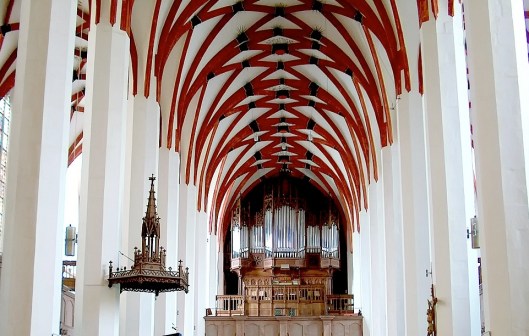
Thomaskirche_Interior

Interior of the Thomaskirche (St. Thomas Church) in Leipzig.

For “Cantate” Sunday, or the fourth Sunday after Easter in 1724, Bach wrote a short but masterful cantata: BWV 166 Wo gehest du hin? I wrote a long but educational and hopefully also entertaining post about this cantata last year. I explain how Bach illustrates that this is the “singing” Sunday, why there is so much talk of “going away” in this cantata, and why I recommend the recording by Ton Koopman/Amsterdam Baroque Orchestra. Read that post here.

Wieneke Gorter, May 12, 2017

Third Sunday after Easter in 1724

07 Sunday May 2017

Posted by cantatasonmymind in After Easter, Cantatas, Leipzig

≈ Leave a comment

Tags

Bach, cantatas, Leipzig, Weimar

For this Jubilate Sunday (the third Sunday after Easter) in 1724, Bach did not write a new cantata the way he had done the previous two weeks*, but repeated one he had written in Weimar in 1714. That cantata: Weinen, Klagen, Sorgen, Zagen was not any old cantata, but a composition Bach was most probably very proud of: he would later use the opening chorus as template for the Crucifixus in his Mass in B minor. Read all about this cantata and the recordings I recommend in this post I wrote last year.

Wieneke Gorter, May 7, 2017

*see this post about the first Sunday after Easter in 1724 and this one about the second Sunday after Easter in 1724

Easter in Leipzig 1724

16 Sunday Apr 2017

Posted by cantatasonmymind in Cantatas, Easter, Leipzig

≈ Leave a comment

Tags

Bach, Charles Daniels, City Council, cornetto, Dorothee Mields, Gesualdo Consort Amsterdam, Harry van der Kamp, Leipzig, Lent, Sigiswald Kuijken

the-resurrection-1544halfhd

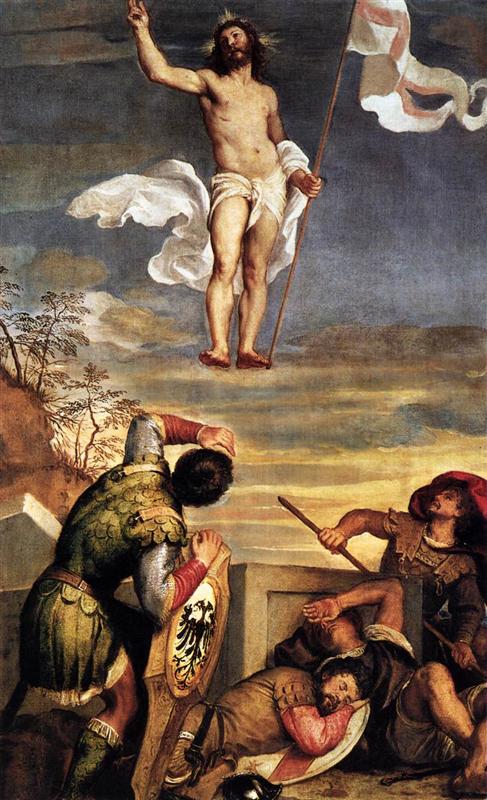
The Resurrection by Titian, 1542-1544

This post is really three posts in one, because I’ve realized over the past weeks that for this Easter season, I would like to follow Bach’s cantata performances of 1724 the same way I did that for the Trinity Season of 1723. Thanks for reading to the end!

In the year 1724 in Leipzig, the last Sunday service with music in the churches had been on February 20, when Bach performed the same cantatas (22 and 23) as on that Sunday in 1723, when they were part of his audition in Leipzig.

Bach’s reason for repeating two existing cantatas for that last Sunday before Lent might have been that he was busy writing his Passion according to St. John. However, he might have had extra reasons: cantata 22 features the Vox Christi (voice of Christ). By reminding the Leipzig audiences of the role of Christ in the scripture and his music, they would–in Bach’s mind– hopefully be well prepared for the St. John, in which the figure of Christ is powerfully prominent, much more than in passion compositions of Bach’s predecessors, and even much more than in Bach’s later St. Matthew Passion, even though the singer portraying Christ has more notes to sing in that piece.

The long monologue by Christ occurs almost right away in the opening of cantata 22. Listen to it here on the AllofBach website, performed by the Netherlands Bach Society, with bass Christian Immler. (If you are wondering what that string instrument is on the shoulder of the medieval-looking guy, it is Sigiswald Kuijken playing the violoncello da spalla, and you can read more about it in this post).

Then, a month later, on Saturday March 25, outside of the regular church year, there was the performance for the Annunciation, as I discussed here. In that cantata, 182, written much earlier in Weimar but not known to the Leipzig audiences until March 25, 1724, there’s also a Vox Christi, singing the words “Siehe, ich komme, im Buch ist von mir geschrieben …” (Lo, I come: in the book it is written of me…). So here we have another “convenient” performance for Bach: no new music to write for the first part of the service*, and a good reminder of the Vox Christi for the listeners.

Despite Bach’s efforts to put his audience in the right frame of mind for the St. John Passion, they were surprised (according to some accounts even shocked) when they heard it on Good Friday, April 7, 1724. I’m pretty sure that Bach himself had not expected this. The passion must have been on his mind already such a long time, and I have no problem picturing this brilliant but nerdy musician who was somewhat incapable of putting himself in the shoes of those with shallower minds. Why I believe the Passion according to St. John must have been on his mind for months already: the tenor aria “Ach mein Sinn” already presents itself in October 1723 in cantata 109 (read more about that here), in November 1723 in cantata 60 (read more about that here), and in January 1724 in cantata 154 (which also has a Vox Christi, read more about it here). Also, the “Herr, Herr” exclamations from the opening chorus first appear as early as July 1723 in cantata 105 (which also has previews of the St. Matthew Passion, read about it here).

Already the opening chorus is of such a dramatic intensity – nobody had every heard anything like it. In the liner notes with his recording, Gardiner says it well: “Even when approaching it from the vantage point of the preceding church cantatas, with their astonishing array of distinctive opening movements, this grand tableau is unprecedented both in scale and Affekt.” What is more, while the instrumental opening suggests lament, the text of the vocal parts turns out to be a praise of Christ as a majestic figure: not a victim, but a victor. Perhaps this vision is what stung the elders and city council members the most, because a year later, in his drastic 1725 revision of the Passion, Bach completely replaced this victorious opening chorus with a lamenting one, later also used as the final movement of the first half of the St. Matthew Passion.

For Easter 1724, on Sunday April 9, Bach performed a cantata from his Weimar years and one from his Mühlhausen years: cantata 31 Der Himmel Lacht, die Erde Jubilieret (discussed here on this blog) and the nowadays well known cantata 4 Christ lag in Todesbanden. Why no new composition for this Easter Sunday? Perhaps he was proud of these cantatas and wanted to show off to the Leipzig congregation and to his colleagues. But most probably he had been extremely busy working on the Passion, and since he was planning no less than four new cantatas for the period between April 10 and 23 of that year, he simply didn’t have time to write anything new.

Watch this live performance by Gesualdo Consort Amsterdam of cantata 4 Christ lag in Todesbanden. It is by no means an impeccable performance, but it is nice to see a live performance of this, and as so often I am moved by Dorothee Mields’ interpretation. I adore how she blends with the cornetto in the alto/soprano duet (starts at 5:27), and her duet with tenor Charles Daniels (a fabulously sensitive and knowledgeable singer, but sometimes overpowered by the orchestra in this performance) is exquisite (starts at 6:10).

Happy Easter!
Wieneke Gorter, April 16, 2017, updated April 3, 2021.

* Bach performed two cantatas on that Saturday March 25, 1724, and he did write new music for the second one.

The Annunciation of Mary, March 25

25 Saturday Mar 2017

Posted by cantatasonmymind in Cantatas, Leipzig, Weimar

≈ Leave a comment

Tags

Annunciation, Bach, cantatas, Hanneke van Proosdij, Leipzig, Lent, Luther, Montreal Baroque, Palm Sunday, Rachel Podger, Voices of Music, Weimar

botticelli2c_annunciazione_di_cestello_02

The Annunciation, aka The Cestello Annunciation, 1489, by Botticelli. Uffizi Gallery, Florence, Italy.

In 1714, Palm Sunday fell on the same day as the Annunciation of Mary, March 25. The Annunciation was one of the three Marian feast days Luther kept on the calendar (the other two being the Purification of Mary, February 2, and the Visitation of Mary, July 2).

Thus it happened that in that year, in Weimar, Bach wrote a cantata that is mostly a Palm Sunday cantata, but can also work for the feast of the Annunciation, since that also celebrates the coming of Christ. I squeezed this cantata 182 Himmelskönig, sei willkommen into my post about Bach in Weimar I wrote last year. As I mentioned there, the cantata was repeated a few times in Leipzig, but never on Palm Sunday, as the Leipzig rules dictated that no music was performed during the period of Lent (the 40 days before Easter).

However, the Leipzig council made an exception for the Annunciation, so in 1724 Bach could perform this cantata during Lent, eight days before Palm Sunday, on Saturday March 25. As so often on holidays, there were two cantatas this day, one before the sermon, and one after. The other, newly written, piece for Saturday March 25, 1724, was more literally about the Annunciation: Siehe, eine Jungfrau ist schwanger (Behold, a Virgin is pregnant). The text of this cantata survived, and can be found here, but unfortunately the music is lost.

I still recommend the recording of cantata 182 by Montreal Baroque, but since I wrote my post last year, a terrific live video of the Sonata (instrumental opening) of this cantata has come out on the YouTube channel of Voices of Music, with two fabulous soloists: Hanneke van Proosdij on recorder and Rachel Podger on violin, so I would love to share that here as well. You can find that video here.

Find the text of cantata 182 here, and the score here.

Wieneke Gorter, March 24, 2017.

My favorite sopranos for the third Sunday before Lent

18 Saturday Feb 2017

Posted by cantatasonmymind in Cantatas, Leipzig, Septuagesima

≈ Leave a comment

Tags

BWV 144, BWV 84, Dorothee Mields, John Eliot Gardiner, Leipzig, Miah Persson, Phlippe Herreweghe, Septuagesima

workers_vineyard
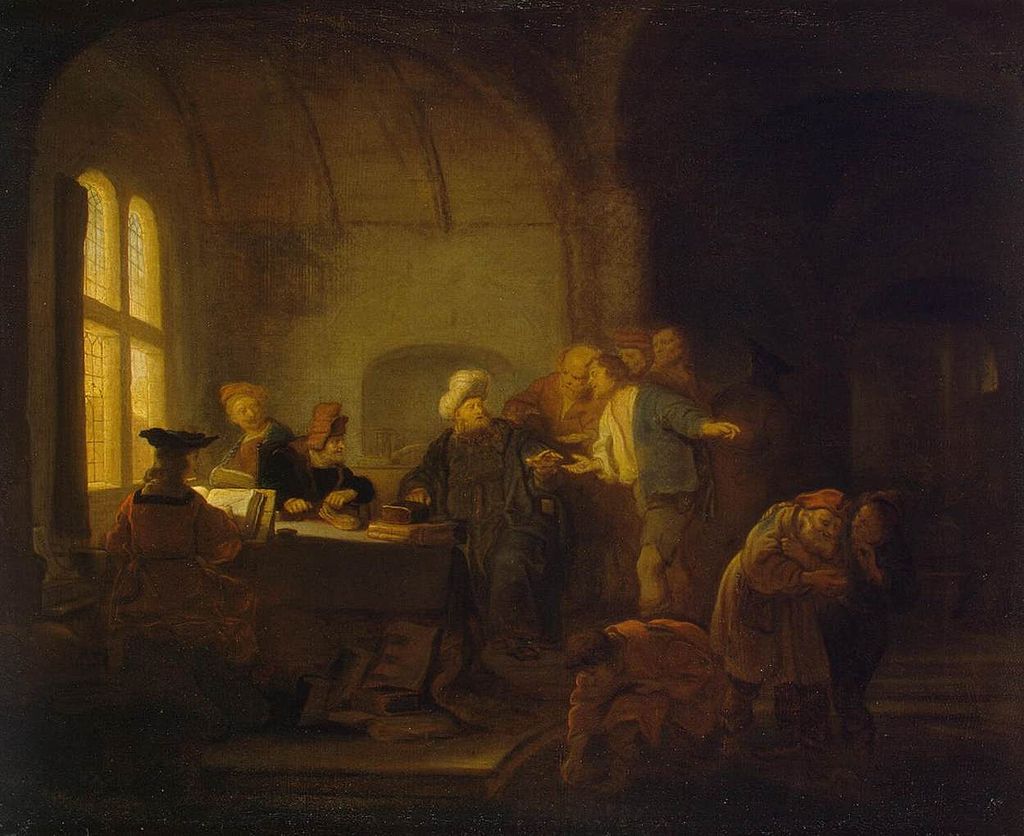
Parable of the workers in the vineyard by Salomon Koninck. Between 1647 and 1649. Hermitage Museum.

On the third Sunday before Lent in 1724, Bach performed Cantata 144 Nimm, was dein ist, und gehe hin. Read all about this short but wonderful work in my blog post from 2016, in which I discuss an unrivaled recording by Gardiner with mezzo soprano Wilke te Brummelstoete and soprano Miah Persson.

In that cantata from 1724 Bach wrote one soprano aria on the concept of “Genügsamkeit” (being satisfied with what you have), but three years later, he dedicated an entire solo work for soprano to this theme: Cantata 84 Ich bin vergnügt mit meinem Glücke (I am content in my good fortune), featuring the delightful aria Ich esse mit Freuden mein weniges Brot (It is with joy that I eat my meager piece of bread). We can probably take this as proof that Genügsamkeit was very important to Bach.

Find the German texts with English translations of Cantata 84 here, and the score here.

dorothee-mields-100_v-ardaustauschformat
Dorothee Mields

I myself count among my blessings that Herreweghe’s recording of this cantata features one of my favorite sopranos, Dorothee Mields. Read more about her in my post about the Herreweghe sopranos.

I listened to many recordings of this cantata, and I still (2020) love this interpretation the best. Mields is a terrific chamber musician together with the instrumentalists throughout this cantata, listen to the interplay between her and oboist Marcel Ponseele. I feel her voice sounds the most natural in aria “Ich esse mit Freuden mein weniges Brot.” The way she starts “Ein ruhig gewissen” the first time that comes around is just to die for as far as I’m concerned. I also like Herreweghe’s tempos the best of all the recordings I’ve listened to.

Enjoy Dorothee Mields’ singing and her being a terrific chamber musician together with the instrumentalists on Herreweghe’s recording of cantata 84 Ich bin vergnügt mit meinem Glücke on YouTube or on Spotify. The cantata appears on Herreweghe’s album Christus der ist mein Leben from 2007, which also includes two other fabulous cantatas: 95 and 161. If you like these recordings, please consider purchasing (the MP3 of) this album on Amazon.de or on Amazon.com. Or purchase the album on iTunes or whatever platform you prefer. Thanks for supporting the artists!

Wieneke Gorter, February 18, 2017, last updated January 27, 2024.


Come out of your hole to hear a violin concerto

03 Friday Feb 2017

Posted by cantatasonmymind in Cantatas, Christmas, Epiphany, Leipzig

≈ Leave a comment

Tags

Bach, Bach Collegium Japan, James Gilchrist, Leipzig, Luther, Masaaki Suzuki, Peter Kooy, Robin Blaze

presentationinthetemple
Presentation in the Temple (1640/1641) by Simon Vouet (1590-1649). Musée du Louvre, Paris.

In many traditions, from pre-Christian European to contemporary American, February 2 marks the end of the dark part of the winter.  Feasts on this day celebrate the daylight, looking ahead to spring, and the start of new things. Growing up in a Calvinist protestant culture in the Netherlands, I wasn’t aware of any of these holidays.

Let’s start with the silly American holiday on February 2: Groundhog Day. If the groundhog (some sort of marmot) comes out of her hole on this day while it is cloudy, spring will be early; if it is sunny and the groundhog will thus see her own shadow when she comes out of her hole, she will be scared and go back inside and spring won’t start for another six weeks. Grown men actually observe the groundhogs on February 2.

People from Celtic cultures celebrate Imbolc or Brigid’s Day on February 2 because it is the midway point between the winter solstice and the spring equinox. The holiday is a celebration of the lengthening days and the early signs of spring. The lighting of candles and fires represented the return of warmth and the increasing power of the Sun over the coming months.

The Catholic feast of Candlemas also originates in pre-Christian times, and originally marked the end of a period of light feasts which started around mid November. After the early Christians established that Jesus was born on December 25, it was easy to declare Saint Martin (Nov 11, 40 days before Christmas) the start of the great Christmas season and February 2 (40 days after Christmas) the end of it. I read that in some countries people leave their Christmas decorations up until Candlemas. I would have loved to have that tradition in the Netherlands too, because I had serious trouble with the bleak, grey, uneventful month of January there. And all procrastinators are now absolved: you didn’t know it, but you were doing the right thing to leave those lights up until February!

The Catholic Church merged Candlemas with the feast of the Purification of Mary and the Presentation of Jesus at the Temple. In the Jewish tradition, a new mother was “unclean” for the first 40 days after giving birth. On the 40th day, she would have to visit the temple for a purification ceremony, and to present her son to the priests. Luther kept this Catholic feast on the calendar, but  focused much more on the Presentation of Jesus at the Temple  than on the Purification of Mary.  What is more, he turned Simeon’s song of praise into a message of “Now I can die in peace.” This is why all five cantatas (BWV 82 (the famous Ich habe genug), 83, 125, 157, and 158) Bach wrote for this holiday are mostly about the joy of dying. But not to worry, the cantata from 1724 is actually very festive.

Listen to/watch cantata 83 Erfreute Zeit im neuen Bunde by the Netherlands Bach Society on YouTube. Shunske Sato, violin and direction; Robin Blaze, alto; Daniel Johannsen, tenor; Stephan MacLeod, bass. I prefer this recording because this cantata is a violin concerto and here we can see one of the best Baroque violinists and Bach interpreters, Shunske Sato, at work.* However for the most magical rendition of the second movement please also listen to the Bach Collegium Japan recording (Natsumi Wakamatsu, violin; Robin Blaze, alto; James Gilchrist, tenor; Peter Kooij, bass)

Find the German text with English translations of Cantata 83 here, and the score here.

The first and third movement  are written like a violin concerto and celebrate the “new” era. According to an excellent study by Dutch musicologist Pieter Dirksen, presented at a Bach Symposium in Germany in 2000, the impressive violin part was most likely written for violin virtuoso Johann Georg Pisendel from Dresden. Dirksen makes a very convincing case that Bach wrote this past Sunday’s operatic cantata 81 and this cantata 83 (both from the same week in 1724) specifically to please musicians and perhaps also dignitary guests from Dresden, giving them the two musical forms the Dresden court favored most: an opera in the form of cantata 81 and a concerto in the form of cantata 83. There are no documents supporting the suggestion that Pisendel was in Leipzig around the time this cantata was played. However, as I have mentioned before in this blog, it seems evident from Bach’s writing around special holidays that there were either guest musicians or colleagues to impress in those weeks. Also, Dirksen gives many plausible examples of links to Dresden in the style and instrumentation of these compositions, and argues that Bach had no other violinist available, including himself, who would have been able to play this and that this is why he didn’t write virtuoso violin solos in any cantatas from the first Leipzig cycle.

The second movement symbolizes the “old” tradition Simon stands for in the Gospel story. In a way he has never done this in any other cantata, Bach sets Luther’s translation of Simeon’s words (“Herr, nun lässest du deinen Diener in Friede fahren …”) to the old Gregorian psalmtone for Nunc Dimittis, which was the Roman version of Simeon’s words. It is likely he wanted to show the Catholic guests from Dresden he was familiar with their tradition too, or perhaps he wanted to honor the Catholic history of this feast day. The very best rendition of this movement is sung by Peter Kooij on the Bach Collegium Japan recording of this cantata. My late mother used to say: “Peter Kooij must have a special line with God.” He definitely has a special line with Bach.

Wieneke Gorter, February 2, 2017, updated February 2, 2020 and February 2, 2023.

*read how Shunske Sato’s playing made me want to write for this blog again in this post

Third Sunday after Epiphany

22 Sunday Jan 2017

Posted by cantatasonmymind in Cantatas, Epiphany, Leipzig

≈ Leave a comment

Tags

American Bach Soloists, Bach, Christine Earl, Claire Kelm, Epiphany, James Weaver, Jörg-Michael Schwarz, Jeffrey Thomas, John Abberger, Julianne Baird, Köthen, Leipzig, Steven Rickards

There are four Bach cantatas for this Sunday, the third after Epiphany. Last year I wrote about two of them: cantatas 72 and 73. You can read that post here.

This year I’d like to share a little bit about cantata 156 Ich steh mit einem Fuß im Grabe. I did not grow up with this cantata, my mother didn’t play this one for us. Whether this was because the Harnoncourt recording of this cantata is not very satisfying, or because she liked the three other cantatas for this Sunday much better, I don’t know.

I heard cantata 156 for the first time around 2008 or so, on a recording by American Bach Soloists from 1992, and was blown away by the rich sound of the strings and by the  “groove” the ensemble finds so easily, it seems,  in the opening movement and in the tenor aria. I have not heard such comfort with the rhythm in any other recording of this cantata. It is also a historic recording: it is one of the few ABS cantata recordings on which  director Jeffrey Thomas sings the tenor arias himself. While Thomas’ voice is perhaps not as full as Gerd Türk’s on the recording by Bach Collegium Japan, I enjoy the music-making in this movement so much that it was comfort-music for me in the weeks and months after my mother passed away in 2010, and it is still one of my favorite Bach cantata recordings.

Other soloists on this recording:

oboe: John Abberger; violin: Jörg-Michael Schwarz; counter-tenor: Steven Rickards; bass: James Weaver. Choir sopranos singing in the tenor aria: Julianne Baird, Christine Earl, and Claire Kelm.

Find the German text with English translations here, and the score here.

You might recognize the opening movement of this cantata as the second movement of Bach’s harpsichord concerto, BWV 1056. However, Bach based both the cantata movement and the harpsichord concerto movement on an oboe concerto from Köthen which is now lost.

Wieneke Gorter, January 21, 2017.

A Discovery for Third Christmas Day

27 Tuesday Dec 2016

Posted by cantatasonmymind in Bach's life, Cantatas, Christmas, Leipzig

≈ Leave a comment

Tags

Bach, Bach Collegium Japan, Christmas, Leipzig, Peter Jelosits, Peter Kooy, Robin Blaze, trombone

bwv64facsimile
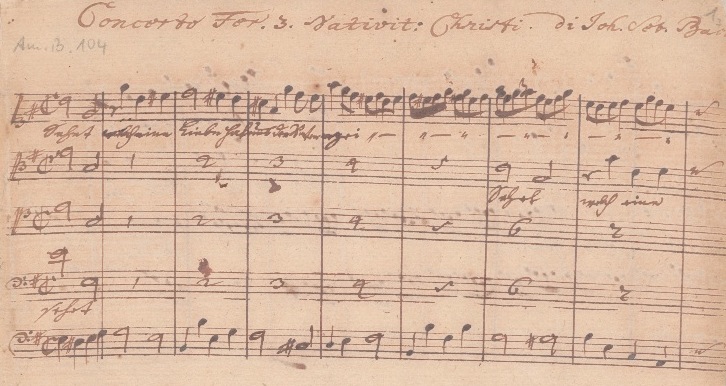
First page of Bach’s original score for cantata 64 Sehet, welch eine Liebe hat uns der Vater erzeiget for the Third Day of Christmas. Staatsbibliothek zu Berlin (Amalienbibliothek), Berlin.

The third cantata of Bach’s Christmas Oratorio was very popular in our house, and it was my sister’s all-time favorite. That is probably why I had never heard the beautiful cantata 64 Sehet, welch eine Liebe hat uns der Vater erzeiget before doing research for this blog, even though it has trombones in the opening chorus and in all three (!) chorales, and Peter Jelosits is singing the soprano aria on the Harnoncourt recording.

Listen to Bach Collegium Japan’s recording of cantata 64 on Spotify. Soloists: Yukari Nonoshita, soprano; Robin Blaze, countertenor; Peter Kooij, bass. With Concerto Palatino: Yoshimichi Hamada, cornetto; Simen van Mechelen, Charles Toet, and Wim Becu, trombones.

Find the text here, and the score here.

Bach wrote this cantata in 1723 and the structure, with the three chorales, is very similar to cantata 40 from yesterday, written that same year.

During his four-week  Advent Break that first year in Leipzig (he repeated a Weimar cantata on the first Sunday of Advent, and was not to perform any music in the churches for the next three Sundays), Bach wrote six new cantatas for the period from December 26, 1723, to January 9, 1724 (cantatas 40, 64, 190, 153, 65, and 154). But that was not all. For Christmas Day 1723, he supplemented cantata 63 from Weimar with a newly written Magnificat. Knowing how hard it is for a choir to sing that Magnificat (on the same level as the Mass in B Minor and the Motets), it is clear that Bach did not have a “break” at all, but was very busy rehearsing his choir in addition to writing all this new music.

Wieneke Gorter, December 27, 2016, Harnoncourt link updated December 26, 2019.

Second Christmas Day

26 Monday Dec 2016

Posted by cantatasonmymind in Cantatas, Christmas, Leipzig

≈ Leave a comment

Tags

Bach, BWV 40, Christmas, Christmas 2, Christmas Oratorio, Damien Guillon, Harnoncourt, horn, Leipzig, Max van Egmond, Peter Kooij, Philippe Herreweghe, René Jacobs, Thomas Hobbs

adoration_of_the_shepherds_1622
Adoration of the Shepherds by Dutch painter Gerard van Honthorst, 1622. Pommersches Landesmuseum (Pomerania State Museum), Germany.

In Bach’s time, there were three Christmas Days. In many countries in Europe there are still two Christmas Days. In the Netherlands, a country so small that you can easily travel to all your relatives within a day, people are expected to visit one side of the family on Christmas Day, and the other side on Second Christmas Day. Or at least that is how I remember it.

Of course, you could continue listening to the Christmas Oratorio, via the links for either Harnoncourt’s recording or Herreweghe’s recording I gave you yesterday. The second cantata is a charming one, evoking the pastoral scene of the shepherds on the field. But this composition has never grabbed or moved me the way the first or fourth cantata of the Christmas Oratorio do. The cantata I am eager to share with you today is cantata 40 Darzu ist erschienen der Sohn Gottes, written for Second Christmas Day in 1723.

The interpretation I grew up with is Leonhardt’s recording from 1974, with countertenor René Jacobs, tenor Marius van Altena, and bass Max van Egmond. There is a good live recording by Herreweghe of this cantata from a concert in Paris in 2015. You can watch this here on YouTube. Soloists are Damien Guillon, alto; Thomas Hobbs, tenor; and Peter Kooij, bass.

Find the text here, and the score here.

This cantata is really Christmas for me. I don’t know exactly why: perhaps because on Second Christmas Day we didn’t have to go to church, so I associate it with a more relaxed, unscheduled day. Perhaps because of the horns in the orchestra in the opening chorus and the tenor aria (I have a soft spot for horns or trombones in Bach cantatas), because of the impressive “Höllische schlange” (Snake of Hell) bass aria (yes, I have a soft spot for bass arias too), or because of the closing chorale that is so pretty, going up so high on the text Wonne, Wonne über Wonne! Er ist die Genadensonne. (Delight, delight upon delight! He is the son of mercy.) I sang this cantata in a Bach cantata reading group mid November this year, sitting directly behind the horns, standing next to one of my best friends, and I couldn’t believe my luck I got to sing this closing chorale.

Wieneke Gorter, December 26, 2016, updated December 24, 2019.

Our Christmas Morning

24 Saturday Dec 2016

Posted by cantatasonmymind in Cantatas, Christmas, Leipzig

≈ 2 Comments

Tags

Bach, BWV 248/1, Christmas, Christmas 1, Christmas Oratorio, Damien Guillon, Dorothee Mields, Harnoncourt, Leipzig, Peter Kooij, Phlippe Herreweghe, Thomas Hobbs, timpani, trumpet

nativity_c_1490
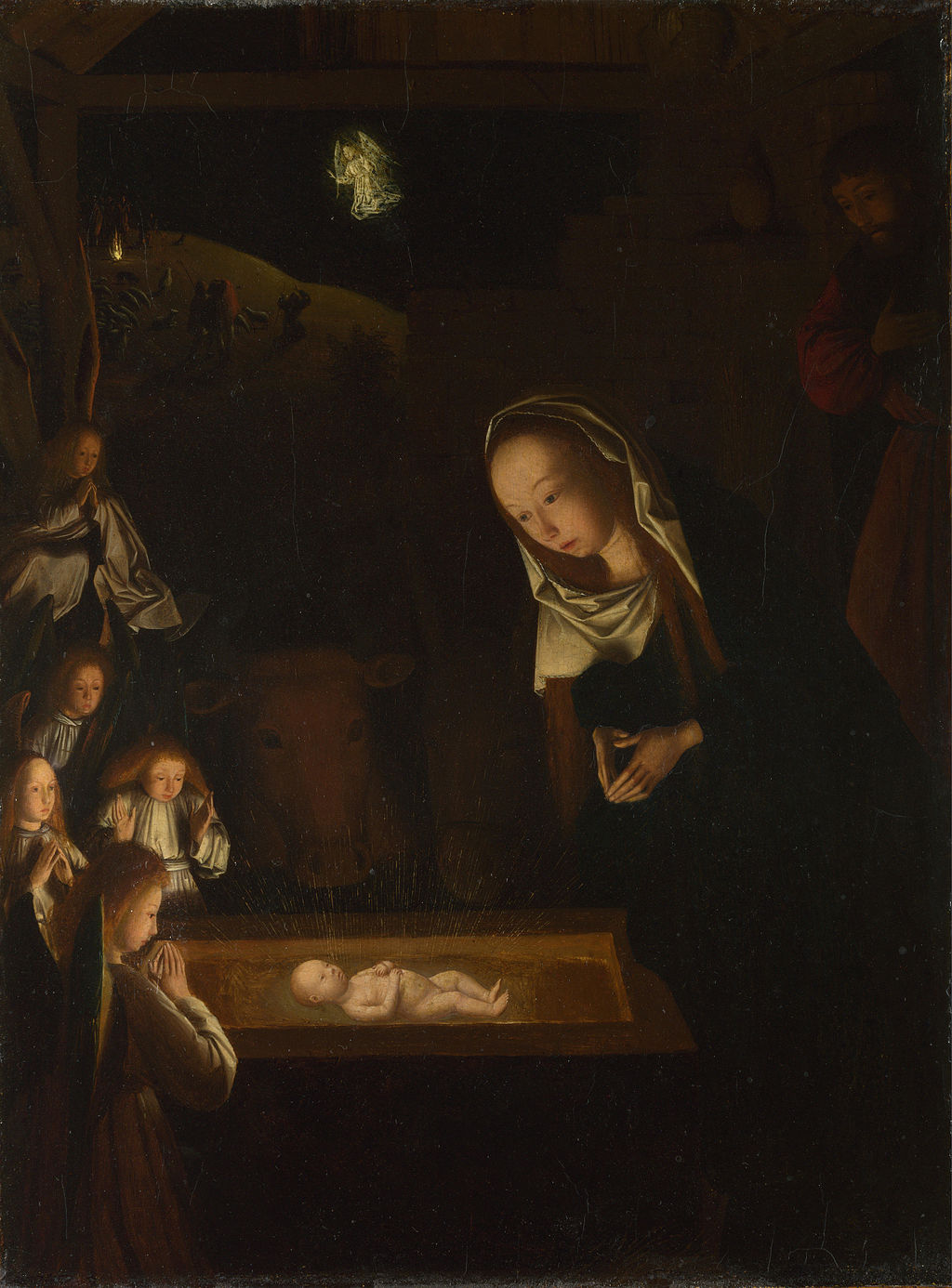
Nativity at Night by Dutch painter Geertgen tot Sint Jans, ca. 1490. National Gallery, London.

Growing up in the Netherlands, my sister and I did not expect gifts at Christmas, and certainly not under the tree. We had already received our gifts on the eve of St. Nicholas, December 5. At the dinner with relatives on Christmas Day, we would maybe receive one book, or a small piece of jewelry. It would be well coordinated between mother and grandmother that this would amount to only one present per person, and it would be next to our plate when we arrived at the well-dressed Christmas dinner table.

However, Christmas Morning was something we immensely looked forward to. The Christmas Morning breakfast was the most wonderful breakfast of the year, even better than the Easter breakfast. We would have crispy rolls from the oven, artisan sliced ham, boiled eggs, cheese, jams, and of course the sweet breakfast sprinkles American kids can’t believe Dutch kids get to eat for breakfast. And Kerststol, or Christmas Stollen, a fruit bread with an almond paste filling.

There was an unwritten rule that my parents would set out the breakfast (including my father carving a bell or Christmas tree out of the butter) and us kids would stay in bed until my mom would sound the special alarm. And the special alarm was: Harnoncourt’s recording of the opening chorus of Part One of Bach’s Christmas Oratorio at full volume, the sound of the timpani rocking the whole house. I usually play the Herreweghe recording in my own house nowadays. You can find that here on YouTube.

In 2012, Herreweghe’s performance of Bach’s Christmas Oratorio in Brussels was recorded and released on DVD. It is a beautiful registration, and has some of my favorite soloists: Dorothee Mields, soprano; Damien Guillon, alto; Thomas Hobbs, tenor; and Peter Kooij, bass. For my readers in Germany, and countries not to far from there, you can buy the regular DVD here, or the blu ray version here. For readers in the USA, if you have Amazon Prime, you can stream it here.

Read more about the history of Christmas in Europe and the USA in this extremely interesting article and join me again tomorrow for a cantata for Second Christmas Day.

Wieneke Gorter, December 24, 2016, links updated December 24, 2019.

← Older posts
Newer posts →

Recent Posts

  • “Missa Miniatura” by CONTINUUM/Elina Albach Even More Moving in 2025
  • Bachfest Leipzig 2025
  • Bach Cantatas for Christmas – 1724 and 1734 editions
  • Fourth Sunday of Advent – more insight into Cantata 62 helped me better understand Bach’s Christmas Oratorio
  • Saint Ambrose and Luther in Milan – Second Sunday of Advent

Archives

  • August 2025
  • July 2025
  • December 2024
  • November 2024
  • June 2024
  • January 2024
  • December 2023
  • October 2023
  • September 2023
  • August 2023
  • April 2022
  • February 2022
  • January 2022
  • December 2021
  • November 2021
  • June 2021
  • May 2021
  • April 2021
  • February 2021
  • January 2021
  • December 2020
  • November 2020
  • October 2020
  • September 2020
  • August 2020
  • July 2020
  • May 2020
  • April 2020
  • March 2020
  • February 2020
  • January 2020
  • December 2019
  • November 2019
  • May 2018
  • April 2018
  • March 2018
  • February 2018
  • January 2018
  • December 2017
  • November 2017
  • October 2017
  • September 2017
  • August 2017
  • July 2017
  • June 2017
  • May 2017
  • April 2017
  • March 2017
  • February 2017
  • January 2017
  • December 2016
  • November 2016
  • October 2016
  • September 2016
  • August 2016
  • July 2016
  • June 2016
  • May 2016
  • April 2016
  • March 2016
  • February 2016
  • January 2016

Enter your email address to follow this blog and receive notifications of new posts by email.

Join 336 other subscribers

Categories

  • 1723 Trinity season special series
  • Advent
  • After Easter
  • Ascension
  • Bach's life
  • Cantatas
  • Chorale cantatas 1724/1725
  • Christmas
  • Easter
  • Epiphany
  • Following Bach in 1725
  • Köthen
  • Leipzig
  • Septuagesima
  • Travel
  • Trinity
  • Weimar

Meta

  • Create account
  • Log in
  • Entries feed
  • Comments feed
  • WordPress.com

Website Built with WordPress.com.

  • Subscribe Subscribed
    • Weekly Cantata
    • Join 156 other subscribers
    • Already have a WordPress.com account? Log in now.
    • Weekly Cantata
    • Subscribe Subscribed
    • Sign up
    • Log in
    • Report this content
    • View site in Reader
    • Manage subscriptions
    • Collapse this bar
 

Loading Comments...