Weekly Cantata

Weekly Cantata

Tag Archives: Marc Hantaï

Deeply moving arias and a new video of Cantata 114

04 Sunday Oct 2020

Posted by cantatasonmymind in Cantatas, Chorale cantatas 1724/1725, Leipzig, Trinity

≈ Leave a comment

Tags

BWV 114, BWV 148, David Erler, Dresden, Gérard Lesne, Georg Poplutz, Gustav Leonhardt, J.S. Bach Foundation, John Eliot Gardiner, John Elwes, Leipzig, Leonhardt, Marc Hantaï, Peter Kooij, Pisendel, Rudolf Lutz, Wolf Matthias Friedrich

Nikolaikirche (St. Nicholas Church) in Leipzig

This 17th Sunday after Trinity has been connected to more discoveries than any other so far for me, and I keep making new ones:

In 2016, I wrote a post about Cantata 148 Bringet dem Herrn Ehre seines Namens, then learned a lot of new information during the months that followed, which led me to completely revise the post in February 2017. It talks about Dresden concertmaster Johann Georg Pisendel and his influence on the violin solos Bach wrote in Leipzig. Read it here.
Marc Hantaï

In 2017, I realized that at least two arias Bach wrote for this Sunday make me cry, not because of the singers, but because of the instrumental solos that accompany those arias. Read it here, in a post that introduces Cantata 114 Ach, lieben Christen, seid getrost. At that time, the best recording I could find was a live radio registration of a performance led by Gustav Leonhardt in 1988. All this because of the tenor aria.* I knew who the tenor was (John Elwes), but could only make an educated guess about the extraordinary flute player, probably Marc Hantaï. That recording also had my first countertenor love, Gérard Lesne, singing the alto aria.
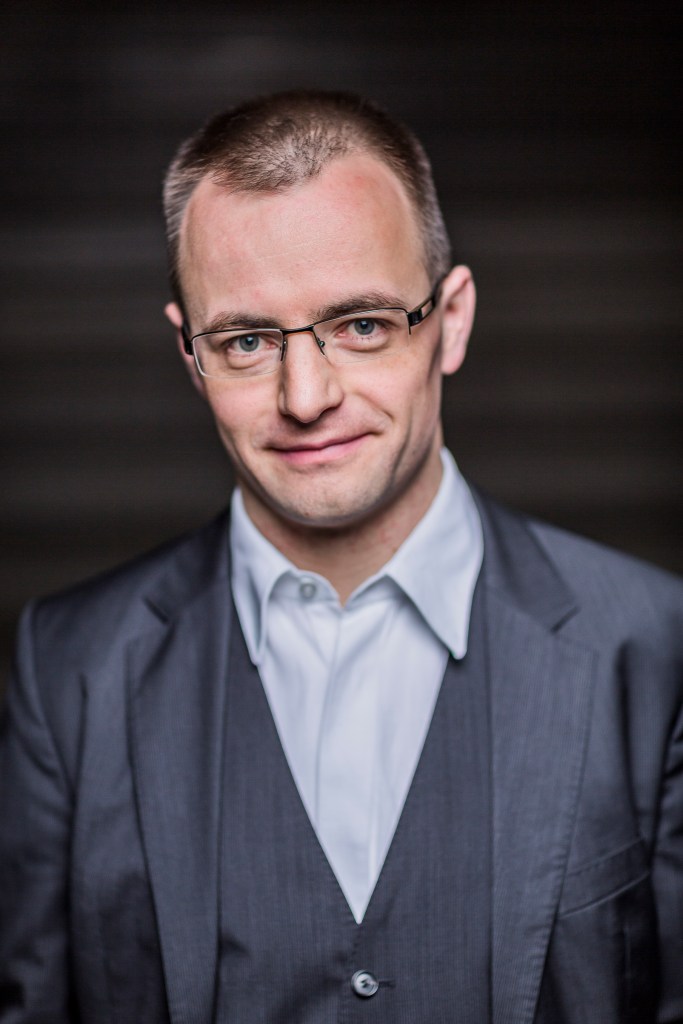
David Erler. Photo by Björn Kowalewsky

At the last gathering of the Berkeley Bach Cantata Group I attended before the Shelter In Place started (and all rehearsals and performances stopped) here in the SF Bay Area, I got to discuss Bach’s “Pisendel style” violin solos a bit with the first violinist of that group. In an email-exchange that followed, he pointed out a countertenor he liked, but who I had never heard of before: David Erler.

Then this week, while checking if any new recordings of cantatas 148 or 114 had come out since I wrote those blog posts, I discovered to my great delight that in September 2018 the J.S. Bach Foundation recorded Cantata 114 Ach, lieben Christen, seid getrost with … Marc Hantaï playing flute in the tenor aria! (I now for sure know it was him in that 1988 Leonhardt recording) and … David Erler singing the alto aria (and doing an excellent job). While it doesn’t rival the energy of the soprano solo on the Gardiner recording (for this, please read my blog post from 2017 about this cantata), nor Peter Kooij’s solo on the Leonhardt recording, it is a fabulous and very moving performance, and you can see Marc Hantaï play. Find this live video recording by the J.S. Bach foundation here on YouTube. Soloists are: David Erler, alto; Georg Poplutz, tenor; and Wolf-Matthias Friedrich, bass.

Find the German texts with English translations of Cantata 114 here, and the score here.

©Wieneke Gorter, October 4, 2020.

Read more:

In 2018, I realized that Bach reworked the incredibly moving tenor aria with flute from Cantata 114 into a faster tenor aria with oboe for Cantata 124, and that nobody else seemed to have noticed this yet. Read that here.

Read more about my first countertenor loves here.

Alex Potter and Julia Doyle – 6th Sunday after Trinity

17 Friday Jul 2020

Posted by cantatasonmymind in 1723 Trinity season special series, Cantatas, Chorale cantatas 1724/1725, Leipzig

≈ Leave a comment

Tags

1723, 1724, 1726, Alex Potter, All of Bach, Amandine Beyer, BWV 170, BWV 9, Charles Daniels, J.S. Bach Foundation, J.S. Bach Stiftung, Julia Doyle, Leo van Doeselaar, Marc Hantaï, Netherlands Bach Society, Rudolf Lutz, Trinity 6

soprano Julia Doyle, photo by Louise O’Dwyer

In my opinion, one of the absolute best background videos on AllofBach is the one in which countertenor Alex Potter explains the different layers of solo cantata 170 Vergnügte Ruh, beliebte Seelenlust from 1726. I remember how happy and impressed I was when I first found this video. So instead of offering you my own discussion, I suggest you watch Alex Potter’s here on YouTube.

Then watch the excellent and moving live performance of this cantata by Alex Potter with the Netherlands Bach Society here on YouTube.

A lot more information, including the German text with English translations, a list of all participating instrumentalists, the staff that made this beautiful document possible, and a short but insightful interview (in text only) with organist Leo van Doeselaar, can be found here on AllofBach.

Bach’s first two cycles in Leipzig didn’t include a cantata for this Sunday (the 6th after Trinity). My speculations for why this might have happened in 1723 are mentioned in this blog post. For 1724, it is very likely that Bach never wrote a cantata that year for this Sunday. Because later in his life, Bach most probably wrote Cantata 9 Es ist das Heil uns kommen her for this moment in the church year, in an effort to fill the gaps within his 1724/1725 chorale cantata cycle.

There’s a wonderful live performance of Cantata 9 on YouTube, by the J.S. Bach Foundation under direction of Rudolf Lutz. Watch it here. My favorite part of this cantata is the glorious duet Herr, du siehst statt guter Werke, beautifully sung by soprano Julia Doyle and alto Alex Potter. I love how well their voices and singing style match for this! This performance also features exquisite music-making by flutist Marc Hantaï, violinist Amandine Beyer, and tenor Charles Daniels.

Wieneke Gorter, July 17, 2020.

Weekly Cantata is back!

15 Friday Nov 2019

Posted by cantatasonmymind in Cantatas, Chorale cantatas 1724/1725, Leipzig, Trinity

≈ 10 Comments

Tags

22nd Sunday after Trinity, Bachipedia.org, Bachstiftung, Balázs Máté, BWV 115, corno da tirarsi, Marc Hantaï, Olivier Picon, Rudolf Lutz

The Servant Sending his Fellow Servant to Prison, from The Parable of the Unmerciful Servant, bound in Thesaurus Sacrarum historiarum Veteris et Novi Testamenti, 1585.
Anonymous, Netherlandish. Metropolitan Museum of Art, New York (not on view).

I’m back! I’m starting with a small step, but stay tuned … a more considerable post is coming next week.

For this coming Sunday, the 22nd Sunday after Trinity, Bach wrote Cantata 89 in 1723, Cantata 115 in 1724, and Cantata 55 in 1726. Two years ago I wrote about the soprano aria from Cantata 115, not really being able to choose between Susanne Rydén with Bach Collegium Japan or Dorothee Mields with Herreweghe. I also included a link to the soprano aria from Cantata 89. Read that post here.

I still recommend the Herreweghe recording from 2017 for an overall recording of this cantata. However, sometimes it is nice to *see* a performance, and I would like to celebrate an important event in the world of Bach Cantata recordings that happened in the past year: The J.S. Bach Foundation in Switzerland (Bachstiftung) decided to make all their live video recordings of their Bach cantata performances available on YouTube, in full length. Previously, they had only made one movement of each cantata available on YouTube, and one would have to purchase the DVD or buy a live stream subscription in order to see the rest of the cantata.

So in this post I would like to share the Bachstiftung recording of Cantata 115. It was recorded on October 21, 2016, and published to YouTube on October 26, 2018.

Find the German texts with English translations here and the score here.

What is so special about this video recording is that you can see wonderful flutist Marc Hantaï at work in the opening chorus and in the soprano aria. He doesn’t appear on video that often, and they made a good choice to put him in front, so you can see his playing, and of course this way also the microphones pick up his sound better. (to hear more of what I believe is his playing, go to this post).

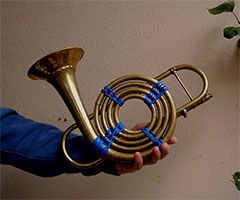
corno da tirarsi


Other instrumentalists to watch in this video: Olivier Picon on corno da tirarsi, and Balázs Máté on violoncello piccolo. Only three cantatas (46, 162, and 67) show the full name corno da tirarsi written in the manuscript, but there are 27 cantatas from Leipzig requiring a corno in which that part is not playable on a natural horn, so must have been written for this corno da tirarsi as well. Cantata 115 is included in that group. Bach is the only composer who ever mentioned this instrument in writing, and most probably his principal brass player Gottfried Reiche was the only one who ever played it. After Reiche’s death in 1734 Bach did not write for this instrument anymore, and for repeat performances of any cantatas containing a corno da tirarsi part, Bach rewrote it for other instruments. Read more about this in Olivier Picon’s article on the “corno da tirarsi” from 2010. The 27 cantatas are mentioned on page 22 of the article.

To find more of the Bachstiftung videos, search their Archive on their Bachipedia.org website. Most of the videos are “unlisted” on YouTube, so you won’t find them by doing a search within YouTube. Or, for the Dutch readers of this blog, you can use Eduard van Hengel’s new website (another terrific event of this past year!) and click on the links for all YouTube recordings he conveniently provides at the top of each page under the header “Beluister” (for an example, see the one for Cantata 115 here).

Wieneke Gorter, November 15, 2019.

Instrumental solos that bring me to tears and a bit of farmers’ music

07 Saturday Oct 2017

Posted by cantatasonmymind in Cantatas, Chorale cantatas 1724/1725, Leipzig, Trinity

≈ Leave a comment

Tags

17th Sunday after Trinity, Agnès Mellon, BWV 114, BWV 148, flute, Gérard Lesne, Gustav Leonhardt, John Eliot Gardiner, John Elwes, Marc Hantaï, Peter Kooy, Trinity 17

feudalism

Six weeks ago, I noticed that Bach’s cantatas for the 11th Sunday after Trinity all give me a good kind of stomach ache. This week, it seems that all instrumental solos for the 17th Sunday after Trinity make me cry. It happened last year when I was listening to the violin solo in cantata 148, and it happened to me again this year with the hauntingly beautiful flute solo in the tenor aria of cantata 114 Ach, lieben Christen, seid getrost, from 1724.

It is an exceptional aria, ten minutes long, and extremely demanding for the tenor as well as the flutist. Bach must have been proud of it, because later, in January 1725, he turned this composition into a much faster paced, condensed piece of drama for tenor and oboe d’amore in Cantata 124 Meinen Jesum laß ich nicht.

The first recording I listened to set the standard for the rest: a fabulous flutist, most probably Marc Hantaï, and tenor John Elwes on a live audio recording from 1988 by La Chapelle Royale under the direction of Gustav Leonhardt.  I absolutely adore Frans Brüggen’s flute playing on the Leonhardt recording from 1980, but don’t enjoy Kurt Equiluz’ singing as much. Mark Padmore’s singing on the Gardiner recording is to die for, but flutist Rachel Beckett’s decisions on where to breathe are not as sensitive as Marc Hantaï’s, and with Hantaï’s interpretation already in my head, I found it distracting. The same goes for Wilbert Hazelzet’s playing on the Koopman recording, with tenor Christoph Prégardien.

elwes-john-2
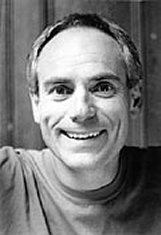
John Elwes
marchantaii
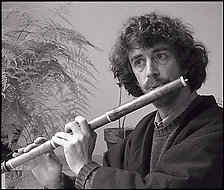
Marc Hantaï

This La Chapelle Royale/Gustav Leonhardt recording is also a nice monument from the past for me, since it has all the soloists I was in love with at the time: soprano Agnès Mellon, countertenor Gérard Lesne, and bass Peter Kooy. When you watch the YouTube recording on a screen, you can read along in the score. And that is interesting in this case, especially in the opening chorus and the soprano aria.

Find the German text with English translation of this cantata here.

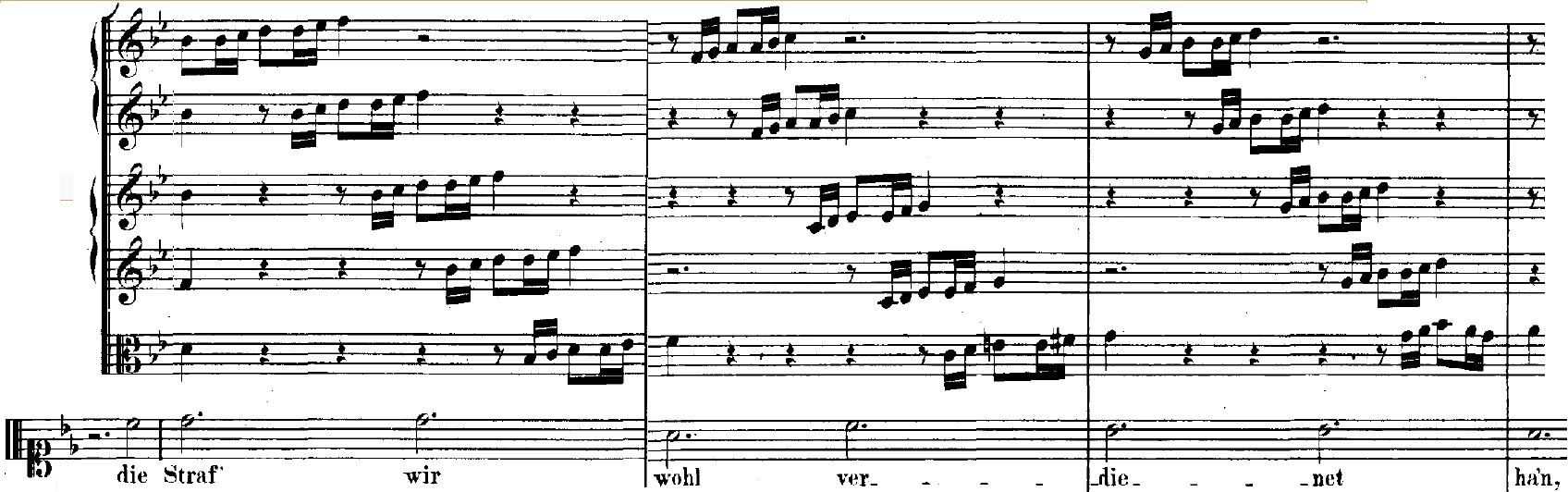
Starting at the beginning, reading along with the opening chorus, you can see that the joyful figure that is at first only in the continuo (orchestra bass) part, spreads through all the other parts, a message from Bach that the consolation in the text of the chorale is more important than the punishment. The punishment is still present though, in the repeated staccato notes in some of the instrumental parts, and, at 2 minute 24 seconds, visually only, in the score: there are the three whip lashes diagonally from top to bottom over the page in the instrumental parts, illustrating the word “Straf” (punishment) the chorus sings there. Or see this image, courtesy of Eduard van Hengel:

114-120straf20gr

When reading along with the soprano aria, at 15 minutes 5 seconds, you can see or hear how in the continuo part, Bach illustrates the flick of the wrist of the farmer who sows the seeds.  If you have time, I encourage you to also listen to Gardiner’s remarkable take on this soprano aria. In his notes accompanying his live recording, he explains that the text “The grain of wheat will bear no fruit unless it fall into earth” can be seen as a warning to the farmer to get his timing right when sowing his winter cereals. Gardiner, a sheep farmer in his spare time and always eager to point out connections to the seasons in Bach’s music, is obviously really excited to bring out this text: he has the entire soprano section sing it, with much more fervor and much better enunciation than Agnès Mellon on the Chapelle Royale/Leonhardt recording. He also explains in his notes that they took Bach’s indication “continuo unisono” to mean that the organ should double the cello part. Since they always use church organs for their recordings, it sounds impressive. I truly appreciate hearing this movement performed this way.

Then go back to the Chapelle Royale/Leonhardt recording, and listen to Gérard Lesne, my first countertenor love*, spookily illustrating the approach of death, with similar chromatic lines as in last week’s arias.

©Wieneke Gorter, October 6, 2017, links updated October 2, 2020

*Read all about my love for Gérard Lesne in this post

Recent Posts

  • “Missa Miniatura” by CONTINUUM/Elina Albach Even More Moving in 2025
  • Bachfest Leipzig 2025
  • Bach Cantatas for Christmas – 1724 and 1734 editions
  • Fourth Sunday of Advent – more insight into Cantata 62 helped me better understand Bach’s Christmas Oratorio
  • Saint Ambrose and Luther in Milan – Second Sunday of Advent

Archives

  • August 2025
  • July 2025
  • December 2024
  • November 2024
  • June 2024
  • January 2024
  • December 2023
  • October 2023
  • September 2023
  • August 2023
  • April 2022
  • February 2022
  • January 2022
  • December 2021
  • November 2021
  • June 2021
  • May 2021
  • April 2021
  • February 2021
  • January 2021
  • December 2020
  • November 2020
  • October 2020
  • September 2020
  • August 2020
  • July 2020
  • May 2020
  • April 2020
  • March 2020
  • February 2020
  • January 2020
  • December 2019
  • November 2019
  • May 2018
  • April 2018
  • March 2018
  • February 2018
  • January 2018
  • December 2017
  • November 2017
  • October 2017
  • September 2017
  • August 2017
  • July 2017
  • June 2017
  • May 2017
  • April 2017
  • March 2017
  • February 2017
  • January 2017
  • December 2016
  • November 2016
  • October 2016
  • September 2016
  • August 2016
  • July 2016
  • June 2016
  • May 2016
  • April 2016
  • March 2016
  • February 2016
  • January 2016

Enter your email address to follow this blog and receive notifications of new posts by email.

Join 336 other subscribers

Categories

  • 1723 Trinity season special series
  • Advent
  • After Easter
  • Ascension
  • Bach's life
  • Cantatas
  • Chorale cantatas 1724/1725
  • Christmas
  • Easter
  • Epiphany
  • Following Bach in 1725
  • Köthen
  • Leipzig
  • Septuagesima
  • Travel
  • Trinity
  • Weimar

Meta

  • Create account
  • Log in
  • Entries feed
  • Comments feed
  • WordPress.com

Website Built with WordPress.com.

  • Subscribe Subscribed
    • Weekly Cantata
    • Join 156 other subscribers
    • Already have a WordPress.com account? Log in now.
    • Weekly Cantata
    • Subscribe Subscribed
    • Sign up
    • Log in
    • Report this content
    • View site in Reader
    • Manage subscriptions
    • Collapse this bar
 

Loading Comments...