Weekly Cantata

Weekly Cantata

Tag Archives: BWV 148

Gli Angeli Genève’s Chorale Cantata Box & Cantata 114 for Trinity 17

26 Saturday Sep 2026

Posted by cantatasonmymind in Cantatas, Chorale cantatas 1724/1725, Leipzig, Trinity

≈ Leave a comment

Tags

Alex Potter, Alexandra Lewandowska, Alexis Kossenko, Anne-Kathryn Olsen, Arp Schnittger Organ, Bach, BWV 114, BWV 148, Daniel Johannsen, Francis Jacob, Georg Poplutz, Gli Angeli Genève, J.S. Bach Foundation, Martinikerk Groningen, Rudolf Lutz, Sarah van Mol, Stephan MacLeod, Thomas Hobbs, Trinity 17

This week I returned from a wonderful vacation in the Scottish Highlands. While I miss the stunning nature and the friendly people, it was much easier to get back to writing than normally after a trip, because this fall I’m part of an all-women writer’s group. Two times a week we all log in to Zoom and then do our own writing for 2 hours and receive inspiring coaching by Jennifer Louden. The community and accountability work wonders for me, and I hope that after the group disbands in December, I will have sufficiently strengthened the commitment to myself to keep making time for my writing, and keep my standards at a realistic level.

Gli Angeli Genève’s Chorale Cantata Box
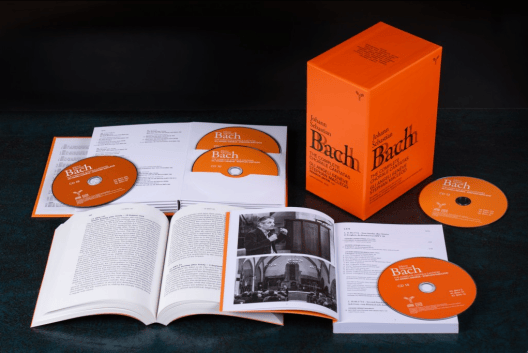
“The Complete Chorale Cantatas” by Gli Angeli Genève, released in 2025.

Continuing to highlight remarkable cantata recordings that came out over the past few years, this time I would like to put the spotlight on baritone Stephan MacLeod’s ensemble Gli Angeli Genève. And before you start giggling about about me featuring a Scottish conductor after coming back from a trip to Scotland, Stephan MacLeod is a native of Geneva!

In 2025, Gli Angeli Genève released “The Complete Chorale Cantatas”: nineteen CDs packaged together in a tastefully and thoughtfully designed cardboard album, with two paperback books, one with all the tracks and texts, the other with all the program notes. Both books have most of the information in English, German, and French. The only place an English translation is missing is in the cantata texts. Those only have French translations.

It’s of course not just this collection’s design that makes it an exceptional release. What stands out to me most are the musical introductions to each cantata.  Each work is preceded by an organ prelude by Bach or one of his contemporaries on the same chorale that the cantata is based on, followed by the chorale itself, sung a capella by two or three singers. In today’s world where we listeners are not as familiar with these chorale tunes as listeners in Bach’s time were, this makes a huge difference in appreciating these cantatas.
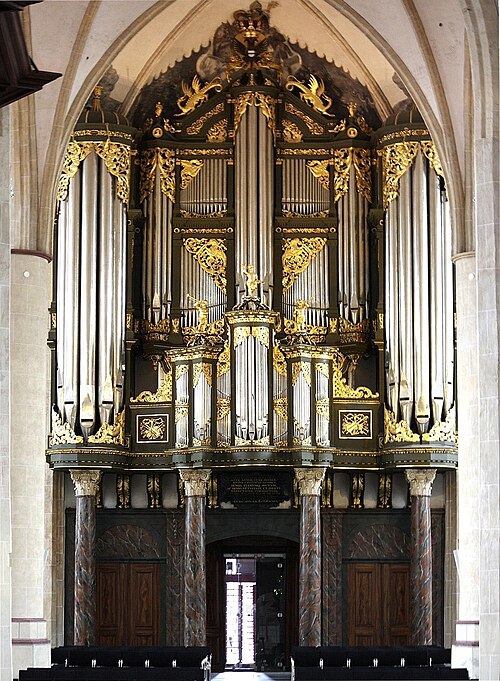
Arp Schnittger Organ, Groningen, the Netherlands.

I applaud Gli Angeli Genève going through the extra trouble of recording these additional pieces after they had already recorded all the cantatas. The cantatas were recorded live over the course of 12 years, from 2011 to 2023, all in Geneva. The a capella chorale tunes were recorded in three different sessions spread out over 2024, in Geneva, Chaux-de-Fonds (also in Switzerland), and Groningen (the Netherlands). All the organ preludes were recorded in September 2024 on a historic organ from Bach’s time, the Arp Schnitger Organ in the Martinikerk (St. Martin’s church) in Groningen, the Netherlands. Organist Francis Jacob does a fabulous job on this beautiful instrument, and his registrations and notes for each of the pieces are included in one of the books included with the CD box.

Cantata 114 Ach, Lieben Christen, seid getrost for the 17th Sunday after Trinity

On to the cantata for this Sunday, Cantata 114 Ach, lieben Christen, seid getrost, from 1724. It appears on CD 7 of Gli Angeli Genève’s “The Complete Chorale Cantatas” box. If you’re in Europe, you can purchase the box on jpc.de: you pay 160 euros instead of the original price of 200 euros. It’s also available on Amazon.de and Amazon.uk. If you’re outside of Europe you’ll have to rely on the streaming platforms. Find Cantata 114 here on Spotify, or here on YouTube (this is a playlist of the entire album (CD 7), just scroll down to the 9th track to start this cantata with the organ prelude).

Find the German texts with English translations for Cantata 114 here, and the score here. I have previously published two articles about this cantata on this blog, in 2017 and 2020. The one from 2017 includes a detailed listening guide and the one from 2020 shares a few more recordings.

Coming back to the musical introductions I mentioned above, sopranos Aleksandra Lewandowska and Sarah van Mol sing a 17th-century anonymous setting of the chorale. I love their voices together and I could listen to their a capella chorale singing all day. If you have time, check out their rendition of “Lobe den Herren, den mächtigen König der Ehren” preceding Cantata 137 on CD 5 of this same box. Goose bumps!

However, what I love most about Gli Angeli Genève’s recording of this cantata is the opening chorus, with exquisite phrasing by the orchestra, and beautiful transparency in the chorus. The two-on-a-part singing works really well in this case!
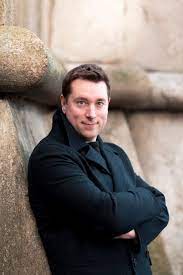
Thomas Hobbs

Tenor Thomas Hobbs and flutist Alexis Kossenko do a terrifyingly beautiful job in the tenor aria. This is the slowest I’ve ever heard this aria performed, but again, it works. In this tempo, the “sighs” in the flute part really make me think of sobs, fitting for an illustration of “Jammertale” (vales of tears). I still also really love the J.S. Bach Foundation/Lutz’ recording with flutist Marc Hantaï and tenor Georg Poplutz. When you regard this aria’s text, Wo wird in diesem Jammertale vor meinen Geist die Zuflucht sein? (Where in this vale of tears will there be a refuge for my spirit?) I feel that Thomas Hobbs focuses more on illustrating the vale of tears, while Georg Poplutz expresses the problem of where to turn to.

But let’s not forget the soprano and alto solos! The soprano solo consists of a verse of the chorale with an exciting continuo accompaniment, performed convincingly here by sopranos Alexandra Lewandowska and Anne-Kathryn Olsen. It’s fun for me to hear Anne-Kathryn sing, because she and I chatted online during the Covid pandemic about her working in Europe as an American soprano, and about San Francisco Bay Area audiences versus European audiences (it’s not what you think). Her voice also sounds fabulous together with Alexandra Lewandowska’s, so I guess Alexandra is good at selecting fellow singers 🙂
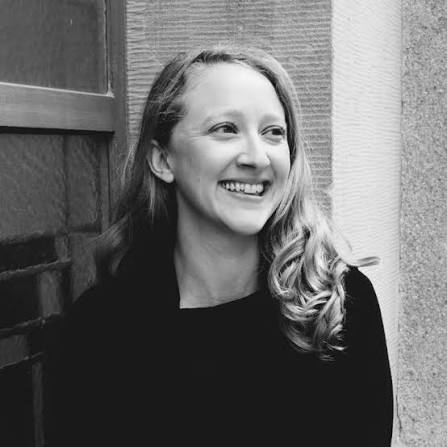
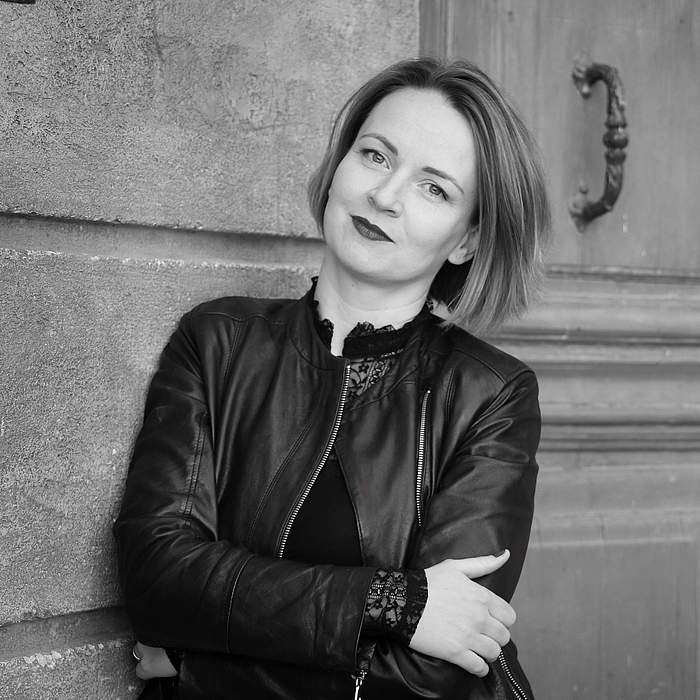
Anne-Kathryn Olsen
Alexandra Lewandowska

Now we can all go in peace.

As almost always in a Bach cantata, there is a turning point where the text and music move from misery to glory. In this cantata this happens in the alto aria. Bach illustrates the at the same time victorious and peaceful text with a joyful orchestra accompaniment with oboe solos, beautifully played by Emmanuel Laporte, and a virtuoso part for the singer. And what better countertenor to sing this than Alex Potter? Now we can all go in peace. 

More cantatas for this 17th Sunday after Trinity

One year later, for this same 17th Sunday after Trinity, Bach wrote Cantata 148 Bringet dem Herrn Ehre seines Namens. Please find my previous posts about this cantata here. Since last year, there’s been a beautiful new recording out on Youtube, performed by the J.S. Bach Foundation under the direction of Rudolf Lutz, with two of my favorite soloists, countertenor Alex Potter and tenor Daniel Johannsen. Find it here. 

© Wieneke Gorter, September 25, 2026.

Deeply moving arias and a new video of Cantata 114

04 Sunday Oct 2020

Posted by cantatasonmymind in Cantatas, Chorale cantatas 1724/1725, Leipzig, Trinity

≈ Leave a comment

Tags

BWV 114, BWV 148, David Erler, Dresden, Gérard Lesne, Georg Poplutz, Gustav Leonhardt, J.S. Bach Foundation, John Eliot Gardiner, John Elwes, Leipzig, Leonhardt, Marc Hantaï, Peter Kooij, Pisendel, Rudolf Lutz, Wolf Matthias Friedrich

Nikolaikirche (St. Nicholas Church) in Leipzig

This 17th Sunday after Trinity has been connected to more discoveries than any other so far for me, and I keep making new ones:

In 2016, I wrote a post about Cantata 148 Bringet dem Herrn Ehre seines Namens, then learned a lot of new information during the months that followed, which led me to completely revise the post in February 2017. It talks about Dresden concertmaster Johann Georg Pisendel and his influence on the violin solos Bach wrote in Leipzig. Read it here.

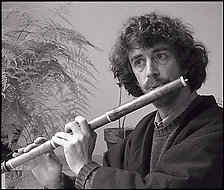
Marc Hantaï

In 2017, I realized that at least two arias Bach wrote for this Sunday make me cry, not because of the singers, but because of the instrumental solos that accompany those arias. Read it here, in a post that introduces Cantata 114 Ach, lieben Christen, seid getrost. At that time, the best recording I could find was a live radio registration of a performance led by Gustav Leonhardt in 1988. All this because of the tenor aria.* I knew who the tenor was (John Elwes), but could only make an educated guess about the extraordinary flute player, probably Marc Hantaï. That recording also had my first countertenor love, Gérard Lesne, singing the alto aria.

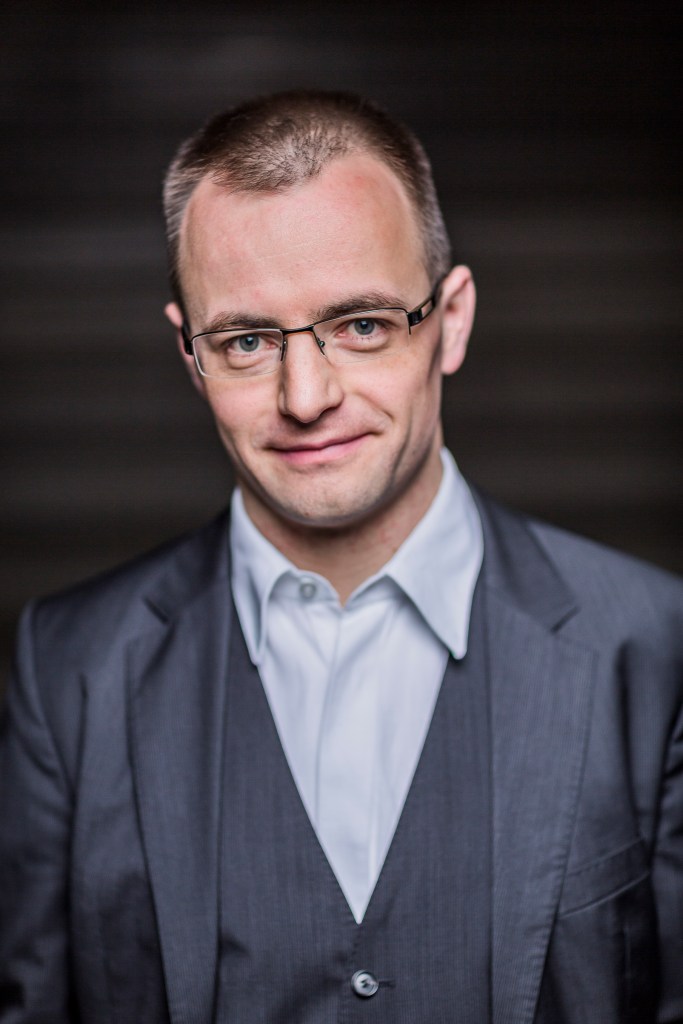
David Erler. Photo by Björn Kowalewsky

At the last gathering of the Berkeley Bach Cantata Group I attended before the Shelter In Place started (and all rehearsals and performances stopped) here in the SF Bay Area, I got to discuss Bach’s “Pisendel style” violin solos a bit with the first violinist of that group. In an email-exchange that followed, he pointed out a countertenor he liked, but who I had never heard of before: David Erler.

Then this week, while checking if any new recordings of cantatas 148 or 114 had come out since I wrote those blog posts, I discovered to my great delight that in September 2018 the J.S. Bach Foundation recorded Cantata 114 Ach, lieben Christen, seid getrost with … Marc Hantaï playing flute in the tenor aria! (I now for sure know it was him in that 1988 Leonhardt recording) and … David Erler singing the alto aria (and doing an excellent job). While it doesn’t rival the energy of the soprano solo on the Gardiner recording (for this, please read my blog post from 2017 about this cantata), nor Peter Kooij’s solo on the Leonhardt recording, it is a fabulous and very moving performance, and you can see Marc Hantaï play. Find this live video recording by the J.S. Bach foundation here on YouTube. Soloists are: David Erler, alto; Georg Poplutz, tenor; and Wolf-Matthias Friedrich, bass.

Find the German texts with English translations of Cantata 114 here, and the score here.

©Wieneke Gorter, October 4, 2020.

Read more:

In 2018, I realized that Bach reworked the incredibly moving tenor aria with flute from Cantata 114 into a faster tenor aria with oboe for Cantata 124, and that nobody else seemed to have noticed this yet. Read that here.

Read more about my first countertenor loves here.

Instrumental solos that bring me to tears and a bit of farmers’ music

07 Saturday Oct 2017

Posted by cantatasonmymind in Cantatas, Chorale cantatas 1724/1725, Leipzig, Trinity

≈ Leave a comment

Tags

17th Sunday after Trinity, Agnès Mellon, BWV 114, BWV 148, flute, Gérard Lesne, Gustav Leonhardt, John Eliot Gardiner, John Elwes, Marc Hantaï, Peter Kooy, Trinity 17

feudalism

Six weeks ago, I noticed that Bach’s cantatas for the 11th Sunday after Trinity all give me a good kind of stomach ache. This week, it seems that all instrumental solos for the 17th Sunday after Trinity make me cry. It happened last year when I was listening to the violin solo in cantata 148, and it happened to me again this year with the hauntingly beautiful flute solo in the tenor aria of cantata 114 Ach, lieben Christen, seid getrost, from 1724.

It is an exceptional aria, ten minutes long, and extremely demanding for the tenor as well as the flutist. Bach must have been proud of it, because later, in January 1725, he turned this composition into a much faster paced, condensed piece of drama for tenor and oboe d’amore in Cantata 124 Meinen Jesum laß ich nicht.

The first recording I listened to set the standard for the rest: a fabulous flutist, most probably Marc Hantaï, and tenor John Elwes on a live audio recording from 1988 by La Chapelle Royale under the direction of Gustav Leonhardt.  I absolutely adore Frans Brüggen’s flute playing on the Leonhardt recording from 1980, but don’t enjoy Kurt Equiluz’ singing as much. Mark Padmore’s singing on the Gardiner recording is to die for, but flutist Rachel Beckett’s decisions on where to breathe are not as sensitive as Marc Hantaï’s, and with Hantaï’s interpretation already in my head, I found it distracting. The same goes for Wilbert Hazelzet’s playing on the Koopman recording, with tenor Christoph Prégardien.

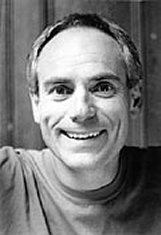
elwes-john-2
John Elwes
marchantaii
Marc Hantaï

This La Chapelle Royale/Gustav Leonhardt recording is also a nice monument from the past for me, since it has all the soloists I was in love with at the time: soprano Agnès Mellon, countertenor Gérard Lesne, and bass Peter Kooy. When you watch the YouTube recording on a screen, you can read along in the score. And that is interesting in this case, especially in the opening chorus and the soprano aria.

Find the German text with English translation of this cantata here.

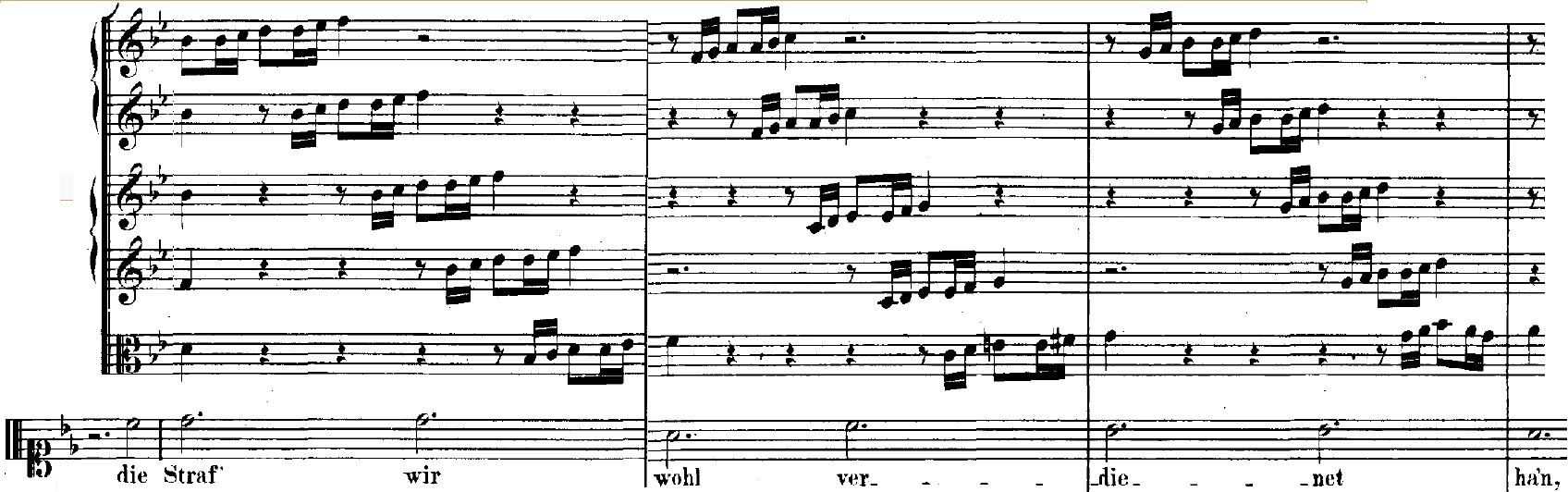
Starting at the beginning, reading along with the opening chorus, you can see that the joyful figure that is at first only in the continuo (orchestra bass) part, spreads through all the other parts, a message from Bach that the consolation in the text of the chorale is more important than the punishment. The punishment is still present though, in the repeated staccato notes in some of the instrumental parts, and, at 2 minute 24 seconds, visually only, in the score: there are the three whip lashes diagonally from top to bottom over the page in the instrumental parts, illustrating the word “Straf” (punishment) the chorus sings there. Or see this image, courtesy of Eduard van Hengel:

114-120straf20gr

When reading along with the soprano aria, at 15 minutes 5 seconds, you can see or hear how in the continuo part, Bach illustrates the flick of the wrist of the farmer who sows the seeds.  If you have time, I encourage you to also listen to Gardiner’s remarkable take on this soprano aria. In his notes accompanying his live recording, he explains that the text “The grain of wheat will bear no fruit unless it fall into earth” can be seen as a warning to the farmer to get his timing right when sowing his winter cereals. Gardiner, a sheep farmer in his spare time and always eager to point out connections to the seasons in Bach’s music, is obviously really excited to bring out this text: he has the entire soprano section sing it, with much more fervor and much better enunciation than Agnès Mellon on the Chapelle Royale/Leonhardt recording. He also explains in his notes that they took Bach’s indication “continuo unisono” to mean that the organ should double the cello part. Since they always use church organs for their recordings, it sounds impressive. I truly appreciate hearing this movement performed this way.

Then go back to the Chapelle Royale/Leonhardt recording, and listen to Gérard Lesne, my first countertenor love*, spookily illustrating the approach of death, with similar chromatic lines as in last week’s arias.

©Wieneke Gorter, October 6, 2017, links updated October 2, 2020

*Read all about my love for Gérard Lesne in this post

Inspired by Telemann? Cantatas 99 and 8

01 Sunday Oct 2017

Posted by cantatasonmymind in Cantatas, Leipzig, Trinity

≈ Leave a comment

Tags

BWV 130, BWV 148, BWV 245, BWV 8, BWV 99, Charles Daniels, Damien Guillon, Deborah York, Gerlinde Säman, Ingeborg Danz, Mark Padmore, Netherlands Bach Society, Peter Kooij, Philippe Herreweghe, St. John Passion, Telemann, Trinity 15, Trinity 16

redpalaceweimar

The Rote Schloss (Red Palace) of Duke Ernst August in Weimar, where Bach and Telemann probably first met, while Telemann was working in Eisenach and Bach was working in Weimar

This is a double post: for today, and also for last Sunday. But before I discuss Cantata 99 Was Gott tut das ist wohlgetan (Trinity 15, Sept 17, 1724) and Cantata 8 Liebster Gott, wenn wird ich sterben (Trinity 16, Sept 24, 1724), I would like to introduce you to a Telemann cantata: Du Daniel gehe hin.

Telemann’s beautiful cantata is not widely known today, but must have been rather famous among Telemann’s colleagues in the first half of the 18th century. The Kantor of the St. Nicholas Church in Berlin performed it in 1757, and I just realized this week that it must have been on Bach’s mind in 1724. While Bach and Telemann worked in the same region only from about 1708 to 1712, they were good friends, and it is generally assumed that they would have seen each other in Hamburg and Köthen a few times in the early 1720s.

I don’t know whether Bach’s “Ruht wohl, ihr heiligen Gebeine” closing chorus of the St. John Passion had anything to do with Telemann’s “Schlaft wohl, ihr seligen Gebeine” closing chorus in Du Daniel gehe hin, but it does look to me as if Bach borrowed the music of the soprano aria from Du Daniel gehe hin for the duet of  Cantata 99. If that is indeed what happened, then it seems very likely that, one week later, Bach was inspired by Telemann’s use of pizzicato strings as “funeral bells” in Du Daniel gehe hin when writing the opening chorus and tenor aria of Cantata 8.

For Cantata 99 Was Gott tut das ist wohlgetan I prefer the live video registration by the Netherlands Bach Society. Watch this recording on YouTube. Soloists are Gerlinde Sämann, soprano; Damien Guillon, alto; Charles Daniels, tenor; Peter Kooij, bass.

Find the text and translation  of Cantata 99 here, and the score here.

For Cantata 8 Liebster Gott, wenn wird ich sterben there is no other choice than Herreweghe. Soloists are Deborah York, soprano; Ingeborg Danz, alto; Mark Padmore, tenor; Peter Kooij, bass. This is definitely in my top five cantata recordings ever because of the combination of Bach’s music and Herreweghe’s interpretation. Listen to the incredibly beautiful oboe playing at the start of the tenor aria, and the horn in the opening and closing chorus. Peter Kooij does a fabulous job in the bass aria, which is so difficult it is on par with bass arias from the Christmas Oratorio and the end of the Trinity season of 1723. I wonder if Bach had an exceptional bass visiting for Michaelmas that year (Sept 29, for which he wrote this dramatic bass aria about the Archangel Michael slaying the dragon*).

Find the text and translation of Cantata 8 here, and the score here.

A striking element in both Cantatas 99 and 8 is Bach’s use of the flute. In cantata 99 Bach uses the instrument in two solo movements, the tenor aria as well as the soprano-alto duet. There could be a simple reason for this unusual choice: showing off his flute player (read more about him in this post). However, it is more likely that Bach wanted to point out the references to the cross in the text of both these movements, and what better instrument to bring out those harrowing chromatic lines than the flute? Using the flute to reinforce the image of the cross makes even more sense when you see what Bach does in the opening chorus of cantata 8. If you believe that his use of staccato flutes in the “Crucifixus” of the Mass in B Minor serves as image of hammering nails into the cross, then it is pretty clear what Bach’s hidden message is here.

Wieneke Gorter, October 1, 2017, links updated September 22, 2023.

*St. Michael’s Fair was a huge event in Leipzig, drawing visitors from as far as England and Poland, increasing the city’s population to 30,000. Read more about musicians visiting for this feast in my post about cantata 148, written for this same Sunday in 1723 or 1725.

A detour to 1725

18 Sunday Sep 2016

Posted by cantatasonmymind in 1723 Trinity season special series, Cantatas, Leipzig, Trinity

≈ Leave a comment

Tags

according to Lutheran Church year, Bach, Bach Collegium Japan, BWV 148, BWV 76, BWV 83, cantatas, Gerd Türk, Gottfried Reiche, John Eliot Gardiner, Mark Padmore, Masaaki Suzuki, Maya Homburger, Natsumi Wakamatsu, Pieter Dirksen, Pisendel, Robin Blaze, Toshio Shimada

sleeping_girl
Sleeping girl in a landscape, after Bernhard Keil, 17th century. Gemäldegalerie Alte Meister, Kassel, Germany.

In the first version of this post, I argued that cantata 148 Bringet dem Herrn Ehre seines Namens for the 17th Sunday after Trinity was written in 1723, dismissing the statements of several scholars it was probably written in 1725. I agreed with them that this cantata is a bit “out of place” between the somber but extremely beautiful and compelling cantatas of Trinity 16 and Trinity 19, and that the text looks very similar to a poem by Picander, the librettist with whom Bach did not collaborate before 1725. However, I was not convinced by their third argument that  Bach’s writing in the  opening chorus would be too “new” for 1723, and at first I didn’t see how Bach could have practically written the cantata in 1725.

I suggested that Bach was too busy in 1725, coming back from a trip to Dresden right before this cantata had to be performed on September 23 of that year. But when I discussed this idea with Eduard van Hengel, he reminded me that Bach would have had plenty of time to compose a cantata well ahead of his trip to Dresden, since–as far as we know–he had not written a new cantata since August 26. So that was argument number 4 for placing this cantata in 1725 instead of 1723.

Argument number 5 presented itself to me while I did my research for cantata 83, reading Pieter Dirksen’s article on Bach’s writing for violin in his first Leipzig cycle of cantatas. Dirksen points out that Bach’s new compositions from 1723 don’t feature virtuoso parts for violin at all. He suggests the reason for this is that Bach’s orchestra in Leipzig (including Bach himself*) was missing a violinist who could play technically challenging music.

Johann Georg Pisendel

After reading Dirksen’s article on Bach’s connection with the Dresden violinist Johann Georg Pisendel,** and knowing that soon after Trinity 17 it would be Michaelmas, I got excited: the cantata 148 story was coming full circle! I was now no longer seeing Bach juggling ink and parchment on the coach back from Dresden to Leipzig on Saturday September 22, 1725, but instead I was imagining a friend in that coach with him: Johann Georg Pisendel.

If it is true that Pisendel visited Leipzig for the Purification of Mary holiday in 1724, as Dirksen suggests, it is not far-fetched to assume he would do so again for the feast of Michaelmas in 1725 (on September 29, so only six days after Trinity 17 in 1725). St. Michael’s Fair was a huge event in Leipzig, drawing visitors from as far as England and Poland, increasing the city’s population to 30,000, and thus also increasing the “audiences” for Bach’s music in the churches.

For this cantata, I prefer the recording by Bach Collegium Japan, with soloists Robin Blaze (countertenor), Gerd Türk (tenor), Toshio Shimada (trumpet), and Natsumi Wakamatsu (violin). Listen to this recording on Spotify or support the artists and purchase the album on Amazon.com, Amazon.de, or Amazon.fr.

Find the German texts with English translations here, and the score here.

The text of cantata 148 Bringet dem Herrn Ehre seines Namens talks about the importance of coming to church on Sunday, and listening to the music in the church (tenor recitative and aria), but it also talks about taking a day of rest (alto aria).

While the opening chorus is exceptional,  it doesn’t sound very polished or “finished.” Gardiner, while otherwise excited about it, is not satisfied with the ending, and suggests that “perhaps Anna Magdalena called from the kitchen that dinner was on the table and the soup was getting cold.” What can I say? Only a male writer would say this!

The virtuoso violin part shows up in the tenor aria. On this recording of Bach Collegium Japan, played by Natsumi Wakamatsu, it moves me to tears. Whoever played this violin part in 1725, this person was not resting on Sunday …

©Wieneke Gorter, originally written September 18, 2016; revised February 4, 2017, links updated and picture of Pisendel added October 2, 2020.

*In his article Dirksen explains in detail how Bach went through the trouble of making the violin solo of cantata 76  relatively easy to play for an intermediate violinist, and suggests Bach was a good violinist, but perhaps not such a virtuoso as many believe him to be. Dirksen’s article appears on pages 135-156 of Bachs 1. Leipziger Kantantenjahrgang: Bericht über das 3. Dortmunder Bach-Symposion 2000 — Dortmund: Klangfarben Musikverlag, 2002.

**Pisendel had been friends with Bach since 1709 and several scholars think that it was for this Italian-trained virtuoso that Bach wrote his most complicated violin music. It is assumed that Bach had Pisendel in mind when writing the violin part of the “Laudamus te” of his Mass in B Minor.

Recent Posts

  • It’s Not What You Think – The Kreuzstab Cantata for Trinity 19
  • A Rainbow of Colors – Cantata 169 for Trinity 18
  • Gli Angeli Genève’s Chorale Cantata Box & Cantata 114 for Trinity 17
  • Family stories and more “Vision Bach” – BWV 179 and 199 for Trinity 11
  • Almost Unbearable, It’s that Good: Hannes Rux-Brachtendorf and Matthias Winckhler in BWV 46 on Rademann’s Vision Bach, Volume 3.

Archives

  • October 2026
  • September 2026
  • August 2026
  • August 2025
  • July 2025
  • December 2024
  • November 2024
  • June 2024
  • January 2024
  • December 2023
  • October 2023
  • September 2023
  • August 2023
  • April 2022
  • February 2022
  • January 2022
  • December 2021
  • November 2021
  • June 2021
  • May 2021
  • April 2021
  • February 2021
  • January 2021
  • December 2020
  • November 2020
  • October 2020
  • September 2020
  • August 2020
  • July 2020
  • May 2020
  • April 2020
  • March 2020
  • February 2020
  • January 2020
  • December 2019
  • November 2019
  • May 2018
  • April 2018
  • March 2018
  • February 2018
  • January 2018
  • December 2017
  • November 2017
  • October 2017
  • September 2017
  • August 2017
  • July 2017
  • June 2017
  • May 2017
  • April 2017
  • March 2017
  • February 2017
  • January 2017
  • December 2016
  • November 2016
  • October 2016
  • September 2016
  • August 2016
  • July 2016
  • June 2016
  • May 2016
  • April 2016
  • March 2016
  • February 2016
  • January 2016

Enter your email address to follow this blog and receive notifications of new posts by email.

Join 336 other subscribers

Categories

  • 1723 Trinity season special series
  • Advent
  • After Easter
  • Ascension
  • Bach's life
  • Cantatas
  • Chorale cantatas 1724/1725
  • Christmas
  • Easter
  • Epiphany
  • Following Bach in 1725
  • Köthen
  • Leipzig
  • Leipzig 1726/1727
  • Septuagesima
  • Travel
  • Trinity
  • Weimar

Meta

  • Create account
  • Log in
  • Entries feed
  • Comments feed
  • WordPress.com

Website Built with WordPress.com.

  • Subscribe Subscribed
    Weekly Cantata
    Join 156 other subscribers

    Have a WordPress.com account? Log in now.

  • Weekly Cantata
    View site in Reader
    Manage subscriptionsSign upLog in
    Report this content
    Collapse this bar
Loading Comments...