Weekly Cantata

Weekly Cantata

Tag Archives: Gli Angeli Genève

A Rainbow of Colors – Cantata 169 for Trinity 18

04 Sunday Oct 2026

Posted by cantatasonmymind in Cantatas, Chorale cantatas 1724/1725, Köthen, Leipzig, Trinity

≈ Leave a comment

Tags

Alex Potter, Anne-Kathryn Olsen, Arp Schnittger Organ, Bach, BWV 1053, BWV 169, BWV 35, BWV 96, cantatas, Christelle Monney, Gli Angeli Genève, Grauhof, Il Gardellino, Leo van Doeselaar, Mühlhausen, Stephan MacLeod, Treutmann organ
Over the summer and fall of 1726, Bach wrote several solo cantatas with the organ as “duet partner” for the vocal soloist. Cantata 169 Gott soll allein mein Herze haben, written for this 18th Sunday after Trinity, is one of these. Until 2023, I had always heard and seen these solo cantatas performed the way you can see in this video, with the organist playing on a small “portative” organ, on the same stage as the other members of the orchestra. 
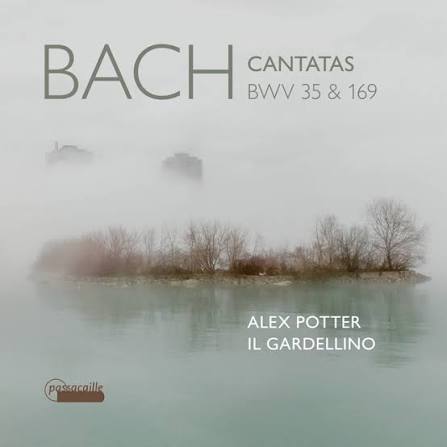
When in February 2023, ensemble Il Gardellino released a CD featuring two of these solo cantatas with countertenor Alex Potter, I at first merely started listening to it because I was excited to hear one of my favorite soloists perform together with one of my favorite ensembles. The album cover doesn’t reveal more than those two names, and neither did the social media posts that alerted me about the release at the time. 

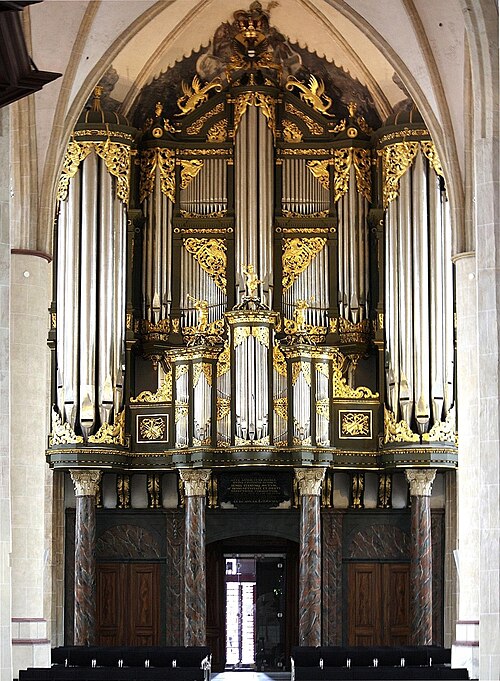
But as I heard the first few notes I started smiling: instead of a portative organ I heard a large church organ! And oh, what an incredibly gorgeous instrument! Turns out this album was recorded at the Stiftskirche St. Georg (collegiate church of St. George) in Grauhof (Goslar), Germany, using that church’s famous Treutmann organ from 1737 (pictured above), played by Dutch organist Leo van Doeselaar. Bach wrote the organ part of these solo cantatas clearly with a large church organ in mind. However, because of challenges of tuning pitch, space, and place, playing these cantatas on large church organs can often not be achieved in concerts. So we’re lucky to have recordings like these!

I’ve listened to this album many times since, because I appreciate Alex Potter’s sensitivity to the text, but also because I love how the rainbow of colors in Alex Potter’s voice is perfectly matched by the organ’s sound, thanks to Van Doeselaar’s  fabulous registration.*  

Find this recording on YouTube or on Spotify. Cantata 169 is the second cantata on this album. Please consider purchasing the recording to support the artists, for example on Amazon if you are in the USA or directly from the record label if you are in Europe.

Please find the score for Cantata 169 Gott soll allein mein Herze haben here, and the German texts with English translations here.
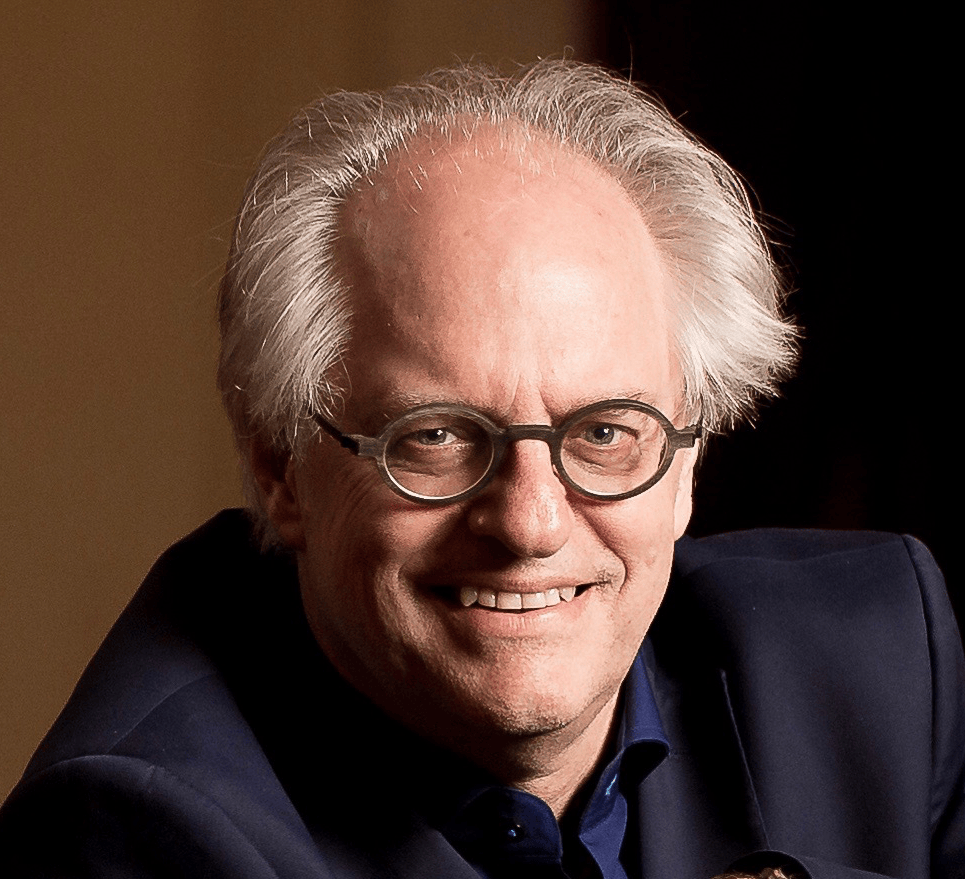
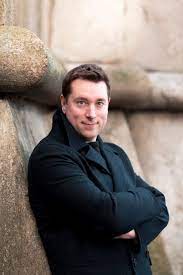
Leo van Doeselaar, photo by Eduardus Lee.

Coming back to Van Doeselaar’s registration, when you listen to this album, don’t miss the organ piece between the two cantatas, the Toccata, Adagio and Fugue in C Major, BWV 564. Van Doeselaar uses the “Glockenspiel” stop in the first measures of the Toccata. The stop was added during a recent renovation of the organ. When I asked Van Doeselaar about using it here, he said that he knows Bach appreciated a Glockenspiel stop since it is listed in his 1708 specification for the new organ in Mühlhausen**, and that he just had to let that shine through in the Toccata, he couldn’t help himself, “it was too much fun!”

This cantata’s text is based on a passage from the Gospel reading for this Sunday, Matthew 22:34–46, in which Jesus formulates the “double commandment”: “Love God with all your heart” and “Love your neighbor as yourself.” Only the recitative (movement 6) addresses the “Love your neighbor as yourself”; the preceding movements focus on “Gottesliebe” (love for or from God), in its two meanings: humankind’s subjective love for God, which implies a rejection of worldly pleasures (movements 2,3, and 5); and God’s objective love for people, which comes to people as a gift (movement 4).

If the music reminds you of something, you’re right! For the first two movements of his harpsichord concerto BWV 1053 in E major Bach arranged movement 1 and 5 from this cantata.*** However, the cantata movements are not the original pieces of music either, but rather arrangements of a lost concerto. For a long time it was assumed that this was a concerto composed in Köthen for a woodwind instrument or a viola, and there are many recordings of this piece as an oboe concerto. Only in 2005 Christoph Wolff suggested that it may have been an organ concerto performed in 1725 at the Sophienkirche in Dresden.

There is, hooray, one more cantata for this Sunday featuring Alex Potter’s gorgeous singing: Cantata 96 Herr Christ, der einge Gottessohn from Gli Angeli Genève’s Chorale Cantata Box I spotlighted last week. Please find this recording here on Youtube and here on Spotify. Exceptionally, in this cantata Bach gives the cantus firmus in the opening chorus to the altos. And on Gli Angeli Genève’s recording, the a capella chorale preceding the cantata is sung by two altos and one soprano: Alex Potter, Christelle Monney, and Anne-Kathryn Olsen. Read my post from 2017 to learn why Bach brings the Christmas story into a Trinity cantata, and find a video by the J.S. Bach Foundation’s in my post from 2020.

I would love it if you share this message with a friend, feel free to forward!

If you have a question for me, would like to reach out, or let me know how you found this blog, I would love to hear from you! If you don’t feel comfortable writing a comment under this post, you can simply reply to the email you received about this post, and the message will get directly to me. Not an email subscriber yet? Sign up below! I won’t use your email address for anything else.

© Wieneke Gorter, October 4, 2026.

*When talking about an organ, “registration” means the organist’s decision regarding which sound registers, called “stops,” to use when playing a piece of music. If you would like to know more about this art, please watch this video by the Netherlands Bach Society, in which Van Doeselaar explains his approach and compares it to the work of a chef. The organ in this video is the Arp Schnittger organ in Groningen I mentioned and pictured in my previous post.

**As organist of the Blasiuskirche in Mühlhausen, from 1707 to 1708, Bach initiated a complete renovation of the organ by local builder Johann Friedrich Wender. He however already left Mühlhausen before the instrument would be finished in 1709. The organ was reconstructed in the 1950s at the instigation of Albert Schweitzer based on Bach’s specification drawn up in 1708.

***The music of the third movement is the same as the opening chorus of Cantata 49, which is part of that same group of solo cantatas with organ from 1726.

Gli Angeli Genève’s Chorale Cantata Box & Cantata 114 for Trinity 17

26 Saturday Sep 2026

Posted by cantatasonmymind in Cantatas, Chorale cantatas 1724/1725, Leipzig, Trinity

≈ Leave a comment

Tags

Alex Potter, Alexandra Lewandowska, Alexis Kossenko, Anne-Kathryn Olsen, Arp Schnittger Organ, Bach, BWV 114, BWV 148, Daniel Johannsen, Francis Jacob, Georg Poplutz, Gli Angeli Genève, J.S. Bach Foundation, Martinikerk Groningen, Rudolf Lutz, Sarah van Mol, Stephan MacLeod, Thomas Hobbs, Trinity 17

This week I returned from a wonderful vacation in the Scottish Highlands. While I miss the stunning nature and the friendly people, it was much easier to get back to writing than normally after a trip, because this fall I’m part of an all-women writer’s group. Two times a week we all log in to Zoom and then do our own writing for 2 hours and receive inspiring coaching by Jennifer Louden. The community and accountability work wonders for me, and I hope that after the group disbands in December, I will have sufficiently strengthened the commitment to myself to keep making time for my writing, and keep my standards at a realistic level.

Gli Angeli Genève’s Chorale Cantata Box

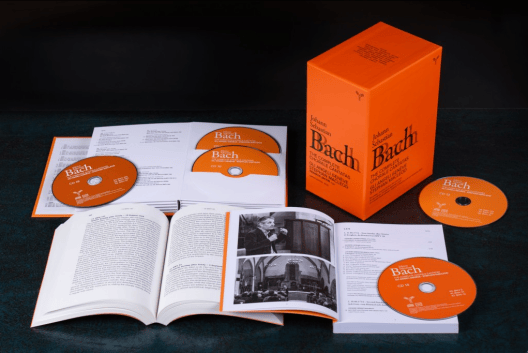
“The Complete Chorale Cantatas” by Gli Angeli Genève, released in 2025.

Continuing to highlight remarkable cantata recordings that came out over the past few years, this time I would like to put the spotlight on baritone Stephan MacLeod’s ensemble Gli Angeli Genève. And before you start giggling about about me featuring a Scottish conductor after coming back from a trip to Scotland, Stephan MacLeod is a native of Geneva!

In 2025, Gli Angeli Genève released “The Complete Chorale Cantatas”: nineteen CDs packaged together in a tastefully and thoughtfully designed cardboard album, with two paperback books, one with all the tracks and texts, the other with all the program notes. Both books have most of the information in English, German, and French. The only place an English translation is missing is in the cantata texts. Those only have French translations.

It’s of course not just this collection’s design that makes it an exceptional release. What stands out to me most are the musical introductions to each cantata.  Each work is preceded by an organ prelude by Bach or one of his contemporaries on the same chorale that the cantata is based on, followed by the chorale itself, sung a capella by two or three singers. In today’s world where we listeners are not as familiar with these chorale tunes as listeners in Bach’s time were, this makes a huge difference in appreciating these cantatas.

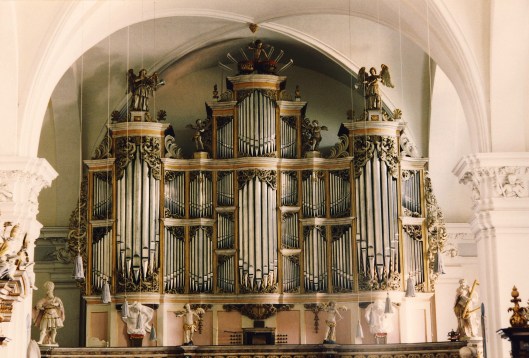
Arp Schnittger Organ, Groningen, the Netherlands.

I applaud Gli Angeli Genève going through the extra trouble of recording these additional pieces after they had already recorded all the cantatas. The cantatas were recorded live over the course of 12 years, from 2011 to 2023, all in Geneva. The a capella chorale tunes were recorded in three different sessions spread out over 2024, in Geneva, Chaux-de-Fonds (also in Switzerland), and Groningen (the Netherlands). All the organ preludes were recorded in September 2024 on a historic organ from Bach’s time, the Arp Schnitger Organ in the Martinikerk (St. Martin’s church) in Groningen, the Netherlands. Organist Francis Jacob does a fabulous job on this beautiful instrument, and his registrations and notes for each of the pieces are included in one of the books included with the CD box.

Cantata 114 Ach, Lieben Christen, seid getrost for the 17th Sunday after Trinity

On to the cantata for this Sunday, Cantata 114 Ach, lieben Christen, seid getrost, from 1724. It appears on CD 7 of Gli Angeli Genève’s “The Complete Chorale Cantatas” box. If you’re in Europe, you can purchase the box on jpc.de: you pay 160 euros instead of the original price of 200 euros. It’s also available on Amazon.de and Amazon.uk. If you’re outside of Europe you’ll have to rely on the streaming platforms. Find Cantata 114 here on Spotify, or here on YouTube (this is a playlist of the entire album (CD 7), just scroll down to the 9th track to start this cantata with the organ prelude).

Find the German texts with English translations for Cantata 114 here, and the score here. I have previously published two articles about this cantata on this blog, in 2017 and 2020. The one from 2017 includes a detailed listening guide and the one from 2020 shares a few more recordings.

Coming back to the musical introductions I mentioned above, sopranos Aleksandra Lewandowska and Sarah van Mol sing a 17th-century anonymous setting of the chorale. I love their voices together and I could listen to their a capella chorale singing all day. If you have time, check out their rendition of “Lobe den Herren, den mächtigen König der Ehren” preceding Cantata 137 on CD 5 of this same box. Goose bumps!

However, what I love most about Gli Angeli Genève’s recording of this cantata is the opening chorus, with exquisite phrasing by the orchestra, and beautiful transparency in the chorus. The two-on-a-part singing works really well in this case!

Thomas Hobbs

Tenor Thomas Hobbs and flutist Alexis Kossenko do a terrifyingly beautiful job in the tenor aria. This is the slowest I’ve ever heard this aria performed, but again, it works. In this tempo, the “sighs” in the flute part really make me think of sobs, fitting for an illustration of “Jammertale” (vales of tears). I still also really love the J.S. Bach Foundation/Lutz’ recording with flutist Marc Hantaï and tenor Georg Poplutz. When you regard this aria’s text, Wo wird in diesem Jammertale vor meinen Geist die Zuflucht sein? (Where in this vale of tears will there be a refuge for my spirit?) I feel that Thomas Hobbs focuses more on illustrating the vale of tears, while Georg Poplutz expresses the problem of where to turn to.

But let’s not forget the soprano and alto solos! The soprano solo consists of a verse of the chorale with an exciting continuo accompaniment, performed convincingly here by sopranos Alexandra Lewandowska and Anne-Kathryn Olsen. It’s fun for me to hear Anne-Kathryn sing, because she and I chatted online during the Covid pandemic about her working in Europe as an American soprano, and about San Francisco Bay Area audiences versus European audiences (it’s not what you think). Her voice also sounds fabulous together with Alexandra Lewandowska’s, so I guess Alexandra is good at selecting fellow singers 🙂

Anne-Kathryn Olsen
Alexandra Lewandowska

Now we can all go in peace.

As almost always in a Bach cantata, there is a turning point where the text and music move from misery to glory. In this cantata this happens in the alto aria. Bach illustrates the at the same time victorious and peaceful text with a joyful orchestra accompaniment with oboe solos, beautifully played by Emmanuel Laporte, and a virtuoso part for the singer. And what better countertenor to sing this than Alex Potter? Now we can all go in peace. 

More cantatas for this 17th Sunday after Trinity

One year later, for this same 17th Sunday after Trinity, Bach wrote Cantata 148 Bringet dem Herrn Ehre seines Namens. Please find my previous posts about this cantata here. Since last year, there’s been a beautiful new recording out on Youtube, performed by the J.S. Bach Foundation under the direction of Rudolf Lutz, with two of my favorite soloists, countertenor Alex Potter and tenor Daniel Johannsen. Find it here. 

© Wieneke Gorter, September 25, 2026.

Recent Posts

  • A Controversy and a Coin Collection – Cantata 163 for Trinity 23
  • Giving the Choir a Breather? – Cantata 89 for Trinity 22
  • Remember Those Covid-Era Concerts Without Audiences? – Cantatas 98 and 109 for Trinity 21
  • The Recording that Knocked My Socks off – Cantata 162 for Trinity 20
  • It’s Not What You Think – The Kreuzstab Cantata for Trinity 19

Archives

  • November 2026
  • October 2026
  • September 2026
  • August 2026
  • August 2025
  • July 2025
  • December 2024
  • November 2024
  • June 2024
  • January 2024
  • December 2023
  • October 2023
  • September 2023
  • August 2023
  • April 2022
  • February 2022
  • January 2022
  • December 2021
  • November 2021
  • June 2021
  • May 2021
  • April 2021
  • February 2021
  • January 2021
  • December 2020
  • November 2020
  • October 2020
  • September 2020
  • August 2020
  • July 2020
  • May 2020
  • April 2020
  • March 2020
  • February 2020
  • January 2020
  • December 2019
  • November 2019
  • May 2018
  • April 2018
  • March 2018
  • February 2018
  • January 2018
  • December 2017
  • November 2017
  • October 2017
  • September 2017
  • August 2017
  • July 2017
  • June 2017
  • May 2017
  • April 2017
  • March 2017
  • February 2017
  • January 2017
  • December 2016
  • November 2016
  • October 2016
  • September 2016
  • August 2016
  • July 2016
  • June 2016
  • May 2016
  • April 2016
  • March 2016
  • February 2016
  • January 2016

Enter your email address to follow this blog and receive notifications of new posts by email.

Join 337 other subscribers

Categories

  • 1723 Trinity season special series
  • Advent
  • After Easter
  • Ascension
  • Bach's life
  • Cantatas
  • Chorale cantatas 1724/1725
  • Christmas
  • Easter
  • Epiphany
  • Following Bach in 1725
  • Köthen
  • Leipzig
  • Leipzig 1726/1727
  • Septuagesima
  • Travel
  • Trinity
  • Weimar

Meta

  • Create account
  • Log in
  • Entries feed
  • Comments feed
  • WordPress.com

Website Built with WordPress.com.

  • Subscribe Subscribed
    Weekly Cantata
    Join 157 other subscribers

    Have a WordPress.com account? Log in now.

  • Weekly Cantata
    View site in Reader
    Manage subscriptionsSign upLog in
    Report this content
    Collapse this bar
Loading Comments...