Weekly Cantata

Weekly Cantata

Tag Archives: Max van Egmond

Trinity 1725

27 Sunday May 2018

Posted by cantatasonmymind in Cantatas, Chorale cantatas 1724/1725, Leipzig

≈ Leave a comment

Tags

Christiane Mariane von Ziegler, Collegium Vocale Gent, Gustav Leonhardt, Knabenchor Hannover, Leonhardt Consort, Matthias Echternach, Max van Egmond, Paul Esswood, Trinity Sunday

Crijn_Hendricksz

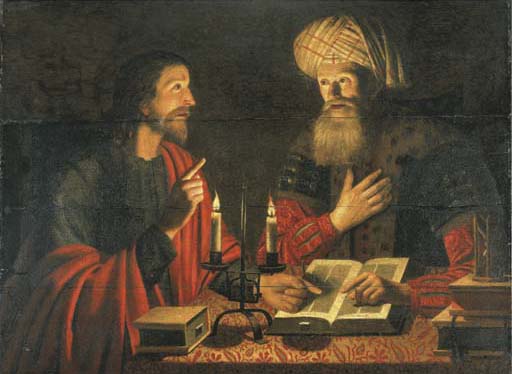
Jesus and Nicodemus, by Dutch painter Crijn Hendricksz Volmarijn

Today’s Cantata 176 Es ist ein trotzig und verzagt Ding, written for Trinity Sunday in 1725, marks the end of Bach’s 1724/1725 cycle of cantatas as well as the end of his series of nine cantatas on texts by Leipzig poet Christiane Mariane von Ziegler.

My favorite recording of this cantata is by Gustav Leonhardt, with the Leonhardt Consort, Knabenchor Hannover, and Collegium Vocale Gent. Vocal soloists are Matthias Echternach (boy soprano, soloist of the Knabenchor Hannover); Paul Esswood, countertenor; and Max van Egmond, bass. Find it here on YouTube.

Find the texts & translations here, and the score here.

The Gospel story for this day is the story Jesus’ nighttime conversation with Nicodemus, stating that only those who are reborn through water baptism and the Spirit (or Holy Ghost) can reach eternal life, hence the reference to Trinity. Find the text of that part of the Gospel of John here.

However, Von Ziegler doesn’t talk about the water baptism or any other aspects of the conversation between Jesus and Nicodemus at all, but instead focuses, four movements long, on the fact that Nicodemus comes to Jesus at night. The highlight of the cantata is the soprano aria “Dein sonst hell beliebter Schein,” which very poetically embellishes on Nicodemus’ wish for the sun to go under.

Only in the last aria do the words “was Jesus verspricht” (what Jesus promises) turn up, and is there a short reference to the Holy Trinity.  To make the reference more clear, the closing chorale ends with the following text, almost as a Roman doxology, so that everyone is clear that it is indeed Trinity today:

Gott Vater, Sohn und Heilger Geist,
Der Frommen Schutz und Retter,
Ein Wesen drei Personen.

(God the Father, son and holy spirit
protector and saviour of the devout
one being, three persons.)

Wieneke Gorter, May 27, 2018, links updated May 19, 2024.

Ascension Day 1725

13 Sunday May 2018

Posted by cantatasonmymind in After Easter, Cantatas, Chorale cantatas 1724/1725, Leipzig

≈ Leave a comment

Tags

Ascension, Christiane Mariane von Ziegler, Christoph Genz, Friedemann Immer, Harnoncourt, John Eliot Gardiner, Kurt Equiluz, Max van Egmond, Reinhard Hagen, René Jacobs, Robin Blaze

giotto_ascension

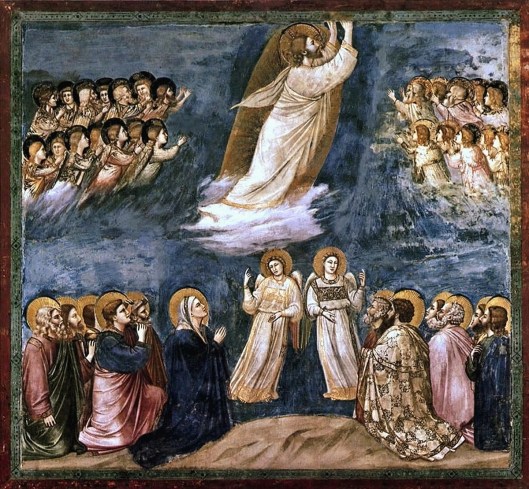
The Ascension of Our Lord by Giotto di Bondone, 1305. Fresco in the Capella Scrovegni, Padua, Italy.

In the Netherlands, where I grew up, most people have a four-day weekend for Ascension Day (Thursday May 10 this year as well as in 1725). The traditional thing to do was go for a long bike ride very early in the morning on the Thursday, and then spend the rest of the weekend doing the first serious gardening of the season, putting annuals in the ground, filling window boxes, etc.

Here in the United States, Ascension Day goes by unnoticed, nobody gets that Thursday day off, let alone a four-day weekend. And here in California we already started gardening a while ago. So, while still digging out from an extremely busy several weeks/months, I forgot about it. I only remembered when my sister, who lives in France, told me they were away for the long weekend.

Following Bach’s writing in 1725, the cantata for Ascension Day 1725 is Cantata 128 Auf Christi Himmelfahrt allein. It has a fantastic bass solo with trumpet (the designated instrument to illustrate “heaven”) and a beautiful alto-tenor duet.

My favorite recording of this cantata is from 1993 by Gardiner, with Robin Blaze, countertenor; Christoph Genz, tenor; and Reinhard Hagen, bass. Unfortunately the name of the trumpet player is not published. Listen to it here on Spotify. Unfortunately this recording is not on YouTube. Please note that this is a completely different interpretation than Gardiner’s crazy high tempo recording from 2012 (a “make-up” recording for the missing one from the Cantata Pilgrimage cycle from 2000).

If you don’t have access to Spotify, you can listen to Harnoncourt’s 1983 recording here on YouTube, with soloists René Jacobs, coutertenor; Kurt Equiluz, tenor; Max van Egmond, bass; and Friedemann Immer, natural trumpet.

Find the text of Cantata 128 Auf Christi Himmelfahrt allein here, and the score here.

While the opening chorus is very similar to the great chorale fantasias from January 1725, this cantata is not a true “chorale cantata” anymore. By this time, after Easter 1725, Bach doesn’t follow the same structure that he religiously adhered to for all his cantatas from Trinity, June 11, 1724 to the Annunciation, March 25, 1725. None of the cantatas after March 25 have the chorale tune or text throughout the entire cantata: the closing chorale is a different one than the chorale in the opening chorus, and the inner recitatives and arias are no longer based on the text of the chorale from the opening chorus either.

This cantata is the fourth in the series of nine consecutive cantatas on poetry by Christiana Mariana von Ziegler (103, 108, 87, 128, 183, 74, 68, 175, and 176). Because Von Ziegler’s texts were published, we can see how many changes Bach made to her texts. In the case of this cantata, the most striking change is Bach deleting the planned recitative between the bass aria and the alto-tenor duet. It seems that Bach wanted to increase the musical contrast between the two movements, while at the same time clarifying the connection of the text from one movement (bass aria) to the next (alto-tenor) duet.

Thus he adds Von Ziegler’s original recitative text to the text of the bass aria, starting with an extra line “wo mein Erlöser lebt.” The line doesn’t rhyme with anything, and Von Ziegler must not have been happy with this. However, this way Bach can repeat the instrumental opening of the aria after what was originally the recitative text, and create more contrast between the movements.

He also adds two more lines at the end of that bass aria:

So schweig, verwegner Mund,
Und suche nicht dieselbe zu ergründen!

Thus making it more clear how the text of this movement is related to the next movement.

Below is an overview of all the changes Bach made in this particular libretto, courtesy of Eduard van Hengel.

Wieneke Gorter, May 13, 2018, links updated May 19, 2024.

text comparison
BACH1. Auf Christi Himmelfahrt allein
Ich meine Nachfahrt gründe
Und allen Zweifel, Angst und Pein
Hiermit stets überwinde;
Denn weil das Haupt im Himmel ist,
Wird seine Glieder Jesus Christ
Zu rechter Zeit nachholen.

2. Ich bin bereit, komm, hole mich!
Hier in der Welt
Ist Jammer, Angst und Pein;
Hingegen dort, in Salems Zelt,
Werd ich verkläret sein.
Da seh ich Gott
von Angesicht zu Angesicht,
Wie mir sein heilig Wort verspricht.

3. Auf, auf, mit hellem Schall
Verkündigt überall:
Mein Jesus sitzt zur Rechten!
Wer sucht mich anzufechten?
Ist er von mir genommen,
Ich werd einst dahin kommen,
Wo mein Erlöser lebt.
Mein Augen werden ihn
in größter Klarheit schauen.
O könnt ich im voraus
mir eine Hütte bauen!
Wohin? Vergebner Wunsch!
Er wohnet nicht auf Berg und Tal,
Sein Allmacht zeigt sich überall;
So schweig, verwegner Mund,
Und suche nicht dieselbe zu ergründen!

4. Sein Allmacht zu ergründen,
Wird sich kein Mensche finden,
Mein Mund verstummt und schweigt.
Ich sehe durch die Sterne,
Dass er sich schon von ferne
Zur Rechten Gottes zeigt.

5. Alsdenn so wirst du mich
Zu deiner Rechten stellen
Und mir als deinem Kind
Ein gnädig Urteil fällen,
Mich bringen zu der Lust,
Wo deine Herrlichkeit
Ich werde schauen an
In alle Ewigkeit.

Christiana Mariana von Ziegler1. Auf Christi Himmelfarth allein
ich meine Nachfarth gründe
und allen Zweifel, Angst und Pein,
hiermit stets überwinde:
Denn weil das Haupt im Himmel ist,
wird seine Glieder JEsus Christ
zu rechter Zeit nachhohlen.

2. Ich bin bereit, komm hohle mich.
Hier in der Welt
Ist nicht, als Jammer, Angst und Pein;
Hingegen dort in Salems Zelt
Wird ich verklähret seyn.
Da seh ich dich
von Angesicht,
Wie mir dein heilges Wort verspricht.

3. Auf! Jubiliert mit hellen Schall,
Verkündiget nun überall,
Mein JEsus sitzt zur Rechten,
Wer sucht mich anzufechten?
Wird er mir gleich weggenommen,
Wird ich doch dahin auch kommen.
………………………………………..
Mein Auge wird ihn einst
in gröster Klarheit schauen.
O! könt ich schon allda
mir eine Hütte bauen;
Jedoch vergebner Wunsch,
Er wohnet nicht auf Berg und Thal.
Sein Allmacht zeigt sich überall.
………………………………………………..
………………………………………………….

4. Dein Allmacht zu ergründen,
Wird sich kein Mensche finden,
Mein Mund verstummt und schweigt
Ich sehe durch die Sterne,
daß er sich schon von ferne
Zur Rechten seines Vaters zeigt.

5. Alsdenn so wirst du mich
zu deiner Rechten stellen,
und mir als deinen Kind
ein gnädig Urtheil fällen,
mich bringen zu der Lust,
wo deine Herrlichkeit
ich werde schauen an
in alle Ewigkeit.

Second Christmas Day

26 Monday Dec 2016

Posted by cantatasonmymind in Cantatas, Christmas, Leipzig

≈ Leave a comment

Tags

Bach, BWV 40, Christmas, Christmas 2, Christmas Oratorio, Damien Guillon, Harnoncourt, horn, Leipzig, Max van Egmond, Peter Kooij, Philippe Herreweghe, René Jacobs, Thomas Hobbs

adoration_of_the_shepherds_1622
Adoration of the Shepherds by Dutch painter Gerard van Honthorst, 1622. Pommersches Landesmuseum (Pomerania State Museum), Germany.

In Bach’s time, there were three Christmas Days. In many countries in Europe there are still two Christmas Days. In the Netherlands, a country so small that you can easily travel to all your relatives within a day, people are expected to visit one side of the family on Christmas Day, and the other side on Second Christmas Day. Or at least that is how I remember it.

Of course, you could continue listening to the Christmas Oratorio, via the links for either Harnoncourt’s recording or Herreweghe’s recording I gave you yesterday. The second cantata is a charming one, evoking the pastoral scene of the shepherds on the field. But this composition has never grabbed or moved me the way the first or fourth cantata of the Christmas Oratorio do. The cantata I am eager to share with you today is cantata 40 Darzu ist erschienen der Sohn Gottes, written for Second Christmas Day in 1723.

The interpretation I grew up with is Leonhardt’s recording from 1974, with countertenor René Jacobs, tenor Marius van Altena, and bass Max van Egmond. There is a good live recording by Herreweghe of this cantata from a concert in Paris in 2015. You can watch this here on YouTube. Soloists are Damien Guillon, alto; Thomas Hobbs, tenor; and Peter Kooij, bass.

Find the text here, and the score here.

This cantata is really Christmas for me. I don’t know exactly why: perhaps because on Second Christmas Day we didn’t have to go to church, so I associate it with a more relaxed, unscheduled day. Perhaps because of the horns in the orchestra in the opening chorus and the tenor aria (I have a soft spot for horns or trombones in Bach cantatas), because of the impressive “Höllische schlange” (Snake of Hell) bass aria (yes, I have a soft spot for bass arias too), or because of the closing chorale that is so pretty, going up so high on the text Wonne, Wonne über Wonne! Er ist die Genadensonne. (Delight, delight upon delight! He is the son of mercy.) I sang this cantata in a Bach cantata reading group mid November this year, sitting directly behind the horns, standing next to one of my best friends, and I couldn’t believe my luck I got to sing this closing chorale.

Wieneke Gorter, December 26, 2016, updated December 24, 2019.

Another boy soprano hero: Sebastian Hennig

17 Saturday Dec 2016

Posted by cantatasonmymind in Advent, Cantatas, Weimar

≈ Leave a comment

Tags

Advent, Advent 4, Bach, BWV 132, Gustav Leonhardt, Max van Egmond, Sebastian Hennig, Weimar

hennig-sebastian-1boy

Sebastian Hennig

I remember some of the cantatas my mother played on the turntable in our house more vividly than others. One of those is cantata 132 Bereitet die Wege, bereitet die Bahn!, written for the fourth Sunday of Advent in Weimar in 1715.

To understand this, it helps to know how the Christmas season was celebrated  in our house in The Netherlands in the early 80s. Christmas didn’t feature in store windows or on television until after St. Nicholas (December 5). We would not have a Christmas tree in our house until December 16. And while at school we would sing Christmas carols in the last week before the break and have a “Christmas breakfast” on the last Friday, at home we would not have any real Christmas music, including Bach’s Christmas Oratorio until Christmas Day (more about this next week). Until then it was Advent cantatas only as far as Bach’s music was concerned. And since my mother was also a fan of Sebastian Hennig, the soprano soloist in the 1983 Leonhardt recording of cantata 132, she probably played this cantata pretty frequently in the last week before Christmas.

(for other boy sopranos from the Leonhardt/Harnoncourt recordings my mother admired, see my posts about Seppi Kronwitter in cantata 61, Peter Jelosits in cantata 44 and Peter Jelosits in cantata 59)

Listen to the Leonhardt recording of cantata 132 Bereitet die Wege, bereitet die Bahn! on Youtube.

Find the text here, and the score here.

As a child, I was very impressed by the soprano aria at the start of this cantata too, but I also vividly remember the “Wer bist du” words in the bass aria, sung by Max van Egmond on this Leonhardt recording. Except for perhaps the tenor aria, their recording of this cantata is unrivaled as far as I’m concerned.

If you like to watch a live performance of this (including some more wonderful playing by Shunske Sato in the alto aria),  there is a wonderful live video performance of this cantata by the Netherlands Bach Society available here on YouTube. Soloists are Julia Doyle, soprano; Tim Mead, alto; Jan Kobow, tenor; and Dominik Wörner, bass.

If you have more time and would like to learn more about this cantata, I can highly recommend that you also watch the “background” videos that go with this Netherlands Bach Society recording, presented as interviews, in this order: conductor Alfredo Bernardini, soprano Julia Doyle, and bass Dominik Wörner.

Wieneke Gorter, December 17, 2016, updated with new YouTube links December 19, 2019.

Trying to find some beauty in ugliness

13 Sunday Nov 2016

Posted by cantatasonmymind in 1723 Trinity season special series, Cantatas, Leipzig, Trinity

≈ Leave a comment

Tags

Bachstiftung, Gustav Leonhardt, Leipzig, Max van Egmond, Patrick Henrichs, slide trumpet, trumpet

trumpetsmemling

The least gruesome detail of Hans Memling’s “The Last Judgment”, a triptych painted between 1467 and 1471. National Museum, Gdansk, Poland.

This week I’ve been trying harder than ever in my life to find islands of beauty in a sea of ugliness. I found some: I witnessed communities coming together, had a very uplifting choir rehearsal, attended a concert at my daughter’s music school where the director gave a heart-felt speech, and the choir director had included We Shall Overcome in their part of the program. I have talked with my children about what it means to “stand up” for the millions who will suffer discrimination in the next four years in this country.  I realize I have many different readers of this blog, and that some of you might not share my political opinion. But I would urge you to be there for each other. And whomever you had been meaning to contact, whether it is a friend you should have apologized to four weeks ago, someone you know who is having a hard time, a relative you haven’t called in too long, or your representative in the House or Senate, write that letter, make that phone call. Don’t put it off.

In today’s cantata 90 Es reißet euch ein schrecklich Ende (A terrible end shall sweep you away), written for November 14, 1723, the 25th Sunday after Trinity, it is not easy to find beauty either, at least not the soul-soothing kind, since it is based on the Bible story of The Last Judgement, which is an ugly concept in my opinion. However this story was important in Bach’s time, and it was thus appropriate to let the Trinity season go out with a bang: two weeks in a row of impressive cantatas, including some of the most magnificent (and difficult!) arias for bass and trumpet in all of his work.

While Bach’s audience (the congregations of the St. Thomas and St. Nicholas churches in Leipzig) got plenty of tenor drama in the fall of 1723, it had been a long time (August 1, 1723 to be exact) since they had last heard an operatic aria for bass, with the majestic trumpet as accompanying instrument.

Since this emotional week also calls for some nostalgia, I’m going with the Leonhardt recording of this cantata, because I grew up listening to Max van Egmond sing these bass arias. The trumpet player on that recording however barely makes it, so if you would like to listen to a better player in that particular aria, and also see a close-up of the instrument, watch this video (of the bass aria only) by the Bach Foundation, with Patrick Henrichs on trumpet.

Find the text here, and the score here.

Wieneke Gorter, November 13, 2016, Links updated November 24, 2019.

Recent Posts

  • “Missa Miniatura” by CONTINUUM/Elina Albach Even More Moving in 2025
  • Bachfest Leipzig 2025
  • Bach Cantatas for Christmas – 1724 and 1734 editions
  • Fourth Sunday of Advent – more insight into Cantata 62 helped me better understand Bach’s Christmas Oratorio
  • Saint Ambrose and Luther in Milan – Second Sunday of Advent

Archives

  • August 2025
  • July 2025
  • December 2024
  • November 2024
  • June 2024
  • January 2024
  • December 2023
  • October 2023
  • September 2023
  • August 2023
  • April 2022
  • February 2022
  • January 2022
  • December 2021
  • November 2021
  • June 2021
  • May 2021
  • April 2021
  • February 2021
  • January 2021
  • December 2020
  • November 2020
  • October 2020
  • September 2020
  • August 2020
  • July 2020
  • May 2020
  • April 2020
  • March 2020
  • February 2020
  • January 2020
  • December 2019
  • November 2019
  • May 2018
  • April 2018
  • March 2018
  • February 2018
  • January 2018
  • December 2017
  • November 2017
  • October 2017
  • September 2017
  • August 2017
  • July 2017
  • June 2017
  • May 2017
  • April 2017
  • March 2017
  • February 2017
  • January 2017
  • December 2016
  • November 2016
  • October 2016
  • September 2016
  • August 2016
  • July 2016
  • June 2016
  • May 2016
  • April 2016
  • March 2016
  • February 2016
  • January 2016

Enter your email address to follow this blog and receive notifications of new posts by email.

Join 338 other subscribers

Categories

  • 1723 Trinity season special series
  • Advent
  • After Easter
  • Ascension
  • Bach's life
  • Cantatas
  • Chorale cantatas 1724/1725
  • Christmas
  • Easter
  • Epiphany
  • Following Bach in 1725
  • Köthen
  • Leipzig
  • Septuagesima
  • Travel
  • Trinity
  • Weimar

Meta

  • Create account
  • Log in
  • Entries feed
  • Comments feed
  • WordPress.com

Website Built with WordPress.com.

  • Subscribe Subscribed
    • Weekly Cantata
    • Join 158 other subscribers
    • Already have a WordPress.com account? Log in now.
    • Weekly Cantata
    • Subscribe Subscribed
    • Sign up
    • Log in
    • Report this content
    • View site in Reader
    • Manage subscriptions
    • Collapse this bar
 

Loading Comments...