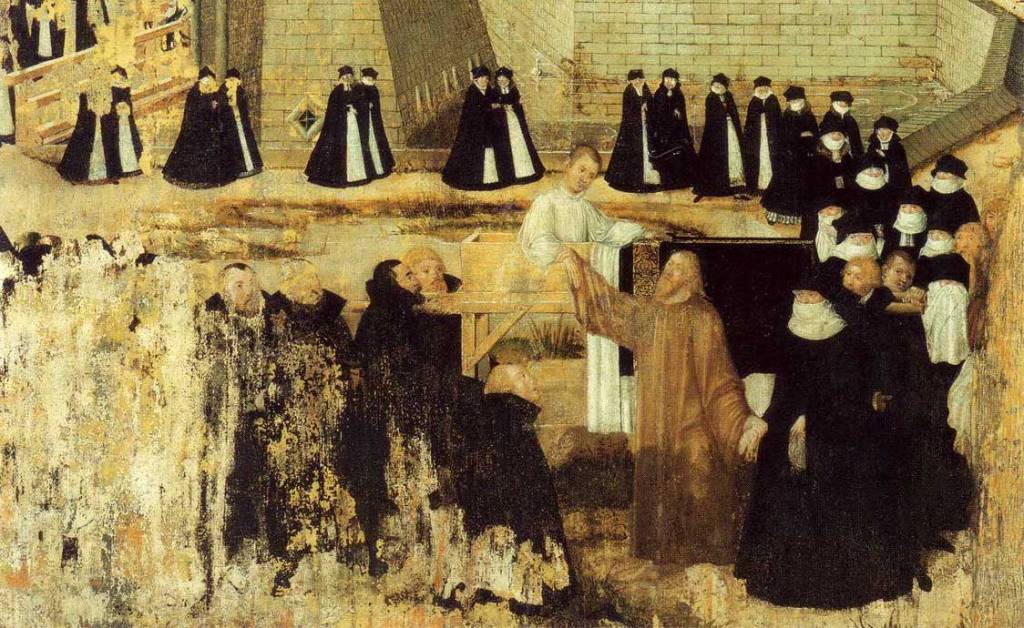
Detail of Raising of the son of the widow of Nain, attributed to Lucas Cranach the Younger (1515–1586). Part of the Epitaph for Franziskus Oldehorst in the Stadtkirche in Wittemberg, Germany. Oil on hardwood, after 1565, possibly 1573.
Three years ago I read in David Yearsley’s book about Anna Magdalena Bach that this 16th Sunday after Trinity was seen as “Widows Sunday” in Bach’s time. He bases this not only on the Bible reading for this Sunday, The raising of the son of the widow of Nain (Luke 7: 11-17), but especially on the texts of sermons from that time. Since chorale singing was an important comfort to widows, Yearsly thus concludes that is must be for this reason that chorales play such an important role in Bach’s cantatas for this Sunday.
I found this a compelling way of looking at especially Cantata 95 Christus der ist mein Leben and Cantata 161 Komm, du süsse Todesstunde. I wrote a blog post about it in 2020, which is still my most-read post ever. If you haven’t read it, please check it out here.
In another post, from 2017, I go into movie script mode again and imagine how parts of the moving Cantata 8Liebster Gott, wenn wird ich sterben might have been inspired by Telemann. Read that one here.
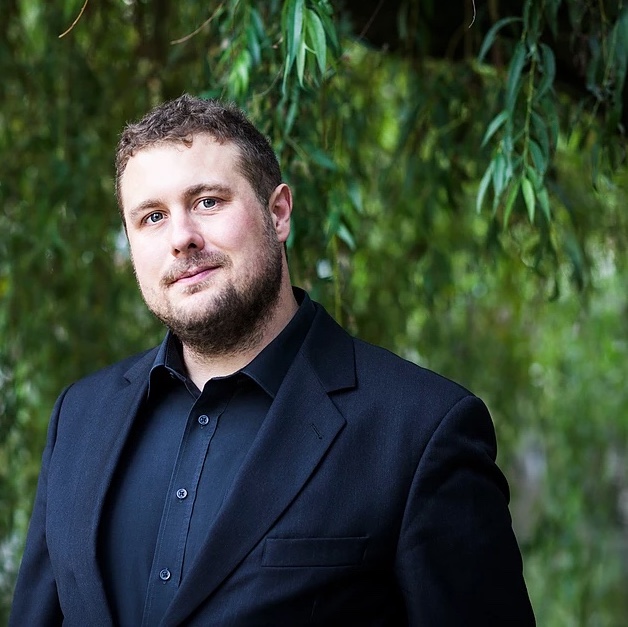
Philippe Herreweghe at the Bach Academy Bruges, photo by M.Hendrickx
On January 31, 2021, Philippe Herreweghe and his Collegium Vocale Gent performed three cantatas at the beautiful concert hall “De Singel” in Antwerp, Belgium. In my humble opinion, this was a very moving and inspired performance, and my hat is off to everyone on stage, that they were able to find this energy and inspiration in Bach’s music, in the texts, and in making music together, because they were performing without an audience. Please find the live video recording here on YouTube. Soloists are Dorothee Mields, soprano; Alex Potter, alto; Guy Cutting, tenor; and Peter Kooij, bass.
I provide a bit of a review and a bit of a listening guide here, with links to my blog posts from previous years about these three cantatas. I did not grow up with any of these cantatas, they weren’t part of the repertoire my mother played on the turntable at home. I learned about them in the process of doing research and writing for this blog (and through other people, in the case of Cantata 127).
Cantata 127 Herr Jesu Christ, wahr’ Mensch und Gott
This cantata, written for today, the last Sunday before Lent, is a great choice for the start of a concert, because it immediately grabs you and draws you in. I already hold a special place in my heart for this music because of the soprano aria (beautifully sung here by Dorothee Mields) being performed at my mother’s funeral service in The Hague in 2010. But even without that, the work is in my all-time top 10. And I am not alone: Bach biographer Spitta called it “perhaps the most important” cantata, and it received “the most beautiful” qualification by Arnold Schering as well as Ton Koopman.
The cantata is part of Bach’s 1724/1725 cycle of chorale cantatas, and compared to all previous compositions in that cycle, this opening chorus is the most complex and intricate. Click on the link at the end of this paragraph to read why. I love hearing Collegium Vocale sing this. Dorothee Mields and Peter Kooij are fabulous in their arias, and I enjoy hearing and watching tenor Guy Cutting sing. He’s a new star in the Herreweghe firmament. The soprano aria is of course stunning, but what about that bass aria? Whether a foreshadowing of the St. Matthew Passion or a dramatic end to the series of chorale cantatas, Bach had clearly made “studies” for it in his previous three cantatas of that year. Read all about it in my blog post from 2018.
Cantata 138 Warum betrübst du dich, mein Herz
I am so happy with the video recording from January 31, because it eliminates a dilemma for me. When I first wrote about this cantata (written for the 15th Sunday after Trinity in 1723), I wasn’t able to choose between Herreweghe’s recordings from 1992 and 2013, but I feel the video recording from this year is the clear winner! I love the inspired singing by all four soloists, but find Alex Potter’s singing in this cantata especially stunning. In his recitative (starting at 26:23), the combination of his understanding of the text and what he can do with his voice moves me deeply. So much that when the choir basses then follow with their beautiful entrance, I am close to tears. If you feel I’m getting too sentimental here, don’t worry. My blog post from 2016 is about completely different things: a European children’s animation, a possible, “movie script scenario,” explanation of the relatively simple text in this cantata, and Bach’s recycling of the bass aria.
Cantata 161 Komm, du süße Todesstunde
What a wonderful surprise that Herreweghe included this cantata (written for the 16th Sunday after Trinity but also for the Purification of Mary/Presentation of Jesus at the Temple, which was February 2) in this program. It is such a beautiful and moving composition. In my blog post from this past fall I could only describe how in 2019, when programming the All Souls program for the Netherlands Bach Society, Alex Potter had the brilliant idea to combine the recorders from the Weimar version of this cantata with the sung chorale Herzlich tut mich verlangen nach einem sel’gen End from the Leipzig version. What a delight to see that Herreweghe had adopted this exact idea for this performance in Antwerp, and that we can thus hear and see Alex Potter and Dorothee Mields perform this opening movement together. I love all the singing and playing in this cantata very much, but for me, the tenor aria can’t rival the magic of Shunske Sato accompanying Thomas Hobbs in those All Souls concerts by the Netherlands Bach Society in 2019 (as described here).
Resurrection of the Widow of Nain’s Son by Paolo Veronese. 1565-1570, oil on canvas. Kunsthistorisches Museum, Vienna, Austria.
This is an extended lesson, in several steps, but please bear with me, it’s worth it and you get to watch or listen to some excellent videos. Happy learning and listening!
This 16th Sunday after Trinity seems to be “chorale Sunday” for Bach. His cantatas for this Sunday (161, 95, 8, and 27) either contain a high number of chorales, or are centered around an important chorale. Read for example about the four (!) chorales in Cantata 95 Christus, der ist mein Leben from 1723 in this blog post. Already in 1716, in Weimar, Bach put great emphasis on the chorale in the first cantata he ever wrote for this Sunday, Cantata 161 Komm, du süße Todesstunde.
Why this stress on chorales? In his book about Anna Magdalena Bach, David Yearsley suggests it has something to do with widows. The Bible story for this Sunday is the Resurrection of the Widow of Nain’s son. Based on sermons from Bach’s time, Yearsley concludes that this 16th Sunday after Trinity was seen as some sort of National Widow Day, and wonders why no Bach scholar ever discusses this in relation to these cantatas. On page 207 of his book, he says: “Even by Bachian standards, this group of cantatas is dense with chorales, the singing of which was one crucial way for widows to make their lives bearable; melodies and texts buttressed single women’s emotional well-being and held off melancholy.”
The crucial role the chorale Herzlich tut mich verlangen nach einem sel’gen End (My heart is filled with longing to pass away in peace) plays in Cantata 161 Komm, du süße Todesstunde from 1716 brings me to Part II of my review of the All Souls production by the Netherlands Bach Society in the Fall of 2019, guest-directed by Alex Potter. (Part I is here). That program included the absolute best performance of Cantata 161 I have ever heard. Unfortunately, none of the performances were recorded.
Alex Potter. Photo by Annelies van der Vegt.
I will discuss two good alternatives for recordings later, but first I would like to introduce* Alex Potter with this video by the Netherlands Bach Society. In this video, Potter talks about the countertenor voice, and explains how he came to be a countertenor. It’s a lovely and very accessible interview. But for me, the best are the snippets of rehearsals for the All Souls program. It’s cold comfort for the absence of a complete All of Bach recording, but for a few seconds, you can see Potter perform the alto recitative from Cantata 161 with the superb band he had put together for this : the dramatic so schlage doch section around 1’38” and the start of the recitative around 7’12”. Other singers in this recording are Dorothee Mields, soprano; Thomas Hobbs, tenor; and Stephan McLeod, bass.
The chorale Herzlich tut mich verlangen nach einem sel’gen End features prominently in the opening movement of Cantata 161, is referred to in the tenor aria, and then comes back in the final movement. It was an important chorale for Bach, and he used it often. Watch this 3-minute explanation by organist Matthias Havinga on how earthly misery gets replaced by heavenly paradise in the chorale prelude (BWV 727) of the same name, also written in Weimar. **
Potter wanted to make absolutely sure that the Netherlands Bach Society audience members, who all have St. Matthew Passion running through their veins, would not hear this tune as O Haupt voll Blut und wunden:
“It is NOT ‘O Haupt’ – indeed in hymnals from the time, ‘O Haupt’ is often listed to be sung to the melody of ‘Herzlich tut mich verlangen’,” he explained a few days after the concerts, when I had written him to ask about some of his choices.
By the time Bach repeated this cantata in Leipzig, probably sometime in the late 1720s or in the 1730s, O Haupt voll Blut und Wunden had become much better known, and Bach might have had a similar concern as Alex Potter had in 2019: he wanted to make sure the congregation would have the correct chorale, and thus the correct message in mind.
In the original Weimar version from 1716, the chorale melody in the opening chorus was played, without words, on the organ. Listeners would have heard the words in their heads. For a wonderful example of this version, listen to Herreweghe’s recording here on YouTube, or here on Spotify. Soloists on this recording are Matthew White, countertenor, and Hans Jörg Mammel, tenor.
Bach’s later Leipzig solution: He replaced the organ part with a soprano part, using the first verse of Herzlich tut mich verlangen. For an example of this version, with all sopranos singing the chorale, watch the live performance by the J.S. Bach Foundation here on YouTube. Please note another typical Leipzig change here: recorders were replaced by the more fashionable transverse flutes. Soloists in this recording are Alex Potter, countertenor, and Daniel Johanssen, tenor.
It makes that you hear these two texts at the same time, which is very special:
Komm, du süße Todesstunde, Da mein Geist Honig speist Aus des Löwen Munde; Mache meinen Abschied süße, Säume nicht, Letztes Licht, Dass ich meinen Heiland küsse.
Come, sweet hour of death, when my spirit feeds on honey from the lion’s mouth; make my departure sweet, do not delay, last light so that I may kiss my saviour.
Alto Aria
Herzlich tut mich verlangen nach einem sel’gen End; weil ich hie bin umfangen mit Trübsal und Elend. Ich hab Lust abzuscheiden von dieser argen Welt; sehn mich noch ew’gen Freuden: o Jesu, komm nur bald.
My heart is filled with longing To pass away in peace; For woes are round me thronging, And trials will not cease. O fain would I be hasting From thee, dark world of gloom, To gladness everlasting; O Jesus, quickly come!
Soprano chorale
Alex Potter’s 2019 solution: Use the soprano part from the Leipzig version, sung solo by the incomparable Dorothee Mields, but keep the recorders from the Weimar version.
A pragmatic solution, as Potter explained partly in the program book: recorder player Benny Aghassi was available; partly in his message to me: “I think that for a modern audience having the voice cut through a bit more makes it clearer – also with the text. I also think that any opportunity to hear more Dorothee Mields is worth it, and I got to sing with her as an added bonus.”
It turned out to be a brilliant one. If you have ever watched and heard Dorothee Mields and Alex Potter sing a duet, you know that that is pure heaven. I also truly prefer the somewhat more penetrating sound of recorders over the sweet tones of the flutes in all the movements of this cantata that they appear in (alto aria, alto recitative, chorus, and closing chorale), but especially in the illustration of the death bells in the text “so schlage doch, du letzter Stundenschlag!” (therefore sound, stroke of the last hour!)***
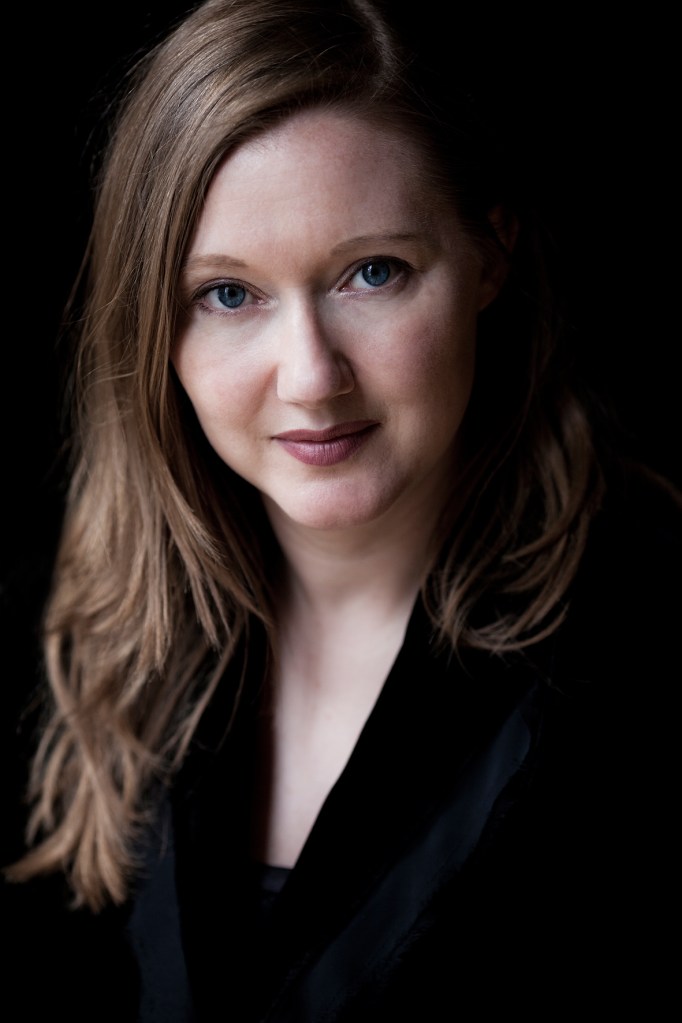
Dorothee Mields
And, in those concerts in the Netherlands in 2019, we got to hear even more Dorothee Mields. In an extra effort to set the audience up with the correct chorale, Alex Potter had her sing Johann Hermann Schein’s setting of Herzlich tut mich verlangen right before the cantata started. Especially in the Nieuwe Kerk in The Hague on Sunday November 3 this was an event: She stood in a very humble location behind the stage, almost tucked into a corner next to the stairs leading up to the pulpit, hidden from view for probably half the audience. Then, during the instrumental introduction to the Bach cantata, she very slowly climbed the stairs to the pulpit, and then sang the chorale from there during the opening aria. It was as Bach intended: to die for.
I mentioned before that Herzlich tut mich verlangen is also referenced in the tenor aria. It is not just with the word “Verlangen” in the text, but also with the “figura suspirans” (or longing in the music, as explained in the organ video of Matthias Havinga mentioned above) that is present here too, in the tenor part as well in the violin part. The effect Shunske Sato’s longing style of playing had on Thomas Hobbs’ singing in this aria was out of this world. Thomas Hobbs really needs a shout-out for his role in this All Souls production, even though I’m writing this so long after the fact. I’ve seen him several times in concerts with Herreweghe, and his stage presence has always been an inspiration to me, but I was especially impressed by his singing in these performances. The way he sang the sentence “Der blasse Tod ist meine Morgenröte” in the tenor recitative of Cantata 161 was unrivaled. And in the first half of the program, Hobbs and his laser-beam long notes were the star of Rosenmüller’s Dies Irae and the Gregorian Requiem that preceded it.
Alex Potter receiving applause in Naarden, October 31, 2019. To Potter’s right: tenor Thomas Hobbs, recorder player Benny Aghassi, and soprano Dorothee Mields. Photo by Hans van der Woerd, courtesy of The Netherlands Bach Society.
Wieneke Gorter, September 26, 2020, updated September 22, 2023
* Since I first heard Alex Potter live in 2018, I have written many posts about his extraordinary interpretations of Bach’s music. You can find most of them by typing Alex Potter into the search bar at the top of this post. The top three, in my humble opinion, are here, here, and here.
** Find the video of the entire organ prelude (BWV 727) here.
***Bach illustrates death bells in instrumentation, often using flutes, but sometimes only pizzicato strings, in cantatas 73, 8, 95, 105, 127, and 198.
The Rote Schloss (Red Palace) of Duke Ernst August in Weimar, where Bach and Telemann probably first met, while Telemann was working in Eisenach and Bach was working in Weimar
This is a double post: for today, and also for last Sunday. But before I discuss Cantata 99 Was Gott tut das ist wohlgetan (Trinity 15, Sept 17, 1724) and Cantata 8 Liebster Gott, wenn wird ich sterben (Trinity 16, Sept 24, 1724), I would like to introduce you to a Telemann cantata: Du Daniel gehe hin.
Telemann’s beautiful cantata is not widely known today, but must have been rather famous among Telemann’s colleagues in the first half of the 18th century. The Kantor of the St. Nicholas Church in Berlin performed it in 1757, and I just realized this week that it must have been on Bach’s mind in 1724. While Bach and Telemann worked in the same region only from about 1708 to 1712, they were good friends, and it is generally assumed that they would have seen each other in Hamburg and Köthen a few times in the early 1720s.
I don’t know whether Bach’s “Ruht wohl, ihr heiligen Gebeine” closing chorus of the St. John Passion had anything to do with Telemann’s “Schlaft wohl, ihr seligen Gebeine” closing chorus in Du Daniel gehe hin, but it does look to me as if Bach borrowed the music of the soprano aria from Du Daniel gehe hin for the duet of Cantata 99. If that is indeed what happened, then it seems very likely that, one week later, Bach was inspired by Telemann’s use of pizzicato strings as “funeral bells” in Du Daniel gehe hin when writing the opening chorus and tenor aria of Cantata 8.
For Cantata 99 Was Gott tut das ist wohlgetan I prefer the live video registration by the Netherlands Bach Society. Watch this recording on YouTube. Soloists are Gerlinde Sämann, soprano; Damien Guillon, alto; Charles Daniels, tenor; Peter Kooij, bass.
Find the text and translation of Cantata 99 here, and the score here.
For Cantata 8 Liebster Gott, wenn wird ich sterben there is no other choice than Herreweghe. Soloists are Deborah York, soprano; Ingeborg Danz, alto; Mark Padmore, tenor; Peter Kooij, bass. This is definitely in my top five cantata recordings ever because of the combination of Bach’s music and Herreweghe’s interpretation. Listen to the incredibly beautiful oboe playing at the start of the tenor aria, and the horn in the opening and closing chorus. Peter Kooij does a fabulous job in the bass aria, which is so difficult it is on par with bass arias from the Christmas Oratorio and the end of the Trinity season of 1723. I wonder if Bach had an exceptional bass visiting for Michaelmas that year (Sept 29, for which he wrote this dramatic bass aria about the Archangel Michael slaying the dragon*).
Find the text and translation of Cantata 8 here, and the score here.
A striking element in both Cantatas 99 and 8 is Bach’s use of the flute. In cantata 99 Bach uses the instrument in two solo movements, the tenor aria as well as the soprano-alto duet. There could be a simple reason for this unusual choice: showing off his flute player (read more about him in this post). However, it is more likely that Bach wanted to point out the references to the cross in the text of both these movements, and what better instrument to bring out those harrowing chromatic lines than the flute? Using the flute to reinforce the image of the cross makes even more sense when you see what Bach does in the opening chorus of cantata 8. If you believe that his use of staccato flutes in the “Crucifixus” of the Mass in B Minor serves as image of hammering nails into the cross, then it is pretty clear what Bach’s hidden message is here.
Wieneke Gorter, October 1, 2017, links updated September 22, 2023.
*St. Michael’s Fair was a huge event in Leipzig, drawing visitors from as far as England and Poland, increasing the city’s population to 30,000. Read more about musicians visiting for this feast in my post about cantata 148, written for this same Sunday in 1723 or 1725.
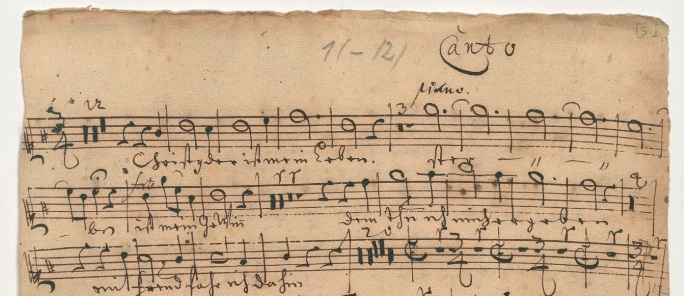
The soprano part of cantata 95 Christus, der ist mein Leben. Staatsbibliothek zu Berlin – Preußischer Kulturbesitz
After all his experimenting with the form of the cantata last week, Bach keeps exploring how he can build a cantata based on chorale melodies and chorale texts. As a result, this week’s cantata 95 Christus, der ist mein Leben again takes a unique place in Bach’s cantata collection: it features no less than four different chorales, all part of the Sterbe-lieder (Deathbed songs) that were very popular in Leipzig at the time: Christus, der ist mein Leben; Mit Fried und Freud, ich fahr dahin; Valet will ich dir geben; and Weil du vom Tod erstanden bist.
I recommend Herreweghe’s recording of this cantata. Listen to this recording on YouTube, or on Spotify. Support the artists and purchase this recording on Amazon. (Or find them in the Amazon stores for Germany and France)
Soloists: soprano Dorothee Mields, counter-tenor Matthew White, tenor Hans Jörg Mammel, bass Thomas E. Bauer. Choir sopranos: Dorothee Mields, Hana Blazikova, Dominique Verkinderen.
In the manuscript of the soprano part pictured above, it is interesting to note the dynamic markings for the text “Sterben ist mein Gewinn.” Dynamics are not very common in Bach manuscripts, but, as Alfred Dürr points out, Leipzig had a strong tradition of singing softly and slowly on the word “Sterben,” and singing loudly on “ist mein Gewinn,” going back at least to 1629. In that year, then Thomaskantor Johann Hermann Schein wrote this note for his singers:
“da singen sie adagio mit einem sehr langsamen Tactu, weiln in solchen versiculis verba emphatica enthalten” (here you should sing adagio in a very slow tempo, because verses like these contain emphatic words)
How Herreweghe’s sopranos sing this Sterben ist mein Gewinn in the first chorale takes my breath away, and this is the most important reason why I prefer this recording. Having grown accustomed to the boy choirs of the Leonhardt and Harnoncourt recordings in the 1970s, my parents, sister, and I were blown away by Herreweghe’s Collegium Vocale Gent when their first CDs started coming out in the late 1980s and early 1990s.
My mother was especially taken by the sound and blend of the sopranos, and “Herreweghe sopranos” became a household term in our family. After attending a performance by a different group, we would often say to each other: “it was nice, but they are not Herreweghe sopranos….,” and sigh a little.
This cantata is all about longing for life after death, and over the course of the cantata these statements are made: I will be happy to die (opening movement), because life on earth is worthless (soprano recitative). Saying goodbye to that will be freeing (soprano chorale), so please can I die as soon as possible (tenor recitative and aria), because death is only a sleep (bass recitative) from which I will wake up to join Jesus, who has gone before me (closing chorale).
The outstanding tenor aria features Bach’s signature “death bells” in the pizzicato strings. Bach uses these “Leichenglocken” also in cantatas 73, 8, 105, 127, 161, and 198. For an alternative recording of this movement, with gorgeous singing by Mark Padmore, listen to the Gardiner recording on Spotify.
The concept of death being only a short period of sleep after which the dying person wakes up to meet Jesus in the afterlife was an extremely important part of 18th-century Lutheran faith. When dealing with death on a daily basis, it was comforting to believe that death would ultimately lead to paradise. And by stressing this concept, Bach also refers to the Gospel for this 16th Sunday after Trinity. It is the story of the miracle at Nain: a young man who has died is carried out of the city and then woken up by Jesus.
Wieneke Gorter, September 11, 2016, updated October 7, 2025





 Weekly Cantata