Weekly Cantata

Weekly Cantata

Author Archives: cantatasonmymind

Playing with fugues & Bach’s harpsichord at Köthen

24 Thursday Aug 2023

Posted by cantatasonmymind in 1723 Trinity season special series, Bach's life, Cantatas, Köthen, Leipzig, Trinity

≈ Leave a comment

Tags

Berlin, BWV 179, BWV 872, Charlottenburg Castle, Christine Schornsheim, Eduard van Hengel, fugue, harpsichord, Köthen, Leipzig, Michael Mietke, Netherlands Bach Society, Richard Atkinson, Trinity 11, Well Tempered Clavier

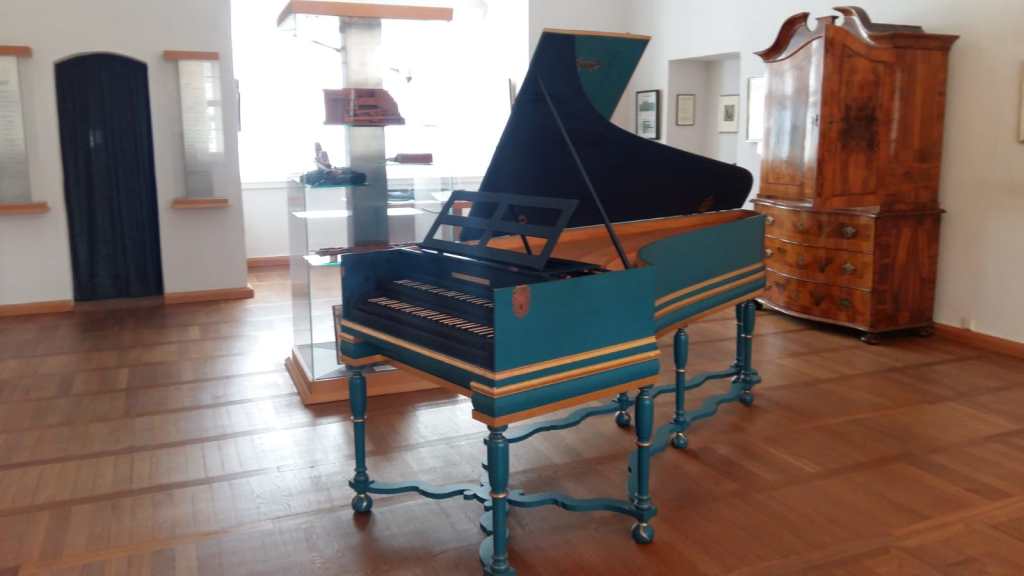
“The White Mietke,” a single manual* harpsichord built by Michael Mietke in Berlin, circa 1700. Lacquer artist: Gérard Dagly. Charlottenburg Castle, Berlin, Germany. In his last four years in Köthen, Bach played on a double manual harpsichord by the same builder, built especially for him in 1719.

This past Sunday was the 11th Sunday after Trinity, for which Bach wrote Cantata 179 Siehe zu, daß deine Gottesfurcht nicht Heuchelei sei (See that your fear of God is not hypocrisy) in 1723 in Leipzig. 

Much has been written about the stunning fugue in the opening chorus of this cantata, and I happily refer you to my posts from 2016 and 2020 for more information and a link to my favorite recording. But last week I learned something completely new about this opening chorus, thanks to yet another fabulous video series that saw the light during the pandemic: Richard Atkinson’s Bach Analyses. Since I’m a visual learner, I truly love watching videos like these. At first I merely started watching Richard’s video on the opening chorus of Cantata 179 to see if it would perhaps make the complex structure of the composition a bit easier to understand than Eduard van Hengel’s written explanation I had discussed in 2016.

And indeed it really helped me understand the music better! But what’s more, in that video Richard points out that the fugue from Cantata 179 shares some unusual composition techniques as well as themes with another mind boggling fugue by Bach, namely that of his Prelude and fugue no. 3 in C-sharp major (BWV 872) from the Well Tempered Clavier, Book II. As far as I know, no other Bach scholar or commentator ever mentioned this. Listen to that fugue here, played by Christine Schornsheim. We don’t know when exactly Bach wrote the keyboard piece, because we only have the publication date of the collection in which it appeared (Well Tempered Clavier Book II, 1740). It is possible that the cantata came first, but it is just as likely that Bach would have written the keyboard work before the cantata, while still employed at Köthen.   

Thinking of Bach playing with fugues on the harpsichord in Köthen brings me to another bit about Bach’s life I learned last week, while watching the interview with Christine Schornsheim by the Netherlands Bach Society (with good English subtitles): that we actually know what kind of harpsichord Bach played in Köthen, from 1719 to 1723. To be clear: most harpsichord players and all harpsichord builders already know this, but I didn’t, and I thought it worth mentioning here.

Historical records show that the Prince of Köthen allowed Bach to order a harpsichord from the famous builder Michael Mietke in Berlin sometime in 1718, and got to pick it up in March 1719.

On March 1, 1719, the accounts read: “To the Capellmeister Bach for the Berlin-made harpsichord and travel expenses 130 Thaler”. On March 14, Gottschalk, the chamber servant, also received eight thalers in “wages for transporting the Berlin harpsichord.”

The instrument remained in the princely music chamber; Bach did not get to take it with him when he moved  to Leipzig in May 1723. In 1784, the instrument is still mentioned: “The large harpsichord or grand piano with 2 manuals, by Michael Mietke in Berlin, 1719, defect.”

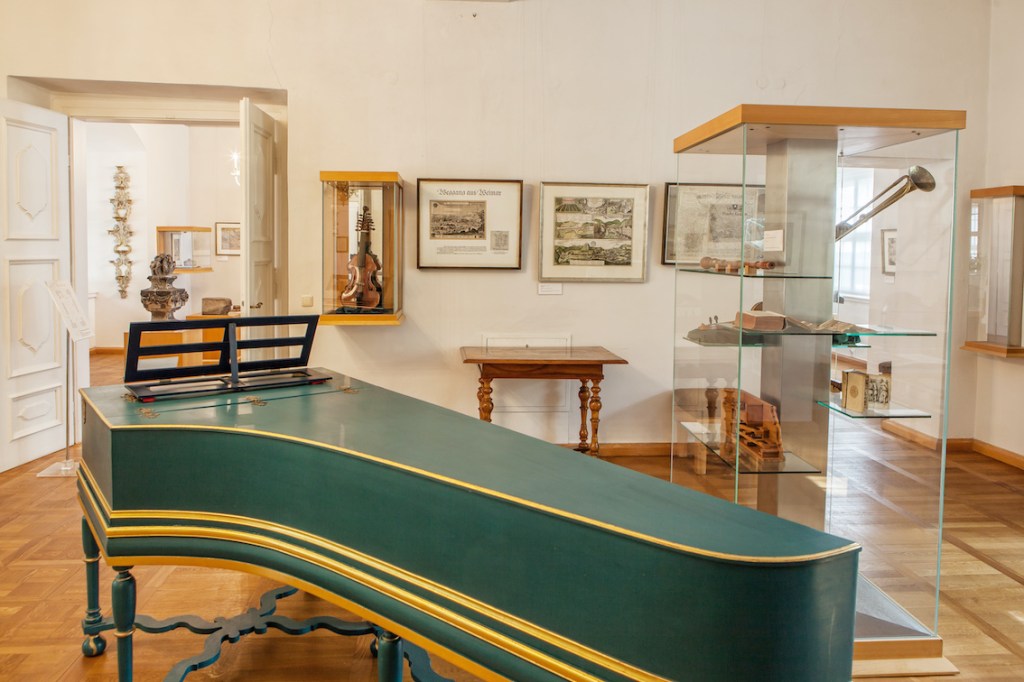
Many harpsichord builders have created copies of Bach’s “Mietke harpsichord.” In the video registration of the Prelude and fugue no. 3 in C-sharp major (BWV 872), Christine Schornsheim plays a terrific copy by Bruce Kennedy. The Köthen Castle had a copy made in 1992 by Martin-Christian Schmidt, pictured here: 
For the picture at the top of this blog post I chose one of the very few original Mietke harpsichords that have survived to this day, the “White Mietke” at the Charlottenburg Castle in Berlin. It was built almost two decades earlier than Bach’s harpsichord, it only has one single keyboard, and it was decorated by the court painter at Charlottenburg. 

Wieneke Gorter, August 23, 2023. 

*manual = keyboard

About Weekly Cantata

I am a bilingual writer, publicist, choral singer, art and nature lover, happy wife, and blessed mother of two. I started this blog in 2016, inspired by my late mother’s love for Bach’s cantatas. After 23 years in the San Francisco Bay Area, I’m now back in the Netherlands.

If you are on social media, please follow me:

  • Facebook
  • Instagram

Please subscribe!

Please join my readers from all over the world and subscribe to this blog! Simply fill in your email address and you’ll receive an email every time I’ve published a new post. Thank you so much / Vielen Dank / Merci mille fois / 감사합니다 / 谢谢 / ありがとう / Mille grazie / Muchas gracias / Muito obrigado / Takk / Terima kasih / Dankuwel!

Designed with WordPress.com

Bach’s version of Jeremiah’s Lament

11 Friday Aug 2023

Posted by cantatasonmymind in 1723 Trinity season special series, Bach's life, Cantatas, Leipzig, Trinity

≈ Leave a comment

Tags

Dresden, J.S. Bach Foundation, Jan Dismas Zelenka, Karl Graf, Philippe Herreweghe, Rudolf Lutz, Trinity 10, Zelenka

Jeremiah Lamenting the Destruction of Jerusalem by Rembrandt van Rijn, 1630. Oil on panel. Rijksmuseum, Amsterdam, The Netherlands. Click here for more information about this painting.

Continuing with Bach’s 1723 cantata cycle, next up is Cantata 46 Schauet doch und sehet, ob irgend ein Schmerz sei, written for the 10th Sunday after Trinity (August 1st in 1723). 

My favorite recording of this cantata is still the one by Herreweghe from 2012, which you can find here on YouTube via a playlist I created. However if you’d like to see all the special instruments in action, I highly recommend the J.S. Bach Foundation’s live video registration, with a tromba da tirarsi (slide trumpet) and recorders* in the opening chorus, a Baroque trumpet in the bass aria, and an oboe da caccia (hunting oboe, also new for Bach in Leipzig) as well as the recorders in the alto aria.

Please find the text here, and the score here.

Scholars agree that last week’s Cantata 105 and this week’s Cantata 46 Schauet doch und sehet, ob irgend ein Schmerz sei, can be seen as a pair within Bach’s works from that first summer in Leipzig. Here’s why: 

  1. The stunning opening choruses of these two cantatas are both written as if they were a Prelude and Fugue for organ. Bach would later use the Prelude part of Cantata 46’s opening chorus as the Qui tollis for his Mass in B Minor.
  2. Both cantatas contain a “floating aria.” With this I mean an aria without the usual fundament of a basso continuo (organ or harpsichord and cello), of which Bach’s most famous exemple is the Aus Liebe aria from his St. Matthew Passion. Bach included such an aria for the first time in last week’s Cantata 105 (the soprano aria Wir zittern und wanken) and one appears again in this week’s Cantata 46 (the alto aria Doch Jesus will auch bei der Strafe).
  3. Bach uses a da tirarsi brass instrument in both: a corno da tirarsi in 105 and a tromba da tirarsi in 46 (read last week’s post for more information about these).

I have written about some of these aspects of Cantata 46 before, but I never really paid much attention to the text. I needed Karl Graf, the theologian participating in the lecture about this cantata by the J.S. Bach Foundation**, to point out that the text of this cantata refers to two destructions of Jerusalem, in 586 BC by the Babylonians, and in 70 AD by the Romans. 

Jeremiah the Prophet laments the 586 BC massacre in his Lamentations of Jermiah, a collection of poetry from the Old Testament, from which Bach’s librettist takes the words for the opening chorus.

Jesus predicts the destruction by the Romans in 70 AD, and weeps about it, in Luke 19: 41-48, which was the official reading for this 10th Sunday after Trinity in Bach’s church. Bach and his librettist mix the two parts of the Bible, because in their minds it is all the same, history unfortunately repeats itself. The bass aria paints one of the most dramatic pictures ever in a Bach cantata, and the text of the alto recitative warns that Leipzig could be next! Fortunately, as usual in a Bach cantata, there’s the promise of salvation, and a lightening of the mood in the music as well, this time in the form of the pastoral alto aria.

Throughout the Renaissance and Baroque, Catholic and Anglican composers have set the Lamentations of Jeremiah to music for the Tenebrae services of Holy Week. A notable example are those by Jan Dismas Zelenka, Bach’s colleague at the Catholic court in nearby Dresden. Zelenka wrote his Lamentations of Jeremiah the Prophet for Holy Week in 1722, so roughly 1,5 years before Bach wrote his Cantata 46. While Bach and Zelenka knew each other and Bach had friends in the Dresden court orchestra, I truly don’t know if Bach was aware of Zelenka’s setting of the Lamentations prior to August 1st 1723. There are some interesting similarities between the compositions, for example Zelenka also opting for a pastoral scene towards the end, but that’s food for another blog post! For now I just like to think that Bach wrote his own Lutheran version of the Lamentations with this Cantata 46. 

Wieneke Gorter, August 11, 2023.

*It is the first time Bach uses recorders in Leipzig, but it is an instrument he often uses to portray sorrow.

**If you understand German or don’t mind automatically generated subtitles on YouTube, you can watch the extremely informative lecture about Cantata 46 here. It doesn’t just feature Rudolf Lutz and Karl Graf, but also Bach Scholar Michael Maul from the Bach-Archiv Leipzig.

Leipzig for Bach = finally getting to work with the legendary Reiche and his crazy instruments

06 Sunday Aug 2023

Posted by cantatasonmymind in 1723 Trinity season special series, Bach's life, Cantatas, Leipzig, Trinity

≈ 2 Comments

Tags

Anneke Scott, Bachstiftung, BWV 105, BWV 24, California Bach Society, Caspar Wilcke, corno da tirarsi, Egger, Gottfried Reiche, J.S. Bach Foundation, Olivier Picon, Rudolf Lutz, Stadtpfeiffer, Todd Williams, Trinity 4, Trinity 8, Trinity 9

Olivier Picon with a natural horn on the left, and corno da tirarsi on the right

I’m in movie script mode again and jumping back 300 years, to the summer of 1723 in Leipzig. I believe that when moving to Leipzig, Bach couldn’t wait to meet the town’s famous brass player, Gottfried Reiche (1667-1734). I imagine that throughout the summer of 1723, these two creative geniuses would have frequently been “geeking out” about Reiche’s exciting innovation in brass instruments: the corno da tirarsi (or slide horn, on the right in the picture above), for which Bach most probably started writing around Trinity 4 in 1723 (about a month before today’s cantata).

As far as we know Reiche owned the one and only specimen and was the only one who knew how to play it. Scholars consider it very likely that he had the instrument specially made for him, in order to play more complicated music on a horn than one could at the time on a natural horn. 

I have written about the corno da tirarsi before. However, I never fully realized how incredibly special that instrument must have been at the time, what the exact difference was with regular horns at the time, and how it works. Ironically, as a result of musicians being stuck at home during the pandemic, there are now some excellent educational videos on youtube, which explain all of this much better than I could ever do in writing.

So here goes with the lesson:

For an excellent demonstration of the limitations of natural horns before 1750, please watch the first three and a half minutes of this video by Todd Wiliams from the USA.

Then watch this video by Anneke Scott from the UK, about the corno da tirarsi as reconstructed by Egger.

Thank you Todd Williams and Anneke Scott! If you would like to show your appreciation for Anneke’s efforts, you can buy her a coffee on this website. 

Gottfried Reiche

There is no doubt in my mind that Bach had already heard about Leipzig’s highly skilled senior Stadtpfeiffer (town piper) Gottfried Reiche before moving to Leipzig in May of 1723. Bach came from a family of town pipers, and in 1721 he married into a family of which every male member was a trumpet player (just sit with that for a few seconds). Reiche was of the same generation as Bach’s father-in-law Johann Caspar Wilcke (c. 1660–1733), and both had been trained in Weissenfels, which Olivier Picon qualifies as “probably the most important city in trumpet playing tradition in Germany at that time” in his 2010 thesis about the corno da tirarsi. I can imagine the animated discussions at both the Bach and the Wilcke family gatherings. Reiche’s virtuosity as well as his unusual instruments* must have been a frequent subject!

Now we come to today’s Cantata 105 Herr, gehe nicht ins Gericht mit deinem Knecht. (Enter not into judgement with Thy servant, O Lord.) It is one of my favorite cantatas, and Bach’s first** Leipzig cantata with a significant solo part for the corno da tirarsi, in the tenor aria. For the educational purpose of this blog as well as for the excellent rendition of the tenor aria I would like to feature the live video by the J.S. Bach Foundation, with Olivier Picon (pictured at the top of this post) playing the corno da tirarsi in the opening chorus, the tenor aria, and the closing chorale. Other soloists are Sibylla Rubens, soprano; Jan Börner, alto; Bernhard Berchtold, tenor; and Tobias Wicky, bass.

Picon initiated the reconstruction of the corno da tirarsi by the Swiss brass instrument firm Egger, which Anneke Scott also refers to in her video. Picon’s thesis from 2010, documenting the reconstruction as well as meticulously analyzing all cantatas that might have possibly been written for this instrument, is still the main source for scholars when discussing the corno da tirarsi. In this work, Picon also shares that Cantata 105 is his favorite cantata to play on the instrument.

Read the German text with English translations of Cantata 105 here, and find the score here.

Of course there’s much more to this cantata than just the unusual instrumentation. In 2021, also as part of a pandemic project, I wrote a post for California Bach Society highlighting all the ways in which this cantata foreshadows the St. Matthew Passion. Please find that post here.  

I welcome your questions, comments, or words of encouragement below in the comment-section. 

Wieneke Gorter, August 6, 2023.

*Reiche apparently was also the owner and player of another unique instrument, the tromba da tirarsi, or slide trumpet.
**Cantata 24 for the 4th Sunday after Trinity 1723 also features a solo part that might have been meant for the instrument, but opinions about this vary, and even Picon suggests the opening chorus might be played on a tromba da tirarsi (slide trumpet) and the closing chorale on a natural horn.

First Two Days in Bach Land

18 Monday Apr 2022

Posted by cantatasonmymind in Cantatas

≈ 1 Comment

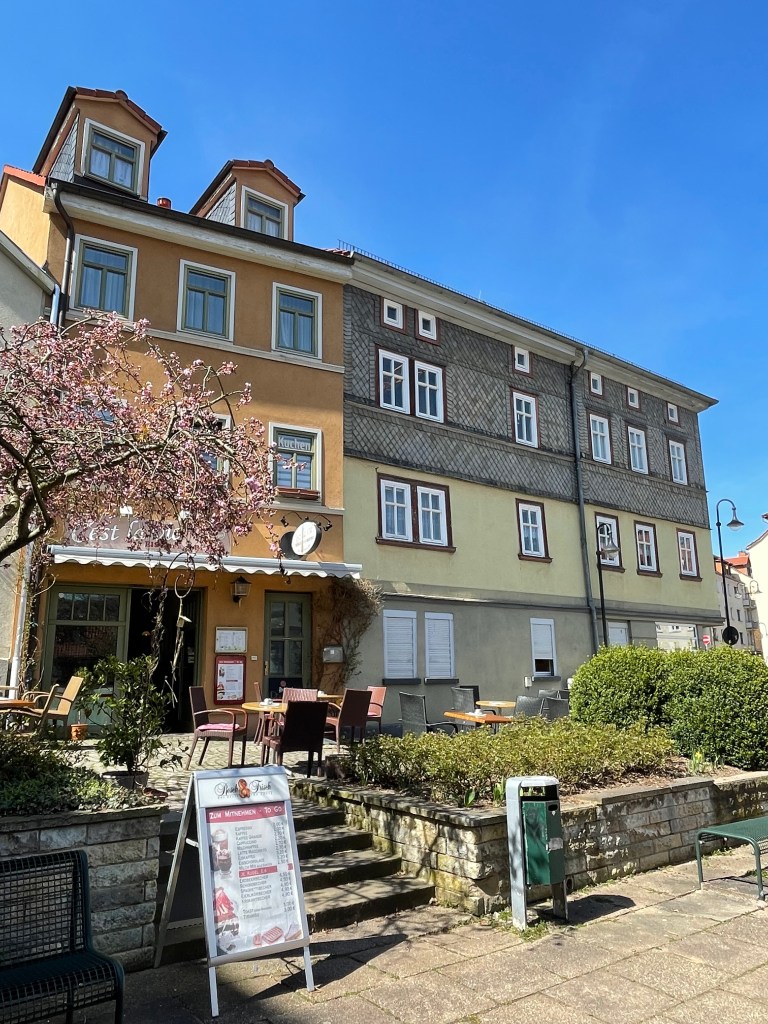
Nice cafés are everywhere, including this one around the corner of the Bach House in Eisenach
Pretty Mühlhausen

Since I arrived in Arnstadt yesterday (Easter Sunday) around 5 pm, I have had so many experiences and met so many people that I cannot believe it’s only been 30 hours. Tonight I am exhausted from all the driving and the busy program I made for myself, but everything has been going splendidly, see the highlights here below.

Follow me on Instagram @weeklycantata to see some more photos and videos in my highlight “Bach Travels.”

Highlights

I got to hear Elina Albach’s adaptation of Bach’s Mass in B Minor for six singers, seven instrumentalists, and one narrator on Sunday evening in Arnstadt. It was inspiring, captivating, and just simply fabulous.

Elina Albach

I cannot quite believe it yet that I actually got to attend concerts in two of the churches where Bach used to work, in Arnstadt and Mühlhausen.

I loved visiting the Bach House in Eisenach. From attending an excellent presentation of all the keyboard instruments in the instrument room, to seeing the books Bach had in his library, to meeting the museum’s generous director and discussing plans for next year with him, it was all better than I had expected.

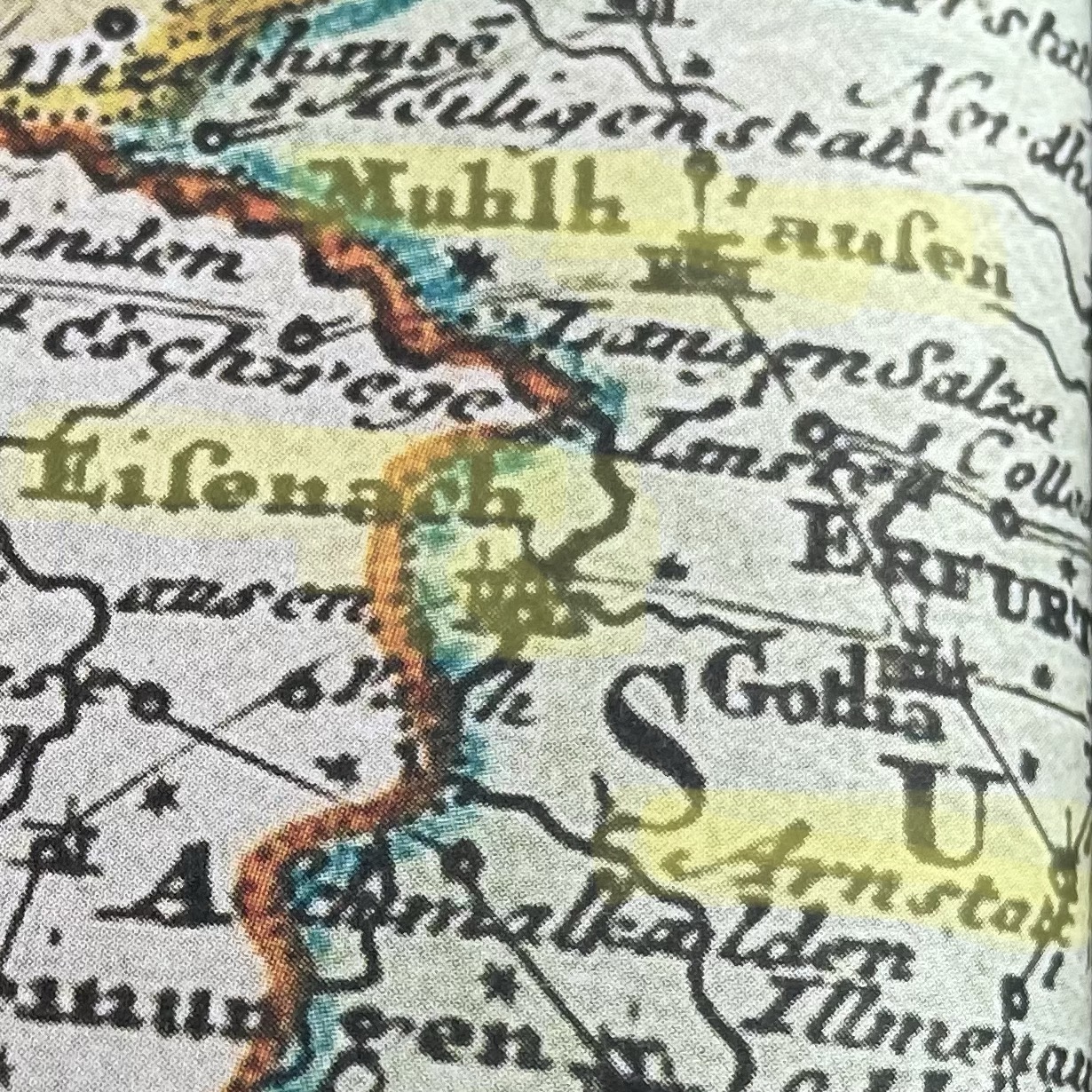
I was pleasantly surprised by the beautiful and varied landscape in this region. Between Arnstadt and Eisenach there are hilltops that seem to pop out of the otherwise much flatter landscape, and many have fortresses on them. The route from Eisenach to Mühlhausen is extremely scenic, with beautiful rolling hills, meadows, forests, a river, and truly picturesque towns. Driving here is easy because it’s not busy on the roads.

Random fun fact: the number of Bach merchandise items (including those made out of chocolate!) one can buy at the Bachhaus in Eisenach is mind boggling. If you follow @weeklycantata on Instagram, keep an eye on my stories and highlights — I will post all the chocolate there in the next few days!

Thanks for following along!

Wieneke Gorter, April 19, 2022.

Traveling to the Bach Towns

17 Sunday Apr 2022

Posted by cantatasonmymind in Cantatas

≈ 1 Comment

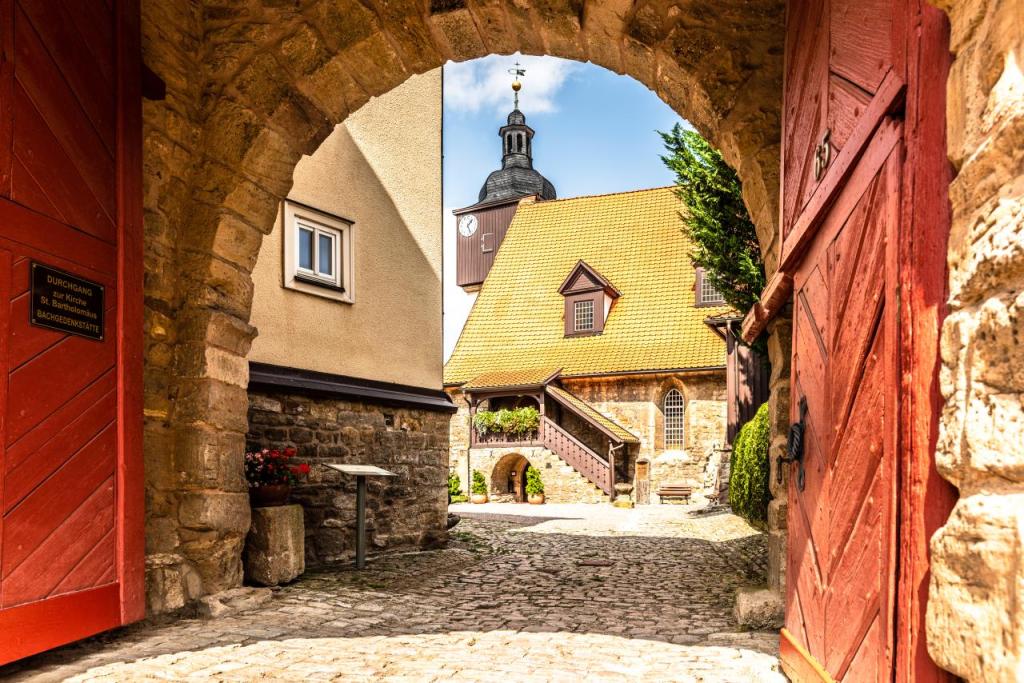
The Church in Dornheim where Johann Sebastian and his second cousin Maria Barbara were married in 1707, about a 2.5 mile (4 km) walk from Arnstadt.

Happy Easter!

These are exciting times for me. I just finished participating in a typical Dutch thing to do this time of year: I sang Bach’s St. Matthew Passion as a choir member. I was lucky to get into a choir of lovely people, work with an amazing conductor and make some new friends, and even come out of it with an engagement for a different choral singing project that will take me to for the first time in my life Leipzig in June (update from 2026: I ended up not being able to go at that time because of a concussion, but I made up for it in 2024 and 2025).

But, Leipzig is the town of the last part of Bach’s life, and I have always wanted to see the towns where he spent his youth first. So today I’m on my way to Thuringia, the region where Bach spent the first 32 years of his life.

Reading materials to prepare for this trip

The next four days are going to be packed with concerts of the Thüringer Bachwochen (a fantastic festival of several weeks with performances in historic Bach churches) a visit to Bach’s birth place Eisenach, and a tour of the Bach locations in Weimar.

Today: driving from Frankffurt to Arnstadt
Next two days: visiting Arnstadt, Eisenach, and Mühlhausen

Today we drive from Frankfurt to Arnstadt, where we attend a concert in the church where Bach held his first position as organist. In his time it was called the “Neue Kirche” (New Church), but it was renamed in the 1980s, and is now the Johann Sebastian Bach Church.

Wieneke Gorter, April 17, 2022, updated June 19, 2025

Memorable for at least 47 days. Leave it to Alex Potter.

26 Saturday Feb 2022

Posted by cantatasonmymind in Cantatas

≈ Leave a comment

Today is the last Sunday before Lent. In Leipzig, this meant Bach would get a break from the weekly cantata composing to work on (revisions of) his Passions, and rehearse those works with the choir. His audience (= congregations of the St. Thomas Church and the Nicholas Church) wouldn’t get to hear any of his music until Good Friday. Today is also the day on which, if I were Wonder Woman, I would have gone to hear Alex Potter sing in Hannover, Germany. If any of my readers live easy travel distance from there, go hear him sing with the excellent La Festa Musicale in a beautiful program of solo works by three Antonios: Vivaldi, Caldara, and Lotti. More information: https://www.lafestamusicale.de/en/concerts/upcoming-concerts.
So, what better day to repost my blog post from 2020 about Alex Potter singing Cantata 159. The post also includes links to the three other cantatas Bach wrote for this Sunday.

Wieneke Gorter, February 27, 2022.

Weekly Cantata

Between Estomihi Sunday (or the last Sunday before Lent) and Good Friday, there were 47 days in 1729. During that entire time the Leipzig congregations would hear no music in the churches, except for chorales. So Bach’s last music had to be as memorable as possible, had to give them hope, and ideally also prepare them for the St. Matthew Passion they would get to hear on Good Friday.

Bach successfully checked all these boxes with Cantata 159 Sehet! wir gehn hinauf gen Jerusalem. And leave it to alto Alex Potter to bring all this out in a performance. Opera-like drama, heart-breaking emotion, the promise of hope and redemption, it is all there in his singing, and in that voice with the beautiful variety of colors.

Listen to / watch the performance by the Netherlands Bach Society here on YouTube. Soprano:Miriam Feuersinger; Alto:Alex Potter; Tenor:Thomas Hobbs; Bass:Stephan MacLeod…

View original post 133 more words

Bach and the Weather

19 Saturday Feb 2022

Posted by cantatasonmymind in Cantatas

≈ Leave a comment

The Parable of the Sower by Pieter Bruegel the Elder, 1557. Timken Museum of Art, San Diego, USA. The seeds already sown have multiplied in the fields below the sower, to the right and in the middle distance in the painting. The thorn bushes are visible on the bottom left of the painting, uphill from the sower. Across the river, a small crowd gathers to hear Jesus preaching. Bruegel left Antwerp in 1553 to study in Italy, and on his return made drawings of the Alps, which influenced the detail and aerial perspective of the landscape in this painting. I find it also interesting to see the mix of Flemish and Italian architecture of the buildings in this painting.

I know, this picture of the Sower in an Italian landscape has nothing to do with Bach and the weather. I had already selected it for a different type of post, focusing on Cantata 181. But looking at the painting soothes me, so I decided to leave it in.

Yesterday, on Friday afternoon, February 18, 2022, when storm Eunice made landfall here in Amsterdam, I couldn’t concentrate on that post about Cantata 181 anymore. Amsterdam was hit pretty hard, mostly with extreme wind. Three people lost their lives because of fallen trees, and one of those accidents happened in our own street.

Thus, with the wind raging through my neighborhood on Friday afternoon, I thought: well, this is exactly the weekend to talk about Cantata 18 Gleichwie der Regen und Schnee vom Himmel fällt (Just like rain and snow falls from heaven) again, and see how Bach illustrates the weather. Please find my post from 2020 about this cantata here.

Bach wrote two other cantatas for this Sunday.

In 1724, during his first year in Leipzig, Bach performed two cantatas during the church service: Cantata 181 Leichtgesinnte Flattergeister before the sermon, and Cantata 18 after the sermon. Find a live performance of Cantata 181 here on YouTube. The text of this cantata elaborates even more on the different kind of people discussed in the Gospel for this Sunday, the Parable of the Sower. Find that text here, and the score here.

One year later, during his cycle of chorale cantatas, Bach wrote Cantata 126 Erhalt uns, Herr, bei deinem Wort (Lord, keep us true to your word). As with most chorale cantatas, this one is much more based on the text of the chorale than on that of the Gospel reading. The wonderful thing about this cantata is that it shows Bach in St. Matthew Passion writing mode. Read it here in my post from 2018.

Wieneke Gorter, February 19, 2022.

February 2: Simeon’s Prophecy

06 Sunday Feb 2022

Posted by cantatasonmymind in Cantatas, Chorale cantatas 1724/1725, Leipzig

≈ Leave a comment

Tags

Presentation at the Temple

Nunc Dimittis by Giovanni Bellini, ca. 1502. Thyssen-Bornemisza Collection, Madrid, Spain. In contrast with the other paintings featured in this post, the elderly prophet Anna is replaced with a young woman and the Temple is replaced with open countryside. The different setting is probably also why the painting’s title is not The presentation at the Temple but instead the first words of Simeon’s prayer.

This past Wednesday, February 2, was the feast of the Purification of Mary, or The Presentation of Jesus in the Temple. According to Jewish custom (as described in Luke 2:22-38), 40 days after the birth of a first-born son, his parents bring him to the Temple for a ceremony in which the mother offers a pair of doves for the purpose of her own purification, and the child is “bought back” from the Temple for money. When Mary and Joseph bring Jesus to the Temple, the prophetess Anna, an 84-year-old full-time resident of the Temple, is there too, as well as Simeon. Simeon was a devout Jew who had been promised by the Holy Spirit that he would not die until he had seen the Messiah. Upon seeing the child, Simeon offers a song of praise, known as the “Song of Simeon” or the “Nunc Dimittis.” He also speaks a prophecy to Mary. Read the complete Gospel text here.

I have written several blog posts about this over the past years, discussing how the early Christian church tied pre-Christian end-of-winter rites to their own feast days of Candlemass and the Purification of Mary. Whether Bach writes a joyful cantata about new beginnings or a more solemn one for this feast day, there is always a bright spotlight on Simeon’s words “Now let your servant die in peace” (Nunc Dimittis).

In his German-language Bach cantata podcasts, prominent Bach scholar Michael Maul has now twice pointed out the influence of the existing art works depicting The presentation of Jesus in the Temple on how Bach and his contemporaries might have seen this story. I loved hearing this, because that’s what I almost always try to do in this blog too, to find an example of the kind of imagery Bach might have had in mind when thinking of the Bible stories.

There is a large number of paintings about the presentation at the Temple, and Simeon plays a central role in each of them. Maul gives the example that the Bible doesn’t specify Simeon’s age and that references to “the old Simeon” by Bach and his librettists must come from the long beard and grey hair in all the paintings.

So, this week, I decided to do a bit of digging around in those art works and the Bible story.

The Presentation in the Temple by Stefan Lochner, ca. 1447. Hessisches Landesmuseum, Darmstadt, Germany. In this painting, it is all about the ceremony: Mary is holding the requisite offering of a pair of doves, Joseph (to her left) prepares a monetary offering, and the children with the candles are there to stress that the Presentation in the Temple falls on the same day as Candlemass. My only question is: is the priest in the brick-colored cloak Simeon, or is Simeon the man standing to the right, holding the Nunc Dimittis prayer in his hand? I guess I will have to go to Darmstadt sometime to find out.

Reading the Gospel of Luke (see above), it seems logical to me that artists thought of Simeon as an old man, since it says “that he would not die until he had seen the Lord’s Messiah.” From the detailed description of the prophet Anna’s old age it is then of course an easy step to also think of Simeon as an octogenarian.

What I did find surprising is that in many of the paintings, especially the earlier ones, and even in the discussions by art historians such as Zuffi, Simeon gets assigned the role of the priest on duty at the temple, when he was just a visitor that day. It is an interesting question how and when that piece of fiction was born, but it is just a side story here.

Presentation of Christ in the Temple by Stefan Lochner, ca. 1447. Gulbenkian Foundation, Lisbon, Portugal. Yes this is the same painter and the same year as the previous image. This one is called “the Lisbon Presentation” among art historians.

In several paintings, such as all presentations by Memling (see here and here), Lorenzetti, and Lochner (Darmstadt, see above), the focus is on the ceremony. Jewelry, doves, money, and clothing are painstakingly portrayed, but there is no emotion. But then there are the paintings that seem a bit more intimate, the earliest of these the “Lisbon presentation” by Lochner, from ca. 1447, see here directly above. In this painting it is Joseph who’s carrying the doves, Mary is empty-handed and just praying. This painting is not about her. Jesus is touching Simeon’s beard, and Simeon seems to be crying. Daniel Levine offers the explanation that Simeon’s sadness is caused by his vision of the child’s future, as he says to Mary: “This child is destined to cause many in Israel to fall, and many others to rise. He has been sent as a sign from God, but many will oppose him. As a result, the deepest thoughts of many hearts will be revealed. And a sword will pierce your very soul.” The painting at the top of this post, by Bellini, might also fall in this category.

We see this happening even more clearly and directly in Rembrandt’s representation of the same story, almost two centuries later. There is no ceremony at all here, only a conversation between two people, with Simeon clearly speaking to Mary.

The Presentation in the Temple by Rembrandt van Rijn, ca. 1628. Kunsthalle, Hamburg, Germany.

Thus it seems as if at least some of the artists were especially moved by the foreshadowing of the Passion story in Simeon’s words. Whether Bach had seen those specific paintings or not, I don’t know of course. But it is clear that the idea existed at the time, and it is a bit more proof for the theory I expressed in this blog post about Cantata 125, that this cantata looks ahead to the St. Matthew Passion. This is all the more motivation for me to start writing more about that Passion in the coming weeks.

Wieneke Gorter, February 6, 2022.

The very last chorale cantata

29 Saturday Jan 2022

Posted by cantatasonmymind in Cantatas, Chorale cantatas 1724/1725, Epiphany, Leipzig

≈ Leave a comment

Tags

BWV 14, Cantus Cölln, Epiphany 4, Magdalene Harer

Wartburg castle in Eisenach, Germany, where Luther translated the Bible from Latin into German.

For a period of nine months, starting on June 11, 1724, Bach wrote a brand-new cantata for every Sunday and feast day. It became his “chorale cantata cycle,” the second cycle of cantatas he composed in Leipzig, for the 1724/1725 season. After Bach’s death in 1750, this collection of cantatas was considered the most important part of his cantata legacy, and there are several indications that he truly meant for this collection to survive him. For example, for the twelve Sundays or feast days that had not occurred in the 1724/1725 season, he would write a chorale cantata later in his life, in order to fill the gaps in the cycle. 

Cantata 14 Wär Gott nicht mit uns diese Zeit is the very last one of those added chorale cantatas, composed in 1735, exactly 10 years after the missed Sunday in 1725. Listen to it here in a live video recording from 2017 by Cantus Cölln. Soloists are Magdalene Harer, soprano; Elisabeth Popien, alto; Georg Poplutz, tenor; and Wolf-Matthias Friedrich, bass.  

Please find the text and translations here, and the score here.

When Bach uses one of Luther’s original hymns as the basis for a chorale cantata, he often writes the opening chorus in the form of a motet, using a composition style from the Renaissance, which was considered very old-fashioned in his time. See for example my blog posts about Cantata 2 Ach Gott, vom Himmel sieh darein here, and Cantata 38 Aus tiefer Not schrei ich zu dir here. It is his way of paying his respects to Luther and his hymns, which were 200 years old at the time. So it is only fitting that the very last chorale cantata he ever wrote also opens with such a motet.

However, the soprano aria and the bass aria from Cantata 14 make it clear that Bach is not in 1525 or even 1725 anymore, but firmly in 1735, the year of his Christmas Oratorio and Ascension Oratorio.

Wieneke Gorter, January 29, 2022.

Cantata 73 by Herreweghe

22 Saturday Jan 2022

Posted by cantatasonmymind in Cantatas, Epiphany, Leipzig

≈ Leave a comment

Tags

Bach, Collegium Vocale Gent, Dorothee Mields, Epiphany 3, Peter Kooij, Peter Kooy, Philippe Herreweghe, Thomas Hobbs

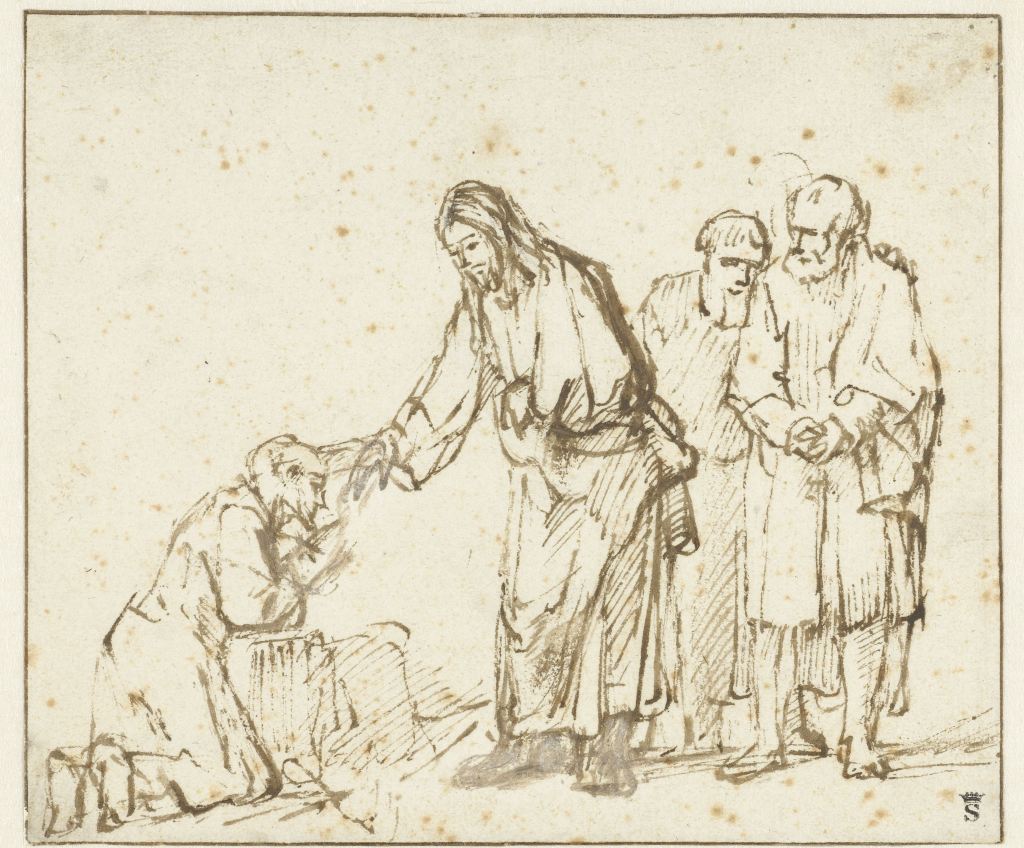
Christ healing a leper, by Rembrandt van Rijn, circa 1650-1655. Rijksmuseum, Amsterdam.

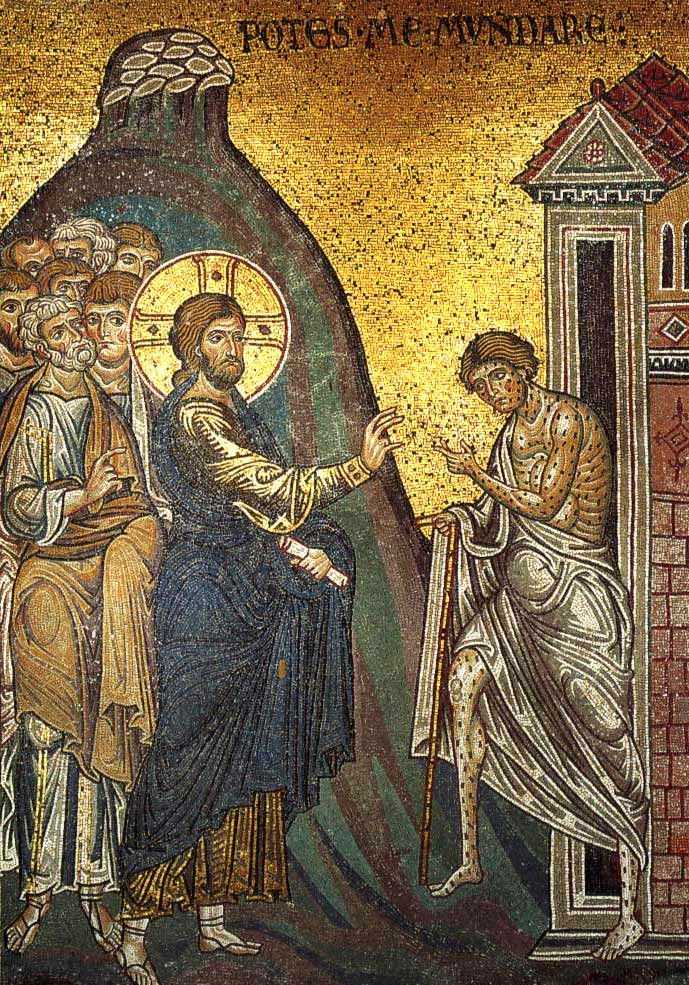
For this third Sunday after Epiphany, Bach wrote four cantatas: 73, 111, 72, and 156. The Bible story for this Sunday is about the miracle of Christ healing a leper. Last year I mentioned that I had a hard time finding the corresponding art for that story. My readers immediately came to the rescue, and pointed me to the two images featured in today’s post. Thank you again!

My favorite of all these cantatas is Cantata 73 Herr, wie du willt, so schick’s mit mir, especially in the 2013 recording by Herreweghe. Please find that recording here on Spotify. Soloists are Dorothee Mields (soprano), Thomas Hobbs (tenor), and Peter Kooij (bass). If you don’t have access to Spotify, you can find their 1990 recording here on YouTube. Soloists on this older recording are: Barbara Schlick (soprano), Howard Crook (tenor), and Peter Kooij (bass).

I had been planning to attend a live performance by Herreweghe of this cantata as well as another one of my favorites, Cantata 198, on January 29 in Brussels, but unfortunately the programming of that concert was changed to the Mass in B Minor. I completely understand the reasoning behind this, and I am absolutely thrilled for the musicians of Collegium Vocale Gent that they get to perform for an audience after all (until earlier this week, it looked as if all concerts in Belgium would be canceled until the end of this month), but I’m so sad about the cantatas!

Please find the German texts with English translations of Cantata 73 here, and the score here.

Jesus healing a leper, Mosaic, 12th century. Cathedral of the Assumption, Monreale, Sicily.

Especially the bass aria makes Herreweghe’s recording of this cantata tower above all others. It is so well done by Peter Kooij and the orchestra; it moves me every time I listen to it.

The best part for me is the illustration of “Leichenglocken” (death bells) by pizzicato strings and a somewhat “tolling” movement in the vocal part. Bach used this feature in many other cantatas, for example in (cantata number/movement number): 8/1, 95/5, 105/4, 127/3, 161/4, 198/4.

To know what else to listen for in this cantata, please read my post from 2016 . There I also explain how this cantata is connected to Cantata 72.

Wieneke Gorter, January 22, 2022.

← Older posts
Newer posts →

Recent Posts

  • A Rainbow of Colors – Cantata 169 for Trinity 18
  • Gli Angeli Genève’s Chorale Cantata Box & Cantata 114 for Trinity 17
  • Family stories and more “Vision Bach” – BWV 179 and 199 for Trinity 11
  • Almost Unbearable, It’s that Good: Hannes Rux-Brachtendorf and Matthias Winckhler in BWV 46 on Rademann’s Vision Bach, Volume 3.
  • “Missa Miniatura” by CONTINUUM/Elina Albach Even More Moving in 2025

Archives

  • October 2026
  • September 2026
  • August 2026
  • August 2025
  • July 2025
  • December 2024
  • November 2024
  • June 2024
  • January 2024
  • December 2023
  • October 2023
  • September 2023
  • August 2023
  • April 2022
  • February 2022
  • January 2022
  • December 2021
  • November 2021
  • June 2021
  • May 2021
  • April 2021
  • February 2021
  • January 2021
  • December 2020
  • November 2020
  • October 2020
  • September 2020
  • August 2020
  • July 2020
  • May 2020
  • April 2020
  • March 2020
  • February 2020
  • January 2020
  • December 2019
  • November 2019
  • May 2018
  • April 2018
  • March 2018
  • February 2018
  • January 2018
  • December 2017
  • November 2017
  • October 2017
  • September 2017
  • August 2017
  • July 2017
  • June 2017
  • May 2017
  • April 2017
  • March 2017
  • February 2017
  • January 2017
  • December 2016
  • November 2016
  • October 2016
  • September 2016
  • August 2016
  • July 2016
  • June 2016
  • May 2016
  • April 2016
  • March 2016
  • February 2016
  • January 2016

Enter your email address to follow this blog and receive notifications of new posts by email.

Join 337 other subscribers

Categories

  • 1723 Trinity season special series
  • Advent
  • After Easter
  • Ascension
  • Bach's life
  • Cantatas
  • Chorale cantatas 1724/1725
  • Christmas
  • Easter
  • Epiphany
  • Following Bach in 1725
  • Köthen
  • Leipzig
  • Septuagesima
  • Travel
  • Trinity
  • Weimar

Meta

  • Create account
  • Log in
  • Entries feed
  • Comments feed
  • WordPress.com

Website Built with WordPress.com.

  • Subscribe Subscribed
    Weekly Cantata
    Join 157 other subscribers

    Have a WordPress.com account? Log in now.

  • Weekly Cantata
    View site in Reader
    Manage subscriptionsSign upLog in
    Report this content
    Collapse this bar
Loading Comments...