Weekly Cantata

Weekly Cantata

Category Archives: Cantatas

Second Sunday after Easter 1724

30 Sunday Apr 2017

Posted by cantatasonmymind in After Easter, Cantatas, Leipzig

≈ Leave a comment

Tags

2nd Sunday after Easter, Amsterdam Baroque Choir, Amsterdam Baroque Orchestra, Bach, BWV 104, BWV 85, cantatas, Klaus Mertens, Paul Agnew, Ton Koopman

christ-the-good-shepherd
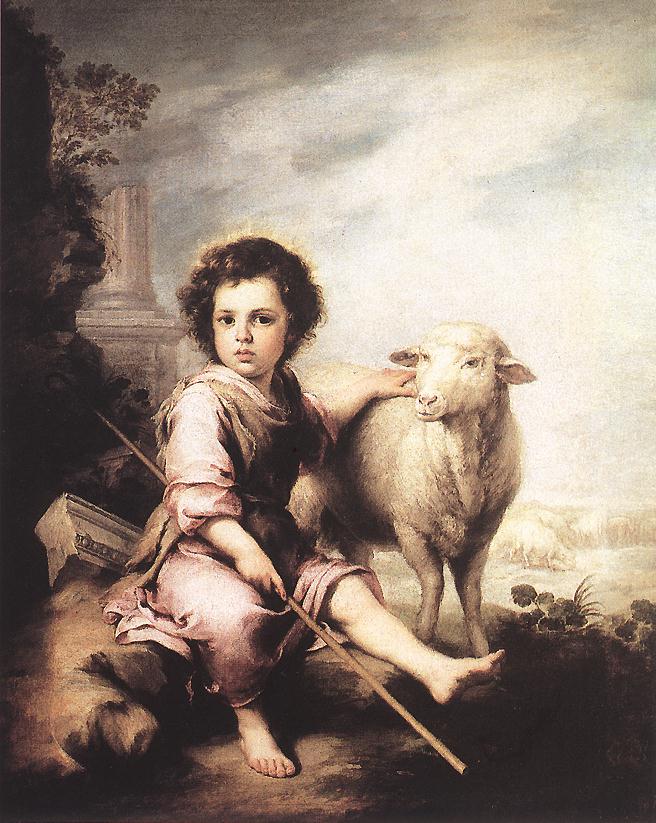
Christ the Good Shepherd, by Bartolome Esteban Murillo, c. 1660. Museo del Prado, Madrid.

We keep following Bach in 1724. For the second Sunday after Easter of that year, he composed cantata 104 Du Hirte Israel, höre. Of all the recordings I listened to, I prefer the one of Ton Koopman with his Amsterdam Baroque Orchestra and Choir, here on YouTube.

Please consider purchasing this recording here on Amazon, or here on iTunes.

Find the text of this cantata 104 here, and the score here.

Agnew
Paul Agnew

My main reason for choosing this recording is tenor Paul Agnew’s fabulous singing. Type his name in the “search” box on this blog and you’ll find more fan mail from me 🙂

But also: this recording has the best balance among the voice parts in the choir in the opening chorus, and Klaus Mertens presents a bass aria I can actually listen to without getting irritated.

This is a very pretty cantata, entirely based on the “good shepherd” theme for this Sunday, using pastoral motifs in the music, oboes in the orchestra, and displaying an innocent character overall, much more so than the more complicated cantata 85 Bach would write for this same Sunday a year later, which I wrote about last year in this post.

Wieneke Gorter, April 30, 2017.

First Sunday after Easter 1724

23 Sunday Apr 2017

Posted by cantatasonmymind in After Easter, Bach's life, Cantatas, Leipzig

≈ Leave a comment

Tags

Alex Potter, Bach, cantatas, corno da tirarsi, Jos van Veldhoven, Peter Kooy, Thomas Hobbs, tromba da tirarsi

caravaggio_-_the_incredulity_of_saint_thomas

The Incredulity of Saint Thomas by Caravaggio, 1601-1602, Sanssouci Palace, Potsdam, Germany

In the past two weeks I ran out of time to work on this blog because of being sick, performing concerts with California Bach Society, and being on a trial jury for the first time since becoming a United States citizen in 2011. So this post for the First Sunday after Easter in 1724 is post-dated, and short, but contains lots of information to learn more about this beautiful cantata.

Previously in 1724: Bach “premiered” his Passion according to St. John on Good Friday, April 7, 1724. Then he ran out of time and energy and, without too much care for detail and text illustration, created cantatas out of existing music for Easter Monday and Easter Tuesday of that year.

This means that the first new composition he wrote after the St. John Passion was this cantata 67 Halt im Gedächtnis Jesum Christ (keep thinking of Jesus Christ), based on the Gospel text of Jesus appearing to his disciples. A famous cantata, already known and admired in the early 19th century, especially because of the dramatic fourth movement for choir and bass, which Bach would later transform into the Gloria of his Missa Brevis in A (BWV 234).

For the background of this cantata I will refer you to the experts, in this 15-minute video by the Netherlands Bach Society, published within their AllofBach series. The video is in Dutch, with English subtitles. It talks about Bach including a flute (not a recorder!) for the first time in a cantata, the meaning behind the text, and the use of the slide-trumpet “corno da tirarsi.”

Listen to and watch their performance here, find the text here, and find the score here. The Netherlands Bach Society, conducted by Jos van Veldhoven, with countertenor Alex Potter, tenor Thomas Hobbs, and bass Peter Kooij.

Wieneke Gorter, April 30, 2017.

A quick fix for Easter Tuesday 1724

18 Tuesday Apr 2017

Posted by cantatasonmymind in After Easter, Bach's life, Cantatas, Leipzig

≈ Leave a comment

Tags

Eduard van Hengel, Gustav Leonhardt, Leonhardt, Marius van Altena, René Jacobs

As I explained on Easter Sunday and Easter Monday, after his Passion according to St. John, Bach had no time or energy left to write anything new for the three Easter days in 1724. On Easter Sunday he repeated two Easter cantatas from earlier years. On Easter Monday he used existing music from a Birthday cantata from Köthen, didn’t seem to care too much about the music not illustrating the text, perhaps didn’t even write a new score, we don’t know, because the only manuscript that survived is from 1735, not from 1724.

On Easter Tuesday, he used Die Zeit, die Tag und Jahre macht (BWV 134a), a “serenata” for New Year’s Day, also from Köthen. For the Leipzig church cantata, cantata 134 Ein Herz, das seinen Jesum lebend WeiĂź he didn’t change any music at all, gave the instrumentalists the parts from Köthen, and also used the score from Köthen, writing the new sacred text under the original secular text.

Listening to this cantata is like listening to one of Bach’s instrumental works, because the text and the meaning of the text don’t really matter in this case. Listen to Gustav Leonhardt’s recording of this cantata, with RenĂ© Jacobs, countertenor, and Marius van Altena, tenor.

Thanks to Eduard van Hengel, it is easy to see side-by-side how the new text compares to the original:

Serenata for New Year’s Day in Köthen 1719
Cantata 134 for Easter Tuesday in Leipzig 1724
1. Die Zeit, die Tag und Jahre macht,
Hat Anhalt manche Segensstunden
Und itzo gleich ein neues Heil gebracht.

2. Auf, Sterbliche, lasset ein Jauchzen ertönen.
[…] Auf, Seelen, ihr mĂĽsset ein Opfer bereiten,
Bezahlet dem Höchsten mit Danken die Pflicht.

1. Ein Herz, das seinen Jesum lebend weiĂź,
Empfindet Jesu neue GĂĽte
Und dichtet nur auf seines Heilands Preis.

2. Auf, Gläubige, singet die lieblichen Lieder.
[…] Auf, Seelen, ihr mĂĽsset ein Opfer bereiten,
Bezahlet dem Höchsten mit Danken die Pflicht.

Easter Monday 1724

17 Monday Apr 2017

Posted by cantatasonmymind in After Easter, Bach's life, Cantatas, Leipzig

≈ Leave a comment

Tags

Collegium Vocale Gent, Easter Monday, James Taylor, Kai Wessel, Peter Kooy, Phlippe Herreweghe

Screenshot 2017-04-17 11.44.51

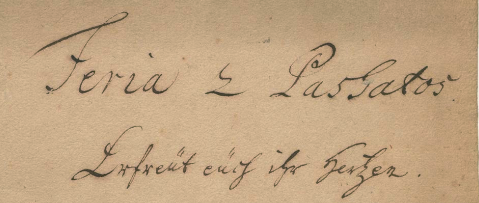
Excerpt from the title page of Bach’s manuscript from 1735 of cantata 66 Erfreut euch ihr Herzen. The manuscript from 1724 did not survive.

In Bach’s time there were three Easter days, as there were three Christmas days and three Pentecost days. I wrote yesterday that Bach planned to write four new works between April 10 and 23, 1724, but that is only somewhat true, it depends who you ask …

Gardiner believes that what Bach planned to do after Easter 1724,  was to write cantata 6 for Easter Monday, 42 and 67 for the first Sunday after Easter, and 85 for the second Sunday after Easter, instead of writing 6, 42, and 85 in 1725. As he painstakingly explains in his book “Bach: Music in the Castle of Heaven,”  Gardiner believes that the work (composing and rehearsing) on the Passion according to St. John must have cost Bach much more time than he thought, and he thus had to adjust his plans.

Following Gardiner’s theory, when Bach realized he had too much on his plate for Easter 1724, including having to write a cantata for Easter Tuesday he might not have planned on, he decided to write parodies (using existing music with some changes, but with different texts) for Easter Monday and Easter Tuesday of that year.

For Easter Monday 1724, he wrote cantata 66 Erfreut euch, ihr Herzen. Most of the music of this cantata is based on the secular cantata 66a Der Himmel dacht auf Anhalts Ruhm und Glück (Heaven thinks of Anhalt’s Fame and Fortune) , composed by Bach in 1718 to celebrate the 24th birthday of Prince Leopold of Anhalt-Cöthen. If you have 40 minutes, listen to a reconstruction of the entire Birthday cantata 66a from 1718 here, with soprano Gudrun Sidonie Otto, alto Wiebke Lehmkuhl, tenor Hans Jörg Mammel, and bass Karsten Krüger. If you only have 10 minutes, scroll to 11:17 for the soprano/alto duet with violin.

Listen to Herreweghe’s recording of cantata 66 Erfreut euch, ihr Herzen here. Soloists: alto Kai Wessel, tenor James Taylor, and bass Peter Kooij. I like Herreweghe’s recording of this cantata the best of all I listened to, because to me the tempo of the opening chorus is perfect for me, Collegium Vocale’s singing is fabulous as always, and I enjoy listening to Peter Kooy in the bass aria.

Find the text of cantata 66 here, and the score here.

Since we only have a manuscript of this cantata from 1735, when Bach repeated this cantata in Leipzig, we don’t know for sure what Bach changed in 1724.  However, based on what we know, and comparing the two recordings I present in this post, Bach used the following movements from the Köthen Birthday cantata 66a in the Leipzig church cantata 66: The impressive and very festive opening chorus of 66 is the closing chorus of 66a, the bass aria of 66 is the alto aria of 66a, and the alto-tenor duet (beautifully sung by Kai Wessel and James Taylor) with violin of 66 is the soprano-alto duet with violin from 66a.

Movement 4 and 5 (the recitative and duet for alto and tenor) are written as a dialogue. Whenever Bach uses that technique in his church cantatas, the two characters are usually Jesus and the Soul (see for example cantata 21). In this case, the Happiness of Anhalt (the alto) from 66a has been transformed to Furcht (Fear) in 66, and  Fama (the godess of fame and reputation, soprano in 66a) has been transformed to Hoffnung (Hope, tenor in 66). With these two characters Bach refers to the Gospel reading of the day: two followers of Jesus walk to the town of Emmaus, only a few days after Jesus’ death and burial. They talk about their hope that he was the Messiah, but are at the same time fearful having heard the news that his body has disappeared from the grave.

In the Birthday cantata 66a, the two characters are in agreement, and therefore sing the same notes. However in cantata 66 Furcht and Hoffnung often disagree, even though they are still singing the same notes. Normally Bach would never have let this happen, but perhaps this is an illustration of how quickly he had to work on this cantata for Easter Monday.

Wieneke Gorter, April 17, 2017

Easter in Leipzig 1724

16 Sunday Apr 2017

Posted by cantatasonmymind in Cantatas, Easter, Leipzig

≈ Leave a comment

Tags

Bach, Charles Daniels, City Council, cornetto, Dorothee Mields, Gesualdo Consort Amsterdam, Harry van der Kamp, Leipzig, Lent, Sigiswald Kuijken

the-resurrection-1544halfhd

The Resurrection by Titian, 1542-1544

This post is really three posts in one, because I’ve realized over the past weeks that for this Easter season, I would like to follow Bach’s cantata performances of 1724 the same way I did that for the Trinity Season of 1723. Thanks for reading to the end!

In the year 1724 in Leipzig, the last Sunday service with music in the churches had been on February 20, when Bach performed the same cantatas (22 and 23) as on that Sunday in 1723, when they were part of his audition in Leipzig.

Bach’s reason for repeating two existing cantatas for that last Sunday before Lent might have been that he was busy writing his Passion according to St. John. However, he might have had extra reasons: cantata 22 features the Vox Christi (voice of Christ). By reminding the Leipzig audiences of the role of Christ in the scripture and his music, they would–in Bach’s mind– hopefully be well prepared for the St. John, in which the figure of Christ is powerfully prominent, much more than in passion compositions of Bach’s predecessors, and even much more than in Bach’s later St. Matthew Passion, even though the singer portraying Christ has more notes to sing in that piece.

The long monologue by Christ occurs almost right away in the opening of cantata 22. Listen to it here on the AllofBach website, performed by the Netherlands Bach Society, with bass Christian Immler. (If you are wondering what that string instrument is on the shoulder of the medieval-looking guy, it is Sigiswald Kuijken playing the violoncello da spalla, and you can read more about it in this post).

Then, a month later, on Saturday March 25, outside of the regular church year, there was the performance for the Annunciation, as I discussed here. In that cantata, 182, written much earlier in Weimar but not known to the Leipzig audiences until March 25, 1724, there’s also a Vox Christi, singing the words “Siehe, ich komme, im Buch ist von mir geschrieben …” (Lo, I come: in the book it is written of me…). So here we have another “convenient” performance for Bach: no new music to write for the first part of the service*, and a good reminder of the Vox Christi for the listeners.

Despite Bach’s efforts to put his audience in the right frame of mind for the St. John Passion, they were surprised (according to some accounts even shocked) when they heard it on Good Friday, April 7, 1724. I’m pretty sure that Bach himself had not expected this. The passion must have been on his mind already such a long time, and I have no problem picturing this brilliant but nerdy musician who was somewhat incapable of putting himself in the shoes of those with shallower minds. Why I believe the Passion according to St. John must have been on his mind for months already: the tenor aria “Ach mein Sinn” already presents itself in October 1723 in cantata 109 (read more about that here), in November 1723 in cantata 60 (read more about that here), and in January 1724 in cantata 154 (which also has a Vox Christi, read more about it here). Also, the “Herr, Herr” exclamations from the opening chorus first appear as early as July 1723 in cantata 105 (which also has previews of the St. Matthew Passion, read about it here).

Already the opening chorus is of such a dramatic intensity – nobody had every heard anything like it. In the liner notes with his recording, Gardiner says it well: “Even when approaching it from the vantage point of the preceding church cantatas, with their astonishing array of distinctive opening movements, this grand tableau is unprecedented both in scale and Affekt.” What is more, while the instrumental opening suggests lament, the text of the vocal parts turns out to be a praise of Christ as a majestic figure: not a victim, but a victor. Perhaps this vision is what stung the elders and city council members the most, because a year later, in his drastic 1725 revision of the Passion, Bach completely replaced this victorious opening chorus with a lamenting one, later also used as the final movement of the first half of the St. Matthew Passion.

For Easter 1724, on Sunday April 9, Bach performed a cantata from his Weimar years and one from his MĂĽhlhausen years: cantata 31 Der Himmel Lacht, die Erde Jubilieret (discussed here on this blog) and the nowadays well known cantata 4 Christ lag in Todesbanden. Why no new composition for this Easter Sunday? Perhaps he was proud of these cantatas and wanted to show off to the Leipzig congregation and to his colleagues. But most probably he had been extremely busy working on the Passion, and since he was planning no less than four new cantatas for the period between April 10 and 23 of that year, he simply didn’t have time to write anything new.

Watch this live performance by Gesualdo Consort Amsterdam of cantata 4 Christ lag in Todesbanden. It is by no means an impeccable performance, but it is nice to see a live performance of this, and as so often I am moved by Dorothee Mields’ interpretation. I adore how she blends with the cornetto in the alto/soprano duet (starts at 5:27), and her duet with tenor Charles Daniels (a fabulously sensitive and knowledgeable singer, but sometimes overpowered by the orchestra in this performance) is exquisite (starts at 6:10).

Happy Easter!
Wieneke Gorter, April 16, 2017, updated April 3, 2021.

* Bach performed two cantatas on that Saturday March 25, 1724, and he did write new music for the second one.

The Annunciation of Mary, March 25

25 Saturday Mar 2017

Posted by cantatasonmymind in Cantatas, Leipzig, Weimar

≈ Leave a comment

Tags

Annunciation, Bach, cantatas, Hanneke van Proosdij, Leipzig, Lent, Luther, Montreal Baroque, Palm Sunday, Rachel Podger, Voices of Music, Weimar

botticelli2c_annunciazione_di_cestello_02

The Annunciation, aka The Cestello Annunciation, 1489, by Botticelli. Uffizi Gallery, Florence, Italy.

In 1714, Palm Sunday fell on the same day as the Annunciation of Mary, March 25. The Annunciation was one of the three Marian feast days Luther kept on the calendar (the other two being the Purification of Mary, February 2, and the Visitation of Mary, July 2).

Thus it happened that in that year, in Weimar, Bach wrote a cantata that is mostly a Palm Sunday cantata, but can also work for the feast of the Annunciation, since that also celebrates the coming of Christ. I squeezed this cantata 182 Himmelskönig, sei willkommen into my post about Bach in Weimar I wrote last year. As I mentioned there, the cantata was repeated a few times in Leipzig, but never on Palm Sunday, as the Leipzig rules dictated that no music was performed during the period of Lent (the 40 days before Easter).

However, the Leipzig council made an exception for the Annunciation, so in 1724 Bach could perform this cantata during Lent, eight days before Palm Sunday, on Saturday March 25. As so often on holidays, there were two cantatas this day, one before the sermon, and one after. The other, newly written, piece for Saturday March 25, 1724, was more literally about the Annunciation: Siehe, eine Jungfrau ist schwanger (Behold, a Virgin is pregnant). The text of this cantata survived, and can be found here, but unfortunately the music is lost.

I still recommend the recording of cantata 182 by Montreal Baroque, but since I wrote my post last year, a terrific live video of the Sonata (instrumental opening) of this cantata has come out on the YouTube channel of Voices of Music, with two fabulous soloists: Hanneke van Proosdij on recorder and Rachel Podger on violin, so I would love to share that here as well. You can find that video here.

Find the text of cantata 182 here, and the score here.

Wieneke Gorter, March 24, 2017.

On my mother’s birthday, March 24

24 Friday Mar 2017

Posted by cantatasonmymind in Cantatas

≈ 1 Comment

Tags

Amsterdam Baroque Orchestra, Bach, Bach Collegium Japan, bwv 127, bwv 202, bwv 44, cantatatas, Caroline Stam, Collegium Vocale Gent, Dorothee Mields, Masaaki Suzuki, Nancy Argenta, Phlippe Herreweghe, Ton Koopman

OLYMPUS DIGITAL CAMERA

my mother with my daughter, The Hague, summer of 2009

This year, on March 24, my mother would have turned 71. Sadly, she left us on November 19, 2010, after a tragic illness we only understood to be a terminal one on September 5 of that same year. To say that those months were an emotional roller coaster for all involved is an understatement. Normally very liberal and progressive in her Christianity, my mother turned very pious in her last weeks, and during that time she didn’t really let any persons in anymore, only music.

One of the major reasons I started this blog in January 2016 was to continue my mother’s legacy of playing the cantata for the appropriate Sunday every week, but also to remember the joy of going to concerts with my mother and listening to recordings together with her.

So I would like to think of this post as a short radio program with beautiful Bach music, featuring three soprano arias I strongly associate with my mother, sung by singers she and I adore(d).

A fond childhood memory is my mother, my sister, and I taking the bus from the little town where we lived to a town 15 kilometers (9 miles) away, where my mother was going to sing a solo in a wedding service. I remember what she wore: a light blue dress with tiny white and red flowers on it, a narrow red belt, and red sandals with heels. The solo she was singing was the aria “Sehet in Zufriedenheit” from cantata 202. I remember being in awe that she was standing there on the organ loft and singing it so beautifully. A gorgeous example of this aria, in the exact tempo in which my mother liked to perform it, is this recording of Nancy Argenta with Ensemble Sonnerie under the direction of Monica Huggett:

Sehet in Zufriedenheit
See in contentment
Tausend helle Wohlfahrtstage,
a thousand bright and prosperous days,
Dass bald bei der Folgezeit
so that soon as time passes
Eure Liebe Blumen trage!
your love may bear its flower!

Much later, my parents had a subscription to the series of cantata performances by the Amsterdam Baroque Orchestra with Ton Koopman, and there they got to see and hear many different soprano soloists. I remember them being impressed with Caroline Stam. Hear her sing the aria “Es ist und bleibt der Christen Trost” from cantata 44, one of my mother’s favorite Bach cantata arias of all time,  with the Amsterdam Baroque Orchestra under the direction of Ton Koopman.

Es ist und bleibt der Christen Trost,
The consolation of Christians is and remains
Dass Gott vor seine Kirche wacht.
God’s watchful care over his church.
Denn wenn sich gleich die Wetter tĂĽrmen,
For even though at times the clouds gather,
So hat doch nach den TrĂĽbsalstĂĽrmen
yet after the storms of affliction
Die Freudensonne bald gelacht.
the sun of joy has soon smiled on us.

We felt extremely blessed that Caroline Stam agreed to sing at my mother’s funeral service. We asked her to sing Purcell’s “Evening Hymn,” since that had been in the top 5 on my mother’s iPod in her last weeks. But for the Bach aria, we let Caroline pick what she would like to sing. I am still very grateful for that decision. Always very conscious of texts, Caroline chose the hauntingly beautiful “Die Seele ruht” from cantata 127. For years, I have not been able to listen to this aria, but now I can again, though it still makes me cry a little. Hear Dorothee Mields sing this aria with Collegium Vocale Ghent under the direction of Philippe Herreweghe:

Die Seele ruht in Jesu Händen,
My soul rests in the hands of Jesus,
Wenn Erde diesen Leib bedeckt.

Though earth covers this body
Ach ruft mich bald, ihr Sterbeglocken,
Ah, call me soon, you funereal bells,
Ich bin zum Sterben unerschrocken,

I am not terrified to die
Weil mich mein Jesus wieder weckt.

Since my Jesus will awaken me again.

If you would like to read more, here are five posts from 2016 in which I talk about my mother a lot or a little bit:

The order of things

Glorious soprano arias and unusual instrumentation

The Crown on Bach’s 1723 Trinity season

Many things to be proud of

Our Christmas Morning

Wieneke Gorter, March 24, 2017

My favorite sopranos for the third Sunday before Lent

18 Saturday Feb 2017

Posted by cantatasonmymind in Cantatas, Leipzig, Septuagesima

≈ Leave a comment

Tags

BWV 144, BWV 84, Dorothee Mields, John Eliot Gardiner, Leipzig, Miah Persson, Phlippe Herreweghe, Septuagesima

workers_vineyard
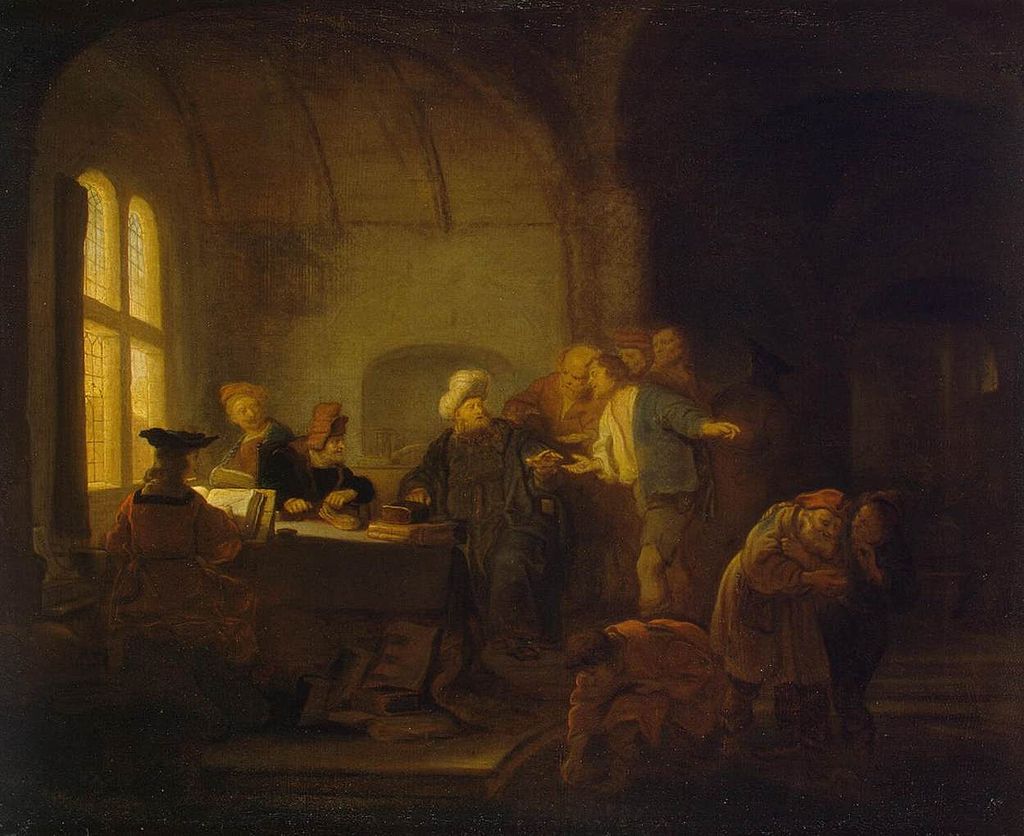
Parable of the workers in the vineyard by Salomon Koninck. Between 1647 and 1649. Hermitage Museum.

On the third Sunday before Lent in 1724, Bach performed Cantata 144 Nimm, was dein ist, und gehe hin. Read all about this short but wonderful work in my blog post from 2016, in which I discuss an unrivaled recording by Gardiner with mezzo soprano Wilke te Brummelstoete and soprano Miah Persson.

In that cantata from 1724 Bach wrote one soprano aria on the concept of “GenĂĽgsamkeit” (being satisfied with what you have), but three years later, he dedicated an entire solo work for soprano to this theme: Cantata 84 Ich bin vergnĂĽgt mit meinem GlĂĽcke (I am content in my good fortune), featuring the delightful aria Ich esse mit Freuden mein weniges Brot (It is with joy that I eat my meager piece of bread). We can probably take this as proof that GenĂĽgsamkeit was very important to Bach.

Find the German texts with English translations of Cantata 84 here, and the score here.

dorothee-mields-100_v-ardaustauschformat
Dorothee Mields

I myself count among my blessings that Herreweghe’s recording of this cantata features one of my favorite sopranos, Dorothee Mields. Read more about her in my post about the Herreweghe sopranos.

I listened to many recordings of this cantata, and I still (2020) love this interpretation the best. Mields is a terrific chamber musician together with the instrumentalists throughout this cantata, listen to the interplay between her and oboist Marcel Ponseele. I feel her voice sounds the most natural in aria “Ich esse mit Freuden mein weniges Brot.” The way she starts “Ein ruhig gewissen” the first time that comes around is just to die for as far as I’m concerned. I also like Herreweghe’s tempos the best of all the recordings I’ve listened to.

Enjoy Dorothee Mields’ singing and her being a terrific chamber musician together with the instrumentalists on Herreweghe’s recording of cantata 84 Ich bin vergnĂĽgt mit meinem GlĂĽcke on YouTube or on Spotify. The cantata appears on Herreweghe’s album Christus der ist mein Leben from 2007, which also includes two other fabulous cantatas: 95 and 161. If you like these recordings, please consider purchasing (the MP3 of) this album on Amazon.de or on Amazon.com. Or purchase the album on iTunes or whatever platform you prefer. Thanks for supporting the artists!

Wieneke Gorter, February 18, 2017, last updated January 27, 2024.


A revision of my Trinity 17 post

04 Saturday Feb 2017

Posted by cantatasonmymind in Cantatas

≈ Leave a comment

There is no cantata left to us for this Sunday, Epiphany 5. So I decided it was the perfect time to fix something that had been bothering me for a while: my post about cantata 148 from September 2016.

Sitting in the music library this week, doing research for cantata 83, I was very excited. At first it was the sheer pleasure of being in that building and feeling like a musicology student again, but while reading, I realized that Dirksen’s article is an excellent argument for my hypothesis that Bach had guest musicians playing in his Leipzig orchestra around feast days. And what is more, I was now convinced cantata 148 was written in 1725 and not in 1723. So I decided to completely revise my post from September 2016 about the cantata with the violin solo that moved me to tears. Read it here.

Wieneke Gorter, Feburary 3, 2017

Come out of your hole to hear a violin concerto

03 Friday Feb 2017

Posted by cantatasonmymind in Cantatas, Christmas, Epiphany, Leipzig

≈ Leave a comment

Tags

Bach, Bach Collegium Japan, James Gilchrist, Leipzig, Luther, Masaaki Suzuki, Peter Kooy, Robin Blaze

presentationinthetemple
Presentation in the Temple (1640/1641) by Simon Vouet (1590-1649). Musée du Louvre, Paris.

In many traditions, from pre-Christian European to contemporary American, February 2 marks the end of the dark part of the winter.  Feasts on this day celebrate the daylight, looking ahead to spring, and the start of new things. Growing up in a Calvinist protestant culture in the Netherlands, I wasn’t aware of any of these holidays.

Let’s start with the silly American holiday on February 2: Groundhog Day. If the groundhog (some sort of marmot) comes out of her hole on this day while it is cloudy, spring will be early; if it is sunny and the groundhog will thus see her own shadow when she comes out of her hole, she will be scared and go back inside and spring won’t start for another six weeks. Grown men actually observe the groundhogs on February 2.

People from Celtic cultures celebrate Imbolc or Brigid’s Day on February 2 because it is the midway point between the winter solstice and the spring equinox. The holiday is a celebration of the lengthening days and the early signs of spring. The lighting of candles and fires represented the return of warmth and the increasing power of the Sun over the coming months.

The Catholic feast of Candlemas also originates in pre-Christian times, and originally marked the end of a period of light feasts which started around mid November. After the early Christians established that Jesus was born on December 25, it was easy to declare Saint Martin (Nov 11, 40 days before Christmas) the start of the great Christmas season and February 2 (40 days after Christmas) the end of it. I read that in some countries people leave their Christmas decorations up until Candlemas. I would have loved to have that tradition in the Netherlands too, because I had serious trouble with the bleak, grey, uneventful month of January there. And all procrastinators are now absolved: you didn’t know it, but you were doing the right thing to leave those lights up until February!

The Catholic Church merged Candlemas with the feast of the Purification of Mary and the Presentation of Jesus at the Temple. In the Jewish tradition, a new mother was “unclean” for the first 40 days after giving birth. On the 40th day, she would have to visit the temple for a purification ceremony, and to present her son to the priests. Luther kept this Catholic feast on the calendar, but  focused much more on the Presentation of Jesus at the Temple  than on the Purification of Mary.  What is more, he turned Simeon’s song of praise into a message of “Now I can die in peace.” This is why all five cantatas (BWV 82 (the famous Ich habe genug), 83, 125, 157, and 158) Bach wrote for this holiday are mostly about the joy of dying. But not to worry, the cantata from 1724 is actually very festive.

Listen to/watch cantata 83 Erfreute Zeit im neuen Bunde by the Netherlands Bach Society on YouTube. Shunske Sato, violin and direction; Robin Blaze, alto; Daniel Johannsen, tenor; Stephan MacLeod, bass. I prefer this recording because this cantata is a violin concerto and here we can see one of the best Baroque violinists and Bach interpreters, Shunske Sato, at work.* However for the most magical rendition of the second movement please also listen to the Bach Collegium Japan recording (Natsumi Wakamatsu, violin; Robin Blaze, alto; James Gilchrist, tenor; Peter Kooij, bass)

Find the German text with English translations of Cantata 83 here, and the score here.

The first and third movement  are written like a violin concerto and celebrate the “new” era. According to an excellent study by Dutch musicologist Pieter Dirksen, presented at a Bach Symposium in Germany in 2000, the impressive violin part was most likely written for violin virtuoso Johann Georg Pisendel from Dresden. Dirksen makes a very convincing case that Bach wrote this past Sunday’s operatic cantata 81 and this cantata 83 (both from the same week in 1724) specifically to please musicians and perhaps also dignitary guests from Dresden, giving them the two musical forms the Dresden court favored most: an opera in the form of cantata 81 and a concerto in the form of cantata 83. There are no documents supporting the suggestion that Pisendel was in Leipzig around the time this cantata was played. However, as I have mentioned before in this blog, it seems evident from Bach’s writing around special holidays that there were either guest musicians or colleagues to impress in those weeks. Also, Dirksen gives many plausible examples of links to Dresden in the style and instrumentation of these compositions, and argues that Bach had no other violinist available, including himself, who would have been able to play this and that this is why he didn’t write virtuoso violin solos in any cantatas from the first Leipzig cycle.

The second movement symbolizes the “old” tradition Simon stands for in the Gospel story. In a way he has never done this in any other cantata, Bach sets Luther’s translation of Simeon’s words (“Herr, nun lässest du deinen Diener in Friede fahren …”) to the old Gregorian psalmtone for Nunc Dimittis, which was the Roman version of Simeon’s words. It is likely he wanted to show the Catholic guests from Dresden he was familiar with their tradition too, or perhaps he wanted to honor the Catholic history of this feast day. The very best rendition of this movement is sung by Peter Kooij on the Bach Collegium Japan recording of this cantata. My late mother used to say: “Peter Kooij must have a special line with God.” He definitely has a special line with Bach.

Wieneke Gorter, February 2, 2017, updated February 2, 2020 and February 2, 2023.

*read how Shunske Sato’s playing made me want to write for this blog again in this post

← Older posts
Newer posts →

Recent Posts

  • “Missa Miniatura” by CONTINUUM/Elina Albach Even More Moving in 2025
  • Bachfest Leipzig 2025
  • Bach Cantatas for Christmas – 1724 and 1734 editions
  • Fourth Sunday of Advent – more insight into Cantata 62 helped me better understand Bach’s Christmas Oratorio
  • Saint Ambrose and Luther in Milan – Second Sunday of Advent

Archives

  • August 2025
  • July 2025
  • December 2024
  • November 2024
  • June 2024
  • January 2024
  • December 2023
  • October 2023
  • September 2023
  • August 2023
  • April 2022
  • February 2022
  • January 2022
  • December 2021
  • November 2021
  • June 2021
  • May 2021
  • April 2021
  • February 2021
  • January 2021
  • December 2020
  • November 2020
  • October 2020
  • September 2020
  • August 2020
  • July 2020
  • May 2020
  • April 2020
  • March 2020
  • February 2020
  • January 2020
  • December 2019
  • November 2019
  • May 2018
  • April 2018
  • March 2018
  • February 2018
  • January 2018
  • December 2017
  • November 2017
  • October 2017
  • September 2017
  • August 2017
  • July 2017
  • June 2017
  • May 2017
  • April 2017
  • March 2017
  • February 2017
  • January 2017
  • December 2016
  • November 2016
  • October 2016
  • September 2016
  • August 2016
  • July 2016
  • June 2016
  • May 2016
  • April 2016
  • March 2016
  • February 2016
  • January 2016

Enter your email address to follow this blog and receive notifications of new posts by email.

Join 337 other subscribers

Categories

  • 1723 Trinity season special series
  • Advent
  • After Easter
  • Ascension
  • Bach's life
  • Cantatas
  • Chorale cantatas 1724/1725
  • Christmas
  • Easter
  • Epiphany
  • Following Bach in 1725
  • Köthen
  • Leipzig
  • Septuagesima
  • Travel
  • Trinity
  • Weimar

Meta

  • Create account
  • Log in
  • Entries feed
  • Comments feed
  • WordPress.com

Website Built with WordPress.com.

  • Subscribe Subscribed
    • Weekly Cantata
    • Join 157 other subscribers
    • Already have a WordPress.com account? Log in now.
    • Weekly Cantata
    • Subscribe Subscribed
    • Sign up
    • Log in
    • Report this content
    • View site in Reader
    • Manage subscriptions
    • Collapse this bar
 

Loading Comments...