Weekly Cantata

Weekly Cantata

Tag Archives: cello

Trip to Köthen – Saturday, June 8 – Part One

20 Thursday Jun 2024

Posted by cantatasonmymind in Bach's life, Cantatas, Köthen, Leipzig

≈ Leave a comment

Tags

Anna Magdalena Bach, Bach, Bach Travel, Bachfest Leipzig, Brandenburg concertos, cello, cello-suites, Elbe-Saale, Hop farms, Leipzig courtyards, Reisen, Sachsen, Sachsen-Anhalt, Saxony, Viabundus, violin-partitas

View of the city of Köthen. Copper engraving from around 1720. Bach-Archiv Leipzig.

This is the second post about my experience at Bachfest Leipzig 2024. Please find my first post, about Friday, June 7, here. Find the program for Bachfest Leipzig 2025 here.
7 am walk through Leipzig’s historic center

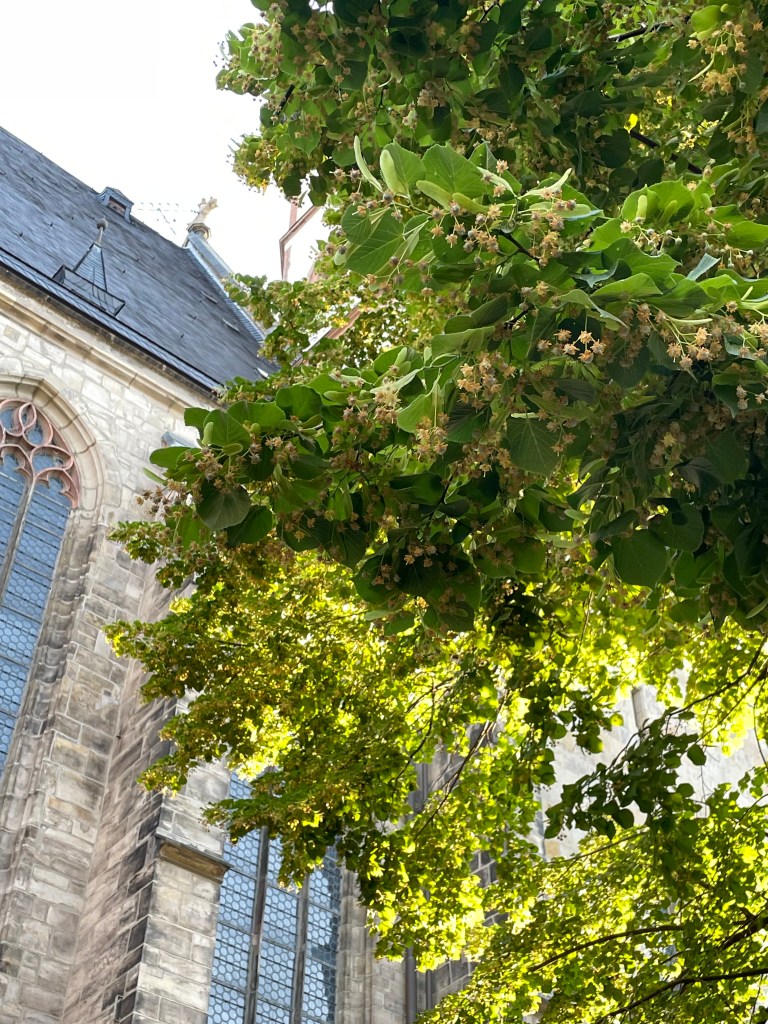
Because of the back-to-back activities on Friday I hadn’t made it to a supermarket before 10 pm, so I went on a grocery run at 7 am on Saturday. I took a little detour past the Thomaskirche, just to be sure where to locate the “main portal” where the bus to Köthen would leave from at 9:30. Something I forgot to mention in my earlier post: this time of year there are blooming linden trees everywhere in Leipzig! So many more than in Amsterdam. The blossoms provide a delightful and calming fragrance.

I’m so glad I listened to the Reisen reisen podcast before traveling to Leipzig, otherwise I wouldn’t have known to walk into the many courtyards one finds in this city. I found the one pictured here on Saturday morning, and another gorgeous one on Sunday. There are several others I missed, so I will have to come back! Walking in these courtyards I could imagine a bit better how the city must have looked in Bach’s time.

On the way back to my apartment I even found a friendly fruit and vegetable seller setting up early for the weekly open market, so I was all set for making breakfast and a sandwich to take on the bus to Köthen.

On the bus to Köthen

Around 9 am I found a seat on the festival bus to Köthen, together with 49 other Bach fans from all over the world. Köthen is where Bach lived and worked from 1717 to 1723, between his time in Weimar and his time in Leipzig. It was here that he wrote his Brandenburg concertos, cello suites, his sonatas and partitas for solo violin, and several other instrumental works. He had an appreciative employer and got to work with probably the best orchestra he ever had in his life. He retained his title of “Court Capellmeister” even after leaving his post. His wife Anna Magdalena had been a singer at this court for two years before they moved to Leipzig, and together they made the journey from Leipzig to Köthen at least three times to perform for the Prince together.

I visited Arnstadt, Mühlhausen, and Weimar in 2022, but had never been to Köthen, so it was a no-brainer for me to join this “Bach out and about” trip.* The landscape between Leipzig and Köthen, at least as seen from the freeway, is much less interesting than that of Thuringia, the region where Bach spent the first part of his life, and where I traveled in 2022. This was actually a good thing, so there were no spectacular views to distract me from our guide Gerlinde Kämmerer’s stories about Bach’s life in Köthen and his travels between Leipzig and Köthen.

Something new I learned during this bus trip: roads used by carriages in this area in the early 18th century were stone roads (“Steinwege” in German), which we should not understand as cobblestone or gravel, but a bit more like this one pictured here, rough stones hammered into sand or clay, but not as clean-looking – Gerlinde explained there would have been all kinds of dirt sticking to the surface. All this made for very uncomfortable travel and the carriage would have had to make several stops along the way. Looking it up on the fantastic new interactive map by Viabundus, a carriage-trip from Leipzig to Köthen would have taken more than one whole day in Bach’s time.

When we got close to Köthen and turned off the highway we saw fields of poppies and several hop farms. Hops have been grown in this Elbe-Saale region for centuries. The first written records date to the 9th century. Today this hop growing region is the second-largest in Germany, with around 1550 hectares (about 3830 acres).

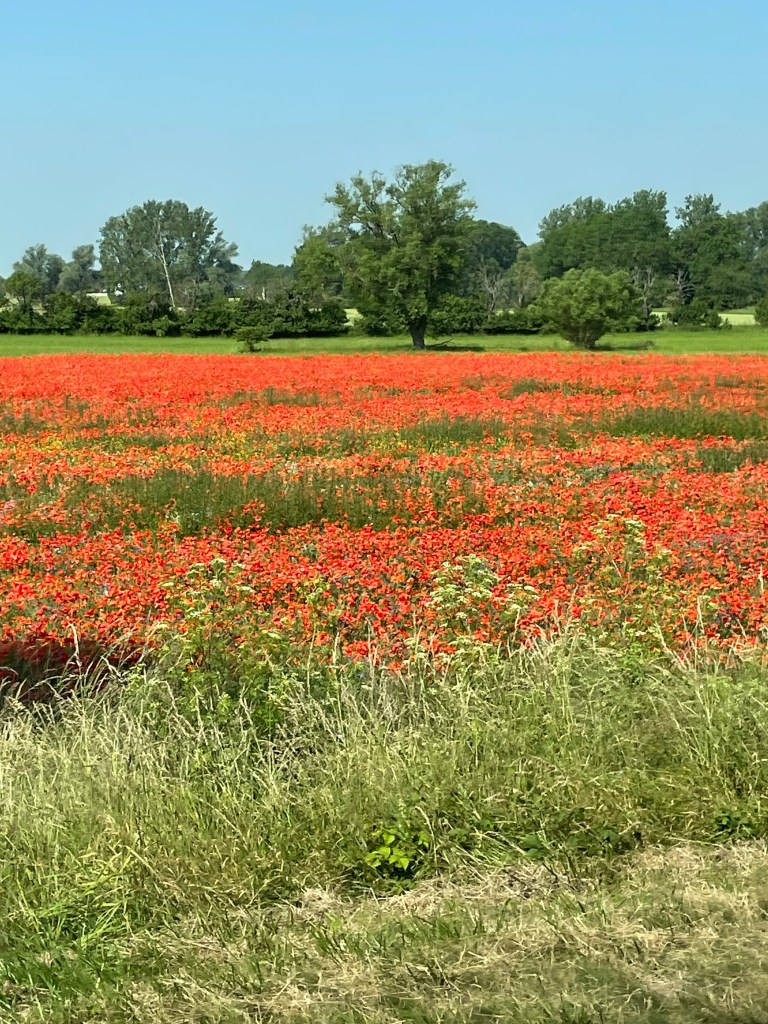
Hop farm. Plants reach full height at the end of June

More about this trip, and what we actually saw and heard in Köthen, in the next post.

Wieneke Gorter, June 20, 2024. Links updated November 29, 2024.

*Each year the festival organizes a handful of these trips to other towns in the region. It is a combination of city and/or museum tour in the morning and organ or chamber music concert in the afternoon. The concert is usually in collaboration with a local organization, so there will be more people attending the concert than just you and your fellow travelers. But for the rest of the day you are with your travel group only. Once at the destination, the groups gets split into English-speakers and German-speakers. The trips are well organized, you travel in a comfortable coach, and there are knowledgeable guides and excellent translators on board (more about this in the next post). There is a lunch break long enough to eat at a local restaurant or go for a walk. On the way there, you get a lecture about what you are going to see, and on the way back you can take a nap, chat with new friends you made on the trip, or organize all the photos you took. This year these trips cost €88 each and I found it well worth it.
Paintings, praises, and a possible prelude to the St. Matthew Passion

03 Saturday Feb 2018

Posted by cantatasonmymind in Bach's life, Cantatas, Chorale cantatas 1724/1725, Leipzig

≈ Leave a comment

Tags

Alex Potter, Bruges Bach Academy, BWV 105, BWV 125, BWV 234, BWV 46, Candle Mass, cello, Collegium Vocale Gent, Dorothee Mields, Eglise St. Roch, floating aria, flute, Ingeborg Danz, oboe da caccia, organ, Peter Kooij, Philippe Herreweghe, Presentation at the Temple, Purification of Mary, strings, Thomas Hobbs

triptych-of-jan-floreins-1479

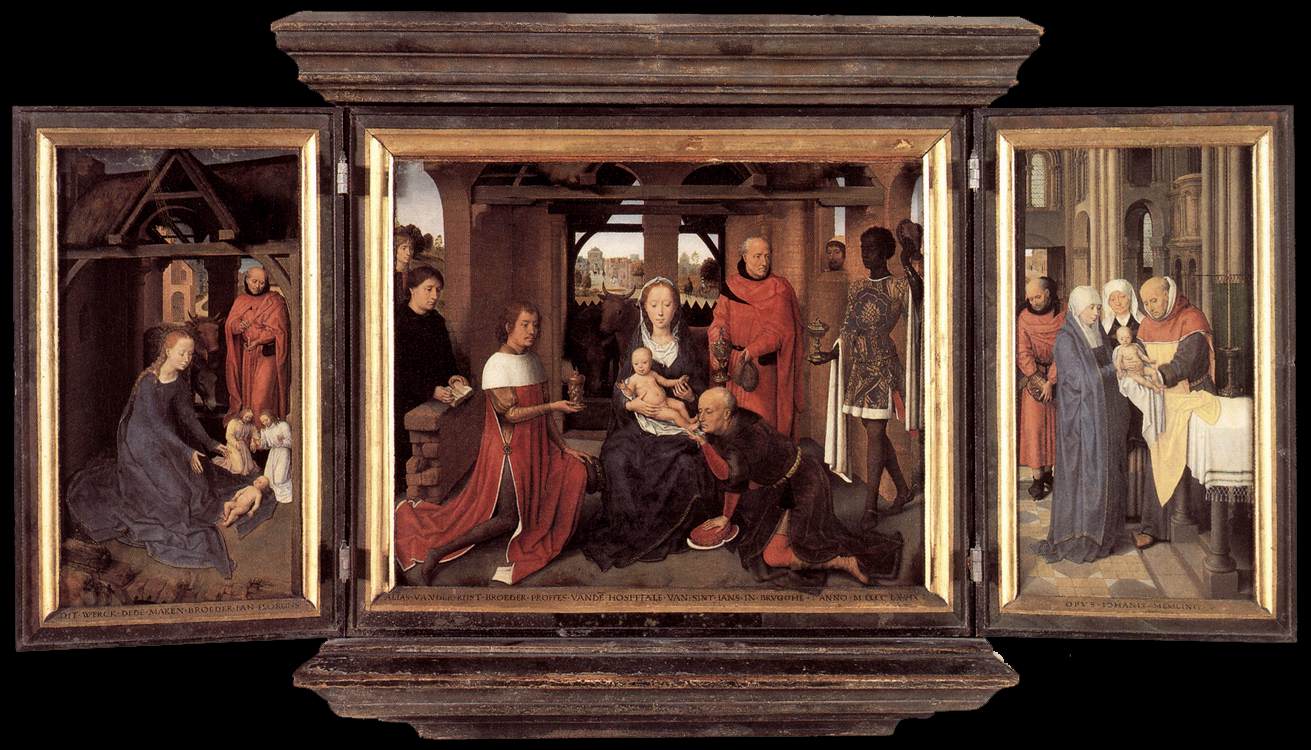
“Adoration of the Magi” triptych of Jan Floreins by Hans Memling, 1479. Memling Museum (Old St. John’s Hospital), Bruges, Belgium. The right-hand panel features “The Presentation at the Temple,” with the Temple really being the former St. Donaas church in Bruges.

If you are reading this in the email you received from WordPress, please click on the title of this post to enjoy the paintings and the formatting 🙂

This post is almost two days late, as it was for Friday February 2, the feast of the Purification of Mary, or Candle Mass, or Presentation at the Temple. If you have time, please read how this holiday was strongly connected to folk culture in my post from last year. In Lutheran reality, this was the day when Simeon’s song of praise Herr, nun lässest du deinen Diener in Friede fahren  or Nunc Dimittis was celebrated. With his chorale Mit Fried und Freud ich fahr dahin Luther turned Simeon’s song of praise into a message of “Now I can die in peace.” This is why all five cantatas (The famous Ich habe genug 82, 83, 125, 157, and 158) Bach wrote for this holiday are mostly about the joy of dying.

Since I’m following Bach’s chorale cantata writing in Leipzig in 1725, I’m featuring Cantata 125 Mit Fried und Freud ich fahr dahin, written for February 2 of that year, and based on that same chorale by Luther.

My favorite overall recording of this cantata is Herreweghe’s recording from 1998, with Ingeborg Dantz, alto; Mark Padmore, tenor; and Peter Kooij, bass. You can find it here on YouTube. Please consider supporting the artists by purchasing the album on Amazon or on iTunes. It also includes the stunning Cantata 8 (Herreweghe’s personal favorite!) and the beautiful Cantata 138.

Please find the German text with English translations of this cantata here, and the score here.

There are some similarities with last week’s cantata, such as the bass solo that is made up of bits of recitative and bits of chorale melody, but already in the opening chorus a new day is dawning. If you read the history of today’s holiday in my post from last year, you know that Candle Mass was a natural time of year to start with something new.

Could the new inspiration in Bach’s brain be the St. Matthew Passion? It is not unlikely at all. Van Hengel suggests that the opening chorus has elements of the St. Matthew opening chorus, but then argues that that piece was not written yet in 1725. However, Gardiner (in his book Music in the Castle of Heaven) makes a strong case that Bach might have initially planned to have the St. Matthew Passion ready for Good Friday 1725. I’ve pointed out before that we can find preludes to the “Great Passion” in Bach’s cantatas as far back as the fall of 1723 (see posts about cantatas 105 and 46), so it is not unlikely that Bach was working on this in January 1725.

Keeping all this in mind, it is striking that the first aria after the opening chorus is an alto aria in St. Matthew style, full of pietism. Watch Alex Potter (keep reading to find out more about him) sing this aria with the J.S. Bach Foundation here on YouTube. The instrumentation resembles the “Aus Liebe” soprano aria from the St. Matthew Passion: there are no organ chords in the bass, only repeated cello notes, and for the rest it is just flute and oboe da caccia, an unusual combination.

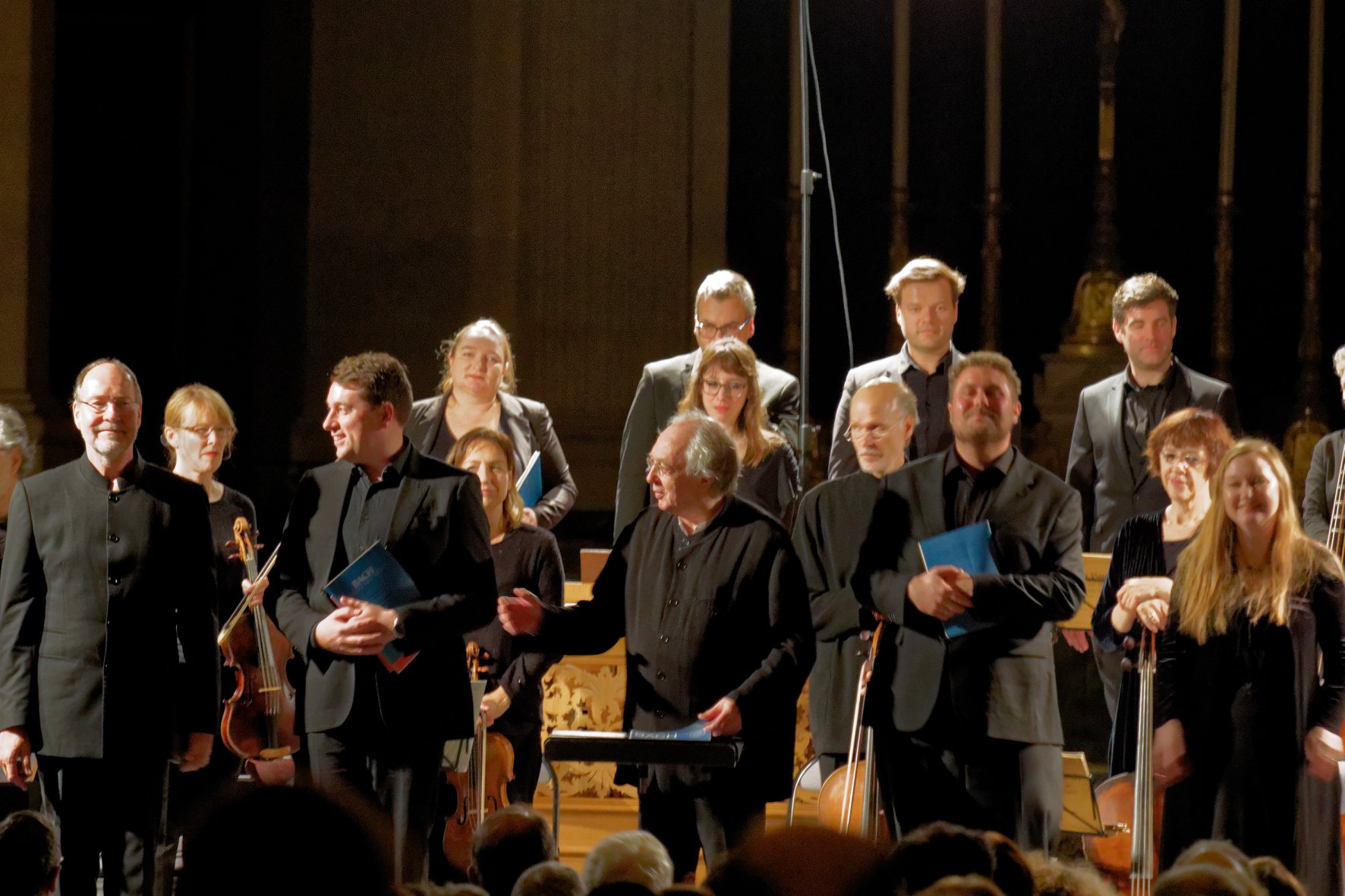
Because of the  many connections with this Cantata 125 I’m now going to sneak in a mini review of the Herreweghe/Collegium Vocale concerts I attended in Europe this past week.

paris_1-30_concert

Applause at the end of the concert in the Eglise St. Roch in Paris, January 30, 2018. From left to right in front row: Peter Kooij, Thomas Hobbs, Philippe Herreweghe, Alex Potter, Dorothee Mields. Photo by Aube Neau/Luc Barrière, published with permission.

Let’s take the alto aria from Cantata 125. I call this type of aria a “floating aria” because it has no real basso continuo: there is no melodic line in the cello or chords in the organ, i.e. no foundation for the singer to stand on. These floating arias are incredibly beautiful and the stuff of goose bumps, but also incredibly challenging for the vocal soloist. In the terrific concert in Paris on Tuesday January 30, soprano Dorothee Mields had two such arias: the “Qui tollis” from the Mass in A Major (BWV 234)* and the “Wir zittern und wanken” from Cantata 105. She did an absolutely marvelous job in both of them, but her singing was the most mesmerizing in the “Wir zittern und wanken” aria. Cantata 105 stood out during that Paris performance anyway in my humble opinion. It simply has the best opening chorus of all cantatas Collegium Vocale performed in the three concerts I attended. On top of that, the group (including soloists Thomas Hobbs and Peter Kooij) recorded this in 2012, and you could tell it was still in everyone’s bones and it was a pleasure to see Herreweghe direct the strings as well as the soloists. One of my favorite bass ariosos occurs in that cantata (it makes me think of the “Am Abend da es kühle war” from the St. Matthew) and Peter Kooij’s strong rendition almost made me cry.

memling_presentation_temple_floreins

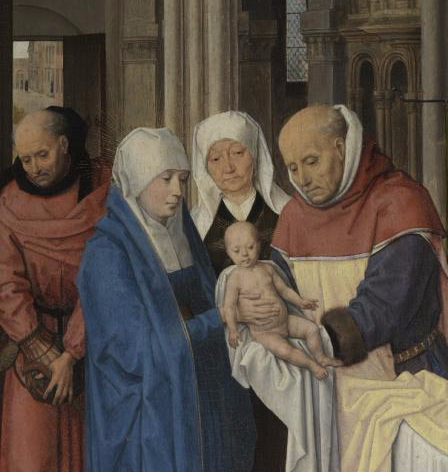
Detail of right-hand wing of the “Adoration of the Magi” Jan  Floreins triptych by Hans Memling, showing the Presentation at the Temple, or Mary presenting Jesus to Simeon

And then on to countertenor Alex Potter. It was in Bruges’ St. John’s Hospital museum that I saw the Memling painting featured in this post, and this is also where I ran into Alex Potter and was able to tell him how much I enjoyed his singing on Friday January 26. During the concert in Paris on January 30 his most impressive performance was the “Quoniam” aria from the Mass in A Major (BWV 234)**, which I heard in Bruges on Sunday January 28 and again in Paris on Tuesday January 30. He had a clear understanding of the text, made the music soar, and seemed to passionately enjoy what he was doing. It was a joy to watch and listen to.

Wieneke Gorter, February 3, 2018.

*originally from Cantata 179 from August 8, 1723.

**originally from Cantata 79 from October 31, 1725.

Recent Posts

  • “Missa Miniatura” by CONTINUUM/Elina Albach Even More Moving in 2025
  • Bachfest Leipzig 2025
  • Bach Cantatas for Christmas – 1724 and 1734 editions
  • Fourth Sunday of Advent – more insight into Cantata 62 helped me better understand Bach’s Christmas Oratorio
  • Saint Ambrose and Luther in Milan – Second Sunday of Advent

Archives

  • August 2025
  • July 2025
  • December 2024
  • November 2024
  • June 2024
  • January 2024
  • December 2023
  • October 2023
  • September 2023
  • August 2023
  • April 2022
  • February 2022
  • January 2022
  • December 2021
  • November 2021
  • June 2021
  • May 2021
  • April 2021
  • February 2021
  • January 2021
  • December 2020
  • November 2020
  • October 2020
  • September 2020
  • August 2020
  • July 2020
  • May 2020
  • April 2020
  • March 2020
  • February 2020
  • January 2020
  • December 2019
  • November 2019
  • May 2018
  • April 2018
  • March 2018
  • February 2018
  • January 2018
  • December 2017
  • November 2017
  • October 2017
  • September 2017
  • August 2017
  • July 2017
  • June 2017
  • May 2017
  • April 2017
  • March 2017
  • February 2017
  • January 2017
  • December 2016
  • November 2016
  • October 2016
  • September 2016
  • August 2016
  • July 2016
  • June 2016
  • May 2016
  • April 2016
  • March 2016
  • February 2016
  • January 2016

Enter your email address to follow this blog and receive notifications of new posts by email.

Join 336 other subscribers

Categories

  • 1723 Trinity season special series
  • Advent
  • After Easter
  • Ascension
  • Bach's life
  • Cantatas
  • Chorale cantatas 1724/1725
  • Christmas
  • Easter
  • Epiphany
  • Following Bach in 1725
  • Köthen
  • Leipzig
  • Septuagesima
  • Travel
  • Trinity
  • Weimar

Meta

  • Create account
  • Log in
  • Entries feed
  • Comments feed
  • WordPress.com

Website Built with WordPress.com.

  • Subscribe Subscribed
    • Weekly Cantata
    • Join 156 other subscribers
    • Already have a WordPress.com account? Log in now.
    • Weekly Cantata
    • Subscribe Subscribed
    • Sign up
    • Log in
    • Report this content
    • View site in Reader
    • Manage subscriptions
    • Collapse this bar
 

Loading Comments...