Weekly Cantata

Weekly Cantata

Tag Archives: Christiane Mariana von Ziegler

Bachfest Leipzig 2025

09 Wednesday Jul 2025

Posted by cantatasonmymind in Cantatas, Leipzig, Travel

≈ Leave a comment

Tags

Adina Apartment Hotel Leipzig, Alex Potter, Anna-Sylvia Goldammer, Apartmenthotel Quartier M., Bach, Bach Akademie Stuttgart, Bach-Archiv Leipzig, Bachakademie Stuttgart, Bachfest 2025, Bachfest 2026, Bachfest Leipzig, Bachfest Leipzig 2025, Bachfest Leipzig 2026, Bachfest Malaysia, Bachstiftung, BWV 198, BWV 20, BWV 233, BWV 79, Christiane Mariana von Ziegler, Christiane Mariane von Ziegler, Collegium Vocale Gent, Continuum Berlin, David Chin, David de Winter, Elina Albach, Gardiner, Hans-Christoph Rademann, Heinrich Schütz, Innside Leipzig, J.S. Bach Foundation, J.S. Bach Stiftung, Johann Hermann Schein, johann-sebastian-bach, Koopman, linden trees, Maria Küstner, Merseburg, Merseburger Dom, Michael Maul, Miriam Feuersinger, Motel One Leipzig, Nikolaikirche, Patrick Grahl, Philippe Herreweghe, Rick Fulkner, Romanus-Haus, Rudolf Lutz, Schütz, Schein, Solomon's Knot, Thomaskirche, Tobias Berndt, Tomáš Král, Wir glauben all an einen Gott
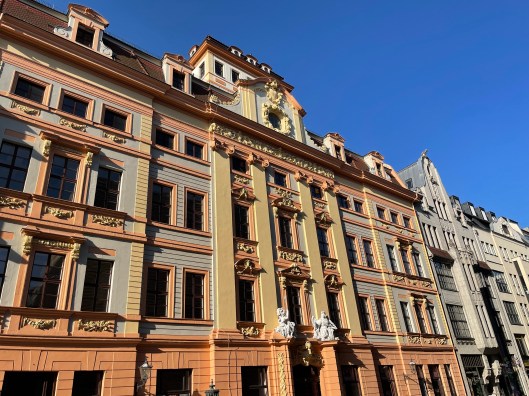
Romanus-Haus in Leipzig, the house where poet Christiane Mariane von Ziegler held salons in the 1720s and 1730s.

I visited Bachfest Leipzig again this year, from Tuesday evening, June 17, through Sunday, June 22, attending eight concerts in six days. Read my highlights below, and please subscribe to this blog so you don’t miss future posts. I joined a festival trip to Merseburg, took walks, caught up with friends from all over the world, and met some new fellow Bach lovers. For me, the camaraderie has almost become a more important reason to return each year than the concerts.

That said, next year’s cantata programming is not to be missed, with Herreweghe AND Lutz AND Rademann, so if you would like to attend you should probably get organized – my tips for that at the end of this post.

Summer in Leipzig

June is the perfect time of year in this city. People are out on café terraces everywhere, and walking in the streets. Then there’s the summer green: entire rose bushes for sale on the street in the middle of the center, and linden trees in bloom wherever you go. The scent of linden delights me, and I learned something new about them this year, thanks to our Bachfest tour guide Anna-Sylvia Goldammer on the organ trip to Merseburg: Leipzig has apparently always been full of linden trees! The latin word for Leipzig, Lipsi, was derived from the Slavic word for linden tree, lipa. Most of downtown, inside the ring, is car-free, with only taxis and necessary vehicles allowed in. This makes it feel safe and, dare I say it, more walkable than Amsterdam.

The free performances can be the most meaningful

Inspired by a seatmate on the trip to Köthen last year, I attended more of the free or almost-free performances this year. You can still fully enjoy the camaraderie with other Bach fans and hear beautiful music without spending a fortune. There are no assigned seats for the church services, so as long as you line up early, you can enjoy the best view for free.

This year I had missed the free performances on the market square, but on Saturday morning, June 21, I was so lucky to attend an unforgettable, absolutely exquisite rendition of the duet from Cantata 79 Gott der Herr ist Sonn und Schild by soprano Miriam Feuersinger and baritone Tobias Berndt during the “Mette” (morning service) in the Nikolaikirche. The Sunday morning service in the Thomaskirche was special too. The service was a reconstruction of what a church service in Bach’s time would have been like (I could write an entire blog post about that!), I got to hear Johannes Lang play the organ, Tomáš Král sing the bass arias in Cantata 20 O Ewigkeit, du Donnerwort, and tenor Patrick Grahl sing not only the tenor aria in that cantata but also the cantor-bits in the service as well as the reading from the New Testament (yes this was sung, beautiful!). But I also happened to sit and sing (in the congregational singing) next to the 80-year-old father of choir director Maria Küstner. With great determination he had climbed all the stairs to the balcony, even though he was walking with a cane. When after the service I thanked him for his clear and confident singing, he told me that decades ago, on frequent car trips between Leipzig and Berlin, he would sing Luther’s “Wir glauben all an einen Gott” (one of the Lutheran chorales we had just sung in the service) to keep himself and the family awake. I forgot to ask him if this was still during GDR time, but it might very well have been.

Catching up with David Chin

This year I also finally had the opportunity to have lunch with David Chin, director of Bachfest Malaysia and creator of the excellent documentary Encountering Bach which I have referenced already a few times on this blog. We started conversations on Facebook during the Covid pandemic after David published his first episodes of the documentary, then met in person at the Thüringer Bachwochen in 2022, but only managed to say a few quick hellos at last year’s Bachfest. So grateful it worked out to talk this year!

Concert highlights: Alex Potter and David de Winter
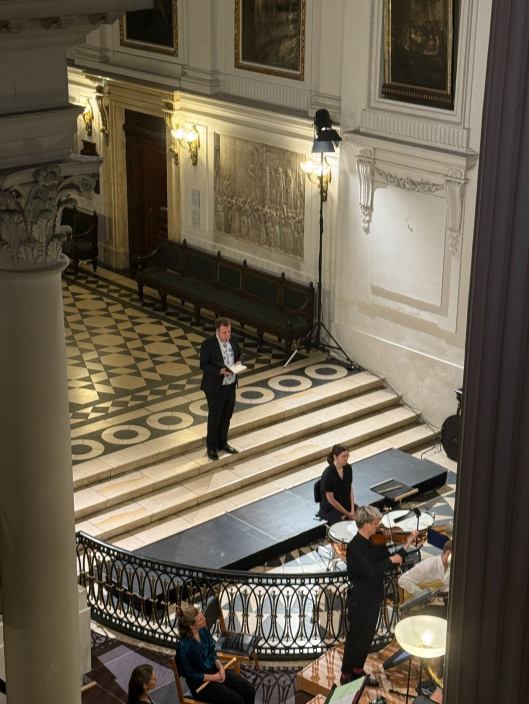
Alex Potter in the Nikolaikirche on June 17. Photo courtesy of Sascha Wolff.

I had only just arrived to Leipzig on Tuesday June 17. I had not even unpacked yet, but I had a chance to hear “Missa Miniatura,” Elina Albach’s adaptation of Bach’s Mass in B Minor again, and I am a big fan of that production. So I ate a quick dinner and made it to the Nikolaikirche just in time. Alex Potter’s stunning rendition of the Agnus Dei at this concert was definitely a highlight of this Bachfest for me. In order to have a bit more acoustic, he had climbed up a few steps so he stood directly under an arch in the Nikolaikirche. Thanks to Sascha Wolff for capturing that moment on photo. After this aria I felt “we can now all die happily.” The other aria that transported me to a similar state of bliss was David de Winter’s “Der Ewigkeit saphirnes Haus” from Cantata 198 Laß, Fürstin, laß noch einen Strahl with Solomon’s Knot on Friday, June 20, in the Evangelisch-Reformierte Kirche. I had never heard this aria sung so beautifully.

Bach’s “50 best cantatas” by Lutz, Herrewege, and Rademann, Vox Luminis, Koopman, and Gardiner in 2026 – how to get organized

Disclaimer: I’m not getting paid to write this. Below is a reflection of my personal opinion and personal interpretation of the information that is available at the time of writing this blog post. I do not accept responsibility if your experience is different. I just thought it might be helpful to curate the information from various websites for you.

Anyone reading this who has visited Bachfest in the last few years: please feel free to add your own advice in the comments. Thank you!

Next year’s cantata programming at the festival is going to be a hit parade of the “50 best cantatas” (chosen by the audience, read more about the how and why in this interview with festival director Michael Maul by blogger Rick Fulkner) with two concerts each by Herreweghe, Lutz, Koopman, Gardiner, Rademann, and Vox Luminis. Here are my tips to get organized:

If you already know you want to attend all 12 cantata concerts (= two concerts per day, six days in a row, of two to three cantatas each, each cantata preceded by a motet by Schütz or Schein), you can purchase your “packet” here. You’ll go through two seat selection screens, one to select your seat for the Thomaskirche (the screen doesn’t specify this, but it is the seatmap that has the stage at the bottom, and “Südempore” on the right), and, once you have clicked the checkout button, another one for the Nikolaikirche (not specified either, but this is the map that has the stage at the top and 1. Empore and 2. Empore).

Please note for Thomaskirche:

  • For concerts with choir and orchestra, the performers are located on the organ loft of the Sauer-organ (the bottom of the seating map).
  • The majority of the pews downstairs, where the sound is likely best, have their backs to the performers. Many people don’t mind this, but it surprised me. Thus, if it is important for you to see the performers, choose a premium seat (yellow on the map) on one of the balconies, where the sound is wonderful too.
  • Some seats on the Empore (balconies) have partially blocked views of the performers due to large pillars, even the premium seats are not all equal, so don’t get your hopes up too much.

Please note for Nikolaikirche:

The sound is good everywhere in the church, but most seats on the balconies have limited leg space, so keep that in mind if you are tall, since these cantata concerts will be pretty long. The Bach Museum shop sells cute portable cushions for making your church pew seat more comfortable, see picture on the left, pillow folded in half. I also saw people who traveled with inflatable pillows.

If you want to pick and choose, only want to go to one concert per day, or don’t want to commit to spending a thousand euros just yet, mark your calendar:

  • November 11, 2025: Advance sales start for Patrons of the Bachfest/Bach-Archiv Leipzig and for members of the Neue Bachgesellschaft.
    • Become a patron of the Bachfest here (access to VIP seating for three concerts or more, depending on level of giving).
    • Become a member of the Neue Bachgesellschaft here (no special seating, just the earlier access to ticket sales).
  • November 25, 2025: Regular ticket sales start.

Where to stay: People I met had good experiences at Innside (hotel directly across the ring from the Thomaskirche, in a nice neighborhood), Motel One (close to the Nikolaikirche), and Adina Apartment Hotel (apartments close to the Nikolaikirche, 24-hour reception, pool, restaurant, bar). I myself stayed in Apartmenthotel Quartier M. which I loved because of the excellent organic supermarket on the ground floor of the same building, the good price, and the short walking distance to the Thomaskirche.

Copyright Wieneke Gorter, July 9, 2025.

Third Sunday after Easter, 1725

22 Sunday Apr 2018

Posted by cantatasonmymind in After Easter, Cantatas, Leipzig

≈ Leave a comment

Tags

3rd Sunday after Easter, Bach, BWV 1, BWV 103, BWV 12, BWV 96, Christiane Mariana von Ziegler, Damien Guillon, Easter, flauto piccolo, Il Gardellino, John Eliot Gardiner, Marcel Ponseele, Mark Padmore, Philippe Herreweghe, Robin Blaze, sopranino recorder

christ_taking_leave_of_the_apostles
Christ Taking Leave of the Apostles by Duccio di Buoninsegna, between 1308 and 1311. Tempera on wood. Museo dell’Opera del Duomo, Siena, Italy.

2020 update:  If you can afford to financially support the artists, please consider purchasing your favorite recording. Just click on the Amazon or iTunes link at the end of the paragraph that describes the recording.

In 1725, between Easter and Pentecost, Bach set nine cantatas in a row to beautiful poetry by Christiane Mariana von Ziegler: Cantatas 103, 108, 87, 128, 183, 74, 68, 175, and 176. Read more about this multi-talented female librettist, arts benefactor, and fellow Lutheran “preacher” in this post.

The first cantata in this series is Cantata 103: Ihr werdet weinen und heulen, for the third Sunday after Easter in 1725.

My favorite overall recording of this cantata is by Herreweghe, with vocal soloists Damien Guillon, Thomas Hobbs, and Peter Kooij, and Jan Van Hoecke on flauto piccolo. Listen to their opening chorus here on YouTube. Listen to the entire recording by Herreweghe here on Spotify. If you like this recording, please purchase it on Amazon or iTunes.

However for the best energy and intensity in the tenor aria, I prefer Mark Padmore on the Gardiner recording. Listen to their interpretation of the tenor aria here on Spotify. If you like this recording, please purchase it on Amazon or iTunes.

Robin Blaze’s singing and Dan Laurin’s playing in the alto aria on the Bach Collegium Japan recording is exceptional, and perhaps more moving than Damien Guillon’s on the Herreweghe recording. Listen to that aria here on Spotify. And it is a good problem for me, not being able to choose between countertenors 🙂 If you like this recording, please purchase it on Amazon or iTunes.

Find the texts & translations here, and the score here.

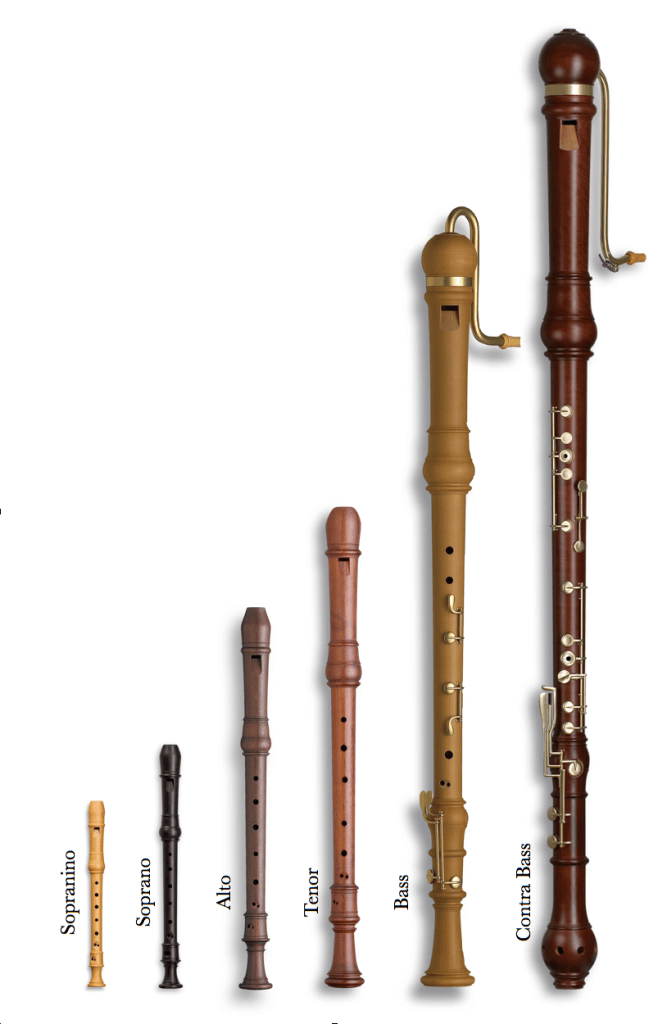
Two noteworthy things about this cantata are the dramatic change from sadness to joy, and the use of the sopranino recorder, or “flauto piccolo” in the opening chorus and the alto aria.

The sadness on this “Jubilate” Sunday is because of the Gospel story for this Sunday: Jesus announces to his disciples that he is going to leave them, and that they will go through a period of hardship during which the rest of the world will mock them. Other cantatas Bach wrote for this Sunday are Cantata 12 Weinen, Klagen, Sorgen, Zagen and Cantata 146 Wir müssen durch viel Trübsal. But in the alto recitative (fourth movement), the turning point is announced: “dass meine Traurigkeit in Freude soll verkehret werden” (that my sorrow will be turned to joy). Bach makes a big deal here of illustrating the word “Freude” and then does that again, even more exuberantly in the tenor aria that follows: there the illustration of the word “Freude” is six measures and almost 100 notes long.

Since his arrival in Leipzig, Bach had used recorders in cantatas quite often see this image by Nik Tarasov, but this is only the third time he writes for sopranino recorder, or “flauto piccolo.” The first time was on October 8, 1724, in Cantata 96 Herr Christ der einige Gottessohn, and the second time on March 25, 1725, in Cantata 1 Wie schön leuchtet der Morgenstern.

In both cases, Bach used the sopranino part to illustrate the word “Morgenstern” (Morning Star) in the text, creating an extra constellation over the highest notes of the sopranos with the even higher notes of the recorder. It is not completely clear why Bach uses the sopranino this time, in Cantata 103. There are theories that the instrument is meant to illustrate the “mocking” of the outside world. But, as Bach always paints the entire story of a cantata already in the opening chorus, I think he perhaps might have used the recorder to convey the message of “there will be joy at the end” in the otherwise very sad opening chorus. But who knows, his reason for using the instrument might simply have been that the virtuoso player was in town again, since it was around the time of the big Easter Trade Fair that Bach was writing this music.

Whatever the reason, it is very likely that there was only one person in 1725 among Bach’s colleagues who could play this. When Bach performed the piece again in later years, he changed the accompanying instrument in the alto aria to violin. There are also parts for a transverse flute. Herreweghe, Koopman, and Suzuki use a sopranino recorder in the alto aria, while Gardiner uses violin, and Ponseele (on the Il Gardellino recording) uses transverse flute.

To learn more about this cantata, you can now (2020) watch the excellent introduction (“Workshop”) by Rudolf Lutz of the J.S. Bach Foundation here on YouTube. The J.S. Bach Foundation just added English subtitles this video, so it is now also accessible to those who don’t understand German.

To read more about Bach’s use of recorders, I recommend this article in two parts by Nik Tarasov: Part I, about Bach in Mühlhausen, Weimar, and Köthen, and Part II, about Bach in Leipzig.

Wieneke Gorter, April 22, 2018, updated April 27 & May 2, 2020.

Glorious soprano arias and unusual instrumentation

08 Sunday May 2016

Posted by cantatasonmymind in After Easter, Cantatas, Leipzig

≈ Comments Off on Glorious soprano arias and unusual instrumentation

Tags

Bach, BWV 183, bwv 44, Carolyn Sampson, Christiane Mariana von Ziegler, Dorothee Mields, Exaudi, Gerd Türk, Harnoncourt, oboe d'amore, oboe da caccia, Peter Jelosits, Peter Kooy, Phlippe Herreweghe, Robin Blaze, Rudolf Lutz, Thomas Hobbs, violoncello da spalla

BWV183titlepage

The title page of cantata 183 in Bach’s handwriting: Dominica Exaudi // Sie werden eüch in den Bann tun // à 4 Voci, 2 Hautb d’Amore, 2 Hautb da Caccia, 2 Violini, Viola, Violoncello piccolo e Continuo // di Joh. Sebas. Bach. Staatsbibiothek zu Berlin – Preußischer Kulturbesitz

There are two cantatas for this Sunday Exaudi, aka the Sunday after Ascension, or in the practical reality of the man who had to write the music and rehearse the choir: the Sunday in between Ascension and the three-day-long feast of Pentecost. Because they refer to the same Gospel text, the cantatas share the title Sie werden euch in den Bann tun, but except for the fact that they each contain a glorious soprano aria, they have nothing in common.

I discuss both cantatas in this blog post. Keep reading for Cantata 183, but let’s first look at the one Bach wrote in 1724: Cantata 44 Sie werden euch in den Bann tun.

The soprano aria from this cantata, Es ist und bleibt der Christen Trost, sung by the amazing Peter Jelosits on the Harnoncourt recording from 1975 is among the most happiest music memories of my childhood. I suspect my mom loved it so much that she played it more often than just on this Sunday. I didn’t realize how well this aria is engraved in my brain until I surprised myself during a choir carpool, singing the entire thing from memory, illustrating a story about how some of these boy sopranos could sing very complicated arias.

Es ist und bleibt der Christen Trost,
The consolation of Christians is and remains
Dass Gott vor seine Kirche wacht.
God’s watchful care over his church.
Denn wenn sich gleich die Wetter türmen,
For even though at times the clouds gather,
So hat doch nach den Trübsalstürmen
yet after the storms of affliction
Die Freudensonne bald gelacht.
the sun of joy has soon smiled on us.

If you would like to listen to the entire cantata, I recommend Herreweghe’s recording from 2013. The opening tenor/bass duet is the best here, with bass Peter Kooij singing out much more than on their 1993 recording of this same cantata, and his and Thomas Hobbs’ voice matching better than his and Christoph Prégardien’s (as much as I love Prégardien’s voice!).

Also, Herreweghe’s interpretation of the soprano aria on this 2013 recording is the most musical and the most cheerful, not in the least because it has the highest tempo of all recordings I listened to. That this proves a bit of a challenge for the always fabulous soprano Dorothee Mields is only audible in the text: after she comes out of the expertly executed but super tricky long runs, she slips back into the edition she probably studied from, which uses the more modern “für seine Kirche”  instead of the edition they’re performing from, which uses the archaic “vor seine Kirche,” so it ends up being a mix of the two texts. While this bugs me a little bit, a retake of the recording would probably have been at the expense of the magic that happens in this aria, so it is probably a good thing that they left it in.

Purchase the Herreweghe recording of cantata 44 on Amazon or on iTunes. (This album also features the beautiful recording of cantata 73 discussed here).

Find the entire German text of cantata 44 with English translations here, and the score here.

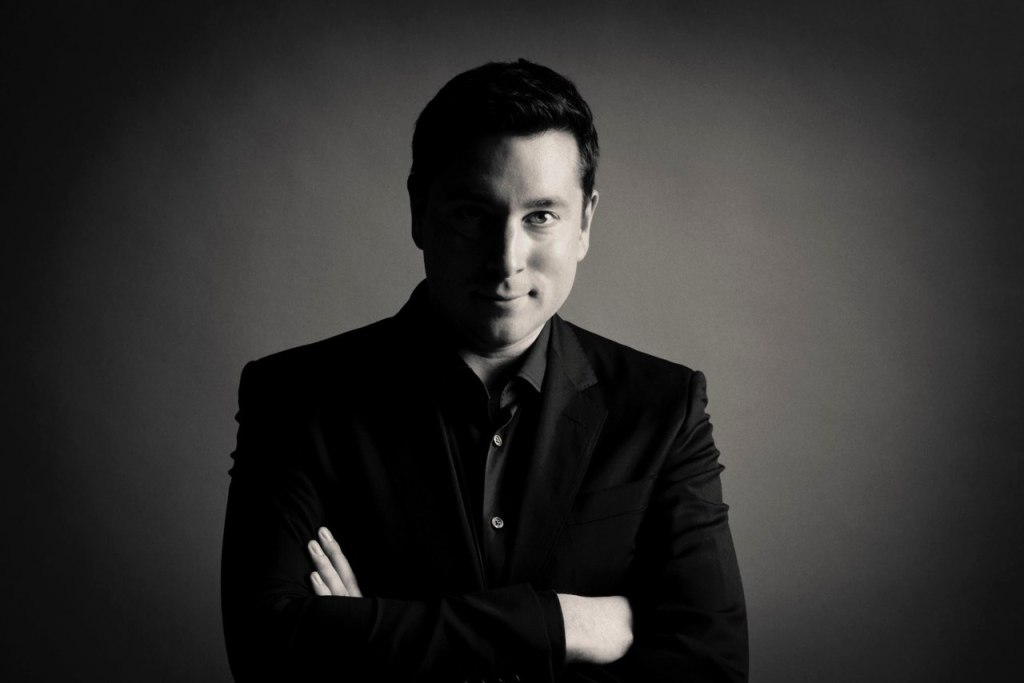
  • Thomas Hobbs, tenor (photo by B Ealovega)
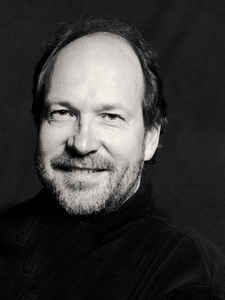
  • Peter Kooij, bass

Cantata 183 from 1725 is noteworthy because it uses a text by Christiane Mariana von Ziegler and features a striking instrumentation: two oboi d’amore and two oboi da caccia in the bass recitative; a violoncello piccolo in the tenor aria; again the two oboe pairs in the alto recitative; two oboi da caccia in the soprano aria; all these instruments in the closing chorale.

My absolute favorite recording of this cantata is the one by Bach Collegium Japan. They struck gold with this recording, thanks to the combination of  Badiarov playing the violoncello piccolo da spalla, fabulous oboe players, and terrific vocal soloists: soprano Carolyn Sampson, countertenor Robin Blaze, tenor Gerd Türk, and bass Peter Kooij. I think the entire album (also featuring the recording of cantata 85 discussed here) is very inspired, and it has become one of my favorite Bach cantata CDs.

Listen to this Bach Collegium Japan recording of cantata 183 on Spotify.

Purchase this Bach Collegium Japan recording of cantata 183 (and 85!) on Amazon or on iTunes.

Find the German text with English translation of Cantata 183 here, and the score here.

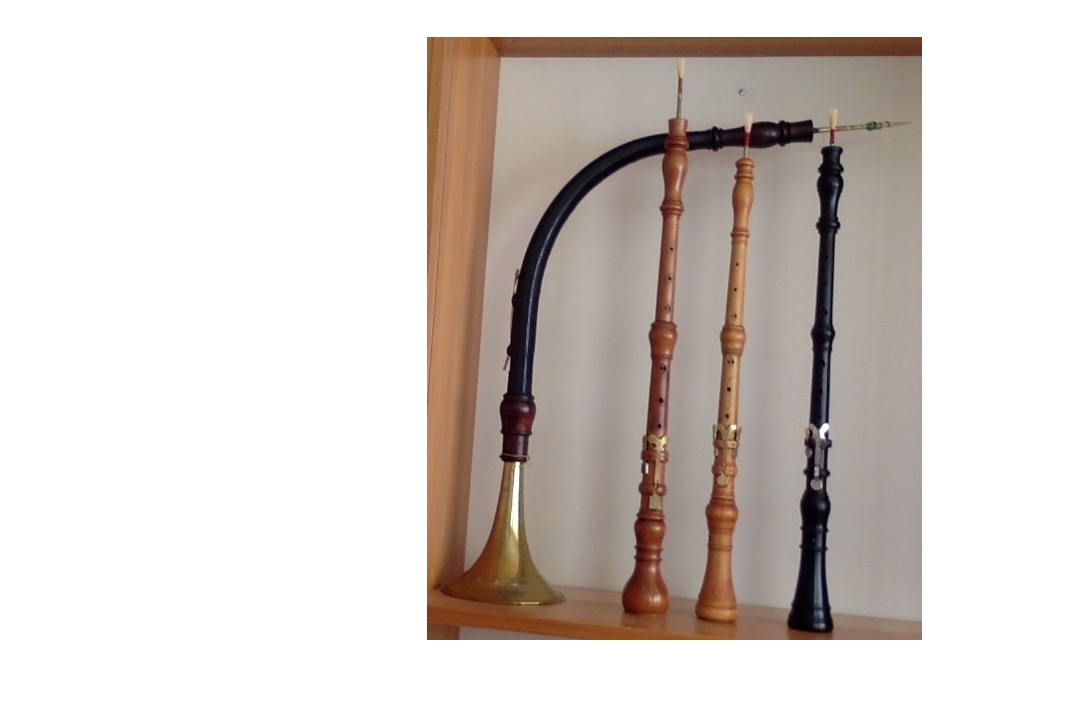
Why is this scoring for the oboes so unusual? In Bach’s time there were “regular” oboes (to the right on this photo), oboes d’amore (with a bell-like widening in the wood at the end, second from left), and oboes da caccia (or “hunting” oboes, completely curved, and with a trumpet-like brass bell at the end, far left).

Oboes
From left to right: oboe da caccia, oboe d’amore, oboes. Photo courtesy of Marianne Richert Pfau; instruments built after 18th century examples by Sand Dalton, Harry van Dias, and Paul van der Linden, respectively.

Bach often used the oboe da caccia, but only on a handful of occasions would he write for two da caccias. And even if he would write for two da caccias or two d’amores and “regular” oboes in the same cantata (or passion) they would not all be playing at the same time. On most occasions there were between one or two oboe players in the orchestra, sometimes three, alternating between the different instruments from one movement to the next. The only times Bach needed four oboists in one cantata, playing two da caccias and two d’amores at the same time, was in cantata 2 of the Christmas Oratorio (1734) and in this cantata 183. So there must have been some good oboe playing visitors in town around this time of Ascension and Pentecost in 1725.

The four oboes can be heard clearly in the alto recitative, where Bach has each of them repeat the four-note theme from the “ich bin bereit”-text in the vocal part:

Screenshot 2016-05-08 10.16.33

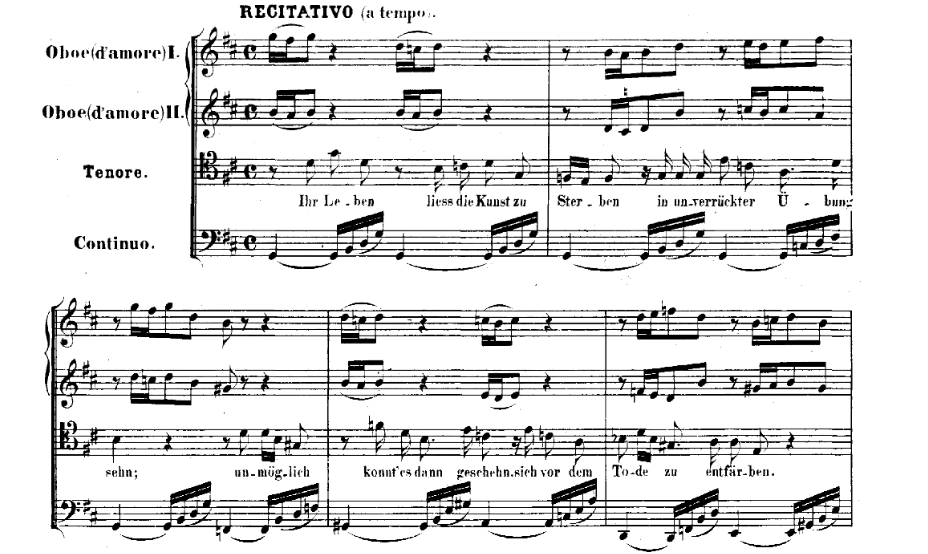
When I hear this, I immediately have to think of the tenor recitative in Bach’s beautiful  Trauer Ode, cantata 198, this time reduced to a 3-note theme and without the da caccias:

Screenshot 2016-05-08 10.28.17

Or listen to this recitative from cantata 198 on YouTube

It is of course not exactly the same composition, but I wonder if Bach had to think back of this cantata from 1725 when he wanted to illustrate life  and death in one and the same piece of music in the Trauer Ode of 1727.

After this alto recitative comes the most glorious soprano aria, richly scored with the two oboes da caccia playing the oboe part in unisono, as well as parts for violin 1, violin 2, and viola. Harnoncourt says that even though both da caccia have this aria written in, he says it is “clearly not intended to be chorally played” and on their recording they decide to have this part covered by only one oboe da caccia. Perhaps the original full score was not available to Harnoncourt at the time he made that decision, because it clearly says: “tutti gli Oboi in unisono:”

Screenshot 2016-05-08 12.34.13
excerpt from the soprano aria from cantata 183, with Bach’s indication for “all the oboes in unisono,” Staatsbibiothek zu Berlin, Preußischer Kulturbesitz

One would almost think Bach dreamt of all four oboes playing this, also the d’amores, but when his copyists double-checked with him, he decided that was just silly, it would overpower the poor boy who had to sing this, and they only wrote it into the parts for the da caccias (it says “Arie Tacet” in the parts for the oboi d’amore).

To learn more about Cantata 183, I wholeheartedly recommend you study with Rudolf Lutz of the J.S. Bach Foundation a little bit. Find a link to his fabulous (English spoken!) lecture and improvisation about this cantata in my blog post from May 24, 2020.

Wieneke Gorter, May 8, 2016, updated May 23, 2020.

A female librettist and an inspired recording

01 Sunday May 2016

Posted by cantatasonmymind in After Easter, Cantatas, Leipzig

≈ Comments Off on A female librettist and an inspired recording

Tags

Bach, cantatas, Christiane Mariana von Ziegler, John Eliot Gardiner

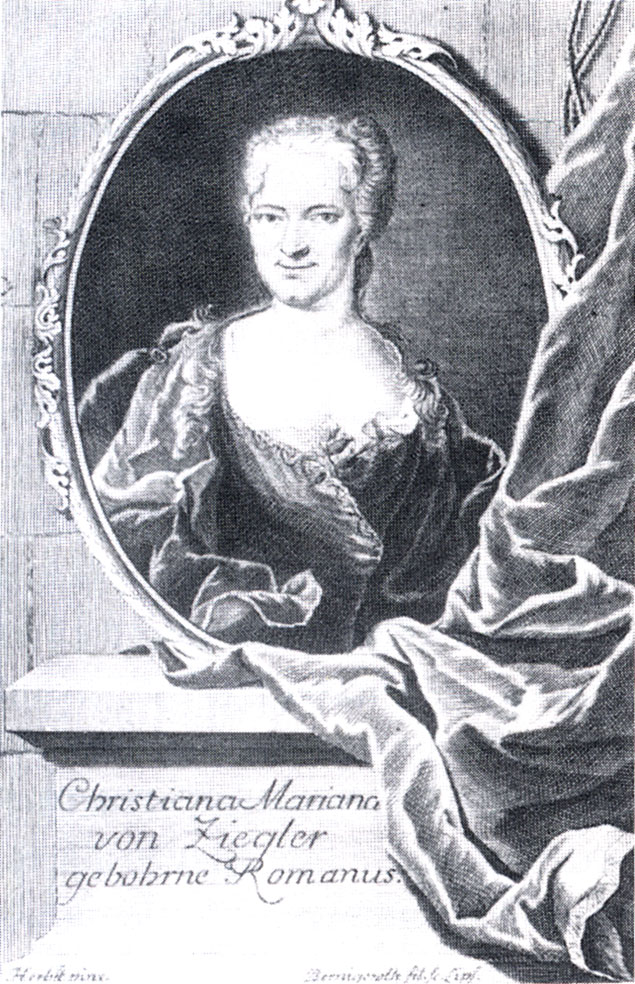
ziegler-christiane-mariane-02

In 1725, between Easter and Pentecost, Bach set nine cantatas in a row to texts by Christiane Mariana von Ziegler (1695–1760). And it is in part thanks to her poetry that I’m favoring the cantata from 1725 over the one from 1724  for this “Rogate” Sunday – the fifth Sunday after Easter.

This cantata 87 from 1725, Bisher habt ihr nichts gebeten in meinem Namen, contains two jewels of arias: the alto aria (no 2) and the tenor aria (no 6). Von Ziegler’s poetry combined with Bach’s sublime scoring in those arias completely knocked me over when I first listened to this cantata this week. I found Gardiner’s recording of this cantata (which I happened upon by accident – read more about this at the very end of this post) the most moving.

Listen to Gardiner’s recording of cantata 87 on Spotify.

Listen to Gardiner’s recording of cantata 87 on YouTube (there might be some ads in here – you can click to skip them after a few seconds).

Buy Gardiner’s live recording of cantata 86 and 87 on Amazon

(This album is absolutely worth purchasing –  cantata 86 is beautiful too, and the violin accompaniment in the alto aria of that cantata 86 on this recording is the best)

About Christiane Mariana von Ziegler: A female librettist, who didn’t have to hide behind a male alias to get recognition or to get her works published? In 18th century Leipzig? When I first heard about this I could not believe it. But it turns out that by unusual circumstances, Christiane Mariane von Ziegler was as “free” as probably no other woman at that time was, at least between 1722 and 1741.

In that time period, there was no husband or other male relative by whose rules she had to live: her father had been in jail since she was 11, she had been twice widowed, and had lost both her children (one from each marriage). Despite all this, she was still in possession of her family’s house and fortune, and was well respected in Leipzig society. She wrote poetry, sang, and played many musical instruments. In 1722 (at age 27) she was appointed the official guardian of her family’s household, a position normally never awarded to a woman. For the next two decades her house served as the salon where many artists and intellectuals could meet. She would promote artists, poets and writers, and introduce them to representatives of the university who also attended her events.

In 1730, Von Ziegler became the first and only female member of Gottsched’s German Literary Society. She was named “poet laureate,” crowned by the emperor in 1733. In 1732 and 1734 she received the poetry prize from the German Literary Society. Her last published work appeared in 1739. In 1741, she married Professor Balthasar von Steinwehr and lived with him in Frankfurt an der Oder until her death in 1760. As far as we know, she did not write anything in this last period of her life.

In 1728, she published Versuch in gebundener Schreib=Art, which contains the texts for the nine 1725 Bach Cantatas (103, 108, 87, 128, 183, 74, 68, 175, 176). In 1729 she published In Gebundener Schreib-Art: Anderer und letzter Theil, which contains the rest of a complete yearly cantata cycle which Bach never set to music.

Since there is no correspondence between Von Ziegler and Bach left to us,  we don’t know why they started working together, we don’t know why the working relationship ended, nor why Bach never used the other texts she had provided for the rest of the cantata cycle. There are some theories that she must have been vexed about Bach altering her texts on several occasions in 1725. However, the only proof we have for what her “original” texts would have been are her publications from several years later. She might have changed them herself between Bach first using them and her later publishing them. We do know that Bach first worked with Picander, the poet with whom he would later collaborate extensively (including for the St. Matthew Passion) in February 1725.

Back to this cantata. It was Bach’s life goal to not only praise God, but also educate “his neighbor” (the congregation, his fellow believers) with his church music, and it seems that Von Ziegler definitely shared this vision. To not make this post too long, I’ll only highlight the alto aria, since it is the piece that impressed me most, but the rest of the cantata is well worth listening to, especially the tenor aria.

The Gospel reading for this Sunday was the last part of Jesus’ speech to his disciples, from John. Note verse 24 (quoted in the bass arioso opening) and the overall stress on speaking in proverbs versus speaking plainly.

23. Und an demselbigen Tage werdet ihr mich nichts fragen. Wahrlich, wahrlich, ich sage euch: So ihr den Vater etwas bitten werdet in meinen Namen,so wird er’s euch geben.

[23] And in that day ye shall ask me nothing. Verily, verily, I say unto you, Whatsoever ye shall ask the Father in my name, he will give it you.

24. Bisher habt ihr nichts gebeten in meinem Namen. Bittet, so werdet ihr nehmen, daß eure Freude vollkommen sei.

[24] Hitherto have ye asked nothing in my name: ask, and ye shall receive, that your joy may be full.

25. Solches hab’ ich zu euch durch Sprichwörter geredet. Es kommt aber die Zeit, daß ich nicht mehr durch Sprichwörter mit euch reden werde, sonderneuch frei heraus verkündigen von meinem Vater.

[25] These things have I spoken unto you in proverbs: but the time cometh, when I shall no more speak unto you in proverbs, but I shall shew you plainly of the Father.

26. An demselbigen Tage werdet ihr bitten in meinem Namen. Und ich sage euch nicht, daß ich den Vater für euch bitten will;

[26] At that day ye shall ask in my name: and I say not unto you, that I will pray the Father for you:

27. denn er selbst, der Vater, hat euch lieb, darum daß ihr mich liebet und glaubet, daß ich von GOtt ausgegangen bin.

[27] For the Father himself loveth you, because ye have loved me, and have believed that I came out from God.

28. Ich bin vom Vater ausgegangen und kommen in die Welt; wiederum verlasse ich die Welt und gehe zum Vater.

[28] I came forth from the Father, and am come into the world: again, I leave the world, and go to the Father.

29. Sprechen zu ihm seine Jünger: Siehe, nun redest du frei heraus und sagest kein Sprichwort.

[29] His disciples said unto him, Lo, now speakest thou plainly, and speakest no proverb.

30. Nun wissen wir, daß du alle Dinge weißt und bedarfst nicht, daß dich jemand frage. Darum glauben wir, daß du von GOtt ausgegangen bist.

[30] Now are we sure that thou knowest all things, and needest not that any man should ask thee: by this we believe that thou camest forth from God.

After the Vox Christi bass arioso opening (beautifully scored as an opening “chorus” for strings, oboes, and bass voice), Von Ziegler doesn’t hold back in communicating what the believers should take away from this lesson, and writes this text for the alto recitative:

O Wort, das Geist und Seel erschreckt!
O word, that terrifies spirit and soul!
Ihr Menschen, merkt den Zuruf, was dahinter steckt!
You people, notice the call hidden behind these words!
Ihr habt Gesetz und Evangelium vorsätzlich übertreten;
You have deliberately transgressed the law and gospel;
Und dies möcht’ ihr ungesäumt in Buß und Andacht beten.
And because of this you should pray without delay in repentance and devotion.

And then gives them the prayer they should be saying in the alto aria, and this is the part that bowled me over, because of the combination of the music, the text, and the humble interpretation of it on the Gardiner recording:

Vergib, o Vater, unsre Schuld
Forgive, O Father, our guilt
Und habe noch mit uns Geduld,
and still have patience with us,
Wenn wird in Andacht beten
when we devoutly pray
Und sagen: Herr, auf dein Geheiß,
and say: Lord, at your command,
Ach, rede nicht mehr sprichwortsweis,
Ah, speak no more proverbs,
Hilf uns vielmehr vertreten.
Instead help us represent ourselves.

Here’s the story of how I happened upon the Gardiner recording of this cantata, and this aria in particular: I was only familiar with cantata 86, not with 87. When comparing several recordings of the alto aria in cantata 86 (because of the stunningly beautiful and very virtuosic violin accompaniment), I decided I liked the violin playing on Gardiner’s recording the best. Satisfied that I had found this and knew what my blog post was going to be about, I took a break while letting the album play, and of course cantata 87 was next. I was on the floor on my yoga mat, just lying there, letting the music wash over me, unable to do anything else.

I am rarely so physically moved by a Gardiner recording, so I went and looked up his journal of the live performances (and recordings) in question, and found this:

“In addition to our habitual position of “bringing coals to Newcastle,” the potential impertinence of interpreting Bach to the Germans, we faced the far pricklier issue of performing Bach in the city [Dresden] whose cultural treasure had been wantonly destroyed by British bombs in one mad night towards the end of the war and with colossal loss of life.”

So there it was: the prayer for forgiveness and better representation had been as meaningful to the British musicians in the German city at the time of this recording as it was to me this week.

Wieneke Gorter, May 1, 2016, links updated May 19, 2024.

Recent Posts

  • “Missa Miniatura” by CONTINUUM/Elina Albach Even More Moving in 2025
  • Bachfest Leipzig 2025
  • Bach Cantatas for Christmas – 1724 and 1734 editions
  • Fourth Sunday of Advent – more insight into Cantata 62 helped me better understand Bach’s Christmas Oratorio
  • Saint Ambrose and Luther in Milan – Second Sunday of Advent

Archives

  • August 2025
  • July 2025
  • December 2024
  • November 2024
  • June 2024
  • January 2024
  • December 2023
  • October 2023
  • September 2023
  • August 2023
  • April 2022
  • February 2022
  • January 2022
  • December 2021
  • November 2021
  • June 2021
  • May 2021
  • April 2021
  • February 2021
  • January 2021
  • December 2020
  • November 2020
  • October 2020
  • September 2020
  • August 2020
  • July 2020
  • May 2020
  • April 2020
  • March 2020
  • February 2020
  • January 2020
  • December 2019
  • November 2019
  • May 2018
  • April 2018
  • March 2018
  • February 2018
  • January 2018
  • December 2017
  • November 2017
  • October 2017
  • September 2017
  • August 2017
  • July 2017
  • June 2017
  • May 2017
  • April 2017
  • March 2017
  • February 2017
  • January 2017
  • December 2016
  • November 2016
  • October 2016
  • September 2016
  • August 2016
  • July 2016
  • June 2016
  • May 2016
  • April 2016
  • March 2016
  • February 2016
  • January 2016

Enter your email address to follow this blog and receive notifications of new posts by email.

Join 338 other subscribers

Categories

  • 1723 Trinity season special series
  • Advent
  • After Easter
  • Ascension
  • Bach's life
  • Cantatas
  • Chorale cantatas 1724/1725
  • Christmas
  • Easter
  • Epiphany
  • Following Bach in 1725
  • Köthen
  • Leipzig
  • Septuagesima
  • Travel
  • Trinity
  • Weimar

Meta

  • Create account
  • Log in
  • Entries feed
  • Comments feed
  • WordPress.com

Website Built with WordPress.com.

  • Subscribe Subscribed
    • Weekly Cantata
    • Join 158 other subscribers
    • Already have a WordPress.com account? Log in now.
    • Weekly Cantata
    • Subscribe Subscribed
    • Sign up
    • Log in
    • Report this content
    • View site in Reader
    • Manage subscriptions
    • Collapse this bar
 

Loading Comments...