Weekly Cantata

Weekly Cantata

Tag Archives: Dietrich Henschel

Historic Churches and a Comforting Duet – Third Day of Christmas 2023

27 Wednesday Dec 2023

Posted by cantatasonmymind in Cantatas, Christmas, Leipzig, Weimar

≈ Leave a comment

Tags

Agnes van Laar, Bach, BWV 248/3, cantatas, Christmas, Christmas 3, Christmas Oratorio, Claron MacFadden, Dietrich Henschel, germany, John Eliot Gardiner, Marc Pantus
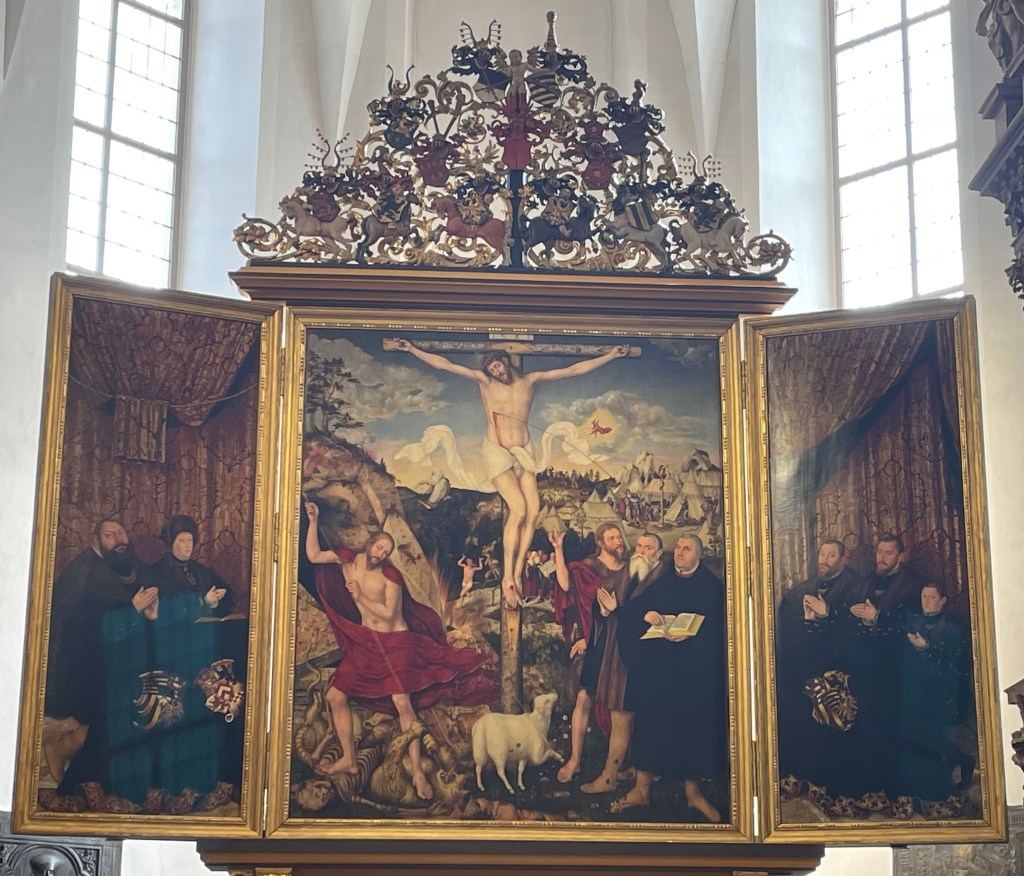
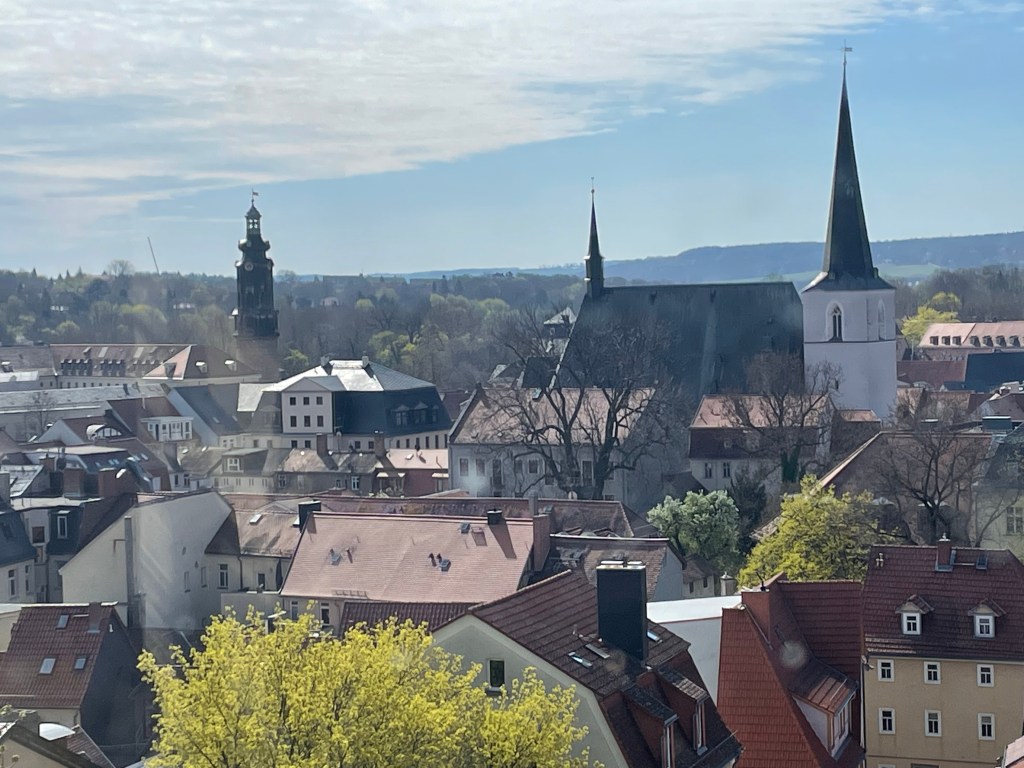
Photos from my visit to Weimar in April 2022: The famous altarpiece by Cranach in the St. Peter and Paul church or Herder church and the view over Weimar from the bell tower of St. James church. In the righmost photo you can see on the left the tower of the Bastille where Bach was held prisoner for a month, and on the right the Herder church. In addition to his job at the Duke’s castle, Bach played the organ at both St. James church and Herder church.

I hope you all had a meaningful Advent season and a merry Christmas. I needed to be with friends and family this month, and craved to hear music in old churches. It all worked out and I had one of the best Christmas seasons ever in recent years. I’m sorry that because of spending my time this way, I did not get to share any thoughts or music on this blog. If you went searching in my archives on your own, please let me know in the comments what you listened to. If you ever find youtube links that no longer work, please comment under the specific post or simply send me an email.

Why the photos of Weimar at the top of this blog post?

It’s because of a video I would like to share here today.

One of the best pieces of music I heard in an old church this month was the duet “Herr, dein Mitleid, dein Erbarmen” (Lord, your compassion, your mercy) from the third cantata of Bach’s Christmas Oratorio, written for today, the Third Day of Christmas. On December 10, I heard this excellently performed by soprano Agnes van Laar and bass Marc Pantus in the stunning Saint Martin’s church in Bolsward, the Netherlands.

This duet doesn’t usually appear among the “greatest hits” of Bach’s Christmas Oratorio but I just love the way the instrumental and vocal parts move together, and I am also moved by the text. I was searching for a good live video performance of this duet to share here today, and liked Gardiner’s the best, with soprano Claron McFadden and bass Dietrich Henschel. Please find that video here. Here is the text:

Herr, dein Mitleid, dein Erbarmen
Tröstet uns und macht uns frei.
Deine holde Gunst und Liebe,
Deine wundersamen Triebe
Machen deine Vatertreu
Wieder neu.

Lord, your compassion, your mercy
console us and make us free.
Your gracious favour and love,
your wondrous desires
make the love you have for us as a father
again new.

While watching this video, I realized that MacFadden and Henschel are singing at the Herder church in Weimar, directly in front of the famous Cranach altarpiece. I cannot really describe in words how thrilling it was for me to finally set foot in that church in April 2022. Watching the video and looking at the photos also inspired me to share more stories about my travels to Thuringia in April 2022 on this blog, and to hopefully visit the region again in the new year.

Further exploring:

Read my post from 2020 about all Bach’s other cantatas for the Third Day of Christmas here.

Find a very nice overview of Bach’s time in Weimar on the website of the Thuringia Bach Festival here.

Wieneke Gorter, December 27, 2023.

Bach’s Music for Ascension Day

13 Thursday May 2021

Posted by cantatasonmymind in Ascension, Cantatas, Leipzig

≈ Leave a comment

Tags

Amsterdam Baroque Orchestra, Andrew Tortise, Annekathrin Laabs, Ascension, Ascension Oratorio, Barbara Schlick, Bernhard Landauer, BWV 11, BWV 128, BWV 37, BWV 43, Catherine Patriasz, Charles Daniels, Christiane Mariane von Ziegler, Christmas Oratorio, Christoph Prégardien, Collegium Vocale Gent, Dietrich Henschel, English Baroque Soloists, John Eliot Gardiner, Klaus Mertens, Lenneke Ruiten, Meg Bragle, Miriam Feuersinger, Peter Kooij, Philippe Herreweghe, Sibylla Rubens, Ton Koopman, Wolf Matthias Friedrich

The Ascension, from the illuminated 15th-century manuscript Les Très Riches Heures du duc de Berry, Folio 184r – Musée Condé, Chantilly, France.

Today was Ascension Day. In Bach’s time this was a very important holiday in the churches. Many countries in Europe have a four-day weekend starting on this Thursday. I did too as a kid growing up in the Netherlands. But we didn’t go to church on this day, and I don’t remember my mother playing the Ascension cantatas or the Ascension Oratorio on the turntable at home on this day. Instead we went for a bike ride, visit grandparents, or go camping. I didn’t know Bach’s music for Ascension Day at all until we performed BWV 11 and 43 with California Bach Society in the early 2000s. The choruses from these compositions are among the most fun I have every sung in a choir. I love the syncopated rhythms.

Here is an overview of Bach’s music for Ascension Day, as far as we know, in order of creation:

In 1724, Bach wrote Cantata 37 Wer da gläubet und getäuft wird (Whoever believes and is baptised). Listen to it here. Soloists in this recording by Ton Koopman/Amsterdam Baroque Orchestra are Sibylla Rubens, soprano; Bernhard Landauer, alto; Christoph Prégardien, tenor; and Klaus Mertens, bass.

In 1725, as part of the series of cantatas on texts by Christiane Mariane von Ziegler, Bach wrote Cantata 128 Auf Christi Himmelfahrt allein (On Christ’s ascension alone). Listen to it here. Soloists on this live recording by John Eliot Gardiner/English Baroque Soloists are Lenneke Ruiten, soprano; Meg Bragle, mezzo soprano; Andrew Tortise, tenor; and Dietrich Henschel, bass. Find my blog post from 2018 about this cantata, which includes a different recording by Gardiner here.

The last Bach cantata we have for this holiday is from 1726: Cantata 43 Gott fähret auf mit Jauchzen (God ascends with shouts of joy). Listen to it here. Soloists in this live recording by Rudolf Lutz/J.S. Bach Foundation are Miriam Feuersinger, soprano; Annekathrin Laabs, alto; Charles Daniels, tenor; and Wolf Matthias Friedrich, bass.

Nine years later, Bach wrote his Ascension Oratorio, BWV 11 Lobet Gott in seinen Reichen (Praise God in His kingdoms), incorrectly labeled as a cantata in the 19th century. Bach might have been inspired by the Christmas Oratorio he had written only five months before that.

On that Ascension Day, Thursday, May 19, 1735, this oratorio was performed in the morning service in the St. Nicholas Church, and again in the afternoon service in the St. Thomas Church. Watch the wonderful opening chorus here in a live performance by Philippe Herreweghe/Collegium Vocale Gent from 2014 from the Chapelle de la Trinité in Lyon, France. Or listen to the entire oratorio by Philippe Herreweghe/Collegium Vocale Gent on a CD recording from 1993 here. Soloists on that 1993 recording are Barbara Schlick, soprano; Catherine Patriasz, alto; Christoph Prégardien, tenor; and Peter Kooij, bass.

Wieneke Gorter, May 13, 2021.

Recent Posts

  • “Missa Miniatura” by CONTINUUM/Elina Albach Even More Moving in 2025
  • Bachfest Leipzig 2025
  • Bach Cantatas for Christmas – 1724 and 1734 editions
  • Fourth Sunday of Advent – more insight into Cantata 62 helped me better understand Bach’s Christmas Oratorio
  • Saint Ambrose and Luther in Milan – Second Sunday of Advent

Archives

  • August 2025
  • July 2025
  • December 2024
  • November 2024
  • June 2024
  • January 2024
  • December 2023
  • October 2023
  • September 2023
  • August 2023
  • April 2022
  • February 2022
  • January 2022
  • December 2021
  • November 2021
  • June 2021
  • May 2021
  • April 2021
  • February 2021
  • January 2021
  • December 2020
  • November 2020
  • October 2020
  • September 2020
  • August 2020
  • July 2020
  • May 2020
  • April 2020
  • March 2020
  • February 2020
  • January 2020
  • December 2019
  • November 2019
  • May 2018
  • April 2018
  • March 2018
  • February 2018
  • January 2018
  • December 2017
  • November 2017
  • October 2017
  • September 2017
  • August 2017
  • July 2017
  • June 2017
  • May 2017
  • April 2017
  • March 2017
  • February 2017
  • January 2017
  • December 2016
  • November 2016
  • October 2016
  • September 2016
  • August 2016
  • July 2016
  • June 2016
  • May 2016
  • April 2016
  • March 2016
  • February 2016
  • January 2016

Enter your email address to follow this blog and receive notifications of new posts by email.

Join 338 other subscribers

Categories

  • 1723 Trinity season special series
  • Advent
  • After Easter
  • Ascension
  • Bach's life
  • Cantatas
  • Chorale cantatas 1724/1725
  • Christmas
  • Easter
  • Epiphany
  • Following Bach in 1725
  • Köthen
  • Leipzig
  • Septuagesima
  • Travel
  • Trinity
  • Weimar

Meta

  • Create account
  • Log in
  • Entries feed
  • Comments feed
  • WordPress.com

Website Built with WordPress.com.

  • Subscribe Subscribed
    • Weekly Cantata
    • Join 158 other subscribers
    • Already have a WordPress.com account? Log in now.
    • Weekly Cantata
    • Subscribe Subscribed
    • Sign up
    • Log in
    • Report this content
    • View site in Reader
    • Manage subscriptions
    • Collapse this bar
 

Loading Comments...