Weekly Cantata

Weekly Cantata

Tag Archives: Dominik Wörner

Multifunctional trumpets, from 1723 to 1748

27 Sunday Aug 2023

Posted by cantatasonmymind in 1723 Trinity season special series, Bach's life, Cantatas, Leipzig, Trinity

≈ Leave a comment

Tags

Alex Potter, BWV 69, BWV 69a, Christ healing a deaf mute, Dominik Wörner, Eduard van Hengel, J.S. Bach Foundation, J.S. Bach Stiftung, Karl Graf, Michael Maul, Miriam Feuersinger, Mirjam Berli, Peter Kooij, Raphael Höhn, Rudolf Lutz, Thomas Hobbs, Trinity 12, trumpets
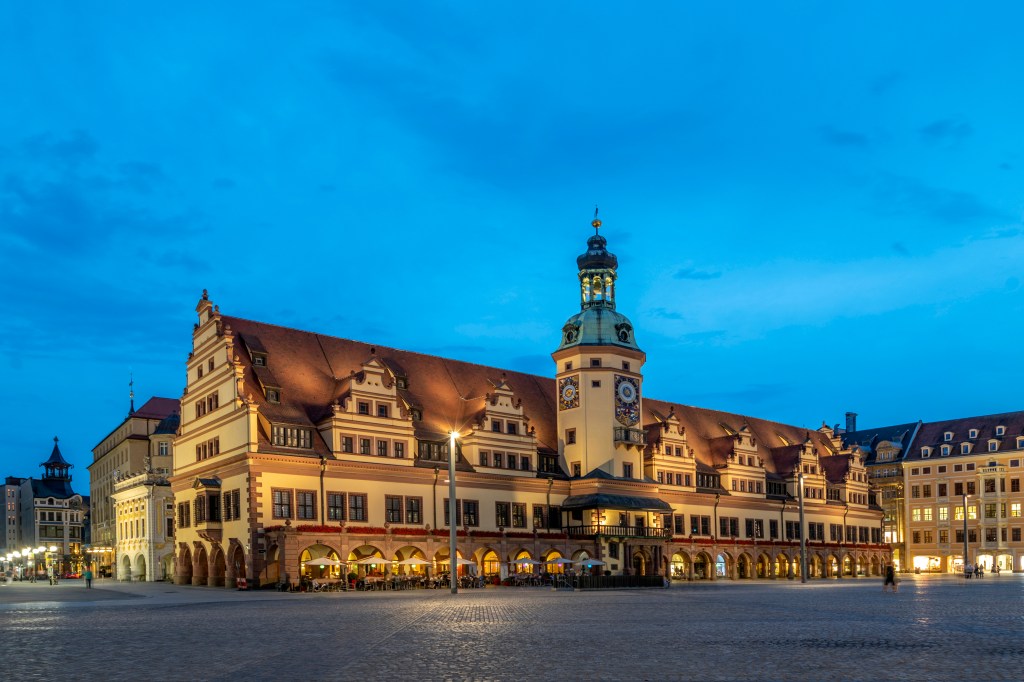
Old Town Hall in Leipzig

For those of you receiving this in email, please click on the post to read in a web browser, as images and table will display much better that way.

For this Sunday in 1723, the 12th after Trinity, Bach wrote Cantata 69a Lobe den Herrn, meine Seele. In my post from 2016 I remarked how unusual it was for Bach to use trumpets on such a “normal” Sunday, and imagined his father-in-law being in town for a visit. But this week I heard two better arguments. 

In his podcast, Bach scholar Michael Maul suggests that after the incredibly serious and sad music of the past three Sundays, Bach might have realized that the Leipzig churchgoers needed to hear something more upbeat. This might sound trivial, but if you look at Bach’s passions, he knew very well when a change in mood was needed and mastered that skill like a great opera composer or playwright. In addition to this good reason, I was also convinced by theologian Karl Graf in the J.S. Bach Foundation’s lecture about Cantata 69a, because he reminded me that the Bible story on which this cantata is based is that of Christ healing a deaf mute. Graf points out that in the time of the Bible, but also still in Bach’s time, a deaf mute would not only have been excluded from society, but would also have been considered a person without faith. Thus, the rejoicing by chorus and trumpets is not only an illustration of the praise the crowd gives after witnessing the miracle, but especially of this person finding faith.

A quarter century later, in 1748, Bach recycled this cantata during the same time of year, but for a completely different occasion: the installation of the new Town Council, or “Ratswahl.” The “Ratswahl” was always on the first Monday after August 24 (the feast of St. Bartholomew); which in 1748 fell on Monday, August 30. Bach must have written about 27 Ratswahl cantatas, but only six have survived.

I have listed Bach’s changes in 1748 here below, expanding on a table created by Eduard van Hengel. I’ve included links for live video recordings of both cantatas (just click on the link at the top of each column).

Cantata 69a for Trinity 12 1723

Live video recording by the J.S. Bach Foundation, Rudolf Lutz, conductor. With
Mirjam Berli, soprano; Alex Potter, alto; Raphael Höhn, tenor; Dominik Wörner, bass.
Cantata 69 for Ratswechsel 1748

Live recording by the Netherlands Bach Society, Peter Dijkstra, conductor. With
Miriam Feuersinger, soprano; Alex Potter, alto; Thomas Hobbs, tenor; Peter Kooij, bass.
Please find the German texts with English translations here, and the score herePlease find the German texts with English translations here, and the score here
Opening ChorusOpening Chorus, unchanged
Soprano recitative, 11 measures

Ach, dass ich tausend Zungen hätte!
Ach wäre doch mein Mund
Von eitlen Worten leer!
Ach, dass ich gar nichts redte,
Als was zu Gottes Lob gerichtet wär!
So machte ich des Höchsten Güte kund;
Denn er hat lebenslang so viel an mir getan,
Dass ich in Ewigkeit ihm nicht verdanken kann.
Soprano recitative, 18 measures

Wie groß ist Gottes Güte doch!
Er bracht uns an das Licht,
Und er erhält uns noch.
Wo findet man nur eine Kreatur,
Der es an Unterhalt gebricht?
Betrachte doch, mein Geist,
Der Allmacht unverdeckte Spur,
Die auch im kleinen sich recht groß erweist.
Ach! möcht es mir, o Höchster, doch gelingen,
Ein würdig Danklied dir zu bringen!
Doch, sollt es mir hierbei an Kräften fehlen,
So will ich doch, Herr, deinen Ruhm erzählen.
Tenor aria in C Major with recorder and oboe da caccia

Meine Seele,
Auf, erzähle,
Was dir Gott erwiesen hat!
Rühmet seine Wundertat,
Laßt ein gottgefällig Singen
Durch die frohen Lippen dringen!
Alto aria in G Major with violin and oboe


Meine Seele,
Auf! erzähle,
Was dir Gott erwiesen hat!
Rühme seine Wundertat,
Laß, dem Höchsten zu gefallen,
Ihm ein frohes Danklied schallen!
Alto recitative with continuo only,
18 measures

Gedenk ich nur zurück,
Was du, mein Gott, von zarter Jugend an
Bis diesen Augenblick
An mir getan,
So kann ich deine Wunder, Herr,
So wenig als die Sterne zählen.
Vor deine Huld, die du an meiner Seelen
Noch alle Stunden tust,
Indem du nur von deiner Liebe ruhst,
Vermag ich nicht vollkommnen Dank zu weihn.
Mein Mund ist schwach, die Zunge stumm
Zu deinem Preis und Ruhm.
Ach! sei mir nah
Und sprich dein kräftig Hephata,
So wird mein Mund voll Dankens sein.
Tenor recitative with strings 
26 measures

Der Herr hat große Ding an uns getan.
Denn er versorget und erhält,
Beschützet und regiert die Welt.
Er tut mehr, als man sagen kann.
Jedoch, nur eines zu gedenken:
Was könnt uns Gott wohl Bessres schenken,
Als dass er unsrer Obrigkeit
Den Geist der Weisheit gibet,
Die denn zu jeder Zeit
Das Böse straft, das Gute liebet?
Ja, die bei Tag und Nacht
Vor unsre Wohlfahrt wacht?
Laßt uns dafür den Höchsten preisen;
Auf! ruft ihn an,
Dass er sich auch noch fernerhin so gnädig woll erweisen
Was unserm Lande schaden kann,
Wirst du, o Höchster, von uns wenden
Und uns erwünschte Hilfe senden.
Ja, ja, du wirst in Kreuz und Nöten
Uns züchtigen, jedoch nicht töten.
Bass ariaBass aria, unchanged
Closing chorale with instruments doubling the vocal lines

Was Gott tut, das ist wohlgetan,
Darbei will ich verbleiben.
Es mag mich auf die rauhe Bahn
Not, Tod und Elend treiben:
So wird Gott mich
Ganz väterlich
In seinen Armen halten.
Drum lass ich ihn nur walten.
Closing chorale with separate parts for trumpets and timpani

Es danke, Gott, und lobe dich
Das Volk in guten Taten.
Das Land bringt Frucht und bessert sich,
Dein Wort ist wohl geraten.
Uns segne Vater und der Sohn,
Uns segne Gott, der Heilge Geist,
Dem alle Welt die Ehre tut,
Für ihm sich fürchten allermeist,
Und sprecht von Herzen: Amen!

Wieneke Gorter, August 27, 2023.

About Weekly Cantata

I am a bilingual writer, publicist, choral singer, art and nature lover, happy wife, and blessed mother of two. I started this blog in 2016, inspired by my late mother’s love for Bach’s cantatas. After 23 years in the San Francisco Bay Area, I’m now back in the Netherlands.

If you are on social media, please follow me:

  • Facebook
  • Instagram

Please subscribe!

Please join my readers from all over the world and subscribe to this blog! Simply fill in your email address and you’ll receive an email every time I’ve published a new post. Thank you so much / Vielen Dank / Merci mille fois / 감사합니다 / 谢谢 / ありがとう / Mille grazie / Muchas gracias / Muito obrigado / Takk / Terima kasih / Dankuwel!

Designed with WordPress.com

Pelting rain, growing crops, it is the low instruments that do it

16 Sunday Feb 2020

Posted by cantatasonmymind in Cantatas, Weimar

≈ Leave a comment

Tags

2nd Sunday before Lent, Ageet Zweistra, American Bach Soloists, Andrew Schwartz, Anthony Martin, Armelle Plantier, Benjamin Butterfield, BWV 18, Dominik Wörner, four violas, François Fernandez, Francis Jacob, Gaëlle Lecoq, Gaëlle Volet, George Thomson, Iris Finkbeiner, J.S. Bach Foundation, James Weaver, Jan Kobow, Jeffrey Thomas, Joanna Bilger, John Butt, Josep Borras I Rocca, Julianne Baird, Kaori Uemura, Katharine Fuge, Kees Boeke, Lisa Grodin, litany, Luis Otavio Santos, Makoto Sakurada, Martina Bischof, Maya Amrein, Michael Eagan, Michele Zeoll, Neue Bach Ausgabe, Nikolaus Broda, Norbert Zeilberger, Nuria Rial, Philippe Pierlot, rain, Renate Steinmann, Rudolf Lutz, Sally Butt, Sexagesima, snow, Stephan MacLeod, Susanna Hefti, viola, Warren Stewart, Weimar

Finally I get to write about Cantata 18 Gleichwie der Regen und Schnee vom Himmel fällt (“the same way rain and snow falls from heaven”), which Bach wrote for this Sunday (Sexagesima, or the 2nd Sunday before Lent) in Weimar in 1713 or 1714. I don’t remember this cantata from my childhood, but have been impressed with it since I purchased the American Bach Soloists’ CD in 2010.

Find the German text with English translations here, and the NBA score here (Neue Bach Ausgabe score, based on the original Weimar score, the same one used by the American Bach Soloists, without recorders in the orchestra).

There is so much happening in this cantata that I could write two or three blog posts about it. To start, I’d like to share three recordings that stand out to me.

My first love of this Cantata 18, the American Bach Soloists’ recording from 1994, can be found here on Spotify. Or purchase the CD or MP3 on Amazon USA, or on Amazon DE, or on iTunes. Soloists are: Julianne Baird, soprano; Benjamin Butterfield, tenor; James Weaver, bass. Violas: Anthony Marin, Lisa Grodin, Sally Butt, George Thomson; Violoncello: Warren Stewart; Bassoon: Andrew Schwartz; Archlute: Michael Eagan; Organ: John Butt.

Director Jeffrey Thomas chooses a slower tempo for the opening sinfonia than most others, which I like. It makes the music more dramatic, and it allows the instrumentalists to paint a truly cold, wintry rain, completely appropriate for this time of year in Germany. The sound of the four violas together is wonderful throughout, and I love Julianne Baird’s singing of Luther’s “litany” in the third movement.

The next two recordings use a later* version of the score, with the addition of recorders in the orchestra.

I highly recommend the recording by Ricercar Consort from 2004, available here on YouTube. With: Katharine Fuge (Soprano); Jan Kobow (Tenor); Stephan MacLeod (Bass); François Fernandez (Viola); Luis Otavio Santos (Viola); Philippe Pierlot (Viola da gamba); Kaori Uemura (Viola da gamba); Ageet Zweistra (Violoncello); Kees Boeke (Recorder); Gaëlle Lecoq (Recorder); Josep Borras I Rocca (Bassoon); Michele Zeoll (Double-bass); Francis Jacob (Organ).

What I like about this recording: the orchestration with two violas and two viola da gambas instead of four violas. The bass instruments do an absolutely fabulous and unrivaled job of bringing out Bach’s illustration of the text “und macht sie fruchtbar und wachsend” (and make it fruitful and fertile) in the second movement. You can truly hear plants growing and blossoming there. And bass Stephan MacLeod, whose singing I usually appreciate much more in Renaissance music than in Bach, is superb in that second movement. His voice is a beautiful “Voice of God” in the text from Isaiah 55: 10-12.

Final recommendation, for now: the live video recording by the J.S. Bach Foundation from 2009, available here on YouTube. With: Núria Rial, soprano; Makoto Sakurada; tenor; Dominik Wörner, bass; Recorders: Armelle Plantier, Gaëlle Volet; Bassoon: Nikolaus Broda; Violas: Susanna Hefti, Renate Steinmann, Martina Bischof, Joanna Bilger; Violoncello: Maya Amrein; Violone: Iris Finkbeiner; Organ: Norbert Zeilberger

What I enjoy most about this recording is Nuria Rial’s singing of the soprano aria (the fourth movement). The aria is incredibly difficult, but, as always, she makes it seem effortless, and her “Fort mit allen, fort, nur fort!” is the best of all recordings I have listened to. I also enjoy the choir sopranos’ singing of the “litany” in the third movement, and the mere fact that you can watch everyone make music, since this is a live video recording.

If you would like to read about another cantata for this Sunday, find my post about Cantata 126 here. Bach wrote that cantata also for Sexagesima Sunday, in 1725.

Wieneke Gorter, February 16, 2020.

*from 1724 in Leipzig, when Bach performed this cantata again.

Two Weimar cantatas for the fourth Sunday of Advent

21 Saturday Dec 2019

Posted by cantatasonmymind in Advent, Bach's life, Cantatas, Christmas, Leipzig, Weimar

≈ Leave a comment

Tags

Advent, Advent 4, Alfredo Bernardini, All of Bach, Bachvereniging, BWV 132, BWV 147, BWV 147a, Christmas, Dominik Wörner, Hana Blazikova, J.S. Bach Foundation, J.S. Bach Stiftung, Jakob Pilgram, Jan Kobow, Julia Doyle, Margot Oitzinger, Netherlands Bach Society, Rudolf Lutz, Tim Mead, Weimar, Wolf Matthias Friedrich

For the fourth Sunday of Advent, Bach wrote two cantatas in Weimar: Cantata 132 Bereitet die Wege, bereitet die Bahn in 1715, and Cantata 147a Herz und Mund und Tat und Leben in 1716.

Bach rewrote Cantata 147, the same way he did that with cantatas 70 and 186, into a cantata for another time of the year in Leipzig, in this case the feast of the Visitation on July 2, 1723. Read more about that here in my post from 2016. I have now updated that post with a link to the wonderful live performance of Cantata 147 by the J.S. Bach Foundation, with with Hana Blažiková, soprano; Margot Oitzinger, alto; Jakob Pilgram, tenor; and Wolf Matthias Friedrich, bass.

Cantata 132 was not transformed into a cantata for another time in the church year in Leipzig, so today’s performances of this cantata still reflect the Advent cantata from Weimar. Watch a beautiful live performance of this cantata by the Netherlands Bach Society here on YouTube. Soloists are Julia Doyle, soprano; Tim Mead, alto; Jan Kobow, tenor; and Dominik Wörner, bass.

Find the German text with English translations here, and the score here.

As I already pointed out in my Advent Calendar earlier this week, the text of the joyful opening aria refers to the story of John the Baptist, who was believed to have come to prepare the way for Jesus, and includes the Isaiah quote as it appears in the scripture: “Messias kömmt an!” (The Messiah is coming). Bach gives this text to the soprano three times, and to give it extra emphasis, each time omits all instrumental accompaniment on those three words.

The rest of the cantata stays close to the story of John the Baptist. The bass aria refers to the Pharisees interrogating John, but then Bach’s text writer (Salomo Franck, who was also the Weimar court librarian) projects the question “Wer bist du?” (Who are you?) onto the believer: ask your conscience: are you a true person or a false person?

As a child, I was enormously impressed by this bass aria, even more than by the wonderful soprano aria at the beginning of the piece. I loved how Max van Egmond sings the “Wer bist du?” text on the Leonhardt recording from 1983. You can find that recording, and read more about those childhood memories, in this blog post from 2016. I had no idea at the time that in those very cool opening notes Bach is quoting this organ piece by Buxtehude. I only learned that this week, by watching the “extra videos” the Netherlands Bach Society provides along with their live recordings on All of Bach.

If you are not following this blog yet, please consider signing up (on the left of this text if you are on a desktop computer, at the bottom of this post when you are reading on a smartphone). This way you won’t miss any posts about the many cantatas Bach wrote for all three Christmas Days (yes there were three in his time), New Year’s Day, and the Sundays after those feast days.

Wieneke Gorter, December 21, 2019.

Good Friday in 1725

30 Friday Mar 2018

Posted by cantatasonmymind in Bach's life, Cantatas, Chorale cantatas 1724/1725, Leipzig

≈ Leave a comment

Tags

Andreas Scholl, Cecile Kempenaers, Collegium Vocale Gent, Dominik Wörner, Malcolm Bennett, Mark Padmore, Michael Volle, Philippe Herreweghe, Sebastian Noack, Sibylla Rubens, St. John Passion, St. Matthew Passion

IMG-4407

Detail of The Arrest of Christ by Hieronymus Bosch, ca. 1515. San Diego Museum of Art.

As I’ve mentioned over the past few months, Bach might have initially been planning to perform a St. Matthew Passion on Good Friday in 1725 in Leipzig.

If he was indeed planning that, he didn’t finish it in time. Did he run out of time, did he have a conflict with the Leipzig City Council, or did he change his mind? We don’t know. Fact is that on Good Friday 1725 he performed a new version of his St. John Passion from the year before. The most notable difference is the new opening chorus: O, Mensch, bewein dein Sünden groß instead of the Herr, unser Herrscher from the year before.

Find Herreweghe’s recording from 2001 of that 1725 St. John Passion here on YouTube.

Soloists are: Tenor [Evangelist, Arias]: Mark Padmore; Bass [Jesus]: Michael Volle; Soprano: Sibylla Rubens; Counter-tenor: Andreas Scholl; Bass [Arias, Pilatus]: Sebastian Noack; Bass [Petrus]: Dominik Wörner; Tenor [Servus]: Malcolm Bennett; Soprano [Ancilla]: Cecile Kempenaers

But let’s just leave the St. Matthew / St. John discussion for what it is, and just look at that opening chorus. Having followed Bach’s 1724/1725 chorale cantatas in the order he wrote and performed them, it is not a stretch to consider that Bach might have been working up to this elaborate chorale fantasia since February 2. I mentioned in my post for that day that it felt as if something new was coming.

When you look at Cantatas 125, 126, 127, and 1, the four cantatas Bach wrote and performed between February 2 and March 25, you see a beautiful line-up of chorale fantasias, one even more special than the other. So perhaps there was no stress or doubt at all in Bach’s mind about what to write for Good Friday 1725, at least not as far as the opening chorus was concerned. He might have been planning for O, Mensch to open his Good Friday passion since the end of January, and might have been doing studies for it in Cantatas 125, 126, 127, and 1.

Wieneke Gorter, March 30, 2018

Recent Posts

  • “Missa Miniatura” by CONTINUUM/Elina Albach Even More Moving in 2025
  • Bachfest Leipzig 2025
  • Bach Cantatas for Christmas – 1724 and 1734 editions
  • Fourth Sunday of Advent – more insight into Cantata 62 helped me better understand Bach’s Christmas Oratorio
  • Saint Ambrose and Luther in Milan – Second Sunday of Advent

Archives

  • August 2025
  • July 2025
  • December 2024
  • November 2024
  • June 2024
  • January 2024
  • December 2023
  • October 2023
  • September 2023
  • August 2023
  • April 2022
  • February 2022
  • January 2022
  • December 2021
  • November 2021
  • June 2021
  • May 2021
  • April 2021
  • February 2021
  • January 2021
  • December 2020
  • November 2020
  • October 2020
  • September 2020
  • August 2020
  • July 2020
  • May 2020
  • April 2020
  • March 2020
  • February 2020
  • January 2020
  • December 2019
  • November 2019
  • May 2018
  • April 2018
  • March 2018
  • February 2018
  • January 2018
  • December 2017
  • November 2017
  • October 2017
  • September 2017
  • August 2017
  • July 2017
  • June 2017
  • May 2017
  • April 2017
  • March 2017
  • February 2017
  • January 2017
  • December 2016
  • November 2016
  • October 2016
  • September 2016
  • August 2016
  • July 2016
  • June 2016
  • May 2016
  • April 2016
  • March 2016
  • February 2016
  • January 2016

Enter your email address to follow this blog and receive notifications of new posts by email.

Join 338 other subscribers

Categories

  • 1723 Trinity season special series
  • Advent
  • After Easter
  • Ascension
  • Bach's life
  • Cantatas
  • Chorale cantatas 1724/1725
  • Christmas
  • Easter
  • Epiphany
  • Following Bach in 1725
  • Köthen
  • Leipzig
  • Septuagesima
  • Travel
  • Trinity
  • Weimar

Meta

  • Create account
  • Log in
  • Entries feed
  • Comments feed
  • WordPress.com

Website Built with WordPress.com.

  • Subscribe Subscribed
    • Weekly Cantata
    • Join 158 other subscribers
    • Already have a WordPress.com account? Log in now.
    • Weekly Cantata
    • Subscribe Subscribed
    • Sign up
    • Log in
    • Report this content
    • View site in Reader
    • Manage subscriptions
    • Collapse this bar
 

Loading Comments...