
Tags
Dresden, J.S. Bach Foundation, Jan Dismas Zelenka, Karl Graf, Philippe Herreweghe, Rudolf Lutz, Trinity 10, Zelenka

Continuing with Bach’s 1723 cantata cycle, next up is Cantata 46 Schauet doch und sehet, ob irgend ein Schmerz sei, written for the 10th Sunday after Trinity (August 1st in 1723).
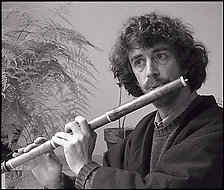
My favorite recording of this cantata is still the one by Herreweghe from 2012, which you can find here on YouTube via a playlist I created. However if you’d like to see all the special instruments in action, I highly recommend the J.S. Bach Foundation’s live video registration, with a tromba da tirarsi (slide trumpet) and recorders* in the opening chorus, a Baroque trumpet in the bass aria, and an oboe da caccia (hunting oboe, also new for Bach in Leipzig) as well as the recorders in the alto aria.
Please find the text here, and the score here.
Scholars agree that last week’s Cantata 105 and this week’s Cantata 46 Schauet doch und sehet, ob irgend ein Schmerz sei, can be seen as a pair within Bach’s works from that first summer in Leipzig. Here’s why:
- The stunning opening choruses of these two cantatas are both written as if they were a Prelude and Fugue for organ. Bach would later use the Prelude part of Cantata 46’s opening chorus as the Qui tollis for his Mass in B Minor.
- Both cantatas contain a “floating aria.” With this I mean an aria without the usual fundament of a basso continuo (organ or harpsichord and cello), of which Bach’s most famous exemple is the Aus Liebe aria from his St. Matthew Passion. Bach included such an aria for the first time in last week’s Cantata 105 (the soprano aria Wir zittern und wanken) and one appears again in this week’s Cantata 46 (the alto aria Doch Jesus will auch bei der Strafe).
- Bach uses a da tirarsi brass instrument in both: a corno da tirarsi in 105 and a tromba da tirarsi in 46 (read last week’s post for more information about these).
I have written about some of these aspects of Cantata 46 before, but I never really paid much attention to the text. I needed Karl Graf, the theologian participating in the lecture about this cantata by the J.S. Bach Foundation**, to point out that the text of this cantata refers to two destructions of Jerusalem, in 586 BC by the Babylonians, and in 70 AD by the Romans.
Jeremiah the Prophet laments the 586 BC massacre in his Lamentations of Jermiah, a collection of poetry from the Old Testament, from which Bach’s librettist takes the words for the opening chorus.
Jesus predicts the destruction by the Romans in 70 AD, and weeps about it, in Luke 19: 41-48, which was the official reading for this 10th Sunday after Trinity in Bach’s church. Bach and his librettist mix the two parts of the Bible, because in their minds it is all the same, history unfortunately repeats itself. The bass aria paints one of the most dramatic pictures ever in a Bach cantata, and the text of the alto recitative warns that Leipzig could be next! Fortunately, as usual in a Bach cantata, there’s the promise of salvation, and a lightening of the mood in the music as well, this time in the form of the pastoral alto aria.
Throughout the Renaissance and Baroque, Catholic and Anglican composers have set the Lamentations of Jeremiah to music for the Tenebrae services of Holy Week. A notable example are those by Jan Dismas Zelenka, Bach’s colleague at the Catholic court in nearby Dresden. Zelenka wrote his Lamentations of Jeremiah the Prophet for Holy Week in 1722, so roughly 1,5 years before Bach wrote his Cantata 46. While Bach and Zelenka knew each other and Bach had friends in the Dresden court orchestra, I truly don’t know if Bach was aware of Zelenka’s setting of the Lamentations prior to August 1st 1723. There are some interesting similarities between the compositions, for example Zelenka also opting for a pastoral scene towards the end, but that’s food for another blog post! For now I just like to think that Bach wrote his own Lutheran version of the Lamentations with this Cantata 46.
Wieneke Gorter, August 11, 2023.
*It is the first time Bach uses recorders in Leipzig, but it is an instrument he often uses to portray sorrow.
**If you understand German or don’t mind automatically generated subtitles on YouTube, you can watch the extremely informative lecture about Cantata 46 here. It doesn’t just feature Rudolf Lutz and Karl Graf, but also Bach Scholar Michael Maul from the Bach-Archiv Leipzig.



 Weekly Cantata