
Tags
2nd Sunday after Easter, Atsuko Ozaki, Bach, Bach Collegium Japan, BWV 42, BWV 6, BWV 85, cantatas, Caroyn Sampson, Dmitry Badiarov, Georg Poplutz, Gerd Türk, Gerlinde Säman, Harnoncourt, J.S. Bach Foundation, John Eliot Gardiner, Kurt Equiluz, Markus Volpert, Martin Zeller, Peter Kooij, Peter Kooy, Robin Blaze, Rudolf Lutz, St. Matthew Passion, Terry Wey, violoncello da spalla, violoncello piccolo
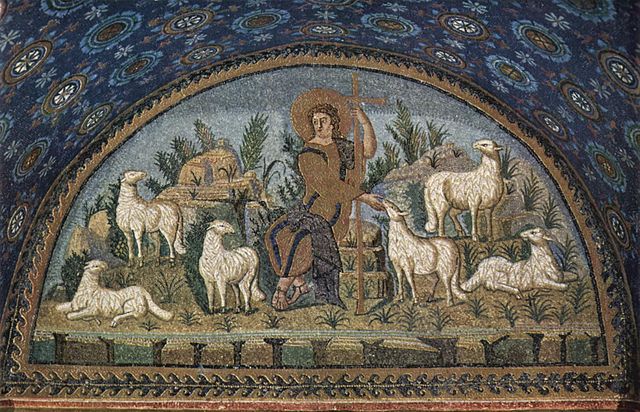
There are three beautiful cantatas for this second Sunday after Easter, or “Misericordias Domini” Sunday: BWV 104, 85, and 112. Illustrating the “good shepherd” scripture for this Sunday (John 10, verse 12-16), Bach incorporated pastoral themes or orchestration in each of these cantatas.*
I’ve decided to focus on cantata 85 Ich bin ein guter Hirt, written for April 15, 1725. Of all three cantatas, this is the one I remember the best from my childhood, because of the tenor aria “Seht, was die Liebe tut.” Also: Last week, I already mentioned the similarities between cantata 6 (for Easter Monday 1725), and cantata 42 (for the first Sunday after Easter 1725). This cantata 85 is the culmination of that “sub group” within the cantatas from 1725.
Which recording to listen to?
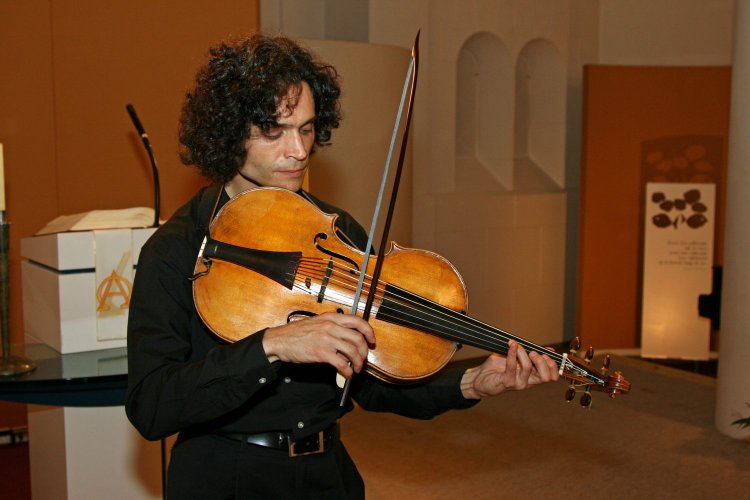
While I have good memories of hearing Kurth Equiluz sing the tenor aria on the Harnoncourt recording from 1977, I am enamored by Bach Collegium Japan’s recording of this cantata, and I think this is the best “overall” recording, featuring fabulous soloists Carolyn Sampson, Robin Blaze, Gerd Türk, and Peter Kooij. It is also one of the most noteworthy because of the use of a violoncello da spalla, played by Dmitry Badiarov.
Listen to Bach Collegium Japan’s recording of cantata 85 Ich bin ein guter Hirt on Spotify. Or better yet, if you can afford to financially support the artists (especially important now, while they have no income from performances!) please consider purchasing the digital versions of Bach Collegium Japan’s recording of cantata 85 on Amazon or on iTunes.
If you prefer to watch a live recording, there is a wonderful recording available on YouTube by the J.S. Bach Foundation. Soloists are Gerlinde Sämann, soprano; Terry Wey, alto; Georg Poplutz, tenor; Markus Volpert, bass; and Martin Zeller, violoncello piccolo.
Back to the Bach Collegium Japan recording: After lovely and convincing singing by bass Peter Kooij in the opening arioso (Jesus saying “I am a good shepherd”), we get a sublime performance by countertenor Robin Blaze of the alto aria “Jesus ist ein guter Hirt,” which also features the unusual violoncello piccolo da spalla. Someone could probably write an entire PhD thesis on the difference between the violoncello piccolo “da spalla” (held on the shoulder, like a violin), and the violoncello piccolo “da gamba” (held between the legs, like a cello), and whether Bach meant the one or the other when he wrote a part for “violoncello piccolo.” Most recordings (Harnoncourt, Gardiner, Coin, Koopman, and J.S. Bach Foundation) feature the one held between the legs, but Bach Collegium Japan’s recording features the “da spalla” variety, played by the same person who built it in 2004, Dmitry Badiarov.
Following this, we hear a radiant soprano solo chorale with oboe accompaniment (which makes me think back to the soprano solo chorale from cantata 6, in that case with the violoncello piccolo “da gamba”), beautifully sung by soprano Carolyn Sampson and expertly played by oboists Masamitsu San’nomiya and Atsuko Ozaki.
And when you didn’t think it could get any better, here comes a tenor recitative which in text and string accompaniment strongly refers to Jesus’ recitative from the St. Matthew Passion “Ich werde den Hirten schlagen, und die Schafe der Herde werden sich zerstreuen.” (Christ, having arrived at the Mount of Olives, reminds his disciples of the prophecy that the shepherd will be slain and the sheep will scatter).
With this only recitative in cantata 85, Bach has gotten everyone’s attention, so now we’re ready for the jewel in the crown of this cantata: the tenor aria “Seht, was die Liebe tut.” It is one of the most lyrical and lovely among all Bach’s tenor arias.
Seht, was die Liebe tut.
See, what love does.
Mein Jesus hält in guter Hut
My Jesus in his own safekeeping
Die Seinen feste eingeschlossen
keeps those who are his own firmly enclosed
Und hat am Kreuzesstamm vergossen
and on the beam of the cross he has shed
Für sie sein teures Blut.
for them his own precious blood.
Again there is a strong association with the St. Matthew Passion both in text and music. In his book Bach: Music in the Castle of Heaven Gardiner makes a very convincing case for his theory that Bach had wanted to perform the St. Matthew Passion on Good Friday 1725, only one year after the St. John Pasion. This didn’t happen because either the council disapproved, or Bach wasn’t ready composing the piece. If Bach had indeed been working on the St. Matthew Passion before Easter 1725, it is no wonder we’re getting glimpses of that monumental work in his cantatas after Easter 1725.
Wieneke Gorter, April 9, 2016, updated April 26, 2020
*I wrote about Cantata 104 for the Second Sunday after Easter in 1724 in this blog post.
 Weekly Cantata