Weekly Cantata

Weekly Cantata

Tag Archives: Netherlands Bach Society

Bach looking back (Belated 2nd Sunday after Epiphany)

01 Saturday Feb 2020

Posted by cantatasonmymind in Cantatas, Epiphany, Leipzig

≈ Leave a comment

Tags

Bart Coen, Benny Aghassi, BWV 106, BWV 13, BWV 155, BWV 161, BWV 244, BWV 249, BWV 3, BWV 46, Colin Balzer, Collegium Vocale Gent, Easter Oratorio, Epiphany 2, Heiko ter Schegget, Herman Stinders, J.S. Bach Foundation, Jakob Pilgram, Jan Börner, Julius Pfeifer, Margot Oitzinger, Mark Padmore, Matthew White, Netherlands Bach Society, Philippe Herreweghe, recorders, Rudolf Lutz, St. Matthew Passion, Susanne Seitter, Wolf Matthias Friedrich

Wedding at Cana by Duccio di Buoninsegna, tempera on wood, between 1308 and 1311. Museo dell’ Opera dell’ Duomo, Siena, Italy. The “scene” from this story that Bach and his librettists prefer to focus on in all his cantatas for this Sunday, is also illustrated here: Jesus telling his anxious mother “Mine hour is not yet come.”

Two weeks ago I ran out of time writing this post, but I had discovered so much about Cantata 13 Meine Seufzer, meine Tränen (1726), that I would still very much like to share that cantata here. So I hope you don’t mind going back in time a little bit, to the Second Sunday after Epiphany, which fell on January 19 this year (2020), and on January 20 in 1726.

Before I prepare a new post, I always like to revisit previous posts I wrote about this same Sunday, and listen to those cantatas again. And it always thrills me when during this process I discover that Bach must have done this too: going back, either in his memory or in the physical stack of manuscripts, to the music he previously wrote for this same Sunday. Sometimes I only get a feeling that he did this, but other times, there’s an obvious quote either in the text or in the music.

This time I was excited to find Bach quoting music from Cantata 155 Mein Gott, wie lang, ach lange? in Cantata 13 Meine Seufzer, meine Tränen. Bach had written Cantata 155 already in Weimar in 1716, but performed it again in Leipzig in 1724, also on the Second Sunday after Epiphany.

I invite you to listen to/watch the wonderful alto-tenor duet with bassoon from Cantata 155 Mein Gott, wie lang, ach lange? here, in a performance by the J.S. Bach Foundation, with alto Margot Oitzinger and tenor Julius Pfeifer. Note this theme in the voices:
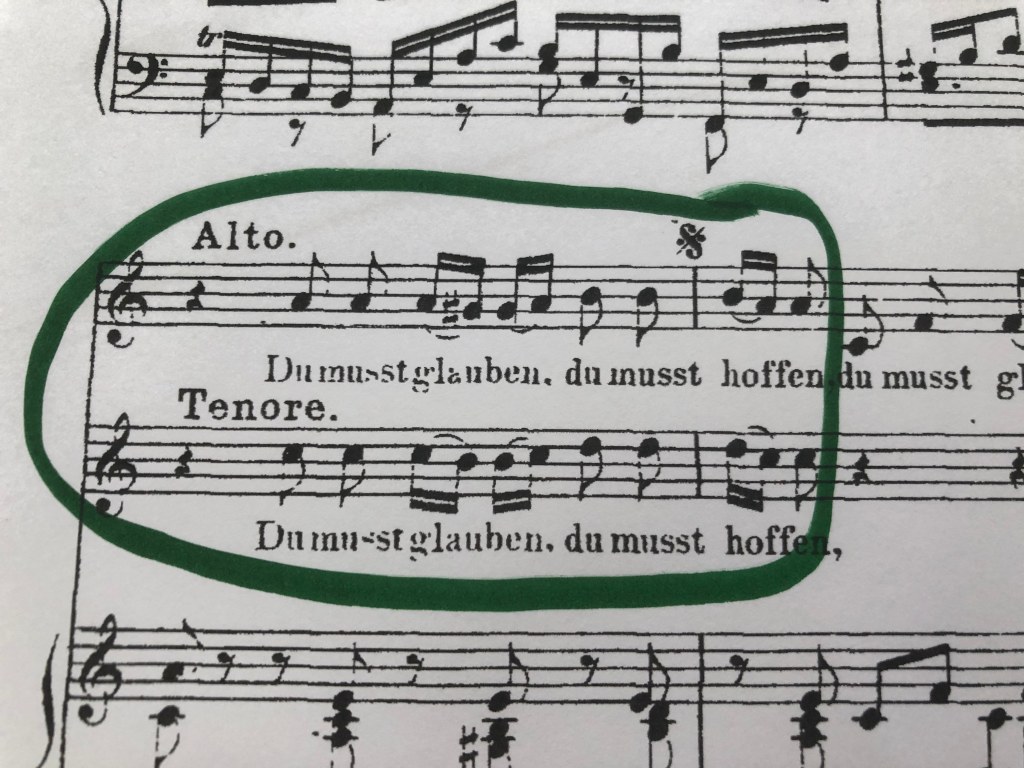
After that duet is over, I would suggest turning off that recording for now. *

Now listen to/watch the entire recording of Cantata 13 Meine Seufzer, meine Tränen, also by the J.S. Bach Foundation here, with soprano Susanne Seitter, alto Jan Börner, tenor Jakob Pilgram, and bass Wolf Matthias Friedrich.

Find the German text with English translations here, and the score here. Please note that the English translation of the bass aria’s first line is incorrect: the translation of the German word “Sorgen” should be “worries” or “worrying”, not “care.” The correct translation is something like this:

Groaning and pitiful weeping
are no help to the sickness of worrying

Pay attention to the recorder parts in the opening movement. The music has a slower tempo, and a more drawn out rhythm, but the theme is the same as in that duet from Cantata 155 you just heard:
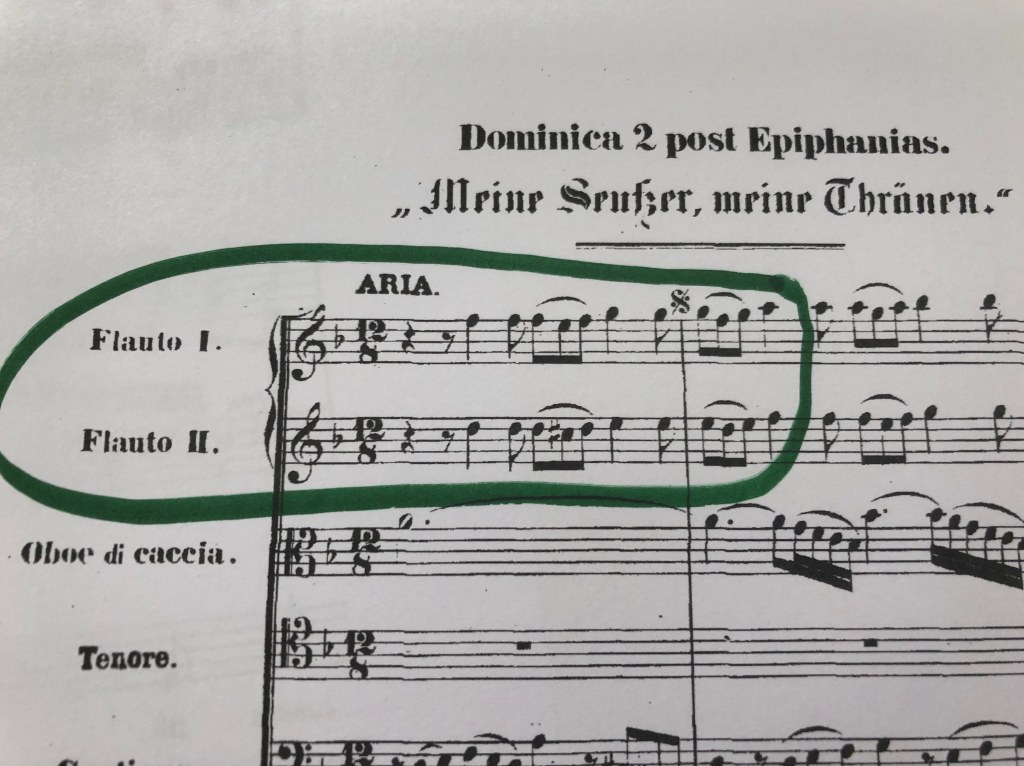
There is more in this opening chorus of Cantata 13 that gives us a peek into Bach’s referencing process. Bach often uses recorders to introduce sorrow. Early in his career he had done this in the opening movements of Cantata 106 Gottes Zeit ist die allerbeste Zeit (written in 1707) and Cantata 161 Komm, du süße Todesstunde (1716). Even during his first year in Leipzig, in 1723, he used this “tool” in the opening chorus of Cantata 46 Schauet doch und sehet, ob irgendein Schmerz sei (which would later form the basis for the Qui tollis from the Mass in B minor). And while from the mid 1720s most Baroque composers, including Bach himself, favored the more fashionable French transverse flutes over recorders, Bach still uses recorders to illustrate impending sorrow or death’s slumber in his Easter Oratorio (1725) and his St. Matthew Passion (1727). Click on the links to hear/watch recordings of all these examples on YouTube. Names of performers in all these are listed at the very end of this post.**

If, after listening to / watching Cantata 13 in its entirety, you are wondering why Bach’s illustration of a miracle (Jesus turning water into wine at the Wedding at Cana) is so incredibly sorrowful, read my blog post about Cantata 3 here.

Wieneke Gorter, January 31, 2020, updated January 16, 2021.

* read my blog post about Cantata 155, which now includes a link to the J.S. Bach Foundation recording, here.

** Performers in the YouTube recordings of cantata/oratorio movements with recorders are:

Credits for YouTube recordings linked above:

Opening movement of Cantata 106: Netherlands Bach Society; Jos van Veldhoven, conductor; Heiko ter Schegget and Benny Aghassi, recorders; Dorothee Mields, soprano; Alex Potter, alto; Charles Daniels, tenor; Tobias Berndt, bass.

Opening movement of Cantata 161: Collegium Vocale Gent; Philippe Herreweghe, conductor; Bart Coen and Koen Dieltiens, recorders; Matthew White, alto; Herman Stinders, organ.

Opening movement of Cantata 46: Collegium Vocale Gent; Philippe Herreweghe, conductor. Live recording from the Festival of Saintes, France, July 15, 2013. Recorder players not specified.

Tenor aria “Sanfte soll mein Todeskummer” from Easter Oratorio, BWV 249: Collegium Vocale Gent; Philippe Herreweghe, conductor. Mark Padmore, tenor.

Tenor recitative with choir “O Schmerz, hier zittert das gequälte Herz” from St. Matthew Passion, BWV 244: Collegium Vocale Gent; Philippe Herreweghe, conductor. Colin Balzer, tenor.
Bach and the Christmas Day message

24 Tuesday Dec 2019

Posted by cantatasonmymind in Bach's life, Cantatas, Christmas, Leipzig

≈ 2 Comments

Tags

Alex Potter, Bachvereniging, BWV 110, Charles Daniels, Christmas 1, Christmas Day, Grote Kerk Naarden, Jos van Veldhoven, Maria Keohane, Matthias Winckhler, Netherlands Bach Society

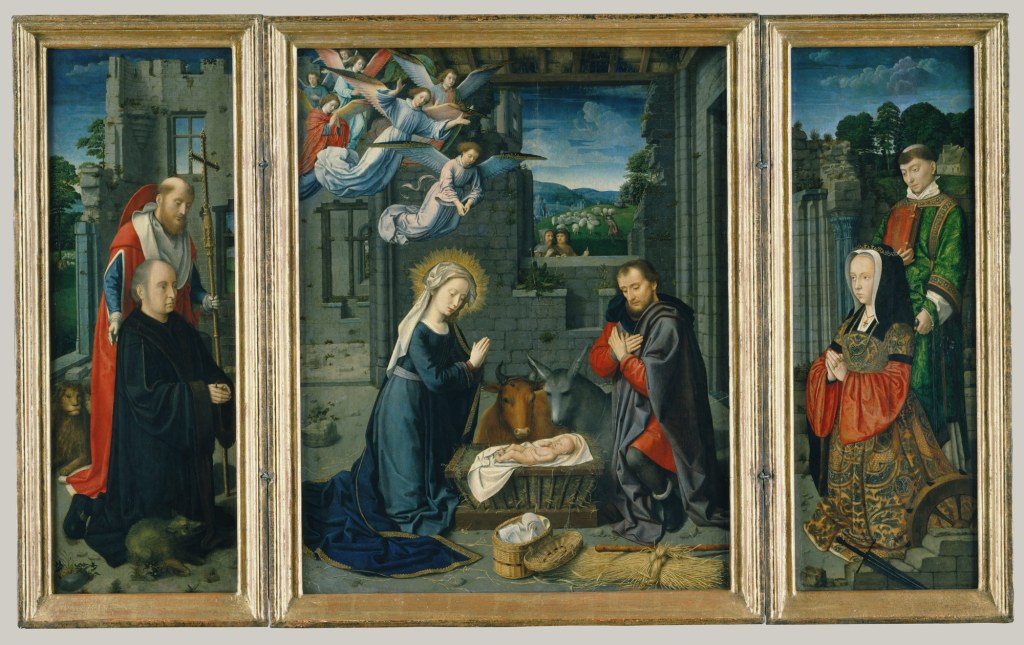
The Nativity with Donors and Saints Jerome and Leonard, by Gerard David, ca. 1510-15. Metropolitan Museum of Art, New York. More information about this painting can be found here.

On this blog I have shared only two of Bach’s compositions for Christmas Day so far: Cantata 91 from 1724 here, and of course the first cantata from the Christmas Oratorio (our family’s “wake-up call” on Christmas morning) from 1734 here. But Bach wrote at least three more cantatas for this day, as well as his Magnificat.

Today I’d love to share Cantata 110 Unser Mund sei voll Lachens (May our mouth be full of laughter) from 1725. Find The Netherlands Bach Society’s live recording of this cantata here on YouTube.

Find the text with English translations here, and the score here.

This live video registration has an abundance of Christmas presents for me: the festive setting of the Grote Kerk in Naarden; soprano Maria Keohane in a Scandinavian Christmas dress and truly enjoying herself; tenor Charles Daniels, always a delight; a promising new young bass, Matthias Winckhler, who can actually sing every note of the enormously challenging bass aria in this cantata; and the best gift of all: Alex Potter singing the alto aria, which to me is the most moving part of this cantata, and also the core message Bach wanted to communicate to his fellow believers on this Christmas Day in 1725.

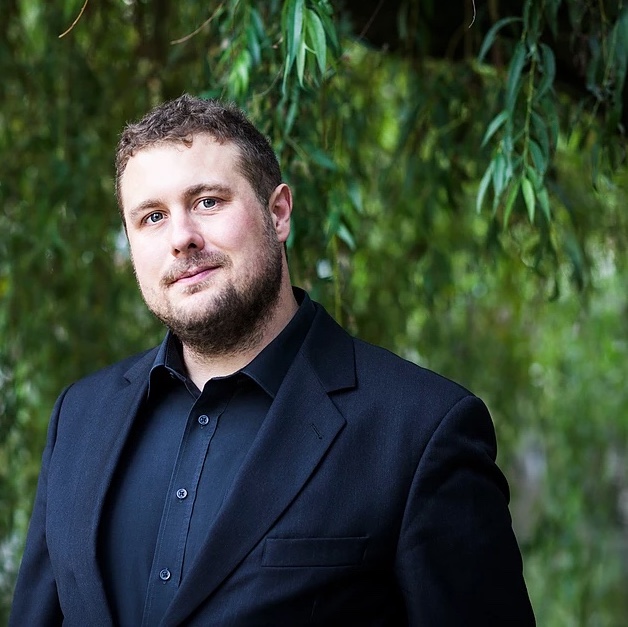
Alex Potter. Photo by Annelies van der Vegt.

For the joyous opening of this cantata, Bach re-uses his Orchestral Suite no. 4 in D major (BWV 1069) to grandly illustrate the “arrival” of Jesus. In the center of the cantata, after the festivities of the opening chorus, but before the very pretty Christmas-y “Glory to God in the highest” soprano-tenor duet, and an impressive bass aria with trumpet, the music goes into a minor key, and also turns inward, in the alto aria. The text of that alto aria is as follows:

Ach Herr, was ist ein Menschenkind,
Ah, Lord, what is a child of man
Dass du sein Heil so schmerzlich suchest?
that you should seek his salvation with so much pain?
Ein Wurm, den du verfluchest,
A worm whom you curse
Wenn Höll und Satan um ihn sind;
when hell and Satan are around him;
Doch auch dein Sohn, den Seel und Geist
but also your son, whom soul and spirit
Aus Liebe seinen Erben heißt.
Through love call their inheritance.

Of course this text refers to the believers in general, that on the one hand they are worms, and on the other hand will be saved by Jesus. but I feel the choice of the word “Menschenkind” is not a coincidence. It definitely also refers to the the fact that Jesus can’t just stay in the godly realm, but in order to be a true savior, he has to come to earth, become man, and go through all the rotten reality that might imply. This theme appears more or less prominently in all Bach’s cantatas for Christmas Day, and in this cantata 110 it is already announced in the tenor aria:

Er wird Mensch, und dies allein,
He has become man, and this only
Dass wir Himmels Kinder sein.
so that we may become children of heaven.

Nine years later, in the first cantata of his Christmas Oratorio, Bach also stresses this “coming to earth” and “becoming man” of Jesus on this first Christmas Day, in what is also the most moving and inward-looking part of that particular cantata: the soprano-bass duet. The text Bach gives to the bass in that duet is as follows. Note the last line.

Wer will die Liebe recht erhöhn,
Who will rightly extol the love
Die unser Heiland vor uns hegt?
that our Saviour cherishes for us?
Ja, wer vermag es einzusehen,
Indeed, who is able to realise
Wie ihn der Menschen Leid bewegt?
how he is moved by human suffering?
Des Höchsten Sohn kömmt in die Welt,
The highest’s son came into the world
Weil ihm ihr Heil so wohl gefällt,
because its salvation pleases him so well
So will er selbst als Mensch geboren werden.
that he himself is willing to be born as a man.

Merry Christmas!

Wieneke Gorter, December 24, 2019

Two Weimar cantatas for the fourth Sunday of Advent

21 Saturday Dec 2019

Posted by cantatasonmymind in Advent, Bach's life, Cantatas, Christmas, Leipzig, Weimar

≈ Leave a comment

Tags

Advent, Advent 4, Alfredo Bernardini, All of Bach, Bachvereniging, BWV 132, BWV 147, BWV 147a, Christmas, Dominik Wörner, Hana Blazikova, J.S. Bach Foundation, J.S. Bach Stiftung, Jakob Pilgram, Jan Kobow, Julia Doyle, Margot Oitzinger, Netherlands Bach Society, Rudolf Lutz, Tim Mead, Weimar, Wolf Matthias Friedrich

For the fourth Sunday of Advent, Bach wrote two cantatas in Weimar: Cantata 132 Bereitet die Wege, bereitet die Bahn in 1715, and Cantata 147a Herz und Mund und Tat und Leben in 1716.

Bach rewrote Cantata 147, the same way he did that with cantatas 70 and 186, into a cantata for another time of the year in Leipzig, in this case the feast of the Visitation on July 2, 1723. Read more about that here in my post from 2016. I have now updated that post with a link to the wonderful live performance of Cantata 147 by the J.S. Bach Foundation, with with Hana Blažiková, soprano; Margot Oitzinger, alto; Jakob Pilgram, tenor; and Wolf Matthias Friedrich, bass.

Cantata 132 was not transformed into a cantata for another time in the church year in Leipzig, so today’s performances of this cantata still reflect the Advent cantata from Weimar. Watch a beautiful live performance of this cantata by the Netherlands Bach Society here on YouTube. Soloists are Julia Doyle, soprano; Tim Mead, alto; Jan Kobow, tenor; and Dominik Wörner, bass.

Find the German text with English translations here, and the score here.

As I already pointed out in my Advent Calendar earlier this week, the text of the joyful opening aria refers to the story of John the Baptist, who was believed to have come to prepare the way for Jesus, and includes the Isaiah quote as it appears in the scripture: “Messias kömmt an!” (The Messiah is coming). Bach gives this text to the soprano three times, and to give it extra emphasis, each time omits all instrumental accompaniment on those three words.

The rest of the cantata stays close to the story of John the Baptist. The bass aria refers to the Pharisees interrogating John, but then Bach’s text writer (Salomo Franck, who was also the Weimar court librarian) projects the question “Wer bist du?” (Who are you?) onto the believer: ask your conscience: are you a true person or a false person?

As a child, I was enormously impressed by this bass aria, even more than by the wonderful soprano aria at the beginning of the piece. I loved how Max van Egmond sings the “Wer bist du?” text on the Leonhardt recording from 1983. You can find that recording, and read more about those childhood memories, in this blog post from 2016. I had no idea at the time that in those very cool opening notes Bach is quoting this organ piece by Buxtehude. I only learned that this week, by watching the “extra videos” the Netherlands Bach Society provides along with their live recordings on All of Bach.

If you are not following this blog yet, please consider signing up (on the left of this text if you are on a desktop computer, at the bottom of this post when you are reading on a smartphone). This way you won’t miss any posts about the many cantatas Bach wrote for all three Christmas Days (yes there were three in his time), New Year’s Day, and the Sundays after those feast days.

Wieneke Gorter, December 21, 2019.

The Shining Star of the Netherlands Bach Society

04 Wednesday Dec 2019

Posted by cantatasonmymind in Advent, Cantatas, Leipzig, Trinity, Weimar

≈ Leave a comment

Tags

16th Sunday after Trinity, Alex Potter, All of Bach, All Souls, Bachvereniging, BWV 161, BWV 36, Grote Kerk Naarden, Hans van der Woerd, Marco Borggreve, Netherlands Bach Society, Nieuwe Kerk Den Haag, Shunske Sato, St. Matthew Passion, The Hague, Thomas Hobbs, Zsuzi Tóth

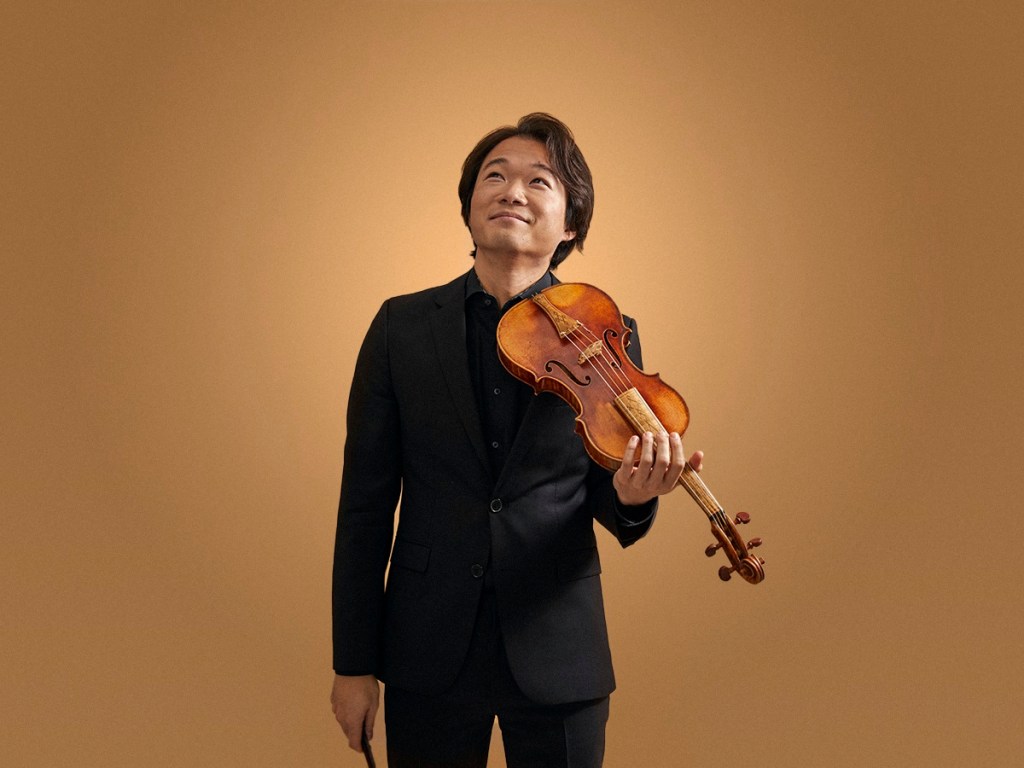
Shunske Sato, concertmaster since 2013 and artistic director since 2018 of the Netherlands Bach Society. Photo by Dana van Leeuwen.

To find the Weekly Cantata Advent Calendar, please click here.

Several people have asked me what made me start writing for this blog again. The answer is simple: Shunske Sato’s violin playing in the “Mein Verlangen” tenor aria from Cantata 161 Komm, du süsse Todesstunde. I had already heard that Sato was “a good one” from people with authority on the matter, and had enjoyed listening to his recordings, but it took these live concerts to experience the magic that happens when he is a soloist in a Bach aria.

During a visit to my home country, the Netherlands, I attended the Netherlands Bach Society’s “All Souls” concerts on October 31 in the Grote Kerk in Naarden and on November 3 in the Nieuwe Kerk in The Hague. I had been unsure how to talk about these concerts in the framework of this blog, especially now that it’s more than a month ago and we’re in Advent already (yes there is Advent music in this post, please keep reading) and there is no recording of these concerts.

Solo sonatas and partitas on All of Bach

But it turns out that this week is the perfect time for a spotlight on Shunske Sato, because this Thursday December 5, 2019, the Netherlands Bach Society will publish the final episode of his series of solo violin sonatas and partitas on All of Bach, their online video archive of Bach performances. Just click on this link and the entire series is right there, under “recently added.”

Sato was appointed concertmaster of the Netherlands Bach Society in 2013, and became their artistic director in June 2018. For the concerts I attended, he was concertmaster only, having invited alto Alex Potter to program and lead this production. (Alex Potter deserves a blog post too, but that will come later). By inviting a different guest director for each program, Sato has breathed fresh air into the he group of musicians I feel.

Instead of the standard biographies, the program booklet featured personal stories from Sato and the four vocal soloists. As a person who’s produced many program books in her lifetime, I felt this was a breath of fresh air too. And as a mom of two teenagers who are finding their way through school and life, I especially liked this part from Sato’s story:

“Things got tricky in my teens: I began spending lots of time away from school playing concerts, and my grades at school were impressively low (except for French and Maths).  Giving up on school, I often spent my weekdays at my favorite bookstore instead and read about history, computer programming and linguistics, and composed string quartets.  Saturdays always came as a relief: classes and lessons at the Juilliard School in New York, where hung out with my “real” friends.”

Playing Weimar style

Back to what happened in the concert in Naarden on October 31. For this entire program, the violinists were playing one-on-a-part, the same way it was probably done in Weimar, where Bach first performed Cantata 161 on the small organ loft in 1716. This meant that Sato was thus the instrumental soloist in the tenor aria “Mein Verlangen,” and with the rest of the ensemble completely in sync with him, he could truly do his own thing.

And then there was light

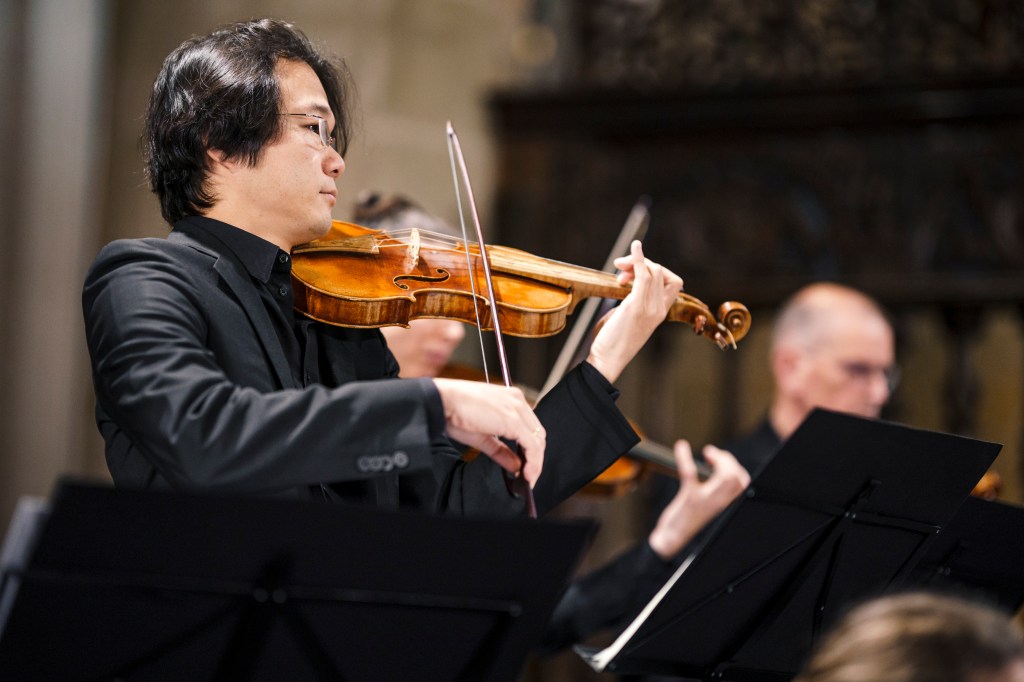
Shunske Sato in Naarden, October 31, 2019. Photo by Hans van der Woerd, courtesy of The Netherlands Bach Society.

And boy, did he do that! Every time he played the “Mein Verlangen” theme, he stretched the tempo just a little bit, every time slightly differently. It created a halo over the entire aria. Even though the tenor wasn’t singing yet, the text was already there: the longing (“Verlangen”) but also the pure radiance (“reiner Schein”) of the soul and the image of angels. He truly brought light into the music, and also for me personally into my heart and mind. It made all my frustrations and worries melt away, and it made the other instrumentalists play and tenor Thomas Hobbs sing with even more inspiration than they already had in this concert.

“The more I let go, the more I risk, the more I dare to really tell the story”

Witnessing Sato communicate the text of the aria before the singing started, I was immediately reminded of this wonderful interview with him for All of Bach. It is specifically about the “Erbarme dich” aria from the St. Matthew Passion, but his message “The more I let go and the more I risk, the more I dare to really tell the story…” applies just as well to this aria that I saw him play.

I went to the “All Souls” concert again three days later in the beautiful concert venue the Nieuwe Kerk has become. Sato’s playing there was possibly even more moving and the effect on those on stage and in the audience possibly stronger too. Several people had tears in their eyes.

Watch for yourself in this Advent aria

See the “Sato magic” happen in the soprano aria from Cantata 36 Schwingt freudig euch empor on All of Bach, with soprano Zsuzsi Tóth. Never did I enjoy a “da capo” this much. To read more about this cantata, the third one Bach wrote (or adapted) for the first Sunday of Advent, read my blog post from 2017 here.

With special thanks to Marloes Biermans and Annelie Bulsing of the Netherlands Bach Society for their generosity in providing photos and copy for me to use,

Wieneke Gorter, December 3, 2019.

To find the Weekly Cantata Advent Calendar, please click here.

Inspired by Telemann? Cantatas 99 and 8

01 Sunday Oct 2017

Posted by cantatasonmymind in Cantatas, Leipzig, Trinity

≈ Leave a comment

Tags

BWV 130, BWV 148, BWV 245, BWV 8, BWV 99, Charles Daniels, Damien Guillon, Deborah York, Gerlinde Säman, Ingeborg Danz, Mark Padmore, Netherlands Bach Society, Peter Kooij, Philippe Herreweghe, St. John Passion, Telemann, Trinity 15, Trinity 16

redpalaceweimar

The Rote Schloss (Red Palace) of Duke Ernst August in Weimar, where Bach and Telemann probably first met, while Telemann was working in Eisenach and Bach was working in Weimar

This is a double post: for today, and also for last Sunday. But before I discuss Cantata 99 Was Gott tut das ist wohlgetan (Trinity 15, Sept 17, 1724) and Cantata 8 Liebster Gott, wenn wird ich sterben (Trinity 16, Sept 24, 1724), I would like to introduce you to a Telemann cantata: Du Daniel gehe hin.

Telemann’s beautiful cantata is not widely known today, but must have been rather famous among Telemann’s colleagues in the first half of the 18th century. The Kantor of the St. Nicholas Church in Berlin performed it in 1757, and I just realized this week that it must have been on Bach’s mind in 1724. While Bach and Telemann worked in the same region only from about 1708 to 1712, they were good friends, and it is generally assumed that they would have seen each other in Hamburg and Köthen a few times in the early 1720s.

I don’t know whether Bach’s “Ruht wohl, ihr heiligen Gebeine” closing chorus of the St. John Passion had anything to do with Telemann’s “Schlaft wohl, ihr seligen Gebeine” closing chorus in Du Daniel gehe hin, but it does look to me as if Bach borrowed the music of the soprano aria from Du Daniel gehe hin for the duet of  Cantata 99. If that is indeed what happened, then it seems very likely that, one week later, Bach was inspired by Telemann’s use of pizzicato strings as “funeral bells” in Du Daniel gehe hin when writing the opening chorus and tenor aria of Cantata 8.

For Cantata 99 Was Gott tut das ist wohlgetan I prefer the live video registration by the Netherlands Bach Society. Watch this recording on YouTube. Soloists are Gerlinde Sämann, soprano; Damien Guillon, alto; Charles Daniels, tenor; Peter Kooij, bass.

Find the text and translation  of Cantata 99 here, and the score here.

For Cantata 8 Liebster Gott, wenn wird ich sterben there is no other choice than Herreweghe. Soloists are Deborah York, soprano; Ingeborg Danz, alto; Mark Padmore, tenor; Peter Kooij, bass. This is definitely in my top five cantata recordings ever because of the combination of Bach’s music and Herreweghe’s interpretation. Listen to the incredibly beautiful oboe playing at the start of the tenor aria, and the horn in the opening and closing chorus. Peter Kooij does a fabulous job in the bass aria, which is so difficult it is on par with bass arias from the Christmas Oratorio and the end of the Trinity season of 1723. I wonder if Bach had an exceptional bass visiting for Michaelmas that year (Sept 29, for which he wrote this dramatic bass aria about the Archangel Michael slaying the dragon*).

Find the text and translation of Cantata 8 here, and the score here.

A striking element in both Cantatas 99 and 8 is Bach’s use of the flute. In cantata 99 Bach uses the instrument in two solo movements, the tenor aria as well as the soprano-alto duet. There could be a simple reason for this unusual choice: showing off his flute player (read more about him in this post). However, it is more likely that Bach wanted to point out the references to the cross in the text of both these movements, and what better instrument to bring out those harrowing chromatic lines than the flute? Using the flute to reinforce the image of the cross makes even more sense when you see what Bach does in the opening chorus of cantata 8. If you believe that his use of staccato flutes in the “Crucifixus” of the Mass in B Minor serves as image of hammering nails into the cross, then it is pretty clear what Bach’s hidden message is here.

Wieneke Gorter, October 1, 2017, links updated September 22, 2023.

*St. Michael’s Fair was a huge event in Leipzig, drawing visitors from as far as England and Poland, increasing the city’s population to 30,000. Read more about musicians visiting for this feast in my post about cantata 148, written for this same Sunday in 1723 or 1725.

A better week for cantata 198 than for 86

21 Sunday May 2017

Posted by cantatasonmymind in After Easter, Cantatas, Leipzig

≈ Leave a comment

Tags

5th Sunday after Easter, Bach, BWV 198, BWV 86, BWV 87, Christoph Prégardien, John Eliot Gardiner, Katharine Fuge, Kati Debretzeni, Klaus Mertens, Leipzig, Netherlands Bach Society, Robin Blaze, Robin Tyson, Rogate Sunday, roses, Shunske Sato, Stephan Loges, Steve Davisilim, Westerland

imgp4873-1-w
 Rosa centifolia ‘Major’, dated as far back as the 16th century in the Netherlands. Courtesy of http://rudolfshistorischer-rosen-park.blogspot.com/ , a website I found when looking for roses that would have existed in Germany in Bach’s time

This week I don’t feel a lot of connection with the Bach cantata from 1724 for this Sunday (the 5th after Easter, or Rogate Sunday), cantata 86 Wahrlich, wahrlich, ich sage euch. When I came home from the funeral of one friend, I learned that another friend had passed away suddenly the day before. Because these were both very strong, kind, beautiful, and inspiring women, and I can’t believe they are gone, I feel much more inclined to listen to cantata 198, Lass, Fürstin, Lass nun einen Strahl, which Bach wrote for the funeral of a well-loved Queen than to a cantata which promotes that “God always knows best.”

But I’ll still write about cantata 86. The only connection I have with it this week are the roses in the text of  the alto aria. It is my favorite movement of this cantata, because of the splendid violin solo. The interpretation of that violin solo I like best of all the recordings I listened to* is the one by Kati Debretzeni on the Gardiner recording. You can find that recording here on Amazon or here on iTunes. Soloists on the Gardiner recording are Katharine Fuge, soprano; Robin Tyson, counter-tenor; Steve Davisilim, tenor; and Stephan Loges, bass.

For better interpretations of the bass and tenor solos, I recommend listening to the Koopman recording with tenor Christoph Prégardien and bass Klaus Mertens. You can find that recording on YouTube, Amazon, or iTunes.

2020 update: read my blog post of May 15, 2020, to find links to the live video recording by The Netherlands Bach Society, with Robin Blaze, coutertenor, and Shunske Sato, violin.

For the text and translations of cantata 86, please visit this page, and for the score, please go here.

Why the connection with roses? About one week ago, on Friday May 12, I went to drop off a card for a friend who was dying. I learned she was in her last days on Tuesday, but it took me until Friday morning to find the right words, finish writing the card, and to drop it off. When I walked to her door I noticed a hedge of sweet pink roses in the front yard. I felt peace from seeing the roses, and from the knowledge that she liked roses, but I also felt miserable and angry that she would be taken away from all this, from her family, her life, her home. The next day, we heard she passed away during that night.

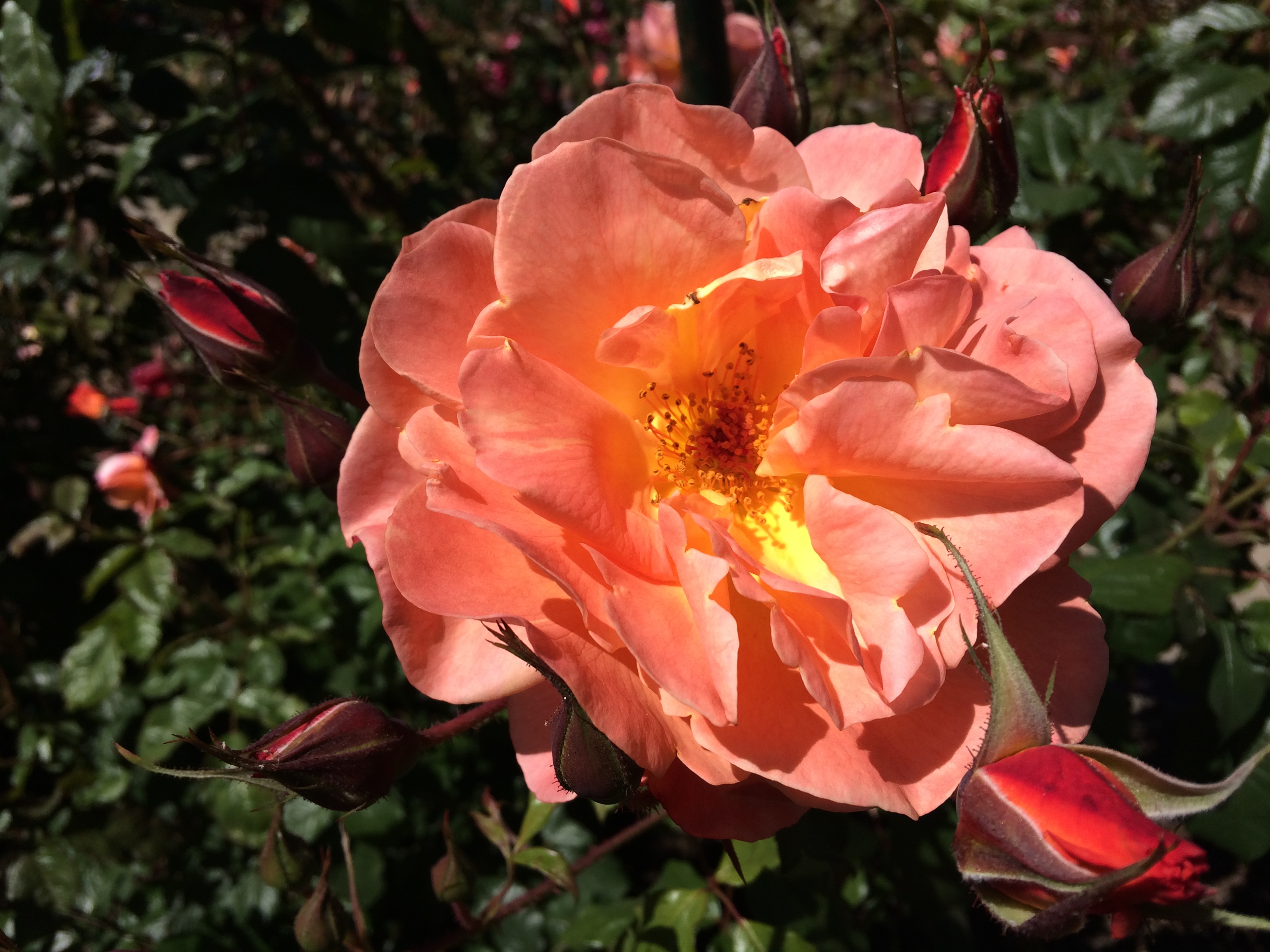
This past Friday was the day of her funeral. I didn’t know how it would go, how my kids would handle it (my oldest and her oldest are friends), and tried to find some strength for myself, so I would be able to be there for them. I realized that I associate this woman’s kindness and warmth with the pinkish apricot color of my favorite rose in the Berkeley rose garden, Westerland. So I decided to walk through the rose garden to experience the color and scent of this amazing flower, and it helped. This is what she looked like that day: Westerland

What to listen for in cantata 86:

In the opening movement, notice how Bach accentuates the fact that Jesus is speaking important, timeless words by setting these words in the form of an archaic motet. While the motet has multiple voices, the way it was done in the Renaissance, Bach can still make it clear that the words come from Christ’s mouth only, by giving all the other “voice parts” to instruments instead of to other singers.

In the alto aria, hear how the words “brechen” (to pick [roses]) and “stechen” (to prick) are illustrated by short notes and “broken” chords in the voice part, and broken chords in the violin part.

In the soprano aria, hear how low in the soprano range this is set — it could just as well have been sung by an alto. Bach has not given significant solos to a soprano since Easter of this year, 1724, and actually pretty sporadically since the start of the new year. Many scholars suggest that during that spring of 1724, Bach might have lost his boy soprano soloist (due to him leaving the school or due to his voice changing, we don’t know), and documents suggest that he was frustrated with the low quality of the boy sopranos of the St. Thomas School in general. They believe that this is why he started the chorale cantatas (cantatas of which each movement is based on a different verse of one and the same chorale tune) after Pentecost of that year. Keep following this blog and you’ll learn more about that soon 🙂

Wieneke Gorter, May 21, 2017, updated May 15, 2020.

*I did all this listening last year, when I actually ended up writing about cantata 87, the one Bach wrote for this same Sunday, but then in 1725. Read that post here.

Newer posts →

Recent Posts

  • “Missa Miniatura” by CONTINUUM/Elina Albach Even More Moving in 2025
  • Bachfest Leipzig 2025
  • Bach Cantatas for Christmas – 1724 and 1734 editions
  • Fourth Sunday of Advent – more insight into Cantata 62 helped me better understand Bach’s Christmas Oratorio
  • Saint Ambrose and Luther in Milan – Second Sunday of Advent

Archives

  • August 2025
  • July 2025
  • December 2024
  • November 2024
  • June 2024
  • January 2024
  • December 2023
  • October 2023
  • September 2023
  • August 2023
  • April 2022
  • February 2022
  • January 2022
  • December 2021
  • November 2021
  • June 2021
  • May 2021
  • April 2021
  • February 2021
  • January 2021
  • December 2020
  • November 2020
  • October 2020
  • September 2020
  • August 2020
  • July 2020
  • May 2020
  • April 2020
  • March 2020
  • February 2020
  • January 2020
  • December 2019
  • November 2019
  • May 2018
  • April 2018
  • March 2018
  • February 2018
  • January 2018
  • December 2017
  • November 2017
  • October 2017
  • September 2017
  • August 2017
  • July 2017
  • June 2017
  • May 2017
  • April 2017
  • March 2017
  • February 2017
  • January 2017
  • December 2016
  • November 2016
  • October 2016
  • September 2016
  • August 2016
  • July 2016
  • June 2016
  • May 2016
  • April 2016
  • March 2016
  • February 2016
  • January 2016

Enter your email address to follow this blog and receive notifications of new posts by email.

Join 338 other subscribers

Categories

  • 1723 Trinity season special series
  • Advent
  • After Easter
  • Ascension
  • Bach's life
  • Cantatas
  • Chorale cantatas 1724/1725
  • Christmas
  • Easter
  • Epiphany
  • Following Bach in 1725
  • Köthen
  • Leipzig
  • Septuagesima
  • Travel
  • Trinity
  • Weimar

Meta

  • Create account
  • Log in
  • Entries feed
  • Comments feed
  • WordPress.com

Website Built with WordPress.com.

  • Subscribe Subscribed
    • Weekly Cantata
    • Join 158 other subscribers
    • Already have a WordPress.com account? Log in now.
    • Weekly Cantata
    • Subscribe Subscribed
    • Sign up
    • Log in
    • Report this content
    • View site in Reader
    • Manage subscriptions
    • Collapse this bar
 

Loading Comments...