Weekly Cantata

Weekly Cantata

Category Archives: Chorale cantatas 1724/1725

Instrumental solos that bring me to tears and a bit of farmers’ music

07 Saturday Oct 2017

Posted by cantatasonmymind in Cantatas, Chorale cantatas 1724/1725, Leipzig, Trinity

≈ Leave a comment

Tags

17th Sunday after Trinity, Agnès Mellon, BWV 114, BWV 148, flute, Gérard Lesne, Gustav Leonhardt, John Eliot Gardiner, John Elwes, Marc Hantaï, Peter Kooy, Trinity 17

feudalism

Six weeks ago, I noticed that Bach’s cantatas for the 11th Sunday after Trinity all give me a good kind of stomach ache. This week, it seems that all instrumental solos for the 17th Sunday after Trinity make me cry. It happened last year when I was listening to the violin solo in cantata 148, and it happened to me again this year with the hauntingly beautiful flute solo in the tenor aria of cantata 114 Ach, lieben Christen, seid getrost, from 1724.

It is an exceptional aria, ten minutes long, and extremely demanding for the tenor as well as the flutist. Bach must have been proud of it, because later, in January 1725, he turned this composition into a much faster paced, condensed piece of drama for tenor and oboe d’amore in Cantata 124 Meinen Jesum laß ich nicht.

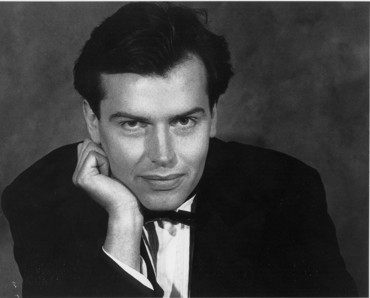
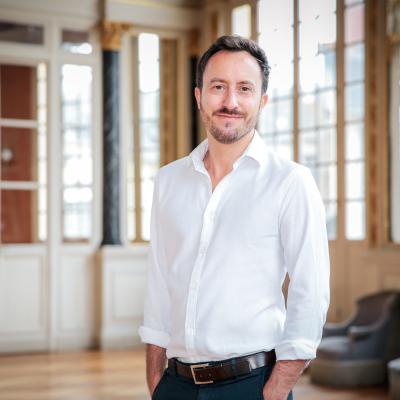
The first recording I listened to set the standard for the rest: a fabulous flutist, most probably Marc Hantaï, and tenor John Elwes on a live audio recording from 1988 by La Chapelle Royale under the direction of Gustav Leonhardt.  I absolutely adore Frans Brüggen’s flute playing on the Leonhardt recording from 1980, but don’t enjoy Kurt Equiluz’ singing as much. Mark Padmore’s singing on the Gardiner recording is to die for, but flutist Rachel Beckett’s decisions on where to breathe are not as sensitive as Marc Hantaï’s, and with Hantaï’s interpretation already in my head, I found it distracting. The same goes for Wilbert Hazelzet’s playing on the Koopman recording, with tenor Christoph Prégardien.
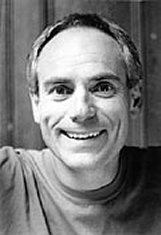
elwes-john-2
John Elwes
marchantaii
Marc Hantaï

This La Chapelle Royale/Gustav Leonhardt recording is also a nice monument from the past for me, since it has all the soloists I was in love with at the time: soprano Agnès Mellon, countertenor Gérard Lesne, and bass Peter Kooy. When you watch the YouTube recording on a screen, you can read along in the score. And that is interesting in this case, especially in the opening chorus and the soprano aria.

Find the German text with English translation of this cantata here.

Starting at the beginning, reading along with the opening chorus, you can see that the joyful figure that is at first only in the continuo (orchestra bass) part, spreads through all the other parts, a message from Bach that the consolation in the text of the chorale is more important than the punishment. The punishment is still present though, in the repeated staccato notes in some of the instrumental parts, and, at 2 minute 24 seconds, visually only, in the score: there are the three whip lashes diagonally from top to bottom over the page in the instrumental parts, illustrating the word “Straf” (punishment) the chorus sings there. Or see this image, courtesy of Eduard van Hengel:
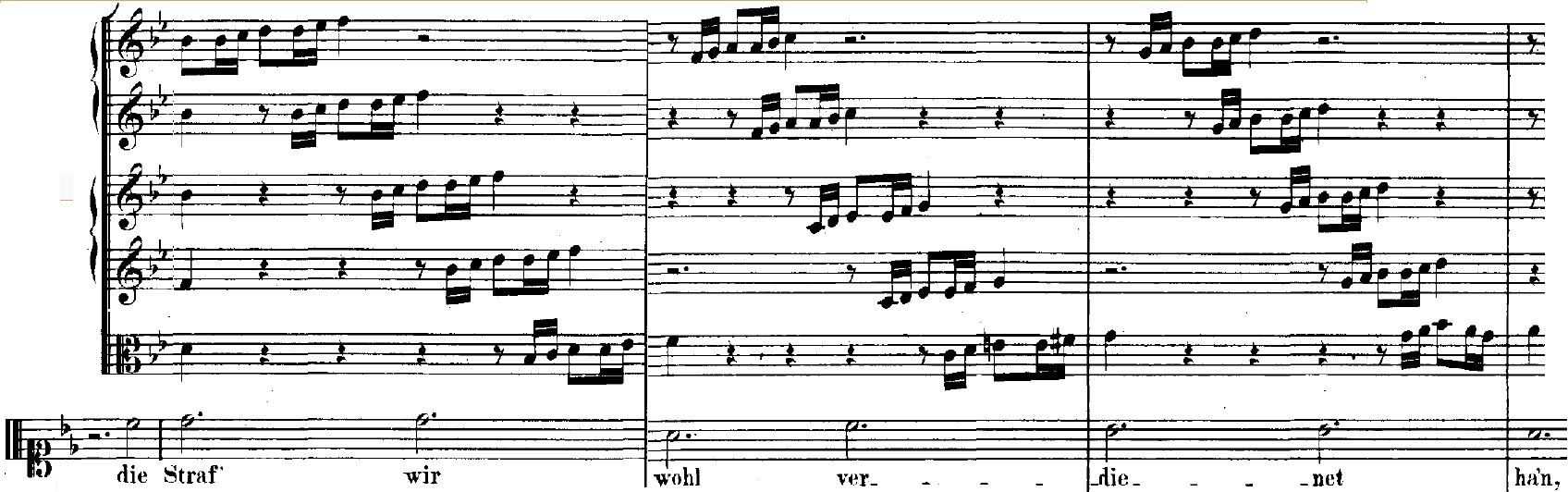
114-120straf20gr

When reading along with the soprano aria, at 15 minutes 5 seconds, you can see or hear how in the continuo part, Bach illustrates the flick of the wrist of the farmer who sows the seeds.  If you have time, I encourage you to also listen to Gardiner’s remarkable take on this soprano aria. In his notes accompanying his live recording, he explains that the text “The grain of wheat will bear no fruit unless it fall into earth” can be seen as a warning to the farmer to get his timing right when sowing his winter cereals. Gardiner, a sheep farmer in his spare time and always eager to point out connections to the seasons in Bach’s music, is obviously really excited to bring out this text: he has the entire soprano section sing it, with much more fervor and much better enunciation than Agnès Mellon on the Chapelle Royale/Leonhardt recording. He also explains in his notes that they took Bach’s indication “continuo unisono” to mean that the organ should double the cello part. Since they always use church organs for their recordings, it sounds impressive. I truly appreciate hearing this movement performed this way.

Then go back to the Chapelle Royale/Leonhardt recording, and listen to Gérard Lesne, my first countertenor love*, spookily illustrating the approach of death, with similar chromatic lines as in last week’s arias.

©Wieneke Gorter, October 6, 2017, links updated October 2, 2020

*Read all about my love for Gérard Lesne in this post
Bach’s most famous duet

17 Sunday Sep 2017

Posted by cantatasonmymind in Cantatas, Chorale cantatas 1724/1725, Leipzig, Trinity

≈ Leave a comment

Tags

Allan Fast, BWV 10, BWV 101, BWV 113, BWV 20, BWV 25, BWV 33, BWV 78, Charles Brett, Eduard van Hengel, Howard Crook, Ingrid Schmithüsen, Joshua Rifkin, Julianne Baird, Peter Kooij, Trinity 14

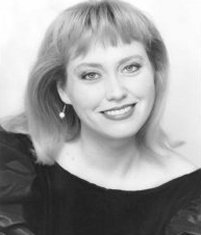
Julianne Baird
Allan Fast

Of this cantata 78 Jesu, der du meine Seele, most people only know the  soprano-alto duet Wir eilen mit schwachen, doch emsigen Schritten. The best rendition of this I have ever heard in my life is by Julianne Baird and Allan Fast on the Rifkin recording from 1988. Listen to it here. Fast passed away in 1995 at age 41.

Bach wrote this cantata for the 14th Sunday after Trinity, September 10, 1724. It was not the first time he wrote a “cute” duet — there are gorgeous examples  in sacred and secular cantatas from his Weimar and Köthen years. However, at the start of his second Leipzig cycle, for the Trinity season of 1724, there are more and more duets in his cantatas.  Alto-tenor duets appear in cantatas 20 and 10, spaced three weeks apart. A series of soprano-alto duets follows on July 9 in cantata 93, a month later in cantata 101, and the next week in cantata 113. Then there’s the terrific tenor-bass duet in cantata 33 on September 3, and this duet on September 10.

This is why I like it so much to listen to Bach’s cantatas in the order he wrote and performed them. I would never have noticed connections such as these otherwise.

The rest of the cantata is wonderful too, especially the opening chorus, which is among the most complex Bach ever wrote. For those who read Dutch, I encourage you to read Eduard van Hengel’s splendid article about this cantata here.

For the entire cantata I prefer Herreweghe’s recording, also from 1988. Soprano: Ingrid Schmithüsen; Alto: Charles Brett; Tenor: Howard Crook; Bass: Peter Kooy. Find the recording here on YouTube. Find the German text and English translations of the cantata here, and the score here.

More listening for this Sunday: cantata 25 from 1723. It has a much bigger orchestra, including many brass players. Find my explanation for that here.

Wieneke Gorter, September 17, 2017, updated September 8, 2023.

About Weekly Cantata

I am a bilingual writer, publicist, choral singer, art and nature lover, happy wife, and blessed mother of two. I started this blog in 2016, inspired by my late mother’s love for Bach’s cantatas. After 23 years in the San Francisco Bay Area, I’m now back in the Netherlands.

If you are on social media, please follow me:

  • Facebook
  • Instagram

Please subscribe!

Please join my readers from all over the world and subscribe to this blog! Simply fill in your email address and you’ll receive an email every time I’ve published a new post. Thank you so much / Vielen Dank / Merci mille fois / 감사합니다 / 谢谢 / ありがとう / Mille grazie / Muchas gracias / Muito obrigado / Takk / Terima kasih / Dankuwel!

Designed with WordPress.com

Faltering steps à la Bach and Damien Guillon’s art of singing four consonants in a row

09 Saturday Sep 2017

Posted by cantatasonmymind in Cantatas, Chorale cantatas 1724/1725, Leipzig, Trinity

≈ Leave a comment

Tags

Andreas Post, Bach, Bach Collegium Japan, BWV 105, BWV 33, BWV 77, BWV 78, Damien Guillon, duet, Good Samaritan, Il Gardellino, J.S. Bach Foundation, Leipzig, Marcel Ponseele, Markus Volpert, Rudolf Lutz, Ruth Sandhoff, Trinity 13, violin

WieFurchtsam
Excerpt from the manuscript of the alto part for cantata 33 (copied out by Bach’s student Johann Andreas Kuhnau), Leipzig Bach-Archive.

It is now the 13th Sunday after Trinity — time for the story of the Good Samaritan. For a sublime cantata that stays close to that Gospel text, read my earlier post about cantata 77 Bach wrote for this Sunday in 1723.

When Bach receives the libretto for Cantata 33 Allein zu dir, Herr Jesu Christ in 1724, it is -except for one line- not related to the Bible story at all. Maybe he already knows this, since he himself was probably responsible for selecting the chorale to serve as the basis for this cantata: a hymn of penitence from 1540, asking Christ to be freed of the pressing burden of sins. The part of the libretto that might have moved him the most* is this:

Wie furchtsam wankten meine Schritte,
Doch Jesus hört auf meine Bitte
Und zeigt mich seinem Vater an.
Mich drückten Sündenlasten nieder,
Doch hilft mir Jesu Trostwort wieder,
Dass er für mich genug getan.

How fearfully were faltering my footsteps,
but Jesus listens to my entreaties
and bears witness for me to his Father.
The burden of my sins weighed down heavily on me,
but Jesus’ word of comfort reassures me
that he has done enough for me.

The first line probably made Bach think of the soprano aria he wrote a little over a year ago, for the ninth Sunday after Trinity in 1723. (click on the link to listen to it). **

The text of that aria is:

Wie zittern und wanken
Der Sünder Gedanken,
Indem sie sich untereinander verklagen
Und wiederum sich zu entschuldigen wagen.
So wird ein geängstigt Gewissen
Durch eigene Folter zerrissen.

How tremble and waver
the sinners’ thoughts
while they bring accusations against each other
and on the other hand dare to make excuses for themselves.
In this way a troubled conscience
is torn apart through its own torments.

Bach is in general also still exploring ways to get more drama and text illustration into the music of his cantatas without it coming across as too operatic. So after a delicate opening chorus (Gardiner describes this as “an antique ring” in which the ornate beauty of the orchestral setting almost eclipses the inner gem of the hymn setting) and a powerful bass recitative, he writes a heart-wrenching alto aria on the moving text.

Damien Guillon. Photo by Julien Mignot

Click on this link to hear the amazing interpretation by countertenor Damien Guillon and the instrumentalists of Belgian ensemble Il Gardellino. Nobody delivers such a fantastic combination of completely “getting” the text and wonderful, seemingly effortless singing.  And listen to how he pronounces the consonants r-ch-t-s in the word “Furchtsam” without any concession to the vowel sounds.

When the libretto finally comes to the only quote of the Good Samaritan story: “I may love my neighbour as myself” in the fifth movement, Bach takes the opportunity to write a striking duet, including the parallel thirds and sixths characteristic of the amorous duets in Venetian operas of the time. If you thought that the famous soprano-alto duet from cantata 78 came out of the blue, here is the  artist’s study for it, one week before 🙂

A wonderful live performance of this cantata by the J.S. Bach Foundation is available here on YouTube. Soloists in this video registration are Ruth Sandhoff, alto; Andreas Post, tenor; Markus Volpert, bass.

Find the text here, and the score here.

Wieneke Gorter, September 8, 2017, updated September 1, 2023.

*of course I don’t know for a fact that this was the part of the libretto that moved Bach most. It is the text that moves me most, and of course that is partly because of Bach’s beautiful setting of it.

**and of course I don’t know this for a fact either, but it is the first thing I wrote down when I listened to this cantata, without having read Gardiner’s notes, which state that this alto aria from cantata 33 “bears a striking kinship in mood, subject-matter, and even melodic outline” to the soprano aria from cantata 105. So I am not alone in noticing this.

Something with this Sunday & Robin Blaze’s art of singing a chorale melody

27 Sunday Aug 2017

Posted by cantatasonmymind in Cantatas, Chorale cantatas 1724/1725, Leipzig, Trinity

≈ Leave a comment

Tags

alto, Bach, Bach Collegium Japan, BWV 113, BWV 179, cantatas, flute, Gerd Türk, John Eliot Gardiner, Leipzig, Masaaki Suzuki, Peter Kooij, Robin Blaze, Trinity, Trinity 11, Yukari Nonoshita

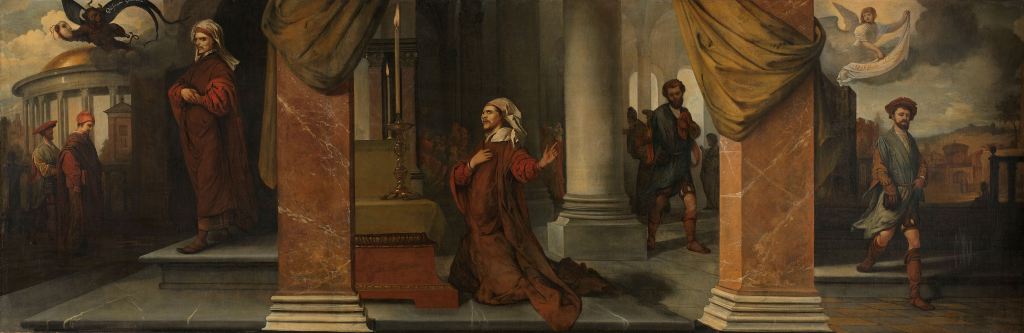
The Pharisee and the Publican by Barent Fabritius, 1661. Oil on canvas. Rijksmuseum, Amsterdam, the Netherlands.

In 1723, Bach wrote an exceptional cantata for this Sunday, the 11th after Trinity. I liked that cantata 179 so much that I gave my blog post last year the title “Bach on a roll” and I’ve been listening to it again this week. In 1724, Bach wrote cantata 113 Herr Jesu Christ, du höchstes Gut for this same Sunday. Both these cantatas truly move me. I feel as if Bach was especially humbled by this particular Sunday.

The only recording that does Cantata 113 Herr Jesu Christ, du höchstes Gut justice and gives me the good kind of stomachache is the one by Bach Collegium Japan, because of Peter Kooij’s and Robin Blaze’s terrific singing, beautiful oboe and flute playing, and the fact that Yukari Nonoshita and Robin Blaze make the duet into a lovely piece of music (instead of struggling through it, the way it seems to be on some other recordings). Listen to this recording by Bach Collegium Japan on Spotify, or on Youtube. Soloists on this recording are: Yukari Nonoshita, soprano; Robin Blaze, alto; Gerd Türk, tenor; and Peter Kooij, bass. Please consider supporting the artists by purchasing this recording on jpc.de or iTunes.

Find the text and translation here, and the score here.

That Bach might have might have felt a special touch or inspiration on this 11th Sunday after Trinity makes sense when you look at the Gospel reading for the day. It is the parable of the Pharisee and the Publican (or Pharisee and the Tax Collector), a story Jesus tells as an illustration on how to pray: the Pharisee is full of himself, telling God how good he is, while the Publican in his own prayer merely asks for mercy, and tells God how bad he is. This concept of how to be a good Christian before God, to be true, not fake, was very important to Bach.

In cantata 113 the chorale melody turns up much more often than in most of the other 1724/1725 chorale cantatas. It is even present in some of the arias that don’t have the chorale text. For the first time since starting this series of chorale cantatas, Bach doesn’t use the chorale melody as a cantus firmus in the opening chorus. Instead, he writes a simple four-part harmonized setting of the chorale melody. But, then there’s the unusual twist: Bach changes the usual 4/4 beat in which a chorale is normally sung to a 3/4, which allows him to write long suspensions in the vocal lines, thus intensifying the pleading character of the music (and the good stomach ache I get when I listen to it).

Robin Blaze. Photo by Dorothea Heise.

In the aria that follows, Bach makes up for the missing cantus firmus from the opening chorus. Any late-comers to that church service on Sunday August 20, 1724 would not have missed what chorale this cantata was based on: the alto sings the text as well as the melody of the chorale’s second stanza in long notes, against strings playing in unison.

Singing a chorale melody like this is not easy, and most recordings were unsatisfying to me because of this aria (as well as the duet). But Robin Blaze knows how to do it: sing with a brilliant sound, clearly placing each note, but also sustaining the sound throughout every note, and keeping it moving, while not forgetting word accents. It is a special art, and he masters it. I can listen to that five times in a row and not tire of it.

The bass aria could -as far as the music is concerned- easily have been inserted into the Christmas Oratorio, with the pretty oboe accompaniment. Note the word illustrations on “Zittern” (trembling) and “zerbräche” (would break), expertly sung by Peter Kooij. If this is all not pretty enough, Bach presents his talented flute player again, and gives him a beautiful but unbelievably challenging part, more virtuoso than ever before,  in the tenor aria “Jesus nimmt die Sünder an.” And then there is the duet.

Wieneke Gorter, August 27, 2017, updated August 15, 2023.

The perfect combination of Bach’s writing & Herreweghe’s interpretation

29 Saturday Jul 2017

Posted by cantatasonmymind in Cantatas, Chorale cantatas 1724/1725, Leipzig, Trinity

≈ Leave a comment

Tags

Agnès Mellon, Collegium Vocale Gent, Howard Crook, Peter Kooy, Phlippe Herreweghe

dt5476

The Miracle of the Loaves and Fishes by Jacopo Tintoretto, circa 1545-1550, Metropolitan Museum of Art, New York.

1724: Bach has returned from his visit to Köthen (see previous post).

2017: I am still in Europe, but my daughter’s choir tour is done, and so is my daily commitment to write a blog for the parents who stayed back in California.

As I continue to follow Bach in 1724, the cantata for today, the 7th Sunday after Trinity, is cantata 107 Was willst du dich betrüben. If you only listen to one cantata this summer I suggest you listen to Herreweghe’s recording of this one. You will not regret the perfect combination of some of Bach’s best writing with Herreweghe’s sensitive interpretation. Find Herreweghe’s recording (from 1993, with Agnès Mellon, soprano; Howard Crook, tenor; and Peter Kooij, bass) here on YouTube. Consider purchasing it here — this album also contains the beautiful cantata 93 from two weeks ago. My favorite movements are the fabulous opening chorus, the bass recitative and aria that follows, superbly sung by Peter Kooij, and the tenor aria because of the flutes. I also love Agnès Mellon’s angelic singing in the soprano aria.

Find the text and translations here, and the score here.

A few weeks ago I explained that Bach started his second Leipzig cycle with a series of chorale cantatas, and that he would stick to that same format for nine and half months (read more about this in this post). He built all 44 cantatas in this period on a similar foundation: setting the verses of the chorale verbatim for the opening and closing choruses, while setting poetry based on the verses for the inner movements. While Bach collaborated with a librettist (probably the same one) for all of these cantatas, there was one exception within that 1724/1725 series: all of the words for cantata 107 Was willst du dich betrüben were copied verbatim from the chorale text.

We can only speculate as to why this happened. His librettist might have been sick or away.  Or did Bach perhaps compose this cantata during his visit to Köthen (see last week’s post)? We only know that he and Anna Magdalena performed at the court in Köthen, but we don’t know how long they stayed there.

I have loved this cantata 107 since I first heard it on the Herreweghe recording in the early 1990s. Just listen to that opening chorus: Bach’s excellent and poignant writing combined with the fabulous sustained lines of the Collegium Vocale chorus (read my posts about their sopranos here and their altos here) and Herreweghe’s calm tempo, and continuous focus on the direction and destination of the musical lines.

I am in movie-script mode again and taking the liberty to imagine Bach writing this cantata in Köthen, maybe even performing (parts of) it there too with all the wonderful musicians at that court, and Anna Magdalena singing the soprano aria. Bach could very well have been inspired by the change of scenery, time away from his hectic Leipzig house, and enjoying the company of his former colleagues in Köthen, all excellent musicians. If we follow this train of thought, it is not surprising that he assigns 2/3 of the principal music in the opening chorus to the orchestra and only 1/3 to the choir, and writes the closing chorus as if it were one of his orchestral suites. It has been suggested that Bach convinced one of the flute players at the Köthen court, Johann Gottlieb Würdig, to accompany him to Leipzig and stay there for a few months.

Wieneke Gorter, July 27, 2017.


A mini-break with Anna Magdalena

22 Saturday Jul 2017

Posted by cantatasonmymind in Bach's life, Cantatas, Chorale cantatas 1724/1725, Leipzig

≈ Leave a comment

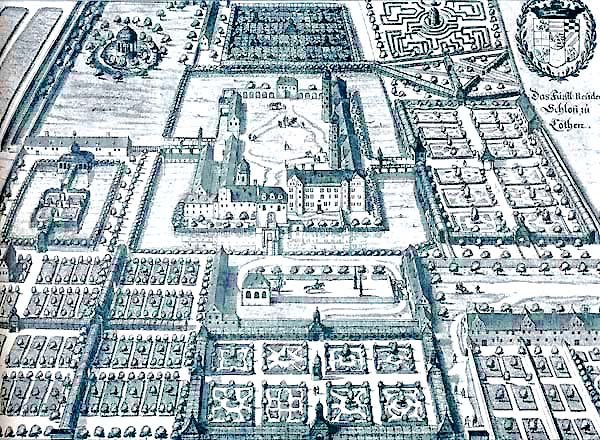
bilcoplan

Köthen court plan

There is no cantata for Trinity 6 from 1724.  A little research gives the reason: Bach took a trip with his wife Anna Magdalena to the court of Köthen, where they had both worked until their move to Leipzig in 1723.

According to The New Bach Reader, the court account books state the following for July 18, 1724:

“To the Director Musices Bach and his wife, who performed, in settlement rthl* 60”

We don’t know what they performed and for exactly how many days they stayed, but Bach was back in time to compose and rehearse the cantata for Trinity 7 that year.

*rthl = Reichsthaler

Wieneke Gorter, July 15, 2017.

Blogging from Greece

15 Saturday Jul 2017

Posted by cantatasonmymind in Cantatas, Chorale cantatas 1724/1725, Leipzig, Trinity

≈ 1 Comment

Tags

Agnès Mellon, BWV 93, Charles Brett, Howard Crook, Peter Kooy, Phlippe Herreweghe

File Jul 15, 15 46 01.jpeg
Kaisariani monastery near Athens, Greece
bloggingfromGreece

For today, the 5th Sunday after Trinity, I’m running out of time to write a post about the beautiful cantata 93 Wer nur den lieben Gott lässt walten Bach wrote for this Sunday in 1724. So I’ll just give you my favorite recording (by Herreweghe, with soloists Agnès Mellon, soprano; Charles Brett, countertenor; Howard Crook, tenor; and Peter Kooij, bass), the text & translations, and the score.

My reason is a good one: I’m on tour with my daughter’s youth choir to Greece, and I’m in charge of the blog for that tour (so parents who stay at home know we’re still alive and happy) and that’s taking up most of my limited wifi time on the island of Syros. It’s a really hard life being a blogger here 😉

kaisariani_interior.jpg

I’m very happy, because at the beginning of this week I got to see the 11th/12th century Kaisariani monastery, about 10 kilometers outside of Athens. I found out about this building once while looking for images for this blog. The cross-in-square, domed church has some beautiful wall and ceiling paintings dating from the 18th century; those in the narthex date back to 1682.

I loved seeing the paintings “live” and took lots of pictures to use in future blog posts, but also very much enjoyed the quiet (only a handful of other tourists were there), the forest air, and the gardens:

kaisariani_plants

Wieneke Gorter, July 15, 2017.

A double bill for July 2

01 Saturday Jul 2017

Posted by cantatasonmymind in Cantatas, Chorale cantatas 1724/1725, Leipzig, Trinity

≈ Leave a comment

Tags

Bach Collegium Japan, Deborah York, Gerd Türk, Pascal Bertin, Peter Kooy, Ton Koopman

In my effort to follow Bach’s compositions in the order in which he wrote them in 1724, I sometimes get a bit confused, because in 2017 the Sundays of the church year are exactly one week later than in 1724. Where it gets tricky is around the Feast days of St. John and the Visitation of Mary, which are always on the same date: June 24 and July 2 respectively.

See how the dates of 1724 compare to the dates of 2017 in this table here below, and you’ll understand my dilemma for today: in Bach’s time, if the feast of the Visitation fell on a Sunday, it would cancel out the theme and thus the cantata for that Sunday. That is why there is no cantata for Trinity 4 from 1724, and why Weekly Cantata will be on break next week.

Sunday/Feast day17242017Cantata
Trinity 1June 11June 1820: O Ewigkeit, du Donnerwort
Trinity 2June 18June 252: Ach Gott, vom Himmel sieh darein
St. John (Johannis)June 24June 247: Christ, unser Herr, zum Jordan kam
Trinity 3June 25(July 2)135: Ach Herr, mich armen Sünder
Visitation (Mariä Heimsuchung)July 2July 210: Meine Seele erhebt den Herren
Trinity 4July 2July 9(no cantata from 1724 because same day as Visitation)
Trinity 5July 9July 1693: Wer nur den lieben Gott lässt walten
Trinity 6July 16July 23(no cantata from 1724 because of Bach’s visit to Köthen)
Trinity 7July 23July 30107: Was willst du dich betrüben
Trinity 8July 30Aug 6178 Wo Gott der Herr nicht bei uns hält

So officially, I should present you only with the cantata for the feast of the Visitation today, but since we are listening in order of 1724, I give you some highlights of cantata 135 Ach Herr mich armen Sünder first. An update from 2021: Since I first wrote this post, a beautiful live video recording of this cantata has been released on YouTube by the J.S. Bach Foundation. Find it here.

The cantata is the last of the set of four I described in this post, and thus has the cantus firmus in the bass in the opening chorus. This is nicely done on the J.S. Bach Foundation recording, with a trombone doubling the choral bass part. But the best choral basses are still on the recording by Bach Collegium Japan. Listen to that recording on Spotify.

While the boy sopranos have a bit more work in the opening chorus (as was the case the last two weeks), there is again no soprano aria in this cantata. The Leipzig congregations haven’s heard a soprano solo since Trinity Sunday.

But then, on July 2, 1724, they get to hear the cantata for the feast of the Visitation: cantata 10 Meine Seel erhebt den Herren. With a soprano aria directly after the opening chorus, and a virtuoso one too. It might be that a talented new student had enrolled in the school, or Bach was finally ready training one, or there is a talented boy visiting for the holiday.* There is a very nice live video of Ton Koopman performing this in the St. Thomas Church in Leipzig during the Bach Festival there in 2003, with Deborah York singing the soprano aria.

Wieneke Gorter, July 1, 2017. Updated March 26, 2020, and June 19, 2021.

*Read more about the possibility of musicians visiting for this feast day in my post from last year about the Visitation. Read more about the soprano problem in this post.

The Feast of St. John 1724

28 Wednesday Jun 2017

Posted by cantatasonmymind in Cantatas, Chorale cantatas 1724/1725, Leipzig, Trinity

≈ Leave a comment

Tags

Charles Daniels, Daniel Taylor, Eric Milnes, Montreal Baroque, Stephan MacLeod

stjohn
The Naming of St. John the Baptist by Fra Angelico, 1434 or 1435. Basilica di San Marco, Florence, Italy.

As I explained in my post for the first Sunday after Trinity in 1724, Bach most probably intended for the first four chorale cantatas of this 1724 Trinity season to form a set, or at least to present some kind of order:

  1. For the first Sunday after Trinity in 1724, June 11: Cantata 20 O Ewigkeit, du Donnerwort: French Overture, with cantus firmus in the soprano
  2. For the second Sunday after Trinity in 1724, June 18: Cantata 2 Ach Gott, vom Himmel sieh darein: Chorale motet, cantus firmus in alto.
  3. For the Feast of St. John in 1724, Saturday June 24: Cantata 7 Christ unser Herr zum Jordan kam: Italian concerto, cantus firmus in tenor.
  4. For the third Sunday after Trinity in 1724, June 25: Cantata 135 : Ach Herr, mich armen Sünder: Chorale fantasia, cantus firmus in bass.

The Feast of St. John, celebrating the birth of St. John the Baptist, always falls on June 24 (exactly six months before Jesus’ birth). Read more about this feast day in my blog post from last year. This means that in 1724, this date came *after* the second Sunday after Trinity, while of course this year (2017) it came *before* that date.

Because I’m trying to follow the order in which Bach wrote his cantatas in 1724, I did not write about this cantata this past Saturday, but feel it should be presented within the order Bach wrote them in: between this past Sunday and next Sunday. So after the French Overture in cantata 20 and the chorale motet in cantata 2, Bach now presents you with an Italian concerto in this cantata 7 Christ unser Herr zum Jordan kam. The performance I like best is the one by Montreal Baroque, because of the opening movement and because of  Charles Daniels singing the tenor aria. Other soloists are Daniel Taylor, countertenor, and Stephan MacLeod, bass. You can enjoy this performance here on YouTube. The phrasing of the orchestra is beautiful and overall this recording is much more thoughtful and satisfying to me than many others I listened to.

Find the German text with English translation of this cantata here, and the score here.

Wieneke Gorter, June 27, 2017.

The Herreweghe altos (Trinity 2 in 1724)

25 Sunday Jun 2017

Posted by cantatasonmymind in Cantatas, Chorale cantatas 1724/1725, Leipzig, Trinity

≈ Leave a comment

Tags

Alex Potter, alto, Bach Collegium Japan, Collegium Vocale Gent, Eduard van Hengel, Phlippe Herreweghe

BWV2_title
The title page of cantata 2 Ach Gott tom Himmel sieh darein, written by Bach’s lead copyist, J.A. Kuhnau. Staatsbibliothek zu Berlin Preußischer Kulturbesitz

Regular readers of this blog know that I have a soft spot for the Herreweghe choir sopranos*. But the alto section of Collegium Vocale Gent is often equally impressive, and they deserve a special mention for their fabulous sound in the cantus firmus of this cantata’s opening chorus. Listen to Herreweghe’s recording of cantata 2 Ach Gott, vom Himmel sieh darein on YouTube.

Find the text of this cantata here (read along so you can see the brilliant text-illustration in the music), and the score (where you can see which instruments double which vocal parts) here.

Bach wrote this cantata for the 2nd Sunday after Trinity, which fell on June 18 in 1724.  As I explained last week, this is the second in a series of four cantatas at the start of Bach’s 1724/1725 Leipzig cycle, and according to the master’s orderly design for these first four chorale cantatas, the cantus firmus of the hymn tune (always the same as the cantata title) is now in the alto part.

This Herreweghe recording is from before the time that soloists joined the choir sections of Collegium Vocale, which means that alto soloist Ingeborg Danz does not sing in this excellent group of one mezzo (Mieke Wouters), two contraltos (Yvonne Fuchs and Cécile Pilorger), and one countertenor (Alex Potter). Also the blend with the instruments doubling this alto part (two oboes and one trombone) is so marvelous it gives me goose bumps. Then again, there aren’t many things in music that move me more than a Bach opening chorus with trombones.

Whenever Bach uses the archaic form of chorale motet as opening chorus, especially when he combines it with the use of the Renaissance/Early Baroque trombone quartet (1 cornetto and 3 trombones), he wants to stress the timeless importance, the authoritative character of a message. In this case the at that point already two centuries old message is the chorale, one of Luther’s own.  For readers who understand German: Eduard van Hengel’s website (in Dutch) has a very insightful overview of the original German text of Psalm 12, the text of Luther’s chorale, and how Bach’s librettist changed that into the text for the cantata.  You can find it here.

Bach alto and tenor arias are at their prettiest, I find, when they are written as a trio sonata, and there is a wonderful example of that in the alto aria Tilg, o Gott in this cantata. It is a plea for help in fighting the “Rottengeister,” or the sectarians amidst the Lutherans. Alto soloist Ingeborg Danz does a terrific job interpreting the text. When the alto starts singing the word Rottengeistern, we see that it was that word we had already heard many times in the triplets of the violin part. As Eduard van Hengel says, it is the “popular easy talk of the sectarians, and that is also the reason why the other two parts don’t have this motive” [to further illustrate the schism].

In his effort to educate his fellow Lutherans (the Leipzig congregations) with his music, Bach wants to make it clear that he’s still preaching by means of the well-known chorale, and uses longer notes for the direct quotation (in music and text) of the chorale in this aria: der uns will meistern.

The best interpretation of the tenor aria Durchs Feuer wird das Silber rein actually appears on another recording, that of Bach Collegium Japan with tenor Gerd Türk. You can listen to that aria here. Here we have arrived at the solution/salvation part of the cantata, and so this music is more pleasant, easier to listen to. But Bach is still preaching: there are some crossing (!) lines in the music, and in the middle section, which tells the listeners to be patient (sei geduldig) and Bach stresses the words Kreuz und Not.

So one wonders: was Bach’s decision to focus on chorales for this 1724/1725 cantata cycle inspired by his need to make things easier for the boy sopranos, or by a wish to explain the theology to the congregations in a way that was more obvious to them than the more complicated, sometimes perhaps too hidden, messages he had so far delivered by way of his music? Or had the City Council or the church elders told him to to this?

*Read more about that in this post.

Wieneke Gorter, June 25, 2017

← Older posts
Newer posts →

Recent Posts

  • “Missa Miniatura” by CONTINUUM/Elina Albach Even More Moving in 2025
  • Bachfest Leipzig 2025
  • Bach Cantatas for Christmas – 1724 and 1734 editions
  • Fourth Sunday of Advent – more insight into Cantata 62 helped me better understand Bach’s Christmas Oratorio
  • Saint Ambrose and Luther in Milan – Second Sunday of Advent

Archives

  • August 2025
  • July 2025
  • December 2024
  • November 2024
  • June 2024
  • January 2024
  • December 2023
  • October 2023
  • September 2023
  • August 2023
  • April 2022
  • February 2022
  • January 2022
  • December 2021
  • November 2021
  • June 2021
  • May 2021
  • April 2021
  • February 2021
  • January 2021
  • December 2020
  • November 2020
  • October 2020
  • September 2020
  • August 2020
  • July 2020
  • May 2020
  • April 2020
  • March 2020
  • February 2020
  • January 2020
  • December 2019
  • November 2019
  • May 2018
  • April 2018
  • March 2018
  • February 2018
  • January 2018
  • December 2017
  • November 2017
  • October 2017
  • September 2017
  • August 2017
  • July 2017
  • June 2017
  • May 2017
  • April 2017
  • March 2017
  • February 2017
  • January 2017
  • December 2016
  • November 2016
  • October 2016
  • September 2016
  • August 2016
  • July 2016
  • June 2016
  • May 2016
  • April 2016
  • March 2016
  • February 2016
  • January 2016

Enter your email address to follow this blog and receive notifications of new posts by email.

Join 336 other subscribers

Categories

  • 1723 Trinity season special series
  • Advent
  • After Easter
  • Ascension
  • Bach's life
  • Cantatas
  • Chorale cantatas 1724/1725
  • Christmas
  • Easter
  • Epiphany
  • Following Bach in 1725
  • Köthen
  • Leipzig
  • Septuagesima
  • Travel
  • Trinity
  • Weimar

Meta

  • Create account
  • Log in
  • Entries feed
  • Comments feed
  • WordPress.com

Website Built with WordPress.com.

  • Subscribe Subscribed
    • Weekly Cantata
    • Join 156 other subscribers
    • Already have a WordPress.com account? Log in now.
    • Weekly Cantata
    • Subscribe Subscribed
    • Sign up
    • Log in
    • Report this content
    • View site in Reader
    • Manage subscriptions
    • Collapse this bar
 

Loading Comments...