Weekly Cantata

Weekly Cantata

Category Archives: Leipzig

Naming the baby six days late

06 Saturday Jan 2018

Posted by cantatasonmymind in Bach's life, Cantatas, Chorale cantatas 1724/1725, Epiphany, Leipzig

≈ Leave a comment

1024px-Don_Lorenzo_Monaco_002

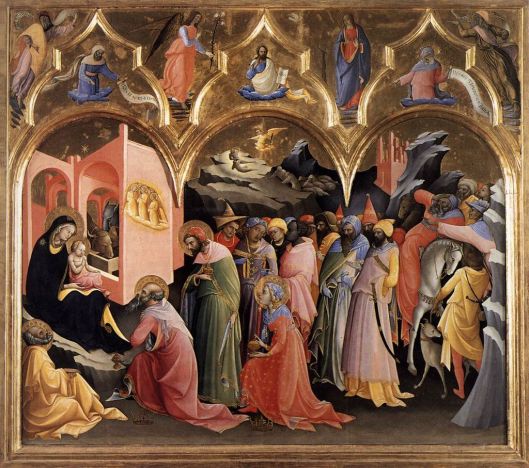
The Adoration of the Magi by Lorenzo Monaco, 1420–1422. Uffizi Gallery, Florence.

Today is the second anniversary of my Weekly Cantata blog! It all started with a broken dishwasher. Read my story on how this blog came to be here.

Bach must have been exhausted by this time in 1725, having performed six brand-new cantatas in one week, most of them twice a day, in the St. Thomas Church as well as the St. Nicholas Church. I assume he used his “time off” during Advent to work ahead to compose the cantatas, but how soon he had each of them ready and when he rehearsed them with choir and orchestra, we don’t know.

Still he stays fully committed to his (probably self-imposed) plan to write every cantata this 1724/1725 season as a chorale cantata.  For Epiphany (Three Kings Day, January 6) 1725 he composed the exquisite Cantata 123 Liebster Immanuel, Herzog der Frommen.

On New Year’s Day 1725 he didn’t refer at all to the usual theme for that day, the naming of Jesus. Thus I don’t think it is a coincidence that for today he chose a chorale that does refer to that story, it even has the name in the title: Immanuel. Having followed Bach’s chorale cantatas in the order they were created since June 18 last year, I am now extra moved by the instrumental “announcements” of the chorale melody in the opening chorus, played by the winds. The congregations in Leipzig, who knew their chorales very well, would have known what was coming by just hearing those few notes.

I already wrote about this Cantata 123 Liebster Immanuel, Herzog der Frommen in my very first post on this blog, so in the spirit of celebrating the second anniversary, I gladly refer you to that post, where you will also find updated links to recordings and texts.

Wieneke Gorter, January 2, 2018


New Year’s Day 1725

31 Sunday Dec 2017

Posted by cantatasonmymind in Cantatas, Chorale cantatas 1724/1725, Christmas, Leipzig

≈ 2 Comments

Tags

1725, Annette Markert, Christophe Pregardien, Klaus Mertens, New Year's Day, Sibylla Rubens, Ton Koopman

Happy New Year! It’s still 2017 in California as I am writing this, always a bit strange, this time difference, but it is so great to know that I have readers all over the world, from New Zealand to India to France to Brazil to Canada.

Today’s Cantata 41 Jesu, nun sei gepreiset still has a bit of Christmas in it, especially in the soprano aria with the pastoral accompaniment of the three oboes, and with an orchestration worthy of a feast day: timpani, 3 trumpets, 3 oboes,  violoncello piccolo, plus the regular strings and organ. But that’s about the only relation this cantata has with the Christmas story.

The best recording of this cantata available on YouTube is the one by Koopman. You can listen to it here. Soloists are Sibylla Rubens, soprano; Annette Markert, alto; Christoph Prégardien, tenor; and Klaus Mertens, bass.

Find the German texts with English translations of Cantata 41 here, and the score here.

Normally, on New Year’s Day, it would be time to talk about the name-giving of Jesus (the day of the circumcision), see my New Year’s Day post from last year.  While Bach clearly indicates on the first page of this cantata’s manuscript that it is intended “For the “Feast of the Circumcision,” nothing in the text or music of this cantata refers to this.

This year, Bach and his librettist have chosen to focus on the old year / new year theme instead, the same way they did that yesterday for the more intimate Cantata 122. Is this perhaps another indication that this particular New Year’s, 1725, the time on the calendar was more important than the time in the Lutheran church year?

While yesterday Bach was inspired by the early medieval tradition of conflating Christmas with New Year, today it is all about the “Alpha and Omega,” the beginning and the end, in Bach’s time seen as a symbol for God’s extended care of the people. Eduard van Hengel gives the following examples for this:

  • The closing chorale has as much musical “fanfare” in it as the opening chorus, which is rather unusual for a Bach cantata.
  • The main key of the cantata is C Major, which is at the beginning as well as at the end of the sequence of key signatures.
  • In the alto recitative, which is not in they key of C at all, Bach does move to that key just for the text “A und O,” so that A sounds on a high C and O on a low C.
  • The violoncello piccolo part in the tenor aria requires the full range of the instrument, symbolizing the full extent of God’s care.

Also listen for the brilliant illustrations of Satan in the music of the bass aria: Bach uses “forbidden” intervals, also called “diabolus in musica” (the devil in the music), and writes a very unusual “insert” for the choir in the bass aria on the text “Den Satan unter unsre Füsse treten.”

Wieneke Gorter, December 31, 2017


A somewhat medieval “Rutsch” into 1725

30 Saturday Dec 2017

Posted by cantatasonmymind in Bach's life, Cantatas, Chorale cantatas 1724/1725, Christmas, Leipzig

≈ Leave a comment

Tags

BWV 122, Collegium Vocale Gent, Jubeljahr, Jubilee, Leipzig, Mark Padmore, Peter Kooy, Phlippe Herreweghe, Sarah Connolly, Sunday after Christmas, Vasiljka Jezovsek

mystic_nativity2c_sandro_botticelli
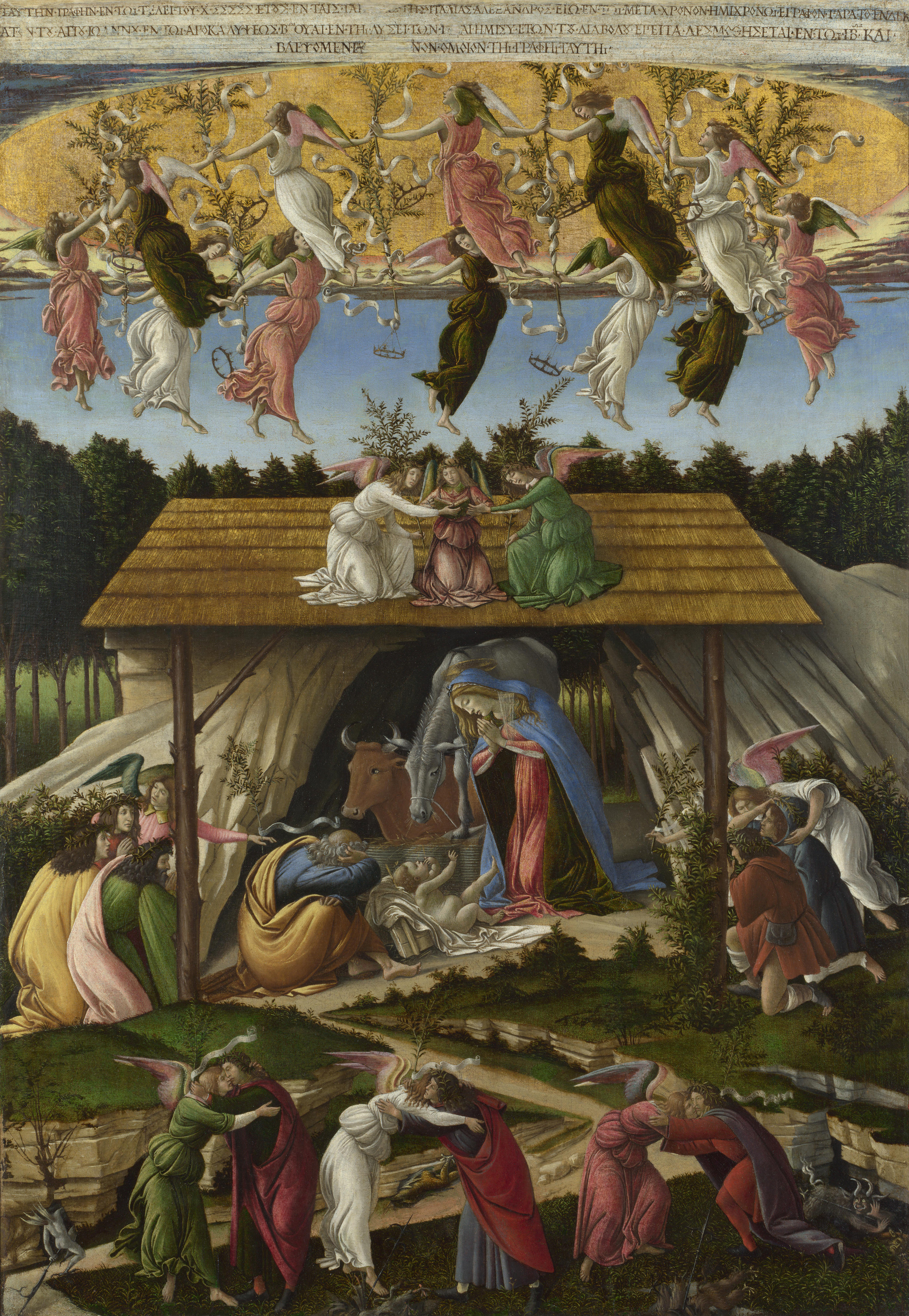
Mystic Nativity by Botticelli, circa 1500. National Gallery, London.

Since I was a very small child, the word “Jubeljahr” (Year of Jubilee) has stood out to me when listening to Cantata 122 Das neugeborne Kindelein. I already mentioned this a bit in my post from last year. So on the second to last day of 2017, I did some research into this concept of Jubeljahr, and realized that perhaps Bach might have liked the word too. Keep reading to find out why.

My favorite recording of this cantata is the one by Herreweghe from 1995 with soprano Vasiljka Jezovsek, alto Sarah Connolly, tenor Mark Padmore, and bass Peter Kooij. Find it here on YouTube. Find the text of cantata 122 here, and the score here.

In 1724, there was a Sunday in between Christmas and New Year’s Day, (a first for Bach in Leipzig*) and it fell exactly on New Year’s Eve. The upcoming New Year was not just any year. For the Catholic church 1725 was going to be a Holy Year, Year of Jubilee, or “Jubeljahr” as they called it in German.** While Bach was Lutheran, chances are high that he was aware of the Catholic tradition and thus of the extra importance of this last Sunday of the calendar year. The nearby court of Dresden was Catholic, most of the Marian feast days were still celebrated, only a year before Bach had written a Magnificat (Mary’s song of praise) for Christmas, and many medieval customs were still present.

Because of all this, I would like to think that Bach wanted to mark this special occasion, and might have chosen the chorale Das neugeborne Kindelein from 1597 on purpose for his cantata for this day, because of the mention of “Jubeljahr” in the last verse. Whether the original writer of the chorale might have alluded to the Lutheran belief that the union of God with people makes every year a Jubilee, or to the then upcoming Jubilee and turn of the century in 1600, I don’t know. But nowhere else in Bach’s cantata oeuvre is do we see the word “Jubeljahr.”

The text of the chorale builds on the early medieval tradition of melting the story of Jesus’ birth with the celebration of the New Year, talking about the newborn baby Jesus at the same time as announcing that the year has ended and this is a true Jubilee.

However Bach and his librettist don’t go all the way with the medieval world view: They change the original text of the third verse of the chorale, used for the fourth movement of the cantata, Trotz Türken, Papst und Höllen Pfort (Despite Turks,the Pope and the gates of hell) into Trotz Teufel und der Höllen Pfort (Despite the devil and the gates of hell). In 1725 the fear for a Turkish invasion was probably not as palpable as it had been in 1597, when the chorale was originally written.

Other things to listen for in cantata 122: The amazing high c in the soprano recitative. The leap of a fifth from f to c and then the octave back to c in the soprano recitative on the words “Die Engel” (the angels) had actually just occurred one movement earlier, two octaves lower, in the bass aria, on the words “O Menschen” (Oh people). Gardiner says this musical illustration that heaven/angels (high voice and highest instruments: recorders) and earth/people (low voice and cello) become one makes him think of the angels and men hugging in the forefront of Mystic Nativity by Botticelli, and this is why I decided to feature that as the illustration for today’s blog post.

Wieneke Gorter, December 30, 2017

*In 1723, Bach’s first year in Leipzig, the Sunday after Christmas was December 26, Second Christmas Day.

** The concept of “Jubeljahr” comes from the Old Testament, where Leviticus describes that after 7×7 years, you sould celebrate a Year of Jubilee, the 50th year. However in1470 Pope Paul II issued a Bull to fix the Jubilee for every twenty-five years, starting in 1475, so that every generation could have a Jubilee.

Three days of Christmas 1724

24 Sunday Dec 2017

Posted by cantatasonmymind in Bach's life, Cantatas, Chorale cantatas 1724/1725, Christmas, Leipzig

≈ Leave a comment

Tags

Dorothee Mields, Ingeborg Danz, Mark Padmore, Peter Kooy, Phlippe Herreweghe

adoration-of-the-shepherds-1638

Adoration of the Shepherds, Francisco de Zurbarán, 1638

Merry Christmas!

In Bach’s time, there were three Christmas days. Thanks to a beautiful album by Herreweghe, you can enjoy all cantatas Bach wrote for the consecutive days in 1724 in the order in which Bach wrote them. Or follow these YouTube links for the same recordings:

For Christmas Day: Cantata 91 Gelobet seist du, Jesu Christ

For Second Christmas Day: Cantata 121 Christum wir sollen loben schon

For Third Christmas Day: Cantata 133 Ich freue mich in dir

Soloists are: Dorothee Mields, soprano; Ingeborg Danz, alto; Mark Padmore, tenor; Peter Kooy, bass.

If you have recently joined this blog, you might also enjoy reading my Christmas posts from last year: Christmas Day, Second Christmas Day, Third Christmas Day.

Wieneke Gorter, December 19, 2017.

Bach’s holiday planning in 1724

17 Sunday Dec 2017

Posted by cantatasonmymind in Bach's life, Cantatas, Chorale cantatas 1724/1725, Christmas, Leipzig

≈ Leave a comment

15289642939_dcd9f28f1e_b

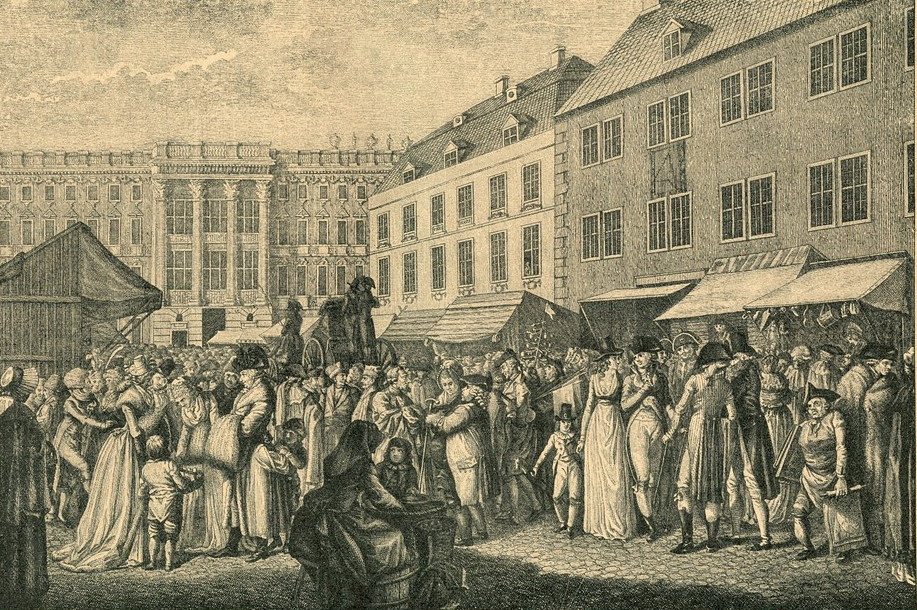
Christmas market in Berlin at the end of the 18th century. Leipzig had a Christmas market since the year 458. I don’t know if there was a market during the tempus clausum in 1724.

In Bach’s time in Leipzig, between the first Sunday of Advent and Christmas Day, there was no music allowed in the churches other than singing chorales. This tempus clausum (“closed” time) was also in effect during the 40 days before Easter, and was intended for introspection.

Bach’s employer in Weimar, where he worked from 1708 to 1717, did not impose a tempus clausum for Advent, so there are Advent cantatas from Bach’s Weimar time for the second, third, and fourth Sunday of Advent. For a reconstruction of the cantata that would have sounded in the ducal chapel in Weimar on the third Sunday of Advent in 1716, please read my updated post from last year.

In 1724 the tempus clausum was a welcome break for Bach, because he needed to work ahead and rehearse the choir. While the previous year he had sometimes “recycled” cantatas from Weimar, this year he could not do that. In the summer of 1724 he had started a series of chorale cantatas (read more about that here), and if he wanted to keep composing according to this template, he had to write a brand new work for every feast day.

For the 1724/1725 Christmas season, that schedule would look like this:

Monday Dec 25, Christmas Day: Cantata 91 Gelobet seist du, Jesu Christ

Tuesday Dec 26, Second Christmas Day: Cantata 121 Christum wir sollen loben schon

Wednesday Dec 27, Third Christmas Day: Cantata 133 Ich freue mich in dir

Sunday Dec 31, Sunday after Christmas: Cantata 122 Das neugeborene Kindelein

Monday Jan 1, New Year’s Day: Cantata 41 Jesu nun sei gepreiset

Saturday Jan 6, Epiphany: Cantata 123 Liebster Immanuel, Herzog der Frommen

Sunday Jan 7, First Sunday after Epiphany: Cantata 124 Meinen Jesum laß ich nicht

Wieneke Gorter, December 17, 2017, updated November 21, 2020

Bonus Advent cantata

10 Sunday Dec 2017

Posted by cantatasonmymind in Advent, Cantatas, Leipzig

≈ Leave a comment

Tags

1st Sunday of Advent, Advent, Bach, BWV 36, Christmas, Christoph Pregardien, Collegium Vocale Gent, J.S. Bach Foundation, J.S. Bach Stiftung, Nuria Rial, Peter Kooy, Phlippe Herreweghe, Sarah Connolly, Sybilla Rubens

Nuria Rial, my favorite interpreter of the soprano aria from Cantata 36.

In Leipzig in Bach’s time, the period between the first Sunday of Advent and Christmas was a “tempus clausum,” when no figural music was allowed in the churches. So if I would follow Bach’s cantata writing in 1724 very strictly, I would not have any music for you today.

So let’s take a detour to 1725. Sometime in that year, Bach wrote a congratulatory cantata for a teacher at the St. Thomas School in Leipzig. The cantata, with the title Schwingt freudig euch empor, had nine movements: an opening chorus, four recitatives and three arias. The cantata also featured a closing chorus alternated with recitatives for all the soloists, the way Bach would also use that in the before-last movement of his St. Matthew Passion. For the text of this cantata, please see this entry on Eduard van Hengel’s website. Scroll all the way down to find a table with all the different texts for the different cantatas.

In the fall of 1726, Bach received a request from his previous employer, prince Leopold of Köthen, to write a cantata for this birthday of his second wife, princess Charlotte Friederike Wilhelmine, on November 26 of that year. Scholars think that at the same time Bach was reworking this cantata from 1725 into this Birthday cantata, he was also reworking it into an Advent cantata. However the music of that particular cantata has not survived.

In 1731 Bach again, or finally, was able to make the original of 1725 into an Advent cantata, by replacing all the recitatives with chorales. This is cantata 36 Schwingt freudig euch empor, one of three cantatas for the first Sunday of Advent that have survived. (The other two are Cantata 61 I discussed last year, and Cantata 62 I discussed last week). Again please see Eduard van Hengel’s table of the different texts of all the various cantatas here. Find the English translations of Cantata 36 here, and find the score of Cantata 36 here.

My favorite recording of the entire cantata is the one by Herreweghe from 1997 (from the same album I discussed last week). I like this recording the best because of the most sparkling interpretation of the opening chorus, gorgeous singing by Christoph Prégardien in the tenor solos and by Peter Kooy in the bass aria, and a wonderful soprano/alto duet by Sybilla Rubens and Sarah Connolly. Find this recording here on YouTube. Or follow the links in my post from last week to purchase the entire album of Advent cantatas by Herreweghe. It is a great Christmas gift 🙂 !

If you prefer to watch a live recording, I recommend the one by the J.S. Bach Foundation. They just released the entire video recording of this cantata this week, and this performance contains my absolute favorite interpretation of the soprano aria by Nuria Rial.

Wieneke Gorter, December 9, 2017, links updated and photo added December 3, 2019.

Cantata 62: one of my favorite opening choruses and a magnificent bass aria

02 Saturday Dec 2017

Posted by cantatasonmymind in Advent, Bach's life, Cantatas, Chorale cantatas 1724/1725, Leipzig

≈ Leave a comment

Tags

Advent, Bach, chorale cantata, Christmas, Christophe Pregardien, Damien Guillon, Grace Davidson, Harry van der Kamp, Marcel Ponseele, oboe, Peter Kooy, Thomas Hobbs

Adventskranz 1. Advent

I don’t know if it is because the oboes already announce the chorale melody in the instrumental part of this opening chorus, or because of the overall Advent sparkle, but I have always found the first movement of Cantata 62 Nun komm der Heiden Heiland one of the most beautiful of all Bach’s cantata opening choruses. I especially cherish the Herreweghe recording from 1997. Find that recording here on YouTube. Soloists are Sibylla Rubens, soprano; Sarah Connolly, alto; Christoph Prégardien, tenor; and Peter Kooij, bass. This cantata also features an impressive recitative and aria for bass.

I remember an anecdote from my mom’s time as a member of the Twents Bachkoor, somewhere in the early 1980s. Bass soloist Harry van der Kamp showed up for an Advent concert, thinking he was coming to sing the other cantata with the same Nun komm der Heiden Heiland title, Cantata 61, which includes a beautiful recitative for bass (discussed on this blog here), but nothing really challenging for bass otherwise. He found out during the warm-up rehearsal that it was in fact 62. He did a fabulous job and part of my admiration for him stems from witnessing that as an audience member during that concert.

In the bass recitative, listen for Bach’s musical illustration of the words “laufen” (walking — upwards sequence), “Gefall’ne” (fallen — 7th down), and “heller Glanz” (bright luster — a sparkling highest note).

Find the text of Cantata 62 here, and the score here.

Bach wrote this cantata for the first Sunday in Advent in Leipzig in 1724, as part of his series of chorale cantatas of 1724/1725. For nine and a half months, starting on June 11, 1724, he would write every cantata according to this same template: the opening movement is a chorale fantasia on the first stanza of an existing Lutheran hymn or chorale, with the tune appearing as a cantus firmus. The last movement has the last stanza of the same hymn as text, in a four-part harmonization of the tune. The text of those choral, outer movements was used verbatim, while the text of the solo, inner movements was paraphrased, but still based on the inner stanzas of the same hymn.

I have been following all these chorale cantatas in the order they were written in 1724 on this blog. If you missed it, you can start reading here. If you subscribe to this blog (on the left-hand side of this text when reading on a desktop computer, or at the bottom of this text when reading on a smartphone) you will receive an email every time I have posted a new story.

There is also a wonderful live performance by Herreweghe of this cantata on YouTube, albeit with different soprano, alto, and tenor soloists (Grace Davidson, soprano; Damien Guillon, countertenor; Thomas Hobbs, tenor), but again with Peter Kooij singing bass, and again Marcel Ponseele playing first oboe. It was recorded in the St. Roch Church in Paris in 2015 and you can find it here on Youtube. The camera direction in the beginning is a bit strange: perhaps the TV director didn’t know the piece or didn’t have the score in front of her/him, because the camera is on the altos when the sopranos have an entrance, and on the back of the basses and tenors when the altos have an entrance, but later on it gets better, and it is a wonderful selection of Advent and Christmas cantatas they present there in that concert.

The CD recording from 1997  is part of a very good album, which also includes the two other Advent cantatas: Cantata 36 Schwingt freudig euch empor from 1731 (more about this in the next few weeks) and Cantata 61 Nun komm der Heiden Heiland from 1713 (discussed here on this blog). Please consider supporting the artists by purchasing this album in its reprint from 2014. Or purchase the box from 2010, which also includes two CDs with Christmas cantatas.

Wieneke Gorter, December 2, 2017.

The last weeks of Trinity = bass aria time for Bach (Trinity 23 & 24 in 1724)

26 Sunday Nov 2017

Posted by cantatasonmymind in Cantatas, Chorale cantatas 1724/1725, Leipzig, Trinity

≈ Leave a comment

Tags

Bach, Bach Collegium Japan, J.S. Bach Foundation, Johannes Kaleschke, Peter Kooy, Robin Blaze

sid59217s-1400x1400_q85

Jacob Isaacksz van Ruisdael, ‘Landscape with a waterfall’, circa 1668, Rijksmuseum, Amsterdam.

Last week it was the 7th anniversary of my mother’s passing. I wasn’t sure what to write about that, so ended up not posting that day. If you would like to read more about the woman who still is my main inspiration for this blog, you can read my tribute to her here.

But as it turns out, it is not a bad thing to combine the cantatas Bach wrote for Trinity 23 & 24 in 1724 in one and the same blog post, since they both stand out for their bass arias. It is noteworthy that Bach ended both his 1723 and 1724 Trinity seasons in Leipzig with cantatas featuring impressive bass arias*. That the “End of Life/End of Time/Judgement Day” theme was on every Protestant’s mind in the 18th century around this time of year of course had a lot to do with this. Bach often associates the bass voice with this theme, see for example Cantata 20 O Ewigkeit du Donnerwort, discussed here on this blog.

Regarding Cantata 139 Wohl dem, der sich auf seinen Gott, for the 23rd Sunday after Trinity (which was last week), I prefer the recording by the J.S. Bach Foundation (Bachstiftung). Especially the tenor aria is very well done by tenor Johannes Kaleschke and violinists Renate Steinmann and Martin Korrodi. Update from 2019: when I first wrote about this performance in 2017, the cantata was not available on YouTube in full length, but now it is! You can find it here. For those who can understand (a little) German, there is also a terrific explanation by conductor Rudolf Lutz of everything that happens in the cantata available on YouTube here. You can even download the same worksheet (“Lutzogramm”) as the audience is looking at here.  Rudolf Lutz is at his best here, very clever, witty, and informative. He spent a lot of time prepping for this workshop, including entering entire orchestrations into his “Lady Yamaha,” which is very effective for understanding Bach’s incredible composition. Soloists are Susanne Frei, soprano; Antonia Frey, alto; Johannes Kaleschke, tenor; Ekkehard Abele, bass.

However, since the subject of this post is bass arias … the best interpretation of the extremely unusual bass aria appears on the Bach Collegium Japan recording. Peter Kooy does a fabulous job bringing out the different character for the 11 (!) different sections of the aria. I created a playlist on Spotify of this Bach Collegium Japan recording here. Soloists are Yukari Nonoshita, soprano; Robin Blaze, countertenor; Makoto Sakurada, tenor (he doesn’t convince me or capture my attention, and I find his pronunciation of the word “getrost” a bit distracting); Peter Kooy, bass.

Find the text of Cantata 139 here, and the score here.

peterkooyklein

Peter Kooy

Peter Kooy/Bach Collegium Japan again wins “best interpretation of the bass aria” in Cantata 26 Ach wie flüchtig, ach wie nichtig for the 24th Sunday after Trinity in 1724. Listen to Bach Collegium Japan’s recording via a playlist I created here on Spotify. This cantata was released on the same album as Cantata 139, so the soloists are again Soloists are Yukari Nonoshita, soprano; Robin Blaze, countertenor; Makoto Sakurada, tenor; and Peter Kooy, bass. 

Find the text of Cantata 26 here, and the score here.

And what a bass aria this is! The calmly babbling brook from the lovely tenor aria earlier in the cantata has become a white water river in this bass aria. And the combination of bass voice with the oboes makes me think of Hades in Monteverdi’s Orfeo. Peter Kooy is great and my mother loved him very much, but in my humble opinion, the luckiest people today are those attending the cantata service in the Kloosterkerk in The Hague, Netherlands, where my good friend and favorite Bach bass Marc Pantus will be singing this aria. The Kloosterkerk was also my mother’s church for the last decade of her life, so I have now successfully circled back to her in this post, and miss her much more today than I did last week.

Wieneke Gorter, November 26, 2017, updated November 21 & 24, 2019.

*The first cantata Bach ever wrote for this particular time of year was Cantata 163 in Weimar. It contains a bass aria accompanied by two cellos, an instrumentation Bach never ever used after that.  The last two cantatas of the 1723 Trinity season were Cantatas 90 and 70. Read my post about Cantata 90 for the 25th Sunday after Trinity here and my post about Cantata 70 for the 26th Sunday after Trinity here.

A good problem to have: Dorothee Mields or Susanne Rydén (cantata 115 for Trinity 22 in 1724)

11 Saturday Nov 2017

Posted by cantatasonmymind in Cantatas, Leipzig, Trinity

≈ 1 Comment

Tags

Bach, Bach Collegium Japan, Collegium Vocale Gent, Damien Guillon, Dorothee Mields, Peter Kooy, Phlippe Herreweghe, soprano, Susanne Rydén

3051724_1200_675

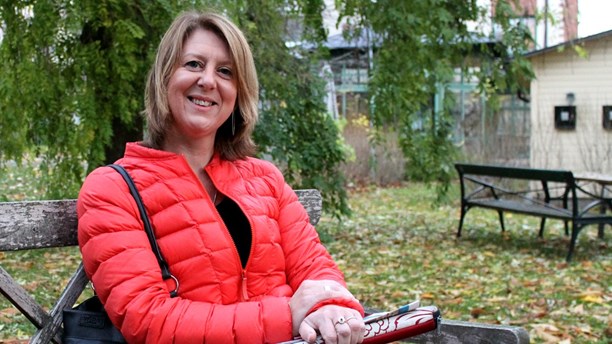
Susanne Rydén. Photo by Elin Ericsson/Sveriges Radio.

About a decade ago, I first heard the soprano aria from Cantata 115 sung live in a concert. It took my breath away. The next day, I started looking for recordings of the aria, and decided that my favorite was the one by Susanne Rydén with Bach Collegium Japan, with Liliko Maeda on transverse flute, and Hidemi Suzuki on violoncello piccolo. I purchased only that movement on iTunes and played it many times. However, I never listened to the rest of the cantata …

It took me until this past week to realize that the entire cantata is beautiful, also contains a fabulous alto aria, and …. that this year, Herreweghe released a recording of it, with Dorothee Mields singing the soprano aria and Damien Guillon singing the alto aria. For those of you who know how much I love Dorothee Mields (read more about that here) you will understand I now had a problem: Susanne Rydén or Dorothee Mields? I feel that within the framework of the rest of the movements of Herreweghe’s recording, Mields’ interpretation of the soprano aria fits perfectly, is very moving, and extremely well done. But as a stand-alone aria, I still love Susanne Rydén’s the best, because of the quality of her voice on that recording, and because her ability to blend so perfectly with the flute.

For the entire cantata, I recommend Herreweghe’s 2017 recording. This recording is not available on YouTube, but you can find it here on Spotify. Please consider supporting the artists by purchasing the entire album here on Amazon.

Find the German texts with English translations here and the score here.

Herreweghe is the best at  giving the music direction, always focusing on the phrasing. In addition to all of that, there is a wonderful expansiveness, freedom in the sound and the musical lines present in almost all of the movements. Also, Peter Kooy’s singing in the bass recitative/arioso is much more lively and adventurous than on the Bach Collegium Japan recording, and then there’s of course counter-tenor Damien Guillon. I was smiling the whole time when I first listened to his aria. How he can move from a low, full note to a clear, spot-on high note is just so good.

If you would like to hear more beautiful music for this Sunday, or are wishing for a more upbeat soprano aria, there is a terrific rendition of the soprano aria from cantata 89 Bach wrote for this same Sunday in 1723 here on Youtube, sung by the incomparable Nuria Rial with the J.S. Bach Foundation.

Wieneke Gorter, November 11, 2017, updated November 15, 2019.

A modest Reformation Day in 1724

04 Saturday Nov 2017

Posted by cantatasonmymind in Cantatas, Chorale cantatas 1724/1725, Leipzig, Trinity

≈ Leave a comment

Tags

21st Sunday after Trinity, BWV 2, BWV 25, BWV 38, Calov Bible, Carolyn Sampson, chorales, Collegium Vocale Gent, Daniel Taylor, Luther, Mark Padmore, oboe, Peter Kooij, Peter Kooy, Philippe Herreweghe, tenor, Trinity 21

Bachs-Calov1

Bach’s Calov Bible after Luther, with Bach’s comment in the right margin of 2 Chronicles 5,13: “NB. Bey einer andächtigen Musiq ist allezeit Gott mit seiner Gnaden Gegenwart” (NB. Where there is devotional music, God with his grace is always present.)

This past October 31 marked the 500 anniversary of the Reformation: Luther posting his 95 theses on the door of the church in Wittenberg. Without Luther making the Bible available in German and making music an integral part of faith, Bach would probably not have felt as driven to educate his fellow believers through his music. Without Luther, there might not be any Bach cantatas, and definitely not this special cycle of chorale cantatas I’ve been discussing on this blog since June of this year.

It is interesting to me that when using one of Luther’s original chorales, Bach gives it an “old-fashioned” treatment: he writes the opening chorus in the “old style,” almost like a 16th century motet, and has the equally ancient brass quartet of one cornetto and three sackbutts (early trombones) doubling the vocal parts, as if wanting to confirm the timeless character of Luther’s chorales. A good example of this technique is Cantata 25 from 1723 and Cantata 2 from earlier in 1724, and Cantata 121 for Second Christmas Day 1724. If this was Bach’s preferred way of honoring Luther, he did this also on October 29 in 1724, two days before Reformation day, with this Cantata 38 Aus tiefer Not schrei ich zu dir for the 21st Sunday after Trinity. Aus tiefer Not schrei ich zu dir is on one of Luther’s very first chorales, and was also sung at his funeral.

I prefer Herreweghe’s recording of this cantata. It is available here on YouTube, or please consider supporting the artists by purchasing the entire album “Weinen, Klagen …” here on Amazon. The album also contains my preferred recordings of Cantata 12 (see my post about that here) and Cantata 75 (see my post about that here). Soloists are Carolyn Sampson, soprano; Daniel Taylor, countertenor; Mark Padmore, tenor, and Peter Kooij, bass.

Please find the German text with English translations here, and the score here.

If you have time, it is worth it to first listen to the opening chorus of cantata 2 Ach Gott, vom Himmel sieh darein from June 18, 1724, also based on one of Luther’s own chorales. Make sure you stop after the opening chorus, and then start listening to today’s Cantata 38 here, and hear how similar Bach’s setting of the chorale melody is. I don’t think it is a coincidence.

My favorite part of this cantata is the tenor aria: it is a beautiful piece of music, a quartet really, between the two oboe parts, the tenor voice, and the continuo, the way tenor arias often are with Bach, and I appreciate the text “Ich höre mitten in den Leiden ein Trostwort, so mein Jesus spricht” (In the midst of my sufferings I hear a word of consolation spoken by Jesus). I listened to this aria many times in the weeks after my mother passed away (seven years ago this month), Bach’s music being my “Trostwort.”

I also very much like the before-last movement of the cantata, the trio between soprano, countertenor, and bass. Excellent motet writing by Bach, and beautifully sung on the Herreweghe recording. Again this is a nod from Bach to older composition styles, linking back to the opening chorus, and perhaps an additional tribute to Luther.

Wieneke Gorter, November 4, 2017, links updated October 29, 2020.

← Older posts
Newer posts →

Recent Posts

  • “Missa Miniatura” by CONTINUUM/Elina Albach Even More Moving in 2025
  • Bachfest Leipzig 2025
  • Bach Cantatas for Christmas – 1724 and 1734 editions
  • Fourth Sunday of Advent – more insight into Cantata 62 helped me better understand Bach’s Christmas Oratorio
  • Saint Ambrose and Luther in Milan – Second Sunday of Advent

Archives

  • August 2025
  • July 2025
  • December 2024
  • November 2024
  • June 2024
  • January 2024
  • December 2023
  • October 2023
  • September 2023
  • August 2023
  • April 2022
  • February 2022
  • January 2022
  • December 2021
  • November 2021
  • June 2021
  • May 2021
  • April 2021
  • February 2021
  • January 2021
  • December 2020
  • November 2020
  • October 2020
  • September 2020
  • August 2020
  • July 2020
  • May 2020
  • April 2020
  • March 2020
  • February 2020
  • January 2020
  • December 2019
  • November 2019
  • May 2018
  • April 2018
  • March 2018
  • February 2018
  • January 2018
  • December 2017
  • November 2017
  • October 2017
  • September 2017
  • August 2017
  • July 2017
  • June 2017
  • May 2017
  • April 2017
  • March 2017
  • February 2017
  • January 2017
  • December 2016
  • November 2016
  • October 2016
  • September 2016
  • August 2016
  • July 2016
  • June 2016
  • May 2016
  • April 2016
  • March 2016
  • February 2016
  • January 2016

Enter your email address to follow this blog and receive notifications of new posts by email.

Join 336 other subscribers

Categories

  • 1723 Trinity season special series
  • Advent
  • After Easter
  • Ascension
  • Bach's life
  • Cantatas
  • Chorale cantatas 1724/1725
  • Christmas
  • Easter
  • Epiphany
  • Following Bach in 1725
  • Köthen
  • Leipzig
  • Septuagesima
  • Travel
  • Trinity
  • Weimar

Meta

  • Create account
  • Log in
  • Entries feed
  • Comments feed
  • WordPress.com

Website Built with WordPress.com.

  • Subscribe Subscribed
    • Weekly Cantata
    • Join 156 other subscribers
    • Already have a WordPress.com account? Log in now.
    • Weekly Cantata
    • Subscribe Subscribed
    • Sign up
    • Log in
    • Report this content
    • View site in Reader
    • Manage subscriptions
    • Collapse this bar
 

Loading Comments...