Military bravura

Tags

, , , , , , , ,

Vienna_Battle_1683
The Battle of Vienna, 1683

Two days after performing Cantata 125, Bach performed Cantata 126 Erhalt uns, Herr, bei deinem Wort, on Sexagesima Sunday (the before-last Sunday before Lent), February 4, 1725.

My favorite recording of this cantata is the one by Harnoncourt, especially because of Thomas Thomaschke singing the bass aria. Find it here on YouTube.

Find the text of this Cantata 126 here, and the score here.

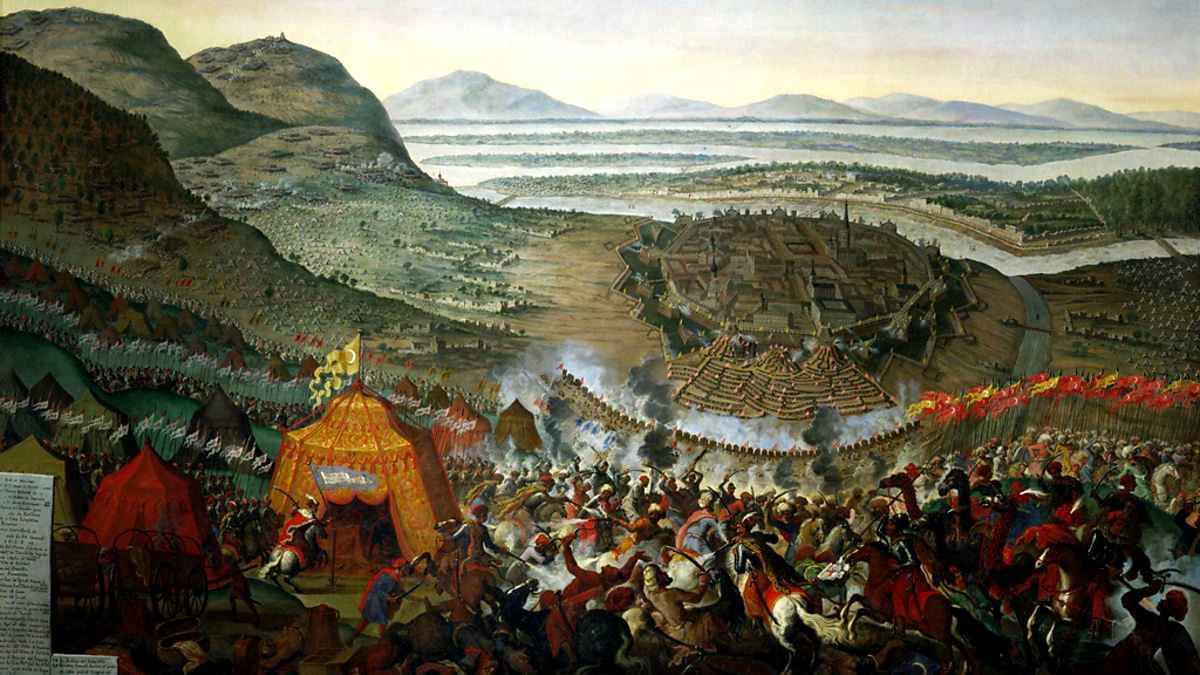
The two most striking elements of this cantata are the military trumpet in the opening chorus and the equally militant bass aria. It is all because of Luther’s chorale. When Luther wrote this, most probably around 1541/42, he was worried about the peace treaty (since 1536) between the Pope, France, and the Turkish troops that had by then advanced all the way to Vienna. Together Luther saw them as the antichrist and a threat to his Reformation.

In Bach’s time, the Turkish troops had been defeated (in 1683), thus the meaning of the chorale had changed, but Bach obviously still wanted to convey the military character of Luther’s original intent. And who knows, if Bach knew that his cycle of chorale cantatas was going to come to and end soon, he might have wanted to pull out all the stops.

Again we have a little glimpse of the St. Matthew Passion: Van Hengel says the bass aria “Stürze zu Boden” makes him think of the “Sind Blitze, sind Donner” chorus from the St. Matthew Passion and I completely agree.

Below are all the seven verses that were in the Dresdener Gesangbuch Bach and his librettist used and paraphrased. The two verses by Jonas were apparently added later than Walther’s, judging by Buxtehude’s setting of this chorale, which only uses Luther’s and Walther’s verses.

1. Erhalt uns Herr, bei deinem Wort,
und steur des Papsts und Türken Mord,
die Jesum Christum deinen Sohn,
wollen stürtzen von seinem Thron.

2.  Beweis dein Macht, Herr Jesu Christ,
der die Herr aller Herren bist,
Beschirm dein arme Christenheit,
das sie dich Lob in Ewigheit.

3. Gott, Heiliger Geist, du Tröster werth,
gib deim Volk einerlei Sinn auf Erd,
Steh bei uns in der letzten Not,
gleit uns ins Leben aus der Tod.

(J.Jonas:)

4. Ihr’ Anschlag’, Herr, zu Nichte mach,
laß sie treffen die böse Sach,
und stürz sie in die Grub hinein,
die sie machen den Christen dein.

5. So werden sie erkennen doch,
daß du, unser Gott, lebest noch,
und hilfst gewaltig deiner Schar,
die sich auf dich verlassen gar.

(M.Luther:)

6. Verleih uns Frieden genädiglich,
Herr Gott, zu unsern Zeiten,
es ist doch ja kein ander nicht,
der für uns könnte streiten,
denn du, unser Gott, alleine.

(Joh.Walther:)

7. Gib unsern Fürsten und aller Obrigkeit,
Fried und gut Regiment,
daß wir unter ihnen,
ein geruh’g und stilles Leben führen mögen,
in aller Gottseligkeit und Ehrbarkeit, Amen.

Wieneke Gorter, February 3, 2018.

Paintings, praises, and a possible prelude to the St. Matthew Passion

Tags

, , , , , , , , , , , , , , , , , , , , ,

triptych-of-jan-floreins-1479

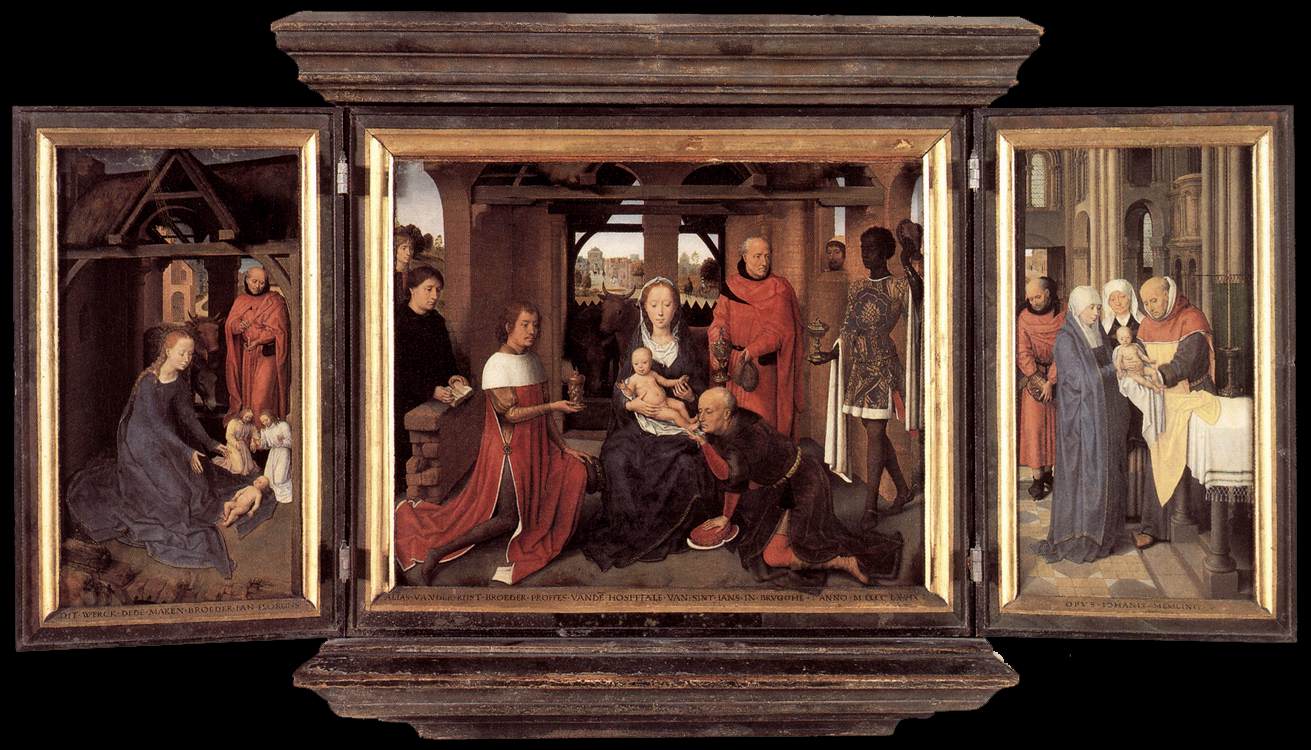
“Adoration of the Magi” triptych of Jan Floreins by Hans Memling, 1479. Memling Museum (Old St. John’s Hospital), Bruges, Belgium. The right-hand panel features “The Presentation at the Temple,” with the Temple really being the former St. Donaas church in Bruges.

If you are reading this in the email you received from WordPress, please click on the title of this post to enjoy the paintings and the formatting 🙂

This post is almost two days late, as it was for Friday February 2, the feast of the Purification of Mary, or Candle Mass, or Presentation at the Temple. If you have time, please read how this holiday was strongly connected to folk culture in my post from last year. In Lutheran reality, this was the day when Simeon’s song of praise Herr, nun lässest du deinen Diener in Friede fahren  or Nunc Dimittis was celebrated. With his chorale Mit Fried und Freud ich fahr dahin Luther turned Simeon’s song of praise into a message of “Now I can die in peace.” This is why all five cantatas (The famous Ich habe genug 82, 83, 125, 157, and 158) Bach wrote for this holiday are mostly about the joy of dying.

Since I’m following Bach’s chorale cantata writing in Leipzig in 1725, I’m featuring Cantata 125 Mit Fried und Freud ich fahr dahin, written for February 2 of that year, and based on that same chorale by Luther.

My favorite overall recording of this cantata is Herreweghe’s recording from 1998, with Ingeborg Dantz, alto; Mark Padmore, tenor; and Peter Kooij, bass. You can find it here on YouTube. Please consider supporting the artists by purchasing the album on Amazon or on iTunes. It also includes the stunning Cantata 8 (Herreweghe’s personal favorite!) and the beautiful Cantata 138.

Please find the German text with English translations of this cantata here, and the score here.

There are some similarities with last week’s cantata, such as the bass solo that is made up of bits of recitative and bits of chorale melody, but already in the opening chorus a new day is dawning. If you read the history of today’s holiday in my post from last year, you know that Candle Mass was a natural time of year to start with something new.

Could the new inspiration in Bach’s brain be the St. Matthew Passion? It is not unlikely at all. Van Hengel suggests that the opening chorus has elements of the St. Matthew opening chorus, but then argues that that piece was not written yet in 1725. However, Gardiner (in his book Music in the Castle of Heaven) makes a strong case that Bach might have initially planned to have the St. Matthew Passion ready for Good Friday 1725. I’ve pointed out before that we can find preludes to the “Great Passion” in Bach’s cantatas as far back as the fall of 1723 (see posts about cantatas 105 and 46), so it is not unlikely that Bach was working on this in January 1725.

Keeping all this in mind, it is striking that the first aria after the opening chorus is an alto aria in St. Matthew style, full of pietism. Watch Alex Potter (keep reading to find out more about him) sing this aria with the J.S. Bach Foundation here on YouTube. The instrumentation resembles the “Aus Liebe” soprano aria from the St. Matthew Passion: there are no organ chords in the bass, only repeated cello notes, and for the rest it is just flute and oboe da caccia, an unusual combination.

Because of the  many connections with this Cantata 125 I’m now going to sneak in a mini review of the Herreweghe/Collegium Vocale concerts I attended in Europe this past week.
paris_1-30_concert

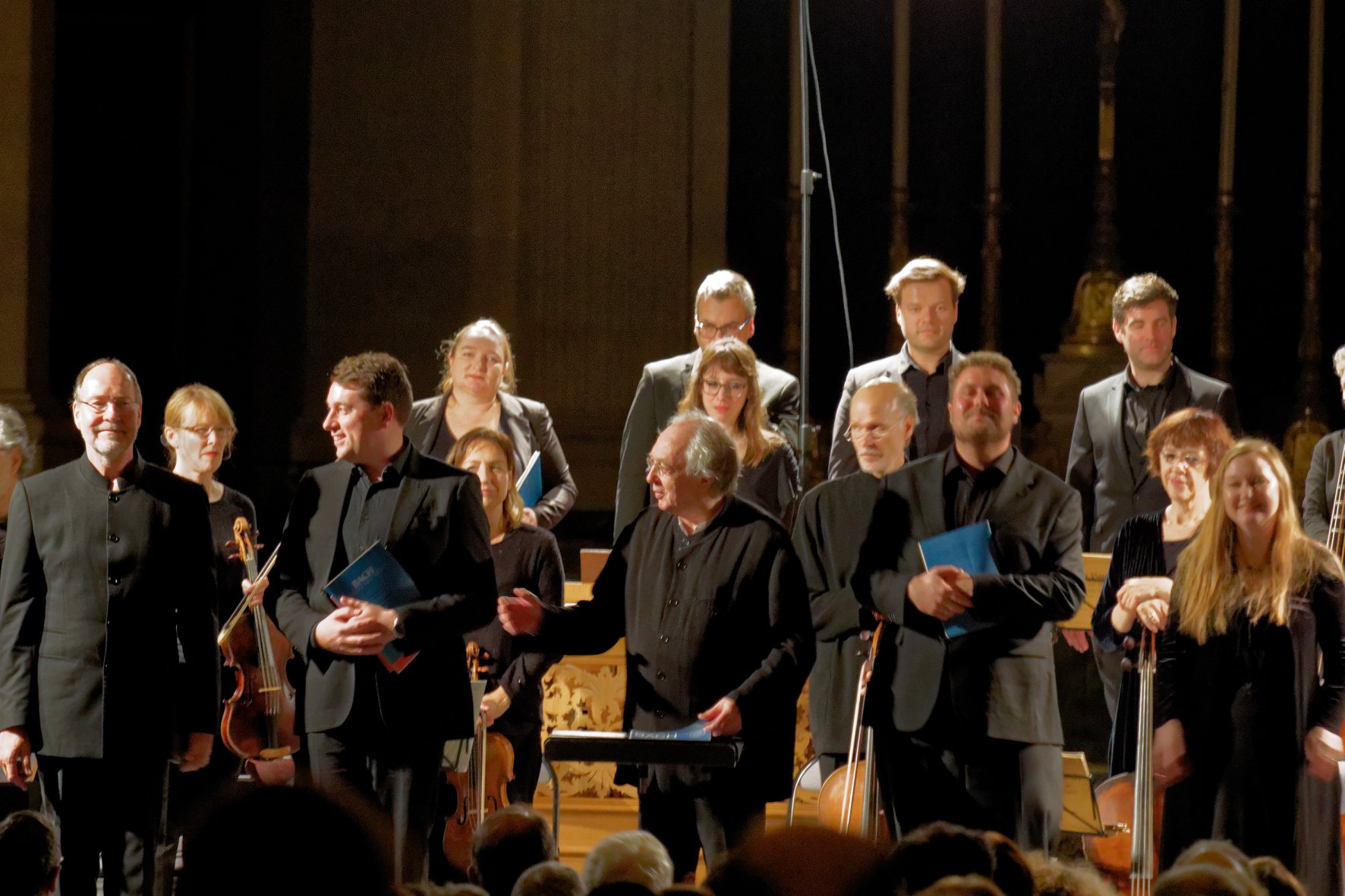
Applause at the end of the concert in the Eglise St. Roch in Paris, January 30, 2018. From left to right in front row: Peter Kooij, Thomas Hobbs, Philippe Herreweghe, Alex Potter, Dorothee Mields. Photo by Aube Neau/Luc Barrière, published with permission.

Let’s take the alto aria from Cantata 125. I call this type of aria a “floating aria” because it has no real basso continuo: there is no melodic line in the cello or chords in the organ, i.e. no foundation for the singer to stand on. These floating arias are incredibly beautiful and the stuff of goose bumps, but also incredibly challenging for the vocal soloist. In the terrific concert in Paris on Tuesday January 30, soprano Dorothee Mields had two such arias: the “Qui tollis” from the Mass in A Major (BWV 234)* and the “Wir zittern und wanken” from Cantata 105. She did an absolutely marvelous job in both of them, but her singing was the most mesmerizing in the “Wir zittern und wanken” aria. Cantata 105 stood out during that Paris performance anyway in my humble opinion. It simply has the best opening chorus of all cantatas Collegium Vocale performed in the three concerts I attended. On top of that, the group (including soloists Thomas Hobbs and Peter Kooij) recorded this in 2012, and you could tell it was still in everyone’s bones and it was a pleasure to see Herreweghe direct the strings as well as the soloists. One of my favorite bass ariosos occurs in that cantata (it makes me think of the “Am Abend da es kühle war” from the St. Matthew) and Peter Kooij’s strong rendition almost made me cry.
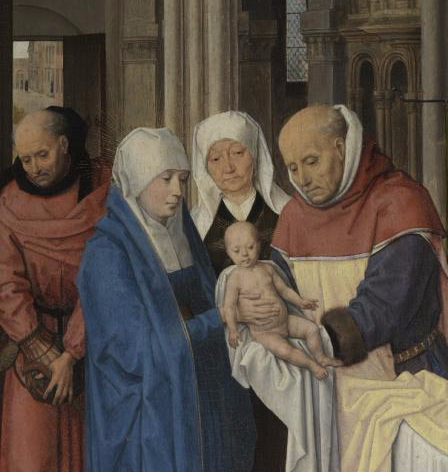
memling_presentation_temple_floreins

Detail of right-hand wing of the “Adoration of the Magi” Jan  Floreins triptych by Hans Memling, showing the Presentation at the Temple, or Mary presenting Jesus to Simeon

And then on to countertenor Alex Potter. It was in Bruges’ St. John’s Hospital museum that I saw the Memling painting featured in this post, and this is also where I ran into Alex Potter and was able to tell him how much I enjoyed his singing on Friday January 26. During the concert in Paris on January 30 his most impressive performance was the “Quoniam” aria from the Mass in A Major (BWV 234)**, which I heard in Bruges on Sunday January 28 and again in Paris on Tuesday January 30. He had a clear understanding of the text, made the music soar, and seemed to passionately enjoy what he was doing. It was a joy to watch and listen to.

Wieneke Gorter, February 3, 2018.

*originally from Cantata 179 from August 8, 1723.

**originally from Cantata 79 from October 31, 1725.

Blogging from Bruges

Tags

, , , , , , , , , ,

Brugge

I had the privilege of shaking hands with Philippe Herreweghe around midnight on Friday. It was pure coincidence, or serendipity, if you will* and he has no idea who I am, but it was a magical end to an already exciting day at the Bach Academy in Bruges, Belgium.

On that Friday I attended an informative and inspiring lecture by Bach expert Ignace Bossuyt during the day (more about that in a different post), heard a fabulous Bach cantata concert by Collegium Vocale/Herreweghe in the evening, and got to witness a very entertaining interview with Herreweghe late at night. The concert featured Cantatas 186 and 146. It was a feast to see Herreweghe at work, focusing on phrasing and text expression. It was also very enjoyable to experience the rich, well-blended string sound in the orchestra, the terrific oboe playing, the signature sound of the sopranos and altos of Collegium Vocale, and the wonderful work by all four soloists. Bass Peter Kooij stood out for his excellent diction and exquisite tone, tenor Thomas Hobbs for his stage presence and clear voice, and countertenor Alex Potter for his marvelous job in the “Ich und Du” aria from Cantata 146. As always I consider it a blessing to see and hear Dorothee Mields sing. The combination of the sound of her voice and her pronunciation and understanding of the text is something very special and beautiful to behold. I feel lucky that I will get to hear this group of musicians two more times this week: today (Sunday) again in Bruges, and Tuesday in Paris.


Time to talk about the cantata for today now: Cantata 92 Ich hab in Gottes Herz und Sinn for Septuagesima Sunday (the third Sunday before Lent), first performed on Sunday January 28 in 1725. For this cantata, Bach had received an extremely long text from his librettist. We don’t know for sure who Bach’s librettist was at this time. Scholars believe it might have been Andreas Stübel, poet, theologian, and emeritus assistant principal of the St. Thomas School. If it was indeed Stübel, he would pass away on January 31, and might already have been ill around the time Bach was working on this Cantata 92. So while there normally might have been a discussion about the libretto between Bach and Stübel, this time Bach might have had to work with what he had.

The result is a creative but extremely long bass recitative (movement 2), and a rather long cantata in total: nine movements in all. Bach had created such lengthy cantatas at the start of his career in Leipzig, during the summer of 1723, but never before during this chorale cantata cycle of 1724/1725.

This Cantata 92 Ich hab in Gottes Herz und Sinn contains arguably the most operatic tenor aria Bach ever wrote, even crazier than the aria from Cantata 81, an equally dramatic bass aria, and an absolutely lovely soprano aria. But what moves me the most in this cantata is the alto chorale with oboe accompaniment (movement 4). It gives me the good kind of stomach ache every time I hear it. On most recordings this chorale gets sung by all choir altos, not just the alto soloist.

Because I appreciate the bass soloist expressing the drama in his recitative and aria as much as the tenor does in his, my favorite “overall” recording of this cantata is the one by Bach Collegium Japan. Find my playlist here on Spotify. With Yukari Nonoshita, soprano; Jan Kobow, tenor; and Dominik Wörner, bass.

A good alternative on YouTube is Koopman’s recording of this cantata. With Deborah York, soprano; Paul Agnew, tenor; and Klaus Mertens, bass. I always love to hear Paul Agnew in operatic arias like this one.

Please find the text of Cantata 92 here, and the score here. And please consider supporting the artists by purchasing the recording you like best:

Bach Collegium Japan recording of Cantata 92 on Amazon

Koopman recording of Cantata 92 on Amazon


Wieneke Gorter, January 28, 2018.

* A friend and I were sitting in the back of a tiny cafe when Herreweghe and his wife walked in. He went over to greet some fans in the front of the restaurant, then sat down to eat. While I was contemplating what I would say to them later, once I would be on my way out of the restaurant, Herreweghe got up to use the restroom and walked right by our table. My friend asked him if he would welcome even more compliments, and then we shook hands with him and told him how much we had enjoyed the concert. It didn’t feel like the right time to tell him about my blog, and I was too star struck to think of mentioning that I would be attending two of his other concerts this week.


Third Sunday after Epiphany 1725

Tags

For this Sunday, the third after Epiphany in 1725, Bach wrote Cantata 111 Was mein Gott will, das g’scheh allzeit. 

In the church year, we have now arrived at the time where the Gospel reading talks about a new miracle every Sunday. Last week it was turning water into wine at the Marriage at Cana, this week it is about Jesus healing a leper. In my post from two years ago about cantatas 72 and 73, I explained what to Bach were the most important words from this Bible story:

Da er aber vom Berg herabging, folgte ihm viel Volks nach. Und siehe, ein Aussätziger kam und betete ihn an und sprach: Herr, so du willst, kannst du mich wohl reinigen. Und Jesus streckte seine Hand aus, rührte ihn an und sprach: Ich will’s tun; sei gereinigt!

(When He had come down from the mountain, great multitudes followed Him. And behold, a leper came and worshiped Him, saying, Lord, if You are willing, You can make me clean. Then Jesus put out His hand and touched him, saying, I am willing; be cleansed.)

When, in 1725,  in the context of his chorale cantata cycle, Bach needed to find a chorale that would underline this theme, he found the perfect match in Was mein Gott will, das g’scheh allzeit, a chorale from 1547.

I’m sorry to say that I haven’t really found a satisfying recording of this cantata. At the beginning of this week I listened to many different recordings, and I was often unhappy with the tempo of the opening chorus, and sometimes also with the interpretation of one of the other movements.

So I’ll fall back on the Harnoncourt recording because I like the instrumental part of the opening chorus the best of all recordings I listened to. You can find that recording here on YouTube. If you prefer to watch a live video recording, you can find the live performance by the J.S. Bach Foundation here.

Find the text of Cantata 111 here, and the score here.

A very nice and unusual element in this cantata is the alto/tenor duet (movement 4). It doesn’t happen very often that Bach writes for this combination of voices. They walk happily, even if it is to the grave.  Note how the two voices are apart, written in canon (following each other) on most of the text, but together on the text zum Grabe führt (leads me to the grave).  To make sure that everyone really got the message that if it is God’s will, even death is blessed, Bach and his librettist stress it again in the soprano recitative.

Wieneke Gorter, January 21, 2018. Links updated January 25, 2020.

The Last Seven … Chorale Cantatas of 1725

On Sunday January 14, 1725, the 2nd Sunday after Epiphany, Bach performed Cantata 3 Ach Gott, wie manches Herzeleid. I discussed this cantata in great detail two years ago, so I gladly refer you to that blog post. Even if you already read it at the time, you will hear this cantata in a new light, knowing a little bit more and/or having listened to the cantatas that came before this one in the 1724/1725 chorale cantata cycle. I also added a YouTube link and updated a few other links.

Around this time in 1725, Bach most likely intended to keep writing a new chorale cantata every Sunday until Trinity, according to the “system” he had started on June 11, 1724, so he would complete a full cycle of these.

But things would not go as planned, and he would write only six more chorale cantatas this year … Keep following this blog to find out what happened.

Coming up:

January 21: Cantata 111 Was mein Gott will, das g’scheh allzeit for the third Sunday after Epiphany

January 28: Cantata 92 Ich hab in Gottes Herz und Sinn for Septuagesima Sunday (the third Sunday before Lent)

January 31: would the sudden death of a friend change things for the immediate future?

Friday February 2: Cantata 125 Mit Fried und Freud ich fahr dahin for the Purification of Mary / Presentation at the Temple

February 4: Cantata 126 Erhalt uns Herr bei deinem Wort for Sexagesima Sunday (the second Sunday before Lent)

February 11: Cantata 127 Herr Jesu Christ, wahr Mensch und Gott for Estomihi Sunday (the Sunday before Lent).

March 25: Cantata 1 Wie schön leuchtet der Morgenstern for the Annunciation of Mary.

There were no other cantatas during Lent (the 40 days before Easter). This period was considered a tempus clausum (“closed time”) for the churches in Leipzig, which meant no figural music during services, only chorale-singing. A good time for Bach to … take a break? Ha! he was most probably incapable of doing such a thing. He used this time to considerably revise his St. John Passion from last year, and write an entire Easter Oratorio.

Wieneke Gorter, January 10, 2018

Discovering a recycled aria

Tags

, , , , , , , , , , , , , ,

Dürer Jesus among the Doctors
Christ among the Doctors by Dürer, 1506. Museo Thyssen-Bornemisza, Madrid, Spain

It seems I have discovered something this week.

As far as I can tell, no other Bach scholar has ever pointed out that Bach recycled the 10-minute long, slow but impressive aria for tenor and flute from Cantata 114 (October 1, 1724), into a much faster paced, condensed piece of drama for tenor and oboe d’amore in Cantata 124 Meinen Jesum laß ich nicht for January 7, 1725.

This past October, I dedicated almost an entire post to that 10-minute long aria for tenor and flute. Listen to the aria here and read the post from October 7 here. The aria lived in my head for a long time after I wrote that post. I think it probably lived in Bach’s head longer: for the entire fall of 1724 and even into the Christmas season. Not even the timpani and trumpets of the New Year’s cantata would make it go way. He had to use it again, it was too beautiful for it to be only used once a year.

We don’t know. Perhaps Bach was simply a bit tired from all the composing, rehearsing, and performing of six cantatas in two weeks, and went looking for inspiration in his stack of previously composed cantatas.

There is a great live performance of Cantata 124 Meinen Jesum laß ich nicht by Solistenensemble Stimmkunst / Stiftsbarock Stuttgart under the direction of Kay Johannsen on YouTube. Watch it/listen to it here. Soloists are, in order of appearance: Thomas Meraner, oboe; Daniel Schreiber, tenor (movement 2); Andreas Weller, tenor (3); Matthias Horn, bass (4); Fanie Antonelou, soprano and Lena Sutor-Wernich, alto (5).

Find the German texts with English translations here, and the score here.

As I was listening to the tenor aria, I didn’t immediately realize it was based on the flute aria from Cantata 114. I just knew I had heard this music before, and I also was 100% certain the first line of text of the original had the word Jammertal in it*. I went searching for it online, but could not find it. So I decided to ask Eduard van Hengel. He emailed me back within a day, saying: “yes! BWV 114/2.” He has all Bach’s cantata librettos on his computer, so he could do a simple word search. Another result of Eduard’s word search: Jammertal shows up five times in Bach’s entire cantata oeuvre.

It is not so strange that Bach wanted to create a very dramatic tenor aria. He did the same on this Sunday one year earlier, in 1724, in Cantata 154. Learn more about that in my blog post from two years ago. It was all to illustrate the agony of Jesus’ parents when their teenage son didn’t think to tell them that he was going to stay behind in the Temple during their visit to Jerusalem.

Wieneke Gorter, January 6, 2018, YouTube link for the Johannsen recording updated January 11, 2020.

*This is usually how I find out about Bach’s recycling tricks, because I remember a word or two from the original text when I hear the recycled music. That is also how I realized that Bach might have been inspired by Telemann when writing Cantata 8.

Naming the baby six days late

1024px-Don_Lorenzo_Monaco_002

The Adoration of the Magi by Lorenzo Monaco, 1420–1422. Uffizi Gallery, Florence.

Today is the second anniversary of my Weekly Cantata blog! It all started with a broken dishwasher. Read my story on how this blog came to be here.

Bach must have been exhausted by this time in 1725, having performed six brand-new cantatas in one week, most of them twice a day, in the St. Thomas Church as well as the St. Nicholas Church. I assume he used his “time off” during Advent to work ahead to compose the cantatas, but how soon he had each of them ready and when he rehearsed them with choir and orchestra, we don’t know.

Still he stays fully committed to his (probably self-imposed) plan to write every cantata this 1724/1725 season as a chorale cantata.  For Epiphany (Three Kings Day, January 6) 1725 he composed the exquisite Cantata 123 Liebster Immanuel, Herzog der Frommen.

On New Year’s Day 1725 he didn’t refer at all to the usual theme for that day, the naming of Jesus. Thus I don’t think it is a coincidence that for today he chose a chorale that does refer to that story, it even has the name in the title: Immanuel. Having followed Bach’s chorale cantatas in the order they were created since June 18 last year, I am now extra moved by the instrumental “announcements” of the chorale melody in the opening chorus, played by the winds. The congregations in Leipzig, who knew their chorales very well, would have known what was coming by just hearing those few notes.

I already wrote about this Cantata 123 Liebster Immanuel, Herzog der Frommen in my very first post on this blog, so in the spirit of celebrating the second anniversary, I gladly refer you to that post, where you will also find updated links to recordings and texts.

Wieneke Gorter, January 2, 2018


It all started with a broken dishwasher (the story of how this blog came to be)

miele_truck

With everyone in my house going back to work and school this week, I was reminded on Tuesday of how I started this blog two years ago, and thought you might like to know the story too.

Even before my mother’s passing in 2010, I had been playing with the idea of sharing my family’s knowledge of Bach cantatas. I would sometimes brainstorm about it with friends, but had no concrete ideas, and never really felt a spark. A personality that favors taking care of others instead of doing my own thing and a love for traveling made me always “too busy” with music admin jobs, music PR jobs, taking care of my family, helping friends, doing volunteer work at my kids’ schools, and planning trips.

Since my mother’s passing, I felt a stronger sense of wanting to share her legacy of filling the house with the appropriate Bach cantata every Sunday and holiday of the year (read more about my mother’s weekly routine in this post). So I would now and then share Bach cantata recordings on Facebook, or play them in the car for my friends on the way to a California Bach Society rehearsal.

However, sharing on Facebook turned out to be a lousy way to preserve a legacy. Several friends and relatives are not on Facebook, so I would have to remind myself to email them the same YouTube links and stories, which was extra work. Also, Facebook posts don’t really allow for long stories, and are hard to find a few weeks or several months later. But perhaps most importantly, I realized that I only knew a small part of Bach’s cantatas, namely only my mother’s favorites. I discovered that for several Sundays of the year there were one to three other cantatas I didn’t know at all and wanted to get to know better. Slowly an idea started to form in the back of my brain that I should probably start a website about it.

Talking about my brain – it wasn’t working so well for a few months in 2014 because of a concussion. For weeks I couldn’t read or even listen to music. I only listened to audio books. For months I had trouble looking at a screen and for about 18 months I couldn’t be in a loud room. I cut back on work, got some good practice in saying “no” and slowing down, and started to take better care of myself. In that process, about a year after the concussion, both my teenage son and I learned that certain foods didn’t agree so well with our bodies. Especially because of the hungry teenager now also needing a new diet, I taught myself to cook and bake delicious meals and sweets without those foods. I even thought I wanted to make it my job to share that with other people. The idea of starting “my own thing” was exhilarating.

Several things happened in the fall of 2015 that made me hesitate a bit about my potential culinary enterprise. I wondered where my passion for music would be in my “new career.” However the baking and the music didn’t come to a full clash in my head until the holiday break of 2015/2016. While the kids and I were creating the most delicious gluten free and dairy free sweets for days in a row, and I was truly enjoying spending time with my kids this way, I kept feeling more and more frustrated. I had not been sharing anything at all of the densely packed treasure trove of Bach cantatas for the three Christmas Days, the Sunday after Christmas, and New Year’s Day.

Then the dishwasher broke.

We went to shop for a fancy new one in the last days of 2015, but it would take about four weeks before it would be installed. So on Monday January 4, 2016, when the kids went back to school and my husband went back to work, I realized I needed to do something positive to not be defeated by the daily pile of dishes I would now need to wash in the morning (I only have a small kitchen, can’t think straight if there’s too much clutter in the kitchen, and I was still doing a lot of cooking and baking). I needed to listen to something that would keep my brain engaged at this prime thinking time in the morning. Some of my audio books? Podcasts? Nah. It took only a few minutes for the light to come on: Bach cantatas!

I started doing the dishes while listening to different recordings of cantata 65 and 123, every now and then walking over to a note book I had open on my desk to write down my thoughts. It worked, and I got very excited. The next morning I did the same. After that, it only took a few hours to set up this WordPress site and purchase the weeklycantata.com domain. I started writing the first blog post, thinking “it has to go live tomorrow, on Epiphany, or otherwise it won’t work,” but still didn’t tell anyone. I finished writing on Wednesday January 6 but was terrified to go “live” with it. I waited until my husband came home. He said “would you like me to read it?,”  dropped everything, sat down to read, told me the language would still be as strong without the one negative paragraph I was nervous about, so I took that one out (and made the decision to always steer clear of negative reviews) and then I published it. The positive feedback from friends and relatives in the days following the publication was overwhelming, and exactly the push I needed to keep going!

That was 103 posts ago, and I am still excited to research and write, and so grateful for all the support and positive feedback I’ve been getting from friends, relatives, friends of friends, and complete strangers. I feel it has also helped me process the loss of my mother. I still can’t believe that people all over the world read this blog, from fellow Bach writers and professional musicians to people who don’t know anything about Bach but follow my blog to provide quality programming for a music-loving patient in an elderly home. There are people who only read the text, and those who start their Sunday or Monday morning by turning on the recording I recommend. How and where do you read and listen? I would love to know! Please share in the comments here below or on my Facebook page. On that Facebook page you can also send a private message if you prefer that.

Wieneke Gorter, January 6, 2018.

New Year’s Day 1725

Tags

, , , , , ,

Happy New Year! It’s still 2017 in California as I am writing this, always a bit strange, this time difference, but it is so great to know that I have readers all over the world, from New Zealand to India to France to Brazil to Canada.

Today’s Cantata 41 Jesu, nun sei gepreiset still has a bit of Christmas in it, especially in the soprano aria with the pastoral accompaniment of the three oboes, and with an orchestration worthy of a feast day: timpani, 3 trumpets, 3 oboes,  violoncello piccolo, plus the regular strings and organ. But that’s about the only relation this cantata has with the Christmas story.

The best recording of this cantata available on YouTube is the one by Koopman. You can listen to it here. Soloists are Sibylla Rubens, soprano; Annette Markert, alto; Christoph Prégardien, tenor; and Klaus Mertens, bass.

Find the German texts with English translations of Cantata 41 here, and the score here.

Normally, on New Year’s Day, it would be time to talk about the name-giving of Jesus (the day of the circumcision), see my New Year’s Day post from last year.  While Bach clearly indicates on the first page of this cantata’s manuscript that it is intended “For the “Feast of the Circumcision,” nothing in the text or music of this cantata refers to this.

This year, Bach and his librettist have chosen to focus on the old year / new year theme instead, the same way they did that yesterday for the more intimate Cantata 122. Is this perhaps another indication that this particular New Year’s, 1725, the time on the calendar was more important than the time in the Lutheran church year?

While yesterday Bach was inspired by the early medieval tradition of conflating Christmas with New Year, today it is all about the “Alpha and Omega,” the beginning and the end, in Bach’s time seen as a symbol for God’s extended care of the people. Eduard van Hengel gives the following examples for this:

  • The closing chorale has as much musical “fanfare” in it as the opening chorus, which is rather unusual for a Bach cantata.
  • The main key of the cantata is C Major, which is at the beginning as well as at the end of the sequence of key signatures.
  • In the alto recitative, which is not in they key of C at all, Bach does move to that key just for the text “A und O,” so that A sounds on a high C and O on a low C.
  • The violoncello piccolo part in the tenor aria requires the full range of the instrument, symbolizing the full extent of God’s care.

Also listen for the brilliant illustrations of Satan in the music of the bass aria: Bach uses “forbidden” intervals, also called “diabolus in musica” (the devil in the music), and writes a very unusual “insert” for the choir in the bass aria on the text “Den Satan unter unsre Füsse treten.”

Wieneke Gorter, December 31, 2017


A somewhat medieval “Rutsch” into 1725

Tags

, , , , , , , , , ,

mystic_nativity2c_sandro_botticelli
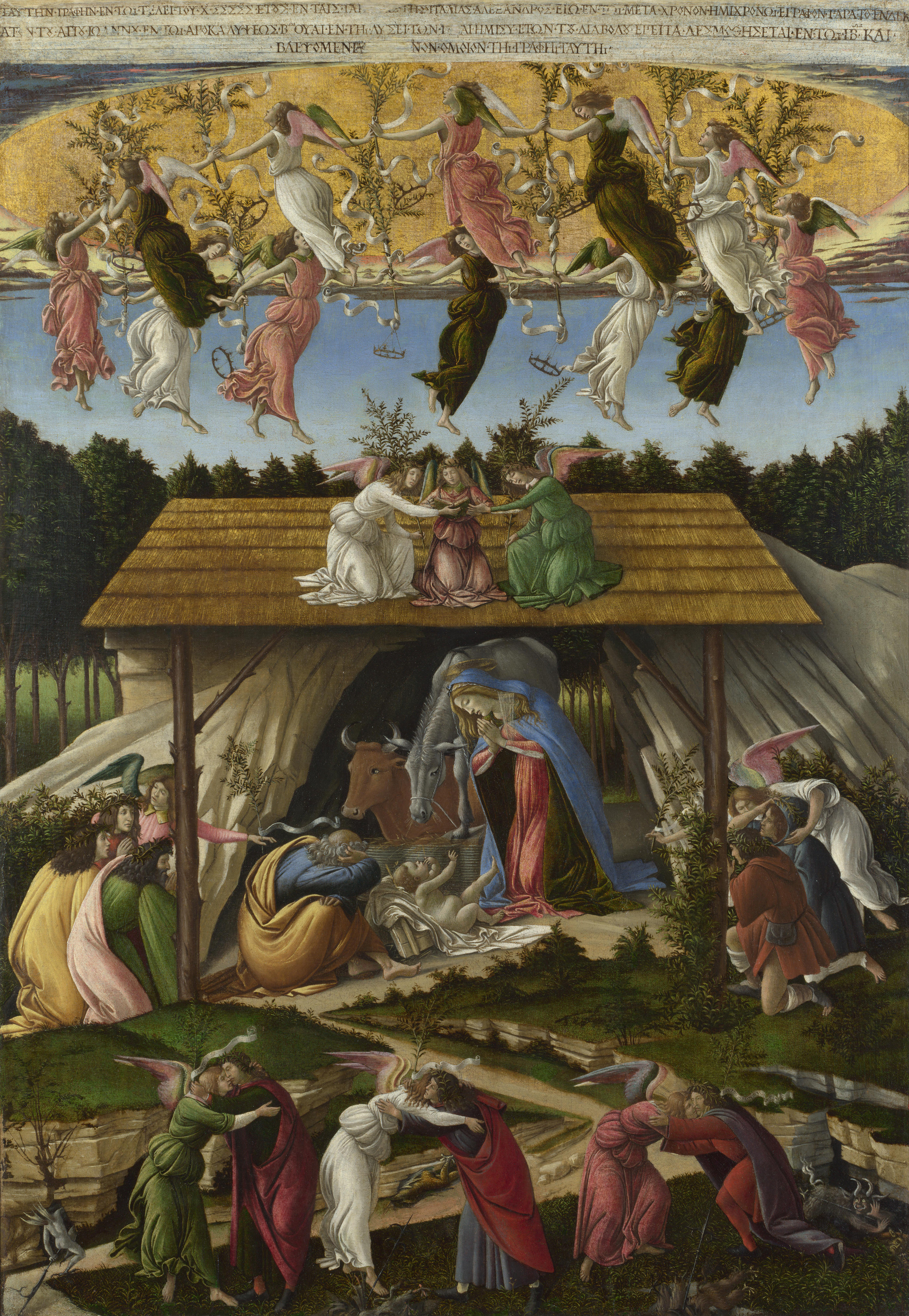
Mystic Nativity by Botticelli, circa 1500. National Gallery, London.

Since I was a very small child, the word “Jubeljahr” (Year of Jubilee) has stood out to me when listening to Cantata 122 Das neugeborne Kindelein. I already mentioned this a bit in my post from last year. So on the second to last day of 2017, I did some research into this concept of Jubeljahr, and realized that perhaps Bach might have liked the word too. Keep reading to find out why.

My favorite recording of this cantata is the one by Herreweghe from 1995 with soprano Vasiljka Jezovsek, alto Sarah Connolly, tenor Mark Padmore, and bass Peter Kooij. Find it here on YouTube. Find the text of cantata 122 here, and the score here.

In 1724, there was a Sunday in between Christmas and New Year’s Day, (a first for Bach in Leipzig*) and it fell exactly on New Year’s Eve. The upcoming New Year was not just any year. For the Catholic church 1725 was going to be a Holy Year, Year of Jubilee, or “Jubeljahr” as they called it in German.** While Bach was Lutheran, chances are high that he was aware of the Catholic tradition and thus of the extra importance of this last Sunday of the calendar year. The nearby court of Dresden was Catholic, most of the Marian feast days were still celebrated, only a year before Bach had written a Magnificat (Mary’s song of praise) for Christmas, and many medieval customs were still present.

Because of all this, I would like to think that Bach wanted to mark this special occasion, and might have chosen the chorale Das neugeborne Kindelein from 1597 on purpose for his cantata for this day, because of the mention of “Jubeljahr” in the last verse. Whether the original writer of the chorale might have alluded to the Lutheran belief that the union of God with people makes every year a Jubilee, or to the then upcoming Jubilee and turn of the century in 1600, I don’t know. But nowhere else in Bach’s cantata oeuvre is do we see the word “Jubeljahr.”

The text of the chorale builds on the early medieval tradition of melting the story of Jesus’ birth with the celebration of the New Year, talking about the newborn baby Jesus at the same time as announcing that the year has ended and this is a true Jubilee.

However Bach and his librettist don’t go all the way with the medieval world view: They change the original text of the third verse of the chorale, used for the fourth movement of the cantata, Trotz Türken, Papst und Höllen Pfort (Despite Turks,the Pope and the gates of hell) into Trotz Teufel und der Höllen Pfort (Despite the devil and the gates of hell). In 1725 the fear for a Turkish invasion was probably not as palpable as it had been in 1597, when the chorale was originally written.

Other things to listen for in cantata 122: The amazing high c in the soprano recitative. The leap of a fifth from f to c and then the octave back to c in the soprano recitative on the words “Die Engel” (the angels) had actually just occurred one movement earlier, two octaves lower, in the bass aria, on the words “O Menschen” (Oh people). Gardiner says this musical illustration that heaven/angels (high voice and highest instruments: recorders) and earth/people (low voice and cello) become one makes him think of the angels and men hugging in the forefront of Mystic Nativity by Botticelli, and this is why I decided to feature that as the illustration for today’s blog post.

Wieneke Gorter, December 30, 2017

*In 1723, Bach’s first year in Leipzig, the Sunday after Christmas was December 26, Second Christmas Day.

** The concept of “Jubeljahr” comes from the Old Testament, where Leviticus describes that after 7×7 years, you sould celebrate a Year of Jubilee, the 50th year. However in1470 Pope Paul II issued a Bull to fix the Jubilee for every twenty-five years, starting in 1475, so that every generation could have a Jubilee.