Weekly Cantata

Weekly Cantata

Tag Archives: Christiane Mariane von Ziegler

Bachfest Leipzig 2025

09 Wednesday Jul 2025

Posted by cantatasonmymind in Cantatas, Leipzig, Travel

≈ Leave a comment

Tags

Adina Apartment Hotel Leipzig, Alex Potter, Anna-Sylvia Goldammer, Apartmenthotel Quartier M., Bach, Bach Akademie Stuttgart, Bach-Archiv Leipzig, Bachakademie Stuttgart, Bachfest 2025, Bachfest 2026, Bachfest Leipzig, Bachfest Leipzig 2025, Bachfest Leipzig 2026, Bachfest Malaysia, Bachstiftung, BWV 198, BWV 20, BWV 233, BWV 79, Christiane Mariana von Ziegler, Christiane Mariane von Ziegler, Collegium Vocale Gent, Continuum Berlin, David Chin, David de Winter, Elina Albach, Gardiner, Hans-Christoph Rademann, Heinrich Schütz, Innside Leipzig, J.S. Bach Foundation, J.S. Bach Stiftung, Johann Hermann Schein, johann-sebastian-bach, Koopman, linden trees, Maria Küstner, Merseburg, Merseburger Dom, Michael Maul, Miriam Feuersinger, Motel One Leipzig, Nikolaikirche, Patrick Grahl, Philippe Herreweghe, Rick Fulkner, Romanus-Haus, Rudolf Lutz, Schütz, Schein, Solomon's Knot, Thomaskirche, Tobias Berndt, Tomáš Král, Wir glauben all an einen Gott
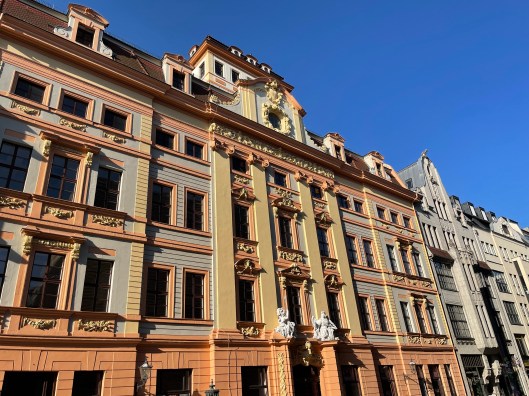
Romanus-Haus in Leipzig, the house where poet Christiane Mariane von Ziegler held salons in the 1720s and 1730s.

I visited Bachfest Leipzig again this year, from Tuesday evening, June 17, through Sunday, June 22, attending eight concerts in six days. Read my highlights below, and please subscribe to this blog so you don’t miss future posts. I joined a festival trip to Merseburg, took walks, caught up with friends from all over the world, and met some new fellow Bach lovers. For me, the camaraderie has almost become a more important reason to return each year than the concerts.

That said, next year’s cantata programming is not to be missed, with Herreweghe AND Lutz AND Rademann, so if you would like to attend you should probably get organized – my tips for that at the end of this post.

Summer in Leipzig

June is the perfect time of year in this city. People are out on café terraces everywhere, and walking in the streets. Then there’s the summer green: entire rose bushes for sale on the street in the middle of the center, and linden trees in bloom wherever you go. The scent of linden delights me, and I learned something new about them this year, thanks to our Bachfest tour guide Anna-Sylvia Goldammer on the organ trip to Merseburg: Leipzig has apparently always been full of linden trees! The latin word for Leipzig, Lipsi, was derived from the Slavic word for linden tree, lipa. Most of downtown, inside the ring, is car-free, with only taxis and necessary vehicles allowed in. This makes it feel safe and, dare I say it, more walkable than Amsterdam.

The free performances can be the most meaningful

Inspired by a seatmate on the trip to Köthen last year, I attended more of the free or almost-free performances this year. You can still fully enjoy the camaraderie with other Bach fans and hear beautiful music without spending a fortune. There are no assigned seats for the church services, so as long as you line up early, you can enjoy the best view for free.

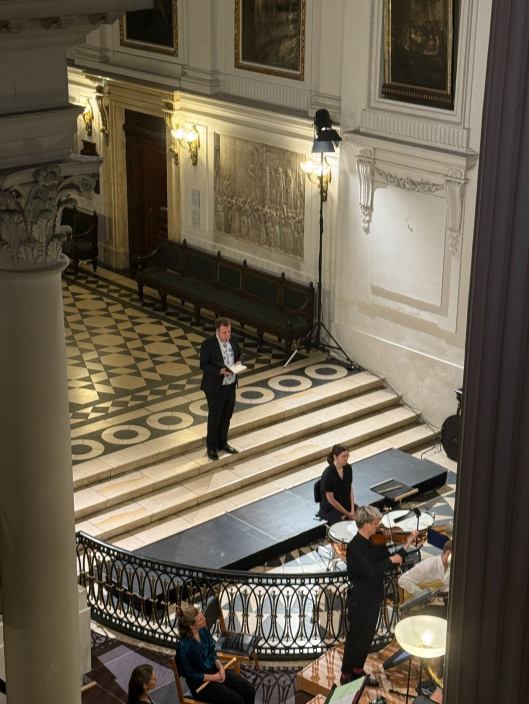
This year I had missed the free performances on the market square, but on Saturday morning, June 21, I was so lucky to attend an unforgettable, absolutely exquisite rendition of the duet from Cantata 79 Gott der Herr ist Sonn und Schild by soprano Miriam Feuersinger and baritone Tobias Berndt during the “Mette” (morning service) in the Nikolaikirche. The Sunday morning service in the Thomaskirche was special too. The service was a reconstruction of what a church service in Bach’s time would have been like (I could write an entire blog post about that!), I got to hear Johannes Lang play the organ, Tomáš Král sing the bass arias in Cantata 20 O Ewigkeit, du Donnerwort, and tenor Patrick Grahl sing not only the tenor aria in that cantata but also the cantor-bits in the service as well as the reading from the New Testament (yes this was sung, beautiful!). But I also happened to sit and sing (in the congregational singing) next to the 80-year-old father of choir director Maria Küstner. With great determination he had climbed all the stairs to the balcony, even though he was walking with a cane. When after the service I thanked him for his clear and confident singing, he told me that decades ago, on frequent car trips between Leipzig and Berlin, he would sing Luther’s “Wir glauben all an einen Gott” (one of the Lutheran chorales we had just sung in the service) to keep himself and the family awake. I forgot to ask him if this was still during GDR time, but it might very well have been.

Catching up with David Chin

This year I also finally had the opportunity to have lunch with David Chin, director of Bachfest Malaysia and creator of the excellent documentary Encountering Bach which I have referenced already a few times on this blog. We started conversations on Facebook during the Covid pandemic after David published his first episodes of the documentary, then met in person at the Thüringer Bachwochen in 2022, but only managed to say a few quick hellos at last year’s Bachfest. So grateful it worked out to talk this year!

Concert highlights: Alex Potter and David de Winter
Alex Potter in the Nikolaikirche on June 17. Photo courtesy of Sascha Wolff.

I had only just arrived to Leipzig on Tuesday June 17. I had not even unpacked yet, but I had a chance to hear “Missa Miniatura,” Elina Albach’s adaptation of Bach’s Mass in B Minor again, and I am a big fan of that production. So I ate a quick dinner and made it to the Nikolaikirche just in time. Alex Potter’s stunning rendition of the Agnus Dei at this concert was definitely a highlight of this Bachfest for me. In order to have a bit more acoustic, he had climbed up a few steps so he stood directly under an arch in the Nikolaikirche. Thanks to Sascha Wolff for capturing that moment on photo. After this aria I felt “we can now all die happily.” The other aria that transported me to a similar state of bliss was David de Winter’s “Der Ewigkeit saphirnes Haus” from Cantata 198 Laß, Fürstin, laß noch einen Strahl with Solomon’s Knot on Friday, June 20, in the Evangelisch-Reformierte Kirche. I had never heard this aria sung so beautifully.

Bach’s “50 best cantatas” by Lutz, Herrewege, and Rademann, Vox Luminis, Koopman, and Gardiner in 2026 – how to get organized

Disclaimer: I’m not getting paid to write this. Below is a reflection of my personal opinion and personal interpretation of the information that is available at the time of writing this blog post. I do not accept responsibility if your experience is different. I just thought it might be helpful to curate the information from various websites for you.

Anyone reading this who has visited Bachfest in the last few years: please feel free to add your own advice in the comments. Thank you!

Next year’s cantata programming at the festival is going to be a hit parade of the “50 best cantatas” (chosen by the audience, read more about the how and why in this interview with festival director Michael Maul by blogger Rick Fulkner) with two concerts each by Herreweghe, Lutz, Koopman, Gardiner, Rademann, and Vox Luminis. Here are my tips to get organized:

If you already know you want to attend all 12 cantata concerts (= two concerts per day, six days in a row, of two to three cantatas each, each cantata preceded by a motet by Schütz or Schein), you can purchase your “packet” here. You’ll go through two seat selection screens, one to select your seat for the Thomaskirche (the screen doesn’t specify this, but it is the seatmap that has the stage at the bottom, and “Südempore” on the right), and, once you have clicked the checkout button, another one for the Nikolaikirche (not specified either, but this is the map that has the stage at the top and 1. Empore and 2. Empore).

Please note for Thomaskirche:

  • For concerts with choir and orchestra, the performers are located on the organ loft of the Sauer-organ (the bottom of the seating map).
  • The majority of the pews downstairs, where the sound is likely best, have their backs to the performers. Many people don’t mind this, but it surprised me. Thus, if it is important for you to see the performers, choose a premium seat (yellow on the map) on one of the balconies, where the sound is wonderful too.
  • Some seats on the Empore (balconies) have partially blocked views of the performers due to large pillars, even the premium seats are not all equal, so don’t get your hopes up too much.

Please note for Nikolaikirche:

The sound is good everywhere in the church, but most seats on the balconies have limited leg space, so keep that in mind if you are tall, since these cantata concerts will be pretty long. The Bach Museum shop sells cute portable cushions for making your church pew seat more comfortable, see picture on the left, pillow folded in half. I also saw people who traveled with inflatable pillows.

If you want to pick and choose, only want to go to one concert per day, or don’t want to commit to spending a thousand euros just yet, mark your calendar:

  • November 11, 2025: Advance sales start for Patrons of the Bachfest/Bach-Archiv Leipzig and for members of the Neue Bachgesellschaft.
    • Become a patron of the Bachfest here (access to VIP seating for three concerts or more, depending on level of giving).
    • Become a member of the Neue Bachgesellschaft here (no special seating, just the earlier access to ticket sales).
  • November 25, 2025: Regular ticket sales start.

Where to stay: People I met had good experiences at Innside (hotel directly across the ring from the Thomaskirche, in a nice neighborhood), Motel One (close to the Nikolaikirche), and Adina Apartment Hotel (apartments close to the Nikolaikirche, 24-hour reception, pool, restaurant, bar). I myself stayed in Apartmenthotel Quartier M. which I loved because of the excellent organic supermarket on the ground floor of the same building, the good price, and the short walking distance to the Thomaskirche.

Copyright Wieneke Gorter, July 9, 2025.

Bach’s Music for Ascension Day

13 Thursday May 2021

Posted by cantatasonmymind in Ascension, Cantatas, Leipzig

≈ Leave a comment

Tags

Amsterdam Baroque Orchestra, Andrew Tortise, Annekathrin Laabs, Ascension, Ascension Oratorio, Barbara Schlick, Bernhard Landauer, BWV 11, BWV 128, BWV 37, BWV 43, Catherine Patriasz, Charles Daniels, Christiane Mariane von Ziegler, Christmas Oratorio, Christoph Prégardien, Collegium Vocale Gent, Dietrich Henschel, English Baroque Soloists, John Eliot Gardiner, Klaus Mertens, Lenneke Ruiten, Meg Bragle, Miriam Feuersinger, Peter Kooij, Philippe Herreweghe, Sibylla Rubens, Ton Koopman, Wolf Matthias Friedrich

The Ascension, from the illuminated 15th-century manuscript Les Très Riches Heures du duc de Berry, Folio 184r – Musée Condé, Chantilly, France.

Today was Ascension Day. In Bach’s time this was a very important holiday in the churches. Many countries in Europe have a four-day weekend starting on this Thursday. I did too as a kid growing up in the Netherlands. But we didn’t go to church on this day, and I don’t remember my mother playing the Ascension cantatas or the Ascension Oratorio on the turntable at home on this day. Instead we went for a bike ride, visit grandparents, or go camping. I didn’t know Bach’s music for Ascension Day at all until we performed BWV 11 and 43 with California Bach Society in the early 2000s. The choruses from these compositions are among the most fun I have every sung in a choir. I love the syncopated rhythms.

Here is an overview of Bach’s music for Ascension Day, as far as we know, in order of creation:

In 1724, Bach wrote Cantata 37 Wer da gläubet und getäuft wird (Whoever believes and is baptised). Listen to it here. Soloists in this recording by Ton Koopman/Amsterdam Baroque Orchestra are Sibylla Rubens, soprano; Bernhard Landauer, alto; Christoph Prégardien, tenor; and Klaus Mertens, bass.

In 1725, as part of the series of cantatas on texts by Christiane Mariane von Ziegler, Bach wrote Cantata 128 Auf Christi Himmelfahrt allein (On Christ’s ascension alone). Listen to it here. Soloists on this live recording by John Eliot Gardiner/English Baroque Soloists are Lenneke Ruiten, soprano; Meg Bragle, mezzo soprano; Andrew Tortise, tenor; and Dietrich Henschel, bass. Find my blog post from 2018 about this cantata, which includes a different recording by Gardiner here.

The last Bach cantata we have for this holiday is from 1726: Cantata 43 Gott fähret auf mit Jauchzen (God ascends with shouts of joy). Listen to it here. Soloists in this live recording by Rudolf Lutz/J.S. Bach Foundation are Miriam Feuersinger, soprano; Annekathrin Laabs, alto; Charles Daniels, tenor; and Wolf Matthias Friedrich, bass.

Nine years later, Bach wrote his Ascension Oratorio, BWV 11 Lobet Gott in seinen Reichen (Praise God in His kingdoms), incorrectly labeled as a cantata in the 19th century. Bach might have been inspired by the Christmas Oratorio he had written only five months before that.

On that Ascension Day, Thursday, May 19, 1735, this oratorio was performed in the morning service in the St. Nicholas Church, and again in the afternoon service in the St. Thomas Church. Watch the wonderful opening chorus here in a live performance by Philippe Herreweghe/Collegium Vocale Gent from 2014 from the Chapelle de la Trinité in Lyon, France. Or listen to the entire oratorio by Philippe Herreweghe/Collegium Vocale Gent on a CD recording from 1993 here. Soloists on that 1993 recording are Barbara Schlick, soprano; Catherine Patriasz, alto; Christoph Prégardien, tenor; and Peter Kooij, bass.

Wieneke Gorter, May 13, 2021.

Good librettists and unusual wind instruments (3rd Sunday after Easter)

02 Saturday May 2020

Posted by cantatasonmymind in After Easter, Cantatas, Leipzig, Weimar

≈ Leave a comment

Tags

3rd Sunday after Easter, BWV 103, BWV 12, Christiane Mariane von Ziegler, Salomo Franck

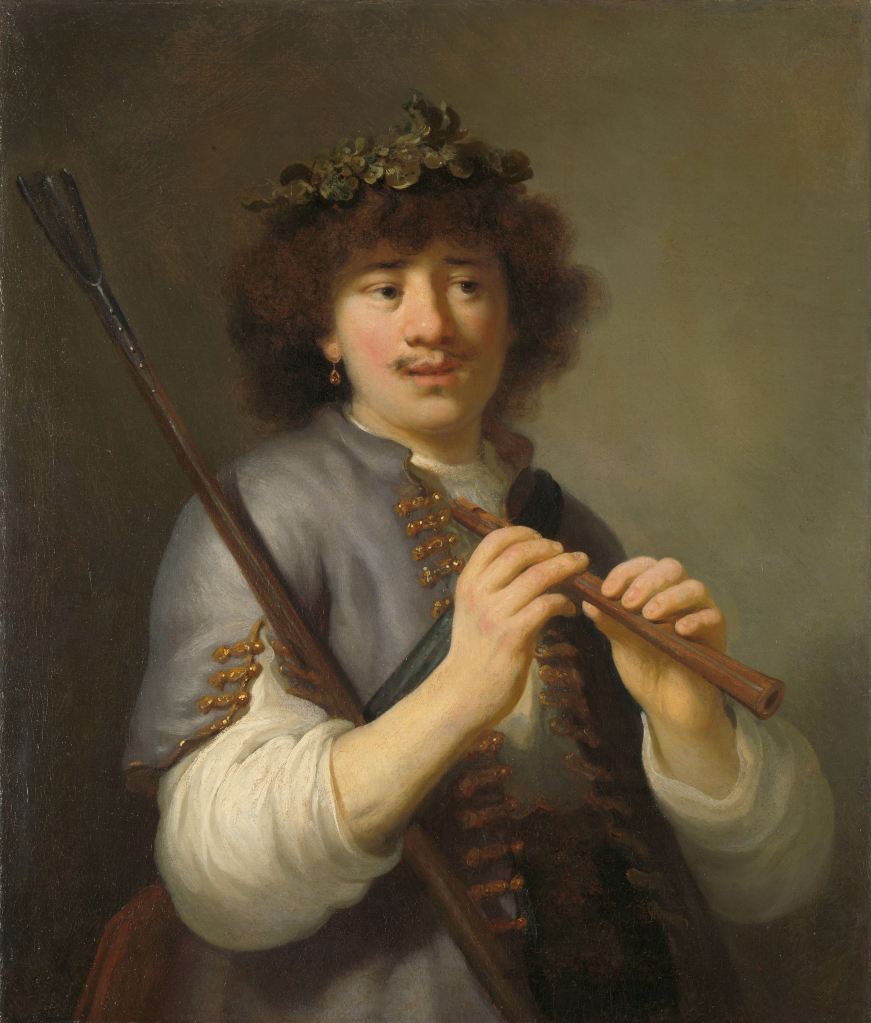
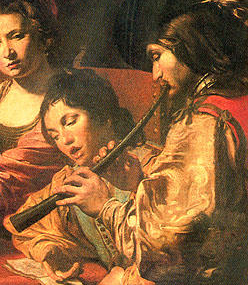
On left: Rembrandt as a Shepherd with a Staff and Flute, by Govert Flinck, 1636. Rijksmuseum, Amsterdam, Netherlands. On right: singer with cornetto player, anonymous, 16th century.

In John 16:20, Jesus announces to his disciples that he is going to leave them, and that they will go through a period of hardship during which the rest of the world will mock them. For this 3rd Sunday after Easter, this is the story on which Bach and his librettists had to base their cantatas.

In 1714 in Weimar, Bach made this into a true lament, that he would later rewrite into the Crucifixus of his Mass in B Minor: Cantata 12 Weinen, Klagen, Sorgen, Zagen.  

The librettist of this cantata (and of all other cantatas Bach wrote in Weimar) was Salomo Franck, librarian to the Duke of Weimar. Franck very cleverly portrays the “sorrow to joy”-theme of this cantata. The alto aria is a good example: after the Gospel quote in the recitative “Wir müssen durch viel Trübsal” (we have to go through tribulation) comes an upbeat aria illuminating how “Kreuz und Krone” (cross and crown) and “Kampf and Kleinod” (conflict and jewel) are always connected.

While I love everything about this cantata, my absolute favorite part is the tenor aria Sei getreu. Find out why in my blog post from 2016, where you can also find links to my favorite recordings of this cantata.

Most of the texts Bach had to work with in Leipzig were not nearly as good as Franck’s libretti. But there arguably was one exception: in 1725, between Easter and Pentecost, Bach set nine cantatas in a row to beautiful poetry by Christiane Mariane von Ziegler. Von Ziegler was a single woman who had known much sadness in her life already: her father was in prison, she was twice widowed, and had also lost both her children (one from each marriage). However, her family fortune was still intact and at her disposal, and the sad circumstances meant that she didn’t have to answer to a father or a husband. She thus enjoyed much more freedom than any other woman in Leipzig at the time, and could publish under her own name.

For the third Sunday after Easter in 1725, Bach wrote Cantata 103: Ihr werdet weinen und heulen on a libretto by Von Ziegler. This cantata also starts out very sad, but there is much “Freude” (joy) in the music. A sopranino recorder illustrates the “mocking” Jesus predicted, or does it? Read it all in my blog post from 2018, which also includes a link to the excellent introduction to this cantata (now with English subtitles!) by Rudolf Lutz of the J.S. Bach Foundation in Switzerland.

Wieneke Gorter, May 2, 2020, updated May 19, 2024.

Trinity 1725

27 Sunday May 2018

Posted by cantatasonmymind in Cantatas, Chorale cantatas 1724/1725, Leipzig

≈ Leave a comment

Tags

Christiane Mariane von Ziegler, Collegium Vocale Gent, Gustav Leonhardt, Knabenchor Hannover, Leonhardt Consort, Matthias Echternach, Max van Egmond, Paul Esswood, Trinity Sunday

Crijn_Hendricksz

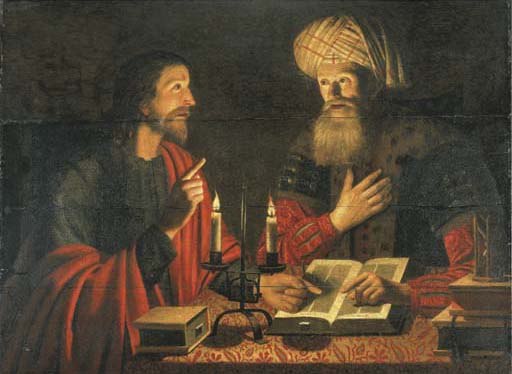
Jesus and Nicodemus, by Dutch painter Crijn Hendricksz Volmarijn

Today’s Cantata 176 Es ist ein trotzig und verzagt Ding, written for Trinity Sunday in 1725, marks the end of Bach’s 1724/1725 cycle of cantatas as well as the end of his series of nine cantatas on texts by Leipzig poet Christiane Mariane von Ziegler.

My favorite recording of this cantata is by Gustav Leonhardt, with the Leonhardt Consort, Knabenchor Hannover, and Collegium Vocale Gent. Vocal soloists are Matthias Echternach (boy soprano, soloist of the Knabenchor Hannover); Paul Esswood, countertenor; and Max van Egmond, bass. Find it here on YouTube.

Find the texts & translations here, and the score here.

The Gospel story for this day is the story Jesus’ nighttime conversation with Nicodemus, stating that only those who are reborn through water baptism and the Spirit (or Holy Ghost) can reach eternal life, hence the reference to Trinity. Find the text of that part of the Gospel of John here.

However, Von Ziegler doesn’t talk about the water baptism or any other aspects of the conversation between Jesus and Nicodemus at all, but instead focuses, four movements long, on the fact that Nicodemus comes to Jesus at night. The highlight of the cantata is the soprano aria “Dein sonst hell beliebter Schein,” which very poetically embellishes on Nicodemus’ wish for the sun to go under.

Only in the last aria do the words “was Jesus verspricht” (what Jesus promises) turn up, and is there a short reference to the Holy Trinity.  To make the reference more clear, the closing chorale ends with the following text, almost as a Roman doxology, so that everyone is clear that it is indeed Trinity today:

Gott Vater, Sohn und Heilger Geist,
Der Frommen Schutz und Retter,
Ein Wesen drei Personen.

(God the Father, son and holy spirit
protector and saviour of the devout
one being, three persons.)

Wieneke Gorter, May 27, 2018, links updated May 19, 2024.

Pentecost 1725

20 Sunday May 2018

Posted by cantatasonmymind in After Easter, Cantatas, Chorale cantatas 1724/1725, Leipzig

≈ Leave a comment

Tags

Bach, Bachstiftung, cantatas, Christiane Mariane von Ziegler, Harnoncourt, Pentecost, Peter Jelosits, Whitsunday

IMG_0015
The Descent of the Holy Ghost by Titian, circa 1545. Altarpiece in Santa Maria della Salute, Venice, Italy.

In Bach’s time, Pentecost was a three-day-long feast, as important in the church year as Christmas and Easter. Most of the Pentecost cantatas have trumpets, timpani, and more pull-out-all-the stops instrumentation, as was appropriate for  feast days.

In 1725 Bach performed the following cantatas. All these three cantatas are part of the series of nine cantatas on poetry by Christiane Mariana von Ziegler Bach wrote after Easter that year. Click on the links to find recordings on YouTube.

Sunday May 20, Whit Sunday, or First Day of Pentecost: Cantata 74 Wer mich liebet, der wird mein Wort halten.

Find the text of Cantata 74 here, and the score here.

Monday May 21, Whit Monday, or Second Day of Pentecost: Cantata 68 Also hat Gott die Welt geliebt, with the famous soprano aria Mein glaübiges Herze – gloriously sung by Peter Jelosits on the Harnoncourt recording.

Tuesday May 22, Whit Tuesday, or Third Day of Pentecost: Cantata 175 Er rufet seinen Schafen mit Namen. (complete cantata by the Bach Foundation).

Find the text of Cantata 175 here, and the score here.

Bach might have remembered from a year before that writing three cantatas in three days was going to be too much, so he reworked the opening of cantata 59 (a soprano-bass duet) from 1724 into an opening chorus for four voice parts and full orchestra in cantata 74 in 1725. He also transformed the bass-aria with violin solo from cantata 59 into a soprano aria with oboe da caccia in cantata 74.

Wieneke Gorter, May 20, 2018, links updated May 19, 2024.

Ascension Day 1725

13 Sunday May 2018

Posted by cantatasonmymind in After Easter, Cantatas, Chorale cantatas 1724/1725, Leipzig

≈ Leave a comment

Tags

Ascension, Christiane Mariane von Ziegler, Christoph Genz, Friedemann Immer, Harnoncourt, John Eliot Gardiner, Kurt Equiluz, Max van Egmond, Reinhard Hagen, René Jacobs, Robin Blaze

giotto_ascension

The Ascension of Our Lord by Giotto di Bondone, 1305. Fresco in the Capella Scrovegni, Padua, Italy.

In the Netherlands, where I grew up, most people have a four-day weekend for Ascension Day (Thursday May 10 this year as well as in 1725). The traditional thing to do was go for a long bike ride very early in the morning on the Thursday, and then spend the rest of the weekend doing the first serious gardening of the season, putting annuals in the ground, filling window boxes, etc.

Here in the United States, Ascension Day goes by unnoticed, nobody gets that Thursday day off, let alone a four-day weekend. And here in California we already started gardening a while ago. So, while still digging out from an extremely busy several weeks/months, I forgot about it. I only remembered when my sister, who lives in France, told me they were away for the long weekend.

Following Bach’s writing in 1725, the cantata for Ascension Day 1725 is Cantata 128 Auf Christi Himmelfahrt allein. It has a fantastic bass solo with trumpet (the designated instrument to illustrate “heaven”) and a beautiful alto-tenor duet.

My favorite recording of this cantata is from 1993 by Gardiner, with Robin Blaze, countertenor; Christoph Genz, tenor; and Reinhard Hagen, bass. Unfortunately the name of the trumpet player is not published. Listen to it here on Spotify. Unfortunately this recording is not on YouTube. Please note that this is a completely different interpretation than Gardiner’s crazy high tempo recording from 2012 (a “make-up” recording for the missing one from the Cantata Pilgrimage cycle from 2000).

If you don’t have access to Spotify, you can listen to Harnoncourt’s 1983 recording here on YouTube, with soloists René Jacobs, coutertenor; Kurt Equiluz, tenor; Max van Egmond, bass; and Friedemann Immer, natural trumpet.

Find the text of Cantata 128 Auf Christi Himmelfahrt allein here, and the score here.

While the opening chorus is very similar to the great chorale fantasias from January 1725, this cantata is not a true “chorale cantata” anymore. By this time, after Easter 1725, Bach doesn’t follow the same structure that he religiously adhered to for all his cantatas from Trinity, June 11, 1724 to the Annunciation, March 25, 1725. None of the cantatas after March 25 have the chorale tune or text throughout the entire cantata: the closing chorale is a different one than the chorale in the opening chorus, and the inner recitatives and arias are no longer based on the text of the chorale from the opening chorus either.

This cantata is the fourth in the series of nine consecutive cantatas on poetry by Christiana Mariana von Ziegler (103, 108, 87, 128, 183, 74, 68, 175, and 176). Because Von Ziegler’s texts were published, we can see how many changes Bach made to her texts. In the case of this cantata, the most striking change is Bach deleting the planned recitative between the bass aria and the alto-tenor duet. It seems that Bach wanted to increase the musical contrast between the two movements, while at the same time clarifying the connection of the text from one movement (bass aria) to the next (alto-tenor) duet.

Thus he adds Von Ziegler’s original recitative text to the text of the bass aria, starting with an extra line “wo mein Erlöser lebt.” The line doesn’t rhyme with anything, and Von Ziegler must not have been happy with this. However, this way Bach can repeat the instrumental opening of the aria after what was originally the recitative text, and create more contrast between the movements.

He also adds two more lines at the end of that bass aria:

So schweig, verwegner Mund,
Und suche nicht dieselbe zu ergründen!

Thus making it more clear how the text of this movement is related to the next movement.

Below is an overview of all the changes Bach made in this particular libretto, courtesy of Eduard van Hengel.

Wieneke Gorter, May 13, 2018, links updated May 19, 2024.

text comparison
BACH1. Auf Christi Himmelfahrt allein
Ich meine Nachfahrt gründe
Und allen Zweifel, Angst und Pein
Hiermit stets überwinde;
Denn weil das Haupt im Himmel ist,
Wird seine Glieder Jesus Christ
Zu rechter Zeit nachholen.

2. Ich bin bereit, komm, hole mich!
Hier in der Welt
Ist Jammer, Angst und Pein;
Hingegen dort, in Salems Zelt,
Werd ich verkläret sein.
Da seh ich Gott
von Angesicht zu Angesicht,
Wie mir sein heilig Wort verspricht.

3. Auf, auf, mit hellem Schall
Verkündigt überall:
Mein Jesus sitzt zur Rechten!
Wer sucht mich anzufechten?
Ist er von mir genommen,
Ich werd einst dahin kommen,
Wo mein Erlöser lebt.
Mein Augen werden ihn
in größter Klarheit schauen.
O könnt ich im voraus
mir eine Hütte bauen!
Wohin? Vergebner Wunsch!
Er wohnet nicht auf Berg und Tal,
Sein Allmacht zeigt sich überall;
So schweig, verwegner Mund,
Und suche nicht dieselbe zu ergründen!

4. Sein Allmacht zu ergründen,
Wird sich kein Mensche finden,
Mein Mund verstummt und schweigt.
Ich sehe durch die Sterne,
Dass er sich schon von ferne
Zur Rechten Gottes zeigt.

5. Alsdenn so wirst du mich
Zu deiner Rechten stellen
Und mir als deinem Kind
Ein gnädig Urteil fällen,
Mich bringen zu der Lust,
Wo deine Herrlichkeit
Ich werde schauen an
In alle Ewigkeit.

Christiana Mariana von Ziegler1. Auf Christi Himmelfarth allein
ich meine Nachfarth gründe
und allen Zweifel, Angst und Pein,
hiermit stets überwinde:
Denn weil das Haupt im Himmel ist,
wird seine Glieder JEsus Christ
zu rechter Zeit nachhohlen.

2. Ich bin bereit, komm hohle mich.
Hier in der Welt
Ist nicht, als Jammer, Angst und Pein;
Hingegen dort in Salems Zelt
Wird ich verklähret seyn.
Da seh ich dich
von Angesicht,
Wie mir dein heilges Wort verspricht.

3. Auf! Jubiliert mit hellen Schall,
Verkündiget nun überall,
Mein JEsus sitzt zur Rechten,
Wer sucht mich anzufechten?
Wird er mir gleich weggenommen,
Wird ich doch dahin auch kommen.
………………………………………..
Mein Auge wird ihn einst
in gröster Klarheit schauen.
O! könt ich schon allda
mir eine Hütte bauen;
Jedoch vergebner Wunsch,
Er wohnet nicht auf Berg und Thal.
Sein Allmacht zeigt sich überall.
………………………………………………..
………………………………………………….

4. Dein Allmacht zu ergründen,
Wird sich kein Mensche finden,
Mein Mund verstummt und schweigt
Ich sehe durch die Sterne,
daß er sich schon von ferne
Zur Rechten seines Vaters zeigt.

5. Alsdenn so wirst du mich
zu deiner Rechten stellen,
und mir als deinen Kind
ein gnädig Urtheil fällen,
mich bringen zu der Lust,
wo deine Herrlichkeit
ich werde schauen an
in alle Ewigkeit.

Recent Posts

  • “Missa Miniatura” by CONTINUUM/Elina Albach Even More Moving in 2025
  • Bachfest Leipzig 2025
  • Bach Cantatas for Christmas – 1724 and 1734 editions
  • Fourth Sunday of Advent – more insight into Cantata 62 helped me better understand Bach’s Christmas Oratorio
  • Saint Ambrose and Luther in Milan – Second Sunday of Advent

Archives

  • August 2025
  • July 2025
  • December 2024
  • November 2024
  • June 2024
  • January 2024
  • December 2023
  • October 2023
  • September 2023
  • August 2023
  • April 2022
  • February 2022
  • January 2022
  • December 2021
  • November 2021
  • June 2021
  • May 2021
  • April 2021
  • February 2021
  • January 2021
  • December 2020
  • November 2020
  • October 2020
  • September 2020
  • August 2020
  • July 2020
  • May 2020
  • April 2020
  • March 2020
  • February 2020
  • January 2020
  • December 2019
  • November 2019
  • May 2018
  • April 2018
  • March 2018
  • February 2018
  • January 2018
  • December 2017
  • November 2017
  • October 2017
  • September 2017
  • August 2017
  • July 2017
  • June 2017
  • May 2017
  • April 2017
  • March 2017
  • February 2017
  • January 2017
  • December 2016
  • November 2016
  • October 2016
  • September 2016
  • August 2016
  • July 2016
  • June 2016
  • May 2016
  • April 2016
  • March 2016
  • February 2016
  • January 2016

Enter your email address to follow this blog and receive notifications of new posts by email.

Join 338 other subscribers

Categories

  • 1723 Trinity season special series
  • Advent
  • After Easter
  • Ascension
  • Bach's life
  • Cantatas
  • Chorale cantatas 1724/1725
  • Christmas
  • Easter
  • Epiphany
  • Following Bach in 1725
  • Köthen
  • Leipzig
  • Septuagesima
  • Travel
  • Trinity
  • Weimar

Meta

  • Create account
  • Log in
  • Entries feed
  • Comments feed
  • WordPress.com

Website Built with WordPress.com.

  • Subscribe Subscribed
    • Weekly Cantata
    • Join 158 other subscribers
    • Already have a WordPress.com account? Log in now.
    • Weekly Cantata
    • Subscribe Subscribed
    • Sign up
    • Log in
    • Report this content
    • View site in Reader
    • Manage subscriptions
    • Collapse this bar
 

Loading Comments...