Weekly Cantata

Weekly Cantata

Tag Archives: Dorothee Mields

New Year’s treasures

31 Saturday Dec 2016

Posted by cantatasonmymind in Cantatas, Christmas, Leipzig

≈ Leave a comment

Tags

Barbara Schlick, BWV 122, BWV 248/4, Damien Guillon, Dorothee Mields, Feast of the Circumcision, Howard Crook, Jubeljahr, Mark Padmore, New Year's Day, Peter Kooij, Sarah Connolly, Sunday after Christmas, Thomas Hobbs, Vasiljka Jezovsek
newyearseve
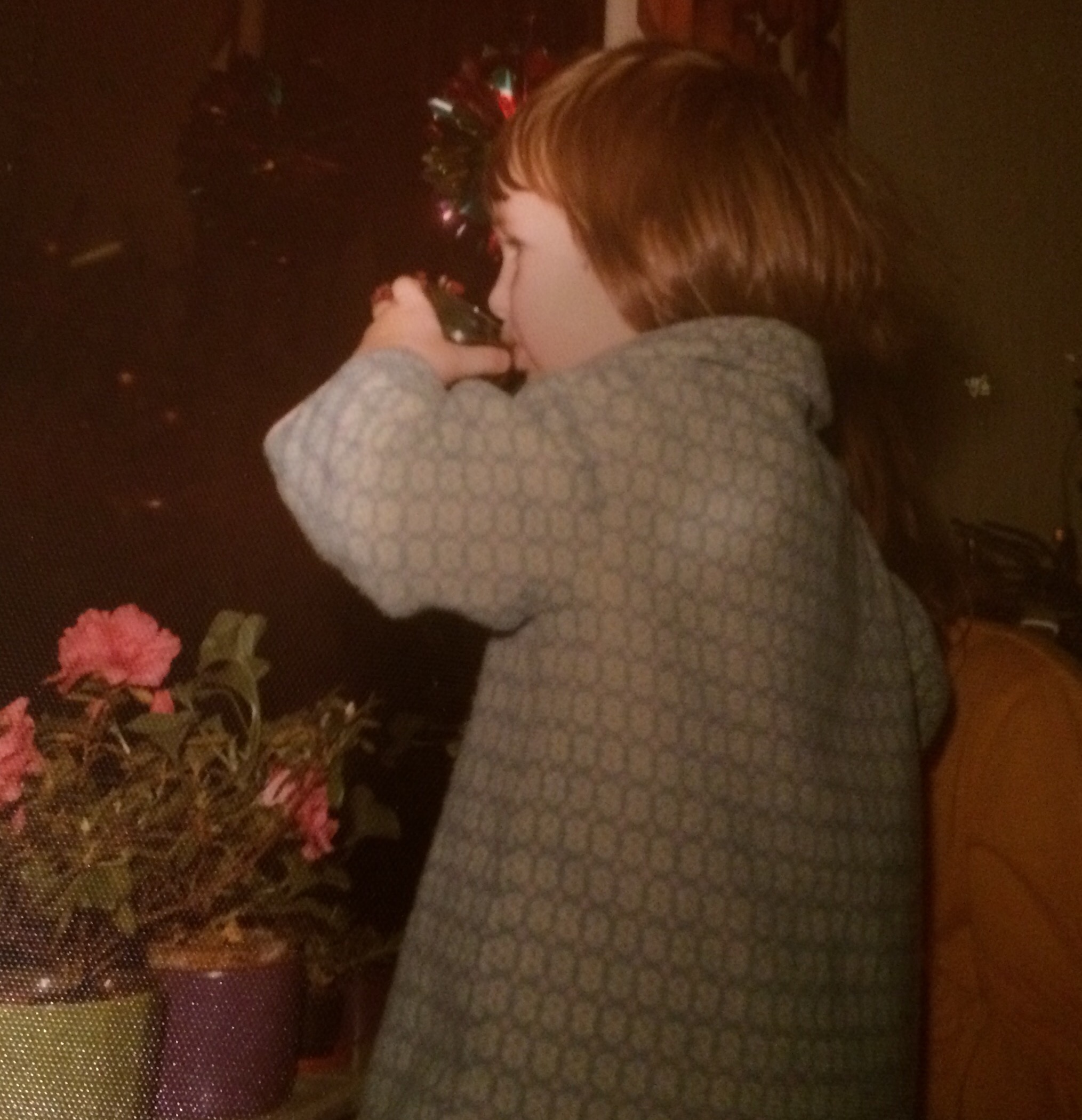
the author on New Year’s Eve, 1970s

There are many Bach cantatas for New Year’s Day, or the Feast of the Circumcision and naming of Jesus. Apart from the fourth cantata of the Christmas Oratorio I discuss here, those are: BWV 190 from 1724, BWV 41 from 1725, BWV 16 from 1726, and BWV 171 from 1729. They are all impressive, usually with trumpets and timpani in the orchestra, but rarely get performed anywhere. I hope that will change sometime.

Today is also the first Sunday after Christmas. If that day did not fall on Third Christmas Day, Bach would write a cantata for that too, as you can see in this overview. It means there is an overwhelming treasure trove of cantatas to choose from today.

The ones I like best are cantata 122 Das neugeborne Kindelein (for the first Sunday after Christmas in 1724) and the fourth cantata from the Christmas Oratorio Fallt mit Danken, fallt mit Loben (for New Year’s Day or the Feast of the Circumcision and naming of Jesus in 1735).

Listen to Herreweghe’s recording of cantata 122 Das neugeborne Kindelein on YouTube. It’s only 14 minutes long, but contains so many jewels. With soprano Vasiljka Jezovsek (stunning performance in the recitative), alto Sarah Connolly, tenor Mark Padmore, and bass Peter Kooij. I love every part of this cantata, but as a child I was most excited about the choruses: they still sounded like pretty Christmas music, but talked about the New Year!

Find the text of cantata 122 here, and the score here.

For Herreweghe’s interpretation of the 4th cantata from the Christmas Oratorio Fallt mit Danken, fallt mit Loben you have two options: There is a beautiful CD recording from 1989, which you can purchase here. Soloists on this recording are soprano Barbara Schlick, tenor Howard Crook, and bass Peter Kooij.

There is also a wonderful DVD recording from 2013, with soloists Dorothee Mields, countertenor Damien Guillon (not singing in part 4), tenor Thomas Hobbs, and bass Peter Kooij. I can highly recommend watching this. This DVD is available at ArkivMusic, Barnes and Noble, and can also be streamed on Amazon Prime.

Find the text of cantata 4 from the Christmas Oratorio here, and the score here.

I love this part of the Christmas Oratorio the best, because of the moving bass-soprano duet, the trio sonata disguised as a tenor aria with two violins, the famous echo-aria for soprano, and of course because it has horns in the orchestra! The presence of horns in the orchestra is the reason this cantata is often skipped in concert performances of the Christmas Oratorio. The entire oratorio is a bit too long for a regular concert program, there are no horns required in any of the other five parts, and natural horn players are expensive and hard to find, so presenters can save on production costs by not hiring any horn players at all.

By the way: Bach never intended for the Christmas Oratorio to be performed as a whole. He wrote each cantata for the six consecutive church Holidays in 1734/1735: First Christmas Day, Second Christmas Day, Third Christmas Day, New Year’s Day (or Feast of the Circumcision), Sunday after New Year, and Epiphany, and the separate cantatas were performed during the church services on those days. The music for the oratorio was largely based on existing choruses and arias from secular works. In this case of the fourth cantata, the opening chorus, soprano aria, and tenor aria all come from BWV 213 Laßt uns sorgen, laßt uns wachen aka Hercules at the Crossroads written in 1733 for the 11th Birthday of Prince Friedrich Christian, son of the Elector of Saxony.

I wish you a good 2017!

Wieneke Gorter, December 29, 2016, links updated December 28, 2019.
Our Christmas Morning

24 Saturday Dec 2016

Posted by cantatasonmymind in Cantatas, Christmas, Leipzig

≈ 2 Comments

Tags

Bach, BWV 248/1, Christmas, Christmas 1, Christmas Oratorio, Damien Guillon, Dorothee Mields, Harnoncourt, Leipzig, Peter Kooij, Phlippe Herreweghe, Thomas Hobbs, timpani, trumpet

nativity_c_1490
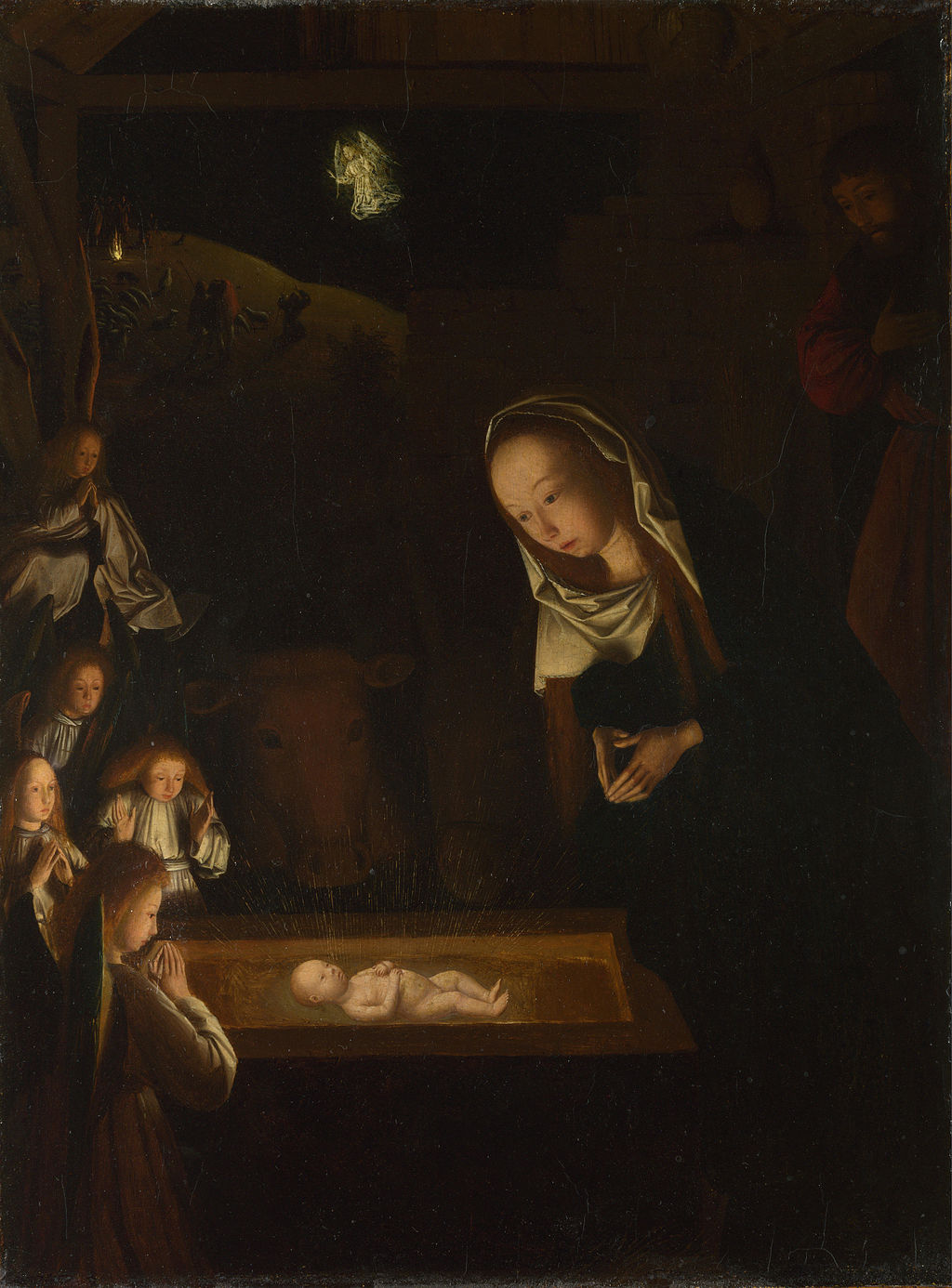
Nativity at Night by Dutch painter Geertgen tot Sint Jans, ca. 1490. National Gallery, London.

Growing up in the Netherlands, my sister and I did not expect gifts at Christmas, and certainly not under the tree. We had already received our gifts on the eve of St. Nicholas, December 5. At the dinner with relatives on Christmas Day, we would maybe receive one book, or a small piece of jewelry. It would be well coordinated between mother and grandmother that this would amount to only one present per person, and it would be next to our plate when we arrived at the well-dressed Christmas dinner table.

However, Christmas Morning was something we immensely looked forward to. The Christmas Morning breakfast was the most wonderful breakfast of the year, even better than the Easter breakfast. We would have crispy rolls from the oven, artisan sliced ham, boiled eggs, cheese, jams, and of course the sweet breakfast sprinkles American kids can’t believe Dutch kids get to eat for breakfast. And Kerststol, or Christmas Stollen, a fruit bread with an almond paste filling.

There was an unwritten rule that my parents would set out the breakfast (including my father carving a bell or Christmas tree out of the butter) and us kids would stay in bed until my mom would sound the special alarm. And the special alarm was: Harnoncourt’s recording of the opening chorus of Part One of Bach’s Christmas Oratorio at full volume, the sound of the timpani rocking the whole house. I usually play the Herreweghe recording in my own house nowadays. You can find that here on YouTube.

In 2012, Herreweghe’s performance of Bach’s Christmas Oratorio in Brussels was recorded and released on DVD. It is a beautiful registration, and has some of my favorite soloists: Dorothee Mields, soprano; Damien Guillon, alto; Thomas Hobbs, tenor; and Peter Kooij, bass. For my readers in Germany, and countries not to far from there, you can buy the regular DVD here, or the blu ray version here. For readers in the USA, if you have Amazon Prime, you can stream it here.

Read more about the history of Christmas in Europe and the USA in this extremely interesting article and join me again tomorrow for a cantata for Second Christmas Day.

Wieneke Gorter, December 24, 2016, links updated December 24, 2019.

Tenor drama

16 Sunday Oct 2016

Posted by cantatasonmymind in 1723 Trinity season special series, Cantatas, Leipzig, Trinity

≈ Leave a comment

Tags

Bach, Damien Guillon, Dorothee Mields, John Eliot Gardiner, La Petite Bande, Leipzig, Paul Agnew, Peter Kooy, Phlippe Herreweghe, St. John Passion, Thomas Hobbs

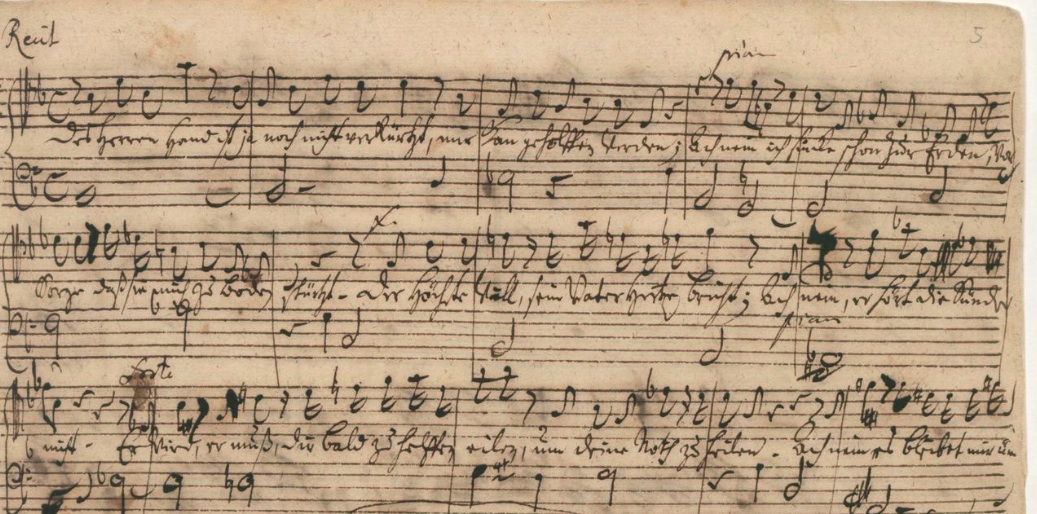
bwv109_tenormanuscript

Excerpt from the start of the tenor recitative from cantata 109, with “piano” and “forte” marked. Staatsbibliothek zu Berlin, Preußischer Kulturbesitz

For this 21st Sunday after Trinity, Bach wrote cantata 109 Ich glaube, lieber Herr, hilf meinem Unglauben! in 1723.

For overall best performance, I recommend Herreweghe’s recording from 2013, with counter-tenor Damien Guillon and tenor Thomas Hobbs.

Listen to this recording on YouTube. To support the artists, please consider purchasing the entire album on Amazon — a good deal if you like this blog, as it also includes three cantatas I discussed here earlier this year: cantata 44, cantata 73, and cantata 48.

Read the German texts with English translations here, and find the score here.

I love Herreweghe’s interpretation of  the opening and closing chorus as well as Damien Guillon’s singing in the alto recitative and aria.

However, there is an extremely dramatic and unusual recitative and aria for tenor in this cantata which I like better on the Gardiner recording. The recitative is unusual because Bach has two voices/persons speak: the uncertain/fearful voice, marked “piano” in his manuscript (see picture above), and the certain/faithful voice, marked “forte” in the manuscript. According to Gardiner, this feature never appears anywhere else in Bach’s recitative writing.

Just as with the “Storm on the lake” aria from cantata 81, only Gardiner and the fabulous Paul Agnew are able to properly convey the drama of the text and context of this tenor recitative and aria. If at first you think this might be a bit over the top, it is most probably exactly what Bach had in mind. A bit of opera to properly bring out the agony of the text.

Listen to these two movements by Gardiner and Agnew on YouTube: the recitative here, and the aria here.

Bach might have been preparing the Leipzig congregations for the St. John Passion he was planning for Good Friday 1724, as this tenor aria is very similar in dramatic intensity and music to the Ach mein Sinn aria from that passion. Those who know the St. John Passion well might hear other resemblances in this cantata 109.


Wieneke Gorter, October 16, 2016

The Herreweghe sopranos

11 Sunday Sep 2016

Posted by cantatasonmymind in 1723 Trinity season special series, Cantatas, Leipzig, Trinity

≈ Leave a comment

Tags

Bach, cantatas, Collegium Vocale Gent, Dominique Verkinderen, Dorothee Mields, Hana Blazikova, John Eliot Gardiner, Mark Padmore, Peter Kooy, Phlippe Herreweghe, Trinity 16

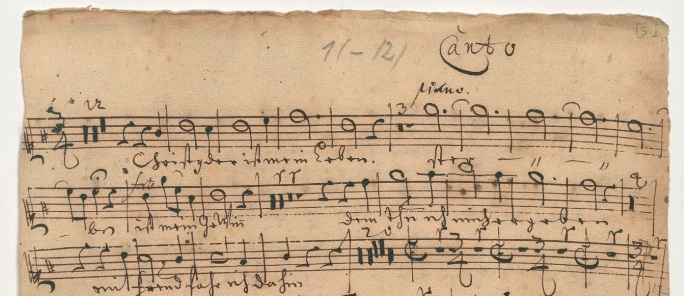
bwv95_sopraan

The soprano part of cantata 95 Christus, der ist mein Leben. Staatsbibliothek zu Berlin – Preußischer Kulturbesitz

After all his experimenting with the form of the cantata last week, Bach keeps exploring how he can build a cantata based on chorale melodies and chorale texts. As a result, this week’s cantata 95 Christus, der ist mein Leben again takes a unique place in Bach’s cantata collection: it features no less than four different chorales, all part of the Sterbe-lieder (Deathbed songs) that were very popular in Leipzig at the time: Christus, der ist mein Leben; Mit Fried und Freud, ich fahr dahin; Valet will ich dir geben; and Weil du vom Tod erstanden bist.

I recommend Herreweghe’s recording of this cantata. Listen to this recording on YouTube, or on Spotify. Support the artists and purchase this recording on Amazon. (Or find them in the Amazon stores  for  Germany and France)

Soloists: soprano Dorothee Mields, counter-tenor Matthew White, tenor Hans Jörg Mammel, bass Thomas E. Bauer. Choir sopranos: Dorothee Mields, Hana Blazikova, Dominique Verkinderen.

In the manuscript of the soprano part pictured above, it is interesting to note the dynamic markings for the text “Sterben ist mein Gewinn.” Dynamics are not very common in Bach manuscripts, but, as Alfred Dürr points out, Leipzig had a strong tradition of singing softly and slowly on the word “Sterben,” and singing loudly on “ist mein Gewinn,” going back at least to 1629. In that year, then Thomaskantor Johann Hermann Schein wrote this note for his singers:

“da singen sie adagio mit einem sehr langsamen Tactu, weiln in solchen versiculis verba emphatica enthalten” (here you should sing adagio in a very slow tempo, because verses like these contain emphatic words)

How Herreweghe’s sopranos sing this Sterben ist mein Gewinn in the first chorale takes my breath away, and this is the most important reason why I prefer this recording. Having grown accustomed to the boy choirs of the Leonhardt and Harnoncourt recordings in the 1970s, my parents, sister, and I were blown away by Herreweghe’s Collegium Vocale Gent when their first CDs started coming out in the late 1980s and early 1990s.

My mother was especially taken by the sound and blend of the sopranos, and “Herreweghe sopranos” became a household term in our family. After attending a performance by a different group, we would often say to each other: “it was nice, but they are not Herreweghe sopranos….,” and sigh a little.

This cantata is all about longing for life after death, and over the course of the cantata these statements are made: I will be happy to die (opening movement), because life on earth is worthless (soprano recitative). Saying goodbye to that will be freeing (soprano chorale), so please can I die as soon as possible (tenor recitative and aria), because death is only a sleep (bass recitative) from which I will wake up to join Jesus, who has gone before me (closing chorale).

The outstanding tenor aria features Bach’s signature “death bells” in the pizzicato strings. Bach uses these “Leichenglocken”  also in cantatas 73, 8, 105, 127, 161, and 198. For an alternative recording of this movement, with gorgeous singing by Mark Padmore, listen to the Gardiner recording on Spotify.

The concept of death being only a short period of sleep after which the dying person wakes up to meet Jesus in the afterlife was an extremely important part of 18th-century Lutheran faith. When dealing with death on a daily basis, it was comforting to believe that death would ultimately lead to paradise. And by stressing this concept, Bach also refers to the Gospel for this 16th Sunday after Trinity. It is the story of the miracle at Nain: a young man who has died  is carried out of the city and then woken up by Jesus.

Wieneke Gorter, September 11, 2016, updated October 7, 2025

Children’s stories

03 Saturday Sep 2016

Posted by cantatasonmymind in 1723 Trinity season special series, Bach's life, Cantatas, Leipzig, Trinity

≈ 1 Comment

Tags

according to Lutheran Church year, Bach, Bach-Archiv Leipzig, BWV 138, cantatas, Collegium Vocale Gent, Damien Guillon, Deborah York, Dorothee Mields, Eduard van Hengel, Hana Blazikova, Ingeborg Danz, Leipzig Bach Festival, Lutheran Church year, Mark Padmore, Peter Kooy, Phlippe Herreweghe, Thomas Hobbs, Trinity 15

Bergrede_Brueghel

The Sermon on the Mount, oil on copper painting by Jan Brueghel the Elder, 1598

In 1723 Bach wrote cantata 138 Warum betrübst du dich, mein Herz.  Again I prefer Herreweghe’s interpretation, but it’s not so easy to choose between his recording from 1998 (with soloists Deborah York, Ingeborg Danz, Mark Padmore, and Peter Kooij) and the one from 2013 (with soloists Hana Blazikova, Damien Guillon, Thomas Hobbs, and Peter Kooij). Update from 2021: there now is an extremely inspired Herreweghe recording with all my favorite soloists (Dorothee Mields, Alex Potter, Guy Cutting, Peter Kooij), recorded live at De Singel in Antwerp on Sunday January 31, 2021 (during the Covid19 pandemic, so without audience). Find it here.

Listen to the entire 1998 recording on Youtube or listen to one long track of the 2013 recording with Hana Blazikova and Damien Guillon on YouTube. Please consider supporting the artists by purchasing the 1998 version (used copies available only) or the 2013 version  on Amazon.

Find the text, based on the Sermon on the Mount, of this cantata here, and the score here.

It is often not immediately clear what a Bach cantata is about, what the text means, or what Bach wanted to convey with it. In an absolutely wonderful interview (with excellent English subtitles) for the Leipzig Bach Festival, soprano Dorothee Mields says that even she, as a native German speaker, often feels the need to look at English translations, go back to the Bible texts, and read more about the subject, because she didn’t necessarily recognize the text from her children’s bible.

The image of the children’s bible stuck with me since first watching the interview seven months ago. And when listening to the cantata for this Sunday, I had to think of it again, because the choice of words in this cantata is very moving, but at the same time so simple, that it is almost as if the librettist is speaking to children. Listen, for example, to the text the soprano sings in the third movement:

Nur ich, ich weiss nicht, auf was Weise ich armes Kind mein bisschen Brot soll haben; Wo ist jemand, der sich zu meiner Rettung findt?

(It is just that I, poor child, don’t know how I should receive a bit of bread; Where is the person who will save me?)

Eduard van Hengel hilariously remarks that it reminds him a bit of Calimero (a popular children’s cartoon about a little chick, which aired in The Netherlands, Belgium, France, and Italy in the early 1970s. Watch this first episode to get an idea).

I wonder who the librettist for this cantata was. I imagine a different person than who wrote texts for the last few cantatas. Last week, the Bachs possibly had their house full with the families of Anna Magdalena’s brother and sisters, visiting because the men, all trumpet players, were needed for two cantatas. Perhaps one of the visitors had talent for entertaining the children with stories and making up poems on the spot? Did Bach ask this person to write the libretto for this cantata? Or was his own head still filled with children’s stories and did he write the text himself?

These are all just assumptions and we don’t know for sure if last week’s extra players were the relatives of Bach’s wife, but my potential movie script is getting better and better …

There’s of course more to this cantata than the charming texts. Musically, as far as the form and structure is concerned, this cantata is unique within this first cycle of Leipzig cantatas. Bach takes a chorale as the base for the cantata, yet it is not at all the same as his series of chorale cantatas from the 1724/1725 cycle. In those later chorale cantatas, he always uses all the verses and keeps a strict structure of one soloist per movement. In this cantata 138, he only uses three verses of the chorale, and gives the cantata a very free form, with a different number of soloists for each movement. He is obviously experimenting. And I wonder again: might he have been influenced by his visitors from last week? Did he have discussions about his compositions with his colleagues? And how is this playing around with the form of the cantata related to using a different librettist or no librettist? Did he not want to bother a professional writer with his experimenting?

There is one more–for me at least–exciting aspect to this cantata: when I first started listening to it, I discovered that I already knew the bass aria. Same singer (Peter Kooij) and same music, but a different text, because I had until then only heard this as the Gratias from Bach’s Mass in G Major, BWV 236 from the mid 1730s. Listen to both, and marvel at Bach’s talent for subtle recycling.

Wieneke Gorter, September 3, 2016, updated September 19, 2020 and February 13, 2021.

Glorious soprano arias and unusual instrumentation

08 Sunday May 2016

Posted by cantatasonmymind in After Easter, Cantatas, Leipzig

≈ Comments Off on Glorious soprano arias and unusual instrumentation

Tags

Bach, BWV 183, bwv 44, Carolyn Sampson, Christiane Mariana von Ziegler, Dorothee Mields, Exaudi, Gerd Türk, Harnoncourt, oboe d'amore, oboe da caccia, Peter Jelosits, Peter Kooy, Phlippe Herreweghe, Robin Blaze, Rudolf Lutz, Thomas Hobbs, violoncello da spalla

BWV183titlepage

The title page of cantata 183 in Bach’s handwriting: Dominica Exaudi // Sie werden eüch in den Bann tun // à 4 Voci, 2 Hautb d’Amore, 2 Hautb da Caccia, 2 Violini, Viola, Violoncello piccolo e Continuo // di Joh. Sebas. Bach. Staatsbibiothek zu Berlin – Preußischer Kulturbesitz

There are two cantatas for this Sunday Exaudi, aka the Sunday after Ascension, or in the practical reality of the man who had to write the music and rehearse the choir: the Sunday in between Ascension and the three-day-long feast of Pentecost. Because they refer to the same Gospel text, the cantatas share the title Sie werden euch in den Bann tun, but except for the fact that they each contain a glorious soprano aria, they have nothing in common.

I discuss both cantatas in this blog post. Keep reading for Cantata 183, but let’s first look at the one Bach wrote in 1724: Cantata 44 Sie werden euch in den Bann tun.

The soprano aria from this cantata, Es ist und bleibt der Christen Trost, sung by the amazing Peter Jelosits on the Harnoncourt recording from 1975 is among the most happiest music memories of my childhood. I suspect my mom loved it so much that she played it more often than just on this Sunday. I didn’t realize how well this aria is engraved in my brain until I surprised myself during a choir carpool, singing the entire thing from memory, illustrating a story about how some of these boy sopranos could sing very complicated arias.

Es ist und bleibt der Christen Trost,
The consolation of Christians is and remains
Dass Gott vor seine Kirche wacht.
God’s watchful care over his church.
Denn wenn sich gleich die Wetter türmen,
For even though at times the clouds gather,
So hat doch nach den Trübsalstürmen
yet after the storms of affliction
Die Freudensonne bald gelacht.
the sun of joy has soon smiled on us.

If you would like to listen to the entire cantata, I recommend Herreweghe’s recording from 2013. The opening tenor/bass duet is the best here, with bass Peter Kooij singing out much more than on their 1993 recording of this same cantata, and his and Thomas Hobbs’ voice matching better than his and Christoph Prégardien’s (as much as I love Prégardien’s voice!).

Also, Herreweghe’s interpretation of the soprano aria on this 2013 recording is the most musical and the most cheerful, not in the least because it has the highest tempo of all recordings I listened to. That this proves a bit of a challenge for the always fabulous soprano Dorothee Mields is only audible in the text: after she comes out of the expertly executed but super tricky long runs, she slips back into the edition she probably studied from, which uses the more modern “für seine Kirche”  instead of the edition they’re performing from, which uses the archaic “vor seine Kirche,” so it ends up being a mix of the two texts. While this bugs me a little bit, a retake of the recording would probably have been at the expense of the magic that happens in this aria, so it is probably a good thing that they left it in.

Purchase the Herreweghe recording of cantata 44 on Amazon or on iTunes. (This album also features the beautiful recording of cantata 73 discussed here).

Find the entire German text of cantata 44 with English translations here, and the score here.

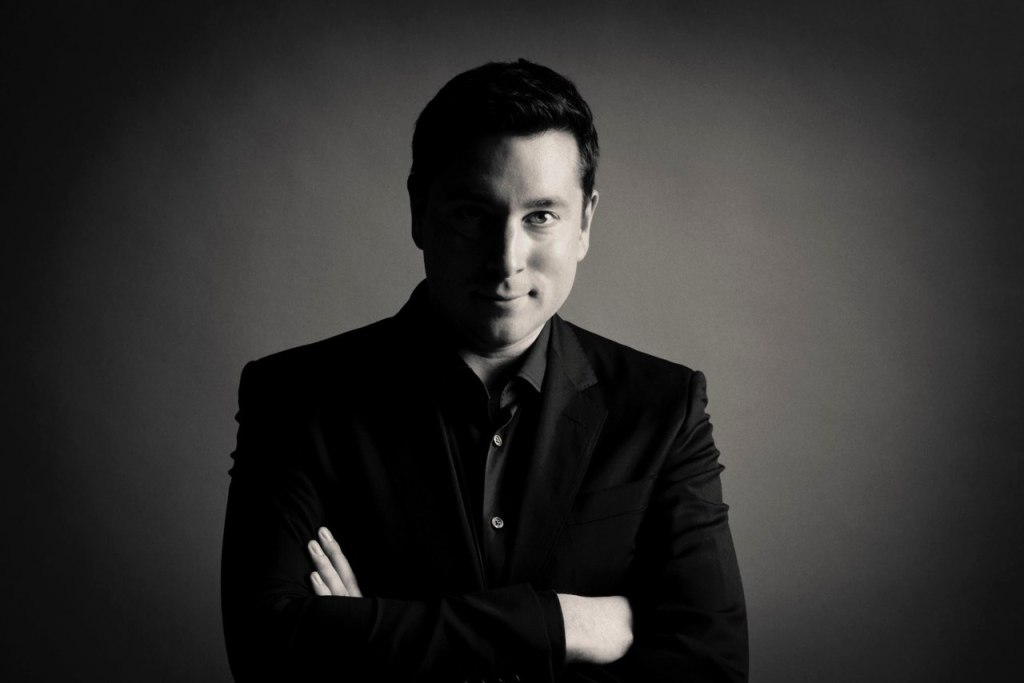
  • Thomas Hobbs, tenor (photo by B Ealovega)
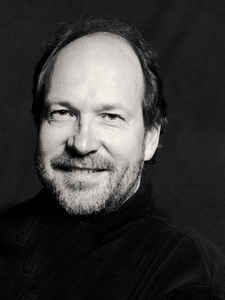
  • Peter Kooij, bass

Cantata 183 from 1725 is noteworthy because it uses a text by Christiane Mariana von Ziegler and features a striking instrumentation: two oboi d’amore and two oboi da caccia in the bass recitative; a violoncello piccolo in the tenor aria; again the two oboe pairs in the alto recitative; two oboi da caccia in the soprano aria; all these instruments in the closing chorale.

My absolute favorite recording of this cantata is the one by Bach Collegium Japan. They struck gold with this recording, thanks to the combination of  Badiarov playing the violoncello piccolo da spalla, fabulous oboe players, and terrific vocal soloists: soprano Carolyn Sampson, countertenor Robin Blaze, tenor Gerd Türk, and bass Peter Kooij. I think the entire album (also featuring the recording of cantata 85 discussed here) is very inspired, and it has become one of my favorite Bach cantata CDs.

Listen to this Bach Collegium Japan recording of cantata 183 on Spotify.

Purchase this Bach Collegium Japan recording of cantata 183 (and 85!) on Amazon or on iTunes.

Find the German text with English translation of Cantata 183 here, and the score here.

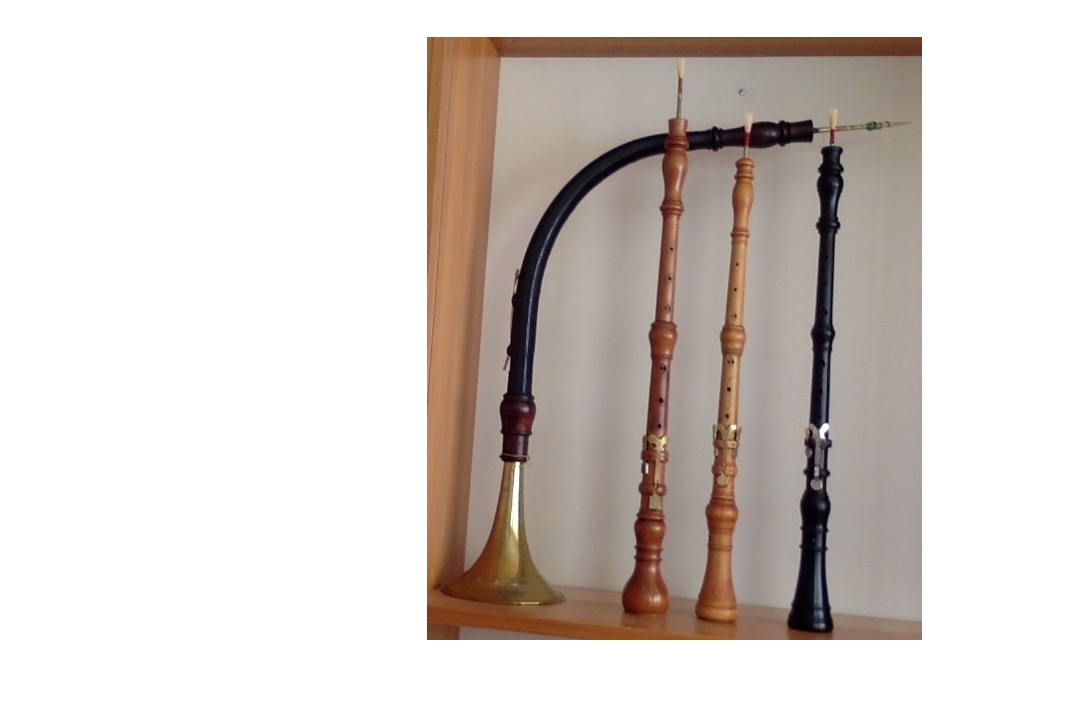
Why is this scoring for the oboes so unusual? In Bach’s time there were “regular” oboes (to the right on this photo), oboes d’amore (with a bell-like widening in the wood at the end, second from left), and oboes da caccia (or “hunting” oboes, completely curved, and with a trumpet-like brass bell at the end, far left).

Oboes
From left to right: oboe da caccia, oboe d’amore, oboes. Photo courtesy of Marianne Richert Pfau; instruments built after 18th century examples by Sand Dalton, Harry van Dias, and Paul van der Linden, respectively.

Bach often used the oboe da caccia, but only on a handful of occasions would he write for two da caccias. And even if he would write for two da caccias or two d’amores and “regular” oboes in the same cantata (or passion) they would not all be playing at the same time. On most occasions there were between one or two oboe players in the orchestra, sometimes three, alternating between the different instruments from one movement to the next. The only times Bach needed four oboists in one cantata, playing two da caccias and two d’amores at the same time, was in cantata 2 of the Christmas Oratorio (1734) and in this cantata 183. So there must have been some good oboe playing visitors in town around this time of Ascension and Pentecost in 1725.

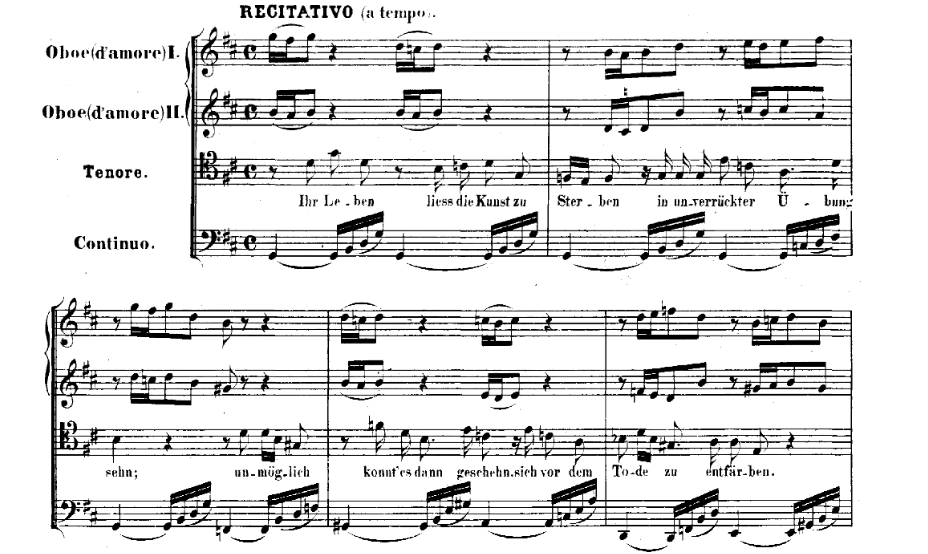
The four oboes can be heard clearly in the alto recitative, where Bach has each of them repeat the four-note theme from the “ich bin bereit”-text in the vocal part:

Screenshot 2016-05-08 10.16.33

When I hear this, I immediately have to think of the tenor recitative in Bach’s beautiful  Trauer Ode, cantata 198, this time reduced to a 3-note theme and without the da caccias:

Screenshot 2016-05-08 10.28.17

Or listen to this recitative from cantata 198 on YouTube

It is of course not exactly the same composition, but I wonder if Bach had to think back of this cantata from 1725 when he wanted to illustrate life  and death in one and the same piece of music in the Trauer Ode of 1727.

After this alto recitative comes the most glorious soprano aria, richly scored with the two oboes da caccia playing the oboe part in unisono, as well as parts for violin 1, violin 2, and viola. Harnoncourt says that even though both da caccia have this aria written in, he says it is “clearly not intended to be chorally played” and on their recording they decide to have this part covered by only one oboe da caccia. Perhaps the original full score was not available to Harnoncourt at the time he made that decision, because it clearly says: “tutti gli Oboi in unisono:”

Screenshot 2016-05-08 12.34.13
excerpt from the soprano aria from cantata 183, with Bach’s indication for “all the oboes in unisono,” Staatsbibiothek zu Berlin, Preußischer Kulturbesitz

One would almost think Bach dreamt of all four oboes playing this, also the d’amores, but when his copyists double-checked with him, he decided that was just silly, it would overpower the poor boy who had to sing this, and they only wrote it into the parts for the da caccias (it says “Arie Tacet” in the parts for the oboi d’amore).

To learn more about Cantata 183, I wholeheartedly recommend you study with Rudolf Lutz of the J.S. Bach Foundation a little bit. Find a link to his fabulous (English spoken!) lecture and improvisation about this cantata in my blog post from May 24, 2020.

Wieneke Gorter, May 8, 2016, updated May 23, 2020.

72 and 73

24 Sunday Jan 2016

Posted by cantatasonmymind in Cantatas, Epiphany, Leipzig

≈ Comments Off on 72 and 73

Tags

Bach Collegium Japan, Bist du bei mir, Collegium Vocale Gent, Dorothee Mields, Eduard van Hengel, Leichenglocken, Lutheran Church year, Masaaki Suzuki, Monika Mauch, Montreal Baroque, Peter Kooy, Phlippe Herreweghe, Rachel Nicholls, Robin Blaze, Thomas Hobbs

ChristCleansing

Christ cleansing a leper, Jean-Marie Melchior Doze, 1864

For this third Sunday after Epiphany, we find no less than four gems in Bach’s treasure trove: cantatas 73, 111, 72, and 156. I decided to highlight 73 and 72, because of the interesting references between the two. As far as we can tell, Bach loved these cantatas too: He performed cantata 73 at least one more time, and transcribed the opening chorus of cantata 72 into the Gloria of his Mass in G minor.

From the chronology of performances in Leipzig, it looks as if Bach wrote cantata 73 in 1724 and cantata 72 two years later. However, some scholars argue that (a large part of) cantata 72 was probably already written around 1715, since most of the poetry is from a collection Bach used when working in Weimar at that time. But whether 72 was first or 73 was first, it doesn’t matter that much for the appreciation of these two beautiful cantatas.

I have a soft spot for cantata 73 because I love the way Herreweghe performs this, have listened to the 1990 recording many times since it came out, and then to the (better!) 2013 recording. The best parts are the opening chorus and the bass aria (sung by Peter Kooy on both recordings) and I’m grateful for Eduard van Hengel’s Bach website (in Dutch) where I learned a lot about the many possible bits of reference in this cantata to other works.

Listen first to Cantata 72 Alles nur nach Gottes willen by Bach Collegium Japan/Masaaki Suzuki on Spotify

soloists: Rachel Nicholls (one of the most “boy soprano”-like voices of the soprano soloists in that series, I love it), Robin Blaze (counter-tenor), Peter Kooy (bass)

If you only have access to YouTube, you could listen to Montreal Baroque’s recording or to Gardiner’s recording instead.

What to listen for in cantata 72:

The most important words from the Bible text for this third Sunday after Epiphany (the story of Jesus cleansing a leper, from the gospel of Matthew):

Da er aber vom Berg herabging, folgte ihm viel Volks nach. Und siehe, ein Aussätziger kam und betete ihn an und sprach: Herr, so du willst, kannst du mich wohl reinigen. Und Jesus streckte seine Hand aus, rührte ihn an und sprach: Ich will’s tun; sei gereinigt!

(When He had come down from the mountain, great multitudes followed Him. And behold, a leper came and worshiped Him, saying, Lord, if You are willing, You can make me clean. Then Jesus put out His hand and touched him, saying, I am willing; be cleansed.)

In the opening chorus: The illustration of the word “Alles” (Everything): one can hear all the instruments in the orchestra, and when the voices come in, they first jump an octave over two quarter notes, signifying all the possible notes in the chord, and then run up in 16th notes, singing every single note in the chord.

In the alto aria: nine times the words “Herr, so du willt” – make sure to remember this melody!

In the bass aria: the text is set in the third person, but it is almost as if Jesus himself is speaking here, and this is where the text moves to the “Ich will’s tun” (I will do it / I am willing) words from the gospel.

In the soprano aria*: the happy and sweet elaboration on the “Ich will’s tun” – which here turns into “my Jesus will do it!”

The closing chorale: the same text and tune Bach uses throughout cantata 111 for this same Sunday in 1725, as well as in the St. Matthew Passion (but in that case with different harmonies in the last four lines!)

***

Next, listen to cantata 73 Herr, wie du willt, so schick’s mit mir in a fantastic recording by Collegium Vocale Gent/Philippe Herreweghe, from 2013, on Spotify soloists: Dorothee Mields (soprano), Thomas Hobbs (tenor), Peter Kooy (bass)

or their 1990 recording here on YouTube soloists: Barbara Schlick (soprano), Howard Crook (tenor) and Peter Kooij (bass).

Please note: these are two different Herreweghe recordings. The newest one, on Herreweghe’s own label, features a different soprano and tenor soloist than on his earlier recording of this same cantata (Virgin Classics, 1990, with soprano Barbara Schlick and tenor Howard Crook). I like this new one better. The entire CD is wonderful, and also features fabulous counter-tenor Damien Guillon in the other cantatas on the disc. If you like this recording, please consider supporting the artists by purchasing it on Amazon.

What to listen for in cantata 73:

In the opening chorus: the first four notes of the original chorale Herr, wie du willt, so schick’s mit mir in Leiden und Sterben, used as a four-note “Leitmotiv,” first appearing staccato in the horn in the orchestra:

Screenshot 2016-01-22 23.47.40
and at the very end of the movement, homophonically in the choir, repeated three times, not something Bach normally does in cantata opening choruses:
Screenshot 2016-01-22 23.54.06

In the bass aria: now the “Herr, wie du willt” from the chorale text turns in to “Herr, so du willt” from the gospel text. And to accentuate this, Bach again gives this text its own “Leitmotiv”-like melody. However, it might not have been a new melody. It is very similar to “Bist du bei mir” from Anna Magdalena’s music book. She wrote this aria in her book much later, but it was copied from an opera aria by Stölzel from 1717. Perhaps this opera aria was already being hummed in the Bach household in 1724, we will never know. Later in the bass aria in cantata 73, the “Herr, so du willt”-melody from the alto aria of cantata 72 returns!

What I love especially in this bass-aria is the illustration of “Leichenglocken” (death bells) by pizzicato strings and a somewhat “tolling” movement in the vocal part. My mother (a walking Bach encyclopedia who played a cantata on the turntable / CD player every Sunday) would always point features like this out to me. Bach used it in many other cantatas, for example in (cantata number/movement number): 8/1, 95/5, 105/4, 127/3, 161/4, 198/4. [Thanks again to Eduard van Hengel, I didn’t have to look this up myself].

* While overall I like Bach Collegium Japan’s recording of cantata 72 best, and I love how Rachel Nicholls sings the soprano aria, I would like to mention that on Montreal Baroque’s recording of this work, the soprano aria by Monika Mauch is excellent and worth listening to. How she makes everything calm on the words “sanft und still” is very special.

More links:
German text with English translation for cantata 72
Score for cantata 72
German text with English translation for cantata 73
Score for cantata 73

Wieneke Gorter, January 24, 2016; links updated January 25, 2020, and January 23, 2021.

Hidden messages

16 Saturday Jan 2016

Posted by cantatasonmymind in Cantatas, Chorale cantatas 1724/1725, Epiphany, Leipzig

≈ Comments Off on Hidden messages

Tags

according to Lutheran Church year, Bach, Bach Collegium Japan, BWV 13, BWV 155, BWV 3, cantatas, Dorothee Mields, Epiphany, Epiphany 2, Gerald Finley, Joanne Lunn, Julian Podger, Pascal Bertin, Peter Kooy, Richard Wyn Roberts

marten_de_vos_004_le_nozze_di_cana_1597
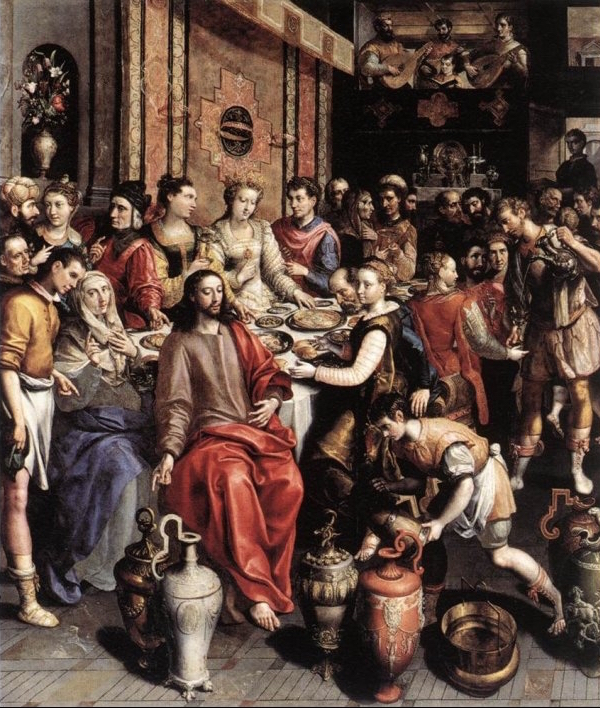
Marriage at Cana by Marten de Vos, 1597. Cathedral of Our Lady, Antwerp, Belgium.

Judging by the text and lamenting style of their opening choruses or opening arias, all cantatas for this Sunday (155, 3, and 13) are very sad at first glance. Which seems strange, since the reading for the day is the miracle of Jesus turning water into wine at the Marriage at Cana. So let’s dig a little deeper in the cantata for this Sunday that I love the most, Cantata 3 Ach Gott, wie manches Herzeleid, from 1725.

My favorite interpretation of this cantata the one by Bach Collegium Japan. The choir sopranos (including Dorothee Mields) sing a truly heavenly “zum Himmel” in the opening chorus,  bass soloist Peter Kooy does an excellent job in his on purpose difficult aria and doesn’t hold back in the chorale tune in the opening chorus, and last but not least: fabulous singing by soprano Dorothee Mields and counter-tenor Pascal Bertin in the duet.

Listen to Bach Collegium Japan’s recording of Cantata 3 on Spotify

If you can’t listen on Spotify or prefer not to, you can find Gardiner’s recording here on YouTube. Soprano: Joanne Lunn; Counter-tenor: Richard Wyn Roberts; Tenor: Julian Podger; Bass: Gerald Finley.

Find the text of Cantata 3 Ach Gott, wie manches Herzeleid here, and the score here.

Bach was not just a strong believer but also a self-taught theologian, and stated several times that his church music was intended for the glorification of God and to instruct his “neighbor.” On this day of the Marriage at Cana reading, he might have been compelled to illustrate the deeper meaning of the Bible story: earthly troubles can turn into heavenly bliss if you are patient and believe strongly enough that Jesus will lead you. So either he himself or his librettist decided not to mention the Bible story at all in the the text of this cantata.*

It is then not so strange anymore that in the music of this cantata Bach keeps, brilliantly, combining the struggle and the salvation in almost every part of the work.

The achingly beautiful opening chorus at first just sounds like a lament, but has some hidden messages which reveal the salvation. First, in the instrumental introduction,  there is an ascending (the way to salvation/heaven) line in the violins at the same time as there is a chromatic descending line (the struggle/affliction) in the oboes, illustrating the last two lines of the text of that chorus:

Der schmale Weg ist trübsalvoll, (The narrow way is full of affliction)
Den ich zum Himmel wandern soll. (by which I must travel to heaven.)

Click here to see that visualized by Thomas Braatz on the Bach Cantatas website.

While the Leipzig congregation might have missed this first hidden message, they would have gotten the second: the text communicated through the well-known chorale tune. The same way my Dutch calvinist great-grandmother had all the verses of all the Psalm texts memorized, the Lutherans in Bach’s time knew all their chorales and would immediately think of the text when hearing the tune. For this opening chorus, Bach chose the tune of O Jesu Christ mein’s Lebens Licht, so there was some glorification of Jesus right there amidst the lamentation:

O Jesu Christ mein’s Lebens Licht
Mein Hort, mein Trost, mein Zuversicht
Auf Erden bin ich nur ein Gast
Und drückt mich sehr der Sünden Last
.

O Jesus Christ, light of my life,
my refuge, my comfort, my reassurance,
on earth I am only a guest

And the burden of sin presses down heavily upon me.

And to make this stand out, Bach uses his “pay attention!” trick again, letting this chorale melody appear in a for him very unusual place: the vocal bass line. To emphasize it, he doubles it with a trombone (which is probably also the reason why this cantata is almost never performed today, because who is going to hire an expensive trombonist just to play along with the choir in one part of the cantata?).

In the other outstanding part of this cantata, the soprano/alto duet, this is all reversed: the music sounds absolutely happy, but if you look at the score, you see a visual illustration of the text in the middle section:  Mein Kreuz hilft Jesus tragen (Jesus helps to bear my cross). When the oboe line goes up, the continuo line goes down, and when one vocal line goes up, the other vocal line goes down. On top of that, there are four sharps in the key signature (in Bach’s manuscript this would look like four crosses and a sharp is also called a “cross” in German). We know from other works that hidden messages like this are not a coincidence in Bach’s writing.

Wieneke Gorter, January 16, 2016.  Links updated January 10, 2018 and January 31, 2020.

*Seen in the context of the chorale cantata series of 1724/1725, this is not unusual at all. On Several occasions before this Sunday in 1725, Bach had decided to focus more on the text of the chorale he had chosen for the cantata than on the Gospel reading for that day. See for example my post about December 31, 1724 and January 1, 1725.


Newer posts →

Recent Posts

  • “Missa Miniatura” by CONTINUUM/Elina Albach Even More Moving in 2025
  • Bachfest Leipzig 2025
  • Bach Cantatas for Christmas – 1724 and 1734 editions
  • Fourth Sunday of Advent – more insight into Cantata 62 helped me better understand Bach’s Christmas Oratorio
  • Saint Ambrose and Luther in Milan – Second Sunday of Advent

Archives

  • August 2025
  • July 2025
  • December 2024
  • November 2024
  • June 2024
  • January 2024
  • December 2023
  • October 2023
  • September 2023
  • August 2023
  • April 2022
  • February 2022
  • January 2022
  • December 2021
  • November 2021
  • June 2021
  • May 2021
  • April 2021
  • February 2021
  • January 2021
  • December 2020
  • November 2020
  • October 2020
  • September 2020
  • August 2020
  • July 2020
  • May 2020
  • April 2020
  • March 2020
  • February 2020
  • January 2020
  • December 2019
  • November 2019
  • May 2018
  • April 2018
  • March 2018
  • February 2018
  • January 2018
  • December 2017
  • November 2017
  • October 2017
  • September 2017
  • August 2017
  • July 2017
  • June 2017
  • May 2017
  • April 2017
  • March 2017
  • February 2017
  • January 2017
  • December 2016
  • November 2016
  • October 2016
  • September 2016
  • August 2016
  • July 2016
  • June 2016
  • May 2016
  • April 2016
  • March 2016
  • February 2016
  • January 2016

Enter your email address to follow this blog and receive notifications of new posts by email.

Join 338 other subscribers

Categories

  • 1723 Trinity season special series
  • Advent
  • After Easter
  • Ascension
  • Bach's life
  • Cantatas
  • Chorale cantatas 1724/1725
  • Christmas
  • Easter
  • Epiphany
  • Following Bach in 1725
  • Köthen
  • Leipzig
  • Septuagesima
  • Travel
  • Trinity
  • Weimar

Meta

  • Create account
  • Log in
  • Entries feed
  • Comments feed
  • WordPress.com

Website Built with WordPress.com.

  • Subscribe Subscribed
    • Weekly Cantata
    • Join 158 other subscribers
    • Already have a WordPress.com account? Log in now.
    • Weekly Cantata
    • Subscribe Subscribed
    • Sign up
    • Log in
    • Report this content
    • View site in Reader
    • Manage subscriptions
    • Collapse this bar
 

Loading Comments...