Weekly Cantata

Weekly Cantata

Category Archives: Weimar

The Annunciation of Mary, March 25

25 Saturday Mar 2017

Posted by cantatasonmymind in Cantatas, Leipzig, Weimar

≈ Leave a comment

Tags

Annunciation, Bach, cantatas, Hanneke van Proosdij, Leipzig, Lent, Luther, Montreal Baroque, Palm Sunday, Rachel Podger, Voices of Music, Weimar

botticelli2c_annunciazione_di_cestello_02

The Annunciation, aka The Cestello Annunciation, 1489, by Botticelli. Uffizi Gallery, Florence, Italy.

In 1714, Palm Sunday fell on the same day as the Annunciation of Mary, March 25. The Annunciation was one of the three Marian feast days Luther kept on the calendar (the other two being the Purification of Mary, February 2, and the Visitation of Mary, July 2).

Thus it happened that in that year, in Weimar, Bach wrote a cantata that is mostly a Palm Sunday cantata, but can also work for the feast of the Annunciation, since that also celebrates the coming of Christ. I squeezed this cantata 182 Himmelskönig, sei willkommen into my post about Bach in Weimar I wrote last year. As I mentioned there, the cantata was repeated a few times in Leipzig, but never on Palm Sunday, as the Leipzig rules dictated that no music was performed during the period of Lent (the 40 days before Easter).

However, the Leipzig council made an exception for the Annunciation, so in 1724 Bach could perform this cantata during Lent, eight days before Palm Sunday, on Saturday March 25. As so often on holidays, there were two cantatas this day, one before the sermon, and one after. The other, newly written, piece for Saturday March 25, 1724, was more literally about the Annunciation: Siehe, eine Jungfrau ist schwanger (Behold, a Virgin is pregnant). The text of this cantata survived, and can be found here, but unfortunately the music is lost.

I still recommend the recording of cantata 182 by Montreal Baroque, but since I wrote my post last year, a terrific live video of the Sonata (instrumental opening) of this cantata has come out on the YouTube channel of Voices of Music, with two fabulous soloists: Hanneke van Proosdij on recorder and Rachel Podger on violin, so I would love to share that here as well. You can find that video here.

Find the text of cantata 182 here, and the score here.

Wieneke Gorter, March 24, 2017.

Mary’s lament

14 Saturday Jan 2017

Posted by cantatasonmymind in Cantatas, Epiphany, Weimar

≈ Leave a comment

Tags

Bach, Bachstiftung, BWV 155, BWV 3, Charles Daniels, Epiphany, Epiphany 2, Harry van der Kamp, Julius Pfeifer, Lamento della Ninfa, Luther, Margot Oitzinger, Mary, Monika Mauch, Monteverdi, Montreal Baroque, Nuria Rial, Raphael Jud, Rudolf Lutz, Wedding at Cana, Weimar

marriage_cana_david
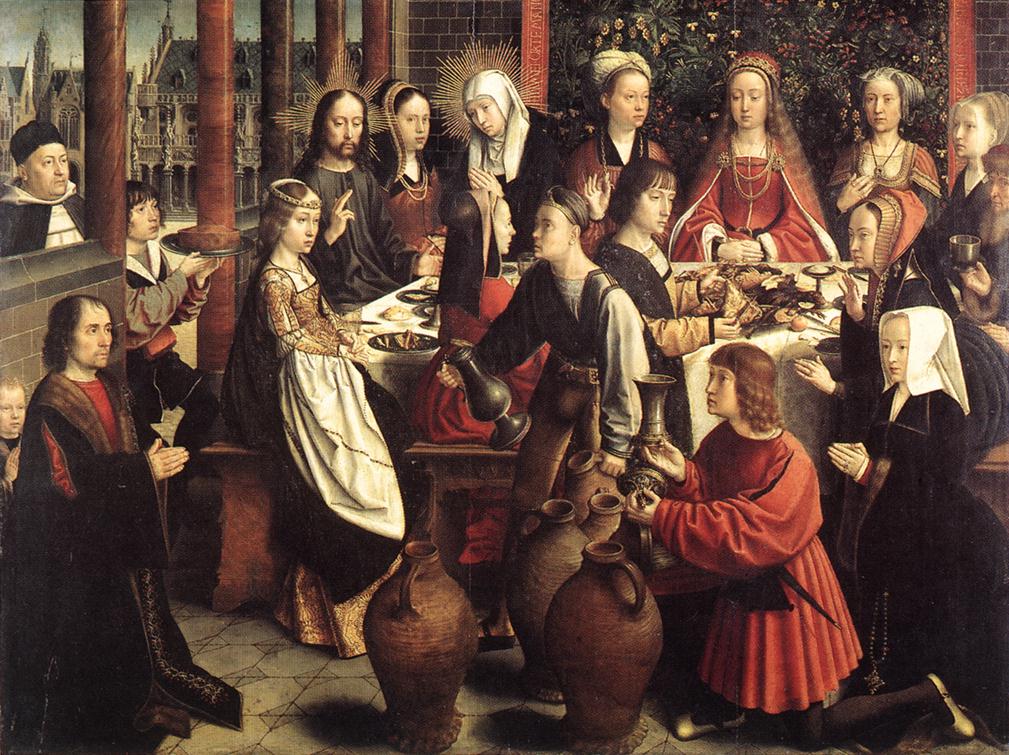
The Marriage at Cana, c. 1500, by Gérard David. Musée du Louvre, Paris. Mary pleads and worries, but Jesus says: “Woman, what have I to do with thee? Mine hour is not yet come.”

This week, I watched a very good video by the Swiss Bach Foundation (Bachstiftung) about today’s cantata 155 Mein Gott, wie lang, ach lange? I found it very insightful, helpful, and even entertaining, but was struck by its Calvinist character and was a bit disappointed by the director’s statement that he doesn’t know why this cantata starts with a movement for solo soprano. When reading Gardiner’s and Van Hengel’s discussions of this cantata, I liked their suggestions that the soprano lament refers to  Mary’s role in the Bible story of this Sunday, the Marriage at Cana. It made sense to me. This cantata, from 1715 and repeated in 1724, contains references to the wine as well as to the fact that Jesus says to his mother: “my time has not come yet.”

While the Lutheran church in Bach’s time did not regard Mary as a saint, let alone a mediator between God and the people, she was still an important person in the faith, and thus probably also for Bach. The three Marian feast days*  Luther kept on the calendar were important holidays and Bach wrote cantatas for all of them. Also, Bach wrote this cantata 155 in his Weimar years, when he explored a large number of works by (Catholic) Italian composers.

Listen to Montreal Baroque’s recording of cantata 155 on YouTube through a playlist I created. With Monika Mauch, soprano; Franziska Gottwald, alto; Charles Daniels, tenor; Harry van der Kamp, bass; Anna Marsh, bassoon. If you prefer to watch a live recording, you can find the live performance by the J.S. Bach Foundation here, with Julia Neumann, soprano; Margot Oitzinger, alto; Julius Pfeifer, tenor; and Raphael Jud, bass.

Read the German text with English translation of this cantata here, and find the score here.

The cantata is not so much a musical play with the soprano taking the role of Mary, but more a reference to her role in the Gospel story and an exploration of that theme: try to trust that everything will be okay in the end, try to not be in control all the time. The first movement has the character of a lament in music and text, you can picture the hand-wringing, the desperation. There is also the steady pedal point in the bass, similar to what Bach will use later in the opening chorus of the St. Matthew Passion.

However it is the second movement, not even sung by the soprano, and with text that is trying to urge her to “let go,” that secretly is the true lament, in the music that is. To hear or see this, the video by the Swiss Bach Foundation is terrific. Rudolf Lutz explains extremely well (with music examples) how the notes of the solo bassoon part form in fact a lament for three voices. This video has English subtitles. watch from 12:10  By the way: the composition I had to think of when hearing the “lamento bass” was Monteverdi’s  Lamento della Ninfa

If you would like to explore other cantatas for this second Sunday after Epiphany, I invite you to read my post about cantata 3 from 1725 here. It is all about hidden messages in the music of a an extremely beautiful composition with an equally heart wrenching—but completely different—opening movement as this cantata 155.

Wieneke Gorter, January 14, 2017, links updated January 31, 2020. Link for the score updated January 16, 2021, link for the J.S. Bach Foundation video with English subtitles updated January 15, 2022.

*The Purification of Mary on February 2, The Annunciaton of Mary on March 25, and the Visitation of Mary on July 2.

Another boy soprano hero: Sebastian Hennig

17 Saturday Dec 2016

Posted by cantatasonmymind in Advent, Cantatas, Weimar

≈ Leave a comment

Tags

Advent, Advent 4, Bach, BWV 132, Gustav Leonhardt, Max van Egmond, Sebastian Hennig, Weimar

hennig-sebastian-1boy

Sebastian Hennig

I remember some of the cantatas my mother played on the turntable in our house more vividly than others. One of those is cantata 132 Bereitet die Wege, bereitet die Bahn!, written for the fourth Sunday of Advent in Weimar in 1715.

To understand this, it helps to know how the Christmas season was celebrated  in our house in The Netherlands in the early 80s. Christmas didn’t feature in store windows or on television until after St. Nicholas (December 5). We would not have a Christmas tree in our house until December 16. And while at school we would sing Christmas carols in the last week before the break and have a “Christmas breakfast” on the last Friday, at home we would not have any real Christmas music, including Bach’s Christmas Oratorio until Christmas Day (more about this next week). Until then it was Advent cantatas only as far as Bach’s music was concerned. And since my mother was also a fan of Sebastian Hennig, the soprano soloist in the 1983 Leonhardt recording of cantata 132, she probably played this cantata pretty frequently in the last week before Christmas.

(for other boy sopranos from the Leonhardt/Harnoncourt recordings my mother admired, see my posts about Seppi Kronwitter in cantata 61, Peter Jelosits in cantata 44 and Peter Jelosits in cantata 59)

Listen to the Leonhardt recording of cantata 132 Bereitet die Wege, bereitet die Bahn! on Youtube.

Find the text here, and the score here.

As a child, I was very impressed by the soprano aria at the start of this cantata too, but I also vividly remember the “Wer bist du” words in the bass aria, sung by Max van Egmond on this Leonhardt recording. Except for perhaps the tenor aria, their recording of this cantata is unrivaled as far as I’m concerned.

If you like to watch a live performance of this (including some more wonderful playing by Shunske Sato in the alto aria),  there is a wonderful live video performance of this cantata by the Netherlands Bach Society available here on YouTube. Soloists are Julia Doyle, soprano; Tim Mead, alto; Jan Kobow, tenor; and Dominik Wörner, bass.

If you have more time and would like to learn more about this cantata, I can highly recommend that you also watch the “background” videos that go with this Netherlands Bach Society recording, presented as interviews, in this order: conductor Alfredo Bernardini, soprano Julia Doyle, and bass Dominik Wörner.

Wieneke Gorter, December 17, 2016, updated with new YouTube links December 19, 2019.

Third Sunday in Advent: Two adorable infants and a reconstruction of cantata 186a

10 Saturday Dec 2016

Posted by cantatasonmymind in Advent, Cantatas, Weimar

≈ Leave a comment

Tags

Advent, Advent 3, Bach, BWV 186, BWV 186a, cantatas, chorales, Collegium Vocale Gent, Miah Persson, Peter Kooy, Phlippe Herreweghe, reconstruction, Robin Blaze, Weimar

madonna_meadow

Madonna with the Christ Child and St. John the Baptist, also known as Madonna of the Meadow, by Raphael, 1506. Kunsthistorisches Museum, Vienna.

For those of you who already saw this on the third Sunday of Advent 2016: please keep reading, because I considerably revised this post, clarifying the information about the reconstruction and including one more painting 🙂

Growing up, I had a cousin. She was almost exactly six  months older than me. My baby photo album holds several pictures of the two of us together, me a helpless baby, her an infant who could already sit up by herself. I’m always touched by those photos. Not just because they make me think of the cousin I lost when we were both 19, but also because they represent how fast a baby grows up, and how soon the “older” baby can be of help and entertainment for the younger one, and how adorable it is to see that.

Many painters were aware of this cuteness factor too. Especially in the Renaissance, the concept of a one-year-old John playing with or helping a six-month-old Jesus in Madonna and Child paintings became an extremely popular subject, starting with  Leonardo da Vinci. Raphael in particular painted several variations on this theme, including the Alba Madonna, La belle jardinière, Aldobrandini Madonna, Madonna della seggiola, and the Madonna dell’Impannata. The tradition continued well into the 17th century, see this beautiful example from 1658 by Francisco de Zurbarán in the San Diego Museum of Art:
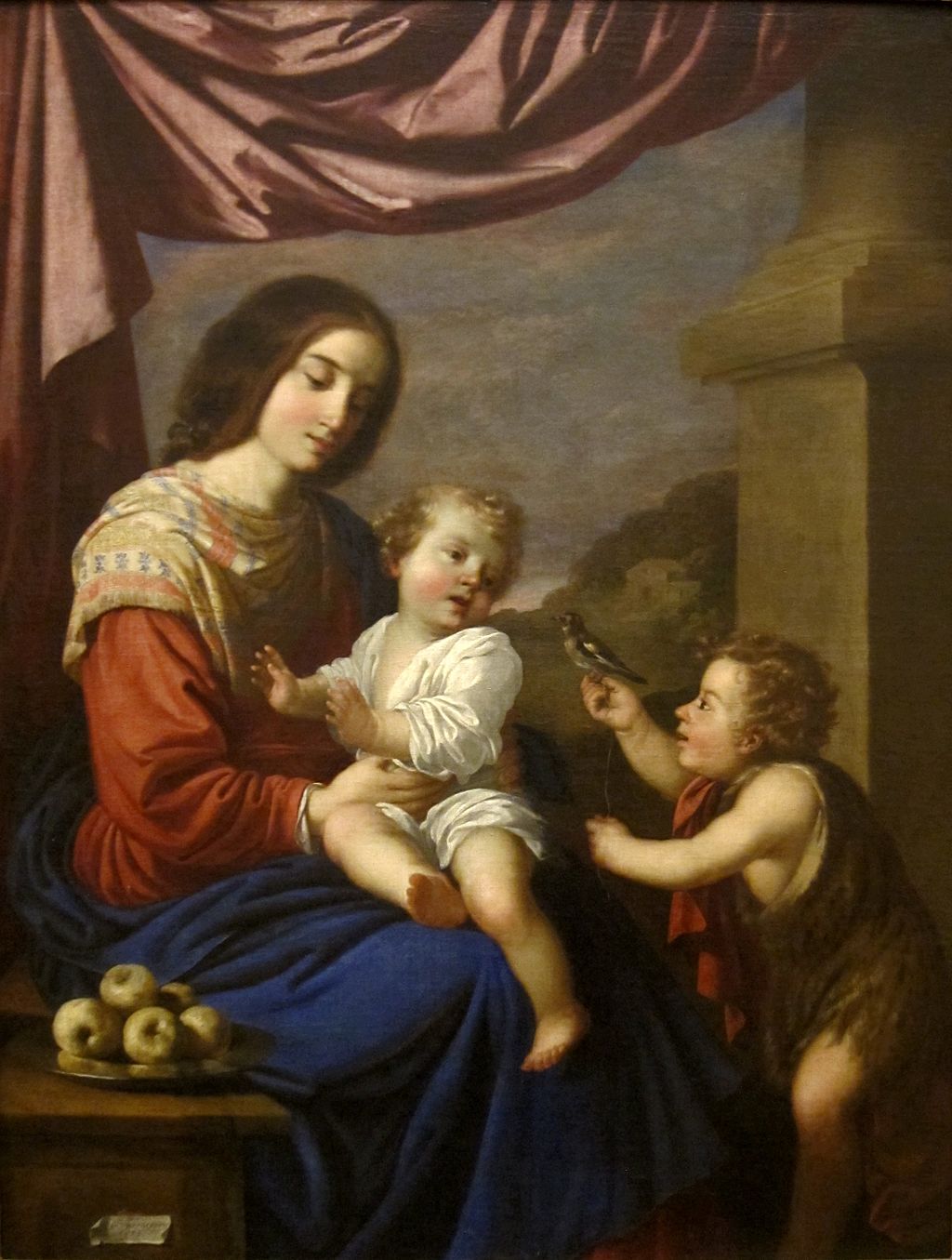
Zurbaran_Madonna_and_Child

Why is all this relevant to Advent? Well, on this third Sunday of Advent, many Christian churches read about John the Baptist, as they believe John was Jesus’ forerunner. Because of a mention in the Gospel of Luke, the Catholic church in the very early Middle Ages determined that St. John’s birthday must have been exactly six months before Christmas — and decided to celebrate this on June 24th.*  You can read more about this in my post about the Feast of St. John.

As far as we know, Bach wrote only one cantata for this Sunday, the third Sunday of Advent. It is the one listed in the BWV catalog as Cantata 186a, Ärgre dich, o Seele, nicht, first performed in Weimar on Sunday December 13, 1716. No original music score is left of this cantata. However, thanks to Bach’s librettist, Weimar court poet Salomo Franck, who published the full libretto for this cantata in a poetry volume in 1717, we do have the original text of 186a.

And, it is not hard to make an educated guess as to what the music would have been.

On July 9, 1723, for the 7th Sunday after Trinity in Leipzig, Bach expanded the music of the 1716 Weimar cantata with four additional recitatives and two chorales (per his usual template for reviving Weimar cantatas for Leipzig), and we do have that music: it is Cantata 186, also with the title Ärgre dich, o Seele, nicht.**

To reconstruct the original 1716 Weimar Advent version, or Cantata 186a, one would have to eliminate all the recitatives Bach added in 1723 as well as both chorales, superimpose different texts on some of the arias, and select alternative music for the original closing chorale. There have been a few performances of these kind of reconstructions, but unfortunately there are no recordings of those.

So I invite you listen to Bach Collegium Japan playing this music via my playlist on Spotify. To imagine the original texts superimposed over this music, and learn why I selected this particular closing chorale, please keep reading.

Opening chorus: This has the same text in 1716 as in 1723. We should imagine a smaller ensemble singing this though, as the maximum number of singers in the Weimar chapel was 7. This opening chorus is again a beautiful example of how Bach provides an “entrada” for the Duke as well as an opportunity for himself to show off his skills with the “fashionable” music, the way he almost always did in the Weimar cantatas.***

Ärgre dich, o Seele, nicht,
Daß das allerhöchste Licht,
Gottes Glanz und Ebenbild,
Sich in Knechtsgestalt verhüllt,
Ärgre dich, o Seele, nicht!
Do not be confounded, o soul,
because the all-highest light,
God’s radiance and very image,
is concealed in the form of a servant;
do not be confounded!

For the Bass aria, imagine this Advent text instead of the Trinity 7 text you hear (changes in bold type):

Bist du, der da kommen soll,
Seelen-Freund, in Kirchen-Garten?
Mein Gemüt ist Zweifels-voll,
Soll ich eines andern warten!
Doch, o Seele, zweifle nicht.
Lass Vernunft dich nicht verstricken,
Deinen Schilo, Jacobs Licht,
Kannst du in der Schrift erblicken!
Are You He, who should come,
Friend of souls, to the Church’s garden?
My spirit is full of doubt,
perhaps I should wait for someone else!
Yet, o soul, do not doubt.
Do not let reason beguile you.
Your Messiah, Jacob’s light,
is visible to you in the scripture.(translation of original text by me, unchanged words courtesy of bach-cantatas.com website)

For the Tenor aria,  imagine this Advent text instead of the Trinity 7 text you hear (changes in bold type):

Messias läßt sich merken
Aus seinen Gnaden-Werken.
Unreine werden rein.
Die geistlich Lahme gehen,
Die geistlich Blinde sehen
Den hellen Gnaden Schein.
The Messiah lets Himself be seen
in His works of grace.
The impure become purified.
Those lame of spirit will walk,
Those blind of spirit will see
the clear brilliance of the mercy.(translation of original text by me, unchanged words courtesy of bach-cantatas.com website)

There is only one word change in the Soprano aria: In the last line the 1716 text is “des Lebens Wort” instead of “das Lebenswort” from 1723.

Die Armen will der Herr umarmen
The Lord will embrace the poor
Mit Gnaden hier und dort;
With his mercy here and there;
Er schenket ihnen aus Erbarmen
Out of his compassion he sends to them
Den höchsten Schatz, das Lebenswort.
His greatest treasure, the word of life.

Enjoy Miah Persson’s beautiful voice and interpretation. If you would like to hear and more about her, read my post about cantata 179. Cantata 179 appears on the same album by Bach Collegium Japan as this cantata 186.

Soprano-alto duet: This is the original text from 1716, unchanged in 1723. The text promises the believer the crown (die Krone) of the everlasting life, but only if he stays faithful (getreu) and only in the afterlife, when free of the body (wenn des Leibes frei).

Laß, Seele, kein Leiden
My soul, let no sorrow
Von Jesu dich scheiden,
Separate you from Jesus
Sei, Seele, getreu!
Be faithful, my soul!
Dir bleibet die Krone
The Crown weight you
Aus Gnaden zu Lohne,
Is your reward through grace
Wenn du von Banden des Leibes nun frei.
When you will be free from the body’s prison.

In Weimar in 1716, for the closing chorale Bach used the 8th verse of Von Gott will ich nicht lassen from 1563, based on the French tune Une jeune fillette from 1557. Since this is not the same melody as Es ist das Heil uns kommen her Bach used in 1723 it is very plausible that both chorales from the 1723 version are new, in text as well as in music. So in an effort to reconstruct the 1716 version,  we need to think of a different solution for the music than the tune from 1723. A good fit would be a simple setting of the Von Gott will ich nicht lassen chorale, the way Bach would set for example verse 5 of this chorale as closing movement of cantata 73 in 1723 or 1724. So that’s why, for now, I’ve included that music (from a Herreweghe recording) in the Spotify playlist. The text would be this:

Darum ob ich schon dulde
Hie Wiederwärtigkeit,
wie ich auch wohl verschulde,
kommt doch die Ewigkeit,
ist aller Freuden voll,
die ohne alles Ende,
dieweil ich Christum kenne,
mir widerfahren soll.
Therefore, even if I endure
unpleasantness here,
as I have well deserved,
eternity is coming
filled with all joy;
this for ever
will befall me
while I acknowledge Christ.

All translations of existing text and closing chorale courtesy of bach-cantatas.com website, translations of changed texts by me.

© Wieneke Gorter, December 10, 2016, revised December 15, 2017.

* Luke 1:36 (about the Annunciation) mentions that the angel Gabriel also informed Mary that her cousin Elizabeth was already six months pregnant. The June 24 date was most probably also chosen to give a Christian meaning to already existing Pagan Midsummer celebrations. The Feast of St. John being celebrated on June 24 shows up in records as early as the year 506.

**I discussed this 1723 version of the cantata here, and recommended the recording by Bach Collegium Japan with soprano Miah Persson, alto Robin Blaze, tenor Makoto Sakurada, and bass Peter Kooij.

***Read more about Bach’s Weimar cantatas in my posts about cantata 182, 12, 147, and 21

Many things to be proud of

26 Saturday Nov 2016

Posted by cantatasonmymind in Advent, Cantatas, Leipzig, Weimar

≈ 2 Comments

Tags

Advent, Bach, BWV 61, Christophe Pregardien, Eduard van Hengel, First Sunday of Advent, French ouverture, Harnoncourt, Leipzig, Luther, Nuria Rial, Peter Kooy, Seppi Kronwitter, Sybilla Rubens, Weimar

giotto-entry-into-jerusalem

The Entry into Jerusalem by Giotto, ca. 1305. Fresco in the Scrovengni Chapel, Padua, Italy.

Bach performed this cantata 61 Nun komm der Heiden Heiland in Leipzig on November 28, 1723, as a “rerun” of the first performance in Weimar in 1714. Why did he not write a new cantata? The prevailing scholarly answer is that Bach was giving himself a break from composing in between the three-week frenzy of cantatas 60, 90, and 70 and the new works (including a Magnificat) he was planning for the Christmas days.  I think Bach was proud of his Weimar cantatas, and I believe he wanted to show off the special features in this cantata to his colleagues and to the thousands of Lutherans that he knew would flock to the Leipzig churches on holidays.

I myself am proud of having followed Bach’s cantata writing of 1723 every week for the entire Trinity season. After all this listening and reading, I see a pattern in Bach reviving some of his Weimar cantatas on Leipzig feast days*, and I now look at cantata 61 Nun komm der Heiden Heiland in a new way.

This cantata had already been in my top five because of the moving interpretation of the soprano aria by Seppi Kronwitter (soprano) and Nikolaus Harnoncourt (cello) on the Harnoncourt recording from 1976. My mother loved this aria and played this recording many times, and I have fond memories of listening to it with her.

Harnoncourt-cello

I had always found the bass recitative that precedes it very charming, with the musical illustration of the knocking on the door, but not more than that.  I had seen this recitative in the context of all the Bach cantatas and passions that I knew, and had compared it with other typical Bach “Vox Christi” writing for bass. But those were all written after November 28, 1723.  So now, after having tried to place myself in the shoes of the Leipzig congregations for the entire 1723 Trinity season, I am fully aware that they had not heard a “Vox Christi” at all in any of the cantatas leading up to this one.** And thus I finally realize how it must not have been charming, but truly moving to them to hear this announcement presented in this way, on the first Sunday they started looking forward to the birth of Christ.

In the text of the recitative, Jesus says: “See, I am in front of your door! I’m knocking!” The librettist means the door of the believer’s heart, in which he’s planning to live. The pizzicato in the strings, as well as the staccato and the intervals in the voice part illustrate the knocking, and the dissonances at the beginning only resolve until the final “klopfe an.” The form of this recitative is highly unusual, and perhaps also something Bach wanted to show off in Leipzig.

However Bach’s greatest source of pride was probably the opening chorus of this cantata. To understand this, we need to do a mini music history class. First, in the 4th century, Ambrosius created the hymn Veni Redemptor Gentium, beautifully sung here on this video by Giovanni Vianini, director of the Schola Gregoriana Mediolanensis in Milan, Italy. Then, in 1524, Luther turned that hymn into Nun komm der Heiden Heiland, which sounds like this and which all Lutherans in Bach’s time knew very well.

In Weimar Bach had come into contact with French and Italian court music, and had adopted the habit of writing almost every opening chorus or opening sinfonia of his cantatas as a royal “entrada,” to show off his skills in French ouverture writing as well as to please the Duke.

So now Bach needed/wanted to merge the timeless hymn with a fashionable French ouverture. And the result is stunning. Or, as Eduard van Hengel says: Bach wrote “brilliant fusion” at the age of 29. Listen to this in the recording by Philippe Herreweghe on YouTube (Sybilla Rubens, soprano; Christoph Prégardien, tenor; Peter Kooij, bass).

Find the German text with English translations here and the score here.

The first line of the hymn is sung one voice part at a time, an illustration of the Bible reading for this Sunday: the people greeting the messiah who is riding into Jerusalem. The second line is then sung as a simple four-part hymn, while the instrumental parts keep playing the first part of the ouverture. The third line becomes a mini motet in the fast and happy (“Gai”) middle part of the ouverture, in 3/4. 

The fourth line of text is then again a simple four-part setting on the third part of the ouverture.

For the closing chorale, Bach chose the last two lines of Wie schön leuchtet der Morgenstern as melody. And again he marries the chorale tune beautifully with the instrumental writing.

Wieneke Gorter, November 26, 2016, updated December 1, 2019.

*Read more about this in my post about the feast of St. John the Baptist on June 24, The Visitation on July 2, and last week’s post about cantata 70. Read how proud Bach was of his Weimar cantatas in this post about cantata 12.

** unless they had a really good memory, and were present at Bach’s “audition” in February 1723. There is a Vox Christi in Cantata 22 which he presented at that time, but didn’t repeat in Leipzig until that same time in the church year in 1724.

July 2: Feast of the Visitation

02 Saturday Jul 2016

Posted by cantatasonmymind in 1723 Trinity season special series, Cantatas, Leipzig, Trinity, Weimar

≈ Comments Off on July 2: Feast of the Visitation

Tags

according to Lutheran Church year, Bach, Bach Collegium Japan, cantatas, Gerd Türk, Peter Kooy, Robin Blaze

jacopo_pontormo_040
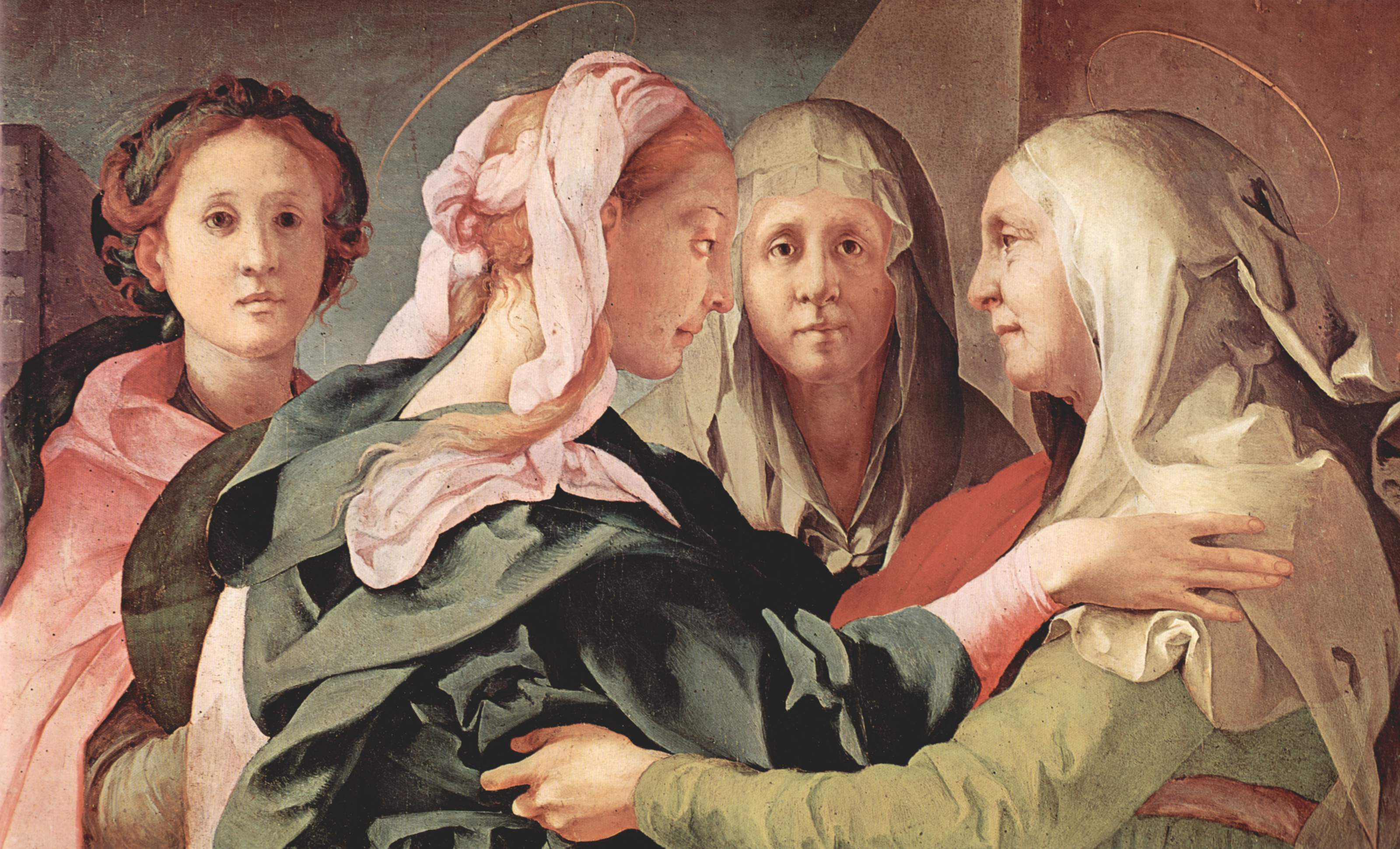
The Visitation, by Jacopo Pontormo, ca. 1528, at the Church of San Francesco e Michele, Carmignano, Italy.

On July 2, eight days after Johannis (St. John, the birthday of John the Baptist), the churches in Leipzig celebrated Mariä Heimsuchung (or Visitation of Mary, celebrating the story of a newly pregnant Mary going “back home” to visit her relative Elizabeth, who was six months further along, carrying John the Baptist). It is one of the few Marian feast days the Lutheran Church kept on their calendar, and which is still celebrated on July 2.*

For this holiday in 1723, Bach reworked a short Advent cantata from Weimar into a longer, two-part cantata, with a chorale at the end of each half. This cantata 147, Herz und Mund und Tat und Leben is a truly beautiful and memorable cantata, and for many more reasons than just the famous closing chorale Jesus bleibet meine Freude. What actually stands out the most for me is the incredible trumpet part in the opening chorus and the bass aria, and the beautiful violin accompaniment of the gorgeous soprano aria. All these movements are from the original Weimar composition, which contained only the arias,  the opening chorus, and a different closing chorale (we don’t know which one). For the Leipzig performance, Bach changed the order of the arias, added recitatives to reflect the Gospel reading of the story of the visitation and Mary’s praise to God (the Magnificat), and added a new closing chorale at the end of each half of the cantata.

I recommend the recording by Bach Collegium Japan of this cantata 147 Herz und Mund und Tat und Leben, with wonderful singing by soprano Yukari Nohoshita, countertenor Robin Blaze, tenor Gerd Türk, an excellent performance by bass Peter Kooy, and fabulous playing by Toshio Shimada (trumpet) and Ryo Terakado (violin). Listen to this recording on Spotify.

Support the artists and purchase this CD on Amazon.

If you don’t have access to Spotify, or would love to watch a live performance, I recommend the YouTube video by the J.S. Bach Foundation (Bach Stiftung), with with Hana Blažiková, soprano; Margot Oitzinger, alto; Jakob Pilgram, tenor; and Wolf Matthias Friedrich, bass.

Follow the German text with English translations here.

Continuing on the path of the wild hypothesis I made last week, that many of Bach’s colleagues and students would be in town for these two weeks of holidays, let’s now imagine that many of these visitors were playing in the orchestra for this week’s cantata, thus creating a situation where all orchestra seats were filled, and the musically gifted among the choir boys could actually sing in the choir. Of course I don’t know if this is what happened, and if Bach maybe even planned it this way, but I hope you’ll allow me this indulgence. (We do know from later letters that choir members often had to fill the many vacancies in the orchestra).

Several scholars have suggested that Bach recycled/reworked so many of his Weimar cantatas in the first months in Leipzig because he was overwhelmed. But what if he just really wanted to show off these Weimar cantatas to the Leipzig congregation? Especially the ones originally written for Advent, since he knew he would not be able to perform those in Leipzig at all. (No figural music was allowed during Advent in Leipzig). What if he hadn’t found a librettist yet in Leipzig who matched the talent of Weimar court poet Salomo Franck? What if he wanted to show off the talent and skills of his first trumpet player in Leipzig, the famous Gottfried Reiche, to all the visitors who were in town for this holiday? When we see cantata movements returning in the form of movements of his Lutheran Masses, his Mass in B minor, and repeat performances in Leipzig, we say “he must have been proud of that piece.” Well, when I hear the opening chorus and the arias of Herz und Mund und Tat und Leben, I can understand why the Duke in Weimar didn’t want to let Bach go. Those movements already composed in Weimar are exciting and deeply moving at the same time. Definitely something to be proud of.

We don’t know who the librettist of the new recitatives was, but he or she did a good Lutheran job of teaching the congregation that even though they were celebrating a Marian feast day, they should really not praise her too much, but praise Jesus instead. Bach did an even better job setting these recitatives to music. Listen to all the word painting in the bass recitative, and the musical illustration of the text Er wird bewegt, er hüpft und springet (he is moved, he leaps and jumps) in the alto recitative, describing how John moved in Elizabeth’s womb upon hearing Mary talk of Jesus. The other remarkable thing about this alto recitative is that it has an accompaniment by two oboi da caccia, as Bach would later use in his St. Matthew Passion.

Gottfried_reiche
Gottfried Reiche, principal trumpeter in Leipzig until 1734.

Wieneke Gorter, July 2, 2016.

*In 1969, the Catholic Church moved this day to May 31, after they realized that it is strange to celebrate a mother (Elizabeth) being pregnant after celebrating the birth of her son (John the Baptist), but the Lutheran Church has kept the feast day on July 2.

Trinity 4: Two cantatas make one

18 Saturday Jun 2016

Posted by cantatasonmymind in 1723 Trinity season special series, Cantatas, Leipzig, Trinity, Weimar

≈ Comments Off on Trinity 4: Two cantatas make one

Tags

according to Lutheran Church year, Bach Collegium Japan, Gerd Türk, John Eliot Gardiner, Kai Wessel, Klaus Mertens, Robin Blaze, Ton Koopman

Brueghel_the_Blind

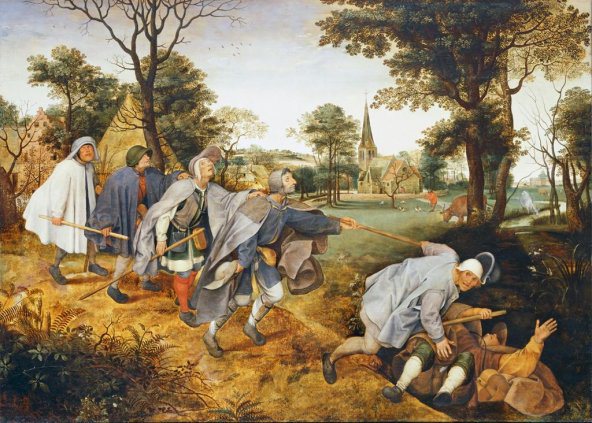
Pieter Brueghel the Elder: The Parable of the Blind Leading the Blind, 1568

Previously on Weekly Cantata: For his first three Sundays in Leipzig, Bach presented ambitious, two-part cantatas, the first part before the sermon, the second part after.  On this Trinity 4, June 20 1723, the congregation and the musicians in Leipzig may still have had the trumpets and timpani from the impressive closing chorus of last week’s Ich hatte viel Bekümmernis going through their heads.

Up until now, it seems to all have been part of a plan: Bach probably wrote his cantatas for Trinity 1 (cantata 75) and Trinity 2 (cantata 76) while still living in Köthen, and most likely had also been planning all along to perform cantata 21 on Trinity 3. *

But now what to do for Trinity 4? In his stack of Weimar cantata manuscripts there was a nice one, very closely referring to the Gospel for the day (Luke 6: 36-42), but it was too short, and not very impressively scored.

So, it was time to write a new cantata that could function as Part I, the part before the sermon, and then present the one from Weimar after the sermon, as part II. This newly composed piece became cantata 24 Ein ungefärbt Gemüte. Only four weeks into his new post at Leipzig,  and possibly up to his ears in getting things organized at the St. Thomas School, Bach had not had the time (or the social intelligence, we don’t know) to find a librettist, so for this cantata he used a pre-existing text by Erdmann Neumeister, a Leipzig-trained theologian, who was preaching at the St. Jacob church in Hamburg from 1715 to 1756. Bach may very well have met him there, since this was the same church where he applied for the post of cantor and organist in 1720. Neumeister’s many volumes of cantata texts were published in the early 1700s, and through the excellent library at the castle in Weimar Bach might have had access to these too, as he already used a Neumeister text for his Weimar Advent cantata 61 from 1714.

The recording of cantata 24 Ein ungefärbt Gemüte I like the best is Bach Collegium Japan’s recording, with beautiful singing by countertenor Robin Blaze and tenor Gerd Türk in the arias. Listen to this cantata on Spotify, or purchase the album on Amazon. Read the German texts with English translations here.

Though on a much smaller scale than cantata 75 from three weeks ago, this cantata 24 again displays a wonderful symmetry: Bach emphasizes that the main message “Everything that you want other people to do to you, you should do yourself for them” is at the center of the cantata text. He sets that part of the text to an intricate choral piece with the fullest instrumentation of the entire cantata, including trumpet, and scores the arias and recitatives around this main message much more soberly. In the two recitatives, Bach accentuates the words at the end of each by letting the music blossom out into an arioso in those spots. This happens on this text in the tenor recitative:

Mach aus dir selbst ein solches Bild (Make yourself such an image)
Wie du den Nächsten haben willt! (As you want your neighbour to have)

and in the bass recitative on these words:

So geht es dort, so geht es hier. (These things go on here, there and everywhere.)
Der liebe Gott behüte mich dafür! (That the dear God preserve me from this!)

Then comes Part Two, cantata 185 Barmherziges Herze der ewigen Liebe, written in Weimar in 1715. For this 1723 Leipzig re-creation of it, Bach transposed it from F sharp minor to G minor, since the tuning in Weimar was different than in Leipzig, and had a trumpet play the chorale tune in the opening duet, instead of an oboe.

Of all the recordings I listened to, only Gardiner brings to life the opening duet of this Leipzig version of cantata 185, with a trumpet playing instead of an oboe. Listen to a recording of that first movement by Gardiner, with soprano Magdalena Kozena and tenor Paul Agnew, on YouTube. However, for the wonderful alto rectitative and aria that come next, as well as the bass recitative and aria, I feel the need to switch to Koopman’s recording, with countertenor Kai Wessel and bass Klaus Mertens. Listen to this recording on YouTube, starting with the alto recitative (when you click on this link, it starts at 4m1s into the cantata).

I am too much of a countertenor lover to pass up this heavenly singing by Kai Wessel for Nathalie Stutzmann on the Gardiner recording, but I realize others might prefer it the other way around. I’m also not completely convinced by Gardiner’s argument that Bach is imitating an irritating Weimar preacher in the bass recitative and aria, so while Gardiner’s bass soloist Nicolas Testé very skillfully portrays this interpretation, it is a bit overdone to my taste.

So why not listen to the entire Koopman recording of this cantata?  Well, there’s the strange opening duet: Koopman makes the surprising choice to have the choir sopranos sing the chorale melody with text instead of having an oboe (per the Weimar version) or a trumpet (per the Leipzig version) play that part. This decision is not explained in their liner notes. And while I like soprano Barbara Schlick’s and tenor Guy de Mey’s individual voices, I feel that Schlick’s voice outbalances De Mey’s on this recording.

One wonders: was the new job as teacher at the St. Thomas School and director of the choir a bit overwhelming for Bach, or was he by this time already getting frustrated with the lack of skill and talent among the choir boys? A few years later, he would complain to the council that there weren’t enough strong voices, and that he needed the good instrumentalists among them to fill the many vacant seats in the orchestra, and could thus not use them in the choir. It is interesting to see how, after the many challenging choral pieces in cantata 21 last week, there is only one polyphonic chorus part in the  combined cantatas for today, and only an embellished chorale in the cantata for the feast of St. John the Baptist Bach was preparing for June 24.

Wieneke Gorter, June 18, 2016

*Please note: the numbers we use now for these cantatas are a product of the 19th and 20th century. Bach never gave his compositions numbers, and he must have referred to the cantatas by title only.

Trinity 3: from Weimar, with love

12 Sunday Jun 2016

Posted by cantatasonmymind in 1723 Trinity season special series, Cantatas, Leipzig, Trinity, Weimar

≈ Comments Off on Trinity 3: from Weimar, with love

Tags

according to Lutheran Church year, Alfred Dürr, Bach, Bach Collegium Japan, Barbara Schlick, cantatas, Christoph Wolff, Collegium Vocale Gent, Lutheran Church year, Masaaki Suzuki, Monika Frimmer, Peter Kooy, Phlippe Herreweghe, Rachel Podger, Vivaldi

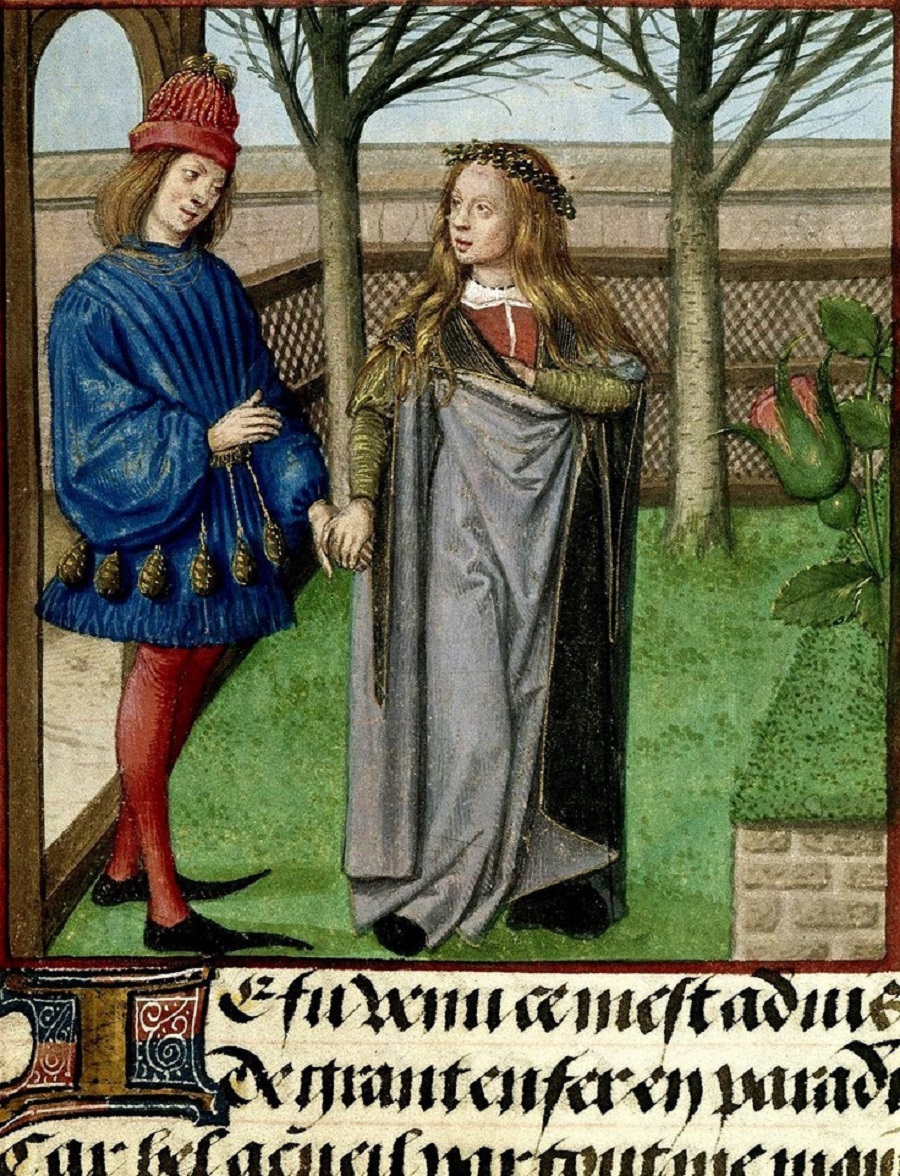
Roman de la Rose, Netherlands (Bruges), c. 1490-c. 1500

Only three episodes into this special 1723 Leipzig Trinity season series,  I’m already taking a detour to Weimar. It’s Bach’s fault, because, after the two newly written cantatas he presented on May 30 and June 6, 1723, he “recycled” his Weimar cantata for this third Sunday after Trinity: cantata 21 Ich hatte viel Bekümmernis, written in 1714, or possibly in 1713.

We dont’ know for sure why Bach chose to use an “old” composition this early in his first season (though probably nobody except his own family knew it was not new), but  I think that he couldn’t wait to impress the Leipzig Council and congregation with a composition that was one of his all-time favorites. He had written and performed it at least twice in Weimar, then presented it in Hamburg or Köthen in 1720* and would perform it many more times in Leipzig on future third Sundays after Trinity. Another reason I believe  it was Bach’s plan all along to present this cantata 21 on Trinity 3 in Leipzig: it seems to me that when writing the masterful fugue in the opening chorus of cantata 76, Bach must have had the fugue in no. 6 of cantata 21 on his mind.

Whether it was thanks to the multiple performances during Bach’s lifetime, or to Mattheson mentioning it (however unfavorably!) in his writings, cantata 21 was known among Bach’s colleagues and students throughout the 18th and 19th centuries, and is still one of the most well-known and most frequently performed cantatas today.

Instead of talking about the music, I would like to shine some light on the history of this cantata, and show you that it was not a stand-alone masterpiece that Bach created out of nothing. Most of the findings here below are from  books by Alfred Dürr and Christoph Wolff.

There are parts of this cantata that fit extremely well within the style of the 1714 Weimar cantatas. To hear cantata 21 in this context, if you have time, before you listen to the sinfonia (no. 1) of cantata 21, I invite you to first listen to the sinfonia of cantata 12. They are remarkably similar. Next, just for the fun of it, you might want to listen to the “love” duet from Weimar Pentecost cantata 172 (beautifully sung by soprano Dorothee Mields and countertenor Alex Potter during a streamed concert from 2021)

 Soprano (Soul)

Komm, laß mich nicht länger warten,
Come , let me wait no longer,
Komm, du sanfter Himmelswind,
come, you gentle wind of heaven,
Wehe durch den Herzensgarten!
blow through the garden of my heart

 Alto (Holy Spirit)

Ich erquicke dich, mein Kind.
I refresh you, my child

Liebste Liebe, die so süße,
Dearest love, who are so delightful,
Aller Wollust Überfluß,
abundance of all joys,
Ich vergeh, wenn ich dich misse.
I shall die, if I have to be without you

Nimm von mir den Gnadenkuß.
Take from me the kiss of grace.

Sei im Glauben mir willkommen,
Welcome in faith to me,
Höchste Liebe, komm herein!
Highest love, come within!
Du hast mir das Herz genommen.
You have taken my heart from me

Ich bin dein, und du bist mein!
I am yours, and you are mine!

and compare it to the “love” duet from cantata 21:

Soprano (Soul):

Komm, mein Jesu, und erquicke,

Bass (Jesus):

Ja, ich komme und erquicke

Come, my Jesus, and restore

Yes, I come and restore

Und erfreu mit deinem Blicke.

Dich mit meinem Gnadenblicker,

and rejoice with your look

you with my look of grace

Diese Seele,

Deine Seele,

This soul

Your soul

 Die soll sterben,

 Die soll leben,

that must die

that must live

Und nicht leben

 Und nicht sterben

and not live

and not die

 Und in ihrer Unglückshöhle

Hier aus dieser wunden Höhle

and in its den of misfortune

here from this den of wounds

Ganz verderben.

Sollst du erben

wholly perish.

 you shall be given

 Ich muß stets in Kummer schweben,

Heil! durch diesen Saft der Reben,

I must always be suspended in misery

Salvation! throught this juice of the grape

Ja, ach ja, ich bin verloren!

Nein, ach nein, du bist erkoren!

Yes, oh, yes, I am lost

No,oh, no, you are chosen

 Nein, ach nein, du hassest mich!

Ja, ach ja, ich liebe dich!

No, ah, no, you hate me!

Yes, oh, yes,I love you!

 Ach, Jesu, durchsüße mir Seele und Herze,

Entweichet, ihr Sorgen, verschwinde, du Schmerze!

Jesus, sweeten my soul and heart.

Give way, worries, vanish, pain!

Komm, mein Jesus, und erquicke

Ja, ich komme und erquicke

Come, Jesus, and restore

Yes, I come and restore

Mit deinem Gnadenblicke!

Dich mit meinem Gnadenblicke

 with your look of grace

 you with my look of grace.

Of course none of these are officially  meant to speak of earthly love. But still, both these duets are extremely cute, musically completely similar to opera love duets from that time, and their texts could at least partly be interpreted as such love duets, so I can imagine the Weimar poet and the young Bach must have enjoyed writing these.

To really appreciate “the making of” the opening chorus (no. 2) of cantata 21, it’s worth listening to a magnificent Vivialdi violin concerto and one of Bach’s lesser known organ prelude and fugues, to hear where Bach found the theme for the Ich hatte viel Bekümmernis fugue:

In the spring of 1713, the half-brother of Bach’s employer in Weimar, prince Johann Ernst, “a great lover of music and an incomparable violinist” (according to a testimony by Philipp David Kräuter, a student of Bach in Weimar) went on a study trip, and spent a long time in the Netherlands. Upon his return, he had brought “much fine Italian and French” music with him. One of the pieces was Vivaldi’s Concerto in D minor Opus 3, no. 11  for two violins from Book II of L’Estro armonico (RV 565), published in Amsterdam in 1711.

Listen to this Vivaldi concerto in the award-winning interpretation by the fabulous Rachel Podger with Brecon Baroque on Spotify, or on YouTube

Maybe Bach, an accomplished violinist himself, and the prince played this together after the prince returned in July 1713. Bach rewrote this Vivaldi concerto into an organ concerto (BWV 596), but also used the theme in his organ prelude and fugue in B minor, BWV 544,  written in Weimar as well.  It is in this piece in particular that I can hear the relation with cantata 21 Dürr wants to point out in his book.

About recordings of cantata 21: While Bach Collegium Japan deserves a medal for  taking the trouble to research all the different versions and record the ones from 1720 and 1714 on their volume 6 , and the true 1723 Leipzig version (with trombones added in no. 9 and solo/tutti distinctions in the choruses) on their volume 12, I still like Herreweghe’s recording of this cantata the best, mainly because of the strong, crisp choruses and the music always having long lines and strong sense of direction. Listen to Herreweghe’s interpretation of  this cantata on Spotify or on YouTube.

Update from 2021: find an absolutely stunning performance of the 1720 version (with only soprano and bass soloists) on the YouTube channel of the J.S. Bach Foundation here.

Read the German text with English translations of cantata 21 here, and find the score here.

If you don’t want to miss an episode of this 1723 Trinity season series, please consider signing up to receive an email every time I’ve posted a new story.

Please feel free to share this on Facebook, or forward to anyone you think might enjoy coming along for this ride. Thank you!

Wieneke Gorter, June 12, 2016. Updated June 19, 2021.

*Bach visited Hamburg in November 1720, to apply for an organist and cantor post there. It turned out, however, that the post needed to be “bought” and the job went to a lesser talented but wealthy candidate. Most scholars are confident there was a performance of this cantata in 1720 in either Köthen or Hamburg, based on the surviving manuscripts of the parts. Because it was the Hamburg-based writer Mattheson who criticized the cantata in a letter  in 1725, it is probable that the performance took place in Hamburg during Bach’s visit there.

According to Bach Collegium Japan’s leader Masaaki Suzuki, the 1720 performance featured only a soprano and a bass, with the soprano also singing all the arias and recitatives we know nowadays as written for tenor.

Weinen, Klagen, Sorgen, Zagen

16 Saturday Apr 2016

Posted by cantatasonmymind in After Easter, Cantatas, Leipzig, Weimar

≈ Comments Off on Weinen, Klagen, Sorgen, Zagen

Tags

3rd Sunday after Easter, American Bach Soloists, Bach, Benjamin Butterfield, BWV 12, BWV 182, BWV 21, cantatas, Cantus Cölln, Collegium Vocale Gent, Himmelsburg, Jeffrey Thomas, Johanna Koslowsky, John Eliot Gardiner, Konrad Junghänel, Phlippe Herreweghe, Stephen Escher, Vox Luminis, Weimar


WeinenKlagen
Fragment from Bach’s manuscript of cantata 12 in the Staatsbibliothek zu Berlin – Preußischer Kulturbesitz

For this third Sunday after Easter, I’m jumping back in time to Weimar, 1714, and Bach’s monthly cantata cycle there. Cantata 12 Weinen, Klagen, Sorgen, Zagen was the second cantata Bach wrote in Weimar after having been promoted to Konzertmeister in 1714.*

Bach repeated this cantata in Leipzig in 1724.

There are several very good recordings of this cantata, but I would recommend listening to the one by Collegium Vocale/Herreweghe, or to the one by Cantus Cölln/Konrad Junghänel, and then listen again to the tenor aria on the American Bach Soloists recording (keep reading until the end to learn why).

I love the Collegium Vocale/Herreweghe recording for the excellent timing and phrasing, the sound of the alto section in the choir, and Marcel Ponseele’s oboe playing. Listen to cantata 12 by Herreweghe on YouTube

2020 update:  if you can afford to financially support the artists (especially important now, while they have no income from performances!) please consider purchasing their recordings instead of just listening on YouTube.

Buy this recording on Amazon or on iTunes.

Cantus Cölln/Konrad Junghänel’s recording is one on a part, more similar to what it would have sounded like from the small organ loft in the Himmelsburg, and soprano Johanna Koslowsky’s singing always gives me goose bumps, no matter how many times I’ve listened to it. Listen to cantata 12 by Cantus Cölln.

Buy this recording on Amazon or on iTunes

Find the German texts with English translation of this cantata here and the score here.

The beautiful but sad opening sinfonia would probably have served as an “entrada” for the Duke and his entourage. It is very similar to the one of cantata 21 Ich hatte viel bekümmernis, also written in Weimar.

Several of Bach’s Weimar cantatas were lost when the castle’s chapel burnt down in 1774. Most of the Weimar cantatas we still have today survived only because Bach performed those again in Leipzig, sometimes several times. If he did this because he was proud of these cantatas, then Weinen, Klagen, Sorgen, Zagen must have been his greatest pride, since he later transformed its opening chorus into the Crucifixus for his Mass in B Minor.

Both the sinfonia and opening chorus convey enormous sadness, while it is “Jubilate” Sunday, and only three weeks after Easter. This has to do with the Gospel reading for this Sunday: Jesus’ speech to his disciples explaining that he will leave them, that they will go through immense suffering, but that their sorrow will turn into joy, comparing it to a woman going through childbirth.

So this cantata first conveys the feelings of the disciples, knowing they will soon be without Jesus, and the “tribulations” Jesus predicts for them. But then it explores the journey “from sadness to joy.”

First of all, the entire score can be seen as  uplifting, even though the general atmosphere is downcast. As many scholars have pointed out, the score ascends, movement by movement, in intervals of a third, alternating a minor key with its relative major: f, A flat, c, E flat, g, B flat. Gardiner says that this is the “escape ladder” Bach lowers into the pit of sorrow.

The “sorrow to joy”-theme is also cleverly portrayed in the texts, thanks to Salomo Franck, the Duke’s librarian, acting as librettist for all cantatas Bach wrote in Weimar. Many consider Franck’s poetry superior to most of the texts Bach had to work with in his Leipzig years. The alto aria is a good example: after the Gospel quote in the recitative “Wir müssen durch viel Trübsal” (we have to go through tribulation) comes an upbeat aria illuminating how “Kreuz und Krone” (cross and crown) and “Kampf and Kleinod” (conflict and jewel) are always connected.

While I love everything about this cantata, my absolute favorite part is the tenor aria Sei getreu.

The text of the tenor part refers to the Gospel text “A little while, and ye shall not see me: and again, a little while, and ye shall see me, because I go to the Father” and plays on that concept of “little while” – Franck decided it was not any longer than a period of rainy weather (which in Germany can be a few weeks in a row of course) …

Sei getreu, alle Pein
Be faithful, all pain
Wird doch nur ein Kleines sein.
will only be a little while.
Nach dem Regen
After the rain
Blüht der Segen,
blessing blossoms,
Alles Wetter geht vorbei.
all bad weather passes by.
Sei getreu, sei getreu!
Be faithful, be faithful!

And it gets better! Bach offers additional consolation by way of his music: through this aria, a trumpet plays the melody of “Jesu, meine Freude.” Everyone in attendance in the Himmelsburg would immediately have recognized the melody, and would have heard these words in their head:

Jesu, meine Freude,
Jesus, my joy,
Meines Herzens Weide,
My heart’s delight
Jesu, meine Zier,

Jesus, my treasure
Ach wie lang, ach lange
Ah how long,ah how long
Ist dem Herzen bange
must my heart be anxious
Und verlangt nach dir!
And full of longing for you!
Gottes Lamm, mein Bräutigam,
Lamb of God, my bridegroom
Außer dir soll mir auf Erden,
Besides you there is in on earth
Nichts sonst Liebers werden.
Nothing else that is dearer to me.

My all-time favorite recording of this particular aria is the one by American Bach Soloists, with Benjamin Butterfield singing tenor, and Stephen Escher playing the chorale melody on a cornetto. On most recordings (Herreweghe, Cantus Cölln, Gardiner) the part is played on a Baroque trumpet, on some (Koopman) on a Baroque oboe. The softer, more human sound of the cornetto combined with Escher’s fabulous playing makes this the most moving interpretation of this aria I’ve ever heard. Listen for yourself: find American Bach Soloists’ recording of Sei getreu on YouTube.

cornettplayer with singer
singer with cornetto player, anonymous, 16th century

2020 update: Since I wrote this in 2016, Vox Luminis released a wonderful recording of this cantata. They use a slide trumpet in the tenor aria, which is a beautiful middle between the Baroque trumpets of the Herreweghe, Cantus Cölln, and Gardiner recordings and the cornetto of the American Bach Soloists recording.

Find Vox Luminis’ recording of Cantata 12 on YouTube, on Amazon, or on iTunes.

Wieneke Gorter, April 16, 2016, updated April 27, 2020.

*The first cantata Bach wrote in Weimar was cantata 182 Himmelskönig, sei wilkommen for Palm Sunday.

Easter in Weimar 1715

27 Sunday Mar 2016

Posted by cantatasonmymind in Cantatas, Easter, Weimar

≈ Comments Off on Easter in Weimar 1715

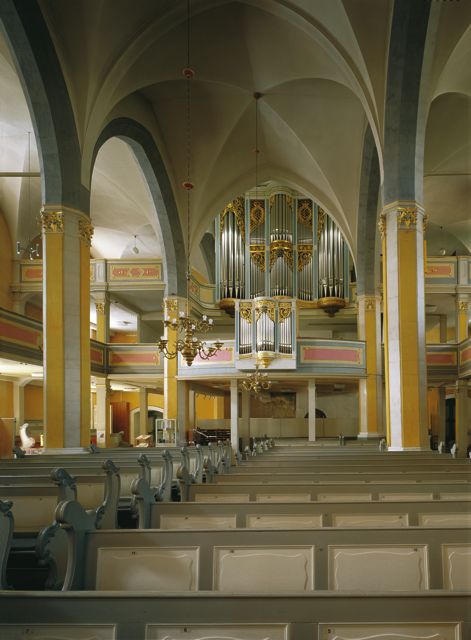
PI_2
The interior of the St. Peter & Paul or city church in Weimar: much more room on this organ loft than on the one in the castle’s chapel

While most of Bach’s cantatas in Weimar were performed in the castle’s chapel, the Himmelsburg, sometimes the Duke would visit the St. Peter und Pauli (St. Peter and Paul) church, also called the Stadtkirche (city church), and nowadays also called the Herder Kirche. It might have been for political reasons, or because of wanting to hear a certain preacher. Whatever the Duke’s motivation was on Easter 1715, it is clear from the orchestration of cantata 31 Der Himmel Lacht, die Erde Jubilieret that it cannot have been performed on the small organ loft of the castle’s chapel. (Lucky for all those musicians, they didn’t have to climb the 65 feet / 20 meters Bach climbed every day to play organ there).

Listen to cantata 31 by Harnoncourt on YouTube

Listen to cantata 31 by Harnoncourt on Spotify

Please find the German text of this cantata with English tranlations here and please find the score here.

After the first performance in Weimar on April 21, 1715, Bach performed this cantata at least two more times in Leipzig. This might have been because of writing or revising the Passions for Good Friday, he didn’t have time to write something new (he also recycled cantata 4 a couple of times), but let’s just say he really liked them.

In the fabulous opening sinfonia, one can clearly hear that Bach had been studying Vivaldi’s music and also that the start of the Christmas Oratorio (written much later, in Leipzig) was conceived already here in Weimar. At one point in the cello part, there is a reference to the brilliant writing in cantata 18 from two months earlier that same year.

Whether the sinfonia was meant to function as an “entrada” for the Duke and his entourage into the church or not, it needs to be that slow for me, that I can at least picture a ceremonial entrance happening while this music is being performed. That desire combined with strong nostalgic emotions I have when listening to this cantata, I can only recommend the Harnoncourt recording of this.

The nostalgia is of course not for  the sometimes struggling brass instruments in the opening movement. (It was not easy in the early 70s to play  historic trumpet. But those guys paved the way. And who knows, maybe that’s why Harnoncourt takes the tempo so much slower than Historical Performance conductors do that nowadays). The nostalgia is for the fabulous Peter Jelosits. In my memory this cantata got played  more often in our house than just on Easter Sunday and I truly grew up with his voice. In this cantata he gets to sing the soprano part in the five-part (!) opening chorus by himself for several measures, which is pure heaven, and he sings a fabulous aria as well. In the liner notes it only says “soloist of Wiener Sängerknaben,” but if you compare it with this recording, it is clearly him.

About the aria (the before-last movement of the cantata): after the super-happy opening chorus celebrating the resurrection and -in the subsequent movements- reflections on what Christ’s passion and resurrection mean for man, it is by now time  to turn back to the always present death, and the trust that Jesus will not leave the believer’s side. By this time Bach had already buried two of his children, and his employer was also a very devout Lutheran, so this was entirely appropriate, as dark and heavy as it might seem to us today.

So Bach already presents a “deathbed chorale” in this aria, in the melody of the upper strings, while of course the soprano voice part sings different words.  We can assume that the congregation at this church in Weimar as well as Duke Wilhelm-Ernst knew this chorale so well they could hear these words in their head:

Wenn mein Stündlein vorhanden ist,
und ich soll hinfahren meine Strasse,
geleite mich, Herr Jesu Christ,
mit Hilf mich nicht verlasse :
den Geist an meinem letzten End
befehl ich, Herr, in deine Händ ;
du wirst ihn wohl bewahren.


When the hour of my death is at hand
And I must travel on my way
Accompany me, Lord Jesus Christ,
With your help do not abandon me:
At my final end my spirit
I entrust, Lord, in your hands;
You will preserve it well.

This same tune then comes back in the closing chorale, using the original text, albeit the very last verse of it.

Wieneke Gorter, March 27, 2016, updated April 3, 2021.

Newer posts →

Recent Posts

  • “Missa Miniatura” by CONTINUUM/Elina Albach Even More Moving in 2025
  • Bachfest Leipzig 2025
  • Bach Cantatas for Christmas – 1724 and 1734 editions
  • Fourth Sunday of Advent – more insight into Cantata 62 helped me better understand Bach’s Christmas Oratorio
  • Saint Ambrose and Luther in Milan – Second Sunday of Advent

Archives

  • August 2025
  • July 2025
  • December 2024
  • November 2024
  • June 2024
  • January 2024
  • December 2023
  • October 2023
  • September 2023
  • August 2023
  • April 2022
  • February 2022
  • January 2022
  • December 2021
  • November 2021
  • June 2021
  • May 2021
  • April 2021
  • February 2021
  • January 2021
  • December 2020
  • November 2020
  • October 2020
  • September 2020
  • August 2020
  • July 2020
  • May 2020
  • April 2020
  • March 2020
  • February 2020
  • January 2020
  • December 2019
  • November 2019
  • May 2018
  • April 2018
  • March 2018
  • February 2018
  • January 2018
  • December 2017
  • November 2017
  • October 2017
  • September 2017
  • August 2017
  • July 2017
  • June 2017
  • May 2017
  • April 2017
  • March 2017
  • February 2017
  • January 2017
  • December 2016
  • November 2016
  • October 2016
  • September 2016
  • August 2016
  • July 2016
  • June 2016
  • May 2016
  • April 2016
  • March 2016
  • February 2016
  • January 2016

Enter your email address to follow this blog and receive notifications of new posts by email.

Join 336 other subscribers

Categories

  • 1723 Trinity season special series
  • Advent
  • After Easter
  • Ascension
  • Bach's life
  • Cantatas
  • Chorale cantatas 1724/1725
  • Christmas
  • Easter
  • Epiphany
  • Following Bach in 1725
  • Köthen
  • Leipzig
  • Septuagesima
  • Travel
  • Trinity
  • Weimar

Meta

  • Create account
  • Log in
  • Entries feed
  • Comments feed
  • WordPress.com

Website Built with WordPress.com.

  • Subscribe Subscribed
    • Weekly Cantata
    • Join 156 other subscribers
    • Already have a WordPress.com account? Log in now.
    • Weekly Cantata
    • Subscribe Subscribed
    • Sign up
    • Log in
    • Report this content
    • View site in Reader
    • Manage subscriptions
    • Collapse this bar
 

Loading Comments...