Weekly Cantata

Weekly Cantata

Tag Archives: Bach

Bass arias with trumpet

22 Sunday Oct 2017

Posted by cantatasonmymind in Cantatas, Leipzig, Trinity

≈ Leave a comment

Tags

19th Sunday after Trinity, Amsterdam Baroque Choir, Amsterdam Baroque Orchestra, Annette Markert, Azumi Takada, Bach, Bach Collegium Japan, cantatas, Christoph Prégardien, Gerd Türk, Gottfried Reiche, Klaus Mertens, Leipzig, Pascal Bertin, Peter Kooij, Peter Kooy, slide trumpet, Stephen Keavy, Susanne Rydén, Sybilla Rubens, Ton Koopman, Trinity, Trinity 19, trumpet
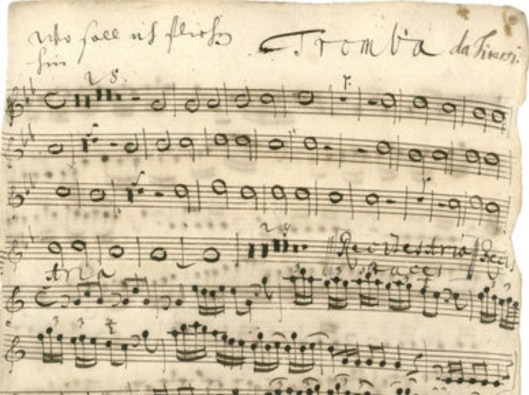
bwv5_manuscript_tromba

Excerpt from the trumpet part of Cantata 5 Wo soll ich fliehen hin? copied out by J.A. Kuhnau, Bach’s principal copyist, a nephew of Bach’s predecessor at Leipzig. Bach-Archiv Leipzig/Bach Digital.

The cantata from 1724 for this Sunday, the 19th after Trinity, is terrific, with a beautiful tenor aria with viola (or violin on some recordings) and rousing bass aria with trumpet. I prefer Bach Collegium Japan’s recording of this Cantata 5, Wo soll ich fliehen hin? because of Peter Kooij’s singing in the bass aria, Azumi Takada’s viola playing in the tenor aria, and the many colors of Susanne Rydén’s voice. Listen to it on YouTube via a playlist I created. Soloists are Susanne Rydén, soprano; Pascal Bertin, countertenor; Gerd Türk, tenor; Peter Kooij, bass.

Koopman’s recording of this cantata is good too, with perhaps a nicer tempo in the opening chorus, fabulous trumpet playing by Stephen Keavy in the bass aria, and good singing by Christoph Prégardien in the tenor aria. Listen to Koopman’s recording here. Soloists on this recording are Sybilla Rubens, soprano; Annette Markert, alto; Christoph Prégardien, tenor; Klaus Mertens, bass.

Find the German text with English translation here, and the score here.

Bach’s principal trumpet player, Gottfried Reiche, was an excellent musician, probably famous in the entire region, and apparently the only one who could play the tromba da tirarsi (slide trumpet) as well as the corno da tirarsi (slide horn — these were two different instruments!). And since Anna Magdalena’s father and all her three brothers-in-law were trumpet players at the regional courts, Bach knew their world well, and was most likely very well connected to many excellent players and their students. Around the feast of St. Michael’s (September 29), thousands of visitors from all over Europe would come to the Fair in Leipzig, and stay for a bit. Did Bach want to show Reiche off to all these visitors on September 29 (for Cantata 130, see below) and again this time on October 15, 1724, or were the trumpeter and/or bass singer themselves guests from out of town?

Bach paired the trumpet most often with the bass voice when writing arias. The most impressive bass arias with trumpet the Leipzig congregations would have heard between June 1723 (when Bach started working in Leipzig) and October 1724 are:

July 2, 1723: “Ich will von Jesu Wundern singen” from Cantata 147 (J.S. Bach Foundation recording from 2015 with Wolff-Matthias Friedrich, bass; Patrick Henrichs, trumpet)

August 1, 1723: “Dein Wetter zog sich auf von weiten” from Cantata 46 (Herreweghe recording from 2012 with Peter Kooij, bass; Alain De Rudder, Tromba da tirarsi).

November 14, 1723: “So löschet im Eifer der rächende Richter” from Cantata 90 (Bach Stiftung video with Klaus Häger, bass; Patrick Henrichs, trumpet)

May 28, 1724: “Heiligste Dreieinigkeit” from Cantata 172 (Leonhardt recording from 1985 with Max van Egmond, bass; Friedemann Immer, Klaus Osterloh, and Susan Willems, trumpets)

June 11, 1724: “Wacht auf, wacht auf, verloren Schafen” from Cantata 20 (Koopman recording from 1998 with Klaus Mertens, bass; Stephen Keavy, Tromba da tirarsi)

September 29, 1724, feast of St. Michael’s: “Der alte Drache brennt vor Neid” from Cantata 130 (Koopman recording from 2007 with Klaus Mertens, bass; Stephen Keavy, Jonathan Impett, and Michael Harrison, trumpets)

Wieneke Gorter, October 22, 2017, updated October 15, 2020.

If you don’t want to miss an episode of this 1724/1725 chorale cantata exploration, please consider signing up  to receive an email every time I’ve posted a new story. How to do this: If you are on a desktop computer, look to the left of this text, where it says “Follow Blog via Email,” enter your email address, and press the “Follow” button. If you are reading this on a smartphone, keep scrolling down until you find the same text.

Starlight shining on a Trinity cantata

15 Sunday Oct 2017

Posted by cantatasonmymind in Cantatas, Chorale cantatas 1724/1725, Leipzig, Trinity

≈ Leave a comment

Tags

18th Sunday after Trinity, Bach, Bach Collegium Japan, Bachstiftung, BWV 103, BWV 96, Christmas, cornetto, Deborah York, Epiphany, flauto piccolo, flute, Franziska Gottwald, J.S. Bach Foundation, Jan Börner, Julius Pfeifer, Maurice Steger, Nik Tasarov, Noëmi Sohn-Nad, Paul Agnew, Peter Kooij, Peter Kooy, Rudolf Lutz, sopranino recorder, St. Thomas Church, Thomaskirche, Ton Koopman, Trinity 18, Wolf Matthias Friedrich

threekings
The Adoration of the Kings, circa 1440. From a series of four boards from the former High Altar of the Heilig-Kreuz-Münsters in Rottweil, Germany.

In the summer and fall of 1724, Bach wrote an entire series of chorale cantatas, meaning that each cantata was based on a hymn. If at all possible, it was to be a hymn associated with that particular Sunday in the church year.  For this 18th Sunday after Trinity, he chose Herr Christ, der einige Gottessohn (Lord Christ, the only son of God). Keep reading to learn why.

When I first wrote about this Cantata 96 Herr Christ, der einige Gottessohn, in 2017, I recommended Ton Koopman’s recording. Listen to that recording here on Amazon, or here on Spotify. (It is not available on YouTube). Soloists are: Deborah York, soprano; Franziska Gottwald, alto; Paul Agnew, tenor; Klaus Mertens, bass; Heiko ter Schegget, sopranino recorder; and Wilbert Hazelzet, transverse flute.

However, since then a wonderful live video registration by the J.S. Bach Foundation has come out: you can find that here on YouTube. This is a terrific recording as well, with the added bonus that you can see the sopranino recorder and all the other instruments. Soloists in this performance are: Noëmi Sohn, soprano; Jan Börner, alto; Julius Pfeifer, tenor; Wolf-Matthias Friedrich, bass; and Maurice Steger, sopranino recorder.

Find the German text with English translation here and the score here.

In the Lutheran Church the chorale Herr Christ, der einige Gottessohn, one of the oldest Protestant hymns, was not so much associated with this 18th Sunday after Trinity, but more with Epiphany/Three Kings (January 6), for its reference to the Morning Star. Bach brings the luster of the Christmas season into this cantata in the most beautiful way. He gives the opening chorus a dusting of starlight by writing a part for flauto piccolo, or sopranino recorder*, over the rest of the vocal and instrumental parts. Since this time it is the altos that have the chorale melody in the opening chorus, Bach can create an ethereal link between the chorus and the flauto piccolo by way of the soprano part in the chorus. In the fifth line of the text, Er ist die Morgensterne (he is the Morning Star), he modulates to the brilliant key of E Major on the word “Morgensterne.”

But why did Bach select this chorale for a Sunday in the Trinity season? It becomes a bit more clear in the alto recitative and tenor aria. They refer to the fact that Jesus is God’s son, not David’s son. This is the only direct reference to the Gospel reading for this Sunday: Jesus giving the Jewish elders a hard time after they had claimed that he was only David’s son, not God’s son (Matthew 22: 34-46).  In the tenor aria Bach features his star flute player again.

In the soprano recitative, the focus changes to Jesus as guiding light, referring to the “he is the Morning Star” text from the chorale. The soprano’s statement that it can be hard to stay on the “right path” is illustrated in the bass aria.

We have heard faltering steps in Bach cantatas before (read my post about that here), but this time Bach offers a more theatrical illustration. In the St. Thomas Church in Leipzig a visual and aural effect would have made this even stronger: the violins, playing when the bass sings “zu rechten” (now to the right), would have stood on the right-hand balcony, the oboes, playing when the bass sings “zu linken” (now to the left) would have stood on the left-hand balcony. Also, in Bach’s rhetoric, right meant good and high, left meant bad and low.

The middle part of this cantata, with the text “Gehe doch, mein Heiland, mit” (My saviour please come with me) always moves me, especially when Peter Kooij sings it (listen to that here on Spotify, with Bach Collegium Japan).

Wieneke Gorter, October 15, 2017, updated October 8, 2020.

Follow this blog on Facebook or Instagram

*Since his arrival in Leipzig, Bach had used recorders in cantatas quite often (see this image by Nik Tarasov), but this is the very first time he writes for sopranino recorder, or “flauto piccolo.” The second time was on March 25, 1725, in Cantata 1 Wie schön leuchtet der Morgenstern, and the third time on the third Sunday after Easter in 1725, in Cantata 103 Ihr werdet weinen und heulen.

Faltering steps à la Bach and Damien Guillon’s art of singing four consonants in a row

09 Saturday Sep 2017

Posted by cantatasonmymind in Cantatas, Chorale cantatas 1724/1725, Leipzig, Trinity

≈ Leave a comment

Tags

Andreas Post, Bach, Bach Collegium Japan, BWV 105, BWV 33, BWV 77, BWV 78, Damien Guillon, duet, Good Samaritan, Il Gardellino, J.S. Bach Foundation, Leipzig, Marcel Ponseele, Markus Volpert, Rudolf Lutz, Ruth Sandhoff, Trinity 13, violin

WieFurchtsam
Excerpt from the manuscript of the alto part for cantata 33 (copied out by Bach’s student Johann Andreas Kuhnau), Leipzig Bach-Archive.

It is now the 13th Sunday after Trinity — time for the story of the Good Samaritan. For a sublime cantata that stays close to that Gospel text, read my earlier post about cantata 77 Bach wrote for this Sunday in 1723.

When Bach receives the libretto for Cantata 33 Allein zu dir, Herr Jesu Christ in 1724, it is -except for one line- not related to the Bible story at all. Maybe he already knows this, since he himself was probably responsible for selecting the chorale to serve as the basis for this cantata: a hymn of penitence from 1540, asking Christ to be freed of the pressing burden of sins. The part of the libretto that might have moved him the most* is this:

Wie furchtsam wankten meine Schritte,
Doch Jesus hört auf meine Bitte
Und zeigt mich seinem Vater an.
Mich drückten Sündenlasten nieder,
Doch hilft mir Jesu Trostwort wieder,
Dass er für mich genug getan.

How fearfully were faltering my footsteps,
but Jesus listens to my entreaties
and bears witness for me to his Father.
The burden of my sins weighed down heavily on me,
but Jesus’ word of comfort reassures me
that he has done enough for me.

The first line probably made Bach think of the soprano aria he wrote a little over a year ago, for the ninth Sunday after Trinity in 1723. (click on the link to listen to it). **

The text of that aria is:

Wie zittern und wanken
Der Sünder Gedanken,
Indem sie sich untereinander verklagen
Und wiederum sich zu entschuldigen wagen.
So wird ein geängstigt Gewissen
Durch eigene Folter zerrissen.

How tremble and waver
the sinners’ thoughts
while they bring accusations against each other
and on the other hand dare to make excuses for themselves.
In this way a troubled conscience
is torn apart through its own torments.

Bach is in general also still exploring ways to get more drama and text illustration into the music of his cantatas without it coming across as too operatic. So after a delicate opening chorus (Gardiner describes this as “an antique ring” in which the ornate beauty of the orchestral setting almost eclipses the inner gem of the hymn setting) and a powerful bass recitative, he writes a heart-wrenching alto aria on the moving text.

Damien Guillon. Photo by Julien Mignot

Click on this link to hear the amazing interpretation by countertenor Damien Guillon and the instrumentalists of Belgian ensemble Il Gardellino. Nobody delivers such a fantastic combination of completely “getting” the text and wonderful, seemingly effortless singing.  And listen to how he pronounces the consonants r-ch-t-s in the word “Furchtsam” without any concession to the vowel sounds.

When the libretto finally comes to the only quote of the Good Samaritan story: “I may love my neighbour as myself” in the fifth movement, Bach takes the opportunity to write a striking duet, including the parallel thirds and sixths characteristic of the amorous duets in Venetian operas of the time. If you thought that the famous soprano-alto duet from cantata 78 came out of the blue, here is the  artist’s study for it, one week before 🙂

A wonderful live performance of this cantata by the J.S. Bach Foundation is available here on YouTube. Soloists in this video registration are Ruth Sandhoff, alto; Andreas Post, tenor; Markus Volpert, bass.

Find the text here, and the score here.

Wieneke Gorter, September 8, 2017, updated September 1, 2023.

*of course I don’t know for a fact that this was the part of the libretto that moved Bach most. It is the text that moves me most, and of course that is partly because of Bach’s beautiful setting of it.

**and of course I don’t know this for a fact either, but it is the first thing I wrote down when I listened to this cantata, without having read Gardiner’s notes, which state that this alto aria from cantata 33 “bears a striking kinship in mood, subject-matter, and even melodic outline” to the soprano aria from cantata 105. So I am not alone in noticing this.

Something with this Sunday & Robin Blaze’s art of singing a chorale melody

27 Sunday Aug 2017

Posted by cantatasonmymind in Cantatas, Chorale cantatas 1724/1725, Leipzig, Trinity

≈ Leave a comment

Tags

alto, Bach, Bach Collegium Japan, BWV 113, BWV 179, cantatas, flute, Gerd Türk, John Eliot Gardiner, Leipzig, Masaaki Suzuki, Peter Kooij, Robin Blaze, Trinity, Trinity 11, Yukari Nonoshita

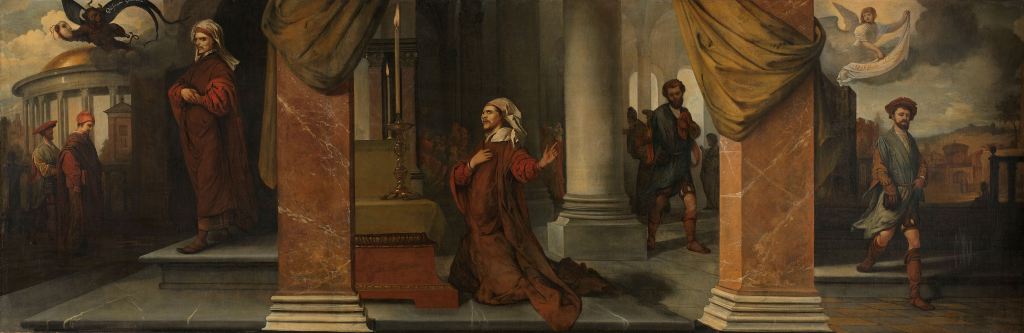
The Pharisee and the Publican by Barent Fabritius, 1661. Oil on canvas. Rijksmuseum, Amsterdam, the Netherlands.

In 1723, Bach wrote an exceptional cantata for this Sunday, the 11th after Trinity. I liked that cantata 179 so much that I gave my blog post last year the title “Bach on a roll” and I’ve been listening to it again this week. In 1724, Bach wrote cantata 113 Herr Jesu Christ, du höchstes Gut for this same Sunday. Both these cantatas truly move me. I feel as if Bach was especially humbled by this particular Sunday.

The only recording that does Cantata 113 Herr Jesu Christ, du höchstes Gut justice and gives me the good kind of stomachache is the one by Bach Collegium Japan, because of Peter Kooij’s and Robin Blaze’s terrific singing, beautiful oboe and flute playing, and the fact that Yukari Nonoshita and Robin Blaze make the duet into a lovely piece of music (instead of struggling through it, the way it seems to be on some other recordings). Listen to this recording by Bach Collegium Japan on Spotify, or on Youtube. Soloists on this recording are: Yukari Nonoshita, soprano; Robin Blaze, alto; Gerd Türk, tenor; and Peter Kooij, bass. Please consider supporting the artists by purchasing this recording on jpc.de or iTunes.

Find the text and translation here, and the score here.

That Bach might have might have felt a special touch or inspiration on this 11th Sunday after Trinity makes sense when you look at the Gospel reading for the day. It is the parable of the Pharisee and the Publican (or Pharisee and the Tax Collector), a story Jesus tells as an illustration on how to pray: the Pharisee is full of himself, telling God how good he is, while the Publican in his own prayer merely asks for mercy, and tells God how bad he is. This concept of how to be a good Christian before God, to be true, not fake, was very important to Bach.

In cantata 113 the chorale melody turns up much more often than in most of the other 1724/1725 chorale cantatas. It is even present in some of the arias that don’t have the chorale text. For the first time since starting this series of chorale cantatas, Bach doesn’t use the chorale melody as a cantus firmus in the opening chorus. Instead, he writes a simple four-part harmonized setting of the chorale melody. But, then there’s the unusual twist: Bach changes the usual 4/4 beat in which a chorale is normally sung to a 3/4, which allows him to write long suspensions in the vocal lines, thus intensifying the pleading character of the music (and the good stomach ache I get when I listen to it).

Robin Blaze. Photo by Dorothea Heise.

In the aria that follows, Bach makes up for the missing cantus firmus from the opening chorus. Any late-comers to that church service on Sunday August 20, 1724 would not have missed what chorale this cantata was based on: the alto sings the text as well as the melody of the chorale’s second stanza in long notes, against strings playing in unison.

Singing a chorale melody like this is not easy, and most recordings were unsatisfying to me because of this aria (as well as the duet). But Robin Blaze knows how to do it: sing with a brilliant sound, clearly placing each note, but also sustaining the sound throughout every note, and keeping it moving, while not forgetting word accents. It is a special art, and he masters it. I can listen to that five times in a row and not tire of it.

The bass aria could -as far as the music is concerned- easily have been inserted into the Christmas Oratorio, with the pretty oboe accompaniment. Note the word illustrations on “Zittern” (trembling) and “zerbräche” (would break), expertly sung by Peter Kooij. If this is all not pretty enough, Bach presents his talented flute player again, and gives him a beautiful but unbelievably challenging part, more virtuoso than ever before,  in the tenor aria “Jesus nimmt die Sünder an.” And then there is the duet.

Wieneke Gorter, August 27, 2017, updated August 15, 2023.

No nonsense for Trinity 10, 1724

19 Saturday Aug 2017

Posted by cantatasonmymind in Cantatas, Leipzig, Trinity

≈ Leave a comment

Tags

Bach, Bach Collegium Japan, BWV 101, cantatas, Damien Guillon, flute, Gesualdo Consort Amsterdam, Harry van der Kamp, Leipzig, Luther, Trinity

christ-driving-the-merchants-from-the-temple

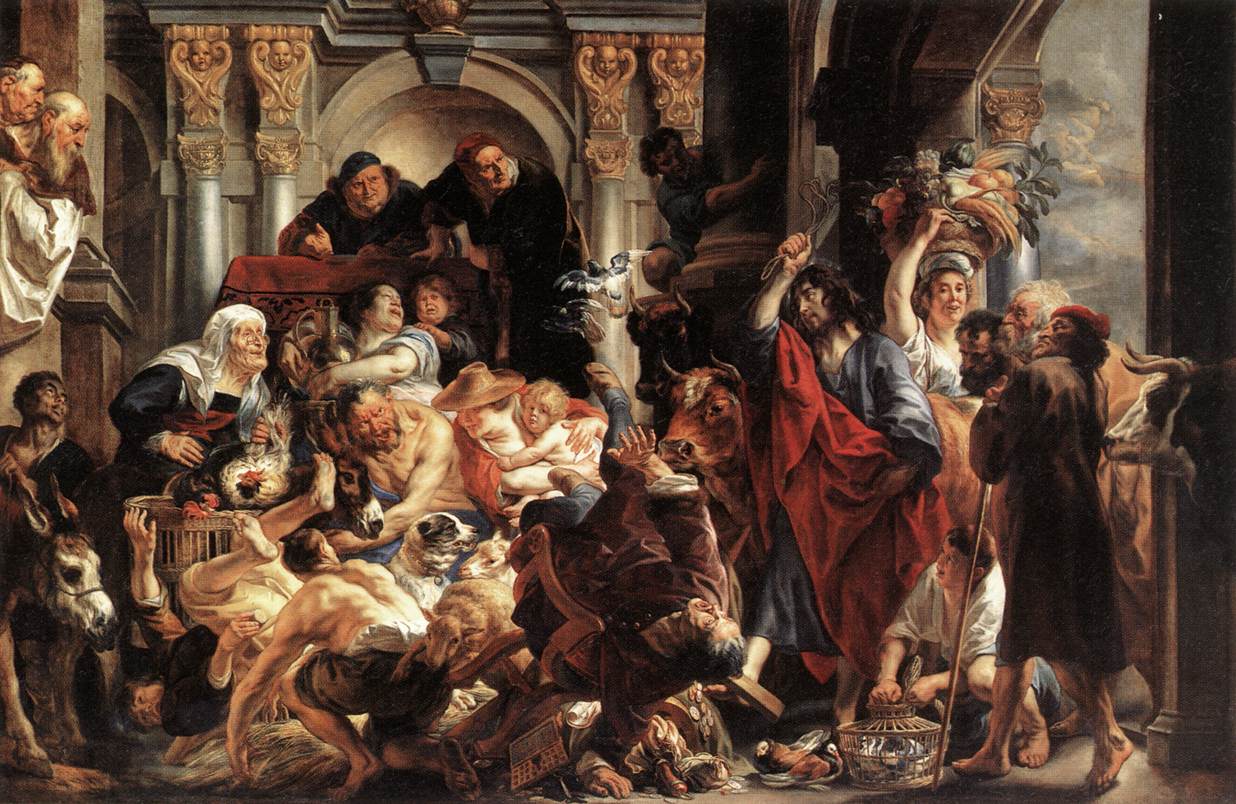
Christ Driving the Merchants from the Temple by Jacob Jordaens, circa 1650. Musée du Louvre, Paris.

After the stunningly beautiful music of cantata 94 from last week, it is a bit hard for me to go back to a “regular” chorale cantata: cantata 101: Nimm von uns Herr, du treuer Gott. But then again, maybe the beauty and lightness of last week’s cantata is the key to understanding this week’s …

I was not familiar with this cantata, because for this Sunday in the liturgical year, the 10th after Trinity, my mother would probably have played the more impressive 46 (written in 1723, its opening chorus later used for the Qui Tollis of the Mass in B minor – see my discussion of it here) or 102 (written in 1726, its opening chorus later used for the Kyrie of the Missa Brevis in g minor – see a short discussion at the end of this post).

There is a nice live recording of cantata 101: Nimm von uns Herr, du treuer Gott on YouTube by the Gesualdo Consort, part of a well-constructed program of Bach works based on the Vater Unser melody (Luther’s German version of the Lord’s Prayer). However, this performance doesn’t include trombones doubling the vocal parts in the opening chorus. If you would like to hear that important feature of this cantata, you can listen to Bach Collegium Japan’s recording of the opening chorus here.

Please find the text and translations here, and the score here.

Why does Bach take a starker approach for this Sunday in 1724 than in those other two years? One reason might be that in 1724, he is more strongly bound to his commitment of using a chorale tune as basis for the cantata than he is to the Gospel text for this Sunday (Jesus predicting the destruction of Jerusalem and him driving the merchants from the Temple). And the chorale for this Sunday is terror-inspiring: written during a time of the plague in 1584, on the melody of Luther’s Vater Unser.

If we go back to last week’s cantata, we should realize how frivolous it was of Bach to compose such a lighthearted cantata, featuring the flute, an ultra-secular, and French instrument! And this only to show off a University student, who didn’t even attend the St. Thomas School! It might very well have upset his employers, and afterwards they might have urged him to write something more appropriate next time, something inspiring devotion in the members of the Leipzig congregations, instead of treating them to the stuff he used to write at the court in Köthen. We will never know, but we can imagine.

So, while not directly quoting the Gospel of Jesus banishing the merchants from the Temple, but perhaps inspired by that story nonetheless, Bach goes back to the basics, the core of the Lutheran faith. And we know that whenever the hymn is based on a melody written by Luther himself, Bach shows the utmost respect for that, and often uses references in his music to remind the congregations of the timeless character of the music and of the dogma.

To reinforce the timeless character, he uses the “old” ensemble of cornetto and trombones to double the vocal parts in the opening chorus — the same way he did this for cantata 2 and cantata 25. Bach pushes the doctrine down everyone’s throat even more, or as Gardiner says, he “subjects his listeners to a twin-barrelled doctrinal salvo” when he not only presents the 1584 chorale melody in all but one movement of the cantata, including in the recitatives, but also quotes Luther’s hymn Dies sind die heil’gen zehn Gebot (These are the holy Ten Commandments) in the instrumental opening of the first movement.*

To further rub in the need for penitence, Bach presents strong dissonances on the words “schwere Straf und grosse Not” (grave punishment and great distress). Also, in the terrific Bass aria**, Bach instills horror in his audience when he makes an abrupt move from E minor to C minor on the word “Warum” of the sentence “Warum willst du so zornig sein” (Why wilt thou be so angry). Gardiner calls this a “Mahlerian swerve” and says “Not even Purcell, with his penchant for a calculated spotlit dissonance, was capable of matching this when setting the same words in his anthem “Lord, how long wilt thou be angry.”

In 1726 Bach wrote cantata 102 Herr, deine Augen sehen nach dem Glauben! for this same Sunday, the 10th Sunday after Trinity. It is a terrific composition. Bach was proud of it too, because he later re-used it in the Missa Brevis in F Major (BWV 233) and the Missa Brevis in g minor (BWV 235). Listen to Il Gardellino’s recording of it here on YouTube, with Damien Guillon, countertenor; Marcus Ullman, tenor; and Lieven Termont, bass. Especially the aria Aria Weh der Seele, die den Schaden (perhaps better known today as the soprano aria Qui Tollis from BWV 233) by countertenor Damien Guillon and oboist Marcel Ponseele is to die for.

Wieneke Gorter, August 18, 2017.

* It is not the first time he quotes this hymn in an opening chorus either, see my post about cantata 77 here.

** This bass aria is the best movement of the piece in my opinion, and probably also the reason why the leader of the Gesualdo Consort, Harry van der Kamp, himself the bass soloist, programmed this cantata in the first place.

A better week for cantata 198 than for 86

21 Sunday May 2017

Posted by cantatasonmymind in After Easter, Cantatas, Leipzig

≈ Leave a comment

Tags

5th Sunday after Easter, Bach, BWV 198, BWV 86, BWV 87, Christoph Prégardien, John Eliot Gardiner, Katharine Fuge, Kati Debretzeni, Klaus Mertens, Leipzig, Netherlands Bach Society, Robin Blaze, Robin Tyson, Rogate Sunday, roses, Shunske Sato, Stephan Loges, Steve Davisilim, Westerland

imgp4873-1-w
 Rosa centifolia ‘Major’, dated as far back as the 16th century in the Netherlands. Courtesy of http://rudolfshistorischer-rosen-park.blogspot.com/ , a website I found when looking for roses that would have existed in Germany in Bach’s time

This week I don’t feel a lot of connection with the Bach cantata from 1724 for this Sunday (the 5th after Easter, or Rogate Sunday), cantata 86 Wahrlich, wahrlich, ich sage euch. When I came home from the funeral of one friend, I learned that another friend had passed away suddenly the day before. Because these were both very strong, kind, beautiful, and inspiring women, and I can’t believe they are gone, I feel much more inclined to listen to cantata 198, Lass, Fürstin, Lass nun einen Strahl, which Bach wrote for the funeral of a well-loved Queen than to a cantata which promotes that “God always knows best.”

But I’ll still write about cantata 86. The only connection I have with it this week are the roses in the text of  the alto aria. It is my favorite movement of this cantata, because of the splendid violin solo. The interpretation of that violin solo I like best of all the recordings I listened to* is the one by Kati Debretzeni on the Gardiner recording. You can find that recording here on Amazon or here on iTunes. Soloists on the Gardiner recording are Katharine Fuge, soprano; Robin Tyson, counter-tenor; Steve Davisilim, tenor; and Stephan Loges, bass.

For better interpretations of the bass and tenor solos, I recommend listening to the Koopman recording with tenor Christoph Prégardien and bass Klaus Mertens. You can find that recording on YouTube, Amazon, or iTunes.

2020 update: read my blog post of May 15, 2020, to find links to the live video recording by The Netherlands Bach Society, with Robin Blaze, coutertenor, and Shunske Sato, violin.

For the text and translations of cantata 86, please visit this page, and for the score, please go here.

Why the connection with roses? About one week ago, on Friday May 12, I went to drop off a card for a friend who was dying. I learned she was in her last days on Tuesday, but it took me until Friday morning to find the right words, finish writing the card, and to drop it off. When I walked to her door I noticed a hedge of sweet pink roses in the front yard. I felt peace from seeing the roses, and from the knowledge that she liked roses, but I also felt miserable and angry that she would be taken away from all this, from her family, her life, her home. The next day, we heard she passed away during that night.

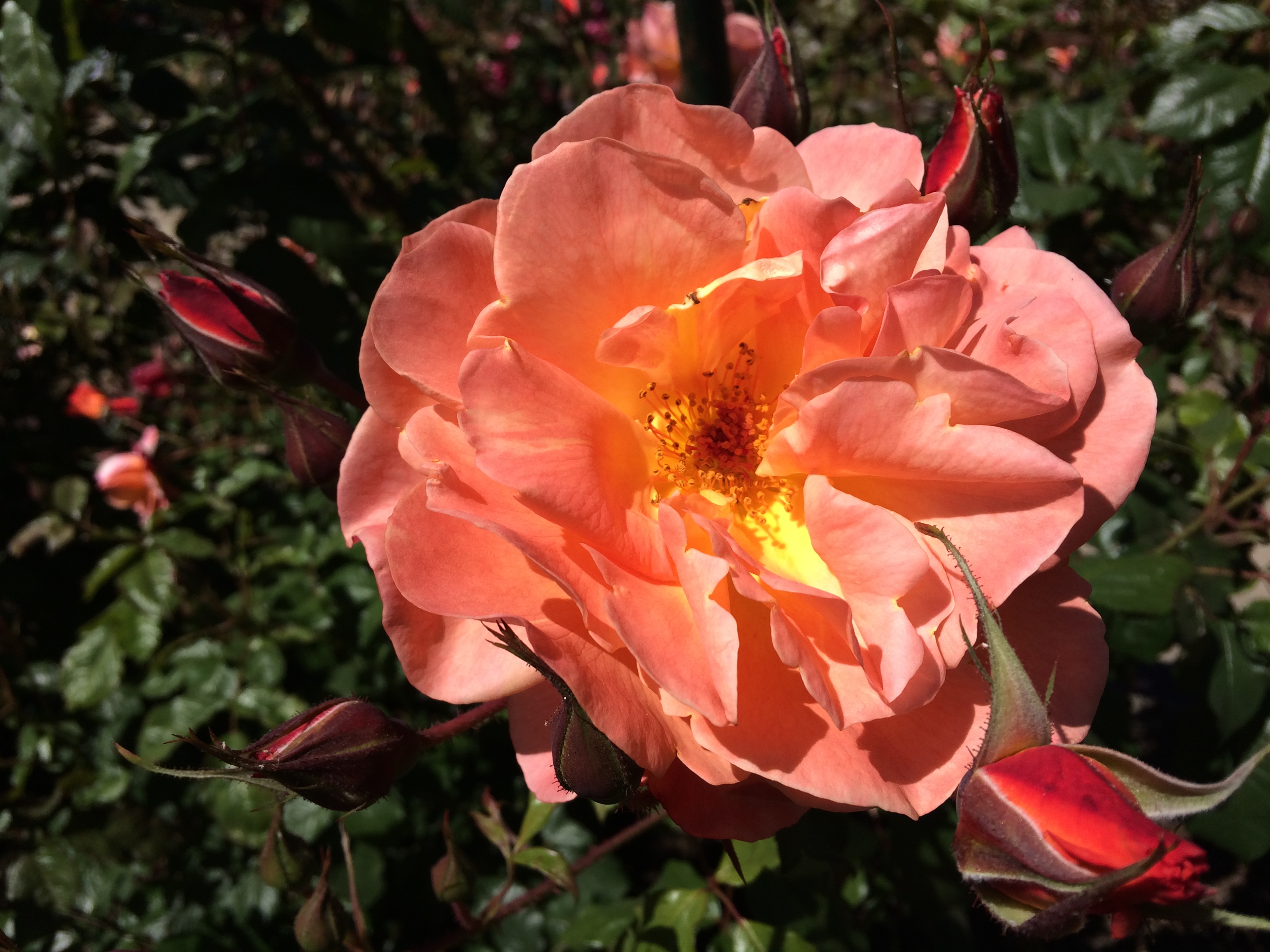
This past Friday was the day of her funeral. I didn’t know how it would go, how my kids would handle it (my oldest and her oldest are friends), and tried to find some strength for myself, so I would be able to be there for them. I realized that I associate this woman’s kindness and warmth with the pinkish apricot color of my favorite rose in the Berkeley rose garden, Westerland. So I decided to walk through the rose garden to experience the color and scent of this amazing flower, and it helped. This is what she looked like that day: Westerland

What to listen for in cantata 86:

In the opening movement, notice how Bach accentuates the fact that Jesus is speaking important, timeless words by setting these words in the form of an archaic motet. While the motet has multiple voices, the way it was done in the Renaissance, Bach can still make it clear that the words come from Christ’s mouth only, by giving all the other “voice parts” to instruments instead of to other singers.

In the alto aria, hear how the words “brechen” (to pick [roses]) and “stechen” (to prick) are illustrated by short notes and “broken” chords in the voice part, and broken chords in the violin part.

In the soprano aria, hear how low in the soprano range this is set — it could just as well have been sung by an alto. Bach has not given significant solos to a soprano since Easter of this year, 1724, and actually pretty sporadically since the start of the new year. Many scholars suggest that during that spring of 1724, Bach might have lost his boy soprano soloist (due to him leaving the school or due to his voice changing, we don’t know), and documents suggest that he was frustrated with the low quality of the boy sopranos of the St. Thomas School in general. They believe that this is why he started the chorale cantatas (cantatas of which each movement is based on a different verse of one and the same chorale tune) after Pentecost of that year. Keep following this blog and you’ll learn more about that soon 🙂

Wieneke Gorter, May 21, 2017, updated May 15, 2020.

*I did all this listening last year, when I actually ended up writing about cantata 87, the one Bach wrote for this same Sunday, but then in 1725. Read that post here.

“Cantate” Sunday – or the fourth Sunday after Easter, 1724

13 Saturday May 2017

Posted by cantatasonmymind in After Easter, Cantatas, Leipzig

≈ Leave a comment

Tags

Bach, Leipzig, Ton Koopman

Thomaskirche_Interior

Interior of the Thomaskirche (St. Thomas Church) in Leipzig.

For “Cantate” Sunday, or the fourth Sunday after Easter in 1724, Bach wrote a short but masterful cantata: BWV 166 Wo gehest du hin? I wrote a long but educational and hopefully also entertaining post about this cantata last year. I explain how Bach illustrates that this is the “singing” Sunday, why there is so much talk of “going away” in this cantata, and why I recommend the recording by Ton Koopman/Amsterdam Baroque Orchestra. Read that post here.

Wieneke Gorter, May 12, 2017

Third Sunday after Easter in 1724

07 Sunday May 2017

Posted by cantatasonmymind in After Easter, Cantatas, Leipzig

≈ Leave a comment

Tags

Bach, cantatas, Leipzig, Weimar

For this Jubilate Sunday (the third Sunday after Easter) in 1724, Bach did not write a new cantata the way he had done the previous two weeks*, but repeated one he had written in Weimar in 1714. That cantata: Weinen, Klagen, Sorgen, Zagen was not any old cantata, but a composition Bach was most probably very proud of: he would later use the opening chorus as template for the Crucifixus in his Mass in B minor. Read all about this cantata and the recordings I recommend in this post I wrote last year.

Wieneke Gorter, May 7, 2017

*see this post about the first Sunday after Easter in 1724 and this one about the second Sunday after Easter in 1724

Second Sunday after Easter 1724

30 Sunday Apr 2017

Posted by cantatasonmymind in After Easter, Cantatas, Leipzig

≈ Leave a comment

Tags

2nd Sunday after Easter, Amsterdam Baroque Choir, Amsterdam Baroque Orchestra, Bach, BWV 104, BWV 85, cantatas, Klaus Mertens, Paul Agnew, Ton Koopman

christ-the-good-shepherd
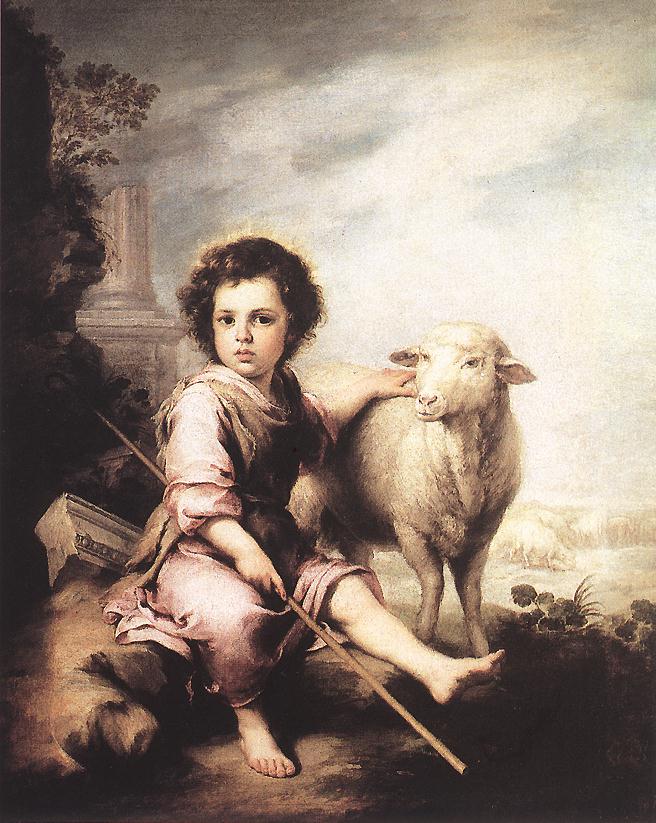
Christ the Good Shepherd, by Bartolome Esteban Murillo, c. 1660. Museo del Prado, Madrid.

We keep following Bach in 1724. For the second Sunday after Easter of that year, he composed cantata 104 Du Hirte Israel, höre. Of all the recordings I listened to, I prefer the one of Ton Koopman with his Amsterdam Baroque Orchestra and Choir, here on YouTube.

Please consider purchasing this recording here on Amazon, or here on iTunes.

Find the text of this cantata 104 here, and the score here.

Agnew
Paul Agnew

My main reason for choosing this recording is tenor Paul Agnew’s fabulous singing. Type his name in the “search” box on this blog and you’ll find more fan mail from me 🙂

But also: this recording has the best balance among the voice parts in the choir in the opening chorus, and Klaus Mertens presents a bass aria I can actually listen to without getting irritated.

This is a very pretty cantata, entirely based on the “good shepherd” theme for this Sunday, using pastoral motifs in the music, oboes in the orchestra, and displaying an innocent character overall, much more so than the more complicated cantata 85 Bach would write for this same Sunday a year later, which I wrote about last year in this post.

Wieneke Gorter, April 30, 2017.

First Sunday after Easter 1724

23 Sunday Apr 2017

Posted by cantatasonmymind in After Easter, Bach's life, Cantatas, Leipzig

≈ Leave a comment

Tags

Alex Potter, Bach, cantatas, corno da tirarsi, Jos van Veldhoven, Peter Kooy, Thomas Hobbs, tromba da tirarsi

caravaggio_-_the_incredulity_of_saint_thomas

The Incredulity of Saint Thomas by Caravaggio, 1601-1602, Sanssouci Palace, Potsdam, Germany

In the past two weeks I ran out of time to work on this blog because of being sick, performing concerts with California Bach Society, and being on a trial jury for the first time since becoming a United States citizen in 2011. So this post for the First Sunday after Easter in 1724 is post-dated, and short, but contains lots of information to learn more about this beautiful cantata.

Previously in 1724: Bach “premiered” his Passion according to St. John on Good Friday, April 7, 1724. Then he ran out of time and energy and, without too much care for detail and text illustration, created cantatas out of existing music for Easter Monday and Easter Tuesday of that year.

This means that the first new composition he wrote after the St. John Passion was this cantata 67 Halt im Gedächtnis Jesum Christ (keep thinking of Jesus Christ), based on the Gospel text of Jesus appearing to his disciples. A famous cantata, already known and admired in the early 19th century, especially because of the dramatic fourth movement for choir and bass, which Bach would later transform into the Gloria of his Missa Brevis in A (BWV 234).

For the background of this cantata I will refer you to the experts, in this 15-minute video by the Netherlands Bach Society, published within their AllofBach series. The video is in Dutch, with English subtitles. It talks about Bach including a flute (not a recorder!) for the first time in a cantata, the meaning behind the text, and the use of the slide-trumpet “corno da tirarsi.”

Listen to and watch their performance here, find the text here, and find the score here. The Netherlands Bach Society, conducted by Jos van Veldhoven, with countertenor Alex Potter, tenor Thomas Hobbs, and bass Peter Kooij.

Wieneke Gorter, April 30, 2017.

← Older posts
Newer posts →

Recent Posts

  • “Missa Miniatura” by CONTINUUM/Elina Albach Even More Moving in 2025
  • Bachfest Leipzig 2025
  • Bach Cantatas for Christmas – 1724 and 1734 editions
  • Fourth Sunday of Advent – more insight into Cantata 62 helped me better understand Bach’s Christmas Oratorio
  • Saint Ambrose and Luther in Milan – Second Sunday of Advent

Archives

  • August 2025
  • July 2025
  • December 2024
  • November 2024
  • June 2024
  • January 2024
  • December 2023
  • October 2023
  • September 2023
  • August 2023
  • April 2022
  • February 2022
  • January 2022
  • December 2021
  • November 2021
  • June 2021
  • May 2021
  • April 2021
  • February 2021
  • January 2021
  • December 2020
  • November 2020
  • October 2020
  • September 2020
  • August 2020
  • July 2020
  • May 2020
  • April 2020
  • March 2020
  • February 2020
  • January 2020
  • December 2019
  • November 2019
  • May 2018
  • April 2018
  • March 2018
  • February 2018
  • January 2018
  • December 2017
  • November 2017
  • October 2017
  • September 2017
  • August 2017
  • July 2017
  • June 2017
  • May 2017
  • April 2017
  • March 2017
  • February 2017
  • January 2017
  • December 2016
  • November 2016
  • October 2016
  • September 2016
  • August 2016
  • July 2016
  • June 2016
  • May 2016
  • April 2016
  • March 2016
  • February 2016
  • January 2016

Enter your email address to follow this blog and receive notifications of new posts by email.

Join 336 other subscribers

Categories

  • 1723 Trinity season special series
  • Advent
  • After Easter
  • Ascension
  • Bach's life
  • Cantatas
  • Chorale cantatas 1724/1725
  • Christmas
  • Easter
  • Epiphany
  • Following Bach in 1725
  • Köthen
  • Leipzig
  • Septuagesima
  • Travel
  • Trinity
  • Weimar

Meta

  • Create account
  • Log in
  • Entries feed
  • Comments feed
  • WordPress.com

Website Built with WordPress.com.

  • Subscribe Subscribed
    • Weekly Cantata
    • Join 156 other subscribers
    • Already have a WordPress.com account? Log in now.
    • Weekly Cantata
    • Subscribe Subscribed
    • Sign up
    • Log in
    • Report this content
    • View site in Reader
    • Manage subscriptions
    • Collapse this bar
 

Loading Comments...