Weekly Cantata

Weekly Cantata

Tag Archives: Collegium Vocale Gent

Trinity 1725

27 Sunday May 2018

Posted by cantatasonmymind in Cantatas, Chorale cantatas 1724/1725, Leipzig

≈ Leave a comment

Tags

Christiane Mariane von Ziegler, Collegium Vocale Gent, Gustav Leonhardt, Knabenchor Hannover, Leonhardt Consort, Matthias Echternach, Max van Egmond, Paul Esswood, Trinity Sunday

Crijn_Hendricksz

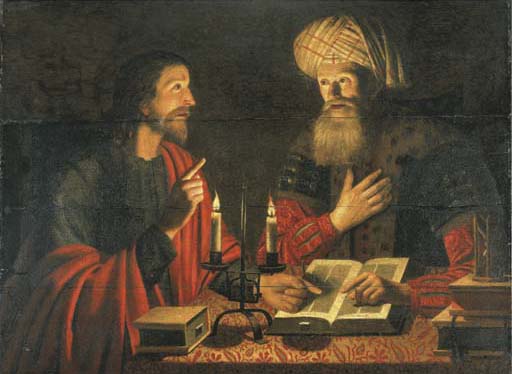
Jesus and Nicodemus, by Dutch painter Crijn Hendricksz Volmarijn

Today’s Cantata 176 Es ist ein trotzig und verzagt Ding, written for Trinity Sunday in 1725, marks the end of Bach’s 1724/1725 cycle of cantatas as well as the end of his series of nine cantatas on texts by Leipzig poet Christiane Mariane von Ziegler.

My favorite recording of this cantata is by Gustav Leonhardt, with the Leonhardt Consort, Knabenchor Hannover, and Collegium Vocale Gent. Vocal soloists are Matthias Echternach (boy soprano, soloist of the Knabenchor Hannover); Paul Esswood, countertenor; and Max van Egmond, bass. Find it here on YouTube.

Find the texts & translations here, and the score here.

The Gospel story for this day is the story Jesus’ nighttime conversation with Nicodemus, stating that only those who are reborn through water baptism and the Spirit (or Holy Ghost) can reach eternal life, hence the reference to Trinity. Find the text of that part of the Gospel of John here.

However, Von Ziegler doesn’t talk about the water baptism or any other aspects of the conversation between Jesus and Nicodemus at all, but instead focuses, four movements long, on the fact that Nicodemus comes to Jesus at night. The highlight of the cantata is the soprano aria “Dein sonst hell beliebter Schein,” which very poetically embellishes on Nicodemus’ wish for the sun to go under.

Only in the last aria do the words “was Jesus verspricht” (what Jesus promises) turn up, and is there a short reference to the Holy Trinity.  To make the reference more clear, the closing chorale ends with the following text, almost as a Roman doxology, so that everyone is clear that it is indeed Trinity today:

Gott Vater, Sohn und Heilger Geist,
Der Frommen Schutz und Retter,
Ein Wesen drei Personen.

(God the Father, son and holy spirit
protector and saviour of the devout
one being, three persons.)

Wieneke Gorter, May 27, 2018, links updated May 19, 2024.

Good Friday in 1725

30 Friday Mar 2018

Posted by cantatasonmymind in Bach's life, Cantatas, Chorale cantatas 1724/1725, Leipzig

≈ Leave a comment

Tags

Andreas Scholl, Cecile Kempenaers, Collegium Vocale Gent, Dominik Wörner, Malcolm Bennett, Mark Padmore, Michael Volle, Philippe Herreweghe, Sebastian Noack, Sibylla Rubens, St. John Passion, St. Matthew Passion

IMG-4407

Detail of The Arrest of Christ by Hieronymus Bosch, ca. 1515. San Diego Museum of Art.

As I’ve mentioned over the past few months, Bach might have initially been planning to perform a St. Matthew Passion on Good Friday in 1725 in Leipzig.

If he was indeed planning that, he didn’t finish it in time. Did he run out of time, did he have a conflict with the Leipzig City Council, or did he change his mind? We don’t know. Fact is that on Good Friday 1725 he performed a new version of his St. John Passion from the year before. The most notable difference is the new opening chorus: O, Mensch, bewein dein Sünden groß instead of the Herr, unser Herrscher from the year before.

Find Herreweghe’s recording from 2001 of that 1725 St. John Passion here on YouTube.

Soloists are: Tenor [Evangelist, Arias]: Mark Padmore; Bass [Jesus]: Michael Volle; Soprano: Sibylla Rubens; Counter-tenor: Andreas Scholl; Bass [Arias, Pilatus]: Sebastian Noack; Bass [Petrus]: Dominik Wörner; Tenor [Servus]: Malcolm Bennett; Soprano [Ancilla]: Cecile Kempenaers

But let’s just leave the St. Matthew / St. John discussion for what it is, and just look at that opening chorus. Having followed Bach’s 1724/1725 chorale cantatas in the order he wrote and performed them, it is not a stretch to consider that Bach might have been working up to this elaborate chorale fantasia since February 2. I mentioned in my post for that day that it felt as if something new was coming.

When you look at Cantatas 125, 126, 127, and 1, the four cantatas Bach wrote and performed between February 2 and March 25, you see a beautiful line-up of chorale fantasias, one even more special than the other. So perhaps there was no stress or doubt at all in Bach’s mind about what to write for Good Friday 1725, at least not as far as the opening chorus was concerned. He might have been planning for O, Mensch to open his Good Friday passion since the end of January, and might have been doing studies for it in Cantatas 125, 126, 127, and 1.

Wieneke Gorter, March 30, 2018

Bach’s “most beautiful cantata” connected to a dear memory

11 Sunday Feb 2018

Posted by cantatasonmymind in Bach's life, Cantatas, Chorale cantatas 1724/1725, Leipzig

≈ Leave a comment

Tags

bwv 127, Caroline Stam, Collegium Vocale Gent, Dorothee Mields, Eduard van Hengel, Estomihi, Jan Kobow, Peter Kooij, Philippe Herreweghe, St. Matthew Passion

kloosterkerk
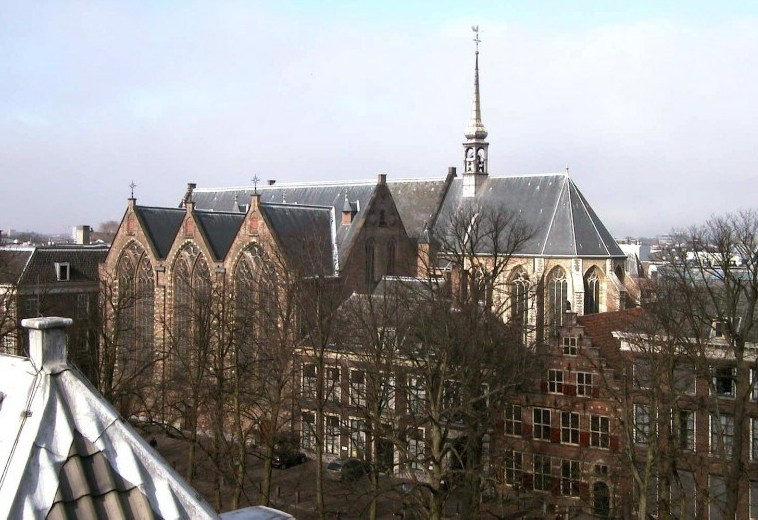
Kloosterkerk, The Hague, The Netherlands, where Caroline Stam sang the aria from Cantata 127 during my mother’s funeral service in 2010. This church is also the site of the monthly cantata services performed by the Residentie Bach Ensembles.

What are your five favorite cantatas? This question was asked this week on Facebook by the Residentie Bach Ensembles, the choirs and orchestra of the monthly cantata services in the Kloosterkerk in The Hague, the Netherlands. A hard question to answer, and I would probably have a different Top Five every month. However, Cantata 127 Herr Jesu Christ, wahr’ Mensch und Gott, today’s cantata from 1725, will probably always be in it. The soprano aria from this cantata is forever linked in my heart and mind with the funeral service for my mother in this same Kloosterkerk in The Hague (read a bit more about that in this post), but having carefully listened to about 120 cantatas over the past two years I am struck by how special this cantata is within Bach’s oeuvre.

I’m not alone in my appreciation of Cantata 127 Herr Jesu Christ, wahr’ Mensch und Gott. Eduard van Hengel calls it an “exceptionally inspired cantata,” 19th century Bach biographer Spitta called it “perhaps the most important” cantata, and it received “the most beautiful” qualification by Arnold Schering as well as Ton Koopman.  

My favorite recording of this cantata is now [update from 2021] Herreweghe’s live recording from January 31, 2021. Find it here on YouTube.

Find the text of Cantata 127 here, and the score here.

There are several reasons why this last Sunday before Lent, or Quinquagesima Sunday or Estomihi Sunday, was such an important day for Bach, and maybe especially in 1725:

  1. This was the day, in 1723, on which he had auditioned for his job in Leipzig, with Cantatas 22 and 23, his first performance ever for the Leipzig congregation and city council. In 1724 he would repeat the same cantatas on this same Sunday.
  2. After this Sunday, his audience (=the Leipzig congregations of the St. Thomas and St. Nicholas churches) would not hear any of Bach’s music until March 25, on the feast of the Annunciation of Mary. No figural music (only chorale singing) was allowed in the Lutheran churches in Leipzig during Lent (the approximately 40 days before Easter), with the exception of the Annunciation. In 1724 this period was 33 days, but in 1725 it was 41 days (from February 11 to March 25). So Bach might have wished to leave his audience with something special, something they would remember for 41 days.
  3. If it is true that Andreas Stübel had been Bach’s librettist for his entire chorale cantata cycle, Bach would have now known that this was the last regular chorale cantata of the cycle for now: Stübel died on January 31, 1725. So perhaps Bach wanted to “go out with a bang” for that reason. It is striking to me that he chooses a bass recitative/arioso with trumpet talking about the Day of Judgement, a similar combination of voice, instrument, and subject matter he uses at the end of the Trinity period in 1723, and again (though less dramatically) at the end of the Trinity period in 1724. Is this Bach’s way of saying: this is the end of an important series?

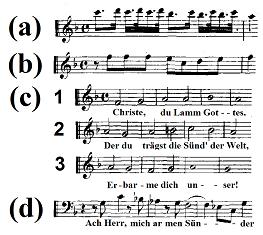
Compared to all opening choruses that had come before, this opening chorus is the most complex and intricate. It is the same as chorale fantasias in previous chorale cantatas in the sense that the six lines of text of the chorale Herr Jesu Christ, wahr’ Mensch und Gott appear in six sections, with the chorale melody (the cantus firmus) in the soprano and trumpet part.  However the orchestra greatly enhances the meaning of Bach’s message by referring to this chorale plus two others. The instrumental groups (recorders, oboes, strings, and continuo) represent four musical themes referring to these chorales. Eduard van Hengel illustrates this extremely well with two diagrams on his website, which I am copying here with his permission:

127-VHengel

(a) The recorders play a dotted rhythm which in both the St. John and St. Matthew Passions illustrates punishment and suffering.
(b) The oboes introduce the “Leitmotiv” that will sound 78 times throughout the entire movement, and stands for the Herr Jesu Christ, wahr Mensch und Gott chorale. Jesus was a true (“wahr”) man and God. Probably Bach’s most important message here.
(c) The strings quote the chorale Christe, du Lamm Gottes, or Luther’s Agnus Dei. It would show up again in the opening chorus of the St. Matthew Passion, which Bach might already have been working on around this time, see my post about Cantata 125 last week.
(d) In the continuo we hear six times the first seven notes of Ach Herr mich armen Sünder, nowadays better known as O Haupt voll Blut und Wunden, one of the main building stones of the St. Matthew Passion. In the seventh section of the opening chorus, when the sopranos are already done singing the chorale melody, Bach repeats this particular theme in the vocal bass line in the choir, as if to make sure that even those who might have missed the quotation earlier would now hear it loud and clear.

Van Hengel adds this extra diagram to show in which measures of the opening chorus the different themes appear:

127-schemaVHengel

At this point Bach might still have been planning to prepare his audiences for a first St. Matthew Passion, not abandoning that plan until much closer to March 30, Good Friday, 1725. Not only are the references in this opening chorus a striking example of that, but also in the extraordinary bass recitative/aria do we see the theme of the Sind Blitze, sind Donner chorus from the St. Matthew Passion appear on the text “Ich breche mit starker und helfender Hand.”

Regular followers of this blog will notice that Bach had been making a study for this bass recitative/aria in the previous three cantatas: combining lines of the chorale text with “free” text in the bass solo of Cantatas 92 and 125, and then using Sind Blitze, sind Donner material and trumpet accompaniment in the bass solo in Cantata 126.

Wieneke Gorter, February 10, 2018, updated February 22, 2020 and February 13, 2021.

* Herreweghe’s album “Jesu, deine Passion” features cantatas 22, 23, 127, and 159. Cantata 23 has exceptionally beautiful choruses and Cantata 22 represents the first introduction of Bach’s version of the “Vox Christi”(voice of Christ) to the Leipzig congregations, considered by some as an intentional preparation for the listeners of what would be to come in the Passions. Cantata 159 on this album is fantastic too, with an unrivaled interpretation by Peter Kooij of the fourth movement, the bass aria “Es ist vollbracht.”

Paintings, praises, and a possible prelude to the St. Matthew Passion

03 Saturday Feb 2018

Posted by cantatasonmymind in Bach's life, Cantatas, Chorale cantatas 1724/1725, Leipzig

≈ Leave a comment

Tags

Alex Potter, Bruges Bach Academy, BWV 105, BWV 125, BWV 234, BWV 46, Candle Mass, cello, Collegium Vocale Gent, Dorothee Mields, Eglise St. Roch, floating aria, flute, Ingeborg Danz, oboe da caccia, organ, Peter Kooij, Philippe Herreweghe, Presentation at the Temple, Purification of Mary, strings, Thomas Hobbs

triptych-of-jan-floreins-1479

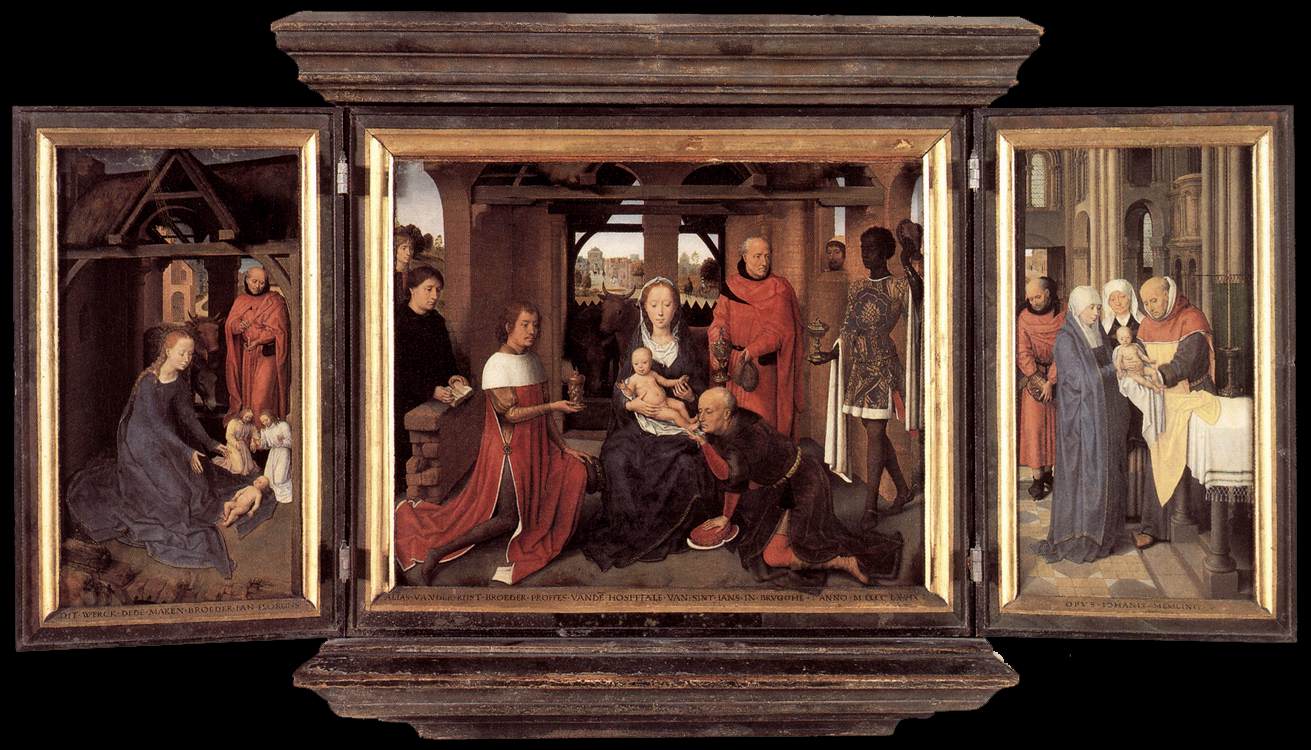
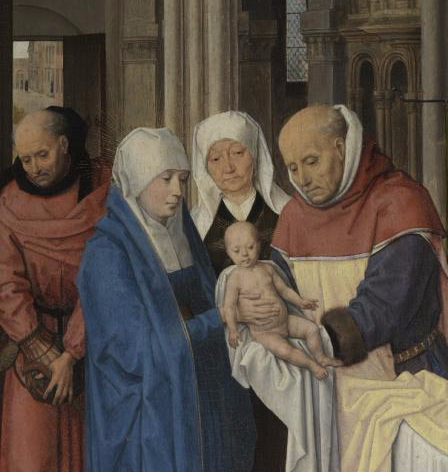
“Adoration of the Magi” triptych of Jan Floreins by Hans Memling, 1479. Memling Museum (Old St. John’s Hospital), Bruges, Belgium. The right-hand panel features “The Presentation at the Temple,” with the Temple really being the former St. Donaas church in Bruges.

If you are reading this in the email you received from WordPress, please click on the title of this post to enjoy the paintings and the formatting 🙂

This post is almost two days late, as it was for Friday February 2, the feast of the Purification of Mary, or Candle Mass, or Presentation at the Temple. If you have time, please read how this holiday was strongly connected to folk culture in my post from last year. In Lutheran reality, this was the day when Simeon’s song of praise Herr, nun lässest du deinen Diener in Friede fahren  or Nunc Dimittis was celebrated. With his chorale Mit Fried und Freud ich fahr dahin Luther turned Simeon’s song of praise into a message of “Now I can die in peace.” This is why all five cantatas (The famous Ich habe genug 82, 83, 125, 157, and 158) Bach wrote for this holiday are mostly about the joy of dying.

Since I’m following Bach’s chorale cantata writing in Leipzig in 1725, I’m featuring Cantata 125 Mit Fried und Freud ich fahr dahin, written for February 2 of that year, and based on that same chorale by Luther.

My favorite overall recording of this cantata is Herreweghe’s recording from 1998, with Ingeborg Dantz, alto; Mark Padmore, tenor; and Peter Kooij, bass. You can find it here on YouTube. Please consider supporting the artists by purchasing the album on Amazon or on iTunes. It also includes the stunning Cantata 8 (Herreweghe’s personal favorite!) and the beautiful Cantata 138.

Please find the German text with English translations of this cantata here, and the score here.

There are some similarities with last week’s cantata, such as the bass solo that is made up of bits of recitative and bits of chorale melody, but already in the opening chorus a new day is dawning. If you read the history of today’s holiday in my post from last year, you know that Candle Mass was a natural time of year to start with something new.

Could the new inspiration in Bach’s brain be the St. Matthew Passion? It is not unlikely at all. Van Hengel suggests that the opening chorus has elements of the St. Matthew opening chorus, but then argues that that piece was not written yet in 1725. However, Gardiner (in his book Music in the Castle of Heaven) makes a strong case that Bach might have initially planned to have the St. Matthew Passion ready for Good Friday 1725. I’ve pointed out before that we can find preludes to the “Great Passion” in Bach’s cantatas as far back as the fall of 1723 (see posts about cantatas 105 and 46), so it is not unlikely that Bach was working on this in January 1725.

Keeping all this in mind, it is striking that the first aria after the opening chorus is an alto aria in St. Matthew style, full of pietism. Watch Alex Potter (keep reading to find out more about him) sing this aria with the J.S. Bach Foundation here on YouTube. The instrumentation resembles the “Aus Liebe” soprano aria from the St. Matthew Passion: there are no organ chords in the bass, only repeated cello notes, and for the rest it is just flute and oboe da caccia, an unusual combination.

Because of the  many connections with this Cantata 125 I’m now going to sneak in a mini review of the Herreweghe/Collegium Vocale concerts I attended in Europe this past week.
paris_1-30_concert

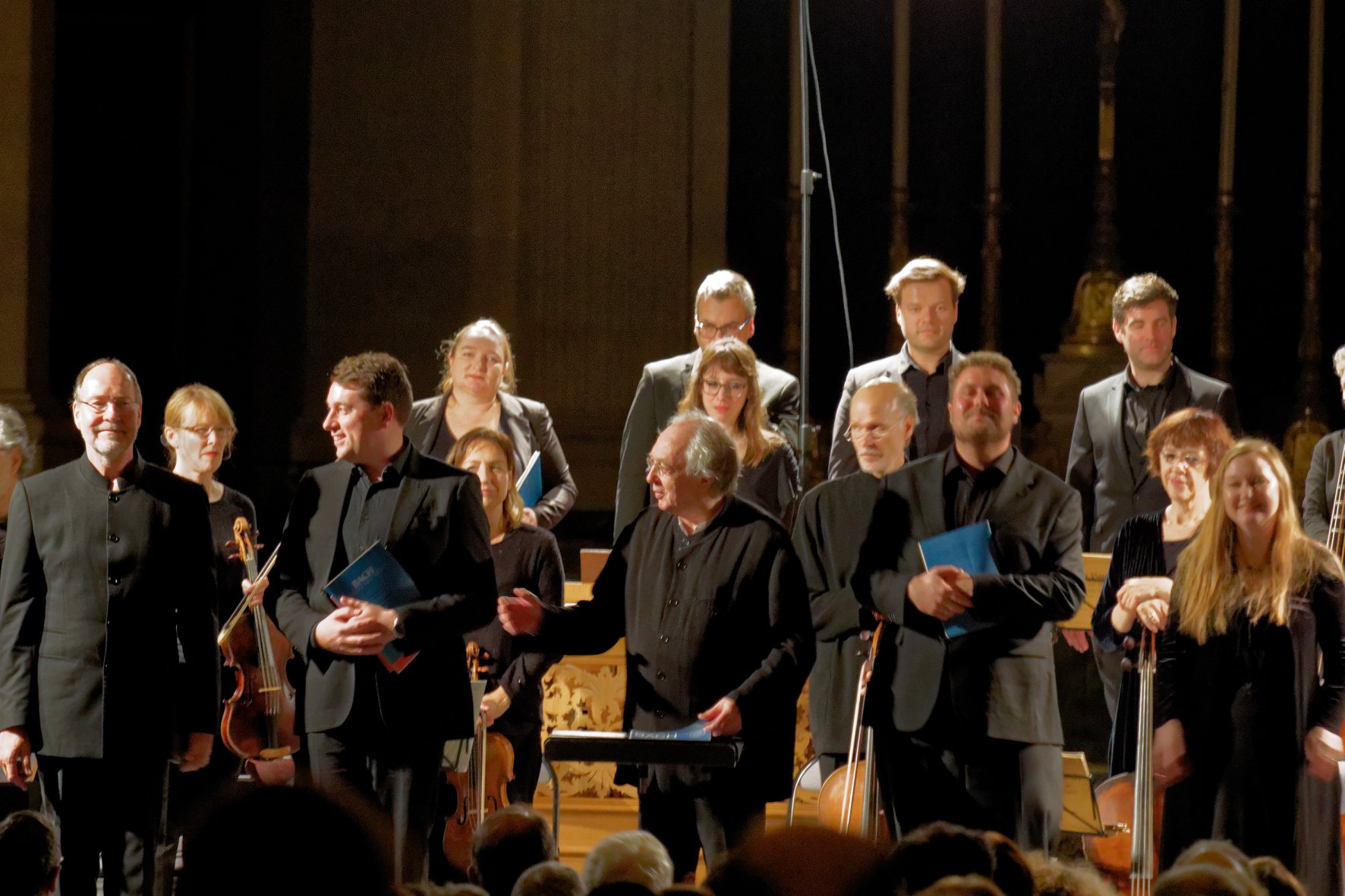
Applause at the end of the concert in the Eglise St. Roch in Paris, January 30, 2018. From left to right in front row: Peter Kooij, Thomas Hobbs, Philippe Herreweghe, Alex Potter, Dorothee Mields. Photo by Aube Neau/Luc Barrière, published with permission.

Let’s take the alto aria from Cantata 125. I call this type of aria a “floating aria” because it has no real basso continuo: there is no melodic line in the cello or chords in the organ, i.e. no foundation for the singer to stand on. These floating arias are incredibly beautiful and the stuff of goose bumps, but also incredibly challenging for the vocal soloist. In the terrific concert in Paris on Tuesday January 30, soprano Dorothee Mields had two such arias: the “Qui tollis” from the Mass in A Major (BWV 234)* and the “Wir zittern und wanken” from Cantata 105. She did an absolutely marvelous job in both of them, but her singing was the most mesmerizing in the “Wir zittern und wanken” aria. Cantata 105 stood out during that Paris performance anyway in my humble opinion. It simply has the best opening chorus of all cantatas Collegium Vocale performed in the three concerts I attended. On top of that, the group (including soloists Thomas Hobbs and Peter Kooij) recorded this in 2012, and you could tell it was still in everyone’s bones and it was a pleasure to see Herreweghe direct the strings as well as the soloists. One of my favorite bass ariosos occurs in that cantata (it makes me think of the “Am Abend da es kühle war” from the St. Matthew) and Peter Kooij’s strong rendition almost made me cry.
memling_presentation_temple_floreins

Detail of right-hand wing of the “Adoration of the Magi” Jan  Floreins triptych by Hans Memling, showing the Presentation at the Temple, or Mary presenting Jesus to Simeon

And then on to countertenor Alex Potter. It was in Bruges’ St. John’s Hospital museum that I saw the Memling painting featured in this post, and this is also where I ran into Alex Potter and was able to tell him how much I enjoyed his singing on Friday January 26. During the concert in Paris on January 30 his most impressive performance was the “Quoniam” aria from the Mass in A Major (BWV 234)**, which I heard in Bruges on Sunday January 28 and again in Paris on Tuesday January 30. He had a clear understanding of the text, made the music soar, and seemed to passionately enjoy what he was doing. It was a joy to watch and listen to.

Wieneke Gorter, February 3, 2018.

*originally from Cantata 179 from August 8, 1723.

**originally from Cantata 79 from October 31, 1725.

A somewhat medieval “Rutsch” into 1725

30 Saturday Dec 2017

Posted by cantatasonmymind in Bach's life, Cantatas, Chorale cantatas 1724/1725, Christmas, Leipzig

≈ Leave a comment

Tags

BWV 122, Collegium Vocale Gent, Jubeljahr, Jubilee, Leipzig, Mark Padmore, Peter Kooy, Phlippe Herreweghe, Sarah Connolly, Sunday after Christmas, Vasiljka Jezovsek

mystic_nativity2c_sandro_botticelli
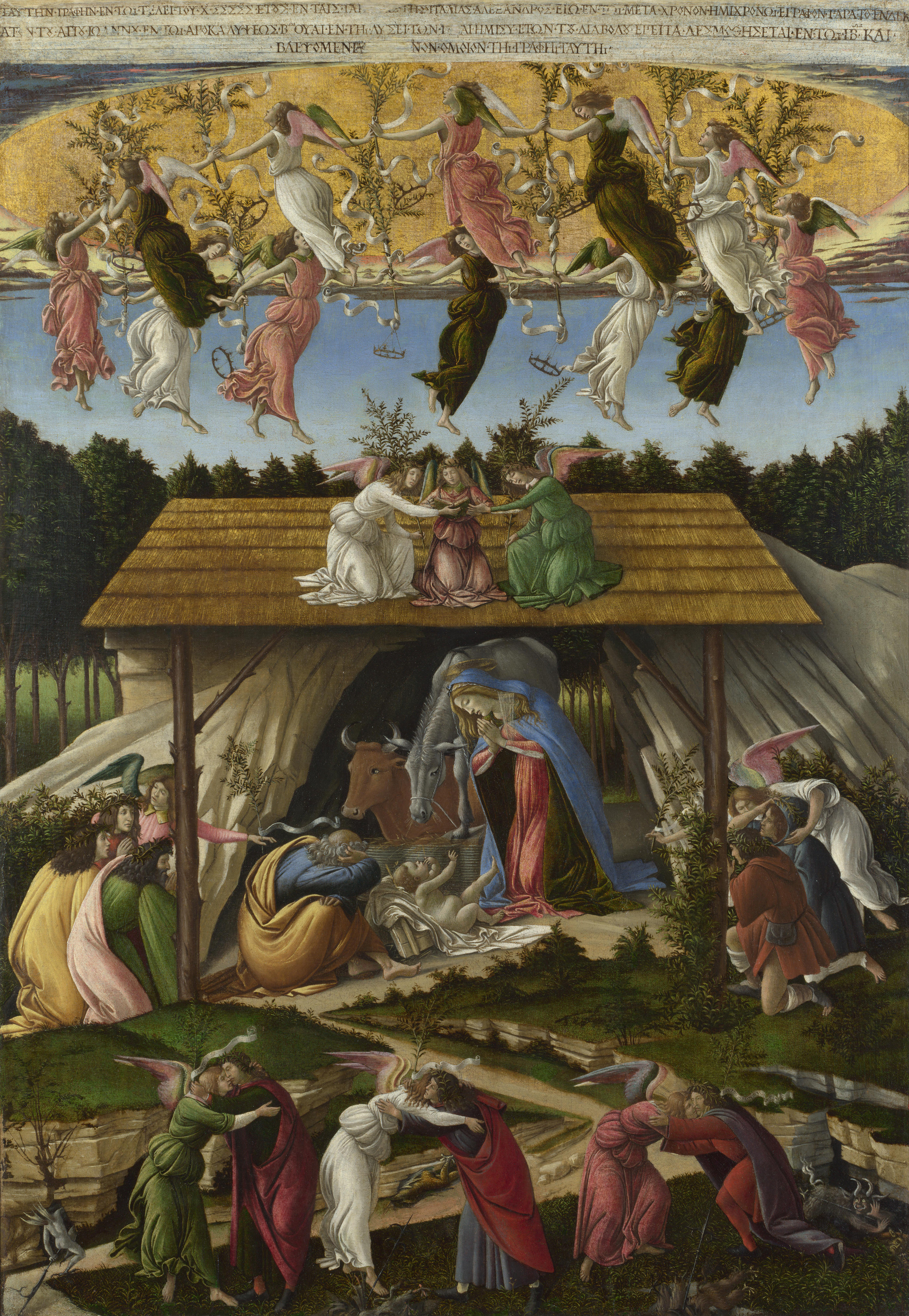
Mystic Nativity by Botticelli, circa 1500. National Gallery, London.

Since I was a very small child, the word “Jubeljahr” (Year of Jubilee) has stood out to me when listening to Cantata 122 Das neugeborne Kindelein. I already mentioned this a bit in my post from last year. So on the second to last day of 2017, I did some research into this concept of Jubeljahr, and realized that perhaps Bach might have liked the word too. Keep reading to find out why.

My favorite recording of this cantata is the one by Herreweghe from 1995 with soprano Vasiljka Jezovsek, alto Sarah Connolly, tenor Mark Padmore, and bass Peter Kooij. Find it here on YouTube. Find the text of cantata 122 here, and the score here.

In 1724, there was a Sunday in between Christmas and New Year’s Day, (a first for Bach in Leipzig*) and it fell exactly on New Year’s Eve. The upcoming New Year was not just any year. For the Catholic church 1725 was going to be a Holy Year, Year of Jubilee, or “Jubeljahr” as they called it in German.** While Bach was Lutheran, chances are high that he was aware of the Catholic tradition and thus of the extra importance of this last Sunday of the calendar year. The nearby court of Dresden was Catholic, most of the Marian feast days were still celebrated, only a year before Bach had written a Magnificat (Mary’s song of praise) for Christmas, and many medieval customs were still present.

Because of all this, I would like to think that Bach wanted to mark this special occasion, and might have chosen the chorale Das neugeborne Kindelein from 1597 on purpose for his cantata for this day, because of the mention of “Jubeljahr” in the last verse. Whether the original writer of the chorale might have alluded to the Lutheran belief that the union of God with people makes every year a Jubilee, or to the then upcoming Jubilee and turn of the century in 1600, I don’t know. But nowhere else in Bach’s cantata oeuvre is do we see the word “Jubeljahr.”

The text of the chorale builds on the early medieval tradition of melting the story of Jesus’ birth with the celebration of the New Year, talking about the newborn baby Jesus at the same time as announcing that the year has ended and this is a true Jubilee.

However Bach and his librettist don’t go all the way with the medieval world view: They change the original text of the third verse of the chorale, used for the fourth movement of the cantata, Trotz Türken, Papst und Höllen Pfort (Despite Turks,the Pope and the gates of hell) into Trotz Teufel und der Höllen Pfort (Despite the devil and the gates of hell). In 1725 the fear for a Turkish invasion was probably not as palpable as it had been in 1597, when the chorale was originally written.

Other things to listen for in cantata 122: The amazing high c in the soprano recitative. The leap of a fifth from f to c and then the octave back to c in the soprano recitative on the words “Die Engel” (the angels) had actually just occurred one movement earlier, two octaves lower, in the bass aria, on the words “O Menschen” (Oh people). Gardiner says this musical illustration that heaven/angels (high voice and highest instruments: recorders) and earth/people (low voice and cello) become one makes him think of the angels and men hugging in the forefront of Mystic Nativity by Botticelli, and this is why I decided to feature that as the illustration for today’s blog post.

Wieneke Gorter, December 30, 2017

*In 1723, Bach’s first year in Leipzig, the Sunday after Christmas was December 26, Second Christmas Day.

** The concept of “Jubeljahr” comes from the Old Testament, where Leviticus describes that after 7×7 years, you sould celebrate a Year of Jubilee, the 50th year. However in1470 Pope Paul II issued a Bull to fix the Jubilee for every twenty-five years, starting in 1475, so that every generation could have a Jubilee.

Bonus Advent cantata

10 Sunday Dec 2017

Posted by cantatasonmymind in Advent, Cantatas, Leipzig

≈ Leave a comment

Tags

1st Sunday of Advent, Advent, Bach, BWV 36, Christmas, Christoph Pregardien, Collegium Vocale Gent, J.S. Bach Foundation, J.S. Bach Stiftung, Nuria Rial, Peter Kooy, Phlippe Herreweghe, Sarah Connolly, Sybilla Rubens

Nuria Rial, my favorite interpreter of the soprano aria from Cantata 36.

In Leipzig in Bach’s time, the period between the first Sunday of Advent and Christmas was a “tempus clausum,” when no figural music was allowed in the churches. So if I would follow Bach’s cantata writing in 1724 very strictly, I would not have any music for you today.

So let’s take a detour to 1725. Sometime in that year, Bach wrote a congratulatory cantata for a teacher at the St. Thomas School in Leipzig. The cantata, with the title Schwingt freudig euch empor, had nine movements: an opening chorus, four recitatives and three arias. The cantata also featured a closing chorus alternated with recitatives for all the soloists, the way Bach would also use that in the before-last movement of his St. Matthew Passion. For the text of this cantata, please see this entry on Eduard van Hengel’s website. Scroll all the way down to find a table with all the different texts for the different cantatas.

In the fall of 1726, Bach received a request from his previous employer, prince Leopold of Köthen, to write a cantata for this birthday of his second wife, princess Charlotte Friederike Wilhelmine, on November 26 of that year. Scholars think that at the same time Bach was reworking this cantata from 1725 into this Birthday cantata, he was also reworking it into an Advent cantata. However the music of that particular cantata has not survived.

In 1731 Bach again, or finally, was able to make the original of 1725 into an Advent cantata, by replacing all the recitatives with chorales. This is cantata 36 Schwingt freudig euch empor, one of three cantatas for the first Sunday of Advent that have survived. (The other two are Cantata 61 I discussed last year, and Cantata 62 I discussed last week). Again please see Eduard van Hengel’s table of the different texts of all the various cantatas here. Find the English translations of Cantata 36 here, and find the score of Cantata 36 here.

My favorite recording of the entire cantata is the one by Herreweghe from 1997 (from the same album I discussed last week). I like this recording the best because of the most sparkling interpretation of the opening chorus, gorgeous singing by Christoph Prégardien in the tenor solos and by Peter Kooy in the bass aria, and a wonderful soprano/alto duet by Sybilla Rubens and Sarah Connolly. Find this recording here on YouTube. Or follow the links in my post from last week to purchase the entire album of Advent cantatas by Herreweghe. It is a great Christmas gift 🙂 !

If you prefer to watch a live recording, I recommend the one by the J.S. Bach Foundation. They just released the entire video recording of this cantata this week, and this performance contains my absolute favorite interpretation of the soprano aria by Nuria Rial.

Wieneke Gorter, December 9, 2017, links updated and photo added December 3, 2019.

A good problem to have: Dorothee Mields or Susanne Rydén (cantata 115 for Trinity 22 in 1724)

11 Saturday Nov 2017

Posted by cantatasonmymind in Cantatas, Leipzig, Trinity

≈ 1 Comment

Tags

Bach, Bach Collegium Japan, Collegium Vocale Gent, Damien Guillon, Dorothee Mields, Peter Kooy, Phlippe Herreweghe, soprano, Susanne Rydén

3051724_1200_675

Susanne Rydén. Photo by Elin Ericsson/Sveriges Radio.

About a decade ago, I first heard the soprano aria from Cantata 115 sung live in a concert. It took my breath away. The next day, I started looking for recordings of the aria, and decided that my favorite was the one by Susanne Rydén with Bach Collegium Japan, with Liliko Maeda on transverse flute, and Hidemi Suzuki on violoncello piccolo. I purchased only that movement on iTunes and played it many times. However, I never listened to the rest of the cantata …

It took me until this past week to realize that the entire cantata is beautiful, also contains a fabulous alto aria, and …. that this year, Herreweghe released a recording of it, with Dorothee Mields singing the soprano aria and Damien Guillon singing the alto aria. For those of you who know how much I love Dorothee Mields (read more about that here) you will understand I now had a problem: Susanne Rydén or Dorothee Mields? I feel that within the framework of the rest of the movements of Herreweghe’s recording, Mields’ interpretation of the soprano aria fits perfectly, is very moving, and extremely well done. But as a stand-alone aria, I still love Susanne Rydén’s the best, because of the quality of her voice on that recording, and because her ability to blend so perfectly with the flute.

For the entire cantata, I recommend Herreweghe’s 2017 recording. This recording is not available on YouTube, but you can find it here on Spotify. Please consider supporting the artists by purchasing the entire album here on Amazon.

Find the German texts with English translations here and the score here.

Herreweghe is the best at  giving the music direction, always focusing on the phrasing. In addition to all of that, there is a wonderful expansiveness, freedom in the sound and the musical lines present in almost all of the movements. Also, Peter Kooy’s singing in the bass recitative/arioso is much more lively and adventurous than on the Bach Collegium Japan recording, and then there’s of course counter-tenor Damien Guillon. I was smiling the whole time when I first listened to his aria. How he can move from a low, full note to a clear, spot-on high note is just so good.

If you would like to hear more beautiful music for this Sunday, or are wishing for a more upbeat soprano aria, there is a terrific rendition of the soprano aria from cantata 89 Bach wrote for this same Sunday in 1723 here on Youtube, sung by the incomparable Nuria Rial with the J.S. Bach Foundation.

Wieneke Gorter, November 11, 2017, updated November 15, 2019.

A modest Reformation Day in 1724

04 Saturday Nov 2017

Posted by cantatasonmymind in Cantatas, Chorale cantatas 1724/1725, Leipzig, Trinity

≈ Leave a comment

Tags

21st Sunday after Trinity, BWV 2, BWV 25, BWV 38, Calov Bible, Carolyn Sampson, chorales, Collegium Vocale Gent, Daniel Taylor, Luther, Mark Padmore, oboe, Peter Kooij, Peter Kooy, Philippe Herreweghe, tenor, Trinity 21

Bachs-Calov1

Bach’s Calov Bible after Luther, with Bach’s comment in the right margin of 2 Chronicles 5,13: “NB. Bey einer andächtigen Musiq ist allezeit Gott mit seiner Gnaden Gegenwart” (NB. Where there is devotional music, God with his grace is always present.)

This past October 31 marked the 500 anniversary of the Reformation: Luther posting his 95 theses on the door of the church in Wittenberg. Without Luther making the Bible available in German and making music an integral part of faith, Bach would probably not have felt as driven to educate his fellow believers through his music. Without Luther, there might not be any Bach cantatas, and definitely not this special cycle of chorale cantatas I’ve been discussing on this blog since June of this year.

It is interesting to me that when using one of Luther’s original chorales, Bach gives it an “old-fashioned” treatment: he writes the opening chorus in the “old style,” almost like a 16th century motet, and has the equally ancient brass quartet of one cornetto and three sackbutts (early trombones) doubling the vocal parts, as if wanting to confirm the timeless character of Luther’s chorales. A good example of this technique is Cantata 25 from 1723 and Cantata 2 from earlier in 1724, and Cantata 121 for Second Christmas Day 1724. If this was Bach’s preferred way of honoring Luther, he did this also on October 29 in 1724, two days before Reformation day, with this Cantata 38 Aus tiefer Not schrei ich zu dir for the 21st Sunday after Trinity. Aus tiefer Not schrei ich zu dir is on one of Luther’s very first chorales, and was also sung at his funeral.

I prefer Herreweghe’s recording of this cantata. It is available here on YouTube, or please consider supporting the artists by purchasing the entire album “Weinen, Klagen …” here on Amazon. The album also contains my preferred recordings of Cantata 12 (see my post about that here) and Cantata 75 (see my post about that here). Soloists are Carolyn Sampson, soprano; Daniel Taylor, countertenor; Mark Padmore, tenor, and Peter Kooij, bass.

Please find the German text with English translations here, and the score here.

If you have time, it is worth it to first listen to the opening chorus of cantata 2 Ach Gott, vom Himmel sieh darein from June 18, 1724, also based on one of Luther’s own chorales. Make sure you stop after the opening chorus, and then start listening to today’s Cantata 38 here, and hear how similar Bach’s setting of the chorale melody is. I don’t think it is a coincidence.

My favorite part of this cantata is the tenor aria: it is a beautiful piece of music, a quartet really, between the two oboe parts, the tenor voice, and the continuo, the way tenor arias often are with Bach, and I appreciate the text “Ich höre mitten in den Leiden ein Trostwort, so mein Jesus spricht” (In the midst of my sufferings I hear a word of consolation spoken by Jesus). I listened to this aria many times in the weeks after my mother passed away (seven years ago this month), Bach’s music being my “Trostwort.”

I also very much like the before-last movement of the cantata, the trio between soprano, countertenor, and bass. Excellent motet writing by Bach, and beautifully sung on the Herreweghe recording. Again this is a nod from Bach to older composition styles, linking back to the opening chorus, and perhaps an additional tribute to Luther.

Wieneke Gorter, November 4, 2017, links updated October 29, 2020.

The perfect combination of Bach’s writing & Herreweghe’s interpretation

29 Saturday Jul 2017

Posted by cantatasonmymind in Cantatas, Chorale cantatas 1724/1725, Leipzig, Trinity

≈ Leave a comment

Tags

Agnès Mellon, Collegium Vocale Gent, Howard Crook, Peter Kooy, Phlippe Herreweghe

dt5476

The Miracle of the Loaves and Fishes by Jacopo Tintoretto, circa 1545-1550, Metropolitan Museum of Art, New York.

1724: Bach has returned from his visit to Köthen (see previous post).

2017: I am still in Europe, but my daughter’s choir tour is done, and so is my daily commitment to write a blog for the parents who stayed back in California.

As I continue to follow Bach in 1724, the cantata for today, the 7th Sunday after Trinity, is cantata 107 Was willst du dich betrüben. If you only listen to one cantata this summer I suggest you listen to Herreweghe’s recording of this one. You will not regret the perfect combination of some of Bach’s best writing with Herreweghe’s sensitive interpretation. Find Herreweghe’s recording (from 1993, with Agnès Mellon, soprano; Howard Crook, tenor; and Peter Kooij, bass) here on YouTube. Consider purchasing it here — this album also contains the beautiful cantata 93 from two weeks ago. My favorite movements are the fabulous opening chorus, the bass recitative and aria that follows, superbly sung by Peter Kooij, and the tenor aria because of the flutes. I also love Agnès Mellon’s angelic singing in the soprano aria.

Find the text and translations here, and the score here.

A few weeks ago I explained that Bach started his second Leipzig cycle with a series of chorale cantatas, and that he would stick to that same format for nine and half months (read more about this in this post). He built all 44 cantatas in this period on a similar foundation: setting the verses of the chorale verbatim for the opening and closing choruses, while setting poetry based on the verses for the inner movements. While Bach collaborated with a librettist (probably the same one) for all of these cantatas, there was one exception within that 1724/1725 series: all of the words for cantata 107 Was willst du dich betrüben were copied verbatim from the chorale text.

We can only speculate as to why this happened. His librettist might have been sick or away.  Or did Bach perhaps compose this cantata during his visit to Köthen (see last week’s post)? We only know that he and Anna Magdalena performed at the court in Köthen, but we don’t know how long they stayed there.

I have loved this cantata 107 since I first heard it on the Herreweghe recording in the early 1990s. Just listen to that opening chorus: Bach’s excellent and poignant writing combined with the fabulous sustained lines of the Collegium Vocale chorus (read my posts about their sopranos here and their altos here) and Herreweghe’s calm tempo, and continuous focus on the direction and destination of the musical lines.

I am in movie-script mode again and taking the liberty to imagine Bach writing this cantata in Köthen, maybe even performing (parts of) it there too with all the wonderful musicians at that court, and Anna Magdalena singing the soprano aria. Bach could very well have been inspired by the change of scenery, time away from his hectic Leipzig house, and enjoying the company of his former colleagues in Köthen, all excellent musicians. If we follow this train of thought, it is not surprising that he assigns 2/3 of the principal music in the opening chorus to the orchestra and only 1/3 to the choir, and writes the closing chorus as if it were one of his orchestral suites. It has been suggested that Bach convinced one of the flute players at the Köthen court, Johann Gottlieb Würdig, to accompany him to Leipzig and stay there for a few months.

Wieneke Gorter, July 27, 2017.


The Herreweghe altos (Trinity 2 in 1724)

25 Sunday Jun 2017

Posted by cantatasonmymind in Cantatas, Chorale cantatas 1724/1725, Leipzig, Trinity

≈ Leave a comment

Tags

Alex Potter, alto, Bach Collegium Japan, Collegium Vocale Gent, Eduard van Hengel, Phlippe Herreweghe

BWV2_title
The title page of cantata 2 Ach Gott tom Himmel sieh darein, written by Bach’s lead copyist, J.A. Kuhnau. Staatsbibliothek zu Berlin Preußischer Kulturbesitz

Regular readers of this blog know that I have a soft spot for the Herreweghe choir sopranos*. But the alto section of Collegium Vocale Gent is often equally impressive, and they deserve a special mention for their fabulous sound in the cantus firmus of this cantata’s opening chorus. Listen to Herreweghe’s recording of cantata 2 Ach Gott, vom Himmel sieh darein on YouTube.

Find the text of this cantata here (read along so you can see the brilliant text-illustration in the music), and the score (where you can see which instruments double which vocal parts) here.

Bach wrote this cantata for the 2nd Sunday after Trinity, which fell on June 18 in 1724.  As I explained last week, this is the second in a series of four cantatas at the start of Bach’s 1724/1725 Leipzig cycle, and according to the master’s orderly design for these first four chorale cantatas, the cantus firmus of the hymn tune (always the same as the cantata title) is now in the alto part.

This Herreweghe recording is from before the time that soloists joined the choir sections of Collegium Vocale, which means that alto soloist Ingeborg Danz does not sing in this excellent group of one mezzo (Mieke Wouters), two contraltos (Yvonne Fuchs and Cécile Pilorger), and one countertenor (Alex Potter). Also the blend with the instruments doubling this alto part (two oboes and one trombone) is so marvelous it gives me goose bumps. Then again, there aren’t many things in music that move me more than a Bach opening chorus with trombones.

Whenever Bach uses the archaic form of chorale motet as opening chorus, especially when he combines it with the use of the Renaissance/Early Baroque trombone quartet (1 cornetto and 3 trombones), he wants to stress the timeless importance, the authoritative character of a message. In this case the at that point already two centuries old message is the chorale, one of Luther’s own.  For readers who understand German: Eduard van Hengel’s website (in Dutch) has a very insightful overview of the original German text of Psalm 12, the text of Luther’s chorale, and how Bach’s librettist changed that into the text for the cantata.  You can find it here.

Bach alto and tenor arias are at their prettiest, I find, when they are written as a trio sonata, and there is a wonderful example of that in the alto aria Tilg, o Gott in this cantata. It is a plea for help in fighting the “Rottengeister,” or the sectarians amidst the Lutherans. Alto soloist Ingeborg Danz does a terrific job interpreting the text. When the alto starts singing the word Rottengeistern, we see that it was that word we had already heard many times in the triplets of the violin part. As Eduard van Hengel says, it is the “popular easy talk of the sectarians, and that is also the reason why the other two parts don’t have this motive” [to further illustrate the schism].

In his effort to educate his fellow Lutherans (the Leipzig congregations) with his music, Bach wants to make it clear that he’s still preaching by means of the well-known chorale, and uses longer notes for the direct quotation (in music and text) of the chorale in this aria: der uns will meistern.

The best interpretation of the tenor aria Durchs Feuer wird das Silber rein actually appears on another recording, that of Bach Collegium Japan with tenor Gerd Türk. You can listen to that aria here. Here we have arrived at the solution/salvation part of the cantata, and so this music is more pleasant, easier to listen to. But Bach is still preaching: there are some crossing (!) lines in the music, and in the middle section, which tells the listeners to be patient (sei geduldig) and Bach stresses the words Kreuz und Not.

So one wonders: was Bach’s decision to focus on chorales for this 1724/1725 cantata cycle inspired by his need to make things easier for the boy sopranos, or by a wish to explain the theology to the congregations in a way that was more obvious to them than the more complicated, sometimes perhaps too hidden, messages he had so far delivered by way of his music? Or had the City Council or the church elders told him to to this?

*Read more about that in this post.

Wieneke Gorter, June 25, 2017

← Older posts
Newer posts →

Recent Posts

  • “Missa Miniatura” by CONTINUUM/Elina Albach Even More Moving in 2025
  • Bachfest Leipzig 2025
  • Bach Cantatas for Christmas – 1724 and 1734 editions
  • Fourth Sunday of Advent – more insight into Cantata 62 helped me better understand Bach’s Christmas Oratorio
  • Saint Ambrose and Luther in Milan – Second Sunday of Advent

Archives

  • August 2025
  • July 2025
  • December 2024
  • November 2024
  • June 2024
  • January 2024
  • December 2023
  • October 2023
  • September 2023
  • August 2023
  • April 2022
  • February 2022
  • January 2022
  • December 2021
  • November 2021
  • June 2021
  • May 2021
  • April 2021
  • February 2021
  • January 2021
  • December 2020
  • November 2020
  • October 2020
  • September 2020
  • August 2020
  • July 2020
  • May 2020
  • April 2020
  • March 2020
  • February 2020
  • January 2020
  • December 2019
  • November 2019
  • May 2018
  • April 2018
  • March 2018
  • February 2018
  • January 2018
  • December 2017
  • November 2017
  • October 2017
  • September 2017
  • August 2017
  • July 2017
  • June 2017
  • May 2017
  • April 2017
  • March 2017
  • February 2017
  • January 2017
  • December 2016
  • November 2016
  • October 2016
  • September 2016
  • August 2016
  • July 2016
  • June 2016
  • May 2016
  • April 2016
  • March 2016
  • February 2016
  • January 2016

Enter your email address to follow this blog and receive notifications of new posts by email.

Join 336 other subscribers

Categories

  • 1723 Trinity season special series
  • Advent
  • After Easter
  • Ascension
  • Bach's life
  • Cantatas
  • Chorale cantatas 1724/1725
  • Christmas
  • Easter
  • Epiphany
  • Following Bach in 1725
  • Köthen
  • Leipzig
  • Septuagesima
  • Travel
  • Trinity
  • Weimar

Meta

  • Create account
  • Log in
  • Entries feed
  • Comments feed
  • WordPress.com

Website Built with WordPress.com.

  • Subscribe Subscribed
    • Weekly Cantata
    • Join 156 other subscribers
    • Already have a WordPress.com account? Log in now.
    • Weekly Cantata
    • Subscribe Subscribed
    • Sign up
    • Log in
    • Report this content
    • View site in Reader
    • Manage subscriptions
    • Collapse this bar
 

Loading Comments...