I already received some important signs in the past few days that told me I need to slow down. Sometimes I am too busy and try to do too much, and then I make mistakes. The attentive reader might have noticed that last week, the fourth Sunday after Easter, in my eagerness to tell you about the female librettist, I shared a post about Cantata 87 from two years ago that was actually for the fifth Sunday after Easter, which is today 🙂
The good news is that this Thursday, May 10, it will be Ascension Day, so I’ll be discussing the cantata Bach wrote for that day in 1725, Cantata 128 Auf Christi Himmelfahrt allein, on that day.
It of course also means that I still owe you a post about Cantata 108 Es ist euch gut, daß ich hingehe for the fourth Sunday after Easter in 1725, which I will write sometime in the next few weeks.
A female librettist who could openly use her own name and get works published in 18th century Leipzig. Gardiner in a humble mood. It all seems impossible. Read more in my post from two years ago about Cantata 87 for the Fourth Sunday after Easter, 1725.
Christ Taking Leave of the Apostles by Duccio di Buoninsegna, between 1308 and 1311. Tempera on wood. Museo dell’Opera del Duomo, Siena, Italy.
2020 update: If you can afford to financially support the artists, please consider purchasing your favorite recording. Just click on the Amazon or iTunes link at the end of the paragraph that describes the recording.
In 1725, between Easter and Pentecost, Bach set nine cantatas in a row to beautiful poetry by Christiane Mariana von Ziegler: Cantatas 103, 108, 87, 128, 183, 74, 68, 175, and 176. Read more about this multi-talented female librettist, arts benefactor, and fellow Lutheran “preacher” in this post.
The first cantata in this series is Cantata 103: Ihr werdet weinen und heulen, for the third Sunday after Easter in 1725.
My favorite overall recording of this cantata is by Herreweghe, with vocal soloists Damien Guillon, Thomas Hobbs, and Peter Kooij, and Jan Van Hoecke on flauto piccolo. Listen to their opening chorus here on YouTube. Listen to the entire recording by Herreweghe here on Spotify. If you like this recording, please purchase it on Amazon or iTunes.
However for the best energy and intensity in the tenor aria, I prefer Mark Padmore on the Gardiner recording. Listen to their interpretation of the tenor aria here on Spotify. If you like this recording, please purchase it on Amazon or iTunes.
Robin Blaze’s singing and Dan Laurin’s playing in the alto aria on the Bach Collegium Japan recording is exceptional, and perhaps more moving than Damien Guillon’s on the Herreweghe recording. Listen to that aria here on Spotify. And it is a good problem for me, not being able to choose between countertenors 🙂 If you like this recording, please purchase it on Amazon or iTunes.
Find the texts & translations here, and the score here.
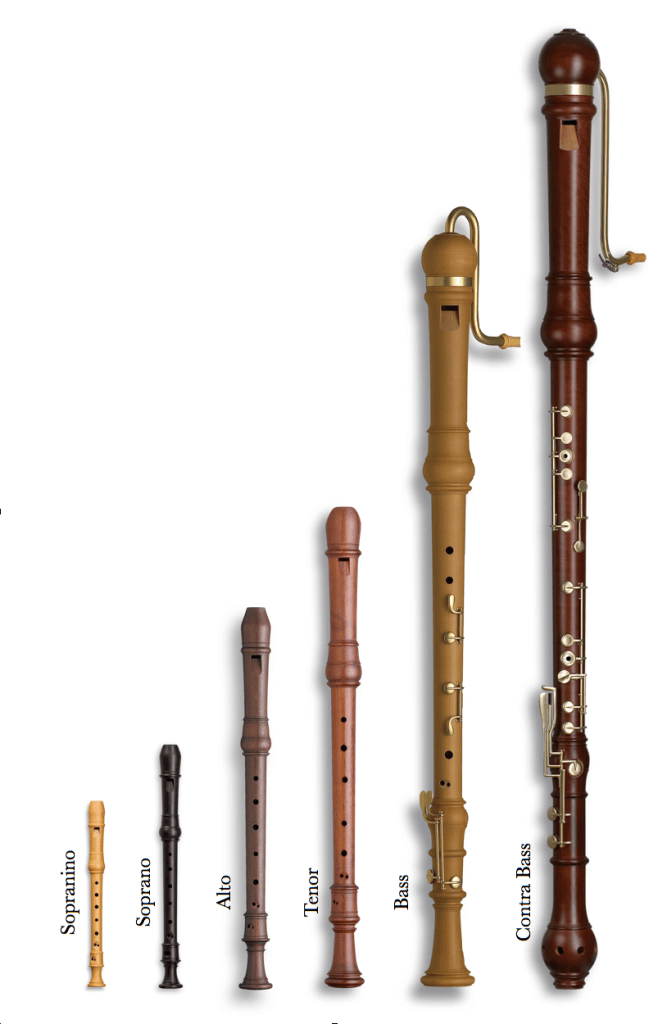
Two noteworthy things about this cantata are the dramatic change from sadness to joy, and the use of the sopranino recorder, or “flauto piccolo” in the opening chorus and the alto aria.
The sadness on this “Jubilate” Sunday is because of the Gospel story for this Sunday: Jesus announces to his disciples that he is going to leave them, and that they will go through a period of hardship during which the rest of the world will mock them. Other cantatas Bach wrote for this Sunday are Cantata 12 Weinen, Klagen, Sorgen, Zagen and Cantata 146 Wir müssen durch viel Trübsal. But in the alto recitative (fourth movement), the turning point is announced: “dass meine Traurigkeit in Freude soll verkehret werden” (that my sorrow will be turned to joy). Bach makes a big deal here of illustrating the word “Freude” and then does that again, even more exuberantly in the tenor aria that follows: there the illustration of the word “Freude” is six measures and almost 100 notes long.
In both cases, Bach used the sopranino part to illustrate the word “Morgenstern” (Morning Star) in the text, creating an extra constellation over the highest notes of the sopranos with the even higher notes of the recorder. It is not completely clear why Bach uses the sopranino this time, in Cantata 103. There are theories that the instrument is meant to illustrate the “mocking” of the outside world. But, as Bach always paints the entire story of a cantata already in the opening chorus, I think he perhaps might have used the recorder to convey the message of “there will be joy at the end” in the otherwise very sad opening chorus. But who knows, his reason for using the instrument might simply have been that the virtuoso player was in town again, since it was around the time of the big Easter Trade Fair that Bach was writing this music.
Whatever the reason, it is very likely that there was only one person in 1725 among Bach’s colleagues who could play this. When Bach performed the piece again in later years, he changed the accompanying instrument in the alto aria to violin. There are also parts for a transverse flute. Herreweghe, Koopman, and Suzuki use a sopranino recorder in the alto aria, while Gardiner uses violin, and Ponseele (on the Il Gardellino recording) uses transverse flute.
To learn more about this cantata, you can now (2020) watch the excellent introduction (“Workshop”) by Rudolf Lutz of the J.S. Bach Foundation here on YouTube. The J.S. Bach Foundation just added English subtitles this video, so it is now also accessible to those who don’t understand German.
Since I have recently been following Bach’s cantata writing in 1725, again I refer to a post I wrote two years ago, when I wasn’t discussing the cantatas in any particular order yet.
Please read my blog post from 2016, slightly updated today, to learn more about Cantata 42 Am Abend aber desselbigen Sabbats, and to find a link to Herreghe’s recording of the cantata.
On the Road to Emmaus by Duccio, 1308-1311. Museo del’Opera del Duomo, Siena, Italy.
After the rewritten St. John Passion on Good Friday (read more about this in my post from this past Friday) and the “recycled” birthday cantata with new recitatives for the Easter-Oratorio (read more about this in yesterday’s post), Bach was now, in 1725, getting ready for performances of three new cantatas that form a beautiful sub-group within the cantatas of the 1724/1725 cycle.
Cantata 6 Bleib bei uns, denn es will Abend werden for Easter Monday (Bible story: Jesus appeared before two of his disciples while they were walking on the road to Emmaus).
Cantata 42 Am Abend aber desselbigen Sabbats, for the first Sunday after Easter (Bible story: while a small group of his disciples are inside a house in Jerusalem, with all the doors and windows locked, Jesus appears in their midst).
Gardiner believes that in Bach’s ideal plan, these cantatas were actually meant for the Easter season in 1724, not in 1725. In his book “Bach: Music in the Castle of Heaven,” he explains why cantata 6, 42, 67 and 85 share more characteristics with other 1724 cantatas, and were thus probably planned for that year. When Bach got behind with cantata composing because of the Passion according to St. John in 1724, he must have tabled the ideas for 6, 42, and 85 for 1725, and only wrote 67 in 1724.
My favorite recording of Cantata 6 Bleib bei uns, denn es will Abend werden is by Herreweghe, recorded live at a concert on June 12, 2014 in the Eglise Saint-Roch in Paris. Find the recording (audio only) here on YouTube.
Soloists are Dorothee Mields (soprano), Damien Guillon (countertenor), and Peter Kooij (bass).
The three Marys at the Empty Tomb by Jan van Eyck or Hubert van Eyck, ca. 1425-1435. Museum Boijmans-Van Beuningen, Rotterdam, The Netherlands.
I’m in movie script mode again today. While I don’t know this for sure at all, I think that early in 1725, Bach had probably already decided to not to let things get as crazy as the previous year (in 1724) around Easter. That year, he had seriously run out of time, and had to adjust many of his plans. Gardiner thinks this happened because the writing, rehearsing, and performing of his Passion according to St. John had taken Bach much more time than he thought, and had forced him to make several shortcuts in the weeks ahead. Read more about all this in my post about Easter 1724 and subsequent posts.
So I imagine that this year, in 1725, Bach must have been planning ahead. Without any more “old” Easter cantatas in his portfolio, he had to have something else ready for the choir and orchestra to rehearse alongside the Passion for Good Friday, whatever that Passion was going to be.
So when the friendly Duke Christian von Sachsen-Weissenfels asked for some Tafelmusik to be performed for his 44th birthday on February 23, 1725, Bach might very well have thought from the beginning: perfect, that music can double as an Oratorio for Easter Sunday.
Listen to Herreweghe’s recording of the Easter Oratorio here on YouTube. Soloists are Barbara Schlick, soprano; Kai Wessel, alto; James Taylor, tenor; and Peter Kooy, bass.
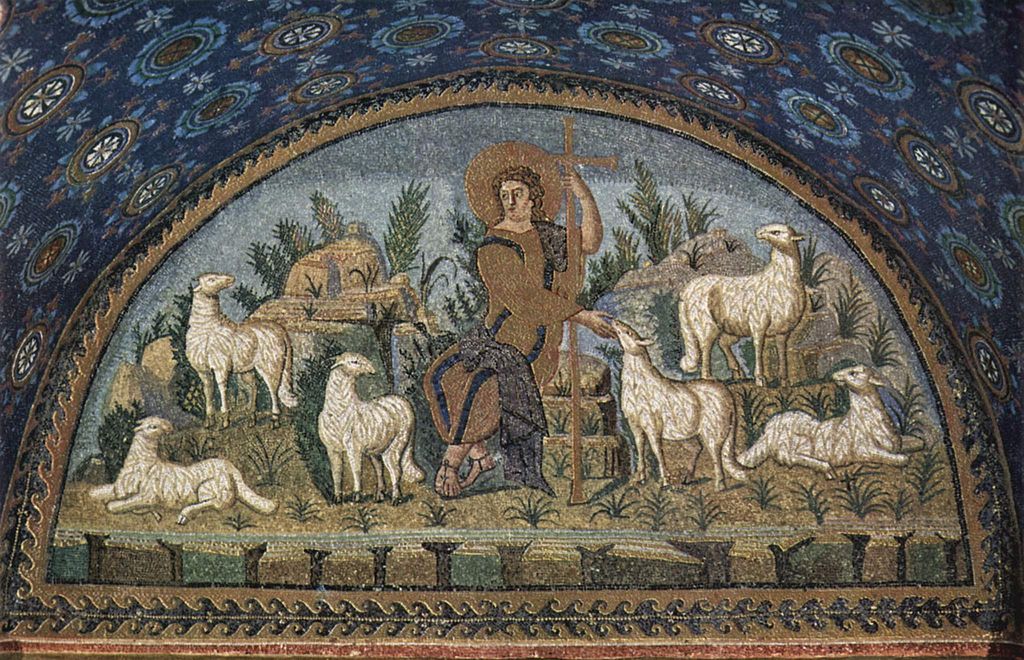
The Tafelmusik for Duke Christian became Entfliehet, verschwindet, entweichet, ihr Sorgen, also known as Schäferkantate, BWV 249a. When recycling this into the Easter Oratorio, Kommt, eilet und laufet BWV 249, Bach kept the cheerful opening sinfonia and the exquisite, plaintive adagio, two instrumental movements that were probably originally from a concerto he wrote in Köthen. He also kept the music of the opening and closing chorus, and of all the arias, only changing the text.
Here you can see how little he did change the text in this table, courtesy of Eduard van Hengel:
Schäferkantate (BWV 249a, 23/2/25)
Oster-oratorium (BWV 249, 1/4/1725)
3.
Entfliehet, verschwindet, entweichet, ihr Sorgen
verwirret die lustigen Regungen nicht!
Lachen und Scherzen
erfüllet die Herzen
die Freude malet das Gesicht.
5. Hunderttausend Schmeicheleien
wallen jetzt in meiner Brust.
Und die Lust
so die Zärtlichkeiten zeigen,
kann die Zunge nicht verschweigen.
7. Wieget euch, ihr satten Schafe,
in dem Schlafe
unterdessen selber ein!
Dort in jenen tiefen Gründen,
wo schon junge Rasen sein,
werden/wollen wir euch wieder finden.
9. Komm doch, Flora, komm geschwinde,
hauche mit dem Westenwinde
unsre Felder lieblich an!
Daß ein treuer Untertan
seinem milden Christian
Pflicht und Schuld bezahlen kann.
11. Glück und Heil
bleibe dein beständig Teil!
Großer Herzog, dein Vergnügen
müsse wie die Palmen stehn,
die sich niemals niederbiegen,
sondern bis zum Wolken gehn!
So werden sich künftig
bei stetem Gedeihen
die deinen mit Lachen
und Scherzen erfreuen.
Kommt, eilet und laufet, ihr flüchtigen Füße,
Erreichet die Höhle, die Jesum bedeckt!
Lachen und Scherzen
Begleitet die Herzen,
Denn unser Heil ist auferweckt.
Seele, deine Spezereien
Sollen nicht mehr Myrrhen sein.
Denn allein
Mit dem Lorbeerkranze prangen,
Stillt dein ängstliches Verlangen.
Sanfte soll mein Todeskummer,
Nur ein Schlummer,
Jesu, durch dein Schweißtuch sein.
Ja, das wird mich dort erfrischen
Und die Zähren meiner Pein
Von den Wangen tröstlich wischen.
Saget, saget mir geschwinde,
Saget, wo ich Jesum finde,
Welchen meine Seele liebt!
Komm doch, komm, umfasse mich;
Denn mein Herz ist ohne dich
Ganz verwaiset und betrübt.
Preis und Dank
Bleibe, Herr, dein Lobgesang.
Höll und Teufel sind bezwungen,
Ihre Pforten sind zerstört.
Jauchzet, ihr erlösten Zungen,
Dass man es im Himmel hört.
Eröffnet, ihr Himmel,
die prächtigen Bogen,
Der Löwe von Juda
kommt siegend gezogen!
In order to tell the story of two Marys (yes I realize the painting I use here has three Marys – each Gospel has a different version of this story), Peter, and John finding the empty tomb, Bach added recitatives in between the arias. Note that he doesn’t write a part for an evangelist, the way he did that in his Passions and in his Christmas Oratorio.
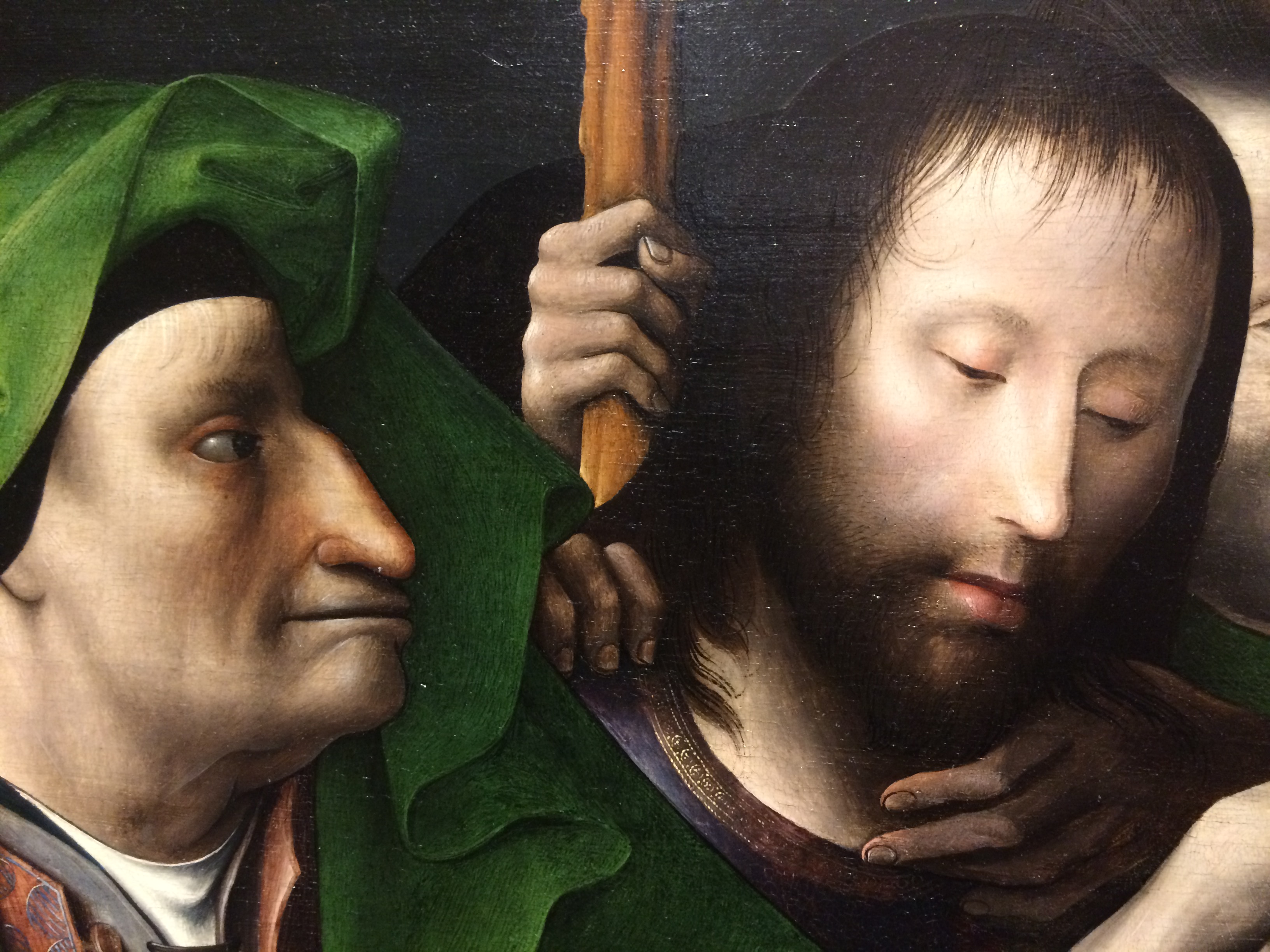
Detail of The Arrest of Christ by Hieronymus Bosch, ca. 1515. San Diego Museum of Art.
As I’ve mentioned over the past few months, Bach might have initially been planning to perform a St. Matthew Passion on Good Friday in 1725 in Leipzig.
If he was indeed planning that, he didn’t finish it in time. Did he run out of time, did he have a conflict with the Leipzig City Council, or did he change his mind? We don’t know. Fact is that on Good Friday 1725 he performed a new version of his St. John Passion from the year before. The most notable difference is the new opening chorus: O, Mensch, bewein dein Sünden groß instead of the Herr, unser Herrscher from the year before.
Find Herreweghe’s recording from 2001 of that 1725 St. John Passion here on YouTube.
Soloists are: Tenor [Evangelist, Arias]: Mark Padmore; Bass [Jesus]: Michael Volle; Soprano: Sibylla Rubens; Counter-tenor: Andreas Scholl; Bass [Arias, Pilatus]: Sebastian Noack; Bass [Petrus]: Dominik Wörner; Tenor [Servus]: Malcolm Bennett; Soprano [Ancilla]: Cecile Kempenaers
But let’s just leave the St. Matthew / St. John discussion for what it is, and just look at that opening chorus. Having followed Bach’s 1724/1725 chorale cantatas in the order he wrote and performed them, it is not a stretch to consider that Bach might have been working up to this elaborate chorale fantasia since February 2. I mentioned in my post for that day that it felt as if something new was coming.
When you look at Cantatas 125, 126, 127, and 1, the four cantatas Bach wrote and performed between February 2 and March 25, you see a beautiful line-up of chorale fantasias, one even more special than the other. So perhaps there was no stress or doubt at all in Bach’s mind about what to write for Good Friday 1725, at least not as far as the opening chorus was concerned. He might have been planning for O, Mensch to open his Good Friday passion since the end of January, and might have been doing studies for it in Cantatas 125, 126, 127, and 1.
Entry of Christ into Jerusalem by Pietro di Giovanni d’Ambrogio, 1435-1440. Pinacoteca Stuard, Parma, Italy.
Following Bach’s cantata writing in 1725, we have now come to Cantata 1 Wie schön leuchtet der Morgenstern, an oh so pretty composition with two horns in the orchestra, also the very last of Bach’s 1724/1725 cycle of chorale cantatas. And Bach probably knew that when he was writing it. It is based on the chorale about the Morning Star, a metaphor for Christ.
The recording of this cantata I like best is the one by Montreal Baroque, with soprano Monika Mauch, counter-tenor Matthew White, tenor Charles Daniels, and bass Stephan MacLeod. Please find it here in my playlist on Spotify. If you don’t have access to Spotify, you can purchase the album here on Amazon or listen to Harnoncourt’s recording on YouTube.
This cantata was the first I ever wrote about. It was in college, as an assignment for Frits de Haen: we had to compare a modern-instrument and a period-instrument recording of a piece of our choice. I don’t remember why I selected this cantata. At the time the only period-instrument recording I had was the one by Harnoncourt. Frits loved the review I wrote (in Dutch) and kept giving me nudges to write more. For several years in a row after that first review I wrote for his class, I would run into him at the Utrecht Early Music Festival or at another concert, and he would always ask “are you still writing?” or “why aren’t you writing?” and told me that I should really write every day or every week. His words have always stayed with me and are one of several reasons why I started writing this blog in January 2016.
You might think it is because of Palm Sunday that there was music in the Leipzig churches again on this Sunday. However, in Leipzig Palm Sunday was firmly part of Lent (the 40 days of introspection before Easter): no thinking beyond the crucifixion until Good Friday, and thus not celebrated with music. Or was it?
An exception was always made for the Annunciation of Mary: if that day, March 25, fell within Lent, it would still be celebrated, an thus Bach could write a cantata for that day.
The only surviving Bach cantatas for the Annunciation of Mary, Cantata 182 Himmelskönig, sei wilkommen from 1714** and Cantata 1 Wie schön leuchtet der Morgenstern from 1725 were written for days when this holiday fell on Palm Sunday. And perhaps not surprisingly, both these cantatas are also very much Palm Sunday cantatas, or at least Bach’s librettist interprets the Annunciation as yet another announcement of the arrival of Christ. The references to the coming of Christ outnumber the references to Mary, in the text as well as in the music.
I think it is striking that in Cantata 1 Wie schön leuchtet der Morgenstern Bach uses a chorale that was so strongly associated with the Christmas season, and writes music that is festive and perhaps even regal, but at the same time humble, with horns in the orchestra instead of the trumpets and timpani he would have used for a bigger holiday. Whether he was indeed illustrating the Palm Sunday story (a humble king entering Jerusalem, riding on a donkey) I don’t know, but it is very well possible.
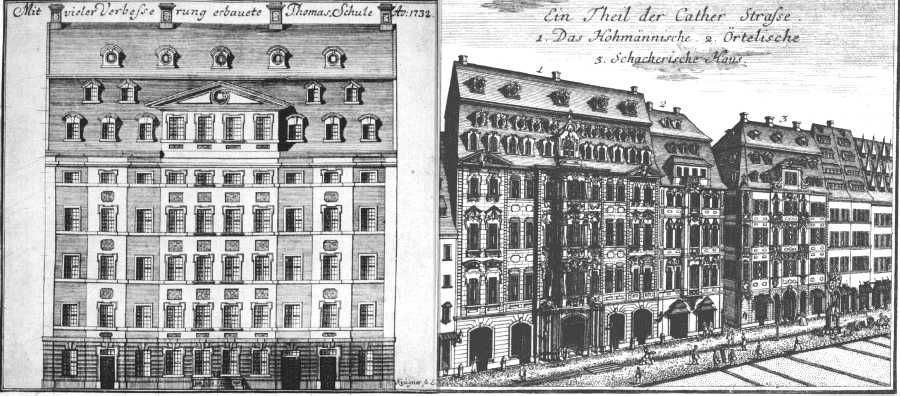
On the left the rebuilt Thomas School Anno 1732. The apartment of the Bach family was on the left of the building. On the right is “a part of the Cather(ine) Street”. Zimmermann’s Café which hosted Bach’s Collegium Musicum was located in the center building labeled “2”.
Around this time in 1725, Bach was still on a break from writing cantatas (they were not to be performed in Leipzig during the 40 days before Easter), but was by no means resting. On the contrary, he was likely rather stressed out about his passion music for Good Friday 1725.
We know that on Good Friday 1725, Bach performed a revised version of his St. John Passion from 1724. We don’t know why he revised it, and some scholars such as John Elliot Gardiner even suggest that Bach had been planning to perform a St. Matthew Passion instead.*
If we could only travel back in time and find out what happened. If it was indeed Bach’s plan to perform a completely new composition, why did he not perform it until 1727? Did he simply run out of time, or did the Leipzig city council not approve of the piece? And why exactly did he revise the St. John Passion? Did he want to change it himself, or had the presentation of Jesus as victor** in the original 1724 version irked the city council?
Now for some music, related to my previous blog post, but completely unrelated to the passion stress story above:
Following up on my post from two weeks ago, there are two more cantata movements that show up in Bach’s “Schübler” organ chorales:
The fifth movement of Cantata 10 Meine Seele erhebt den Herren (live performance in the St. Thomas Church in Leipzig by alto Bogna Bartosz, tenor Jörg Dürmüller, and the Amsterdam Baroque Orchestra under the direction of Ton Koopman) disguised as organ chorale BWV 648 (Ton Koopman on the historic Müller organ (1724) of the Grote Kerk in Leeuwarden, The Netherlands) with the same title. Click on the links to watch and listen on YouTube.
*In his book Music in the Castle of Heaven, John Elliot Gardiner makes a strong case that Bach might have initially planned to have the St. Matthew Passion ready for Good Friday 1725. Read this blog post to find out why that is not an unlikely scenario at all.





 Weekly Cantata