Weekly Cantata

Weekly Cantata

Category Archives: Bach’s life

Trip to Köthen – Saturday, June 8 – Part One

20 Thursday Jun 2024

Posted by cantatasonmymind in Bach's life, Cantatas, Köthen, Leipzig

≈ Leave a comment

Tags

Anna Magdalena Bach, Bach, Bach Travel, Bachfest Leipzig, Brandenburg concertos, cello, cello-suites, Elbe-Saale, Hop farms, Leipzig courtyards, Reisen, Sachsen, Sachsen-Anhalt, Saxony, Viabundus, violin-partitas

View of the city of Köthen. Copper engraving from around 1720. Bach-Archiv Leipzig.

This is the second post about my experience at Bachfest Leipzig 2024. Please find my first post, about Friday, June 7, here. Find the program for Bachfest Leipzig 2025 here.
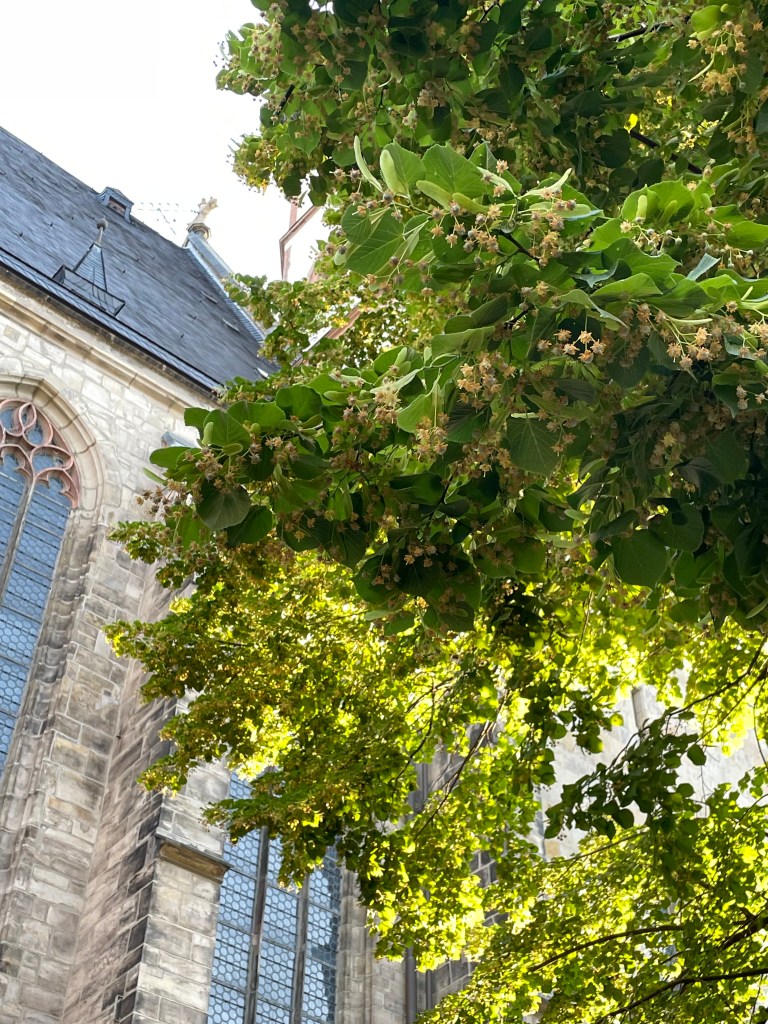
7 am walk through Leipzig’s historic center

Because of the back-to-back activities on Friday I hadn’t made it to a supermarket before 10 pm, so I went on a grocery run at 7 am on Saturday. I took a little detour past the Thomaskirche, just to be sure where to locate the “main portal” where the bus to Köthen would leave from at 9:30. Something I forgot to mention in my earlier post: this time of year there are blooming linden trees everywhere in Leipzig! So many more than in Amsterdam. The blossoms provide a delightful and calming fragrance.

I’m so glad I listened to the Reisen reisen podcast before traveling to Leipzig, otherwise I wouldn’t have known to walk into the many courtyards one finds in this city. I found the one pictured here on Saturday morning, and another gorgeous one on Sunday. There are several others I missed, so I will have to come back! Walking in these courtyards I could imagine a bit better how the city must have looked in Bach’s time.

On the way back to my apartment I even found a friendly fruit and vegetable seller setting up early for the weekly open market, so I was all set for making breakfast and a sandwich to take on the bus to Köthen.

On the bus to Köthen

Around 9 am I found a seat on the festival bus to Köthen, together with 49 other Bach fans from all over the world. Köthen is where Bach lived and worked from 1717 to 1723, between his time in Weimar and his time in Leipzig. It was here that he wrote his Brandenburg concertos, cello suites, his sonatas and partitas for solo violin, and several other instrumental works. He had an appreciative employer and got to work with probably the best orchestra he ever had in his life. He retained his title of “Court Capellmeister” even after leaving his post. His wife Anna Magdalena had been a singer at this court for two years before they moved to Leipzig, and together they made the journey from Leipzig to Köthen at least three times to perform for the Prince together.

I visited Arnstadt, Mühlhausen, and Weimar in 2022, but had never been to Köthen, so it was a no-brainer for me to join this “Bach out and about” trip.* The landscape between Leipzig and Köthen, at least as seen from the freeway, is much less interesting than that of Thuringia, the region where Bach spent the first part of his life, and where I traveled in 2022. This was actually a good thing, so there were no spectacular views to distract me from our guide Gerlinde Kämmerer’s stories about Bach’s life in Köthen and his travels between Leipzig and Köthen.

Something new I learned during this bus trip: roads used by carriages in this area in the early 18th century were stone roads (“Steinwege” in German), which we should not understand as cobblestone or gravel, but a bit more like this one pictured here, rough stones hammered into sand or clay, but not as clean-looking – Gerlinde explained there would have been all kinds of dirt sticking to the surface. All this made for very uncomfortable travel and the carriage would have had to make several stops along the way. Looking it up on the fantastic new interactive map by Viabundus, a carriage-trip from Leipzig to Köthen would have taken more than one whole day in Bach’s time.

When we got close to Köthen and turned off the highway we saw fields of poppies and several hop farms. Hops have been grown in this Elbe-Saale region for centuries. The first written records date to the 9th century. Today this hop growing region is the second-largest in Germany, with around 1550 hectares (about 3830 acres).


Hop farm. Plants reach full height at the end of June

More about this trip, and what we actually saw and heard in Köthen, in the next post.

Wieneke Gorter, June 20, 2024. Links updated November 29, 2024.

*Each year the festival organizes a handful of these trips to other towns in the region. It is a combination of city and/or museum tour in the morning and organ or chamber music concert in the afternoon. The concert is usually in collaboration with a local organization, so there will be more people attending the concert than just you and your fellow travelers. But for the rest of the day you are with your travel group only. Once at the destination, the groups gets split into English-speakers and German-speakers. The trips are well organized, you travel in a comfortable coach, and there are knowledgeable guides and excellent translators on board (more about this in the next post). There is a lunch break long enough to eat at a local restaurant or go for a walk. On the way there, you get a lecture about what you are going to see, and on the way back you can take a nap, chat with new friends you made on the trip, or organize all the photos you took. This year these trips cost €88 each and I found it well worth it.
Three cantatas for Trinity 14

10 Sunday Sep 2023

Posted by cantatasonmymind in 1723 Trinity season special series, Bach's life, Cantatas, Chorale cantatas 1724/1725, Leipzig, Trinity

≈ Leave a comment

Tags

BWV 17, BWV 25, BWV 78, Trinity 14

As far as we know, Bach wrote three cantatas for this 14th Sunday after Trinity. Please find them all in my post from 2020. It was helpful for me to re-read all these posts from the past seven years. I counted my blessings that I don’t live in wildfire country anymore, and was reminded of my dream to create a podcast about the beauty of the many “trio sonata” tenor arias in Bach cantatas. It will be a while, and I have learned not to promise anything, but if you subscribe to my blog, you’ll be the first to know 🙂

Wieneke Gorter, September 10, 2023.

Celebrating gratitude: the third time Bach writes for Trinity 14

About Weekly Cantata

I am a bilingual writer, publicist, choral singer, art and nature lover, happy wife, and blessed mother of two. I started this blog in 2016, inspired by my late mother’s love for Bach’s cantatas. After 23 years in the San Francisco Bay Area, I’m now back in the Netherlands.

If you are on social media, please follow me:

  • Facebook
  • Instagram

Please subscribe!

Please subscribe to this blog! Simply fill in your email address and you’ll receive an email every time I’ve published a new post. Thank you so much / Vielen Dank / Dankuwel / Merci mille fois / 감사합니다 / 谢谢 / ありがとう / Mille grazie / Muchas gracias / Muito obrigado / Tusen takk / Tack så mycket / Terima kasih / شكراً جزيلاً / תודה רבה

Designed with WordPress.com

Multifunctional trumpets, from 1723 to 1748

27 Sunday Aug 2023

Posted by cantatasonmymind in 1723 Trinity season special series, Bach's life, Cantatas, Leipzig, Trinity

≈ Leave a comment

Tags

Alex Potter, BWV 69, BWV 69a, Christ healing a deaf mute, Dominik Wörner, Eduard van Hengel, J.S. Bach Foundation, J.S. Bach Stiftung, Karl Graf, Michael Maul, Miriam Feuersinger, Mirjam Berli, Peter Kooij, Raphael Höhn, Rudolf Lutz, Thomas Hobbs, Trinity 12, trumpets

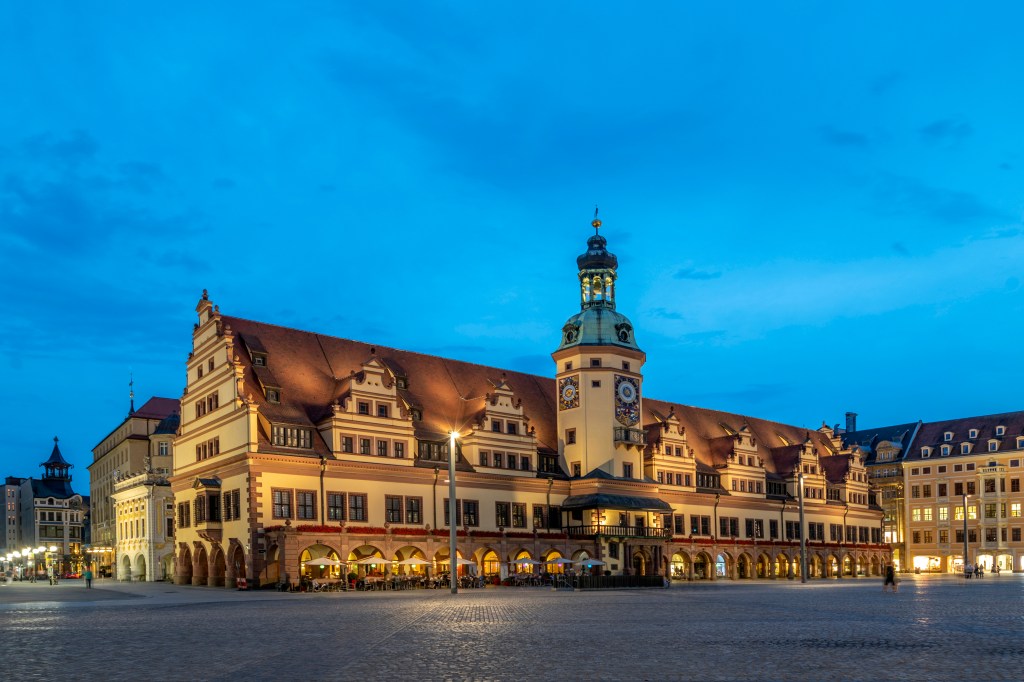
Old Town Hall in Leipzig

For those of you receiving this in email, please click on the post to read in a web browser, as images and table will display much better that way.

For this Sunday in 1723, the 12th after Trinity, Bach wrote Cantata 69a Lobe den Herrn, meine Seele. In my post from 2016 I remarked how unusual it was for Bach to use trumpets on such a “normal” Sunday, and imagined his father-in-law being in town for a visit. But this week I heard two better arguments. 

In his podcast, Bach scholar Michael Maul suggests that after the incredibly serious and sad music of the past three Sundays, Bach might have realized that the Leipzig churchgoers needed to hear something more upbeat. This might sound trivial, but if you look at Bach’s passions, he knew very well when a change in mood was needed and mastered that skill like a great opera composer or playwright. In addition to this good reason, I was also convinced by theologian Karl Graf in the J.S. Bach Foundation’s lecture about Cantata 69a, because he reminded me that the Bible story on which this cantata is based is that of Christ healing a deaf mute. Graf points out that in the time of the Bible, but also still in Bach’s time, a deaf mute would not only have been excluded from society, but would also have been considered a person without faith. Thus, the rejoicing by chorus and trumpets is not only an illustration of the praise the crowd gives after witnessing the miracle, but especially of this person finding faith.

A quarter century later, in 1748, Bach recycled this cantata during the same time of year, but for a completely different occasion: the installation of the new Town Council, or “Ratswahl.” The “Ratswahl” was always on the first Monday after August 24 (the feast of St. Bartholomew); which in 1748 fell on Monday, August 30. Bach must have written about 27 Ratswahl cantatas, but only six have survived.

I have listed Bach’s changes in 1748 here below, expanding on a table created by Eduard van Hengel. I’ve included links for live video recordings of both cantatas (just click on the link at the top of each column).

Cantata 69a for Trinity 12 1723

Live video recording by the J.S. Bach Foundation, Rudolf Lutz, conductor. With
Mirjam Berli, soprano; Alex Potter, alto; Raphael Höhn, tenor; Dominik Wörner, bass.
Cantata 69 for Ratswechsel 1748

Live recording by the Netherlands Bach Society, Peter Dijkstra, conductor. With
Miriam Feuersinger, soprano; Alex Potter, alto; Thomas Hobbs, tenor; Peter Kooij, bass.
Please find the German texts with English translations here, and the score herePlease find the German texts with English translations here, and the score here
Opening ChorusOpening Chorus, unchanged
Soprano recitative, 11 measures

Ach, dass ich tausend Zungen hätte!
Ach wäre doch mein Mund
Von eitlen Worten leer!
Ach, dass ich gar nichts redte,
Als was zu Gottes Lob gerichtet wär!
So machte ich des Höchsten Güte kund;
Denn er hat lebenslang so viel an mir getan,
Dass ich in Ewigkeit ihm nicht verdanken kann.
Soprano recitative, 18 measures

Wie groß ist Gottes Güte doch!
Er bracht uns an das Licht,
Und er erhält uns noch.
Wo findet man nur eine Kreatur,
Der es an Unterhalt gebricht?
Betrachte doch, mein Geist,
Der Allmacht unverdeckte Spur,
Die auch im kleinen sich recht groß erweist.
Ach! möcht es mir, o Höchster, doch gelingen,
Ein würdig Danklied dir zu bringen!
Doch, sollt es mir hierbei an Kräften fehlen,
So will ich doch, Herr, deinen Ruhm erzählen.
Tenor aria in C Major with recorder and oboe da caccia

Meine Seele,
Auf, erzähle,
Was dir Gott erwiesen hat!
Rühmet seine Wundertat,
Laßt ein gottgefällig Singen
Durch die frohen Lippen dringen!
Alto aria in G Major with violin and oboe


Meine Seele,
Auf! erzähle,
Was dir Gott erwiesen hat!
Rühme seine Wundertat,
Laß, dem Höchsten zu gefallen,
Ihm ein frohes Danklied schallen!
Alto recitative with continuo only,
18 measures

Gedenk ich nur zurück,
Was du, mein Gott, von zarter Jugend an
Bis diesen Augenblick
An mir getan,
So kann ich deine Wunder, Herr,
So wenig als die Sterne zählen.
Vor deine Huld, die du an meiner Seelen
Noch alle Stunden tust,
Indem du nur von deiner Liebe ruhst,
Vermag ich nicht vollkommnen Dank zu weihn.
Mein Mund ist schwach, die Zunge stumm
Zu deinem Preis und Ruhm.
Ach! sei mir nah
Und sprich dein kräftig Hephata,
So wird mein Mund voll Dankens sein.
Tenor recitative with strings 
26 measures

Der Herr hat große Ding an uns getan.
Denn er versorget und erhält,
Beschützet und regiert die Welt.
Er tut mehr, als man sagen kann.
Jedoch, nur eines zu gedenken:
Was könnt uns Gott wohl Bessres schenken,
Als dass er unsrer Obrigkeit
Den Geist der Weisheit gibet,
Die denn zu jeder Zeit
Das Böse straft, das Gute liebet?
Ja, die bei Tag und Nacht
Vor unsre Wohlfahrt wacht?
Laßt uns dafür den Höchsten preisen;
Auf! ruft ihn an,
Dass er sich auch noch fernerhin so gnädig woll erweisen
Was unserm Lande schaden kann,
Wirst du, o Höchster, von uns wenden
Und uns erwünschte Hilfe senden.
Ja, ja, du wirst in Kreuz und Nöten
Uns züchtigen, jedoch nicht töten.
Bass ariaBass aria, unchanged
Closing chorale with instruments doubling the vocal lines

Was Gott tut, das ist wohlgetan,
Darbei will ich verbleiben.
Es mag mich auf die rauhe Bahn
Not, Tod und Elend treiben:
So wird Gott mich
Ganz väterlich
In seinen Armen halten.
Drum lass ich ihn nur walten.
Closing chorale with separate parts for trumpets and timpani

Es danke, Gott, und lobe dich
Das Volk in guten Taten.
Das Land bringt Frucht und bessert sich,
Dein Wort ist wohl geraten.
Uns segne Vater und der Sohn,
Uns segne Gott, der Heilge Geist,
Dem alle Welt die Ehre tut,
Für ihm sich fürchten allermeist,
Und sprecht von Herzen: Amen!

Wieneke Gorter, August 27, 2023.

About Weekly Cantata

I am a bilingual writer, publicist, choral singer, art and nature lover, happy wife, and blessed mother of two. I started this blog in 2016, inspired by my late mother’s love for Bach’s cantatas. After 23 years in the San Francisco Bay Area, I’m now back in the Netherlands.

If you are on social media, please follow me:

  • Facebook
  • Instagram

Please subscribe!

Please join my readers from all over the world and subscribe to this blog! Simply fill in your email address and you’ll receive an email every time I’ve published a new post. Thank you so much / Vielen Dank / Merci mille fois / 감사합니다 / 谢谢 / ありがとう / Mille grazie / Muchas gracias / Muito obrigado / Takk / Terima kasih / Dankuwel!

Designed with WordPress.com

Playing with fugues & Bach’s harpsichord at Köthen

24 Thursday Aug 2023

Posted by cantatasonmymind in 1723 Trinity season special series, Bach's life, Cantatas, Köthen, Leipzig, Trinity

≈ Leave a comment

Tags

Berlin, BWV 179, BWV 872, Charlottenburg Castle, Christine Schornsheim, Eduard van Hengel, fugue, harpsichord, Köthen, Leipzig, Michael Mietke, Netherlands Bach Society, Richard Atkinson, Trinity 11, Well Tempered Clavier

“The White Mietke,” a single manual* harpsichord built by Michael Mietke in Berlin, circa 1700. Lacquer artist: Gérard Dagly. Charlottenburg Castle, Berlin, Germany. In his last four years in Köthen, Bach played on a double manual harpsichord by the same builder, built especially for him in 1719.

This past Sunday was the 11th Sunday after Trinity, for which Bach wrote Cantata 179 Siehe zu, daß deine Gottesfurcht nicht Heuchelei sei (See that your fear of God is not hypocrisy) in 1723 in Leipzig. 

Much has been written about the stunning fugue in the opening chorus of this cantata, and I happily refer you to my posts from 2016 and 2020 for more information and a link to my favorite recording. But last week I learned something completely new about this opening chorus, thanks to yet another fabulous video series that saw the light during the pandemic: Richard Atkinson’s Bach Analyses. Since I’m a visual learner, I truly love watching videos like these. At first I merely started watching Richard’s video on the opening chorus of Cantata 179 to see if it would perhaps make the complex structure of the composition a bit easier to understand than Eduard van Hengel’s written explanation I had discussed in 2016.

And indeed it really helped me understand the music better! But what’s more, in that video Richard points out that the fugue from Cantata 179 shares some unusual composition techniques as well as themes with another mind boggling fugue by Bach, namely that of his Prelude and fugue no. 3 in C-sharp major (BWV 872) from the Well Tempered Clavier, Book II. As far as I know, no other Bach scholar or commentator ever mentioned this. Listen to that fugue here, played by Christine Schornsheim. We don’t know when exactly Bach wrote the keyboard piece, because we only have the publication date of the collection in which it appeared (Well Tempered Clavier Book II, 1740). It is possible that the cantata came first, but it is just as likely that Bach would have written the keyboard work before the cantata, while still employed at Köthen.   

Thinking of Bach playing with fugues on the harpsichord in Köthen brings me to another bit about Bach’s life I learned last week, while watching the interview with Christine Schornsheim by the Netherlands Bach Society: that we actually know what kind of harpsichord Bach played in Köthen, from 1719 to 1723. To be clear: most harpsichord players and all harpsichord builders already know this, but I didn’t, and I thought it worth mentioning here.

Historical records show that the Prince of Köthen allowed Bach to order a harpsichord from the famous builder Michael Mietke in Berlin sometime in 1718, and got to pick it up in March 1719.

On March 1, 1719, the accounts read: “To the Capellmeister Bach for the Berlin-made harpsichord and travel expenses 130 Thaler”. On March 14, Gottschalk, the chamber servant, also received eight thalers in “wages for transporting the Berlin harpsichord.”

The instrument remained in the princely music chamber; Bach did not get to take it with him when he moved  to Leipzig in May 1723. In 1784, the instrument is still mentioned: “The large harpsichord or grand piano with 2 manuals, by Michael Mietke in Berlin, 1719, defect.”

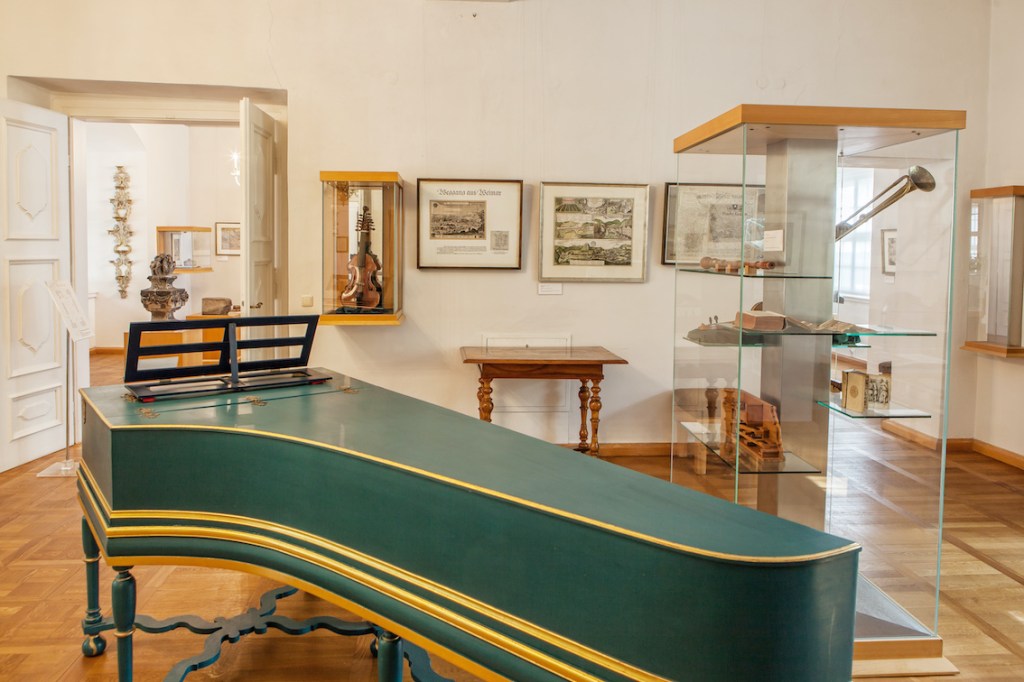
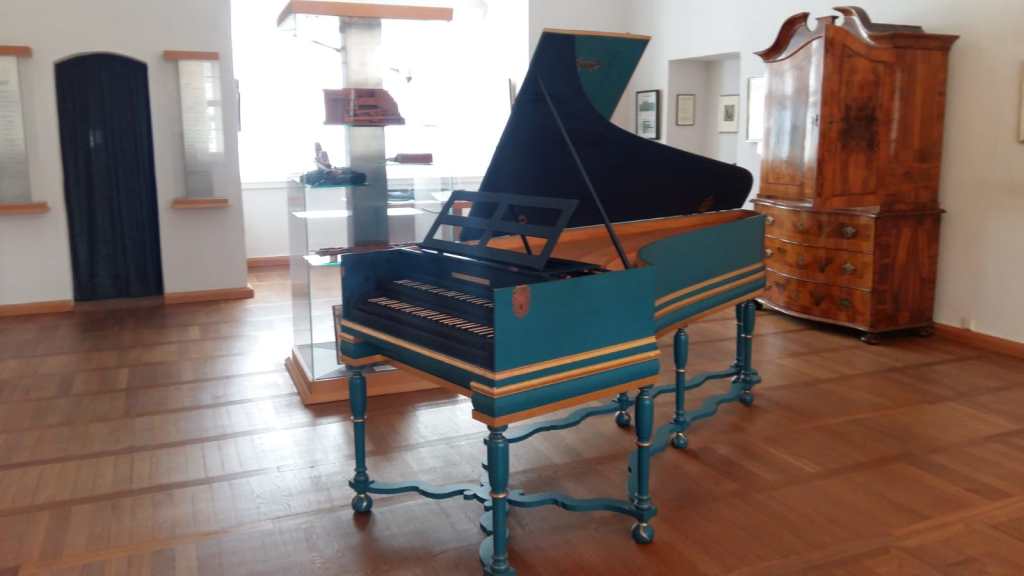
Many harpsichord builders have created copies of Bach’s “Mietke harpsichord.” In the video registration of the Prelude and fugue no. 3 in C-sharp major (BWV 872), Christine Schornsheim plays a terrific copy by Bruce Kennedy. The Köthen Castle had a copy made in 1992 by Martin-Christian Schmidt, pictured here: 

For the picture at the top of this blog post I chose one of the very few original Mietke harpsichords that have survived to this day, the “White Mietke” at the Charlottenburg Castle in Berlin. It was built almost two decades earlier than Bach’s harpsichord, it only has one single keyboard, and it was decorated by the court painter at Charlottenburg. 

Wieneke Gorter, August 23, 2023. 

*manual = keyboard

About Weekly Cantata

I am a bilingual writer, publicist, choral singer, art and nature lover, happy wife, and blessed mother of two. I started this blog in 2016, inspired by my late mother’s love for Bach’s cantatas. After 23 years in the San Francisco Bay Area, I’m now back in the Netherlands.

If you are on social media, please follow me:

  • Facebook
  • Instagram

Please subscribe!

Please join my readers from all over the world and subscribe to this blog! Simply fill in your email address and you’ll receive an email every time I’ve published a new post. Thank you so much / Vielen Dank / Merci mille fois / 감사합니다 / 谢谢 / ありがとう / Mille grazie / Muchas gracias / Muito obrigado / Takk / Terima kasih / Dankuwel!

Designed with WordPress.com

Bach’s version of Jeremiah’s Lament

11 Friday Aug 2023

Posted by cantatasonmymind in 1723 Trinity season special series, Bach's life, Cantatas, Leipzig, Trinity

≈ Leave a comment

Tags

Dresden, J.S. Bach Foundation, Jan Dismas Zelenka, Karl Graf, Philippe Herreweghe, Rudolf Lutz, Trinity 10, Zelenka

Jeremiah Lamenting the Destruction of Jerusalem by Rembrandt van Rijn, 1630. Oil on panel. Rijksmuseum, Amsterdam, The Netherlands. Click here for more information about this painting.

Continuing with Bach’s 1723 cantata cycle, next up is Cantata 46 Schauet doch und sehet, ob irgend ein Schmerz sei, written for the 10th Sunday after Trinity (August 1st in 1723). 

My favorite recording of this cantata is still the one by Herreweghe from 2012, which you can find here on YouTube via a playlist I created. However if you’d like to see all the special instruments in action, I highly recommend the J.S. Bach Foundation’s live video registration, with a tromba da tirarsi (slide trumpet) and recorders* in the opening chorus, a Baroque trumpet in the bass aria, and an oboe da caccia (hunting oboe, also new for Bach in Leipzig) as well as the recorders in the alto aria.

Please find the text here, and the score here.

Scholars agree that last week’s Cantata 105 and this week’s Cantata 46 Schauet doch und sehet, ob irgend ein Schmerz sei, can be seen as a pair within Bach’s works from that first summer in Leipzig. Here’s why: 

  1. The stunning opening choruses of these two cantatas are both written as if they were a Prelude and Fugue for organ. Bach would later use the Prelude part of Cantata 46’s opening chorus as the Qui tollis for his Mass in B Minor.
  2. Both cantatas contain a “floating aria.” With this I mean an aria without the usual fundament of a basso continuo (organ or harpsichord and cello), of which Bach’s most famous exemple is the Aus Liebe aria from his St. Matthew Passion. Bach included such an aria for the first time in last week’s Cantata 105 (the soprano aria Wir zittern und wanken) and one appears again in this week’s Cantata 46 (the alto aria Doch Jesus will auch bei der Strafe).
  3. Bach uses a da tirarsi brass instrument in both: a corno da tirarsi in 105 and a tromba da tirarsi in 46 (read last week’s post for more information about these).

I have written about some of these aspects of Cantata 46 before, but I never really paid much attention to the text. I needed Karl Graf, the theologian participating in the lecture about this cantata by the J.S. Bach Foundation**, to point out that the text of this cantata refers to two destructions of Jerusalem, in 586 BC by the Babylonians, and in 70 AD by the Romans. 

Jeremiah the Prophet laments the 586 BC massacre in his Lamentations of Jermiah, a collection of poetry from the Old Testament, from which Bach’s librettist takes the words for the opening chorus.

Jesus predicts the destruction by the Romans in 70 AD, and weeps about it, in Luke 19: 41-48, which was the official reading for this 10th Sunday after Trinity in Bach’s church. Bach and his librettist mix the two parts of the Bible, because in their minds it is all the same, history unfortunately repeats itself. The bass aria paints one of the most dramatic pictures ever in a Bach cantata, and the text of the alto recitative warns that Leipzig could be next! Fortunately, as usual in a Bach cantata, there’s the promise of salvation, and a lightening of the mood in the music as well, this time in the form of the pastoral alto aria.

Throughout the Renaissance and Baroque, Catholic and Anglican composers have set the Lamentations of Jeremiah to music for the Tenebrae services of Holy Week. A notable example are those by Jan Dismas Zelenka, Bach’s colleague at the Catholic court in nearby Dresden. Zelenka wrote his Lamentations of Jeremiah the Prophet for Holy Week in 1722, so roughly 1,5 years before Bach wrote his Cantata 46. While Bach and Zelenka knew each other and Bach had friends in the Dresden court orchestra, I truly don’t know if Bach was aware of Zelenka’s setting of the Lamentations prior to August 1st 1723. There are some interesting similarities between the compositions, for example Zelenka also opting for a pastoral scene towards the end, but that’s food for another blog post! For now I just like to think that Bach wrote his own Lutheran version of the Lamentations with this Cantata 46. 

Wieneke Gorter, August 11, 2023.

*It is the first time Bach uses recorders in Leipzig, but it is an instrument he often uses to portray sorrow.

**If you understand German or don’t mind automatically generated subtitles on YouTube, you can watch the extremely informative lecture about Cantata 46 here. It doesn’t just feature Rudolf Lutz and Karl Graf, but also Bach Scholar Michael Maul from the Bach-Archiv Leipzig.

Leipzig for Bach = finally getting to work with the legendary Reiche and his crazy instruments

06 Sunday Aug 2023

Posted by cantatasonmymind in 1723 Trinity season special series, Bach's life, Cantatas, Leipzig, Trinity

≈ 2 Comments

Tags

Anneke Scott, Bachstiftung, BWV 105, BWV 24, California Bach Society, Caspar Wilcke, corno da tirarsi, Egger, Gottfried Reiche, J.S. Bach Foundation, Olivier Picon, Rudolf Lutz, Stadtpfeiffer, Todd Williams, Trinity 4, Trinity 8, Trinity 9

Olivier Picon with a natural horn on the left, and corno da tirarsi on the right

I’m in movie script mode again and jumping back 300 years, to the summer of 1723 in Leipzig. I believe that when moving to Leipzig, Bach couldn’t wait to meet the town’s famous brass player, Gottfried Reiche (1667-1734). I imagine that throughout the summer of 1723, these two creative geniuses would have frequently been “geeking out” about Reiche’s exciting innovation in brass instruments: the corno da tirarsi (or slide horn, on the right in the picture above), for which Bach most probably started writing around Trinity 4 in 1723 (about a month before today’s cantata).

As far as we know Reiche owned the one and only specimen and was the only one who knew how to play it. Scholars consider it very likely that he had the instrument specially made for him, in order to play more complicated music on a horn than one could at the time on a natural horn. 

I have written about the corno da tirarsi before. However, I never fully realized how incredibly special that instrument must have been at the time, what the exact difference was with regular horns at the time, and how it works. Ironically, as a result of musicians being stuck at home during the pandemic, there are now some excellent educational videos on youtube, which explain all of this much better than I could ever do in writing.

So here goes with the lesson:

For an excellent demonstration of the limitations of natural horns before 1750, please watch the first three and a half minutes of this video by Todd Wiliams from the USA.

Then watch this video by Anneke Scott from the UK, about the corno da tirarsi as reconstructed by Egger.

Thank you Todd Williams and Anneke Scott! If you would like to show your appreciation for Anneke’s efforts, you can buy her a coffee on this website. 

Gottfried Reiche

There is no doubt in my mind that Bach had already heard about Leipzig’s highly skilled senior Stadtpfeiffer (town piper) Gottfried Reiche before moving to Leipzig in May of 1723. Bach came from a family of town pipers, and in 1721 he married into a family where every single male was a trumpet player (just sit with that for a few seconds). Reiche was of the same generation as Bach’s father-in-law Johann Caspar Wilcke (c. 1660–1733), and both had been trained in Weissenfels, which Olivier Picon qualifies as “probably the most important city in trumpet playing tradition in Germany at that time” in his 2010 thesis about the corno da tirarsi. I can imagine the animated discussions at both the Bach and the Wilcke family gatherings. Reiche’s virtuosity as well as his unusual instruments* must have been a frequent subject!

Now we come to today’s Cantata 105 Herr, gehe nicht ins Gericht mit deinem Knecht. (Enter not into judgement with Thy servant, O Lord.) It is one of my favorite cantatas, and Bach’s first** Leipzig cantata with a significant solo part for the corno da tirarsi, in the tenor aria. For the educational purpose of this blog as well as for the excellent rendition of the tenor aria I would like to feature the live video by the J.S. Bach Foundation, with Olivier Picon (pictured at the top of this post) playing the corno da tirarsi in the opening chorus, the tenor aria, and the closing chorale. Other soloists are Sibylla Rubens, soprano; Jan Börner, alto; Bernhard Berchtold, tenor; and Tobias Wicky, bass.

Picon initiated the reconstruction of the corno da tirarsi by the Swiss brass instrument firm Egger, which Anneke Scott also refers to in her video. Picon’s thesis from 2010, documenting the reconstruction as well as meticulously analyzing all cantatas that might have possibly been written for this instrument, is still the main source for scholars when discussing the corno da tirarsi. In this work, Picon also shares that Cantata 105 is his favorite cantata to play on the instrument.

Read the German text with English translations of Cantata 105 here, and find the score here.

Of course there’s much more to this cantata than just the unusual instrumentation. In 2021, also as part of a pandemic project, I wrote a post for California Bach Society highlighting all the ways in which this cantata foreshadows the St. Matthew Passion. Please find that post here.  

I welcome your questions, comments, or words of encouragement below in the comment-section. 

Wieneke Gorter, August 6, 2023.

*Reiche apparently was also the owner and player of another unique instrument, the tromba da tirarsi, or slide trumpet.
**Cantata 24 for the 4th Sunday after Trinity 1723 also features a solo part that might have been meant for the instrument, but opinions about this vary, and even Picon suggests the opening chorus might be played on a tromba da tirarsi (slide trumpet) and the closing chorale on a natural horn.

Following Bach in 1725 – Trinity Sunday

29 Saturday May 2021

Posted by cantatasonmymind in Bach's life, Cantatas, Following Bach in 1725, Leipzig

≈ Leave a comment

Tags

Bach From Home, Bachfest Leipzig, Telemann

The Holy Trinity: Son (Jesus), Father (God), and Holy Ghost (depicted by a pigeon) by Hendrick van Balen the Elder (Flemish), 1620s. Sint-Jacobskerk (St. James’ Church), Antwerp, Begium.

In 2018, I was following Bach’s writing in 1725. My last post that year was about this Sunday, Trinity Sunday. Read that post here.

Judging by the cantatas that are left to us, Bach didn’t write any church cantatas during the months of June and July in 1725. Instead, he performed three cantatas by Telemann that summer:

  • Gelobet sei der Herr, der Gott Israel (TVWV 1:596), on June 24
  • Der Segen des Herrn machet reich ohne Muhe (TVWV 1:310), on July 1
  • Wer sich rachet, an dem wird sich der Herr wider rachen (TVWV 1:1600), on July 8

We don’t know why this happened. There are several possibilities:

  1. Bach was exhausted from the 1725 Easter to Trinity season – read more about this in my previous post
  2. Telemann had begged Bach to bring some of his cantatas to the attention of the Leipzig congregations and Bach’s Leipzig orchestra members. Oh, how we all wish that the correspondence between Bach and Telemann had survived! They were good friends since Bach’s Weimar years. Judging from some of Telemann’s letters that did survive, he could make a good pitch.
  3. Bach thought that after two cycles of cantatas in Leipzig (from Trinity 1723 to Trinity 1725) he had created a sufficient amount of music to be used during church services that he didn’t necessarily need to write a new cantata for each Sunday.

I’ll pick up the 1725 thread on August 1st, the 9th Sunday after Trinity, for which Bach finally picked up his pen again, writing Cantata 168 Tue Rechnung! Donnerwort.

Stay tuned for a discussion of this year’s online version of Bachfest Leipzig: “Bach’s Messiah,” which will take place from June 11 to 15.

Wieneke Gorter, May 30, 2021.

Bach’s busy spring of 1725

15 Saturday May 2021

Posted by cantatasonmymind in After Easter, Ascension, Bach's life, Cantatas, Leipzig, Trinity

≈ Leave a comment

Tags

BWV 103, BWV 108, BWV 128, BWV 175, BWV 176, BWV 183, BWV 245, BWV 249, BWV 42, BWV 6, BWV 68, BWV 74, BWV 85, BWV 87

Trade Fair traffic entering Leipzig, 1820s.

If you don’t feel like reading a long blog post and just want to learn about this Sunday’s cantatas, please watch Rudolf Lutz’ wonderful lecture/improvisation from 2020 about Cantata 44 and 183 here. It is in English. Find my blog post about these same cantatas, highlighting completely different aspects of the pieces, here.

We tend to think that Christmas was the busiest time for Bach in Leipzig, writing cantatas for the three (!) Christmas Days, New Year’s Day, Epiphany, AND all the Sundays that fell in between those days. On the holidays, he would often perform the cantatas twice, once in the St. Nicholas Church, and once in the St. Thomas Church.

While working like this for two weeks in a row does sound crazy to us, we can still relate to it, because the Christmas season is often busy for most of us too.

But especially because of this wanting or needing to relate, I think we often forget that there was another period in the year for Bach in Leipzig that was equally busy: the time from Easter to Trinity. It was perhaps not as non-stop as the Christmas season, but it was much longer in time, and more laden with decision-making, so possibly more draining for the composer. We don’t know.

I would like to go back to my posts from the spring of 2018, when I was following Bach’s writing in the spring of 1725. Going forward, this year, I would like to keep following his cantata compositions from 1725. So let’s look at what this possibly exhausting period looked like for Bach in 1725. All the links in this following list refer to my own blog posts from 2018. The Easter Oratorio was rewritten from a previous work, but every single cantata Bach wrote after that was newly composed that year, 1725.

March 30, Good Friday: The second version of the St. John Passion, with a new opening chorus and several new arias.

April 1, Easter Sunday: First performance of the Easter Oratorio as well as a repeat performance of Cantata 4 Christ lag in Todesbanden (written much earlier in his career)

April 2, Easter Monday: Cantata 6 Bleib bei uns, denn es will Abend werden

April 8, First Sunday after Easter: Cantata 42 Am Abend aber desselbigen Sabbats

April 15, Second Sunday after Easter: Cantata 85 Ich bin ein guter Hirt

April 22, Third Sunday after Easter: Cantata 103 Ihr werdet weinen und heulen

This Third Sunday after Easter, or “Jubilate” Sunday, was also the start of a three-week-long Trade Fair in Leipzig, lasting until Exaudi Sunday (this Sunday). Leipzig had three such events each year (the others were at Michaelmas and at New Year’s). In the 18th century Leipzig had become the centre for trade with Russia, Poland, and England. During the fairs the population of the city would grow to 30,000. Bach did business himself too during these times. He for example timed the publication of his Clavierübung to coincide with these fairs. In addition to that, I imagine that he would have had visitors in his house, and that he was making time to meet with friends and colleagues who were in town during this time.

April 29: Cantata 108 Es ist euch gut, daß ich hingehe

May 6: Cantata 87 Bisher habt ihr nichts gebeten in meinem Namen

May 10, Ascension Day: Cantata 128 Auf Christi Himmelfahrt allein

May 13: Exaudi Sunday (this current Sunday): Cantata 183 Sie werden euch in den Bann tun

May 20, Pentecost / Whit Sunday: Cantata 74 Wer mich liebet, der wird mein Wort halten

May 21, Pentecost Monday / Whit Monday: Cantata 68 Also hat Gott die Welt geliebt

May 22, Pentecost Tuesday / Whit Tuesday: Cantata 175 Er rufet seinen Schafen mit Namen

May 27, Trinity Sunday: Cantata 176 Es ist ein trotzig und verzagt Ding

Wieneke Gorter, May 15, 2021

Getting all Dressed Up in the Opening Chorus.

25 Sunday Oct 2020

Posted by cantatasonmymind in Bach's life, Cantatas, Chorale cantatas 1724/1725, Köthen, Leipzig, Trinity

≈ 5 Comments

Tags

20th Sunday after Trinity, Akris, Bachstiftung, BWV 180, Electress of Saxony, Fabrice Hayoz, J.S. Bach Foundation, J.S. Bach Stiftung, Jan Börner, Julius Pfeifer, Leopold of Anhalt-Köthen, Maria Christina Kiehr, Princess of Anhalt-Köthen, Queen of Prussia, Rudolf Lutz, Trinity 20

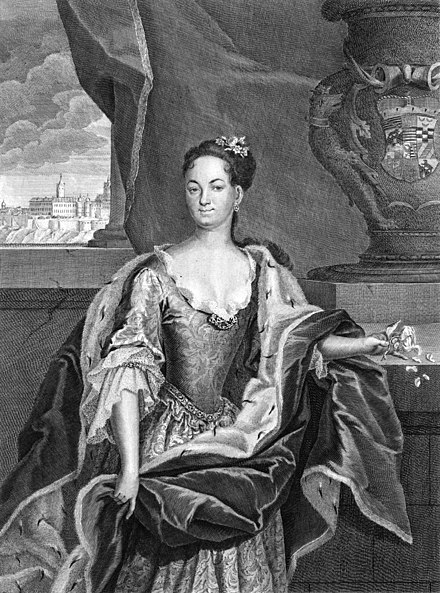
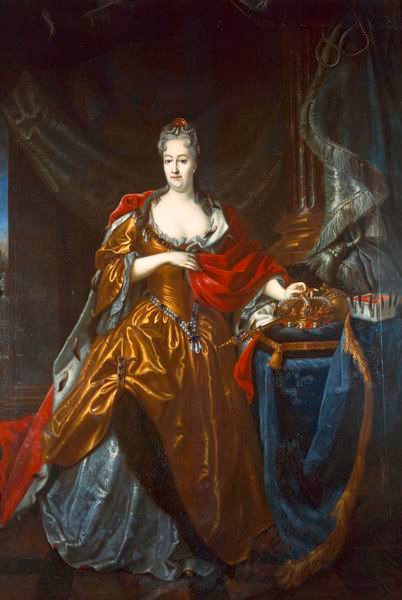
  • Friederike Henriette, Princess of Anhalt-Köthen
  • Christiane Eberhardine, Electress of Saxony
  • Sophia Dorothea,
    Queen of Prussia

My absolute favorite recording of Cantata 180 Schmücke dich, o liebe Seele (Adorn yourself, beloved soul, from October 22, 1724) is the video registration by the J.S. Bach Foundation from 2009. I love how the entire ensemble truly brings luster into the opening chorus and the soprano aria, and how the instrumentalists illustrate the “knocking” in the tenor aria. Also: Rudolf Lutz’s lecture about this cantata is in my top five of all his lectures I’ve watched so far.

When I first wrote about this cantata, in 2017, only the soprano aria from this video registration was available on YouTube, and Lutz’s lecture didn’t have English subtitles yet. However, this has all changed, and the entire cantata is now available here on YouTube, and Lutz’s lecture, now with English subtitles, can be found here. Soloists in the performance: Maria Christina Kiehr, soprano; Jan Börner, counter-tenor; Julius Pfeifer, tenor; and Fabrice Hayoz, bass. 

Find the German text with English translation here, and the score here.

When I listened to Lutz’s lecture again this week, I noticed some things I had missed when listening to it in 2017. For example, around 2 minutes into the lecture, when talking about the opening chorus, Lutz says:

“I like to compare it to a flowing wedding garment of the noblest kind.”

The title of the cantata is “Schmücke dich” (Adorn yourself) and the 20th Sunday after Trinity was a Communion Sunday in Leipzig. As I mentioned in my post from 2017, it was normal in Bach’s time to compare the Communion between Jesus and the believer, or Jesus and the soul, to the marriage between groom and bride. So it makes sense to use this image of a bride dressing up for her wedding. In addition, the reading for this Sunday mentions wedding guests being sent away because they are not dressed for the occasion. So on this 20th Sunday after Trinity, we can pay a bit more attention to clothing.

Lutz being Lutz, a talented improvisor, and often one to throw in some local folklore to make his Swiss audience laugh, makes a joke about that “wedding garment of the noblest kind,” and adds: “Perhaps by Akris, or so.” I had to Google that one, and it turns out that Akris is a Swiss fashion house that still has its headquarters in St. Gallen (the same town where the J.S. Bach Foundation resides), and has been owned by the same family continuously. There’s a nice New York Times article about its current creative director Albert Kriemler here.

I started thinking: if Bach also paid more attention to clothing for this Sunday, what would he have had in mind on the words “Schmücke dich”?

We know that the Rhine wine was flowing at Bach’s own wedding to Anna Magdalena in 1721, but for the rest it would probably have been a simple affair, since it was held at home. There are no paintings of the weddings of his employers, nor of the weddings that would have taken place in Leipzig at the time. However there are paintings of noble dresses Bach might have seen on official occasions, worn by the Princess his employer in Köthen married a little later in December 1721*, and by the consorts of dignitaries Bach would have visited in Dresden and Berlin. See pictures at the top of this post. This would then also be the style in which the noblewomen of Leipzig would have dressed up to go attend church, especially on an important Sunday such as this one.

Read more about all the luster in this cantata, and about an impatient groom/Jesus in my blog post from 2017. I’m apparently always late in posting for this Sunday, whether there are choir performances going on in my life or not.

Wieneke Gorter, October 25, 2020.

*In a rare letter to a friend, Bach mentioned Friederike Henriette and the absence of her interest in music as one of his reasons for leaving Köthen in 1723. However it was probably for financial demands by the Prussian military that the Prince of Anhalt-Köthen had less and less funds to spend on music. Henriette died in April of 1723, 14 months after her marrying Leopold of Anhalt-Köthen. Bach moved to Leipzig in May 1723.

Setting the story of the Good Samaritan to music, in three parts.

05 Saturday Sep 2020

Posted by cantatasonmymind in 1723 Trinity season special series, Bach's life, Cantatas, Chorale cantatas 1724/1725, Leipzig, Trinity

≈ Leave a comment

Tags

BWV 164, BWV 33, BWV 77, BWV 78, J.S. Bach Foundation, J.S. Bach Stiftung, Jakob Pilgram, Jan Börner, Markus Volpert, Monika Mauch, Rudolf Lutz

The Good Samaritan by Balthasar van Cortbemde, 1647. Oil on Canvas. Royal Museum of Fine Arts, Antwerp, Belgium. More about this painting at the end of this post.

Bach wrote three cantatas for this Sunday, the 13th after Trinity, all more or less related to the story of the Good Samaritan. In 1723 he writes the incredibly beautiful Cantata 77 Du sollt Gott, deinen Herren, lieben (You must love God, your Lord). Read about it in my post from 2016. Along with many fellow members of California Bach Society I had the pleasure of singing this cantata earlier this summer, each of us sitting in front of our computer in our own home. Even though we could only see each other on a computer screen and not hear each other sing, it was a beautiful and meaningful experience. And while I tend to focus on the opening chorus and the alto aria when thinking about this cantata, several of my friends pointed out that the texts are still, or again, very appropriate today. Take for example the text of the tenor recitative:

Gib mir dabei, mein Gott! ein Samariterherz,
For this purpose, my God, give me the Samaritan’s heart
Dass ich zugleich den Nächsten liebe
so that I can at once love my neighbor
Und mich bei seinem Schmerz
and in his sorrow
Auch über ihn betrübe,
feel concern for him
Damit ich nicht bei ihm vorübergeh
so that I shall not pass him by
Und ihn in seiner Not nicht lasse.
and leave him in his distress.
Gib, dass ich Eigenliebe hasse,
Grant that I may hate self-love,
So wirst du mir dereinst das Freudenleben
then you will grant me one day a joyous life
Nach meinem Wunsch, jedoch aus Gnaden geben
according to my desire, from your grace.

In 1724, within the framework of the 1724/1725 series of chorale cantatas (his second year of cantata compositions in Leipzig)* Bach writes Cantata 33 Allein zu dir, Herr Jesu Christ (Solely towards you, Lord Jesus Christ).  Because the libretto is based much more on the chorale text than on the Gospel text, it includes only one quote from the Bible story: “I may love my neighbour as myself.” But while it is just one line of text, Bach doesn’t let it go unnoticed, and turns that fifth verse of the libretto into a duet that has all the characteristics of a love duet from the Venetian operas of the time. At least the instrumentalists in the orchestra must have gotten the reference loud and clear. This also proves that the oh-so-cute soprano-alto duet from Cantata 78 (which Bach wrote one week later) didn’t come out of the blue. Here is the artists’ study for it, albeit written for tenor and bass. Read all this and more in my post from 2017.

From Trinity Sunday 1723 to Trinity Sunday 1725, Bach had provided the Leipzig churches with a cantata for almost every Sunday and Feast day. But for the Sundays between Trinity and Christmas 1725, we have only a handful of his cantatas left.** Cantata 164 Ihr, die ihr euch von Christo nennet (You, who take your name from Christ) is among these. Bach saw his church music as a means to “educate his neighbor” about Christian theology, and it seems that in this case, a third cantata for this Sunday was needed: he was not done educating his neighbors about the story of the Good Samaritan. In the parable, the priest and the Levite pass the wounded man without showing mercy. In the libretto of this cantata, this example is turned onto the Christian believers themselves: 

You, who take your name from Christ, where is to be found the mercy by which people recognize members of Christ?

It is far, far away from you. Your hearts should be rich in love, but they are harder than a stone.

Because of the preaching character of that first text, it seems only fitting that Bach doesn’t set this as a chorus, but as a tenor aria, as if to better scold the congregation. The use of two flutes (in the alto aria) is unusual for a cantata, and makes me think of the St. Matthew Passion. Bach must have wanted to stress the loveliness of the text in that aria. Watch a live performance of this cantata by the J.S. Bach Foundation here on YouTube. Soloists in this performance are Monika Mauch, soprano; Jan Börner, alto; Jakob Pilgram, tenor; and Markus Volpert, Bass.

Find the texts & translations of this cantata here, and the score here.

Wieneke Gorter, September 5, 2020.

A little more about the painting:

At a distance, on the left, behind a tree, we see the Levite retreating. Still further away, reading a book, is the priest. This is the only known work of this painter, Balthasar van Cortbemde. It was most probably commissioned by the guild of surgeons in Antwerp in 1647, because it was displayed in their Chamber from 1647 to 1798. It became property of the Royal Museum of Fine Arts in 1810.

*to learn more about Bach’s series of chorale cantatas, start reading here

**we don’t know if the missing cantatas were composed but then were lost, or if they were simply never composed because Bach started to focus on other things.

← Older posts

Recent Posts

  • “Missa Miniatura” by CONTINUUM/Elina Albach Even More Moving in 2025
  • Bachfest Leipzig 2025
  • Bach Cantatas for Christmas – 1724 and 1734 editions
  • Fourth Sunday of Advent – more insight into Cantata 62 helped me better understand Bach’s Christmas Oratorio
  • Saint Ambrose and Luther in Milan – Second Sunday of Advent

Archives

  • August 2025
  • July 2025
  • December 2024
  • November 2024
  • June 2024
  • January 2024
  • December 2023
  • October 2023
  • September 2023
  • August 2023
  • April 2022
  • February 2022
  • January 2022
  • December 2021
  • November 2021
  • June 2021
  • May 2021
  • April 2021
  • February 2021
  • January 2021
  • December 2020
  • November 2020
  • October 2020
  • September 2020
  • August 2020
  • July 2020
  • May 2020
  • April 2020
  • March 2020
  • February 2020
  • January 2020
  • December 2019
  • November 2019
  • May 2018
  • April 2018
  • March 2018
  • February 2018
  • January 2018
  • December 2017
  • November 2017
  • October 2017
  • September 2017
  • August 2017
  • July 2017
  • June 2017
  • May 2017
  • April 2017
  • March 2017
  • February 2017
  • January 2017
  • December 2016
  • November 2016
  • October 2016
  • September 2016
  • August 2016
  • July 2016
  • June 2016
  • May 2016
  • April 2016
  • March 2016
  • February 2016
  • January 2016

Enter your email address to follow this blog and receive notifications of new posts by email.

Join 338 other subscribers

Categories

  • 1723 Trinity season special series
  • Advent
  • After Easter
  • Ascension
  • Bach's life
  • Cantatas
  • Chorale cantatas 1724/1725
  • Christmas
  • Easter
  • Epiphany
  • Following Bach in 1725
  • Köthen
  • Leipzig
  • Septuagesima
  • Travel
  • Trinity
  • Weimar

Meta

  • Create account
  • Log in
  • Entries feed
  • Comments feed
  • WordPress.com

Website Built with WordPress.com.

  • Subscribe Subscribed
    • Weekly Cantata
    • Join 158 other subscribers
    • Already have a WordPress.com account? Log in now.
    • Weekly Cantata
    • Subscribe Subscribed
    • Sign up
    • Log in
    • Report this content
    • View site in Reader
    • Manage subscriptions
    • Collapse this bar
 

Loading Comments...