I created an Advent Calendar for you, so you can easily find my posts about Bach’s Advent cantatas, enjoy some more videos that have come out since I originally wrote these posts, and get recommendations for Christmas gifts.


01 Sunday Dec 2019
I created an Advent Calendar for you, so you can easily find my posts about Bach’s Advent cantatas, enjoy some more videos that have come out since I originally wrote these posts, and get recommendations for Christmas gifts.
15 Friday Nov 2019
Posted in Cantatas, Chorale cantatas 1724/1725, Leipzig, Trinity
Tags
22nd Sunday after Trinity, Bachipedia.org, Bachstiftung, Balázs Máté, BWV 115, corno da tirarsi, Marc Hantaï, Olivier Picon, Rudolf Lutz

I’m back! I’m starting with a small step, but stay tuned … a more considerable post is coming next week.
For this coming Sunday, the 22nd Sunday after Trinity, Bach wrote Cantata 89 in 1723, Cantata 115 in 1724, and Cantata 55 in 1726. Two years ago I wrote about the soprano aria from Cantata 115, not really being able to choose between Susanne Rydén with Bach Collegium Japan or Dorothee Mields with Herreweghe. I also included a link to the soprano aria from Cantata 89. Read that post here.
I still recommend the Herreweghe recording from 2017 for an overall recording of this cantata. However, sometimes it is nice to *see* a performance, and I would like to celebrate an important event in the world of Bach Cantata recordings that happened in the past year: The J.S. Bach Foundation in Switzerland (Bachstiftung) decided to make all their live video recordings of their Bach cantata performances available on YouTube, in full length. Previously, they had only made one movement of each cantata available on YouTube, and one would have to purchase the DVD or buy a live stream subscription in order to see the rest of the cantata.
So in this post I would like to share the Bachstiftung recording of Cantata 115. It was recorded on October 21, 2016, and published to YouTube on October 26, 2018.
Find the German texts with English translations here and the score here.
What is so special about this video recording is that you can see wonderful flutist Marc Hantaï at work in the opening chorus and in the soprano aria. He doesn’t appear on video that often, and they made a good choice to put him in front, so you can see his playing, and of course this way also the microphones pick up his sound better. (to hear more of what I believe is his playing, go to this post).
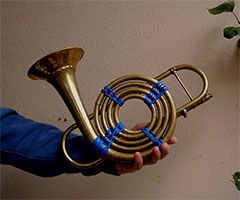
Other instrumentalists to watch in this video: Olivier Picon on corno da tirarsi, and Balázs Máté on violoncello piccolo. Only three cantatas (46, 162, and 67) show the full name corno da tirarsi written in the manuscript, but there are 27 cantatas from Leipzig requiring a corno in which that part is not playable on a natural horn, so must have been written for this corno da tirarsi as well. Cantata 115 is included in that group. Bach is the only composer who ever mentioned this instrument in writing, and most probably his principal brass player Gottfried Reiche was the only one who ever played it. After Reiche’s death in 1734 Bach did not write for this instrument anymore, and for repeat performances of any cantatas containing a corno da tirarsi part, Bach rewrote it for other instruments. Read more about this in Olivier Picon’s article on the “corno da tirarsi” from 2010. The 27 cantatas are mentioned on page 22 of the article.
To find more of the Bachstiftung videos, search their Archive on their Bachipedia.org website. Most of the videos are “unlisted” on YouTube, so you won’t find them by doing a search within YouTube. Or, for the Dutch readers of this blog, you can use Eduard van Hengel’s new website (another terrific event of this past year!) and click on the links for all YouTube recordings he conveniently provides at the top of each page under the header “Beluister” (for an example, see the one for Cantata 115 here).
Wieneke Gorter, November 15, 2019.
27 Sunday May 2018
Posted in Cantatas, Chorale cantatas 1724/1725, Leipzig
Tags
Christiane Mariane von Ziegler, Collegium Vocale Gent, Gustav Leonhardt, Knabenchor Hannover, Leonhardt Consort, Matthias Echternach, Max van Egmond, Paul Esswood, Trinity Sunday
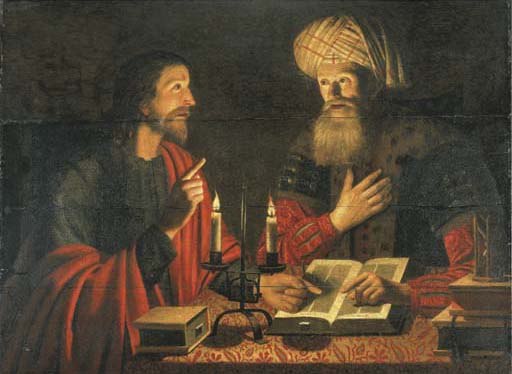
Jesus and Nicodemus, by Dutch painter Crijn Hendricksz Volmarijn
Today’s Cantata 176 Es ist ein trotzig und verzagt Ding, written for Trinity Sunday in 1725, marks the end of Bach’s 1724/1725 cycle of cantatas as well as the end of his series of nine cantatas on texts by Leipzig poet Christiane Mariane von Ziegler.
My favorite recording of this cantata is by Gustav Leonhardt, with the Leonhardt Consort, Knabenchor Hannover, and Collegium Vocale Gent. Vocal soloists are Matthias Echternach (boy soprano, soloist of the Knabenchor Hannover); Paul Esswood, countertenor; and Max van Egmond, bass. Find it here on YouTube.
Find the texts & translations here, and the score here.
The Gospel story for this day is the story Jesus’ nighttime conversation with Nicodemus, stating that only those who are reborn through water baptism and the Spirit (or Holy Ghost) can reach eternal life, hence the reference to Trinity. Find the text of that part of the Gospel of John here.
However, Von Ziegler doesn’t talk about the water baptism or any other aspects of the conversation between Jesus and Nicodemus at all, but instead focuses, four movements long, on the fact that Nicodemus comes to Jesus at night. The highlight of the cantata is the soprano aria “Dein sonst hell beliebter Schein,” which very poetically embellishes on Nicodemus’ wish for the sun to go under.
Only in the last aria do the words “was Jesus verspricht” (what Jesus promises) turn up, and is there a short reference to the Holy Trinity. To make the reference more clear, the closing chorale ends with the following text, almost as a Roman doxology, so that everyone is clear that it is indeed Trinity today:
Gott Vater, Sohn und Heilger Geist,
Der Frommen Schutz und Retter,
Ein Wesen drei Personen.
(God the Father, son and holy spirit
protector and saviour of the devout
one being, three persons.)
Wieneke Gorter, May 27, 2018, links updated May 19, 2024.
20 Sunday May 2018
Posted in After Easter, Cantatas, Chorale cantatas 1724/1725, Leipzig
Tags
Bach, Bachstiftung, cantatas, Christiane Mariane von Ziegler, Harnoncourt, Pentecost, Peter Jelosits, Whitsunday

In Bach’s time, Pentecost was a three-day-long feast, as important in the church year as Christmas and Easter. Most of the Pentecost cantatas have trumpets, timpani, and more pull-out-all-the stops instrumentation, as was appropriate for feast days.
In 1725 Bach performed the following cantatas. All these three cantatas are part of the series of nine cantatas on poetry by Christiane Mariana von Ziegler Bach wrote after Easter that year. Click on the links to find recordings on YouTube.
Sunday May 20, Whit Sunday, or First Day of Pentecost: Cantata 74 Wer mich liebet, der wird mein Wort halten.
Find the text of Cantata 74 here, and the score here.
Monday May 21, Whit Monday, or Second Day of Pentecost: Cantata 68 Also hat Gott die Welt geliebt, with the famous soprano aria Mein glaübiges Herze – gloriously sung by Peter Jelosits on the Harnoncourt recording.
Tuesday May 22, Whit Tuesday, or Third Day of Pentecost: Cantata 175 Er rufet seinen Schafen mit Namen. (complete cantata by the Bach Foundation).
Find the text of Cantata 175 here, and the score here.
Bach might have remembered from a year before that writing three cantatas in three days was going to be too much, so he reworked the opening of cantata 59 (a soprano-bass duet) from 1724 into an opening chorus for four voice parts and full orchestra in cantata 74 in 1725. He also transformed the bass-aria with violin solo from cantata 59 into a soprano aria with oboe da caccia in cantata 74.
Wieneke Gorter, May 20, 2018, links updated May 19, 2024.
13 Sunday May 2018
Posted in After Easter, Cantatas, Chorale cantatas 1724/1725, Leipzig

For today, Exaudi Sunday, or the sixth Sunday after Easter, or the Sunday after Ascension, in 1725 Bach wrote Cantata 183 Sie werden euch in den Bann tun. When I started listening to this cantata I realized I had already written about this one, recommending a golden recording by Bach Collegium Japan, and highlighting the beautiful, unusual instrumentation of this cantata. You can read that post here.
It was a pleasant discovery on a day where I thought I still needed to write two posts (including the belated one for Ascension Day). I can actually spend some time outdoors with my family now. But at the same time it is a bit shocking to me that I’ve apparently now written so many blog posts that I don’t necessarily remember all of them! Up until now I knew if I had written about a cantata or not. It probably means that it is time for me to slow down some more, and then create a good index on this website …
Wieneke Gorter, May 13, 2018.
13 Sunday May 2018
Posted in After Easter, Cantatas, Chorale cantatas 1724/1725, Leipzig
Tags
Ascension, Christiane Mariane von Ziegler, Christoph Genz, Friedemann Immer, Harnoncourt, John Eliot Gardiner, Kurt Equiluz, Max van Egmond, Reinhard Hagen, René Jacobs, Robin Blaze

The Ascension of Our Lord by Giotto di Bondone, 1305. Fresco in the Capella Scrovegni, Padua, Italy.
In the Netherlands, where I grew up, most people have a four-day weekend for Ascension Day (Thursday May 10 this year as well as in 1725). The traditional thing to do was go for a long bike ride very early in the morning on the Thursday, and then spend the rest of the weekend doing the first serious gardening of the season, putting annuals in the ground, filling window boxes, etc.
Here in the United States, Ascension Day goes by unnoticed, nobody gets that Thursday day off, let alone a four-day weekend. And here in California we already started gardening a while ago. So, while still digging out from an extremely busy several weeks/months, I forgot about it. I only remembered when my sister, who lives in France, told me they were away for the long weekend.
Following Bach’s writing in 1725, the cantata for Ascension Day 1725 is Cantata 128 Auf Christi Himmelfahrt allein. It has a fantastic bass solo with trumpet (the designated instrument to illustrate “heaven”) and a beautiful alto-tenor duet.
My favorite recording of this cantata is from 1993 by Gardiner, with Robin Blaze, countertenor; Christoph Genz, tenor; and Reinhard Hagen, bass. Unfortunately the name of the trumpet player is not published. Listen to it here on Spotify. Unfortunately this recording is not on YouTube. Please note that this is a completely different interpretation than Gardiner’s crazy high tempo recording from 2012 (a “make-up” recording for the missing one from the Cantata Pilgrimage cycle from 2000).
If you don’t have access to Spotify, you can listen to Harnoncourt’s 1983 recording here on YouTube, with soloists René Jacobs, coutertenor; Kurt Equiluz, tenor; Max van Egmond, bass; and Friedemann Immer, natural trumpet.
Find the text of Cantata 128 Auf Christi Himmelfahrt allein here, and the score here.
While the opening chorus is very similar to the great chorale fantasias from January 1725, this cantata is not a true “chorale cantata” anymore. By this time, after Easter 1725, Bach doesn’t follow the same structure that he religiously adhered to for all his cantatas from Trinity, June 11, 1724 to the Annunciation, March 25, 1725. None of the cantatas after March 25 have the chorale tune or text throughout the entire cantata: the closing chorale is a different one than the chorale in the opening chorus, and the inner recitatives and arias are no longer based on the text of the chorale from the opening chorus either.
This cantata is the fourth in the series of nine consecutive cantatas on poetry by Christiana Mariana von Ziegler (103, 108, 87, 128, 183, 74, 68, 175, and 176). Because Von Ziegler’s texts were published, we can see how many changes Bach made to her texts. In the case of this cantata, the most striking change is Bach deleting the planned recitative between the bass aria and the alto-tenor duet. It seems that Bach wanted to increase the musical contrast between the two movements, while at the same time clarifying the connection of the text from one movement (bass aria) to the next (alto-tenor) duet.
Thus he adds Von Ziegler’s original recitative text to the text of the bass aria, starting with an extra line “wo mein Erlöser lebt.” The line doesn’t rhyme with anything, and Von Ziegler must not have been happy with this. However, this way Bach can repeat the instrumental opening of the aria after what was originally the recitative text, and create more contrast between the movements.
He also adds two more lines at the end of that bass aria:
So schweig, verwegner Mund,
Und suche nicht dieselbe zu ergründen!
Thus making it more clear how the text of this movement is related to the next movement.
Below is an overview of all the changes Bach made in this particular libretto, courtesy of Eduard van Hengel.
Wieneke Gorter, May 13, 2018, links updated May 19, 2024.
| text comparison |
|
| BACH1. Auf Christi Himmelfahrt allein Ich meine Nachfahrt gründe Und allen Zweifel, Angst und Pein Hiermit stets überwinde; Denn weil das Haupt im Himmel ist, Wird seine Glieder Jesus Christ Zu rechter Zeit nachholen. 2. Ich bin bereit, komm, hole mich! 3. Auf, auf, mit hellem Schall 4. Sein Allmacht zu ergründen, 5. Alsdenn so wirst du mich |
Christiana Mariana von Ziegler1. Auf Christi Himmelfarth allein ich meine Nachfarth gründe und allen Zweifel, Angst und Pein, hiermit stets überwinde: Denn weil das Haupt im Himmel ist, wird seine Glieder JEsus Christ zu rechter Zeit nachhohlen. 2. Ich bin bereit, komm hohle mich. 3. Auf! Jubiliert mit hellen Schall, 4. Dein Allmacht zu ergründen, 5. Alsdenn so wirst du mich |
22 Sunday Apr 2018
Posted in After Easter, Cantatas, Leipzig
Tags
3rd Sunday after Easter, Bach, BWV 1, BWV 103, BWV 12, BWV 96, Christiane Mariana von Ziegler, Damien Guillon, Easter, flauto piccolo, Il Gardellino, John Eliot Gardiner, Marcel Ponseele, Mark Padmore, Philippe Herreweghe, Robin Blaze, sopranino recorder

2020 update: If you can afford to financially support the artists, please consider purchasing your favorite recording. Just click on the Amazon or iTunes link at the end of the paragraph that describes the recording.
In 1725, between Easter and Pentecost, Bach set nine cantatas in a row to beautiful poetry by Christiane Mariana von Ziegler: Cantatas 103, 108, 87, 128, 183, 74, 68, 175, and 176. Read more about this multi-talented female librettist, arts benefactor, and fellow Lutheran “preacher” in this post.
The first cantata in this series is Cantata 103: Ihr werdet weinen und heulen, for the third Sunday after Easter in 1725.
My favorite overall recording of this cantata is by Herreweghe, with vocal soloists Damien Guillon, Thomas Hobbs, and Peter Kooij, and Jan Van Hoecke on flauto piccolo. Listen to their opening chorus here on YouTube. Listen to the entire recording by Herreweghe here on Spotify. If you like this recording, please purchase it on Amazon or iTunes.
However for the best energy and intensity in the tenor aria, I prefer Mark Padmore on the Gardiner recording. Listen to their interpretation of the tenor aria here on Spotify. If you like this recording, please purchase it on Amazon or iTunes.
Robin Blaze’s singing and Dan Laurin’s playing in the alto aria on the Bach Collegium Japan recording is exceptional, and perhaps more moving than Damien Guillon’s on the Herreweghe recording. Listen to that aria here on Spotify. And it is a good problem for me, not being able to choose between countertenors 🙂 If you like this recording, please purchase it on Amazon or iTunes.
Find the texts & translations here, and the score here.
Two noteworthy things about this cantata are the dramatic change from sadness to joy, and the use of the sopranino recorder, or “flauto piccolo” in the opening chorus and the alto aria.
The sadness on this “Jubilate” Sunday is because of the Gospel story for this Sunday: Jesus announces to his disciples that he is going to leave them, and that they will go through a period of hardship during which the rest of the world will mock them. Other cantatas Bach wrote for this Sunday are Cantata 12 Weinen, Klagen, Sorgen, Zagen and Cantata 146 Wir müssen durch viel Trübsal. But in the alto recitative (fourth movement), the turning point is announced: “dass meine Traurigkeit in Freude soll verkehret werden” (that my sorrow will be turned to joy). Bach makes a big deal here of illustrating the word “Freude” and then does that again, even more exuberantly in the tenor aria that follows: there the illustration of the word “Freude” is six measures and almost 100 notes long.
Since his arrival in Leipzig, Bach had used recorders in cantatas quite often see this image by Nik Tarasov, but this is only the third time he writes for sopranino recorder, or “flauto piccolo.” The first time was on October 8, 1724, in Cantata 96 Herr Christ der einige Gottessohn, and the second time on March 25, 1725, in Cantata 1 Wie schön leuchtet der Morgenstern.
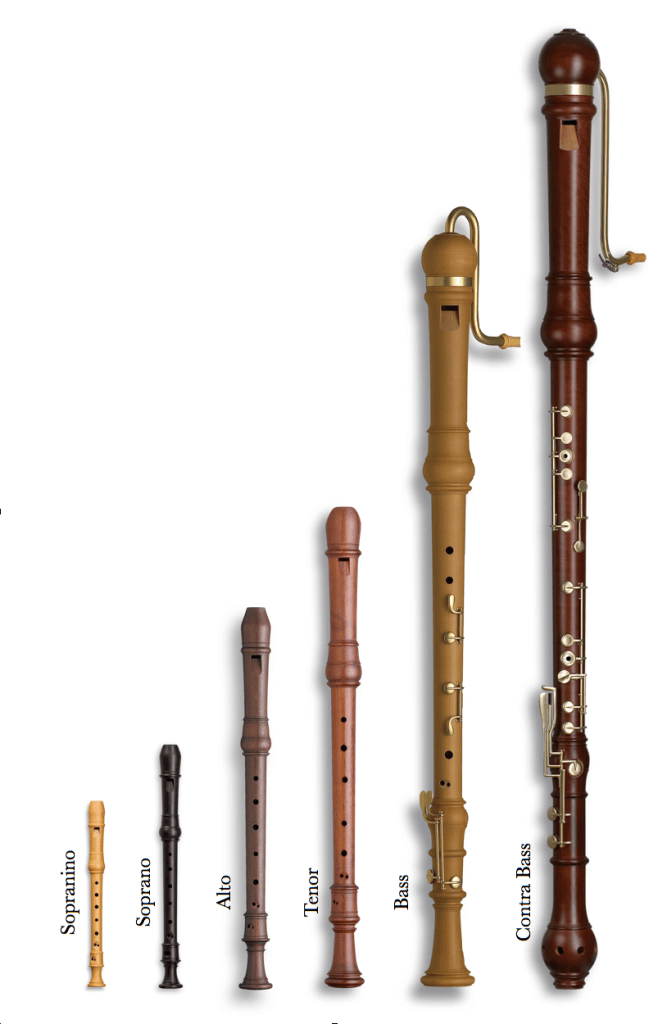
In both cases, Bach used the sopranino part to illustrate the word “Morgenstern” (Morning Star) in the text, creating an extra constellation over the highest notes of the sopranos with the even higher notes of the recorder. It is not completely clear why Bach uses the sopranino this time, in Cantata 103. There are theories that the instrument is meant to illustrate the “mocking” of the outside world. But, as Bach always paints the entire story of a cantata already in the opening chorus, I think he perhaps might have used the recorder to convey the message of “there will be joy at the end” in the otherwise very sad opening chorus. But who knows, his reason for using the instrument might simply have been that the virtuoso player was in town again, since it was around the time of the big Easter Trade Fair that Bach was writing this music.
Whatever the reason, it is very likely that there was only one person in 1725 among Bach’s colleagues who could play this. When Bach performed the piece again in later years, he changed the accompanying instrument in the alto aria to violin. There are also parts for a transverse flute. Herreweghe, Koopman, and Suzuki use a sopranino recorder in the alto aria, while Gardiner uses violin, and Ponseele (on the Il Gardellino recording) uses transverse flute.
To learn more about this cantata, you can now (2020) watch the excellent introduction (“Workshop”) by Rudolf Lutz of the J.S. Bach Foundation here on YouTube. The J.S. Bach Foundation just added English subtitles this video, so it is now also accessible to those who don’t understand German.
To read more about Bach’s use of recorders, I recommend this article in two parts by Nik Tarasov: Part I, about Bach in Mühlhausen, Weimar, and Köthen, and Part II, about Bach in Leipzig.
Wieneke Gorter, April 22, 2018, updated April 27 & May 2, 2020.
02 Monday Apr 2018
Posted in After Easter, Cantatas, Leipzig

On the Road to Emmaus by Duccio, 1308-1311. Museo del’Opera del Duomo, Siena, Italy.
After the rewritten St. John Passion on Good Friday (read more about this in my post from this past Friday) and the “recycled” birthday cantata with new recitatives for the Easter-Oratorio (read more about this in yesterday’s post), Bach was now, in 1725, getting ready for performances of three new cantatas that form a beautiful sub-group within the cantatas of the 1724/1725 cycle.
Cantata 6 Bleib bei uns, denn es will Abend werden for Easter Monday (Bible story: Jesus appeared before two of his disciples while they were walking on the road to Emmaus).
Cantata 42 Am Abend aber desselbigen Sabbats, for the first Sunday after Easter (Bible story: while a small group of his disciples are inside a house in Jerusalem, with all the doors and windows locked, Jesus appears in their midst).
Cantata 85 Ich bin ein guter Hirt, for the second Sunday after Easter (Bible story: The Good Shepherd).
Gardiner believes that in Bach’s ideal plan, these cantatas were actually meant for the Easter season in 1724, not in 1725. In his book “Bach: Music in the Castle of Heaven,” he explains why cantata 6, 42, 67 and 85 share more characteristics with other 1724 cantatas, and were thus probably planned for that year. When Bach got behind with cantata composing because of the Passion according to St. John in 1724, he must have tabled the ideas for 6, 42, and 85 for 1725, and only wrote 67 in 1724.
My favorite recording of Cantata 6 Bleib bei uns, denn es will Abend werden is by Herreweghe, recorded live at a concert on June 12, 2014 in the Eglise Saint-Roch in Paris. Find the recording (audio only) here on YouTube.
Soloists are Dorothee Mields (soprano), Damien Guillon (countertenor), and Peter Kooij (bass).
Wieneke Gorter, April 2, 2018.
01 Sunday Apr 2018
Posted in Bach's life, Cantatas, Easter, Leipzig
Tags
Barbara Schlick, Easter, Easter Oratorio, James Taylor, Kai Wessel, Peter Kooij, Philippe Herreweghe

The three Marys at the Empty Tomb by Jan van Eyck or Hubert van Eyck, ca. 1425-1435. Museum Boijmans-Van Beuningen, Rotterdam, The Netherlands.
I’m in movie script mode again today. While I don’t know this for sure at all, I think that early in 1725, Bach had probably already decided to not to let things get as crazy as the previous year (in 1724) around Easter. That year, he had seriously run out of time, and had to adjust many of his plans. Gardiner thinks this happened because the writing, rehearsing, and performing of his Passion according to St. John had taken Bach much more time than he thought, and had forced him to make several shortcuts in the weeks ahead. Read more about all this in my post about Easter 1724 and subsequent posts.
So I imagine that this year, in 1725, Bach must have been planning ahead. Without any more “old” Easter cantatas in his portfolio, he had to have something else ready for the choir and orchestra to rehearse alongside the Passion for Good Friday, whatever that Passion was going to be.
So when the friendly Duke Christian von Sachsen-Weissenfels asked for some Tafelmusik to be performed for his 44th birthday on February 23, 1725, Bach might very well have thought from the beginning: perfect, that music can double as an Oratorio for Easter Sunday.
Listen to Herreweghe’s recording of the Easter Oratorio here on YouTube. Soloists are Barbara Schlick, soprano; Kai Wessel, alto; James Taylor, tenor; and Peter Kooy, bass.
Find the text here, and the score here.
The Tafelmusik for Duke Christian became Entfliehet, verschwindet, entweichet, ihr Sorgen, also known as Schäferkantate, BWV 249a. When recycling this into the Easter Oratorio, Kommt, eilet und laufet BWV 249, Bach kept the cheerful opening sinfonia and the exquisite, plaintive adagio, two instrumental movements that were probably originally from a concerto he wrote in Köthen. He also kept the music of the opening and closing chorus, and of all the arias, only changing the text.
Here you can see how little he did change the text in this table, courtesy of Eduard van Hengel:
| Schäferkantate (BWV 249a, 23/2/25) | Oster-oratorium (BWV 249, 1/4/1725) |
| 3. Entfliehet, verschwindet, entweichet, ihr Sorgen verwirret die lustigen Regungen nicht! Lachen und Scherzen erfüllet die Herzen die Freude malet das Gesicht. 5. Hunderttausend Schmeicheleien 7. Wieget euch, ihr satten Schafe, 9. Komm doch, Flora, komm geschwinde, 11. Glück und Heil |
Kommt, eilet und laufet, ihr flüchtigen Füße, Erreichet die Höhle, die Jesum bedeckt! Lachen und Scherzen Begleitet die Herzen, Denn unser Heil ist auferweckt. Seele, deine Spezereien Sanfte soll mein Todeskummer, Saget, saget mir geschwinde, Preis und Dank |
In order to tell the story of two Marys (yes I realize the painting I use here has three Marys – each Gospel has a different version of this story), Peter, and John finding the empty tomb, Bach added recitatives in between the arias. Note that he doesn’t write a part for an evangelist, the way he did that in his Passions and in his Christmas Oratorio.
Wieneke Gorter, April 1, 2018.
30 Friday Mar 2018
Posted in Bach's life, Cantatas, Chorale cantatas 1724/1725, Leipzig
Tags
Andreas Scholl, Cecile Kempenaers, Collegium Vocale Gent, Dominik Wörner, Malcolm Bennett, Mark Padmore, Michael Volle, Philippe Herreweghe, Sebastian Noack, Sibylla Rubens, St. John Passion, St. Matthew Passion

Detail of The Arrest of Christ by Hieronymus Bosch, ca. 1515. San Diego Museum of Art.
As I’ve mentioned over the past few months, Bach might have initially been planning to perform a St. Matthew Passion on Good Friday in 1725 in Leipzig.
If he was indeed planning that, he didn’t finish it in time. Did he run out of time, did he have a conflict with the Leipzig City Council, or did he change his mind? We don’t know. Fact is that on Good Friday 1725 he performed a new version of his St. John Passion from the year before. The most notable difference is the new opening chorus: O, Mensch, bewein dein Sünden groß instead of the Herr, unser Herrscher from the year before.
Find Herreweghe’s recording from 2001 of that 1725 St. John Passion here on YouTube.
Soloists are: Tenor [Evangelist, Arias]: Mark Padmore; Bass [Jesus]: Michael Volle; Soprano: Sibylla Rubens; Counter-tenor: Andreas Scholl; Bass [Arias, Pilatus]: Sebastian Noack; Bass [Petrus]: Dominik Wörner; Tenor [Servus]: Malcolm Bennett; Soprano [Ancilla]: Cecile Kempenaers
But let’s just leave the St. Matthew / St. John discussion for what it is, and just look at that opening chorus. Having followed Bach’s 1724/1725 chorale cantatas in the order he wrote and performed them, it is not a stretch to consider that Bach might have been working up to this elaborate chorale fantasia since February 2. I mentioned in my post for that day that it felt as if something new was coming.
When you look at Cantatas 125, 126, 127, and 1, the four cantatas Bach wrote and performed between February 2 and March 25, you see a beautiful line-up of chorale fantasias, one even more special than the other. So perhaps there was no stress or doubt at all in Bach’s mind about what to write for Good Friday 1725, at least not as far as the opening chorus was concerned. He might have been planning for O, Mensch to open his Good Friday passion since the end of January, and might have been doing studies for it in Cantatas 125, 126, 127, and 1.
Wieneke Gorter, March 30, 2018
 Weekly Cantata