Weekly Cantata

Weekly Cantata

Tag Archives: Bach

A most amazing trumpet part

21 Sunday Aug 2016

Posted by cantatasonmymind in 1723 Trinity season special series, Bach's life, Cantatas, Leipzig, Trinity

≈ Leave a comment

Tags

Anhalt-Zerbst, Anna Magdalena Bach, Bach, Bach Collegium Japan, BWV 635, BWV 678, BWV 679, BWV 75, BWV 76, BWV 77, Gottfried Reiche, John Eliot Gardiner, Köthen, Kirsten Sollek, Luther, Lutheran Church year, Masaaki Suzuki, organ preludes, Peter Kooy, Saxe-Weissenfels, slide trumpet, Toshio Shimada, tromba da tirarsi, trumpet, Wilcke

master_of_the_good_samaritan_001
The Good Samaritan by “the Master of the Good Samaritan,” Dutch, 1537

To fully appreciate today’s cantata, I encourage you to first listen to Luther’s hymn,  Dies sind die heil’gen Zehn Gebot (These are the holy Ten Commandments). I was not familiar with this tune, and had to do some research to understand what the slide trumpet was playing in the opening chorus. It was a very well-known hymn in Bach’s time. The Leipzig congregations sang it many times a year, and also sang it during the church services on Sunday August 22, 1723, the 13th Sunday after Trinity (probably preceded by an organ prelude in the style of BWV 635, see below). It was an important hymn for Bach. You can listen to his own chorale setting of it here.

It is also worthwhile to listen how Bach used this melody in three very different organ works: BWV 635, BWV 678, and BWV 679. He wrote BWV 635 as part of the Orgelbüchlein, in Weimar, the other two in the mid 1730s as part of the Clavier-Übung III.

The cantata for this Sunday, cantata 77 Du sollt Gott, deinen Herren, lieben features this chorale-tune in the opening chorus, but only in the tromba da tirarsi (slide trumpet) part and the continuo part. In the continuo it appears in long notes, and is not as clearly audible as in the trumpet part. There are exactly ten entrances for the trumpet within that opening chorus, the last time featuring the entire chorale tune, of course pointing to the ten commandments.

Bach Collegium Japan’s recording showcases this feature the best of all recordings I listened to, superbly played by Toshio Shimada, on a real tromba da tirarsi. I also like his playing the best in the alto aria. Listen to this recording on Spotify or on YouTube.

Read the text here, and find the score here.

John Eliot Gardiner suggests that Bach made a theological statement by presenting his first two Trinity cantatas in Leipzig,  75 for Trinity 1 (focusing on the love of God/how to be before God) and 76 for Trinity 2 (focusing on brotherly love/how to love one’s neighbor) in close relation to each other, and that all through this 1723 Trinity season he has tried to reinforce the idea that those themes are connected, and how the believers should apply the laws from the Bible to themselves and to their own daily lives. He further argues that with this opening chorus he comes full circle back to that connection, by using a double fugue, by reminding the listeners of the “law” by way of the chorale in  the trumpet part, and by setting the text of the Gospel immediately preceding the parable of the Good Samaritan (Luke 10):

27. Er antwortete und sprach: Du sollst GOtt, deinen HErrn, lieben von ganzem Herzen, von ganzer Seele, von allen Kräften und von ganzem Gemüt und deinen Nächsten als dich selbst.

[27] And he answering said, Thou shalt love the Lord thy God with all thy heart, and with all thy soul, and with all thy strength, and with all thy mind; and thy neighbour as thyself.

After the bass recitative and soprano aria further elaborating on the “Love for God”-theme, and the tenor aria on the “Good Samaritan / Love your neighbor”-theme, we are treated to the most amazing tromba da tirarsi playing of all Bach cantatas written for this instrument, in this very unusual and humble alto aria, beautifully sung by mezzo-soprano Kirsten Sollek, and expertly played on the slide trumpet by Toshio Shimada.

This is an incredibly difficult part for the tromba da tirarsi, and almost impossible to play well on a “regular” Baroque trumpet. Was this Bach’s way of illustrating the “Unvolkommenheit” in the text? Would even Reiche not have been able to play this perfectly, with only a few days rehearsal time? And/or did Bach want people in the church to pay attention, so that this would be a true moment of reflection in the service?

In the region where Bach lived and worked, the trumpeters were very good, and Bach knew them and their world well, especially since he had married into a trumpet family in 1721. All the men in Anna Magdalena Wilcke’s family that we know of (father, brother, and husbands of all three sisters) were well-regarded trumpeters at the Anhalt-Zerbst court, about 17 miles (28 km) directly north of Köthen, and the Saxe-Weissenfels court, about 22 miles (35 km) south-west of Leipzig. The trumpeters in Leipzig were all Stadtpfeifer, employed by the city, and thus not always available to him.

Wieneke Gorter, August 20, 2016, updated August 28, 2023.

Trumpets and timpani on a regular Sunday

14 Sunday Aug 2016

Posted by cantatasonmymind in 1723 Trinity season special series, Bach's life, Cantatas, Leipzig, Trinity

≈ Leave a comment

Tags

according to Lutheran Church year, Bach, Bach Collegium Japan, cantatas, John Eliot Gardiner, Lutheran Church year, Masaaki Suzuki, Peter Kooy, Toshio Shimada, Which cantata which Sunday

healingdeafmuteDecapolis

Jesus healing a deaf and mute man at Decapolis, by Bartholomeus Breenbergh, 1635

Last week, Bach gave his principal trumpet and horn player Gottfried Reiche a little break, but this week he needs him back: after the “old style” church motet opening chorus for Trinity 11, this week’s cantata for Trinity 12 opens with festive trumpets and timpani.

Listen to this cantata 69a Lobe den Herrn, meine Seele in the recording by Bach Collegium Japan on Spotify, with Toshio Shimada on trumpet.

Find the text here, and the score here.

Even though the text of the Gospel for this Sunday, the story of Jesus healing a deaf and mute man, is a jubilant one, it is still unusual that for a “regular” Sunday Bach would use three trumpets and timpani in the orchestra. Had the council complained about him teaching too much of his stern theology, being too somber, in the past cantatas? Was perhaps Anna Magdalena’s father (the principal trumpeter at the court of Saxe-Weissenfels, and most probably a friend of Reiche, who was from that same region) in Leipzig to see his daughter and grandkids, and wanted to play in the orchestra with his friend? Again, all good material for a movie script …

In his journal of their cantata pilgrimage in 2000, John Eliot Gardiner writes that the trumpet part in the opening chorus makes him think of the last seven bars of the Cum Sancto Spiritu from the Mass in B minor. I agree, but the start of this opening chorus also really makes me think back to cantata 147 for the feast of the Visitation of Mary on July 2.

Just like last week’s cantata, and many other cantatas from this period, today’s composition ended up in Bach’s top 15, in the sense that he re-used it many times afterwards, and reworked it into important other works. In this case he changed the tenor aria with oboe da caccia and recorder into an alto aria for oboe and violin for a performance in 1727, and reworked the entire cantata into a celebratory cantata for the re-election of the council in 1749 (BWV 69).

Wieneke Gorter, August 14, 2016.

Trinity 10: my favorite counter-tenor in the spotlight

30 Saturday Jul 2016

Posted by cantatasonmymind in 1723 Trinity season special series, Cantatas, Leipzig, Trinity

≈ Leave a comment

Tags

according to Lutheran Church year, Bach, BWV 105, BWV 244, BWV 46, cantatas, Collegium Vocale Gent, Damien Guillon, Hana Blazikova, Kooy, Lutheran Church year, Mass in B Minor, Peter Kooy, Philippe Herreweghe, St. Matthew Passion, Thomas Hobbs, Which cantata which Sunday, Which cantata which week

For this Sunday, Trinity 10, August 1, 1723 Bach wrote cantata 46 Schauet doch und sehet, ob irgend ein Schmerz sei.

This is another exquisite cantata, worth listening to (or worth watching for a bit, see link below for a wonderful video of the opening chorus by Herreweghe live at the Saintes Festival).

I recommend Herreweghe’s recording from 2012, on the same album already discussed in my previous post for cantata 105.

Purchase this recording on Amazon (the album also includes last week’s cantata 105, and two more cantatas from the 1723 Trinity season).

Listen to this Herreweghe recording from 2012 on Spotify.

Or, listen to this same recording on YouTube, via playlist I created (if this shows up as a visual on your screen,  and clicking on the main “play button” results in a “this video cannot be played” message, click on the icon on the top left where it says 1/6, and it should work):

Or watch these same performers in a live video of the opening chorus only from the Festival de Saintes.

Please find the text here, and the score here.

I especially enjoy this cantata because of the beautiful opening chorus, the dramatic bass aria (with terrific tromba da tirarsi playing by Alain de Rudder), and the alto aria.

You’ll recognize the first part of the opening chorus. Bach must have liked this enough to re-use it later as the Qui Tollis in his Mass in B minor. The illustration of the “Schmerz” with two recorders and two oboi da caccia in the orchestra is beautiful.

Last week, with cantata 105, Bach started using features that preluded his passions. In the alto aria in this cantata 46, there is again a reference to the St. Matthew Passion. The pastoral character of the music, as well as the text reference to Küchlein (chicks) make me think of the Sehet Jesus hat die Hand alto aria. I am a huge fan of counter-tenor Damien Guillon. In 2011, I heard him sing for the first time in a live performance of the St. Matthew Passion by Herreweghe in Europe, and have been collecting his recordings since then. He appears on recordings with his own ensemble Le Banquet Celeste, cantata recordings by Herreweghe from 2011 and later, and on several recordings of Marcel Ponseele’s ensemble Il Gardellino. Watch an interview with him (with English subtitles) on YouTube:

Wieneke Gorter, July 30, 2016, links updated August 10, 2023.

Belated Trinity 9

30 Saturday Jul 2016

Posted by cantatasonmymind in 1723 Trinity season special series, Cantatas, Leipzig, Trinity

≈ Leave a comment

Tags

according to Lutheran Church year, Bach, Barbara Schlick, BWV 105, BWV 162, BWV 244, BWV 245, BWV 46, BWV 67, cantatas, Damien Guillon, Hana Blazikova, Lutheran Church year, Peter Kooij, Peter Kooy, Philippe Herreweghe, Thomas Hobbs

In the previous episode of this special 1723 Leipzig Trinity series we saw how Trinity 8 marked the start of the shorter cantata, containing only around 6 movements instead of 10 to 14 movements. However, that weeks’ cantata was probably still based on earlier compositions. This means that cantata 105 Herr, gehe nicht ins Gericht could be considered the start of the true Leipzig cantata.

Two striking “Leipzig only” features make an appearance in this cantata: clear references to Bach’s future Passions (see below), and the “corno da tirarsi” (slide horn).

Only three cantatas (Trinity 10’s cantata 46, as well as 162 and 67) show the full name corno da tirarsi written in the manuscript, but there are 27 cantatas from Leipzig requiring a corno in which that part is not playable on a natural horn, so must have been written for this corno da tirarsi as well. Cantata 105 is included in that group. Bach is the only composer who ever mentioned this instrument in writing, and most probably his principal brass player Gottfried Reiche was the only one who ever played it. After Reiche’s death in 1734 Bach did not write for this instrument anymore, and for repeat performances of any cantatas containing a corno da tirarsi part, Bach rewrote it for other instruments. Read more about this in Olivier Picon’s article on the “corno da tirarsi” from 2010. 

Herreweghe has recorded this cantata 105 Herr, gehe nicht ins Gericht twice: first in 1992 (with soloists Barbara Schlick, Gerard Lesne, Howard Crook, and Peter Kooij), and again in 2012 (with soloists Hana Blazikova, Damien Guillon, Thomas Hobbs, and again Peter Kooij).

Though that first recording from 1992 is excellent, and the soprano aria on that recording has more character to my taste, I recommend the 2012 recording for the following reasons:

  1. At the time of the 1992 recording, no corno da tirarsi was available, which means that the tenor aria on that recording has an oboe accompaniment. The recording from 2012 does feature a corno da tirarsi in this aria.
  2. The “Herr, Herr” exclamations are more prominent in the opening chorus of the 2012 recording, and the tempo of the opening chorus is also a bit faster, which I like.
  3. The 2012 album, which includes three other cantatas, focuses on 1723 Trinity cantatas only, which of course is extra special for this blog’s special 1723 Trinity series.

Listen to this 2012 recording by Herreweghe on Spotify.

Listen to this 2012 recording on YouTube, by way of a playlist I created (it is possible that this only works for readers in the USA):

Support the artists and purchase this recording on Amazon. (it’s always worth it, but this time you’ll get three more cantatas in that same album that will be discussed on this blog in the coming weeks!)

Read the German text with English translations here, and find the score here.

Listen for the “Herr, Herr” exclamations in the opening chorus. They will appear in the opening chorus of the St. John Passion in early 1724. The exquisite soprano aria has no bass instrument in the continuo. Bach will later use that feature more often in other Leipzig cantatas, to either show purity or uncertainty, and it is a strong feature of the Aus Liebe aria from the St. Matthew Passion. And last but not least: when I listen to the bass arioso from this cantata 105, I am strongly reminded of the bass arioso Am Abend da es kühle war from the St. Matthew Passion. The music is not 100% the same, but very similar, and there are also references in the text.

Other stunning features of this cantata 105: the strings accompanying the soprano aria illustrate the “shivering” and “quavering” in the text, and those same “uncertain” strings turn up again in the orchestra part of the closing chorale.

Wieneke Gorter, July 30, 2016, links updated August 2, 2023.

July 2: Feast of the Visitation

02 Saturday Jul 2016

Posted by cantatasonmymind in 1723 Trinity season special series, Cantatas, Leipzig, Trinity, Weimar

≈ Comments Off on July 2: Feast of the Visitation

Tags

according to Lutheran Church year, Bach, Bach Collegium Japan, cantatas, Gerd Türk, Peter Kooy, Robin Blaze

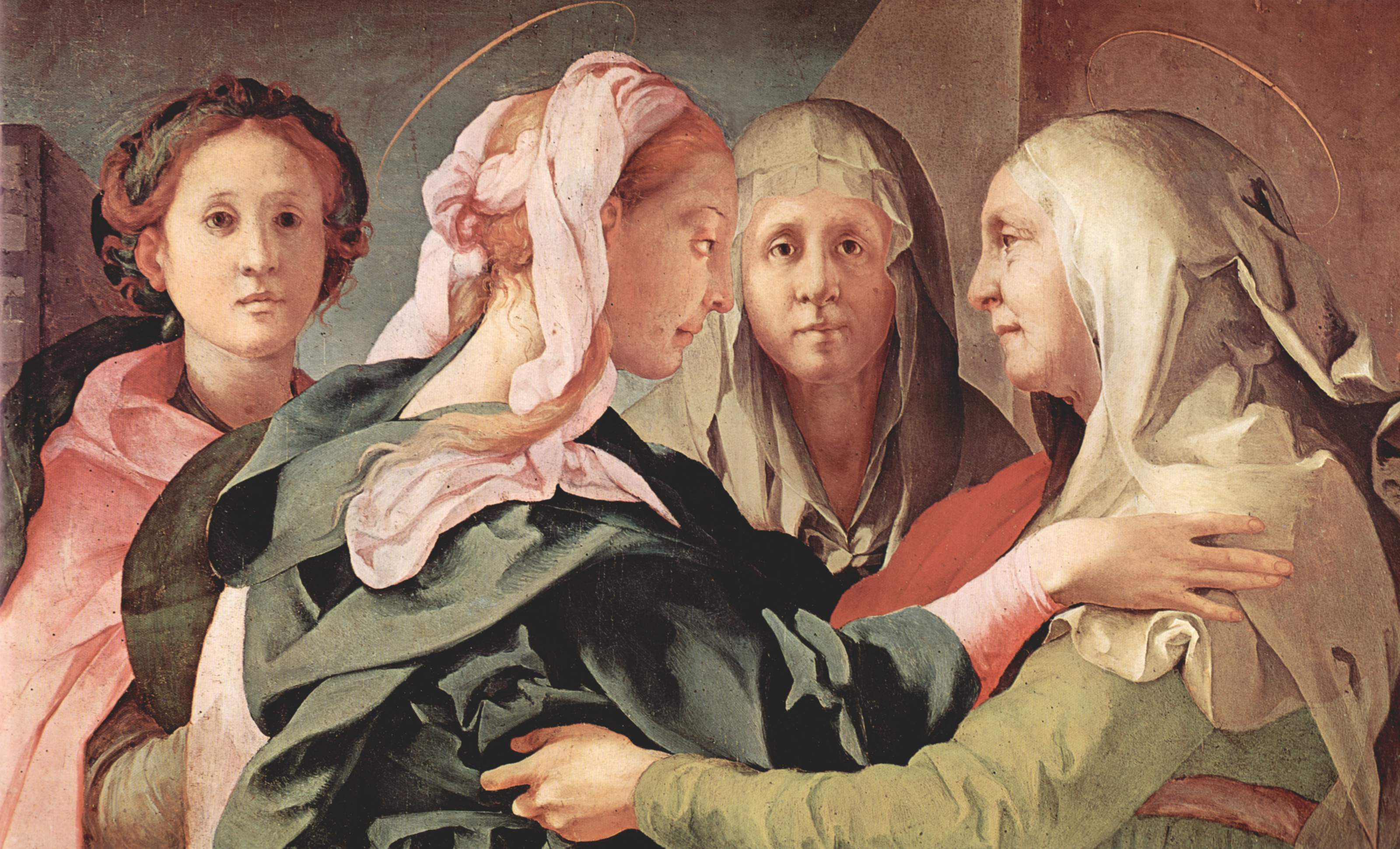
jacopo_pontormo_040
The Visitation, by Jacopo Pontormo, ca. 1528, at the Church of San Francesco e Michele, Carmignano, Italy.

On July 2, eight days after Johannis (St. John, the birthday of John the Baptist), the churches in Leipzig celebrated Mariä Heimsuchung (or Visitation of Mary, celebrating the story of a newly pregnant Mary going “back home” to visit her relative Elizabeth, who was six months further along, carrying John the Baptist). It is one of the few Marian feast days the Lutheran Church kept on their calendar, and which is still celebrated on July 2.*

For this holiday in 1723, Bach reworked a short Advent cantata from Weimar into a longer, two-part cantata, with a chorale at the end of each half. This cantata 147, Herz und Mund und Tat und Leben is a truly beautiful and memorable cantata, and for many more reasons than just the famous closing chorale Jesus bleibet meine Freude. What actually stands out the most for me is the incredible trumpet part in the opening chorus and the bass aria, and the beautiful violin accompaniment of the gorgeous soprano aria. All these movements are from the original Weimar composition, which contained only the arias,  the opening chorus, and a different closing chorale (we don’t know which one). For the Leipzig performance, Bach changed the order of the arias, added recitatives to reflect the Gospel reading of the story of the visitation and Mary’s praise to God (the Magnificat), and added a new closing chorale at the end of each half of the cantata.

I recommend the recording by Bach Collegium Japan of this cantata 147 Herz und Mund und Tat und Leben, with wonderful singing by soprano Yukari Nohoshita, countertenor Robin Blaze, tenor Gerd Türk, an excellent performance by bass Peter Kooy, and fabulous playing by Toshio Shimada (trumpet) and Ryo Terakado (violin). Listen to this recording on Spotify.

Support the artists and purchase this CD on Amazon.

If you don’t have access to Spotify, or would love to watch a live performance, I recommend the YouTube video by the J.S. Bach Foundation (Bach Stiftung), with with Hana Blažiková, soprano; Margot Oitzinger, alto; Jakob Pilgram, tenor; and Wolf Matthias Friedrich, bass.

Follow the German text with English translations here.

Continuing on the path of the wild hypothesis I made last week, that many of Bach’s colleagues and students would be in town for these two weeks of holidays, let’s now imagine that many of these visitors were playing in the orchestra for this week’s cantata, thus creating a situation where all orchestra seats were filled, and the musically gifted among the choir boys could actually sing in the choir. Of course I don’t know if this is what happened, and if Bach maybe even planned it this way, but I hope you’ll allow me this indulgence. (We do know from later letters that choir members often had to fill the many vacancies in the orchestra).

Several scholars have suggested that Bach recycled/reworked so many of his Weimar cantatas in the first months in Leipzig because he was overwhelmed. But what if he just really wanted to show off these Weimar cantatas to the Leipzig congregation? Especially the ones originally written for Advent, since he knew he would not be able to perform those in Leipzig at all. (No figural music was allowed during Advent in Leipzig). What if he hadn’t found a librettist yet in Leipzig who matched the talent of Weimar court poet Salomo Franck? What if he wanted to show off the talent and skills of his first trumpet player in Leipzig, the famous Gottfried Reiche, to all the visitors who were in town for this holiday? When we see cantata movements returning in the form of movements of his Lutheran Masses, his Mass in B minor, and repeat performances in Leipzig, we say “he must have been proud of that piece.” Well, when I hear the opening chorus and the arias of Herz und Mund und Tat und Leben, I can understand why the Duke in Weimar didn’t want to let Bach go. Those movements already composed in Weimar are exciting and deeply moving at the same time. Definitely something to be proud of.

We don’t know who the librettist of the new recitatives was, but he or she did a good Lutheran job of teaching the congregation that even though they were celebrating a Marian feast day, they should really not praise her too much, but praise Jesus instead. Bach did an even better job setting these recitatives to music. Listen to all the word painting in the bass recitative, and the musical illustration of the text Er wird bewegt, er hüpft und springet (he is moved, he leaps and jumps) in the alto recitative, describing how John moved in Elizabeth’s womb upon hearing Mary talk of Jesus. The other remarkable thing about this alto recitative is that it has an accompaniment by two oboi da caccia, as Bach would later use in his St. Matthew Passion.

Gottfried_reiche
Gottfried Reiche, principal trumpeter in Leipzig until 1734.

Wieneke Gorter, July 2, 2016.

*In 1969, the Catholic Church moved this day to May 31, after they realized that it is strange to celebrate a mother (Elizabeth) being pregnant after celebrating the birth of her son (John the Baptist), but the Lutheran Church has kept the feast day on July 2.

Trinity 3: from Weimar, with love

12 Sunday Jun 2016

Posted by cantatasonmymind in 1723 Trinity season special series, Cantatas, Leipzig, Trinity, Weimar

≈ Comments Off on Trinity 3: from Weimar, with love

Tags

according to Lutheran Church year, Alfred Dürr, Bach, Bach Collegium Japan, Barbara Schlick, cantatas, Christoph Wolff, Collegium Vocale Gent, Lutheran Church year, Masaaki Suzuki, Monika Frimmer, Peter Kooy, Phlippe Herreweghe, Rachel Podger, Vivaldi

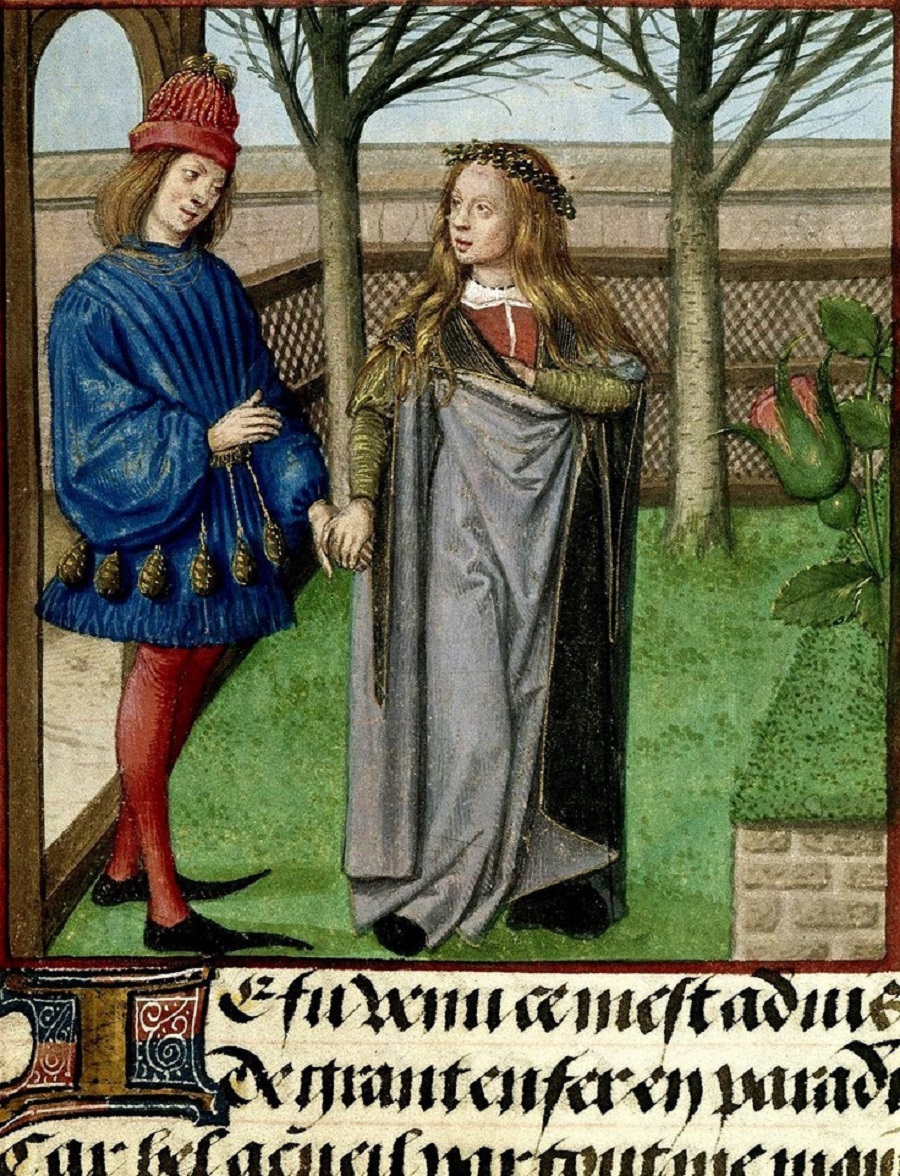
Roman de la Rose, Netherlands (Bruges), c. 1490-c. 1500

Only three episodes into this special 1723 Leipzig Trinity season series,  I’m already taking a detour to Weimar. It’s Bach’s fault, because, after the two newly written cantatas he presented on May 30 and June 6, 1723, he “recycled” his Weimar cantata for this third Sunday after Trinity: cantata 21 Ich hatte viel Bekümmernis, written in 1714, or possibly in 1713.

We dont’ know for sure why Bach chose to use an “old” composition this early in his first season (though probably nobody except his own family knew it was not new), but  I think that he couldn’t wait to impress the Leipzig Council and congregation with a composition that was one of his all-time favorites. He had written and performed it at least twice in Weimar, then presented it in Hamburg or Köthen in 1720* and would perform it many more times in Leipzig on future third Sundays after Trinity. Another reason I believe  it was Bach’s plan all along to present this cantata 21 on Trinity 3 in Leipzig: it seems to me that when writing the masterful fugue in the opening chorus of cantata 76, Bach must have had the fugue in no. 6 of cantata 21 on his mind.

Whether it was thanks to the multiple performances during Bach’s lifetime, or to Mattheson mentioning it (however unfavorably!) in his writings, cantata 21 was known among Bach’s colleagues and students throughout the 18th and 19th centuries, and is still one of the most well-known and most frequently performed cantatas today.

Instead of talking about the music, I would like to shine some light on the history of this cantata, and show you that it was not a stand-alone masterpiece that Bach created out of nothing. Most of the findings here below are from  books by Alfred Dürr and Christoph Wolff.

There are parts of this cantata that fit extremely well within the style of the 1714 Weimar cantatas. To hear cantata 21 in this context, if you have time, before you listen to the sinfonia (no. 1) of cantata 21, I invite you to first listen to the sinfonia of cantata 12. They are remarkably similar. Next, just for the fun of it, you might want to listen to the “love” duet from Weimar Pentecost cantata 172 (beautifully sung by soprano Dorothee Mields and countertenor Alex Potter during a streamed concert from 2021)

 Soprano (Soul)

Komm, laß mich nicht länger warten,
Come , let me wait no longer,
Komm, du sanfter Himmelswind,
come, you gentle wind of heaven,
Wehe durch den Herzensgarten!
blow through the garden of my heart

 Alto (Holy Spirit)

Ich erquicke dich, mein Kind.
I refresh you, my child

Liebste Liebe, die so süße,
Dearest love, who are so delightful,
Aller Wollust Überfluß,
abundance of all joys,
Ich vergeh, wenn ich dich misse.
I shall die, if I have to be without you

Nimm von mir den Gnadenkuß.
Take from me the kiss of grace.

Sei im Glauben mir willkommen,
Welcome in faith to me,
Höchste Liebe, komm herein!
Highest love, come within!
Du hast mir das Herz genommen.
You have taken my heart from me

Ich bin dein, und du bist mein!
I am yours, and you are mine!

and compare it to the “love” duet from cantata 21:

Soprano (Soul):

Komm, mein Jesu, und erquicke,

Bass (Jesus):

Ja, ich komme und erquicke

Come, my Jesus, and restore

Yes, I come and restore

Und erfreu mit deinem Blicke.

Dich mit meinem Gnadenblicker,

and rejoice with your look

you with my look of grace

Diese Seele,

Deine Seele,

This soul

Your soul

 Die soll sterben,

 Die soll leben,

that must die

that must live

Und nicht leben

 Und nicht sterben

and not live

and not die

 Und in ihrer Unglückshöhle

Hier aus dieser wunden Höhle

and in its den of misfortune

here from this den of wounds

Ganz verderben.

Sollst du erben

wholly perish.

 you shall be given

 Ich muß stets in Kummer schweben,

Heil! durch diesen Saft der Reben,

I must always be suspended in misery

Salvation! throught this juice of the grape

Ja, ach ja, ich bin verloren!

Nein, ach nein, du bist erkoren!

Yes, oh, yes, I am lost

No,oh, no, you are chosen

 Nein, ach nein, du hassest mich!

Ja, ach ja, ich liebe dich!

No, ah, no, you hate me!

Yes, oh, yes,I love you!

 Ach, Jesu, durchsüße mir Seele und Herze,

Entweichet, ihr Sorgen, verschwinde, du Schmerze!

Jesus, sweeten my soul and heart.

Give way, worries, vanish, pain!

Komm, mein Jesus, und erquicke

Ja, ich komme und erquicke

Come, Jesus, and restore

Yes, I come and restore

Mit deinem Gnadenblicke!

Dich mit meinem Gnadenblicke

 with your look of grace

 you with my look of grace.

Of course none of these are officially  meant to speak of earthly love. But still, both these duets are extremely cute, musically completely similar to opera love duets from that time, and their texts could at least partly be interpreted as such love duets, so I can imagine the Weimar poet and the young Bach must have enjoyed writing these.

To really appreciate “the making of” the opening chorus (no. 2) of cantata 21, it’s worth listening to a magnificent Vivialdi violin concerto and one of Bach’s lesser known organ prelude and fugues, to hear where Bach found the theme for the Ich hatte viel Bekümmernis fugue:

In the spring of 1713, the half-brother of Bach’s employer in Weimar, prince Johann Ernst, “a great lover of music and an incomparable violinist” (according to a testimony by Philipp David Kräuter, a student of Bach in Weimar) went on a study trip, and spent a long time in the Netherlands. Upon his return, he had brought “much fine Italian and French” music with him. One of the pieces was Vivaldi’s Concerto in D minor Opus 3, no. 11  for two violins from Book II of L’Estro armonico (RV 565), published in Amsterdam in 1711.

Listen to this Vivaldi concerto in the award-winning interpretation by the fabulous Rachel Podger with Brecon Baroque on Spotify, or on YouTube

Maybe Bach, an accomplished violinist himself, and the prince played this together after the prince returned in July 1713. Bach rewrote this Vivaldi concerto into an organ concerto (BWV 596), but also used the theme in his organ prelude and fugue in B minor, BWV 544,  written in Weimar as well.  It is in this piece in particular that I can hear the relation with cantata 21 Dürr wants to point out in his book.

About recordings of cantata 21: While Bach Collegium Japan deserves a medal for  taking the trouble to research all the different versions and record the ones from 1720 and 1714 on their volume 6 , and the true 1723 Leipzig version (with trombones added in no. 9 and solo/tutti distinctions in the choruses) on their volume 12, I still like Herreweghe’s recording of this cantata the best, mainly because of the strong, crisp choruses and the music always having long lines and strong sense of direction. Listen to Herreweghe’s interpretation of  this cantata on Spotify or on YouTube.

Update from 2021: find an absolutely stunning performance of the 1720 version (with only soprano and bass soloists) on the YouTube channel of the J.S. Bach Foundation here.

Read the German text with English translations of cantata 21 here, and find the score here.

If you don’t want to miss an episode of this 1723 Trinity season series, please consider signing up to receive an email every time I’ve posted a new story.

Please feel free to share this on Facebook, or forward to anyone you think might enjoy coming along for this ride. Thank you!

Wieneke Gorter, June 12, 2016. Updated June 19, 2021.

*Bach visited Hamburg in November 1720, to apply for an organist and cantor post there. It turned out, however, that the post needed to be “bought” and the job went to a lesser talented but wealthy candidate. Most scholars are confident there was a performance of this cantata in 1720 in either Köthen or Hamburg, based on the surviving manuscripts of the parts. Because it was the Hamburg-based writer Mattheson who criticized the cantata in a letter  in 1725, it is probable that the performance took place in Hamburg during Bach’s visit there.

According to Bach Collegium Japan’s leader Masaaki Suzuki, the 1720 performance featured only a soprano and a bass, with the soprano also singing all the arias and recitatives we know nowadays as written for tenor.

Season 1, episode 2

04 Saturday Jun 2016

Posted by cantatasonmymind in 1723 Trinity season special series, Bach's life, Cantatas, Leipzig, Trinity

≈ Comments Off on Season 1, episode 2

Tags

according to Lutheran Church year, Bach, cantatas, Harnoncourt, James Gilchrist, John Eliot Gardiner

Brunswick_Monogrammist_Great_Banquet

The Parable of the Great Supper / the Great Banquet, by anonymous Dutch painter “the Braunschweig (Brunswick) Monogrammist,” ca. 1525

Trinity season in the Lutheran Church year means no feast days until Christmas, no stories about Jesus’ life in the Gospel texts, and no Vox Christi bass recitatives. To still keep this blog exciting for myself and you loyal readers, I decided to make it into a true weekly series, and will be following all of Bach’s 1723 Leipzig cantatas until Advent, without taking any detours to his Weimar cantatas or later Leipzig cantatas.

A few things that make it irresistible for me to try this: Bach started working  in Leipzig  on the first Sunday after Trinity in 1723 (see last week’s blog post); the dates of the Lutheran Church year in 2016 are practically the same as in 1723 – off by only one day; and I believe that by following this 1723 sequence, we can better imagine how it must have been for the Leipzig audiences (congregation) to hear one cantata after the other, and perhaps get a little insight in how it must have been for Bach himself to write one after the other.

So, here we go with season 1, episode 2:

Previously on Weekly Cantata: Bach arrived in Leipzig on Saturday May 22, 1723,, and made his debut with cantata 75 Die Elenden sollen essen in the Nicolaikirche (St. Nicholas Church) on Sunday May 30, the first Sunday after Trinity.

The second Sunday after Trinity in 1723 marked Bach’s debut in the Thomaskirche (St. Thomas Church). On Sunday June 6, he performed cantata 76 Die Himmel erzählen die Ehre Gottes there, and this one is even more impressive than 75, and includes a festive opening chorus which makes me think of Bach’s later Ascension Oratorio.

There are many similarities between cantata 75 and 76, the most obvious one being that they share the ambitious length of 14 movements in total, divided over two parts. From a superficial point of view, both cantatas start with a psalm text in the opening chorus, have challenging soprano arias, feature bass arias with trumpet, and -never seen again in later cantatas- an instrumental sinfonia at the start of the second part (after the sermon). However there are more (hidden) similarities and cross-references between the two, so that one could almost think about these two first cantatas of the 1723/1724 cycle as a diptych.

I appreciate Gardiner’s interpretation of cantata 76 the most of all recordings I listened to. And the universe will have it that this one was recorded in the Basilique de Saint-Denis (directly north of Paris), which was my subway stop for four fabulous music-filled months in 1994. In his journal from 2000, Gardiner writes that they were very concerned about the enormous size of this Gothic cathedral, and feared that a large audience (needed to balance out the acoustics) wouldn’t show up because it was the night of the France-Italy final in the Euro soccer competition. But everything turned out fine: there were more than 1200 people in the audience, and France won.

Listen to Gardiner’s recording of cantata 76 Die Himmel erzählen die Ehre Gottes on Spotify  or on YouTube, or buy this recording on Amazon.

Cantata 76 starts with a text about heaven: the first and third verse of Psalm 19, Die Himmel erzählen die Ehre Gottes. To illustrate this, the heavenly trumpet (in cantata 75 not introduced until the start of the second half) is heard right away. The fugue on the text “Es ist keine Sprache noch Rede, da man nicht ihre Stimme höre” is fantastic, Bach at his best in my opinion.

After this, the text of the cantata refers to the Gospel reading of the day: the parable of the Great Supper from Luke 14: 16-24 about a man who has invited many guests to a Dinner/Supper/Banquet, receives one cancellation after the other, after which he decides to invite all the beggars and cripples his servant can find, and serves them the dinner instead, not leaving one place open for any of the previously invited guests. All this combined with the “Brotherly love” theme from the Epistle reading of the day: 1 John 3: 13-18.

Another example, though through a completely opposite story as the one from cantata 75, of why it is good to share food and love with others.

Besides the incredible opening chorus, the highlights of this cantata for me are: the soprano aria with violin/cello accompaniment (no. 3), the bass aria with trumpet (no. 5), the incredible sinfonia for oboe d’amore and viola da gamba at the start of the second half (no. 8),  the dramatic, operatic tenor aria (no. 10, fabulously performed by James Gilchrist, including the “shake” Bach wrote on the word “Hasse”), and the alto recitative with viola da gamba (no. 11).

For those who have extra time: listen to the violin/cello duet in the soprano aria accompaniment in an unrivaled (as far as I am concerned) interpretation by Alice and Nikolaus Harnoncourt on their recording from 1976 (scroll to 06:11)

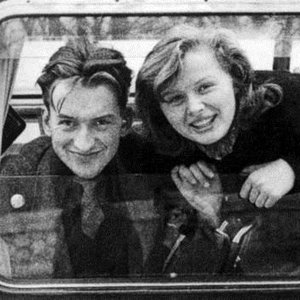
e1712a1a564449d6c9c7a2aad5045250

Nikolaus & Alice Harnoncourt, 1951, before they were married, on tour with the Vienna Chamber Orchestra

Read the German text with English translations of this cantata here, and find the score here.

If you don’t want to miss an episode of this 1723 Trinity season series, please consider signing up  to receive an email every time I’ve posted a new story.

Please feel free to share this on Facebook, or forward to anyone you think might enjoy coming along for this ride. Thank you!

Wieneke Gorter, June 4, 2016, links updated June 12, 2021.

The Leipzig Debut

29 Sunday May 2016

Posted by cantatasonmymind in 1723 Trinity season special series, Bach's life, Cantatas, Leipzig, Trinity

≈ Comments Off on The Leipzig Debut

Tags

Bach, cantatas, Carolyn Sampson, Daniel Taylor, John Eliot Gardiner, Mark Padmore, Peter Kooy, Phlippe Herreweghe

Echternach_Lazarus_Dives

Lazarus and the Rich Man / Lazarus and Dives, Codex Aureus of Echternach, 11th century

On this First Sunday after Trinity (for short:Trinity 1), Sunday May 30, 1723, Bach started his first cycle of weekly cantatas in Leipzig. It was two days before his official installation, and one week after he and his family had arrived in the city.

Trinity is also the start of the part of the church year that deals exclusively with issues of faith and doctrine, instead of celebrating events from Jesus’ life, as was done in the period between Advent and Pentecost. This change must have been important to Bach too, because all three surviving cantatas for Trinity 1 are large-scale, musically ambitious works.

The composition with which Bach made his debut in the St. Nicholas Church (he would not perform in the St. Thomas Church until one week later) was cantata 75 Die Elenden sollen essen, a piece of considerable length, containing no less than 14 movements, seven before the sermon, seven after.

I prefer the recording by Herreweghe, which appears on the same CD as cantata 12 Weinen, Klagen, Sorgen, Zagen.

Listen to Herreweghe’s recording of cantata 75 Die Elenden sollen essen (with soloists Carolyn Sampson, Daniel Taylor, Mark Padmore, and Peter Kooy) on YouTube

Purchase Herreweghe’s recording of cantata 75 Die Elenden sollen essen and two other cantatas on Amazon

Find the complete German text with English translation of this cantata here.

The text of the opening chorus is from Psalm 22, but it is strongly related to the Gospel of the day: the story of Lazarus (a poor leper, who lies in front of the door of a rich man’s house, asking the rich man for food every day) and Dives (the rich man, who ends up in hell when he dies because he didn’t share his blessings/wealth with those in need).

When I listen to the opening chorus, I keep wondering if Bach wrote a Kyrie in Köthen which he never finished or which got lost for another reason. This is not backed up by any of the commentary about this cantata, but in these first measures I can’t stop myself from hearing “Ky-ri-e-e-le–”  in my head when the choir sings “Die-ie E-e-le–.” The music accents the second syllable of the word Elenden, while in the spoken language the stress would be on the first syllable. I find it strange that Bach would have ignored word stress in such an important composition, which he spent extra time on, and probably already wrote before he arrived in Leipzig (Gardiner notes that the paper of the manuscript was not from Leipzig, and that the handwriting was extremely neat). So I’m hoping something will turn up in my lifetime to substantiate this hunch I have ….

Wherever the opening chorus originated from, it is beautifully written,  as are all the arias. The soprano aria has a tender, plaintive oboe d’amore accompaniment, the alto aria floats on a rich blanket of strings, and the bass aria is a show-off piece with virtuosic music for the singer as well as the trumpeter.

There is a symmetry to the order in which the recitatives and arias appear in the cantata which is rarely seen in other Bach cantatas.

In the first half:

Bass recitative – Tenor aria – Tenor Recitative – Soprano Aria – Soprano Recitative

in the second half this pattern is mirrored for the remaining voices:

Alto recitative – Alto Aria – Bass recitative – Bass Aria – Tenor Recitative

But of course it is typical for Bach to use mathematical design when wanting to make a lasting  impression with a composition (such as with the St. Matthew Passion and the Mass in B minor). Also the fact that there are 14 movements to this cantata is not a coincidence: it is the sum of the numbers B, A, C, and H in the alphabet.

There is more symmetry in the cantata: The text of the first half refers to the Gospel story from Luke about Lazarus and Dives, and talks about earthly life and material possessions. In contrast to this, the second half of the cantata moves up to a spiritual level, and up to heaven. This change is illustrated by the introduction of the instrument that was associated with heaven: the trumpet. In the opening movement of the second half of this cantata the trumpet plays the chorale tune with which the first half had ended, Was Gott tut, das ist wohlgetan, and then later accompanies the bass in a stand-out virtuosic aria.

There is also more “showing off” in this cantata. As Gardiner points out, Bach seems to have wanted to make it clear that he was a skilled court composer (which he had been at Köthen before he took the position in Leipzig): after the French Ouverture of the opening chorus, all the arias together from a French Suite: The tenor aria is a Polonaise, the soprano aria a Minuet, the alto aria a Passepied, and the Bass aria a Gigue.


Wieneke Gorter, May 29, 2016


Glorious soprano arias and unusual instrumentation

08 Sunday May 2016

Posted by cantatasonmymind in After Easter, Cantatas, Leipzig

≈ Comments Off on Glorious soprano arias and unusual instrumentation

Tags

Bach, BWV 183, bwv 44, Carolyn Sampson, Christiane Mariana von Ziegler, Dorothee Mields, Exaudi, Gerd Türk, Harnoncourt, oboe d'amore, oboe da caccia, Peter Jelosits, Peter Kooy, Phlippe Herreweghe, Robin Blaze, Rudolf Lutz, Thomas Hobbs, violoncello da spalla

BWV183titlepage

The title page of cantata 183 in Bach’s handwriting: Dominica Exaudi // Sie werden eüch in den Bann tun // à 4 Voci, 2 Hautb d’Amore, 2 Hautb da Caccia, 2 Violini, Viola, Violoncello piccolo e Continuo // di Joh. Sebas. Bach. Staatsbibiothek zu Berlin – Preußischer Kulturbesitz

There are two cantatas for this Sunday Exaudi, aka the Sunday after Ascension, or in the practical reality of the man who had to write the music and rehearse the choir: the Sunday in between Ascension and the three-day-long feast of Pentecost. Because they refer to the same Gospel text, the cantatas share the title Sie werden euch in den Bann tun, but except for the fact that they each contain a glorious soprano aria, they have nothing in common.

I discuss both cantatas in this blog post. Keep reading for Cantata 183, but let’s first look at the one Bach wrote in 1724: Cantata 44 Sie werden euch in den Bann tun.

The soprano aria from this cantata, Es ist und bleibt der Christen Trost, sung by the amazing Peter Jelosits on the Harnoncourt recording from 1975 is among the most happiest music memories of my childhood. I suspect my mom loved it so much that she played it more often than just on this Sunday. I didn’t realize how well this aria is engraved in my brain until I surprised myself during a choir carpool, singing the entire thing from memory, illustrating a story about how some of these boy sopranos could sing very complicated arias.

Es ist und bleibt der Christen Trost,
The consolation of Christians is and remains
Dass Gott vor seine Kirche wacht.
God’s watchful care over his church.
Denn wenn sich gleich die Wetter türmen,
For even though at times the clouds gather,
So hat doch nach den Trübsalstürmen
yet after the storms of affliction
Die Freudensonne bald gelacht.
the sun of joy has soon smiled on us.

If you would like to listen to the entire cantata, I recommend Herreweghe’s recording from 2013. The opening tenor/bass duet is the best here, with bass Peter Kooij singing out much more than on their 1993 recording of this same cantata, and his and Thomas Hobbs’ voice matching better than his and Christoph Prégardien’s (as much as I love Prégardien’s voice!).

Also, Herreweghe’s interpretation of the soprano aria on this 2013 recording is the most musical and the most cheerful, not in the least because it has the highest tempo of all recordings I listened to. That this proves a bit of a challenge for the always fabulous soprano Dorothee Mields is only audible in the text: after she comes out of the expertly executed but super tricky long runs, she slips back into the edition she probably studied from, which uses the more modern “für seine Kirche”  instead of the edition they’re performing from, which uses the archaic “vor seine Kirche,” so it ends up being a mix of the two texts. While this bugs me a little bit, a retake of the recording would probably have been at the expense of the magic that happens in this aria, so it is probably a good thing that they left it in.

Purchase the Herreweghe recording of cantata 44 on Amazon or on iTunes. (This album also features the beautiful recording of cantata 73 discussed here).

Find the entire German text of cantata 44 with English translations here, and the score here.

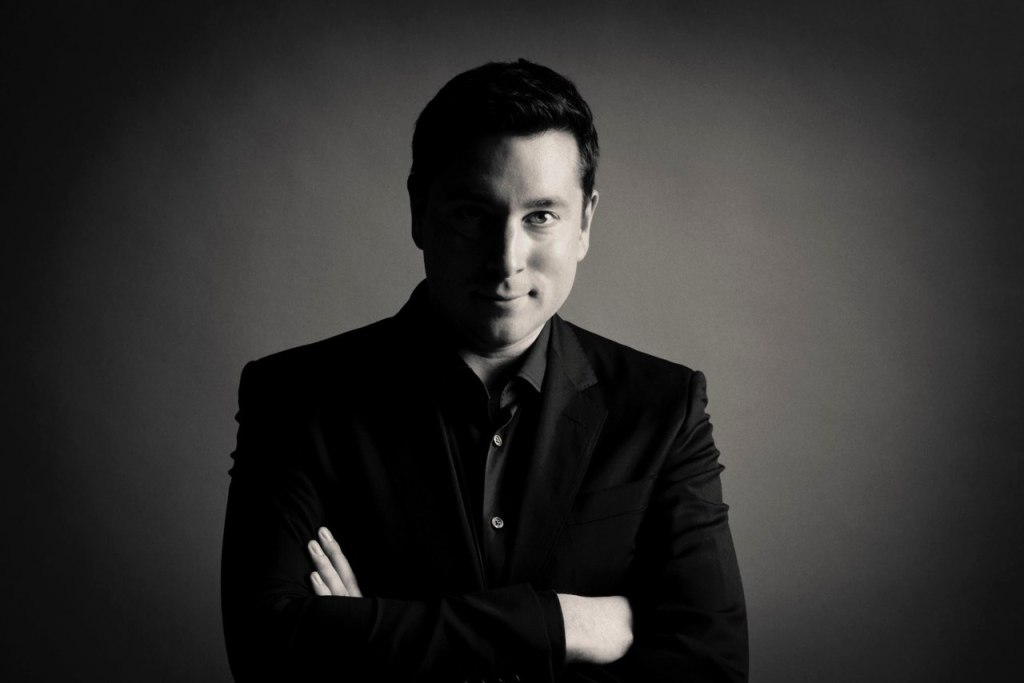
  • Thomas Hobbs, tenor (photo by B Ealovega)
  • Peter Kooij, bass

Cantata 183 from 1725 is noteworthy because it uses a text by Christiane Mariana von Ziegler and features a striking instrumentation: two oboi d’amore and two oboi da caccia in the bass recitative; a violoncello piccolo in the tenor aria; again the two oboe pairs in the alto recitative; two oboi da caccia in the soprano aria; all these instruments in the closing chorale.

My absolute favorite recording of this cantata is the one by Bach Collegium Japan. They struck gold with this recording, thanks to the combination of  Badiarov playing the violoncello piccolo da spalla, fabulous oboe players, and terrific vocal soloists: soprano Carolyn Sampson, countertenor Robin Blaze, tenor Gerd Türk, and bass Peter Kooij. I think the entire album (also featuring the recording of cantata 85 discussed here) is very inspired, and it has become one of my favorite Bach cantata CDs.

Listen to this Bach Collegium Japan recording of cantata 183 on Spotify.

Purchase this Bach Collegium Japan recording of cantata 183 (and 85!) on Amazon or on iTunes.

Find the German text with English translation of Cantata 183 here, and the score here.

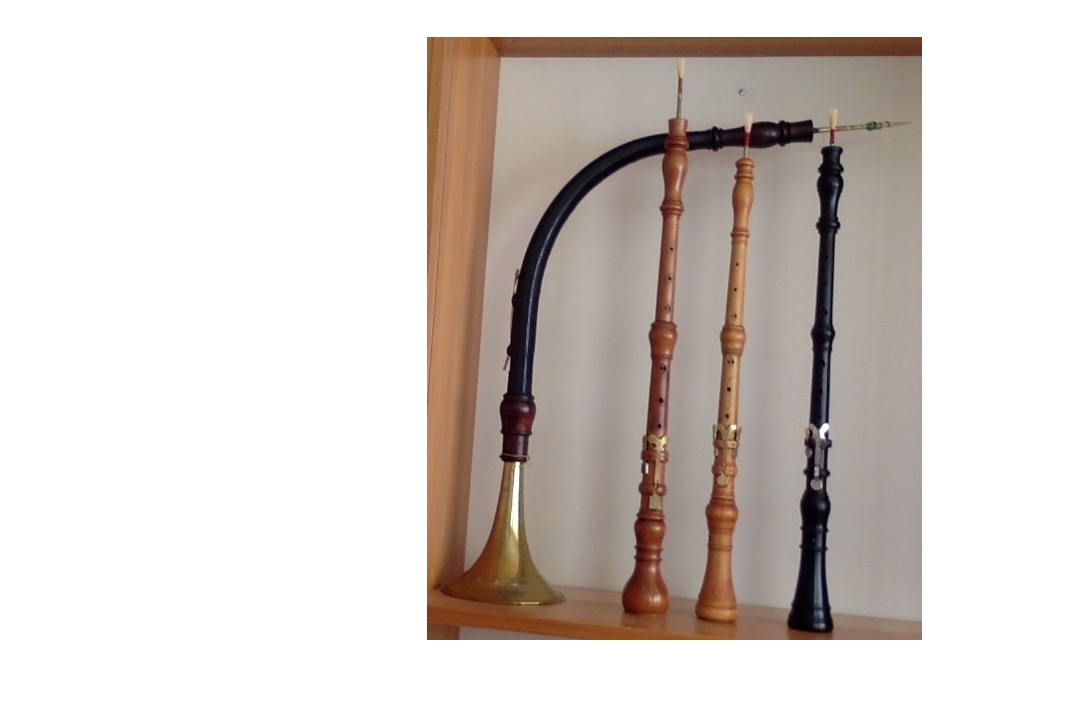
Why is this scoring for the oboes so unusual? In Bach’s time there were “regular” oboes (to the right on this photo), oboes d’amore (with a bell-like widening in the wood at the end, second from left), and oboes da caccia (or “hunting” oboes, completely curved, and with a trumpet-like brass bell at the end, far left).

Oboes
From left to right: oboe da caccia, oboe d’amore, oboes. Photo courtesy of Marianne Richert Pfau; instruments built after 18th century examples by Sand Dalton, Harry van Dias, and Paul van der Linden, respectively.

Bach often used the oboe da caccia, but only on a handful of occasions would he write for two da caccias. And even if he would write for two da caccias or two d’amores and “regular” oboes in the same cantata (or passion) they would not all be playing at the same time. On most occasions there were between one or two oboe players in the orchestra, sometimes three, alternating between the different instruments from one movement to the next. The only times Bach needed four oboists in one cantata, playing two da caccias and two d’amores at the same time, was in cantata 2 of the Christmas Oratorio (1734) and in this cantata 183. So there must have been some good oboe playing visitors in town around this time of Ascension and Pentecost in 1725.

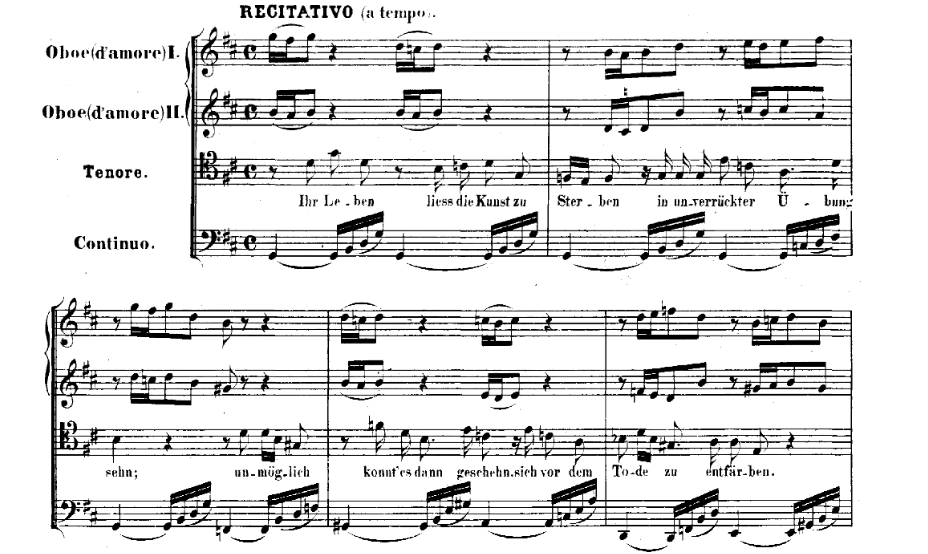
The four oboes can be heard clearly in the alto recitative, where Bach has each of them repeat the four-note theme from the “ich bin bereit”-text in the vocal part:

Screenshot 2016-05-08 10.16.33

When I hear this, I immediately have to think of the tenor recitative in Bach’s beautiful  Trauer Ode, cantata 198, this time reduced to a 3-note theme and without the da caccias:

Screenshot 2016-05-08 10.28.17

Or listen to this recitative from cantata 198 on YouTube

It is of course not exactly the same composition, but I wonder if Bach had to think back of this cantata from 1725 when he wanted to illustrate life  and death in one and the same piece of music in the Trauer Ode of 1727.

After this alto recitative comes the most glorious soprano aria, richly scored with the two oboes da caccia playing the oboe part in unisono, as well as parts for violin 1, violin 2, and viola. Harnoncourt says that even though both da caccia have this aria written in, he says it is “clearly not intended to be chorally played” and on their recording they decide to have this part covered by only one oboe da caccia. Perhaps the original full score was not available to Harnoncourt at the time he made that decision, because it clearly says: “tutti gli Oboi in unisono:”

Screenshot 2016-05-08 12.34.13
excerpt from the soprano aria from cantata 183, with Bach’s indication for “all the oboes in unisono,” Staatsbibiothek zu Berlin, Preußischer Kulturbesitz

One would almost think Bach dreamt of all four oboes playing this, also the d’amores, but when his copyists double-checked with him, he decided that was just silly, it would overpower the poor boy who had to sing this, and they only wrote it into the parts for the da caccias (it says “Arie Tacet” in the parts for the oboi d’amore).

To learn more about Cantata 183, I wholeheartedly recommend you study with Rudolf Lutz of the J.S. Bach Foundation a little bit. Find a link to his fabulous (English spoken!) lecture and improvisation about this cantata in my blog post from May 24, 2020.

Wieneke Gorter, May 8, 2016, updated May 23, 2020.

A female librettist and an inspired recording

01 Sunday May 2016

Posted by cantatasonmymind in After Easter, Cantatas, Leipzig

≈ Comments Off on A female librettist and an inspired recording

Tags

Bach, cantatas, Christiane Mariana von Ziegler, John Eliot Gardiner

ziegler-christiane-mariane-02

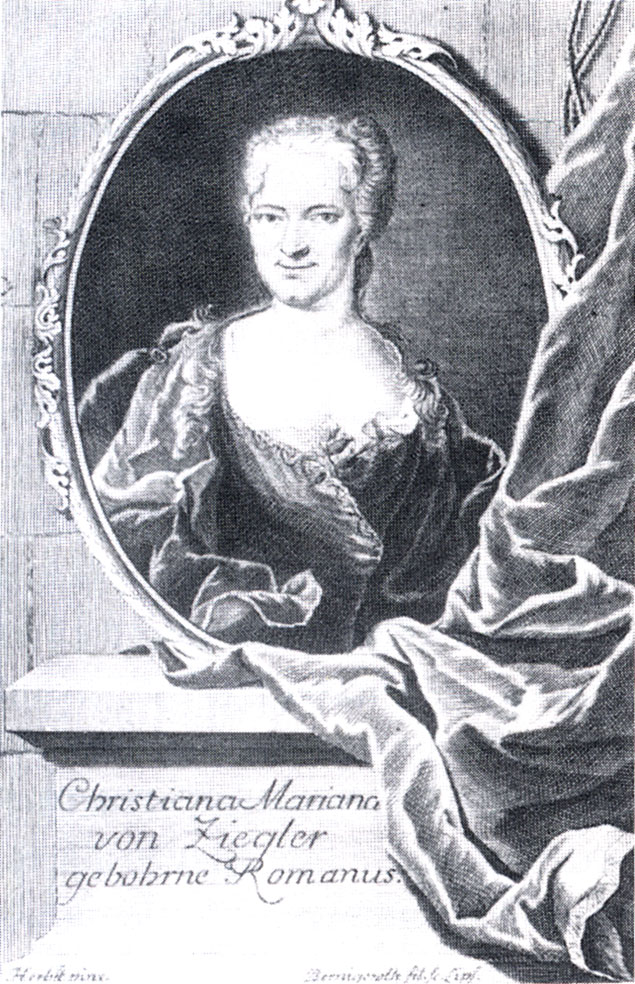
In 1725, between Easter and Pentecost, Bach set nine cantatas in a row to texts by Christiane Mariana von Ziegler (1695–1760). And it is in part thanks to her poetry that I’m favoring the cantata from 1725 over the one from 1724  for this “Rogate” Sunday – the fifth Sunday after Easter.

This cantata 87 from 1725, Bisher habt ihr nichts gebeten in meinem Namen, contains two jewels of arias: the alto aria (no 2) and the tenor aria (no 6). Von Ziegler’s poetry combined with Bach’s sublime scoring in those arias completely knocked me over when I first listened to this cantata this week. I found Gardiner’s recording of this cantata (which I happened upon by accident – read more about this at the very end of this post) the most moving.

Listen to Gardiner’s recording of cantata 87 on Spotify.

Listen to Gardiner’s recording of cantata 87 on YouTube (there might be some ads in here – you can click to skip them after a few seconds).

Buy Gardiner’s live recording of cantata 86 and 87 on Amazon

(This album is absolutely worth purchasing –  cantata 86 is beautiful too, and the violin accompaniment in the alto aria of that cantata 86 on this recording is the best)

About Christiane Mariana von Ziegler: A female librettist, who didn’t have to hide behind a male alias to get recognition or to get her works published? In 18th century Leipzig? When I first heard about this I could not believe it. But it turns out that by unusual circumstances, Christiane Mariane von Ziegler was as “free” as probably no other woman at that time was, at least between 1722 and 1741.

In that time period, there was no husband or other male relative by whose rules she had to live: her father had been in jail since she was 11, she had been twice widowed, and had lost both her children (one from each marriage). Despite all this, she was still in possession of her family’s house and fortune, and was well respected in Leipzig society. She wrote poetry, sang, and played many musical instruments. In 1722 (at age 27) she was appointed the official guardian of her family’s household, a position normally never awarded to a woman. For the next two decades her house served as the salon where many artists and intellectuals could meet. She would promote artists, poets and writers, and introduce them to representatives of the university who also attended her events.

In 1730, Von Ziegler became the first and only female member of Gottsched’s German Literary Society. She was named “poet laureate,” crowned by the emperor in 1733. In 1732 and 1734 she received the poetry prize from the German Literary Society. Her last published work appeared in 1739. In 1741, she married Professor Balthasar von Steinwehr and lived with him in Frankfurt an der Oder until her death in 1760. As far as we know, she did not write anything in this last period of her life.

In 1728, she published Versuch in gebundener Schreib=Art, which contains the texts for the nine 1725 Bach Cantatas (103, 108, 87, 128, 183, 74, 68, 175, 176). In 1729 she published In Gebundener Schreib-Art: Anderer und letzter Theil, which contains the rest of a complete yearly cantata cycle which Bach never set to music.

Since there is no correspondence between Von Ziegler and Bach left to us,  we don’t know why they started working together, we don’t know why the working relationship ended, nor why Bach never used the other texts she had provided for the rest of the cantata cycle. There are some theories that she must have been vexed about Bach altering her texts on several occasions in 1725. However, the only proof we have for what her “original” texts would have been are her publications from several years later. She might have changed them herself between Bach first using them and her later publishing them. We do know that Bach first worked with Picander, the poet with whom he would later collaborate extensively (including for the St. Matthew Passion) in February 1725.

Back to this cantata. It was Bach’s life goal to not only praise God, but also educate “his neighbor” (the congregation, his fellow believers) with his church music, and it seems that Von Ziegler definitely shared this vision. To not make this post too long, I’ll only highlight the alto aria, since it is the piece that impressed me most, but the rest of the cantata is well worth listening to, especially the tenor aria.

The Gospel reading for this Sunday was the last part of Jesus’ speech to his disciples, from John. Note verse 24 (quoted in the bass arioso opening) and the overall stress on speaking in proverbs versus speaking plainly.

23. Und an demselbigen Tage werdet ihr mich nichts fragen. Wahrlich, wahrlich, ich sage euch: So ihr den Vater etwas bitten werdet in meinen Namen,so wird er’s euch geben.

[23] And in that day ye shall ask me nothing. Verily, verily, I say unto you, Whatsoever ye shall ask the Father in my name, he will give it you.

24. Bisher habt ihr nichts gebeten in meinem Namen. Bittet, so werdet ihr nehmen, daß eure Freude vollkommen sei.

[24] Hitherto have ye asked nothing in my name: ask, and ye shall receive, that your joy may be full.

25. Solches hab’ ich zu euch durch Sprichwörter geredet. Es kommt aber die Zeit, daß ich nicht mehr durch Sprichwörter mit euch reden werde, sonderneuch frei heraus verkündigen von meinem Vater.

[25] These things have I spoken unto you in proverbs: but the time cometh, when I shall no more speak unto you in proverbs, but I shall shew you plainly of the Father.

26. An demselbigen Tage werdet ihr bitten in meinem Namen. Und ich sage euch nicht, daß ich den Vater für euch bitten will;

[26] At that day ye shall ask in my name: and I say not unto you, that I will pray the Father for you:

27. denn er selbst, der Vater, hat euch lieb, darum daß ihr mich liebet und glaubet, daß ich von GOtt ausgegangen bin.

[27] For the Father himself loveth you, because ye have loved me, and have believed that I came out from God.

28. Ich bin vom Vater ausgegangen und kommen in die Welt; wiederum verlasse ich die Welt und gehe zum Vater.

[28] I came forth from the Father, and am come into the world: again, I leave the world, and go to the Father.

29. Sprechen zu ihm seine Jünger: Siehe, nun redest du frei heraus und sagest kein Sprichwort.

[29] His disciples said unto him, Lo, now speakest thou plainly, and speakest no proverb.

30. Nun wissen wir, daß du alle Dinge weißt und bedarfst nicht, daß dich jemand frage. Darum glauben wir, daß du von GOtt ausgegangen bist.

[30] Now are we sure that thou knowest all things, and needest not that any man should ask thee: by this we believe that thou camest forth from God.

After the Vox Christi bass arioso opening (beautifully scored as an opening “chorus” for strings, oboes, and bass voice), Von Ziegler doesn’t hold back in communicating what the believers should take away from this lesson, and writes this text for the alto recitative:

O Wort, das Geist und Seel erschreckt!
O word, that terrifies spirit and soul!
Ihr Menschen, merkt den Zuruf, was dahinter steckt!
You people, notice the call hidden behind these words!
Ihr habt Gesetz und Evangelium vorsätzlich übertreten;
You have deliberately transgressed the law and gospel;
Und dies möcht’ ihr ungesäumt in Buß und Andacht beten.
And because of this you should pray without delay in repentance and devotion.

And then gives them the prayer they should be saying in the alto aria, and this is the part that bowled me over, because of the combination of the music, the text, and the humble interpretation of it on the Gardiner recording:

Vergib, o Vater, unsre Schuld
Forgive, O Father, our guilt
Und habe noch mit uns Geduld,
and still have patience with us,
Wenn wird in Andacht beten
when we devoutly pray
Und sagen: Herr, auf dein Geheiß,
and say: Lord, at your command,
Ach, rede nicht mehr sprichwortsweis,
Ah, speak no more proverbs,
Hilf uns vielmehr vertreten.
Instead help us represent ourselves.

Here’s the story of how I happened upon the Gardiner recording of this cantata, and this aria in particular: I was only familiar with cantata 86, not with 87. When comparing several recordings of the alto aria in cantata 86 (because of the stunningly beautiful and very virtuosic violin accompaniment), I decided I liked the violin playing on Gardiner’s recording the best. Satisfied that I had found this and knew what my blog post was going to be about, I took a break while letting the album play, and of course cantata 87 was next. I was on the floor on my yoga mat, just lying there, letting the music wash over me, unable to do anything else.

I am rarely so physically moved by a Gardiner recording, so I went and looked up his journal of the live performances (and recordings) in question, and found this:

“In addition to our habitual position of “bringing coals to Newcastle,” the potential impertinence of interpreting Bach to the Germans, we faced the far pricklier issue of performing Bach in the city [Dresden] whose cultural treasure had been wantonly destroyed by British bombs in one mad night towards the end of the war and with colossal loss of life.”

So there it was: the prayer for forgiveness and better representation had been as meaningful to the British musicians in the German city at the time of this recording as it was to me this week.

Wieneke Gorter, May 1, 2016, links updated May 19, 2024.

← Older posts
Newer posts →

Recent Posts

  • “Missa Miniatura” by CONTINUUM/Elina Albach Even More Moving in 2025
  • Bachfest Leipzig 2025
  • Bach Cantatas for Christmas – 1724 and 1734 editions
  • Fourth Sunday of Advent – more insight into Cantata 62 helped me better understand Bach’s Christmas Oratorio
  • Saint Ambrose and Luther in Milan – Second Sunday of Advent

Archives

  • August 2025
  • July 2025
  • December 2024
  • November 2024
  • June 2024
  • January 2024
  • December 2023
  • October 2023
  • September 2023
  • August 2023
  • April 2022
  • February 2022
  • January 2022
  • December 2021
  • November 2021
  • June 2021
  • May 2021
  • April 2021
  • February 2021
  • January 2021
  • December 2020
  • November 2020
  • October 2020
  • September 2020
  • August 2020
  • July 2020
  • May 2020
  • April 2020
  • March 2020
  • February 2020
  • January 2020
  • December 2019
  • November 2019
  • May 2018
  • April 2018
  • March 2018
  • February 2018
  • January 2018
  • December 2017
  • November 2017
  • October 2017
  • September 2017
  • August 2017
  • July 2017
  • June 2017
  • May 2017
  • April 2017
  • March 2017
  • February 2017
  • January 2017
  • December 2016
  • November 2016
  • October 2016
  • September 2016
  • August 2016
  • July 2016
  • June 2016
  • May 2016
  • April 2016
  • March 2016
  • February 2016
  • January 2016

Enter your email address to follow this blog and receive notifications of new posts by email.

Join 336 other subscribers

Categories

  • 1723 Trinity season special series
  • Advent
  • After Easter
  • Ascension
  • Bach's life
  • Cantatas
  • Chorale cantatas 1724/1725
  • Christmas
  • Easter
  • Epiphany
  • Following Bach in 1725
  • Köthen
  • Leipzig
  • Septuagesima
  • Travel
  • Trinity
  • Weimar

Meta

  • Create account
  • Log in
  • Entries feed
  • Comments feed
  • WordPress.com

Website Built with WordPress.com.

  • Subscribe Subscribed
    • Weekly Cantata
    • Join 156 other subscribers
    • Already have a WordPress.com account? Log in now.
    • Weekly Cantata
    • Subscribe Subscribed
    • Sign up
    • Log in
    • Report this content
    • View site in Reader
    • Manage subscriptions
    • Collapse this bar
 

Loading Comments...