Weekly Cantata

Weekly Cantata

Tag Archives: cantatas

A good shepherd, a violoncello piccolo da spalla, and a bit of St. Matthew Passion

09 Saturday Apr 2016

Posted by cantatasonmymind in After Easter, Cantatas, Leipzig

≈ Comments Off on A good shepherd, a violoncello piccolo da spalla, and a bit of St. Matthew Passion

Tags

2nd Sunday after Easter, Atsuko Ozaki, Bach, Bach Collegium Japan, BWV 42, BWV 6, BWV 85, cantatas, Caroyn Sampson, Dmitry Badiarov, Georg Poplutz, Gerd Türk, Gerlinde Säman, Harnoncourt, J.S. Bach Foundation, John Eliot Gardiner, Kurt Equiluz, Markus Volpert, Martin Zeller, Peter Kooij, Peter Kooy, Robin Blaze, Rudolf Lutz, St. Matthew Passion, Terry Wey, violoncello da spalla, violoncello piccolo
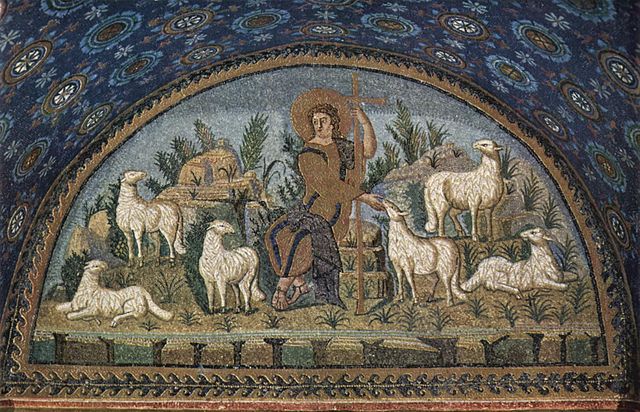
640px-meister_des_mausoleums_der_galla_placidia_in_ravenna_002
The Good Shepherd, mosaic in the Mausoleum of Galla Placidia, Ravenna, 1st half of the 5th century

There are three beautiful cantatas for this second Sunday after Easter, or “Misericordias Domini” Sunday: BWV 104, 85, and 112. Illustrating the “good shepherd” scripture for this Sunday (John 10, verse 12-16), Bach incorporated pastoral themes or orchestration in each of these cantatas.*

I’ve decided to focus on cantata 85 Ich bin ein guter Hirt, written for April 15, 1725. Of all three cantatas, this is the one I remember the best from my childhood, because of the  tenor aria “Seht, was die Liebe tut.” Also: Last week, I already mentioned the similarities between cantata 6 (for Easter Monday 1725), and cantata 42 (for the first Sunday after Easter 1725). This cantata 85 is the culmination of that “sub group” within the cantatas from 1725.

Which recording to listen to?

While I have good memories of hearing Kurth Equiluz sing the tenor aria on the Harnoncourt recording from 1977, I am enamored by Bach Collegium Japan’s recording of this cantata, and I think this is the best “overall” recording, featuring fabulous soloists Carolyn Sampson, Robin Blaze, Gerd Türk, and Peter Kooij. It is also one of the most noteworthy because of the use of a  violoncello da spalla, played by Dmitry Badiarov.

Listen to Bach Collegium Japan’s recording of cantata 85 Ich bin ein guter Hirt on Spotify. Or better yet, if you can afford to financially support the artists (especially important now, while they have no income from performances!) please consider purchasing the digital versions of Bach Collegium Japan’s recording of cantata 85 on Amazon or on iTunes.

If you prefer to watch a live recording, there is a wonderful recording available on YouTube by the J.S. Bach Foundation. Soloists are Gerlinde Sämann, soprano; Terry Wey, alto; Georg Poplutz, tenor; Markus Volpert, bass; and Martin Zeller, violoncello piccolo.

Back to the Bach Collegium Japan recording: After lovely and convincing singing by bass Peter Kooij in the opening arioso (Jesus saying “I am a good shepherd”), we get a sublime performance by countertenor Robin Blaze of the alto aria “Jesus ist ein guter Hirt,” which also features the unusual violoncello piccolo da spalla. Someone could probably write an entire PhD thesis on the difference between the  violoncello piccolo  “da spalla” (held on the shoulder, like a violin),  and the violoncello piccolo “da gamba”  (held between the legs,  like a cello), and whether Bach meant the one or the other when he wrote a part for “violoncello piccolo.”  Most recordings (Harnoncourt, Gardiner, Coin, Koopman, and J.S. Bach Foundation) feature the one held between the legs, but Bach Collegium Japan’s recording features the “da spalla” variety, played by the same person who built it in 2004, Dmitry Badiarov.
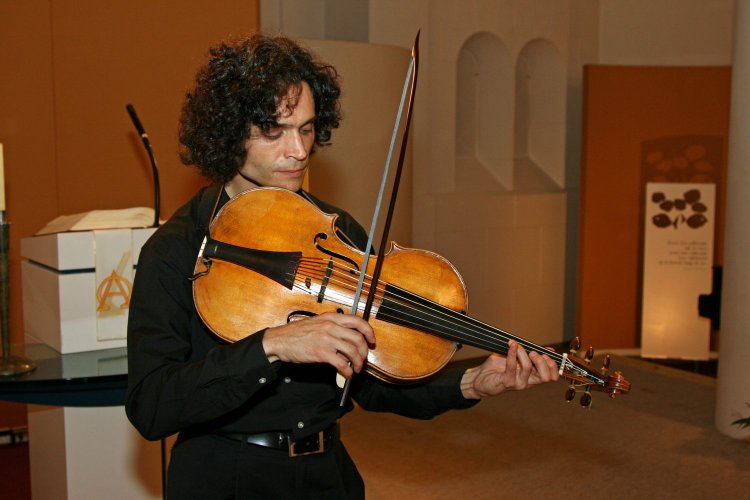
Badiarov-Dmitry-04
Dmitry Badiarov demonstrating the violoncello piccolo da spalla

Following this, we hear a radiant soprano solo chorale with oboe accompaniment (which makes me think back to the soprano solo chorale from cantata 6, in that case with the violoncello piccolo “da gamba”), beautifully sung by soprano Carolyn Sampson and expertly played by oboists Masamitsu San’nomiya and Atsuko Ozaki.

And when you didn’t think it could get any better, here comes a tenor recitative which in text and string accompaniment strongly refers to Jesus’ recitative from the St. Matthew Passion “Ich werde den Hirten schlagen, und die Schafe der Herde werden sich zerstreuen.” (Christ, having arrived at the Mount of Olives, reminds his disciples of the prophecy that the shepherd will be slain and the sheep will scatter).

With this only recitative in cantata 85, Bach has gotten everyone’s attention, so now we’re ready for the jewel in the crown of this cantata: the tenor aria “Seht, was die Liebe tut.” It is one of the most lyrical and lovely among all Bach’s tenor arias.

Seht, was die Liebe tut.
See, what love does.
Mein Jesus hält in guter Hut
My Jesus in his own safekeeping
Die Seinen feste eingeschlossen
keeps those who are his own firmly enclosed
Und hat am Kreuzesstamm vergossen
and on the beam of the cross he has shed
Für sie sein teures Blut.
for them his own precious blood.

Again there is a strong association with the St. Matthew Passion both in text and music. In his book Bach: Music in the Castle of Heaven Gardiner makes a very convincing case for his theory that Bach had wanted to perform the St. Matthew Passion on Good Friday 1725, only one year after the St. John Pasion. This didn’t happen because either the council disapproved, or Bach wasn’t ready composing the piece. If Bach had indeed been working on the St. Matthew Passion before Easter 1725, it is no wonder we’re getting glimpses of that monumental work in his cantatas after Easter 1725.

Wieneke Gorter, April 9, 2016, updated April 26, 2020

*I wrote about Cantata 104 for the Second Sunday after Easter in 1724 in this blog post.

Dutch memories, Dutch discoveries

06 Saturday Feb 2016

Posted by cantatasonmymind in Cantatas, Leipzig, Septuagesima

≈ Comments Off on Dutch memories, Dutch discoveries

Tags

Bach, BWV 144, cantatas, English Baroque Soloists, J.S. Bach Foundation, John Eliot Gardiner, Miah Persson, Nuria Rial, Septuagesima, Wilke te Brummelstoete

Opnamedatum:  2012-04-06
Parabel of the Laborers in the Vineyard by Jan Luyken, print, 1703

A number of Dutch things converged for me when writing this post. Whenever I think about the parable of the Laborers in the Vineyard, the Bible story for this Septuagesima Sunday, or the third Sunday before Lent, I see the windows of my 3rd or 4th grade classroom.* I also have to think of my late grandfather reading this story from the Bible.  Quickly summarized, this story is: A landlord pays all his laborers equally, no matter how many hours they worked. Those that worked all day object.

My favorite recording of cantata 144 Nimm, was dein ist, und gehe hin (first performed on Sunday February 6, 1724) turns out to have two connections to my home country: It was recorded in the Grote Kerk in Naarden, during the Bach Pilgrimage tour of Gardiner/English Baroque Soloists, and it features Dutch singer Wilke te Brummelstoete as alto soloist. Counter-tenor fan that I am, I can safely state that I will mention no more than a handful of female altos on this blog each year, so this is pretty special.

Naarden, The Netherlands

The icing on the cake is the illustration I discovered when searching for a good picture to go with this blog post: an etching by Haarlem artist Jan Luyken as published in the Amsterdam Mortierbijbel (Bible published by Pieter Mortier) in 1703, from the collection of the Rijksmuseum in Amsterdam.

Listen to John Eliot Gardiner’s recording of cantata 144 on Spotify

Listen to John Eliot Gardiner’s recording of cantata 144 on Youtube

Soloists: Miah Persson, soprano; Wilke te Brummelstroete, alto;
James Oxley, tenor; Jonathan Brown, bass.

As I’m updating this post on February 8, 2020, the J.S. Bach Foundation has just released their entire live video recording of this cantata, and that one is wonderful too, especially because Nuria Rial sings the soprano aria. Find that video here on YouTube. Soloists are Nuria Rial, soprano; Markus Forster, alto; Raphael Höhn, tenor.

Read the German text with English translation of cantata 144

Find the score of cantata 144 here

What to listen for in cantata 144 Nimm, was dein ist, und gehe hin:

In the opening chorus: the illustration of the text gehe hin, gehe hin! (off you go!) with ascending figures, each gehe hin “retaken” so that the text really leaps off the page, more on the Gardiner recording than on other ones. Also listen how beautifully the sopranos and violins enhance each other’s sound in this movement. That happens too on the J.S. Bach Foundation recording.

In the alto aria:  The illustration of the grumbling workers by the repeated 8th-notes in the strings. The music on the text “Murre nicht” (Don’t grumble) is always low, the music with the text “Lieber Christ” (please note that this means “dear Christian,” not “dear Christ”) always goes up. Very well done in an appropriate style by Wilke te Brummelstoete on the Gardiner recording.

In the soprano aria: the glorification of the “Genügsamkeit” (being satisfied with what you have, a concept that must have been very important to Bach), and the wonderful voice of soprano Miah Persson on the Gardiner recording or the always radiant Nuria Rial on the J.S. Bach Foundation recording. Read more about Miah Persson in my blog post about cantata 179 and those about cantatas 186 and 186a. Read more about Nuria Rial in my posts about Cantata 36 and Cantata 89.

Thank you for reading! Please leave your email address in the “follow this blog” section on the left side of this blog post. You will receive an email by WordPress whenever I have posted a new story. Please note that the choice of words and spelling in their confirmation email is by WordPress, not me. My apologies for that, and many thanks to you for your patience while I work on a more elegant solution!

To support this blog, please consider purchasing Gardiner’s album featuring cantata 144 on Amazon. I receive a small percentage of every sale made through this link. And it would be so fun if someone would actually buy a CD through this link. So far (February 13, 2020), it hasn’t happened 😉 Thank you!

Wieneke Gorter, February 6, 2016, updated January 27, 2024.

*Though a protestant school, it was pretty moderate in its teachings, and I don’t really remember Bible reading in the classroom. However, we learned a hymn every week and the reason I have to think of the classroom when reading this parable probably has to do with the hymn “De eersten zijn de laatsten” (The first will be the last) which is based on this same story.

To the Opera!

31 Sunday Jan 2016

Posted by cantatasonmymind in Cantatas, Epiphany, Leipzig

≈ Comments Off on To the Opera!

Tags

Bach, Bach and opera, Bach Collegium Japan, cantatas, Harnoncourt, John Eliot Gardiner, Kurt Equiluz, Paul Agnew, Paul Esswood, Peter Kooy, Robin Blaze, Ruud van der Meer

Rembrandt_Christ_in_the_Storm_on_the_Lake_of_Galilee
The Storm on the Sea of Galilee by Rembrandt van Rijn, 1633. Formerly at the Isabella Stuart Gardner Museum, Boston, USA. Stolen in 1990.

Cantata 81 Jesus schläft, was soll ich hoffen? from 1724 closely follows the reading for the 4th Sunday after Epiphany: the story of Jesus calming the storm on the sea of Galilee.

In combining masterful text illustration with his theology, Bach presents a powerful drama rivaling a Handel opera. And I was lucky to find two conductors especially not shy of the opera-element in this cantata: Harnoncourt and Gardiner. The recording from 1978 directed by Harnoncourt has a great sense of drama as well as good singing in all the movements. For me it is the most “overall” satisfying recording of this cantata. It was not an easy decision though this week, and the fact that I grew up with the Harnoncourt recording might of course have influenced my choice. Soloists: Paul Esswood, counter-tenor; Kurt Equiluz, tenor; Ruud van der Meer, bass.

Listen to Harnoncourt’s recording of cantata 81 on Spotify

Listen to Harnoncourt’s recording of cantata 81 on YouTube

Read the full German text with English translation of cantata 81

Find the score of cantata 81 here

If you have time to listen some more: The absolute best rendition of the spectacular tenor aria in my opinion appears on the Gardiner recording, with very convincing “waves” in the orchestra (at an even higher tempo than Harnoncourt) and truly marvelous singing by Paul Agnew. Listen to this aria on Spotify.

What to keep in mind when listening:

The reading for this 4th Sunday after Epiphany, from Matthew 8:

23. Und er trat in das Schiff, und seine Jünger folgeten ihm.

[23] And when he entered into a ship, his disciples followed him.

24. Und siehe, da erhub sich ein groß Ungestüm im Meer, also daß auch das Schifflein mit Wellen bedeckt ward; und er schlief.

[24] And, behold, there arose a great tempest in the sea, insomuch that the ship was covered with the waves: but he was asleep.

25. Und die Jünger traten zu ihm und weckten ihn auf und sprachen: HERR, hilf uns, wir verderben!

[25] And his disciples came to him, and awoke him, saying, Lord, save us: we perish.

26. Da sagte er zu ihnen: Ihr Kleingläubigen, warum seid ihr so furchtsam? Und stund auf und bedräuete den Wind und das Meer; da ward es ganz stille.

[26] And he saith unto them, Why are ye fearful, O ye of little faith? Then he arose, and rebuked the winds and the sea; and there was a great calm.

27. Die Menschen aber verwunderten sich und sprachen: Was ist das für ein Mann, daß ihm Wind und Meer gehorsam ist?

[27] But the men marvelled, saying, What manner of man is this, that even the winds and the sea obey him!

In Western Europe at Bach’s time, there was probably no insight yet that the “sea” in this bible story was actually a large sweet-water lake. Bach’s Lutheran bible talked of a sea, not a lake, and most paintings from the 16th and 17th centuries depict seagulls, cliffs, or port cities in the distance. Of course a storm can also develop on a large lake, but we have to assume that Bach and his librettist had a full-blown storm at sea in mind when writing this. Bach probably never witnessed one, but Gardiner says that one of the theologian books in Bach’s library featured a vivid commentary on this part of the gospel. That book’s author, Heinrich Müller, lived in Rostock, on the Baltic sea. And who knows what interpretations of a “tempesta di mare” by other composers Bach had heard at the opera in Hamburg or seen on copied music which traveling colleagues and students might have brought with them.

Already in the opening aria Bach combines opera with theology. The recorders illustrate the “sleeping” Jesus, but also the loneliness of a life without Jesus/without faith (Bach uses recorders for this purpose more often, for example in the O Schmerz tenor-aria from the St. Matthew Passion (when for a moment Jesus feels he has lost faith), as well as in the Sanfte soll mein Todeskummer tenor-aria from the Easter Oratorio). There is also some hint in the orchestra of the calm before the storm, underlining the anxiety of the question “Was soll ich hoffen?”

The big storm at sea manifests in the tenor aria, equal to a “rage” aria by Handel, with the orchestra and the singer imitating the rolling waves and wind.

Then enters Jesus in the bass arioso, asking his disciples, but also the believers in general, why they didn’t have faith. Dürr remarks that the music is like an “Invention” and is practically a bass duet, with the other “singer” being the continuo. This is also a pivotal point in the cantata, moving from the part without Jesus/faith (nos 1-3) to the part with Jesus/faith.

Another “storm aria” follows, sung by the bass, but this time the storm is somewhat quieting down, and the oboe lines paint a quieter mood. All this to illustrate that Jesus is calming the storm. The alto recitative states/confirms that Jesus has calmed the storm, and is with us, and the chorale (second verse of the beautiful Jesu meine Freude) is the final affirmation:

Unter deinen Schirmen
Beneath your protection
Bin ich für den Stürmen
I am free from storms
Aller Feinde frei.
and all enemies.
Laß den Satan wittern,
Let Satan sniff around,
Laß den Feind erbittern,
let the enemy be exasperated
Mir steht Jesus bei.
Jesus stands by me.
Ob es itzt gleich kracht und blitzt,
Though there is thunder and lightning,
Ob gleich Sünd und Hölle schrecken,
though sin and hell terrify,
Jesus will mich decken.
Jesus will protect me.

Thank you for reading! Please leave your email address in the “follow this blog” section on the left side of this blog post. You will receive an email by WordPress whenever I have posted a new story. Please note that the choice of words and spelling in their confirmation email is by WordPress, not me. My apologies for that, and many thanks to you for your patience while I work on a more elegant solution!

Wieneke Gorter, January 31, 2016, links updated February 2, 2020

Hidden messages

16 Saturday Jan 2016

Posted by cantatasonmymind in Cantatas, Chorale cantatas 1724/1725, Epiphany, Leipzig

≈ Comments Off on Hidden messages

Tags

according to Lutheran Church year, Bach, Bach Collegium Japan, BWV 13, BWV 155, BWV 3, cantatas, Dorothee Mields, Epiphany, Epiphany 2, Gerald Finley, Joanne Lunn, Julian Podger, Pascal Bertin, Peter Kooy, Richard Wyn Roberts

marten_de_vos_004_le_nozze_di_cana_1597
Marriage at Cana by Marten de Vos, 1597. Cathedral of Our Lady, Antwerp, Belgium.

Judging by the text and lamenting style of their opening choruses or opening arias, all cantatas for this Sunday (155, 3, and 13) are very sad at first glance. Which seems strange, since the reading for the day is the miracle of Jesus turning water into wine at the Marriage at Cana. So let’s dig a little deeper in the cantata for this Sunday that I love the most, Cantata 3 Ach Gott, wie manches Herzeleid, from 1725.

My favorite interpretation of this cantata the one by Bach Collegium Japan. The choir sopranos (including Dorothee Mields) sing a truly heavenly “zum Himmel” in the opening chorus,  bass soloist Peter Kooy does an excellent job in his on purpose difficult aria and doesn’t hold back in the chorale tune in the opening chorus, and last but not least: fabulous singing by soprano Dorothee Mields and counter-tenor Pascal Bertin in the duet.

Listen to Bach Collegium Japan’s recording of Cantata 3 on Spotify

If you can’t listen on Spotify or prefer not to, you can find Gardiner’s recording here on YouTube. Soprano: Joanne Lunn; Counter-tenor: Richard Wyn Roberts; Tenor: Julian Podger; Bass: Gerald Finley.

Find the text of Cantata 3 Ach Gott, wie manches Herzeleid here, and the score here.

Bach was not just a strong believer but also a self-taught theologian, and stated several times that his church music was intended for the glorification of God and to instruct his “neighbor.” On this day of the Marriage at Cana reading, he might have been compelled to illustrate the deeper meaning of the Bible story: earthly troubles can turn into heavenly bliss if you are patient and believe strongly enough that Jesus will lead you. So either he himself or his librettist decided not to mention the Bible story at all in the the text of this cantata.*

It is then not so strange anymore that in the music of this cantata Bach keeps, brilliantly, combining the struggle and the salvation in almost every part of the work.

The achingly beautiful opening chorus at first just sounds like a lament, but has some hidden messages which reveal the salvation. First, in the instrumental introduction,  there is an ascending (the way to salvation/heaven) line in the violins at the same time as there is a chromatic descending line (the struggle/affliction) in the oboes, illustrating the last two lines of the text of that chorus:

Der schmale Weg ist trübsalvoll, (The narrow way is full of affliction)
Den ich zum Himmel wandern soll. (by which I must travel to heaven.)

Click here to see that visualized by Thomas Braatz on the Bach Cantatas website.

While the Leipzig congregation might have missed this first hidden message, they would have gotten the second: the text communicated through the well-known chorale tune. The same way my Dutch calvinist great-grandmother had all the verses of all the Psalm texts memorized, the Lutherans in Bach’s time knew all their chorales and would immediately think of the text when hearing the tune. For this opening chorus, Bach chose the tune of O Jesu Christ mein’s Lebens Licht, so there was some glorification of Jesus right there amidst the lamentation:

O Jesu Christ mein’s Lebens Licht
Mein Hort, mein Trost, mein Zuversicht
Auf Erden bin ich nur ein Gast
Und drückt mich sehr der Sünden Last
.

O Jesus Christ, light of my life,
my refuge, my comfort, my reassurance,
on earth I am only a guest

And the burden of sin presses down heavily upon me.

And to make this stand out, Bach uses his “pay attention!” trick again, letting this chorale melody appear in a for him very unusual place: the vocal bass line. To emphasize it, he doubles it with a trombone (which is probably also the reason why this cantata is almost never performed today, because who is going to hire an expensive trombonist just to play along with the choir in one part of the cantata?).

In the other outstanding part of this cantata, the soprano/alto duet, this is all reversed: the music sounds absolutely happy, but if you look at the score, you see a visual illustration of the text in the middle section:  Mein Kreuz hilft Jesus tragen (Jesus helps to bear my cross). When the oboe line goes up, the continuo line goes down, and when one vocal line goes up, the other vocal line goes down. On top of that, there are four sharps in the key signature (in Bach’s manuscript this would look like four crosses and a sharp is also called a “cross” in German). We know from other works that hidden messages like this are not a coincidence in Bach’s writing.

Wieneke Gorter, January 16, 2016.  Links updated January 10, 2018 and January 31, 2020.

*Seen in the context of the chorale cantata series of 1724/1725, this is not unusual at all. On Several occasions before this Sunday in 1725, Bach had decided to focus more on the text of the chorale he had chosen for the cantata than on the Gospel reading for that day. See for example my post about December 31, 1724 and January 1, 1725.


Eardrums and perhaps a connection with Schütz

10 Sunday Jan 2016

Posted by cantatasonmymind in Cantatas, Epiphany, Leipzig

≈ Comments Off on Eardrums and perhaps a connection with Schütz

Tags

Bach, Bach Collegium Japan, BWV 154, BWV 32, cantatas, Caroline Weynants, Christ among the Doctors, Gerd Türk, Il Gardellino, James Gilchrist, Jesus among the Doctors, John Eliot Gardiner, Marcel Ponseele, Paolo Veronese, Peter Kooij, Robin Blaze, Sunday after Epiphany

Veronese_Jesus_Among_the_Doctors
Paolo Veronese: Jesus Among the Doctors, circa 1560, oil on canvas

Lutherans in the 18th century knew very well that on this Sunday, the first after Epiphany, they should fast-forward twelve years in Jesus’ life, to the story of his parents losing him on a trip to Jerusalem, and then finding him in the temple, conversing with the Doctors. This story often appeared on paintings from the 15th century onward, and the text from Luke was probably as familiar to the Leipzig congregation as the Christmas story :

48. Und da sie ihn sahen, entsetzten sie sich. Und seine Mutter sprach zu ihm: Mein Sohn, warum hast du uns das getan? Siehe, dein Vater und ich haben dich mit Schmerzen gesucht.

[48] And when they saw him, they were astonished. And his mother said to him : ‘My son, why have you done this to us? Your father and I have looked for you with anxiety.’

49. Und er sprach zu ihnen: Was ist’s, daß ihr mich gesucht habt? Wisset ihr nicht, daß ich sein muß in dem, was meines Vaters ist?

[49] And he said to them : ‘How is it that you looked for me?Did you not know that I must be in that which is my father’s?’

In cantata 154 Mein liebster Jesus ist verloren (from 1724, written 3 days after Sie werden aus Saba alle kommen) Bach doesn’t set the scripture literally, except for one of Jesus’ lines of text. He doesn’t let Jesus’ parents talk (as for example Schütz had done 75 years before in his Mein Sohn, warum hast du uns das getan? from Symphoniae Sacrae III) but instead it is “man” in general who thinks he has lost Jesus, and is later happy to have found him again. However, the loss of a child as well as the fear of it happening is something that Bach could relate to, and that drama is palpable in the opening tenor aria.

Listen to cantata 154 by Bach Collegium Japan on Spotify (fabulous singing by Robin Blaze and Gerd Türk)

For those without access to Spotify, listen to cantata 154 by Kuijken on YouTube

Find the German text with English translations here, and the score here.

For the rest this cantata feels almost like a little opera, with the very pretty alto aria asking Jesus to please not hide in the clouds, followed by the appearance of Jesus speaking “Wisset ihr nicht, daß ich sein muß in dem, was meines Vaters ist?” and then the exuberant alto/tenor duet rejoicing in the fact that Jesus has been found. Bach uses two special and wonderful orchestrations in this cantata. In the alto aria he uses a “high continuo” with violins and harpsichord to accompany the voice and the oboes, most probably to illustrate purity and innocence.  And in the alto/tenor duet Bach brings both the violins of the tenor aria and the oboes from the alto aria together, the first violin and first oboe playing the same part, the second violin and the second oboe also playing the same part, as an additional illustration of the happy reunion and the last two lines of text of the duet:

Ich will dich, mein Jesu, nun nimmermehr lassen,
I want never again to abandon you, my Jesus,
Ich will dich im Glauben beständig umfassen.
I want to embrace you constantly in faith.

John Eliot Gardiner, in his terrific liner notes with his recording (scroll down to page 6), states that on the text “O Donnerwort in meinen Ohren” (O thunderous word in my ears) in the opening tenor aria, the orchestra should evoke “ear drumming.” (If you would like to listen to this Gardiner interpretation with tenor James Gilchrist, you can find that here on YouTube). Gardiner also points out that this tenor aria is a cousin to Peter’s Ach, mein Sinn! aria from the St. John Passion. That passion would not be performed until Good Friday of that year, 1724, but in his book Bach: Music in the Castle of Heaven Gardiner suggests that Bach was probably working on the passion, and might have been preparing the people in Leipzig for it. This included introducing them to Jesus (even a twelve-year-old one) as a bass voice. This might explain why Bach somewhat unnaturally “interjects” Jesus’ text “Wisset ihr nicht, daß ich sein muß in dem, was meines Vaters ist?” in between the alto aria and the tenor recitative in this cantata.

With cantata 32 Liebster Jesu, mein Verlangen (from 1726), Bach steps even further away from the literal story of this Sunday. It is now not even “man” anymore who has lost Jesus and then finds him again, but the “soul” in the form of a soprano voice, and Jesus. Herreweghe’s first oboist, Marcel Ponseele, recorded a handful cantatas with his own ensemble Il Gardellino and I was excited to find out that they also recorded cantata 32. Beautiful job by soprano Caroline Weynants and of course Marcel Ponseele himself in the pretty opening aria.

Listen to the entire recording of cantata 32 by Il Gardellino on Spotify

Listen to the entire recording of cantata 32 by Il Gardellino on YouTube

Click here for the German text with English translation of cantata 32

Click here for a vocal score for cantata 32

In closing, some food for thought: Bach incorporates the text of Psalm 84 Wie lieblich sind deine Wohnungen in the fourth movement of Cantata 32 in the soprano voice. Knowing that Schütz also used that same Psalm text at the end of his  Mein Sohn, warum hast du uns das getan?, I wonder if Bach knew that particular Schütz piece and used it as inspiration for this cantata and, who knows, perhaps also for cantata 154, since that one is so operatic, shall we say Schütz-like, in nature and structure …

Wieneke Gorter, January 10, 2016, links updated January 11, 2020.

A Bach Cantata for Three Kings Day can swing both ways

06 Wednesday Jan 2016

Posted by cantatasonmymind in Cantatas, Epiphany

≈ Comments Off on A Bach Cantata for Three Kings Day can swing both ways

Tags

according to Lutheran Church year, Bach, Bach Collegium Japan, cantatas, Charles Daniels, Epiphany, Harnoncourt, Harry van der Kamp, Kooy, Kurt Equiluz, Leonhardt, Matthew White, Montreal Baroque, Which cantata which Sunday, Which cantata which week

Adoration of Magi

Some of us love to keep the tree and the lights for a few more days, others are (eagerly or not) looking ahead, facing reality (and finally starting that blog).  The same two sentiments can be found in Bach’s music for this time of year. The cantata for January 6 (Epiphany) from 1724 is very Christmas-y, the one from 1725 absolutely not. Both are well worth a listen.

Let’s start with the one that is still in full Christmas swing, from 1724: cantata 65 Sie werden aus Saba alle kommen, with a happy text incorporating the story of the Three Kings visiting the baby Jesus, and featuring 2 horns, 2 recorders, and 2 oboes da caccia in the orchestra. As a child I loved this cantata. It was mainly because of the special instrumentation, the horns prominent in the tenor aria, the oboes in the bass aria. But I also clearly remember it was so cool that the bass aria talks about the New Year!

I grew up with the Harnoncourt recording, and though that interpretation of the tenor aria (sung by Kurt Equiluz)  is still one of the best, my “favorite overall” recording of this cantata today is that of Bach Collegium Japan. Tenor James Gilchrist and bass Peter Kooy do a fabulous and compelling job at their arias, and the horns sound beautiful.

Listen to cantata 65 by Bach Collegium Japan on Spotify

Listen to cantata 65 by Harnoncourt on YouTube

Click here for the full German text with English translation of cantata 65

The next year, in 1725, Bach wrote cantata 123 Liebster Immanuel, Herzog der Frommen. A gem of a cantata, with little strands of the chorale woven into the opening chorus, extremely beautiful. Both music and text are much more poignant than the Epiphany cantata of the year before. There are even references to the cross. And then there’s the bass aria. When you listen to this cantata for the first time, and you hear the flute start this aria, you will never guess it is going to be a bass aria! It is a very unusual combination of voice and instrument for Bach, and that usually means: pay attention! And yes, there it is in the text, the core of Bach’s 18th century Lutheran faith: even if society casts you out, you don’t belong, you are lonely, then you will still be saved by Jesus.

My favorite recording of this cantata is the one by Montréal Baroque, on which Dutch bass Harry van der Kamp and flutist Grégoire Jeay make something truly special out of that bass aria. I love the liveliness of this interpretation overall, including an opening chorus that immediately grabs my attention and moves me, and fabulous performances by countertenor Matthew White and tenor Charles Daniels in their arias as well.

The only downside for me of the Montréal Baroque recording is that the chorus pieces are all sung one-on-a-part, by the four soloists only. Not only do I have a personal (maybe not historically accurate, but so be it!) preference for 3-5 voices on a part, I also find that soprano Monika Mauch is outbalanced by the men in the opening chorus. I can hardly hear her, which is too bad because I’m sure she’s an equally great singer as the other three.

Listen to cantata 123 by Montreal Baroque on Spotify

Listen to cantata 123 by Montreal Baroque on YouTube

Listen to cantata 123 by Harnoncourt on YouTube

Click here for the full German text with English translation

If you enjoy listening to these recordings, please consider supporting the artists and purchase them!
BWV 65 by Bach Collegium Japan is here
BWV 123 by Montréal Baroque is here
BWV 123 by Bach Collegium Japan is here
Wieneke Gorter, January 6, 2016
(links updated January 3, 2017 and November 20, 2020)
Newer posts →

Recent Posts

  • “Missa Miniatura” by CONTINUUM/Elina Albach Even More Moving in 2025
  • Bachfest Leipzig 2025
  • Bach Cantatas for Christmas – 1724 and 1734 editions
  • Fourth Sunday of Advent – more insight into Cantata 62 helped me better understand Bach’s Christmas Oratorio
  • Saint Ambrose and Luther in Milan – Second Sunday of Advent

Archives

  • August 2025
  • July 2025
  • December 2024
  • November 2024
  • June 2024
  • January 2024
  • December 2023
  • October 2023
  • September 2023
  • August 2023
  • April 2022
  • February 2022
  • January 2022
  • December 2021
  • November 2021
  • June 2021
  • May 2021
  • April 2021
  • February 2021
  • January 2021
  • December 2020
  • November 2020
  • October 2020
  • September 2020
  • August 2020
  • July 2020
  • May 2020
  • April 2020
  • March 2020
  • February 2020
  • January 2020
  • December 2019
  • November 2019
  • May 2018
  • April 2018
  • March 2018
  • February 2018
  • January 2018
  • December 2017
  • November 2017
  • October 2017
  • September 2017
  • August 2017
  • July 2017
  • June 2017
  • May 2017
  • April 2017
  • March 2017
  • February 2017
  • January 2017
  • December 2016
  • November 2016
  • October 2016
  • September 2016
  • August 2016
  • July 2016
  • June 2016
  • May 2016
  • April 2016
  • March 2016
  • February 2016
  • January 2016

Enter your email address to follow this blog and receive notifications of new posts by email.

Join 334 other subscribers

Categories

  • 1723 Trinity season special series
  • Advent
  • After Easter
  • Ascension
  • Bach's life
  • Cantatas
  • Chorale cantatas 1724/1725
  • Christmas
  • Easter
  • Epiphany
  • Following Bach in 1725
  • Köthen
  • Leipzig
  • Septuagesima
  • Travel
  • Trinity
  • Weimar

Meta

  • Create account
  • Log in
  • Entries feed
  • Comments feed
  • WordPress.com

Website Built with WordPress.com.

  • Subscribe Subscribed
    • Weekly Cantata
    • Join 154 other subscribers
    • Already have a WordPress.com account? Log in now.
    • Weekly Cantata
    • Subscribe Subscribed
    • Sign up
    • Log in
    • Report this content
    • View site in Reader
    • Manage subscriptions
    • Collapse this bar
 

Loading Comments...