Weekly Cantata

Weekly Cantata

Tag Archives: Christmas Oratorio

Bach Cantatas for Christmas – 1724 and 1734 editions

23 Monday Dec 2024

Posted by cantatasonmymind in Cantatas, Chorale cantatas 1724/1725, Christmas, Epiphany, Leipzig

≈ 4 Comments

Tags

Alex Potter, Antonia Frey, baroque-music, Bart Aerbeydt, Bernhard Bechtold, Carine Tinney, Charles Daniels, Christmas, Christmas Oratorio, Collegium Vocale Gent, Concerto Copenhagen, Daniel Johannsen, Eric Milnes, Florian Sievers, Harry van der Kamp, J.S. Bach Foundation, J.S. Bach Stiftung, Jan Kobow, Julia Doyle, Lars Ulrik Mortensen, Lucia Giraudo, Margot Oitzinger, Maria Keohane, Mark Padmore, Matthew Brook, Matthew White, Milo Maestri, Monika Mauch, Montreal Baroque, Netherlands Bach Society, Peter Kooij, Philippe Herreweghe, Rodrigo Lopez-Paz, Rudolf Lutz, Sarah Connolly, Stephan MacLeod, Tomáš Král, Vasiljka Jezovsek

Merry Christmas! Below are my recommendations for recordings of Bach’s chorale cantatas for the Christmas season, written in 1724/1725, as well as a link to the video of this year’s wonderful live performance by the Netherlands Bach Society of Bach’s Christmas Oratorio, written in 1734/1735. Before I get to that, I wanted to share a personal story. (If you want to “jump to the recipe,” just scroll down three paragraphs to the next header).

As regular readers of this blog know, Christmas morning for me = “Jauchtzet, frohlocket,” the first entrance of Bach’s Christmas Oratorio*. But ten days ago, during the first-ever Christmas Oratorio concert of my life as a chorus member, I couldn’t sing those words.

I had unwittingly set myself up for it, because I had just done two things to remember my late mother. It was very cold in the church, and I had lent one of my mother’s scarves to a friend who was singing next to me. As we were getting on stage, I told her: “this scarf has been in many a Bach concert, because my mother used to sing in a Bach choir too.” And then I showed her how I had copied my mother’s signature from her old piano reduction to the new one I was using now.

So while I had been completely fine during all the rehearsals, now with the audience there and those memories, the first notes of the timpani made me choke up. Fortunately, that first soprano entrance is low and doubled by many other voices, so nobody noticed. And I was fine for the rest of the concert, and thoroughly enjoyed getting to sing cantatas 1, 2, 5, and 6 of Bach’s Christmas Oratorio with a good orchestra and great soloists.

Do you have special memories associated with Bach’s or other Christmas music? Please let me know in the comments. Here are my recommendations for recordings:

Christmas Cantatas from Bach’s Chorale Cantata cycle, 1724/1725

Christmas Day: Cantata 91 Gelobet seist du, Jesu Christ by the J.S. Bach Foundation/Rudolf Lutz, with Monika Mauch – Soprano; Margot Oitzinger – Alto; Bernhard Berchtold – Tenor; and Peter Kooji – Bass. Find the score here, and English translations here.

Second Christmas Day: Cantata 121 Christum wir sollen loben schon by Concerto Copenhagen/Lars Ulrik Mortensen, with Maria Keohane – Soprano; Alex Potter – Alto; Jan Kobow – Tenor; and Matthew Brook – Bass. Find the score here, and English translations here.

Third Christmas Day: Cantata 133 Ich freue mich in dir by Concerto Copenhagen/Lars Ulrik Mortensen, with Maria Keohane – Soprano; Alex Potter – Alto; Jan Kobow – Tenor; and Matthew Brook – Bass. Find the score here, and the English translations here.

Maria Keohane

Sunday after Christmas: Cantata 122 Das neugeborene Kindelein by Collegium Vocale Gent/Philippe Herreweghe, with Vasiljka Jezovsek – Soprano; Sarah Connolly – Alto; Mark Padmore – Tenor; and Peter Kooij – Bass. Find the score here, and the English translations here.

New Year’s Day: Cantata 41 Jesu nun sei gepreiset by the J.S. Bach Foundation/Rudolf Lutz, with Julia Doyle – Soprano; Antonia Frey – Alto; Florian Sievers – Tenor; and Stephan MacLeod – Bass. Find the score here, and the English translations here.

Jan 6, Epiphany: Cantata 123 Liebster Immanuel, Herzog der Frommen by Montréal Baroque/Eric Milnes, with Matthew White, alto; Charles Daniels, tenor; and Harry van der Kamp, bass. Find the score here, and the English translations here.

From Bach’s Christmas Oratorio, 1734/1735

Bart Aerbeydt and Milo Maestri
Lucia Giraudo
Daniel Johannsen

All photos above by Donald Bentvelsen. Find him on Instagram at @bentvel.

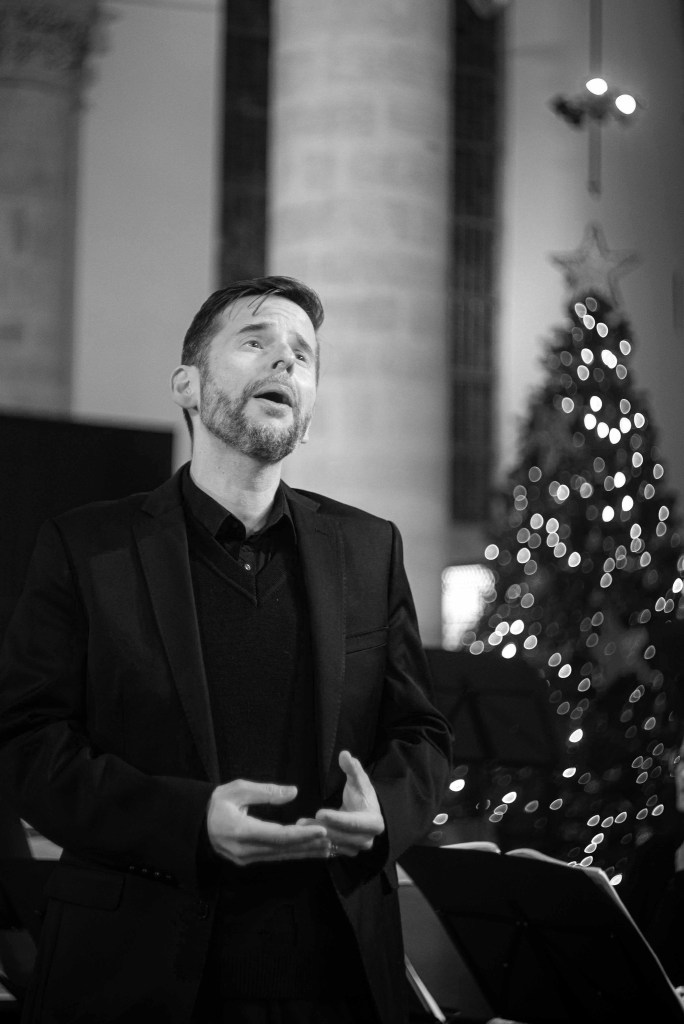
I highly recommend the video of the most recent live performance by the Netherlands Bach Society under the direction of Lars Ulrik Mortensen. They performed cantatas 1, 4, 5, and 6 of Bach’s Christmas Oratorio in the Netherlands earlier this month. I attended the concert in Naarden on December 11, the video below is from the performance in Utrecht, two days later. The choir could have been a bit larger for my personal taste, but for the rest I absolutely loved this performance, with text-focused singing by all soloists, and fabulous and sensitive playing by the instrumentalists, allowing for musical dialogues with the singers. I especially enjoyed the contributions by tenor Daniel Johannsen, oboist Rodrigo Lopez-Paz (photo in my previous post), violinist Lucia Giraudo, and horn players Bart Aerbeydt and Milo Maestri. I very much ejoyed reading the program booklet, especially the the interview with director Lars Ulrik Mortensen.

Read the English program book for this performance here. Read a bit more on the fifth cantata from this same performance in my previous post.

Please consider subscribing to this blog (just click on the button below), it really helps me!

Best wishes for the New Year,

Wieneke Gorter, December 23, 2024.

* if you don’t know the story, please find it here.

Fourth Sunday of Advent – more insight into Cantata 62 helped me better understand Bach’s Christmas Oratorio

21 Saturday Dec 2024

Posted by cantatasonmymind in Advent, Cantatas, Chorale cantatas 1724/1725, Leipzig

≈ 1 Comment

Tags

Advent, Alex Potter, Bach, BWV 248/5, Carine Tinney, Cecilia Bernardini, Chorale Cantatas, Christmas, Christmas Oratorio, Daniel Johannsen, Johann Martin Schamel, l500b300, Lydia Vroegindeweij, Netherlands Bach Society, Rodrigo Lopez-Paz, Tomáš Král, Weihnachtsoratorium

Adoration of the Shepherds by Dutch painter Gerard van Honthorst, 1622. Pommersches Landesmuseum (Pomerania State Museum), Germany.

In my post for the first Sunday of Advent about Cantata 62 Nun komm, der Heiden Heiland, I explained how Bach’s chorale cantatas were most likely influenced by Johann Martin Schamel‘s annotations in his publication “Evangelischer Lieder-Commentarius.” Still, in that post, I gave just a few examples of how Bach used Schamel’s explanations.

Only after I wrote that post, I realized that Lydia Vroegindeweij had already created a “Read and Listen” guide for this cantata on her Luther 500 / Bach 300 website, shining a very clear light on the relation between Schamel’s explanations and Bach’s music. However, that article was in Dutch. So over the past few weeks, I translated Lydia’s Dutch text into English, and then Lydia transformed that text into a beautiful web page, with listening examples for every single movement of the cantata. Please find that brand-new English “Read and Listen” guide for Cantata 62 here.

In the process of translating and re-reading, I became more familiar with Luther’s and Schamel’s key themes for Advent and Christmas, especially these three:

  1. The importance of light: the light comes from the manger (as pictured in the painting above), from within, and is a metonym for Christ, always conquering the darkness. It is mentioned again and again.
  2. Jesus is always there, he is living in the hearts of the people, he is always with them as if he were a family friend, a house guest. In other words, he is already here and one doesn’t have to wait for him.
  3. Christ’s divine character and human character exist simultaneously, in one and the same person.

During that same time, I was rehearsing and performing cantatas 1, 2, 5, and 6 of Bach’s Christmas Oratorio as a chorus member, as well as attending an excellent performance by the Netherlands Bach Society of cantatas 1, 4, 5, and 6. Singing these texts and reading them in a program booklet with my newly acquired knowledge, I became much more conscious how strongly Luther’s and Schamel’s way of thinking are also present in the text and music of Bach’s Christmas Oratorio.

The theme of the inner light is especially present in one of my favorite parts of the Christmas Oratorio, the fifth cantata, written for the Sunday after New Year. Please find a live video recording here of the Netherlands Bach Society’s performance of this cantata in Utrecht on December 13, 2024, the same production I attended two days earlier in Naarden.

Following the chorus that talks about the sighting of the star, Bach and his librettist present an alto recitative (performed here by Alex Potter), which at first still refers to the star, but then turns to Jesus / to the core of the faith, and explains that Jesus is the light:

Wohl euch, die ihr dies Licht gesehen,
Happy are you who have seen the light,
Es ist zu eurem Heil geschehen!
It has appeared for your salvation!
Mein Heiland, du, du bist das Licht,
My saviour, you, you are the light
Das auch den Heiden scheinen sollen,
Which shall shine on the Gentiles also
Und sie, sie kennen dich noch nicht,
And they, they do not know you yet,
Als sie dich schon verehren wollen.
Though they would already worship you
Wie hell, wie klar muss nicht dein Schein,
How bright, how clear must your radiance be,
Geliebter Jesu, sein!
Beloved Jesus!

Rodrigo Lopez-Paz. Photo by Eduardus Lee, courtesy of the Netherlands Bach Society.

More illustrations of this special light follow in the bass aria (performed here by baritone Tomáš Král and oboist Rodrigo Lopez-Paz)

Erleucht auch meine finstre Sinnen,
Illuminate also my gloomy thoughts
Erleuchte mein Herze
Illuminate my heart
Durch der Strahlen klaren Schein!
With the rays of your clear light!
Dein Wort soll mir die hellste Kerze
Your word will be the brightest candle for me
In allen meinen Werken sein;
In all my deeds;
Dies lässet die Seele nichts Böses beginnen.
This lets my soul begin nothing evil

In the terzetto (performed here by violinist Cecilia Bernardini, soprano Carine Tinney, alto Alex Potter, and tenor Daniel Johannsen), we also see the theme of “Jesus who dwells in the heart” appear. In this trio, the alto interrupts the tenor and soprano with the very strong statement “er ist schon wirklich hier!” (he really is already here!). The tenor and soprano represent the people who think the Messiah is yet to come, singing:

Ach, wenn wird die Zeit erscheinen?
Ah, When will the time appear ?
Ach, wenn kömmt der Trost der Seinen?
Ah, When will he who is the comfort of his people come ?

While the alto voice represents the Lutheran doctrine that Jesus is always with you, that he dwells in your heart, singing:
Schweigt, er ist schon würklich hier!
Be silent, he is really already here!

The text of the closing chorale combines the theme of Jesus dwelling in the heart with that of the inner light:

Zwar ist solche Herzensstube
Indeed such a room in my heart
Wohl kein schöner Fürstensaal,
Is certainly no fine royal palace
Sondern eine finstre Grube;
But rather a dark pit;
Doch, sobald dein Gnadenstrahl
Yet, as soon as the rays of your mercy
In denselben nur wird blinken,
Only gleam within there
Wird es voller Sonnen dünken.
It will seem filled with sunlight.

Wieneke Gorter, December 21, 2024.

Historic Churches and a Comforting Duet – Third Day of Christmas 2023

27 Wednesday Dec 2023

Posted by cantatasonmymind in Cantatas, Christmas, Leipzig, Weimar

≈ Leave a comment

Tags

Agnes van Laar, Bach, BWV 248/3, cantatas, Christmas, Christmas 3, Christmas Oratorio, Claron MacFadden, Dietrich Henschel, germany, John Eliot Gardiner, Marc Pantus

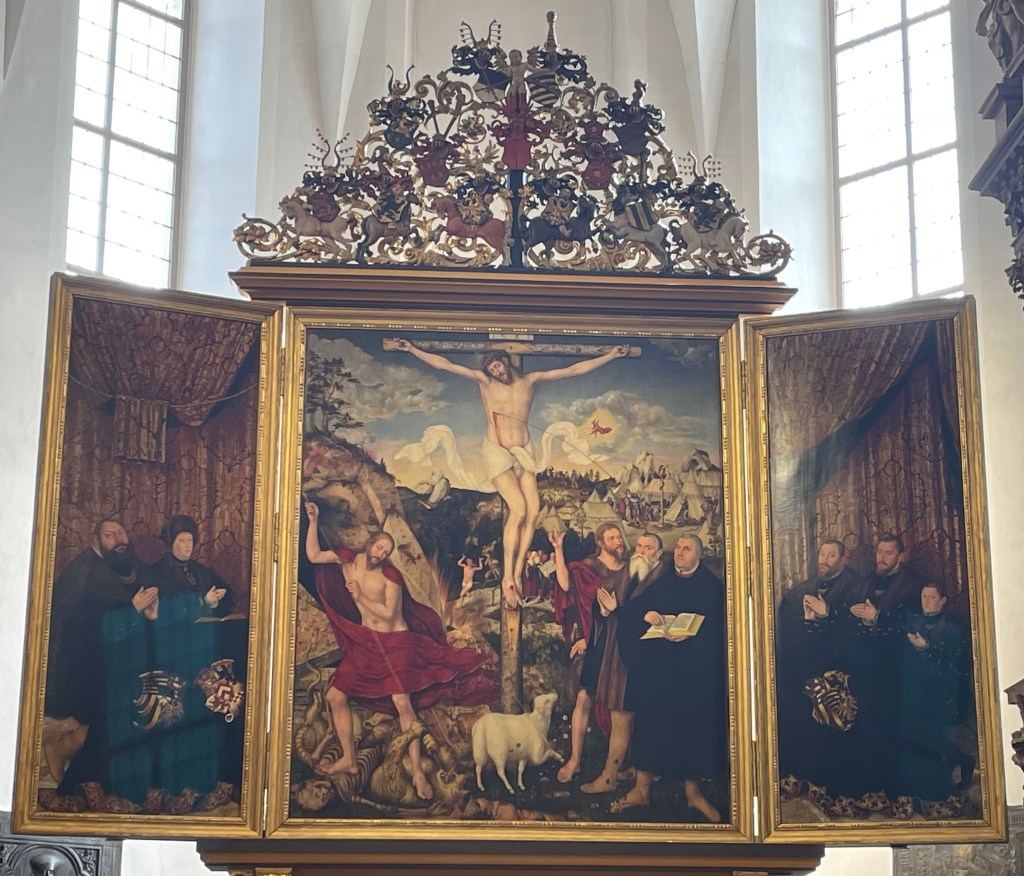
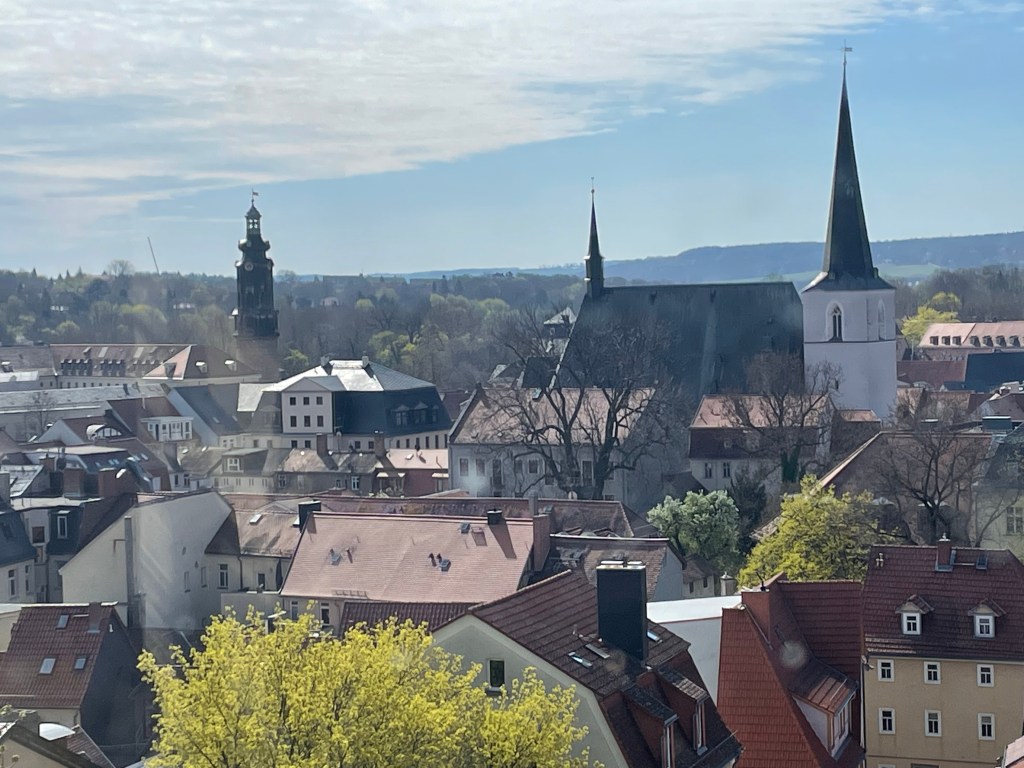
Photos from my visit to Weimar in April 2022: The famous altarpiece by Cranach in the St. Peter and Paul church or Herder church and the view over Weimar from the bell tower of St. James church. In the righmost photo you can see on the left the tower of the Bastille where Bach was held prisoner for a month, and on the right the Herder church. In addition to his job at the Duke’s castle, Bach played the organ at both St. James church and Herder church.

I hope you all had a meaningful Advent season and a merry Christmas. I needed to be with friends and family this month, and craved to hear music in old churches. It all worked out and I had one of the best Christmas seasons ever in recent years. I’m sorry that because of spending my time this way, I did not get to share any thoughts or music on this blog. If you went searching in my archives on your own, please let me know in the comments what you listened to. If you ever find youtube links that no longer work, please comment under the specific post or simply send me an email.

Why the photos of Weimar at the top of this blog post?

It’s because of a video I would like to share here today.

One of the best pieces of music I heard in an old church this month was the duet “Herr, dein Mitleid, dein Erbarmen” (Lord, your compassion, your mercy) from the third cantata of Bach’s Christmas Oratorio, written for today, the Third Day of Christmas. On December 10, I heard this excellently performed by soprano Agnes van Laar and bass Marc Pantus in the stunning Saint Martin’s church in Bolsward, the Netherlands.

This duet doesn’t usually appear among the “greatest hits” of Bach’s Christmas Oratorio but I just love the way the instrumental and vocal parts move together, and I am also moved by the text. I was searching for a good live video performance of this duet to share here today, and liked Gardiner’s the best, with soprano Claron McFadden and bass Dietrich Henschel. Please find that video here. Here is the text:

Herr, dein Mitleid, dein Erbarmen
Tröstet uns und macht uns frei.
Deine holde Gunst und Liebe,
Deine wundersamen Triebe
Machen deine Vatertreu
Wieder neu.

Lord, your compassion, your mercy
console us and make us free.
Your gracious favour and love,
your wondrous desires
make the love you have for us as a father
again new.

While watching this video, I realized that MacFadden and Henschel are singing at the Herder church in Weimar, directly in front of the famous Cranach altarpiece. I cannot really describe in words how thrilling it was for me to finally set foot in that church in April 2022. Watching the video and looking at the photos also inspired me to share more stories about my travels to Thuringia in April 2022 on this blog, and to hopefully visit the region again in the new year.

Further exploring:

Read my post from 2020 about all Bach’s other cantatas for the Third Day of Christmas here.

Find a very nice overview of Bach’s time in Weimar on the website of the Thuringia Bach Festival here.

Wieneke Gorter, December 27, 2023.

Bach’s Music for Ascension Day

13 Thursday May 2021

Posted by cantatasonmymind in Ascension, Cantatas, Leipzig

≈ Leave a comment

Tags

Amsterdam Baroque Orchestra, Andrew Tortise, Annekathrin Laabs, Ascension, Ascension Oratorio, Barbara Schlick, Bernhard Landauer, BWV 11, BWV 128, BWV 37, BWV 43, Catherine Patriasz, Charles Daniels, Christiane Mariane von Ziegler, Christmas Oratorio, Christoph Prégardien, Collegium Vocale Gent, Dietrich Henschel, English Baroque Soloists, John Eliot Gardiner, Klaus Mertens, Lenneke Ruiten, Meg Bragle, Miriam Feuersinger, Peter Kooij, Philippe Herreweghe, Sibylla Rubens, Ton Koopman, Wolf Matthias Friedrich

The Ascension, from the illuminated 15th-century manuscript Les Très Riches Heures du duc de Berry, Folio 184r – Musée Condé, Chantilly, France.

Today was Ascension Day. In Bach’s time this was a very important holiday in the churches. Many countries in Europe have a four-day weekend starting on this Thursday. I did too as a kid growing up in the Netherlands. But we didn’t go to church on this day, and I don’t remember my mother playing the Ascension cantatas or the Ascension Oratorio on the turntable at home on this day. Instead we went for a bike ride, visit grandparents, or go camping. I didn’t know Bach’s music for Ascension Day at all until we performed BWV 11 and 43 with California Bach Society in the early 2000s. The choruses from these compositions are among the most fun I have every sung in a choir. I love the syncopated rhythms.

Here is an overview of Bach’s music for Ascension Day, as far as we know, in order of creation:

In 1724, Bach wrote Cantata 37 Wer da gläubet und getäuft wird (Whoever believes and is baptised). Listen to it here. Soloists in this recording by Ton Koopman/Amsterdam Baroque Orchestra are Sibylla Rubens, soprano; Bernhard Landauer, alto; Christoph Prégardien, tenor; and Klaus Mertens, bass.

In 1725, as part of the series of cantatas on texts by Christiane Mariane von Ziegler, Bach wrote Cantata 128 Auf Christi Himmelfahrt allein (On Christ’s ascension alone). Listen to it here. Soloists on this live recording by John Eliot Gardiner/English Baroque Soloists are Lenneke Ruiten, soprano; Meg Bragle, mezzo soprano; Andrew Tortise, tenor; and Dietrich Henschel, bass. Find my blog post from 2018 about this cantata, which includes a different recording by Gardiner here.

The last Bach cantata we have for this holiday is from 1726: Cantata 43 Gott fähret auf mit Jauchzen (God ascends with shouts of joy). Listen to it here. Soloists in this live recording by Rudolf Lutz/J.S. Bach Foundation are Miriam Feuersinger, soprano; Annekathrin Laabs, alto; Charles Daniels, tenor; and Wolf Matthias Friedrich, bass.

Nine years later, Bach wrote his Ascension Oratorio, BWV 11 Lobet Gott in seinen Reichen (Praise God in His kingdoms), incorrectly labeled as a cantata in the 19th century. Bach might have been inspired by the Christmas Oratorio he had written only five months before that.

On that Ascension Day, Thursday, May 19, 1735, this oratorio was performed in the morning service in the St. Nicholas Church, and again in the afternoon service in the St. Thomas Church. Watch the wonderful opening chorus here in a live performance by Philippe Herreweghe/Collegium Vocale Gent from 2014 from the Chapelle de la Trinité in Lyon, France. Or listen to the entire oratorio by Philippe Herreweghe/Collegium Vocale Gent on a CD recording from 1993 here. Soloists on that 1993 recording are Barbara Schlick, soprano; Catherine Patriasz, alto; Christoph Prégardien, tenor; and Peter Kooij, bass.

Wieneke Gorter, May 13, 2021.

Second Christmas Day

26 Monday Dec 2016

Posted by cantatasonmymind in Cantatas, Christmas, Leipzig

≈ Leave a comment

Tags

Bach, BWV 40, Christmas, Christmas 2, Christmas Oratorio, Damien Guillon, Harnoncourt, horn, Leipzig, Max van Egmond, Peter Kooij, Philippe Herreweghe, René Jacobs, Thomas Hobbs

adoration_of_the_shepherds_1622
Adoration of the Shepherds by Dutch painter Gerard van Honthorst, 1622. Pommersches Landesmuseum (Pomerania State Museum), Germany.

In Bach’s time, there were three Christmas Days. In many countries in Europe there are still two Christmas Days. In the Netherlands, a country so small that you can easily travel to all your relatives within a day, people are expected to visit one side of the family on Christmas Day, and the other side on Second Christmas Day. Or at least that is how I remember it.

Of course, you could continue listening to the Christmas Oratorio, via the links for either Harnoncourt’s recording or Herreweghe’s recording I gave you yesterday. The second cantata is a charming one, evoking the pastoral scene of the shepherds on the field. But this composition has never grabbed or moved me the way the first or fourth cantata of the Christmas Oratorio do. The cantata I am eager to share with you today is cantata 40 Darzu ist erschienen der Sohn Gottes, written for Second Christmas Day in 1723.

The interpretation I grew up with is Leonhardt’s recording from 1974, with countertenor René Jacobs, tenor Marius van Altena, and bass Max van Egmond. There is a good live recording by Herreweghe of this cantata from a concert in Paris in 2015. You can watch this here on YouTube. Soloists are Damien Guillon, alto; Thomas Hobbs, tenor; and Peter Kooij, bass.

Find the text here, and the score here.

This cantata is really Christmas for me. I don’t know exactly why: perhaps because on Second Christmas Day we didn’t have to go to church, so I associate it with a more relaxed, unscheduled day. Perhaps because of the horns in the orchestra in the opening chorus and the tenor aria (I have a soft spot for horns or trombones in Bach cantatas), because of the impressive “Höllische schlange” (Snake of Hell) bass aria (yes, I have a soft spot for bass arias too), or because of the closing chorale that is so pretty, going up so high on the text Wonne, Wonne über Wonne! Er ist die Genadensonne. (Delight, delight upon delight! He is the son of mercy.) I sang this cantata in a Bach cantata reading group mid November this year, sitting directly behind the horns, standing next to one of my best friends, and I couldn’t believe my luck I got to sing this closing chorale.

Wieneke Gorter, December 26, 2016, updated December 24, 2019.

Our Christmas Morning

24 Saturday Dec 2016

Posted by cantatasonmymind in Cantatas, Christmas, Leipzig

≈ 2 Comments

Tags

Bach, BWV 248/1, Christmas, Christmas 1, Christmas Oratorio, Damien Guillon, Dorothee Mields, Harnoncourt, Leipzig, Peter Kooij, Phlippe Herreweghe, Thomas Hobbs, timpani, trumpet

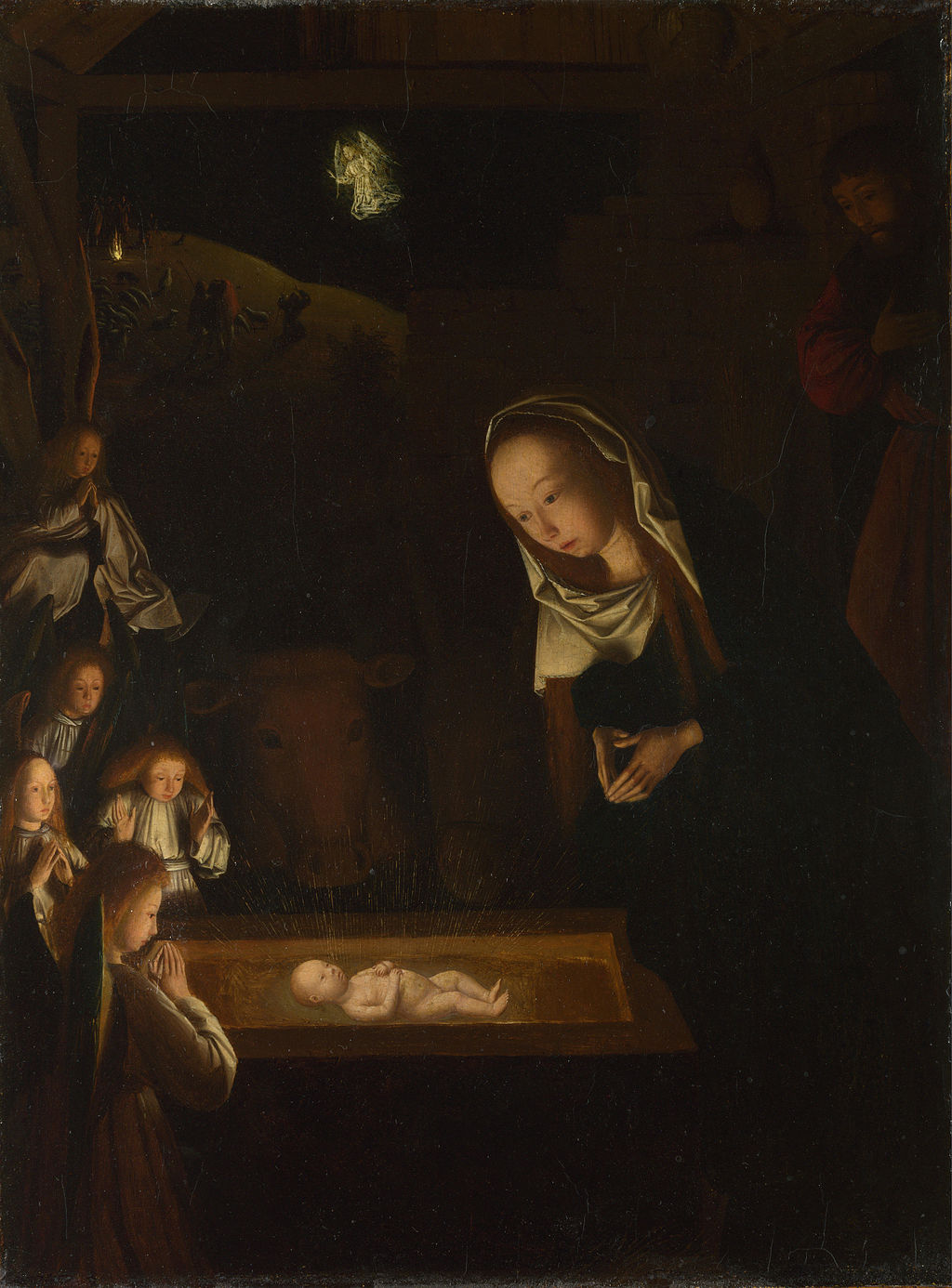
nativity_c_1490
Nativity at Night by Dutch painter Geertgen tot Sint Jans, ca. 1490. National Gallery, London.

Growing up in the Netherlands, my sister and I did not expect gifts at Christmas, and certainly not under the tree. We had already received our gifts on the eve of St. Nicholas, December 5. At the dinner with relatives on Christmas Day, we would maybe receive one book, or a small piece of jewelry. It would be well coordinated between mother and grandmother that this would amount to only one present per person, and it would be next to our plate when we arrived at the well-dressed Christmas dinner table.

However, Christmas Morning was something we immensely looked forward to. The Christmas Morning breakfast was the most wonderful breakfast of the year, even better than the Easter breakfast. We would have crispy rolls from the oven, artisan sliced ham, boiled eggs, cheese, jams, and of course the sweet breakfast sprinkles American kids can’t believe Dutch kids get to eat for breakfast. And Kerststol, or Christmas Stollen, a fruit bread with an almond paste filling.

There was an unwritten rule that my parents would set out the breakfast (including my father carving a bell or Christmas tree out of the butter) and us kids would stay in bed until my mom would sound the special alarm. And the special alarm was: Harnoncourt’s recording of the opening chorus of Part One of Bach’s Christmas Oratorio at full volume, the sound of the timpani rocking the whole house. I usually play the Herreweghe recording in my own house nowadays. You can find that here on YouTube.

In 2012, Herreweghe’s performance of Bach’s Christmas Oratorio in Brussels was recorded and released on DVD. It is a beautiful registration, and has some of my favorite soloists: Dorothee Mields, soprano; Damien Guillon, alto; Thomas Hobbs, tenor; and Peter Kooij, bass. For my readers in Germany, and countries not to far from there, you can buy the regular DVD here, or the blu ray version here. For readers in the USA, if you have Amazon Prime, you can stream it here.

Read more about the history of Christmas in Europe and the USA in this extremely interesting article and join me again tomorrow for a cantata for Second Christmas Day.

Wieneke Gorter, December 24, 2016, links updated December 24, 2019.

Recent Posts

  • “Missa Miniatura” by CONTINUUM/Elina Albach Even More Moving in 2025
  • Bachfest Leipzig 2025
  • Bach Cantatas for Christmas – 1724 and 1734 editions
  • Fourth Sunday of Advent – more insight into Cantata 62 helped me better understand Bach’s Christmas Oratorio
  • Saint Ambrose and Luther in Milan – Second Sunday of Advent

Archives

  • August 2025
  • July 2025
  • December 2024
  • November 2024
  • June 2024
  • January 2024
  • December 2023
  • October 2023
  • September 2023
  • August 2023
  • April 2022
  • February 2022
  • January 2022
  • December 2021
  • November 2021
  • June 2021
  • May 2021
  • April 2021
  • February 2021
  • January 2021
  • December 2020
  • November 2020
  • October 2020
  • September 2020
  • August 2020
  • July 2020
  • May 2020
  • April 2020
  • March 2020
  • February 2020
  • January 2020
  • December 2019
  • November 2019
  • May 2018
  • April 2018
  • March 2018
  • February 2018
  • January 2018
  • December 2017
  • November 2017
  • October 2017
  • September 2017
  • August 2017
  • July 2017
  • June 2017
  • May 2017
  • April 2017
  • March 2017
  • February 2017
  • January 2017
  • December 2016
  • November 2016
  • October 2016
  • September 2016
  • August 2016
  • July 2016
  • June 2016
  • May 2016
  • April 2016
  • March 2016
  • February 2016
  • January 2016

Enter your email address to follow this blog and receive notifications of new posts by email.

Join 338 other subscribers

Categories

  • 1723 Trinity season special series
  • Advent
  • After Easter
  • Ascension
  • Bach's life
  • Cantatas
  • Chorale cantatas 1724/1725
  • Christmas
  • Easter
  • Epiphany
  • Following Bach in 1725
  • Köthen
  • Leipzig
  • Septuagesima
  • Travel
  • Trinity
  • Weimar

Meta

  • Create account
  • Log in
  • Entries feed
  • Comments feed
  • WordPress.com

Website Built with WordPress.com.

  • Subscribe Subscribed
    • Weekly Cantata
    • Join 158 other subscribers
    • Already have a WordPress.com account? Log in now.
    • Weekly Cantata
    • Subscribe Subscribed
    • Sign up
    • Log in
    • Report this content
    • View site in Reader
    • Manage subscriptions
    • Collapse this bar
 

Loading Comments...