Weekly Cantata

Weekly Cantata

Tag Archives: Collegium Vocale Gent

Easter Monday 1724

17 Monday Apr 2017

Posted by cantatasonmymind in After Easter, Bach's life, Cantatas, Leipzig

≈ Leave a comment

Tags

Collegium Vocale Gent, Easter Monday, James Taylor, Kai Wessel, Peter Kooy, Phlippe Herreweghe

Screenshot 2017-04-17 11.44.51

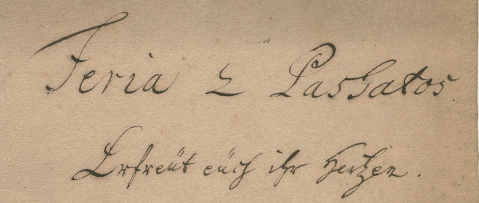
Excerpt from the title page of Bach’s manuscript from 1735 of cantata 66 Erfreut euch ihr Herzen. The manuscript from 1724 did not survive.

In Bach’s time there were three Easter days, as there were three Christmas days and three Pentecost days. I wrote yesterday that Bach planned to write four new works between April 10 and 23, 1724, but that is only somewhat true, it depends who you ask …

Gardiner believes that what Bach planned to do after Easter 1724,  was to write cantata 6 for Easter Monday, 42 and 67 for the first Sunday after Easter, and 85 for the second Sunday after Easter, instead of writing 6, 42, and 85 in 1725. As he painstakingly explains in his book “Bach: Music in the Castle of Heaven,”  Gardiner believes that the work (composing and rehearsing) on the Passion according to St. John must have cost Bach much more time than he thought, and he thus had to adjust his plans.

Following Gardiner’s theory, when Bach realized he had too much on his plate for Easter 1724, including having to write a cantata for Easter Tuesday he might not have planned on, he decided to write parodies (using existing music with some changes, but with different texts) for Easter Monday and Easter Tuesday of that year.

For Easter Monday 1724, he wrote cantata 66 Erfreut euch, ihr Herzen. Most of the music of this cantata is based on the secular cantata 66a Der Himmel dacht auf Anhalts Ruhm und Glück (Heaven thinks of Anhalt’s Fame and Fortune) , composed by Bach in 1718 to celebrate the 24th birthday of Prince Leopold of Anhalt-Cöthen. If you have 40 minutes, listen to a reconstruction of the entire Birthday cantata 66a from 1718 here, with soprano Gudrun Sidonie Otto, alto Wiebke Lehmkuhl, tenor Hans Jörg Mammel, and bass Karsten Krüger. If you only have 10 minutes, scroll to 11:17 for the soprano/alto duet with violin.

Listen to Herreweghe’s recording of cantata 66 Erfreut euch, ihr Herzen here. Soloists: alto Kai Wessel, tenor James Taylor, and bass Peter Kooij. I like Herreweghe’s recording of this cantata the best of all I listened to, because to me the tempo of the opening chorus is perfect for me, Collegium Vocale’s singing is fabulous as always, and I enjoy listening to Peter Kooy in the bass aria.

Find the text of cantata 66 here, and the score here.

Since we only have a manuscript of this cantata from 1735, when Bach repeated this cantata in Leipzig, we don’t know for sure what Bach changed in 1724.  However, based on what we know, and comparing the two recordings I present in this post, Bach used the following movements from the Köthen Birthday cantata 66a in the Leipzig church cantata 66: The impressive and very festive opening chorus of 66 is the closing chorus of 66a, the bass aria of 66 is the alto aria of 66a, and the alto-tenor duet (beautifully sung by Kai Wessel and James Taylor) with violin of 66 is the soprano-alto duet with violin from 66a.

Movement 4 and 5 (the recitative and duet for alto and tenor) are written as a dialogue. Whenever Bach uses that technique in his church cantatas, the two characters are usually Jesus and the Soul (see for example cantata 21). In this case, the Happiness of Anhalt (the alto) from 66a has been transformed to Furcht (Fear) in 66, and  Fama (the godess of fame and reputation, soprano in 66a) has been transformed to Hoffnung (Hope, tenor in 66). With these two characters Bach refers to the Gospel reading of the day: two followers of Jesus walk to the town of Emmaus, only a few days after Jesus’ death and burial. They talk about their hope that he was the Messiah, but are at the same time fearful having heard the news that his body has disappeared from the grave.

In the Birthday cantata 66a, the two characters are in agreement, and therefore sing the same notes. However in cantata 66 Furcht and Hoffnung often disagree, even though they are still singing the same notes. Normally Bach would never have let this happen, but perhaps this is an illustration of how quickly he had to work on this cantata for Easter Monday.

Wieneke Gorter, April 17, 2017

On my mother’s birthday, March 24

24 Friday Mar 2017

Posted by cantatasonmymind in Cantatas

≈ 1 Comment

Tags

Amsterdam Baroque Orchestra, Bach, Bach Collegium Japan, bwv 127, bwv 202, bwv 44, cantatatas, Caroline Stam, Collegium Vocale Gent, Dorothee Mields, Masaaki Suzuki, Nancy Argenta, Phlippe Herreweghe, Ton Koopman

OLYMPUS DIGITAL CAMERA

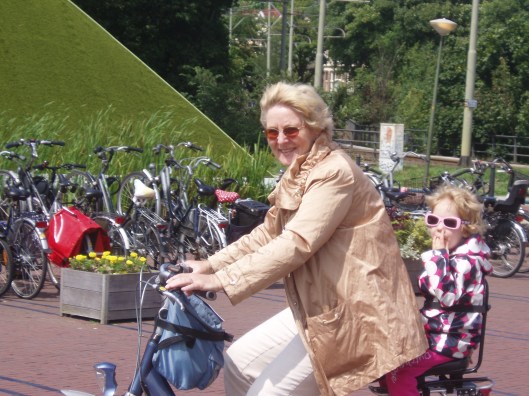
my mother with my daughter, The Hague, summer of 2009

This year, on March 24, my mother would have turned 71. Sadly, she left us on November 19, 2010, after a tragic illness we only understood to be a terminal one on September 5 of that same year. To say that those months were an emotional roller coaster for all involved is an understatement. Normally very liberal and progressive in her Christianity, my mother turned very pious in her last weeks, and during that time she didn’t really let any persons in anymore, only music.

One of the major reasons I started this blog in January 2016 was to continue my mother’s legacy of playing the cantata for the appropriate Sunday every week, but also to remember the joy of going to concerts with my mother and listening to recordings together with her.

So I would like to think of this post as a short radio program with beautiful Bach music, featuring three soprano arias I strongly associate with my mother, sung by singers she and I adore(d).

A fond childhood memory is my mother, my sister, and I taking the bus from the little town where we lived to a town 15 kilometers (9 miles) away, where my mother was going to sing a solo in a wedding service. I remember what she wore: a light blue dress with tiny white and red flowers on it, a narrow red belt, and red sandals with heels. The solo she was singing was the aria “Sehet in Zufriedenheit” from cantata 202. I remember being in awe that she was standing there on the organ loft and singing it so beautifully. A gorgeous example of this aria, in the exact tempo in which my mother liked to perform it, is this recording of Nancy Argenta with Ensemble Sonnerie under the direction of Monica Huggett:

Sehet in Zufriedenheit
See in contentment
Tausend helle Wohlfahrtstage,
a thousand bright and prosperous days,
Dass bald bei der Folgezeit
so that soon as time passes
Eure Liebe Blumen trage!
your love may bear its flower!

Much later, my parents had a subscription to the series of cantata performances by the Amsterdam Baroque Orchestra with Ton Koopman, and there they got to see and hear many different soprano soloists. I remember them being impressed with Caroline Stam. Hear her sing the aria “Es ist und bleibt der Christen Trost” from cantata 44, one of my mother’s favorite Bach cantata arias of all time,  with the Amsterdam Baroque Orchestra under the direction of Ton Koopman.

Es ist und bleibt der Christen Trost,
The consolation of Christians is and remains
Dass Gott vor seine Kirche wacht.
God’s watchful care over his church.
Denn wenn sich gleich die Wetter türmen,
For even though at times the clouds gather,
So hat doch nach den Trübsalstürmen
yet after the storms of affliction
Die Freudensonne bald gelacht.
the sun of joy has soon smiled on us.

We felt extremely blessed that Caroline Stam agreed to sing at my mother’s funeral service. We asked her to sing Purcell’s “Evening Hymn,” since that had been in the top 5 on my mother’s iPod in her last weeks. But for the Bach aria, we let Caroline pick what she would like to sing. I am still very grateful for that decision. Always very conscious of texts, Caroline chose the hauntingly beautiful “Die Seele ruht” from cantata 127. For years, I have not been able to listen to this aria, but now I can again, though it still makes me cry a little. Hear Dorothee Mields sing this aria with Collegium Vocale Ghent under the direction of Philippe Herreweghe:

Die Seele ruht in Jesu Händen,
My soul rests in the hands of Jesus,
Wenn Erde diesen Leib bedeckt.

Though earth covers this body
Ach ruft mich bald, ihr Sterbeglocken,
Ah, call me soon, you funereal bells,
Ich bin zum Sterben unerschrocken,

I am not terrified to die
Weil mich mein Jesus wieder weckt.

Since my Jesus will awaken me again.

If you would like to read more, here are five posts from 2016 in which I talk about my mother a lot or a little bit:

The order of things

Glorious soprano arias and unusual instrumentation

The Crown on Bach’s 1723 Trinity season

Many things to be proud of

Our Christmas Morning

Wieneke Gorter, March 24, 2017

Third Sunday in Advent: Two adorable infants and a reconstruction of cantata 186a

10 Saturday Dec 2016

Posted by cantatasonmymind in Advent, Cantatas, Weimar

≈ Leave a comment

Tags

Advent, Advent 3, Bach, BWV 186, BWV 186a, cantatas, chorales, Collegium Vocale Gent, Miah Persson, Peter Kooy, Phlippe Herreweghe, reconstruction, Robin Blaze, Weimar

madonna_meadow

Madonna with the Christ Child and St. John the Baptist, also known as Madonna of the Meadow, by Raphael, 1506. Kunsthistorisches Museum, Vienna.

For those of you who already saw this on the third Sunday of Advent 2016: please keep reading, because I considerably revised this post, clarifying the information about the reconstruction and including one more painting 🙂

Growing up, I had a cousin. She was almost exactly six  months older than me. My baby photo album holds several pictures of the two of us together, me a helpless baby, her an infant who could already sit up by herself. I’m always touched by those photos. Not just because they make me think of the cousin I lost when we were both 19, but also because they represent how fast a baby grows up, and how soon the “older” baby can be of help and entertainment for the younger one, and how adorable it is to see that.

Many painters were aware of this cuteness factor too. Especially in the Renaissance, the concept of a one-year-old John playing with or helping a six-month-old Jesus in Madonna and Child paintings became an extremely popular subject, starting with  Leonardo da Vinci. Raphael in particular painted several variations on this theme, including the Alba Madonna, La belle jardinière, Aldobrandini Madonna, Madonna della seggiola, and the Madonna dell’Impannata. The tradition continued well into the 17th century, see this beautiful example from 1658 by Francisco de Zurbarán in the San Diego Museum of Art:
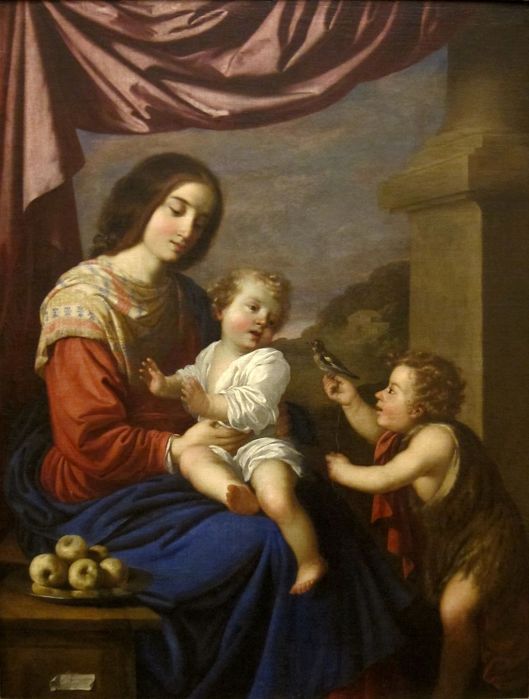
Zurbaran_Madonna_and_Child

Why is all this relevant to Advent? Well, on this third Sunday of Advent, many Christian churches read about John the Baptist, as they believe John was Jesus’ forerunner. Because of a mention in the Gospel of Luke, the Catholic church in the very early Middle Ages determined that St. John’s birthday must have been exactly six months before Christmas — and decided to celebrate this on June 24th.*  You can read more about this in my post about the Feast of St. John.

As far as we know, Bach wrote only one cantata for this Sunday, the third Sunday of Advent. It is the one listed in the BWV catalog as Cantata 186a, Ärgre dich, o Seele, nicht, first performed in Weimar on Sunday December 13, 1716. No original music score is left of this cantata. However, thanks to Bach’s librettist, Weimar court poet Salomo Franck, who published the full libretto for this cantata in a poetry volume in 1717, we do have the original text of 186a.

And, it is not hard to make an educated guess as to what the music would have been.

On July 9, 1723, for the 7th Sunday after Trinity in Leipzig, Bach expanded the music of the 1716 Weimar cantata with four additional recitatives and two chorales (per his usual template for reviving Weimar cantatas for Leipzig), and we do have that music: it is Cantata 186, also with the title Ärgre dich, o Seele, nicht.**

To reconstruct the original 1716 Weimar Advent version, or Cantata 186a, one would have to eliminate all the recitatives Bach added in 1723 as well as both chorales, superimpose different texts on some of the arias, and select alternative music for the original closing chorale. There have been a few performances of these kind of reconstructions, but unfortunately there are no recordings of those.

So I invite you listen to Bach Collegium Japan playing this music via my playlist on Spotify. To imagine the original texts superimposed over this music, and learn why I selected this particular closing chorale, please keep reading.

Opening chorus: This has the same text in 1716 as in 1723. We should imagine a smaller ensemble singing this though, as the maximum number of singers in the Weimar chapel was 7. This opening chorus is again a beautiful example of how Bach provides an “entrada” for the Duke as well as an opportunity for himself to show off his skills with the “fashionable” music, the way he almost always did in the Weimar cantatas.***

Ärgre dich, o Seele, nicht,
Daß das allerhöchste Licht,
Gottes Glanz und Ebenbild,
Sich in Knechtsgestalt verhüllt,
Ärgre dich, o Seele, nicht!
Do not be confounded, o soul,
because the all-highest light,
God’s radiance and very image,
is concealed in the form of a servant;
do not be confounded!

For the Bass aria, imagine this Advent text instead of the Trinity 7 text you hear (changes in bold type):

Bist du, der da kommen soll,
Seelen-Freund, in Kirchen-Garten?
Mein Gemüt ist Zweifels-voll,
Soll ich eines andern warten!
Doch, o Seele, zweifle nicht.
Lass Vernunft dich nicht verstricken,
Deinen Schilo, Jacobs Licht,
Kannst du in der Schrift erblicken!
Are You He, who should come,
Friend of souls, to the Church’s garden?
My spirit is full of doubt,
perhaps I should wait for someone else!
Yet, o soul, do not doubt.
Do not let reason beguile you.
Your Messiah, Jacob’s light,
is visible to you in the scripture.(translation of original text by me, unchanged words courtesy of bach-cantatas.com website)

For the Tenor aria,  imagine this Advent text instead of the Trinity 7 text you hear (changes in bold type):

Messias läßt sich merken
Aus seinen Gnaden-Werken.
Unreine werden rein.
Die geistlich Lahme gehen,
Die geistlich Blinde sehen
Den hellen Gnaden Schein.
The Messiah lets Himself be seen
in His works of grace.
The impure become purified.
Those lame of spirit will walk,
Those blind of spirit will see
the clear brilliance of the mercy.(translation of original text by me, unchanged words courtesy of bach-cantatas.com website)

There is only one word change in the Soprano aria: In the last line the 1716 text is “des Lebens Wort” instead of “das Lebenswort” from 1723.

Die Armen will der Herr umarmen
The Lord will embrace the poor
Mit Gnaden hier und dort;
With his mercy here and there;
Er schenket ihnen aus Erbarmen
Out of his compassion he sends to them
Den höchsten Schatz, das Lebenswort.
His greatest treasure, the word of life.

Enjoy Miah Persson’s beautiful voice and interpretation. If you would like to hear and more about her, read my post about cantata 179. Cantata 179 appears on the same album by Bach Collegium Japan as this cantata 186.

Soprano-alto duet: This is the original text from 1716, unchanged in 1723. The text promises the believer the crown (die Krone) of the everlasting life, but only if he stays faithful (getreu) and only in the afterlife, when free of the body (wenn des Leibes frei).

Laß, Seele, kein Leiden
My soul, let no sorrow
Von Jesu dich scheiden,
Separate you from Jesus
Sei, Seele, getreu!
Be faithful, my soul!
Dir bleibet die Krone
The Crown weight you
Aus Gnaden zu Lohne,
Is your reward through grace
Wenn du von Banden des Leibes nun frei.
When you will be free from the body’s prison.

In Weimar in 1716, for the closing chorale Bach used the 8th verse of Von Gott will ich nicht lassen from 1563, based on the French tune Une jeune fillette from 1557. Since this is not the same melody as Es ist das Heil uns kommen her Bach used in 1723 it is very plausible that both chorales from the 1723 version are new, in text as well as in music. So in an effort to reconstruct the 1716 version,  we need to think of a different solution for the music than the tune from 1723. A good fit would be a simple setting of the Von Gott will ich nicht lassen chorale, the way Bach would set for example verse 5 of this chorale as closing movement of cantata 73 in 1723 or 1724. So that’s why, for now, I’ve included that music (from a Herreweghe recording) in the Spotify playlist. The text would be this:

Darum ob ich schon dulde
Hie Wiederwärtigkeit,
wie ich auch wohl verschulde,
kommt doch die Ewigkeit,
ist aller Freuden voll,
die ohne alles Ende,
dieweil ich Christum kenne,
mir widerfahren soll.
Therefore, even if I endure
unpleasantness here,
as I have well deserved,
eternity is coming
filled with all joy;
this for ever
will befall me
while I acknowledge Christ.

All translations of existing text and closing chorale courtesy of bach-cantatas.com website, translations of changed texts by me.

© Wieneke Gorter, December 10, 2016, revised December 15, 2017.

* Luke 1:36 (about the Annunciation) mentions that the angel Gabriel also informed Mary that her cousin Elizabeth was already six months pregnant. The June 24 date was most probably also chosen to give a Christian meaning to already existing Pagan Midsummer celebrations. The Feast of St. John being celebrated on June 24 shows up in records as early as the year 506.

**I discussed this 1723 version of the cantata here, and recommended the recording by Bach Collegium Japan with soprano Miah Persson, alto Robin Blaze, tenor Makoto Sakurada, and bass Peter Kooij.

***Read more about Bach’s Weimar cantatas in my posts about cantata 182, 12, 147, and 21

The Opening Chorus’ Silver Lining

01 Saturday Oct 2016

Posted by cantatasonmymind in 1723 Trinity season special series, Cantatas, Leipzig, Trinity

≈ Leave a comment

Tags

19th Sunday after Trinity, Bach, BWV 48, Collegium Vocale Gent, Damien Guillon, Leipzig, Philippe Herreweghe, Thomas Hobbs, Trinity 19, tromba da tirarsi, trumpet

genezing_lamme_masolino

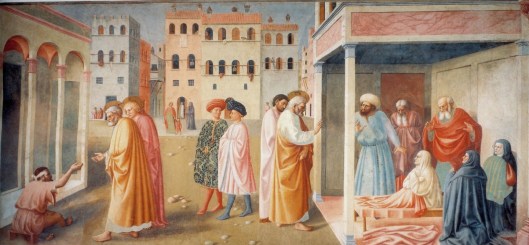
Healing of the Cripple (on left) and Raising of Tabitha (on right) by Masolino da Panicale, 1424-25. Fresco in the Brancacci Chapel, Santa Maria del Carmine, Florence, Italy.

My head has been in the St. Matthew Passion. For a few weeks already. Yes, that is pretty strange for me, having grown up in a house where Bach’s music was played often, but only on the Sundays and holidays for which it was written (read more about that in this blog post). However, it can happen when one sings in a Bach Choir in the United States. While in The Netherlands all 180 (!) St. Matthew Passion concerts happen in the weeks before Easter, here in the USA the piece is presented much less often, and the only classical music performances with a strong seasonal tie are those of Handel’s Messiah in the weeks before Christmas.

But working on the St. Matthew Passion and this Weekly Cantata blog at the same time has been a blessing, as the two areas of study influence each other. Nine months of research for this blog have inspired me to read more about the St. Matthew Passion and study the music in more detail. In that process I have learned many new things about the piece I thought I already knew so well. And experiencing the composition Bach’s sons referred to as their father’s Great Passion on a deeper level has, I believe, improved my understanding of Bach’s cantata writing.

Let’s just look at the opening chorus of this week’s cantata 48 Ich elender Mensch, written for the 19th Sunday after Trinity (October 3 in 1723).

I listened to Bach Collegium Japan (with Robin Blaze and Gerd Türk), Koopman (with Bernhard Landauer and Christoph Prégardien), Gardiner (with William Towers and James Gilchrist), Harnoncourt (with Paul Esswood and Kurt Equiluz), and Herreweghe (with Damien Guillon and Thomas Hobbs), and find Herreweghe’s interpretation the most moving. Herreweghe is also the only one who uses a tromba da tirarsi in the opening chorus, and I  love that sound. Listen to Herreweghe’s recording on YouTube or on Spotify. Please consider supporting the artists by purchasing the recording on Amazon: click here for USA, here for UK, here for Germany, or here for France.

Please find the German text with English translation here and the score here.

The main music is hauntingly beautiful (It’s not just the Herreweghe sopranos that give me goose bumps this time – the altos and tenors move me to tears, and none of this could happen without the basses providing that wonderful foundation for everyone to build on) but extremely downcast. It is clearly full of Elend (misery), in reference to the Gospel text of the day.* The same holds for the main music and words of the opening chorus of the St. Matthew Passion. It is clearly full of klagen (lamenting), and paints the picture of the Via Crucis, Jesus on his way to the cross.

However, in the midst of all the misery, a J.S. Bach opening chorus almost always provides a preview of the salvation that is to come later in the piece, or that is implied in the Gospel. In the opening chorus of the St. Matthew Passion he does this by superimposing the German Agnus Dei – the chorale O Lamm Gottes Unschuldig (O Lamb of God, unspotted), sung by a treble choir in G major, over the lamenting E minor of the two other choirs and orchestras. The repeated  auf unsre Schuld (for our sins) of Choir I is answered by the treble chorus with: All Sünd hast du getragen (you took away all sins).

The congregation in Leipzig, where the St. Matthew Passion was first performed on the afternoon of Good Friday in 1727, would have sung this German Agnus Dei earlier that day at the conclusion of the morning service. Back to this week’s cantata for October 3, 1723: in that Sunday service, the congregation might have sung the chorale Herr Jesu Christ, ich schreie zu dir:

Herr Jesu Christ ich schreie zu dir
Mit ganz betrübter Seele:
Dein Allmacht laß erscheinen mir
Und mich nicht also quäle.
Viel grösser ist die Angst und Schmerz.
So anficht und turbirt mein Herz,
Als daß ich kan erzählen.
Lord Jesus Christ, I cry to you
With a soul that is wholly troubled:
Let your almighty power appear to me
And do not punish me in this way.
Far greater is the anguish and pain
That challenge and confuse my heart
Than I can explain

The congregation might thus have heard those words in their head, when two bars after the soprano entrance the tromba da tirarsi starts playing this melody, later followed by two oboes in unison. In this way, these three instruments accompany every choral passage with a new line from the chorale, and the chorale thus starts forming the frame of the opening chorus.

After this preview message in the opening chorus that Jesus might be able to offer salvation, we have to wait until the tenor aria for the all-around convincing message that everything will be OK, in music as well as in text:

Vergibt mir Jesus meine Sünden,

If Jesus forgives me my sins,
So wird mir Leib und Seele gesund.
then my body and soul will become healthy.
Er kann die Toten lebend machen
He can make the dead live
Und zeigt sich kräftig in den Schwachen,
and shows himself to be mighty in those who are weak,
Er hält den längst geschloßnen Bund,
he keeps the covenant made long ago
Daß wir im Glauben Hilfe finden.
that in faith we find support.

Wieneke Gorter, October 1, 2016, links updated October 15, 2020.

* The Gospel story for this 19th Sunday after Trinity was the miracle of Jesus healing a cripple. From the time the Gospel was written through Bach’s time, unfortunately, having a disability or illness was seen as carrying a sin. When Jesus heals the man, he also takes his sins away.

The Herreweghe sopranos

11 Sunday Sep 2016

Posted by cantatasonmymind in 1723 Trinity season special series, Cantatas, Leipzig, Trinity

≈ Leave a comment

Tags

Bach, cantatas, Collegium Vocale Gent, Dominique Verkinderen, Dorothee Mields, Hana Blazikova, John Eliot Gardiner, Mark Padmore, Peter Kooy, Phlippe Herreweghe, Trinity 16

bwv95_sopraan

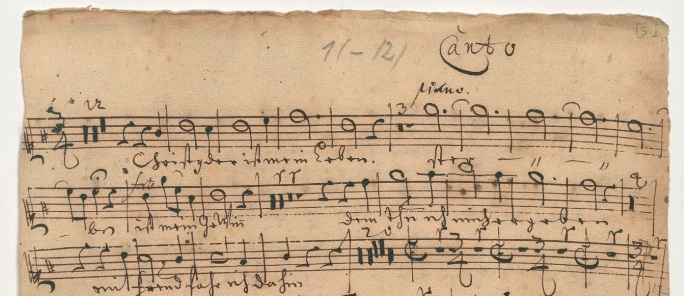
The soprano part of cantata 95 Christus, der ist mein Leben. Staatsbibliothek zu Berlin – Preußischer Kulturbesitz

After all his experimenting with the form of the cantata last week, Bach keeps exploring how he can build a cantata based on chorale melodies and chorale texts. As a result, this week’s cantata 95 Christus, der ist mein Leben again takes a unique place in Bach’s cantata collection: it features no less than four different chorales, all part of the Sterbe-lieder (Deathbed songs) that were very popular in Leipzig at the time: Christus, der ist mein Leben; Mit Fried und Freud, ich fahr dahin; Valet will ich dir geben; and Weil du vom Tod erstanden bist.

I recommend Herreweghe’s recording of this cantata. Listen to this recording on YouTube, or on Spotify. Support the artists and purchase this recording on Amazon. (Or find them in the Amazon stores  for  Germany and France)

Soloists: soprano Dorothee Mields, counter-tenor Matthew White, tenor Hans Jörg Mammel, bass Thomas E. Bauer. Choir sopranos: Dorothee Mields, Hana Blazikova, Dominique Verkinderen.

In the manuscript of the soprano part pictured above, it is interesting to note the dynamic markings for the text “Sterben ist mein Gewinn.” Dynamics are not very common in Bach manuscripts, but, as Alfred Dürr points out, Leipzig had a strong tradition of singing softly and slowly on the word “Sterben,” and singing loudly on “ist mein Gewinn,” going back at least to 1629. In that year, then Thomaskantor Johann Hermann Schein wrote this note for his singers:

“da singen sie adagio mit einem sehr langsamen Tactu, weiln in solchen versiculis verba emphatica enthalten” (here you should sing adagio in a very slow tempo, because verses like these contain emphatic words)

How Herreweghe’s sopranos sing this Sterben ist mein Gewinn in the first chorale takes my breath away, and this is the most important reason why I prefer this recording. Having grown accustomed to the boy choirs of the Leonhardt and Harnoncourt recordings in the 1970s, my parents, sister, and I were blown away by Herreweghe’s Collegium Vocale Gent when their first CDs started coming out in the late 1980s and early 1990s.

My mother was especially taken by the sound and blend of the sopranos, and “Herreweghe sopranos” became a household term in our family. After attending a performance by a different group, we would often say to each other: “it was nice, but they are not Herreweghe sopranos….,” and sigh a little.

This cantata is all about longing for life after death, and over the course of the cantata these statements are made: I will be happy to die (opening movement), because life on earth is worthless (soprano recitative). Saying goodbye to that will be freeing (soprano chorale), so please can I die as soon as possible (tenor recitative and aria), because death is only a sleep (bass recitative) from which I will wake up to join Jesus, who has gone before me (closing chorale).

The outstanding tenor aria features Bach’s signature “death bells” in the pizzicato strings. Bach uses these “Leichenglocken”  also in cantatas 73, 8, 105, 127, 161, and 198. For an alternative recording of this movement, with gorgeous singing by Mark Padmore, listen to the Gardiner recording on Spotify.

The concept of death being only a short period of sleep after which the dying person wakes up to meet Jesus in the afterlife was an extremely important part of 18th-century Lutheran faith. When dealing with death on a daily basis, it was comforting to believe that death would ultimately lead to paradise. And by stressing this concept, Bach also refers to the Gospel for this 16th Sunday after Trinity. It is the story of the miracle at Nain: a young man who has died  is carried out of the city and then woken up by Jesus.

Wieneke Gorter, September 11, 2016, updated October 7, 2025

Children’s stories

03 Saturday Sep 2016

Posted by cantatasonmymind in 1723 Trinity season special series, Bach's life, Cantatas, Leipzig, Trinity

≈ 1 Comment

Tags

according to Lutheran Church year, Bach, Bach-Archiv Leipzig, BWV 138, cantatas, Collegium Vocale Gent, Damien Guillon, Deborah York, Dorothee Mields, Eduard van Hengel, Hana Blazikova, Ingeborg Danz, Leipzig Bach Festival, Lutheran Church year, Mark Padmore, Peter Kooy, Phlippe Herreweghe, Thomas Hobbs, Trinity 15

Bergrede_Brueghel

The Sermon on the Mount, oil on copper painting by Jan Brueghel the Elder, 1598

In 1723 Bach wrote cantata 138 Warum betrübst du dich, mein Herz.  Again I prefer Herreweghe’s interpretation, but it’s not so easy to choose between his recording from 1998 (with soloists Deborah York, Ingeborg Danz, Mark Padmore, and Peter Kooij) and the one from 2013 (with soloists Hana Blazikova, Damien Guillon, Thomas Hobbs, and Peter Kooij). Update from 2021: there now is an extremely inspired Herreweghe recording with all my favorite soloists (Dorothee Mields, Alex Potter, Guy Cutting, Peter Kooij), recorded live at De Singel in Antwerp on Sunday January 31, 2021 (during the Covid19 pandemic, so without audience). Find it here.

Listen to the entire 1998 recording on Youtube or listen to one long track of the 2013 recording with Hana Blazikova and Damien Guillon on YouTube. Please consider supporting the artists by purchasing the 1998 version (used copies available only) or the 2013 version  on Amazon.

Find the text, based on the Sermon on the Mount, of this cantata here, and the score here.

It is often not immediately clear what a Bach cantata is about, what the text means, or what Bach wanted to convey with it. In an absolutely wonderful interview (with excellent English subtitles) for the Leipzig Bach Festival, soprano Dorothee Mields says that even she, as a native German speaker, often feels the need to look at English translations, go back to the Bible texts, and read more about the subject, because she didn’t necessarily recognize the text from her children’s bible.

The image of the children’s bible stuck with me since first watching the interview seven months ago. And when listening to the cantata for this Sunday, I had to think of it again, because the choice of words in this cantata is very moving, but at the same time so simple, that it is almost as if the librettist is speaking to children. Listen, for example, to the text the soprano sings in the third movement:

Nur ich, ich weiss nicht, auf was Weise ich armes Kind mein bisschen Brot soll haben; Wo ist jemand, der sich zu meiner Rettung findt?

(It is just that I, poor child, don’t know how I should receive a bit of bread; Where is the person who will save me?)

Eduard van Hengel hilariously remarks that it reminds him a bit of Calimero (a popular children’s cartoon about a little chick, which aired in The Netherlands, Belgium, France, and Italy in the early 1970s. Watch this first episode to get an idea).

I wonder who the librettist for this cantata was. I imagine a different person than who wrote texts for the last few cantatas. Last week, the Bachs possibly had their house full with the families of Anna Magdalena’s brother and sisters, visiting because the men, all trumpet players, were needed for two cantatas. Perhaps one of the visitors had talent for entertaining the children with stories and making up poems on the spot? Did Bach ask this person to write the libretto for this cantata? Or was his own head still filled with children’s stories and did he write the text himself?

These are all just assumptions and we don’t know for sure if last week’s extra players were the relatives of Bach’s wife, but my potential movie script is getting better and better …

There’s of course more to this cantata than the charming texts. Musically, as far as the form and structure is concerned, this cantata is unique within this first cycle of Leipzig cantatas. Bach takes a chorale as the base for the cantata, yet it is not at all the same as his series of chorale cantatas from the 1724/1725 cycle. In those later chorale cantatas, he always uses all the verses and keeps a strict structure of one soloist per movement. In this cantata 138, he only uses three verses of the chorale, and gives the cantata a very free form, with a different number of soloists for each movement. He is obviously experimenting. And I wonder again: might he have been influenced by his visitors from last week? Did he have discussions about his compositions with his colleagues? And how is this playing around with the form of the cantata related to using a different librettist or no librettist? Did he not want to bother a professional writer with his experimenting?

There is one more–for me at least–exciting aspect to this cantata: when I first started listening to it, I discovered that I already knew the bass aria. Same singer (Peter Kooij) and same music, but a different text, because I had until then only heard this as the Gratias from Bach’s Mass in G Major, BWV 236 from the mid 1730s. Listen to both, and marvel at Bach’s talent for subtle recycling.

Wieneke Gorter, September 3, 2016, updated September 19, 2020 and February 13, 2021.

Christmas in August

27 Saturday Aug 2016

Posted by cantatasonmymind in 1723 Trinity season special series, Bach's life, Cantatas, Leipzig, Trinity

≈ Leave a comment

Tags

according to Lutheran Church year, Anhalt-Zerbst, Anna Magdalena Bach, Bach, Bruce Dickey, cantatas, City Council, Collegium Vocale Gent, concerto palatino, cornetto, Deborah York, Eduard van Hengel, Hana Blazikova, Ingeborg Danz, Köthen, Leipzig, Lutheran Church year, Mark Padmore, Peter Kooy, Phlippe Herreweghe, Ratswechsel, recorder, Saxe-Weissenfels, Thomas Hobbs, Trinity 14, trombone, trumpet, Wilcke

gesu_lebbrosi
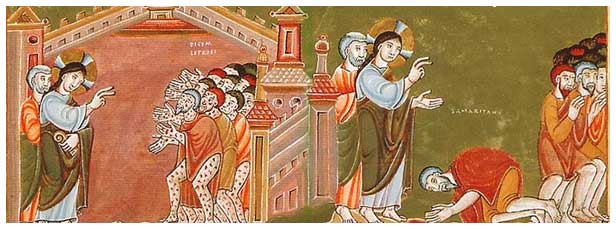
Jesus heals ten lepers, from the Codex Aureus of Echternach, c. 1035-1040

Only a handful of Bach cantatas ask for the Renaissance/Early Baroque ensemble of one cornetto and three trombones in the opening and closing chorus. This instrumentation was considered somewhat “old fashioned” in Bach’s time, while at the same time it was still very normal in cities to hear Stadtpfeifers (city pipers) play chorales from the towers during the day, to remind the citizens of their Christian duties. In this Cantata 25 Es ist nichts Gesundes an meinem Leibe, for the 14th Sunday after Trinity (August 29 in 1723), the playing of the chorale tune by this ensemble in the opening chorus stands for the way it has always been, the way it has been true for centuries.

palatino
Concerto Palatino, the leading cornetto/trombone ensemble for the past 25 years. Photo by Sabrina Flauger. Learn more about them here.

My preferred recording of Cantata 25 is the one by Herreweghe, on the same album as cantata 105 for Trinity 9 and cantata 46 for Trinity 10, as well as cantata 138 for next week. Soloists in cantata 25: soprano Hana Blažíková, tenor Thomas Hobbs, and bass Peter Kooij. Cornetto: Bruce Dickey  (pictured above, front row, on left); trombones: Claire McIntyre, Simen van Mechelen (pictured above, top row, on left), and Joost Swinkels.

Listen to this recording on Spotify or on YouTube. Please consider supporting the artists by purchasing this album (containing four cantatas for this 1723 Trinity season) on Amazon.

Read the text of this cantata here, and find the score here.

I could write an entire blog post about the opening chorus alone, the way I did last week for cantata 77 and two weeks earlier for cantata 179. But in the interest of variety, I’m going to keep this section short, and I will just say that the opening chorus  is an incredible, unrivaled complex composition for ten voices, again completely different than any opening chorus the Leipzig congregations had heard before during this Trinity season of 1723. By having the “ancient” brass quartet play the chorale melody of Herzlich tut mich verlangen nach einem selgen End (With my whole heart I long for my blessed End / my Salvation)** Bach shows that the promise of salvation after death will always provide a silver lining to the sorrow of the daily, sinful human condition. He also illustrates this “salvation” with the recorders in the uplifting and soothing soprano aria (Hana Blažíková in top shape!), and the brass and recorders in the closing chorale, and intensifies the “sickness” of the human sins by setting these texts to “dry” recitatives  (though listen to that bass arioso, beautifully sung by Peter Kooij) in between. Again, it was completely normal in his day and age to think this way, and Bach saw it as his mission in life to teach this theology to his fellow Lutherans by way of his church music.

But, listen to the festive, large orchestra for this cantata! No less than four brass players (one cornetto and three trombones) and five wind players (two oboists and three recorder players) were required at the same time in the opening chorus and closing chorale. For a cantata about the healing of ten lepers? Well, it turns out that this weekend it was Christmas in August for Bach, and the extra players were probably in town for the much more important and incredibly festive Cantata 119 Preise, Jerusalem, den Herrn that was on the calendar for the next day, Monday August 30, the day of the inauguration of the new City Council (Ratswechsel). *** As I already suggested in my post about cantata 147, Bach might have sometimes used guest musicians in his orchestra who were in town for other reasons, and judging from the level of playing required for the Brandenburg concerto-like Cantata 119, the extra brass (all playing trumpet in 119) and wind (playing oboe and recorder in 119) players might have been needed to be of the level of court chamber musician, not just Stadtpfeifer (usually a lower rank, and not necessarily used to playing the complicated court music). So in my probably not so unlikely movie script fantasy, Bach hired musicians from the not too far away courts where he had worked before or where his in-laws worked (Köthen, Weissenfels, Zerbst) to play in the orchestra on Monday August 30, and he had asked them to also play in the service on Sunday August 29.

Listen to the Ratswechsel cantata 119 Preise, Jerusalem, den Herrn by Herreweghe on YouTube. (Soloists: soprano Deborah York; alto Ingeborg Danz; tenor Mark Padmore, bass Peter Kooij.)

Wieneke Gorter, August 24, 2016, updated September 8, 2023.

** Several writers have suggested the chorale best known to the congregation at the time (on the melody we have later come to know as O Haupt voll Blut und Wunden) would have been instead Ach Herr, mich armen Sünder, but I agree with Eduard van Hengel that because of Bach’s use of the angel-like recorders and the heavenly brass it makes more sense to go with Herzlich tut mich verlangen nach einem selgen End.

*** The new city council was always chosen on August 24, and then inaugurated on the first Monday following August 24, which was Monday August 30 in 1723.

About Weekly Cantata

I am a bilingual writer, publicist, choral singer, art and nature lover, happy wife, and blessed mother of two. I started this blog in 2016, inspired by my late mother’s love for Bach’s cantatas. After 23 years in the San Francisco Bay Area, I’m now back in the Netherlands.

If you are on social media, please follow me:

  • Facebook
  • Instagram

Please subscribe!

Please join my readers from all over the world and subscribe to this blog! Simply fill in your email address and you’ll receive an email every time I’ve published a new post. Thank you so much / Vielen Dank / Merci mille fois / 감사합니다 / 谢谢 / ありがとう / Mille grazie / Muchas gracias / Muito obrigado / Takk / Terima kasih / Dankuwel!

Designed with WordPress.com

Trinity 11, 1723: Bach on a roll

14 Sunday Aug 2016

Posted by cantatasonmymind in 1723 Trinity season special series, Bach's life, Cantatas, Leipzig, Trinity

≈ Leave a comment

Tags

11th Sunday after Trinity, according to Lutheran Church year, Agnès Mellon, Bach Collegium Japan, BWV 105, BWV 136, BWV 179, BWV 234, BWV 236, BWV 46, Collegium Vocale Gent, Masaaki Suzuki, Miah Persson, Peter Kooij, Philippe Herreweghe, Thomas Hobbs

8ea433d635c0bd84d61c155e0969f602c9c37beb
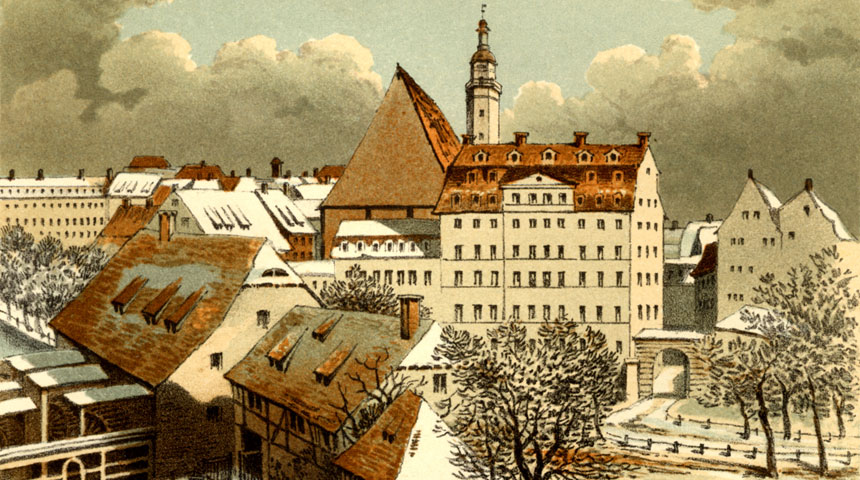
Mendelssohn’s sketch of the Thomasschule (St. Thomas School) and, behind it, the Thomaskirche (St. Thomas Church) in Leipzig.

Thank you for following this blog, and thank you for reading this long post all the way to the end!

For Trinity 11 (August 8 in 1723), we’re listening to Cantata 179 Siehe zu, daß deine Gottesfurcht nicht Heuchelei sei, with a superb opening chorus and one of the most beautiful soprano arias Bach ever wrote.

MiahPersson_MonikaRittershaus
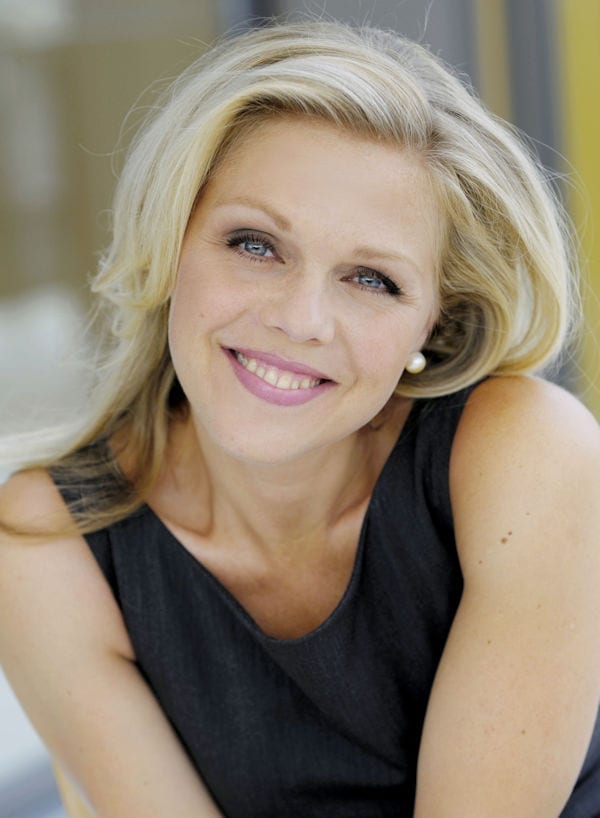
Miah Persson. Photo by Monika Rittershaus.

I prefer Bach Collegium Japan’s recording of this cantata. It’s a special recording, with Miah Persson singing the soprano aria. She’s having quite a career now, so I think we’re lucky to have her beautiful voice and sensitive interpretation on this recording from 1999. You can find it on Youtube or Spotify. Please consider purchasing this recording on jpc.de, Amazon, or iTunes. Soloists on this recording are Miah Persson, soprano; Makoto Sakurada, tenor; and Peter Kooij, bass.

Please find the score here (it’s fun to read along with the recording, especially in the opening chorus, to see what Bach does with the fugue) and the German text with English translation here.

It is now more than two months since Bach started his new job in Leipzig, and he is about three weeks into writing a brand new composition every week, and I’m sorry if I sound too casual here, but he’s on a roll. He must now have a vision of what it is he really wants to do for these churches (see the tiny preludes to his Passions he incorporates in cantatas 105 and 46), and he must have the classes at the St. Thomas School organized, and his singers sufficiently trained, so that he can now have them sing a new and challenging opening chorus every week.  Just listening to the opening choruses alone, starting with the one of cantata 136 for Trinity 8, I marvel at what he comes up with every time. Every single one of them is stunning, but at the same time completely different from the one of the previous Sunday. This time Bach chooses to write a perfect “old style” (Palestrina-style) motet fugue as opening chorus.

As always, to fully understand the cantata and not miss any of Bach’s hidden messages, it is important to look at the Gospel reading for the day. In this case it is the parable of the Pharisee and the Publican (or Pharisee and the Tax Collector), a story Jesus tells as an illustration on how to pray: the Pharisee is full of himself, telling God how good he is, while the Publican in his own prayer merely asks for mercy, and tells God how bad he is.  This concept of “how to be a good Christian before God” was very important to Bach and apparently his librettist got the message loud and clear. He or she uses the opportunity to first write a strong protest against fake religion and hypocrisy in “Christianity today” in movements 1 to 3 (probably having certain people in Leipzig in mind), after which he/she states that all Christians should take the humbleness of the publican as example in movements 4 to 6. For another example of how Bach interprets this Bible story, read my post about Cantata 113, written for this same 11th Sunday after Trinity, in 1724.

The most special feature of the fugue in the opening chorus is that since the text talks about beautiful outer appearance versus a bad character, Bach uses a mirror-fugue, which he used as well in fugues 5-7 from the Art of the Fugue (the theme of six bars is first introduced by the basses, and then is answered by the tenors in an “inversion:” every step up from the basses becomes a step down in the tenor part.)

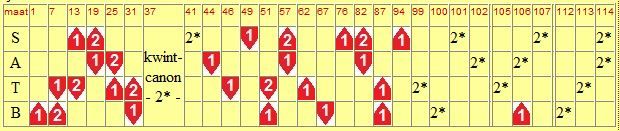
To understand how Bach built this intricate fugue I am sharing the excellent music example and diagram by Dutch Bach writer Eduard van Hengel, with his permission:

179_diagram1
179-diagram2

Even though the text here is in Dutch, the diagram speaks for itself, with this quick explanation of the numbers and symbols:

1 = The theme (or first half-sentence of the text: Siehe zu, dass deine Gottesfurcht nicht Heuchelei sei). Note the ascending line on the word “Gottesfurcht” (fear of God/love of God) and the descending line on the word “Heuchelei” (hypocrisy).

2 = The counter-subject (or second half-sentence of this text: und diene Gott nicht mit falschem Herzen). Note here that there is a chromatic line every time the word “falschem” appears in the text: for the chromatic line the composers needs accidentals that are not part of the key the piece is written in, which in the “old polyphony” would be seen as “falsch” (not right, off-key).

Upward arrow = fugue theme regular

Downward arrow = fugue theme inversed (mirror fugue)

2* = a more compact (only 4 bars instead of 6 bars long) theme which is derived from the first counterpoint/counter-subject on the words und diene Gott nicht mit falschem Herzen, still with the chromatic line on falschem Herzen.

The numbers at the top are measure (“maat”) numbers.

Bach himself must have greatly valued this cantata. About 15 years later, he used no less than three movements from this cantata for use in his short masses, or Lutheran masses.**

The opening chorus was later “recycled” as the first movement (Kyrie) in the Mass in G Major, BWV 236. Keep listening, or scroll to 18:00 and you’ll discover that the tenor aria Quoniam (sung here by Thomas Hobbs) was, with some changes and a much slower tempo, recycled from the tenor aria in this cantata 179. In cantata 179 the tenor aria gets a colorful accompaniment of two oboes and first violins in unison. The second violins and violas fill in the meaningless middle part (representing the “nothingness, emptiness”). When recycling this later for the Quoniam in the Mass in G Major, Bach uses only one solo oboe for the accompaniment, and completely leaves out all strings (confirming that with a different text, the meaningless middle part is not relevant anymore).

This cantata’s wonderful soprano aria (with two oboi da caccia and basso continuo) was later reworked into the Qui Tollis for the Mass in A Major, BWV 234 (with two flutes and only high strings as continuo). This was actually how I first knew and loved this soprano aria, I didn’t know cantata 179 until I started listening to it for this blog. Please click on this link and listen to the amazing Agnès Mellon sing the Qui Tollis from the Mass in A Major.

Wieneke Gorter, August 14, 2016, links updated August 15, 2023.

** These are called “short” or “Lutheran” masses because they consisted of only the Kyrie and Gloria part of the traditional Catholic mass. Bach wrote four of them (BWV 233-236), and they are all made up of existing movements from cantatas, but reworked and compiled in a very smart way and they are all absolutely beautiful. You can purchase an album with Herreweghe’s recording of all of them on jpc.de, iTunes, or Amazon.

Trinity 10: my favorite counter-tenor in the spotlight

30 Saturday Jul 2016

Posted by cantatasonmymind in 1723 Trinity season special series, Cantatas, Leipzig, Trinity

≈ Leave a comment

Tags

according to Lutheran Church year, Bach, BWV 105, BWV 244, BWV 46, cantatas, Collegium Vocale Gent, Damien Guillon, Hana Blazikova, Kooy, Lutheran Church year, Mass in B Minor, Peter Kooy, Philippe Herreweghe, St. Matthew Passion, Thomas Hobbs, Which cantata which Sunday, Which cantata which week

For this Sunday, Trinity 10, August 1, 1723 Bach wrote cantata 46 Schauet doch und sehet, ob irgend ein Schmerz sei.

This is another exquisite cantata, worth listening to (or worth watching for a bit, see link below for a wonderful video of the opening chorus by Herreweghe live at the Saintes Festival).

I recommend Herreweghe’s recording from 2012, on the same album already discussed in my previous post for cantata 105.

Purchase this recording on Amazon (the album also includes last week’s cantata 105, and two more cantatas from the 1723 Trinity season).

Listen to this Herreweghe recording from 2012 on Spotify.

Or, listen to this same recording on YouTube, via playlist I created (if this shows up as a visual on your screen,  and clicking on the main “play button” results in a “this video cannot be played” message, click on the icon on the top left where it says 1/6, and it should work):

Or watch these same performers in a live video of the opening chorus only from the Festival de Saintes.

Please find the text here, and the score here.

I especially enjoy this cantata because of the beautiful opening chorus, the dramatic bass aria (with terrific tromba da tirarsi playing by Alain de Rudder), and the alto aria.

You’ll recognize the first part of the opening chorus. Bach must have liked this enough to re-use it later as the Qui Tollis in his Mass in B minor. The illustration of the “Schmerz” with two recorders and two oboi da caccia in the orchestra is beautiful.

Last week, with cantata 105, Bach started using features that preluded his passions. In the alto aria in this cantata 46, there is again a reference to the St. Matthew Passion. The pastoral character of the music, as well as the text reference to Küchlein (chicks) make me think of the Sehet Jesus hat die Hand alto aria. I am a huge fan of counter-tenor Damien Guillon. In 2011, I heard him sing for the first time in a live performance of the St. Matthew Passion by Herreweghe in Europe, and have been collecting his recordings since then. He appears on recordings with his own ensemble Le Banquet Celeste, cantata recordings by Herreweghe from 2011 and later, and on several recordings of Marcel Ponseele’s ensemble Il Gardellino. Watch an interview with him (with English subtitles) on YouTube:

Wieneke Gorter, July 30, 2016, links updated August 10, 2023.

Trinity 3: from Weimar, with love

12 Sunday Jun 2016

Posted by cantatasonmymind in 1723 Trinity season special series, Cantatas, Leipzig, Trinity, Weimar

≈ Comments Off on Trinity 3: from Weimar, with love

Tags

according to Lutheran Church year, Alfred Dürr, Bach, Bach Collegium Japan, Barbara Schlick, cantatas, Christoph Wolff, Collegium Vocale Gent, Lutheran Church year, Masaaki Suzuki, Monika Frimmer, Peter Kooy, Phlippe Herreweghe, Rachel Podger, Vivaldi

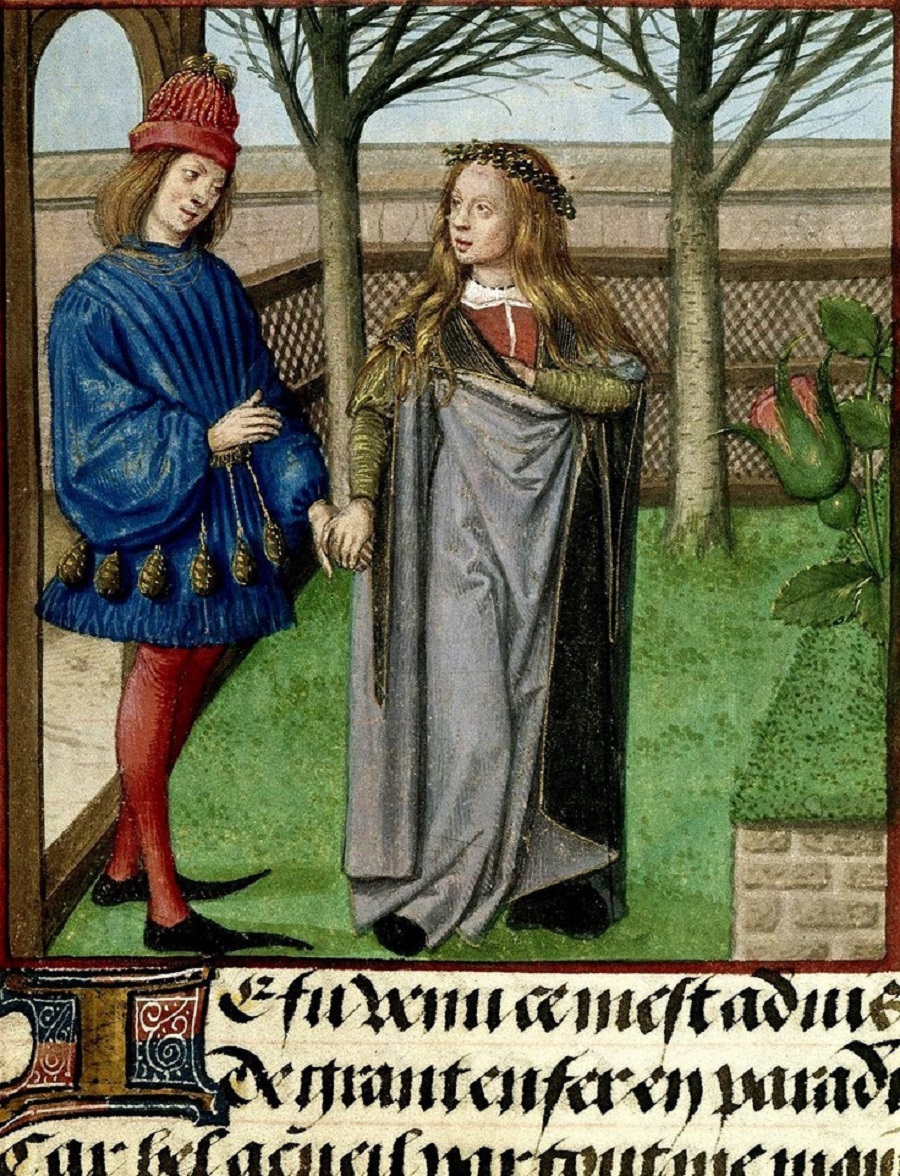
Roman de la Rose, Netherlands (Bruges), c. 1490-c. 1500

Only three episodes into this special 1723 Leipzig Trinity season series,  I’m already taking a detour to Weimar. It’s Bach’s fault, because, after the two newly written cantatas he presented on May 30 and June 6, 1723, he “recycled” his Weimar cantata for this third Sunday after Trinity: cantata 21 Ich hatte viel Bekümmernis, written in 1714, or possibly in 1713.

We dont’ know for sure why Bach chose to use an “old” composition this early in his first season (though probably nobody except his own family knew it was not new), but  I think that he couldn’t wait to impress the Leipzig Council and congregation with a composition that was one of his all-time favorites. He had written and performed it at least twice in Weimar, then presented it in Hamburg or Köthen in 1720* and would perform it many more times in Leipzig on future third Sundays after Trinity. Another reason I believe  it was Bach’s plan all along to present this cantata 21 on Trinity 3 in Leipzig: it seems to me that when writing the masterful fugue in the opening chorus of cantata 76, Bach must have had the fugue in no. 6 of cantata 21 on his mind.

Whether it was thanks to the multiple performances during Bach’s lifetime, or to Mattheson mentioning it (however unfavorably!) in his writings, cantata 21 was known among Bach’s colleagues and students throughout the 18th and 19th centuries, and is still one of the most well-known and most frequently performed cantatas today.

Instead of talking about the music, I would like to shine some light on the history of this cantata, and show you that it was not a stand-alone masterpiece that Bach created out of nothing. Most of the findings here below are from  books by Alfred Dürr and Christoph Wolff.

There are parts of this cantata that fit extremely well within the style of the 1714 Weimar cantatas. To hear cantata 21 in this context, if you have time, before you listen to the sinfonia (no. 1) of cantata 21, I invite you to first listen to the sinfonia of cantata 12. They are remarkably similar. Next, just for the fun of it, you might want to listen to the “love” duet from Weimar Pentecost cantata 172 (beautifully sung by soprano Dorothee Mields and countertenor Alex Potter during a streamed concert from 2021)

 Soprano (Soul)

Komm, laß mich nicht länger warten,
Come , let me wait no longer,
Komm, du sanfter Himmelswind,
come, you gentle wind of heaven,
Wehe durch den Herzensgarten!
blow through the garden of my heart

 Alto (Holy Spirit)

Ich erquicke dich, mein Kind.
I refresh you, my child

Liebste Liebe, die so süße,
Dearest love, who are so delightful,
Aller Wollust Überfluß,
abundance of all joys,
Ich vergeh, wenn ich dich misse.
I shall die, if I have to be without you

Nimm von mir den Gnadenkuß.
Take from me the kiss of grace.

Sei im Glauben mir willkommen,
Welcome in faith to me,
Höchste Liebe, komm herein!
Highest love, come within!
Du hast mir das Herz genommen.
You have taken my heart from me

Ich bin dein, und du bist mein!
I am yours, and you are mine!

and compare it to the “love” duet from cantata 21:

Soprano (Soul):

Komm, mein Jesu, und erquicke,

Bass (Jesus):

Ja, ich komme und erquicke

Come, my Jesus, and restore

Yes, I come and restore

Und erfreu mit deinem Blicke.

Dich mit meinem Gnadenblicker,

and rejoice with your look

you with my look of grace

Diese Seele,

Deine Seele,

This soul

Your soul

 Die soll sterben,

 Die soll leben,

that must die

that must live

Und nicht leben

 Und nicht sterben

and not live

and not die

 Und in ihrer Unglückshöhle

Hier aus dieser wunden Höhle

and in its den of misfortune

here from this den of wounds

Ganz verderben.

Sollst du erben

wholly perish.

 you shall be given

 Ich muß stets in Kummer schweben,

Heil! durch diesen Saft der Reben,

I must always be suspended in misery

Salvation! throught this juice of the grape

Ja, ach ja, ich bin verloren!

Nein, ach nein, du bist erkoren!

Yes, oh, yes, I am lost

No,oh, no, you are chosen

 Nein, ach nein, du hassest mich!

Ja, ach ja, ich liebe dich!

No, ah, no, you hate me!

Yes, oh, yes,I love you!

 Ach, Jesu, durchsüße mir Seele und Herze,

Entweichet, ihr Sorgen, verschwinde, du Schmerze!

Jesus, sweeten my soul and heart.

Give way, worries, vanish, pain!

Komm, mein Jesus, und erquicke

Ja, ich komme und erquicke

Come, Jesus, and restore

Yes, I come and restore

Mit deinem Gnadenblicke!

Dich mit meinem Gnadenblicke

 with your look of grace

 you with my look of grace.

Of course none of these are officially  meant to speak of earthly love. But still, both these duets are extremely cute, musically completely similar to opera love duets from that time, and their texts could at least partly be interpreted as such love duets, so I can imagine the Weimar poet and the young Bach must have enjoyed writing these.

To really appreciate “the making of” the opening chorus (no. 2) of cantata 21, it’s worth listening to a magnificent Vivialdi violin concerto and one of Bach’s lesser known organ prelude and fugues, to hear where Bach found the theme for the Ich hatte viel Bekümmernis fugue:

In the spring of 1713, the half-brother of Bach’s employer in Weimar, prince Johann Ernst, “a great lover of music and an incomparable violinist” (according to a testimony by Philipp David Kräuter, a student of Bach in Weimar) went on a study trip, and spent a long time in the Netherlands. Upon his return, he had brought “much fine Italian and French” music with him. One of the pieces was Vivaldi’s Concerto in D minor Opus 3, no. 11  for two violins from Book II of L’Estro armonico (RV 565), published in Amsterdam in 1711.

Listen to this Vivaldi concerto in the award-winning interpretation by the fabulous Rachel Podger with Brecon Baroque on Spotify, or on YouTube

Maybe Bach, an accomplished violinist himself, and the prince played this together after the prince returned in July 1713. Bach rewrote this Vivaldi concerto into an organ concerto (BWV 596), but also used the theme in his organ prelude and fugue in B minor, BWV 544,  written in Weimar as well.  It is in this piece in particular that I can hear the relation with cantata 21 Dürr wants to point out in his book.

About recordings of cantata 21: While Bach Collegium Japan deserves a medal for  taking the trouble to research all the different versions and record the ones from 1720 and 1714 on their volume 6 , and the true 1723 Leipzig version (with trombones added in no. 9 and solo/tutti distinctions in the choruses) on their volume 12, I still like Herreweghe’s recording of this cantata the best, mainly because of the strong, crisp choruses and the music always having long lines and strong sense of direction. Listen to Herreweghe’s interpretation of  this cantata on Spotify or on YouTube.

Update from 2021: find an absolutely stunning performance of the 1720 version (with only soprano and bass soloists) on the YouTube channel of the J.S. Bach Foundation here.

Read the German text with English translations of cantata 21 here, and find the score here.

If you don’t want to miss an episode of this 1723 Trinity season series, please consider signing up to receive an email every time I’ve posted a new story.

Please feel free to share this on Facebook, or forward to anyone you think might enjoy coming along for this ride. Thank you!

Wieneke Gorter, June 12, 2016. Updated June 19, 2021.

*Bach visited Hamburg in November 1720, to apply for an organist and cantor post there. It turned out, however, that the post needed to be “bought” and the job went to a lesser talented but wealthy candidate. Most scholars are confident there was a performance of this cantata in 1720 in either Köthen or Hamburg, based on the surviving manuscripts of the parts. Because it was the Hamburg-based writer Mattheson who criticized the cantata in a letter  in 1725, it is probable that the performance took place in Hamburg during Bach’s visit there.

According to Bach Collegium Japan’s leader Masaaki Suzuki, the 1720 performance featured only a soprano and a bass, with the soprano also singing all the arias and recitatives we know nowadays as written for tenor.

← Older posts
Newer posts →

Recent Posts

  • “Missa Miniatura” by CONTINUUM/Elina Albach Even More Moving in 2025
  • Bachfest Leipzig 2025
  • Bach Cantatas for Christmas – 1724 and 1734 editions
  • Fourth Sunday of Advent – more insight into Cantata 62 helped me better understand Bach’s Christmas Oratorio
  • Saint Ambrose and Luther in Milan – Second Sunday of Advent

Archives

  • August 2025
  • July 2025
  • December 2024
  • November 2024
  • June 2024
  • January 2024
  • December 2023
  • October 2023
  • September 2023
  • August 2023
  • April 2022
  • February 2022
  • January 2022
  • December 2021
  • November 2021
  • June 2021
  • May 2021
  • April 2021
  • February 2021
  • January 2021
  • December 2020
  • November 2020
  • October 2020
  • September 2020
  • August 2020
  • July 2020
  • May 2020
  • April 2020
  • March 2020
  • February 2020
  • January 2020
  • December 2019
  • November 2019
  • May 2018
  • April 2018
  • March 2018
  • February 2018
  • January 2018
  • December 2017
  • November 2017
  • October 2017
  • September 2017
  • August 2017
  • July 2017
  • June 2017
  • May 2017
  • April 2017
  • March 2017
  • February 2017
  • January 2017
  • December 2016
  • November 2016
  • October 2016
  • September 2016
  • August 2016
  • July 2016
  • June 2016
  • May 2016
  • April 2016
  • March 2016
  • February 2016
  • January 2016

Enter your email address to follow this blog and receive notifications of new posts by email.

Join 336 other subscribers

Categories

  • 1723 Trinity season special series
  • Advent
  • After Easter
  • Ascension
  • Bach's life
  • Cantatas
  • Chorale cantatas 1724/1725
  • Christmas
  • Easter
  • Epiphany
  • Following Bach in 1725
  • Köthen
  • Leipzig
  • Septuagesima
  • Travel
  • Trinity
  • Weimar

Meta

  • Create account
  • Log in
  • Entries feed
  • Comments feed
  • WordPress.com

Website Built with WordPress.com.

  • Subscribe Subscribed
    • Weekly Cantata
    • Join 156 other subscribers
    • Already have a WordPress.com account? Log in now.
    • Weekly Cantata
    • Subscribe Subscribed
    • Sign up
    • Log in
    • Report this content
    • View site in Reader
    • Manage subscriptions
    • Collapse this bar
 

Loading Comments...