Weekly Cantata

Weekly Cantata

Tag Archives: Damien Guillon

Second Christmas Day

26 Monday Dec 2016

Posted by cantatasonmymind in Cantatas, Christmas, Leipzig

≈ Leave a comment

Tags

Bach, BWV 40, Christmas, Christmas 2, Christmas Oratorio, Damien Guillon, Harnoncourt, horn, Leipzig, Max van Egmond, Peter Kooij, Philippe Herreweghe, René Jacobs, Thomas Hobbs

adoration_of_the_shepherds_1622
Adoration of the Shepherds by Dutch painter Gerard van Honthorst, 1622. Pommersches Landesmuseum (Pomerania State Museum), Germany.

In Bach’s time, there were three Christmas Days. In many countries in Europe there are still two Christmas Days. In the Netherlands, a country so small that you can easily travel to all your relatives within a day, people are expected to visit one side of the family on Christmas Day, and the other side on Second Christmas Day. Or at least that is how I remember it.

Of course, you could continue listening to the Christmas Oratorio, via the links for either Harnoncourt’s recording or Herreweghe’s recording I gave you yesterday. The second cantata is a charming one, evoking the pastoral scene of the shepherds on the field. But this composition has never grabbed or moved me the way the first or fourth cantata of the Christmas Oratorio do. The cantata I am eager to share with you today is cantata 40 Darzu ist erschienen der Sohn Gottes, written for Second Christmas Day in 1723.

The interpretation I grew up with is Leonhardt’s recording from 1974, with countertenor René Jacobs, tenor Marius van Altena, and bass Max van Egmond. There is a good live recording by Herreweghe of this cantata from a concert in Paris in 2015. You can watch this here on YouTube. Soloists are Damien Guillon, alto; Thomas Hobbs, tenor; and Peter Kooij, bass.

Find the text here, and the score here.

This cantata is really Christmas for me. I don’t know exactly why: perhaps because on Second Christmas Day we didn’t have to go to church, so I associate it with a more relaxed, unscheduled day. Perhaps because of the horns in the orchestra in the opening chorus and the tenor aria (I have a soft spot for horns or trombones in Bach cantatas), because of the impressive “Höllische schlange” (Snake of Hell) bass aria (yes, I have a soft spot for bass arias too), or because of the closing chorale that is so pretty, going up so high on the text Wonne, Wonne über Wonne! Er ist die Genadensonne. (Delight, delight upon delight! He is the son of mercy.) I sang this cantata in a Bach cantata reading group mid November this year, sitting directly behind the horns, standing next to one of my best friends, and I couldn’t believe my luck I got to sing this closing chorale.

Wieneke Gorter, December 26, 2016, updated December 24, 2019.

Our Christmas Morning

24 Saturday Dec 2016

Posted by cantatasonmymind in Cantatas, Christmas, Leipzig

≈ 2 Comments

Tags

Bach, BWV 248/1, Christmas, Christmas 1, Christmas Oratorio, Damien Guillon, Dorothee Mields, Harnoncourt, Leipzig, Peter Kooij, Phlippe Herreweghe, Thomas Hobbs, timpani, trumpet

nativity_c_1490
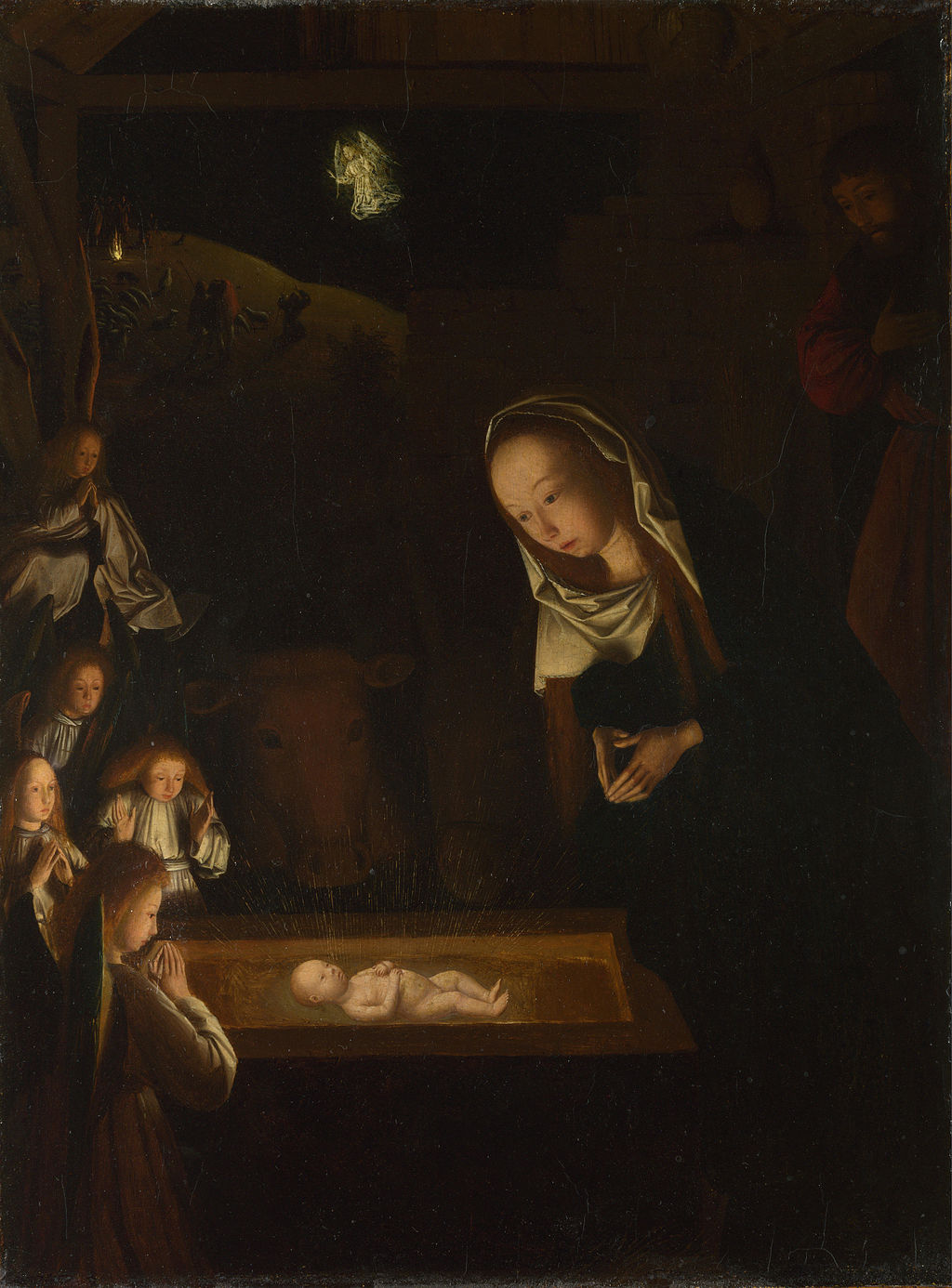
Nativity at Night by Dutch painter Geertgen tot Sint Jans, ca. 1490. National Gallery, London.

Growing up in the Netherlands, my sister and I did not expect gifts at Christmas, and certainly not under the tree. We had already received our gifts on the eve of St. Nicholas, December 5. At the dinner with relatives on Christmas Day, we would maybe receive one book, or a small piece of jewelry. It would be well coordinated between mother and grandmother that this would amount to only one present per person, and it would be next to our plate when we arrived at the well-dressed Christmas dinner table.

However, Christmas Morning was something we immensely looked forward to. The Christmas Morning breakfast was the most wonderful breakfast of the year, even better than the Easter breakfast. We would have crispy rolls from the oven, artisan sliced ham, boiled eggs, cheese, jams, and of course the sweet breakfast sprinkles American kids can’t believe Dutch kids get to eat for breakfast. And Kerststol, or Christmas Stollen, a fruit bread with an almond paste filling.

There was an unwritten rule that my parents would set out the breakfast (including my father carving a bell or Christmas tree out of the butter) and us kids would stay in bed until my mom would sound the special alarm. And the special alarm was: Harnoncourt’s recording of the opening chorus of Part One of Bach’s Christmas Oratorio at full volume, the sound of the timpani rocking the whole house. I usually play the Herreweghe recording in my own house nowadays. You can find that here on YouTube.

In 2012, Herreweghe’s performance of Bach’s Christmas Oratorio in Brussels was recorded and released on DVD. It is a beautiful registration, and has some of my favorite soloists: Dorothee Mields, soprano; Damien Guillon, alto; Thomas Hobbs, tenor; and Peter Kooij, bass. For my readers in Germany, and countries not to far from there, you can buy the regular DVD here, or the blu ray version here. For readers in the USA, if you have Amazon Prime, you can stream it here.

Read more about the history of Christmas in Europe and the USA in this extremely interesting article and join me again tomorrow for a cantata for Second Christmas Day.

Wieneke Gorter, December 24, 2016, links updated December 24, 2019.

Tenor drama

16 Sunday Oct 2016

Posted by cantatasonmymind in 1723 Trinity season special series, Cantatas, Leipzig, Trinity

≈ Leave a comment

Tags

Bach, Damien Guillon, Dorothee Mields, John Eliot Gardiner, La Petite Bande, Leipzig, Paul Agnew, Peter Kooy, Phlippe Herreweghe, St. John Passion, Thomas Hobbs

bwv109_tenormanuscript

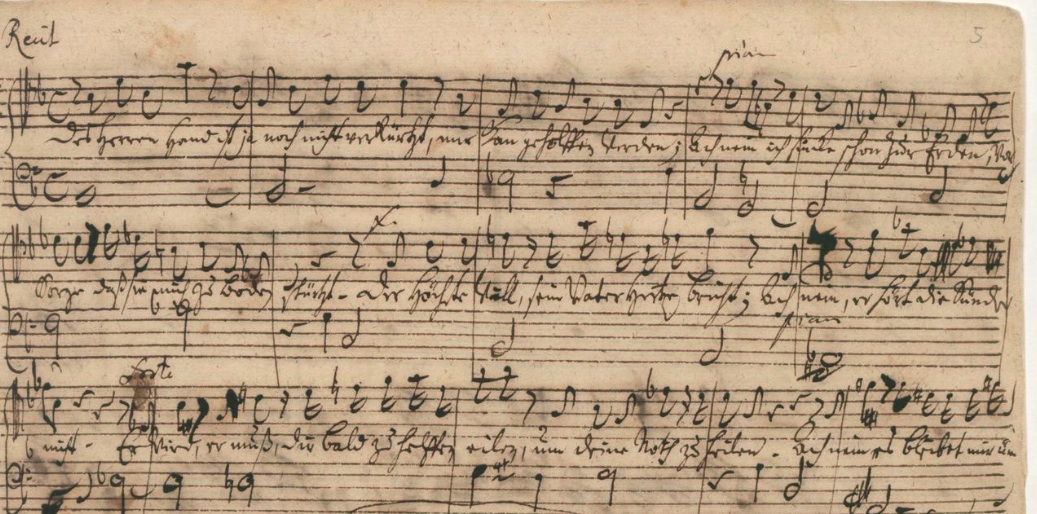
Excerpt from the start of the tenor recitative from cantata 109, with “piano” and “forte” marked. Staatsbibliothek zu Berlin, Preußischer Kulturbesitz

For this 21st Sunday after Trinity, Bach wrote cantata 109 Ich glaube, lieber Herr, hilf meinem Unglauben! in 1723.

For overall best performance, I recommend Herreweghe’s recording from 2013, with counter-tenor Damien Guillon and tenor Thomas Hobbs.

Listen to this recording on YouTube. To support the artists, please consider purchasing the entire album on Amazon — a good deal if you like this blog, as it also includes three cantatas I discussed here earlier this year: cantata 44, cantata 73, and cantata 48.

Read the German texts with English translations here, and find the score here.

I love Herreweghe’s interpretation of  the opening and closing chorus as well as Damien Guillon’s singing in the alto recitative and aria.

However, there is an extremely dramatic and unusual recitative and aria for tenor in this cantata which I like better on the Gardiner recording. The recitative is unusual because Bach has two voices/persons speak: the uncertain/fearful voice, marked “piano” in his manuscript (see picture above), and the certain/faithful voice, marked “forte” in the manuscript. According to Gardiner, this feature never appears anywhere else in Bach’s recitative writing.

Just as with the “Storm on the lake” aria from cantata 81, only Gardiner and the fabulous Paul Agnew are able to properly convey the drama of the text and context of this tenor recitative and aria. If at first you think this might be a bit over the top, it is most probably exactly what Bach had in mind. A bit of opera to properly bring out the agony of the text.

Listen to these two movements by Gardiner and Agnew on YouTube: the recitative here, and the aria here.

Bach might have been preparing the Leipzig congregations for the St. John Passion he was planning for Good Friday 1724, as this tenor aria is very similar in dramatic intensity and music to the Ach mein Sinn aria from that passion. Those who know the St. John Passion well might hear other resemblances in this cantata 109.


Wieneke Gorter, October 16, 2016

The Opening Chorus’ Silver Lining

01 Saturday Oct 2016

Posted by cantatasonmymind in 1723 Trinity season special series, Cantatas, Leipzig, Trinity

≈ Leave a comment

Tags

19th Sunday after Trinity, Bach, BWV 48, Collegium Vocale Gent, Damien Guillon, Leipzig, Philippe Herreweghe, Thomas Hobbs, Trinity 19, tromba da tirarsi, trumpet

genezing_lamme_masolino

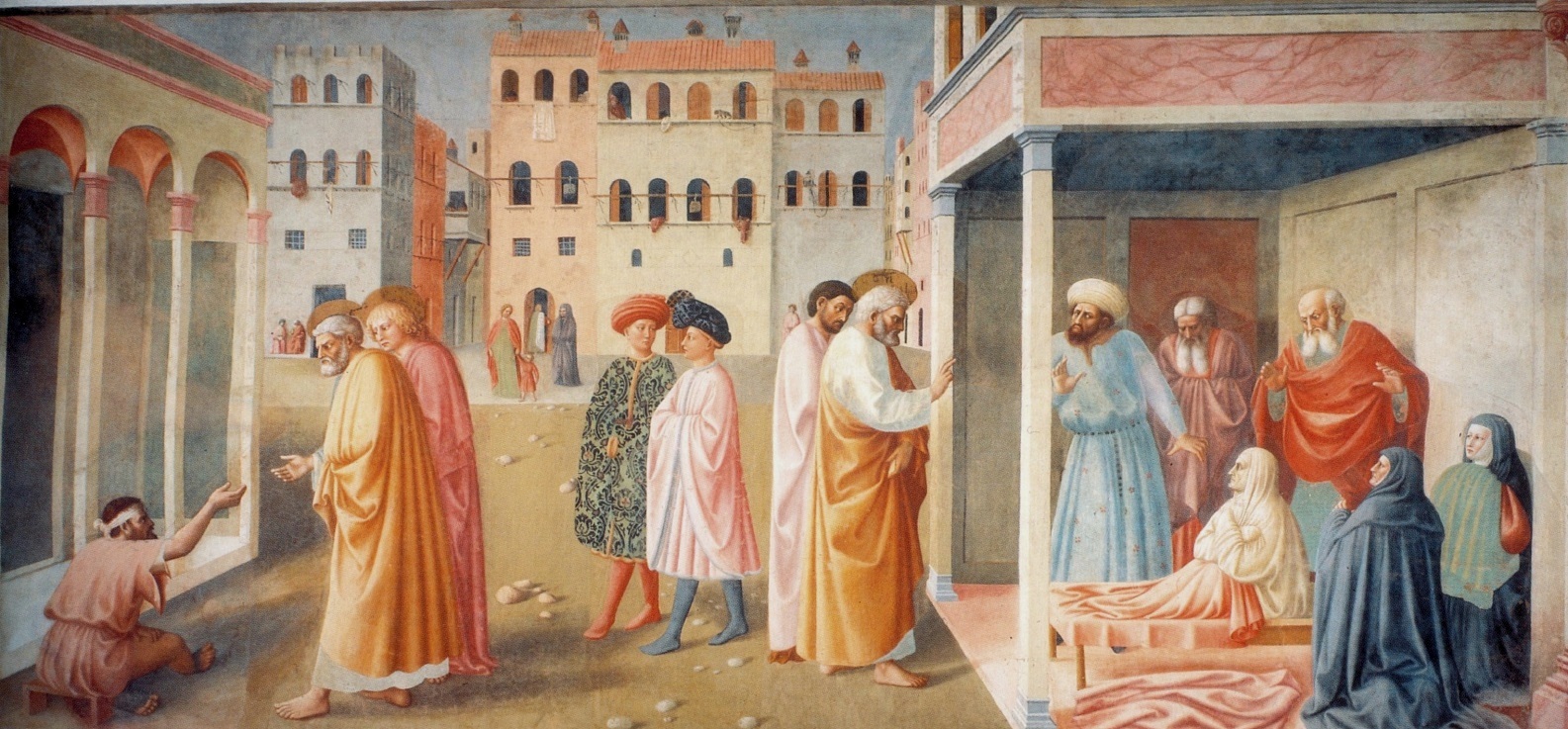
Healing of the Cripple (on left) and Raising of Tabitha (on right) by Masolino da Panicale, 1424-25. Fresco in the Brancacci Chapel, Santa Maria del Carmine, Florence, Italy.

My head has been in the St. Matthew Passion. For a few weeks already. Yes, that is pretty strange for me, having grown up in a house where Bach’s music was played often, but only on the Sundays and holidays for which it was written (read more about that in this blog post). However, it can happen when one sings in a Bach Choir in the United States. While in The Netherlands all 180 (!) St. Matthew Passion concerts happen in the weeks before Easter, here in the USA the piece is presented much less often, and the only classical music performances with a strong seasonal tie are those of Handel’s Messiah in the weeks before Christmas.

But working on the St. Matthew Passion and this Weekly Cantata blog at the same time has been a blessing, as the two areas of study influence each other. Nine months of research for this blog have inspired me to read more about the St. Matthew Passion and study the music in more detail. In that process I have learned many new things about the piece I thought I already knew so well. And experiencing the composition Bach’s sons referred to as their father’s Great Passion on a deeper level has, I believe, improved my understanding of Bach’s cantata writing.

Let’s just look at the opening chorus of this week’s cantata 48 Ich elender Mensch, written for the 19th Sunday after Trinity (October 3 in 1723).

I listened to Bach Collegium Japan (with Robin Blaze and Gerd Türk), Koopman (with Bernhard Landauer and Christoph Prégardien), Gardiner (with William Towers and James Gilchrist), Harnoncourt (with Paul Esswood and Kurt Equiluz), and Herreweghe (with Damien Guillon and Thomas Hobbs), and find Herreweghe’s interpretation the most moving. Herreweghe is also the only one who uses a tromba da tirarsi in the opening chorus, and I  love that sound. Listen to Herreweghe’s recording on YouTube or on Spotify. Please consider supporting the artists by purchasing the recording on Amazon: click here for USA, here for UK, here for Germany, or here for France.

Please find the German text with English translation here and the score here.

The main music is hauntingly beautiful (It’s not just the Herreweghe sopranos that give me goose bumps this time – the altos and tenors move me to tears, and none of this could happen without the basses providing that wonderful foundation for everyone to build on) but extremely downcast. It is clearly full of Elend (misery), in reference to the Gospel text of the day.* The same holds for the main music and words of the opening chorus of the St. Matthew Passion. It is clearly full of klagen (lamenting), and paints the picture of the Via Crucis, Jesus on his way to the cross.

However, in the midst of all the misery, a J.S. Bach opening chorus almost always provides a preview of the salvation that is to come later in the piece, or that is implied in the Gospel. In the opening chorus of the St. Matthew Passion he does this by superimposing the German Agnus Dei – the chorale O Lamm Gottes Unschuldig (O Lamb of God, unspotted), sung by a treble choir in G major, over the lamenting E minor of the two other choirs and orchestras. The repeated  auf unsre Schuld (for our sins) of Choir I is answered by the treble chorus with: All Sünd hast du getragen (you took away all sins).

The congregation in Leipzig, where the St. Matthew Passion was first performed on the afternoon of Good Friday in 1727, would have sung this German Agnus Dei earlier that day at the conclusion of the morning service. Back to this week’s cantata for October 3, 1723: in that Sunday service, the congregation might have sung the chorale Herr Jesu Christ, ich schreie zu dir:

Herr Jesu Christ ich schreie zu dir
Mit ganz betrübter Seele:
Dein Allmacht laß erscheinen mir
Und mich nicht also quäle.
Viel grösser ist die Angst und Schmerz.
So anficht und turbirt mein Herz,
Als daß ich kan erzählen.
Lord Jesus Christ, I cry to you
With a soul that is wholly troubled:
Let your almighty power appear to me
And do not punish me in this way.
Far greater is the anguish and pain
That challenge and confuse my heart
Than I can explain

The congregation might thus have heard those words in their head, when two bars after the soprano entrance the tromba da tirarsi starts playing this melody, later followed by two oboes in unison. In this way, these three instruments accompany every choral passage with a new line from the chorale, and the chorale thus starts forming the frame of the opening chorus.

After this preview message in the opening chorus that Jesus might be able to offer salvation, we have to wait until the tenor aria for the all-around convincing message that everything will be OK, in music as well as in text:

Vergibt mir Jesus meine Sünden,

If Jesus forgives me my sins,
So wird mir Leib und Seele gesund.
then my body and soul will become healthy.
Er kann die Toten lebend machen
He can make the dead live
Und zeigt sich kräftig in den Schwachen,
and shows himself to be mighty in those who are weak,
Er hält den längst geschloßnen Bund,
he keeps the covenant made long ago
Daß wir im Glauben Hilfe finden.
that in faith we find support.

Wieneke Gorter, October 1, 2016, links updated October 15, 2020.

* The Gospel story for this 19th Sunday after Trinity was the miracle of Jesus healing a cripple. From the time the Gospel was written through Bach’s time, unfortunately, having a disability or illness was seen as carrying a sin. When Jesus heals the man, he also takes his sins away.

Children’s stories

03 Saturday Sep 2016

Posted by cantatasonmymind in 1723 Trinity season special series, Bach's life, Cantatas, Leipzig, Trinity

≈ 1 Comment

Tags

according to Lutheran Church year, Bach, Bach-Archiv Leipzig, BWV 138, cantatas, Collegium Vocale Gent, Damien Guillon, Deborah York, Dorothee Mields, Eduard van Hengel, Hana Blazikova, Ingeborg Danz, Leipzig Bach Festival, Lutheran Church year, Mark Padmore, Peter Kooy, Phlippe Herreweghe, Thomas Hobbs, Trinity 15

Bergrede_Brueghel

The Sermon on the Mount, oil on copper painting by Jan Brueghel the Elder, 1598

In 1723 Bach wrote cantata 138 Warum betrübst du dich, mein Herz.  Again I prefer Herreweghe’s interpretation, but it’s not so easy to choose between his recording from 1998 (with soloists Deborah York, Ingeborg Danz, Mark Padmore, and Peter Kooij) and the one from 2013 (with soloists Hana Blazikova, Damien Guillon, Thomas Hobbs, and Peter Kooij). Update from 2021: there now is an extremely inspired Herreweghe recording with all my favorite soloists (Dorothee Mields, Alex Potter, Guy Cutting, Peter Kooij), recorded live at De Singel in Antwerp on Sunday January 31, 2021 (during the Covid19 pandemic, so without audience). Find it here.

Listen to the entire 1998 recording on Youtube or listen to one long track of the 2013 recording with Hana Blazikova and Damien Guillon on YouTube. Please consider supporting the artists by purchasing the 1998 version (used copies available only) or the 2013 version  on Amazon.

Find the text, based on the Sermon on the Mount, of this cantata here, and the score here.

It is often not immediately clear what a Bach cantata is about, what the text means, or what Bach wanted to convey with it. In an absolutely wonderful interview (with excellent English subtitles) for the Leipzig Bach Festival, soprano Dorothee Mields says that even she, as a native German speaker, often feels the need to look at English translations, go back to the Bible texts, and read more about the subject, because she didn’t necessarily recognize the text from her children’s bible.

The image of the children’s bible stuck with me since first watching the interview seven months ago. And when listening to the cantata for this Sunday, I had to think of it again, because the choice of words in this cantata is very moving, but at the same time so simple, that it is almost as if the librettist is speaking to children. Listen, for example, to the text the soprano sings in the third movement:

Nur ich, ich weiss nicht, auf was Weise ich armes Kind mein bisschen Brot soll haben; Wo ist jemand, der sich zu meiner Rettung findt?

(It is just that I, poor child, don’t know how I should receive a bit of bread; Where is the person who will save me?)

Eduard van Hengel hilariously remarks that it reminds him a bit of Calimero (a popular children’s cartoon about a little chick, which aired in The Netherlands, Belgium, France, and Italy in the early 1970s. Watch this first episode to get an idea).

I wonder who the librettist for this cantata was. I imagine a different person than who wrote texts for the last few cantatas. Last week, the Bachs possibly had their house full with the families of Anna Magdalena’s brother and sisters, visiting because the men, all trumpet players, were needed for two cantatas. Perhaps one of the visitors had talent for entertaining the children with stories and making up poems on the spot? Did Bach ask this person to write the libretto for this cantata? Or was his own head still filled with children’s stories and did he write the text himself?

These are all just assumptions and we don’t know for sure if last week’s extra players were the relatives of Bach’s wife, but my potential movie script is getting better and better …

There’s of course more to this cantata than the charming texts. Musically, as far as the form and structure is concerned, this cantata is unique within this first cycle of Leipzig cantatas. Bach takes a chorale as the base for the cantata, yet it is not at all the same as his series of chorale cantatas from the 1724/1725 cycle. In those later chorale cantatas, he always uses all the verses and keeps a strict structure of one soloist per movement. In this cantata 138, he only uses three verses of the chorale, and gives the cantata a very free form, with a different number of soloists for each movement. He is obviously experimenting. And I wonder again: might he have been influenced by his visitors from last week? Did he have discussions about his compositions with his colleagues? And how is this playing around with the form of the cantata related to using a different librettist or no librettist? Did he not want to bother a professional writer with his experimenting?

There is one more–for me at least–exciting aspect to this cantata: when I first started listening to it, I discovered that I already knew the bass aria. Same singer (Peter Kooij) and same music, but a different text, because I had until then only heard this as the Gratias from Bach’s Mass in G Major, BWV 236 from the mid 1730s. Listen to both, and marvel at Bach’s talent for subtle recycling.

Wieneke Gorter, September 3, 2016, updated September 19, 2020 and February 13, 2021.

Trinity 10: my favorite counter-tenor in the spotlight

30 Saturday Jul 2016

Posted by cantatasonmymind in 1723 Trinity season special series, Cantatas, Leipzig, Trinity

≈ Leave a comment

Tags

according to Lutheran Church year, Bach, BWV 105, BWV 244, BWV 46, cantatas, Collegium Vocale Gent, Damien Guillon, Hana Blazikova, Kooy, Lutheran Church year, Mass in B Minor, Peter Kooy, Philippe Herreweghe, St. Matthew Passion, Thomas Hobbs, Which cantata which Sunday, Which cantata which week

For this Sunday, Trinity 10, August 1, 1723 Bach wrote cantata 46 Schauet doch und sehet, ob irgend ein Schmerz sei.

This is another exquisite cantata, worth listening to (or worth watching for a bit, see link below for a wonderful video of the opening chorus by Herreweghe live at the Saintes Festival).

I recommend Herreweghe’s recording from 2012, on the same album already discussed in my previous post for cantata 105.

Purchase this recording on Amazon (the album also includes last week’s cantata 105, and two more cantatas from the 1723 Trinity season).

Listen to this Herreweghe recording from 2012 on Spotify.

Or, listen to this same recording on YouTube, via playlist I created (if this shows up as a visual on your screen,  and clicking on the main “play button” results in a “this video cannot be played” message, click on the icon on the top left where it says 1/6, and it should work):

Or watch these same performers in a live video of the opening chorus only from the Festival de Saintes.

Please find the text here, and the score here.

I especially enjoy this cantata because of the beautiful opening chorus, the dramatic bass aria (with terrific tromba da tirarsi playing by Alain de Rudder), and the alto aria.

You’ll recognize the first part of the opening chorus. Bach must have liked this enough to re-use it later as the Qui Tollis in his Mass in B minor. The illustration of the “Schmerz” with two recorders and two oboi da caccia in the orchestra is beautiful.

Last week, with cantata 105, Bach started using features that preluded his passions. In the alto aria in this cantata 46, there is again a reference to the St. Matthew Passion. The pastoral character of the music, as well as the text reference to Küchlein (chicks) make me think of the Sehet Jesus hat die Hand alto aria. I am a huge fan of counter-tenor Damien Guillon. In 2011, I heard him sing for the first time in a live performance of the St. Matthew Passion by Herreweghe in Europe, and have been collecting his recordings since then. He appears on recordings with his own ensemble Le Banquet Celeste, cantata recordings by Herreweghe from 2011 and later, and on several recordings of Marcel Ponseele’s ensemble Il Gardellino. Watch an interview with him (with English subtitles) on YouTube:

Wieneke Gorter, July 30, 2016, links updated August 10, 2023.

Belated Trinity 9

30 Saturday Jul 2016

Posted by cantatasonmymind in 1723 Trinity season special series, Cantatas, Leipzig, Trinity

≈ Leave a comment

Tags

according to Lutheran Church year, Bach, Barbara Schlick, BWV 105, BWV 162, BWV 244, BWV 245, BWV 46, BWV 67, cantatas, Damien Guillon, Hana Blazikova, Lutheran Church year, Peter Kooij, Peter Kooy, Philippe Herreweghe, Thomas Hobbs

In the previous episode of this special 1723 Leipzig Trinity series we saw how Trinity 8 marked the start of the shorter cantata, containing only around 6 movements instead of 10 to 14 movements. However, that weeks’ cantata was probably still based on earlier compositions. This means that cantata 105 Herr, gehe nicht ins Gericht could be considered the start of the true Leipzig cantata.

Two striking “Leipzig only” features make an appearance in this cantata: clear references to Bach’s future Passions (see below), and the “corno da tirarsi” (slide horn).

Only three cantatas (Trinity 10’s cantata 46, as well as 162 and 67) show the full name corno da tirarsi written in the manuscript, but there are 27 cantatas from Leipzig requiring a corno in which that part is not playable on a natural horn, so must have been written for this corno da tirarsi as well. Cantata 105 is included in that group. Bach is the only composer who ever mentioned this instrument in writing, and most probably his principal brass player Gottfried Reiche was the only one who ever played it. After Reiche’s death in 1734 Bach did not write for this instrument anymore, and for repeat performances of any cantatas containing a corno da tirarsi part, Bach rewrote it for other instruments. Read more about this in Olivier Picon’s article on the “corno da tirarsi” from 2010. 

Herreweghe has recorded this cantata 105 Herr, gehe nicht ins Gericht twice: first in 1992 (with soloists Barbara Schlick, Gerard Lesne, Howard Crook, and Peter Kooij), and again in 2012 (with soloists Hana Blazikova, Damien Guillon, Thomas Hobbs, and again Peter Kooij).

Though that first recording from 1992 is excellent, and the soprano aria on that recording has more character to my taste, I recommend the 2012 recording for the following reasons:

  1. At the time of the 1992 recording, no corno da tirarsi was available, which means that the tenor aria on that recording has an oboe accompaniment. The recording from 2012 does feature a corno da tirarsi in this aria.
  2. The “Herr, Herr” exclamations are more prominent in the opening chorus of the 2012 recording, and the tempo of the opening chorus is also a bit faster, which I like.
  3. The 2012 album, which includes three other cantatas, focuses on 1723 Trinity cantatas only, which of course is extra special for this blog’s special 1723 Trinity series.

Listen to this 2012 recording by Herreweghe on Spotify.

Listen to this 2012 recording on YouTube, by way of a playlist I created (it is possible that this only works for readers in the USA):

Support the artists and purchase this recording on Amazon. (it’s always worth it, but this time you’ll get three more cantatas in that same album that will be discussed on this blog in the coming weeks!)

Read the German text with English translations here, and find the score here.

Listen for the “Herr, Herr” exclamations in the opening chorus. They will appear in the opening chorus of the St. John Passion in early 1724. The exquisite soprano aria has no bass instrument in the continuo. Bach will later use that feature more often in other Leipzig cantatas, to either show purity or uncertainty, and it is a strong feature of the Aus Liebe aria from the St. Matthew Passion. And last but not least: when I listen to the bass arioso from this cantata 105, I am strongly reminded of the bass arioso Am Abend da es kühle war from the St. Matthew Passion. The music is not 100% the same, but very similar, and there are also references in the text.

Other stunning features of this cantata 105: the strings accompanying the soprano aria illustrate the “shivering” and “quavering” in the text, and those same “uncertain” strings turn up again in the orchestra part of the closing chorale.

Wieneke Gorter, July 30, 2016, links updated August 2, 2023.

Newer posts →

Recent Posts

  • “Missa Miniatura” by CONTINUUM/Elina Albach Even More Moving in 2025
  • Bachfest Leipzig 2025
  • Bach Cantatas for Christmas – 1724 and 1734 editions
  • Fourth Sunday of Advent – more insight into Cantata 62 helped me better understand Bach’s Christmas Oratorio
  • Saint Ambrose and Luther in Milan – Second Sunday of Advent

Archives

  • August 2025
  • July 2025
  • December 2024
  • November 2024
  • June 2024
  • January 2024
  • December 2023
  • October 2023
  • September 2023
  • August 2023
  • April 2022
  • February 2022
  • January 2022
  • December 2021
  • November 2021
  • June 2021
  • May 2021
  • April 2021
  • February 2021
  • January 2021
  • December 2020
  • November 2020
  • October 2020
  • September 2020
  • August 2020
  • July 2020
  • May 2020
  • April 2020
  • March 2020
  • February 2020
  • January 2020
  • December 2019
  • November 2019
  • May 2018
  • April 2018
  • March 2018
  • February 2018
  • January 2018
  • December 2017
  • November 2017
  • October 2017
  • September 2017
  • August 2017
  • July 2017
  • June 2017
  • May 2017
  • April 2017
  • March 2017
  • February 2017
  • January 2017
  • December 2016
  • November 2016
  • October 2016
  • September 2016
  • August 2016
  • July 2016
  • June 2016
  • May 2016
  • April 2016
  • March 2016
  • February 2016
  • January 2016

Enter your email address to follow this blog and receive notifications of new posts by email.

Join 338 other subscribers

Categories

  • 1723 Trinity season special series
  • Advent
  • After Easter
  • Ascension
  • Bach's life
  • Cantatas
  • Chorale cantatas 1724/1725
  • Christmas
  • Easter
  • Epiphany
  • Following Bach in 1725
  • Köthen
  • Leipzig
  • Septuagesima
  • Travel
  • Trinity
  • Weimar

Meta

  • Create account
  • Log in
  • Entries feed
  • Comments feed
  • WordPress.com

Website Built with WordPress.com.

  • Subscribe Subscribed
    • Weekly Cantata
    • Join 158 other subscribers
    • Already have a WordPress.com account? Log in now.
    • Weekly Cantata
    • Subscribe Subscribed
    • Sign up
    • Log in
    • Report this content
    • View site in Reader
    • Manage subscriptions
    • Collapse this bar
 

Loading Comments...