Weekly Cantata

Weekly Cantata

Tag Archives: Dorothee Mields

Easter Monday 1725

02 Monday Apr 2018

Posted by cantatasonmymind in After Easter, Cantatas, Leipzig

≈ Leave a comment

Tags

Bach, Damien Guillon, Dorothee Mields, Easter Monday, Emmaus, Peter Kooij, Philippe Herreweghe

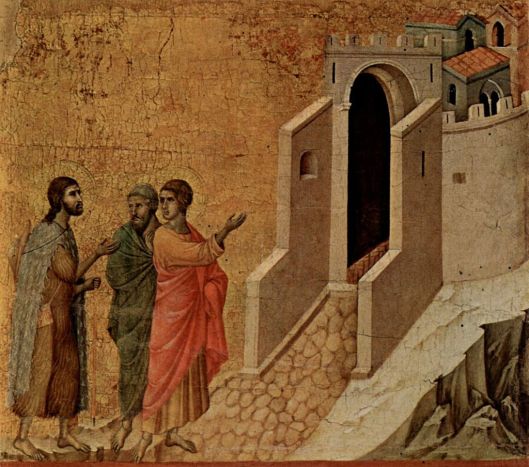
1024px-Duccio_di_Buoninsegna_Emaus

On the Road to Emmaus by Duccio, 1308-1311. Museo del’Opera del Duomo, Siena, Italy.

After the rewritten St. John Passion on Good Friday (read more about this in my post from this past Friday) and the “recycled” birthday cantata with new recitatives for the Easter-Oratorio (read more about this in yesterday’s post), Bach was now, in 1725, getting ready for performances of three new cantatas that form a beautiful sub-group within the cantatas of the 1724/1725 cycle.

Cantata 6 Bleib bei uns, denn es will Abend werden for Easter Monday (Bible story: Jesus appeared before two of his disciples while they were walking on the road to Emmaus).

Cantata 42 Am Abend aber desselbigen Sabbats, for the first Sunday after Easter (Bible story: while a small group of his disciples are inside a house in Jerusalem, with all the doors and windows locked, Jesus appears in their midst).

Cantata 85 Ich bin ein guter Hirt, for the second Sunday after Easter (Bible story: The Good Shepherd).

Gardiner believes that in Bach’s ideal plan, these cantatas were actually meant for the Easter season in 1724, not in 1725.  In his book “Bach: Music in the Castle of Heaven,” he explains why cantata 6, 42, 67 and 85 share more characteristics with other 1724 cantatas, and were thus probably planned for that year. When Bach got behind with cantata composing because of the Passion according to St. John in 1724, he must have tabled the ideas for 6, 42, and 85 for 1725, and only wrote 67 in 1724.

My favorite recording of Cantata 6 Bleib bei uns, denn es will Abend werden is by Herreweghe, recorded live at a concert on June 12, 2014 in the Eglise Saint-Roch in Paris. Find the recording (audio only) here on YouTube.

Soloists are Dorothee Mields (soprano), Damien Guillon (countertenor), and Peter Kooij (bass).

Wieneke Gorter, April 2, 2018.

Cantata movements in organ works

17 Saturday Feb 2018

Posted by cantatasonmymind in Bach's life, Cantatas, Chorale cantatas 1724/1725, Leipzig

≈ Leave a comment

Tags

Bach, BWV 140, BWV 549, BWV 6, BWV 645, BWV 647, BWV 93, chorales, Dorothee Mields, Freiberg, Groningen, Ignace Bossuyt, J.S. Bach Foundation, Jan Hage, Kloosterkerk, Martini Church, Michael Schultheis, organ, Philippe Herreweghe, Schübler, Schnitger-Hinsz, Seligenstadt, Silbermann, The Netherlands, Ton Koopman, Wim van Beek

bach-schubler-titelblad
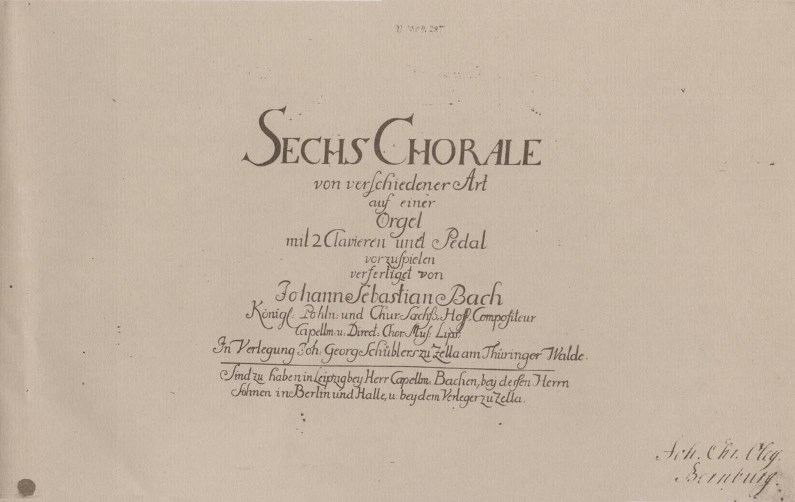
Title page of Schübler’s edition of six of Bach’s organ chorales based on cantata movements, known nowadays as the “Schübler Chorales.” The two last lines are instructions on where to purchase more of these: in Leipzig from Bach himself, from his sons in Berlin and Halle, and from the publisher [Schübler] in Zella.

There is no cantata for this Sunday, as no figural music was allowed in Leipzig in the 40 days before Easter, with the exception of the feast of the Annunciation (March 25).

For me this means I now finally have time to share some of what I learned during the Bach Festival in Bruges. On Friday January 26 I attended an all-day lecture by Professor Ignace Bossuyt about how Bach “reworked” his own music and the music of others in his compositions. The biggest eye-opener for me was that all Bach’s “Schübler Chorales” for organ (named after their publisher, Johann Georg Schübler) from 1747/1748 are actually arrangements of movements from Bach’s 1724/1725 cycle of cantatas I have been discussing on this blog since June 2017.

While I am not an organist at all, I did grow up in the land of organs and miss hearing them. My mother comes from a family of organists on her mother’s side. When other little boys dreamed of cars, my father dreamed of being an organist and built organ keyboards from blocks at home and would pretend to play them (sadly because of class perception his parents didn’t deem it appropriate to send him for lessons). Thus my parents were extremely picky where we went to church – there had to be a good organist. So I heard my share of Bach chorale preludes and Schübler Chorales, even before I knew what they were.

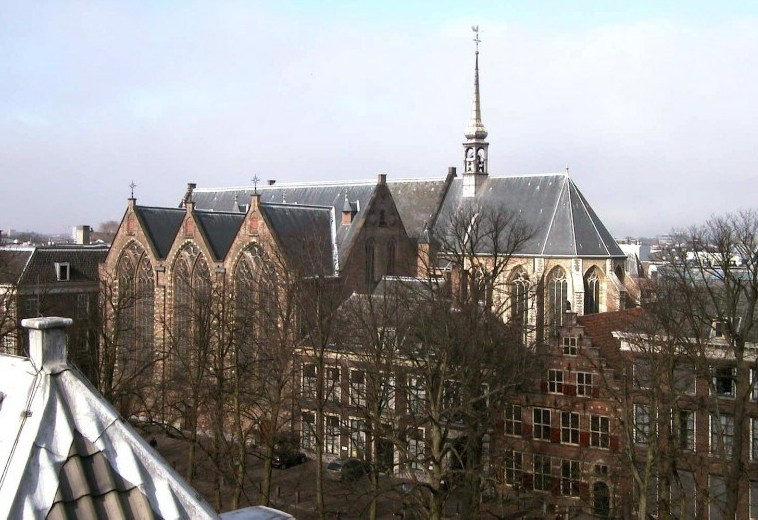
Because of the funeral service for my mother in the Kloosterkerk in The Hague I already referred to last week, I also have a soft spot for Bach’s “Schübler Chorale” BWV 645, Wachet auf, ruft uns die Stimme, because the incomparable Jan Hage (now organist at the Dom Church in Utrecht) played this at the end of the service, as we were walking out behind the coffin. This music, together with smiles of dear friends we passed by, gave me great comfort at a moment that could otherwise have been unbearable. Listen to this chorale, played by Jan Hage on that same organ of the Kloosterkerk in The Hague, here on YouTube. Another wonderful, and historically significant, performance of this chorale by Ton Koopman, on the Silbermann organ* (1714) in the Freiberg Cathedral, Germany, can be found here on YouTube. Bach and Silbermann knew each other, and Bach might have played on this organ too.

What I didn’t know until Professor Bossuyt’s lecture is that this piece of music was taken from the fourth movement of Cantata 140 with the same title. This cantata is officially not part of the 1724/1725 cycle, but in Bach’s head in 1747 it probably was. Bach wrote Cantata 140 Wachet auf, ruft uns die Stimme in 1731, most likely in an attempt to leave a complete chorale cantata cycle for posterity. During the chorale cantata cycle of 1724/1725, there had been no 26th or 27th Sunday after Trinity (by that time it was already Advent and it is of course no coincidence that Bach uses an Advent chorale in this cantata). Watch the tenor solo from this Cantata 140 Wachet auf, ruft uns die Stimme by all the tenors and baritones of the Amsterdam Baroque Choir (on a live recording conducted by Ton Koopman) here on YouTube.

I have two more beautiful examples of how Bach arranged an existing chorale cantata movements into his “Schübler Chorales”:

Bach turned the fourth movement of Cantata 93 Wer nur den lieben Gott lässt walten into the Schübler Chorale with the same title, BWV 647. Watch the duet from Cantata 93 by the J.S. Bach Foundation with soprano Miriam Feuersinger and alto Jan Börner here on Youtube. Watch the Schübler chorale played by Michael Schultheis on the organ of the Basilica in Seligenstadt, Germany, here on YouTube.

The last example is from a cantata that is nowadays not considered a true chorale cantata, but if Bach used it for the Schübler chorales, we can assume that he himself did regard it as such. It is Cantata 6 Bleib bei uns, denn es will Abend werden for Easter Monday in 1725. Hear Dorothee Mields sing the third movement from Cantata 6 live here on YouTube. Then listen here on YouTube to Dutch organist Wim van Beek play the Schübler Chorale with the same title, BWV 549, on the historic Schnitger-Hinsz organ (1740) in the Martini church in Groningen, The Netherlands.

Wieneke Gorter, February 17, 2018, links updated December 2, 2019

*learn more about the Silbermann organ here.

Bach’s “most beautiful cantata” connected to a dear memory

11 Sunday Feb 2018

Posted by cantatasonmymind in Bach's life, Cantatas, Chorale cantatas 1724/1725, Leipzig

≈ Leave a comment

Tags

bwv 127, Caroline Stam, Collegium Vocale Gent, Dorothee Mields, Eduard van Hengel, Estomihi, Jan Kobow, Peter Kooij, Philippe Herreweghe, St. Matthew Passion

kloosterkerk
Kloosterkerk, The Hague, The Netherlands, where Caroline Stam sang the aria from Cantata 127 during my mother’s funeral service in 2010. This church is also the site of the monthly cantata services performed by the Residentie Bach Ensembles.

What are your five favorite cantatas? This question was asked this week on Facebook by the Residentie Bach Ensembles, the choirs and orchestra of the monthly cantata services in the Kloosterkerk in The Hague, the Netherlands. A hard question to answer, and I would probably have a different Top Five every month. However, Cantata 127 Herr Jesu Christ, wahr’ Mensch und Gott, today’s cantata from 1725, will probably always be in it. The soprano aria from this cantata is forever linked in my heart and mind with the funeral service for my mother in this same Kloosterkerk in The Hague (read a bit more about that in this post), but having carefully listened to about 120 cantatas over the past two years I am struck by how special this cantata is within Bach’s oeuvre.

I’m not alone in my appreciation of Cantata 127 Herr Jesu Christ, wahr’ Mensch und Gott. Eduard van Hengel calls it an “exceptionally inspired cantata,” 19th century Bach biographer Spitta called it “perhaps the most important” cantata, and it received “the most beautiful” qualification by Arnold Schering as well as Ton Koopman.  

My favorite recording of this cantata is now [update from 2021] Herreweghe’s live recording from January 31, 2021. Find it here on YouTube.

Find the text of Cantata 127 here, and the score here.

There are several reasons why this last Sunday before Lent, or Quinquagesima Sunday or Estomihi Sunday, was such an important day for Bach, and maybe especially in 1725:

  1. This was the day, in 1723, on which he had auditioned for his job in Leipzig, with Cantatas 22 and 23, his first performance ever for the Leipzig congregation and city council. In 1724 he would repeat the same cantatas on this same Sunday.
  2. After this Sunday, his audience (=the Leipzig congregations of the St. Thomas and St. Nicholas churches) would not hear any of Bach’s music until March 25, on the feast of the Annunciation of Mary. No figural music (only chorale singing) was allowed in the Lutheran churches in Leipzig during Lent (the approximately 40 days before Easter), with the exception of the Annunciation. In 1724 this period was 33 days, but in 1725 it was 41 days (from February 11 to March 25). So Bach might have wished to leave his audience with something special, something they would remember for 41 days.
  3. If it is true that Andreas Stübel had been Bach’s librettist for his entire chorale cantata cycle, Bach would have now known that this was the last regular chorale cantata of the cycle for now: Stübel died on January 31, 1725. So perhaps Bach wanted to “go out with a bang” for that reason. It is striking to me that he chooses a bass recitative/arioso with trumpet talking about the Day of Judgement, a similar combination of voice, instrument, and subject matter he uses at the end of the Trinity period in 1723, and again (though less dramatically) at the end of the Trinity period in 1724. Is this Bach’s way of saying: this is the end of an important series?

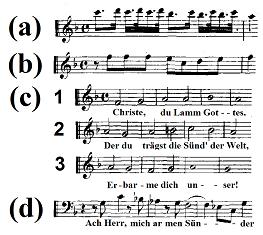
Compared to all opening choruses that had come before, this opening chorus is the most complex and intricate. It is the same as chorale fantasias in previous chorale cantatas in the sense that the six lines of text of the chorale Herr Jesu Christ, wahr’ Mensch und Gott appear in six sections, with the chorale melody (the cantus firmus) in the soprano and trumpet part.  However the orchestra greatly enhances the meaning of Bach’s message by referring to this chorale plus two others. The instrumental groups (recorders, oboes, strings, and continuo) represent four musical themes referring to these chorales. Eduard van Hengel illustrates this extremely well with two diagrams on his website, which I am copying here with his permission:

127-VHengel

(a) The recorders play a dotted rhythm which in both the St. John and St. Matthew Passions illustrates punishment and suffering.
(b) The oboes introduce the “Leitmotiv” that will sound 78 times throughout the entire movement, and stands for the Herr Jesu Christ, wahr Mensch und Gott chorale. Jesus was a true (“wahr”) man and God. Probably Bach’s most important message here.
(c) The strings quote the chorale Christe, du Lamm Gottes, or Luther’s Agnus Dei. It would show up again in the opening chorus of the St. Matthew Passion, which Bach might already have been working on around this time, see my post about Cantata 125 last week.
(d) In the continuo we hear six times the first seven notes of Ach Herr mich armen Sünder, nowadays better known as O Haupt voll Blut und Wunden, one of the main building stones of the St. Matthew Passion. In the seventh section of the opening chorus, when the sopranos are already done singing the chorale melody, Bach repeats this particular theme in the vocal bass line in the choir, as if to make sure that even those who might have missed the quotation earlier would now hear it loud and clear.

Van Hengel adds this extra diagram to show in which measures of the opening chorus the different themes appear:

127-schemaVHengel

At this point Bach might still have been planning to prepare his audiences for a first St. Matthew Passion, not abandoning that plan until much closer to March 30, Good Friday, 1725. Not only are the references in this opening chorus a striking example of that, but also in the extraordinary bass recitative/aria do we see the theme of the Sind Blitze, sind Donner chorus from the St. Matthew Passion appear on the text “Ich breche mit starker und helfender Hand.”

Regular followers of this blog will notice that Bach had been making a study for this bass recitative/aria in the previous three cantatas: combining lines of the chorale text with “free” text in the bass solo of Cantatas 92 and 125, and then using Sind Blitze, sind Donner material and trumpet accompaniment in the bass solo in Cantata 126.

Wieneke Gorter, February 10, 2018, updated February 22, 2020 and February 13, 2021.

* Herreweghe’s album “Jesu, deine Passion” features cantatas 22, 23, 127, and 159. Cantata 23 has exceptionally beautiful choruses and Cantata 22 represents the first introduction of Bach’s version of the “Vox Christi”(voice of Christ) to the Leipzig congregations, considered by some as an intentional preparation for the listeners of what would be to come in the Passions. Cantata 159 on this album is fantastic too, with an unrivaled interpretation by Peter Kooij of the fourth movement, the bass aria “Es ist vollbracht.”

Paintings, praises, and a possible prelude to the St. Matthew Passion

03 Saturday Feb 2018

Posted by cantatasonmymind in Bach's life, Cantatas, Chorale cantatas 1724/1725, Leipzig

≈ Leave a comment

Tags

Alex Potter, Bruges Bach Academy, BWV 105, BWV 125, BWV 234, BWV 46, Candle Mass, cello, Collegium Vocale Gent, Dorothee Mields, Eglise St. Roch, floating aria, flute, Ingeborg Danz, oboe da caccia, organ, Peter Kooij, Philippe Herreweghe, Presentation at the Temple, Purification of Mary, strings, Thomas Hobbs

triptych-of-jan-floreins-1479

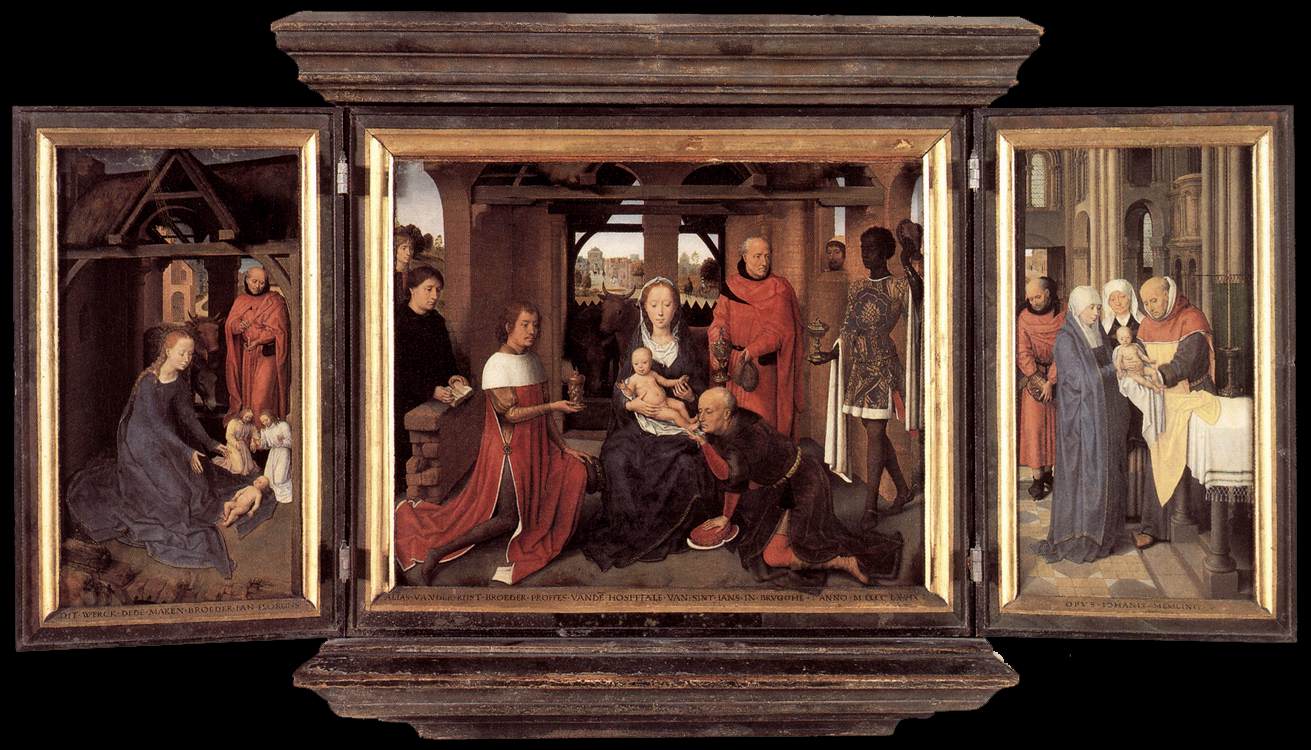
“Adoration of the Magi” triptych of Jan Floreins by Hans Memling, 1479. Memling Museum (Old St. John’s Hospital), Bruges, Belgium. The right-hand panel features “The Presentation at the Temple,” with the Temple really being the former St. Donaas church in Bruges.

If you are reading this in the email you received from WordPress, please click on the title of this post to enjoy the paintings and the formatting 🙂

This post is almost two days late, as it was for Friday February 2, the feast of the Purification of Mary, or Candle Mass, or Presentation at the Temple. If you have time, please read how this holiday was strongly connected to folk culture in my post from last year. In Lutheran reality, this was the day when Simeon’s song of praise Herr, nun lässest du deinen Diener in Friede fahren  or Nunc Dimittis was celebrated. With his chorale Mit Fried und Freud ich fahr dahin Luther turned Simeon’s song of praise into a message of “Now I can die in peace.” This is why all five cantatas (The famous Ich habe genug 82, 83, 125, 157, and 158) Bach wrote for this holiday are mostly about the joy of dying.

Since I’m following Bach’s chorale cantata writing in Leipzig in 1725, I’m featuring Cantata 125 Mit Fried und Freud ich fahr dahin, written for February 2 of that year, and based on that same chorale by Luther.

My favorite overall recording of this cantata is Herreweghe’s recording from 1998, with Ingeborg Dantz, alto; Mark Padmore, tenor; and Peter Kooij, bass. You can find it here on YouTube. Please consider supporting the artists by purchasing the album on Amazon or on iTunes. It also includes the stunning Cantata 8 (Herreweghe’s personal favorite!) and the beautiful Cantata 138.

Please find the German text with English translations of this cantata here, and the score here.

There are some similarities with last week’s cantata, such as the bass solo that is made up of bits of recitative and bits of chorale melody, but already in the opening chorus a new day is dawning. If you read the history of today’s holiday in my post from last year, you know that Candle Mass was a natural time of year to start with something new.

Could the new inspiration in Bach’s brain be the St. Matthew Passion? It is not unlikely at all. Van Hengel suggests that the opening chorus has elements of the St. Matthew opening chorus, but then argues that that piece was not written yet in 1725. However, Gardiner (in his book Music in the Castle of Heaven) makes a strong case that Bach might have initially planned to have the St. Matthew Passion ready for Good Friday 1725. I’ve pointed out before that we can find preludes to the “Great Passion” in Bach’s cantatas as far back as the fall of 1723 (see posts about cantatas 105 and 46), so it is not unlikely that Bach was working on this in January 1725.

Keeping all this in mind, it is striking that the first aria after the opening chorus is an alto aria in St. Matthew style, full of pietism. Watch Alex Potter (keep reading to find out more about him) sing this aria with the J.S. Bach Foundation here on YouTube. The instrumentation resembles the “Aus Liebe” soprano aria from the St. Matthew Passion: there are no organ chords in the bass, only repeated cello notes, and for the rest it is just flute and oboe da caccia, an unusual combination.

Because of the  many connections with this Cantata 125 I’m now going to sneak in a mini review of the Herreweghe/Collegium Vocale concerts I attended in Europe this past week.

paris_1-30_concert

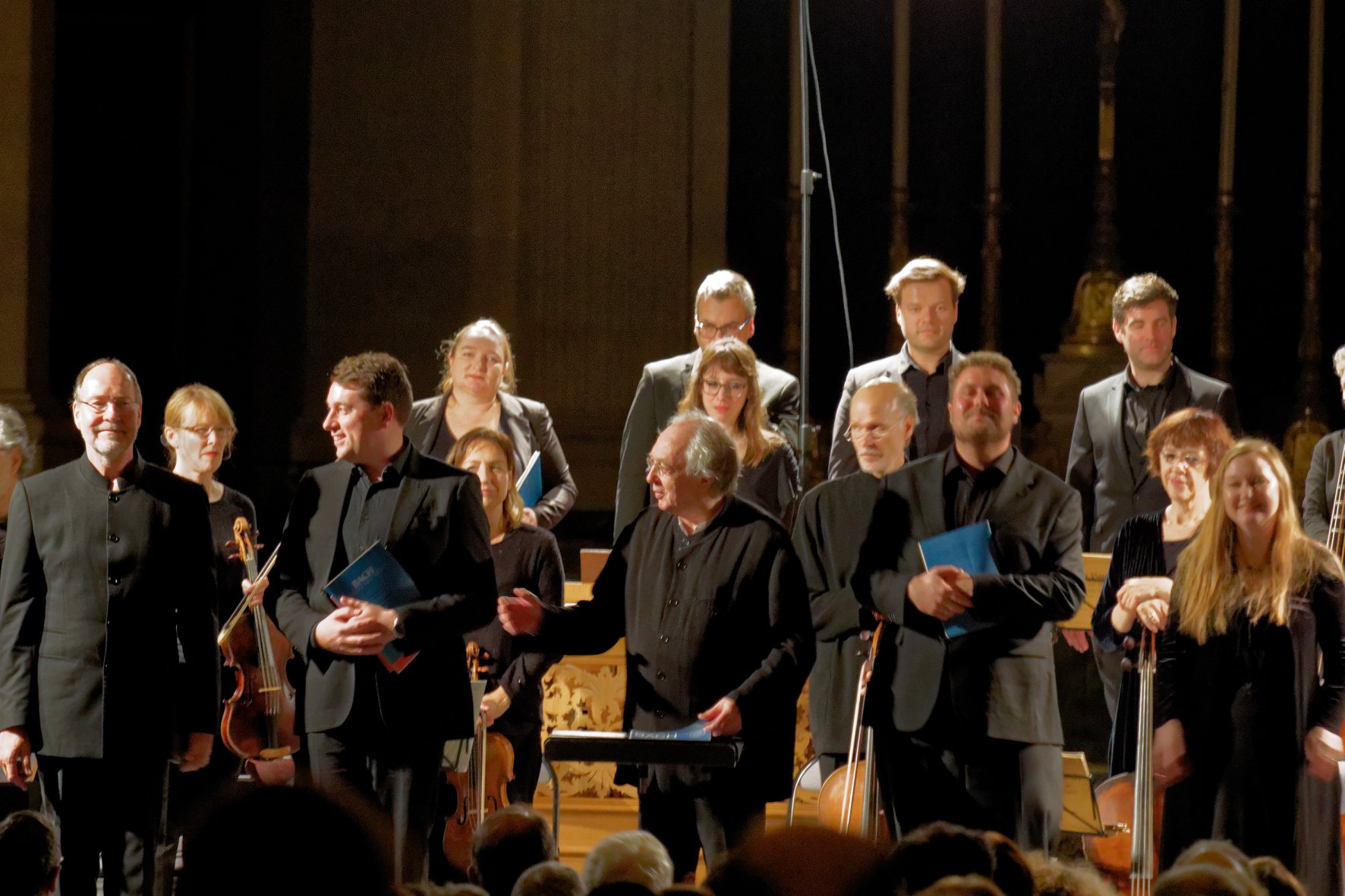
Applause at the end of the concert in the Eglise St. Roch in Paris, January 30, 2018. From left to right in front row: Peter Kooij, Thomas Hobbs, Philippe Herreweghe, Alex Potter, Dorothee Mields. Photo by Aube Neau/Luc Barrière, published with permission.

Let’s take the alto aria from Cantata 125. I call this type of aria a “floating aria” because it has no real basso continuo: there is no melodic line in the cello or chords in the organ, i.e. no foundation for the singer to stand on. These floating arias are incredibly beautiful and the stuff of goose bumps, but also incredibly challenging for the vocal soloist. In the terrific concert in Paris on Tuesday January 30, soprano Dorothee Mields had two such arias: the “Qui tollis” from the Mass in A Major (BWV 234)* and the “Wir zittern und wanken” from Cantata 105. She did an absolutely marvelous job in both of them, but her singing was the most mesmerizing in the “Wir zittern und wanken” aria. Cantata 105 stood out during that Paris performance anyway in my humble opinion. It simply has the best opening chorus of all cantatas Collegium Vocale performed in the three concerts I attended. On top of that, the group (including soloists Thomas Hobbs and Peter Kooij) recorded this in 2012, and you could tell it was still in everyone’s bones and it was a pleasure to see Herreweghe direct the strings as well as the soloists. One of my favorite bass ariosos occurs in that cantata (it makes me think of the “Am Abend da es kühle war” from the St. Matthew) and Peter Kooij’s strong rendition almost made me cry.

memling_presentation_temple_floreins

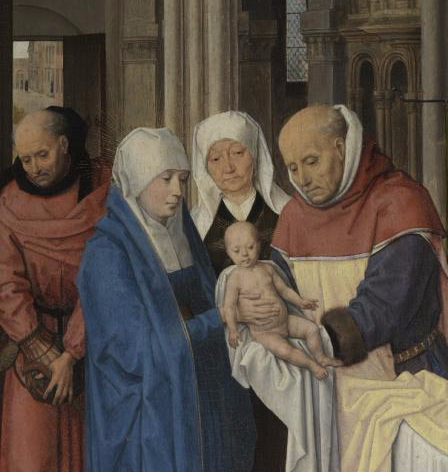
Detail of right-hand wing of the “Adoration of the Magi” Jan  Floreins triptych by Hans Memling, showing the Presentation at the Temple, or Mary presenting Jesus to Simeon

And then on to countertenor Alex Potter. It was in Bruges’ St. John’s Hospital museum that I saw the Memling painting featured in this post, and this is also where I ran into Alex Potter and was able to tell him how much I enjoyed his singing on Friday January 26. During the concert in Paris on January 30 his most impressive performance was the “Quoniam” aria from the Mass in A Major (BWV 234)**, which I heard in Bruges on Sunday January 28 and again in Paris on Tuesday January 30. He had a clear understanding of the text, made the music soar, and seemed to passionately enjoy what he was doing. It was a joy to watch and listen to.

Wieneke Gorter, February 3, 2018.

*originally from Cantata 179 from August 8, 1723.

**originally from Cantata 79 from October 31, 1725.

Blogging from Bruges

27 Saturday Jan 2018

Posted by cantatasonmymind in Cantatas, Chorale cantatas 1724/1725, Leipzig, Septuagesima

≈ 1 Comment

Tags

Alex Potter, alto, cantatas, Dorothee Mields, Ignace Bossuyt, Paul Agnew, Peter Kooy, Phlippe Herreweghe, Septuagesima, soprano, Thomas Hobbs

Brugge

I had the privilege of shaking hands with Philippe Herreweghe around midnight on Friday. It was pure coincidence, or serendipity, if you will* and he has no idea who I am, but it was a magical end to an already exciting day at the Bach Academy in Bruges, Belgium.

On that Friday I attended an informative and inspiring lecture by Bach expert Ignace Bossuyt during the day (more about that in a different post), heard a fabulous Bach cantata concert by Collegium Vocale/Herreweghe in the evening, and got to witness a very entertaining interview with Herreweghe late at night. The concert featured Cantatas 186 and 146. It was a feast to see Herreweghe at work, focusing on phrasing and text expression. It was also very enjoyable to experience the rich, well-blended string sound in the orchestra, the terrific oboe playing, the signature sound of the sopranos and altos of Collegium Vocale, and the wonderful work by all four soloists. Bass Peter Kooij stood out for his excellent diction and exquisite tone, tenor Thomas Hobbs for his stage presence and clear voice, and countertenor Alex Potter for his marvelous job in the “Ich und Du” aria from Cantata 146. As always I consider it a blessing to see and hear Dorothee Mields sing. The combination of the sound of her voice and her pronunciation and understanding of the text is something very special and beautiful to behold. I feel lucky that I will get to hear this group of musicians two more times this week: today (Sunday) again in Bruges, and Tuesday in Paris.


Time to talk about the cantata for today now: Cantata 92 Ich hab in Gottes Herz und Sinn for Septuagesima Sunday (the third Sunday before Lent), first performed on Sunday January 28 in 1725. For this cantata, Bach had received an extremely long text from his librettist. We don’t know for sure who Bach’s librettist was at this time. Scholars believe it might have been Andreas Stübel, poet, theologian, and emeritus assistant principal of the St. Thomas School. If it was indeed Stübel, he would pass away on January 31, and might already have been ill around the time Bach was working on this Cantata 92. So while there normally might have been a discussion about the libretto between Bach and Stübel, this time Bach might have had to work with what he had.

The result is a creative but extremely long bass recitative (movement 2), and a rather long cantata in total: nine movements in all. Bach had created such lengthy cantatas at the start of his career in Leipzig, during the summer of 1723, but never before during this chorale cantata cycle of 1724/1725.

This Cantata 92 Ich hab in Gottes Herz und Sinn contains arguably the most operatic tenor aria Bach ever wrote, even crazier than the aria from Cantata 81, an equally dramatic bass aria, and an absolutely lovely soprano aria. But what moves me the most in this cantata is the alto chorale with oboe accompaniment (movement 4). It gives me the good kind of stomach ache every time I hear it. On most recordings this chorale gets sung by all choir altos, not just the alto soloist.

Because I appreciate the bass soloist expressing the drama in his recitative and aria as much as the tenor does in his, my favorite “overall” recording of this cantata is the one by Bach Collegium Japan. Find my playlist here on Spotify. With Yukari Nonoshita, soprano; Jan Kobow, tenor; and Dominik Wörner, bass.

A good alternative on YouTube is Koopman’s recording of this cantata. With Deborah York, soprano; Paul Agnew, tenor; and Klaus Mertens, bass. I always love to hear Paul Agnew in operatic arias like this one.

Please find the text of Cantata 92 here, and the score here. And please consider supporting the artists by purchasing the recording you like best:

Bach Collegium Japan recording of Cantata 92 on Amazon

Koopman recording of Cantata 92 on Amazon


Wieneke Gorter, January 28, 2018.

* A friend and I were sitting in the back of a tiny cafe when Herreweghe and his wife walked in. He went over to greet some fans in the front of the restaurant, then sat down to eat. While I was contemplating what I would say to them later, once I would be on my way out of the restaurant, Herreweghe got up to use the restroom and walked right by our table. My friend asked him if he would welcome even more compliments, and then we shook hands with him and told him how much we had enjoyed the concert. It didn’t feel like the right time to tell him about my blog, and I was too star struck to think of mentioning that I would be attending two of his other concerts this week.


Three days of Christmas 1724

24 Sunday Dec 2017

Posted by cantatasonmymind in Bach's life, Cantatas, Chorale cantatas 1724/1725, Christmas, Leipzig

≈ Leave a comment

Tags

Dorothee Mields, Ingeborg Danz, Mark Padmore, Peter Kooy, Phlippe Herreweghe

adoration-of-the-shepherds-1638

Adoration of the Shepherds, Francisco de Zurbarán, 1638

Merry Christmas!

In Bach’s time, there were three Christmas days. Thanks to a beautiful album by Herreweghe, you can enjoy all cantatas Bach wrote for the consecutive days in 1724 in the order in which Bach wrote them. Or follow these YouTube links for the same recordings:

For Christmas Day: Cantata 91 Gelobet seist du, Jesu Christ

For Second Christmas Day: Cantata 121 Christum wir sollen loben schon

For Third Christmas Day: Cantata 133 Ich freue mich in dir

Soloists are: Dorothee Mields, soprano; Ingeborg Danz, alto; Mark Padmore, tenor; Peter Kooy, bass.

If you have recently joined this blog, you might also enjoy reading my Christmas posts from last year: Christmas Day, Second Christmas Day, Third Christmas Day.

Wieneke Gorter, December 19, 2017.

A good problem to have: Dorothee Mields or Susanne Rydén (cantata 115 for Trinity 22 in 1724)

11 Saturday Nov 2017

Posted by cantatasonmymind in Cantatas, Leipzig, Trinity

≈ 1 Comment

Tags

Bach, Bach Collegium Japan, Collegium Vocale Gent, Damien Guillon, Dorothee Mields, Peter Kooy, Phlippe Herreweghe, soprano, Susanne Rydén

3051724_1200_675

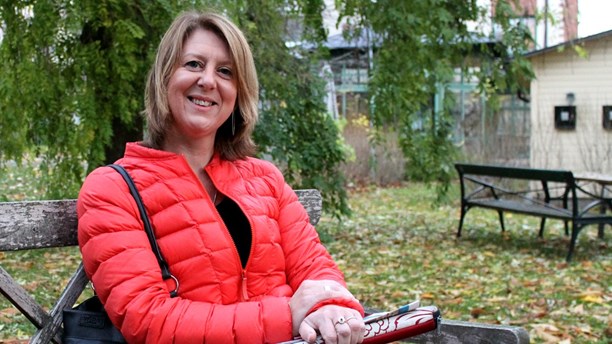
Susanne Rydén. Photo by Elin Ericsson/Sveriges Radio.

About a decade ago, I first heard the soprano aria from Cantata 115 sung live in a concert. It took my breath away. The next day, I started looking for recordings of the aria, and decided that my favorite was the one by Susanne Rydén with Bach Collegium Japan, with Liliko Maeda on transverse flute, and Hidemi Suzuki on violoncello piccolo. I purchased only that movement on iTunes and played it many times. However, I never listened to the rest of the cantata …

It took me until this past week to realize that the entire cantata is beautiful, also contains a fabulous alto aria, and …. that this year, Herreweghe released a recording of it, with Dorothee Mields singing the soprano aria and Damien Guillon singing the alto aria. For those of you who know how much I love Dorothee Mields (read more about that here) you will understand I now had a problem: Susanne Rydén or Dorothee Mields? I feel that within the framework of the rest of the movements of Herreweghe’s recording, Mields’ interpretation of the soprano aria fits perfectly, is very moving, and extremely well done. But as a stand-alone aria, I still love Susanne Rydén’s the best, because of the quality of her voice on that recording, and because her ability to blend so perfectly with the flute.

For the entire cantata, I recommend Herreweghe’s 2017 recording. This recording is not available on YouTube, but you can find it here on Spotify. Please consider supporting the artists by purchasing the entire album here on Amazon.

Find the German texts with English translations here and the score here.

Herreweghe is the best at  giving the music direction, always focusing on the phrasing. In addition to all of that, there is a wonderful expansiveness, freedom in the sound and the musical lines present in almost all of the movements. Also, Peter Kooy’s singing in the bass recitative/arioso is much more lively and adventurous than on the Bach Collegium Japan recording, and then there’s of course counter-tenor Damien Guillon. I was smiling the whole time when I first listened to his aria. How he can move from a low, full note to a clear, spot-on high note is just so good.

If you would like to hear more beautiful music for this Sunday, or are wishing for a more upbeat soprano aria, there is a terrific rendition of the soprano aria from cantata 89 Bach wrote for this same Sunday in 1723 here on Youtube, sung by the incomparable Nuria Rial with the J.S. Bach Foundation.

Wieneke Gorter, November 11, 2017, updated November 15, 2019.

Easter in Leipzig 1724

16 Sunday Apr 2017

Posted by cantatasonmymind in Cantatas, Easter, Leipzig

≈ Leave a comment

Tags

Bach, Charles Daniels, City Council, cornetto, Dorothee Mields, Gesualdo Consort Amsterdam, Harry van der Kamp, Leipzig, Lent, Sigiswald Kuijken

the-resurrection-1544halfhd

The Resurrection by Titian, 1542-1544

This post is really three posts in one, because I’ve realized over the past weeks that for this Easter season, I would like to follow Bach’s cantata performances of 1724 the same way I did that for the Trinity Season of 1723. Thanks for reading to the end!

In the year 1724 in Leipzig, the last Sunday service with music in the churches had been on February 20, when Bach performed the same cantatas (22 and 23) as on that Sunday in 1723, when they were part of his audition in Leipzig.

Bach’s reason for repeating two existing cantatas for that last Sunday before Lent might have been that he was busy writing his Passion according to St. John. However, he might have had extra reasons: cantata 22 features the Vox Christi (voice of Christ). By reminding the Leipzig audiences of the role of Christ in the scripture and his music, they would–in Bach’s mind– hopefully be well prepared for the St. John, in which the figure of Christ is powerfully prominent, much more than in passion compositions of Bach’s predecessors, and even much more than in Bach’s later St. Matthew Passion, even though the singer portraying Christ has more notes to sing in that piece.

The long monologue by Christ occurs almost right away in the opening of cantata 22. Listen to it here on the AllofBach website, performed by the Netherlands Bach Society, with bass Christian Immler. (If you are wondering what that string instrument is on the shoulder of the medieval-looking guy, it is Sigiswald Kuijken playing the violoncello da spalla, and you can read more about it in this post).

Then, a month later, on Saturday March 25, outside of the regular church year, there was the performance for the Annunciation, as I discussed here. In that cantata, 182, written much earlier in Weimar but not known to the Leipzig audiences until March 25, 1724, there’s also a Vox Christi, singing the words “Siehe, ich komme, im Buch ist von mir geschrieben …” (Lo, I come: in the book it is written of me…). So here we have another “convenient” performance for Bach: no new music to write for the first part of the service*, and a good reminder of the Vox Christi for the listeners.

Despite Bach’s efforts to put his audience in the right frame of mind for the St. John Passion, they were surprised (according to some accounts even shocked) when they heard it on Good Friday, April 7, 1724. I’m pretty sure that Bach himself had not expected this. The passion must have been on his mind already such a long time, and I have no problem picturing this brilliant but nerdy musician who was somewhat incapable of putting himself in the shoes of those with shallower minds. Why I believe the Passion according to St. John must have been on his mind for months already: the tenor aria “Ach mein Sinn” already presents itself in October 1723 in cantata 109 (read more about that here), in November 1723 in cantata 60 (read more about that here), and in January 1724 in cantata 154 (which also has a Vox Christi, read more about it here). Also, the “Herr, Herr” exclamations from the opening chorus first appear as early as July 1723 in cantata 105 (which also has previews of the St. Matthew Passion, read about it here).

Already the opening chorus is of such a dramatic intensity – nobody had every heard anything like it. In the liner notes with his recording, Gardiner says it well: “Even when approaching it from the vantage point of the preceding church cantatas, with their astonishing array of distinctive opening movements, this grand tableau is unprecedented both in scale and Affekt.” What is more, while the instrumental opening suggests lament, the text of the vocal parts turns out to be a praise of Christ as a majestic figure: not a victim, but a victor. Perhaps this vision is what stung the elders and city council members the most, because a year later, in his drastic 1725 revision of the Passion, Bach completely replaced this victorious opening chorus with a lamenting one, later also used as the final movement of the first half of the St. Matthew Passion.

For Easter 1724, on Sunday April 9, Bach performed a cantata from his Weimar years and one from his Mühlhausen years: cantata 31 Der Himmel Lacht, die Erde Jubilieret (discussed here on this blog) and the nowadays well known cantata 4 Christ lag in Todesbanden. Why no new composition for this Easter Sunday? Perhaps he was proud of these cantatas and wanted to show off to the Leipzig congregation and to his colleagues. But most probably he had been extremely busy working on the Passion, and since he was planning no less than four new cantatas for the period between April 10 and 23 of that year, he simply didn’t have time to write anything new.

Watch this live performance by Gesualdo Consort Amsterdam of cantata 4 Christ lag in Todesbanden. It is by no means an impeccable performance, but it is nice to see a live performance of this, and as so often I am moved by Dorothee Mields’ interpretation. I adore how she blends with the cornetto in the alto/soprano duet (starts at 5:27), and her duet with tenor Charles Daniels (a fabulously sensitive and knowledgeable singer, but sometimes overpowered by the orchestra in this performance) is exquisite (starts at 6:10).

Happy Easter!
Wieneke Gorter, April 16, 2017, updated April 3, 2021.

* Bach performed two cantatas on that Saturday March 25, 1724, and he did write new music for the second one.

On my mother’s birthday, March 24

24 Friday Mar 2017

Posted by cantatasonmymind in Cantatas

≈ 1 Comment

Tags

Amsterdam Baroque Orchestra, Bach, Bach Collegium Japan, bwv 127, bwv 202, bwv 44, cantatatas, Caroline Stam, Collegium Vocale Gent, Dorothee Mields, Masaaki Suzuki, Nancy Argenta, Phlippe Herreweghe, Ton Koopman

OLYMPUS DIGITAL CAMERA

my mother with my daughter, The Hague, summer of 2009

This year, on March 24, my mother would have turned 71. Sadly, she left us on November 19, 2010, after a tragic illness we only understood to be a terminal one on September 5 of that same year. To say that those months were an emotional roller coaster for all involved is an understatement. Normally very liberal and progressive in her Christianity, my mother turned very pious in her last weeks, and during that time she didn’t really let any persons in anymore, only music.

One of the major reasons I started this blog in January 2016 was to continue my mother’s legacy of playing the cantata for the appropriate Sunday every week, but also to remember the joy of going to concerts with my mother and listening to recordings together with her.

So I would like to think of this post as a short radio program with beautiful Bach music, featuring three soprano arias I strongly associate with my mother, sung by singers she and I adore(d).

A fond childhood memory is my mother, my sister, and I taking the bus from the little town where we lived to a town 15 kilometers (9 miles) away, where my mother was going to sing a solo in a wedding service. I remember what she wore: a light blue dress with tiny white and red flowers on it, a narrow red belt, and red sandals with heels. The solo she was singing was the aria “Sehet in Zufriedenheit” from cantata 202. I remember being in awe that she was standing there on the organ loft and singing it so beautifully. A gorgeous example of this aria, in the exact tempo in which my mother liked to perform it, is this recording of Nancy Argenta with Ensemble Sonnerie under the direction of Monica Huggett:

Sehet in Zufriedenheit
See in contentment
Tausend helle Wohlfahrtstage,
a thousand bright and prosperous days,
Dass bald bei der Folgezeit
so that soon as time passes
Eure Liebe Blumen trage!
your love may bear its flower!

Much later, my parents had a subscription to the series of cantata performances by the Amsterdam Baroque Orchestra with Ton Koopman, and there they got to see and hear many different soprano soloists. I remember them being impressed with Caroline Stam. Hear her sing the aria “Es ist und bleibt der Christen Trost” from cantata 44, one of my mother’s favorite Bach cantata arias of all time,  with the Amsterdam Baroque Orchestra under the direction of Ton Koopman.

Es ist und bleibt der Christen Trost,
The consolation of Christians is and remains
Dass Gott vor seine Kirche wacht.
God’s watchful care over his church.
Denn wenn sich gleich die Wetter türmen,
For even though at times the clouds gather,
So hat doch nach den Trübsalstürmen
yet after the storms of affliction
Die Freudensonne bald gelacht.
the sun of joy has soon smiled on us.

We felt extremely blessed that Caroline Stam agreed to sing at my mother’s funeral service. We asked her to sing Purcell’s “Evening Hymn,” since that had been in the top 5 on my mother’s iPod in her last weeks. But for the Bach aria, we let Caroline pick what she would like to sing. I am still very grateful for that decision. Always very conscious of texts, Caroline chose the hauntingly beautiful “Die Seele ruht” from cantata 127. For years, I have not been able to listen to this aria, but now I can again, though it still makes me cry a little. Hear Dorothee Mields sing this aria with Collegium Vocale Ghent under the direction of Philippe Herreweghe:

Die Seele ruht in Jesu Händen,
My soul rests in the hands of Jesus,
Wenn Erde diesen Leib bedeckt.

Though earth covers this body
Ach ruft mich bald, ihr Sterbeglocken,
Ah, call me soon, you funereal bells,
Ich bin zum Sterben unerschrocken,

I am not terrified to die
Weil mich mein Jesus wieder weckt.

Since my Jesus will awaken me again.

If you would like to read more, here are five posts from 2016 in which I talk about my mother a lot or a little bit:

The order of things

Glorious soprano arias and unusual instrumentation

The Crown on Bach’s 1723 Trinity season

Many things to be proud of

Our Christmas Morning

Wieneke Gorter, March 24, 2017

My favorite sopranos for the third Sunday before Lent

18 Saturday Feb 2017

Posted by cantatasonmymind in Cantatas, Leipzig, Septuagesima

≈ Leave a comment

Tags

BWV 144, BWV 84, Dorothee Mields, John Eliot Gardiner, Leipzig, Miah Persson, Phlippe Herreweghe, Septuagesima

workers_vineyard
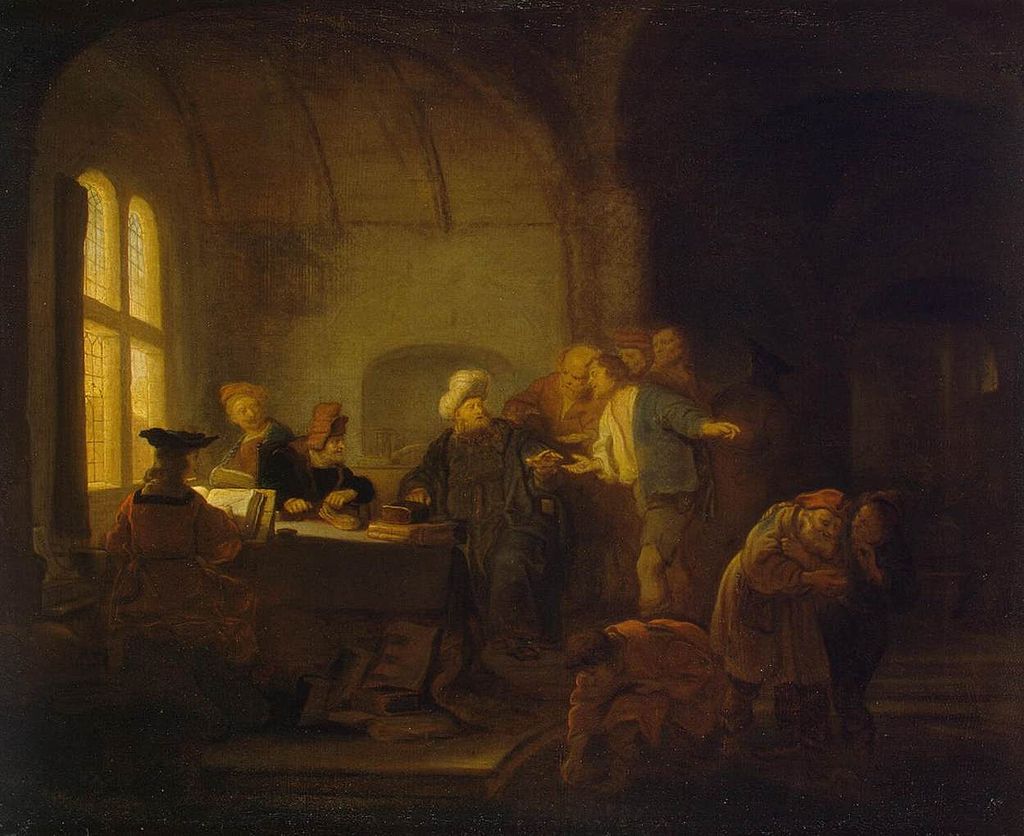
Parable of the workers in the vineyard by Salomon Koninck. Between 1647 and 1649. Hermitage Museum.

On the third Sunday before Lent in 1724, Bach performed Cantata 144 Nimm, was dein ist, und gehe hin. Read all about this short but wonderful work in my blog post from 2016, in which I discuss an unrivaled recording by Gardiner with mezzo soprano Wilke te Brummelstoete and soprano Miah Persson.

In that cantata from 1724 Bach wrote one soprano aria on the concept of “Genügsamkeit” (being satisfied with what you have), but three years later, he dedicated an entire solo work for soprano to this theme: Cantata 84 Ich bin vergnügt mit meinem Glücke (I am content in my good fortune), featuring the delightful aria Ich esse mit Freuden mein weniges Brot (It is with joy that I eat my meager piece of bread). We can probably take this as proof that Genügsamkeit was very important to Bach.

Find the German texts with English translations of Cantata 84 here, and the score here.

dorothee-mields-100_v-ardaustauschformat
Dorothee Mields

I myself count among my blessings that Herreweghe’s recording of this cantata features one of my favorite sopranos, Dorothee Mields. Read more about her in my post about the Herreweghe sopranos.

I listened to many recordings of this cantata, and I still (2020) love this interpretation the best. Mields is a terrific chamber musician together with the instrumentalists throughout this cantata, listen to the interplay between her and oboist Marcel Ponseele. I feel her voice sounds the most natural in aria “Ich esse mit Freuden mein weniges Brot.” The way she starts “Ein ruhig gewissen” the first time that comes around is just to die for as far as I’m concerned. I also like Herreweghe’s tempos the best of all the recordings I’ve listened to.

Enjoy Dorothee Mields’ singing and her being a terrific chamber musician together with the instrumentalists on Herreweghe’s recording of cantata 84 Ich bin vergnügt mit meinem Glücke on YouTube or on Spotify. The cantata appears on Herreweghe’s album Christus der ist mein Leben from 2007, which also includes two other fabulous cantatas: 95 and 161. If you like these recordings, please consider purchasing (the MP3 of) this album on Amazon.de or on Amazon.com. Or purchase the album on iTunes or whatever platform you prefer. Thanks for supporting the artists!

Wieneke Gorter, February 18, 2017, last updated January 27, 2024.


← Older posts
Newer posts →

Recent Posts

  • “Missa Miniatura” by CONTINUUM/Elina Albach Even More Moving in 2025
  • Bachfest Leipzig 2025
  • Bach Cantatas for Christmas – 1724 and 1734 editions
  • Fourth Sunday of Advent – more insight into Cantata 62 helped me better understand Bach’s Christmas Oratorio
  • Saint Ambrose and Luther in Milan – Second Sunday of Advent

Archives

  • August 2025
  • July 2025
  • December 2024
  • November 2024
  • June 2024
  • January 2024
  • December 2023
  • October 2023
  • September 2023
  • August 2023
  • April 2022
  • February 2022
  • January 2022
  • December 2021
  • November 2021
  • June 2021
  • May 2021
  • April 2021
  • February 2021
  • January 2021
  • December 2020
  • November 2020
  • October 2020
  • September 2020
  • August 2020
  • July 2020
  • May 2020
  • April 2020
  • March 2020
  • February 2020
  • January 2020
  • December 2019
  • November 2019
  • May 2018
  • April 2018
  • March 2018
  • February 2018
  • January 2018
  • December 2017
  • November 2017
  • October 2017
  • September 2017
  • August 2017
  • July 2017
  • June 2017
  • May 2017
  • April 2017
  • March 2017
  • February 2017
  • January 2017
  • December 2016
  • November 2016
  • October 2016
  • September 2016
  • August 2016
  • July 2016
  • June 2016
  • May 2016
  • April 2016
  • March 2016
  • February 2016
  • January 2016

Enter your email address to follow this blog and receive notifications of new posts by email.

Join 338 other subscribers

Categories

  • 1723 Trinity season special series
  • Advent
  • After Easter
  • Ascension
  • Bach's life
  • Cantatas
  • Chorale cantatas 1724/1725
  • Christmas
  • Easter
  • Epiphany
  • Following Bach in 1725
  • Köthen
  • Leipzig
  • Septuagesima
  • Travel
  • Trinity
  • Weimar

Meta

  • Create account
  • Log in
  • Entries feed
  • Comments feed
  • WordPress.com

Website Built with WordPress.com.

  • Subscribe Subscribed
    • Weekly Cantata
    • Join 158 other subscribers
    • Already have a WordPress.com account? Log in now.
    • Weekly Cantata
    • Subscribe Subscribed
    • Sign up
    • Log in
    • Report this content
    • View site in Reader
    • Manage subscriptions
    • Collapse this bar
 

Loading Comments...