Weekly Cantata

Weekly Cantata

Tag Archives: Eduard van Hengel

Multifunctional trumpets, from 1723 to 1748

27 Sunday Aug 2023

Posted by cantatasonmymind in 1723 Trinity season special series, Bach's life, Cantatas, Leipzig, Trinity

≈ Leave a comment

Tags

Alex Potter, BWV 69, BWV 69a, Christ healing a deaf mute, Dominik Wörner, Eduard van Hengel, J.S. Bach Foundation, J.S. Bach Stiftung, Karl Graf, Michael Maul, Miriam Feuersinger, Mirjam Berli, Peter Kooij, Raphael Höhn, Rudolf Lutz, Thomas Hobbs, Trinity 12, trumpets
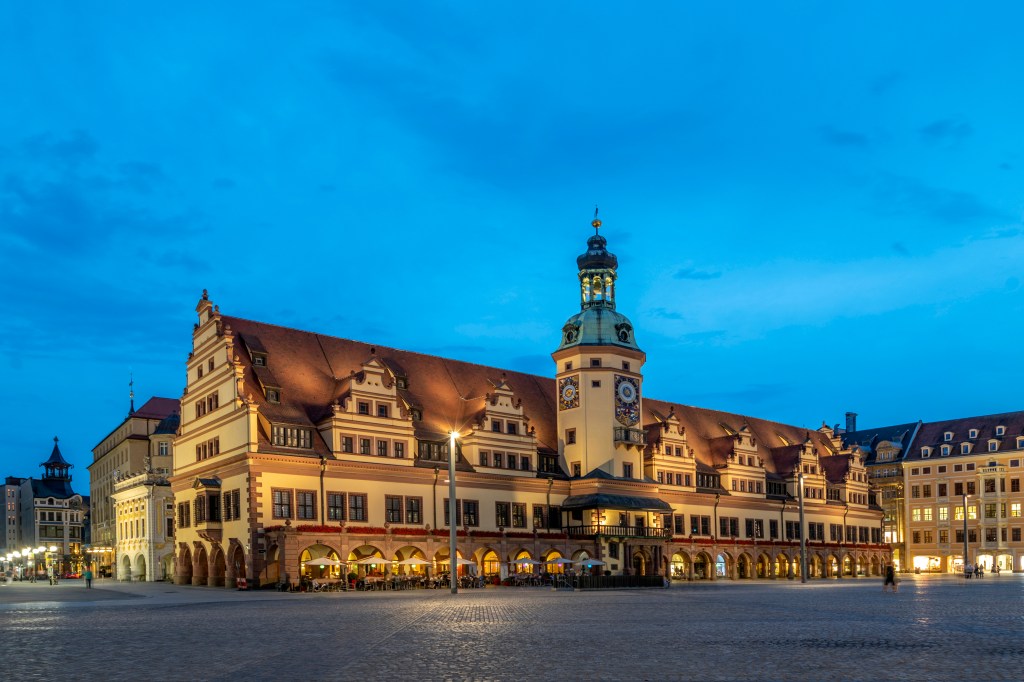
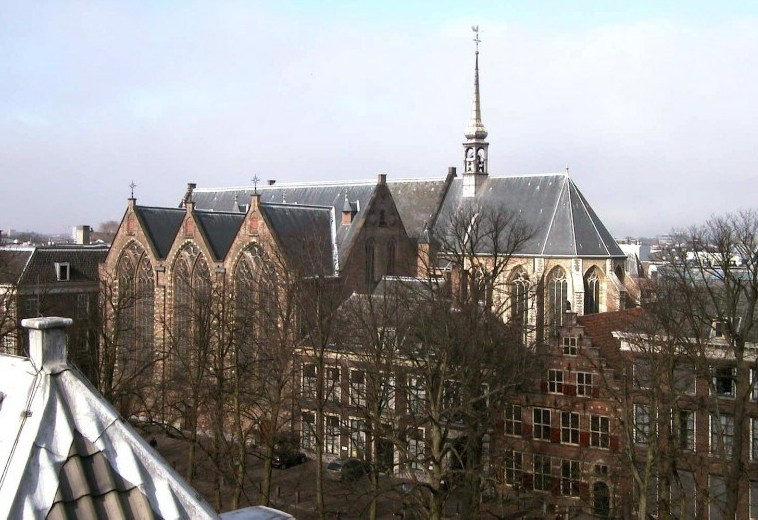
Old Town Hall in Leipzig

For those of you receiving this in email, please click on the post to read in a web browser, as images and table will display much better that way.

For this Sunday in 1723, the 12th after Trinity, Bach wrote Cantata 69a Lobe den Herrn, meine Seele. In my post from 2016 I remarked how unusual it was for Bach to use trumpets on such a “normal” Sunday, and imagined his father-in-law being in town for a visit. But this week I heard two better arguments. 

In his podcast, Bach scholar Michael Maul suggests that after the incredibly serious and sad music of the past three Sundays, Bach might have realized that the Leipzig churchgoers needed to hear something more upbeat. This might sound trivial, but if you look at Bach’s passions, he knew very well when a change in mood was needed and mastered that skill like a great opera composer or playwright. In addition to this good reason, I was also convinced by theologian Karl Graf in the J.S. Bach Foundation’s lecture about Cantata 69a, because he reminded me that the Bible story on which this cantata is based is that of Christ healing a deaf mute. Graf points out that in the time of the Bible, but also still in Bach’s time, a deaf mute would not only have been excluded from society, but would also have been considered a person without faith. Thus, the rejoicing by chorus and trumpets is not only an illustration of the praise the crowd gives after witnessing the miracle, but especially of this person finding faith.

A quarter century later, in 1748, Bach recycled this cantata during the same time of year, but for a completely different occasion: the installation of the new Town Council, or “Ratswahl.” The “Ratswahl” was always on the first Monday after August 24 (the feast of St. Bartholomew); which in 1748 fell on Monday, August 30. Bach must have written about 27 Ratswahl cantatas, but only six have survived.

I have listed Bach’s changes in 1748 here below, expanding on a table created by Eduard van Hengel. I’ve included links for live video recordings of both cantatas (just click on the link at the top of each column).

Cantata 69a for Trinity 12 1723

Live video recording by the J.S. Bach Foundation, Rudolf Lutz, conductor. With
Mirjam Berli, soprano; Alex Potter, alto; Raphael Höhn, tenor; Dominik Wörner, bass.
Cantata 69 for Ratswechsel 1748

Live recording by the Netherlands Bach Society, Peter Dijkstra, conductor. With
Miriam Feuersinger, soprano; Alex Potter, alto; Thomas Hobbs, tenor; Peter Kooij, bass.
Please find the German texts with English translations here, and the score herePlease find the German texts with English translations here, and the score here
Opening ChorusOpening Chorus, unchanged
Soprano recitative, 11 measures

Ach, dass ich tausend Zungen hätte!
Ach wäre doch mein Mund
Von eitlen Worten leer!
Ach, dass ich gar nichts redte,
Als was zu Gottes Lob gerichtet wär!
So machte ich des Höchsten Güte kund;
Denn er hat lebenslang so viel an mir getan,
Dass ich in Ewigkeit ihm nicht verdanken kann.
Soprano recitative, 18 measures

Wie groß ist Gottes Güte doch!
Er bracht uns an das Licht,
Und er erhält uns noch.
Wo findet man nur eine Kreatur,
Der es an Unterhalt gebricht?
Betrachte doch, mein Geist,
Der Allmacht unverdeckte Spur,
Die auch im kleinen sich recht groß erweist.
Ach! möcht es mir, o Höchster, doch gelingen,
Ein würdig Danklied dir zu bringen!
Doch, sollt es mir hierbei an Kräften fehlen,
So will ich doch, Herr, deinen Ruhm erzählen.
Tenor aria in C Major with recorder and oboe da caccia

Meine Seele,
Auf, erzähle,
Was dir Gott erwiesen hat!
Rühmet seine Wundertat,
Laßt ein gottgefällig Singen
Durch die frohen Lippen dringen!
Alto aria in G Major with violin and oboe


Meine Seele,
Auf! erzähle,
Was dir Gott erwiesen hat!
Rühme seine Wundertat,
Laß, dem Höchsten zu gefallen,
Ihm ein frohes Danklied schallen!
Alto recitative with continuo only,
18 measures

Gedenk ich nur zurück,
Was du, mein Gott, von zarter Jugend an
Bis diesen Augenblick
An mir getan,
So kann ich deine Wunder, Herr,
So wenig als die Sterne zählen.
Vor deine Huld, die du an meiner Seelen
Noch alle Stunden tust,
Indem du nur von deiner Liebe ruhst,
Vermag ich nicht vollkommnen Dank zu weihn.
Mein Mund ist schwach, die Zunge stumm
Zu deinem Preis und Ruhm.
Ach! sei mir nah
Und sprich dein kräftig Hephata,
So wird mein Mund voll Dankens sein.
Tenor recitative with strings 
26 measures

Der Herr hat große Ding an uns getan.
Denn er versorget und erhält,
Beschützet und regiert die Welt.
Er tut mehr, als man sagen kann.
Jedoch, nur eines zu gedenken:
Was könnt uns Gott wohl Bessres schenken,
Als dass er unsrer Obrigkeit
Den Geist der Weisheit gibet,
Die denn zu jeder Zeit
Das Böse straft, das Gute liebet?
Ja, die bei Tag und Nacht
Vor unsre Wohlfahrt wacht?
Laßt uns dafür den Höchsten preisen;
Auf! ruft ihn an,
Dass er sich auch noch fernerhin so gnädig woll erweisen
Was unserm Lande schaden kann,
Wirst du, o Höchster, von uns wenden
Und uns erwünschte Hilfe senden.
Ja, ja, du wirst in Kreuz und Nöten
Uns züchtigen, jedoch nicht töten.
Bass ariaBass aria, unchanged
Closing chorale with instruments doubling the vocal lines

Was Gott tut, das ist wohlgetan,
Darbei will ich verbleiben.
Es mag mich auf die rauhe Bahn
Not, Tod und Elend treiben:
So wird Gott mich
Ganz väterlich
In seinen Armen halten.
Drum lass ich ihn nur walten.
Closing chorale with separate parts for trumpets and timpani

Es danke, Gott, und lobe dich
Das Volk in guten Taten.
Das Land bringt Frucht und bessert sich,
Dein Wort ist wohl geraten.
Uns segne Vater und der Sohn,
Uns segne Gott, der Heilge Geist,
Dem alle Welt die Ehre tut,
Für ihm sich fürchten allermeist,
Und sprecht von Herzen: Amen!

Wieneke Gorter, August 27, 2023.

About Weekly Cantata

I am a bilingual writer, publicist, choral singer, art and nature lover, happy wife, and blessed mother of two. I started this blog in 2016, inspired by my late mother’s love for Bach’s cantatas. After 23 years in the San Francisco Bay Area, I’m now back in the Netherlands.

If you are on social media, please follow me:

  • Facebook
  • Instagram

Please subscribe!

Please join my readers from all over the world and subscribe to this blog! Simply fill in your email address and you’ll receive an email every time I’ve published a new post. Thank you so much / Vielen Dank / Merci mille fois / 감사합니다 / 谢谢 / ありがとう / Mille grazie / Muchas gracias / Muito obrigado / Takk / Terima kasih / Dankuwel!

Designed with WordPress.com

Playing with fugues & Bach’s harpsichord at Köthen

24 Thursday Aug 2023

Posted by cantatasonmymind in 1723 Trinity season special series, Bach's life, Cantatas, Köthen, Leipzig, Trinity

≈ Leave a comment

Tags

Berlin, BWV 179, BWV 872, Charlottenburg Castle, Christine Schornsheim, Eduard van Hengel, fugue, harpsichord, Köthen, Leipzig, Michael Mietke, Netherlands Bach Society, Richard Atkinson, Trinity 11, Well Tempered Clavier

“The White Mietke,” a single manual* harpsichord built by Michael Mietke in Berlin, circa 1700. Lacquer artist: Gérard Dagly. Charlottenburg Castle, Berlin, Germany. In his last four years in Köthen, Bach played on a double manual harpsichord by the same builder, built especially for him in 1719.

This past Sunday was the 11th Sunday after Trinity, for which Bach wrote Cantata 179 Siehe zu, daß deine Gottesfurcht nicht Heuchelei sei (See that your fear of God is not hypocrisy) in 1723 in Leipzig. 

Much has been written about the stunning fugue in the opening chorus of this cantata, and I happily refer you to my posts from 2016 and 2020 for more information and a link to my favorite recording. But last week I learned something completely new about this opening chorus, thanks to yet another fabulous video series that saw the light during the pandemic: Richard Atkinson’s Bach Analyses. Since I’m a visual learner, I truly love watching videos like these. At first I merely started watching Richard’s video on the opening chorus of Cantata 179 to see if it would perhaps make the complex structure of the composition a bit easier to understand than Eduard van Hengel’s written explanation I had discussed in 2016.

And indeed it really helped me understand the music better! But what’s more, in that video Richard points out that the fugue from Cantata 179 shares some unusual composition techniques as well as themes with another mind boggling fugue by Bach, namely that of his Prelude and fugue no. 3 in C-sharp major (BWV 872) from the Well Tempered Clavier, Book II. As far as I know, no other Bach scholar or commentator ever mentioned this. Listen to that fugue here, played by Christine Schornsheim. We don’t know when exactly Bach wrote the keyboard piece, because we only have the publication date of the collection in which it appeared (Well Tempered Clavier Book II, 1740). It is possible that the cantata came first, but it is just as likely that Bach would have written the keyboard work before the cantata, while still employed at Köthen.   

Thinking of Bach playing with fugues on the harpsichord in Köthen brings me to another bit about Bach’s life I learned last week, while watching the interview with Christine Schornsheim by the Netherlands Bach Society: that we actually know what kind of harpsichord Bach played in Köthen, from 1719 to 1723. To be clear: most harpsichord players and all harpsichord builders already know this, but I didn’t, and I thought it worth mentioning here.

Historical records show that the Prince of Köthen allowed Bach to order a harpsichord from the famous builder Michael Mietke in Berlin sometime in 1718, and got to pick it up in March 1719.

On March 1, 1719, the accounts read: “To the Capellmeister Bach for the Berlin-made harpsichord and travel expenses 130 Thaler”. On March 14, Gottschalk, the chamber servant, also received eight thalers in “wages for transporting the Berlin harpsichord.”

The instrument remained in the princely music chamber; Bach did not get to take it with him when he moved  to Leipzig in May 1723. In 1784, the instrument is still mentioned: “The large harpsichord or grand piano with 2 manuals, by Michael Mietke in Berlin, 1719, defect.”

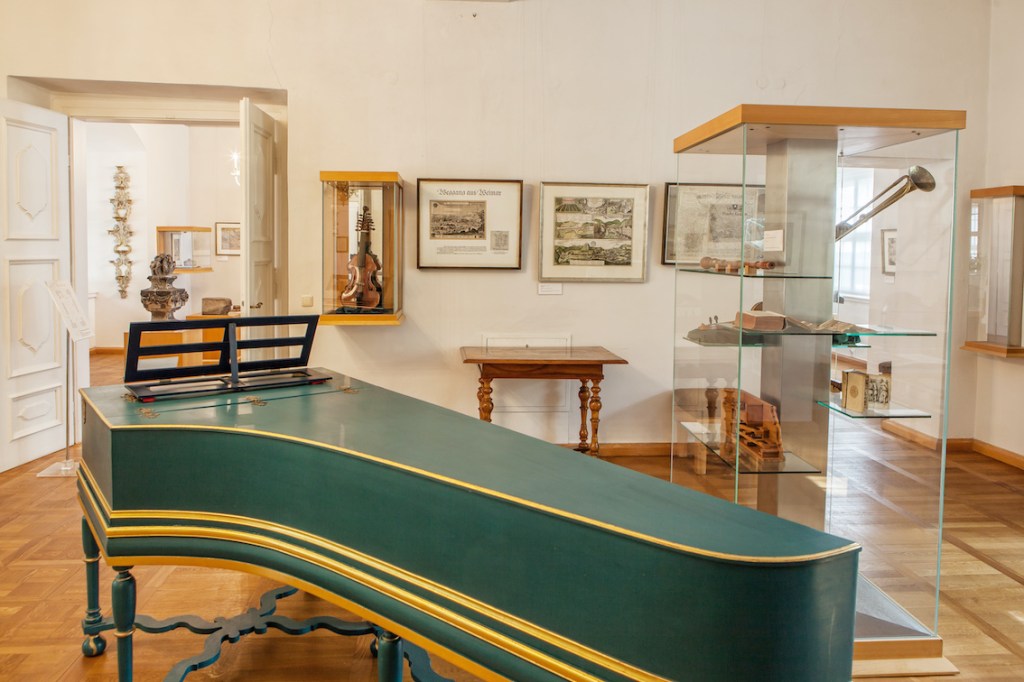
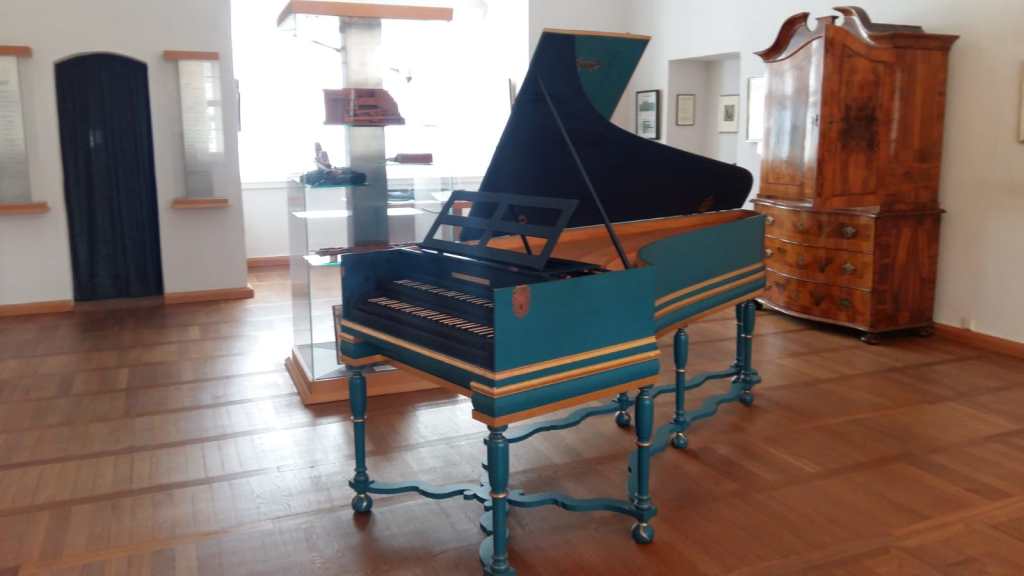
Many harpsichord builders have created copies of Bach’s “Mietke harpsichord.” In the video registration of the Prelude and fugue no. 3 in C-sharp major (BWV 872), Christine Schornsheim plays a terrific copy by Bruce Kennedy. The Köthen Castle had a copy made in 1992 by Martin-Christian Schmidt, pictured here: 

For the picture at the top of this blog post I chose one of the very few original Mietke harpsichords that have survived to this day, the “White Mietke” at the Charlottenburg Castle in Berlin. It was built almost two decades earlier than Bach’s harpsichord, it only has one single keyboard, and it was decorated by the court painter at Charlottenburg. 

Wieneke Gorter, August 23, 2023. 

*manual = keyboard

About Weekly Cantata

I am a bilingual writer, publicist, choral singer, art and nature lover, happy wife, and blessed mother of two. I started this blog in 2016, inspired by my late mother’s love for Bach’s cantatas. After 23 years in the San Francisco Bay Area, I’m now back in the Netherlands.

If you are on social media, please follow me:

  • Facebook
  • Instagram

Please subscribe!

Please join my readers from all over the world and subscribe to this blog! Simply fill in your email address and you’ll receive an email every time I’ve published a new post. Thank you so much / Vielen Dank / Merci mille fois / 감사합니다 / 谢谢 / ありがとう / Mille grazie / Muchas gracias / Muito obrigado / Takk / Terima kasih / Dankuwel!

Designed with WordPress.com
Trombones and altos from heaven (a guide to BWV 2)

26 Thursday Mar 2020

Posted by cantatasonmymind in Bach's life, Cantatas, Chorale cantatas 1724/1725, Leipzig, Trinity

≈ Leave a comment

Tags

Alex Potter, BWV 12, BWV 135, BWV 172, BWV 18, BWV 182, BWV 2, BWV 20, BWV 21, BWV 7, chorale cantata, cornetto, Eduard van Hengel, Georg Poplutz, J.S. Bach Foundation, J.S. Bach Stiftung, Luther, Markus Volpert, Psalm 12, Renate Steinmann, Rudolf Lutz, Trinity 2, trombone

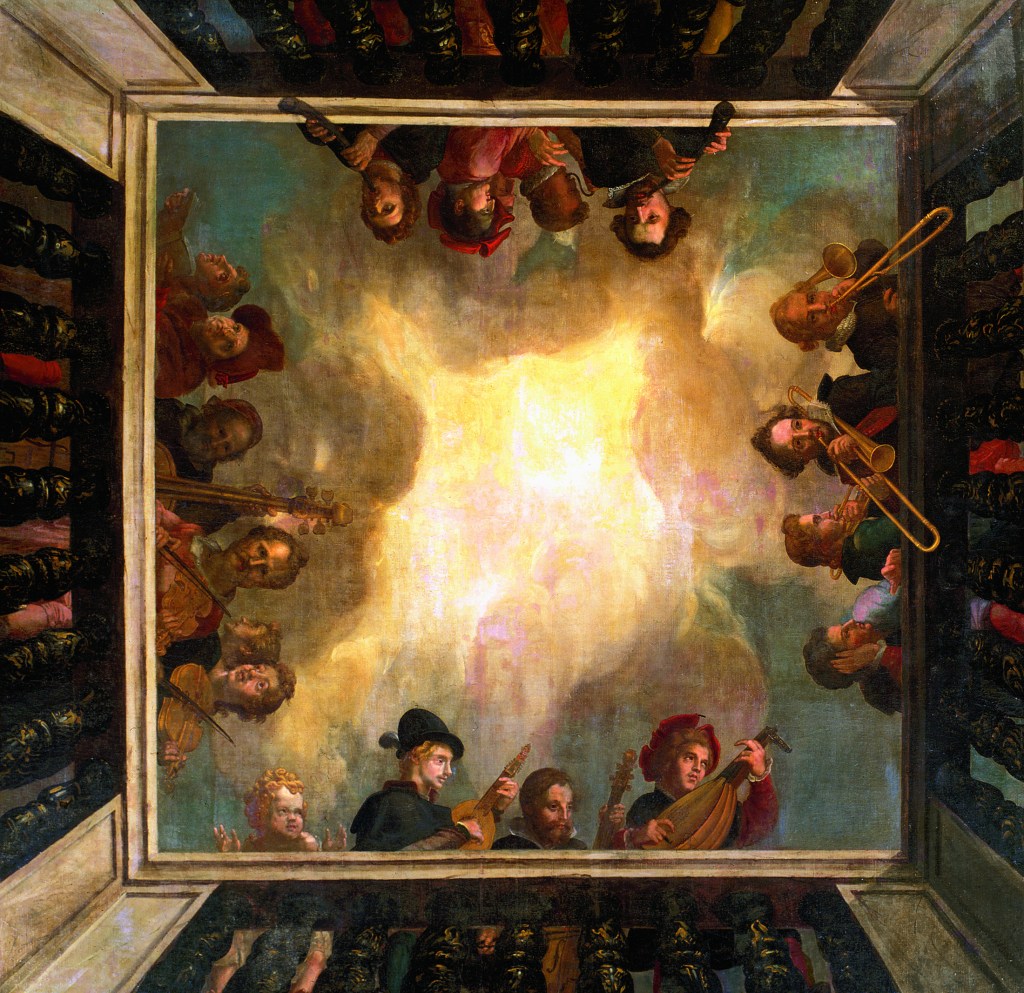
Ceiling painting installed around 1700 in Christian V’s Hall in Rosenborg Castle, Denmark. Possibly by Reinhold Timm, ca. 1620, originally for for a music pavilion in Kongens Have. *

Yesterday, Wednesday March 25, 2020, the J.S. Bach Foundation published their live video recording of Cantata 2 Ach Gott, vom Himmel sieh darein (Please God, look down from Heaven) on their YouTube channel. I thought it might be nice to provide a listening guide to go with this performance.

I love this cantata because it has trombones in the orchestra, doubling the choir parts, and because the altos have the cantus firmus (=they sing the chorale melody in long notes) in the opening chorus, which sounds incredibly good, and is unique within Bach’s writing.

Find the video recording by the J.S. Bach Foundation here on YouTube. Soloists are Alex Potter, alto; Georg Poplutz, tenor; and Markus Volpert, bass.

Find the German texts with English translations here, and the full score here.

This cantata was the second in Bach’s 1724 series of Chorale Cantatas. He most probably intended for the first four cantatas in that series to form a set, or at least to present some kind of order,  if you look at the composition form of the opening movement, and which voice has the cantus firmus of the chorale tune in that chorus:

  1. Cantata 20 O Ewigkeit, du Donnerwort: French Overture, with cantus firmus in the soprano (find my blog post about this cantata here)
  2. Cantata 2 Ach Gott, vom Himmel sieh darein: Chorale motet, cantus firmus in alto (the cantata discussed here)
  3. Cantata 7 Christ unser Herr zum Jordan kam: Italian concerto, cantus firmus in tenor. (find my blog post about this cantata here)
  4. Cantata 135 : Ach Herr, mich armen Sünder: Chorale fantasia, cantus firmus in bass. (find my blog post about this cantata here)

We know that Bach liked to use order and symmetry when he wanted to impress other people with a composition. But perhaps he was also thinking of his legacy. When he started composing cantatas at the Weimar court in 1714, albeit on a monthly instead of weekly basis, his first four cantatas formed a similar portfolio of composition styles in the opening choral movements:

  1. Cantata 182 Himmelskönig, sei wilkommen: Choral fugue
  2. Cantata 12 Weinen, klagen, sorgen, zagen: Passacaglia
  3. Cantata 172 Erschallet, ihr Lieder, erklinget, ihr Saiten!: Concerto
  4. Cantata 21 Ich hatte viel Bekümmernis: Motet.

Back to this Cantata 2 Ach Gott, vom Himmel sieh darein (Please God, look down from Heaven), and what to listen for.

Opening chorus:

The chorale, based on Psalm 12, is by Luther. For an idea what Luther’s original song would have sounded like, you can watch this video. For readers who understand German: Eduard van Hengel’s website (in Dutch) has a very insightful overview of the original German text of Psalm 12, the text of Luther’s chorale, and how Bach’s librettist changed that into the text for the cantata.  You can find it here.

When Bach uses a chorale by Luther in a cantata, he often demonstrates his reverence for the father of his faith by using the archaic form of chorale motet as opening chorus combined with the equally archaic trombone quartet (1 cornetto and 3 trombones) to double the choir parts.**

Giving the cantus firmus to the altos is however not something Bach does very often. If only he had! In this case it is especially wonderfully orchestrated, with doubling by one trombone, two oboes, and all second violins. Both on this video recording by the J.S. Bach Foundation as well on the Herreweghe audio recording I recommended back in 2017, Alex Potter’s voice significantly enhances this winning blend of alto voices and instruments, and on this J.S. Bach Foundation video recording he also sings the beautiful alto aria. It definitely made my day yesterday.

Alto aria:

Bach alto and tenor arias are at their prettiest, I find, when they are written as a trio sonata, and the alto aria Tilg, o Gott in this cantata is a beautiful example of that. Wonderful singing and playing by alto Alex Potter and violinist Renate Steinmann. The aria is a plea for help in fighting the “Rottengeister,” or the sectarians amidst the Lutherans. When the alto starts singing the word “Rottengeistern,” we realize we had heard this word already many times in the triplets of the violin part. As Eduard van Hengel says, it is the “popular easy talk of the sectarians, and that is also the reason why the other two parts don’t have this motive” [to further illustrate the schism].

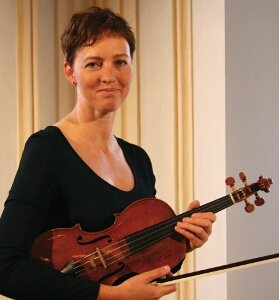
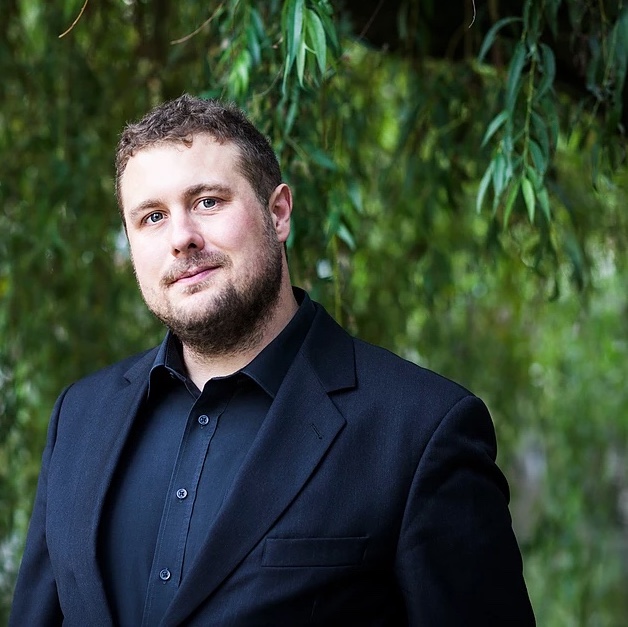
Renate Steinmann, violin and Alex Potter, alto. Photo of Alex Potter by Annelies van der Vegt.

Bass recitative:

Definitely keep the text & translations handy for this one, because this movement contains a wealth of text illustrations in the music. On the word Armen  (the poor) sounds a sorrowful diminished seventh, the word seufzend (sighing) has a rest/sigh in the middle of the word, and more such things happening on the words Ach (sighing) and Klagen (complaining). In contrast to this, a few lines later, the chord on the word Gott (God) sounds open and liberating, after which God himself gets to speak, and the music turns to an arioso (similarly to how Bach does that in his much earlier Cantata 18 when God speaks). At the word heller Sonnenschein (bright sunshine) the light gets turned on in the music too: the harmony changes to C Major.

Tenor aria:

Here we have arrived at the solution/salvation part of the cantata, and so this music is more pleasant, easier to listen to. But Bach is still preaching: there are some crossing (!) lines in the music, and in the middle section, which tells the listeners to be patient (sei geduldig) and Bach stresses the words Kreuz und Not.

With many thanks to Eduard van Hengel and Rudolf Lutz for their explanations of this cantata,

Wieneke Gorter, March 26, 2020.

*more information about this painting and the other objects in Christian V’s Hall in Rosenborg Castle can be found here.

**The best examples of this are cantatas 2, 25, 38, and 121.

Bach’s “most beautiful cantata” connected to a dear memory

11 Sunday Feb 2018

Posted by cantatasonmymind in Bach's life, Cantatas, Chorale cantatas 1724/1725, Leipzig

≈ Leave a comment

Tags

bwv 127, Caroline Stam, Collegium Vocale Gent, Dorothee Mields, Eduard van Hengel, Estomihi, Jan Kobow, Peter Kooij, Philippe Herreweghe, St. Matthew Passion

kloosterkerk
Kloosterkerk, The Hague, The Netherlands, where Caroline Stam sang the aria from Cantata 127 during my mother’s funeral service in 2010. This church is also the site of the monthly cantata services performed by the Residentie Bach Ensembles.

What are your five favorite cantatas? This question was asked this week on Facebook by the Residentie Bach Ensembles, the choirs and orchestra of the monthly cantata services in the Kloosterkerk in The Hague, the Netherlands. A hard question to answer, and I would probably have a different Top Five every month. However, Cantata 127 Herr Jesu Christ, wahr’ Mensch und Gott, today’s cantata from 1725, will probably always be in it. The soprano aria from this cantata is forever linked in my heart and mind with the funeral service for my mother in this same Kloosterkerk in The Hague (read a bit more about that in this post), but having carefully listened to about 120 cantatas over the past two years I am struck by how special this cantata is within Bach’s oeuvre.

I’m not alone in my appreciation of Cantata 127 Herr Jesu Christ, wahr’ Mensch und Gott. Eduard van Hengel calls it an “exceptionally inspired cantata,” 19th century Bach biographer Spitta called it “perhaps the most important” cantata, and it received “the most beautiful” qualification by Arnold Schering as well as Ton Koopman.  

My favorite recording of this cantata is now [update from 2021] Herreweghe’s live recording from January 31, 2021. Find it here on YouTube.

Find the text of Cantata 127 here, and the score here.

There are several reasons why this last Sunday before Lent, or Quinquagesima Sunday or Estomihi Sunday, was such an important day for Bach, and maybe especially in 1725:

  1. This was the day, in 1723, on which he had auditioned for his job in Leipzig, with Cantatas 22 and 23, his first performance ever for the Leipzig congregation and city council. In 1724 he would repeat the same cantatas on this same Sunday.
  2. After this Sunday, his audience (=the Leipzig congregations of the St. Thomas and St. Nicholas churches) would not hear any of Bach’s music until March 25, on the feast of the Annunciation of Mary. No figural music (only chorale singing) was allowed in the Lutheran churches in Leipzig during Lent (the approximately 40 days before Easter), with the exception of the Annunciation. In 1724 this period was 33 days, but in 1725 it was 41 days (from February 11 to March 25). So Bach might have wished to leave his audience with something special, something they would remember for 41 days.
  3. If it is true that Andreas Stübel had been Bach’s librettist for his entire chorale cantata cycle, Bach would have now known that this was the last regular chorale cantata of the cycle for now: Stübel died on January 31, 1725. So perhaps Bach wanted to “go out with a bang” for that reason. It is striking to me that he chooses a bass recitative/arioso with trumpet talking about the Day of Judgement, a similar combination of voice, instrument, and subject matter he uses at the end of the Trinity period in 1723, and again (though less dramatically) at the end of the Trinity period in 1724. Is this Bach’s way of saying: this is the end of an important series?

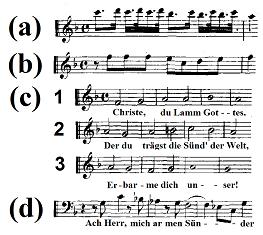
Compared to all opening choruses that had come before, this opening chorus is the most complex and intricate. It is the same as chorale fantasias in previous chorale cantatas in the sense that the six lines of text of the chorale Herr Jesu Christ, wahr’ Mensch und Gott appear in six sections, with the chorale melody (the cantus firmus) in the soprano and trumpet part.  However the orchestra greatly enhances the meaning of Bach’s message by referring to this chorale plus two others. The instrumental groups (recorders, oboes, strings, and continuo) represent four musical themes referring to these chorales. Eduard van Hengel illustrates this extremely well with two diagrams on his website, which I am copying here with his permission:

127-VHengel

(a) The recorders play a dotted rhythm which in both the St. John and St. Matthew Passions illustrates punishment and suffering.
(b) The oboes introduce the “Leitmotiv” that will sound 78 times throughout the entire movement, and stands for the Herr Jesu Christ, wahr Mensch und Gott chorale. Jesus was a true (“wahr”) man and God. Probably Bach’s most important message here.
(c) The strings quote the chorale Christe, du Lamm Gottes, or Luther’s Agnus Dei. It would show up again in the opening chorus of the St. Matthew Passion, which Bach might already have been working on around this time, see my post about Cantata 125 last week.
(d) In the continuo we hear six times the first seven notes of Ach Herr mich armen Sünder, nowadays better known as O Haupt voll Blut und Wunden, one of the main building stones of the St. Matthew Passion. In the seventh section of the opening chorus, when the sopranos are already done singing the chorale melody, Bach repeats this particular theme in the vocal bass line in the choir, as if to make sure that even those who might have missed the quotation earlier would now hear it loud and clear.

Van Hengel adds this extra diagram to show in which measures of the opening chorus the different themes appear:

127-schemaVHengel

At this point Bach might still have been planning to prepare his audiences for a first St. Matthew Passion, not abandoning that plan until much closer to March 30, Good Friday, 1725. Not only are the references in this opening chorus a striking example of that, but also in the extraordinary bass recitative/aria do we see the theme of the Sind Blitze, sind Donner chorus from the St. Matthew Passion appear on the text “Ich breche mit starker und helfender Hand.”

Regular followers of this blog will notice that Bach had been making a study for this bass recitative/aria in the previous three cantatas: combining lines of the chorale text with “free” text in the bass solo of Cantatas 92 and 125, and then using Sind Blitze, sind Donner material and trumpet accompaniment in the bass solo in Cantata 126.

Wieneke Gorter, February 10, 2018, updated February 22, 2020 and February 13, 2021.

* Herreweghe’s album “Jesu, deine Passion” features cantatas 22, 23, 127, and 159. Cantata 23 has exceptionally beautiful choruses and Cantata 22 represents the first introduction of Bach’s version of the “Vox Christi”(voice of Christ) to the Leipzig congregations, considered by some as an intentional preparation for the listeners of what would be to come in the Passions. Cantata 159 on this album is fantastic too, with an unrivaled interpretation by Peter Kooij of the fourth movement, the bass aria “Es ist vollbracht.”

Bach’s most famous duet

17 Sunday Sep 2017

Posted by cantatasonmymind in Cantatas, Chorale cantatas 1724/1725, Leipzig, Trinity

≈ Leave a comment

Tags

Allan Fast, BWV 10, BWV 101, BWV 113, BWV 20, BWV 25, BWV 33, BWV 78, Charles Brett, Eduard van Hengel, Howard Crook, Ingrid Schmithüsen, Joshua Rifkin, Julianne Baird, Peter Kooij, Trinity 14

Julianne Baird
Allan Fast

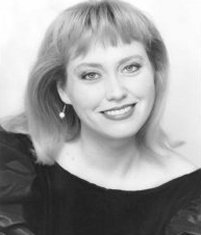
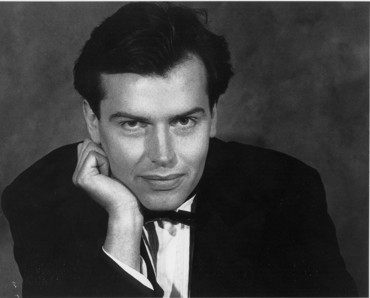
Of this cantata 78 Jesu, der du meine Seele, most people only know the  soprano-alto duet Wir eilen mit schwachen, doch emsigen Schritten. The best rendition of this I have ever heard in my life is by Julianne Baird and Allan Fast on the Rifkin recording from 1988. Listen to it here. Fast passed away in 1995 at age 41.

Bach wrote this cantata for the 14th Sunday after Trinity, September 10, 1724. It was not the first time he wrote a “cute” duet — there are gorgeous examples  in sacred and secular cantatas from his Weimar and Köthen years. However, at the start of his second Leipzig cycle, for the Trinity season of 1724, there are more and more duets in his cantatas.  Alto-tenor duets appear in cantatas 20 and 10, spaced three weeks apart. A series of soprano-alto duets follows on July 9 in cantata 93, a month later in cantata 101, and the next week in cantata 113. Then there’s the terrific tenor-bass duet in cantata 33 on September 3, and this duet on September 10.

This is why I like it so much to listen to Bach’s cantatas in the order he wrote and performed them. I would never have noticed connections such as these otherwise.

The rest of the cantata is wonderful too, especially the opening chorus, which is among the most complex Bach ever wrote. For those who read Dutch, I encourage you to read Eduard van Hengel’s splendid article about this cantata here.

For the entire cantata I prefer Herreweghe’s recording, also from 1988. Soprano: Ingrid Schmithüsen; Alto: Charles Brett; Tenor: Howard Crook; Bass: Peter Kooy. Find the recording here on YouTube. Find the German text and English translations of the cantata here, and the score here.

More listening for this Sunday: cantata 25 from 1723. It has a much bigger orchestra, including many brass players. Find my explanation for that here.

Wieneke Gorter, September 17, 2017, updated September 8, 2023.

About Weekly Cantata

I am a bilingual writer, publicist, choral singer, art and nature lover, happy wife, and blessed mother of two. I started this blog in 2016, inspired by my late mother’s love for Bach’s cantatas. After 23 years in the San Francisco Bay Area, I’m now back in the Netherlands.

If you are on social media, please follow me:

  • Facebook
  • Instagram

Please subscribe!

Please join my readers from all over the world and subscribe to this blog! Simply fill in your email address and you’ll receive an email every time I’ve published a new post. Thank you so much / Vielen Dank / Merci mille fois / 감사합니다 / 谢谢 / ありがとう / Mille grazie / Muchas gracias / Muito obrigado / Takk / Terima kasih / Dankuwel!

Designed with WordPress.com
The Herreweghe altos (Trinity 2 in 1724)

25 Sunday Jun 2017

Posted by cantatasonmymind in Cantatas, Chorale cantatas 1724/1725, Leipzig, Trinity

≈ Leave a comment

Tags

Alex Potter, alto, Bach Collegium Japan, Collegium Vocale Gent, Eduard van Hengel, Phlippe Herreweghe

BWV2_title
The title page of cantata 2 Ach Gott tom Himmel sieh darein, written by Bach’s lead copyist, J.A. Kuhnau. Staatsbibliothek zu Berlin Preußischer Kulturbesitz

Regular readers of this blog know that I have a soft spot for the Herreweghe choir sopranos*. But the alto section of Collegium Vocale Gent is often equally impressive, and they deserve a special mention for their fabulous sound in the cantus firmus of this cantata’s opening chorus. Listen to Herreweghe’s recording of cantata 2 Ach Gott, vom Himmel sieh darein on YouTube.

Find the text of this cantata here (read along so you can see the brilliant text-illustration in the music), and the score (where you can see which instruments double which vocal parts) here.

Bach wrote this cantata for the 2nd Sunday after Trinity, which fell on June 18 in 1724.  As I explained last week, this is the second in a series of four cantatas at the start of Bach’s 1724/1725 Leipzig cycle, and according to the master’s orderly design for these first four chorale cantatas, the cantus firmus of the hymn tune (always the same as the cantata title) is now in the alto part.

This Herreweghe recording is from before the time that soloists joined the choir sections of Collegium Vocale, which means that alto soloist Ingeborg Danz does not sing in this excellent group of one mezzo (Mieke Wouters), two contraltos (Yvonne Fuchs and Cécile Pilorger), and one countertenor (Alex Potter). Also the blend with the instruments doubling this alto part (two oboes and one trombone) is so marvelous it gives me goose bumps. Then again, there aren’t many things in music that move me more than a Bach opening chorus with trombones.

Whenever Bach uses the archaic form of chorale motet as opening chorus, especially when he combines it with the use of the Renaissance/Early Baroque trombone quartet (1 cornetto and 3 trombones), he wants to stress the timeless importance, the authoritative character of a message. In this case the at that point already two centuries old message is the chorale, one of Luther’s own.  For readers who understand German: Eduard van Hengel’s website (in Dutch) has a very insightful overview of the original German text of Psalm 12, the text of Luther’s chorale, and how Bach’s librettist changed that into the text for the cantata.  You can find it here.

Bach alto and tenor arias are at their prettiest, I find, when they are written as a trio sonata, and there is a wonderful example of that in the alto aria Tilg, o Gott in this cantata. It is a plea for help in fighting the “Rottengeister,” or the sectarians amidst the Lutherans. Alto soloist Ingeborg Danz does a terrific job interpreting the text. When the alto starts singing the word Rottengeistern, we see that it was that word we had already heard many times in the triplets of the violin part. As Eduard van Hengel says, it is the “popular easy talk of the sectarians, and that is also the reason why the other two parts don’t have this motive” [to further illustrate the schism].

In his effort to educate his fellow Lutherans (the Leipzig congregations) with his music, Bach wants to make it clear that he’s still preaching by means of the well-known chorale, and uses longer notes for the direct quotation (in music and text) of the chorale in this aria: der uns will meistern.

The best interpretation of the tenor aria Durchs Feuer wird das Silber rein actually appears on another recording, that of Bach Collegium Japan with tenor Gerd Türk. You can listen to that aria here. Here we have arrived at the solution/salvation part of the cantata, and so this music is more pleasant, easier to listen to. But Bach is still preaching: there are some crossing (!) lines in the music, and in the middle section, which tells the listeners to be patient (sei geduldig) and Bach stresses the words Kreuz und Not.

So one wonders: was Bach’s decision to focus on chorales for this 1724/1725 cantata cycle inspired by his need to make things easier for the boy sopranos, or by a wish to explain the theology to the congregations in a way that was more obvious to them than the more complicated, sometimes perhaps too hidden, messages he had so far delivered by way of his music? Or had the City Council or the church elders told him to to this?

*Read more about that in this post.

Wieneke Gorter, June 25, 2017

A quick fix for Easter Tuesday 1724

18 Tuesday Apr 2017

Posted by cantatasonmymind in After Easter, Bach's life, Cantatas, Leipzig

≈ Leave a comment

Tags

Eduard van Hengel, Gustav Leonhardt, Leonhardt, Marius van Altena, René Jacobs

As I explained on Easter Sunday and Easter Monday, after his Passion according to St. John, Bach had no time or energy left to write anything new for the three Easter days in 1724. On Easter Sunday he repeated two Easter cantatas from earlier years. On Easter Monday he used existing music from a Birthday cantata from Köthen, didn’t seem to care too much about the music not illustrating the text, perhaps didn’t even write a new score, we don’t know, because the only manuscript that survived is from 1735, not from 1724.

On Easter Tuesday, he used Die Zeit, die Tag und Jahre macht (BWV 134a), a “serenata” for New Year’s Day, also from Köthen. For the Leipzig church cantata, cantata 134 Ein Herz, das seinen Jesum lebend Weiß he didn’t change any music at all, gave the instrumentalists the parts from Köthen, and also used the score from Köthen, writing the new sacred text under the original secular text.

Listening to this cantata is like listening to one of Bach’s instrumental works, because the text and the meaning of the text don’t really matter in this case. Listen to Gustav Leonhardt’s recording of this cantata, with René Jacobs, countertenor, and Marius van Altena, tenor.

Thanks to Eduard van Hengel, it is easy to see side-by-side how the new text compares to the original:

Serenata for New Year’s Day in Köthen 1719
Cantata 134 for Easter Tuesday in Leipzig 1724
1. Die Zeit, die Tag und Jahre macht,
Hat Anhalt manche Segensstunden
Und itzo gleich ein neues Heil gebracht.

2. Auf, Sterbliche, lasset ein Jauchzen ertönen.
[…] Auf, Seelen, ihr müsset ein Opfer bereiten,
Bezahlet dem Höchsten mit Danken die Pflicht.

1. Ein Herz, das seinen Jesum lebend weiß,
Empfindet Jesu neue Güte
Und dichtet nur auf seines Heilands Preis.

2. Auf, Gläubige, singet die lieblichen Lieder.
[…] Auf, Seelen, ihr müsset ein Opfer bereiten,
Bezahlet dem Höchsten mit Danken die Pflicht.

Many things to be proud of

26 Saturday Nov 2016

Posted by cantatasonmymind in Advent, Cantatas, Leipzig, Weimar

≈ 2 Comments

Tags

Advent, Bach, BWV 61, Christophe Pregardien, Eduard van Hengel, First Sunday of Advent, French ouverture, Harnoncourt, Leipzig, Luther, Nuria Rial, Peter Kooy, Seppi Kronwitter, Sybilla Rubens, Weimar

giotto-entry-into-jerusalem

The Entry into Jerusalem by Giotto, ca. 1305. Fresco in the Scrovengni Chapel, Padua, Italy.

Bach performed this cantata 61 Nun komm der Heiden Heiland in Leipzig on November 28, 1723, as a “rerun” of the first performance in Weimar in 1714. Why did he not write a new cantata? The prevailing scholarly answer is that Bach was giving himself a break from composing in between the three-week frenzy of cantatas 60, 90, and 70 and the new works (including a Magnificat) he was planning for the Christmas days.  I think Bach was proud of his Weimar cantatas, and I believe he wanted to show off the special features in this cantata to his colleagues and to the thousands of Lutherans that he knew would flock to the Leipzig churches on holidays.

I myself am proud of having followed Bach’s cantata writing of 1723 every week for the entire Trinity season. After all this listening and reading, I see a pattern in Bach reviving some of his Weimar cantatas on Leipzig feast days*, and I now look at cantata 61 Nun komm der Heiden Heiland in a new way.

This cantata had already been in my top five because of the moving interpretation of the soprano aria by Seppi Kronwitter (soprano) and Nikolaus Harnoncourt (cello) on the Harnoncourt recording from 1976. My mother loved this aria and played this recording many times, and I have fond memories of listening to it with her.

Harnoncourt-cello

I had always found the bass recitative that precedes it very charming, with the musical illustration of the knocking on the door, but not more than that.  I had seen this recitative in the context of all the Bach cantatas and passions that I knew, and had compared it with other typical Bach “Vox Christi” writing for bass. But those were all written after November 28, 1723.  So now, after having tried to place myself in the shoes of the Leipzig congregations for the entire 1723 Trinity season, I am fully aware that they had not heard a “Vox Christi” at all in any of the cantatas leading up to this one.** And thus I finally realize how it must not have been charming, but truly moving to them to hear this announcement presented in this way, on the first Sunday they started looking forward to the birth of Christ.

In the text of the recitative, Jesus says: “See, I am in front of your door! I’m knocking!” The librettist means the door of the believer’s heart, in which he’s planning to live. The pizzicato in the strings, as well as the staccato and the intervals in the voice part illustrate the knocking, and the dissonances at the beginning only resolve until the final “klopfe an.” The form of this recitative is highly unusual, and perhaps also something Bach wanted to show off in Leipzig.

However Bach’s greatest source of pride was probably the opening chorus of this cantata. To understand this, we need to do a mini music history class. First, in the 4th century, Ambrosius created the hymn Veni Redemptor Gentium, beautifully sung here on this video by Giovanni Vianini, director of the Schola Gregoriana Mediolanensis in Milan, Italy. Then, in 1524, Luther turned that hymn into Nun komm der Heiden Heiland, which sounds like this and which all Lutherans in Bach’s time knew very well.

In Weimar Bach had come into contact with French and Italian court music, and had adopted the habit of writing almost every opening chorus or opening sinfonia of his cantatas as a royal “entrada,” to show off his skills in French ouverture writing as well as to please the Duke.

So now Bach needed/wanted to merge the timeless hymn with a fashionable French ouverture. And the result is stunning. Or, as Eduard van Hengel says: Bach wrote “brilliant fusion” at the age of 29. Listen to this in the recording by Philippe Herreweghe on YouTube (Sybilla Rubens, soprano; Christoph Prégardien, tenor; Peter Kooij, bass).

Find the German text with English translations here and the score here.

The first line of the hymn is sung one voice part at a time, an illustration of the Bible reading for this Sunday: the people greeting the messiah who is riding into Jerusalem. The second line is then sung as a simple four-part hymn, while the instrumental parts keep playing the first part of the ouverture. The third line becomes a mini motet in the fast and happy (“Gai”) middle part of the ouverture, in 3/4. 

The fourth line of text is then again a simple four-part setting on the third part of the ouverture.

For the closing chorale, Bach chose the last two lines of Wie schön leuchtet der Morgenstern as melody. And again he marries the chorale tune beautifully with the instrumental writing.

Wieneke Gorter, November 26, 2016, updated December 1, 2019.

*Read more about this in my post about the feast of St. John the Baptist on June 24, The Visitation on July 2, and last week’s post about cantata 70. Read how proud Bach was of his Weimar cantatas in this post about cantata 12.

** unless they had a really good memory, and were present at Bach’s “audition” in February 1723. There is a Vox Christi in Cantata 22 which he presented at that time, but didn’t repeat in Leipzig until that same time in the church year in 1724.

Bach in Vienna / Robin Blaze going wild

06 Sunday Nov 2016

Posted by cantatasonmymind in 1723 Trinity season special series, Cantatas, Leipzig, Trinity

≈ Leave a comment

Tags

24th Sunday after Trinity, Bach Collegium Japan, BWV 105, BWV 60, Eduard van Hengel, Gerd Türk, Jason Victor Serinus, John Eliot Gardiner, Masaaki Suzuki, Peter Kooy, Robin Blaze, San Francisco Classical Voice, St. John Passion, St. Matthew Passion, Trinity 24

kokoschka_pieta

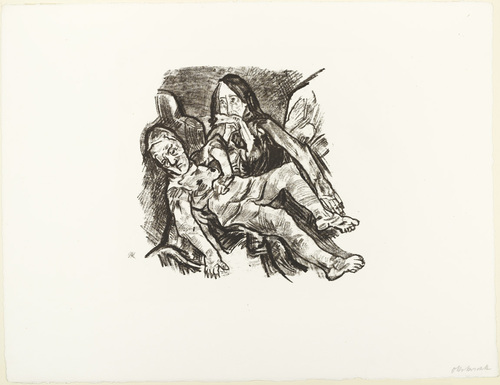
Pietà (It is enough) / Pietà (Es ist genug), plate 11 from a series of 11 lithographs O Ewigkeit, Du Donnerwort by Oskar Kokoschka, 1914/1916. Museum of Modern Art, New York.

In Vienna, they were all talking about Bach’s cantata 60 O Ewigkeit, Du Donnerwort. The astonishing harmonization in the closing chorale as well as the structure of a “dialogue” between Fear (alto) and Hope (tenor) made it one of the most unusual among his cantatas, and apparently something worth discussing. In the first half of the 20th century, that is. In 1935  Alban Berg used the “modern” harmonization from the closing chorale Es ist genug in the final movement of his violin concerto To the Memory of an Angel–an instrumental Requiem for Manon Gropius, daughter of Bauhaus architect Walter Gropius and Mahler’s widow, Alma Schindler.

Several years before, the same Alma Schindler had a short-lived affair with Czech painter Oskar Kokoschka. After they broke up, Kokoschka processed his torment by making a series of 11 lithographs to illustrate the cantata. The dialogue between Fear (the alto) and Hope (the tenor) in the cantata became a dialogue between Alma and himself, in pictures only: click here to see the entire series. Many thanks to Eduard van Hengel for pointing this out.

Listen to Bach Collegium Japan’s recording of this cantata on Spotify, with countertenor Robin Blaze and tenor Gerd Türk. Find the German text with English translations here, and the score here.

Bach wrote this cantata 60 O Ewigkeit, Du Donnerwort for the 24th Sunday after Trinity in 1723, the Sunday normally linked to the Gospel story of the Raising of Jairus’ Daughter. However, in 1723–as now in 2016–this day fell on the first Sunday in November: All Hallows Sunday, All Saints Sunday, however you want to call it, but the Sunday on which the congregation would have commemorated all who had passed away that year. None of the commentaries I have read mention this, but I think it is important, because I feel this cantata is much more about how horrible it might be to die, or the thoughts one has when sitting at a loved one’s deathbed, than it is about the Raising of Jairus’ Daughter.

Of all the recordings I listened to, I like Bach Collegium Japan’s the best, because of Robin Blaze’s interpretation of the alto part. I always love his voice, but he is usually quite understated in his singing. He explains this well in this interview on San Francisco Classical Voice. I sometimes wish he would indeed sing with Kate Bush and “let go” a little, so I was thrilled to hear that in this cantata he actually does go a bit wild, for his standards at least, and that Suzuki lets him do it. His conviction in the opening chorale is already terrific (also note the wonderful blend with the horn doubling his part), but the way he sings the text “Und martert diese Glieder” (and tortures these limbs) in movement 2 is amazing, spot-on, and unrivaled by any others I listened to.

As we have seen before in the course of these 1723 Trinity Season cantatas (read for example my post on cantata 105) there are elements of Bach’s passions already present in this cantata. The agitated singing of the tenor in the stunningly beautiful duet (movement 3) resembles the Ach, mein Sinn! tenor aria from the St. John Passion. The repeated tremolo in the violins in movement 1 is something Bach often uses to illustrate fear, and this will show up again in the tenor arioso O Schmerz! Hier zittert das gequälte Herz in his St. Matthew Passion.

For further reading, including all the amazing harmonies in this piece which impressed the Viennese composers of the early 20th century,  as well as other insights, I can highly recommend Gardiner’s journal entry about this cantata (start reading on page 5).

Wieneke Gorter, November 6, 2016, updated November 21, 2020

Children’s stories

03 Saturday Sep 2016

Posted by cantatasonmymind in 1723 Trinity season special series, Bach's life, Cantatas, Leipzig, Trinity

≈ 1 Comment

Tags

according to Lutheran Church year, Bach, Bach-Archiv Leipzig, BWV 138, cantatas, Collegium Vocale Gent, Damien Guillon, Deborah York, Dorothee Mields, Eduard van Hengel, Hana Blazikova, Ingeborg Danz, Leipzig Bach Festival, Lutheran Church year, Mark Padmore, Peter Kooy, Phlippe Herreweghe, Thomas Hobbs, Trinity 15

Bergrede_Brueghel

The Sermon on the Mount, oil on copper painting by Jan Brueghel the Elder, 1598

In 1723 Bach wrote cantata 138 Warum betrübst du dich, mein Herz.  Again I prefer Herreweghe’s interpretation, but it’s not so easy to choose between his recording from 1998 (with soloists Deborah York, Ingeborg Danz, Mark Padmore, and Peter Kooij) and the one from 2013 (with soloists Hana Blazikova, Damien Guillon, Thomas Hobbs, and Peter Kooij). Update from 2021: there now is an extremely inspired Herreweghe recording with all my favorite soloists (Dorothee Mields, Alex Potter, Guy Cutting, Peter Kooij), recorded live at De Singel in Antwerp on Sunday January 31, 2021 (during the Covid19 pandemic, so without audience). Find it here.

Listen to the entire 1998 recording on Youtube or listen to one long track of the 2013 recording with Hana Blazikova and Damien Guillon on YouTube. Please consider supporting the artists by purchasing the 1998 version (used copies available only) or the 2013 version  on Amazon.

Find the text, based on the Sermon on the Mount, of this cantata here, and the score here.

It is often not immediately clear what a Bach cantata is about, what the text means, or what Bach wanted to convey with it. In an absolutely wonderful interview (with excellent English subtitles) for the Leipzig Bach Festival, soprano Dorothee Mields says that even she, as a native German speaker, often feels the need to look at English translations, go back to the Bible texts, and read more about the subject, because she didn’t necessarily recognize the text from her children’s bible.

The image of the children’s bible stuck with me since first watching the interview seven months ago. And when listening to the cantata for this Sunday, I had to think of it again, because the choice of words in this cantata is very moving, but at the same time so simple, that it is almost as if the librettist is speaking to children. Listen, for example, to the text the soprano sings in the third movement:

Nur ich, ich weiss nicht, auf was Weise ich armes Kind mein bisschen Brot soll haben; Wo ist jemand, der sich zu meiner Rettung findt?

(It is just that I, poor child, don’t know how I should receive a bit of bread; Where is the person who will save me?)

Eduard van Hengel hilariously remarks that it reminds him a bit of Calimero (a popular children’s cartoon about a little chick, which aired in The Netherlands, Belgium, France, and Italy in the early 1970s. Watch this first episode to get an idea).

I wonder who the librettist for this cantata was. I imagine a different person than who wrote texts for the last few cantatas. Last week, the Bachs possibly had their house full with the families of Anna Magdalena’s brother and sisters, visiting because the men, all trumpet players, were needed for two cantatas. Perhaps one of the visitors had talent for entertaining the children with stories and making up poems on the spot? Did Bach ask this person to write the libretto for this cantata? Or was his own head still filled with children’s stories and did he write the text himself?

These are all just assumptions and we don’t know for sure if last week’s extra players were the relatives of Bach’s wife, but my potential movie script is getting better and better …

There’s of course more to this cantata than the charming texts. Musically, as far as the form and structure is concerned, this cantata is unique within this first cycle of Leipzig cantatas. Bach takes a chorale as the base for the cantata, yet it is not at all the same as his series of chorale cantatas from the 1724/1725 cycle. In those later chorale cantatas, he always uses all the verses and keeps a strict structure of one soloist per movement. In this cantata 138, he only uses three verses of the chorale, and gives the cantata a very free form, with a different number of soloists for each movement. He is obviously experimenting. And I wonder again: might he have been influenced by his visitors from last week? Did he have discussions about his compositions with his colleagues? And how is this playing around with the form of the cantata related to using a different librettist or no librettist? Did he not want to bother a professional writer with his experimenting?

There is one more–for me at least–exciting aspect to this cantata: when I first started listening to it, I discovered that I already knew the bass aria. Same singer (Peter Kooij) and same music, but a different text, because I had until then only heard this as the Gratias from Bach’s Mass in G Major, BWV 236 from the mid 1730s. Listen to both, and marvel at Bach’s talent for subtle recycling.

Wieneke Gorter, September 3, 2016, updated September 19, 2020 and February 13, 2021.

← Older posts

Recent Posts

  • “Missa Miniatura” by CONTINUUM/Elina Albach Even More Moving in 2025
  • Bachfest Leipzig 2025
  • Bach Cantatas for Christmas – 1724 and 1734 editions
  • Fourth Sunday of Advent – more insight into Cantata 62 helped me better understand Bach’s Christmas Oratorio
  • Saint Ambrose and Luther in Milan – Second Sunday of Advent

Archives

  • August 2025
  • July 2025
  • December 2024
  • November 2024
  • June 2024
  • January 2024
  • December 2023
  • October 2023
  • September 2023
  • August 2023
  • April 2022
  • February 2022
  • January 2022
  • December 2021
  • November 2021
  • June 2021
  • May 2021
  • April 2021
  • February 2021
  • January 2021
  • December 2020
  • November 2020
  • October 2020
  • September 2020
  • August 2020
  • July 2020
  • May 2020
  • April 2020
  • March 2020
  • February 2020
  • January 2020
  • December 2019
  • November 2019
  • May 2018
  • April 2018
  • March 2018
  • February 2018
  • January 2018
  • December 2017
  • November 2017
  • October 2017
  • September 2017
  • August 2017
  • July 2017
  • June 2017
  • May 2017
  • April 2017
  • March 2017
  • February 2017
  • January 2017
  • December 2016
  • November 2016
  • October 2016
  • September 2016
  • August 2016
  • July 2016
  • June 2016
  • May 2016
  • April 2016
  • March 2016
  • February 2016
  • January 2016

Enter your email address to follow this blog and receive notifications of new posts by email.

Join 338 other subscribers

Categories

  • 1723 Trinity season special series
  • Advent
  • After Easter
  • Ascension
  • Bach's life
  • Cantatas
  • Chorale cantatas 1724/1725
  • Christmas
  • Easter
  • Epiphany
  • Following Bach in 1725
  • Köthen
  • Leipzig
  • Septuagesima
  • Travel
  • Trinity
  • Weimar

Meta

  • Create account
  • Log in
  • Entries feed
  • Comments feed
  • WordPress.com

Website Built with WordPress.com.

  • Subscribe Subscribed
    • Weekly Cantata
    • Join 158 other subscribers
    • Already have a WordPress.com account? Log in now.
    • Weekly Cantata
    • Subscribe Subscribed
    • Sign up
    • Log in
    • Report this content
    • View site in Reader
    • Manage subscriptions
    • Collapse this bar
 

Loading Comments...