Weekly Cantata

Weekly Cantata

Tag Archives: Thomas Hobbs

Blogging from Bruges

27 Saturday Jan 2018

Posted by cantatasonmymind in Cantatas, Chorale cantatas 1724/1725, Leipzig, Septuagesima

≈ 1 Comment

Tags

Alex Potter, alto, cantatas, Dorothee Mields, Ignace Bossuyt, Paul Agnew, Peter Kooy, Phlippe Herreweghe, Septuagesima, soprano, Thomas Hobbs
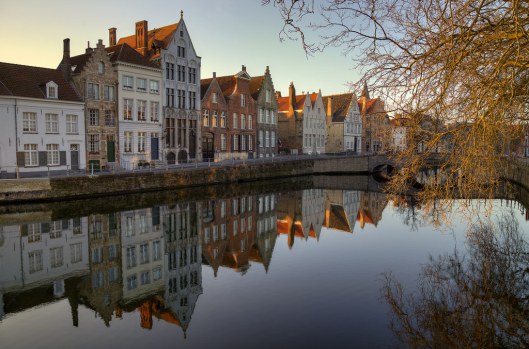
Brugge

I had the privilege of shaking hands with Philippe Herreweghe around midnight on Friday. It was pure coincidence, or serendipity, if you will* and he has no idea who I am, but it was a magical end to an already exciting day at the Bach Academy in Bruges, Belgium.

On that Friday I attended an informative and inspiring lecture by Bach expert Ignace Bossuyt during the day (more about that in a different post), heard a fabulous Bach cantata concert by Collegium Vocale/Herreweghe in the evening, and got to witness a very entertaining interview with Herreweghe late at night. The concert featured Cantatas 186 and 146. It was a feast to see Herreweghe at work, focusing on phrasing and text expression. It was also very enjoyable to experience the rich, well-blended string sound in the orchestra, the terrific oboe playing, the signature sound of the sopranos and altos of Collegium Vocale, and the wonderful work by all four soloists. Bass Peter Kooij stood out for his excellent diction and exquisite tone, tenor Thomas Hobbs for his stage presence and clear voice, and countertenor Alex Potter for his marvelous job in the “Ich und Du” aria from Cantata 146. As always I consider it a blessing to see and hear Dorothee Mields sing. The combination of the sound of her voice and her pronunciation and understanding of the text is something very special and beautiful to behold. I feel lucky that I will get to hear this group of musicians two more times this week: today (Sunday) again in Bruges, and Tuesday in Paris.


Time to talk about the cantata for today now: Cantata 92 Ich hab in Gottes Herz und Sinn for Septuagesima Sunday (the third Sunday before Lent), first performed on Sunday January 28 in 1725. For this cantata, Bach had received an extremely long text from his librettist. We don’t know for sure who Bach’s librettist was at this time. Scholars believe it might have been Andreas Stübel, poet, theologian, and emeritus assistant principal of the St. Thomas School. If it was indeed Stübel, he would pass away on January 31, and might already have been ill around the time Bach was working on this Cantata 92. So while there normally might have been a discussion about the libretto between Bach and Stübel, this time Bach might have had to work with what he had.

The result is a creative but extremely long bass recitative (movement 2), and a rather long cantata in total: nine movements in all. Bach had created such lengthy cantatas at the start of his career in Leipzig, during the summer of 1723, but never before during this chorale cantata cycle of 1724/1725.

This Cantata 92 Ich hab in Gottes Herz und Sinn contains arguably the most operatic tenor aria Bach ever wrote, even crazier than the aria from Cantata 81, an equally dramatic bass aria, and an absolutely lovely soprano aria. But what moves me the most in this cantata is the alto chorale with oboe accompaniment (movement 4). It gives me the good kind of stomach ache every time I hear it. On most recordings this chorale gets sung by all choir altos, not just the alto soloist.

Because I appreciate the bass soloist expressing the drama in his recitative and aria as much as the tenor does in his, my favorite “overall” recording of this cantata is the one by Bach Collegium Japan. Find my playlist here on Spotify. With Yukari Nonoshita, soprano; Jan Kobow, tenor; and Dominik Wörner, bass.

A good alternative on YouTube is Koopman’s recording of this cantata. With Deborah York, soprano; Paul Agnew, tenor; and Klaus Mertens, bass. I always love to hear Paul Agnew in operatic arias like this one.

Please find the text of Cantata 92 here, and the score here. And please consider supporting the artists by purchasing the recording you like best:

Bach Collegium Japan recording of Cantata 92 on Amazon

Koopman recording of Cantata 92 on Amazon


Wieneke Gorter, January 28, 2018.

* A friend and I were sitting in the back of a tiny cafe when Herreweghe and his wife walked in. He went over to greet some fans in the front of the restaurant, then sat down to eat. While I was contemplating what I would say to them later, once I would be on my way out of the restaurant, Herreweghe got up to use the restroom and walked right by our table. My friend asked him if he would welcome even more compliments, and then we shook hands with him and told him how much we had enjoyed the concert. It didn’t feel like the right time to tell him about my blog, and I was too star struck to think of mentioning that I would be attending two of his other concerts this week.


Cantata 62: one of my favorite opening choruses and a magnificent bass aria

02 Saturday Dec 2017

Posted by cantatasonmymind in Advent, Bach's life, Cantatas, Chorale cantatas 1724/1725, Leipzig

≈ Leave a comment

Tags

Advent, Bach, chorale cantata, Christmas, Christophe Pregardien, Damien Guillon, Grace Davidson, Harry van der Kamp, Marcel Ponseele, oboe, Peter Kooy, Thomas Hobbs

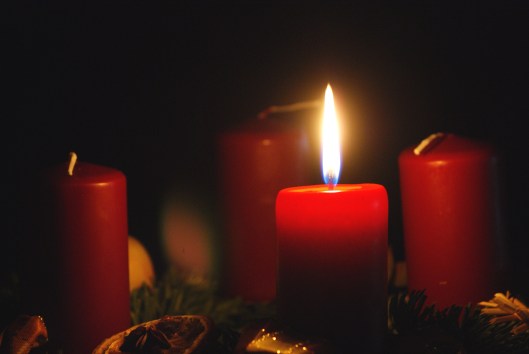
Adventskranz 1. Advent

I don’t know if it is because the oboes already announce the chorale melody in the instrumental part of this opening chorus, or because of the overall Advent sparkle, but I have always found the first movement of Cantata 62 Nun komm der Heiden Heiland one of the most beautiful of all Bach’s cantata opening choruses. I especially cherish the Herreweghe recording from 1997. Find that recording here on YouTube. Soloists are Sibylla Rubens, soprano; Sarah Connolly, alto; Christoph Prégardien, tenor; and Peter Kooij, bass. This cantata also features an impressive recitative and aria for bass.

I remember an anecdote from my mom’s time as a member of the Twents Bachkoor, somewhere in the early 1980s. Bass soloist Harry van der Kamp showed up for an Advent concert, thinking he was coming to sing the other cantata with the same Nun komm der Heiden Heiland title, Cantata 61, which includes a beautiful recitative for bass (discussed on this blog here), but nothing really challenging for bass otherwise. He found out during the warm-up rehearsal that it was in fact 62. He did a fabulous job and part of my admiration for him stems from witnessing that as an audience member during that concert.

In the bass recitative, listen for Bach’s musical illustration of the words “laufen” (walking — upwards sequence), “Gefall’ne” (fallen — 7th down), and “heller Glanz” (bright luster — a sparkling highest note).

Find the text of Cantata 62 here, and the score here.

Bach wrote this cantata for the first Sunday in Advent in Leipzig in 1724, as part of his series of chorale cantatas of 1724/1725. For nine and a half months, starting on June 11, 1724, he would write every cantata according to this same template: the opening movement is a chorale fantasia on the first stanza of an existing Lutheran hymn or chorale, with the tune appearing as a cantus firmus. The last movement has the last stanza of the same hymn as text, in a four-part harmonization of the tune. The text of those choral, outer movements was used verbatim, while the text of the solo, inner movements was paraphrased, but still based on the inner stanzas of the same hymn.

I have been following all these chorale cantatas in the order they were written in 1724 on this blog. If you missed it, you can start reading here. If you subscribe to this blog (on the left-hand side of this text when reading on a desktop computer, or at the bottom of this text when reading on a smartphone) you will receive an email every time I have posted a new story.

There is also a wonderful live performance by Herreweghe of this cantata on YouTube, albeit with different soprano, alto, and tenor soloists (Grace Davidson, soprano; Damien Guillon, countertenor; Thomas Hobbs, tenor), but again with Peter Kooij singing bass, and again Marcel Ponseele playing first oboe. It was recorded in the St. Roch Church in Paris in 2015 and you can find it here on Youtube. The camera direction in the beginning is a bit strange: perhaps the TV director didn’t know the piece or didn’t have the score in front of her/him, because the camera is on the altos when the sopranos have an entrance, and on the back of the basses and tenors when the altos have an entrance, but later on it gets better, and it is a wonderful selection of Advent and Christmas cantatas they present there in that concert.

The CD recording from 1997  is part of a very good album, which also includes the two other Advent cantatas: Cantata 36 Schwingt freudig euch empor from 1731 (more about this in the next few weeks) and Cantata 61 Nun komm der Heiden Heiland from 1713 (discussed here on this blog). Please consider supporting the artists by purchasing this album in its reprint from 2014. Or purchase the box from 2010, which also includes two CDs with Christmas cantatas.

Wieneke Gorter, December 2, 2017.

First Sunday after Easter 1724

23 Sunday Apr 2017

Posted by cantatasonmymind in After Easter, Bach's life, Cantatas, Leipzig

≈ Leave a comment

Tags

Alex Potter, Bach, cantatas, corno da tirarsi, Jos van Veldhoven, Peter Kooy, Thomas Hobbs, tromba da tirarsi

caravaggio_-_the_incredulity_of_saint_thomas

The Incredulity of Saint Thomas by Caravaggio, 1601-1602, Sanssouci Palace, Potsdam, Germany

In the past two weeks I ran out of time to work on this blog because of being sick, performing concerts with California Bach Society, and being on a trial jury for the first time since becoming a United States citizen in 2011. So this post for the First Sunday after Easter in 1724 is post-dated, and short, but contains lots of information to learn more about this beautiful cantata.

Previously in 1724: Bach “premiered” his Passion according to St. John on Good Friday, April 7, 1724. Then he ran out of time and energy and, without too much care for detail and text illustration, created cantatas out of existing music for Easter Monday and Easter Tuesday of that year.

This means that the first new composition he wrote after the St. John Passion was this cantata 67 Halt im Gedächtnis Jesum Christ (keep thinking of Jesus Christ), based on the Gospel text of Jesus appearing to his disciples. A famous cantata, already known and admired in the early 19th century, especially because of the dramatic fourth movement for choir and bass, which Bach would later transform into the Gloria of his Missa Brevis in A (BWV 234).

For the background of this cantata I will refer you to the experts, in this 15-minute video by the Netherlands Bach Society, published within their AllofBach series. The video is in Dutch, with English subtitles. It talks about Bach including a flute (not a recorder!) for the first time in a cantata, the meaning behind the text, and the use of the slide-trumpet “corno da tirarsi.”

Listen to and watch their performance here, find the text here, and find the score here. The Netherlands Bach Society, conducted by Jos van Veldhoven, with countertenor Alex Potter, tenor Thomas Hobbs, and bass Peter Kooij.

Wieneke Gorter, April 30, 2017.

New Year’s treasures

31 Saturday Dec 2016

Posted by cantatasonmymind in Cantatas, Christmas, Leipzig

≈ Leave a comment

Tags

Barbara Schlick, BWV 122, BWV 248/4, Damien Guillon, Dorothee Mields, Feast of the Circumcision, Howard Crook, Jubeljahr, Mark Padmore, New Year's Day, Peter Kooij, Sarah Connolly, Sunday after Christmas, Thomas Hobbs, Vasiljka Jezovsek

newyearseve
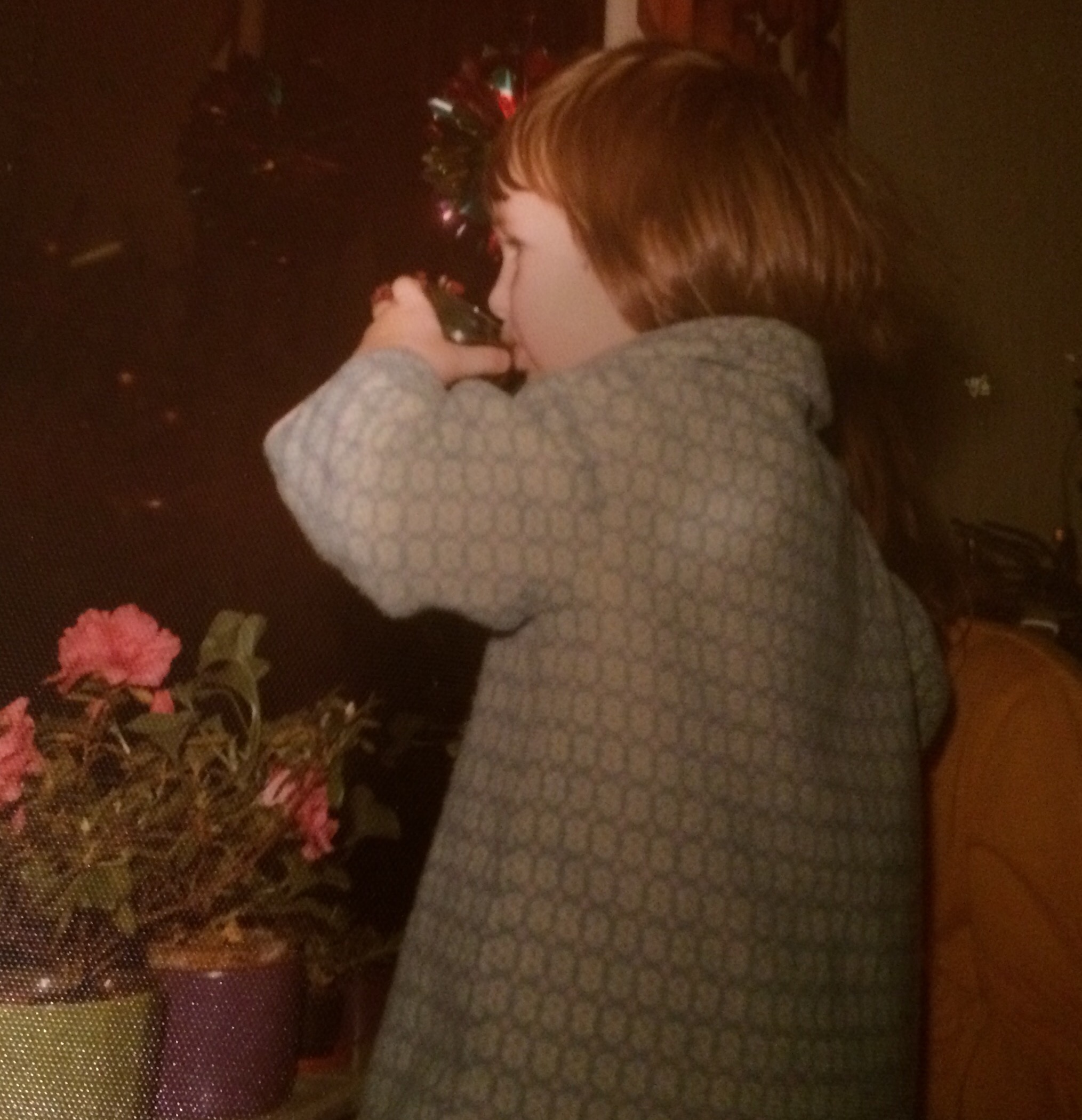
the author on New Year’s Eve, 1970s

There are many Bach cantatas for New Year’s Day, or the Feast of the Circumcision and naming of Jesus. Apart from the fourth cantata of the Christmas Oratorio I discuss here, those are: BWV 190 from 1724, BWV 41 from 1725, BWV 16 from 1726, and BWV 171 from 1729. They are all impressive, usually with trumpets and timpani in the orchestra, but rarely get performed anywhere. I hope that will change sometime.

Today is also the first Sunday after Christmas. If that day did not fall on Third Christmas Day, Bach would write a cantata for that too, as you can see in this overview. It means there is an overwhelming treasure trove of cantatas to choose from today.

The ones I like best are cantata 122 Das neugeborne Kindelein (for the first Sunday after Christmas in 1724) and the fourth cantata from the Christmas Oratorio Fallt mit Danken, fallt mit Loben (for New Year’s Day or the Feast of the Circumcision and naming of Jesus in 1735).

Listen to Herreweghe’s recording of cantata 122 Das neugeborne Kindelein on YouTube. It’s only 14 minutes long, but contains so many jewels. With soprano Vasiljka Jezovsek (stunning performance in the recitative), alto Sarah Connolly, tenor Mark Padmore, and bass Peter Kooij. I love every part of this cantata, but as a child I was most excited about the choruses: they still sounded like pretty Christmas music, but talked about the New Year!

Find the text of cantata 122 here, and the score here.

For Herreweghe’s interpretation of the 4th cantata from the Christmas Oratorio Fallt mit Danken, fallt mit Loben you have two options: There is a beautiful CD recording from 1989, which you can purchase here. Soloists on this recording are soprano Barbara Schlick, tenor Howard Crook, and bass Peter Kooij.

There is also a wonderful DVD recording from 2013, with soloists Dorothee Mields, countertenor Damien Guillon (not singing in part 4), tenor Thomas Hobbs, and bass Peter Kooij. I can highly recommend watching this. This DVD is available at ArkivMusic, Barnes and Noble, and can also be streamed on Amazon Prime.

Find the text of cantata 4 from the Christmas Oratorio here, and the score here.

I love this part of the Christmas Oratorio the best, because of the moving bass-soprano duet, the trio sonata disguised as a tenor aria with two violins, the famous echo-aria for soprano, and of course because it has horns in the orchestra! The presence of horns in the orchestra is the reason this cantata is often skipped in concert performances of the Christmas Oratorio. The entire oratorio is a bit too long for a regular concert program, there are no horns required in any of the other five parts, and natural horn players are expensive and hard to find, so presenters can save on production costs by not hiring any horn players at all.

By the way: Bach never intended for the Christmas Oratorio to be performed as a whole. He wrote each cantata for the six consecutive church Holidays in 1734/1735: First Christmas Day, Second Christmas Day, Third Christmas Day, New Year’s Day (or Feast of the Circumcision), Sunday after New Year, and Epiphany, and the separate cantatas were performed during the church services on those days. The music for the oratorio was largely based on existing choruses and arias from secular works. In this case of the fourth cantata, the opening chorus, soprano aria, and tenor aria all come from BWV 213 Laßt uns sorgen, laßt uns wachen aka Hercules at the Crossroads written in 1733 for the 11th Birthday of Prince Friedrich Christian, son of the Elector of Saxony.

I wish you a good 2017!

Wieneke Gorter, December 29, 2016, links updated December 28, 2019.

Second Christmas Day

26 Monday Dec 2016

Posted by cantatasonmymind in Cantatas, Christmas, Leipzig

≈ Leave a comment

Tags

Bach, BWV 40, Christmas, Christmas 2, Christmas Oratorio, Damien Guillon, Harnoncourt, horn, Leipzig, Max van Egmond, Peter Kooij, Philippe Herreweghe, René Jacobs, Thomas Hobbs

adoration_of_the_shepherds_1622
Adoration of the Shepherds by Dutch painter Gerard van Honthorst, 1622. Pommersches Landesmuseum (Pomerania State Museum), Germany.

In Bach’s time, there were three Christmas Days. In many countries in Europe there are still two Christmas Days. In the Netherlands, a country so small that you can easily travel to all your relatives within a day, people are expected to visit one side of the family on Christmas Day, and the other side on Second Christmas Day. Or at least that is how I remember it.

Of course, you could continue listening to the Christmas Oratorio, via the links for either Harnoncourt’s recording or Herreweghe’s recording I gave you yesterday. The second cantata is a charming one, evoking the pastoral scene of the shepherds on the field. But this composition has never grabbed or moved me the way the first or fourth cantata of the Christmas Oratorio do. The cantata I am eager to share with you today is cantata 40 Darzu ist erschienen der Sohn Gottes, written for Second Christmas Day in 1723.

The interpretation I grew up with is Leonhardt’s recording from 1974, with countertenor René Jacobs, tenor Marius van Altena, and bass Max van Egmond. There is a good live recording by Herreweghe of this cantata from a concert in Paris in 2015. You can watch this here on YouTube. Soloists are Damien Guillon, alto; Thomas Hobbs, tenor; and Peter Kooij, bass.

Find the text here, and the score here.

This cantata is really Christmas for me. I don’t know exactly why: perhaps because on Second Christmas Day we didn’t have to go to church, so I associate it with a more relaxed, unscheduled day. Perhaps because of the horns in the orchestra in the opening chorus and the tenor aria (I have a soft spot for horns or trombones in Bach cantatas), because of the impressive “Höllische schlange” (Snake of Hell) bass aria (yes, I have a soft spot for bass arias too), or because of the closing chorale that is so pretty, going up so high on the text Wonne, Wonne über Wonne! Er ist die Genadensonne. (Delight, delight upon delight! He is the son of mercy.) I sang this cantata in a Bach cantata reading group mid November this year, sitting directly behind the horns, standing next to one of my best friends, and I couldn’t believe my luck I got to sing this closing chorale.

Wieneke Gorter, December 26, 2016, updated December 24, 2019.

Our Christmas Morning

24 Saturday Dec 2016

Posted by cantatasonmymind in Cantatas, Christmas, Leipzig

≈ 2 Comments

Tags

Bach, BWV 248/1, Christmas, Christmas 1, Christmas Oratorio, Damien Guillon, Dorothee Mields, Harnoncourt, Leipzig, Peter Kooij, Phlippe Herreweghe, Thomas Hobbs, timpani, trumpet

nativity_c_1490
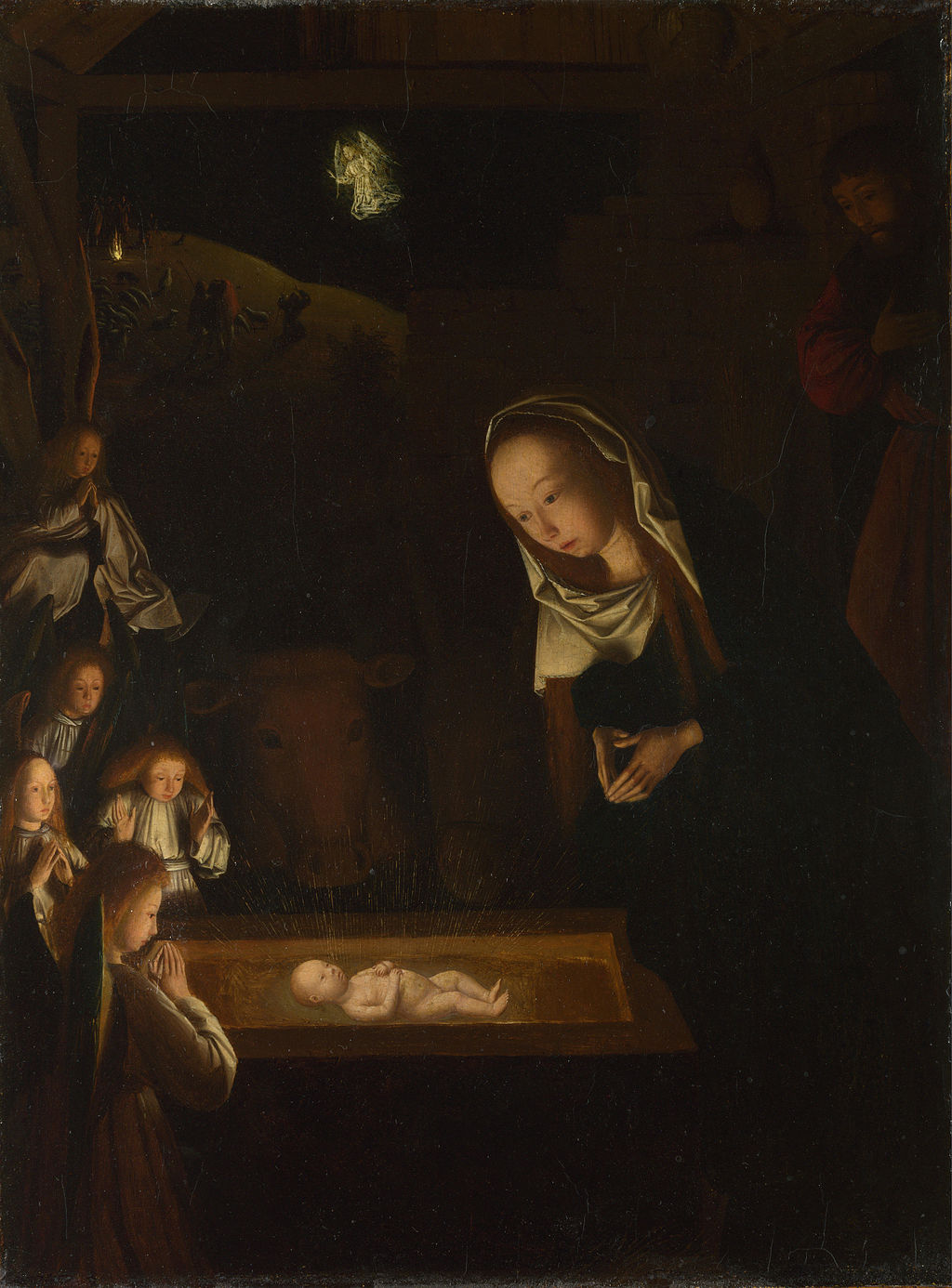
Nativity at Night by Dutch painter Geertgen tot Sint Jans, ca. 1490. National Gallery, London.

Growing up in the Netherlands, my sister and I did not expect gifts at Christmas, and certainly not under the tree. We had already received our gifts on the eve of St. Nicholas, December 5. At the dinner with relatives on Christmas Day, we would maybe receive one book, or a small piece of jewelry. It would be well coordinated between mother and grandmother that this would amount to only one present per person, and it would be next to our plate when we arrived at the well-dressed Christmas dinner table.

However, Christmas Morning was something we immensely looked forward to. The Christmas Morning breakfast was the most wonderful breakfast of the year, even better than the Easter breakfast. We would have crispy rolls from the oven, artisan sliced ham, boiled eggs, cheese, jams, and of course the sweet breakfast sprinkles American kids can’t believe Dutch kids get to eat for breakfast. And Kerststol, or Christmas Stollen, a fruit bread with an almond paste filling.

There was an unwritten rule that my parents would set out the breakfast (including my father carving a bell or Christmas tree out of the butter) and us kids would stay in bed until my mom would sound the special alarm. And the special alarm was: Harnoncourt’s recording of the opening chorus of Part One of Bach’s Christmas Oratorio at full volume, the sound of the timpani rocking the whole house. I usually play the Herreweghe recording in my own house nowadays. You can find that here on YouTube.

In 2012, Herreweghe’s performance of Bach’s Christmas Oratorio in Brussels was recorded and released on DVD. It is a beautiful registration, and has some of my favorite soloists: Dorothee Mields, soprano; Damien Guillon, alto; Thomas Hobbs, tenor; and Peter Kooij, bass. For my readers in Germany, and countries not to far from there, you can buy the regular DVD here, or the blu ray version here. For readers in the USA, if you have Amazon Prime, you can stream it here.

Read more about the history of Christmas in Europe and the USA in this extremely interesting article and join me again tomorrow for a cantata for Second Christmas Day.

Wieneke Gorter, December 24, 2016, links updated December 24, 2019.

Tenor drama

16 Sunday Oct 2016

Posted by cantatasonmymind in 1723 Trinity season special series, Cantatas, Leipzig, Trinity

≈ Leave a comment

Tags

Bach, Damien Guillon, Dorothee Mields, John Eliot Gardiner, La Petite Bande, Leipzig, Paul Agnew, Peter Kooy, Phlippe Herreweghe, St. John Passion, Thomas Hobbs

bwv109_tenormanuscript

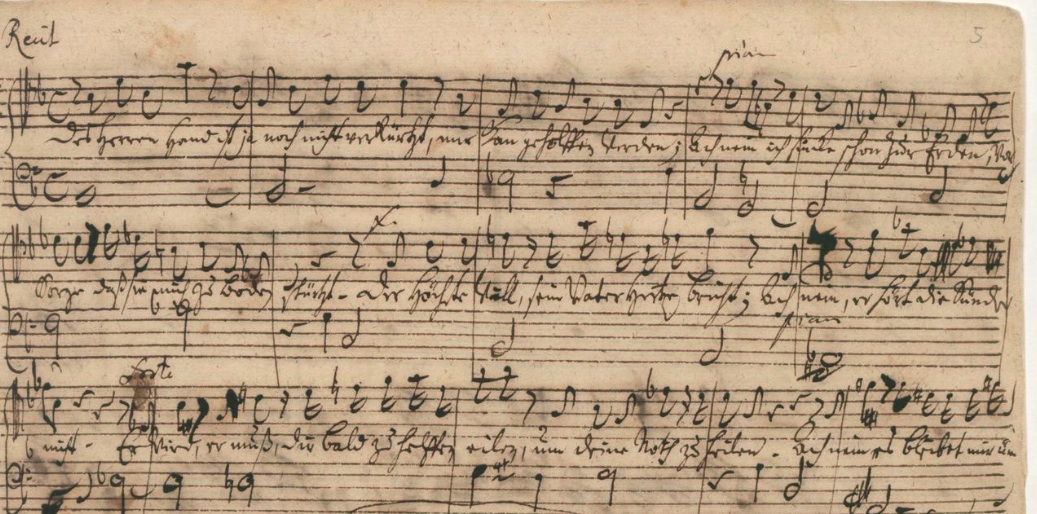
Excerpt from the start of the tenor recitative from cantata 109, with “piano” and “forte” marked. Staatsbibliothek zu Berlin, Preußischer Kulturbesitz

For this 21st Sunday after Trinity, Bach wrote cantata 109 Ich glaube, lieber Herr, hilf meinem Unglauben! in 1723.

For overall best performance, I recommend Herreweghe’s recording from 2013, with counter-tenor Damien Guillon and tenor Thomas Hobbs.

Listen to this recording on YouTube. To support the artists, please consider purchasing the entire album on Amazon — a good deal if you like this blog, as it also includes three cantatas I discussed here earlier this year: cantata 44, cantata 73, and cantata 48.

Read the German texts with English translations here, and find the score here.

I love Herreweghe’s interpretation of  the opening and closing chorus as well as Damien Guillon’s singing in the alto recitative and aria.

However, there is an extremely dramatic and unusual recitative and aria for tenor in this cantata which I like better on the Gardiner recording. The recitative is unusual because Bach has two voices/persons speak: the uncertain/fearful voice, marked “piano” in his manuscript (see picture above), and the certain/faithful voice, marked “forte” in the manuscript. According to Gardiner, this feature never appears anywhere else in Bach’s recitative writing.

Just as with the “Storm on the lake” aria from cantata 81, only Gardiner and the fabulous Paul Agnew are able to properly convey the drama of the text and context of this tenor recitative and aria. If at first you think this might be a bit over the top, it is most probably exactly what Bach had in mind. A bit of opera to properly bring out the agony of the text.

Listen to these two movements by Gardiner and Agnew on YouTube: the recitative here, and the aria here.

Bach might have been preparing the Leipzig congregations for the St. John Passion he was planning for Good Friday 1724, as this tenor aria is very similar in dramatic intensity and music to the Ach mein Sinn aria from that passion. Those who know the St. John Passion well might hear other resemblances in this cantata 109.


Wieneke Gorter, October 16, 2016

The Opening Chorus’ Silver Lining

01 Saturday Oct 2016

Posted by cantatasonmymind in 1723 Trinity season special series, Cantatas, Leipzig, Trinity

≈ Leave a comment

Tags

19th Sunday after Trinity, Bach, BWV 48, Collegium Vocale Gent, Damien Guillon, Leipzig, Philippe Herreweghe, Thomas Hobbs, Trinity 19, tromba da tirarsi, trumpet

genezing_lamme_masolino

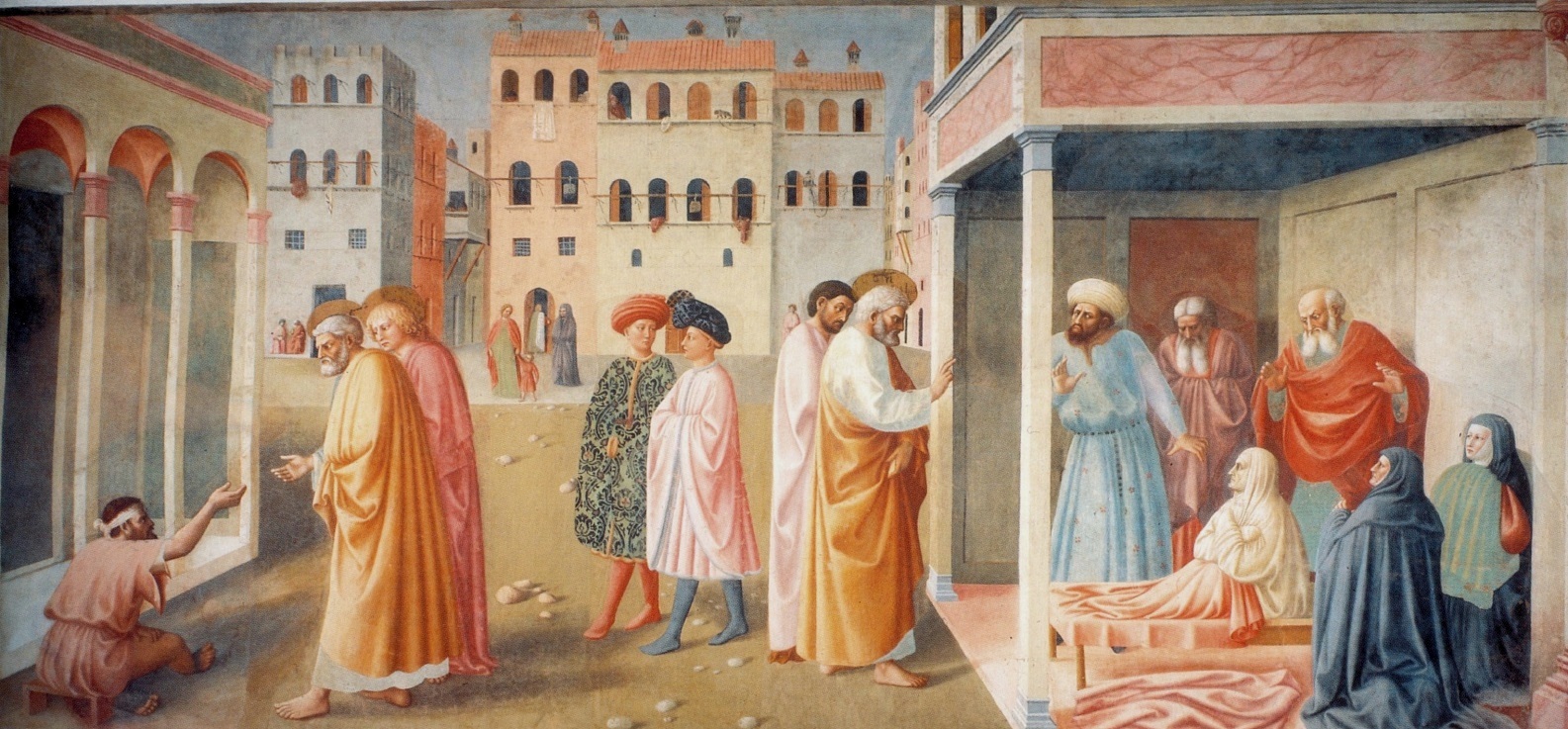
Healing of the Cripple (on left) and Raising of Tabitha (on right) by Masolino da Panicale, 1424-25. Fresco in the Brancacci Chapel, Santa Maria del Carmine, Florence, Italy.

My head has been in the St. Matthew Passion. For a few weeks already. Yes, that is pretty strange for me, having grown up in a house where Bach’s music was played often, but only on the Sundays and holidays for which it was written (read more about that in this blog post). However, it can happen when one sings in a Bach Choir in the United States. While in The Netherlands all 180 (!) St. Matthew Passion concerts happen in the weeks before Easter, here in the USA the piece is presented much less often, and the only classical music performances with a strong seasonal tie are those of Handel’s Messiah in the weeks before Christmas.

But working on the St. Matthew Passion and this Weekly Cantata blog at the same time has been a blessing, as the two areas of study influence each other. Nine months of research for this blog have inspired me to read more about the St. Matthew Passion and study the music in more detail. In that process I have learned many new things about the piece I thought I already knew so well. And experiencing the composition Bach’s sons referred to as their father’s Great Passion on a deeper level has, I believe, improved my understanding of Bach’s cantata writing.

Let’s just look at the opening chorus of this week’s cantata 48 Ich elender Mensch, written for the 19th Sunday after Trinity (October 3 in 1723).

I listened to Bach Collegium Japan (with Robin Blaze and Gerd Türk), Koopman (with Bernhard Landauer and Christoph Prégardien), Gardiner (with William Towers and James Gilchrist), Harnoncourt (with Paul Esswood and Kurt Equiluz), and Herreweghe (with Damien Guillon and Thomas Hobbs), and find Herreweghe’s interpretation the most moving. Herreweghe is also the only one who uses a tromba da tirarsi in the opening chorus, and I  love that sound. Listen to Herreweghe’s recording on YouTube or on Spotify. Please consider supporting the artists by purchasing the recording on Amazon: click here for USA, here for UK, here for Germany, or here for France.

Please find the German text with English translation here and the score here.

The main music is hauntingly beautiful (It’s not just the Herreweghe sopranos that give me goose bumps this time – the altos and tenors move me to tears, and none of this could happen without the basses providing that wonderful foundation for everyone to build on) but extremely downcast. It is clearly full of Elend (misery), in reference to the Gospel text of the day.* The same holds for the main music and words of the opening chorus of the St. Matthew Passion. It is clearly full of klagen (lamenting), and paints the picture of the Via Crucis, Jesus on his way to the cross.

However, in the midst of all the misery, a J.S. Bach opening chorus almost always provides a preview of the salvation that is to come later in the piece, or that is implied in the Gospel. In the opening chorus of the St. Matthew Passion he does this by superimposing the German Agnus Dei – the chorale O Lamm Gottes Unschuldig (O Lamb of God, unspotted), sung by a treble choir in G major, over the lamenting E minor of the two other choirs and orchestras. The repeated  auf unsre Schuld (for our sins) of Choir I is answered by the treble chorus with: All Sünd hast du getragen (you took away all sins).

The congregation in Leipzig, where the St. Matthew Passion was first performed on the afternoon of Good Friday in 1727, would have sung this German Agnus Dei earlier that day at the conclusion of the morning service. Back to this week’s cantata for October 3, 1723: in that Sunday service, the congregation might have sung the chorale Herr Jesu Christ, ich schreie zu dir:

Herr Jesu Christ ich schreie zu dir
Mit ganz betrübter Seele:
Dein Allmacht laß erscheinen mir
Und mich nicht also quäle.
Viel grösser ist die Angst und Schmerz.
So anficht und turbirt mein Herz,
Als daß ich kan erzählen.
Lord Jesus Christ, I cry to you
With a soul that is wholly troubled:
Let your almighty power appear to me
And do not punish me in this way.
Far greater is the anguish and pain
That challenge and confuse my heart
Than I can explain

The congregation might thus have heard those words in their head, when two bars after the soprano entrance the tromba da tirarsi starts playing this melody, later followed by two oboes in unison. In this way, these three instruments accompany every choral passage with a new line from the chorale, and the chorale thus starts forming the frame of the opening chorus.

After this preview message in the opening chorus that Jesus might be able to offer salvation, we have to wait until the tenor aria for the all-around convincing message that everything will be OK, in music as well as in text:

Vergibt mir Jesus meine Sünden,

If Jesus forgives me my sins,
So wird mir Leib und Seele gesund.
then my body and soul will become healthy.
Er kann die Toten lebend machen
He can make the dead live
Und zeigt sich kräftig in den Schwachen,
and shows himself to be mighty in those who are weak,
Er hält den längst geschloßnen Bund,
he keeps the covenant made long ago
Daß wir im Glauben Hilfe finden.
that in faith we find support.

Wieneke Gorter, October 1, 2016, links updated October 15, 2020.

* The Gospel story for this 19th Sunday after Trinity was the miracle of Jesus healing a cripple. From the time the Gospel was written through Bach’s time, unfortunately, having a disability or illness was seen as carrying a sin. When Jesus heals the man, he also takes his sins away.

Children’s stories

03 Saturday Sep 2016

Posted by cantatasonmymind in 1723 Trinity season special series, Bach's life, Cantatas, Leipzig, Trinity

≈ 1 Comment

Tags

according to Lutheran Church year, Bach, Bach-Archiv Leipzig, BWV 138, cantatas, Collegium Vocale Gent, Damien Guillon, Deborah York, Dorothee Mields, Eduard van Hengel, Hana Blazikova, Ingeborg Danz, Leipzig Bach Festival, Lutheran Church year, Mark Padmore, Peter Kooy, Phlippe Herreweghe, Thomas Hobbs, Trinity 15

Bergrede_Brueghel

The Sermon on the Mount, oil on copper painting by Jan Brueghel the Elder, 1598

In 1723 Bach wrote cantata 138 Warum betrübst du dich, mein Herz.  Again I prefer Herreweghe’s interpretation, but it’s not so easy to choose between his recording from 1998 (with soloists Deborah York, Ingeborg Danz, Mark Padmore, and Peter Kooij) and the one from 2013 (with soloists Hana Blazikova, Damien Guillon, Thomas Hobbs, and Peter Kooij). Update from 2021: there now is an extremely inspired Herreweghe recording with all my favorite soloists (Dorothee Mields, Alex Potter, Guy Cutting, Peter Kooij), recorded live at De Singel in Antwerp on Sunday January 31, 2021 (during the Covid19 pandemic, so without audience). Find it here.

Listen to the entire 1998 recording on Youtube or listen to one long track of the 2013 recording with Hana Blazikova and Damien Guillon on YouTube. Please consider supporting the artists by purchasing the 1998 version (used copies available only) or the 2013 version  on Amazon.

Find the text, based on the Sermon on the Mount, of this cantata here, and the score here.

It is often not immediately clear what a Bach cantata is about, what the text means, or what Bach wanted to convey with it. In an absolutely wonderful interview (with excellent English subtitles) for the Leipzig Bach Festival, soprano Dorothee Mields says that even she, as a native German speaker, often feels the need to look at English translations, go back to the Bible texts, and read more about the subject, because she didn’t necessarily recognize the text from her children’s bible.

The image of the children’s bible stuck with me since first watching the interview seven months ago. And when listening to the cantata for this Sunday, I had to think of it again, because the choice of words in this cantata is very moving, but at the same time so simple, that it is almost as if the librettist is speaking to children. Listen, for example, to the text the soprano sings in the third movement:

Nur ich, ich weiss nicht, auf was Weise ich armes Kind mein bisschen Brot soll haben; Wo ist jemand, der sich zu meiner Rettung findt?

(It is just that I, poor child, don’t know how I should receive a bit of bread; Where is the person who will save me?)

Eduard van Hengel hilariously remarks that it reminds him a bit of Calimero (a popular children’s cartoon about a little chick, which aired in The Netherlands, Belgium, France, and Italy in the early 1970s. Watch this first episode to get an idea).

I wonder who the librettist for this cantata was. I imagine a different person than who wrote texts for the last few cantatas. Last week, the Bachs possibly had their house full with the families of Anna Magdalena’s brother and sisters, visiting because the men, all trumpet players, were needed for two cantatas. Perhaps one of the visitors had talent for entertaining the children with stories and making up poems on the spot? Did Bach ask this person to write the libretto for this cantata? Or was his own head still filled with children’s stories and did he write the text himself?

These are all just assumptions and we don’t know for sure if last week’s extra players were the relatives of Bach’s wife, but my potential movie script is getting better and better …

There’s of course more to this cantata than the charming texts. Musically, as far as the form and structure is concerned, this cantata is unique within this first cycle of Leipzig cantatas. Bach takes a chorale as the base for the cantata, yet it is not at all the same as his series of chorale cantatas from the 1724/1725 cycle. In those later chorale cantatas, he always uses all the verses and keeps a strict structure of one soloist per movement. In this cantata 138, he only uses three verses of the chorale, and gives the cantata a very free form, with a different number of soloists for each movement. He is obviously experimenting. And I wonder again: might he have been influenced by his visitors from last week? Did he have discussions about his compositions with his colleagues? And how is this playing around with the form of the cantata related to using a different librettist or no librettist? Did he not want to bother a professional writer with his experimenting?

There is one more–for me at least–exciting aspect to this cantata: when I first started listening to it, I discovered that I already knew the bass aria. Same singer (Peter Kooij) and same music, but a different text, because I had until then only heard this as the Gratias from Bach’s Mass in G Major, BWV 236 from the mid 1730s. Listen to both, and marvel at Bach’s talent for subtle recycling.

Wieneke Gorter, September 3, 2016, updated September 19, 2020 and February 13, 2021.

Christmas in August

27 Saturday Aug 2016

Posted by cantatasonmymind in 1723 Trinity season special series, Bach's life, Cantatas, Leipzig, Trinity

≈ Leave a comment

Tags

according to Lutheran Church year, Anhalt-Zerbst, Anna Magdalena Bach, Bach, Bruce Dickey, cantatas, City Council, Collegium Vocale Gent, concerto palatino, cornetto, Deborah York, Eduard van Hengel, Hana Blazikova, Ingeborg Danz, Köthen, Leipzig, Lutheran Church year, Mark Padmore, Peter Kooy, Phlippe Herreweghe, Ratswechsel, recorder, Saxe-Weissenfels, Thomas Hobbs, Trinity 14, trombone, trumpet, Wilcke

gesu_lebbrosi
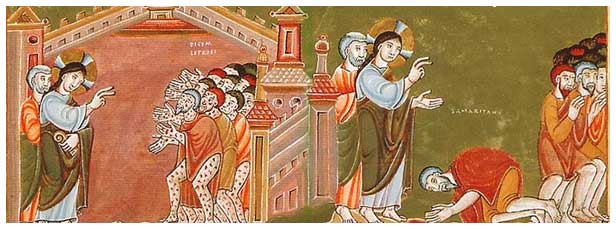
Jesus heals ten lepers, from the Codex Aureus of Echternach, c. 1035-1040

Only a handful of Bach cantatas ask for the Renaissance/Early Baroque ensemble of one cornetto and three trombones in the opening and closing chorus. This instrumentation was considered somewhat “old fashioned” in Bach’s time, while at the same time it was still very normal in cities to hear Stadtpfeifers (city pipers) play chorales from the towers during the day, to remind the citizens of their Christian duties. In this Cantata 25 Es ist nichts Gesundes an meinem Leibe, for the 14th Sunday after Trinity (August 29 in 1723), the playing of the chorale tune by this ensemble in the opening chorus stands for the way it has always been, the way it has been true for centuries.

palatino
Concerto Palatino, the leading cornetto/trombone ensemble for the past 25 years. Photo by Sabrina Flauger. Learn more about them here.

My preferred recording of Cantata 25 is the one by Herreweghe, on the same album as cantata 105 for Trinity 9 and cantata 46 for Trinity 10, as well as cantata 138 for next week. Soloists in cantata 25: soprano Hana Blažíková, tenor Thomas Hobbs, and bass Peter Kooij. Cornetto: Bruce Dickey  (pictured above, front row, on left); trombones: Claire McIntyre, Simen van Mechelen (pictured above, top row, on left), and Joost Swinkels.

Listen to this recording on Spotify or on YouTube. Please consider supporting the artists by purchasing this album (containing four cantatas for this 1723 Trinity season) on Amazon.

Read the text of this cantata here, and find the score here.

I could write an entire blog post about the opening chorus alone, the way I did last week for cantata 77 and two weeks earlier for cantata 179. But in the interest of variety, I’m going to keep this section short, and I will just say that the opening chorus  is an incredible, unrivaled complex composition for ten voices, again completely different than any opening chorus the Leipzig congregations had heard before during this Trinity season of 1723. By having the “ancient” brass quartet play the chorale melody of Herzlich tut mich verlangen nach einem selgen End (With my whole heart I long for my blessed End / my Salvation)** Bach shows that the promise of salvation after death will always provide a silver lining to the sorrow of the daily, sinful human condition. He also illustrates this “salvation” with the recorders in the uplifting and soothing soprano aria (Hana Blažíková in top shape!), and the brass and recorders in the closing chorale, and intensifies the “sickness” of the human sins by setting these texts to “dry” recitatives  (though listen to that bass arioso, beautifully sung by Peter Kooij) in between. Again, it was completely normal in his day and age to think this way, and Bach saw it as his mission in life to teach this theology to his fellow Lutherans by way of his church music.

But, listen to the festive, large orchestra for this cantata! No less than four brass players (one cornetto and three trombones) and five wind players (two oboists and three recorder players) were required at the same time in the opening chorus and closing chorale. For a cantata about the healing of ten lepers? Well, it turns out that this weekend it was Christmas in August for Bach, and the extra players were probably in town for the much more important and incredibly festive Cantata 119 Preise, Jerusalem, den Herrn that was on the calendar for the next day, Monday August 30, the day of the inauguration of the new City Council (Ratswechsel). *** As I already suggested in my post about cantata 147, Bach might have sometimes used guest musicians in his orchestra who were in town for other reasons, and judging from the level of playing required for the Brandenburg concerto-like Cantata 119, the extra brass (all playing trumpet in 119) and wind (playing oboe and recorder in 119) players might have been needed to be of the level of court chamber musician, not just Stadtpfeifer (usually a lower rank, and not necessarily used to playing the complicated court music). So in my probably not so unlikely movie script fantasy, Bach hired musicians from the not too far away courts where he had worked before or where his in-laws worked (Köthen, Weissenfels, Zerbst) to play in the orchestra on Monday August 30, and he had asked them to also play in the service on Sunday August 29.

Listen to the Ratswechsel cantata 119 Preise, Jerusalem, den Herrn by Herreweghe on YouTube. (Soloists: soprano Deborah York; alto Ingeborg Danz; tenor Mark Padmore, bass Peter Kooij.)

Wieneke Gorter, August 24, 2016, updated September 8, 2023.

** Several writers have suggested the chorale best known to the congregation at the time (on the melody we have later come to know as O Haupt voll Blut und Wunden) would have been instead Ach Herr, mich armen Sünder, but I agree with Eduard van Hengel that because of Bach’s use of the angel-like recorders and the heavenly brass it makes more sense to go with Herzlich tut mich verlangen nach einem selgen End.

*** The new city council was always chosen on August 24, and then inaugurated on the first Monday following August 24, which was Monday August 30 in 1723.

About Weekly Cantata

I am a bilingual writer, publicist, choral singer, art and nature lover, happy wife, and blessed mother of two. I started this blog in 2016, inspired by my late mother’s love for Bach’s cantatas. After 23 years in the San Francisco Bay Area, I’m now back in the Netherlands.

If you are on social media, please follow me:

  • Facebook
  • Instagram

Please subscribe!

Please join my readers from all over the world and subscribe to this blog! Simply fill in your email address and you’ll receive an email every time I’ve published a new post. Thank you so much / Vielen Dank / Merci mille fois / 감사합니다 / 谢谢 / ありがとう / Mille grazie / Muchas gracias / Muito obrigado / Takk / Terima kasih / Dankuwel!

Designed with WordPress.com

← Older posts
Newer posts →

Recent Posts

  • “Missa Miniatura” by CONTINUUM/Elina Albach Even More Moving in 2025
  • Bachfest Leipzig 2025
  • Bach Cantatas for Christmas – 1724 and 1734 editions
  • Fourth Sunday of Advent – more insight into Cantata 62 helped me better understand Bach’s Christmas Oratorio
  • Saint Ambrose and Luther in Milan – Second Sunday of Advent

Archives

  • August 2025
  • July 2025
  • December 2024
  • November 2024
  • June 2024
  • January 2024
  • December 2023
  • October 2023
  • September 2023
  • August 2023
  • April 2022
  • February 2022
  • January 2022
  • December 2021
  • November 2021
  • June 2021
  • May 2021
  • April 2021
  • February 2021
  • January 2021
  • December 2020
  • November 2020
  • October 2020
  • September 2020
  • August 2020
  • July 2020
  • May 2020
  • April 2020
  • March 2020
  • February 2020
  • January 2020
  • December 2019
  • November 2019
  • May 2018
  • April 2018
  • March 2018
  • February 2018
  • January 2018
  • December 2017
  • November 2017
  • October 2017
  • September 2017
  • August 2017
  • July 2017
  • June 2017
  • May 2017
  • April 2017
  • March 2017
  • February 2017
  • January 2017
  • December 2016
  • November 2016
  • October 2016
  • September 2016
  • August 2016
  • July 2016
  • June 2016
  • May 2016
  • April 2016
  • March 2016
  • February 2016
  • January 2016

Enter your email address to follow this blog and receive notifications of new posts by email.

Join 338 other subscribers

Categories

  • 1723 Trinity season special series
  • Advent
  • After Easter
  • Ascension
  • Bach's life
  • Cantatas
  • Chorale cantatas 1724/1725
  • Christmas
  • Easter
  • Epiphany
  • Following Bach in 1725
  • Köthen
  • Leipzig
  • Septuagesima
  • Travel
  • Trinity
  • Weimar

Meta

  • Create account
  • Log in
  • Entries feed
  • Comments feed
  • WordPress.com

Website Built with WordPress.com.

  • Subscribe Subscribed
    • Weekly Cantata
    • Join 158 other subscribers
    • Already have a WordPress.com account? Log in now.
    • Weekly Cantata
    • Subscribe Subscribed
    • Sign up
    • Log in
    • Report this content
    • View site in Reader
    • Manage subscriptions
    • Collapse this bar
 

Loading Comments...