Weekly Cantata

Weekly Cantata

Tag Archives: J.S. Bach Foundation

Blessings during a crisis

24 Sunday May 2020

Posted by cantatasonmymind in After Easter, Cantatas, Leipzig

≈ Leave a comment

Tags

BWV 106, BWV 183, BWV 4, bwv 44, Exaudi, J.S. Bach Foundation, J.S. Bach Stiftung, Les Arts Florissants, Luc Barrière, Rudolf Lutz

French Alps at La Clusaz, photo by Luc Barrière.

In an effort to share some more personal thoughts with you, this has become quite a long post. If you prefer not to read it and go straight to the cantatas for this Exaudi Sunday, you can find my post about cantatas 44 and 183 here. It is a story with a wealth of information, gorgeous soprano arias, and recommendations for top-notch recordings. But since there’s always more to learn, I wanted to give some attention to Rudolf Lutz’ English spoken lecture about these cantatas. Find the link at the end of this post.

Over the past several months, while we’ve all been dealing with this global health crisis, I have often felt overwhelmed. Overwhelmed by piles of dishes, by potentially life changing decisions, by not knowing what my role is supposed to be in this crisis, but also by musicians and music organizations. While one is telling me to watch this YouTube video–available this week only!, another invites me to join a lecture on Zoom– please submit your questions ahead of time, yet another is showing me that singing while masked actually sounds pretty good (even though their images scare the * out of me), but wait … there’s a live Facebook Event STARTING NOW!

I understand the reasons behind it. An urge to share music with others, so strong they need to answer it or go insane. A fear of being forgotten by their patrons and thus losing even more income. Creative minds that keep exploring new possibilities. I also understand that there are probably millions of people for whom concert-going was their weekly bread, and that they are all eating this up. But it doesn’t calm me down.

My soul has been soothed much more by the images of sour dough rising, vegetable gardens being planned, blooming gardens, and nature. Two Instagram accounts I have especially enjoyed are those of Les Arts Florissants, who have been posting a wealth of pictures of William Christie’s gardens in France, and of Luc Barrière, a concert photographer who left Paris for the Alps before the strict lockdown happened in France. Yes, I know these are privileged people, and everyone can think of their living situations what they want. To me personally, these two accounts have given me examples of people taking care of themselves and slowing down, and that inspires me and calms me.
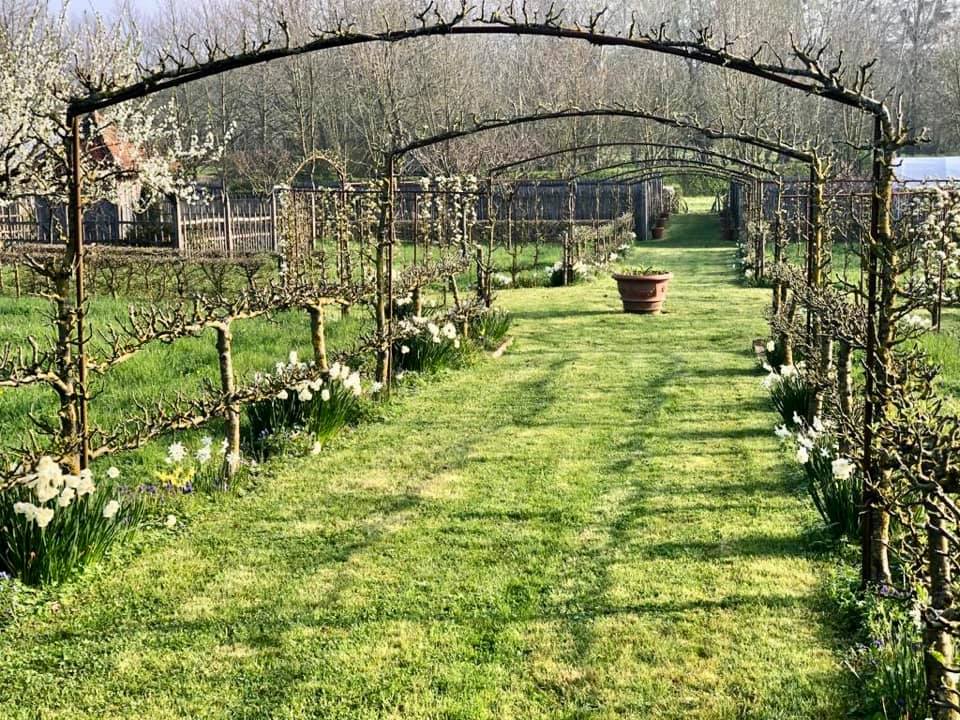
William Christie’s garden in Thiré, France, on March 28, 2020. Photo from Les Arts Florissants Facebook page.

Of course stress is not caused by the acts of other people, but by your own reaction to these acts, and fortunately most of the live streams can be watched again at a later time. So I have watched some of them at my own pace (while doing those dishes, folding laundry, or cleaning vegetables) and have realized that amidst the overwhelm there are blessings, because every now and then something new and marvelous emerges that would not have happened without this crisis.

For me, the absolute best example of this has been the series of “one man shows” by Rudolf Lutz, the artistic director of the J.S Bach Foundation in Switzerland. Every month, on the day his choir and orchestra would otherwise have given a concert for an audience, recorded live on video, he has live streamed an excellent and very witty lecture about that same cantata, brilliantly combined with organ improvisations on the music in the cantata, and the meaning behind the cantata. Without the crisis, his international online audience of Bach lovers would never have known what a talented improvisor he is. Without the crisis, he would never have held his lectures in English. (Until now his excellent cantata lectures were only accessible to German speakers, with only a handful of them subtitled in English).

Find Rudolf Lutz’ wonderful lecture/improvisation about Cantata 44 and 183 (from May 19) here. Find my blog post about these same cantatas (highlighting completely different aspects of the pieces!) here.

To learn more about Rudolf Lutz, read his bio here. Find his lecture/improvisation about Cantata 106 (from March 20) here, and about Cantata 4 (from April 17) here.

Rudolf Lutz, artistic director of the J.S. Bach Foundation.

Wieneke Gorter, May 24, 2020.
Trombones and altos from heaven (a guide to BWV 2)

26 Thursday Mar 2020

Posted by cantatasonmymind in Bach's life, Cantatas, Chorale cantatas 1724/1725, Leipzig, Trinity

≈ Leave a comment

Tags

Alex Potter, BWV 12, BWV 135, BWV 172, BWV 18, BWV 182, BWV 2, BWV 20, BWV 21, BWV 7, chorale cantata, cornetto, Eduard van Hengel, Georg Poplutz, J.S. Bach Foundation, J.S. Bach Stiftung, Luther, Markus Volpert, Psalm 12, Renate Steinmann, Rudolf Lutz, Trinity 2, trombone

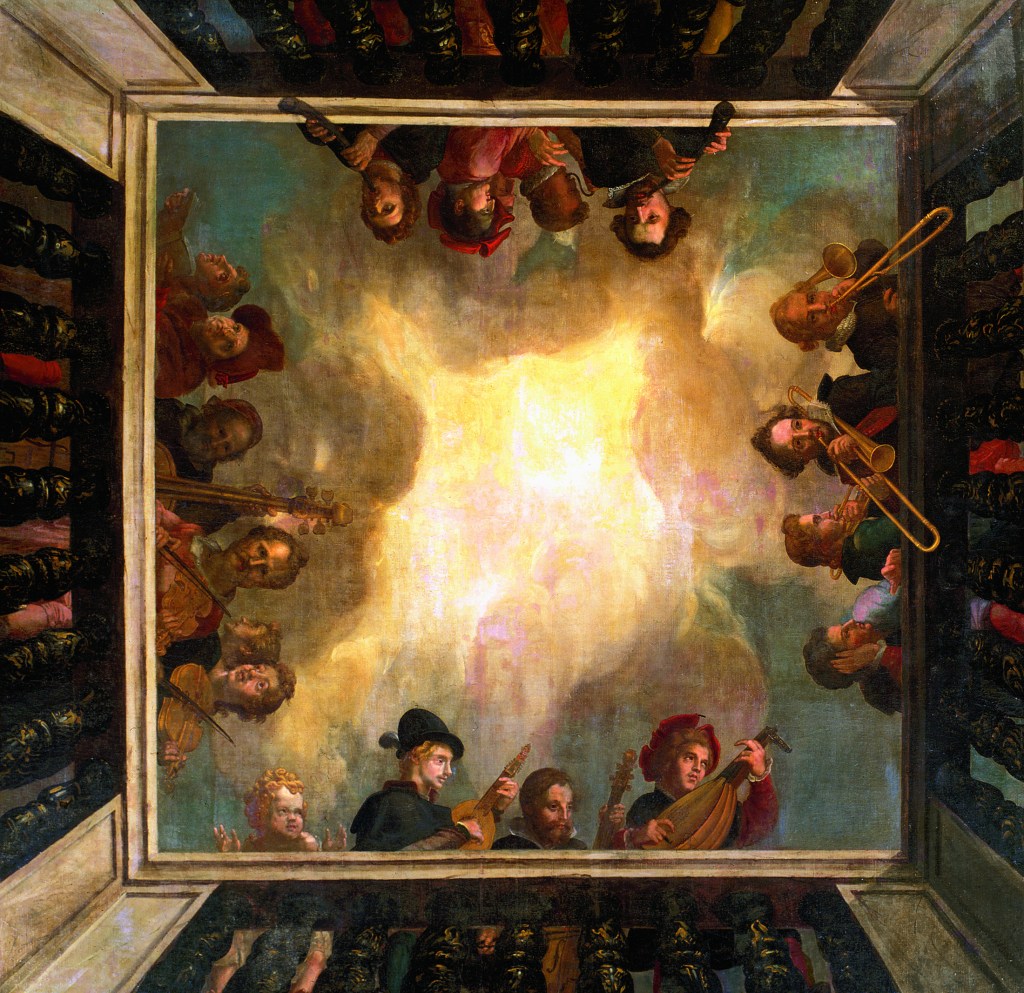
Ceiling painting installed around 1700 in Christian V’s Hall in Rosenborg Castle, Denmark. Possibly by Reinhold Timm, ca. 1620, originally for for a music pavilion in Kongens Have. *

Yesterday, Wednesday March 25, 2020, the J.S. Bach Foundation published their live video recording of Cantata 2 Ach Gott, vom Himmel sieh darein (Please God, look down from Heaven) on their YouTube channel. I thought it might be nice to provide a listening guide to go with this performance.

I love this cantata because it has trombones in the orchestra, doubling the choir parts, and because the altos have the cantus firmus (=they sing the chorale melody in long notes) in the opening chorus, which sounds incredibly good, and is unique within Bach’s writing.

Find the video recording by the J.S. Bach Foundation here on YouTube. Soloists are Alex Potter, alto; Georg Poplutz, tenor; and Markus Volpert, bass.

Find the German texts with English translations here, and the full score here.

This cantata was the second in Bach’s 1724 series of Chorale Cantatas. He most probably intended for the first four cantatas in that series to form a set, or at least to present some kind of order,  if you look at the composition form of the opening movement, and which voice has the cantus firmus of the chorale tune in that chorus:

  1. Cantata 20 O Ewigkeit, du Donnerwort: French Overture, with cantus firmus in the soprano (find my blog post about this cantata here)
  2. Cantata 2 Ach Gott, vom Himmel sieh darein: Chorale motet, cantus firmus in alto (the cantata discussed here)
  3. Cantata 7 Christ unser Herr zum Jordan kam: Italian concerto, cantus firmus in tenor. (find my blog post about this cantata here)
  4. Cantata 135 : Ach Herr, mich armen Sünder: Chorale fantasia, cantus firmus in bass. (find my blog post about this cantata here)

We know that Bach liked to use order and symmetry when he wanted to impress other people with a composition. But perhaps he was also thinking of his legacy. When he started composing cantatas at the Weimar court in 1714, albeit on a monthly instead of weekly basis, his first four cantatas formed a similar portfolio of composition styles in the opening choral movements:

  1. Cantata 182 Himmelskönig, sei wilkommen: Choral fugue
  2. Cantata 12 Weinen, klagen, sorgen, zagen: Passacaglia
  3. Cantata 172 Erschallet, ihr Lieder, erklinget, ihr Saiten!: Concerto
  4. Cantata 21 Ich hatte viel Bekümmernis: Motet.

Back to this Cantata 2 Ach Gott, vom Himmel sieh darein (Please God, look down from Heaven), and what to listen for.

Opening chorus:

The chorale, based on Psalm 12, is by Luther. For an idea what Luther’s original song would have sounded like, you can watch this video. For readers who understand German: Eduard van Hengel’s website (in Dutch) has a very insightful overview of the original German text of Psalm 12, the text of Luther’s chorale, and how Bach’s librettist changed that into the text for the cantata.  You can find it here.

When Bach uses a chorale by Luther in a cantata, he often demonstrates his reverence for the father of his faith by using the archaic form of chorale motet as opening chorus combined with the equally archaic trombone quartet (1 cornetto and 3 trombones) to double the choir parts.**

Giving the cantus firmus to the altos is however not something Bach does very often. If only he had! In this case it is especially wonderfully orchestrated, with doubling by one trombone, two oboes, and all second violins. Both on this video recording by the J.S. Bach Foundation as well on the Herreweghe audio recording I recommended back in 2017, Alex Potter’s voice significantly enhances this winning blend of alto voices and instruments, and on this J.S. Bach Foundation video recording he also sings the beautiful alto aria. It definitely made my day yesterday.

Alto aria:

Bach alto and tenor arias are at their prettiest, I find, when they are written as a trio sonata, and the alto aria Tilg, o Gott in this cantata is a beautiful example of that. Wonderful singing and playing by alto Alex Potter and violinist Renate Steinmann. The aria is a plea for help in fighting the “Rottengeister,” or the sectarians amidst the Lutherans. When the alto starts singing the word “Rottengeistern,” we realize we had heard this word already many times in the triplets of the violin part. As Eduard van Hengel says, it is the “popular easy talk of the sectarians, and that is also the reason why the other two parts don’t have this motive” [to further illustrate the schism].

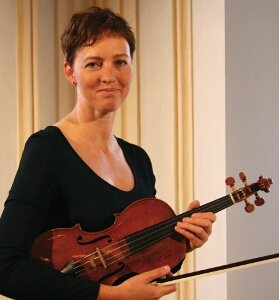
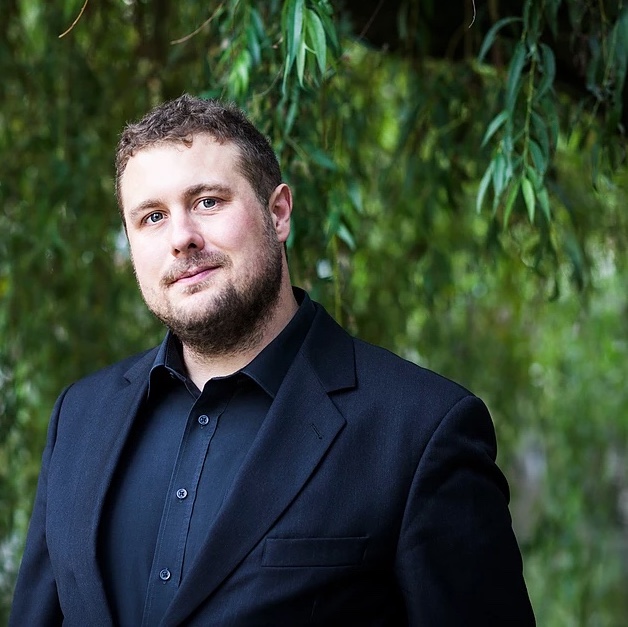
Renate Steinmann, violin and Alex Potter, alto. Photo of Alex Potter by Annelies van der Vegt.

Bass recitative:

Definitely keep the text & translations handy for this one, because this movement contains a wealth of text illustrations in the music. On the word Armen  (the poor) sounds a sorrowful diminished seventh, the word seufzend (sighing) has a rest/sigh in the middle of the word, and more such things happening on the words Ach (sighing) and Klagen (complaining). In contrast to this, a few lines later, the chord on the word Gott (God) sounds open and liberating, after which God himself gets to speak, and the music turns to an arioso (similarly to how Bach does that in his much earlier Cantata 18 when God speaks). At the word heller Sonnenschein (bright sunshine) the light gets turned on in the music too: the harmony changes to C Major.

Tenor aria:

Here we have arrived at the solution/salvation part of the cantata, and so this music is more pleasant, easier to listen to. But Bach is still preaching: there are some crossing (!) lines in the music, and in the middle section, which tells the listeners to be patient (sei geduldig) and Bach stresses the words Kreuz und Not.

With many thanks to Eduard van Hengel and Rudolf Lutz for their explanations of this cantata,

Wieneke Gorter, March 26, 2020.

*more information about this painting and the other objects in Christian V’s Hall in Rosenborg Castle can be found here.

**The best examples of this are cantatas 2, 25, 38, and 121.

Pelting rain, growing crops, it is the low instruments that do it

16 Sunday Feb 2020

Posted by cantatasonmymind in Cantatas, Weimar

≈ Leave a comment

Tags

2nd Sunday before Lent, Ageet Zweistra, American Bach Soloists, Andrew Schwartz, Anthony Martin, Armelle Plantier, Benjamin Butterfield, BWV 18, Dominik Wörner, four violas, François Fernandez, Francis Jacob, Gaëlle Lecoq, Gaëlle Volet, George Thomson, Iris Finkbeiner, J.S. Bach Foundation, James Weaver, Jan Kobow, Jeffrey Thomas, Joanna Bilger, John Butt, Josep Borras I Rocca, Julianne Baird, Kaori Uemura, Katharine Fuge, Kees Boeke, Lisa Grodin, litany, Luis Otavio Santos, Makoto Sakurada, Martina Bischof, Maya Amrein, Michael Eagan, Michele Zeoll, Neue Bach Ausgabe, Nikolaus Broda, Norbert Zeilberger, Nuria Rial, Philippe Pierlot, rain, Renate Steinmann, Rudolf Lutz, Sally Butt, Sexagesima, snow, Stephan MacLeod, Susanna Hefti, viola, Warren Stewart, Weimar

Finally I get to write about Cantata 18 Gleichwie der Regen und Schnee vom Himmel fällt (“the same way rain and snow falls from heaven”), which Bach wrote for this Sunday (Sexagesima, or the 2nd Sunday before Lent) in Weimar in 1713 or 1714. I don’t remember this cantata from my childhood, but have been impressed with it since I purchased the American Bach Soloists’ CD in 2010.

Find the German text with English translations here, and the NBA score here (Neue Bach Ausgabe score, based on the original Weimar score, the same one used by the American Bach Soloists, without recorders in the orchestra).

There is so much happening in this cantata that I could write two or three blog posts about it. To start, I’d like to share three recordings that stand out to me.

My first love of this Cantata 18, the American Bach Soloists’ recording from 1994, can be found here on Spotify. Or purchase the CD or MP3 on Amazon USA, or on Amazon DE, or on iTunes. Soloists are: Julianne Baird, soprano; Benjamin Butterfield, tenor; James Weaver, bass. Violas: Anthony Marin, Lisa Grodin, Sally Butt, George Thomson; Violoncello: Warren Stewart; Bassoon: Andrew Schwartz; Archlute: Michael Eagan; Organ: John Butt.

Director Jeffrey Thomas chooses a slower tempo for the opening sinfonia than most others, which I like. It makes the music more dramatic, and it allows the instrumentalists to paint a truly cold, wintry rain, completely appropriate for this time of year in Germany. The sound of the four violas together is wonderful throughout, and I love Julianne Baird’s singing of Luther’s “litany” in the third movement.

The next two recordings use a later* version of the score, with the addition of recorders in the orchestra.

I highly recommend the recording by Ricercar Consort from 2004, available here on YouTube. With: Katharine Fuge (Soprano); Jan Kobow (Tenor); Stephan MacLeod (Bass); François Fernandez (Viola); Luis Otavio Santos (Viola); Philippe Pierlot (Viola da gamba); Kaori Uemura (Viola da gamba); Ageet Zweistra (Violoncello); Kees Boeke (Recorder); Gaëlle Lecoq (Recorder); Josep Borras I Rocca (Bassoon); Michele Zeoll (Double-bass); Francis Jacob (Organ).

What I like about this recording: the orchestration with two violas and two viola da gambas instead of four violas. The bass instruments do an absolutely fabulous and unrivaled job of bringing out Bach’s illustration of the text “und macht sie fruchtbar und wachsend” (and make it fruitful and fertile) in the second movement. You can truly hear plants growing and blossoming there. And bass Stephan MacLeod, whose singing I usually appreciate much more in Renaissance music than in Bach, is superb in that second movement. His voice is a beautiful “Voice of God” in the text from Isaiah 55: 10-12.

Final recommendation, for now: the live video recording by the J.S. Bach Foundation from 2009, available here on YouTube. With: Núria Rial, soprano; Makoto Sakurada; tenor; Dominik Wörner, bass; Recorders: Armelle Plantier, Gaëlle Volet; Bassoon: Nikolaus Broda; Violas: Susanna Hefti, Renate Steinmann, Martina Bischof, Joanna Bilger; Violoncello: Maya Amrein; Violone: Iris Finkbeiner; Organ: Norbert Zeilberger

What I enjoy most about this recording is Nuria Rial’s singing of the soprano aria (the fourth movement). The aria is incredibly difficult, but, as always, she makes it seem effortless, and her “Fort mit allen, fort, nur fort!” is the best of all recordings I have listened to. I also enjoy the choir sopranos’ singing of the “litany” in the third movement, and the mere fact that you can watch everyone make music, since this is a live video recording.

If you would like to read about another cantata for this Sunday, find my post about Cantata 126 here. Bach wrote that cantata also for Sexagesima Sunday, in 1725.

Wieneke Gorter, February 16, 2020.

*from 1724 in Leipzig, when Bach performed this cantata again.

Bach looking back (Belated 2nd Sunday after Epiphany)

01 Saturday Feb 2020

Posted by cantatasonmymind in Cantatas, Epiphany, Leipzig

≈ Leave a comment

Tags

Bart Coen, Benny Aghassi, BWV 106, BWV 13, BWV 155, BWV 161, BWV 244, BWV 249, BWV 3, BWV 46, Colin Balzer, Collegium Vocale Gent, Easter Oratorio, Epiphany 2, Heiko ter Schegget, Herman Stinders, J.S. Bach Foundation, Jakob Pilgram, Jan Börner, Julius Pfeifer, Margot Oitzinger, Mark Padmore, Matthew White, Netherlands Bach Society, Philippe Herreweghe, recorders, Rudolf Lutz, St. Matthew Passion, Susanne Seitter, Wolf Matthias Friedrich

Wedding at Cana by Duccio di Buoninsegna, tempera on wood, between 1308 and 1311. Museo dell’ Opera dell’ Duomo, Siena, Italy. The “scene” from this story that Bach and his librettists prefer to focus on in all his cantatas for this Sunday, is also illustrated here: Jesus telling his anxious mother “Mine hour is not yet come.”

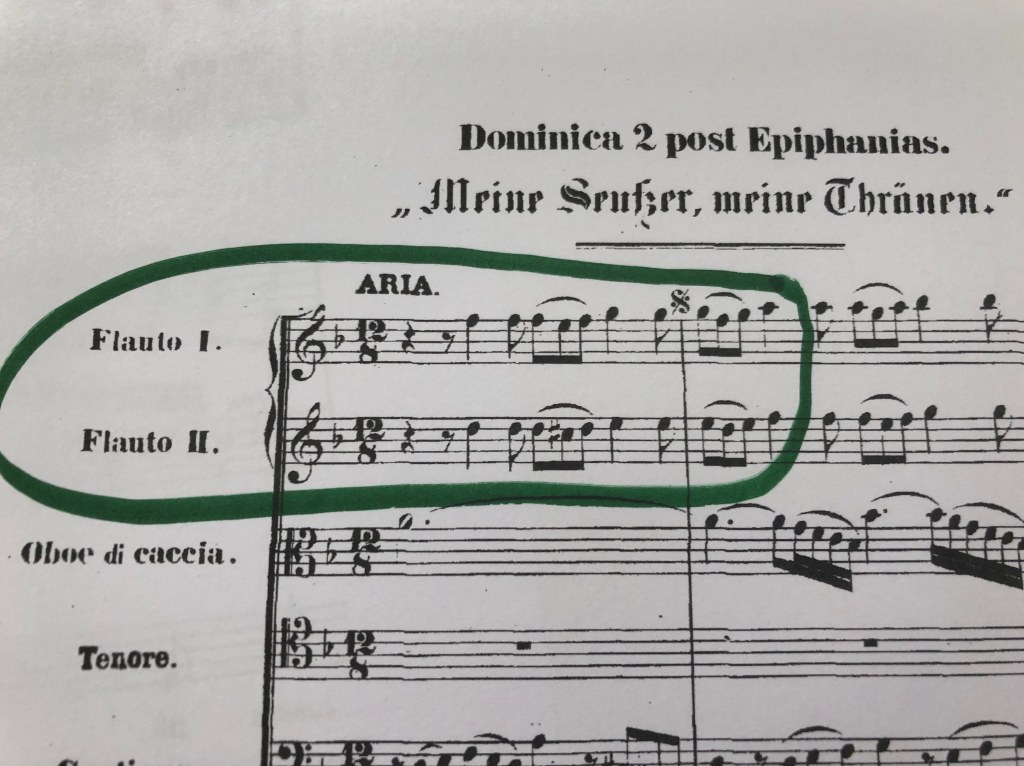
Two weeks ago I ran out of time writing this post, but I had discovered so much about Cantata 13 Meine Seufzer, meine Tränen (1726), that I would still very much like to share that cantata here. So I hope you don’t mind going back in time a little bit, to the Second Sunday after Epiphany, which fell on January 19 this year (2020), and on January 20 in 1726.

Before I prepare a new post, I always like to revisit previous posts I wrote about this same Sunday, and listen to those cantatas again. And it always thrills me when during this process I discover that Bach must have done this too: going back, either in his memory or in the physical stack of manuscripts, to the music he previously wrote for this same Sunday. Sometimes I only get a feeling that he did this, but other times, there’s an obvious quote either in the text or in the music.

This time I was excited to find Bach quoting music from Cantata 155 Mein Gott, wie lang, ach lange? in Cantata 13 Meine Seufzer, meine Tränen. Bach had written Cantata 155 already in Weimar in 1716, but performed it again in Leipzig in 1724, also on the Second Sunday after Epiphany.

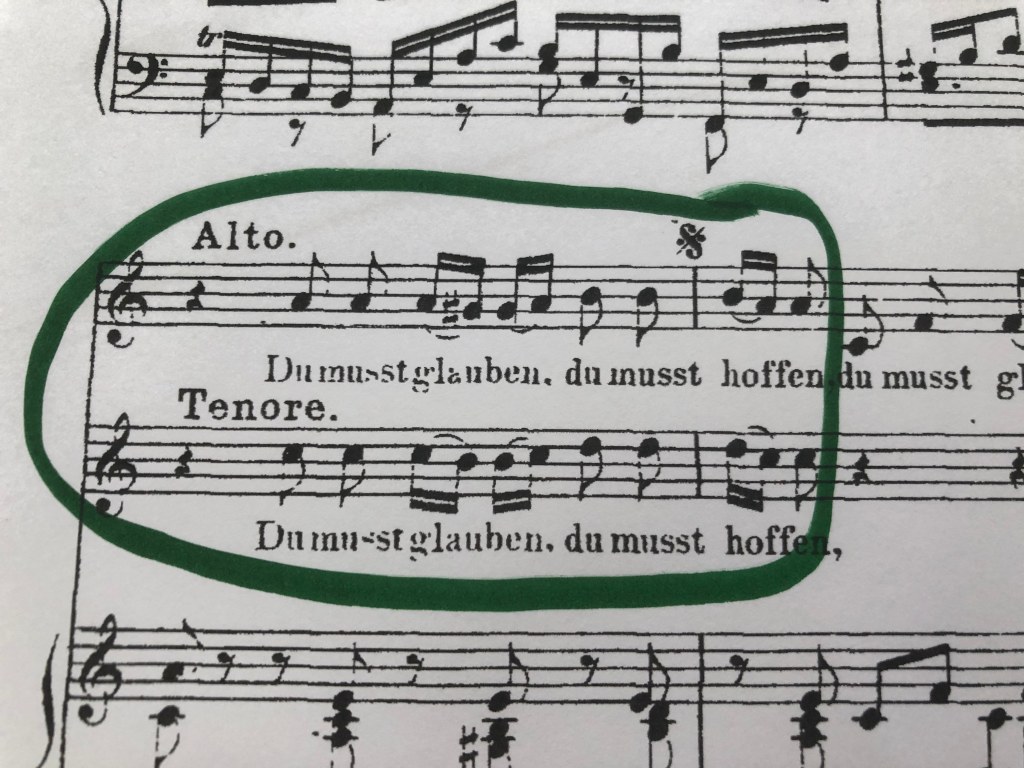
I invite you to listen to/watch the wonderful alto-tenor duet with bassoon from Cantata 155 Mein Gott, wie lang, ach lange? here, in a performance by the J.S. Bach Foundation, with alto Margot Oitzinger and tenor Julius Pfeifer. Note this theme in the voices:

After that duet is over, I would suggest turning off that recording for now. *

Now listen to/watch the entire recording of Cantata 13 Meine Seufzer, meine Tränen, also by the J.S. Bach Foundation here, with soprano Susanne Seitter, alto Jan Börner, tenor Jakob Pilgram, and bass Wolf Matthias Friedrich.

Find the German text with English translations here, and the score here. Please note that the English translation of the bass aria’s first line is incorrect: the translation of the German word “Sorgen” should be “worries” or “worrying”, not “care.” The correct translation is something like this:

Groaning and pitiful weeping
are no help to the sickness of worrying

Pay attention to the recorder parts in the opening movement. The music has a slower tempo, and a more drawn out rhythm, but the theme is the same as in that duet from Cantata 155 you just heard:

There is more in this opening chorus of Cantata 13 that gives us a peek into Bach’s referencing process. Bach often uses recorders to introduce sorrow. Early in his career he had done this in the opening movements of Cantata 106 Gottes Zeit ist die allerbeste Zeit (written in 1707) and Cantata 161 Komm, du süße Todesstunde (1716). Even during his first year in Leipzig, in 1723, he used this “tool” in the opening chorus of Cantata 46 Schauet doch und sehet, ob irgendein Schmerz sei (which would later form the basis for the Qui tollis from the Mass in B minor). And while from the mid 1720s most Baroque composers, including Bach himself, favored the more fashionable French transverse flutes over recorders, Bach still uses recorders to illustrate impending sorrow or death’s slumber in his Easter Oratorio (1725) and his St. Matthew Passion (1727). Click on the links to hear/watch recordings of all these examples on YouTube. Names of performers in all these are listed at the very end of this post.**

If, after listening to / watching Cantata 13 in its entirety, you are wondering why Bach’s illustration of a miracle (Jesus turning water into wine at the Wedding at Cana) is so incredibly sorrowful, read my blog post about Cantata 3 here.

Wieneke Gorter, January 31, 2020, updated January 16, 2021.

* read my blog post about Cantata 155, which now includes a link to the J.S. Bach Foundation recording, here.

** Performers in the YouTube recordings of cantata/oratorio movements with recorders are:

Credits for YouTube recordings linked above:

Opening movement of Cantata 106: Netherlands Bach Society; Jos van Veldhoven, conductor; Heiko ter Schegget and Benny Aghassi, recorders; Dorothee Mields, soprano; Alex Potter, alto; Charles Daniels, tenor; Tobias Berndt, bass.

Opening movement of Cantata 161: Collegium Vocale Gent; Philippe Herreweghe, conductor; Bart Coen and Koen Dieltiens, recorders; Matthew White, alto; Herman Stinders, organ.

Opening movement of Cantata 46: Collegium Vocale Gent; Philippe Herreweghe, conductor. Live recording from the Festival of Saintes, France, July 15, 2013. Recorder players not specified.

Tenor aria “Sanfte soll mein Todeskummer” from Easter Oratorio, BWV 249: Collegium Vocale Gent; Philippe Herreweghe, conductor. Mark Padmore, tenor.

Tenor recitative with choir “O Schmerz, hier zittert das gequälte Herz” from St. Matthew Passion, BWV 244: Collegium Vocale Gent; Philippe Herreweghe, conductor. Colin Balzer, tenor.

Two Weimar cantatas for the fourth Sunday of Advent

21 Saturday Dec 2019

Posted by cantatasonmymind in Advent, Bach's life, Cantatas, Christmas, Leipzig, Weimar

≈ Leave a comment

Tags

Advent, Advent 4, Alfredo Bernardini, All of Bach, Bachvereniging, BWV 132, BWV 147, BWV 147a, Christmas, Dominik Wörner, Hana Blazikova, J.S. Bach Foundation, J.S. Bach Stiftung, Jakob Pilgram, Jan Kobow, Julia Doyle, Margot Oitzinger, Netherlands Bach Society, Rudolf Lutz, Tim Mead, Weimar, Wolf Matthias Friedrich

For the fourth Sunday of Advent, Bach wrote two cantatas in Weimar: Cantata 132 Bereitet die Wege, bereitet die Bahn in 1715, and Cantata 147a Herz und Mund und Tat und Leben in 1716.

Bach rewrote Cantata 147, the same way he did that with cantatas 70 and 186, into a cantata for another time of the year in Leipzig, in this case the feast of the Visitation on July 2, 1723. Read more about that here in my post from 2016. I have now updated that post with a link to the wonderful live performance of Cantata 147 by the J.S. Bach Foundation, with with Hana Blažiková, soprano; Margot Oitzinger, alto; Jakob Pilgram, tenor; and Wolf Matthias Friedrich, bass.

Cantata 132 was not transformed into a cantata for another time in the church year in Leipzig, so today’s performances of this cantata still reflect the Advent cantata from Weimar. Watch a beautiful live performance of this cantata by the Netherlands Bach Society here on YouTube. Soloists are Julia Doyle, soprano; Tim Mead, alto; Jan Kobow, tenor; and Dominik Wörner, bass.

Find the German text with English translations here, and the score here.

As I already pointed out in my Advent Calendar earlier this week, the text of the joyful opening aria refers to the story of John the Baptist, who was believed to have come to prepare the way for Jesus, and includes the Isaiah quote as it appears in the scripture: “Messias kömmt an!” (The Messiah is coming). Bach gives this text to the soprano three times, and to give it extra emphasis, each time omits all instrumental accompaniment on those three words.

The rest of the cantata stays close to the story of John the Baptist. The bass aria refers to the Pharisees interrogating John, but then Bach’s text writer (Salomo Franck, who was also the Weimar court librarian) projects the question “Wer bist du?” (Who are you?) onto the believer: ask your conscience: are you a true person or a false person?

As a child, I was enormously impressed by this bass aria, even more than by the wonderful soprano aria at the beginning of the piece. I loved how Max van Egmond sings the “Wer bist du?” text on the Leonhardt recording from 1983. You can find that recording, and read more about those childhood memories, in this blog post from 2016. I had no idea at the time that in those very cool opening notes Bach is quoting this organ piece by Buxtehude. I only learned that this week, by watching the “extra videos” the Netherlands Bach Society provides along with their live recordings on All of Bach.

If you are not following this blog yet, please consider signing up (on the left of this text if you are on a desktop computer, at the bottom of this post when you are reading on a smartphone). This way you won’t miss any posts about the many cantatas Bach wrote for all three Christmas Days (yes there were three in his time), New Year’s Day, and the Sundays after those feast days.

Wieneke Gorter, December 21, 2019.

Second Sunday of Advent

07 Saturday Dec 2019

Posted by cantatasonmymind in Advent, Bach's life, Cantatas, Leipzig, Weimar

≈ Leave a comment

Tags

Advent 2, BWV 70, J.S. Bach Foundation, J.S. Bach Stiftung

Tomorrow is the second Sunday of Advent.

When Bach worked in Weimar, he wrote a cantata for each of the 4 Sundays in Advent. However in Leipzig, music (other than chorale singing) was not allowed in the churches in the period between the first Sunday of Advent and Christmas Day. In order to still use (and show off?) the Weimar Advent cantatas in Leipzig he reworked and expanded most of them for other times of the church year in Leipzig.

He truly mastered this rewriting process with cantata 70, Wachet! betet! betet! wachet!, originally written for 2nd Advent in Weimar in 1716, but now dramatically expanded for the 26th Sunday after Trinity, November 21, 1723. 

Read much more about the reworking process and about this particular cantata in this Weekly Cantata post from 2016, which now includes a new link to the excellent live video performance by the J.S. Bach Foundation.  

Wieneke Gorter, December 7, 2019.

Cantata movements in organ works

17 Saturday Feb 2018

Posted by cantatasonmymind in Bach's life, Cantatas, Chorale cantatas 1724/1725, Leipzig

≈ Leave a comment

Tags

Bach, BWV 140, BWV 549, BWV 6, BWV 645, BWV 647, BWV 93, chorales, Dorothee Mields, Freiberg, Groningen, Ignace Bossuyt, J.S. Bach Foundation, Jan Hage, Kloosterkerk, Martini Church, Michael Schultheis, organ, Philippe Herreweghe, Schübler, Schnitger-Hinsz, Seligenstadt, Silbermann, The Netherlands, Ton Koopman, Wim van Beek

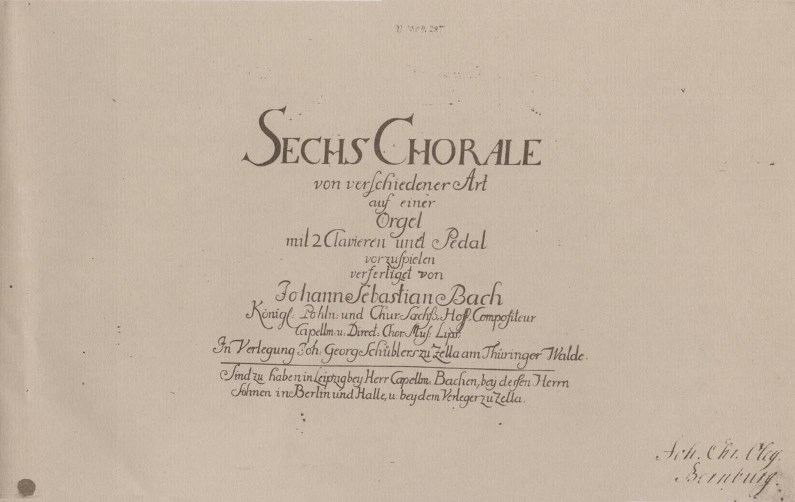
bach-schubler-titelblad
Title page of Schübler’s edition of six of Bach’s organ chorales based on cantata movements, known nowadays as the “Schübler Chorales.” The two last lines are instructions on where to purchase more of these: in Leipzig from Bach himself, from his sons in Berlin and Halle, and from the publisher [Schübler] in Zella.

There is no cantata for this Sunday, as no figural music was allowed in Leipzig in the 40 days before Easter, with the exception of the feast of the Annunciation (March 25).

For me this means I now finally have time to share some of what I learned during the Bach Festival in Bruges. On Friday January 26 I attended an all-day lecture by Professor Ignace Bossuyt about how Bach “reworked” his own music and the music of others in his compositions. The biggest eye-opener for me was that all Bach’s “Schübler Chorales” for organ (named after their publisher, Johann Georg Schübler) from 1747/1748 are actually arrangements of movements from Bach’s 1724/1725 cycle of cantatas I have been discussing on this blog since June 2017.

While I am not an organist at all, I did grow up in the land of organs and miss hearing them. My mother comes from a family of organists on her mother’s side. When other little boys dreamed of cars, my father dreamed of being an organist and built organ keyboards from blocks at home and would pretend to play them (sadly because of class perception his parents didn’t deem it appropriate to send him for lessons). Thus my parents were extremely picky where we went to church – there had to be a good organist. So I heard my share of Bach chorale preludes and Schübler Chorales, even before I knew what they were.

Because of the funeral service for my mother in the Kloosterkerk in The Hague I already referred to last week, I also have a soft spot for Bach’s “Schübler Chorale” BWV 645, Wachet auf, ruft uns die Stimme, because the incomparable Jan Hage (now organist at the Dom Church in Utrecht) played this at the end of the service, as we were walking out behind the coffin. This music, together with smiles of dear friends we passed by, gave me great comfort at a moment that could otherwise have been unbearable. Listen to this chorale, played by Jan Hage on that same organ of the Kloosterkerk in The Hague, here on YouTube. Another wonderful, and historically significant, performance of this chorale by Ton Koopman, on the Silbermann organ* (1714) in the Freiberg Cathedral, Germany, can be found here on YouTube. Bach and Silbermann knew each other, and Bach might have played on this organ too.

What I didn’t know until Professor Bossuyt’s lecture is that this piece of music was taken from the fourth movement of Cantata 140 with the same title. This cantata is officially not part of the 1724/1725 cycle, but in Bach’s head in 1747 it probably was. Bach wrote Cantata 140 Wachet auf, ruft uns die Stimme in 1731, most likely in an attempt to leave a complete chorale cantata cycle for posterity. During the chorale cantata cycle of 1724/1725, there had been no 26th or 27th Sunday after Trinity (by that time it was already Advent and it is of course no coincidence that Bach uses an Advent chorale in this cantata). Watch the tenor solo from this Cantata 140 Wachet auf, ruft uns die Stimme by all the tenors and baritones of the Amsterdam Baroque Choir (on a live recording conducted by Ton Koopman) here on YouTube.

I have two more beautiful examples of how Bach arranged an existing chorale cantata movements into his “Schübler Chorales”:

Bach turned the fourth movement of Cantata 93 Wer nur den lieben Gott lässt walten into the Schübler Chorale with the same title, BWV 647. Watch the duet from Cantata 93 by the J.S. Bach Foundation with soprano Miriam Feuersinger and alto Jan Börner here on Youtube. Watch the Schübler chorale played by Michael Schultheis on the organ of the Basilica in Seligenstadt, Germany, here on YouTube.

The last example is from a cantata that is nowadays not considered a true chorale cantata, but if Bach used it for the Schübler chorales, we can assume that he himself did regard it as such. It is Cantata 6 Bleib bei uns, denn es will Abend werden for Easter Monday in 1725. Hear Dorothee Mields sing the third movement from Cantata 6 live here on YouTube. Then listen here on YouTube to Dutch organist Wim van Beek play the Schübler Chorale with the same title, BWV 549, on the historic Schnitger-Hinsz organ (1740) in the Martini church in Groningen, The Netherlands.

Wieneke Gorter, February 17, 2018, links updated December 2, 2019

*learn more about the Silbermann organ here.

Bonus Advent cantata

10 Sunday Dec 2017

Posted by cantatasonmymind in Advent, Cantatas, Leipzig

≈ Leave a comment

Tags

1st Sunday of Advent, Advent, Bach, BWV 36, Christmas, Christoph Pregardien, Collegium Vocale Gent, J.S. Bach Foundation, J.S. Bach Stiftung, Nuria Rial, Peter Kooy, Phlippe Herreweghe, Sarah Connolly, Sybilla Rubens

Nuria Rial, my favorite interpreter of the soprano aria from Cantata 36.

In Leipzig in Bach’s time, the period between the first Sunday of Advent and Christmas was a “tempus clausum,” when no figural music was allowed in the churches. So if I would follow Bach’s cantata writing in 1724 very strictly, I would not have any music for you today.

So let’s take a detour to 1725. Sometime in that year, Bach wrote a congratulatory cantata for a teacher at the St. Thomas School in Leipzig. The cantata, with the title Schwingt freudig euch empor, had nine movements: an opening chorus, four recitatives and three arias. The cantata also featured a closing chorus alternated with recitatives for all the soloists, the way Bach would also use that in the before-last movement of his St. Matthew Passion. For the text of this cantata, please see this entry on Eduard van Hengel’s website. Scroll all the way down to find a table with all the different texts for the different cantatas.

In the fall of 1726, Bach received a request from his previous employer, prince Leopold of Köthen, to write a cantata for this birthday of his second wife, princess Charlotte Friederike Wilhelmine, on November 26 of that year. Scholars think that at the same time Bach was reworking this cantata from 1725 into this Birthday cantata, he was also reworking it into an Advent cantata. However the music of that particular cantata has not survived.

In 1731 Bach again, or finally, was able to make the original of 1725 into an Advent cantata, by replacing all the recitatives with chorales. This is cantata 36 Schwingt freudig euch empor, one of three cantatas for the first Sunday of Advent that have survived. (The other two are Cantata 61 I discussed last year, and Cantata 62 I discussed last week). Again please see Eduard van Hengel’s table of the different texts of all the various cantatas here. Find the English translations of Cantata 36 here, and find the score of Cantata 36 here.

My favorite recording of the entire cantata is the one by Herreweghe from 1997 (from the same album I discussed last week). I like this recording the best because of the most sparkling interpretation of the opening chorus, gorgeous singing by Christoph Prégardien in the tenor solos and by Peter Kooy in the bass aria, and a wonderful soprano/alto duet by Sybilla Rubens and Sarah Connolly. Find this recording here on YouTube. Or follow the links in my post from last week to purchase the entire album of Advent cantatas by Herreweghe. It is a great Christmas gift 🙂 !

If you prefer to watch a live recording, I recommend the one by the J.S. Bach Foundation. They just released the entire video recording of this cantata this week, and this performance contains my absolute favorite interpretation of the soprano aria by Nuria Rial.

Wieneke Gorter, December 9, 2017, links updated and photo added December 3, 2019.

The last weeks of Trinity = bass aria time for Bach (Trinity 23 & 24 in 1724)

26 Sunday Nov 2017

Posted by cantatasonmymind in Cantatas, Chorale cantatas 1724/1725, Leipzig, Trinity

≈ Leave a comment

Tags

Bach, Bach Collegium Japan, J.S. Bach Foundation, Johannes Kaleschke, Peter Kooy, Robin Blaze

sid59217s-1400x1400_q85

Jacob Isaacksz van Ruisdael, ‘Landscape with a waterfall’, circa 1668, Rijksmuseum, Amsterdam.

Last week it was the 7th anniversary of my mother’s passing. I wasn’t sure what to write about that, so ended up not posting that day. If you would like to read more about the woman who still is my main inspiration for this blog, you can read my tribute to her here.

But as it turns out, it is not a bad thing to combine the cantatas Bach wrote for Trinity 23 & 24 in 1724 in one and the same blog post, since they both stand out for their bass arias. It is noteworthy that Bach ended both his 1723 and 1724 Trinity seasons in Leipzig with cantatas featuring impressive bass arias*. That the “End of Life/End of Time/Judgement Day” theme was on every Protestant’s mind in the 18th century around this time of year of course had a lot to do with this. Bach often associates the bass voice with this theme, see for example Cantata 20 O Ewigkeit du Donnerwort, discussed here on this blog.

Regarding Cantata 139 Wohl dem, der sich auf seinen Gott, for the 23rd Sunday after Trinity (which was last week), I prefer the recording by the J.S. Bach Foundation (Bachstiftung). Especially the tenor aria is very well done by tenor Johannes Kaleschke and violinists Renate Steinmann and Martin Korrodi. Update from 2019: when I first wrote about this performance in 2017, the cantata was not available on YouTube in full length, but now it is! You can find it here. For those who can understand (a little) German, there is also a terrific explanation by conductor Rudolf Lutz of everything that happens in the cantata available on YouTube here. You can even download the same worksheet (“Lutzogramm”) as the audience is looking at here.  Rudolf Lutz is at his best here, very clever, witty, and informative. He spent a lot of time prepping for this workshop, including entering entire orchestrations into his “Lady Yamaha,” which is very effective for understanding Bach’s incredible composition. Soloists are Susanne Frei, soprano; Antonia Frey, alto; Johannes Kaleschke, tenor; Ekkehard Abele, bass.

However, since the subject of this post is bass arias … the best interpretation of the extremely unusual bass aria appears on the Bach Collegium Japan recording. Peter Kooy does a fabulous job bringing out the different character for the 11 (!) different sections of the aria. I created a playlist on Spotify of this Bach Collegium Japan recording here. Soloists are Yukari Nonoshita, soprano; Robin Blaze, countertenor; Makoto Sakurada, tenor (he doesn’t convince me or capture my attention, and I find his pronunciation of the word “getrost” a bit distracting); Peter Kooy, bass.

Find the text of Cantata 139 here, and the score here.

peterkooyklein

Peter Kooy

Peter Kooy/Bach Collegium Japan again wins “best interpretation of the bass aria” in Cantata 26 Ach wie flüchtig, ach wie nichtig for the 24th Sunday after Trinity in 1724. Listen to Bach Collegium Japan’s recording via a playlist I created here on Spotify. This cantata was released on the same album as Cantata 139, so the soloists are again Soloists are Yukari Nonoshita, soprano; Robin Blaze, countertenor; Makoto Sakurada, tenor; and Peter Kooy, bass. 

Find the text of Cantata 26 here, and the score here.

And what a bass aria this is! The calmly babbling brook from the lovely tenor aria earlier in the cantata has become a white water river in this bass aria. And the combination of bass voice with the oboes makes me think of Hades in Monteverdi’s Orfeo. Peter Kooy is great and my mother loved him very much, but in my humble opinion, the luckiest people today are those attending the cantata service in the Kloosterkerk in The Hague, Netherlands, where my good friend and favorite Bach bass Marc Pantus will be singing this aria. The Kloosterkerk was also my mother’s church for the last decade of her life, so I have now successfully circled back to her in this post, and miss her much more today than I did last week.

Wieneke Gorter, November 26, 2017, updated November 21 & 24, 2019.

*The first cantata Bach ever wrote for this particular time of year was Cantata 163 in Weimar. It contains a bass aria accompanied by two cellos, an instrumentation Bach never ever used after that.  The last two cantatas of the 1723 Trinity season were Cantatas 90 and 70. Read my post about Cantata 90 for the 25th Sunday after Trinity here and my post about Cantata 70 for the 26th Sunday after Trinity here.

Wedding music for the 20th Sunday after Trinity, with a gorgeous soprano aria

30 Monday Oct 2017

Posted by cantatasonmymind in Cantatas, Chorale cantatas 1724/1725, Köthen, Leipzig, Trinity

≈ Leave a comment

Tags

Advent, Bach, Bachstiftung, BWV 140, BWV 180, BWV 21, BWV 61, Christoph Prégardien, Christophe Coin, duet, Fabrice Hayoz, flute, J.S. Bach Foundation, Jan Börner, Julius Pfeifer, Köthen, Leipzig, Maria Christina Kiehr, parable of the Wedding Banquet, recorder, Rudolf Lutz, Trinity, Trinity 20, violin, Weimar

Bachsaal_Schloss_Koethen

The mirror-hall, now called “Bach hall” in Köthen, where Bach worked from 1717 to 1723.

The 1724 cantata for yesterday, Cantata 180 Schmücke dich, o liebe Seele (Adorn yourself, beloved soul) is full of luster, with an opening chorus, a tenor/flute aria and a soprano/orchestra aria that make me think of the orchestral suites Bach wrote at the court of Köthen between 1717 and 1723. With all this joy already from the beginning, it sounds like a wedding cantata.

The recording I appreciate most is the one by the Swiss J.S. Bach Foundation from 2009, because I feel they bring the most light into the opening chorus and the soprano aria, illustrate the “knocking” the best in the tenor aria, and the singers do a great job bringing out the text. Soloists: Maria Christina Kiehr, soprano; Jan Börner, counter-tenor; Julius Pfeifer, tenor; and Fabrice Hayoz, bass.  Update from 2020: When I first wrote about this cantata, in 2017, only the soprano aria from this recording was available on YouTube, but in 2018 they made it available in full length. You can find it here.

Find the German text with English translation here, and the score here.

Why all this luster in this cantata? In Bach’s time, the Gospel reading for this Sunday, the parable of the Wedding Banquet (Matthew 22: 1-14) was seen in relation to the union of the faithful with Christ, both during communion as well as during the heavenly banquet in the afterlife. If you then realize that that union between the soul of the faithful and Christ was in that time often compared to the marriage between bride and groom, it was not unusual to present something that sounds like wedding music on this communion Sunday.  Expressing the love-like relationship of Jesus and the soul was not a foreign concept for Bach. He did it beautifully in the duet in Cantata 21 from Weimar (read my post about that cantata here) and later also in Cantata 140 Wachet auf, ruft uns die Stimme.**

In addition to this important link to the Bible texts, I think Bach might have an ulterior motive to bring so much splendor in a cantata for a Communion Sunday. On those Sundays, the congregations in the Leipzig churches would have been larger, and more prominent (read: wish-to-be-seen) families would have been present. Having followed Bach’s cantata compositions in the order he wrote them in Leipzig for almost two years now, I am seeing this pattern around large events in Leipzig: important audience = time to show off his star players and singers and his composition skills.

In his lecture (2020 update: now with English subtitles!), Rudolf Lutz, the director of the J.S. Bach Foundation, points out all the musical elements that make the opening chorus so utterly joyful and full of splendor. If you start watching at 19 minutes, you can see/hear how he shows that the bass notes are already signs of glory, similar to the way how Bach expresses that in his Magnificat from 1723 and his Cantata 140. He then goes on to explain how the recorders build a “dome” over all of it, and the unisono violins and viola express the utter pleasure of lovers, or as Lutz says: “I love you, I love you, I say it to you again! Oh! Ah!”

In the tenor aria Christ is knocking on the door of the believer. This is a reference to the Revelations chapter from the Bible. When Bach received the libretto for this cantata, he must have thought back to Cantata 61 Nun komm, der Heiden Heiland from Weimar, in which this Bible text was quoted literally. In that cantata, the “Vox Christi” bass sings:

Siehe, ich stehe vor der Tür und klopfe an.
So jemand meine Stimme hören wird und die Tür auftun,
zu dem werde ich eingehen
und das Abendmahl mit ihm halten und er mit mir.


See, I stand before the door and knock.
If anyone will hear my voice
and open the door
I shall go in
and have supper with him and he with me.

This recitative/arioso is accompanied by staccato continuo, illustrating the knocking. Bach uses this feature again in the continuo for this tenor aria from Cantata 180. Except this Christ is more impatient than the one from Cantata 61. For the rest it is pure blissful music, again putting Bach’s fabulous flute player in the spotlight. The theme of the flute part is likely based on the first three notes of the chorale melody. Julius Pfeifer does a great job singing this on the J.S. Bach Foundation recording.*** 

Note Christophe Coin on violoncello piccolo in the soprano chorale.  My most favorite part of this recording by the J.S. Bach Foundation is the soprano aria. Sublime interpretation by all, with levity, freedom, and abandon in the orchestra and superb singing by Maria Christina Kiehr. If you wonder where you know her voice from: she appears on many Savall recordings alongside Montserrat Figueras.

Wieneke Gorter, October 30, 2017, updated October 21, 2023.

** Wachet auf, ruft uns die Stimme was really also a Trinity, almost Advent, cantata, but is nowadays better known as “The Wedding Cantata” (incorrectly suggesting that Bach wrote only one Wedding cantata) because of that subject matter.

***Another fabulous recording of this aria is the one by Cristoph Prégardien on the Christophe Coin CD. Listen to it here.

← Older posts
Newer posts →

Recent Posts

  • “Missa Miniatura” by CONTINUUM/Elina Albach Even More Moving in 2025
  • Bachfest Leipzig 2025
  • Bach Cantatas for Christmas – 1724 and 1734 editions
  • Fourth Sunday of Advent – more insight into Cantata 62 helped me better understand Bach’s Christmas Oratorio
  • Saint Ambrose and Luther in Milan – Second Sunday of Advent

Archives

  • August 2025
  • July 2025
  • December 2024
  • November 2024
  • June 2024
  • January 2024
  • December 2023
  • October 2023
  • September 2023
  • August 2023
  • April 2022
  • February 2022
  • January 2022
  • December 2021
  • November 2021
  • June 2021
  • May 2021
  • April 2021
  • February 2021
  • January 2021
  • December 2020
  • November 2020
  • October 2020
  • September 2020
  • August 2020
  • July 2020
  • May 2020
  • April 2020
  • March 2020
  • February 2020
  • January 2020
  • December 2019
  • November 2019
  • May 2018
  • April 2018
  • March 2018
  • February 2018
  • January 2018
  • December 2017
  • November 2017
  • October 2017
  • September 2017
  • August 2017
  • July 2017
  • June 2017
  • May 2017
  • April 2017
  • March 2017
  • February 2017
  • January 2017
  • December 2016
  • November 2016
  • October 2016
  • September 2016
  • August 2016
  • July 2016
  • June 2016
  • May 2016
  • April 2016
  • March 2016
  • February 2016
  • January 2016

Enter your email address to follow this blog and receive notifications of new posts by email.

Join 336 other subscribers

Categories

  • 1723 Trinity season special series
  • Advent
  • After Easter
  • Ascension
  • Bach's life
  • Cantatas
  • Chorale cantatas 1724/1725
  • Christmas
  • Easter
  • Epiphany
  • Following Bach in 1725
  • Köthen
  • Leipzig
  • Septuagesima
  • Travel
  • Trinity
  • Weimar

Meta

  • Create account
  • Log in
  • Entries feed
  • Comments feed
  • WordPress.com

Website Built with WordPress.com.

  • Subscribe Subscribed
    • Weekly Cantata
    • Join 156 other subscribers
    • Already have a WordPress.com account? Log in now.
    • Weekly Cantata
    • Subscribe Subscribed
    • Sign up
    • Log in
    • Report this content
    • View site in Reader
    • Manage subscriptions
    • Collapse this bar
 

Loading Comments...