Weekly Cantata

Weekly Cantata

Tag Archives: Netherlands Bach Society

Bach Cantatas for Christmas – 1724 and 1734 editions

23 Monday Dec 2024

Posted by cantatasonmymind in Cantatas, Chorale cantatas 1724/1725, Christmas, Epiphany, Leipzig

≈ 4 Comments

Tags

Alex Potter, Antonia Frey, baroque-music, Bart Aerbeydt, Bernhard Bechtold, Carine Tinney, Charles Daniels, Christmas, Christmas Oratorio, Collegium Vocale Gent, Concerto Copenhagen, Daniel Johannsen, Eric Milnes, Florian Sievers, Harry van der Kamp, J.S. Bach Foundation, J.S. Bach Stiftung, Jan Kobow, Julia Doyle, Lars Ulrik Mortensen, Lucia Giraudo, Margot Oitzinger, Maria Keohane, Mark Padmore, Matthew Brook, Matthew White, Milo Maestri, Monika Mauch, Montreal Baroque, Netherlands Bach Society, Peter Kooij, Philippe Herreweghe, Rodrigo Lopez-Paz, Rudolf Lutz, Sarah Connolly, Stephan MacLeod, Tomáš Král, Vasiljka Jezovsek

Merry Christmas! Below are my recommendations for recordings of Bach’s chorale cantatas for the Christmas season, written in 1724/1725, as well as a link to the video of this year’s wonderful live performance by the Netherlands Bach Society of Bach’s Christmas Oratorio, written in 1734/1735. Before I get to that, I wanted to share a personal story. (If you want to “jump to the recipe,” just scroll down three paragraphs to the next header).

As regular readers of this blog know, Christmas morning for me = “Jauchtzet, frohlocket,” the first entrance of Bach’s Christmas Oratorio*. But ten days ago, during the first-ever Christmas Oratorio concert of my life as a chorus member, I couldn’t sing those words.

I had unwittingly set myself up for it, because I had just done two things to remember my late mother. It was very cold in the church, and I had lent one of my mother’s scarves to a friend who was singing next to me. As we were getting on stage, I told her: “this scarf has been in many a Bach concert, because my mother used to sing in a Bach choir too.” And then I showed her how I had copied my mother’s signature from her old piano reduction to the new one I was using now.

So while I had been completely fine during all the rehearsals, now with the audience there and those memories, the first notes of the timpani made me choke up. Fortunately, that first soprano entrance is low and doubled by many other voices, so nobody noticed. And I was fine for the rest of the concert, and thoroughly enjoyed getting to sing cantatas 1, 2, 5, and 6 of Bach’s Christmas Oratorio with a good orchestra and great soloists.

Do you have special memories associated with Bach’s or other Christmas music? Please let me know in the comments. Here are my recommendations for recordings:

Christmas Cantatas from Bach’s Chorale Cantata cycle, 1724/1725

Christmas Day: Cantata 91 Gelobet seist du, Jesu Christ by the J.S. Bach Foundation/Rudolf Lutz, with Monika Mauch – Soprano; Margot Oitzinger – Alto; Bernhard Berchtold – Tenor; and Peter Kooji – Bass. Find the score here, and English translations here.

Second Christmas Day: Cantata 121 Christum wir sollen loben schon by Concerto Copenhagen/Lars Ulrik Mortensen, with Maria Keohane – Soprano; Alex Potter – Alto; Jan Kobow – Tenor; and Matthew Brook – Bass. Find the score here, and English translations here.

Third Christmas Day: Cantata 133 Ich freue mich in dir by Concerto Copenhagen/Lars Ulrik Mortensen, with Maria Keohane – Soprano; Alex Potter – Alto; Jan Kobow – Tenor; and Matthew Brook – Bass. Find the score here, and the English translations here.

Maria Keohane

Sunday after Christmas: Cantata 122 Das neugeborene Kindelein by Collegium Vocale Gent/Philippe Herreweghe, with Vasiljka Jezovsek – Soprano; Sarah Connolly – Alto; Mark Padmore – Tenor; and Peter Kooij – Bass. Find the score here, and the English translations here.

New Year’s Day: Cantata 41 Jesu nun sei gepreiset by the J.S. Bach Foundation/Rudolf Lutz, with Julia Doyle – Soprano; Antonia Frey – Alto; Florian Sievers – Tenor; and Stephan MacLeod – Bass. Find the score here, and the English translations here.

Jan 6, Epiphany: Cantata 123 Liebster Immanuel, Herzog der Frommen by Montréal Baroque/Eric Milnes, with Matthew White, alto; Charles Daniels, tenor; and Harry van der Kamp, bass. Find the score here, and the English translations here.

From Bach’s Christmas Oratorio, 1734/1735

Bart Aerbeydt and Milo Maestri
Lucia Giraudo
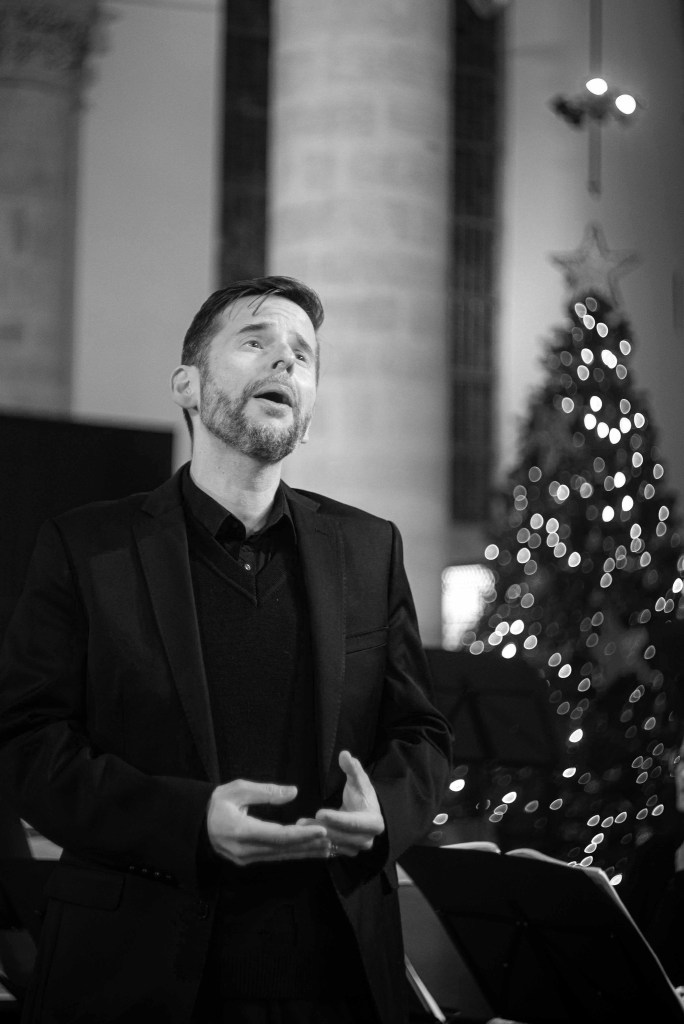
Daniel Johannsen

All photos above by Donald Bentvelsen. Find him on Instagram at @bentvel.

I highly recommend the video of the most recent live performance by the Netherlands Bach Society under the direction of Lars Ulrik Mortensen. They performed cantatas 1, 4, 5, and 6 of Bach’s Christmas Oratorio in the Netherlands earlier this month. I attended the concert in Naarden on December 11, the video below is from the performance in Utrecht, two days later. The choir could have been a bit larger for my personal taste, but for the rest I absolutely loved this performance, with text-focused singing by all soloists, and fabulous and sensitive playing by the instrumentalists, allowing for musical dialogues with the singers. I especially enjoyed the contributions by tenor Daniel Johannsen, oboist Rodrigo Lopez-Paz (photo in my previous post), violinist Lucia Giraudo, and horn players Bart Aerbeydt and Milo Maestri. I very much ejoyed reading the program booklet, especially the the interview with director Lars Ulrik Mortensen.

Read the English program book for this performance here. Read a bit more on the fifth cantata from this same performance in my previous post.

Please consider subscribing to this blog (just click on the button below), it really helps me!

Best wishes for the New Year,

Wieneke Gorter, December 23, 2024.

* if you don’t know the story, please find it here.

Fourth Sunday of Advent – more insight into Cantata 62 helped me better understand Bach’s Christmas Oratorio

21 Saturday Dec 2024

Posted by cantatasonmymind in Advent, Cantatas, Chorale cantatas 1724/1725, Leipzig

≈ 1 Comment

Tags

Advent, Alex Potter, Bach, BWV 248/5, Carine Tinney, Cecilia Bernardini, Chorale Cantatas, Christmas, Christmas Oratorio, Daniel Johannsen, Johann Martin Schamel, l500b300, Lydia Vroegindeweij, Netherlands Bach Society, Rodrigo Lopez-Paz, Tomáš Král, Weihnachtsoratorium

Adoration of the Shepherds by Dutch painter Gerard van Honthorst, 1622. Pommersches Landesmuseum (Pomerania State Museum), Germany.

In my post for the first Sunday of Advent about Cantata 62 Nun komm, der Heiden Heiland, I explained how Bach’s chorale cantatas were most likely influenced by Johann Martin Schamel‘s annotations in his publication “Evangelischer Lieder-Commentarius.” Still, in that post, I gave just a few examples of how Bach used Schamel’s explanations.

Only after I wrote that post, I realized that Lydia Vroegindeweij had already created a “Read and Listen” guide for this cantata on her Luther 500 / Bach 300 website, shining a very clear light on the relation between Schamel’s explanations and Bach’s music. However, that article was in Dutch. So over the past few weeks, I translated Lydia’s Dutch text into English, and then Lydia transformed that text into a beautiful web page, with listening examples for every single movement of the cantata. Please find that brand-new English “Read and Listen” guide for Cantata 62 here.

In the process of translating and re-reading, I became more familiar with Luther’s and Schamel’s key themes for Advent and Christmas, especially these three:

  1. The importance of light: the light comes from the manger (as pictured in the painting above), from within, and is a metonym for Christ, always conquering the darkness. It is mentioned again and again.
  2. Jesus is always there, he is living in the hearts of the people, he is always with them as if he were a family friend, a house guest. In other words, he is already here and one doesn’t have to wait for him.
  3. Christ’s divine character and human character exist simultaneously, in one and the same person.

During that same time, I was rehearsing and performing cantatas 1, 2, 5, and 6 of Bach’s Christmas Oratorio as a chorus member, as well as attending an excellent performance by the Netherlands Bach Society of cantatas 1, 4, 5, and 6. Singing these texts and reading them in a program booklet with my newly acquired knowledge, I became much more conscious how strongly Luther’s and Schamel’s way of thinking are also present in the text and music of Bach’s Christmas Oratorio.

The theme of the inner light is especially present in one of my favorite parts of the Christmas Oratorio, the fifth cantata, written for the Sunday after New Year. Please find a live video recording here of the Netherlands Bach Society’s performance of this cantata in Utrecht on December 13, 2024, the same production I attended two days earlier in Naarden.

Following the chorus that talks about the sighting of the star, Bach and his librettist present an alto recitative (performed here by Alex Potter), which at first still refers to the star, but then turns to Jesus / to the core of the faith, and explains that Jesus is the light:

Wohl euch, die ihr dies Licht gesehen,
Happy are you who have seen the light,
Es ist zu eurem Heil geschehen!
It has appeared for your salvation!
Mein Heiland, du, du bist das Licht,
My saviour, you, you are the light
Das auch den Heiden scheinen sollen,
Which shall shine on the Gentiles also
Und sie, sie kennen dich noch nicht,
And they, they do not know you yet,
Als sie dich schon verehren wollen.
Though they would already worship you
Wie hell, wie klar muss nicht dein Schein,
How bright, how clear must your radiance be,
Geliebter Jesu, sein!
Beloved Jesus!

Rodrigo Lopez-Paz. Photo by Eduardus Lee, courtesy of the Netherlands Bach Society.

More illustrations of this special light follow in the bass aria (performed here by baritone Tomáš Král and oboist Rodrigo Lopez-Paz)

Erleucht auch meine finstre Sinnen,
Illuminate also my gloomy thoughts
Erleuchte mein Herze
Illuminate my heart
Durch der Strahlen klaren Schein!
With the rays of your clear light!
Dein Wort soll mir die hellste Kerze
Your word will be the brightest candle for me
In allen meinen Werken sein;
In all my deeds;
Dies lässet die Seele nichts Böses beginnen.
This lets my soul begin nothing evil

In the terzetto (performed here by violinist Cecilia Bernardini, soprano Carine Tinney, alto Alex Potter, and tenor Daniel Johannsen), we also see the theme of “Jesus who dwells in the heart” appear. In this trio, the alto interrupts the tenor and soprano with the very strong statement “er ist schon wirklich hier!” (he really is already here!). The tenor and soprano represent the people who think the Messiah is yet to come, singing:

Ach, wenn wird die Zeit erscheinen?
Ah, When will the time appear ?
Ach, wenn kömmt der Trost der Seinen?
Ah, When will he who is the comfort of his people come ?

While the alto voice represents the Lutheran doctrine that Jesus is always with you, that he dwells in your heart, singing:
Schweigt, er ist schon würklich hier!
Be silent, he is really already here!

The text of the closing chorale combines the theme of Jesus dwelling in the heart with that of the inner light:

Zwar ist solche Herzensstube
Indeed such a room in my heart
Wohl kein schöner Fürstensaal,
Is certainly no fine royal palace
Sondern eine finstre Grube;
But rather a dark pit;
Doch, sobald dein Gnadenstrahl
Yet, as soon as the rays of your mercy
In denselben nur wird blinken,
Only gleam within there
Wird es voller Sonnen dünken.
It will seem filled with sunlight.

Wieneke Gorter, December 21, 2024.

First Week of Advent 2023

07 Thursday Dec 2023

Posted by cantatasonmymind in Advent, Cantatas, Leipzig

≈ 3 Comments

Tags

All of Bach, Christmas, Harnoncourt, J.S. Bach Foundation, music, Netherlands Bach Society, Nuria Rial, Seppi Kronwitter, Shuann Chai, Shunske Sato, Zsuzsi Tóth

Photo of Shunske Sato by Elvira Demerdzhy

During this first week of Advent, I often talk about Nuria Rial’s rendition of the soprano aria from Cantata 36 with the J.S. Bach Foundation. However, this year let’s put the spotlight on the violin part of that aria, and watch the incomparable Shunske Sato work his magic in this movement from Cantata 36 Schwingt freudig euch empor on All of Bach, with soprano Zsuzsi Tóth. Never did I enjoy a “da capo” this much. To read more about this cantata, the third one Bach wrote (or adapted) for the first Sunday of Advent, read my blog post from 2017 here.

That I had to think about Sato’s playing this week is no coincidence. Today I witnessed his amazing musicianship, sense of timing, and sense of humor in a terrific concert with equally talented pianist Shuann Chai here in Amsterdam. They played two Beethoven violin sonatas and it was such a treat that I can’t wait for their CD to come out in 2024 with all ten of the sonatas. Another reason I’m excited about their recording project is that Shuann will be playing on two original fortepianos from 1800 and 1820, respectively. Please read more about their endeavor here and please consider donating. They are currently at 64% of their funding so they can use all the help they can get.

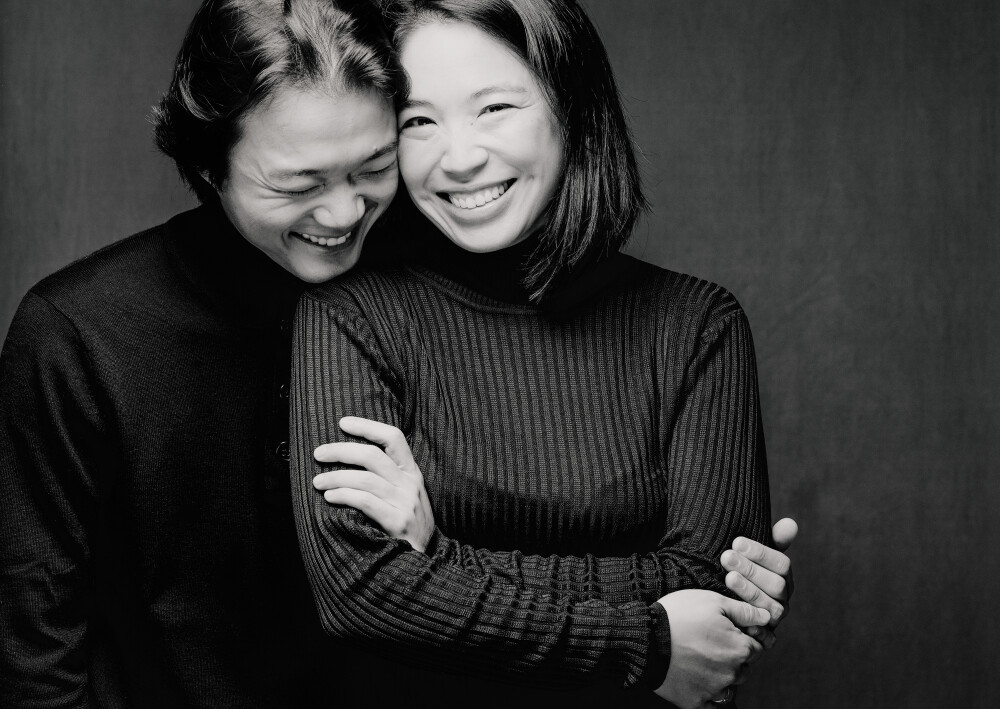
Shunske Sato and Shuann Chai, Photo by Marco Borggreve.

If you are on Instagram, please follow my account at @weeklycantata (or click on the instagram icon here below). Please consider subscribing to this blog (type your email in the box below and then click “subscribe”), so you will receive an email each time I publish a story.

Wieneke Gorter, December 7, 2023.

About Weekly Cantata

I am a bilingual writer, publicist, choral singer, art and nature lover, foodie, happy wife, and blessed mother of two. I started this blog in 2016, inspired by my late mother’s love for Bach’s cantatas. After 23 years in the San Francisco Bay Area, I’m now back in the Netherlands.

If you are on social media, please follow me:

  • Facebook
  • Instagram

Please subscribe!

Please subscribe to this blog! Simply fill in your email address and you’ll receive an email every time I’ve published a new post. Thank you so much / Vielen Dank / Dankuwel / Merci mille fois / 감사합니다 / 谢谢 / ありがとう / Mille grazie / Muchas gracias / Muito obrigado / Tusen takk / Tack så mycket / Terima kasih / شكراً جزيلاً / תודה רבה

Designed with WordPress.com

Love, pretty dresses, and a wedding – Trinity 20

21 Saturday Oct 2023

Posted by cantatasonmymind in 1723 Trinity season special series, Cantatas, Leipzig, Weimar

≈ Leave a comment

Tags

Dorothee Mields, Marcel Ponseele, Netherlands Bach Society, Trinity 20

For those of you who have been following this blog for a while now, there’s a beautiful new recording of a pretty aria for this 20th Sunday after Trinity: “Ich bin herrlich, ich bin schön” from Cantata 49 Ich geh und suche mit Verlangen from 1726. Watch Dorothee Mields perform this gem with the Netherlands Bach Society here on YouTube. This live registration (recorded during Covid times so without audience) is extra noteworthy because of a rare appearance of the fabulous Marcel Ponseele on oboe d’amore. For more information (in English!) about this cantata and especially the instruments in this aria, visit the website of the Netherlands Bach Society here and click on “Story”.

Why do all cantatas for this Sunday talk about dressing up? Read about it in my post from 2020, with links to one of the best lectures by Rudolf Lutz of the J.S. Bach Foundation in Switzerland (with English subtitles).

And read my post from 2016 to learn more out about the wedding these cantatas are associated with.

Wieneke Gorter, October 21, 2023.

Playing with fugues & Bach’s harpsichord at Köthen

24 Thursday Aug 2023

Posted by cantatasonmymind in 1723 Trinity season special series, Bach's life, Cantatas, Köthen, Leipzig, Trinity

≈ Leave a comment

Tags

Berlin, BWV 179, BWV 872, Charlottenburg Castle, Christine Schornsheim, Eduard van Hengel, fugue, harpsichord, Köthen, Leipzig, Michael Mietke, Netherlands Bach Society, Richard Atkinson, Trinity 11, Well Tempered Clavier

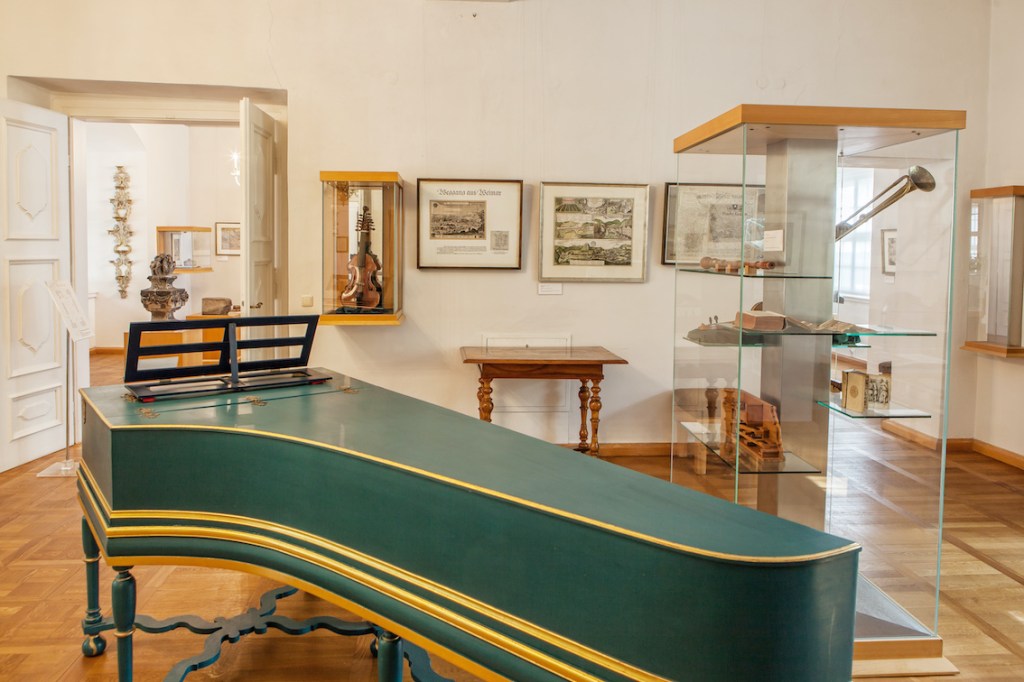
“The White Mietke,” a single manual* harpsichord built by Michael Mietke in Berlin, circa 1700. Lacquer artist: Gérard Dagly. Charlottenburg Castle, Berlin, Germany. In his last four years in Köthen, Bach played on a double manual harpsichord by the same builder, built especially for him in 1719.

This past Sunday was the 11th Sunday after Trinity, for which Bach wrote Cantata 179 Siehe zu, daß deine Gottesfurcht nicht Heuchelei sei (See that your fear of God is not hypocrisy) in 1723 in Leipzig. 

Much has been written about the stunning fugue in the opening chorus of this cantata, and I happily refer you to my posts from 2016 and 2020 for more information and a link to my favorite recording. But last week I learned something completely new about this opening chorus, thanks to yet another fabulous video series that saw the light during the pandemic: Richard Atkinson’s Bach Analyses. Since I’m a visual learner, I truly love watching videos like these. At first I merely started watching Richard’s video on the opening chorus of Cantata 179 to see if it would perhaps make the complex structure of the composition a bit easier to understand than Eduard van Hengel’s written explanation I had discussed in 2016.

And indeed it really helped me understand the music better! But what’s more, in that video Richard points out that the fugue from Cantata 179 shares some unusual composition techniques as well as themes with another mind boggling fugue by Bach, namely that of his Prelude and fugue no. 3 in C-sharp major (BWV 872) from the Well Tempered Clavier, Book II. As far as I know, no other Bach scholar or commentator ever mentioned this. Listen to that fugue here, played by Christine Schornsheim. We don’t know when exactly Bach wrote the keyboard piece, because we only have the publication date of the collection in which it appeared (Well Tempered Clavier Book II, 1740). It is possible that the cantata came first, but it is just as likely that Bach would have written the keyboard work before the cantata, while still employed at Köthen.   

Thinking of Bach playing with fugues on the harpsichord in Köthen brings me to another bit about Bach’s life I learned last week, while watching the interview with Christine Schornsheim by the Netherlands Bach Society: that we actually know what kind of harpsichord Bach played in Köthen, from 1719 to 1723. To be clear: most harpsichord players and all harpsichord builders already know this, but I didn’t, and I thought it worth mentioning here.

Historical records show that the Prince of Köthen allowed Bach to order a harpsichord from the famous builder Michael Mietke in Berlin sometime in 1718, and got to pick it up in March 1719.

On March 1, 1719, the accounts read: “To the Capellmeister Bach for the Berlin-made harpsichord and travel expenses 130 Thaler”. On March 14, Gottschalk, the chamber servant, also received eight thalers in “wages for transporting the Berlin harpsichord.”

The instrument remained in the princely music chamber; Bach did not get to take it with him when he moved  to Leipzig in May 1723. In 1784, the instrument is still mentioned: “The large harpsichord or grand piano with 2 manuals, by Michael Mietke in Berlin, 1719, defect.”

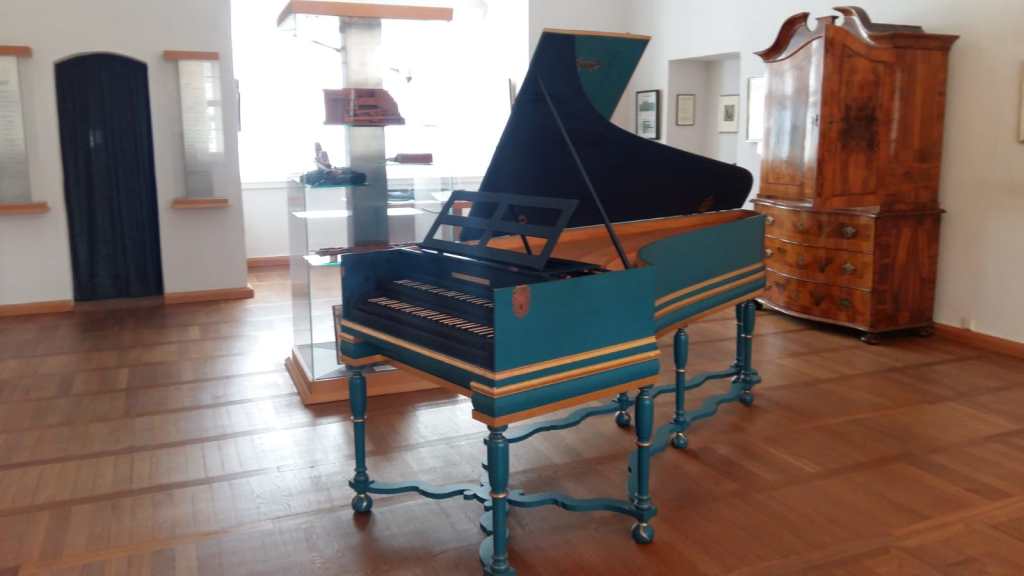
Many harpsichord builders have created copies of Bach’s “Mietke harpsichord.” In the video registration of the Prelude and fugue no. 3 in C-sharp major (BWV 872), Christine Schornsheim plays a terrific copy by Bruce Kennedy. The Köthen Castle had a copy made in 1992 by Martin-Christian Schmidt, pictured here: 

For the picture at the top of this blog post I chose one of the very few original Mietke harpsichords that have survived to this day, the “White Mietke” at the Charlottenburg Castle in Berlin. It was built almost two decades earlier than Bach’s harpsichord, it only has one single keyboard, and it was decorated by the court painter at Charlottenburg. 

Wieneke Gorter, August 23, 2023. 

*manual = keyboard

About Weekly Cantata

I am a bilingual writer, publicist, choral singer, art and nature lover, happy wife, and blessed mother of two. I started this blog in 2016, inspired by my late mother’s love for Bach’s cantatas. After 23 years in the San Francisco Bay Area, I’m now back in the Netherlands.

If you are on social media, please follow me:

  • Facebook
  • Instagram

Please subscribe!

Please join my readers from all over the world and subscribe to this blog! Simply fill in your email address and you’ll receive an email every time I’ve published a new post. Thank you so much / Vielen Dank / Merci mille fois / 감사합니다 / 谢谢 / ありがとう / Mille grazie / Muchas gracias / Muito obrigado / Takk / Terima kasih / Dankuwel!

Designed with WordPress.com

Passion highlights and Easter links

03 Saturday Apr 2021

Posted by cantatasonmymind in Cantatas, Easter, Leipzig, Weimar

≈ Leave a comment

Tags

Alberto Miguélez Rouco, Arttu Kataja, Collegium Vocale Gent, Combattimento Consort, Cynthia Miller Freivogel, Daniel Johannsen, Florian Just, Johannes Kammler, Klaas Stok, Maarten Engeltjes, Marc Pantus, Netherlands Bach Society, Philippe Herreweghe, Pieter Dirksen, Renate Arends, Rene Jacobs, Robin Johannsen, St. John Passion, St. Matthew Passion, Thomas Hobbs

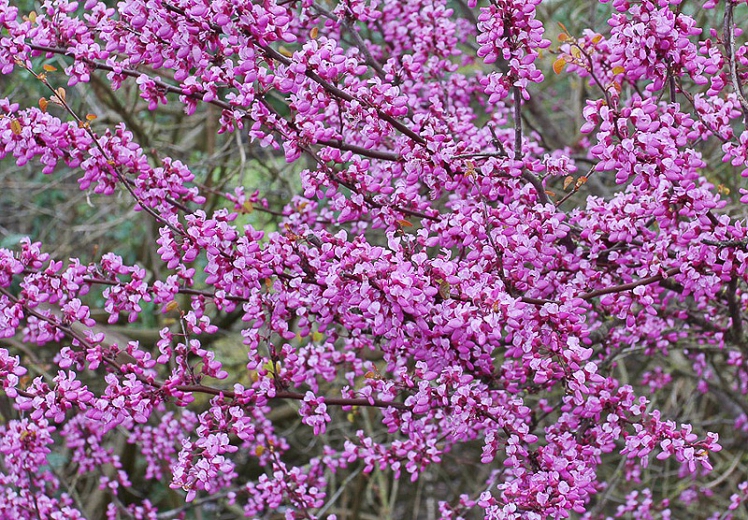
  • Wild California Lilac (Ceanothus)
  • Western Redbud (Cercis Occidentalis)

A little over 22 years ago, my husband and I moved from the Netherlands to California. My husband is a Jazz bass player in his spare time, so for him the music was another aspect to “living in Paradise.” There are many more Jazz performances and festivals here than in Europe, and there are lots of people here to do jam sessions with.

But for me it was a different story. I found a wonderful voice teacher and a good choir to sing in, but I missed the strong Dutch tradition of hearing and performing Bach’s Passions in the weeks before Easter. I used to have my biggest bouts of homesickness around that time of year. The heartache was softened only by it being my most favorite blooming season in California: the few weeks when two native trees, the purple Western Redbud (Cercis Occidentalis) and the blue-violet wild lilac (Ceanothus) bloom at the same time. The photos here don’t really capture how beautiful those colors are and how stunning it is when you see them together in the landscape, but it is something that makes me very happy.

Last year I didn’t have any homesickness, because all Passions in the Netherlands or Belgium I could have attended or participated in were canceled, so I didn’t feel I was missing anything. And while the world locked down, at the same time it became more accessible to me, because performances were now being moved to the internet. This meant I could watch the dress rehearsal of Herreweghe’s St. John Passion without the 11-hour plane ride or the struggle with jet lag. (That video registration is still available: find it here – scroll a bit down to where it says “Passions 2020”).

This year there were so many online St. Matthew or St. John Passion offerings from the Netherlands it was almost overwhelming. I didn’t have time to listen to all of them before writing this today, because most of the videos didn’t go live until yesterday, Good Friday. So I’ll just focus on a few that stood out to me.

Find the English translations of the St. John Passion here; the St. Matthew Passion here.

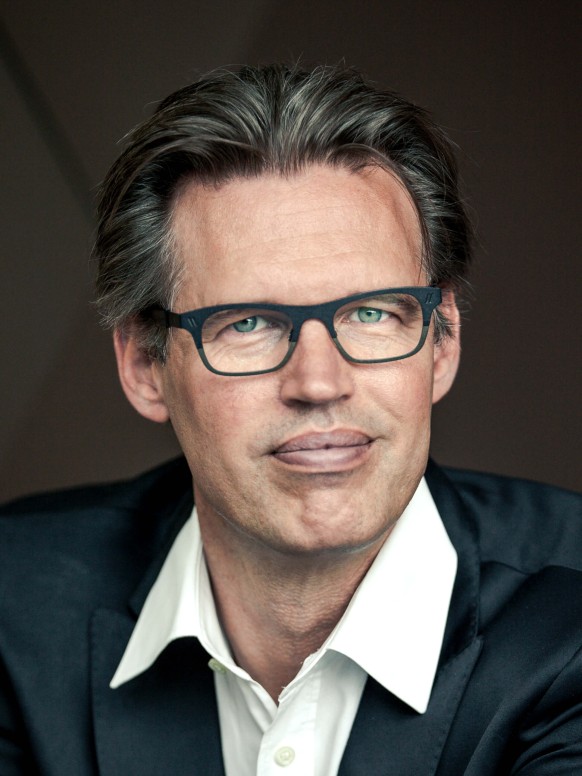
Cynthia Miller Freivogel

In the category “most interactive creation” I would like to mention the St. John Passion by Zing als vanZelf. An initiative of online singing instructor Bert van de Wetering, this organization invited thousands of singers to record themselves singing the chorales at home in the weeks leading up to Good Friday. They then recorded a performance with professional soloists singing the arias and the choruses with the excellent Combattimento Consort (Cynthia Miller Freivogel, concertmaster) as the orchestra, this all under the direction of Pieter Dirksen. Then they edited all this together into a video where you see the performance from a pretty church in a small town in the Netherlands, but every time there is a chorale you see the “choir” of individual volunteer singers pieced together on the screen. A really clever and touching solution. Watch it here. If you enjoy it, please consider making a donation, similar to what you would have paid if you would have attended this in person. The link for that is right there under the video.

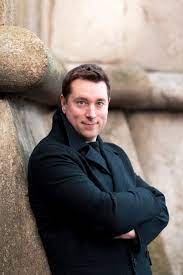
Klaas Stok

For readers who understand Dutch and would like to learn more about the St. Matthew Passion, I highly recommend the video program from the organization that every year brings performances of this masterpiece to the beautiful Bergkerk in the city of Deventer. This year they recorded four arias from the St. Matthew Passion, in the order they appear in the second half of the work: “Erbarme dich” (sung by countertenor Maarten Engeltjes), “Aus Liebe” (sung by soprano Renate Arends), “Komm, süßes Kreuz” (sung by bass Florian Just), and “Mache dich, mein Herze, rein” (sung by bass Marc Pantus). What I liked best about this video is the conversations director Klaas Stok has with each soloist before they sing their aria. Through these conversations, I gained a lot of new insights into the meaning of the different arias. I especially loved what Klaas Stok had to say about the architecture of the piece, the role each aria plays in the overall structure, and how different movements are connected. Of all the talks, I particularly enjoyed bass Marc Pantus’ take on “Mache dich, mein Herze, rein,” the final aria on the program. You can watch this until April 14. Just click here. But please note, it is all in Dutch. Again, a link to donate is right there under the video.

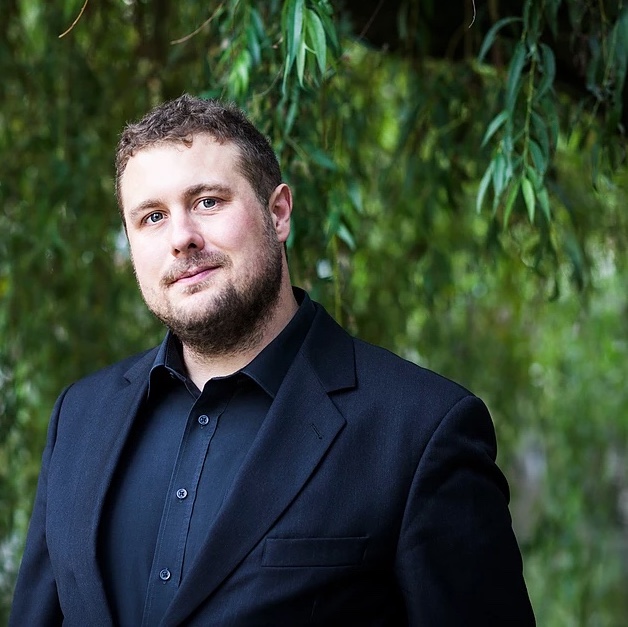
Thomas Hobbs

Last but not least, the most impressive performance I listened to yesterday and today: The St. John Passion (1725 version) by the Netherlands Bach Society under the direction of René Jacobs. This was shown on Dutch television on Good Friday, so if you don’t understand Dutch, you’ll have to sit through a confusing excerpt from the St. Matthew Passion and a few ads at first, but then you can forward the video 14 minutes, to skip the pre-concert interview with René Jacobs. Soloists are Daniel Johannsen, tenor (Evangelist); Johannes Kammler, bass (Christ); Robin Johannsen, soprano; Alberto Miguélez Rouco, countertenor; Thomas Hobbs, tenor; and Arttu Kataja, bass. There is so much fluidity and phrasing in the orchestra, such a good blend in the choir, as well as excellent enunciation from the choir, it is extraordinary. All the choral movements are extremely transparent, I enjoyed that very much. Jacobs takes some risks with considerably slower tempi in the chorales than is usual in the Historical Performance Practice world, stretching out the pauses in the Evangelist’s recitatives, and taking long fermatas on ending notes, but it is never old-fashioned or too Romantic. It makes for a very engaging, one of a kind performance. All soloists are wonderful, but I would like to give a shout-out to the two tenors: Daniel Johannsen for being an excellent Evangelist, and Thomas Hobbs for his fabulous “Zerschmettert mich” aria (one of the arias that is not in the better known, 1724 version). Donate to the Netherlands Bach Society here.

If you don’t feel like listening to any Passion music anymore, please find my three Easter blog posts from previous years through the following links:

Bach’s Easter in Weimar, 1715

Bach’s Easter in Leipzig, 1724

Bach’s Easter in Leipzig, 1725

Wieneke Gorter, April 3, 2021.

It is NOT ‘O Haupt’! – The crucial role of the chorale in Cantata 161 for Trinity 16

27 Sunday Sep 2020

Posted by cantatasonmymind in 1723 Trinity season special series, Cantatas, Chorale cantatas 1724/1725, Leipzig, Trinity, Weimar

≈ 3 Comments

Tags

Alex Potter, All of Bach, All Souls, Anna Magdalena Bach, Bachvereniging, Benny Aghassi, BWV 161, BWV 27, BWV 8, BWV 95, Daniel Johanssen, David Yearsley, Dies Irae, Dorothee Mields, figura suspirans, Hans Jörg Mammel, Herzlich tut mich verlangen, J.S. Bach Foundation, Johann Hermann Schein, Matthew White, Matthias Havinga, Netherlands Bach Society, O Haupt voll Blut und Wunden, Philippe Herreweghe, Rosenmüller, Rudolf Lutz, Shunske Sato, Stephan MacLeod, Thomas Hobbs, Trinity 16, Widow of Nain

Resurrection of the Widow of Nain’s Son  by Paolo Veronese. 1565-1570, oil on canvas. Kunsthistorisches Museum, Vienna, Austria.

This is an extended lesson, in several steps, but please bear with me, it’s worth it and you get to watch or listen to some excellent videos. Happy learning and listening!

This 16th Sunday after Trinity seems to be “chorale Sunday” for Bach. His cantatas for this Sunday (161, 95, 8, and 27) either contain a high number of chorales, or are centered around an important chorale. Read for example about the four (!) chorales in Cantata 95 Christus, der ist mein Leben from 1723 in this blog post. Already in 1716, in Weimar, Bach put great emphasis on the chorale in the first cantata he ever wrote for this Sunday, Cantata 161 Komm, du süße Todesstunde.

Why this stress on chorales? In his book about Anna Magdalena Bach, David Yearsley suggests it has something to do with widows. The Bible story for this Sunday is the Resurrection of the Widow of Nain’s son. Based on sermons from Bach’s time, Yearsley concludes that this 16th Sunday after Trinity was seen as some sort of National Widow Day, and wonders why no Bach scholar ever discusses this in relation to these cantatas. On page 207 of his book, he says: “Even by Bachian standards, this group of cantatas is dense with chorales, the singing of which was one crucial way for widows to make their lives bearable; melodies and texts buttressed single women’s emotional well-being and held off melancholy.”

The crucial role the chorale Herzlich tut mich verlangen nach einem sel’gen End (My heart is filled with longing to pass away in peace) plays in Cantata 161 Komm, du süße Todesstunde from 1716 brings me to Part II of my review of the All Souls production by the Netherlands Bach Society in the Fall of 2019, guest-directed by Alex Potter. (Part I is here). That program included the absolute best performance of Cantata 161 I have ever heard. Unfortunately, none of the performances were recorded.

Alex Potter. Photo by Annelies van der Vegt.

I will discuss two good alternatives for recordings later, but first I would like to introduce* Alex Potter with this video by the Netherlands Bach Society. In this video, Potter talks about the countertenor voice, and explains how he came to be a countertenor. It’s a lovely and very accessible interview. But for me, the best are the snippets of rehearsals for the All Souls program. It’s cold comfort for the absence of a complete All of Bach recording, but for a few seconds, you can see Potter perform the alto recitative from Cantata 161 with the superb band he had put together for this : the dramatic so schlage doch section around 1’38” and the start of the recitative around 7’12”. Other singers in this recording are Dorothee Mields, soprano; Thomas Hobbs, tenor; and Stephan McLeod, bass.

The chorale Herzlich tut mich verlangen nach einem sel’gen End features prominently in the opening movement of Cantata 161, is referred to in the tenor aria, and then comes back in the final movement. It was an important chorale for Bach, and he used it often. Watch this 3-minute explanation by organist Matthias Havinga on how earthly misery gets replaced by heavenly paradise in the chorale prelude (BWV 727) of the same name, also written in Weimar. **

Potter wanted to make absolutely sure that the Netherlands Bach Society audience members, who all have St. Matthew Passion running through their veins, would not hear this tune as O Haupt voll Blut und wunden:

“It is NOT ‘O Haupt’ – indeed in hymnals from the time, ‘O Haupt’ is often listed to be sung to the melody of ‘Herzlich tut mich verlangen’,” he explained a few days after the concerts, when I had written him to ask about some of his choices.

By the time Bach repeated this cantata in Leipzig, probably sometime in the late 1720s or in the 1730s, O Haupt voll Blut und Wunden had become much better known, and Bach might have had a similar concern as Alex Potter had in 2019: he wanted to make sure the congregation would have the correct chorale, and thus the correct message in mind.

In the original Weimar version from 1716, the chorale melody in the opening chorus was played, without words, on the organ. Listeners would have heard the words in their heads. For a wonderful example of this version, listen to Herreweghe’s recording here on YouTube, or here on Spotify. Soloists on this recording are Matthew White, countertenor, and Hans Jörg Mammel, tenor.

Bach’s later Leipzig solution: He replaced the organ part with a soprano part, using the first verse of Herzlich tut mich verlangen. For an example of this version, with all sopranos singing the chorale, watch the live performance by the J.S. Bach Foundation here on YouTube. Please note another typical Leipzig change here: recorders were replaced by the more fashionable transverse flutes. Soloists in this recording are Alex Potter, countertenor, and Daniel Johanssen, tenor.

It makes that you hear these two texts at the same time, which is very special:

Komm, du süße Todesstunde,
Da mein Geist
Honig speist
Aus des Löwen Munde;
Mache meinen Abschied süße,
Säume nicht,
Letztes Licht,
Dass ich meinen Heiland küsse.
 Come, sweet hour of death,
when my spirit
feeds on honey
from the lion’s mouth;
make my departure sweet,
do not delay,
last light
so that I may kiss my saviour.
Alto Aria
Herzlich tut mich verlangen
nach einem sel’gen End;
weil ich hie bin umfangen
mit Trübsal und Elend.
Ich hab Lust abzuscheiden
von dieser argen Welt;
sehn mich noch ew’gen Freuden:
o Jesu, komm nur bald.
My heart is filled with longing
To pass away in peace;
For woes are round me thronging,
And trials will not cease.
O fain would I be hasting
From thee, dark world of gloom,
To gladness everlasting;
O Jesus, quickly come!
Soprano chorale

Alex Potter’s 2019 solution: Use the soprano part from the Leipzig version, sung solo by the incomparable Dorothee Mields, but keep the recorders from the Weimar version.

A pragmatic solution, as Potter explained partly in the program book: recorder player Benny Aghassi was available; partly in his message to me: “I think that for a modern audience having the voice cut through a bit more makes it clearer – also with the text. I also think that any opportunity to hear more Dorothee Mields is worth it, and I got to sing with her as an added bonus.”

It turned out to be a brilliant one. If you have ever watched and heard Dorothee Mields and Alex Potter sing a duet, you know that that is pure heaven. I also truly prefer the somewhat more penetrating sound of recorders over the sweet tones of the flutes in all the movements of this cantata that they appear in (alto aria, alto recitative, chorus, and closing chorale), but especially in the illustration of the death bells in the text “so schlage doch, du letzter Stundenschlag!” (therefore sound, stroke of the last hour!)***

Dorothee Mields

And, in those concerts in the Netherlands in 2019, we got to hear even more Dorothee Mields. In an extra effort to set the audience up with the correct chorale, Alex Potter had her sing Johann Hermann Schein’s setting of Herzlich tut mich verlangen right before the cantata started. Especially in the Nieuwe Kerk in The Hague on Sunday November 3 this was an event: She stood in a very humble location behind the stage, almost tucked into a corner next to the stairs leading up to the pulpit, hidden from view for probably half the audience. Then, during the instrumental introduction to the Bach cantata, she very slowly climbed the stairs to the pulpit, and then sang the chorale from there during the opening aria. It was as Bach intended: to die for.

I mentioned before that Herzlich tut mich verlangen is also referenced in the tenor aria. It is not just with the word “Verlangen” in the text, but also with the “figura suspirans” (or longing in the music, as explained in the organ video of Matthias Havinga mentioned above) that is present here too, in the tenor part as well in the violin part. The effect Shunske Sato’s longing style of playing had on Thomas Hobbs’ singing in this aria was out of this world. Thomas Hobbs really needs a shout-out for his role in this All Souls production, even though I’m writing this so long after the fact. I’ve seen him several times in concerts with Herreweghe, and his stage presence has always been an inspiration to me, but I was especially impressed by his singing in these performances. The way he sang the sentence “Der blasse Tod ist meine Morgenröte” in the tenor recitative of Cantata 161 was unrivaled. And in the first half of the program, Hobbs and his laser-beam long notes were the star of Rosenmüller’s Dies Irae and the Gregorian Requiem that preceded it.

Alex Potter receiving applause in Naarden, October 31, 2019. To Potter’s right: tenor Thomas Hobbs, recorder player Benny Aghassi, and soprano Dorothee Mields.
Photo by Hans van der Woerd, courtesy of The Netherlands Bach Society.

Wieneke Gorter, September 26, 2020, updated September 22, 2023

* Since I first heard Alex Potter live in 2018, I have written many posts about his extraordinary interpretations of Bach’s music. You can find most of them by typing Alex Potter into the search bar at the top of this post. The top three, in my humble opinion, are here, here, and here.

** Find the video of the entire organ prelude (BWV 727) here.

***Bach illustrates death bells in instrumentation, often using flutes, but sometimes only pizzicato strings, in cantatas 73, 8, 95, 105, 127, and 198. 

Alex Potter and Julia Doyle – 6th Sunday after Trinity

17 Friday Jul 2020

Posted by cantatasonmymind in 1723 Trinity season special series, Cantatas, Chorale cantatas 1724/1725, Leipzig

≈ Leave a comment

Tags

1723, 1724, 1726, Alex Potter, All of Bach, Amandine Beyer, BWV 170, BWV 9, Charles Daniels, J.S. Bach Foundation, J.S. Bach Stiftung, Julia Doyle, Leo van Doeselaar, Marc Hantaï, Netherlands Bach Society, Rudolf Lutz, Trinity 6

soprano Julia Doyle, photo by Louise O’Dwyer

In my opinion, one of the absolute best background videos on AllofBach is the one in which countertenor Alex Potter explains the different layers of solo cantata 170 Vergnügte Ruh, beliebte Seelenlust from 1726. I remember how happy and impressed I was when I first found this video. So instead of offering you my own discussion, I suggest you watch Alex Potter’s here on YouTube.

Then watch the excellent and moving live performance of this cantata by Alex Potter with the Netherlands Bach Society here on YouTube.

A lot more information, including the German text with English translations, a list of all participating instrumentalists, the staff that made this beautiful document possible, and a short but insightful interview (in text only) with organist Leo van Doeselaar, can be found here on AllofBach.

Bach’s first two cycles in Leipzig didn’t include a cantata for this Sunday (the 6th after Trinity). My speculations for why this might have happened in 1723 are mentioned in this blog post. For 1724, it is very likely that Bach never wrote a cantata that year for this Sunday. Because later in his life, Bach most probably wrote Cantata 9 Es ist das Heil uns kommen her for this moment in the church year, in an effort to fill the gaps within his 1724/1725 chorale cantata cycle.

There’s a wonderful live performance of Cantata 9 on YouTube, by the J.S. Bach Foundation under direction of Rudolf Lutz. Watch it here. My favorite part of this cantata is the glorious duet Herr, du siehst statt guter Werke, beautifully sung by soprano Julia Doyle and alto Alex Potter. I love how well their voices and singing style match for this! This performance also features exquisite music-making by flutist Marc Hantaï, violinist Amandine Beyer, and tenor Charles Daniels.

Wieneke Gorter, July 17, 2020.

New roses and new videos

15 Friday May 2020

Posted by cantatasonmymind in After Easter, Cantatas, Leipzig

≈ Leave a comment

Tags

5th Sunday after Easter, BWV 86, Daniel Johannsen, Marion Strijk, Netherlands Bach Society, Robin Blaze, Rogate Sunday, roses, Shunske Sato, Stephan MacLeod, Westerland

Robin Blaze (photo by Dorothea Heise) and Shunske Sato (photo by Marco Borggreve).

Several things have changed since I wrote my post about Cantata 86 in May 2017.

I now have my own Westerland rose growing against the front of my house. The abundance of flowers, the range of color, and the glorious scent are daily blessings this time of year. And while in 2017 I still had to piece together my favorite recording of Cantata 86 from some of Gardiner’s and some of Koopman’s, there now is the fabulous live recording of the Netherlands Bach Society on YouTube, published on September 7, 2018. It even has two of my heros in the alto aria: Shunske Sato on violin and Robin Blaze singing countertenor. Other wonderful soloists on this recording: Marion Strijk, soprano; Daniel Johannsen, tenor; and Stephan MacLeod, bass.

Sato and Blaze present a very clear explanation of how Bach illustrates the “breaking” of the roses in the alto aria in this short video. Worth all the four and a half minutes of your time.

For the text and translations of cantata 86, please visit this page, and for the score, please go here.

Wieneke Gorter, May 15, 2020.

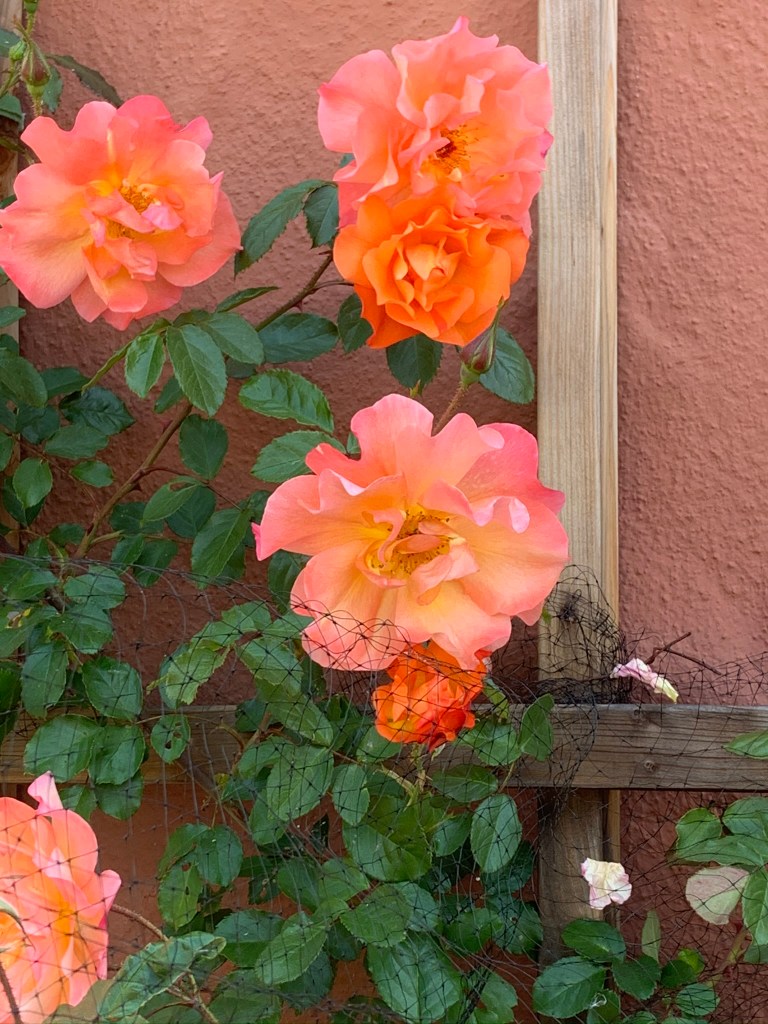
Westerland climbing rose on the front of my house, May 2020. The netting is to protect it from the deer that seek shelter in our backyard and try to forage in the front yard.

Memorable for at least 47 days. Leave it to Alex Potter.

22 Saturday Feb 2020

Posted by cantatasonmymind in Cantatas, Leipzig

≈ 1 Comment

Tags

Alex Potter, bwv 127, BWV 159, BWV 22, BWV 23, Dorothee Mields, Estomihi, Jan Kobow, Matthew White, Miriam Feuersinger, Netherlands Bach Society, Peter Kooij, Philippe Herreweghe, Stephan MacLeod, Thomas Hobbs

Between Estomihi Sunday (or the last Sunday before Lent) and Good Friday, there were 47 days in 1729. During that entire time the Leipzig congregations would hear no music in the churches, except for chorales. So Bach’s last music had to be as memorable as possible, had to give them hope, and ideally also prepare them for the St. Matthew Passion they would get to hear on Good Friday.

Bach successfully checked all these boxes with Cantata 159 Sehet! wir gehn hinauf gen Jerusalem. And leave it to alto Alex Potter to bring all this out in a performance. Opera-like drama, heart-breaking emotion, the promise of hope and redemption, it is all there in his singing, and in that voice with the beautiful variety of colors.

Listen to / watch the performance by the Netherlands Bach Society here on YouTube. Soprano: Miriam Feuersinger; Alto: Alex Potter; Tenor: Thomas Hobbs; Bass: Stephan MacLeod. Read some comments by Alex Potter on this cantata here on the AllofBach website.

Find the German texts with English translations here, and the score here.

The Herreweghe recording deserves a mention here too. Dorothee Mields’ singing in the duet with Matthew White is very moving, and Peter Kooij’s interpretation of the bass aria “Es ist vollbracht” on this recording is unrivaled. Find that recording here on YouTube, but better yet, support the artists and purchase the entire album Jesu, deine Passion here on Amazon or here on iTunes. It contains all four cantatas Bach wrote for this Sunday, and they are all excellent. Read more about Cantatas 127, 22, and 23 in my blogpost from 2018 here.

Wieneke Gorter, February 22, 2020, updated February 13, 2021.

← Older posts

Recent Posts

  • “Missa Miniatura” by CONTINUUM/Elina Albach Even More Moving in 2025
  • Bachfest Leipzig 2025
  • Bach Cantatas for Christmas – 1724 and 1734 editions
  • Fourth Sunday of Advent – more insight into Cantata 62 helped me better understand Bach’s Christmas Oratorio
  • Saint Ambrose and Luther in Milan – Second Sunday of Advent

Archives

  • August 2025
  • July 2025
  • December 2024
  • November 2024
  • June 2024
  • January 2024
  • December 2023
  • October 2023
  • September 2023
  • August 2023
  • April 2022
  • February 2022
  • January 2022
  • December 2021
  • November 2021
  • June 2021
  • May 2021
  • April 2021
  • February 2021
  • January 2021
  • December 2020
  • November 2020
  • October 2020
  • September 2020
  • August 2020
  • July 2020
  • May 2020
  • April 2020
  • March 2020
  • February 2020
  • January 2020
  • December 2019
  • November 2019
  • May 2018
  • April 2018
  • March 2018
  • February 2018
  • January 2018
  • December 2017
  • November 2017
  • October 2017
  • September 2017
  • August 2017
  • July 2017
  • June 2017
  • May 2017
  • April 2017
  • March 2017
  • February 2017
  • January 2017
  • December 2016
  • November 2016
  • October 2016
  • September 2016
  • August 2016
  • July 2016
  • June 2016
  • May 2016
  • April 2016
  • March 2016
  • February 2016
  • January 2016

Enter your email address to follow this blog and receive notifications of new posts by email.

Join 338 other subscribers

Categories

  • 1723 Trinity season special series
  • Advent
  • After Easter
  • Ascension
  • Bach's life
  • Cantatas
  • Chorale cantatas 1724/1725
  • Christmas
  • Easter
  • Epiphany
  • Following Bach in 1725
  • Köthen
  • Leipzig
  • Septuagesima
  • Travel
  • Trinity
  • Weimar

Meta

  • Create account
  • Log in
  • Entries feed
  • Comments feed
  • WordPress.com

Website Built with WordPress.com.

  • Subscribe Subscribed
    • Weekly Cantata
    • Join 158 other subscribers
    • Already have a WordPress.com account? Log in now.
    • Weekly Cantata
    • Subscribe Subscribed
    • Sign up
    • Log in
    • Report this content
    • View site in Reader
    • Manage subscriptions
    • Collapse this bar
 

Loading Comments...