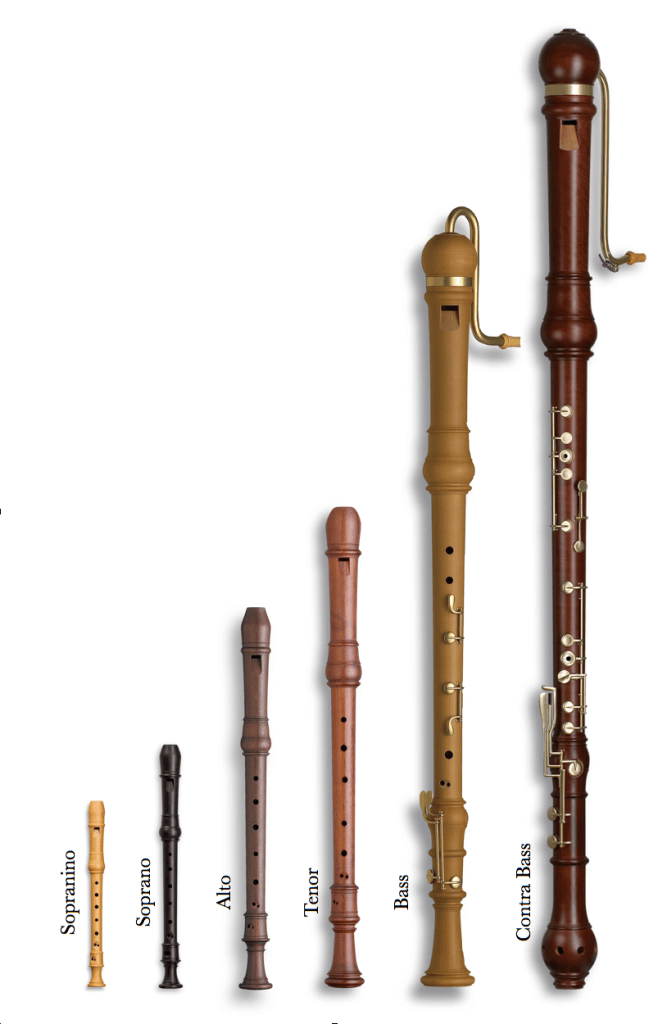
On Sunday October 8, 1724, Bach introduced a new instrument to his Leipzig cantata audiences: the flauto piccolo, or sopranino recorder, in Cantata 96 Herr Christ, der einge Gottessohn. He did this to illustrate the word “Morgenstern” (Morning Star) in the text of the opening chorus, creating a constellation over the highest notes of the choir sopranos with the even higher notes of the recorder.
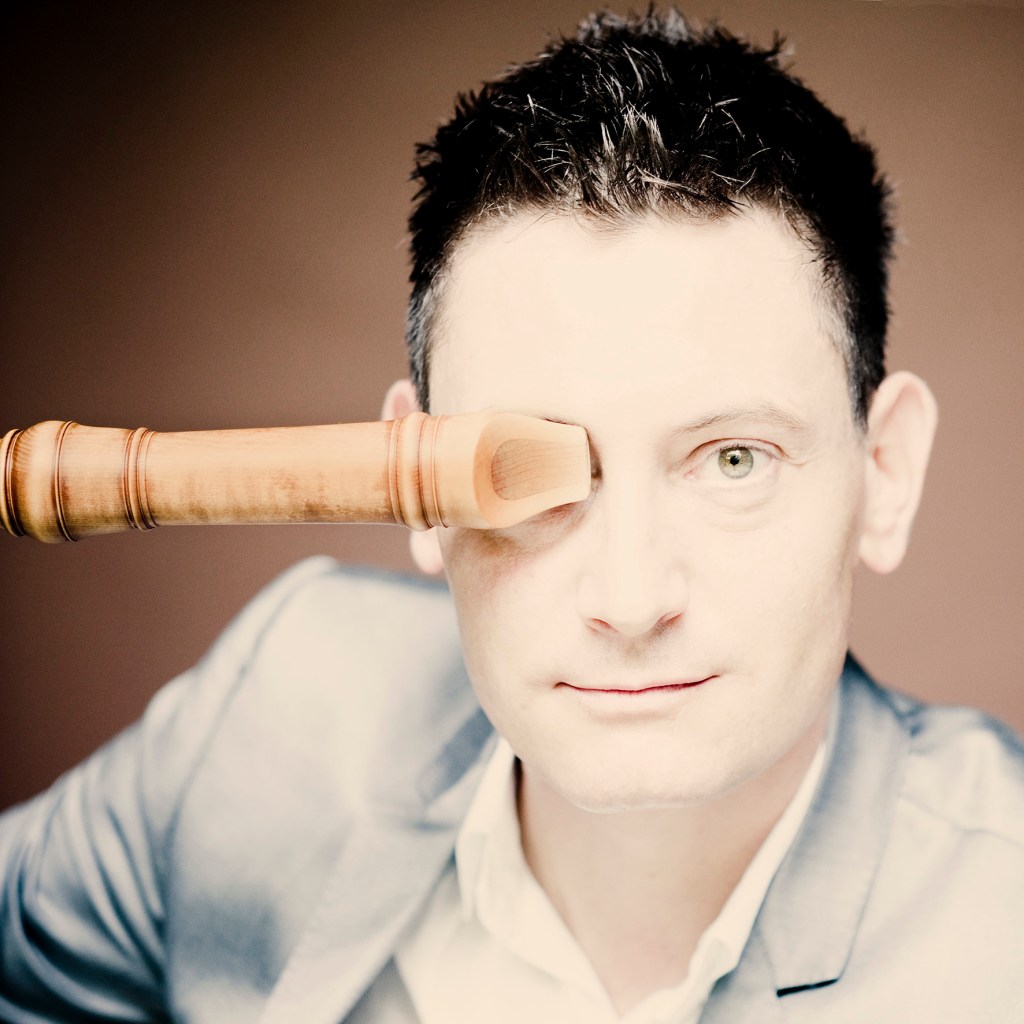
Thanks to a videoby the J.S. Bach Foundation that was released to YouTube in 2018, you can now watch an excellent recorder player, Maurice Steger, in action on this instrument in this cantata.
Go to my blog post from 2017 (updated with the new recording and a few other things), to read why Bach needed a chorale with the word “Gottessohn” (son of God) for this cantata.
This 17th Sunday after Trinity has been connected to more discoveries than any other so far for me, and I keep making new ones:
In 2016, I wrote a post about Cantata148 Bringet dem Herrn Ehre seines Namens, then learned a lot of new information during the months that followed, which led me to completely revise the post in February 2017. It talks about Dresden concertmaster Johann Georg Pisendel and his influence on the violin solos Bach wrote in Leipzig. Read it here.
Marc Hantaï
In 2017, I realized that at least two arias Bach wrote for this Sunday make me cry, not because of the singers, but because of the instrumental solos that accompany those arias. Read it here, in a post that introduces Cantata 114 Ach, lieben Christen, seid getrost. At that time, the best recording I could find was a live radio registration of a performance led by Gustav Leonhardt in 1988. All this because of the tenor aria.* I knew who the tenor was (John Elwes), but could only make an educated guess about the extraordinary flute player, probably Marc Hantaï. That recording also had my first countertenor love, Gérard Lesne, singing the alto aria.
David Erler. Photo by Björn Kowalewsky
At the last gathering of the Berkeley Bach Cantata Group I attended before the Shelter In Place started (and all rehearsals and performances stopped) here in the SF Bay Area, I got to discuss Bach’s “Pisendel style” violin solos a bit with the first violinist of that group. In an email-exchange that followed, he pointed out a countertenor he liked, but who I had never heard of before: David Erler.
Then this week, while checking if any new recordings of cantatas 148 or 114 had come out since I wrote those blog posts, I discovered to my great delight that in September 2018 the J.S. Bach Foundation recorded Cantata 114 Ach, lieben Christen, seid getrostwith … Marc Hantaï playing flute in the tenor aria! (I now for sure know it was him in that 1988 Leonhardt recording) and … David Erler singing the alto aria (and doing an excellent job). While it doesn’t rival the energy of the soprano solo on the Gardiner recording (for this, please read my blog post from 2017 about this cantata), nor Peter Kooij’s solo on the Leonhardt recording, it is a fabulous and very moving performance, and you can see Marc Hantaï play. Find this live video recording by the J.S. Bach foundation here on YouTube. Soloists are: David Erler, alto; Georg Poplutz, tenor; and Wolf-Matthias Friedrich, bass.
Find the German texts with English translations of Cantata 114 here, and the score here.
In 2018, I realized that Bach reworked the incredibly moving tenor aria with flute from Cantata 114 into a faster tenor aria with oboe for Cantata 124, and that nobody else seemed to have noticed this yet. Read that here.
Resurrection of the Widow of Nain’s Son by Paolo Veronese. 1565-1570, oil on canvas. Kunsthistorisches Museum, Vienna, Austria.
This is an extended lesson, in several steps, but please bear with me, it’s worth it and you get to watch or listen to some excellent videos. Happy learning and listening!
This 16th Sunday after Trinity seems to be “chorale Sunday” for Bach. His cantatas for this Sunday (161, 95, 8, and 27) either contain a high number of chorales, or are centered around an important chorale. Read for example about the four (!) chorales in Cantata 95 Christus, der ist mein Leben from 1723 in this blog post. Already in 1716, in Weimar, Bach put great emphasis on the chorale in the first cantata he ever wrote for this Sunday, Cantata 161 Komm, du süße Todesstunde.
Why this stress on chorales? In his book about Anna Magdalena Bach, David Yearsley suggests it has something to do with widows. The Bible story for this Sunday is the Resurrection of the Widow of Nain’s son. Based on sermons from Bach’s time, Yearsley concludes that this 16th Sunday after Trinity was seen as some sort of National Widow Day, and wonders why no Bach scholar ever discusses this in relation to these cantatas. On page 207 of his book, he says: “Even by Bachian standards, this group of cantatas is dense with chorales, the singing of which was one crucial way for widows to make their lives bearable; melodies and texts buttressed single women’s emotional well-being and held off melancholy.”
The crucial role the chorale Herzlich tut mich verlangen nach einem sel’gen End (My heart is filled with longing to pass away in peace) plays in Cantata 161 Komm, du süße Todesstunde from 1716 brings me to Part II of my review of the All Souls production by the Netherlands Bach Society in the Fall of 2019, guest-directed by Alex Potter. (Part I is here). That program included the absolute best performance of Cantata 161 I have ever heard. Unfortunately, none of the performances were recorded.
Alex Potter. Photo by Annelies van der Vegt.
I will discuss two good alternatives for recordings later, but first I would like to introduce* Alex Potter with this video by the Netherlands Bach Society. In this video, Potter talks about the countertenor voice, and explains how he came to be a countertenor. It’s a lovely and very accessible interview. But for me, the best are the snippets of rehearsals for the All Souls program. It’s cold comfort for the absence of a complete All of Bach recording, but for a few seconds, you can see Potter perform the alto recitative from Cantata 161 with the superb band he had put together for this : the dramatic so schlage doch section around 1’38” and the start of the recitative around 7’12”. Other singers in this recording are Dorothee Mields, soprano; Thomas Hobbs, tenor; and Stephan McLeod, bass.
The chorale Herzlich tut mich verlangen nach einem sel’gen End features prominently in the opening movement of Cantata 161, is referred to in the tenor aria, and then comes back in the final movement. It was an important chorale for Bach, and he used it often. Watch this 3-minute explanation by organist Matthias Havinga on how earthly misery gets replaced by heavenly paradise in the chorale prelude (BWV 727) of the same name, also written in Weimar. **
Potter wanted to make absolutely sure that the Netherlands Bach Society audience members, who all have St. Matthew Passion running through their veins, would not hear this tune as O Haupt voll Blut und wunden:
“It is NOT ‘O Haupt’ – indeed in hymnals from the time, ‘O Haupt’ is often listed to be sung to the melody of ‘Herzlich tut mich verlangen’,” he explained a few days after the concerts, when I had written him to ask about some of his choices.
By the time Bach repeated this cantata in Leipzig, probably sometime in the late 1720s or in the 1730s, O Haupt voll Blut und Wunden had become much better known, and Bach might have had a similar concern as Alex Potter had in 2019: he wanted to make sure the congregation would have the correct chorale, and thus the correct message in mind.
In the original Weimar version from 1716, the chorale melody in the opening chorus was played, without words, on the organ. Listeners would have heard the words in their heads. For a wonderful example of this version, listen to Herreweghe’s recording here on YouTube, or here on Spotify. Soloists on this recording are Matthew White, countertenor, and Hans Jörg Mammel, tenor.
Bach’s later Leipzig solution: He replaced the organ part with a soprano part, using the first verse of Herzlich tut mich verlangen. For an example of this version, with all sopranos singing the chorale, watch the live performance by the J.S. Bach Foundation here on YouTube. Please note another typical Leipzig change here: recorders were replaced by the more fashionable transverse flutes. Soloists in this recording are Alex Potter, countertenor, and Daniel Johanssen, tenor.
It makes that you hear these two texts at the same time, which is very special:
Komm, du süße Todesstunde, Da mein Geist Honig speist Aus des Löwen Munde; Mache meinen Abschied süße, Säume nicht, Letztes Licht, Dass ich meinen Heiland küsse.
Come, sweet hour of death, when my spirit feeds on honey from the lion’s mouth; make my departure sweet, do not delay, last light so that I may kiss my saviour.
Alto Aria
Herzlich tut mich verlangen nach einem sel’gen End; weil ich hie bin umfangen mit Trübsal und Elend. Ich hab Lust abzuscheiden von dieser argen Welt; sehn mich noch ew’gen Freuden: o Jesu, komm nur bald.
My heart is filled with longing To pass away in peace; For woes are round me thronging, And trials will not cease. O fain would I be hasting From thee, dark world of gloom, To gladness everlasting; O Jesus, quickly come!
Soprano chorale
Alex Potter’s 2019 solution: Use the soprano part from the Leipzig version, sung solo by the incomparable Dorothee Mields, but keep the recorders from the Weimar version.
A pragmatic solution, as Potter explained partly in the program book: recorder player Benny Aghassi was available; partly in his message to me: “I think that for a modern audience having the voice cut through a bit more makes it clearer – also with the text. I also think that any opportunity to hear more Dorothee Mields is worth it, and I got to sing with her as an added bonus.”
It turned out to be a brilliant one. If you have ever watched and heard Dorothee Mields and Alex Potter sing a duet, you know that that is pure heaven. I also truly prefer the somewhat more penetrating sound of recorders over the sweet tones of the flutes in all the movements of this cantata that they appear in (alto aria, alto recitative, chorus, and closing chorale), but especially in the illustration of the death bells in the text “so schlage doch, du letzter Stundenschlag!” (therefore sound, stroke of the last hour!)***
Dorothee Mields
And, in those concerts in the Netherlands in 2019, we got to hear even more Dorothee Mields. In an extra effort to set the audience up with the correct chorale, Alex Potter had her sing Johann Hermann Schein’s setting of Herzlich tut mich verlangen right before the cantata started. Especially in the Nieuwe Kerk in The Hague on Sunday November 3 this was an event: She stood in a very humble location behind the stage, almost tucked into a corner next to the stairs leading up to the pulpit, hidden from view for probably half the audience. Then, during the instrumental introduction to the Bach cantata, she very slowly climbed the stairs to the pulpit, and then sang the chorale from there during the opening aria. It was as Bach intended: to die for.
I mentioned before that Herzlich tut mich verlangen is also referenced in the tenor aria. It is not just with the word “Verlangen” in the text, but also with the “figura suspirans” (or longing in the music, as explained in the organ video of Matthias Havinga mentioned above) that is present here too, in the tenor part as well in the violin part. The effect Shunske Sato’s longing style of playing had on Thomas Hobbs’ singing in this aria was out of this world. Thomas Hobbs really needs a shout-out for his role in this All Souls production, even though I’m writing this so long after the fact. I’ve seen him several times in concerts with Herreweghe, and his stage presence has always been an inspiration to me, but I was especially impressed by his singing in these performances. The way he sang the sentence “Der blasse Tod ist meine Morgenröte” in the tenor recitative of Cantata 161 was unrivaled. And in the first half of the program, Hobbs and his laser-beam long notes were the star of Rosenmüller’s Dies Irae and the Gregorian Requiem that preceded it.
Alex Potter receiving applause in Naarden, October 31, 2019. To Potter’s right: tenor Thomas Hobbs, recorder player Benny Aghassi, and soprano Dorothee Mields. Photo by Hans van der Woerd, courtesy of The Netherlands Bach Society.
Wieneke Gorter, September 26, 2020, updated September 22, 2023
* Since I first heard Alex Potter live in 2018, I have written many posts about his extraordinary interpretations of Bach’s music. You can find most of them by typing Alex Potter into the search bar at the top of this post. The top three, in my humble opinion, are here, here, and here.
** Find the video of the entire organ prelude (BWV 727) here.
***Bach illustrates death bells in instrumentation, often using flutes, but sometimes only pizzicato strings, in cantatas 73, 8, 95, 105, 127, and 198.
Jesus Heals Ten Lepers, from the Codex Aureus of Echternach, c. 1035-1040
While my family is not in any direct danger of the fires here in California, and we are lucky in many ways, it has been hard for me to avoid going into serious flight mode this week. What has kept me sane are yoga classes on Zoom, but also a daily gratitude practice, where I write down specific examples of things that went well or that I enjoyed, and count my blessings.
I was comforted to discover this week that Bach also focused on gratitude and joy in the third cantata he wrote for this 14th Sunday after Trinity. The Bible story for this Sunday is the miracle of Jesus healing ten lepers, from Luke 17: 11-19. While Bach’s first two cantatas for this Sunday talk about salvation from sickness, the third one, Cantata 17 Wer Dank opfert, der preiset mich (He who gives thanks, he praises me), from 1726, focuses on the second part of the story (as well as the second part in the painting above): the one man who comes forward to thank Jesus for healing him.
Of all the recordings I listened to, I prefer the live video registration by the J.S. Bach Foundation, released in March 2020. Watch that recording here on YouTube or, if you prefer to listen on Spotify, you can find my playlist here. Soloists are: Noëmi Sohn-Nad, soprano; Jan Börner; alto; Sören Richter; tenor; and Daniel Pérez, bass. I enjoyed listening to all of them.
Find the German texts with English translations of this cantata here, and the score here.
There are two unique aspects to this cantata, especially when you compare it to other cantatas for “regular” Sundays. First, there is no hardship to overcome, no sin to be absolved in this cantata. It is all one big song of praise for God’s benevolence. Quite unusual, but a nice change. Second, Bach writes an “Evangelist” part for the tenor at the start of part II, directly quoting the Bible text:
Einer aber unter ihnen, da er sahe, dass er gesund worden war, But one of them, when he saw that he was healed, kehrete um und preisete Gott mit lauter Stimme turned back and praised God with a loud voice und fiel auf sein Angesicht zu seinen Füßen and fell on his face at his feet und dankte ihm, und das war ein Samariter. and thanked him, and this man was a Samaritan.
There are only a handful of other cantatas in which this happens, but most of those are very meaningful (Cantata 22 and 42 come to mind). So I don’t think Bach is experimenting. He probably again wants to educate his fellow believers, and perhaps make them see that that part of the story is what the whole cantata is about.
I have to leave it at that, because the other two cantatas for this Sunday are not to be missed either and I don’t want this post to become too long.
Cantata 25 Es ist nichts Gesundes an meinem Leibe (Nothing healthy is to be found in my body), from 1723, starts out with an incredible opening chorus with trombones playing a chorale that begs for salvation. That salvation then appears towards the end of the cantata, in the form of a jubilant soprano aria. Read my blog post from 2016, not only to find links to Herreweghe’s fabulous recording of this cantata (with Hana Blažíková singing the soprano aria), but also to learn why Bach must have felt like a kid in a candy store that particular Sunday.
In 1724 Bach wrote Cantata 78 Jesu, der du meine Seele (Jesus, you [who saved] my soul). After a completely different, but equally beautiful and poignant opening chorus, joy presents itself much earlier, in the music of the second movement: the cute soprano-alto duet that is nowadays probably Bach’s most beloved duet. In my blog post from 2017 I recommend a Rifkin and a Herreweghe recording and I still stand by those choices today. In that post, I praised the opening chorus and the duet, but I completely forgot to discuss an often overlooked movement from this cantata: the tenor aria. I believe that Bach wrote some of his best trio sonatas in the form of tenor arias. About two years ago I started dreaming of a podcast about this underrated aspect of Bach’s compositions, and when I finally have the time and the guts to create it, this aria will definitely be in it.
Wieneke Gorter, September 12, 2020, updated September 8, 2023.
About Weekly Cantata
I am a bilingual writer, publicist, choral singer, art and nature lover, happy wife, and blessed mother of two. I started this blog in 2016, inspired by my late mother’s love for Bach’s cantatas. After 23 years in the San Francisco Bay Area, I’m now back in the Netherlands.
Please join my readers from all over the world and subscribe to this blog! Simply fill in your email address and you’ll receive an email every time I’ve published a new post. Thank you so much / Vielen Dank / Merci mille fois / 감사합니다 / 谢谢 / ありがとう / Mille grazie / Muchas gracias / Muito obrigado / Takk / Terima kasih / Dankuwel!
The Good Samaritan by Balthasar van Cortbemde, 1647. Oil on Canvas. Royal Museum of Fine Arts, Antwerp, Belgium. More about this painting at the end of this post.
Bach wrote three cantatas for this Sunday, the 13th after Trinity, all more or less related to the story of the Good Samaritan. In 1723 he writes the incredibly beautiful Cantata 77 Du sollt Gott, deinen Herren, lieben (You must love God, your Lord). Read about it in my post from 2016. Along with many fellow members of California Bach Society I had the pleasure of singing this cantata earlier this summer, each of us sitting in front of our computer in our own home. Even though we could only see each other on a computer screen and not hear each other sing, it was a beautiful and meaningful experience. And while I tend to focus on the opening chorus and the alto aria when thinking about this cantata, several of my friends pointed out that the texts are still, or again, very appropriate today. Take for example the text of the tenor recitative:
Gib mir dabei, mein Gott! ein Samariterherz, For this purpose, my God, give me the Samaritan’s heart Dass ich zugleich den Nächsten liebe so that I can at once love my neighbor Und mich bei seinem Schmerz and in his sorrow Auch über ihn betrübe, feel concern for him Damit ich nicht bei ihm vorübergeh so that I shall not pass him by Und ihn in seiner Not nicht lasse. and leave him in his distress. Gib, dass ich Eigenliebe hasse, Grant that I may hate self-love, So wirst du mir dereinst das Freudenleben then you will grant me one day a joyous life Nach meinem Wunsch, jedoch aus Gnaden geben according to my desire, from your grace.
In 1724, within the framework of the 1724/1725 series of chorale cantatas (his second year of cantata compositions in Leipzig)* Bach writes Cantata 33 Allein zu dir, Herr Jesu Christ (Solely towards you, Lord Jesus Christ). Because the libretto is based much more on the chorale text than on the Gospel text, it includes only one quote from the Bible story: “I may love my neighbour as myself.” But while it is just one line of text, Bach doesn’t let it go unnoticed, and turns that fifth verse of the libretto into a duet that has all the characteristics of a love duet from the Venetian operas of the time. At least the instrumentalists in the orchestra must have gotten the reference loud and clear. This also proves that the oh-so-cute soprano-alto duet from Cantata 78 (which Bach wrote one week later) didn’t come out of the blue. Here is the artists’ study for it, albeit written for tenor and bass. Read all this and more in my post from 2017.
From Trinity Sunday 1723 to Trinity Sunday 1725, Bach had provided the Leipzig churches with a cantata for almost every Sunday and Feast day. But for the Sundays between Trinity and Christmas 1725, we have only a handful of his cantatas left.** Cantata 164 Ihr, die ihr euch von Christo nennet (You, who take your name from Christ) is among these. Bach saw his church music as a means to “educate his neighbor” about Christian theology, and it seems that in this case, a third cantata for this Sunday was needed: he was not done educating his neighbors about the story of the Good Samaritan. In the parable, the priest and the Levite pass the wounded man without showing mercy. In the libretto of this cantata, this example is turned onto the Christian believers themselves:
You, who take your name from Christ, where is to be found the mercyby which people recognize members of Christ?
It is far, far away from you.Your hearts should be rich in love,but they are harder than a stone.
Because of the preaching character of that first text, it seems only fitting that Bach doesn’t set this as a chorus, but as a tenor aria, as if to better scold the congregation. The use of two flutes (in the alto aria) is unusual for a cantata, and makes me think of the St. Matthew Passion. Bach must have wanted to stress the loveliness of the text in that aria. Watch a live performance of this cantata by the J.S. Bach Foundation here on YouTube. Soloists in this performance are Monika Mauch, soprano; Jan Börner, alto; Jakob Pilgram, tenor; and Markus Volpert, Bass.
Find the texts & translations of this cantata here, and the score here.
Wieneke Gorter, September 5, 2020.
A little more about the painting:
At a distance, on the left, behind a tree, we see the Levite retreating. Still further away, reading a book, is the priest. This is the only known work of this painter, Balthasar van Cortbemde. It was most probably commissioned by the guild of surgeons in Antwerp in 1647, because it was displayed in their Chamber from 1647 to 1798. It became property of the Royal Museum of Fine Arts in 1810.
*to learn more about Bach’s series of chorale cantatas, start reading here
**we don’t know if the missing cantatas were composed but then were lost, or if they were simply never composed because Bach started to focus on other things.
Backside of the complex in which Bach rented an apartment in Köthen from 1719 to 1723. His wedding to Anna Magdalena in December 1721 was celebrated in this house, and several of their fellow court musicians had an apartment here too.
This week I’ve been paying a bit more attention to all the YouTube channels I subscribe to. So I can point you just in time to the live recording of cantata 107 Was willst du dich betrüben by the J.S Bach Foundation. Soloists are Julia Doyle, soprano; Makoto Sakurada, tenor; and Wolf-Matthias Friedrich, bass. My favorite recording of this cantata is still the one by Herreweghe from 1993 (the lines in the opening chorus! the bass solos!) but I love this one by the Bach Foundation too. It is very well done and very moving, and with no live concerts here in California at all yet, I appreciate watching live performances even more right now.
Another YouTube discovery I especially enjoy this Covid summer is the “Encountering Bach” documentary series. This wonderful production by Bachfest Malaysia currently has six episodes available, and more are still to come. The episodes are nice and short (between 8 and 13 minutes), but full of information, and very well geared towards a global audience. Bachfest Malaysia’s artistic director David Chin travels to all the places where Bach worked, and he does this together with German Bach specialist Michael Maul.* In all the locations they get help from local experts, from a soprano soloist who’s also a St. Thomas School mom, to the organist who nowadays plays the “Bach organ” in Arnstadt, to a manuscript specialist of the Bach Archives in Leipzig. Believe it or not, but I myself have never visited any of these places, and I travel vicariously through their experiences.
For the benefit of some more background for this blog post, I’d like you to watch episode 5, which is about Bach’s time in Köthen, and how he appreciated his employer there. It is no problem to watch this before you watch the other episodes. If you have more time, treat yourself to the entire series.
Episode 5 explains that Bach’s employer in Köthen belonged to the Calvinist church, where music other than chorale singing and organ playing wasn’t allowed. However the video also shows the Lutheran church where Bach and many of his fellow court musicians would have attended services. The experts suggest that it could have been here that Bach and friends would have performed re-runs of Bach’s Weimar cantatas. When I watched this, it dawned on me that a scenario I came up with in 2017 should be adjusted a bit.
In my 2017 blog post about Cantata 107, I explained that in July 1724, Bach and Anna Magdalena left Leipzig for a while (anywhere from a few days to almost two weeks) in order to visit their previous employer in Köthen and perform at his castle. Bach had been Capellmeister there, and Anna Magdalena a very highly paid soprano.
In that post, I painted a “movie scenario,” imagining that cantata 107 Was willst du dich betrüben would have been “tested” in the castle in Köthen, but I now realize it would probably have happened in the local Lutheran church instead. And in that case it would not have been very likely that Anna Magdalena would have sung the soprano aria. (Though they might have played the music through at the house of one of the other court musicians, who knows. Hoping that David Yearsley’s book on Anna Magdalena Bach will give me some more clarity on this.)
This all also means that I would like to circle back to my post from last week. I said:
“For 1724, it is very likely that Bach never wrote a cantata that year for this Sunday. Because later in his life, Bach most probably wrote Cantata 9 Es ist das Heil uns kommen her for this moment in the church year, in an effort to fill the gaps within his 1724/1725 chorale cantata cycle.”
That is all still true, but I had obviously forgotten to mention the second reason why there is no cantata from 1724 for Trinity 6, namely that Bach was in Köthen that Sunday. For some of my friends it might come as a relief that I forget some things now and then (you know who you are) but I myself was pretty shocked that I had forgotten this story that I had written about only three years ago.
Wieneke Gorter, July 25, 2020
*Michael Maul, born 1978, has been the Artistic Director of the Bachfest Leipzig since 2018, and is the most famous Bach scholar of his generation.
In my opinion, one of the absolute best background videos on AllofBach is the one in which countertenor Alex Potter explains the different layers of solo cantata 170 Vergnügte Ruh, beliebte Seelenlust from 1726. I remember how happy and impressed I was when I first found this video. So instead of offering you my own discussion, I suggest you watch Alex Potter’s here on YouTube.
Then watch the excellent and moving live performance of this cantata by Alex Potter with the Netherlands Bach Society here on YouTube.
A lot more information, including the German text with English translations, a list of all participating instrumentalists, the staff that made this beautiful document possible, and a short but insightful interview (in text only) with organist Leo van Doeselaar, can be found here on AllofBach.
Bach’s first two cycles in Leipzig didn’t include a cantata for this Sunday (the 6th after Trinity). My speculations for why this might have happened in 1723 are mentioned in this blog post. For 1724, it is very likely that Bach never wrote a cantata that year for this Sunday. Because later in his life, Bach most probably wrote Cantata 9 Es ist das Heil uns kommen her for this moment in the church year, in an effort to fill the gaps within his 1724/1725 chorale cantata cycle.
There’s a wonderful live performance of Cantata 9 on YouTube, by the J.S. Bach Foundation under direction of Rudolf Lutz. Watch it here. My favorite part of this cantata is the glorious duet Herr, du siehst statt guter Werke, beautifully sung by soprano Julia Doyle and alto Alex Potter. I love how well their voices and singing style match for this! This performance also features exquisite music-making by flutist Marc Hantaï, violinist Amandine Beyer, and tenor Charles Daniels.
Cantata 93 Wer nur den lieben Gott lässt walten from 1724 is one of my favorite Bach cantatas, but because this one always falls in the summer vacation, I have never actually discussed it. I don’t have time to get into it this year either, but I have some interesting links for you.
In July 2017, I shared my favorite recording (Herreweghe) of this cantata along with some pictures of Greece where I was at the time. You can find that post here. Update: one day after I posted this, the J.S. Bach Foundation Made their full-length video of this cantata available on YouTube, and it’s a very good one. You can find it here: https://youtu.be/in5XDlJnrB8
Bach recycled the most splendid movement from this cantata, the soprano-alto duet, into one of his “Schübler Chorales” for organ. How exactly that works, you can read in my post from February 2018.
And if you understand a little German, watch Rudolf Lutz of the J.S. Bach Foundation explain everything about this Cantata 93 in this workshop on YouTube.
Wieneke Gorter, July 10, 2020, updated July 19, 2020.
In an effort to share some more personal thoughts with you, this has become quite a long post. If you prefer not to read it and go straight to the cantatas for this Exaudi Sunday, you can find my post about cantatas 44 and 183 here. It is a story with a wealth of information, gorgeous soprano arias, and recommendations for top-notch recordings. But since there’s always more to learn, I wanted to give some attention to Rudolf Lutz’ English spoken lecture about these cantatas. Find the link at the end of this post.
Over the past several months, while we’ve all been dealing with this global health crisis, I have often felt overwhelmed. Overwhelmed by piles of dishes, by potentially life changing decisions, by not knowing what my role is supposed to be in this crisis, but also by musicians and music organizations. While one is telling me to watch this YouTube video–available this week only!, another invites me to join a lecture on Zoom– please submit your questions ahead of time, yet another is showing me that singing while masked actually sounds pretty good (even though their images scare the * out of me), but wait … there’s a live Facebook Event STARTING NOW!
I understand the reasons behind it. An urge to share music with others, so strong they need to answer it or go insane. A fear of being forgotten by their patrons and thus losing even more income. Creative minds that keep exploring new possibilities. I also understand that there are probably millions of people for whom concert-going was their weekly bread, and that they are all eating this up. But it doesn’t calm me down.
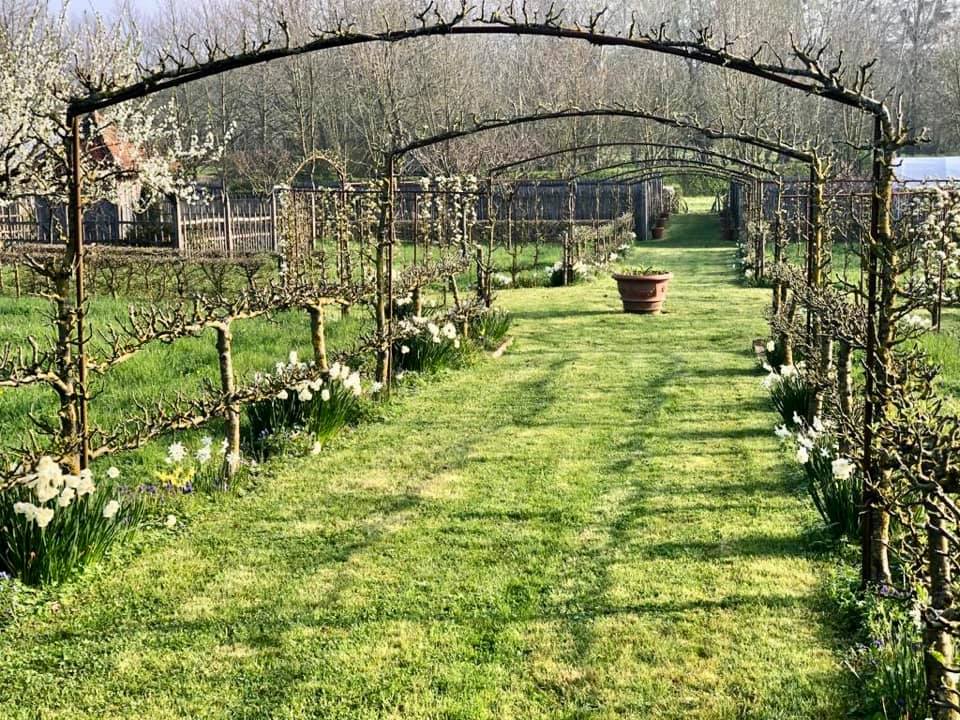
My soul has been soothed much more by the images of sour dough rising, vegetable gardens being planned, blooming gardens, and nature. Two Instagram accounts I have especially enjoyed are those of Les Arts Florissants, who have been posting a wealth of pictures of William Christie’s gardens in France, and of Luc Barrière, a concert photographer who left Paris for the Alps before the strict lockdown happened in France. Yes, I know these are privileged people, and everyone can think of their living situations what they want. To me personally, these two accounts have given me examples of people taking care of themselves and slowing down, and that inspires me and calms me.
Of course stress is not caused by the acts of other people, but by your own reaction to these acts, and fortunately most of the live streams can be watched again at a later time. So I have watched some of them at my own pace (while doing those dishes, folding laundry, or cleaning vegetables) and have realized that amidst the overwhelm there are blessings, because every now and then something new and marvelous emerges that would not have happened without this crisis.
For me, the absolute best example of this has been the series of “one man shows” by Rudolf Lutz, the artistic director of the J.S Bach Foundation in Switzerland. Every month, on the day his choir and orchestra would otherwise have given a concert for an audience, recorded live on video, he has live streamed an excellent and very witty lecture about that same cantata, brilliantly combined with organ improvisations on the music in the cantata, and the meaning behind the cantata. Without the crisis, his international online audience of Bach lovers would never have known what a talented improvisor he is. Without the crisis, he would never have held his lectures in English. (Until now his excellent cantata lectures were only accessible to German speakers, with only a handful of them subtitled in English).
Find Rudolf Lutz’ wonderful lecture/improvisation about Cantata 44 and 183 (from May 19) here. Find my blog post about these same cantatas (highlighting completely different aspects of the pieces!) here.
To learn more about Rudolf Lutz, read his bio here. Find his lecture/improvisation about Cantata 106 (from March 20) here, and about Cantata 4 (from April 17) here.
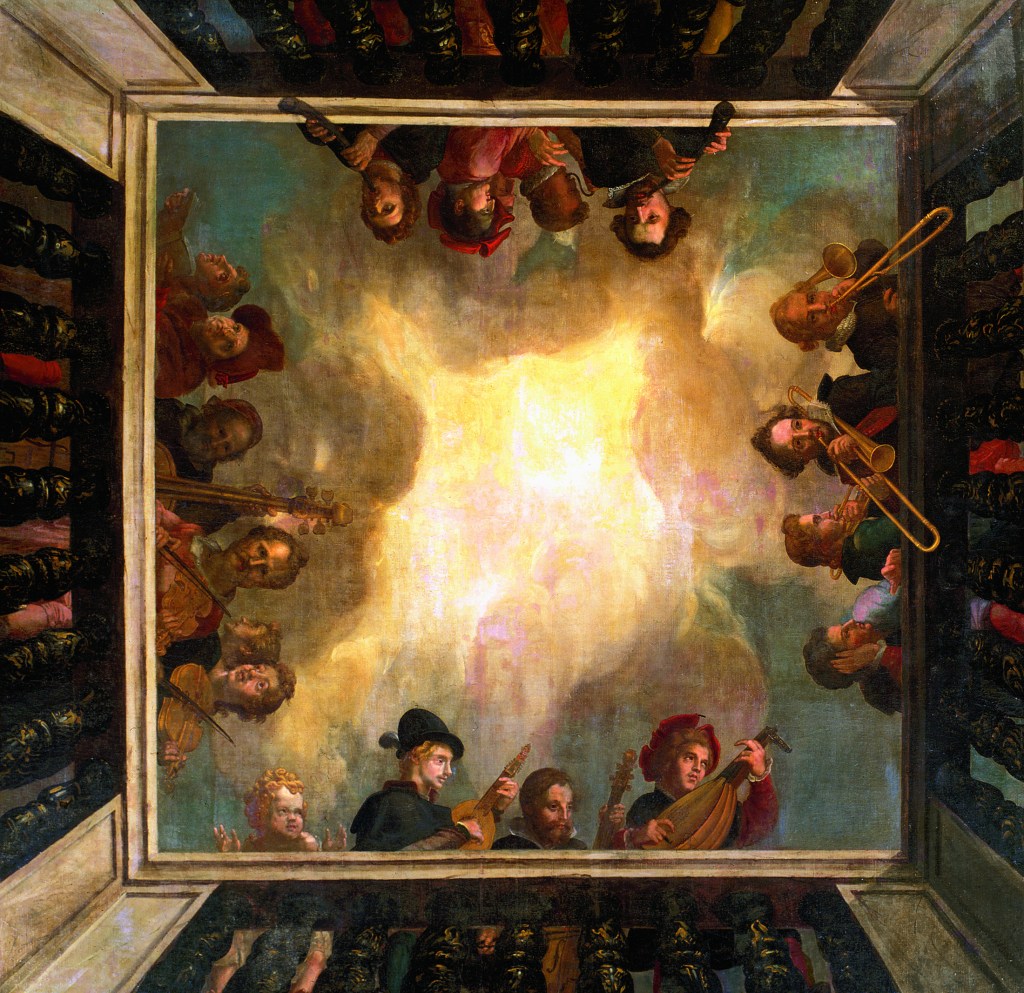
Ceiling painting installed around 1700 in Christian V’s Hall in Rosenborg Castle, Denmark. Possibly by Reinhold Timm, ca. 1620, originally for for a music pavilion in Kongens Have. *
Yesterday, Wednesday March 25, 2020, the J.S. Bach Foundation published their live video recording of Cantata 2 Ach Gott, vom Himmel sieh darein (Please God, look down from Heaven) on their YouTube channel. I thought it might be nice to provide a listening guide to go with this performance.
I love this cantata because it has trombones in the orchestra, doubling the choir parts, and because the altos have the cantus firmus (=they sing the chorale melody in long notes) in the opening chorus, which sounds incredibly good, and is unique within Bach’s writing.
Find the video recording by the J.S. Bach Foundation here on YouTube. Soloists are Alex Potter, alto; Georg Poplutz, tenor; and Markus Volpert, bass.
Find the German texts with English translations here, and the full score here.
This cantata was the second in Bach’s 1724 series of Chorale Cantatas. He most probably intended for the first four cantatas in that series to form a set, or at least to present some kind of order, if you look at the composition form of the opening movement, and which voice has the cantus firmus of the chorale tune in that chorus:
Cantata 20 O Ewigkeit, du Donnerwort: French Overture, with cantus firmus in the soprano (find my blog post about this cantata here)
Cantata 2 Ach Gott, vom Himmel sieh darein: Chorale motet, cantus firmus in alto (the cantata discussed here)
Cantata 7 Christ unser Herr zum Jordan kam: Italian concerto, cantus firmus in tenor. (find my blog post about this cantata here)
Cantata 135 : Ach Herr, mich armen Sünder: Chorale fantasia, cantus firmus in bass. (find my blog post about this cantata here)
We know that Bach liked to use order and symmetry when he wanted to impress other people with a composition. But perhaps he was also thinking of his legacy. When he started composing cantatas at the Weimar court in 1714, albeit on a monthly instead of weekly basis, his first four cantatas formed a similar portfolio of composition styles in the opening choral movements:
Back to this Cantata 2 Ach Gott, vom Himmel sieh darein (Please God, look down from Heaven), and what to listen for.
Opening chorus:
The chorale, based on Psalm 12, is by Luther. For an idea what Luther’s original song would have sounded like, you can watch this video. For readers who understand German: Eduard van Hengel’s website (in Dutch) has a very insightful overview of the original German text of Psalm 12, the text of Luther’s chorale, and how Bach’s librettist changed that into the text for the cantata. You can find it here.
When Bach uses a chorale by Luther in a cantata, he often demonstrates his reverence for the father of his faith by using the archaic form of chorale motet as opening chorus combined with the equally archaic trombone quartet (1 cornetto and 3 trombones) to double the choir parts.**
Giving the cantus firmus to the altos is however not something Bach does very often. If only he had! In this case it is especially wonderfully orchestrated, with doubling by one trombone, two oboes, and all second violins. Both on this video recording by the J.S. Bach Foundation as well on the Herreweghe audio recording I recommended back in 2017, Alex Potter’s voice significantly enhances this winning blend of alto voices and instruments, and on this J.S. Bach Foundation video recording he also sings the beautiful alto aria. It definitely made my day yesterday.
Alto aria:
Bach alto and tenor arias are at their prettiest, I find, when they are written as a trio sonata, and the alto ariaTilg, o Gott in this cantata is a beautiful example of that. Wonderful singing and playing by alto Alex Potter and violinist Renate Steinmann. The aria is a plea for help in fighting the “Rottengeister,” or the sectarians amidst the Lutherans. When the alto starts singing the word “Rottengeistern,” we realize we had heard this word already many times in the triplets of the violin part. As Eduard van Hengel says, it is the “popular easy talk of the sectarians, and that is also the reason why the other two parts don’t have this motive” [to further illustrate the schism].
Renate Steinmann, violin and Alex Potter, alto. Photo of Alex Potter by Annelies van der Vegt.
Bass recitative:
Definitely keep the text & translations handy for this one, because this movement contains a wealth of text illustrations in the music. On the word Armen (the poor) sounds a sorrowful diminished seventh, the word seufzend (sighing) has a rest/sigh in the middle of the word, and more such things happening on the words Ach (sighing) and Klagen (complaining). In contrast to this, a few lines later, the chord on the word Gott (God) sounds open and liberating, after which God himself gets to speak, and the music turns to an arioso (similarly to how Bach does that in his much earlier Cantata 18 when God speaks). At the word heller Sonnenschein (bright sunshine) the light gets turned on in the music too: the harmony changes to C Major.
Tenor aria:
Here we have arrived at the solution/salvation part of the cantata, and so this music is more pleasant, easier to listen to. But Bach is still preaching: there are some crossing (!) lines in the music, and in the middle section, which tells the listeners to be patient (sei geduldig) and Bach stresses the words Kreuz und Not.
With many thanks to Eduard van Hengel and Rudolf Lutz for their explanations of this cantata,
Wieneke Gorter, March 26, 2020.
*more information about this painting and the other objects in Christian V’s Hall in Rosenborg Castle can be found here.
**The best examples of this are cantatas 2, 25, 38, and 121.








 Weekly Cantata