Weekly Cantata

Weekly Cantata

Category Archives: Trinity

No nonsense for Trinity 10, 1724

19 Saturday Aug 2017

Posted by cantatasonmymind in Cantatas, Leipzig, Trinity

≈ Leave a comment

Tags

Bach, Bach Collegium Japan, BWV 101, cantatas, Damien Guillon, flute, Gesualdo Consort Amsterdam, Harry van der Kamp, Leipzig, Luther, Trinity

christ-driving-the-merchants-from-the-temple

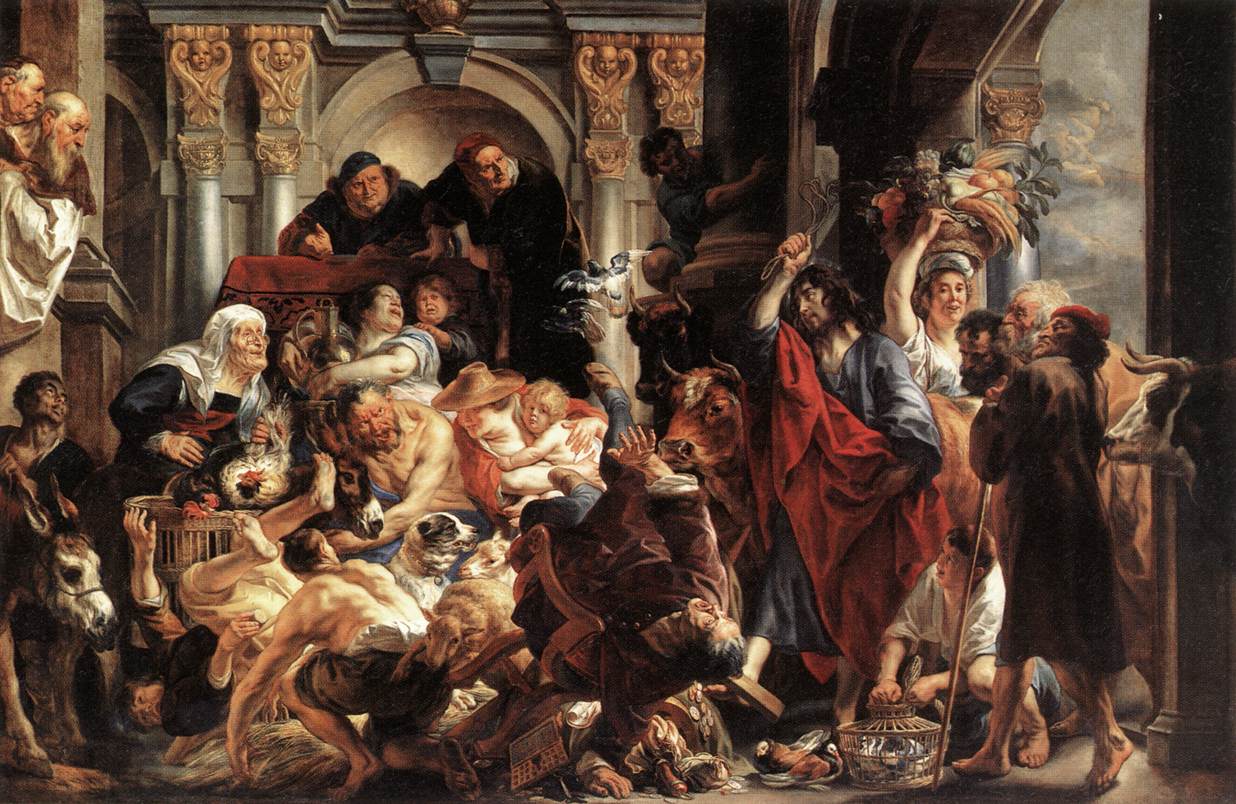
Christ Driving the Merchants from the Temple by Jacob Jordaens, circa 1650. Musée du Louvre, Paris.

After the stunningly beautiful music of cantata 94 from last week, it is a bit hard for me to go back to a “regular” chorale cantata: cantata 101: Nimm von uns Herr, du treuer Gott. But then again, maybe the beauty and lightness of last week’s cantata is the key to understanding this week’s …

I was not familiar with this cantata, because for this Sunday in the liturgical year, the 10th after Trinity, my mother would probably have played the more impressive 46 (written in 1723, its opening chorus later used for the Qui Tollis of the Mass in B minor – see my discussion of it here) or 102 (written in 1726, its opening chorus later used for the Kyrie of the Missa Brevis in g minor – see a short discussion at the end of this post).

There is a nice live recording of cantata 101: Nimm von uns Herr, du treuer Gott on YouTube by the Gesualdo Consort, part of a well-constructed program of Bach works based on the Vater Unser melody (Luther’s German version of the Lord’s Prayer). However, this performance doesn’t include trombones doubling the vocal parts in the opening chorus. If you would like to hear that important feature of this cantata, you can listen to Bach Collegium Japan’s recording of the opening chorus here.

Please find the text and translations here, and the score here.

Why does Bach take a starker approach for this Sunday in 1724 than in those other two years? One reason might be that in 1724, he is more strongly bound to his commitment of using a chorale tune as basis for the cantata than he is to the Gospel text for this Sunday (Jesus predicting the destruction of Jerusalem and him driving the merchants from the Temple). And the chorale for this Sunday is terror-inspiring: written during a time of the plague in 1584, on the melody of Luther’s Vater Unser.

If we go back to last week’s cantata, we should realize how frivolous it was of Bach to compose such a lighthearted cantata, featuring the flute, an ultra-secular, and French instrument! And this only to show off a University student, who didn’t even attend the St. Thomas School! It might very well have upset his employers, and afterwards they might have urged him to write something more appropriate next time, something inspiring devotion in the members of the Leipzig congregations, instead of treating them to the stuff he used to write at the court in Köthen. We will never know, but we can imagine.

So, while not directly quoting the Gospel of Jesus banishing the merchants from the Temple, but perhaps inspired by that story nonetheless, Bach goes back to the basics, the core of the Lutheran faith. And we know that whenever the hymn is based on a melody written by Luther himself, Bach shows the utmost respect for that, and often uses references in his music to remind the congregations of the timeless character of the music and of the dogma.

To reinforce the timeless character, he uses the “old” ensemble of cornetto and trombones to double the vocal parts in the opening chorus — the same way he did this for cantata 2 and cantata 25. Bach pushes the doctrine down everyone’s throat even more, or as Gardiner says, he “subjects his listeners to a twin-barrelled doctrinal salvo” when he not only presents the 1584 chorale melody in all but one movement of the cantata, including in the recitatives, but also quotes Luther’s hymn Dies sind die heil’gen zehn Gebot (These are the holy Ten Commandments) in the instrumental opening of the first movement.*

To further rub in the need for penitence, Bach presents strong dissonances on the words “schwere Straf und grosse Not” (grave punishment and great distress). Also, in the terrific Bass aria**, Bach instills horror in his audience when he makes an abrupt move from E minor to C minor on the word “Warum” of the sentence “Warum willst du so zornig sein” (Why wilt thou be so angry). Gardiner calls this a “Mahlerian swerve” and says “Not even Purcell, with his penchant for a calculated spotlit dissonance, was capable of matching this when setting the same words in his anthem “Lord, how long wilt thou be angry.”

In 1726 Bach wrote cantata 102 Herr, deine Augen sehen nach dem Glauben! for this same Sunday, the 10th Sunday after Trinity. It is a terrific composition. Bach was proud of it too, because he later re-used it in the Missa Brevis in F Major (BWV 233) and the Missa Brevis in g minor (BWV 235). Listen to Il Gardellino’s recording of it here on YouTube, with Damien Guillon, countertenor; Marcus Ullman, tenor; and Lieven Termont, bass. Especially the aria Aria Weh der Seele, die den Schaden (perhaps better known today as the soprano aria Qui Tollis from BWV 233) by countertenor Damien Guillon and oboist Marcel Ponseele is to die for.

Wieneke Gorter, August 18, 2017.

* It is not the first time he quotes this hymn in an opening chorus either, see my post about cantata 77 here.

** This bass aria is the best movement of the piece in my opinion, and probably also the reason why the leader of the Gesualdo Consort, Harry van der Kamp, himself the bass soloist, programmed this cantata in the first place.

The perfect combination of Bach’s writing & Herreweghe’s interpretation

29 Saturday Jul 2017

Posted by cantatasonmymind in Cantatas, Chorale cantatas 1724/1725, Leipzig, Trinity

≈ Leave a comment

Tags

Agnès Mellon, Collegium Vocale Gent, Howard Crook, Peter Kooy, Phlippe Herreweghe

dt5476

The Miracle of the Loaves and Fishes by Jacopo Tintoretto, circa 1545-1550, Metropolitan Museum of Art, New York.

1724: Bach has returned from his visit to Köthen (see previous post).

2017: I am still in Europe, but my daughter’s choir tour is done, and so is my daily commitment to write a blog for the parents who stayed back in California.

As I continue to follow Bach in 1724, the cantata for today, the 7th Sunday after Trinity, is cantata 107 Was willst du dich betrüben. If you only listen to one cantata this summer I suggest you listen to Herreweghe’s recording of this one. You will not regret the perfect combination of some of Bach’s best writing with Herreweghe’s sensitive interpretation. Find Herreweghe’s recording (from 1993, with Agnès Mellon, soprano; Howard Crook, tenor; and Peter Kooij, bass) here on YouTube. Consider purchasing it here — this album also contains the beautiful cantata 93 from two weeks ago. My favorite movements are the fabulous opening chorus, the bass recitative and aria that follows, superbly sung by Peter Kooij, and the tenor aria because of the flutes. I also love Agnès Mellon’s angelic singing in the soprano aria.

Find the text and translations here, and the score here.

A few weeks ago I explained that Bach started his second Leipzig cycle with a series of chorale cantatas, and that he would stick to that same format for nine and half months (read more about this in this post). He built all 44 cantatas in this period on a similar foundation: setting the verses of the chorale verbatim for the opening and closing choruses, while setting poetry based on the verses for the inner movements. While Bach collaborated with a librettist (probably the same one) for all of these cantatas, there was one exception within that 1724/1725 series: all of the words for cantata 107 Was willst du dich betrüben were copied verbatim from the chorale text.

We can only speculate as to why this happened. His librettist might have been sick or away.  Or did Bach perhaps compose this cantata during his visit to Köthen (see last week’s post)? We only know that he and Anna Magdalena performed at the court in Köthen, but we don’t know how long they stayed there.

I have loved this cantata 107 since I first heard it on the Herreweghe recording in the early 1990s. Just listen to that opening chorus: Bach’s excellent and poignant writing combined with the fabulous sustained lines of the Collegium Vocale chorus (read my posts about their sopranos here and their altos here) and Herreweghe’s calm tempo, and continuous focus on the direction and destination of the musical lines.

I am in movie-script mode again and taking the liberty to imagine Bach writing this cantata in Köthen, maybe even performing (parts of) it there too with all the wonderful musicians at that court, and Anna Magdalena singing the soprano aria. Bach could very well have been inspired by the change of scenery, time away from his hectic Leipzig house, and enjoying the company of his former colleagues in Köthen, all excellent musicians. If we follow this train of thought, it is not surprising that he assigns 2/3 of the principal music in the opening chorus to the orchestra and only 1/3 to the choir, and writes the closing chorus as if it were one of his orchestral suites. It has been suggested that Bach convinced one of the flute players at the Köthen court, Johann Gottlieb Würdig, to accompany him to Leipzig and stay there for a few months.

Wieneke Gorter, July 27, 2017.


Blogging from Greece

15 Saturday Jul 2017

Posted by cantatasonmymind in Cantatas, Chorale cantatas 1724/1725, Leipzig, Trinity

≈ 1 Comment

Tags

Agnès Mellon, BWV 93, Charles Brett, Howard Crook, Peter Kooy, Phlippe Herreweghe

File Jul 15, 15 46 01.jpeg
Kaisariani monastery near Athens, Greece
bloggingfromGreece

For today, the 5th Sunday after Trinity, I’m running out of time to write a post about the beautiful cantata 93 Wer nur den lieben Gott lässt walten Bach wrote for this Sunday in 1724. So I’ll just give you my favorite recording (by Herreweghe, with soloists Agnès Mellon, soprano; Charles Brett, countertenor; Howard Crook, tenor; and Peter Kooij, bass), the text & translations, and the score.

My reason is a good one: I’m on tour with my daughter’s youth choir to Greece, and I’m in charge of the blog for that tour (so parents who stay at home know we’re still alive and happy) and that’s taking up most of my limited wifi time on the island of Syros. It’s a really hard life being a blogger here 😉

kaisariani_interior.jpg

I’m very happy, because at the beginning of this week I got to see the 11th/12th century Kaisariani monastery, about 10 kilometers outside of Athens. I found out about this building once while looking for images for this blog. The cross-in-square, domed church has some beautiful wall and ceiling paintings dating from the 18th century; those in the narthex date back to 1682.

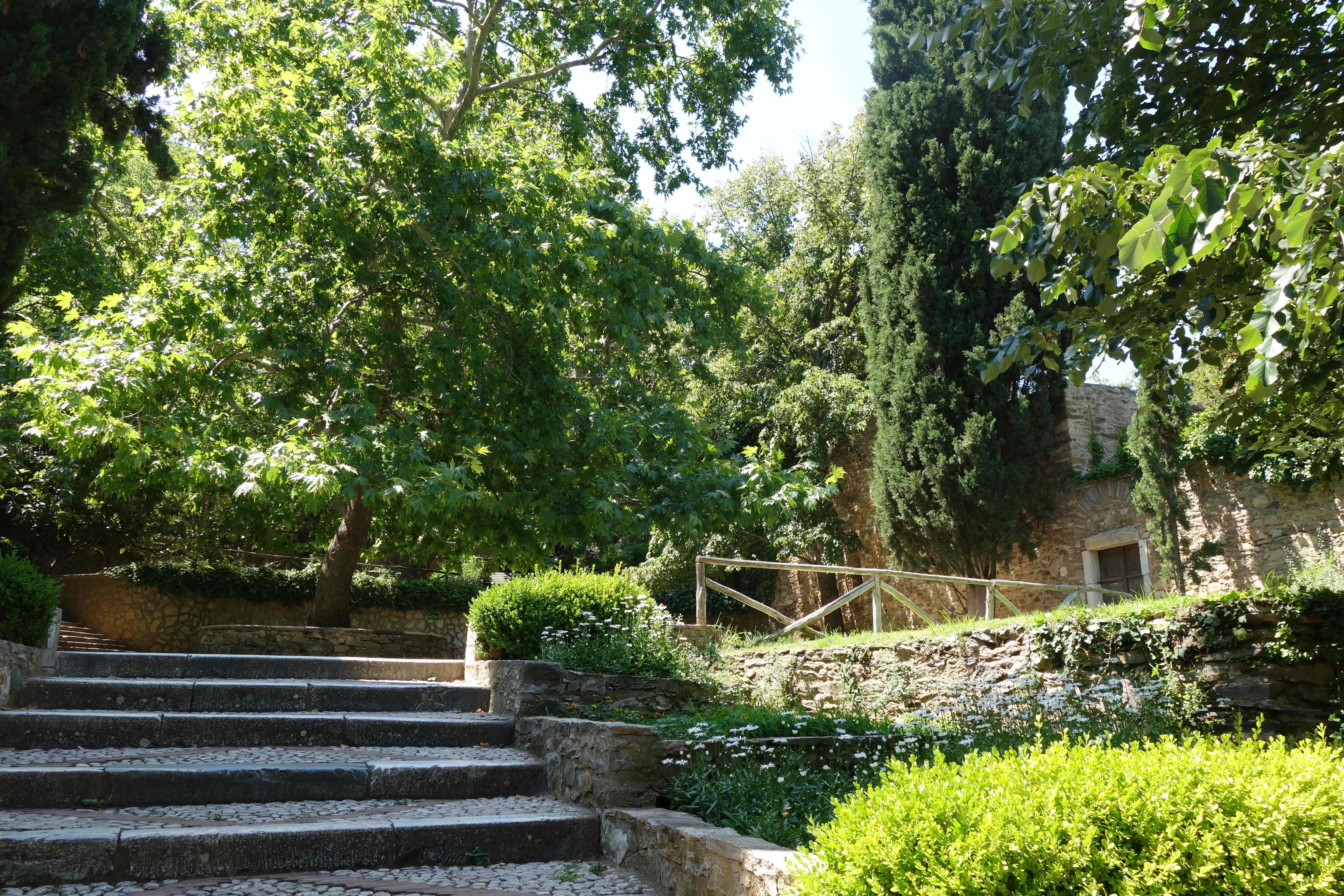
I loved seeing the paintings “live” and took lots of pictures to use in future blog posts, but also very much enjoyed the quiet (only a handful of other tourists were there), the forest air, and the gardens:

kaisariani_plants

Wieneke Gorter, July 15, 2017.

A double bill for July 2

01 Saturday Jul 2017

Posted by cantatasonmymind in Cantatas, Chorale cantatas 1724/1725, Leipzig, Trinity

≈ Leave a comment

Tags

Bach Collegium Japan, Deborah York, Gerd Türk, Pascal Bertin, Peter Kooy, Ton Koopman

In my effort to follow Bach’s compositions in the order in which he wrote them in 1724, I sometimes get a bit confused, because in 2017 the Sundays of the church year are exactly one week later than in 1724. Where it gets tricky is around the Feast days of St. John and the Visitation of Mary, which are always on the same date: June 24 and July 2 respectively.

See how the dates of 1724 compare to the dates of 2017 in this table here below, and you’ll understand my dilemma for today: in Bach’s time, if the feast of the Visitation fell on a Sunday, it would cancel out the theme and thus the cantata for that Sunday. That is why there is no cantata for Trinity 4 from 1724, and why Weekly Cantata will be on break next week.

Sunday/Feast day17242017Cantata
Trinity 1June 11June 1820: O Ewigkeit, du Donnerwort
Trinity 2June 18June 252: Ach Gott, vom Himmel sieh darein
St. John (Johannis)June 24June 247: Christ, unser Herr, zum Jordan kam
Trinity 3June 25(July 2)135: Ach Herr, mich armen Sünder
Visitation (Mariä Heimsuchung)July 2July 210: Meine Seele erhebt den Herren
Trinity 4July 2July 9(no cantata from 1724 because same day as Visitation)
Trinity 5July 9July 1693: Wer nur den lieben Gott lässt walten
Trinity 6July 16July 23(no cantata from 1724 because of Bach’s visit to Köthen)
Trinity 7July 23July 30107: Was willst du dich betrüben
Trinity 8July 30Aug 6178 Wo Gott der Herr nicht bei uns hält

So officially, I should present you only with the cantata for the feast of the Visitation today, but since we are listening in order of 1724, I give you some highlights of cantata 135 Ach Herr mich armen Sünder first. An update from 2021: Since I first wrote this post, a beautiful live video recording of this cantata has been released on YouTube by the J.S. Bach Foundation. Find it here.

The cantata is the last of the set of four I described in this post, and thus has the cantus firmus in the bass in the opening chorus. This is nicely done on the J.S. Bach Foundation recording, with a trombone doubling the choral bass part. But the best choral basses are still on the recording by Bach Collegium Japan. Listen to that recording on Spotify.

While the boy sopranos have a bit more work in the opening chorus (as was the case the last two weeks), there is again no soprano aria in this cantata. The Leipzig congregations haven’s heard a soprano solo since Trinity Sunday.

But then, on July 2, 1724, they get to hear the cantata for the feast of the Visitation: cantata 10 Meine Seel erhebt den Herren. With a soprano aria directly after the opening chorus, and a virtuoso one too. It might be that a talented new student had enrolled in the school, or Bach was finally ready training one, or there is a talented boy visiting for the holiday.* There is a very nice live video of Ton Koopman performing this in the St. Thomas Church in Leipzig during the Bach Festival there in 2003, with Deborah York singing the soprano aria.

Wieneke Gorter, July 1, 2017. Updated March 26, 2020, and June 19, 2021.

*Read more about the possibility of musicians visiting for this feast day in my post from last year about the Visitation. Read more about the soprano problem in this post.

The Feast of St. John 1724

28 Wednesday Jun 2017

Posted by cantatasonmymind in Cantatas, Chorale cantatas 1724/1725, Leipzig, Trinity

≈ Leave a comment

Tags

Charles Daniels, Daniel Taylor, Eric Milnes, Montreal Baroque, Stephan MacLeod

stjohn
The Naming of St. John the Baptist by Fra Angelico, 1434 or 1435. Basilica di San Marco, Florence, Italy.

As I explained in my post for the first Sunday after Trinity in 1724, Bach most probably intended for the first four chorale cantatas of this 1724 Trinity season to form a set, or at least to present some kind of order:

  1. For the first Sunday after Trinity in 1724, June 11: Cantata 20 O Ewigkeit, du Donnerwort: French Overture, with cantus firmus in the soprano
  2. For the second Sunday after Trinity in 1724, June 18: Cantata 2 Ach Gott, vom Himmel sieh darein: Chorale motet, cantus firmus in alto.
  3. For the Feast of St. John in 1724, Saturday June 24: Cantata 7 Christ unser Herr zum Jordan kam: Italian concerto, cantus firmus in tenor.
  4. For the third Sunday after Trinity in 1724, June 25: Cantata 135 : Ach Herr, mich armen Sünder: Chorale fantasia, cantus firmus in bass.

The Feast of St. John, celebrating the birth of St. John the Baptist, always falls on June 24 (exactly six months before Jesus’ birth). Read more about this feast day in my blog post from last year. This means that in 1724, this date came *after* the second Sunday after Trinity, while of course this year (2017) it came *before* that date.

Because I’m trying to follow the order in which Bach wrote his cantatas in 1724, I did not write about this cantata this past Saturday, but feel it should be presented within the order Bach wrote them in: between this past Sunday and next Sunday. So after the French Overture in cantata 20 and the chorale motet in cantata 2, Bach now presents you with an Italian concerto in this cantata 7 Christ unser Herr zum Jordan kam. The performance I like best is the one by Montreal Baroque, because of the opening movement and because of  Charles Daniels singing the tenor aria. Other soloists are Daniel Taylor, countertenor, and Stephan MacLeod, bass. You can enjoy this performance here on YouTube. The phrasing of the orchestra is beautiful and overall this recording is much more thoughtful and satisfying to me than many others I listened to.

Find the German text with English translation of this cantata here, and the score here.

Wieneke Gorter, June 27, 2017.

The Herreweghe altos (Trinity 2 in 1724)

25 Sunday Jun 2017

Posted by cantatasonmymind in Cantatas, Chorale cantatas 1724/1725, Leipzig, Trinity

≈ Leave a comment

Tags

Alex Potter, alto, Bach Collegium Japan, Collegium Vocale Gent, Eduard van Hengel, Phlippe Herreweghe

BWV2_title
The title page of cantata 2 Ach Gott tom Himmel sieh darein, written by Bach’s lead copyist, J.A. Kuhnau. Staatsbibliothek zu Berlin Preußischer Kulturbesitz

Regular readers of this blog know that I have a soft spot for the Herreweghe choir sopranos*. But the alto section of Collegium Vocale Gent is often equally impressive, and they deserve a special mention for their fabulous sound in the cantus firmus of this cantata’s opening chorus. Listen to Herreweghe’s recording of cantata 2 Ach Gott, vom Himmel sieh darein on YouTube.

Find the text of this cantata here (read along so you can see the brilliant text-illustration in the music), and the score (where you can see which instruments double which vocal parts) here.

Bach wrote this cantata for the 2nd Sunday after Trinity, which fell on June 18 in 1724.  As I explained last week, this is the second in a series of four cantatas at the start of Bach’s 1724/1725 Leipzig cycle, and according to the master’s orderly design for these first four chorale cantatas, the cantus firmus of the hymn tune (always the same as the cantata title) is now in the alto part.

This Herreweghe recording is from before the time that soloists joined the choir sections of Collegium Vocale, which means that alto soloist Ingeborg Danz does not sing in this excellent group of one mezzo (Mieke Wouters), two contraltos (Yvonne Fuchs and Cécile Pilorger), and one countertenor (Alex Potter). Also the blend with the instruments doubling this alto part (two oboes and one trombone) is so marvelous it gives me goose bumps. Then again, there aren’t many things in music that move me more than a Bach opening chorus with trombones.

Whenever Bach uses the archaic form of chorale motet as opening chorus, especially when he combines it with the use of the Renaissance/Early Baroque trombone quartet (1 cornetto and 3 trombones), he wants to stress the timeless importance, the authoritative character of a message. In this case the at that point already two centuries old message is the chorale, one of Luther’s own.  For readers who understand German: Eduard van Hengel’s website (in Dutch) has a very insightful overview of the original German text of Psalm 12, the text of Luther’s chorale, and how Bach’s librettist changed that into the text for the cantata.  You can find it here.

Bach alto and tenor arias are at their prettiest, I find, when they are written as a trio sonata, and there is a wonderful example of that in the alto aria Tilg, o Gott in this cantata. It is a plea for help in fighting the “Rottengeister,” or the sectarians amidst the Lutherans. Alto soloist Ingeborg Danz does a terrific job interpreting the text. When the alto starts singing the word Rottengeistern, we see that it was that word we had already heard many times in the triplets of the violin part. As Eduard van Hengel says, it is the “popular easy talk of the sectarians, and that is also the reason why the other two parts don’t have this motive” [to further illustrate the schism].

In his effort to educate his fellow Lutherans (the Leipzig congregations) with his music, Bach wants to make it clear that he’s still preaching by means of the well-known chorale, and uses longer notes for the direct quotation (in music and text) of the chorale in this aria: der uns will meistern.

The best interpretation of the tenor aria Durchs Feuer wird das Silber rein actually appears on another recording, that of Bach Collegium Japan with tenor Gerd Türk. You can listen to that aria here. Here we have arrived at the solution/salvation part of the cantata, and so this music is more pleasant, easier to listen to. But Bach is still preaching: there are some crossing (!) lines in the music, and in the middle section, which tells the listeners to be patient (sei geduldig) and Bach stresses the words Kreuz und Not.

So one wonders: was Bach’s decision to focus on chorales for this 1724/1725 cantata cycle inspired by his need to make things easier for the boy sopranos, or by a wish to explain the theology to the congregations in a way that was more obvious to them than the more complicated, sometimes perhaps too hidden, messages he had so far delivered by way of his music? Or had the City Council or the church elders told him to to this?

*Read more about that in this post.

Wieneke Gorter, June 25, 2017

Shaking things up at the start of the second Leipzig cycle

18 Sunday Jun 2017

Posted by cantatasonmymind in Cantatas, Chorale cantatas 1724/1725, Leipzig, Trinity

≈ Leave a comment

Tags

John Eliot Gardiner, Paul Agnew, Wilke te Brummelstoete

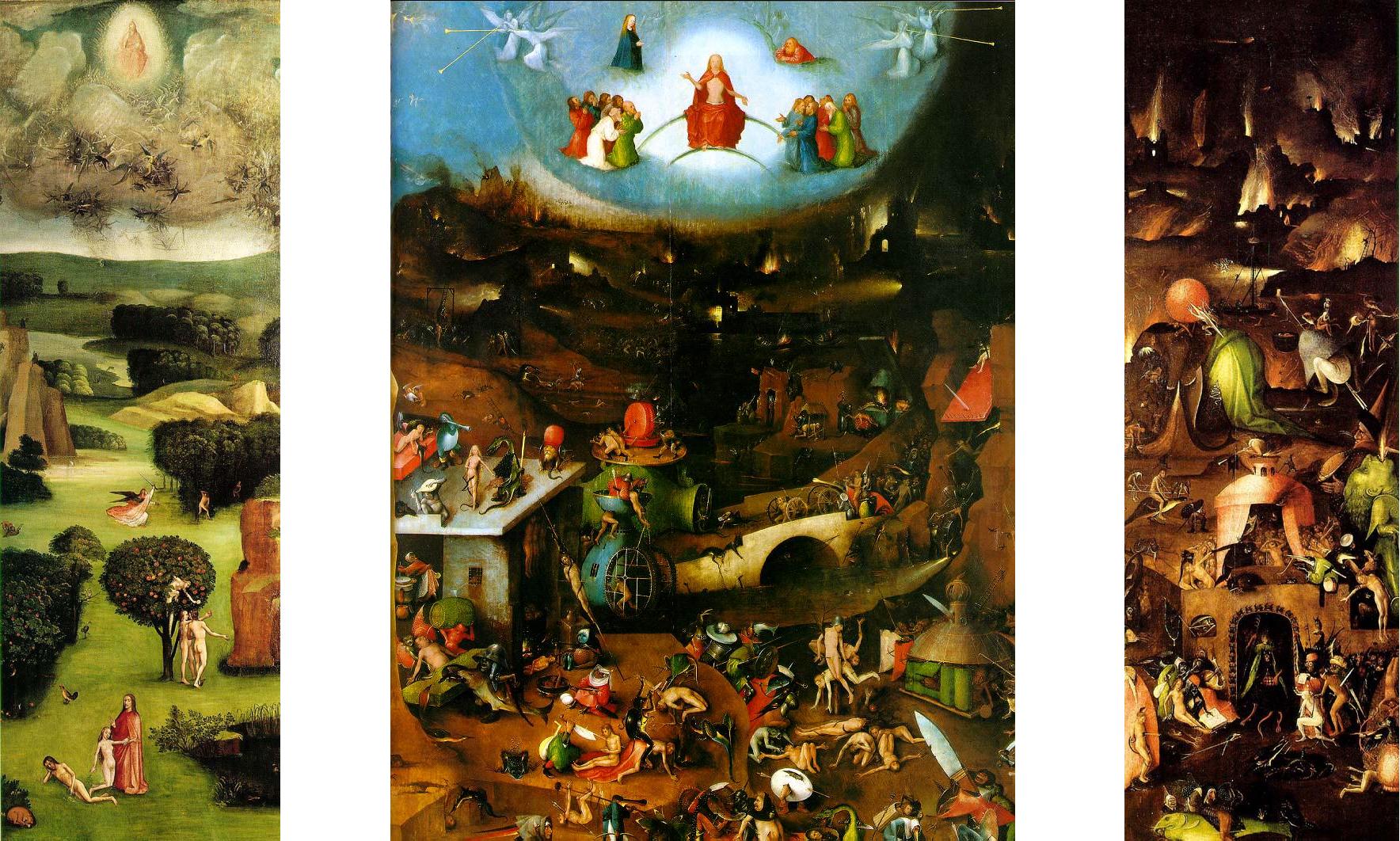
Last_judgement_Bosch
Last Judgement by Hieronymus Bosch, created between 1482 and 1516. Flames, as mentioned in the tenor aria, everywhere on the middle and right panel, “Posaunen” (trumpets) in the middle panel, as mentioned in the bass aria, and God hovering above the clouds (left panel, at top) as mentioned in the chorale at the end of Part I : “So lang ein Gott im Himmel lebt und über alle Wolken schwebt.”

On this First Sunday after Trinity (or “Trinity 1” for short) in 1724, Bach started his second cycle of cantatas in Leipzig.* He was well aware of the importance of this occasion, and wrote one of his most dramatic cantatas for this day: cantata 20 O Ewigkeit, du Donnerwort. The cantata features a wealth of opera-style writing for the soloists, and such a stately French overture, that one wonders if the use of this style was ironic: see, if you behave in this rich, arrogant way, things will end horribly for you. A lesson like this would be fitting for this cantata, because the Gospel  reading for this Trinity 1 Sunday was that of Lazarus and Dives: The poor leper Lazarus lies in front of the rich man Dives’ house, asking him for food every day. Dives ends up in hell when he dies because he didn’t share his blessings/wealth with those in need.

Over the course of writing this blog, whenever a cantata contains significant operatic writing, I tend to give the prize for best recording/interpretation to Gardiner, because he and Harnoncourt seem to be the only ones not shy to “overdo” it in these cases. This time it is no different. I especially love Paul Agnew in the tenor aria and Wilke te Brummelstoete and Paul Agnew together in the duet, where they illustrate the “chattering of teeth” perfectly.  Bass Dietrich Henschel does a good job too, though I’m not sure I prefer him over Peter Kooy on the Herreweghe recording. Listen to Gardiner’s recording of cantata 20 O Ewigkeit, du Donnerwort : here on YouTube

Find the text here, and the score here.

Bach marked this “second beginning” in Leipzig in several different ways, for himself as well as for others:

First of all,  on this Sunday he starts an entire series of new** cantatas, which we now call his chorale cantatas. For nine and a half months, including the entire Christmas season, he would write every cantata according to this same template: the opening movement is a chorale fantasia on the first stanza of an existing Lutheran hymn or chorale, with the tune appearing as a cantus firmus. The last movement has the last stanza of the same hymn as text, in a four-part harmonization of the tune. The text of those choral, outer movements was used verbatim, while the text of the solo, inner movements was paraphrased, but still based on the inner stanzas of the same hymn.

If you believe in the theory that Bach lost his soprano soloist sometime in the spring of 1724, and was having trouble training a new one, this concept of a chorale cantata would have been a brilliant move to solve this problem. This way, Bach still presented a series of impressive cantatas (arguably more impressive than his 1723/1724 cycle), while limiting the rehearsal hours needed with the choir boys. In many of these cantatas, as is the case for today’s cantata 20 O Ewigkeit, du Donnerwort, the choir boys would only have to sing the chorale melody in the opening chorus, and there would be no soprano recitative or aria among the inner movements at all. If in later cantatas in this series the boys would get assigned something a bit more complicated, it would still be based on the chorale melody they already knew by heart, so it would require much less rehearsal time with them.

As if with this dramatic cantata 20 Bach didn’t already make enough of a splash, he most probably intended for the first four chorale cantatas of this 1724 Trinity season to form a set, or at least to present some kind of order,  if you look at the composition form of the opening movement, and which voice has the cantus firmus of the chorale tune in that chorus:

  1. Cantata 20 O Ewigkeit, du Donnerwort: French Overture, with cantus firmus in the soprano
  2. Cantata 2 Ach Gott, vom Himmel sieh darein: Chorale motet, cantus firmus in alto.
  3. Cantata 7 Christ unser Herr zum Jordan kam: Italian concerto, cantus firmus in tenor.
  4. Cantata 135 : Ach Herr, mich armen Sünder: Chorale fantasia, cantus firmus in bass.

We know that Bach liked to use order and symmetry when he wanted to impress other people with a composition. But perhaps he was also thinking of his legacy. When he started composing cantatas at the Weimar court in 1714, albeit on a monthly instead of weekly basis, his first four cantatas formed a similar portfolio of composition styles in the opening choral movements:

  1. Cantata 182 Himmelskönig, sei wilkommen: Choral fugue
  2. Cantata 12 Weinen, klagen, sorgen, zagen: Passacaglia
  3. Cantata 172 Erschallet, ihr Lieder, erklinget, ihr Saiten!: Concerto
  4. Cantata 21 Ich hatte viel Bekümmernis: Motet.

This symmetry with his Weimar days must have been lost on others, even his fellow musicians, since they heard all these Weimar cantatas in Leipzig over the course of the 1723/1724 cycle, but not in this order they were created in Weimar.

In today’s cantata, cantata 20 O Ewigkeit, du Donnerwort, there are more links to other compositions nobody or only a few fans would have noticed: In the music as well as the text, Bach makes some pretty strong references to the first and the last cantata of the 1723 Trinity season. References to the first one (cantata 75, discussed here on this blog) appear in the decision to go back to this long, two-part format, the use of the trumpet as symbol for the heavens, and the illustration in the music of the word “Flammen” (flames). References to the last one (cantata 70, discussed here on this blog) present themselves in the selection of the chorale that talks about the Day of Judgement, and the operatic writing for the soloists, especially the bass and tenor.

After having followed Bach’s weekly compositions during the Trinity season of 1723, I feel it could be interesting to see this cantata 20, the first of the 1724 Trinity season, as the immediate successor of cantata 70, the last of the 1723 Trinity season. I realize that by doing so, I would ignore a few gems from early 1724, and an entire St. John Passion, but I do believe that as educator of his fellow Lutherans, Bach found Trinity season the most important part of the church year, and perhaps sometimes in his mind indeed ignored all the other stuff in between.

During the Trinity season, the theology moves away from the stories about the life of Christ, and instead focuses on the Lutheran doctrine, how one behaves before God, and on doing good deeds. So with this cantata, and the series that was to come, I think Bach wanted to make sure the Leipzig congregations were fully aware that the Trinity season was starting. The text “Wacht auf, wacht auf” (Wake up, wake up!) in the bass aria is testament to this, but also the writing of the opening chorus and the alto-tenor duet: it all makes you sit up and pay attention.

Wieneke Gorter, June 19, 2017.

*Bach had made his Leipzig debut on Trinity 1, 1723, with cantata 75 Die Elenden sollen essen. Read more about that fabulous cantata in this blog post.

**During this period, there will be no repeats of existing cantatas at all. It is stunning to realize that Bach made this huge commitment to himself, knowing how often during the 1723/1724 cycle he “recycled” music from Köthen and cantatas from Weimar.

Trying to find some beauty in ugliness

13 Sunday Nov 2016

Posted by cantatasonmymind in 1723 Trinity season special series, Cantatas, Leipzig, Trinity

≈ Leave a comment

Tags

Bachstiftung, Gustav Leonhardt, Leipzig, Max van Egmond, Patrick Henrichs, slide trumpet, trumpet

trumpetsmemling

The least gruesome detail of Hans Memling’s “The Last Judgment”, a triptych painted between 1467 and 1471. National Museum, Gdansk, Poland.

This week I’ve been trying harder than ever in my life to find islands of beauty in a sea of ugliness. I found some: I witnessed communities coming together, had a very uplifting choir rehearsal, attended a concert at my daughter’s music school where the director gave a heart-felt speech, and the choir director had included We Shall Overcome in their part of the program. I have talked with my children about what it means to “stand up” for the millions who will suffer discrimination in the next four years in this country.  I realize I have many different readers of this blog, and that some of you might not share my political opinion. But I would urge you to be there for each other. And whomever you had been meaning to contact, whether it is a friend you should have apologized to four weeks ago, someone you know who is having a hard time, a relative you haven’t called in too long, or your representative in the House or Senate, write that letter, make that phone call. Don’t put it off.

In today’s cantata 90 Es reißet euch ein schrecklich Ende (A terrible end shall sweep you away), written for November 14, 1723, the 25th Sunday after Trinity, it is not easy to find beauty either, at least not the soul-soothing kind, since it is based on the Bible story of The Last Judgement, which is an ugly concept in my opinion. However this story was important in Bach’s time, and it was thus appropriate to let the Trinity season go out with a bang: two weeks in a row of impressive cantatas, including some of the most magnificent (and difficult!) arias for bass and trumpet in all of his work.

While Bach’s audience (the congregations of the St. Thomas and St. Nicholas churches in Leipzig) got plenty of tenor drama in the fall of 1723, it had been a long time (August 1, 1723 to be exact) since they had last heard an operatic aria for bass, with the majestic trumpet as accompanying instrument.

Since this emotional week also calls for some nostalgia, I’m going with the Leonhardt recording of this cantata, because I grew up listening to Max van Egmond sing these bass arias. The trumpet player on that recording however barely makes it, so if you would like to listen to a better player in that particular aria, and also see a close-up of the instrument, watch this video (of the bass aria only) by the Bach Foundation, with Patrick Henrichs on trumpet.

Find the text here, and the score here.

Wieneke Gorter, November 13, 2016, Links updated November 24, 2019.

Bach in Vienna / Robin Blaze going wild

06 Sunday Nov 2016

Posted by cantatasonmymind in 1723 Trinity season special series, Cantatas, Leipzig, Trinity

≈ Leave a comment

Tags

24th Sunday after Trinity, Bach Collegium Japan, BWV 105, BWV 60, Eduard van Hengel, Gerd Türk, Jason Victor Serinus, John Eliot Gardiner, Masaaki Suzuki, Peter Kooy, Robin Blaze, San Francisco Classical Voice, St. John Passion, St. Matthew Passion, Trinity 24

kokoschka_pieta

Pietà (It is enough) / Pietà (Es ist genug), plate 11 from a series of 11 lithographs O Ewigkeit, Du Donnerwort by Oskar Kokoschka, 1914/1916. Museum of Modern Art, New York.

In Vienna, they were all talking about Bach’s cantata 60 O Ewigkeit, Du Donnerwort. The astonishing harmonization in the closing chorale as well as the structure of a “dialogue” between Fear (alto) and Hope (tenor) made it one of the most unusual among his cantatas, and apparently something worth discussing. In the first half of the 20th century, that is. In 1935  Alban Berg used the “modern” harmonization from the closing chorale Es ist genug in the final movement of his violin concerto To the Memory of an Angel–an instrumental Requiem for Manon Gropius, daughter of Bauhaus architect Walter Gropius and Mahler’s widow, Alma Schindler.

Several years before, the same Alma Schindler had a short-lived affair with Czech painter Oskar Kokoschka. After they broke up, Kokoschka processed his torment by making a series of 11 lithographs to illustrate the cantata. The dialogue between Fear (the alto) and Hope (the tenor) in the cantata became a dialogue between Alma and himself, in pictures only: click here to see the entire series. Many thanks to Eduard van Hengel for pointing this out.

Listen to Bach Collegium Japan’s recording of this cantata on Spotify, with countertenor Robin Blaze and tenor Gerd Türk. Find the German text with English translations here, and the score here.

Bach wrote this cantata 60 O Ewigkeit, Du Donnerwort for the 24th Sunday after Trinity in 1723, the Sunday normally linked to the Gospel story of the Raising of Jairus’ Daughter. However, in 1723–as now in 2016–this day fell on the first Sunday in November: All Hallows Sunday, All Saints Sunday, however you want to call it, but the Sunday on which the congregation would have commemorated all who had passed away that year. None of the commentaries I have read mention this, but I think it is important, because I feel this cantata is much more about how horrible it might be to die, or the thoughts one has when sitting at a loved one’s deathbed, than it is about the Raising of Jairus’ Daughter.

Of all the recordings I listened to, I like Bach Collegium Japan’s the best, because of Robin Blaze’s interpretation of the alto part. I always love his voice, but he is usually quite understated in his singing. He explains this well in this interview on San Francisco Classical Voice. I sometimes wish he would indeed sing with Kate Bush and “let go” a little, so I was thrilled to hear that in this cantata he actually does go a bit wild, for his standards at least, and that Suzuki lets him do it. His conviction in the opening chorale is already terrific (also note the wonderful blend with the horn doubling his part), but the way he sings the text “Und martert diese Glieder” (and tortures these limbs) in movement 2 is amazing, spot-on, and unrivaled by any others I listened to.

As we have seen before in the course of these 1723 Trinity Season cantatas (read for example my post on cantata 105) there are elements of Bach’s passions already present in this cantata. The agitated singing of the tenor in the stunningly beautiful duet (movement 3) resembles the Ach, mein Sinn! tenor aria from the St. John Passion. The repeated tremolo in the violins in movement 1 is something Bach often uses to illustrate fear, and this will show up again in the tenor arioso O Schmerz! Hier zittert das gequälte Herz in his St. Matthew Passion.

For further reading, including all the amazing harmonies in this piece which impressed the Viennese composers of the early 20th century,  as well as other insights, I can highly recommend Gardiner’s journal entry about this cantata (start reading on page 5).

Wieneke Gorter, November 6, 2016, updated November 21, 2020

1723 Trinity Special Series: the Final Weeks!

30 Sunday Oct 2016

Posted by cantatasonmymind in 1723 Trinity season special series, Cantatas, Leipzig, Trinity

≈ Leave a comment

95thesen_facsimile_colour

Luther’s Theses, marking the start of the Reformation on October 31 in 1517.

Fear not: I am by no means announcing the end of this blog and am very much looking forward to sharing Bach’s beautiful Advent and Christmas cantatas with you starting on Sunday November 27.

This is just a heads-up about the impending end of my Trinity 1723 Special Series. Bach made his 1723 Trinity Season go out with a bang, and I plan to do the same! Spectacular (and somewhat crazy) cantatas are coming up in the next three weeks, but there’s no cantata from 1723 for today, so this is your chance to catch up on the previous episodes of this special series, which started on Sunday May 29 of this year with this post.  If you don’t have time to read all the episodes, I recommend these two highlights: cantata 147 for the Feast of the Visitation, and cantata 105 for Trinity 9.

Why is there no cantata for today from 1723? It was October 31, also known as Reformation Day, the day on which the Lutheran Church celebrates Martin Luther publishing his 95 Theses against the Catholic Church in 1517. It wasn’t until 1725 that Bach wrote a cantata for that particular day.

Wieneke Gorter, Sunday October 30, 2016.

← Older posts
Newer posts →

Recent Posts

  • Family stories and more “Vision Bach” – BWV 179 and 199 for Trinity 11
  • Almost Unbearable, It’s that Good: Hannes Rux-Brachtendorf and Matthias Winckhler in BWV 46 on Rademann’s Vision Bach, Volume 3.
  • “Missa Miniatura” by CONTINUUM/Elina Albach Even More Moving in 2025
  • Bachfest Leipzig 2025
  • Bach Cantatas for Christmas – 1724 and 1734 editions

Archives

  • August 2026
  • August 2025
  • July 2025
  • December 2024
  • November 2024
  • June 2024
  • January 2024
  • December 2023
  • October 2023
  • September 2023
  • August 2023
  • April 2022
  • February 2022
  • January 2022
  • December 2021
  • November 2021
  • June 2021
  • May 2021
  • April 2021
  • February 2021
  • January 2021
  • December 2020
  • November 2020
  • October 2020
  • September 2020
  • August 2020
  • July 2020
  • May 2020
  • April 2020
  • March 2020
  • February 2020
  • January 2020
  • December 2019
  • November 2019
  • May 2018
  • April 2018
  • March 2018
  • February 2018
  • January 2018
  • December 2017
  • November 2017
  • October 2017
  • September 2017
  • August 2017
  • July 2017
  • June 2017
  • May 2017
  • April 2017
  • March 2017
  • February 2017
  • January 2017
  • December 2016
  • November 2016
  • October 2016
  • September 2016
  • August 2016
  • July 2016
  • June 2016
  • May 2016
  • April 2016
  • March 2016
  • February 2016
  • January 2016

Enter your email address to follow this blog and receive notifications of new posts by email.

Join 338 other subscribers

Categories

  • 1723 Trinity season special series
  • Advent
  • After Easter
  • Ascension
  • Bach's life
  • Cantatas
  • Chorale cantatas 1724/1725
  • Christmas
  • Easter
  • Epiphany
  • Following Bach in 1725
  • Köthen
  • Leipzig
  • Septuagesima
  • Travel
  • Trinity
  • Weimar

Meta

  • Create account
  • Log in
  • Entries feed
  • Comments feed
  • WordPress.com

Website Built with WordPress.com.

  • Subscribe Subscribed
    • Weekly Cantata
    • Join 158 other subscribers
    • Already have a WordPress.com account? Log in now.
    • Weekly Cantata
    • Subscribe Subscribed
    • Sign up
    • Log in
    • Report this content
    • View site in Reader
    • Manage subscriptions
    • Collapse this bar
Loading Comments...