Weekly Cantata

Weekly Cantata

Category Archives: Trinity

The Herreweghe altos (Trinity 2 in 1724)

25 Sunday Jun 2017

Posted by cantatasonmymind in Cantatas, Chorale cantatas 1724/1725, Leipzig, Trinity

≈ Leave a comment

Tags

Alex Potter, alto, Bach Collegium Japan, Collegium Vocale Gent, Eduard van Hengel, Phlippe Herreweghe

BWV2_title
The title page of cantata 2 Ach Gott tom Himmel sieh darein, written by Bach’s lead copyist, J.A. Kuhnau. Staatsbibliothek zu Berlin Preußischer Kulturbesitz

Regular readers of this blog know that I have a soft spot for the Herreweghe choir sopranos*. But the alto section of Collegium Vocale Gent is often equally impressive, and they deserve a special mention for their fabulous sound in the cantus firmus of this cantata’s opening chorus. Listen to Herreweghe’s recording of cantata 2 Ach Gott, vom Himmel sieh darein on YouTube.

Find the text of this cantata here (read along so you can see the brilliant text-illustration in the music), and the score (where you can see which instruments double which vocal parts) here.

Bach wrote this cantata for the 2nd Sunday after Trinity, which fell on June 18 in 1724.  As I explained last week, this is the second in a series of four cantatas at the start of Bach’s 1724/1725 Leipzig cycle, and according to the master’s orderly design for these first four chorale cantatas, the cantus firmus of the hymn tune (always the same as the cantata title) is now in the alto part.

This Herreweghe recording is from before the time that soloists joined the choir sections of Collegium Vocale, which means that alto soloist Ingeborg Danz does not sing in this excellent group of one mezzo (Mieke Wouters), two contraltos (Yvonne Fuchs and Cécile Pilorger), and one countertenor (Alex Potter). Also the blend with the instruments doubling this alto part (two oboes and one trombone) is so marvelous it gives me goose bumps. Then again, there aren’t many things in music that move me more than a Bach opening chorus with trombones.

Whenever Bach uses the archaic form of chorale motet as opening chorus, especially when he combines it with the use of the Renaissance/Early Baroque trombone quartet (1 cornetto and 3 trombones), he wants to stress the timeless importance, the authoritative character of a message. In this case the at that point already two centuries old message is the chorale, one of Luther’s own.  For readers who understand German: Eduard van Hengel’s website (in Dutch) has a very insightful overview of the original German text of Psalm 12, the text of Luther’s chorale, and how Bach’s librettist changed that into the text for the cantata.  You can find it here.

Bach alto and tenor arias are at their prettiest, I find, when they are written as a trio sonata, and there is a wonderful example of that in the alto aria Tilg, o Gott in this cantata. It is a plea for help in fighting the “Rottengeister,” or the sectarians amidst the Lutherans. Alto soloist Ingeborg Danz does a terrific job interpreting the text. When the alto starts singing the word Rottengeistern, we see that it was that word we had already heard many times in the triplets of the violin part. As Eduard van Hengel says, it is the “popular easy talk of the sectarians, and that is also the reason why the other two parts don’t have this motive” [to further illustrate the schism].

In his effort to educate his fellow Lutherans (the Leipzig congregations) with his music, Bach wants to make it clear that he’s still preaching by means of the well-known chorale, and uses longer notes for the direct quotation (in music and text) of the chorale in this aria: der uns will meistern.

The best interpretation of the tenor aria Durchs Feuer wird das Silber rein actually appears on another recording, that of Bach Collegium Japan with tenor Gerd Türk. You can listen to that aria here. Here we have arrived at the solution/salvation part of the cantata, and so this music is more pleasant, easier to listen to. But Bach is still preaching: there are some crossing (!) lines in the music, and in the middle section, which tells the listeners to be patient (sei geduldig) and Bach stresses the words Kreuz und Not.

So one wonders: was Bach’s decision to focus on chorales for this 1724/1725 cantata cycle inspired by his need to make things easier for the boy sopranos, or by a wish to explain the theology to the congregations in a way that was more obvious to them than the more complicated, sometimes perhaps too hidden, messages he had so far delivered by way of his music? Or had the City Council or the church elders told him to to this?

*Read more about that in this post.

Wieneke Gorter, June 25, 2017
Shaking things up at the start of the second Leipzig cycle

18 Sunday Jun 2017

Posted by cantatasonmymind in Cantatas, Chorale cantatas 1724/1725, Leipzig, Trinity

≈ Leave a comment

Tags

John Eliot Gardiner, Paul Agnew, Wilke te Brummelstoete

Last_judgement_Bosch
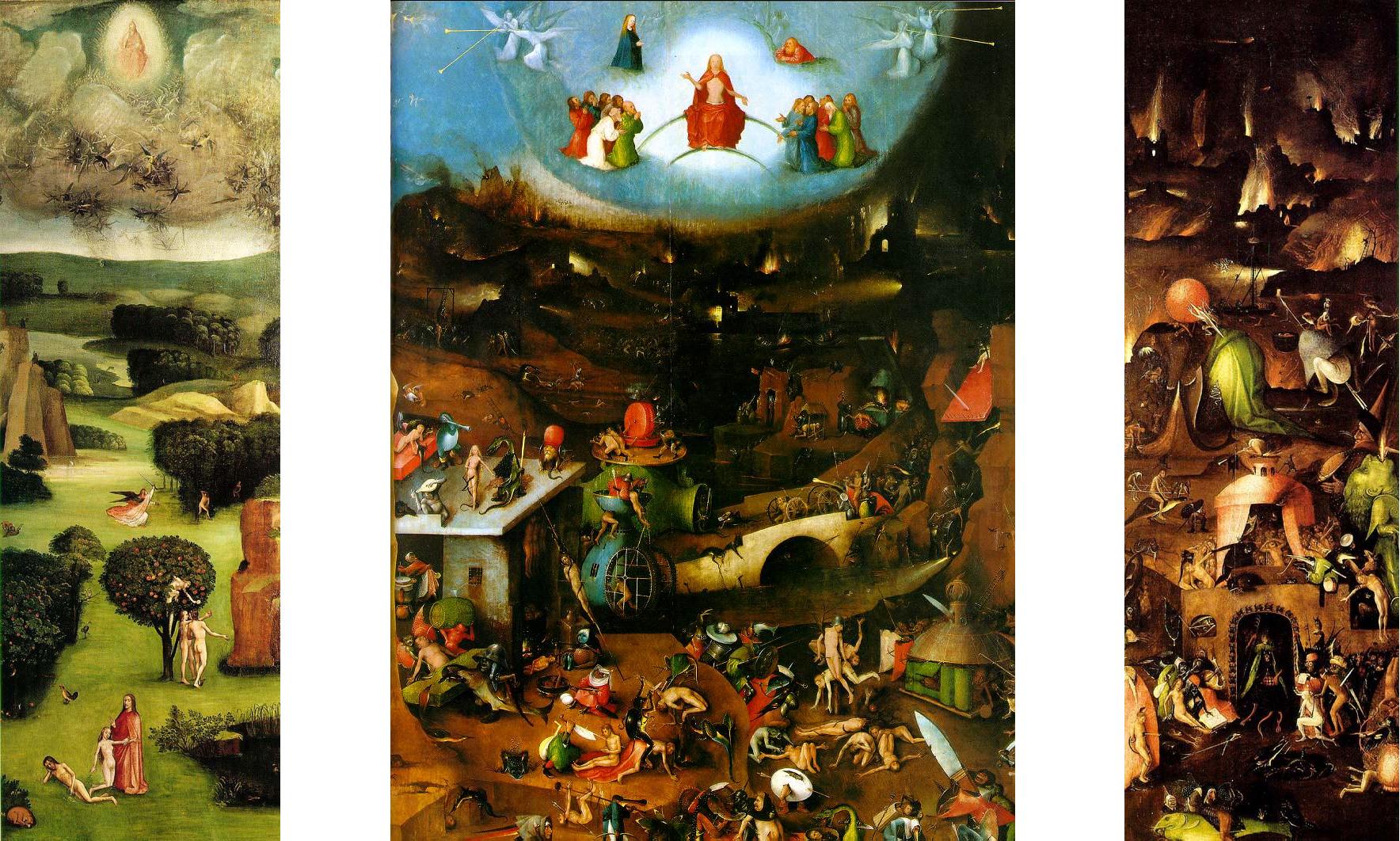
Last Judgement by Hieronymus Bosch, created between 1482 and 1516. Flames, as mentioned in the tenor aria, everywhere on the middle and right panel, “Posaunen” (trumpets) in the middle panel, as mentioned in the bass aria, and God hovering above the clouds (left panel, at top) as mentioned in the chorale at the end of Part I : “So lang ein Gott im Himmel lebt und über alle Wolken schwebt.”

On this First Sunday after Trinity (or “Trinity 1” for short) in 1724, Bach started his second cycle of cantatas in Leipzig.* He was well aware of the importance of this occasion, and wrote one of his most dramatic cantatas for this day: cantata 20 O Ewigkeit, du Donnerwort. The cantata features a wealth of opera-style writing for the soloists, and such a stately French overture, that one wonders if the use of this style was ironic: see, if you behave in this rich, arrogant way, things will end horribly for you. A lesson like this would be fitting for this cantata, because the Gospel  reading for this Trinity 1 Sunday was that of Lazarus and Dives: The poor leper Lazarus lies in front of the rich man Dives’ house, asking him for food every day. Dives ends up in hell when he dies because he didn’t share his blessings/wealth with those in need.

Over the course of writing this blog, whenever a cantata contains significant operatic writing, I tend to give the prize for best recording/interpretation to Gardiner, because he and Harnoncourt seem to be the only ones not shy to “overdo” it in these cases. This time it is no different. I especially love Paul Agnew in the tenor aria and Wilke te Brummelstoete and Paul Agnew together in the duet, where they illustrate the “chattering of teeth” perfectly.  Bass Dietrich Henschel does a good job too, though I’m not sure I prefer him over Peter Kooy on the Herreweghe recording. Listen to Gardiner’s recording of cantata 20 O Ewigkeit, du Donnerwort : here on YouTube

Find the text here, and the score here.

Bach marked this “second beginning” in Leipzig in several different ways, for himself as well as for others:

First of all,  on this Sunday he starts an entire series of new** cantatas, which we now call his chorale cantatas. For nine and a half months, including the entire Christmas season, he would write every cantata according to this same template: the opening movement is a chorale fantasia on the first stanza of an existing Lutheran hymn or chorale, with the tune appearing as a cantus firmus. The last movement has the last stanza of the same hymn as text, in a four-part harmonization of the tune. The text of those choral, outer movements was used verbatim, while the text of the solo, inner movements was paraphrased, but still based on the inner stanzas of the same hymn.

If you believe in the theory that Bach lost his soprano soloist sometime in the spring of 1724, and was having trouble training a new one, this concept of a chorale cantata would have been a brilliant move to solve this problem. This way, Bach still presented a series of impressive cantatas (arguably more impressive than his 1723/1724 cycle), while limiting the rehearsal hours needed with the choir boys. In many of these cantatas, as is the case for today’s cantata 20 O Ewigkeit, du Donnerwort, the choir boys would only have to sing the chorale melody in the opening chorus, and there would be no soprano recitative or aria among the inner movements at all. If in later cantatas in this series the boys would get assigned something a bit more complicated, it would still be based on the chorale melody they already knew by heart, so it would require much less rehearsal time with them.

As if with this dramatic cantata 20 Bach didn’t already make enough of a splash, he most probably intended for the first four chorale cantatas of this 1724 Trinity season to form a set, or at least to present some kind of order,  if you look at the composition form of the opening movement, and which voice has the cantus firmus of the chorale tune in that chorus:

  1. Cantata 20 O Ewigkeit, du Donnerwort: French Overture, with cantus firmus in the soprano
  2. Cantata 2 Ach Gott, vom Himmel sieh darein: Chorale motet, cantus firmus in alto.
  3. Cantata 7 Christ unser Herr zum Jordan kam: Italian concerto, cantus firmus in tenor.
  4. Cantata 135 : Ach Herr, mich armen Sünder: Chorale fantasia, cantus firmus in bass.

We know that Bach liked to use order and symmetry when he wanted to impress other people with a composition. But perhaps he was also thinking of his legacy. When he started composing cantatas at the Weimar court in 1714, albeit on a monthly instead of weekly basis, his first four cantatas formed a similar portfolio of composition styles in the opening choral movements:

  1. Cantata 182 Himmelskönig, sei wilkommen: Choral fugue
  2. Cantata 12 Weinen, klagen, sorgen, zagen: Passacaglia
  3. Cantata 172 Erschallet, ihr Lieder, erklinget, ihr Saiten!: Concerto
  4. Cantata 21 Ich hatte viel Bekümmernis: Motet.

This symmetry with his Weimar days must have been lost on others, even his fellow musicians, since they heard all these Weimar cantatas in Leipzig over the course of the 1723/1724 cycle, but not in this order they were created in Weimar.

In today’s cantata, cantata 20 O Ewigkeit, du Donnerwort, there are more links to other compositions nobody or only a few fans would have noticed: In the music as well as the text, Bach makes some pretty strong references to the first and the last cantata of the 1723 Trinity season. References to the first one (cantata 75, discussed here on this blog) appear in the decision to go back to this long, two-part format, the use of the trumpet as symbol for the heavens, and the illustration in the music of the word “Flammen” (flames). References to the last one (cantata 70, discussed here on this blog) present themselves in the selection of the chorale that talks about the Day of Judgement, and the operatic writing for the soloists, especially the bass and tenor.

After having followed Bach’s weekly compositions during the Trinity season of 1723, I feel it could be interesting to see this cantata 20, the first of the 1724 Trinity season, as the immediate successor of cantata 70, the last of the 1723 Trinity season. I realize that by doing so, I would ignore a few gems from early 1724, and an entire St. John Passion, but I do believe that as educator of his fellow Lutherans, Bach found Trinity season the most important part of the church year, and perhaps sometimes in his mind indeed ignored all the other stuff in between.

During the Trinity season, the theology moves away from the stories about the life of Christ, and instead focuses on the Lutheran doctrine, how one behaves before God, and on doing good deeds. So with this cantata, and the series that was to come, I think Bach wanted to make sure the Leipzig congregations were fully aware that the Trinity season was starting. The text “Wacht auf, wacht auf” (Wake up, wake up!) in the bass aria is testament to this, but also the writing of the opening chorus and the alto-tenor duet: it all makes you sit up and pay attention.

Wieneke Gorter, June 19, 2017.

*Bach had made his Leipzig debut on Trinity 1, 1723, with cantata 75 Die Elenden sollen essen. Read more about that fabulous cantata in this blog post.

**During this period, there will be no repeats of existing cantatas at all. It is stunning to realize that Bach made this huge commitment to himself, knowing how often during the 1723/1724 cycle he “recycled” music from Köthen and cantatas from Weimar.

Trying to find some beauty in ugliness

13 Sunday Nov 2016

Posted by cantatasonmymind in 1723 Trinity season special series, Cantatas, Leipzig, Trinity

≈ Leave a comment

Tags

Bachstiftung, Gustav Leonhardt, Leipzig, Max van Egmond, Patrick Henrichs, slide trumpet, trumpet

trumpetsmemling
The least gruesome detail of Hans Memling’s “The Last Judgment”, a triptych painted between 1467 and 1471. National Museum, Gdansk, Poland.

This week I’ve been trying harder than ever in my life to find islands of beauty in a sea of ugliness. I found some: I witnessed communities coming together, had a very uplifting choir rehearsal, attended a concert at my daughter’s music school where the director gave a heart-felt speech, and the choir director had included We Shall Overcome in their part of the program. I have talked with my children about what it means to “stand up” for the millions who will suffer discrimination in the next four years in this country.  I realize I have many different readers of this blog, and that some of you might not share my political opinion. But I would urge you to be there for each other.

In today’s cantata 90 Es reißet euch ein schrecklich Ende (A terrible end shall sweep you away), written for November 14, 1723, the 25th Sunday after Trinity, it is not easy to find beauty either, at least not the soul-soothing kind, since it is based on the Bible story of The Last Judgement, which is an ugly concept in my opinion. However this story was important in Bach’s time, and it was thus appropriate to let the Trinity season go out with a bang: two weeks in a row of impressive cantatas, including some of the most magnificent (and difficult!) arias for bass and trumpet in all of his work.

While Bach’s audience (the congregations of the St. Thomas and St. Nicholas churches in Leipzig) got plenty of tenor drama in the fall of 1723, it had been a long time (August 1, 1723 to be exact) since they had last heard an operatic aria for bass, with the majestic trumpet as accompanying instrument.

Since this emotional week also calls for some nostalgia, I’m going with the Leonhardt recording of this cantata, because I grew up listening to Max van Egmond sing these bass arias. The trumpet player on that recording however barely makes it, so if you would like to listen to a better player in that particular aria, and also see a close-up of the instrument, watch this video by the Bach Foundation, with Klaus Häger, bass, and Patrick Henrichs on trumpet.

Find the text here, and the score here.

Wieneke Gorter, November 13, 2016, Links updated November 12, 2026.

Bach in Vienna / Robin Blaze going wild

06 Sunday Nov 2016

Posted by cantatasonmymind in 1723 Trinity season special series, Cantatas, Leipzig, Trinity

≈ Leave a comment

Tags

24th Sunday after Trinity, Alban Berg, Alma Schindler, Bach Collegium Japan, BWV 60, Eduard van Hengel, Gerd Türk, Jason Victor Serinus, Mahler, Manon Gropius, Masaaki Suzuki, Oskar Kokoschka, Peter Kooy, Robin Blaze, San Francisco Classical Voice, Trinity 24

kokoschka_pieta
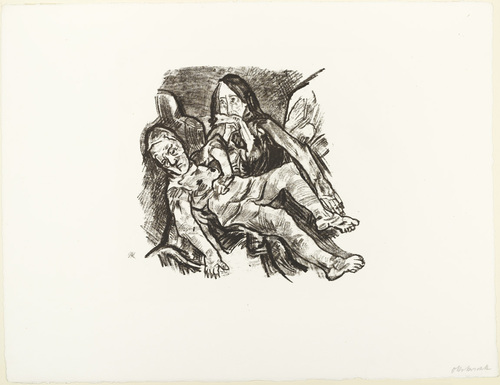
Pietà (It is enough) / Pietà (Es ist genug), plate 11 from a series of 11 lithographs O Ewigkeit, Du Donnerwort by Oskar Kokoschka, 1914/1916. Museum of Modern Art, New York.

In Vienna, they were all talking about Bach’s cantata 60 O Ewigkeit, Du Donnerwort. The astonishing harmonization in the closing chorale as well as the structure of a “dialogue” between Fear (alto) and Hope (tenor) made it one of the most unusual among his cantatas, and apparently something worth discussing. In the first half of the 20th century, that is. In 1935  Alban Berg used the “modern” harmonization from the closing chorale Es ist genug in the final movement of his violin concerto To the Memory of an Angel–an instrumental Requiem for Manon Gropius, daughter of Bauhaus architect Walter Gropius and Mahler’s widow, Alma Schindler.

Several years before, the same Alma Schindler had a short-lived affair with Czech painter Oskar Kokoschka. After they broke up, Kokoschka processed his torment by making a series of 11 lithographs to illustrate the cantata. The dialogue between Fear (the alto) and Hope (the tenor) in the cantata became a dialogue between Alma and himself, in pictures only: click here to see the entire series. Many thanks to Eduard van Hengel for pointing this out.

Listen to Bach Collegium Japan’s recording of this cantata on Spotify, with countertenor Robin Blaze and tenor Gerd Türk. Find the German text with English translations here, and the score here.

Bach wrote this cantata 60 O Ewigkeit, Du Donnerwort for the 24th Sunday after Trinity in 1723, the Sunday normally linked to the Gospel story of the Raising of Jairus’ Daughter. However, in 1723–as now in 2016–this day fell on the first Sunday in November: All Hallows Sunday, All Saints Sunday, however you want to call it, but the Sunday on which the congregation would have commemorated all who had passed away that year. None of the commentaries I have read mention this, but I think it is important, because I feel this cantata is much more about how horrible it might be to die, or the thoughts one has when sitting at a loved one’s deathbed, than it is about the Raising of Jairus’ Daughter.

Of all the recordings I listened to, I like Bach Collegium Japan’s the best, because of Robin Blaze’s interpretation of the alto part. I always love his voice, but he is usually quite understated in his singing. He explains this well in this interview on San Francisco Classical Voice (sorry this link only works if you’re inside the USA). I sometimes wish he would indeed sing with Kate Bush and “let go” a little, so I was thrilled to hear that in this cantata he actually does go a bit wild, for his standards at least, and that Suzuki lets him do it. His conviction in the opening chorale is already terrific (also note the wonderful blend with the horn doubling his part), but the way he sings the text “Und martert diese Glieder” (and tortures these limbs) in movement 2 is amazing, spot-on, and unrivaled by any others I listened to.

As we have seen before in the course of these 1723 Trinity Season cantatas (read for example my post on cantata 105) there are elements of Bach’s passions already present in this cantata. The agitated singing of the tenor in the stunningly beautiful duet (movement 3) resembles the Ach, mein Sinn! tenor aria from the St. John Passion. The repeated tremolo in the violins in movement 1 is something Bach often uses to illustrate fear, and this will show up again in the tenor arioso O Schmerz! Hier zittert das gequälte Herz in his St. Matthew Passion.

© Wieneke Gorter, November 6, 2016, updated November 21, 2020 and November 12, 2026.

1723 Trinity Special Series: the Final Weeks!

30 Sunday Oct 2016

Posted by cantatasonmymind in 1723 Trinity season special series, Cantatas, Leipzig, Trinity

≈ Leave a comment

95thesen_facsimile_colour

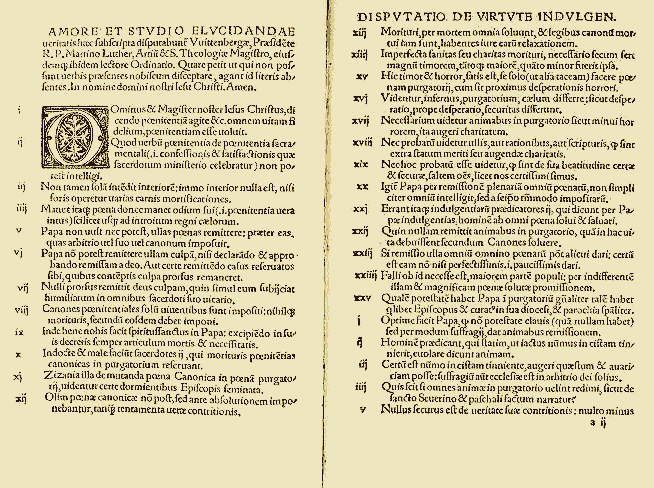
Luther’s Theses, marking the start of the Reformation on October 31 in 1517.

Fear not: I am by no means announcing the end of this blog and am very much looking forward to sharing Bach’s beautiful Advent and Christmas cantatas with you starting on Sunday November 27.

This is just a heads-up about the impending end of my Trinity 1723 Special Series. Bach made his 1723 Trinity Season go out with a bang, and I plan to do the same! Spectacular (and somewhat crazy) cantatas are coming up in the next three weeks, but there’s no cantata from 1723 for today, so this is your chance to catch up on the previous episodes of this special series, which started on Sunday May 29 of this year with this post.  If you don’t have time to read all the episodes, I recommend these two highlights: cantata 147 for the Feast of the Visitation, and cantata 105 for Trinity 9.

Why is there no cantata for today from 1723? It was October 31, also known as Reformation Day, the day on which the Lutheran Church celebrates Martin Luther publishing his 95 Theses against the Catholic Church in 1517. It wasn’t until 1725 that Bach wrote a cantata for that particular day.

Wieneke Gorter, Sunday October 30, 2016.

A pretty soprano aria for Trinity 22

23 Sunday Oct 2016

Posted by cantatasonmymind in 1723 Trinity season special series, Cantatas, Leipzig, Trinity

≈ Leave a comment

Tags

Bach, BWV 89, Leipzig, Nuria Rial, Trinity 22

parable_of_the_unfaithful_servant
Parable of the Unmerciful Servant by an unknown master from Northern Germany, ca. 1560. Gemäldegalerie, Berlin.

For this 22nd Sunday after Trinity, October 24 in 1723, Bach wrote cantata 89 Was soll ich aus dir machen, Ephraim?

To find an overview of the recordings, links to the text & translations, and links to the score of this cantata, please visit this page of the “Bach Cantata Bible” by Aryeh Oron.

For a very beautiful interpretation of the soprano aria (fifth movement) from this cantata, please watch this video of the Bach Stiftung, with soprano Nuria Rial, in Trogen, Switzerland. I first heard the fabulous Nuria Rial sing on the German radio in December 2010 and have been a fan since. Watch her sing Cavalli arias at the Utrecht Early Music Festival in the summer of 2016.  I’ll talk about her again on the first Sunday of Advent, in about a month 🙂

Wieneke Gorter, October 23, 2016, updated October 28, 2026.

Tenor drama

16 Sunday Oct 2016

Posted by cantatasonmymind in 1723 Trinity season special series, Cantatas, Leipzig, Trinity

≈ Leave a comment

Tags

Bach, Damien Guillon, Dorothee Mields, John Eliot Gardiner, La Petite Bande, Leipzig, Paul Agnew, Peter Kooy, Phlippe Herreweghe, St. John Passion, Thomas Hobbs

bwv109_tenormanuscript
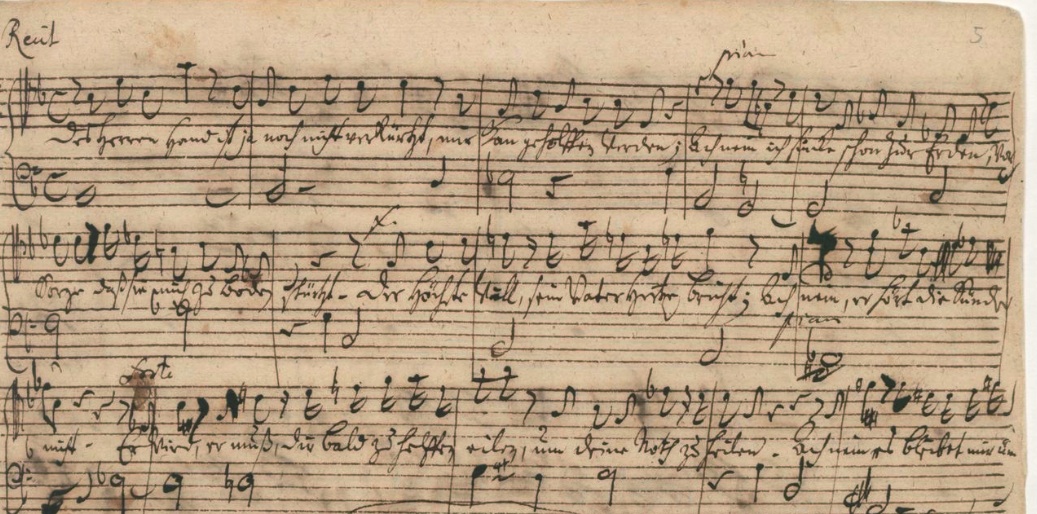
Excerpt from the start of the tenor recitative from cantata 109, with “piano” and “forte” marked. Staatsbibliothek zu Berlin, Preußischer Kulturbesitz

For this 21st Sunday after Trinity, Bach wrote cantata 109 Ich glaube, lieber Herr, hilf meinem Unglauben! in 1723.

For overall best performance, I recommend Herreweghe’s recording from 2013, with counter-tenor Damien Guillon and tenor Thomas Hobbs.

Listen to this recording on YouTube. To support the artists, please consider purchasing the entire album on Amazon — a good deal if you like this blog, as it also includes three cantatas I discussed here earlier this year: cantata 44, cantata 73, and cantata 48.

Read the German texts with English translations here, and find the score here.

I love Herreweghe’s interpretation of  the opening and closing chorus as well as Damien Guillon’s singing in the alto recitative and aria.

However, there is an extremely dramatic and unusual recitative and aria for tenor in this cantata which I like better on the Gardiner recording. The recitative is unusual because Bach has two voices/persons speak: the uncertain/fearful voice, marked “piano” in his manuscript (see picture above), and the certain/faithful voice, marked “forte” in the manuscript. According to Gardiner, this feature never appears anywhere else in Bach’s recitative writing.

Just as with the “Storm on the lake” aria from cantata 81, only Gardiner and the fabulous Paul Agnew are able to properly convey the drama of the text and context of this tenor recitative and aria. If at first you think this might be a bit over the top, it is most probably exactly what Bach had in mind. A bit of opera to properly bring out the agony of the text.

Listen to these two movements by Gardiner and Agnew on YouTube: the recitative here, and the aria here.

Bach might have been preparing the Leipzig congregations for the St. John Passion he was planning for Good Friday 1724, as this tenor aria is very similar in dramatic intensity and music to the Ach mein Sinn aria from that passion. Those who know the St. John Passion well might hear other resemblances in this cantata 109.


© Wieneke Gorter, October 16, 2016, links updated October 19, 2026.

A Weimar cantata for Trinity 20

09 Sunday Oct 2016

Posted by cantatasonmymind in 1723 Trinity season special series, Cantatas, Leipzig, Trinity

≈ 2 Comments

Tags

Bach, Bach Collegium Japan, Leipzig, Makoto Sakurada, Peter Kooy, St. Matthew Passion, Trinity 20, Yoshikazu Mera, Yumiko Kurisu

Vornehme Hochzeitsgesellschaft

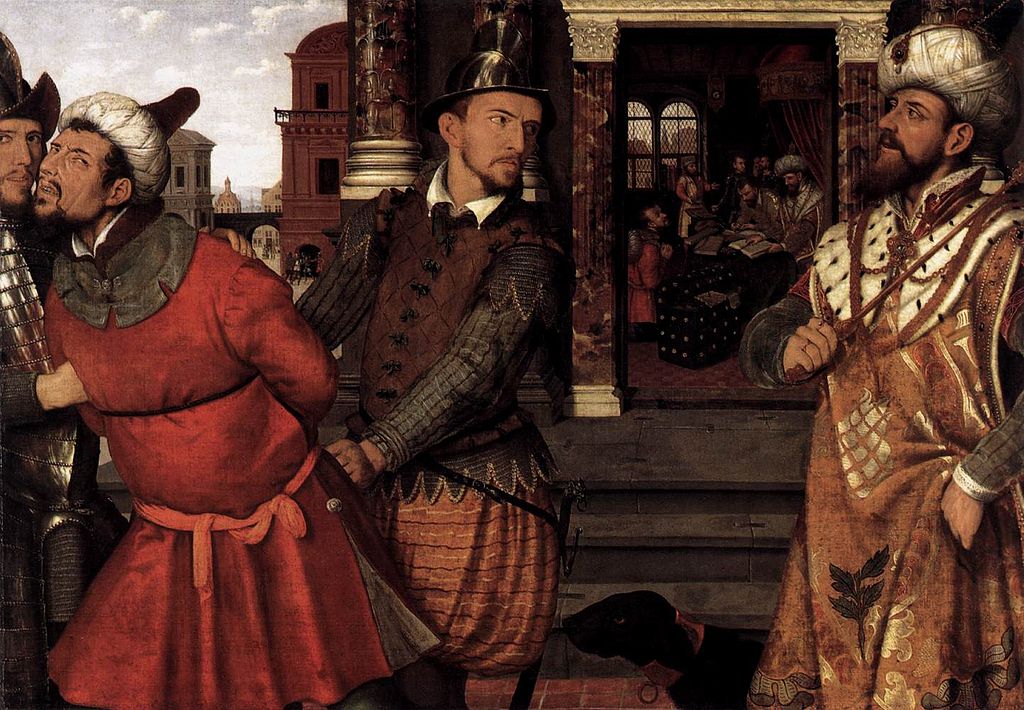
Vornehme Hochzeitsgesellschaft (Distinguished Wedding party) by Wolfgang Heimbach, 1637. Kunsthalle Bremen, Germany.

I listened to several recordings of the 1723 cantata for this Sunday: cantata 162 Ach! ich sehe, itzt, da ich zur Hochzeit gehe, and can safely say I recommend Bach Collegium Japan’s recording of this cantata. It has the most sensitive playing in the instrumental opening and the best interpretation of the bass aria and the soprano aria in my opinion.

Listen to the recording of cantata 162 by Bach Collegium Japan on Spotify. Soloists: Soprano: Yumiko Kurisu, Counter-tenor: Yoshikazu Mera, Tenor: Makoto Sakurada, Bass: Peter Kooy.

Read the text here, and find the score here.

Bach wrote this cantata in Weimar, and performed it there on October 25, 1716. For the performance in Leipzig on October 10, 1723, he added a corno da tirarsi to the instrumentation (the Bach Collegium Japan recording is based on the Weimar version, and thus doesn’t feature the corno da tirarsi).

A very short explanation of the cantata, thanks to Eduard van Hengel: Cantata 162 is based on the Gospel text for this Sunday: Jesus compares the heavenly kingdom with the wedding of a King’s son. Many guests decline the invitation, and several of those who do come are sent away because they are not properly dressed. Since the relationship between Jesus and the soul of the believer is compared to the bond between groom and bride, the believers will be at first concerned that they will not be allowed to join the wedding (cantata movements 1-3), but can then rejoice in their conviction that Jesus, through his suffering, will provide the proper dress for them (cantata movements 4-6).

To read more in Dutch, please go to Eduard van Hengel’s website; to read more in English, find Gardiner’s notes about this cantata here.

Wieneke Gorter, October 9, 2016. Updated October 21, 2023.

The Opening Chorus’ Silver Lining

01 Saturday Oct 2016

Posted by cantatasonmymind in 1723 Trinity season special series, Cantatas, Leipzig, Trinity

≈ Leave a comment

Tags

19th Sunday after Trinity, Bach, BWV 48, Collegium Vocale Gent, Damien Guillon, Leipzig, Philippe Herreweghe, Thomas Hobbs, Trinity 19, tromba da tirarsi, trumpet

genezing_lamme_masolino

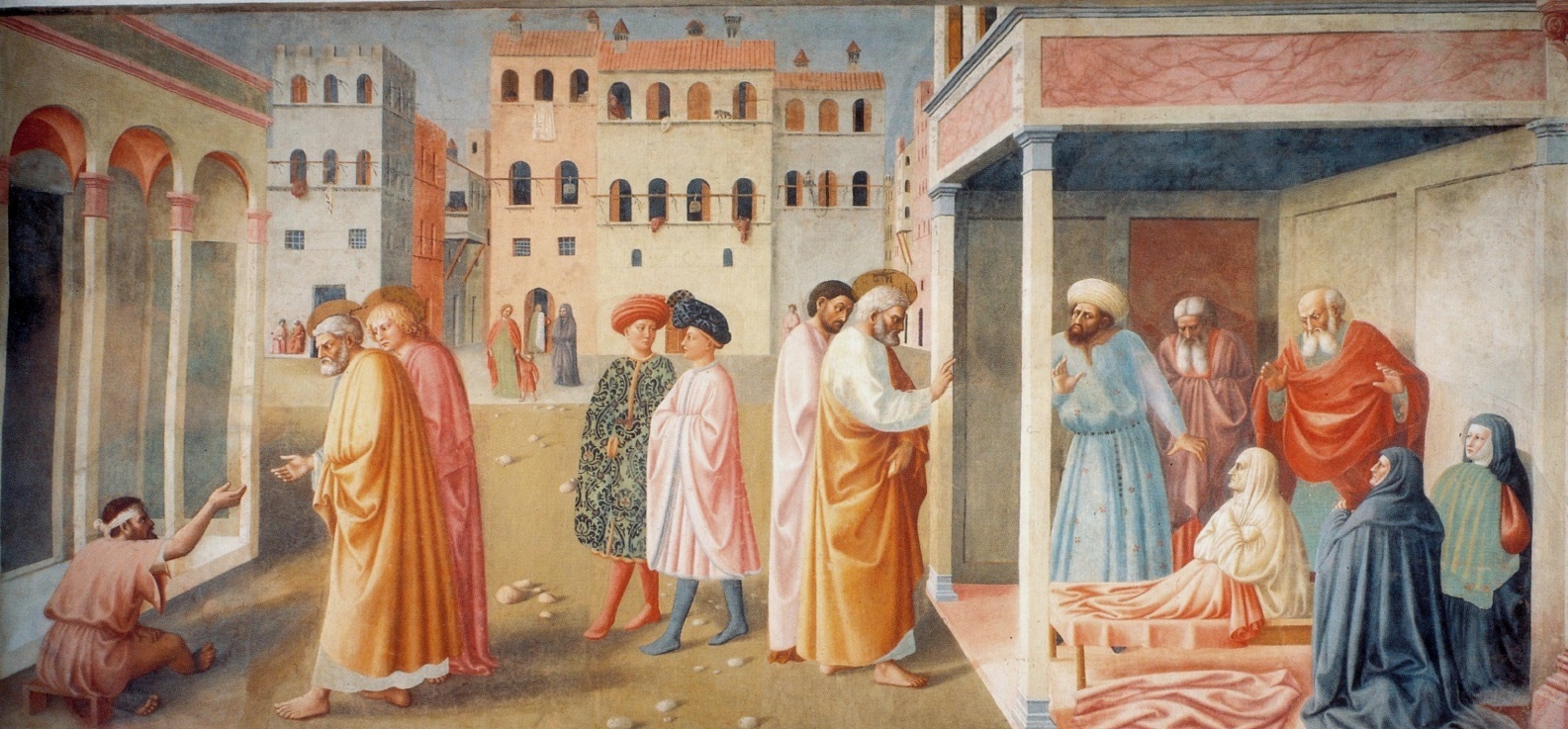
Healing of the Cripple (on left) and Raising of Tabitha (on right) by Masolino da Panicale, 1424-25. Fresco in the Brancacci Chapel, Santa Maria del Carmine, Florence, Italy.

My head has been in the St. Matthew Passion. For a few weeks already. Yes, that is pretty strange for me, having grown up in a house where Bach’s music was played often, but only on the Sundays and holidays for which it was written (read more about that in this blog post). However, it can happen when one sings in a Bach Choir in the United States. While in The Netherlands all 180 (!) St. Matthew Passion concerts happen in the weeks before Easter, here in the USA the piece is presented much less often, and the only classical music performances with a strong seasonal tie are those of Handel’s Messiah in the weeks before Christmas.

But working on the St. Matthew Passion and this Weekly Cantata blog at the same time has been a blessing, as the two areas of study influence each other. Nine months of research for this blog have inspired me to read more about the St. Matthew Passion and study the music in more detail. In that process I have learned many new things about the piece I thought I already knew so well. And experiencing the composition Bach’s sons referred to as their father’s Great Passion on a deeper level has, I believe, improved my understanding of Bach’s cantata writing.

Let’s just look at the opening chorus of this week’s cantata 48 Ich elender Mensch, written for the 19th Sunday after Trinity (October 3 in 1723).

I listened to Bach Collegium Japan (with Robin Blaze and Gerd Türk), Koopman (with Bernhard Landauer and Christoph Prégardien), Gardiner (with William Towers and James Gilchrist), Harnoncourt (with Paul Esswood and Kurt Equiluz), and Herreweghe (with Damien Guillon and Thomas Hobbs), and find Herreweghe’s interpretation the most moving. Herreweghe is also the only one who uses a tromba da tirarsi in the opening chorus, and I  love that sound. Listen to Herreweghe’s recording on YouTube or on Spotify. Please consider supporting the artists by purchasing the recording on Amazon: click here for USA, here for UK, here for Germany, or here for France.

Please find the German text with English translation here and the score here.

The main music is hauntingly beautiful (It’s not just the Herreweghe sopranos that give me goose bumps this time – the altos and tenors move me to tears, and none of this could happen without the basses providing that wonderful foundation for everyone to build on) but extremely downcast. It is clearly full of Elend (misery), in reference to the Gospel text of the day.* The same holds for the main music and words of the opening chorus of the St. Matthew Passion. It is clearly full of klagen (lamenting), and paints the picture of the Via Crucis, Jesus on his way to the cross.

However, in the midst of all the misery, a J.S. Bach opening chorus almost always provides a preview of the salvation that is to come later in the piece, or that is implied in the Gospel. In the opening chorus of the St. Matthew Passion he does this by superimposing the German Agnus Dei – the chorale O Lamm Gottes Unschuldig (O Lamb of God, unspotted), sung by a treble choir in G major, over the lamenting E minor of the two other choirs and orchestras. The repeated  auf unsre Schuld (for our sins) of Choir I is answered by the treble chorus with: All Sünd hast du getragen (you took away all sins).

The congregation in Leipzig, where the St. Matthew Passion was first performed on the afternoon of Good Friday in 1727, would have sung this German Agnus Dei earlier that day at the conclusion of the morning service. Back to this week’s cantata for October 3, 1723: in that Sunday service, the congregation might have sung the chorale Herr Jesu Christ, ich schreie zu dir:

Herr Jesu Christ ich schreie zu dir
Mit ganz betrübter Seele:
Dein Allmacht laß erscheinen mir
Und mich nicht also quäle.
Viel grösser ist die Angst und Schmerz.
So anficht und turbirt mein Herz,
Als daß ich kan erzählen.
Lord Jesus Christ, I cry to you
With a soul that is wholly troubled:
Let your almighty power appear to me
And do not punish me in this way.
Far greater is the anguish and pain
That challenge and confuse my heart
Than I can explain

The congregation might thus have heard those words in their head, when two bars after the soprano entrance the tromba da tirarsi starts playing this melody, later followed by two oboes in unison. In this way, these three instruments accompany every choral passage with a new line from the chorale, and the chorale thus starts forming the frame of the opening chorus.

After this preview message in the opening chorus that Jesus might be able to offer salvation, we have to wait until the tenor aria for the all-around convincing message that everything will be OK, in music as well as in text:

Vergibt mir Jesus meine Sünden,

If Jesus forgives me my sins,
So wird mir Leib und Seele gesund.
then my body and soul will become healthy.
Er kann die Toten lebend machen
He can make the dead live
Und zeigt sich kräftig in den Schwachen,
and shows himself to be mighty in those who are weak,
Er hält den längst geschloßnen Bund,
he keeps the covenant made long ago
Daß wir im Glauben Hilfe finden.
that in faith we find support.

Wieneke Gorter, October 1, 2016, links updated October 15, 2020.

* The Gospel story for this 19th Sunday after Trinity was the miracle of Jesus healing a cripple. From the time the Gospel was written through Bach’s time, unfortunately, having a disability or illness was seen as carrying a sin. When Jesus heals the man, he also takes his sins away.

No cantata for Trinity 18 in 1723

24 Saturday Sep 2016

Posted by cantatasonmymind in 1723 Trinity season special series, Cantatas, Leipzig, Trinity

≈ Leave a comment

giordano_archangel_michael

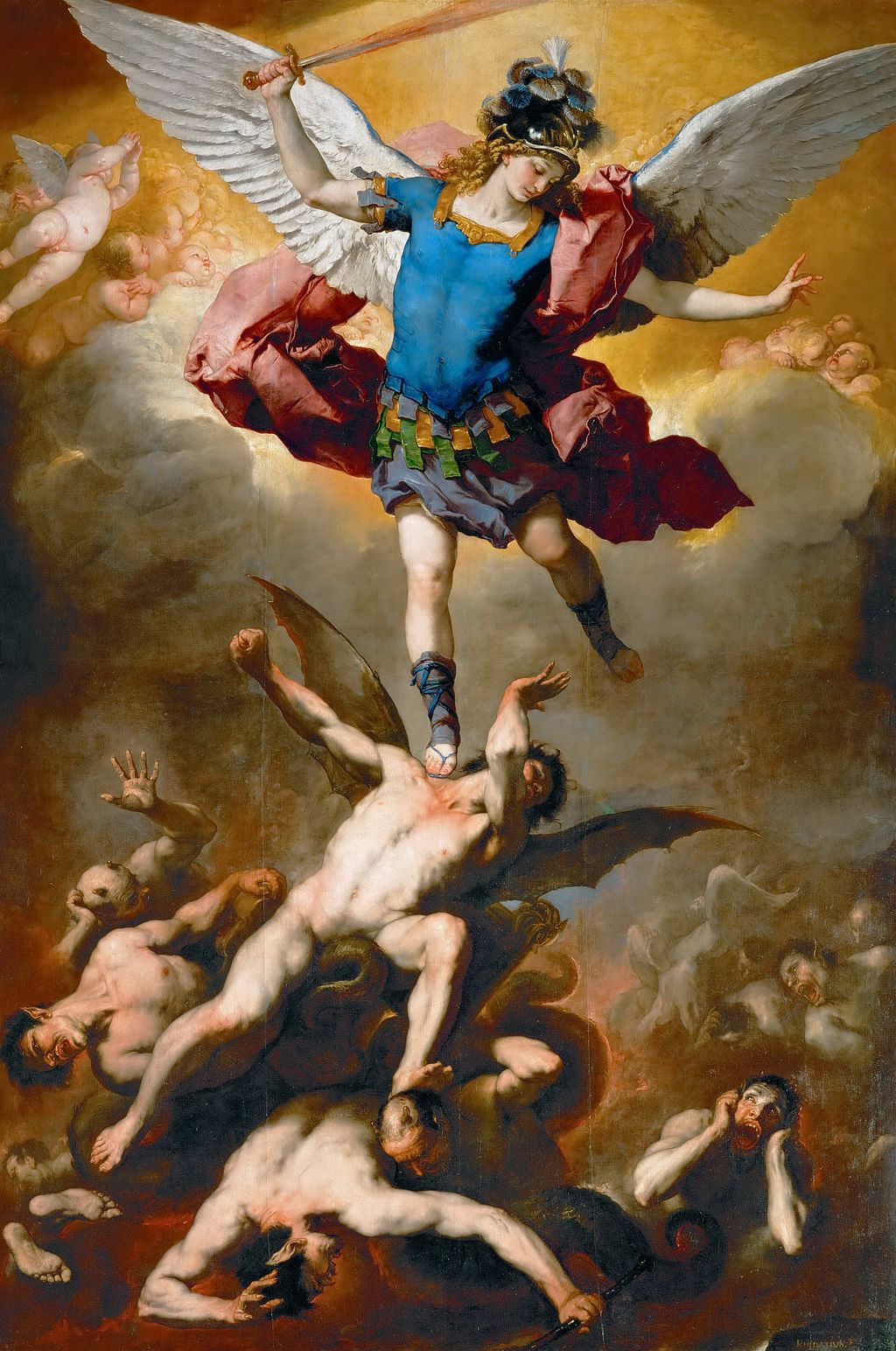
Archangel MIchael Hurls the Rebellious Angels into the Abyss, by Luca Giordano, ca. 1666. Kunsthistorisches Museum, Vienna

There is no cantata left to us for this week in 1723, the 18th Sunday after Trinity. It seems to be a pattern for the Trinity season of 1723 that in the week of a big holiday (St. Michael’s in this case), the cantata for the Sunday of that same week is missing. This happened as well around the holidays of St. John on June 24 and the Visitation of Mary on July 2. It is unclear what music Bach performed on the feast day of St. Michael, September 29, 1723. It might have been a cantata by Telemann, but the researchers are not sure.

Wieneke Gorter, September 24, 2016

← Older posts
Newer posts →

Recent Posts

  • Three Listening Guides – First Sunday of Advent
  • The End of Times and Christmas Combined – Cantata 116 for Trinity 25
  • From the Archives, with a New Recording – Cantatas 60 and 26 for Trinity 24
  • A Controversy and a Coin Collection – Cantata 163 for Trinity 23
  • Giving the Choir a Breather? – Cantata 89 for Trinity 22

Archives

  • November 2026
  • October 2026
  • September 2026
  • August 2026
  • August 2025
  • July 2025
  • December 2024
  • November 2024
  • June 2024
  • January 2024
  • December 2023
  • October 2023
  • September 2023
  • August 2023
  • April 2022
  • February 2022
  • January 2022
  • December 2021
  • November 2021
  • June 2021
  • May 2021
  • April 2021
  • February 2021
  • January 2021
  • December 2020
  • November 2020
  • October 2020
  • September 2020
  • August 2020
  • July 2020
  • May 2020
  • April 2020
  • March 2020
  • February 2020
  • January 2020
  • December 2019
  • November 2019
  • May 2018
  • April 2018
  • March 2018
  • February 2018
  • January 2018
  • December 2017
  • November 2017
  • October 2017
  • September 2017
  • August 2017
  • July 2017
  • June 2017
  • May 2017
  • April 2017
  • March 2017
  • February 2017
  • January 2017
  • December 2016
  • November 2016
  • October 2016
  • September 2016
  • August 2016
  • July 2016
  • June 2016
  • May 2016
  • April 2016
  • March 2016
  • February 2016
  • January 2016

Enter your email address to follow this blog and receive notifications of new posts by email.

Join 338 other subscribers

Categories

  • 1723 Trinity season special series
  • Advent
  • After Easter
  • Ascension
  • Bach's life
  • Cantatas
  • Chorale cantatas 1724/1725
  • Christmas
  • Easter
  • Epiphany
  • Following Bach in 1725
  • Köthen
  • Leipzig
  • Leipzig 1726/1727
  • Septuagesima
  • Travel
  • Trinity
  • Weimar

Meta

  • Create account
  • Log in
  • Entries feed
  • Comments feed
  • WordPress.com

Website Built with WordPress.com.

  • Subscribe Subscribed
    Weekly Cantata
    Join 158 other subscribers

    Have a WordPress.com account? Log in now.

  • Weekly Cantata
    View site in Reader
    Manage subscriptionsSign upLog in
    Report this content
    Collapse this bar
Loading Comments...